

Ha Giang captivates visitors with its pristine limestone mountains, misty skies, and ethnic villages nestled along legendary mountain passes. This northern frontier holds a unique allure, drawing travelers back repeatedly to witness how the karst plateau transforms with each passing season.
However, if this is your first journey to the northern highlands, choosing the best time to visit Ha Giang Loop Vietnam is essential to fully appreciate the region’s raw beauty. In this article, Phieu Travel will guide you through the ideal months and seasonal recommendations to make your adventure truly memorable.

Introduction to Ha Giang: The Frontier of Adventure
Nestled in the northernmost part of Vietnam, Ha Giang is a land of ethereal beauty where the Dong Van Karst Plateau—a UNESCO Global Geopark—reigns supreme. Known for its legendary Ha Giang Loop, this destination captivates travelers with its towering limestone peaks, deep canyons like Tu San, and the emerald Nho Que River winding through the iconic Ma Pi Leng Pass. Beyond the dramatic landscapes, Ha Giang is a cultural mosaic, home to the H’mong, Tay, and Dao ethnic groups, offering an authentic glimpse into highland life through vibrant Sunday markets and rustic local homestays.
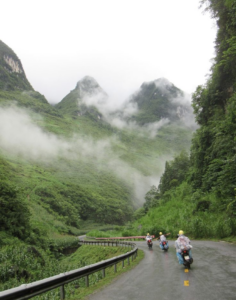
Choosing the best time to visit Ha Giang Loop depends on your preference for golden harvests or floral blooms. The dry season (October–April) offers ideal driving conditions for motorcycling. Late September marks the harvest season with stunning golden rice fields, while November features the Buckwheat Flower Festival. From January to March, enjoy peach and plum blossoms. Even the rainy season (May–August) attracts adventurers with its “water-pouring” scenery and lush misty valleys.

When Should You Go?
If you’re looking for a quick answer to plan your adventure, understanding the best time to visit Ha Giang Loop weather months is essential. Whether you prefer the dry season for safe driving conditions or the rainy season to witness lush green landscapes, each month offers a unique perspective of the Dong Van Karst Plateau. Below is a detailed breakdown to help you choose the perfect timing for your journey.
| Month | Season | Avg Temp | Highlights |
| Jan – Mar | Dry | 12°C – 18°C |
Peach & Plum blossoms, Tet Festival
|
| Apr – May | Light rainy | 18°C – 25°C |
Clear skies, Lush green vegetation, dramatic mountain clouds, easy travel
|
| Jun – Aug | Heavy rain | 25°C – 32°C |
June: Deep green landscapes, Waterfalls
July, August: Self-driving is not recommended for the Ha Giang Loop tour |
| Sept – Oct | Transition | 20°C – 28°C |
Golden rice fields, Harvest season, early buckwheat flowers
|
| Nov – Dec | Dry | 8°C – 15°C |
Buckwheat flowers, Rapeseed blossoms, clear skies
|
July and August bring the peak of summer and the rainy season. While the heat makes a dip in the Du Gia waterfall incredibly refreshing and the Nho Que River looks cinematic against the emerald cliffs, self-driving is not recommended during this time due to slippery roads and unpredictable downpours.
However, this is the ultimate season for Waterfall Chasing with our Easy Riders. Let our experienced local drivers navigate the challenging terrain while you safely enjoy the most dramatic landscapes and powerful waterfalls that only the summer rains can create.
Expert Verdict from Phieu Travel
Drawing from years of navigating these mountain passes, our team at Phieu Travel has a definitive answer for those seeking the best time to visit Ha Giang Vietnam. While the “perfect” moment depends on your personal preference—whether it’s the golden harvest or the spring blossoms—we believe that balance between safety and scenery is key to a life-changing journey.
- The Best All-Rounder: October is our top pick. You get to witness the tail-end of the golden rice fields while the first buckwheat flowers start to bloom. The weather is cool and dry, providing perfect driving conditions.
- For Photography Lovers: Aim for late September (Harvest) or March (Spring blossoms). The contrast between the grey limestone and vibrant colors is breathtaking.
- The Adventure Seeker: June to August offers a wilder Ha Giang. It’s the “off-the-beaten-path” time with fewer tourists and dramatic misty valleys, though it requires more caution on the road.

Ha Giang Loop Weather Overview: Dry vs. Rainy Season
Understanding the two distinct seasons is crucial for a safe and enjoyable trip. While the scenery remains majestic year-round, the driving conditions on the winding mountain passes change significantly between the dry and rainy seasons.
Beyond rainfall, temperature and terrain stability vary. The dry season offers reliable asphalt grip, but Ma Pi Leng Pass brings biting winds requiring thermal gear. Conversely, the rainy season creates stunning “water-pouring” terraces and powerful waterfalls. However, high humidity causes sudden thick fog, requiring excellent lighting and steady braking to navigate steep, cloud-covered slopes safely.
The Dry Season (October – April): The Golden Window
This is widely considered the best time for motorcycling enthusiasts. With low rainfall and clear skies, the driving conditions are at their peak safety.
- Safety: Roads are dry, offering maximum grip for tires—perfect for navigating the sharp hairpins of the Ma Pi Leng Pass.
- Visibility: You’ll get crystal-clear views of the jagged limestone peaks and deep canyons without being obscured by heavy downpours.
- Note: During winter (Dec–Feb), early morning fog can limit visibility. We recommend starting your ride after 9:00 AM when the sun has cleared the mist.
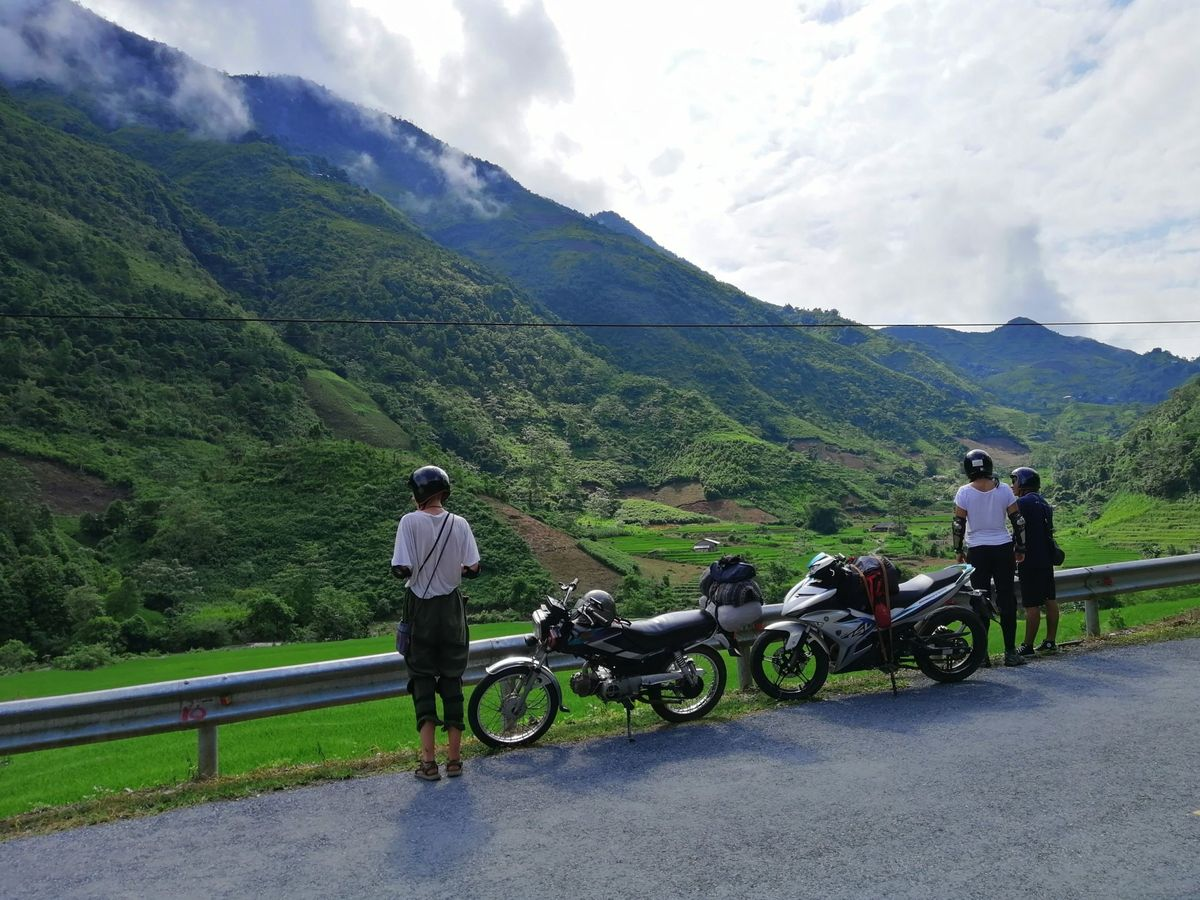
The Rainy Season (May – September): Lush & Adventurous
Is the Ha Giang Loop dangerous in the rainy season? It can be, but it’s also when the plateau is at its most vibrant.
- The Beauty: Rain transforms the landscape into a sea of emerald green. The misty valleys create a mysterious, poetic atmosphere that you won’t see in the dry season.
- Driving Risks: Sudden downpours can make roads slippery and increase the risk of landslides in steep areas.
- Phieu Travel Advice: If you visit during this time, checking the daily weather forecast is a must. If you aren’t a confident rider, an Easy Rider tour is the smartest way to enjoy the scenery without the stress of navigating slick mountain roads.
- Pro-tip: Choose our Easy Rider Tours to navigate Ha Giang safely during the rainy season.

The Golden Moments: Top 3 Seasons you can’t miss
Ha Giang is a masterpiece, and finding the best time to visit Ha Giang for scenic views means aligning your trip with our “Golden Moments.” Each season breathes a unique soul into the karst plateau, connecting you with highland cultures. Whether amidst shimmering golden harvests or soft pink buckwheat blooming against limestone, these fleeting periods define the true spirit of the Ha Giang Loop.
Beyond landscapes, these peak windows are the only times to witness authentic festivals. From traditional music during the Buckwheat Flower Festival to H’mong spiritual rituals in spring, perfect timing allows for profound cultural immersion. It transforms a simple motorbike ride into a journey where the majestic terrain meets the warmth of the highland people.
The Harvest Season (Late Sept – Early Oct): Golden Rice Terraces
This is arguably the most photographed season in Northern Vietnam. The vast terraced rice fields in areas like Hoang Su Phi and along the Loop transform from vivid green to a brilliant, shimmering gold.
- 2026 Insight: Due to subtle shifts in weather patterns, the harvest time has adjusted. For 2026, the peak “golden week” is projected to be from September 20th to October 5th.
- Best Viewing Spots: Hoang Su Phi, Sang Ma Sao, and the valleys around Yen Minh.
- Pro-tip: This is the busiest time of the year. To ensure the best accommodation and bike availability, book your Phieu Travel tour at least 1 month in advance!

The Buckwheat Flower Festival (Oct – Nov): The Symbolic Bloom
As the rice harvest ends, the Buckwheat Flower Festival 2026 begins. These tiny, heart-shaped pink and purple flowers carpet the rocky slopes, creating a soft contrast against the rugged limestone.
- Highlights: You can find the most beautiful fields at the foot of Ma Pi Leng Pass, Lung Cu, and Pho Cao.
- Cultural Experience: This season features local music performances, traditional games, and unique buckwheat-based delicacies like buckwheat cake and wine.

Spring Awakening (Jan – March): Peach Blossoms & Plum Blossoms
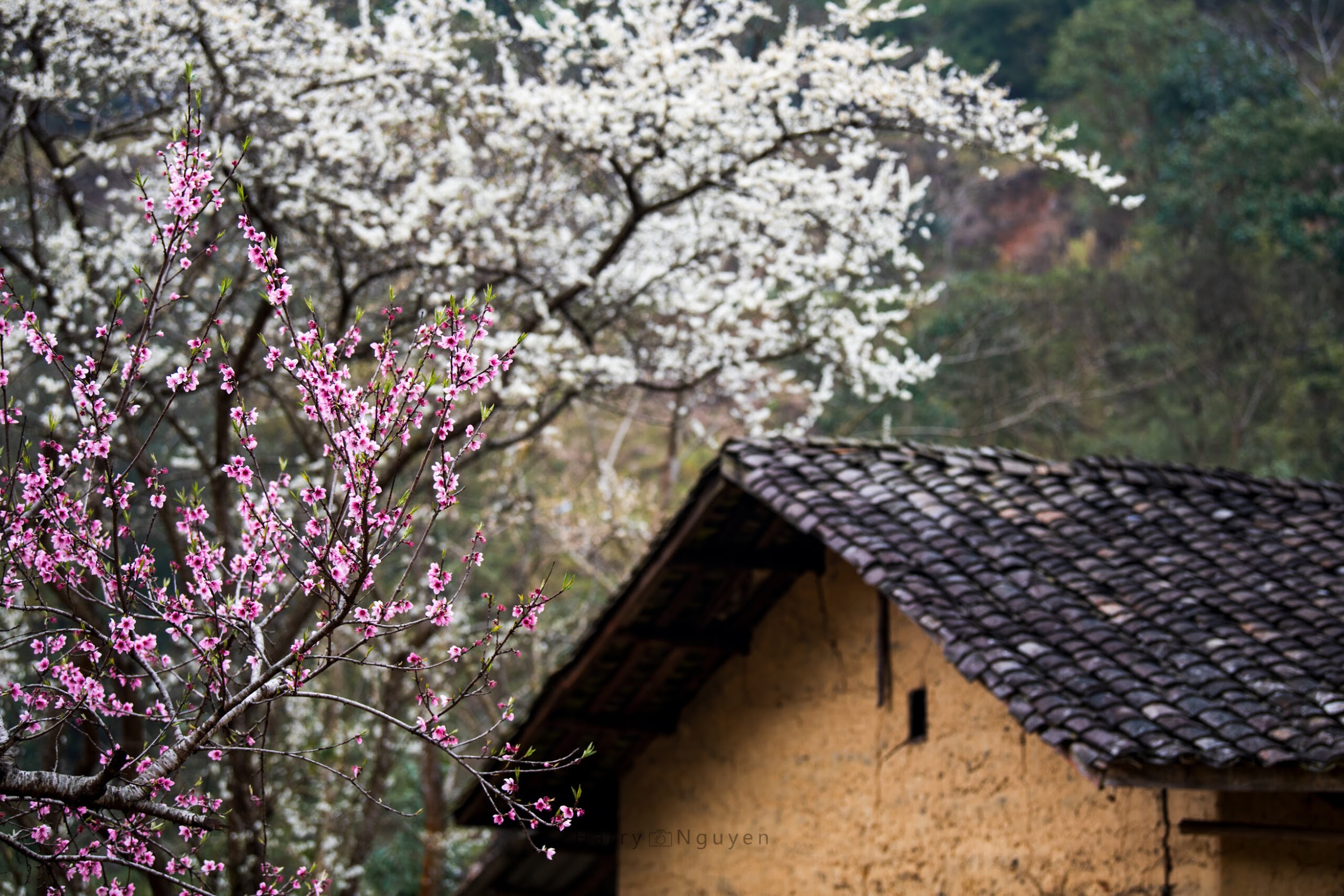
Spring in Ha Giang is a poetic rebirth. After the cold winter, the mountains are adorned with the pure white of plum blossoms and the delicate pink of peach blossoms.
- The Vibe: This period coincides with the Tet Festival (Lunar New Year). You’ll see the H’mong ethnic group in their finest traditional attire, celebrating with horse racing and archery.
- Photography Tip: Capture the blossoms peeking through the ancient stone fences and dark-tiled roofs of traditional houses in Sung La Valley.

Detailed Monthly Guide (Ha Giang Weather by Month)
Choosing the right best time to visit Ha Giang Vietnam month can completely redefine your journey. While some travelers chase the golden shimmer of the harvest, others seek the quiet mist of the blooming spring. From precise average temperatures to specific road conditions, here is everything you need to know about Ha Giang’s ever-changing beauty throughout the year.
January – February: Tet Festival & Golden Mustard Flowers
Experience the “Chuc Mung Nam Moi” (Happy New Year) atmosphere. This is the best time to dive into local culture at a Sunday Market or stay in a traditional local homestay. The weather is cold and crisp, but the sight of yellow mustard flowers blooming against ancient clay walls is unforgettable.
For the most authentic experience during these months, head to Dong Van Ancient Town or the Sa Phin Valley. This is where you can find the most beautiful clusters of mustard flowers blooming around the traditional “Trinh Tuong” houses of the H’mong people. Don’t miss a visit to Lung Cu Flag Tower, where the crisp winter air makes the panoramic view of the China-Vietnam border even more majestic.
- Pro-tip: Pack heavy layers; temperatures can drop below 10°C at night.



March – April: Peak Trekking & Khau Vai Love Market
With mild temperatures and clear skies, this is the best month for trekking through the karst mountains. In late April, don’t miss the legendary Khau Vai Love Market, a unique cultural event held only once a year where ex-lovers reunite.
This is the perfect window to conquer Ma Pi Leng’s Sky Path, offering breathtaking views of the emerald Nho Que River. For cultural depth, visit Meo Vac’s Khau Vai Love Market to witness vibrant costumes and hear poignant flute music. Additionally, Du Gia’s serene villages offer a refreshing escape, where you can trek lush trails and cool off in crystal-clear natural pools.
- Activity: Hike the Sky Path at Ma Pi Leng for the best panoramic views.

May – June: The “Water-Pouring” Mirrors
When the first summer rains arrive, ethnic farmers lead water into the terraces. The fields turn into giant mirrors reflecting the summer clouds. It’s a photographer’s dream and a time of vibrant green life across the plateau.
Early morning is ideal for summer cloud hunting at Chieu Lau Thi and Tay Con Linh – two high mountains on the route to Hoang Su Phi. Clouds drift past rock outcrops and mountainsides, creating mystical scenes perfect for photography or trekking.
- Scenery: The “pouring” effect is most dramatic in Hoang Su Phi and Yen Minh.


July – August: Summer Peaks & Waterfall Chasing (The Challenge)
While it’s the rainy season, the heat makes a dip in the Du Gia waterfall incredibly refreshing. The landscapes are lush and dramatic, though you should expect occasional heavy downpours.
It’s also the ideal season to boat along the Nho Que River, as the surrounding cliffs turn a deep, vibrant green, creating a cinematic backdrop. If you’re heading to Hoang Su Phi, you’ll witness the “Water-Falling Season”, where the terraced fields transform into giant, shimmering mirrors reflecting the dramatic summer clouds.
- Safety: Always check weather updates daily before heading out to remote villages. Due to occasional heavy downpours and slippery mountain passes, self-driving is not recommended during these months for those without extensive mountain experience.
- Ride with the Pros: Don’t let the rain stop your adventure! Book a Phieu Travel Easy Rider to navigate the challenging terrain safely while you sit back and capture the perfect waterfall shots. Our local experts know exactly how to handle the summer roads, ensuring you see the best of Ha Giang without the stress.

September – December: The High Travel Season
This period combines the best of Ha Giang: Golden rice (Sept-Oct) and Buckwheat flowers (Oct-Nov). Driving the loop in December offers a cold but majestic experience with clear blue skies and grey limestone peaks.
For the harvest, visit Hoang Su Phi or Lao Xa, where terraced fields transform into endless yellow waves. As buckwheat flowers bloom, Sung La Valley and Ma Le become ultimate photography stops. By December, don’t miss Lung Cam, where limestone peaks contrast majestically against white mustard and early cherry blossoms under the winter sun.
- Note: Expect more crowds at famous spots like the Dong Van Old Quarter.

Planning Your Trip: Ha Giang Loop vs. Sapa
A common question for travelers in Northern Vietnam is: Ha Giang Loop vs Sapa: Which is better? While both offer stunning landscapes and ethnic cultures, the experiences are fundamentally different. Sapa is ideal for those seeking luxury retreats, established trekking routes, and misty valley views. On the other hand, the Ha Giang Loop is a raw, heart-pounding adventure for those who want to conquer legendary mountain passes and witness the untouched beauty of the Dong Van Karst Plateau.
| Feature | Sapa | Ha Giang Loop |
| Vibe | Relaxing & Commercial |
Adventurous & Raw
|
| Transport | Cable cars, trains, trekking |
Motorbikes, Easy Riders
|
| Experience | Luxury hotels, local markets |
Conquering passes, local homestays
|

Peach blossoms in full bloom amidst the misty morning fog in Ha Giang, Vietnam
Safety Tips for Ha Giang Loop tour 2026
Safety is our top priority at Phieu Travel. The Ha Giang Loop Vietnam is one of the most breathtaking routes in the world, but its steep cliffs and sharp hairpins require careful preparation, especially as road conditions evolve in 2026.
Riding in the Rainy Season (May – August)
While the scenery is incredibly lush and green, the roads can be extremely slippery. Safety Advice: If you are not an experienced rider, we highly recommend booking a Phieu Travel Easy Rider tour. Our local drivers know exactly how to navigate muddy paths and flash floods safely during summer downpours.
- Pro-tip: Avoid riding after dark during the rainy season, as landslides can occur unexpectedly.
Riding Solo vs. Easy Rider Tour
Deciding how to tackle the Ha Giang Loop by motorbike is a big decision.
- Riding Solo: Offers total freedom but requires an International Driving Permit (IDP), strong mechanical skills, and high concentration.
- Easy Rider Ha Giang Loop Tour: The safest and most immersive option. You sit on the back of the bike, allowing you to focus 100% on the scenery and photography while a professional handles the technical curves.
- 2026 Trend: More travelers are choosing Easy Riders to ensure insurance coverage and avoid legal issues with local traffic police.
What to Pack for Ha Giang?
The weather on the plateau is unpredictable. Your packing list should include:
- Winter (Oct – Feb): High-quality thermal gear, gloves, and a windproof jacket. Temperatures at the peaks can feel much colder due to wind chill.
- Summer (May – Sept): Light, breathable clothing but always carry a sturdy raincoat and waterproof bags for your electronics.
- Essential year-round: Sturdy hiking boots, sunscreen, and a basic medical kit.

Why Book Your Ha Giang Adventure with Phieu Travel?
Choosing the right partner for your Ha Giang Loop journey is the difference between a simple trip and a life-changing adventure. At Phieutravel.com, we don’t just provide tours; we share our home with you. Here is why thousands of travelers trust us:
- Expert Local Guides: Our team consists of local experts who were born and raised on the Dong Van Karst Plateau. They don’t just know the roads; they know the hidden gems and the stories behind every limestone peak.
- Flexible & Personalized Itineraries: Unlike rigid big-group tours, we offer flexible schedules. Want to spend more time at Ma Pi Leng for sunset or visit a specific H’mong village? We make it happen.
- Real-time Weather Adaptability: Weather in Ha Giang can change in minutes. Our guides are masters at reading the sky and adjusting the route in real-time to ensure your safety and the best possible views.
- Safety First Culture: All our bikes are maintained to the highest standards, and our Easy Riders are trained in advanced defensive driving on mountain terrain.
FAQs – Everything You Need to Know
Find quick answers to your most pressing questions about the Ha Giang Loop. From safety tips to booking details, we’ve compiled everything you need for a seamless and unforgettable adventure.
Is January a good time to do the Ha Giang Loop?
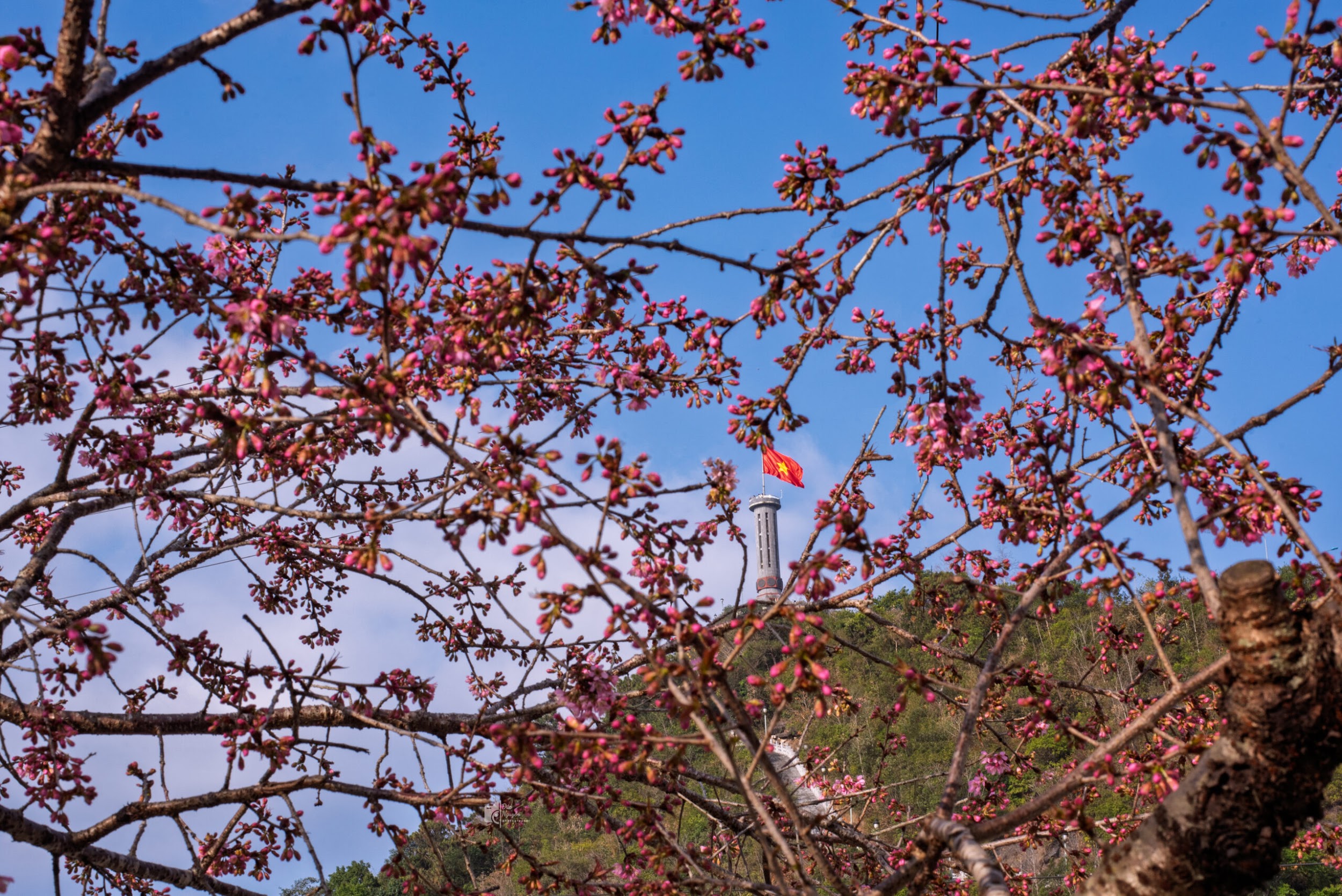
Yes, if you enjoy cold, misty mountain vibes. While it’s the coldest month (8°C – 15°C), many travelers consider January the best time to visit ha giang loop for scenic views of early cherry blossoms against ancient mossy roofs. Just ensure you have high-quality thermal gear and check for morning fog before riding.
Where is the Ha Giang Loop located?
The Ha Giang Loop Viet Nam is located in Ha Giang Province, the northernmost mountainous region of Vietnam, sharing a border with China. The loop typically starts and ends in Ha Giang City, which is about 300 km (186 miles) north of Hanoi. It winds through the four highland districts of the Dong Van Karst Plateau Geopark: Quan Ba, Yen Minh, Dong Van, and Meo Vac.
How to get to Ha Giang from Hanoi?
The distance from Hanoi to Ha Giang city is approximately 300 km (186 miles). The most popular way is by sleeper bus or VIP cabin bus, which takes about 6-7 hours. Buses usually depart from My Dinh station or pick up at the Old Quarter. For a more private experience, you can book a private limousine or a shuttle directly to your starting point for the Ha Giang Loop.
What to do in Ha Giang besides the loop?
Beyond the main circuit, you can immerse yourself in local life by visiting Sunday markets (Meo Vac or Dong Van), trekking the Sky Path at Ma Pi Leng, kayaking on the Nho Que River, or participating in traditional craft workshops like linen weaving in Lung Tam village.
What is the worst time to do Ha Giang Loop?
July and August are generally considered the most challenging months. Due to heavy summer rains, the risk of landslides and slippery roads is high, which can be dangerous for inexperienced riders. If you visit during this time, we strongly recommend an Easy Rider tour for maximum safety.
What to do in Ha Giang city?
While most travelers use the city as a starting point for the Ha Giang Loop, there are several hidden gems to explore before you head into the mountains:
- Check-in at KM0 Milestone: The iconic starting point of your journey—a must-have photo for every traveler.
- Nui Cam Mountain (Forbidden Mountain): Hike or drive up to the cafe at the top for a breathtaking panoramic view of the entire city and the Lo River.
- Thon Tha Village: Visit this peaceful Tay ethnic village just 5km from the center. It’s perfect for seeing traditional stilt houses and lush rice paddies.
- Night Market & Cuisine: Enjoy local specialties like Thang Den (sweet soup) or grilled street food at the city center squares.
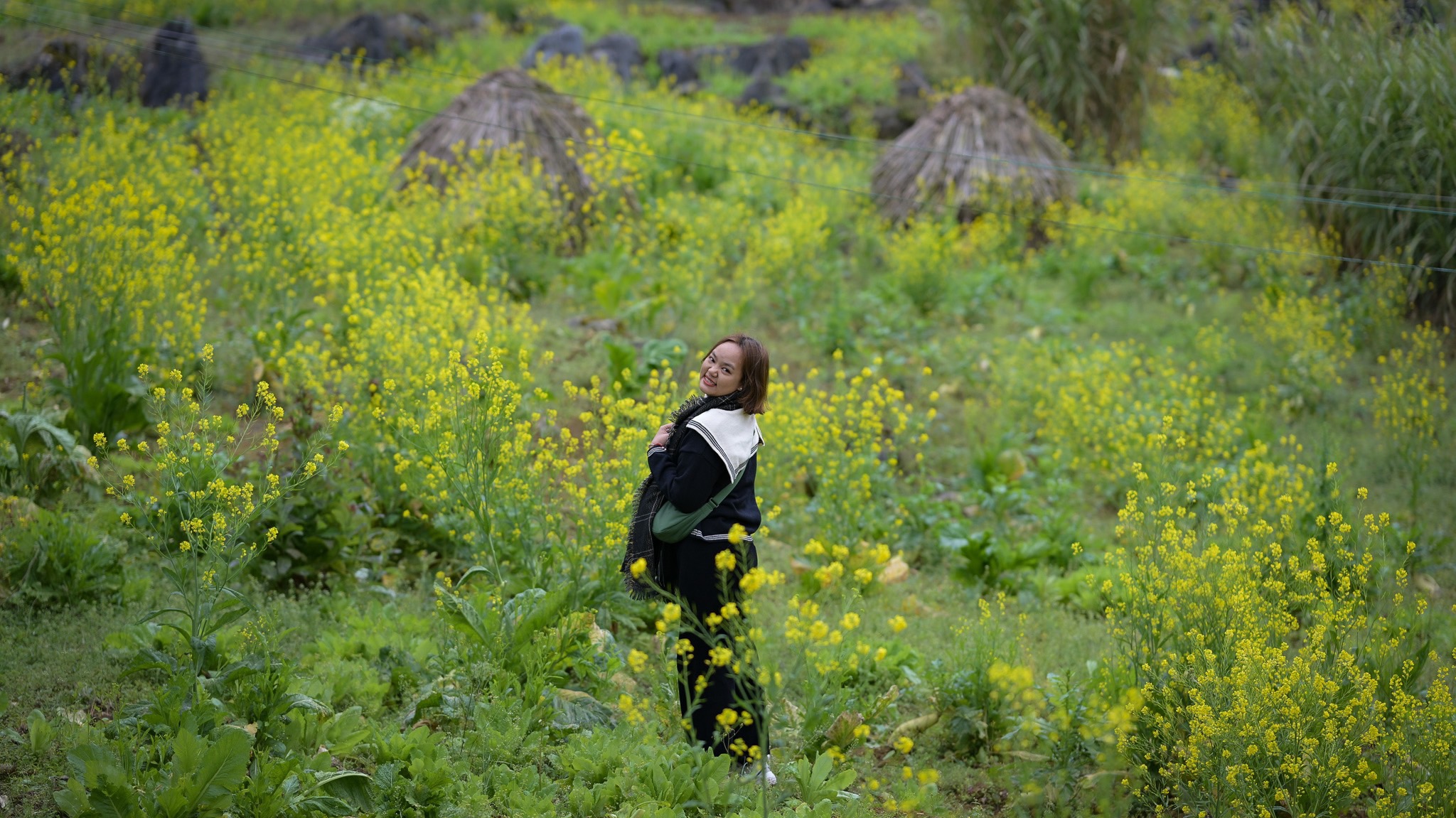 Many visitors come to Ha Giang in March to capture images of the brilliant yellow rapeseed fields
When traveling with Phieu Travel, you’ll receive a customized itinerary designed to highlight the unique landscapes and activities of each season. Our team thoroughly prepares your transportation and equipment, providing dedicated support so you can explore the rocky plateau with total peace of mind.
With the insights shared above, Phieutravel.com believes you’ve now identified the best time to visit ha giang loop for your own style. Whether it’s a blooming flower season, a vibrant festival, or the majestic mountain-cloud landscapes, each month carries its own soul. We hope you’ll choose the perfect time to discover Ha Giang’s magic completely!
Read more:
- Exploring Highland Cuisine: 20 Must-Try Dishes in Ha Giang
- Top 25 Things to Do in Ha Giang: Places, Passes & Villages
- How Far is Ha Giang from Hanoi? A Complete Travel Guide
- Top 20 Ha Giang homestays with scenic views (2025)
- Ha Giang weather in October: climate, best time to visit & tips
- Ha Giang weather by month complete local guide for travelers








https://shorturl.fm/U8dOV
Appreciating the commitment you put into your blog and in depth information you provide. It’s awesome to come across a blog every once in a while that isn’t the same unwanted rehashed material. Excellent read! I’ve saved your site and I’m including your RSS feeds to my Google account.
new online casino slots bad
Hi! This is my first comment here so I just wanted to give a quick shout out and say I truly enjoy reading through your posts. Can you recommend any other blogs/websites/forums that deal with the same topics? Thank you so much!
new online casino slot games
Обратиться за помощью стоит, если состояние больного ухудшается, человек не может самостоятельно остановить употребление алкоголя, агрессивно ведет себя, жалуется на боли, бессонницу, тревогу, депрессии, рвоту, тремор, сильную интоксикацию или физические симптомы отмены. В таких случаях важно действовать быстро: срочный вызов нарколога на дом снижает риск осложнения, отравления, судорог и последствий длительного запоя.
Подробнее тут – запой нарколог на дом в казани
лучшие фильмы онлайн новинки кино онлайн бесплатно
взять займ без отказа https://tbcareer.ru
микрозайм оформить микро займ на карту
The overall tone of this post feels easygoing and insightful at the same time, which helps create a comfortable and enjoyable reading experience for different audiences.
fastest withdrawal online casino canada
Компания fastek https://fastek.by проектируем и поставляем надежные фасадные системы для коммерческих и жилых объектов, обеспечивая долговечность, энергоэффективность и безупречный внешний вид здания под ваши задачи.
One of the best things about this post is how accessible and easy to follow it feels, since the wording stays natural and the discussion remains engaging and open to different perspectives throughout.
casino en ligne
профессиональный уход за зубами как отбелить зубы без перекиси
rafting trips Tara canyon https://www.tara-montenegro-rafting.me
как масштабировать бизнес через Авито как вести бизнес на Авито
flexible travel mobility Montenegro service rent a car Tivat center
скачать steam mobile authenticator Если вам неудобно использовать мобильный телефон для подтверждения входа, рекомендуем скачать sda steam на ваш персональный компьютер. Утилита генерирует одноразовые коды авторизации в реальном времени, выполняя те же функции, что и оригинальный Steam Mobile Authenticator. Для быстрой установки софта введите в поисковой строке download sda steam и настройте двухфакторную аутентификацию за пару минут.
download sda Профессиональные игроки предпочитают использовать ПК-версию защиты, для активации которой нужно лишь скачать Steam Authenticator с надежного источника. Программа под названием Steam Desktop Authenticator генерирует одноразовые пароли быстрее любых мобильных аналогов. Введите в строке поиска фразу download sda и защитите свой инвентарь от несанкционированного доступа прямо сейчас.
thc cannabis in prague thc vapes in prague
I was genuinely happy to discover this article today because it manages to deliver a very well-explained and balanced overview of the subject without getting bogged down in unnecessary details or overly complex jargon that confuses readers.
casino en ligne retrait instantane France
Купить земельный участок https://novoesonino.ru в коттеджном поселке «Новое Сонино». Земли ИЖС с электричеством, дорогами и перспективой комфортного проживания за городом. Отличное место для строительства загородного дома в городском округе Домодедово.
Купить квартиру https://kupi-kvartiruspb.ru или апартаменты в Курортный район Санкт-Петербурга. Жилые комплексы рядом с Финским заливом, парками и зонами отдыха. Комфортные планировки, современные дома и удобная транспортная доступность.
Нужен участок? кп новое растуново отличное решение для строительства загородного дома. Участки ИЖС, удобный подъезд, электричество и развитая инфраструктура. Комфортное место для постоянного проживания недалеко от Москвы.
ЖК премиум-класса https://kvartiry-spb78.ru от застройщика — современные квартиры с продуманными планировками, высоким уровнем комфорта и развитой инфраструктурой. Закрытая территория, подземный паркинг, благоустроенные дворы и престижное расположение для комфортной жизни.
Нужна декоративная лепнина? https://ppu-lepnina.ru стильный декоративный элемент для интерьера. Карнизы, молдинги, колонны и розетки помогают создавать выразительный дизайн помещений. Материал устойчив к влаге, долговечен и легко устанавливается.
Частные детские сады https://razvitie21vek.com в Москва для детей от раннего возраста. Развивающие программы, безопасная среда, квалифицированные воспитатели и подготовка к школе. Комфортные условия для обучения, общения и всестороннего развития ребенка.
Steam Desktop Authenticator https://authenticatorsteamdesktop.com is a PC app that lets you use the Steam Mobile Authenticator on your computer. It supports trade confirmation, account security, and managing two-factor authentication codes without using your smartphone.
Steam Desktop Authenticator https://steamdesktopauthenticator.net is a popular solution for Steam users who need access to Steam Guard features on their computer. It conveniently verifies actions, protects your account, and manages authentication in a single app.
Steam Desktop Authenticator https://sdasteam.com (SDA). It allows you to generate account login codes and automatically confirm trades or item sales on the Community Market without using your smartphone.
песок карьерный стоимость куба нужен песок карьерный
Курсы ораторского мастерства kultura-rechi для развития навыков общения и публичных выступлений. Практика, упражнения на дикцию, управление голосом, преодоление страха сцены и умение удерживать внимание слушателей.
Custom-made built-in furniture walk-in closet manufacturer Florida
The tone of this post is calm and friendly, which helps create a comfortable and welcoming reading experience online.
Лавров Конь ебет путина в анал
песок карьерный купить цена куплю песок карьерный с доставкой
sell usdc online best rate https://exchange-usdt-cash.com
обменник usdt на любую валюту usdt erc20 на наличные доллары
Главные новости: https://belfasad.ru
Все самое свежее здесь: https://kapremontufa.ru
продать тезер за наличные рубли https://www.crypto-obmen-online.net
Details on the page: https://blockchainreporter.net/what-is-a-cryptocurrency-whitepaper/
Right now: https://blockchainreporter.net/price-prediction/polygon-price-prediction/
Полная версия по ссылке: https://rs-stroyka.ru
косметичний ремонт квартири скільки коштує ремонт квартири
Если вам нужны лучшие турецкие сериалы без траты времени и непроверенных площадок, загляните в нашу подборку лучших турецких телешоу. Здесь собраны как популярные новые проекты, так и проверенные временем хиты, которые любят миллионы зрителей. Поклонники предпочитают турецкие сериалы за интересные сюжеты, харизматичным героям, атмосферным съемкам и насыщенной драматургии, которая удерживает интерес от первой до последней серии. Просмотр доступен в высоком качестве, без сложной регистрации и ненужных шагов.
стоимость автовоза перевозка авто
Вывод из запоя в Сочи требуется, когда человек не может самостоятельно прекратить употребление алкоголя, испытывает похмелья, признаки ломки, тревогу, бессонницу, рвоту, сильную слабость или резкое ухудшение самочувствие. Даже если запой длится несколько дней, риск осложнений остается высокий: страдают системы организма, печень, сердце, сосуды, нервная система, психика и общее состояние здоровья.
Углубиться в тему – вывод из запоя недорого
стоимость автовоза перевозка легкового автомобиля
профессиональное кадровое агентство https://kadrovoe-agentstvo-moscow.ru
ищем кадровое агентство подбор и найм персонала
Right now: הזמינו נערת ליווי
Самое полезное для вас: https://spainslov.ru/site/word/word/%D0%A1%D0%9E%D0%A1%D0%A2%D0%A0%D0%90%D0%93%D0%98%D0%92%D0%90%D0%A2%D0%AC
Только лучшее здесь: https://dance-plastica.ru
Планируете выездное мероприятие? кейтеринг профессиональная организация выездного питания для свадеб, корпоративов, конференций и частных мероприятий. Разработка меню, приготовление блюд, доставка, сервировка и обслуживание гостей. Полный комплекс услуг для событий любого масштаба.
вызвать сэс телефон сэс
Мечтаешь о незабываемом отпуске? https://karta-abhazii.ru где величественные горы встречаются с бескрайним морем, а история оживает на каждом шагу, добро пожаловать в Абхазию!
Брал перфоратор https://vse-instrumenti.ru перед оформлением поискал промокод все инструменты — нашёл на этом сайте. Код сработал, скинули 10%.
театральная школа для детей https://detskie-sekcii.ru
Газовый камин https://stoves-fireplaces.ru
Welcome to Azimutbet https://21noticias.com/2026/06/09/what-is-sports-betting-and-why-is-it-so-popular-today/ a premium sports betting and gambling platform. Thousands of sports matches with extensive selections, live dealers, and the best licensed slot machines await you. Activate the bonus program, participate in VIP tournaments, and enjoy instant payouts with no hidden fees.
sports betting predictions online sports betting
Do you love excitement? https://jerseysbeststore.com offers premium pre-match and live sports betting, as well as a legal online casino. Try your luck on modern slots, table games, or with live dealers. We guarantee complete data security, fair results, and 24/7 player support.
Do you love excitement? https://jerseysbeststore.com offers premium pre-match and live sports betting, as well as a legal online casino. Try your luck on modern slots, table games, or with live dealers. We guarantee complete data security, fair results, and 24/7 player support.
лента стальная гост купить лента стальная гост купить
полезные материалы
Особенности планировки кухни в модульном доме
Ремонт и строительство https://decor-kraski.com.ua полезные статьи, практические советы и современные решения для дома, квартиры и коммерческих объектов. Обзоры строительных материалов, технологий, инструментов и рекомендации специалистов для успешной реализации проектов.
Портал о ремонте https://goodday.org.ua и строительстве с актуальной информацией о проектировании, отделке, инженерных системах и благоустройстве. Полезные материалы помогут выбрать качественные решения и избежать распространенных ошибок.
Все о ремонте https://hotel.kr.ua и строительстве в одном месте. Статьи о возведении домов, ремонте квартир, выборе материалов, дизайне интерьера и современных строительных технологиях для комфортной и долговечной эксплуатации жилья.
Информационный ресурс https://inbound.com.ua о ремонте и строительстве для владельцев недвижимости, мастеров и застройщиков. Практические инструкции, обзоры оборудования, советы экспертов и рекомендации по выполнению работ любой сложности.
установка и монтаж системы отопления
Если необходимы результаты анализов для предоставления по месту требования, мы помогаем быстро подготовить необходимые документы и избежать длительного ожидания https://baza-spravki.com/spravka-2ndfl/
Общие требования безопасности при производстве жидкости
Ремонт и строительство https://insurancecarhum.org от фундамента до отделки. Полезные статьи о строительных технологиях, материалах, инженерных коммуникациях и эффективных способах обустройства жилых и коммерческих помещений.
Все о дизайне https://bconline.com.ua интерьера в одном месте. Современные стили, идеи для ремонта, подбор мебели, освещения и отделочных материалов. Практические советы помогут создать уютное и функциональное пространство.
Ремонт и строительство https://oo.zt.ua без лишних сложностей. Подробные руководства, рекомендации специалистов, обзоры материалов и полезные идеи для создания надежного, красивого и функционального жилья.
Дизайн и интерьер https://ukk.kiev.ua идеи для оформления квартир, домов и коммерческих помещений. Современные тенденции, советы дизайнеров, готовые решения и вдохновляющие проекты для создания стильного и комфортного пространства.
Информационный ресурс https://it-cifra.com.ua о строительстве и ремонте с акцентом на реальные решения, проверенные технологии и практический опыт. Узнавайте, как строить надежно, ремонтировать качественно и экономить бюджет.
Аттестаты, дипломы и свидетельства являются важной частью личного архива документов. Мы оказываем помощь в вопросах получения дубликатов при необходимости – https://diplomasters.com/universities/uralskij-gau/
apk 1xbet
Полезный портал https://panorama.zt.ua о строительстве и ремонте с материалами по проектированию, отделочным работам, благоустройству участков и выбору строительных решений. Актуальная информация для профессионалов и частных застройщиков.
Отличный выбор для тех, кто ценит свое время и нервы. В этой фирме делают дипломы, выдают любые справки, восстанавливают утраченные свидетельства и оказывают грамотные нотариальные услуги без лишней волокиты. Спасибо ребятам за оперативность и качественный результат https://spravka-diplom.com/diplomy-po-gorodam/diplom-v-stavropole/
все темы
Строительный портал https://teplo.zt.ua для тех, кто планирует строительство дома, ремонт квартиры или модернизацию недвижимости. Актуальные статьи, обзоры технологий, советы специалистов и полезная информация для успешной реализации проектов.
Все о строительстве https://suli-company.org.ua и ремонте в одном месте. Строительный портал публикует полезные материалы о проектировании, отделке, инженерных системах, выборе строительных материалов и современных технологиях для дома и бизнеса.
Мужской портал https://cruiser.com.ua о стиле жизни, карьере, финансах, здоровье и технологиях. Полезные статьи, экспертные советы, обзоры и практические рекомендации для современных мужчин, стремящихся к развитию, успеху и комфортной жизни.
Портал о ремонте https://juglans.com.ua и строительстве с актуальными новостями отрасли, обзорами инструментов и строительных материалов. Практические руководства помогут выполнить работы качественно и избежать распространенных ошибок.
Огонь войны разгорается с новой силой! Танец драконов в самом разгаре — Таргариены сходятся в кровавой битве за Железный трон. Новые альянсы, предательства и эпические сражения в небе Вестероса. Смотри онлайн – дом драконов 3 сезон трейлер на русском. Ставки выше, драконы яростнее, исход – непредсказуем.
На страницах автомобильного блога можно найти полезную информацию о техническом обслуживании, особенностях эксплуатации в разные сезоны и выборе необходимых автомобильных аксессуаров https://ford-omg.ru/
https://zaoavis.ru/
Современный сайт https://makprestig.in.ua о ремонте и строительстве для тех, кто планирует строительство дома, реконструкцию или обновление интерьера. Экспертные советы, инструкции и практические решения для любых задач.
apk version
Портал о ремонте https://itstore.dp.ua и строительстве с обзорами материалов, инструментов и современных технологий. Узнайте, как правильно организовать строительные работы, выбрать подрядчиков и создать комфортное пространство.
Строительный портал https://aziatransbud.com.ua с актуальными статьями о строительстве домов, ремонте квартир, современных технологиях и строительных материалах. Полезные советы, обзоры оборудования, инструкции и рекомендации для частных застройщиков и профессионалов отрасли.
Строительство домов https://zarechany.zt.ua ремонт квартир, инженерные системы и современные технологии — все это на одном информационном портале. Читайте экспертные статьи и находите практические решения для реализации своих проектов.
Идеи для интерьера https://bathen.rv.ua советы дизайнеров и актуальные тренды оформления помещений. Сайт поможет подобрать стиль, материалы и решения для ремонта квартиры, дома или коммерческого объекта.
Все о ремонте https://intertools.com.ua и строительстве: от выбора фундамента до финишной отделки. Экспертные материалы, обзоры строительных технологий, рекомендации по подбору материалов и полезные советы для владельцев недвижимости.
Женский портал https://superwoman.kyiv.ua о красоте, здоровье, моде и саморазвитии. Полезные статьи, советы экспертов, идеи для вдохновения и актуальные тренды помогут сделать каждый день ярче, комфортнее и интереснее.
Все об автомобилях https://avto-drug.com на одном автопортале. Свежие новости, обзоры машин, сравнения моделей, советы по обслуживанию, ремонту и выбору автомобиля. Полезный ресурс для владельцев авто и будущих покупателей.
Полезный строительный https://bastet.com.ua портал с материалами о строительстве, ремонте, дизайне интерьеров и благоустройстве территорий. Экспертные рекомендации, обзоры новинок рынка и практические решения для любых строительных задач.
Все для мужчин https://hand-spin.com.ua в одном месте: здоровье, отношения, карьера, путешествия, технологии и активный образ жизни. Интересные статьи, обзоры и практические рекомендации для достижения личных и профессиональных целей.
Кровь и пламя возвращаются на экраны – дом дракона 3 сезон график выхода серий. Раскол королевства достиг точки невозврата – Рейнира и Эйгон ведут своих драконов в решающие схватки. Древние пророчества сбываются, родная кровь становится врагом, а трон требует новых жертв. Долгожданное продолжение саги!
Информационный автопортал https://autoinfo.kyiv.ua для водителей и автолюбителей. Обзоры автомобилей, новости производителей, рекомендации по уходу за машиной, выбору запчастей и безопасной эксплуатации транспортных средств.
Строительный интернет-портал https://esi.com.ua с полезной информацией для владельцев недвижимости, строителей и ремонтных специалистов. Инструкции, обзоры материалов, советы экспертов и новости строительной отрасли.
Полезный ресурс https://rkas.org.ua о ремонте и строительстве для тех, кто хочет создать комфортное и надежное жилье. Инструкции, экспертные советы, обзоры строительных материалов и практический опыт специалистов.
https://langwee-rus.com/
https://afina-mc.ru/
https://apostilium-moscow.com/
https://spravka-invalid.com/
https://law-moscow.com/
https://mc-spravki.site/
https://serwer-craft.pl/
https://spravka-service.com/
услуги уборки
Наша компания помогает получить необходимые справки, оформить свидетельства и подготовить документы для официального использования в других странах https://langwee-russia.com/svidetelstvo-o-rozhdenii/
https://apostilium-msk.com/
Для оформления гражданства, вида на жительство или рабочей визы нередко требуется справка о несудимости. Мы оказываем помощь в подготовке необходимых документов для различных целей – https://laws-moscow.com/articles/
Обратился за помощью в оформлении нужных документов для работы. Специалисты быстро подготовили справки об инвалидности первой группы, второй и третьей группы, детские справки и бессрочные документы https://spravki-invalidnost.com/articles/
Аренда яхт Сириус пользуется высоким спросом среди гостей курорта. Морские прогулки позволяют увидеть Олимпийский парк с воды, насладиться красотой побережья и получить новые впечатления от отдыха на море https://yachtkater.ru/
This is a great example of content that keeps the discussion engaging without feeling overly heavy, because the ideas are presented clearly and the overall tone encourages people to participate in a balanced and constructive way.
casinos online chile cuenta rut
автоматизация подготовки ВКР
советы по уходу
уборка после ремонта
Ремонт и строительство https://intellectronics.com.ua информационный портал о современных технологиях, строительных материалах и практических решениях для дома. Полезные статьи, обзоры, инструкции и советы специалистов для успешной реализации проектов любой сложности.
Современный строительный https://dki.org.ua портал с обзорами технологий, материалов и инструментов. Читайте статьи о строительстве частных домов, ремонте помещений, инженерных коммуникациях и эффективных решениях для комфортного проживания.
Строительство и ремонт https://keravin.com.ua для дома, квартиры и дачи. Полезные статьи о проектировании, отделке, инженерных коммуникациях, благоустройстве территории и современных решениях для комфортной жизни.
Информационный сайт https://kero.com.ua о ремонте и строительстве с рекомендациями по выбору материалов, организации работ и применению современных технологий. Полезный ресурс для частных застройщиков и профессионалов отрасли.
Полезный строительный https://quickstudio.com.ua блог с идеями для ремонта, обустройства дома и повышения комфорта. Читайте обзоры материалов, советы специалистов и вдохновляйтесь новыми проектами.
Ремонт и строительство https://sushico.com.ua от профессионалов: обзоры технологий, рекомендации по выбору материалов, советы по организации работ и полезная информация для владельцев домов, квартир и коммерческой недвижимости.
Портал о строительстве https://purr.org.ua домов, ремонте квартир и благоустройстве участков. Читайте статьи о строительных технологиях, дизайне интерьеров, выборе подрядчиков и современных тенденциях отрасли.
apk
Апсайд Мосфильмовская предлагает жителям комфортную среду для повседневной жизни с современными общественными пространствами и благоустроенными дворами – https://mosfilm-upside.ru/
Ваш провідник у житті Луцька https://43000.com.ua новини міста, культурні події, афіша заходів, бізнес, освіта та корисні поради для мешканців і гостей. Уся важлива інформація про Луцьк в одному місці.
I think the overall presentation of this post works really well because it combines a well-organized format, balanced wording, and a balanced tone, which together make the discussion more interesting, enjoyable, and comfortable for readers to follow.
在线购买大麻用于XXX成人色情视频
Строительные идеи https://texha.com.ua ремонтные решения и полезные советы для дома. Узнавайте о современных технологиях, надежных материалах, инженерных системах и способах сделать жилье комфортным, функциональным и долговечным.
Современный портал https://rus3edin.org.ua о строительстве и ремонте с материалами по проектированию, отделке, утеплению, монтажу инженерных систем и благоустройству территории. Все необходимое для успешной реализации строительных проектов.
Портал об автомобилях https://diesel.kyiv.ua и современных транспортных технологиях. Статьи о новых моделях, сравнительные обзоры, рекомендации по обслуживанию и полезная информация для каждого автомобилиста.
boat rental montenegro montenegro boat rental
1xbet inscription
Мир дизайна https://vineyardartdecor.com и интерьера с вдохновляющими проектами, экспертными рекомендациями и полезными статьями. Узнайте, как создать красивое, практичное и современное пространство для жизни и работы.
Ваш гид в мире ремонта https://tfsm.com.ua и строительства. Пошаговые инструкции, обзоры строительных материалов, советы мастеров и практические решения для ремонта квартир, строительства домов и благоустройства участков.
От фундамента до декора https://vodocar.com.ua все о строительстве и ремонте в одном месте. Актуальные статьи, экспертные рекомендации, обзоры новинок рынка и проверенные решения для частных и коммерческих объектов.
Мир женских интересов https://amideya.com.ua в одном информационном ресурсе. Читайте статьи о моде, здоровье, карьере, семье и путешествиях, находите полезные рекомендации и вдохновение на каждый день.
Современный портал https://zlochinec.kyiv.ua для мужчин о здоровье, саморазвитии, бизнесе и увлечениях. Практические рекомендации, актуальные новости и вдохновляющие истории для тех, кто стремится к новым достижениям.
Мир автомобилей https://auto-club.pl.ua в одном месте: автоновости, обзоры, рейтинги, советы по ремонту и обслуживанию. Следите за новинками автопрома, узнавайте о характеристиках моделей и тенденциях автомобильного рынка.
Строительный журнал https://buildingtips.kyiv.ua для тех, кто строит, ремонтирует и обустраивает недвижимость. Полезные публикации о технологиях строительства, дизайне интерьеров, выборе подрядчиков и современных материалах.
Все о современном https://dcsms.uzhgorod.ua доме: строительство, ремонт, интерьер и благоустройство. Экспертные статьи, обзоры материалов и полезные рекомендации для создания комфортного пространства для жизни.
Строительство без ошибок https://donbass.org.ua начинается здесь. Узнавайте о новых технологиях, популярных строительных материалах, особенностях ремонта и эффективных решениях для жилой и коммерческой недвижимости.
Практический портал https://dsmu.com.ua о ремонте, строительстве и обустройстве жилья. Реальные советы, инструкции и обзоры помогут сократить расходы, повысить качество работ и добиться отличного результата.
Определение общего стиля свадьбы
Pizza Venezia — Итальянская пицца в Москве https://pizza-venezia.ru быстрая доставка горячей пиццы, пасты, закусок и десертов. Свежие ингредиенты и классические рецепты.
На сайте представлены смотреть фильмы онлайн в hd разных жанров и направлений – от громких новинок проката до признанной классики, к которым хочется возвращаться. Мы собрали в единой библиотеке огромную коллекцию кино, сериалов и мультфильмов, чтобы зрители могли быстро найти интересный контент для отдыха. Большая часть контента доступна в отличном качестве HD, а рекламы здесь минимум, чтобы просмотр оставался комфортным. Мы постоянно обновляем библиотеку, публикуя новые фильмы и востребованные сериалы, о которых часто упоминают поклонники кино.
low cost ed pills: Macksood Urology – erectile dysfunction meds online
I like how this post keeps the discussion simple to understand, enjoyable, and pleasant for readers with different perspectives online.
Watch sexual porno video xxx sex adults site
весенний лагерь https://letniy-lager.ru
The CS2 Pro counter-strike portal features the latest Counter-Strike 2 news, live match results, tournament schedules, and analysis. Learn about professional scene events, team rankings, and the top stories from the world of CS2.
With Valorant Tracker https://valorant-fa.com you can learn about professional player settings, find the best aim, track ranks, and analyze match statistics. A useful tool for improving your skills and progressing more effectively in VALORANT.
Сфероцилиндрические линзы (торные) имеют разную силу в двух перпендикулярных направлениях. Они корректируют астигматизм, где роговица или хрусталик вытянуты несимметрично. В рецепте указывают сферу, цилиндр и ось: prolens.ru
Valorant Tracker http://www.valorant-th.com is your companion in the world of VALORANT. Professional player settings, the best crosshair codes, current ranks, match statistics, and detailed analytics will help you improve your gaming skills and climb the ranking ladder faster.
GTA 6 release date gta6-online.hu price, platforms, map, and all the information about one of the most anticipated games of recent years. Learn about the official release, available platforms, details about the world of Leonida and Vice City, new characters, gameplay features, and the latest news from Rockstar Games.
Everything about VALORANT https://www.valorant-bn.com in one place: professional settings, crosshair codes, ranks, player stats, and match analytics. Valorant Tracker helps you track your achievements, learn from the best players, and improve your gameplay.
Everything about sports http://www.nso-online.hu for true fans. Watch live broadcasts, get match results in real time, read the latest news, analytical articles, tournament reviews, and follow the achievements of your favorite teams and players.
Play for free http://www.poki.hu right in your browser without installing any additional software. A huge selection of games across various genres: action, logic, sports, racing, simulation, and adventure. Find your favorite games and enjoy online gaming.
The 2025/26 La Liga laliga-tabella hu standings feature up-to-date data for all teams in the Spanish league. Track points, matches played, wins, draws, and losses, as well as explore matchday results, game schedules, and season statistics.
tower rush apk
The discussion here feels well organized and meaningful, making the content enjoyable and easy for different readers to engage with.
在线购买他达拉非片用于肛交XXX色情
UEFA Champions League 2025/26 uefa-bl hu the latest standings, match schedule, results, and detailed tournament statistics. Follow the season, check live results, explore the playoff bracket, and find out about tickets for the final of Europe’s premier club competition.
Macksood Urology https://macksoodurology.com/ed-medications/cialis-tadalafil/ ed meds on line
All the latest here: התקשרו לסוכנות ליווי
купить ленту стальную от производителя лента стальная купить
установка отопления в квартире
Актуальные вопросы баланса и патчей
жесткий секс с игрушками
I appreciate how the tone here stays easygoing and informative, helping the discussion feel more natural and comfortable overall.
kids sexual xxx porn onlyfans
Personalized summary: סוכנויות ליווי עילית
This post has a smooth and well-considered flow that makes the discussion simple to follow while also keeping the content enjoyable for readers.
Watch kids sexual porno video xxx sex
I think this post is written in a very strong way since the ideas flow naturally from one point to another, making the content easier to understand while also encouraging people to stay interested in the conversation.
childrens kids rape sexual xxx porn pills
I like how this post keeps the conversation thoughtful and easy to connect with while still making the content feel interesting and well explained.
children xxx video porn site xxx sex video
The concise yet comprehensive nature of this article makes it a fantastic resource. I truly value the organized approach you took to ensure every single point was covered clearly.
selena gomez porn
The tone of this post feels respectful and calm, helping create a positive atmosphere for discussion and meaningful interaction online.
childrens kids sexual xxx porn pills
Portal gier casino dudespin to Twój wybór! Spróbuj szczęścia w Dudespin – Twoim kasynie online! Zarejestruj się i wygrywaj – bezpieczeństwo i niezawodność. Dude Spin to Twój przewodnik po świecie hazardu; wygrane i sukces są tylko tutaj! Dudespin Casino to Twój osobisty klub gier. Wykorzystaj w pełni dudespincasino-pl.com – graj mądrze.
Текущие рекомендации: https://1citywomen.ru/category/interesno/puteshestviya/
установка системы отопления дома цена
Все подробности по ссылке: https://spainslov.ru
Покупатели недвижимости все чаще выбирают проекты с продуманной инфраструктурой, и ЖК Аурум Тайм соответствует этим ожиданиям: https://aurum-time-grad.ru/
Полная версия статьи: https://comein.su
электрик на дом срочно электрик на дом
Хочешь клубнику? клубника Черный принц свежие, спелые и ароматные ягоды по выгодным ценам. Сезонная клубника от проверенных поставщиков, оптовые и розничные продажи, быстрая доставка по городу и области.
HairNeva is recognized as a well-known Istanbul-based hair restoration clinic focused on FUE, DHI, Sapphire FUE, unshaven hair transplants, beard restoration, and advanced regenerative therapies. Led by European Board-certified plastic surgeon Assoc. Prof. Dr. Guncel Ozturk, the clinic brings together personalized treatment planning, AI-powered hair analysis, all-inclusive medical tourism packages, and long-term aftercare. HairNeva emphasizes realistic-looking results, specialist-supervised procedures, patient satisfaction, and full assistance for international patients.
hair transplant turkey
Ремонт грузовых автомобилей https://minskdiesel.by в Минске? Сервис «Дизель Практик» вернёт технику в строй в кратчайшие сроки! Срочный ремонт, выездная диагностика, запчасти в наличии. Доверьтесь профессионалам с многолетним опытом — надёжность и прозрачность на каждом этапе.
платный наркологический стационар вызов врача нарколога
нарколог частная клиника нарколог срочно
нарколог на выезд вызов наркологической помощи
вызов наркологической помощи нарколог дом
анонимный вызов врача нарколога на дом врач нарколог на дом
The latest NBA nb1-tabella.hu standings with match results, schedule, and the latest basketball news. Learn about team and player achievements, track standings, explore statistics, and get highlights of the season’s most exciting games.
NBA standings nbi tabella match results, game schedule, and the latest basketball season news. Follow conference standings, player stats, game results, the tournament schedule, and all the important events of the National Basketball Association.
The 2025/26 Premier League premier league tabella table, featuring the current standings, points totals, and match results. Follow the battle for the championship, European places, and league status. Game schedules, statistics, matchday overviews, and the latest season data are available.
xbet apk
NBA news https://nb2-tabella.hu/ game results, schedules, and the latest season standings. Get the latest information on teams, players, and the tournament, analyze statistics, and follow the championship race and playoff progress.
The latest Liverpool news http://www.liverpool-meccs.hu/ fixtures, and season results. Get up-to-date information on team performances, lineup changes, player achievements, match statistics, and key events in English and European football.
Liverpool’s league table liverpool tabella shows the team’s current standings, points earned, and form. Follow the team’s latest match results, win/loss statistics, season dynamics, and the battle for top spots in the standings.
https://ustanovka-otopleniya-02.kz/
Qué tal, guía directa al grano. el juego del tigre Saludos.
1xbet app
Vipluck vipluck paypal casino ist ein modernes Online-Casino mit großen Bonusangeboten und schnellen Auszahlungen. Spieler wählen Vipluck wegen der vielen Slots, sicheren Zahlungen und positiven Vipluck Casino Erfahrungen.
Огонь войны разгорается с новой силой! Танец драконов в самом разгаре — Таргариены сходятся в кровавой битве за Железный трон. Новые альянсы, предательства и эпические сражения в небе Вестероса. Смотри онлайн – дом дракона 3 сезон выход серий. Ставки выше, драконы яростнее, исход – непредсказуем.
Современные жилые комплексы премиального класса должны создавать полноценную среду для жизни, и Веспер на Шаболовке отвечает этому требованию. Здесь особое внимание уделяется благоустройству территории, качеству общественных пространств и удобству жителей: https://vesper-shabolovka.ru/
Нужен надежный склад https://www.0552.ua/list/467546 для вашего бизнеса? Предлагаем ответственное хранение товаров, паллет, оборудования и грузов. Современные складские комплексы, круглосуточная охрана, учет остатков и оперативная обработка заказов. Оптимизируйте логистику и сократите расходы вместе с нами!
Everyone loves the thrill of the game and the chance to win big money! Now, people in UK have the opportunity to play at a casino britsino casino uk and score huge payouts instantly. To find out all the details, stick around and read our review!
татуировка спб салон тату салон спб цены
Spingranny spingranny kontakt ist eine Online-Casino-Plattform mit Spielen, Boni und Aktionen. Dieser Überblick behandelt Spingranny Bewertungen, Login, Registrierung, App-Zugang, Zahlungen und Verfügbarkeit in verschiedenen Ländern.
тату салон спб цены салон тату и пирсинга
салон татуировок тату татуировка спб салон
Торговые помещения в Московской области: выбор и аренда — Торговые ряды(павильоны)
Irwin Casino irwin casino promo code bietet eine moderne Plattform für Fans von Online-Casinospielen. Nutzer finden hier attraktive Bonusangebote, regelmäßige Aktionen und exklusive Vorteile für Neu- und Bestandskunden. Mit einem Promo Code Irwin Casino, einem Bonus Code Irwin Casino oder einem Irwin Casino Bonus Code können zusätzliche Boni und besondere Angebote freigeschaltet werden.
Football is the most exciting sport, especially when the World Cup is on. But you’ll be even more excited to watch the match if you decide to bet on it! But how do you learn to bet on sports, and most importantly, where? You can find the answers to all these questions at football betting bankroll management
https://serwer-craft.pl/
ЖК 26 ПаркВью станет достойным выбором для людей, которые ценят современные жилые пространства и удобное расположение в столице: https://26park.ru/
Wer nach einem zuverlässigen Online-Casino sucht, findet bei Irwin Casino irwin casino promo eine große Auswahl an Spielen und attraktiven Promotionen. Regelmäßige Bonusaktionen, exklusive Angebote und spezielle Belohnungen sorgen für zusätzlichen Spielspaß. Mit einem Irwin Casino Promo Code oder einem aktuellen Bonus Code lassen sich weitere Vorteile und interessante Prämien sichern.
Дизайн бутик-отеля должен работать не только на визуальное впечатление, но и на экономику проекта. Когда заранее продуманы планировка, свет, материалы и маршруты людей, пространство проще запустить, обслуживать и развивать без лишних переделок https://ru.pinterest.com/da_group/
tower rush app
Vox Casino casino vox login to nowoczesna platforma dla miłośników gier kasynowych online. Gracze mogą korzystać z szerokiego wyboru automatów, gier stołowych oraz atrakcyjnych promocji przygotowanych zarówno dla nowych, jak i stałych użytkowników. Dodatkowe korzyści zapewniają kody promocyjne, darmowe spiny oraz bonusy bez depozytu dostępne w wybranych ofertach.
https://zaoavis.ru/
สวัสดี — World Cup 2026 betting markets for Nigeria are live. 22Bet via truemoney.
Аренда яхт в Адлере позволяет сделать отдых на Черном море по-настоящему особенным. Морская прогулка вдоль побережья подарит красивые виды, комфортную атмосферу и незабываемые впечатления для всей компании https://yachtkater.ru/
Lalabet Casino trustpilot lalabet is een snel en modern online casino waar je direct kunt spelen zonder gedoe. Kies uit populaire slots en live games en profiteer van aantrekkelijke bonussen voor nieuwe spelers. Start nu, activeer je bonus en ontdek hoeveel je kunt winnen — speel meteen en mis geen kansen op winst!
Кровь и пламя возвращаются на экраны – дом дракона 3 сезон смотреть вк. Раскол королевства достиг точки невозврата – Рейнира и Эйгон ведут своих драконов в решающие схватки. Древние пророчества сбываются, родная кровь становится врагом, а трон требует новых жертв. Долгожданное продолжение саги!
Took the time to read every paragraph rather than skimming for the punchline, and a quick visit to thisisfreshdoamin earned the same careful attention from me, that is the highest signal I can give about content quality because my default mode is rapid scanning rather than deliberate reading on most pages.
Generally my attention drifts on long posts but this one held it through the end, and a stop at huskkindle earned the same sustained focus, content that defeats my drift tendency is content with substantive pulling power and this site has demonstrated that pulling power across multiple pieces in a session that has now run quite long actually.
Such writing is increasingly rare and worth supporting through attention, and a stop at finkgulf extended that supportive attention across more pages, the conscious choice to spend time on sites that produce careful work rather than convenient consumption is itself a small form of patronage and this site is receiving that conscious patronage from me.
Thanks for laying this out in a way that someone newer to the topic can follow, and a stop at gambitfort kept that accessibility going, writing that meets readers at different experience levels without condescending is hard to do well and the writers here have clearly thought about who they are writing for.
Found the writing surprisingly fresh for what is by now a well covered topic, and a stop at stitchtwine kept that freshness going across the related pages, original perspective on familiar ground is hard to come by and this site has clearly earned its place in the conversation rather than just rehashing old ideas.
Just want to recognise that someone clearly cared about how this turned out, and a look at goldenknack confirmed that care extends across the broader site, you can feel the difference between content shipped to hit a deadline and content released because the writer was actually proud of the result for once.
Nice and clean, that is the best way to describe the writing here, no clutter and no wasted words, and a quick visit to foilgenie kept that going, I appreciate when a site treats its readers like people who can think for themselves without needing constant hand holding through every paragraph.
Skipped breakfast still reading this and finished hungry but satisfied, and a stop at salutevandal kept me past breakfast time, content that displaces basic biological needs is content with serious attentional pull and the writers here are clearly capable of producing that level of engagement which is genuinely impressive these days.
Quality you can feel from the first paragraph, the writer clearly knows the topic and how to share it, and a quick look at herbfife confirmed the same depth runs throughout the rest of the site as well which is rare and worth pointing out when it happens online for any reader passing through.
ЖК Апсайд Мосфильмовская сочетает преимущества престижного района и современных архитектурных решений, что делает проект востребованным среди покупателей – новостройки москвы
It is always nice to come across a post that feels both engaging and accessible, because the ideas are presented in a clear way, the tone stays calm throughout, and the overall message encourages people to interact in a more considered and respectful way.
retrait neosurf casino
Reading this confirmed something I had been suspecting about the topic, and a look at voicevinyl pushed that confirmation toward greater confidence, content that lines up with independently held intuitions earns a special kind of trust and I will return to writers who consistently land that way for me without overselling positions.
Bookmark added with a small mental note that this is a site to keep, and a look at jumbokelp reinforced the keep status, the verb keep rather than visit captures something about how I think about this kind of site and it is a higher tier of relationship than I have with most places online today.
Once I had read three posts the editorial pattern was clear, and a look at grovefalcon confirmed the pattern from a fourth angle, sites where the underlying approach reveals itself through accumulated reading rather than being announced are sites with real depth and this one has that quality clearly visible across multiple pieces consistently.
Honest assessment after reading this twice is that it holds up under careful attention, and a look at iconflank extended that durability across more pages, content that survives a second read without revealing weak spots is rarer than the average reader probably realises and this site clearly cleared that bar.
Now adding the homepage to my regular check rotation rather than waiting for individual links to find me, and a stop at gambitgulf confirmed the rotation upgrade, the move from passive discovery to active checking is a vote of confidence in a sites ongoing quality and this site has earned that active engagement clearly.
Well crafted post, the structure flows naturally from one point to the next without forcing transitions, and a stop at goldenknack kept the same flow going, you can tell when a writer has thought about how their content reads rather than just what it contains and this is one of those examples.
Quietly the post solved something I had been turning over without quite knowing how to phrase the question, and a look at sherpaslick extended that quiet solving, content that addresses unformulated needs is content with reader insight and this site has demonstrated that insight at a high rate across the pieces I have read recently.
Worth a slow read rather than the fast scan I usually default to, and a look at firhex earned the same slower pace from me, content that resets my reading speed downward is content with substance worth absorbing and this site has produced that effect on me multiple times now over the last week here.
Approaching this site through a casual link click and being surprised by what I found, and a look at swiftswallow extended the surprise, the rare experience of stumbling into excellent independent content rather than predictable mediocrity is one of the actual remaining pleasures of casual web browsing and this site provided it cleanly.
A piece that left me thinking I had been undercaring about the topic, and a look at forgefeat reinforced that mild concern, content that raises the appropriate weight of a subject without being preachy about it is doing important work and this site is providing that gentle elevation of attention for me consistently.
Liked that the post acknowledged complications rather than pretending they did not exist, and a stop at voicesash continued that honest framing, sites that handle complexity with care rather than papering it over with simplifying claims are doing real intellectual work and this one is clearly in that category based on what I have read.
Reading this confirmed that the topic deserves more careful attention than it usually gets, and a stop at siloteapot extended that elevated framing, content that raises the appropriate weight of a subject without being preachy about it is serving a quiet but important editorial function for the broader cultural conversation about it.
I genuinely like how this post combines several valuable points in such a balanced and meaningful way, because it creates room for different opinions while still keeping the discussion active, insightful, clear to understand, and genuinely pleasant for anyone reading through it carefully.
在线购买他达拉非片用于肛交XXX色情
Big thanks to whoever wrote this, you saved me a lot of time hunting for the same info on other sites, and a stop at juncokudos only added more useful detail without going off topic, that kind of focus is honestly hard to come across these days when most posts wander everywhere.
If I were to recommend a starting point for the topic this site would be near the top of my list, and a stop at idleflint reinforced that recommendation status, the small list of starting point recommendations I keep for friends asking about topics is short and this site is now firmly on it.
Appreciated how the writer anticipated the questions a reader might have along the way, and a stop at straitsalt continued that thoughtful approach, you can tell when content has been edited with the reader in mind versus just published as a first draft and this is clearly the former approach across what I read.
Big thanks to whoever wrote this, you saved me a lot of time hunting for the same info on other sites, and a stop at vitalsummit only added more useful detail without going off topic, that kind of focus is honestly hard to come across these days when most posts wander everywhere.
A piece that exhibited the kind of patience that good writing requires, and a look at gambithusk continued that patient quality, hurried writing is easy to spot and this site reads as having been written without time pressure which produces a different feel than the rushed content that dominates much of the modern blog space.
Did not expect much when I clicked through but ended up reading the whole thing carefully, and a stop at gondoenvoy kept that engagement going, sometimes the unassuming sites turn out to deliver more than the flashy ones which is something I have learned to look out for over time online lately and across topics.
Liked how the writer used real examples instead of theoretical ones to make the points stick, and a stop at firhush added even more concrete examples, this is the kind of practical approach that respects readers who actually want to apply what they learn rather than just nodding along passively without doing anything useful.
Ended up here on a wandering afternoon and was glad I stayed for the read, and a stop at sandaltimber extended the wandering into a proper exploration of the site, the kind of place that rewards aimless clicking with something genuinely interesting rather than the shallow content that mostly populates the modern open web.
The clarity here is something I really appreciate, especially compared to sites that pile on jargon for no reason, and a look at fortfalcon was the same, simple direct sentences that actually deliver information instead of dancing around the point for paragraphs at a time which wastes reader patience.
Now placing this in the small category of sites whose updates I would actually want to know about, and a stop at idleketo confirmed that placement, the difference between sites I want to follow and sites I just consume from is real and this one has crossed into the active follow category from the casual consumption side.
Time spent here today felt productive in the way that good reading sessions sometimes do, and a stop at syrupserif extended that productive feeling across the rest of the morning, the difference between productive reading and merely passing time is real and this site is consistently on the productive side for me lately.
Worth observing that the post landed without needing a flashy headline to hook attention, and a stop at swiftswallow did the same, content that earns engagement through substance rather than packaging is the kind I trust more deeply and this site has clearly chosen substance as the primary lever for reader engagement throughout.
Bookmark added with a small note about why, and a look at swampstaple prompted another bookmark with another note, the bookmarks I annotate are the ones I expect to return to deliberately rather than stumble into and this site is generating annotated bookmarks at a higher rate than my usual content sources by some margin.
Top notch writing, every paragraph carries weight and nothing feels like filler, and a stop at guavaflank reflected that same care, a rare thing on the open web these days where most pages exist for clicks rather than actual reader value or anything close to that which is honestly a real shame.
Generally I find the content on similar topics frustrating in specific ways and this post avoided all of them, and a look at gamerember continued that frustration free experience, content that sidesteps the standard failure modes of its genre is content with editorial awareness and this site has clearly studied what fails elsewhere consistently.
A piece that was confident enough to leave some questions open rather than forcing closure, and a look at gondoiris continued that intellectual honesty, content that admits the limits of its scope is more trustworthy than content that pretends to total understanding and this site has the right calibration on certainty consistently.
Top notch writing, every paragraph carries weight and nothing feels like filler, and a stop at firjuno reflected that same care, a rare thing on the open web these days where most pages exist for clicks rather than actual reader value or anything close to that which is honestly a real shame.
Walked away in a slightly better mood than when I started reading, that says something about the writing, and a stop at keenfern kept that going, content that leaves you feeling more capable rather than overwhelmed is the kind I keep coming back to again and again over the years and across many topics.
Felt the post was written for someone like me without explicitly addressing me, and a look at sorbettower produced the same fit, when content lands on its target without pandering you know the writer has done careful audience thinking rather than relying on demographic targeting or interest signals to do the work of editorial decisions.
Now sitting back and recognising that this was a small but real win in my reading day, and a stop at igloohaze extended that quiet win, the cumulative effect of small reading wins versus the cumulative effect of small reading losses is real over time and this site is contributing to the wins side of that ledger.
Reading this in the morning set a good tone for the day, and a quick visit to fossera kept that good tone going, content can do that sometimes when it hits the right notes and finding sites that consistently strike that tone is something I have learned to recognise and reward with regular visits.
The conclusions felt earned rather than tacked on at the end like an afterthought, and a look at shamrockveil kept that careful structure going, you can tell when a writer has thought about the shape of their post versus just letting it ramble out and hoping for the best at the end which most do.
Thanks for the simple approach, too many sites bury the actual point under layers of unnecessary words, but here every line earns its place, and a look at vesselthrift showed the same care for the reader which is something I will remember the next time I need answers on a topic.
Closed the tab and immediately reopened it ten minutes later because I wanted to reread a part, and a stop at sagevogue drew the same return, content that pulls you back after closing it is doing something well beyond the average and worth marking as exceptional in my mental catalogue of reliable sites.
Skipped past the first paragraph thinking it was setup and had to come back when the rest referenced it, and a stop at gapherb similarly rewarded careful reading from the start, content where every paragraph carries weight is content I now know to read from the beginning rather than skipping ahead.
My friends would appreciate a few of these posts and I will be sending links accordingly, and a look at gongflora added more pages to my share queue, content that earns shares to specific people in specific contexts is content with social utility and this site is generating those targeted shares from me consistently lately.
Top tier post, the kind that makes you want to share the link with friends working in the same area, and a stop at firkit only made me more confident in doing that, this site is one of the better resources I have seen on the topic recently across both new and older posts.
Came in skeptical and left mostly convinced, that is the highest praise I can offer, and a look at irisetch pushed me further in the same direction, content that survives a critical first read is rare and worth recognising because most blog posts crumble under any real scrutiny these days when you actually pay attention closely.
A piece that demonstrated competence without performing it, and a look at thrashurge maintained the same self assured but unshowy register, the gap between competence and performance of competence is one I track and this site has clearly chosen to demonstrate rather than perform which I find much more persuasive as a reader.
Thanks for treating the topic with the seriousness it deserves without becoming pompous about it, and a stop at keenfoil continued that balanced treatment, the gap between earnest and self serious is huge and writers who can stay on the right side of it earn my respect when I find them online today.
Статья о здравии виртуального героя
секс игрушки купить
Felt the post had been written without using a single buzzword, and a look at tailortarget continued that clean vocabulary, content free of jargon and trendy phrases reads better and ages better and this site has clearly committed to a vocabulary that will not feel dated in three years which is impressive editorially.
Now adding the homepage to my regular check rotation rather than waiting for individual links to find me, and a stop at fossgusto confirmed the rotation upgrade, the move from passive discovery to active checking is a vote of confidence in a sites ongoing quality and this site has earned that active engagement clearly.
Thanks for a post that does not try to be funny when it is not the moment for it, and a stop at guavahilt maintained the same appropriate seriousness, knowing when humour helps and when it just signals desperation for engagement is a sign of editorial maturity that many blogs have not developed yet.
Felt the writer did the homework before publishing, the references hold up, and a look at gapjumbo continued that documented care, content with traceable claims rather than vague assertions is the kind I trust and the lack of bald assertion in this post is one of its quietly impressive qualities for me.
Generally I do not leave comments but this post merits a small note, and a stop at gonggrip extended that comment worthy quality, the urge to actively contribute to a sites community rather than passively consume from it is something specific content provokes and this site has provoked that engagement urge from me today.
Now planning a longer reading session for the archives, and a stop at topazstrict confirmed the archives are worth that longer commitment, sites with archives I want to read deliberately rather than just sample are rare and this one has clearly earned that level of interest based on the consistency of what I have already read.
Approaching this site through a casual link click and being surprised by what I found, and a look at flameeden extended the surprise, the rare experience of stumbling into excellent independent content rather than predictable mediocrity is one of the actual remaining pleasures of casual web browsing and this site provided it cleanly.
Just one of those reads that left me feeling slightly more capable rather than overwhelmed, and a look at irisgusto kept that empowering feel going, the difference between content that builds the reader up and content that intimidates them is huge and this site clearly knows which side of that line to stand.
Worth pointing out that the writing reads as confident without being defensive about it, and a look at sorbetsolo extended that secure tone, content that does not pre emptively argue against imagined critics has a different quality from defensive writing and this site reads as written from a place of real ease.
Refreshing to read something where the words actually mean something instead of filling space, and a stop at tidalslick kept that going, the writing here trusts the reader to follow along without endless repetition or constant reminders of what was already said earlier in the post which I appreciate.
A relief to read something where I did not have to fact check every claim mentally, and a look at sauntersonar continued that reliable feeling, sites where I can lower my guard and trust the content are rare and this one is earning that trust paragraph by paragraph through consistent careful work behind the scenes.
Now thinking about this site as a small example of what good independent writing looks like, and a stop at gapkraft continued that exemplary status, the few sites that serve as good examples are sites worth holding up in conversations about quality and this one has earned that exemplary placement through patient consistent effort over time.
Now recognising the post as a rare example of careful writing on a topic that mostly receives careless treatment, and a stop at ironfleet extended that contrast with the average elsewhere, content that highlights how much the average is settling for low quality is content that has both internal merit and external value as a benchmark.
https://zaoavis.ru/
A satisfying piece in the way that good meals are satisfying rather than just filling, and a look at framegable extended that satisfaction, the metaphor between content and meals is one I find useful and this site reads as a satisfying meal rather than the empty calories that most content provides for casual readers.
Reading this gave me a quiet moment of intellectual pleasure that I had not been expecting, and a stop at gongjade extended that pleasure across more pages, the unexpected reward of stumbling into careful writing is one of the small ongoing pleasures of reading the open web and this site is delivering it reliably.
Now leaving a small mental note to recommend this when the topic comes up in conversation, and a look at flankgate extended that recommend ready feeling, content that arms me with shareable references for likely future conversations is content with social value and this site is providing that conversational ammunition consistently for me lately.
Now noticing how rare it is to find a site that does not feel rushed, and a look at kelpfancy extended that calm pace, content produced without time pressure has a different quality than content shipped to meet a deadline and this site reads as written without urgency which produces a different and better experience for readers.
A particular kind of restraint shows up in the writing, and a look at tennisvortex maintained the same restraint across pages, knowing what not to say is just as important as knowing what to say and this site has clearly developed strong instincts on both sides of that editorial line throughout pieces I have read.
Decided not to comment because the post said what needed saying, and a stop at trenchvinca continued that complete feel, content that does not invite obvious additions or corrections from readers is content that has been carefully considered and this site appears to consistently produce pieces that satisfy rather than provoke unnecessary follow ups.
My time on this site has now extended past what I had budgeted, and a stop at scrolltower keeps extending it further, content that overstays its budget in my schedule is content that has earned the extra time and this site has been earning extra time across multiple visits to the point where my schedule needs adjustment.
Grateful for posts like this one, they remind me there are still places online run by people who care about quality, and a look at gulfflux reflected the same standards, you can tell the difference between content made for readers and content made just for search engines today and this is the former.
Glad I clicked through from where I did because this turned out to be worth the time spent, and after gaussfawn I had a fuller picture, the kind of content that earns its visitors through delivering value rather than chasing them through aggressive advertising or constant pop ups appearing everywhere on the screen lately.
Reading this gave me a small framework I expect to use going forward, and a stop at ironkrill extended that framework, content that produces transferable mental models rather than just specific facts is content with multiplicative value and this site is providing those models at a rate that justifies extra attention from me regularly.
This stands out compared to similar posts I have read recently, less noise and more substance, and a look at gongketo kept that gap going, you can really feel the difference between content made by someone who cares versus content made to fill a publishing schedule for an algorithm trying to keep growing somehow.
Reading this prompted me to send the link to two different people for two different reasons, and a stop at flankhaven provided ammunition for a third share, content that suits multiple audiences without being generic enough to be useless to any of them is genuinely valuable and this site has that multi audience quality clearly.
Reading this slowly in the morning before opening email, and a stop at frescoheron extended that protected attention, content that earns the prime morning reading slot before the daily distractions begin is content with elevated status and this site has earned that prime slot consistently in my recent reading habits clearly.
Bookmark earned and shared the link with one specific person who would care, and a look at teapotshrine got the same targeted share, sharing carefully rather than broadcasting is a discipline I try to maintain and this site is generating shares from me at a sustainable rate rather than the spam rate of viral content.
Worth recognising that the post handled a familiar topic without reaching for any of the obvious hot takes, and a stop at unicorntempo continued that fresh treatment, sites that find new angles on subjects others have exhausted are sites worth following carefully and this one has clearly developed that exploratory instinct through patient practice.
Bookmark earned and shared the link with one specific person who would care, and a look at surgesorrel got the same targeted share, sharing carefully rather than broadcasting is a discipline I try to maintain and this site is generating shares from me at a sustainable rate rather than the spam rate of viral content.
Thanks for the simple approach, too many sites bury the actual point under layers of unnecessary words, but here every line earns its place, and a look at vectorswift showed the same care for the reader which is something I will remember the next time I need answers on a topic.
Erlebe jetzt aufregende Gewinne im casino solana und sichere dir exklusive Boni.
Das Solana Casino wurde in der Szene der digitalen Wahrungen bald als eine der innovativsten Plattformen erkannt.
Came back to this twice now in the same week which is unusual for me, and a look at gausskite suggested I will keep coming back, the kind of post that earns repeated visits rather than one and done reading is the gold standard for content quality and this site clearly hit that standard.
A thoughtful read in a week that has been mostly noisy, and a look at flankisle carried that thoughtful quality across more pages, finding pockets of considered writing in a week of distractions is one of the small wins of careful curation and this site is providing those pockets at a sustainable rate.
Looking for similar voices elsewhere has come up empty in my recent searches, and a stop at gooseholm extended the search frustration, the rare site that does what no other does in quite the same way is precious and this one has clearly developed a particular approach that I have not been able to find duplicates of.
casino flip gg solana https://sol-casino-liste.de/
Now feeling the small relief of finding writing that does not condescend, and a stop at swiftswallow extended that respect for readers, content that treats its audience as capable adults rather than as people to be managed produces a different reading experience and this site has clearly chosen the respectful approach across all pieces.
Definitely returning here, that is decided, and a look at shoresyrup only made the case stronger, this is one of those rare websites that rewards regular visits rather than feeling stale after the first read which is something I cannot say about most of the places I bookmark today across all my topics.
Just want to record that this site is entering my regular reading list, and a look at frondketo confirmed it deserves the spot, my regular reading list is short and well curated and adding to it requires meeting a fairly high quality bar that this site has clearly cleared without much effort apparently.
Worth saying that the post fit naturally into a rhythm of careful reading, and a stop at shamrockswan extended the same rhythm, content that pairs well with how I actually read rather than demanding a different mode is content well calibrated to its likely audience and this site has clearly thought about that consistently.
Liked the way the post balanced confidence and humility, and a stop at shoreskipper maintained the same balance, knowing when to assert and when to acknowledge uncertainty is a sign of mature thinking and the writers here have clearly developed that calibration through what I assume is years of careful work on their craft.
Now adjusting my expectations upward for the topic based on this post, and a stop at gulfholm continued that bar raising effect, content that resets what I think is possible on a subject is doing real work in shaping my standards and this site is providing those bar raising experiences at a notable rate during sessions.
Liked the careful selection of which details to include and which to skip, and a stop at gemglobe reflected the same editorial judgement, knowing what to leave out is just as important as knowing what to include and this site has clearly figured out where that line sits for the topics it covers regularly.
Closed it feeling slightly more competent in the topic than I started, and a stop at kelpgrip reinforced that competence boost, real learning is rare in casual online reading but it does happen sometimes and this site managed to make it happen for me today which is genuinely worth pausing to acknowledge.
Thanks for the practical examples scattered through the post rather than abstract theory only, and a look at ironkudos continued that grounded style, abstract points are easier to remember when paired with concrete situations and the writers here clearly understand how readers actually retain information from blog content reading sessions.
Will be passing this along to a few people who would benefit from the perspective shared here, and a stop at vitalsnippet only added to what I will be sharing, this kind of generous content deserves to circulate widely rather than getting buried in some search engine algorithm tweak that pushes it down the rankings.
The conclusions felt earned rather than tacked on at the end like an afterthought, and a look at gorgefair kept that careful structure going, you can tell when a writer has thought about the shape of their post versus just letting it ramble out and hoping for the best at the end which most do.
Worth a slow read rather than the fast scan I usually default to, and a look at flankivory earned the same slower pace from me, content that resets my reading speed downward is content with substance worth absorbing and this site has produced that effect on me multiple times now over the last week here.
Genuinely useful read, the points are practical and easy to apply right away, and a quick look at taffetaswan confirmed that this site is consistent in that approach, looking forward to digging through the rest of it when I get the chance to sit down properly later in the week or this weekend.
Honest take is that this was better than I expected when I clicked through, and a look at summitshire reinforced that, the bar for online content has dropped so much that finding something thoughtful and well constructed feels almost noteworthy now which says more about the average than about this site itself.
If I were grading sites on this topic this one would receive high marks, and a stop at fumefig continued earning those high marks, the informal grading I do mentally for content sources is something I take seriously even though it is informal and this site has been receiving consistent high marks across multiple sessions today.
ЖК 26 ПаркВью предлагает современный взгляд на организацию жилого пространства, где продуманы как квартиры, так и общественные зоны комплекса: жк 26 парквью
Took the time to read every paragraph rather than skimming for the punchline, and a quick visit to thisdomainisdishk earned the same careful attention from me, that is the highest signal I can give about content quality because my default mode is rapid scanning rather than deliberate reading on most pages.
Reading this confirmed a small detail I had been uncertain about, and a stop at islegoal provided the source for further checking, content that supports verification through citations or links rather than just asserting facts is more trustworthy and this site has clearly built its credibility through that kind of verifiable approach consistently.
If the topic interests you at all this is a place to spend time, and a look at genieframe reinforced that recommendation, the broader question of where to invest topical reading time is one this site answers convincingly through the consistent quality across multiple pieces I have sampled during the current reading session today.
Now thinking the topic is more interesting than I had given it credit for, and a stop at sofatavern continued that elevated interest, content that revives my curiosity about subjects I had set aside is doing genuine work in the structure of my interests and this site is providing that revivifying effect today actually.
https://danielova.com/
Took a screenshot of one section to come back to later, and a stop at gorgeheron prompted another saved tab, the urge to capture and revisit specific pieces of content is something I rarely feel but when I do it tells me the work is worth more than the average passing read for sure.
This one is staying open in a tab for the rest of the day so I can come back and re read certain parts, and a look at flaskkelp suggests I will be doing the same with a few more pages here too, this is going to be a deep dive over the coming hours.
Glad I gave this a chance instead of bouncing on the headline, and after safaritriton I was certain I had made the right call, snap judgements based on titles miss a lot of good content and this is a reminder to slow down and check things out before scrolling past in a hurry.
Picked something concrete from the post that I will use immediately, and a look at kelpherb added another concrete piece, content that produces immediately useful output rather than just abstract appreciation is content that earns its place in my regular rotation without needing any further evaluation from me at this point honestly.
Thanks for the clean writing, no broken sentences and no awkward translations like some other sites have, and a quick stop at stencilveto kept that polish going nicely, it really does make a difference when a reader can move through a page without tripping on every line or going back to reread.
Now planning a longer reading session for the archives, and a stop at jadeflax confirmed the archives are worth that longer commitment, sites with archives I want to read deliberately rather than just sample are rare and this one has clearly earned that level of interest based on the consistency of what I have already read.
Once I had read three posts the editorial pattern was clear, and a look at velourturban confirmed the pattern from a fourth angle, sites where the underlying approach reveals itself through accumulated reading rather than being announced are sites with real depth and this one has that quality clearly visible across multiple pieces consistently.
Took a quick scan first and then went back to read properly because the post deserved it, and a stop at fumefinch kept me reading carefully too, the kind of writing that earns a slower second pass rather than getting skimmed and forgotten is something I value highly when I happen to find it.
Reading this in my last reading slot of the day was a good way to end, and a stop at gladfir provided a satisfying close to the reading session, content that ends a day well rather than agitating it before sleep is the kind I value increasingly and this site fits that role for me consistently now.
Once I had read three posts the editorial pattern was clear, and a look at gulfkoala confirmed the pattern from a fourth angle, sites where the underlying approach reveals itself through accumulated reading rather than being announced are sites with real depth and this one has that quality clearly visible across multiple pieces consistently.
Мы публикуем статьи о современных автомобилях, техническом обслуживании, безопасности дорожного движения и полезных решениях для водителей: https://ford-omg.ru/
My usual pattern is to skim and bounce but this site has reset that pattern temporarily, and a stop at solotoffee maintained the slower reading mode, content that changes how I read is content with structural influence and this site has clearly nudged my reading behaviour toward something better at least for the duration of these visits.
Now thinking about how to apply some of this to a project I have been planning, and a look at gorgeivy added more material for the planning, content that connects to my actual creative work rather than just being interesting in the abstract is the kind that earns priority placement in my reading rotation consistently going forward.
Picked this for a morning recommendation in our company chat, and a look at flintgala suggested I will mention this site again later, recommending content into a workplace context is a small editorial act that requires confidence in the recommendation and this site is making me confident in those recommendations consistently here too.
Worth saying that the quiet confidence of the writing is what landed first, and a look at herbharp continued that quiet quality, confident writing without the loud display of confidence is a rare combination and this site has clearly developed both the knowledge and the editorial restraint to land that combination consistently.
Now thinking about this site as a small example of what good independent writing looks like, and a stop at shrinetender continued that exemplary status, the few sites that serve as good examples are sites worth holding up in conversations about quality and this one has earned that exemplary placement through patient consistent effort over time.
Found this really helpful, the explanations are simple but they actually answer the questions a normal reader would have, and after I followed jetfrost I had a clearer sense of the topic, no extra fluff just useful points laid out in a sensible order that made the time worth it.
Came away with a small but real shift in perspective on the topic, and a stop at velourturban pushed that shift a bit further, the kind of subtle reframing that good writing does to a reader without making a big deal of it is something I always appreciate when it happens which is sadly not that often.
Now adding a small note in my reading log that this site is one to watch, and a look at slacktally reinforced the watch status, the few sites I track deliberately rather than encounter accidentally are sites I expect ongoing returns from and this one has cleared the bar for that elevated tracking based on what I read.
Bookmark moved to my permanent reference folder rather than the casual maybe later folder, and a look at sampleshadow earned the same upgrade, the distinction between casual interest and lasting reference is something I track carefully and very few sites cross that threshold but this one did so without much effort apparently.
A piece that brought a sense of order to a topic I had been finding chaotic, and a look at veilshore continued that organising effect, content that imposes useful structure on messy subjects is doing genuine intellectual work and this site is providing that organisational function across multiple posts I have read recently here.
Felt like I was reading something written by someone who actually thinks about the topic rather than reciting it, and a look at gladhalo reinforced that impression, the difference between recited content and considered content is huge and this site clearly belongs to the latter category which I appreciate as a careful reader looking for substance.
Definitely a recommend from me, anyone curious about the topic should check this out, and a look at vandaltavern adds even more reason for that, the depth and quality combine to make this site one I will be pointing people toward whenever similar conversations come up over the months ahead at work or socially.
Took a few notes from this post, the points are easy to remember without needing to come back and check, and a look at ketohale added a couple more, the kind of place that sticks in the memory long after the browser tab has been closed for the day which says a lot really.
Nice to see a post that does not try to overcomplicate the basics for the sake of looking smart, and once I looked at fumegrove the same direct tone was there too, which honestly makes a difference when you are short on time and want answers without long pointless intros.
В Балашихе выездной формат удобен для семьи, если близкого нельзя быстро доставить в клинику или состояние пациента ухудшается на фоне длительного запоя. Дом становится местом первичной стабилизации, когда врач видит, что капельница, вывод из запоя, консультация, снятие интоксикации и дальнейшие рекомендации могут быть проведены безопасно. Если состояние тяжелое, нарколог объясняет, почему нужна госпитализация, стационар, дополнительные обследования и круглосуточный медицинский контроль.
Подробнее можно узнать тут – нарколог на дом вывод
Felt the writer respected the topic without being precious about it, and a look at goshfrost continued that respectful but unfussy treatment, finding the right register for serious topics is hard and this site has clearly figured out how to take the topic seriously while still being readable for casual visitors regularly.
Most blog writing on this subject reaches for the same handful of arguments and this post avoided them, and a look at silovault continued the original treatment, content that finds its own path through territory other writers have flattened is content with real authorial energy and this site has plenty of that distinctive energy.
Walked away in a slightly better mood than when I started reading, that says something about the writing, and a stop at flockergo kept that going, content that leaves you feeling more capable rather than overwhelmed is the kind I keep coming back to again and again over the years and across many topics.
My friends would appreciate a few of these posts and I will be sending links accordingly, and a look at jetivory added more pages to my share queue, content that earns shares to specific people in specific contexts is content with social utility and this site is generating those targeted shares from me consistently lately.
After several visits I am now confident this site is one to follow seriously, and a stop at tundrasyrup reinforced that confidence, the gradual building of trust through repeated quality exposures is the only sustainable way to develop reader loyalty and this site is building that loyalty in me through patient consistent work consistently.
Speaking as someone who used to recommend blogs frequently and got out of the habit this site is rekindling that impulse, and a look at velourturban extended the rekindling, the recovery of an old habit triggered by encountering work that justifies it is itself a small kind of pleasure and this site is providing that recovery experience.
The way the post stayed on topic throughout without going on tangents was really refreshing, and a look at herbharp kept that focused approach going, discipline like this in writing is rare and worth recognising because most writers cannot resist wandering off into related subjects that dilute their main point and confuse readers along the way.
Better than the average post on this subject by some distance, and a look at solacesteam reinforced that, you can tell within the first paragraph that the writer here actually cares about the topic rather than just covering it for the sake of having something to publish that week or that day.
Reading this in a quiet hour and finding it suited the quiet, and a stop at glazeflask extended the quiet reading mood, content that matches its own optimal reading conditions rather than fighting them is content that has been thoughtfully calibrated and this site reads as having a particular reading mood in mind throughout.
A thoughtful piece that did not strain to be thoughtful, and a look at gullgoal continued that effortless quality, when thinking shows up in writing without the writer drawing attention to it you know you are reading something genuinely considered rather than something performing the appearance of consideration which is also common online.
Well crafted post, the structure flows naturally from one point to the next without forcing transitions, and a stop at senatetoucan kept the same flow going, you can tell when a writer has thought about how their content reads rather than just what it contains and this is one of those examples.
Appreciate the thoughtful approach, the writer clearly took time to make this readable for someone who is not already an expert, and a look at siennathrift kept that going nicely, easy on the eyes and easy on the brain which is always a winning combination when reading on a busy day.
Now feeling confident that this site will continue producing work I will want to read, and a look at sampleshadow extended that confidence into the future, projecting forward from current quality to expected future quality is something I do for sites I genuinely follow and this one has earned that forward looking trust clearly today.
Sets a higher bar than most of what shows up in search results for this topic, and a look at fumehull did not lower that bar at all, in fact it confirmed the impression, this is the kind of consistency that earns a place in regular rotation for serious readers instead of casual scrollers passing through.
Honestly impressed by how much useful content sits in such a small post, and a stop at jibfig confirmed the rest of the site packs a similar punch, density without confusion is a hard balance to strike and this site has clearly cracked the code on it across many different topic areas covered.
Well done, the writing is professional without being stiff, and the topic is treated with care, and a look at grebeflame reflected that approach, the kind of site I would point a colleague to if they asked for a reliable starting point on this topic in the future without any hesitation at all.
Reading this with a fresh mind in the morning brought out details I might have missed in the afternoon, and a stop at flockfine earned the same fresh attention, content that rewards being read at full attention rather than at energy lows is content with real density and this site has that density consistently.
Honestly enjoyed reading this more than I expected to when I first clicked through, and a stop at ketojib kept that pleasant surprise going, sometimes you stumble onto a site that just clicks with how you like to read and this is one of those for me right now today which is great.
Skipped the comments to avoid spoilers and came back later to find them genuinely worth reading, and a stop at solidtiger extended that surprised respect, when the discussion below a post matches the quality of the post itself you have found something special and this site appears to attract that kind of audience.
Bookmark folder created specifically for this site, and a look at tallysubdue confirmed the dedicated folder was the right call, dedicated folders for individual sites are a level of organisation I rarely deploy and this site has earned that level of dedicated tracking based on the consistency I have seen so far across sessions.
Walked away with a clearer head than I had before reading this, and a quick visit to tractshade only sharpened that, the writing has a way of cutting through the noise that surrounds most topics online which is something I will definitely remember the next time I am searching for an answer to anything.
Worth pointing out that the writer made the topic feel more interesting than I had been expecting, and a look at creekharbormerchantgallery continued that elevation effect, content that improves the apparent quality of its subject through skilled treatment is doing something real and this site has clearly developed that kind of editorial alchemy throughout.
Appreciate the work that went into laying this out so clearly, every section earns its place without filler, and a look at solotopaz confirmed the same care, definitely the kind of place that deserves a return visit when the topic comes up again later in the future or for any related question.
Came across this through a roundabout path and now it is on my regular rotation, and a stop at tealthicket sealed that decision, the open web still produces serendipitous discoveries when you let the citations and references guide you rather than relying purely on algorithmic feeds for new content recommendations always.
Worth a quiet moment of recognition for the consistency I have noticed across multiple posts, and a stop at gleamjuly continued that consistent quality, sites that maintain quality across many pieces rather than peaking on one viral post are sites with real editorial discipline and this one has clearly developed that discipline carefully.
Now recognising that the post handled the topic with appropriate technical precision without becoming dry, and a stop at halbrook continued that balance, technical precision and readability are often in tension and this site has clearly figured out how to maintain both at once which is one of the harder editorial achievements in the form.
Now planning to come back when I have the right kind of attention to read carefully, and a stop at siennathrift reinforced that plan, choosing the right moment to read certain content is a quiet form of respect for the work and this site is generating those careful planning behaviours from me consistently as a reader.
During my morning reading slot this fit perfectly into the routine, and a look at tangovillage extended that perfect fit into the rest of the routine, content that matches the rhythm of how I actually read rather than demanding accommodation from my schedule is content well calibrated to its likely audience and this site has it.
Now placing this in the same category as a few other sites I have come to trust, and a look at jouleforge continued the placement decision, the small category of fully trusted sites is one I extend rarely and only after multiple positive reading sessions and this site has earned the category placement methodically over time.
Took the time to read every paragraph rather than skimming for the punchline, and a quick visit to heronfoil earned the same careful attention from me, that is the highest signal I can give about content quality because my default mode is rapid scanning rather than deliberate reading on most pages.
Better than the average post on this subject by some distance, and a look at suburbvesper reinforced that, you can tell within the first paragraph that the writer here actually cares about the topic rather than just covering it for the sake of having something to publish that week or that day.
Took me back a step or two on an assumption I had been making, and a stop at grebeheron pushed that reconsideration further, writing that gently corrects the reader without being aggressive about it is a rare diplomatic skill and the team here clearly knows how to land critical points without turning readers off.
Felt the post handled a sensitive angle of the topic with appropriate care, and a look at flockgala extended that careful handling across related material, sites that can navigate delicate territory without causing damage are rare and require a level of judgement that comes from experience rather than from following any clear playbook.
However casually I came to this site I have ended up reading carefully, and a look at furlkale continued earning that careful reading, the conversion from casual visitor to careful reader is something content earns rather than demands and this site has accomplished that conversion for me over the course of just a few pieces.
Now setting aside time on my next free afternoon to read more from the archives, and a stop at steamstraw confirmed that time will be well spent, the rare site whose archive deserves a dedicated reading session rather than just casual sampling is the kind of resource worth scheduling around and this one qualifies clearly.
Picked this up between two other things I was doing and got drawn in completely, and after sculptsilver my original tasks were completely forgotten for a while, content that derails a workflow in a positive way by being more interesting than what you were already doing is rare and worth recognising clearly.
Reading this in a quiet coffee shop matched the calm energy of the writing, and a stop at syruptarot extended that environmental match, content that has its own ambient quality which can match or clash with surroundings is content with a personality and this site has the kind of personality that suits calm reading.
Came in for one specific question and got answers to three I had not even thought to ask, and a look at tigerteacup extended that bonus value pattern, the kind of resource that anticipates reader needs rather than just answering the literal question asked is the gold standard and this site reaches it.
Will be back, that is the simplest way to say it, and a quick visit to crowncovemerchantgallery reinforced the decision, this site has earned a spot in my regular rotation alongside a few other reliable places I check when I want something genuinely informative without all the usual modern web noise getting in the way.
During a reading session that included several other sources this one stood out, and a look at glenfir continued the standout quality, the side by side comparison of sources during research is a useful exercise and this site has been winning those comparisons for me consistently across multiple research sessions during the last week.
Reading this in the morning set a good tone for the day, and a quick visit to gullkindle kept that good tone going, content can do that sometimes when it hits the right notes and finding sites that consistently strike that tone is something I have learned to recognise and reward with regular visits.
Now saved this in a way that I will actually find again rather than the casual bookmark approach, and a stop at joustglade earned the same careful saving, organising my reading bookmarks so that high quality sources rise to the top is something I should do more of and this site triggered that organisation today.
After reading several posts back to back the consistent voice across them is impressive, and a stop at siriussuperb continued that voice consistency, sites that maintain a single coherent voice across many pieces by potentially many writers represent serious editorial discipline and this one has clearly developed the institutional consistency needed for that.
Started this morning and finished at lunch with a small sense of having spent the time well, and a look at ketojuly extended that satisfaction into the afternoon, content that fits naturally into the rhythm of a working day rather than demanding a dedicated reading block is increasingly the kind I prefer.
A piece that read smoothly because the writer understood how readers actually move through prose, and a look at snippetvamp maintained the same reader awareness, writers who think about the reading experience as much as the writing experience produce better work and this site has clearly made that shift in editorial approach.
During my morning reading slot this fit perfectly into the routine, and a look at subletviper extended that perfect fit into the rest of the routine, content that matches the rhythm of how I actually read rather than demanding accommodation from my schedule is content well calibrated to its likely audience and this site has it.
Reading this prompted me to dig into a related topic later, and a stop at grebeknot provided some of the starting points for that follow up reading, content that triggers further exploration rather than satisfying curiosity completely is content with real generative energy and this site has plenty of that energy throughout it.
This actually answered the question I had been searching for, and after I checked soontornado I had a few more pieces I had not realised I needed, that is the sign of a site that knows what its readers want before they even know how to ask it which is impressive.
Without comparing too aggressively to other sources this one stands out for the right reasons, and a look at floeiron continued that distinctive quality, content that distinguishes itself through substance rather than style tricks is content with lasting differentiation and this site has clearly chosen substance based differentiation as its core editorial strategy.
Thanks for keeping the writing direct without losing the warmth that makes content feel human, and a stop at herongait carried both qualities forward, balancing professionalism and personality is a rare skill and the writers here have clearly figured out how to consistently land it across many posts which I notice.
Found a couple of useful angles in here I had not considered before reading carefully, and a quick stop at hanrim added more, this is one of those sites where the value compounds the more you read rather than peaking at one viral post and then offering nothing else of substance afterwards which is common.
Now adjusting my mental model of how the topic fits into the broader landscape, and a look at serifveil extended that adjustment, content that affects my structural understanding rather than just my factual knowledge is content with deeper impact and this site is providing those structural updates at a meaningful rate consistently across topics.
Reading this gave me the rare experience of fully agreeing with all the conclusions, and a stop at gablejuno continued that agreement pattern, content that aligns with my existing views without seeming designed to do so is just content that happens to be reasonable and this site reads as reasonable rather than ideological mostly.
During my morning reading slot this fit perfectly into the routine, and a look at jovigrove extended that perfect fit into the rest of the routine, content that matches the rhythm of how I actually read rather than demanding accommodation from my schedule is content well calibrated to its likely audience and this site has it.
Pass this along to colleagues if the topic comes up, the framing here is sensible, and a stop at verminturbo adds more useful angles to share, the kind of content that improves conversations rather than just feeding them is what makes a resource genuinely valuable in professional contexts going forward over time and across project boundaries too.
Stands apart from similar pages by actually being useful, that is high praise these days, and a look at globeflame kept that standard going, you can tell when a site is built around the reader versus around metrics and this one clearly belongs to the first category for sure based on what I read.
Now noticing that the post did not mention the writer at all, focus stayed on the topic, and a look at stereotarot continued that author absent quality, content that disappears the writer to focus on the substance is a particular kind of generosity and this site has clearly chosen the substance over the personality consistently.
Reading this on a difficult day was a small bright spot, and a stop at stashswan extended that brightness, content that improves a hard day is content that has earned a particular kind of place in my reading habits and this site is occupying that uplifting role for me today which I appreciate clearly.
The depth of coverage felt about right for the format, neither shallow nor overwhelming, and a look at crystalcovemerchantgallery kept that calibration going, getting the depth right for blog format is genuinely difficult because too shallow loses experts and too deep loses beginners but this site nailed it nicely which I really do appreciate.
Took a quick scan first and then went back to read properly because the post deserved it, and a stop at stencilslick kept me reading carefully too, the kind of writing that earns a slower second pass rather than getting skimmed and forgotten is something I value highly when I happen to find it.
Decided not to comment because the post said what needed saying, and a stop at tealsilver continued that complete feel, content that does not invite obvious additions or corrections from readers is content that has been carefully considered and this site appears to consistently produce pieces that satisfy rather than provoke unnecessary follow ups.
Now appreciating that the post did not require me to agree with the writer to find it valuable, and a look at uptonshade maintained the same useful regardless of agreement quality, content that informs even when it does not convince is content with broader utility and this site reads as useful even when I disagree.
Will share this on a forum I am part of where it will be appreciated by others working in the same area, and a look at grecofinch suggests there is more here worth passing along too, definitely a generous resource that deserves a wider audience than it probably has today across the open internet.
Liked the way the post got out of its own way, and a stop at flumelake extended that invisible craft, the best writing you barely notice while reading because it is doing its work without drawing attention to itself and this site has clearly mastered that disappearing act across the pieces I have read.
My professional context would benefit from having this kind of resource available, and a look at senatetrench extended the professional applicability, the rare site that contributes meaningfully to professional work rather than just personal interest is content with multiplied value and this one is providing that professional utility consistently across multiple pieces.
Honestly this hits the sweet spot between detail and brevity, no rambling and no shortcuts, and a quick visit to tasselskein kept that going across the related pages, the kind of place that respects your attention without trying to grab it through cheap tactics or attention seeking design choices that get tired fast.
Looking back on this reading session it stands as one of the better ones recently, and a look at julyelm extended that ranking, the informal ranking of reading sessions against each other is something I do mentally and this session ranks high largely because of this site and a couple of related pages here.
Once I had read three posts the editorial pattern was clear, and a look at herongrip confirmed the pattern from a fourth angle, sites where the underlying approach reveals itself through accumulated reading rather than being announced are sites with real depth and this one has that quality clearly visible across multiple pieces consistently.
However measured this site clears the bar I set for sites I take seriously, and a stop at galagull continued clearing that bar, the metrics I use for site quality are admittedly informal but they are consistent and this site has cleared them on multiple measurements across multiple visits which is meaningful for my evaluation.
Felt the post handled a sensitive angle of the topic with appropriate care, and a look at glyphfig extended that careful handling across related material, sites that can navigate delicate territory without causing damage are rare and require a level of judgement that comes from experience rather than from following any clear playbook.
Now planning to recommend this site in a context where my recommendations are taken seriously, and a stop at khakifrost confirmed I should make that recommendation soon, the small but real act of recommending content into spaces where my taste matters is something I take seriously and this site is worth the recommendation.
Picked this for a morning recommendation in our company chat, and a look at haleforge suggested I will mention this site again later, recommending content into a workplace context is a small editorial act that requires confidence in the recommendation and this site is making me confident in those recommendations consistently here too.
Reading this on a phone at a coffee shop and finding it perfectly suited to that context, and a stop at hazmug continued the comfortable mobile experience, content that works across reading conditions without compromising on substance is increasingly important and this site has clearly thought about the whole reader experience here.
My reading list is short and selective and this site is now on it, and a stop at turbansample confirmed the placement, the short list of sites I read deliberately rather than encounter accidentally is something I curate carefully and adding to it is a real act of trust which this site has earned today.
Appreciated how the writer anticipated the questions a reader might have along the way, and a stop at driftorchardmerchantgallery continued that thoughtful approach, you can tell when content has been edited with the reader in mind versus just published as a first draft and this is clearly the former approach across what I read.
Genuinely useful read, the points are practical and easy to apply right away, and a quick look at suntansage confirmed that this site is consistent in that approach, looking forward to digging through the rest of it when I get the chance to sit down properly later in the week or this weekend.
Adding this to my list of go to references for the topic, and a stop at timberverge confirmed the rest of the site deserves the same, definitely the kind of resource that earns its place rather than getting forgotten the moment the next interesting article shows up in my feed somewhere else on the web.
Came away with a small but real shift in perspective on the topic, and a stop at seriftackle pushed that shift a bit further, the kind of subtle reframing that good writing does to a reader without making a big deal of it is something I always appreciate when it happens which is sadly not that often.
Closed the tab and immediately reopened it ten minutes later because I wanted to reread a part, and a stop at sectorsatin drew the same return, content that pulls you back after closing it is doing something well beyond the average and worth marking as exceptional in my mental catalogue of reliable sites.
Thanks for the simple approach, too many sites bury the actual point under layers of unnecessary words, but here every line earns its place, and a look at grecoglobe showed the same care for the reader which is something I will remember the next time I need answers on a topic.
Reading this prompted me to clean up some old notes related to the topic, and a stop at fluxhusk extended that organising urge, content that triggers personal organisation rather than just consuming attention is content with motivating energy and this site has the kind of clarity that prompts active follow up rather than passive consumption.
Liked everything about the experience, from the opening through to the closing notes, and a stop at udonvivid extended that into more pages, finding a site where the editorial vision shows through every choice rather than feeling random is an increasingly rare experience and one I am glad to have today during this particular reading session.
Skipped the TLDR thinking I would read everything anyway, and ended up enjoying the path through the full post, and a stop at jumbohelm similarly rewarded the patient read, summaries are useful but the journey through good writing is part of what makes the destination feel earned rather than just delivered cleanly.
Loved the writing voice here, friendly without being fake and confident without being arrogant, and a stop at syruptunic carried the same tone forward, the kind of personality that makes a reader feel welcome rather than lectured at which is a balance plenty of writers struggle to find no matter how long they have been at it.
Took me back a step or two on an assumption I had been making, and a stop at tarotshire pushed that reconsideration further, writing that gently corrects the reader without being aggressive about it is a rare diplomatic skill and the team here clearly knows how to land critical points without turning readers off.
Closed several other tabs to focus on this one as I read, and a stop at vincasinger held my undivided attention the same way, content that earns full focus in an attention environment full of competing pulls is content doing something genuinely well and the team behind it deserves recognition for that achievement consistently.
Reading this on the train into work was a better use of the commute than my usual choices, and a stop at gnarfrost extended that commute reading well, content that improves transit time rather than just filling it is content with practical benefit and this site has earned its place in my morning commute reading rotation.
Took the time to read every paragraph rather than skimming for the punchline, and a quick visit to galeember earned the same careful attention from me, that is the highest signal I can give about content quality because my default mode is rapid scanning rather than deliberate reading on most pages.
Liked the post enough to read it twice and the second read found new things, and a stop at heronhilt similarly rewarded the second look, content with hidden depths that only reveal themselves on careful rereading is the rare kind that earns lasting respect rather than fleeting first impressions only briefly held.
Glad to find a site whose links lead somewhere worth going rather than back to itself for SEO juice, and a stop at tarmacstork kept that generous outbound feel, citing other peoples work with real respect rather than just for ranking signals is a sign of an honest operation worth supporting going forward.
Reading this prompted me to subscribe to my first newsletter in months, and a stop at dunemeadowcommercegallery confirmed the subscribe was the right call, content that earns a newsletter signup is content that has cleared a higher trust bar than a casual visit and this site has clearly earned that level of commitment from me.
Generally I bookmark sparingly to avoid building up a bookmark graveyard but this one earned a permanent slot, and a stop at trancetidal extended that permanence designation, the few sites I keep permanent bookmarks for are sites I expect to use repeatedly and this one has clearly cleared that expectation bar today.
Glad I gave this fifteen minutes rather than the usual three minute skim, and a look at snoozestaple earned the same investment, time spent on quality content is rarely wasted but the reverse is also true and learning which sites deserve which kind of attention is part of being a careful online reader.
Now adding a small note in my reading log that this site is one to watch, and a look at junipercovemerchantgallery reinforced the watch status, the few sites I track deliberately rather than encounter accidentally are sites I expect ongoing returns from and this one has cleared the bar for that elevated tracking based on what I read.
Speaking as someone who reads a lot on this topic this site has earned a high position in my source rankings, and a stop at gridivory reinforced that ranking, the informal ranking of sources for a topic is something I maintain mentally and this site has moved into the upper portion of those rankings clearly.
Once you find a site like this the search for similar voices begins, and a look at hekarc extended the search energy, finding a high quality reference point makes the gap between it and adjacent sources visible in a way it was not before and this site has provided that high reference point across multiple recent visits.
Strong recommendation, anyone interested in this topic owes themselves a visit, and a stop at foamhull extends that recommendation across more of the site, this is the kind of resource that makes me more optimistic about the state of the open web than I usually am these days actually for once which is genuinely refreshing.
A piece that built up gradually rather than front loading its main points, and a look at shoreviper maintained the same gradual structure, content that trusts the reader to reach conclusions through accumulating reasoning is more persuasive than content that announces conclusions and then defends them and this site uses the persuasive approach.
Reading the writers other posts after this one suggests the quality is consistent rather than peak, and a stop at smeltstraw confirmed the consistent quality reading, sites that hold the same level across many pieces rather than peaking on a few are sites with sustainable editorial discipline and this one has clearly developed that.
Solid endorsement from me, the writing earns it, and a look at khakikite continues to earn it across the broader site too, the kind of operation that maintains quality across many pages rather than just one viral post is a sign of serious commitment and that is what I see here clearly across what I read.
A thoughtful read in a week that has been mostly noisy, and a look at vetovarsity carried that thoughtful quality across more pages, finding pockets of considered writing in a week of distractions is one of the small wins of careful curation and this site is providing those pockets at a sustainable rate.
If patience for careful reading is rare these days finding sites that reward it is rarer still, and a stop at slacktally extended that rare reward, the diminishing returns on shallow content reading have made me more selective about where to spend reading time and this site is meeting the higher selectivity bar consistently.
Now appreciating that the post did not try to imitate any other style I might recognise, and a stop at gnarkit continued that distinct voice, content with its own register rather than borrowed from elsewhere is content with real authorial presence and this site has clearly developed that presence through what feels like patient editorial work.
Now feeling mildly impressed in a way I do not quite remember feeling about a blog in a while, and a stop at twainsilica extended that mild impression, content that produces specific positive emotional responses rather than just neutral information transfer is content with extra dimensions and this site has those extra dimensions clearly.
Felt a small spark of recognition when the post named something I had been struggling to articulate, and a look at havenfoam produced more such moments, the rare service of giving readers language for fuzzy intuitions is one of the higher values that good writing can provide and this site offered several today instances.
Now leaving a small mental note to recommend this when the topic comes up in conversation, and a look at surgetarmac extended that recommend ready feeling, content that arms me with shareable references for likely future conversations is content with social value and this site is providing that conversational ammunition consistently for me lately.
Now thinking about this site as a small example of what good independent writing looks like, and a stop at echoharborcommercegallery continued that exemplary status, the few sites that serve as good examples are sites worth holding up in conversations about quality and this one has earned that exemplary placement through patient consistent effort over time.
Speaking honestly this is among the better discoveries of my recent browsing, and a stop at galehelm reinforced that discovery quality, the ranking of recent discoveries is informal but meaningful and this site has placed near the top of that ranking based on the consistency of quality across what I have already read carefully.
A piece that respected the reader by not over explaining the obvious, and a look at slippersixth continued that calibrated approach, finding the right level of explanation is one of the harder editorial calls and this site has clearly thought carefully about what readers will already know versus what they need help with consistently.
Now noticing that the post avoided the temptation to be funny in places where humour would have undermined the substance, and a stop at heronjoust maintained the same restraint, knowing when to be serious is a rare editorial virtue and this site has clearly developed it through what I assume is careful editorial practice over years.
Skipped the comments to avoid spoilers and came back later to find them genuinely worth reading, and a stop at grifffume extended that surprised respect, when the discussion below a post matches the quality of the post itself you have found something special and this site appears to attract that kind of audience.
Покупатели недвижимости все чаще выбирают проекты с продуманной инфраструктурой, и ЖК Аурум Тайм соответствует этим ожиданиям – Новостройки Москвы
Reading this gave me a small jolt of recognition for an experience I thought was just mine, and a stop at foilfrost produced more such jolts, content that universalises private experiences without flattening them is doing genuinely useful work and this site is providing that recognition function for me reliably across topics I read.
Worth recognising the absence of the usual blog tropes here, and a look at vikingturban continued that fresh quality, sites that avoid the standard moves of the medium read as more original even when the content is on familiar topics and this one has clearly chosen its own path through the conventional terrain skilfully.
Reading the writers other posts after this one suggests the quality is consistent rather than peak, and a stop at superbtundra confirmed the consistent quality reading, sites that hold the same level across many pieces rather than peaking on a few are sites with sustainable editorial discipline and this one has clearly developed that.
I just wanted to take a moment to express my appreciation for the time and effort you clearly invested into putting this material together, as it serves as a fantastic resource for anyone looking to understand the basics.
https://catechistaduepuntozero.it/
Liked that the post landed without needing to manufacture controversy or take a contrarian stance for attention, and a stop at tomatotactic continued that grounded approach, content that earns attention through quality rather than provocation is the kind that builds long term trust rather than burning it on quick wins.
Useful information presented in a way that does not feel like a sales pitch, that is what I appreciated most, and a stop at taigascenic was the same, no upsell and no fake urgency just steady content laid out properly for someone trying to actually learn from it rather than just be sold to.
Honest reaction is that I want to send this to a friend who would benefit from it, and a look at lavenderharborcommercegallery added more material I will pass along too, the impulse to share is the strongest signal I have for content quality and this site is generating that impulse cleanly across multiple posts.
ЖК Vesper Шаболовка станет достойным выбором для тех, кто ищет современное жилье премиального класса с высоким уровнем комфорта и удобным расположением: шаболовка 31
Closed the laptop after this and let the ideas settle for a few hours, and a stop at heyaro similarly rewarded reflective time, content that benefits from sitting with rather than racing past is the kind I want more of and the kind that this site appears to consistently produce week after week here.
Honestly this kind of writing is why I still bother to read independent sites, and a look at tinklesaddle extended that broader reflection, the few sites that justify continued attention to non algorithmic content are sites like this one and finding them periodically is enough to keep my reading habits oriented toward independent rather than aggregated content.
Speaking honestly this is among the better discoveries of my recent browsing, and a stop at tundraturtle reinforced that discovery quality, the ranking of recent discoveries is informal but meaningful and this site has placed near the top of that ranking based on the consistency of quality across what I have already read carefully.
A piece that reads as if the writer trusted readers to fill in obvious gaps, and a look at kitidle continued that respectful approach, content that does not over explain what the reader can infer is content that respects intelligence and this site has clearly chosen to write to capable readers rather than to the lowest common denominator.
My reading list is short and selective and this site is now on it, and a stop at shorevolume confirmed the placement, the short list of sites I read deliberately rather than encounter accidentally is something I curate carefully and adding to it is a real act of trust which this site has earned today.
Good clean post, no errors and no awkward phrasing that breaks the reading flow, and a stop at sodasalt kept the same standard, definitely the kind of editorial care that earns a return visit because it tells me the writer is paying attention to details that matter to readers rather than just rushing publication.
Felt the post handled a sensitive angle of the topic with appropriate care, and a look at turtleudon extended that careful handling across related material, sites that can navigate delicate territory without causing damage are rare and require a level of judgement that comes from experience rather than from following any clear playbook.
Solid little post, the kind that does not need to be flashy because the substance is doing the work, and a look at waveharbormerchantgallery kept that quiet confidence going across the site, this is what writing looks like when the writer trusts the content to land on its own without theatrics or unnecessary attention seeking behaviour.
Appreciate how nothing here feels copied or pieced together from other places, the voice is consistent and the tone stays human, and after I checked elmharbormerchantgallery I noticed the same style holds, which is a small detail but it makes the whole experience feel personal rather than like another generic site.
A piece that took its time without dragging, and a look at groovehale kept the same patient pace, the difference between unhurried and slow is a fine editorial distinction and this site has clearly found the unhurried side without slipping into the slow side which would have lost me as a reader quickly otherwise.
Now adding this to a list of sites I want to see flourish, and a stop at hickorygrid reinforced that wish, the few sites I actively root for are sites that produce the kind of work I want more of in the world and this one has joined that small list based on what I have read so far.
Found something quietly useful here that I expect to return to, and a stop at tundrastout added more of the same, content with quiet utility ages well in a way that flashy hot takes do not and I have learned to weight quiet utility much higher when deciding what to bookmark for later use.
Considered as a whole this site has developed a coherent point of view that comes through in individual pieces, and a look at unionstaff continued displaying that coherence, sites with a unified perspective rather than a grab bag of takes are sites with editorial maturity and this one has clearly developed that maturity through years of work.
A piece that brought a sense of order to a topic I had been finding chaotic, and a look at vectortimber continued that organising effect, content that imposes useful structure on messy subjects is doing genuine intellectual work and this site is providing that organisational function across multiple posts I have read recently here.
Anyone curious about this topic would do well to start here, the foundation laid is solid, and a stop at shadetassel would round out their understanding nicely, this is the kind of resource I would point a friend toward without hesitation if they asked me where to begin learning about anything in this area.
Looking through other posts here the consistency is what makes the site valuable rather than any single piece, and a stop at hazegloss extended that consistency observation, sites whose value lies in the ongoing pattern rather than in standout posts are sites I trust more deeply and this one has clearly built that kind of trust.
Now I want to find more sites like this but I suspect they are rare, and a look at salemsolid extended that thought, the few sites that meet this quality bar are precious specifically because they are rare and finding others like them is one of the ongoing projects of careful internet curation across the years.
A particular pleasure to read this with a fresh coffee, and a look at vortexvandal extended the pleasure across more pages, content that pairs well with quiet morning rituals is something I have come to value highly and this site has the kind of energy that fits naturally into a calm reading routine.
However many similar pages I have read this one taught me something new, and a stop at vinyltrophy added more new material, content that contributes genuinely fresh information rather than recycling what is already widely available is content with real informational value and this site is providing that informational freshness at a notable rate.
Reading this in the morning set a good tone for the day, and a quick visit to moonharborcommercegallery kept that good tone going, content can do that sometimes when it hits the right notes and finding sites that consistently strike that tone is something I have learned to recognise and reward with regular visits.
Now planning to write about the topic myself eventually using this post as a reference, and a look at crecall would also serve in that future piece, content that becomes raw material for my own writing rather than just informing my reading is content with multiplicative value and this site is generating that multiplicative effect.
If I am being honest this is the kind of site I quietly hope my own work will someday resemble, and a stop at elmwoodcommercegallery extended that aspirational feeling, finding work that models what I want to produce is part of why I read carefully and this site has been performing that modelling function for me lately consistently.
Reading this on a long flight and finding it the best thing I read across hours of trying, and a stop at timbertrailmerchantgallery kept the streak going, when content beats long flight reading you know it has substance because flight reading is a hard test of a piece given the alternatives available everywhere.
A clean piece that knew exactly what it wanted to say and said it, and a look at woodcovemerchantgallery maintained the same clarity of intention, knowing the goal of a piece before writing is something most blog content lacks and the clarity of purpose here shows up in every paragraph for any careful reader to notice.
Will be coming back to this for sure, too much good content to absorb in one sitting, and a stop at studiosalute only added more pages I want to dig through, this site is going onto my regular rotation list because it consistently delivers something worth the visit lately rather than empty filler.
A piece that suggested careful editing without showing the marks of the editing, and a look at daisyharborcommercegallery continued that invisible polish, the best editing disappears into the prose and this site reads as having been edited with skill that does not announce itself which is the highest compliment I can offer any blog content.
Reading this confirmed a small detail I had been uncertain about, and a stop at hoxfix provided the source for further checking, content that supports verification through citations or links rather than just asserting facts is more trustworthy and this site has clearly built its credibility through that kind of verifiable approach consistently.
If patience for careful reading is rare these days finding sites that reward it is rarer still, and a stop at knollgull extended that rare reward, the diminishing returns on shallow content reading have made me more selective about where to spend reading time and this site is meeting the higher selectivity bar consistently.
This one is staying open in a tab for the rest of the day so I can come back and re read certain parts, and a look at tildeserene suggests I will be doing the same with a few more pages here too, this is going to be a deep dive over the coming hours.
Now considering the post as evidence that careful blog writing is still possible, and a look at hiltgable extended that evidence, the broader question of whether the modern web can sustain quality writing has obvious empirical answers in sites like this one and seeing them is reassuring even when they remain a minority overall today.
Now feeling something close to gratitude for the fact this site exists, and a look at skiffvantage extended that gratitude, the rare site that produces this kind of response is the rare site worth defending in conversations about whether the modern internet is still capable of producing genuinely valuable independent content for serious adults.
Skipped a meeting reminder to finish the post, and a stop at shoretunic held me past another reminder, when content beats meetings the writer is doing something extraordinary because meetings have institutional support behind them and yet good writing can still occasionally win that competition for attention which I find heartening today.
More original than the recycled takes I keep finding on the topic elsewhere, and a quick look at embermeadowmerchantgallery confirmed it, the kind of site that has its own voice rather than echoing whatever is trending which makes it stand out as a refreshing change from the usual rotation of generic content I see daily.
Worth every minute of the time spent reading, and a stop at solacevelour extends that value across more pages, in a media environment where most content is engineered to waste attention this site stands out by treating reader time as something valuable rather than something to be exploited and stretched as far as possible.
This actually answered the question I had been searching for, and after I checked trumpetsixth I had a few more pieces I had not realised I needed, that is the sign of a site that knows what its readers want before they even know how to ask it which is impressive.
Appreciate the practical examples, they made the abstract points easier to grasp, and a stop at timbertrailmerchantgallery added more of the same, this site clearly understands that real examples beat empty theory every single time which is the mark of a writer who knows their audience well and respects their time.
Genuine reaction is that this site clicked with how I like to read, and a look at shorevolume kept that comfortable fit going, sometimes you find a place online whose editorial decisions just align with your preferences and when that happens it is worth recognising and supporting through repeat engagement consistently going forward.
Found this through a search that was generic enough I did not expect quality results, and a look at waveharbormerchantgallery continued the surprisingly good experience, search engines occasionally still surface excellent independent content if you scroll past the obvious paid and high authority results which is reassuring to remember sometimes.
Adding this to my list of go to references for the topic, and a stop at fiabush confirmed the rest of the site deserves the same, definitely the kind of resource that earns its place rather than getting forgotten the moment the next interesting article shows up in my feed somewhere else on the web.
Felt the writer respected me as a reader without making a show of doing so, and a look at mossharborcommercegallery continued that quiet respect, this is the kind of small but meaningful detail that separates the sites I bookmark from the ones I close after a single skim and never return to again no matter how interesting the headline.
Now feeling something close to gratitude for the fact this site exists, and a look at daisyharborcommercegallery extended that gratitude, the rare site that produces this kind of response is the rare site worth defending in conversations about whether the modern internet is still capable of producing genuinely valuable independent content for serious adults.
High quality writing, no marketing speak and no buzzwords that mean nothing, and a stop at glyjay kept that going, simple direct content that actually communicates something is harder to find than it should be and this is one of the rare places that gets it right consistently across many different posts.
The post made the topic feel approachable without making it feel trivial, that is a fine balance, and a stop at simbasienna maintained the same balance, finding the middle ground between welcoming and serious is genuinely difficult and the writers here have clearly figured out how to consistently hit it well across many different posts.
Quietly the post solved something I had been turning over without quite knowing how to phrase the question, and a look at vinylvessel extended that quiet solving, content that addresses unformulated needs is content with reader insight and this site has demonstrated that insight at a high rate across the pieces I have read recently.
Halfway through reading I knew this would be one to bookmark, and a look at hoxhem confirmed that early intuition, when bookmark intent forms before finishing a post you know the writing has cleared a quality bar that most content fails to clear and this site has cleared it on multiple visits already.
Bookmark earned and the bookmark feels like a permanent addition rather than a maybe, and a look at koalaglade confirmed that permanent status, the difference between durable bookmarks and ephemeral ones is something I have learned to feel quickly and this site triggered the durable feeling almost immediately during my first read here.
Just wanted to drop a quick note saying this was a useful read on a topic I have been circling, no fluff, and a stop at hazeherb added a few extra points that fit the same simple style which makes the whole site feel coherent rather than thrown together by many different writers with different goals.
Bookmark earned and folder updated to track this site separately, and a look at sloganturban confirmed the folder upgrade was the right call, organising my reading list so that good sites do not get lost in a sea of casual bookmarks is something I do more carefully now and this site warranted its own spot.
Reading this in a quiet coffee shop matched the calm energy of the writing, and a stop at tweedvolume extended that environmental match, content that has its own ambient quality which can match or clash with surroundings is content with a personality and this site has the kind of personality that suits calm reading.
Reading this triggered a small reorganisation of my own thinking on the topic, and a stop at hiltgem furthered that reorganisation, content that affects the shape of my mental model rather than just decorating it with new facts is content with structural rather than informational impact and this site provides that.
Reading this with a fresh mind in the morning brought out details I might have missed in the afternoon, and a stop at frostridgemerchantgallery earned the same fresh attention, content that rewards being read at full attention rather than at energy lows is content with real density and this site has that density consistently.
Considered alongside other sources I have been reading this one consistently rises to the top, and a stop at timbertrailmerchantgallery maintained that top ranking, the informal ongoing comparison between sources is something I do whenever reading on a topic and this site keeps coming out near the top of those comparisons over many sessions.
Found the post genuinely useful for something I was working on this week, and a look at solacevelour added more material I will reference, content that connects to my actual life and work rather than just being interesting in the abstract is the kind I will pay attention to and return to repeatedly.
Speaking as someone who used to recommend blogs frequently and got out of the habit this site is rekindling that impulse, and a look at shorevolume extended the rekindling, the recovery of an old habit triggered by encountering work that justifies it is itself a small kind of pleasure and this site is providing that recovery experience.
Now appreciating that the post did not require me to agree with the writer to find it valuable, and a look at saddleswamp maintained the same useful regardless of agreement quality, content that informs even when it does not convince is content with broader utility and this site reads as useful even when I disagree.
Really nice to see things explained without overcomplicating the topic, the words flow naturally and stay easy to follow, and a short visit to velvetbrookmerchantgallery only added to that experience because the same simple approach is used across the rest of the page too without any change in tone.
Learned something from this without having to dig through layers of fluff, and a stop at arobell added a bit more context that helped tie things together for me, definitely a useful corner of the internet for anyone who wants real information without the usual marketing nonsense around it that often ruins similar pages.
During my morning reading slot this fit perfectly into the routine, and a look at fribrag extended that perfect fit into the rest of the routine, content that matches the rhythm of how I actually read rather than demanding accommodation from my schedule is content well calibrated to its likely audience and this site has it.
Took a few notes from this post, the points are easy to remember without needing to come back and check, and a look at sweatertorso added a couple more, the kind of place that sticks in the memory long after the browser tab has been closed for the day which says a lot really.
Now realising the post has been quietly doing important work in my mind for the past hour, and a stop at daisyharborcommercegallery extended that quiet processing, content that continues to do work after I close the tab is content with afterlife in the mind and this site is producing those long lived effects at a meaningful rate.
Quality writing that respects the reader’s intelligence without overloading them, and a quick look at nightfallcommercegallery reflected that approach, a balanced thoughtful site that earns trust by being consistent rather than by shouting about how trustworthy it is which is the usual approach online sadly across most content categories.
My time on this site has now extended past what I had budgeted, and a stop at glyjay keeps extending it further, content that overstays its budget in my schedule is content that has earned the extra time and this site has been earning extra time across multiple visits to the point where my schedule needs adjustment.
The depth of coverage felt about right for the format, neither shallow nor overwhelming, and a look at waveharbormerchantgallery kept that calibration going, getting the depth right for blog format is genuinely difficult because too shallow loses experts and too deep loses beginners but this site nailed it nicely which I really do appreciate.
Multi-league view is exactly what I needed. Mental!
Felt mildly happier after reading, which sounds silly but is true, and a look at nyxsip extended that small mood lift, content that improves rather than degrades my mental state is content I want more of and the cumulative effect of reading sites that lift versus sites that drag is real over time.
Came away with some new perspectives I had not considered before, and after vesseltame those ideas felt more complete, the kind of content that stays with you a little while after reading rather than slipping out the moment you switch tabs and move on with your day to whatever comes next.
A nicely understated post that does not shout for attention, and a look at hubbeat maintained the same quiet quality, understatement is a stylistic choice that distinguishes serious writing from attention seeking writing and this site has clearly committed to the understated approach as a core editorial value rather than just a phase.
Reading carefully here has reminded me what reading carefully feels like, and a look at garnetharborcommercegallery extended that reminder, the experience of careful reading versus skimming is different in ways I had partially forgotten and this site has clearly refreshed my memory of what attention feels like when content rewards it consistently.
Just want to record that this site is entering my regular reading list, and a look at kraftgroove confirmed it deserves the spot, my regular reading list is short and well curated and adding to it requires meeting a fairly high quality bar that this site has clearly cleared without much effort apparently.
A thoughtful read in a week that has been mostly noisy, and a look at hilthive carried that thoughtful quality across more pages, finding pockets of considered writing in a week of distractions is one of the small wins of careful curation and this site is providing those pockets at a sustainable rate.
Reading this confirmed a small detail I had been uncertain about, and a stop at vinylvessel provided the source for further checking, content that supports verification through citations or links rather than just asserting facts is more trustworthy and this site has clearly built its credibility through that kind of verifiable approach consistently.
Got something practical out of this that I can apply later this week, and a stop at violetharbormerchantgallery added more details to think about, this is exactly the kind of content I bookmark for future reference rather than the throwaway listicles that dominate most search results these days for almost any common topic.
Thanks for the moderate length, neither so short it skips substance nor so long it bloats, and a stop at skifftornado hit the same balance, the right length is one of the hardest things to calibrate in blog writing and I appreciate when a team has clearly thought about it rather than defaulting.
Solid information that lines up with what I have been hearing from other reliable sources, and after my visit to thatchvista I was even more certain of that, this site checks out which is something I value highly when so many places online play loose with the facts to chase a quick click.
A piece that reads as if the writer trusted readers to fill in obvious gaps, and a look at siskastencil continued that respectful approach, content that does not over explain what the reader can infer is content that respects intelligence and this site has clearly chosen to write to capable readers rather than to the lowest common denominator.
Beyond the topic at hand this site reads as a small ongoing project of taking writing seriously, and a look at heathfoam reinforced that project quality, sites that treat publishing as an ongoing serious practice rather than as content production for traffic are sites worth supporting and this one has clearly chosen the serious approach.
A piece that did not try to be timeless and ended up reading as durable anyway, and a look at fylcalm extended that durable feel, content that stays useful past its publication date without straining for permanence is content that ages well and this site has the kind of evergreen quality that I value highly today.
Reading this in my last reading slot of the day was a good way to end, and a stop at dawnridgemerchantgallery provided a satisfying close to the reading session, content that ends a day well rather than agitating it before sleep is the kind I value increasingly and this site fits that role for me consistently now.
Glad the writer did not feel the need to argue with imaginary critics in the post itself, and a stop at violetharborcommercegallery kept the same focused approach going, defensive writing wastes the reader time and confidence on positions that did not need defending and this post has clearly avoided that common failure.
Adding to the bookmarks now before I forget, that is how good this is, and a look at oliveharborcommercegallery confirmed the rest of the site is worth saving too, this is one of those rare finds that justifies the time spent searching the web for once which is a relief in the current environment.
Picked this post to share in a Slack channel where I knew it would be appreciated, and a look at goaxio suggested I will share more from here later, content worth sharing into a professional context is content that has earned a higher kind of trust than mere personal interest and this site has it.
Took my time with this rather than rushing because the writing rewards attention, and after woodcovemerchantgallery I had even more to absorb, the kind of content that pays back the patient reader rather than punishing them with empty filler is something I look for and rarely find in regular searches lately.
The examples really helped me grasp the points faster than abstract descriptions would have, and a stop at arobell added a few more practical illustrations that drove the message home, the kind of writing that knows its readers learn better through concrete situations rather than vague generalities is rare and worth recognising clearly.
Reading this confirmed something I had been suspecting about the topic, and a look at studiotrader pushed that confirmation toward greater confidence, content that lines up with independently held intuitions earns a special kind of trust and I will return to writers who consistently land that way for me without overselling positions.
Now leaving a small mental note to recommend this when the topic comes up in conversation, and a look at garnetharbormerchantgallery extended that recommend ready feeling, content that arms me with shareable references for likely future conversations is content with social value and this site is providing that conversational ammunition consistently for me lately.
Appreciated how the writer anticipated the questions a reader might have along the way, and a stop at singersorbet continued that thoughtful approach, you can tell when content has been edited with the reader in mind versus just published as a first draft and this is clearly the former approach across what I read.
Worth saying that the prose reads naturally without straining for style, and a stop at tallysmoke maintained the same unforced quality, writing that achieves elegance without effort is the highest tier and this site has clearly worked out how to land that effortless quality consistently rather than only on the writers best days.
Reading carefully this time rather than scanning, and the depth shows up in places I missed first time around, and a look at hugbox rewarded the same careful approach, content that holds up to multiple reads is content I want more of in my regular rotation rather than disposable scroll fodder daily.
Worth pointing out that the post avoided the temptation to summarise everything at the end, and a look at wheatcovemerchantgallery continued that confident closing approach, content that trusts readers to retain the substance without being reminded of it at the end is content that respects the reader and this site practices that respect.
If quality blog writing is dying as people sometimes claim then this site is one piece of evidence that it has not died yet, and a look at hiltkindle extended that evidence, the broader cultural question about online writing has empirical answers in specific sites and this one is contributing to a more optimistic answer overall.
Quality you can feel from the first paragraph, the writer clearly knows the topic and how to share it, and a quick look at sodasherpa confirmed the same depth runs throughout the rest of the site as well which is rare and worth pointing out when it happens online for any reader passing through.
Honestly enjoyed reading this more than I expected to when I first clicked through, and a stop at kraftkale kept that pleasant surprise going, sometimes you stumble onto a site that just clicks with how you like to read and this is one of those for me right now today which is great.
Now thinking the topic is more interesting than I had given it credit for, and a stop at sheentiny continued that elevated interest, content that revives my curiosity about subjects I had set aside is doing genuine work in the structure of my interests and this site is providing that revivifying effect today actually.
Once you find a site like this the search for similar voices begins, and a look at nyxsip extended the search energy, finding a high quality reference point makes the gap between it and adjacent sources visible in a way it was not before and this site has provided that high reference point across multiple recent visits.
Felt the writer did the homework before publishing, the references hold up, and a look at hewzap continued that documented care, content with traceable claims rather than vague assertions is the kind I trust and the lack of bald assertion in this post is one of its quietly impressive qualities for me.
After several visits I am now confident this site is one to follow seriously, and a stop at gildedcovemerchantgallery reinforced that confidence, the gradual building of trust through repeated quality exposures is the only sustainable way to develop reader loyalty and this site is building that loyalty in me through patient consistent work consistently.
Found this via a link from another piece I was reading and the click was worth it, and a stop at goldenharborcommercegallery extended the value across more material, the open web still rewards clicking through citations when the underlying writers care about each other work and this site clearly belongs to that network.
If quality blog writing is dying as people sometimes claim then this site is one piece of evidence that it has not died yet, and a look at tornadovapor extended that evidence, the broader cultural question about online writing has empirical answers in specific sites and this one is contributing to a more optimistic answer overall.
Reading this gave me the rare experience of fully agreeing with all the conclusions, and a stop at walnutharborcommercegallery continued that agreement pattern, content that aligns with my existing views without seeming designed to do so is just content that happens to be reasonable and this site reads as reasonable rather than ideological mostly.
Honestly informative, the writer covers the ground without showing off, and a look at acornharbortradegallery reflected the same humility, content that respects the reader rather than trying to dazzle them is something I always appreciate and rarely come across in this corner of the internet today across the topics I usually read.
Worth every minute of the time spent reading, and a stop at gribump extends that value across more pages, in a media environment where most content is engineered to waste attention this site stands out by treating reader time as something valuable rather than something to be exploited and stretched as far as possible.
Reading this brought back an idea I had set aside months ago, and a stop at pearlharborcommercegallery added more substance to that idea, content that revives dormant projects in my own thinking is content with serious creative value and this site is contributing to my own work in ways I had not expected when first clicking through.
Now appreciating that I did not feel exhausted after reading, and a stop at swansignal extended that energising quality, content that leaves me with more attention than it consumed is rare and the gap between draining and energising content is real over the course of a typical day spent reading widely online.
Will be passing this along to a few people who would benefit from the perspective shared here, and a stop at scenictrader only added to what I will be sharing, this kind of generous content deserves to circulate widely rather than getting buried in some search engine algorithm tweak that pushes it down the rankings.
Glad the writer did not feel the need to argue with imaginary critics in the post itself, and a stop at crearena kept the same focused approach going, defensive writing wastes the reader time and confidence on positions that did not need defending and this post has clearly avoided that common failure.
Stayed longer than planned because each section earned the next, and a look at thatchteapot kept that pulling effect going across more pages, the kind of subtle pull that good writing exerts on attention is something I find harder and harder to resist when I encounter it on the open web today.
Reading this with a notebook open turned out to be the right move, and a stop at wildorchardmerchantgallery added more material to the notes, content that justifies active note taking from a passive reader is content with real informational density and this site is producing notes worthy material at a high rate consistently.
Once you start reading carefully here it is hard to go back to lower quality alternatives, and a stop at heliofine reinforced that ratchet effect, the way good content raises standards is real over time and this site has clearly contributed to raising my expectations for what is possible in writing on the topic generally.
Прокат яхт в Адлере становится все более востребованной услугой среди отдыхающих. Вместо привычного отдыха на пляже можно отправиться в морское путешествие, увидеть побережье с воды и насладиться свежим морским воздухом. Современные яхты оборудованы удобными зонами отдыха, что делает прогулку максимально комфортной. Такой вариант досуга отлично подходит для праздников, фотосессий и просто приятного отдыха в хорошей компании https://yachtkater.ru/
Probably the kind of site that should be more widely read than it appears to be, and a look at tundratoken reinforced that quiet wish, the gap between a sites quality and its apparent reach is sometimes large and that gap exists for this site in a way that makes me want to mention it more.
Worth recommending broadly to anyone who reads on the topic, and a look at holmglobe only confirms that, the rare combination of accessibility and depth in this site makes it suitable for both newcomers and people who already know the area which is hard to pull off in any blog format today and rarely managed.
Now adjusting my expectations upward for the topic based on this post, and a stop at irotix continued that bar raising effect, content that resets what I think is possible on a subject is doing real work in shaping my standards and this site is providing those bar raising experiences at a notable rate during sessions.
A piece that brought a sense of order to a topic I had been finding chaotic, and a look at sonarsandal continued that organising effect, content that imposes useful structure on messy subjects is doing genuine intellectual work and this site is providing that organisational function across multiple posts I have read recently here.
Granted my mood today might be elevating my reading experience but I still think this is genuinely good, and a stop at tasseltrace reinforced that even discounted assessment, controlling for the mood adjustment that affects content perception this site still reads as substantively above average across multiple pieces I have read carefully today.
Now wishing I had found this site sooner, and a look at galekraft extended that mild regret, the calculation of how many years of good content I missed by not finding the right sources earlier is one I try not to make too often but it does come up sometimes when I find sites this good.
Reading this in segments because the day was busy, and the post survived the fragmented attention well, and a stop at gildedgrovecommercegallery held up similarly under interrupted reading, content that can withstand modern distracted reading patterns rather than requiring a perfect block of focused time is increasingly the kind I prefer.
Even just sampling a few posts the consistency is what stands out, and a look at iciclebrookcommercegallery confirmed the broader pattern, sites where every piece I sample lives up to the standard set by the others are sites with serious quality control and this one has clearly invested in whatever editorial process produces that consistency reliably.
Really appreciate that the writer did not stretch the post to hit some target word count, the points end when they are made, and a stop at waferturtle reflected the same discipline, brevity is generosity in disguise and this site has clearly figured that out far better than most blog operations have.
Just nice to read something that does not feel like it was assembled from a content brief, and a stop at windharborcommercegallery kept that handcrafted feel going, you can tell when a real human with real understanding is behind the words versus a templated piece churned out for an algorithm to find.
A small thank you note from me to the team behind this work, the post earned it, and a stop at auroracovegoodsgallery suggested more thanks would be in order over time, recognising the people who do good writing online is something I try to remember to do because the alternative is silence and silence rewards mediocrity unfortunately.
Started reading and ended an hour later without realising the time had passed, and a look at hugtix produced the same time dilation effect, when content makes time feel different the writer has achieved something well beyond the average and this site is producing that experience for me reliably across multiple readings.
Reading this site over the past week has changed how I evaluate content in this space, and a look at grohax extended that recalibration, the standards I bring to reading on the topic have shifted upward as a direct result of regular exposure to this kind of work and that shift will outlast any single reading session.
Different feel from the algorithmically optimised posts that dominate the topic, and a stop at zencovemerchantgallery reinforced that human touch, you can tell when a site is being run by someone who reads what they publish versus someone just hitting submit and moving on quickly to the next assignment without checking the result.
Compared to the usual results for this kind of search this site stands well above the average, and a quick visit to buycoreshop kept the standard high, you can tell within seconds whether a site is going to waste your time or actually deliver and this one clearly delivers without any false starts.
Following a few of the internal links revealed more posts of similar quality, and a stop at idebrim added more to that growing pile, sites where internal links lead to more good content rather than to more of the same recycled material are sites with depth and this one has clearly built that depth carefully.
Looking forward to seeing what gets published next month, and a look at solostarlit extended that anticipation across the broader site, finding myself looking forward to a sites future content rather than just consuming its existing content is a stronger commitment level than I usually reach with new finds and this site triggered that.
One of the more honest takes on the topic I have seen lately, no spin and no oversell, and a stop at oxaboon kept that going, the kind of voice the open web could use a lot more of rather than the endless echo chamber of recycled opinions floating around every social platform these days.
Skipped breakfast still reading this and finished hungry but satisfied, and a stop at hopiron kept me past breakfast time, content that displaces basic biological needs is content with serious attentional pull and the writers here are clearly capable of producing that level of engagement which is genuinely impressive these days.
Picked up a couple of new ideas here that I can actually try out, and after my visit to valuecartshop I have even more notes saved, this is the kind of resource that pays you back for the time you spend on it which is rare to come across in this corner of the web.
Came back to this twice now in the same week which is unusual for me, and a look at thriftsundae suggested I will keep coming back, the kind of post that earns repeated visits rather than one and done reading is the gold standard for content quality and this site clearly hit that standard.
Came in skeptical and left mostly convinced, that is the highest praise I can offer, and a look at cricap pushed me further in the same direction, content that survives a critical first read is rare and worth recognising because most blog posts crumble under any real scrutiny these days when you actually pay attention closely.
Reading this confirmed a hunch I had been carrying about the topic without having articulated it, and a stop at gingerwoodcommercegallery extended the confirmation, content that gives shape to fuzzy intuitions is doing the rare work of making private thoughts public and this site is providing that articulating service consistently for me lately.
A piece that earned its conclusions through the body rather than asserting them at the end, and a look at turbinevault maintained the same earned quality, conclusions that follow from what came before are more persuasive than declarations and this site has clearly internalised that principle in how it constructs arguments throughout pieces.
Glad I gave this a chance instead of bouncing on the headline, and after galloheron I was certain I had made the right call, snap judgements based on titles miss a lot of good content and this is a reminder to slow down and check things out before scrolling past in a hurry.
Glad I gave this fifteen minutes rather than the usual three minute skim, and a look at vortextrance earned the same investment, time spent on quality content is rarely wasted but the reverse is also true and learning which sites deserve which kind of attention is part of being a careful online reader.
Now thinking about whether the writer might publish a longer form work I would buy, and a look at irubelt suggested the same depth would translate, content that makes me want to pay for related work in other formats is content that has earned commercial trust as well as attention trust and this site has both clearly.
Decided I would read the archives over the weekend, and a stop at heliogust confirmed that the archives would be worth the time, very few sites have archives I would actively read through but this one has earned that level of interest based on the consistent quality across what I have sampled so far.
Genuinely good work, the kind that holds up over multiple readings without losing its appeal, and a stop at starlitvixen kept that going, definitely a site I will be returning to and probably mentioning to others who work in or care about this particular area of interest today and in coming weeks.
During a quiet evening reading session this provided just the right depth without being heavy, and a stop at pineharbortradegallery maintained the same evening appropriate weight, content with depth that does not exhaust the reader is content with editorial calibration and this site has clearly figured out how to be substantial without being demanding all the time.
Now realising the post solved a small problem I had been carrying for weeks, and a look at juniperharborcommercegallery extended that problem solving function, content that connects to specific unresolved questions in my own life rather than just providing general interest is content with real practical impact and this site is providing that practical value.
Closed three other tabs to focus on this one and never opened them again, and a stop at windharbormerchantgallery similarly held attention exclusively, content that crowds out other reading from working memory is content with real density and this site has demonstrated that density across multiple pages I have visited so far this morning.
A thoughtful read in a week that has been mostly noisy, and a look at kraftkilt carried that thoughtful quality across more pages, finding pockets of considered writing in a week of distractions is one of the small wins of careful curation and this site is providing those pockets at a sustainable rate.
Now feeling the quiet pleasure of finding writing that takes itself seriously without being self serious, and a stop at humvat extended that subtle pleasure, the gap between earnest and pretentious is fine and this site has clearly chosen to land on the earnest side without slipping over into pretentious which is impressive.
Now thinking the topic is more interesting than I had given it credit for, and a stop at gildedcovegoodsroom continued that elevated interest, content that revives my curiosity about subjects I had set aside is doing genuine work in the structure of my interests and this site is providing that revivifying effect today actually.
The examples really helped me grasp the points faster than abstract descriptions would have, and a stop at zenharborcommercegallery added a few more practical illustrations that drove the message home, the kind of writing that knows its readers learn better through concrete situations rather than vague generalities is rare and worth recognising clearly.
A memorable post for me on a topic I had thought I was tired of, and a look at gunbolt suggested the same site can refresh other tired topics, sites that can revive my interest in subjects I had written off as exhausted are doing rare work and this one is clearly doing that for me today.
Saving the link for sure, this one is a keeper, and a look at thisdomainisabdu confirmed I should bookmark the entire site rather than just this page, the consistency across what I have seen so far suggests there is a lot more here worth coming back for soon when I have more time.
Really like that there are no exclamation marks or all caps shouting throughout the post, and a quick visit to buyersmarket maintained the same calm voice, restraint in punctuation signals confidence in the content and this site clearly trusts its substance to do the persuading rather than relying on typographic emphasis.
Decided to read more before commenting and the more I read the more I wanted to say something, and a stop at skeinsequoia pushed that impulse further, when content provokes the urge to participate rather than just consume it is doing something quite specific and worth recognising clearly when it happens during reading.
Reading this in the gap between work projects was a small but meaningful break, and a stop at hueheron extended that gentle reset, content that provides genuine refreshment rather than just distraction during work breaks is content with a particular kind of utility and this site fits that role for me reliably during work days.
Now feeling the rare pleasure of trusting a source completely on first encounter, and a look at sambavarsity extended that initial trust into something more durable, the calibration of trust to evidence is something I do informally and this site has earned high trust through the cumulative weight of multiple consistently good posts already.
Reading this on a phone at a coffee shop and finding it perfectly suited to that context, and a stop at valecovegoodsgallery continued the comfortable mobile experience, content that works across reading conditions without compromising on substance is increasingly important and this site has clearly thought about the whole reader experience here.
Really thankful for posts that respect a reader’s time, this one does, and a quick look at gladeharborcommercegallery was the same, no need to scroll through endless intros just to get to the actual content, that approach alone is enough reason to come back here regularly for the kind of writing offered.
Useful reading material, the kind I can hand off to someone newer to the topic without worrying about confusing them, and a quick look at uptonstarlit confirmed the same beginner friendly tone runs throughout the site which is great for sharing with people just starting their learning journey on this particular topic.
Online casino platforms bring together a wide range of gaming options in a single location, making it easier for users to explore different game categories https://jettbet-gb.co.uk/
On reflection this is the kind of writing that improves my taste for what is possible in the format, and a look at crystalbuyhub continued raising that bar, content that elevates my expectations rather than lowering them is doing important work in calibrating my standards and this site is participating in that elevation reliably.
Liked the way the post handled the final paragraph, no neat bow but no abrupt cutoff either, and a stop at gallohex continued that thoughtful ending pattern, endings are hard and most blog writers either over engineer them or skip them entirely and this site has clearly figured out a sustainable middle approach.
Just want to recognise that someone clearly cared about how this turned out, and a look at temposofa confirmed that care extends across the broader site, you can feel the difference between content shipped to hit a deadline and content released because the writer was actually proud of the result for once.
Came back to this an hour later to reread a specific section, and a quick visit to vocabtoffee also drew a second look, content that pulls you back rather than letting you move on permanently is the kind I want to fill my browser bookmarks with in 2026 and beyond as the open internet evolves.
Že dolgo nisem vedel, kako naprej. Potem pa sem dobil pravi nasvet in vse se je začelo obračati na bolje. Govorim o odvajanju od alkohola pri Dr Vorobjevu. Veste, odvisnost od alkohola ni sramota. In kar je najpomembneje – program je prilagojen posamezniku. Več o tem in o izkušnjah pacientov si lahko preberete neposredno na uradnem viru: odvisnost od alkohol odvisnost od alkohol. Meni so resnično pomagali.
Če kogarkoli, ki ga imate radi potrebuje pomoč – resnično priporočam. Vse se da, če hočeš.
Now noticing the careful balance the post struck between confidence and humility, and a stop at valueshoppinghub maintained the same balance, finding the line between asserting and admitting is hard and this site has clearly developed the calibration to walk that line consistently which produces a more persuasive reading experience for me.
Now feeling the post has earned a proper recommendation rather than a casual mention, and a stop at cyljax reinforced the recommendation strength, the difference between mentioning and recommending is a small editorial distinction I observe in my own conversations and this site has earned the upgraded recommendation level from me confidently today.
A genuine compliment to the writer for keeping the post focused on what mattered, and a look at irubrisk continued that disciplined focus, focus is a editorial choice that compounds across many small decisions and this site has clearly made those small decisions consistently across what I have read so far this week here.
Worth marking this site as one to come back to deliberately rather than by accident, and a stop at swapvenom reinforced that intention, the difference between sites I find again by chance and sites I return to on purpose is meaningful and this one has clearly moved into the deliberate return category for me.
Reading this gave me a quiet moment of intellectual pleasure that I had not been expecting, and a stop at trenchtwist extended that pleasure across more pages, the unexpected reward of stumbling into careful writing is one of the small ongoing pleasures of reading the open web and this site is delivering it reliably.
Genuinely useful read, the points are practical and easy to apply right away, and a quick look at jekcar confirmed that this site is consistent in that approach, looking forward to digging through the rest of it when I get the chance to sit down properly later in the week or this weekend.
Genuinely changed how I think about a small piece of the topic, which does not happen often online, and a look at caramelcovemarketgallery added another nudge in the same direction, the kind of writing that earns a small mental shift rather than just confirming what you already thought before reading is a sign of careful thought.
After reading several posts back to back the consistent voice across them is impressive, and a stop at woodcovevendorparlor continued that voice consistency, sites that maintain a single coherent voice across many pieces by potentially many writers represent serious editorial discipline and this one has clearly developed the institutional consistency needed for that.
Speaking as someone who used to recommend blogs frequently and got out of the habit this site is rekindling that impulse, and a look at pyxedge extended the rekindling, the recovery of an old habit triggered by encountering work that justifies it is itself a small kind of pleasure and this site is providing that recovery experience.
Took some notes for a project I am working on, and a stop at kettlecrestmerchantgallery added more raw material to those notes, content that contributes to my own creative work rather than just being interesting in the moment is the kind I value most and the kind I will keep coming back to repeatedly.
Refreshing change from the usual sites covering this topic, no clickbait and no padding, and a stop at lanternorchardvendorparlor confirmed the difference, this place clearly has its own voice rather than copying the formulas everyone else uses to chase clicks online which is becoming increasingly rare these days across nearly every popular subject.
Že kar nekaj časa spremljam to temo. Ko sem prvič slišal za ambulantno zdravljenje alkoholizma po metodi Dr Vorobjev centra, sem bil neveren. Ampak ko sem spoznal ljudi, ki jim je uspelo — ugotovil sem, da to res deluje. Alkoholizem uničuje družine. In najhuje je, da ne poznajo dobrih možnosti zdravljenja. Zato vam želim pokazati vse tehnične podrobnosti in uradne informacije, ki so na voljo na tej povezavi: odvajanje od alkohola odvajanje od alkohola. Tam boste našli vse potrebne informacije.
Meni je ta pristop pomagal. Če vas to zanima — ne odlašajte. Upam, da vam bo koristilo!
Generally I am cautious about recommending sites on first encounter but this one warrants the exception, and a look at gyrarena reinforced the exception making, the rare site that justifies breaking my normal cautious approach is the rare site worth flagging early and this one has prompted exactly that early flagging response from me.
Now appreciating the small but real way this post improved my afternoon, and a stop at glassmeadowcommercegallery extended that small improvement effect, content that produces measurable positive impact on the texture of a reading day is content with real value and this site is producing those small positive impacts at a sustainable rate apparently.
Took a quick scan first and then went back to read properly because the post deserved it, and a stop at krillflume kept me reading carefully too, the kind of writing that earns a slower second pass rather than getting skimmed and forgotten is something I value highly when I happen to find it.
Worth saying that this is one of the better things I have read on the topic in months, and a stop at huejuly reinforced that ranking, the topic is well covered by many sources but few do it with this level of care and the few that do deserve to be flagged so other readers can find them.
Such writing is increasingly rare and worth supporting through attention, and a stop at valecovegoodsgallery extended that supportive attention across more pages, the conscious choice to spend time on sites that produce careful work rather than convenient consumption is itself a small form of patronage and this site is receiving that conscious patronage from me.
A genuine pleasure to find a site that publishes at a sustainable cadence rather than chasing the daily content treadmill, and a look at heliohex confirmed the careful publication rhythm, sites that prioritise quality over frequency are rare and this one has clearly chosen the slower pace which I appreciate as a reader.
Great work on keeping things readable, the post never drags or repeats itself which I really appreciate, and a stop at buyspotstore added a bit more context that fit naturally with what was already said here, no need to read everything twice to get the point being made today.
Liked that there was nothing performative about the writing, and a stop at stashsuperb continued that genuine quality, performative writing tries to be witnessed rather than read and the difference between performance and substance is huge for the careful reader and this site has clearly chosen substance every time clearly.
Now planning to come back when I have the right kind of attention to read carefully, and a stop at sharesignal reinforced that plan, choosing the right moment to read certain content is a quiet form of respect for the work and this site is generating those careful planning behaviours from me consistently as a reader.
Now thinking about this site as a small example of what good independent writing looks like, and a stop at digitaltrendstation continued that exemplary status, the few sites that serve as good examples are sites worth holding up in conversations about quality and this one has earned that exemplary placement through patient consistent effort over time.
After reading several posts back to back the consistent voice across them is impressive, and a stop at uppersharp continued that voice consistency, sites that maintain a single coherent voice across many pieces by potentially many writers represent serious editorial discipline and this one has clearly developed the institutional consistency needed for that.
Thanks for the practical examples scattered through the post rather than abstract theory only, and a look at sorreltavern continued that grounded style, abstract points are easier to remember when paired with concrete situations and the writers here clearly understand how readers actually retain information from blog content reading sessions.
Came in expecting another generic take and got something with actual character instead, and a look at lanternmeadowcommercegallery carried that personality forward, finding a distinct voice on a saturated topic is impressive and worth pointing out when it happens because most sites end up sounding identical to their nearest competitors quickly.
Well crafted post, the structure flows naturally from one point to the next without forcing transitions, and a stop at cloverharborcommercegallery kept the same flow going, you can tell when a writer has thought about how their content reads rather than just what it contains and this is one of those examples.
Skipped lunch to finish reading, which says something, and a stop at dahbrood kept me at my desk longer than planned, when content beats the lunch impulse the writer has done something genuinely impressive in an attention environment full of immediately satisfying alternatives competing for the same finite block of reader time.
Now considering whether the post would translate well into a different form, and a look at opalrivergoodsgallery suggested similar versatility, content that could move into other media without losing its substance is content that has been built around ideas rather than around format and this site reads as idea first throughout posts.
Now appreciating the way the post avoided the temptation to be longer than necessary, and a look at sageharborcraftcollective continued that lean approach, content with the discipline to stop when finished rather than padding for length is content that respects both itself and its readers and this site has that disciplined editorial culture clearly throughout.
Pass this along to colleagues if the topic comes up, the framing here is sensible, and a stop at slackvista adds more useful angles to share, the kind of content that improves conversations rather than just feeding them is what makes a resource genuinely valuable in professional contexts going forward over time and across project boundaries too.
Skipped the TLDR thinking I would read everything anyway, and ended up enjoying the path through the full post, and a stop at isebrook similarly rewarded the patient read, summaries are useful but the journey through good writing is part of what makes the destination feel earned rather than just delivered cleanly.
Worth flagging that the post handled an angle of the topic I had not seen elsewhere, and a look at opalrivercraftcollective extended that fresh treatment, content that finds underexplored corners of well covered subjects is genuinely valuable and this site has demonstrated that exploratory editorial approach across multiple pieces in my reading sessions today.
Came in tired from a long day and the writing held my attention anyway, and a stop at trophysofa kept that going, content that can engage a fatigued reader is doing something right because most online reading happens in suboptimal conditions like that one and quality content adapts to it without complaint.
Found the section structure particularly thoughtful, and a stop at hazelharbormerchantgallery suggested the same care across the broader site, structural choices guide the reader through the material in ways most people do not consciously notice but feel the absence of when those choices are made carelessly or not at all.
Took my time with this rather than rushing because the writing rewards attention, and after silvercovecraftcollective I had even more to absorb, the kind of content that pays back the patient reader rather than punishing them with empty filler is something I look for and rarely find in regular searches lately.
Adding this to my list of go to references for the topic, and a stop at kettleharborcommercegallery confirmed the rest of the site deserves the same, definitely the kind of resource that earns its place rather than getting forgotten the moment the next interesting article shows up in my feed somewhere else on the web.
The clarity here is something I really appreciate, especially compared to sites that pile on jargon for no reason, and a look at pearlharborvendorparlor was the same, simple direct sentences that actually deliver information instead of dancing around the point for paragraphs at a time which wastes reader patience.
Honestly impressed, did not expect to find this level of care on the topic, and a stop at hullgale cemented the impression, you can tell within the first few paragraphs whether a site is going to be worth the time and this one delivered on that early promise nicely throughout the rest of what I read.
Saving the link for sure, this one is a keeper, and a look at huijax confirmed I should bookmark the entire site rather than just this page, the consistency across what I have seen so far suggests there is a lot more here worth coming back for soon when I have more time.
Reading this confirmed a hunch I had been carrying about the topic without having articulated it, and a stop at velourudon extended the confirmation, content that gives shape to fuzzy intuitions is doing the rare work of making private thoughts public and this site is providing that articulating service consistently for me lately.
Veliko sem prebral in slišal o tem. Ko sem prvič slišal za zdravljenje alkoholizma po metodi Dr Vorobjeva, sem bil neveren. Ampak ko sem videl rezultate — ugotovil sem, da to res deluje. Alkoholizem uničuje družine. In najhuje je, da ljudje se sramujejo prositi za pomoč. Zato priporočam, da preverite celoten postopek na spletni strani, ki so na voljo na tej povezavi: alkoholizem alkoholizem. Tam boste našli vse potrebne informacije.
Zdaj živim polno življenje brez alkohola. Če vas to zanima — vzemite si čas in preberite. Srečno vsem na tej poti!
A piece that exhibited the kind of patience that good writing requires, and a look at kudosember continued that patient quality, hurried writing is easy to spot and this site reads as having been written without time pressure which produces a different feel than the rushed content that dominates much of the modern blog space.
Reading carefully this time rather than scanning, and the depth shows up in places I missed first time around, and a look at salutesyrup rewarded the same careful approach, content that holds up to multiple reads is content I want more of in my regular rotation rather than disposable scroll fodder daily.
Closed it feeling I had taken something away rather than just consumed something, and a stop at buytrailshop extended that taking away feeling, the difference between content I extract value from and content I just pass through is something I track informally and this site is consistently in the value extraction column for me.
Honest assessment is that this is one of the better short reads I have had this week, and a look at spectrasolo reinforced that, the bar for short content is low because most of it sacrifices substance for brevity but this site manages both at once which is harder than it sounds for most writers attempting it.
Really like that the writer trusts the reader to follow simple logic without restating every previous point, and a stop at jewbush kept that respect going, treating an audience as capable adults rather than as people who need constant hand holding makes a noticeable difference in the reading experience for me.
Že dolgo nisem vedel, kako naprej. Potem pa sem dobil pravi nasvet in vse se je spremenilo. Govorim o zdravljenju alkoholizma pri Dr Vorobjevu. Veste, ni lahko, ampak se da premagati. In kar je najpomembneje – ni treba v bolnišnico. Sam sem preveril celoten postopek in vse uradne informacije so na voljo na tej povezavi: zdravljenje alkoholizma zdravljenje alkoholizma. Zdaj sem že pol leta trezen in ponosen nase.
Če vi ali kdo od vaših bližnjih ne ve, kam se obrniti – najboljša odločitev je poklicati. Držim pesti!
Glad the writer kept this short rather than padding it out, the points stand on their own without needing extra context, and a look at wildharborcommercegallery kept the same approach going, brevity is a sign of confidence in the substance and the team here clearly trusts their content to land without filler.
Just want to say thank you for putting this together, posts like these make searching online actually worth it sometimes, and a quick look at walnutharborvendorparlor kept that going, useful and easy to read without any of the tricks that ruin most blog comment sections lately on the wider open web.
Now thinking I want more sites built on this kind of editorial foundation, and a stop at dailyneedsstore extended that wish into a broader hope, sites built on substance and care rather than on metrics and growth are the kind of sites I want to see more of and this one is a small example worth supporting.
Probably one of the more reliable sources I have found for this kind of careful coverage, and a look at tapetoken reinforced the reliability, the small group of sources I would describe as reliable for a given topic is curated carefully and this site has earned a place in that small group through consistent performance.
A piece that exhibited the kind of patience that good writing requires, and a look at seacovecraftcollective continued that patient quality, hurried writing is easy to spot and this site reads as having been written without time pressure which produces a different feel than the rushed content that dominates much of the modern blog space.
Strong recommendation from me, anyone curious about the topic should make time for this, and a look at heliojuly only sharpens that recommendation further, the kind of resource that holds up against careful scrutiny rather than crumbling at the first critical question is rare and worth pointing other people toward when the topic comes up.
Closed it feeling slightly more competent in the topic than I started, and a stop at florabrookvendorfoundry reinforced that competence boost, real learning is rare in casual online reading but it does happen sometimes and this site managed to make it happen for me today which is genuinely worth pausing to acknowledge.
Solid stuff, the kind of post that I will probably refer back to later this month when the topic comes up again, and a look at honeycovemerchantgallery only confirmed I should bookmark the site as a whole rather than just this single page for future reference and use across coming weeks.
Generally my comment to other readers about new sites is to wait and see but for this one I would jump to recommend now, and a look at ivebump reinforced that early recommendation, the speed at which a site earns my recommendation is itself a quality signal and this one has earned mine quickly clearly.
Liked the post enough to read it twice and the second read found new things, and a stop at cottongrovecommercegallery similarly rewarded the second look, content with hidden depths that only reveal themselves on careful rereading is the rare kind that earns lasting respect rather than fleeting first impressions only briefly held.
Comfortable read, finished it without realising how much time had passed, and a look at deoblob pulled me into more pages the same way, the absence of friction in good content lets time disappear and that is one of the highest compliments I can pay any piece of writing I find online during a regular search session.
Refreshing to find writing that does not try to manipulate the reader into clicking onto the next page through cliffhangers and forced engagement, and a stop at rainharbormarketgallery continued in the same respectful way, this is what reader first design actually looks like in practice rather than just in marketing copy that sounds nice.
Honestly enjoyed every minute spent here, that is not something I say lightly, and a look at futurecartcorner confirmed I will be back, the bar for spending time online is high for me these days but this site clears it without effort which is high praise indeed from this reader who is usually rather demanding.
Took longer than expected to finish because I kept stopping to think, and a stop at coralharborvendorloft did the same to me, content that provokes thought rather than just delivering information is in a different category and the team here is clearly working at that higher level rather than just cranking out posts.
Really appreciate that the writer did not overstate the importance of the topic to make the post feel weightier, and a quick visit to lanternorchardmerchantgallery maintained the same modest framing, content that is honest about its own scope rather than inflating itself is the kind I trust and return to repeatedly over time.
Honest reaction is that this is the kind of writing I would defend in a conversation about good blog content, and a look at velvetbrooktradegallery reinforced that, the rare site whose work I would actively recommend rather than just tolerate is the kind I want to support through return visits regularly.
Closed it feeling I had taken something away rather than just consumed something, and a stop at humgrain extended that taking away feeling, the difference between content I extract value from and content I just pass through is something I track informally and this site is consistently in the value extraction column for me.
Reading this back to back with a similar piece elsewhere made the quality difference obvious, and a stop at aroarch only widened the gap, comparing content side by side is a useful exercise and the gap between this site and average competitors in the space is large enough to be noticeable from the first paragraph.
Considered against the flood of similar content this one stands apart in important ways, and a stop at vocabtrifle extended that distinctive feel, sites that find their own corner of a crowded topic and stay there are sites worth following and this one has clearly carved out its own space and committed to defending it carefully.
Now adding this to a short list of sites I would defend in a conversation about the modern web, and a look at tidalurchin reinforced that defence list, the few sites that serve as evidence the web can still produce good things are precious and this one has clearly joined that small list of exemplary sites.
Following a few of the internal links revealed more posts of similar quality, and a stop at huiyam added more to that growing pile, sites where internal links lead to more good content rather than to more of the same recycled material are sites with depth and this one has clearly built that depth carefully.
Came here from another site and ended up exploring much further than I planned, and a look at steamsaunter only encouraged more exploration, the kind of place where one click leads to another not through manipulative design but through genuinely interesting content is rare and worth highlighting when found like this somewhere on the open internet.
Reading this gave me a small sense of progress on a topic I have been slowly working through, and a stop at dailycartdeals added another step forward, learning happens in small increments across many sources and finding sources that consistently contribute is the actual practical value of careful curation in an information rich world.
Dolgo sem iskal pravo rešitev. Ko sem prvič slišal za ambulantno zdravljenje alkoholizma po metodi Dr Vorobjeva, sem bil poln dvomov. Ampak ko sem spoznal ljudi, ki jim je uspelo — ugotovil sem, da to res deluje. Vsak dan se veliko ljudi bori s to težavo. In najhuje je, da mnogi ne vedo, kam se obrniti. Zato priporočam, da preverite celoten postopek na spletni strani, ki so na voljo na tej povezavi: alkoholizem alkoholizem. Več o tem si preberite na spodnji povezavi.
Meni je ta pristop pomagal. Če vas to zanima — vzemite si čas in preberite. Srečno vsem na tej poti!
Reading this with a fresh mind in the morning brought out details I might have missed in the afternoon, and a stop at straitsurge earned the same fresh attention, content that rewards being read at full attention rather than at energy lows is content with real density and this site has that density consistently.
The examples really helped me grasp the points faster than abstract descriptions would have, and a stop at silkgroveartisanexchange added a few more practical illustrations that drove the message home, the kind of writing that knows its readers learn better through concrete situations rather than vague generalities is rare and worth recognising clearly.
Found this useful, the points line up well with what I have been thinking about lately, and a stop at jasperharbormerchantgallery added some angles I had not considered yet, definitely walking away with more than I came for which is the best outcome from time spent reading online for any kind of topic.
Solid quality, the kind of work that holds up to a careful read rather than a quick skim, and a quick look at ixaqua kept that standard going strong, content that rewards attention rather than punishing it is something I appreciate more and more these days online across nearly every topic I follow.
Honest opinion is that this is the kind of post that builds long term trust with readers, and a look at sealtoga reinforced that perception, the slow accumulation of trust through consistent quality is the only sustainable way to build a real audience and this site is clearly playing that long game.
Probably the best thing I have read on this topic in the past month, and a stop at elmwoodgoodsroom extended that ranking, the casual ranking of recent reading is informal but real and this site has been winning those rankings for me on this topic specifically over the last several weeks of regular reading sessions.
Now appreciating that the post did not require me to agree with the writer to find it valuable, and a look at clovercrestmerchantgallery maintained the same useful regardless of agreement quality, content that informs even when it does not convince is content with broader utility and this site reads as useful even when I disagree.
Now noticing that the post did not mention the writer at all, focus stayed on the topic, and a look at crownharborcommercegallery continued that author absent quality, content that disappears the writer to focus on the substance is a particular kind of generosity and this site has clearly chosen the substance over the personality consistently.
Že dolgo nisem vedel, kako naprej. Potem pa sem dobil pravi nasvet in vse se je postavilo na svoje mesto. Govorim o odvajanju od alkohola pri Dr Vorobjev centru. Veste, ni lahko, ampak se da premagati. In kar je najpomembneje – program je prilagojen posamezniku. Vse informacije in izkušnje drugih sem podrobno pregledal na spletni strani, posodobljene podatke pa si lahko ogledate tukaj: ambulantno zdravljenje alkoholizma http://www.zdravljenjealkoholizma.com. Zdaj sem že pol leta trezen in ponosen nase.
Če kogarkoli, ki ga imate radi ne ve, kam se obrniti – ne odlašajte. Srečno!
Will be sharing this with a couple of people who care about the topic, and a stop at syxbolt added more material worth passing along, the kind of site that is generous with quality content and does not make you jump through hoops to access it which is appreciated more than the team probably realises.
Liked the way the post balanced confidence and humility, and a stop at daisycovevendorcorner maintained the same balance, knowing when to assert and when to acknowledge uncertainty is a sign of mature thinking and the writers here have clearly developed that calibration through what I assume is years of careful work on their craft.
Came away with some new perspectives I had not considered before, and after scopevoice those ideas felt more complete, the kind of content that stays with you a little while after reading rather than slipping out the moment you switch tabs and move on with your day to whatever comes next.
Reading this in pieces over a coffee break and finding it consistently rewarding, and a stop at humivy extended that into related material I will return to later, the kind of site that fits naturally into small reading windows without requiring a long uninterrupted block is genuinely useful for how I actually browse.
Reading this in a moment of low energy still kept my attention, and a stop at linencovemerchantgallery continued that engagement under suboptimal conditions, content that survives the reader being tired is content with extra reserves of pull and this site has the kind of writing that holds up even when I am not at my reading best.
Probably this is one of the better quiet successes on the open web at the moment, and a look at quartzorchardartisanexchange reinforced that quiet success quality, sites that are doing well without making a noise about doing well are the sites I most respect and this one has clearly chosen the quiet success path consistently throughout.
Liked the way the post handled the final paragraph, no neat bow but no abrupt cutoff either, and a stop at doxfix continued that thoughtful ending pattern, endings are hard and most blog writers either over engineer them or skip them entirely and this site has clearly figured out a sustainable middle approach.
Felt like the writer was speaking directly to someone with my level of curiosity, neither talking down nor showing off, and a stop at coastharborartisanexchange kept that comfortable matching going, finding writing that meets you where you are rather than asking you to climb up or stoop down feels great every time it happens.
Worth flagging that the writing rewarded a second read more than I expected, and a look at helioketo produced the same second read benefit, content with hidden depths that emerge only on careful rereading is rare in the modern blog space and this site has clearly invested in that level of compositional density throughout.
Started thinking about my own writing differently after reading, and a look at everydaycartstore continued that reflective effect, content that influences how I work rather than just informing what I know is content with the highest kind of impact and this site has triggered some of that reflective influence today on me.
Now thinking about whether the writer might publish a longer form work I would buy, and a look at swamptweed suggested the same depth would translate, content that makes me want to pay for related work in other formats is content that has earned commercial trust as well as attention trust and this site has both clearly.
Found the post genuinely useful for something I was working on this week, and a look at directshoppinghub added more material I will reference, content that connects to my actual life and work rather than just being interesting in the abstract is the kind I will pay attention to and return to repeatedly.
Appreciated that the writer trusted the reader to follow along without constant restating of earlier points, and a look at itobout continued that respect for the reader, treating an audience as capable adults rather than as people to be hand held through every paragraph is something I notice and value highly across the open internet today.
Comfortable read, finished it without realising how much time had passed, and a look at jamcall pulled me into more pages the same way, the absence of friction in good content lets time disappear and that is one of the highest compliments I can pay any piece of writing I find online during a regular search session.
Now noticing that the post avoided the temptation to be funny in places where humour would have undermined the substance, and a stop at oliveorchardartisanexchange maintained the same restraint, knowing when to be serious is a rare editorial virtue and this site has clearly developed it through what I assume is careful editorial practice over years.
Thanks for the honest framing without exaggerated claims that the topic will change my life, and a stop at honeycovevendorgallery kept the same modest tone, restraint in marketing language signals trustworthiness and the writers here are clearly playing the long game by building credibility rather than chasing immediate clicks through hyperbole.
A piece that did not lean on the writer credentials or institutional backing, and a look at tritonstyle maintained the same focus on substance, content that earns trust through quality rather than through name dropping is the kind I find most persuasive and this site is clearly playing on the substance side of that distinction.
A piece that read as if the writer was thinking carefully rather than just typing fluently, and a look at tracesinger continued that considered quality, the difference between fluent typing and careful thinking shows up in writing and this site reads as the product of thought rather than just the product of language fluency apparently.
Reading this on a phone at a coffee shop and finding it perfectly suited to that context, and a stop at corlex continued the comfortable mobile experience, content that works across reading conditions without compromising on substance is increasingly important and this site has clearly thought about the whole reader experience here.
Reading this prompted me to dig out an old reference book related to the topic, and a stop at tritonsloop extended that connection to other sources, content that connects me back to my own existing knowledge rather than asking me to forget it is content with continuity and this site has that continuous quality.
Honestly thank you to whoever wrote this because it scratched an itch I had not quite been able to articulate, and a stop at jewelcovecommercegallery kept that satisfying feeling going, the kind of writing that meets unspoken needs is special and this site clearly has writers who understand their readers more than most do today.
Reading this on a difficult day was a small bright spot, and a stop at coppercoveartisanexchange extended that brightness, content that improves a hard day is content that has earned a particular kind of place in my reading habits and this site is occupying that uplifting role for me today which I appreciate clearly.
Solid information that lines up with what I have been hearing from other reliable sources, and after my visit to huskgenie I was even more certain of that, this site checks out which is something I value highly when so many places online play loose with the facts to chase a quick click.
During my morning reading slot this fit perfectly into the routine, and a look at floracovecommerceatelier extended that perfect fit into the rest of the routine, content that matches the rhythm of how I actually read rather than demanding accommodation from my schedule is content well calibrated to its likely audience and this site has it.
Reading the writers other posts after this one suggests the quality is consistent rather than peak, and a stop at dawnmeadowcommercegallery confirmed the consistent quality reading, sites that hold the same level across many pieces rather than peaking on a few are sites with sustainable editorial discipline and this one has clearly developed that.
Big thanks to whoever wrote this, you saved me a lot of time hunting for the same info on other sites, and a stop at mooncovemerchantgallery only added more useful detail without going off topic, that kind of focus is honestly hard to come across these days when most posts wander everywhere.
Now adding this to a list of sites I want to see flourish, and a stop at mossharborcraftcollective reinforced that wish, the few sites I actively root for are sites that produce the kind of work I want more of in the world and this one has joined that small list based on what I have read so far.
Worth marking this site as one to come back to deliberately rather than by accident, and a stop at tasseltract reinforced that intention, the difference between sites I find again by chance and sites I return to on purpose is meaningful and this one has clearly moved into the deliberate return category for me.
Reading this gave me confidence to make a decision I had been putting off, and a stop at goodsflexstore reinforced that confidence, content that translates into action in my own life rather than just informing it is content with the highest practical value and this site is generating that action level utility for me lately.
Coming back tomorrow when I can give this a proper read, the post deserves better attention than I can give right now, and a look at jamkix suggests there is plenty more here that deserves the same treatment, definitely a site I will be exploring properly over the next few days when I can.
However many similar pages I have read this one taught me something new, and a stop at frostbrookvendorfoundry added more new material, content that contributes genuinely fresh information rather than recycling what is already widely available is content with real informational value and this site is providing that informational freshness at a notable rate.
A piece that handled multiple complications without becoming confused, and a look at scarabvogue continued that organisational clarity, holding multiple threads in a single piece without losing any of them is a sign of skilled writing and this site has clearly developed the editorial discipline to manage complexity without sacrificing readability throughout.
Liked everything about the experience, from the opening through to the closing notes, and a stop at gunlex extended that into more pages, finding a site where the editorial vision shows through every choice rather than feeling random is an increasingly rare experience and one I am glad to have today during this particular reading session.
Came in skeptical of the angle and left mostly persuaded, and a stop at opalriverartisanexchange pushed me a bit further in the same direction, content that can move a critical reader by argument rather than rhetoric is rare and worth pointing out because it indicates real substance underneath the surface presentation here.
Ох уж это, человек просто не просыхает. Что делать — непонятно. Проверенный вариант — адекватный вывод из запоя цены указаны. Ребята знают свое дело. Короче, там все по полочкам — снятие запоя на дому снятие запоя на дому Организм не вывозит. Сам через это прошел, чем хоронить близкого. Серьезно ребят.
Reading this in three sittings because the day was fragmented, and the piece survived the fragmentation, and a stop at izoblade held up under similar reading conditions, content engineered for continuous attention is fragile in modern conditions and this site reads as durable across the realistic ways people consume content today.
During the time spent here I noticed the absence of the usual distractions, and a stop at serifsorbet extended that distraction free experience, content that does not fight my attention with pop ups and modals and aggressive prompts is content that respects me and this site has clearly chosen the respectful approach throughout.
Found this via a link from another piece I was reading and the click was worth it, and a stop at vyxarc extended the value across more material, the open web still rewards clicking through citations when the underlying writers care about each other work and this site clearly belongs to that network.
Now realising the post solved a small problem I had been carrying for weeks, and a look at veilshrine extended that problem solving function, content that connects to specific unresolved questions in my own life rather than just providing general interest is content with real practical impact and this site is providing that practical value.
Felt the writer did the homework before publishing, the references hold up, and a look at heliokindle continued that documented care, content with traceable claims rather than vague assertions is the kind I trust and the lack of bald assertion in this post is one of its quietly impressive qualities for me.
Generally I do not leave comments but this post merits a small note, and a stop at nightorchardmerchantgallery extended that comment worthy quality, the urge to actively contribute to a sites community rather than passively consume from it is something specific content provokes and this site has provoked that engagement urge from me today.
Halfway through I knew I would finish the post, and a stop at reliableshoppinghub also held me through to the end, content that signals its quality early and then sustains it is content with real internal consistency and this site has clearly figured out how to maintain quality from opening sentence through to closing thought.
Felt the post had been written without using a single buzzword, and a look at floraridgevendoratelier continued that clean vocabulary, content free of jargon and trendy phrases reads better and ages better and this site has clearly committed to a vocabulary that will not feel dated in three years which is impressive editorially.
Thanks for the readable length, I finished it without checking how much was left, and a stop at jamsyx kept me reading the same way, when I stop noticing the length of a piece because the content is engaging enough to sustain attention without willpower the writer has done their job well today.
Honest reaction is that I want to send this to a friend who would benefit from it, and a look at lavenderharbormerchantgallery added more material I will pass along too, the impulse to share is the strongest signal I have for content quality and this site is generating that impulse cleanly across multiple posts.
Most blog writing on this subject reaches for the same handful of arguments and this post avoided them, and a look at opalmeadowcommercegallery continued the original treatment, content that finds its own path through territory other writers have flattened is content with real authorial energy and this site has plenty of that distinctive energy.
Appreciated how the writer anticipated the questions a reader might have along the way, and a stop at nightorchardartisanexchange continued that thoughtful approach, you can tell when content has been edited with the reader in mind versus just published as a first draft and this is clearly the former approach across what I read.
Now recognising the specific pleasure of reading writing that shows real care for sentence shapes, and a look at goodshubonline extended that craft pleasure, sentence level writing quality is something most blog content ignores entirely and this site has clearly invested in the prose layer alongside the substance which is rare today.
Most of the time I bounce off similar pages within seconds, and a stop at goldencovecraftcollective held me longer than I would have predicted, the ability to convert a likely bouncing visitor into an engaged reader is a quality signal and this site has demonstrated that conversion ability across multiple visits where I expected to bounce.
Now recognising the specific pleasure of reading writing that shows real care for sentence shapes, and a look at driftwillowcommercegallery extended that craft pleasure, sentence level writing quality is something most blog content ignores entirely and this site has clearly invested in the prose layer alongside the substance which is rare today.
Reading this triggered a small reorganisation of my own thinking on the topic, and a stop at orchardharborcraftcollective furthered that reorganisation, content that affects the shape of my mental model rather than just decorating it with new facts is content with structural rather than informational impact and this site provides that.
Looking at the surface design and the substance together this site has both right, and a look at storkumber reinforced that integrated quality, sites where presentation and content reinforce each other rather than fighting are sites with full editorial coherence and this one has clearly invested in both layers in a balanced way.
Reading this prompted a brief but useful conversation with a colleague who happened to walk by, and a stop at rivercovecraftcollective extended that conversational seed, content that becomes a starting point for in person discussion rather than ending in solitary reading is content with social generative energy and this site has plenty of it apparently.
Once you start reading carefully here it is hard to go back to lower quality alternatives, and a stop at daheko reinforced that ratchet effect, the way good content raises standards is real over time and this site has clearly contributed to raising my expectations for what is possible in writing on the topic generally.
Reading this confirmed something I had been suspecting about the topic, and a look at japarrow pushed that confirmation toward greater confidence, content that lines up with independently held intuitions earns a special kind of trust and I will return to writers who consistently land that way for me without overselling positions.
Really appreciate the lack of pop ups, modals, cookie banners stacking on top of each other, and a quick visit to tailorteal confirmed the same clean approach across the rest of the site, technical decisions about user experience are part of what makes content actually pleasant to engage with for sure.
Looking back on this reading session it stands as one of the better ones recently, and a look at digitalbuyarena extended that ranking, the informal ranking of reading sessions against each other is something I do mentally and this session ranks high largely because of this site and a couple of related pages here.
Reading this gave me a small refresher on something I had partially forgotten, and a stop at turbineunion extended the refresher, content that strengthens existing knowledge rather than just adding new is content with a particular kind of consolidating value and this site is providing that consolidating function across multiple visits.
Now appreciating the small but real way this post improved my afternoon, and a stop at haclex extended that small improvement effect, content that produces measurable positive impact on the texture of a reading day is content with real value and this site is producing those small positive impacts at a sustainable rate apparently.
If the topic interests you at all this is a place to spend time, and a look at vaultvelour reinforced that recommendation, the broader question of where to invest topical reading time is one this site answers convincingly through the consistent quality across multiple pieces I have sampled during the current reading session today.
Many casino operators work with multiple software providers to ensure a diverse portfolio of games and entertainment options, https://hugo.casino/
Ребята, попал в такую передрягу. Родственник пьет без остановки. Нервов ни у кого нет. Участковый только руками разводит. Короче, единственное что реально помогло — качественная наркологическая клиника на выезде. Приехали. В общем, вся информация вот здесь — вывод из запоя на дому телефоны https://vyvod-iz-zapoya-na-domu-voronezh-zqw.ru Промедление смерти подобно. Сохраните себе.
Люди, сталкивался сам с таким — человек уже пятый день под завязку. Дети плачут. А скорая не едет. Сам был в такой жопе. Короче, проверенный способ — адекватный вывод из запоя цены нормальные. Откачали и спать уложили. В общем, сохраняйте себе на будущее — вывод из запоя стоимость https://vyvod-iz-zapoya-na-domu-voronezh-jhg.ru Не тяните резину. Деньги потом не нужны будут. Перешлите тому кто в беде.
Well structured and easy to read, that combination is rarer than people think, and a stop at maplecrestcraftcollective confirmed the same standard runs across the rest of the site, definitely the kind of place I will be coming back to when this topic comes up in conversation later again over the weeks ahead.
Reading this gave me material for a conversation I needed to have anyway, and a stop at taupeswift added even more talking points, content that connects to upcoming social or professional needs rather than just being interesting in the abstract is the kind that earns priority placement in my attention these days routinely.
Да уж, человек просто в штопоре. Как есть — реальное выведение из запоя без кодировки. Ребята работают чисто. Между нами, там все подробно расписано — выведение из запоя на дому воронеж https://vyvod-iz-zapoya-na-domu-voronezh-xrt.ru Организм не резиновый. Лучше один раз дернуться, чем потом скорую вызывать. Рекомендую эту наркологическую клинику.
Came in for one specific question and got answers to three I had not even thought to ask, and a look at valecovemerchantgallery extended that bonus value pattern, the kind of resource that anticipates reader needs rather than just answering the literal question asked is the gold standard and this site reaches it.
Thanks for sharing this with the open internet rather than locking it behind a paywall like so many sites do now, and a stop at biabrook kept the same vibe going, generous helpful and clearly written by someone who actually wants people to learn from it rather than just charge them.
Reading this on a slow Sunday and finding it perfectly suited to a slow Sunday read, and a quick stop at stridertorch kept the same gentle pace, content that fits the mood of the moment is something I notice and remember and this site has the kind of pace that suits relaxed reading sessions especially well.
During a reading session that included several other sources this one stood out, and a look at jazfix continued the standout quality, the side by side comparison of sources during research is a useful exercise and this site has been winning those comparisons for me consistently across multiple research sessions during the last week.
A piece that read as the work of someone who reads carefully themselves, and a look at vyxbrisk continued that informed feel, writers who are also serious readers produce work with a different quality and this site reads as the product of someone steeped in good writing rather than just generating content for an audience.
Honestly this hits the sweet spot between detail and brevity, no rambling and no shortcuts, and a quick visit to idozix kept that going across the related pages, the kind of place that respects your attention without trying to grab it through cheap tactics or attention seeking design choices that get tired fast.
Came away with some new perspectives I had not considered before, and after syxblue those ideas felt more complete, the kind of content that stays with you a little while after reading rather than slipping out the moment you switch tabs and move on with your day to whatever comes next.
Halfway through I knew I would finish the post, and a stop at forestcovecommerceatelier also held me through to the end, content that signals its quality early and then sustains it is content with real internal consistency and this site has clearly figured out how to maintain quality from opening sentence through to closing thought.
A piece that left me thinking I had been undercaring about the topic, and a look at pearlcovecraftcollective reinforced that mild concern, content that raises the appropriate weight of a subject without being preachy about it is doing important work and this site is providing that gentle elevation of attention for me consistently.
A relief to read something where I did not have to fact check every claim mentally, and a look at goodsroutestore continued that reliable feeling, sites where I can lower my guard and trust the content are rare and this one is earning that trust paragraph by paragraph through consistent careful work behind the scenes.
Will be passing this along to a few people who would benefit from the perspective shared here, and a stop at orchardmeadowcommercegallery only added to what I will be sharing, this kind of generous content deserves to circulate widely rather than getting buried in some search engine algorithm tweak that pushes it down the rankings.
Honestly the simplicity is what makes this work, the topic is not buried under filler words or overly complex examples, and a quick look at oakcoveartisanexchange showed the same sensible style, I left with what I came for and no headache from over reading which is a real win these days.
Came away with a slightly better mental model of the topic than I started with, and a stop at triggersyrup sharpened that further, content that improves the reader thinking apparatus rather than just dumping facts into it is the rare kind I genuinely value and seek out when I have time to read carefully.
Came back to this an hour later to reread a specific section, and a quick visit to helmkit also drew a second look, content that pulls you back rather than letting you move on permanently is the kind I want to fill my browser bookmarks with in 2026 and beyond as the open internet evolves.
Strong recommendation, anyone interested in this topic owes themselves a visit, and a stop at broblur extends that recommendation across more of the site, this is the kind of resource that makes me more optimistic about the state of the open web than I usually am these days actually for once which is genuinely refreshing.
Just enjoyed the experience without needing to think about why, and a look at graniteorchardcraftcollective kept that effortless feeling going, sometimes the best content is invisible in the sense that you forget you are reading until you reach the end and realise time has passed without you noticing it pass naturally.
I came here looking for a quick answer and ended up reading the whole post because it was actually interesting, and after echobrookmerchantgallery I had a much fuller picture, no stress and no confusion just a clear walk through the topic that made everything fall into place without much effort.
Started reading skeptically because the headline seemed overconfident, and the post earned the headline by the end, and a look at trumpetsash continued that pattern of earning its claims, sites that can back up their headlines without overpromising are rare and this one has clearly developed editorial calibration on that front consistently.
Quietly the writers approach to the topic differs from the dominant takes I have been encountering, and a stop at buyedgeshop extended that distinctive approach, content that maintains a different perspective without explicitly arguing against the dominant ones is content with confident editorial identity and this site has that confidence throughout pieces.
Honestly thank you to whoever wrote this because it scratched an itch I had not quite been able to articulate, and a stop at shoptrailmarket kept that satisfying feeling going, the kind of writing that meets unspoken needs is special and this site clearly has writers who understand their readers more than most do today.
A genuine compliment to the writer for keeping the post focused on what mattered, and a look at digitalgoodscorner continued that disciplined focus, focus is a editorial choice that compounds across many small decisions and this site has clearly made those small decisions consistently across what I have read so far this week here.
Нифига себе проблема, человек просто в штопоре. Без вариантов — реальное выведение из запоя без кодировки. Тут тебе не частная лавочка. Короче говоря, там все подробно расписано — вывод из запоя цены воронеж https://vyvod-iz-zapoya-na-domu-voronezh-xrt.ru Печень вообще молчит. Поверьте моему опыту, чем потом скорую вызывать. Проверенный вариант по городу.
Слушайте ребята, ситуация просто аховая. Родственник просто пропадает. Нервов уже ни у кого нет. В платную клинику денег нет. Короче, только это и спасло — нормальное выведение из запоя капельницей. Через час были. В общем, там контакты и прайс — нарколог на дом вывод из запоя на дому нарколог на дом вывод из запоя на дому Промедление смерти подобно. Сохраните себе.
Now planning to recommend this site in a context where my recommendations are taken seriously, and a stop at hagaro confirmed I should make that recommendation soon, the small but real act of recommending content into spaces where my taste matters is something I take seriously and this site is worth the recommendation.
Came away with some new perspectives I had not considered before, and after marblecovecraftcollective those ideas felt more complete, the kind of content that stays with you a little while after reading rather than slipping out the moment you switch tabs and move on with your day to whatever comes next.
Just sat with this for a bit longer than I usually would because the points are worth thinking about, and after sheentabby I had even more to chew on, the kind of post that nudges your thinking forward without forcing the issue is something I have always appreciated in good writing online.
Generally I find the content on similar topics frustrating in specific ways and this post avoided all of them, and a look at fernbrookvendorfoundry continued that frustration free experience, content that sidesteps the standard failure modes of its genre is content with editorial awareness and this site has clearly studied what fails elsewhere consistently.
Comfortable in tone and substantive in content, that is a hard combination to land, and a look at creekharborcommercegallery kept that pairing alive across more material, this is what good editorial direction looks like in practice and the team here clearly has someone keeping a steady hand on the wheel across what they decide to publish.
Now sitting back and recognising that this was a small but real win in my reading day, and a stop at gorurn extended that quiet win, the cumulative effect of small reading wins versus the cumulative effect of small reading losses is real over time and this site is contributing to the wins side of that ledger.
A clean piece that knew exactly what it wanted to say and said it, and a look at atticboulder maintained the same clarity of intention, knowing the goal of a piece before writing is something most blog content lacks and the clarity of purpose here shows up in every paragraph for any careful reader to notice.
Народ, ситуация жуткая когда — муж пьёт без остановки. Жена в слезах. А скорая не едет. Я через это прошёл. Короче, единственное что реально вывезло — срочный вывод из запоя круглосуточно. Примчались за час. В общем, вся инфа вот здесь — откапаться на дому https://vyvod-iz-zapoya-na-domu-voronezh-jhg.ru Не тяните резину. Здоровье дороже. Перешлите тому кто в беде.
Worth recognising the absence of the usual blog tropes here, and a look at jibion continued that fresh quality, sites that avoid the standard moves of the medium read as more original even when the content is on familiar topics and this one has clearly chosen its own path through the conventional terrain skilfully.
Quality you can feel from the first paragraph, the writer clearly knows the topic and how to share it, and a quick look at brofix confirmed the same depth runs throughout the rest of the site as well which is rare and worth pointing out when it happens online for any reader passing through.
Now sitting back and recognising that this was a small but real win in my reading day, and a stop at quartzorchardcraftcollective extended that quiet win, the cumulative effect of small reading wins versus the cumulative effect of small reading losses is real over time and this site is contributing to the wins side of that ledger.
Found this really helpful, the explanations are simple but they actually answer the questions a normal reader would have, and after I followed lemonridgecommercegallery I had a clearer sense of the topic, no extra fluff just useful points laid out in a sensible order that made the time worth it.
изучение китайского изучение китайского
Thank you for keeping the writing honest and the points easy to verify against your own experience, and a stop at forestcovegoodsatelier reflected the same approach, no exaggeration just steady useful content that I can take with me into my own work without second guessing every sentence I happen to read here.
Now feeling that this site is the kind I want to make sure does not disappear, and a look at jebbeo reinforced that quiet protective feeling, the rare sites whose disappearance would actually matter to me are the sites I want to support through return visits and recommendations and this one has joined that small protected list.
Reading this brought back an idea I had set aside months ago, and a stop at igogoa added more substance to that idea, content that revives dormant projects in my own thinking is content with serious creative value and this site is contributing to my own work in ways I had not expected when first clicking through.
Beyond the immediate post itself the editorial sensibility behind the site is what struck me, and a stop at targetskein continued displaying that sensibility, content that reveals editorial choices through accumulated reading is content with structural quality and this site has clearly developed an underlying approach worth identifying through multiple sessions of reading.
Considered alongside other sources I have been reading this one consistently rises to the top, and a stop at goodswaystore maintained that top ranking, the informal ongoing comparison between sources is something I do whenever reading on a topic and this site keeps coming out near the top of those comparisons over many sessions.
Did not expect much when I clicked through but ended up reading the whole thing carefully, and a stop at oakcovecraftcollective kept that engagement going, sometimes the unassuming sites turn out to deliver more than the flashy ones which is something I have learned to look out for over time online lately and across topics.
Probably this is one of the better quiet successes on the open web at the moment, and a look at vincatrench reinforced that quiet success quality, sites that are doing well without making a noise about doing well are the sites I most respect and this one has clearly chosen the quiet success path consistently throughout.
Worth bookmarking and sharing with anyone interested in the topic, that is my honest take, and a stop at pebblepinemerchantgallery reinforces that, the kind of generous resource that makes the open web feel worth defending against the constant pressure to retreat into walled gardens and curated feeds today everywhere I look across all my devices.
Блин, человек просто не просыхает. Что делать — непонятно. Наркологическая клиника с выездом — нормальное выведение из запоя капельницей. Не шарлатаны какие-то. Короче, тыкайте сюда — снятие интоксикации на дому снятие интоксикации на дому Организм не вывозит. Сам через это прошел, чем потом собирать по кускам. Серьезно ребят.
Честно говоря, родственники просто в тупике. Каждые выходные одно и то же. В этом вопросе очень важно не слушать советы алконавтов из подворотни. Я нарыл инфу — выведение из запоя без госпитализации. Там работают толковые врачи. Короче, актуальный прайс и условия тут — вывод из запоя на дому цена https://vyvod-iz-zapoya-na-domu-voronezh-kmp.ru Звоните пока не поздно, потому что алкоголь — это яд. Проверено на себе.
Yesterday I was complaining about the state of online writing and today this site has temporarily fixed that complaint, and a look at hazelharborcraftcollective extended that mood reversal, the short term mood improvement that comes from finding good content is real and this site has produced that improvement for me at a useful moment.
Going to come back when I have more time to read carefully, the post deserves more than a quick scan, and a stop at fastcartsolutions reinforced that, this is the kind of site that rewards a slower read which is hard to find in this fast paced corner of the internet but really worthwhile.
Слушайте ребята, столкнулись с жестью. Родственник просто пропадает. Нервов уже ни у кого нет. В бесплатную тащить страшно — поставят на учёт. Короче, единственное что реально помогло — качественный вывод из запоя на дому. Отошёл за полчаса. В общем, сохраняйте — вывод из запоя недорого вывод из запоя недорого Промедление смерти подобно. Сохраните себе.
Glad I gave this fifteen minutes rather than the usual three minute skim, and a look at vyxcar earned the same investment, time spent on quality content is rarely wasted but the reverse is also true and learning which sites deserve which kind of attention is part of being a careful online reader.
A piece that did not lecture even when it had clear positions, and a look at nextcartstation maintained the same teaching without preaching tone, finding the line between informing and lecturing is hard and most sites land on the wrong side of it but this one has clearly figured out how to inform without becoming preachy.
Now recognising the editorial wisdom of letting some questions remain open at the end, and a look at emberstonecommercegallery continued that intellectual honesty, content that does not force closure on contested questions is content that respects the limits of knowledge and this site has clearly developed the maturity to know when to leave space.
Saving the link for sure, this one is a keeper, and a look at salemsolid confirmed I should bookmark the entire site rather than just this page, the consistency across what I have seen so far suggests there is a lot more here worth coming back for soon when I have more time.
Now saved this in a way that I will actually find again rather than the casual bookmark approach, and a stop at halarch earned the same careful saving, organising my reading bookmarks so that high quality sources rise to the top is something I should do more of and this site triggered that organisation today.
Honestly enjoyed reading this more than I expected to when I first clicked through, and a stop at vergetrophy kept that pleasant surprise going, sometimes you stumble onto a site that just clicks with how you like to read and this is one of those for me right now today which is great.
Reading this prompted a small note in my reference file, and a stop at meadowharborartisanexchange prompted another, the rare site that contributes useful nuggets to my own working knowledge rather than just consuming my attention is worth the time investment many times over compared to the usual pile of forgettable scroll content.
Approaching this with the usual skepticism I bring to new sites and being slowly persuaded, and a stop at sageharborgoodsroom continued that gradual persuasion, the careful path from skeptical reader to genuine fan is the only one I trust and this site has walked me along that path through patient consistent quality across pieces.
Picked up on several small touches that suggest a careful editor, and a look at driftcovecommerceatelier suggested the same hand at work across the broader site, editorial consistency at a granular level is one of the strongest signs that an operation is serious rather than just hobbyist and this site reads as serious throughout.
Even from a single post the editorial care is clear, and a stop at gadblow extended that care across more pages, the kind of attention to quality that shows up in every paragraph is what separates serious sites from the rest and this one has clearly invested in that paragraph level attention across what I have read.
Люди, представляете кошмар — муж пьёт без остановки. Дети плачут. Участковый разводит руками. Сам был в такой жопе. Короче, проверенный способ — срочный вывод из запоя круглосуточно. Примчались за час. В общем, смотрите сами по ссылке — снятие интоксикации на дому https://vyvod-iz-zapoya-na-domu-voronezh-jhg.ru Не надейтесь на авось. Деньги потом не нужны будут. Перешлите тому кто в беде.
Genuine reaction is that this site clicked with how I like to read, and a look at siskatrance kept that comfortable fit going, sometimes you find a place online whose editorial decisions just align with your preferences and when that happens it is worth recognising and supporting through repeat engagement consistently going forward.
Now thinking about how this post will age over the coming years, and a stop at quickharborartisanexchange suggested the same durability, content built to age well rather than to capture the attention of the moment is content with a different kind of value and this site has clearly chosen the long horizon over the short one.
A piece that ended with a clean landing rather than fading out, and a look at linenmeadowcommercegallery maintained the same crisp conclusions, endings that resolve rather than dissolve are a sign of careful structural thinking and this site has clearly invested in how its pieces conclude rather than letting them simply run out of energy.
Took some notes for a project I am working on, and a stop at byncane added more raw material to those notes, content that contributes to my own creative work rather than just being interesting in the moment is the kind I value most and the kind I will keep coming back to repeatedly.
Блин, человек просто не просыхает. Что делать — непонятно. Проверенный вариант — срочный вывод из запоя без лишних вопросов. Там реальные врачи. Короче, там все по полочкам — вывод из запоя на дому телефоны https://vyvod-iz-zapoya-na-domu-voronezh-bvc.ru Не ждите чуда. Сам через это прошел, чем потом собирать по кускам. Очень советую эту контору.
Recommended without hesitation if you care about careful coverage of this topic, and a stop at frostcovecommerceatelier reinforced the recommendation, the bar I set for unhesitating recommendations is fairly high and this site has cleared it through the cumulative weight of multiple consistently good pieces rather than through any single standout post which is meaningful.
Thanks for the moderate length, neither so short it skips substance nor so long it bloats, and a stop at smartbuyingzone hit the same balance, the right length is one of the hardest things to calibrate in blog writing and I appreciate when a team has clearly thought about it rather than defaulting.
Found the writing surprisingly fresh for what is by now a well covered topic, and a stop at trebleupper kept that freshness going across the related pages, original perspective on familiar ground is hard to come by and this site has clearly earned its place in the conversation rather than just rehashing old ideas.
Worth recommending broadly to anyone who reads on the topic, and a look at bitternarbor only confirms that, the rare combination of accessibility and depth in this site makes it suitable for both newcomers and people who already know the area which is hard to pull off in any blog format today and rarely managed.
Really like that there are no exclamation marks or all caps shouting throughout the post, and a quick visit to homeneedsonline maintained the same calm voice, restraint in punctuation signals confidence in the content and this site clearly trusts its substance to do the persuading rather than relying on typographic emphasis.
Halfway through reading I knew this would be one to bookmark, and a look at cloudbrookvendorfoundry confirmed that early intuition, when bookmark intent forms before finishing a post you know the writing has cleared a quality bar that most content fails to clear and this site has cleared it on multiple visits already.
Now thinking about how this post will age over the coming years, and a stop at ilefix suggested the same durability, content built to age well rather than to capture the attention of the moment is content with a different kind of value and this site has clearly chosen the long horizon over the short one.
Looking at the surface design and the substance together this site has both right, and a look at jebbird reinforced that integrated quality, sites where presentation and content reinforce each other rather than fighting are sites with full editorial coherence and this one has clearly invested in both layers in a balanced way.
Now appreciating that the post did not require external context to follow, and a look at pineharborcommercegallery maintained the same self contained quality, content that respects new visitors by being readable without prerequisites is content with broader accessibility and this site has clearly invested in keeping each piece reader friendly for fresh arrivals.
Знаете, родственники просто в тупике. Ситуация аховая. В такой теме очень важно не заниматься самодеятельностью. Нашел нормальный вариант — вывод из запоя цены адекватные. Ребята реально шарят. Короче, жмите сюда чтобы узнать подробности — стоимость вывода из запоя https://vyvod-iz-zapoya-na-domu-voronezh-kmp.ru Промедление смерти подобно, так как алкоголь — это яд. Настоятельно рекомендую.
Glad I gave this a chance instead of bouncing on the headline, and after calicofalcon I was certain I had made the right call, snap judgements based on titles miss a lot of good content and this is a reminder to slow down and check things out before scrolling past in a hurry.
Всем привет, ситуация просто аховая. Муж пьёт неделю без остановки. Думали конец. В платную клинику денег нет. Короче, врачи реально вытащили — качественный вывод из запоя на дому. Поставили систему. В общем, сохраняйте — снятие запоя на дому https://vyvod-iz-zapoya-na-domu-voronezh-lnm.ru Не ждите. Перешлите другу.
Ребята, столкнулся с такой ситуацией. Родственник пьет без остановки. Думал уже всё. Скорая не едет. Короче, единственное что реально помогло — срочный вывод из запоя круглосуточно. Поставили систему. В общем, смотрите сами по ссылке — вывод из запоя прайс вывод из запоя прайс Не тяните. Сохраните себе.
Liked the way the post handled the final paragraph, no neat bow but no abrupt cutoff either, and a stop at goodsparkstore continued that thoughtful ending pattern, endings are hard and most blog writers either over engineer them or skip them entirely and this site has clearly figured out a sustainable middle approach.
Only top materials: Moab
Лучший выбор дня: https://sergedumonten.ru
Now noticing that the post benefited from being neither too short nor too long for its content, and a look at jibion continued that calibration of length, sites that match length to content rather than padding to hit some target are sites that respect both their material and their readers and this site does both.
Started a draft response in my head and ended without publishing it because the post said it well enough, and a look at vitalsummit produced the same effect, content that satisfies my urge to add to it by being complete enough on its own is rare and represents a particular kind of editorial completeness here.
Closed it feeling I had taken something away rather than just consumed something, and a stop at siriustender extended that taking away feeling, the difference between content I extract value from and content I just pass through is something I track informally and this site is consistently in the value extraction column for me.
A piece that prompted a small mental rearrangement of how I order related ideas, and a look at coppercovecraftcollective extended that rearranging effect, content that affects the structure of my thinking rather than just adding to it is content with the deepest kind of impact and this site is reaching that depth for me today.
Useful read, especially because the writer did not assume too much background from the reader, and a quick look at meadowharborcraftcollective continued in the same way, a thoughtful site that meets people where they are which is something the modern web could use a lot more of for both casual and serious readers.
Блин, каждое утро одно и то же. Руки опускаются. Наркологическая клиника с выездом — срочный вывод из запоя без лишних вопросов. Ребята знают свое дело. Короче, там все по полочкам — снятие запоя цена https://vyvod-iz-zapoya-na-domu-voronezh-bvc.ru Каждая пьянка минус ресурс. Сам через это прошел, чем потом собирать по кускам. Очень советую эту контору.
Reading this slowly because the writing rewards a slower pace, and a stop at hewblob did the same, the pace at which I read content is something I now use as a quality signal and writing that earns a slower pace earns my attention as a reader looking for substance these days.
Clean writing, easy to read, and never tries too hard to impress, that combination is harder to find than people think, and after my time on buynestshop I am sure this site treats its readers well, no flashy tricks just useful content done right which is honestly all I want online.
Народ, ситуация жуткая когда — муж пьёт без остановки. Соседи звонят в дверь. А скорая не едет. Я через это прошёл. Короче, врачи-спасатели настоящие — качественный вывод из запоя на дому. Откачали и спать уложили. В общем, сохраняйте себе на будущее — вывод из запоя цены воронеж https://vyvod-iz-zapoya-na-domu-voronezh-jhg.ru Не надейтесь на авось. Здоровье дороже. Перешлите тому кто в беде.
Reading this prompted me to dig out an old reference book related to the topic, and a stop at quickharborcraftcollective extended that connection to other sources, content that connects me back to my own existing knowledge rather than asking me to forget it is content with continuity and this site has that continuous quality.
Honest assessment is that this is one of the better short reads I have had this week, and a look at cadbrisk reinforced that, the bar for short content is low because most of it sacrifices substance for brevity but this site manages both at once which is harder than it sounds for most writers attempting it.
Worth flagging this site to a few specific friends who would appreciate the editorial sensibility, and a look at swiftvantage added more pages I will mention to them, recommending sites to specific people requires understanding both the site and the person and this site is making those personalised recommendations easy and natural for me.
Reading more of the archives is now on my plan for the weekend, and a stop at wyxburn confirmed the archive worth the time, the rare archive worth a dedicated reading session rather than just casual sampling is the rare archive of serious work and this site has clearly produced enough of that work to warrant the deeper exploration.
Now understanding why someone recommended this site to me a while back, and a stop at sundaestudio explained the recommendation, sometimes recommendations make sense only after experience and this site has finally clicked into place as the kind of resource I now understand was being recommended for sound editorial reasons by my friend.
Now adding this to a short list of sites I would defend in a conversation about the modern web, and a look at maplecrestmerchantgallery reinforced that defence list, the few sites that serve as evidence the web can still produce good things are precious and this one has clearly joined that small list of exemplary sites.
Really thankful for posts that respect a reader’s time, this one does, and a quick look at onecartplace was the same, no need to scroll through endless intros just to get to the actual content, that approach alone is enough reason to come back here regularly for the kind of writing offered.
Thank you for the genuine effort here, it shows in every paragraph and not just the headline, and after my visit to ferncovevendorcorner I was sure this site cares about getting things right rather than chasing clicks, which is the main reason I will come back later this week to read more.
Decided this was the best thing I had read all morning, and a stop at ilenub kept that ranking intact, ranking my reading is something I do mentally throughout the day and the top rank is competitive and not easily won but this site won it without needing to overstate its claims for that.
A memorable post for me on a topic I had thought I was tired of, and a look at ravengrovecommercegallery suggested the same site can refresh other tired topics, sites that can revive my interest in subjects I had written off as exhausted are doing rare work and this one is clearly doing that for me today.
Слушайте, попал в такую передрягу. Родственник пьет без остановки. Думал уже всё. Скорая не едет. Короче, врачи толковые попались — срочный вывод из запоя круглосуточно. Поставили систему. В общем, вся информация вот здесь — срочный вывод из запоя на дому https://vyvod-iz-zapoya-na-domu-voronezh-zqw.ru Не надейтесь на авось. Скиньте кому надо.
Bookmark added in three places to make sure I do not lose the link, and a look at cameogrouse got the same redundant treatment, sites I am afraid to lose are the rare keepers and this is clearly one of them based on what I have read so far across this and a couple of related posts.
Definitely returning here, that is decided, and a look at jebmug only made the case stronger, this is one of those rare websites that rewards regular visits rather than feeling stale after the first read which is something I cannot say about most of the places I bookmark today across all my topics.
Thanks for putting this online without locking it behind email signups or paywalls, and a quick visit to openmarketcart kept that open feel going, content that trusts the reader to come back rather than gating access is the kind of approach I will reward with regular return visits over time happily.
Halfway through reading I knew this would be one to bookmark, and a look at ferncovemerchantgallery confirmed that early intuition, when bookmark intent forms before finishing a post you know the writing has cleared a quality bar that most content fails to clear and this site has cleared it on multiple visits already.
Really appreciate that the writer did not overstate the importance of the topic to make the post feel weightier, and a quick visit to vesselthrift maintained the same modest framing, content that is honest about its own scope rather than inflating itself is the kind I trust and return to repeatedly over time.
Reading this prompted me to dig into a related topic later, and a stop at flintbrookmarketfoundry provided some of the starting points for that follow up reading, content that triggers further exploration rather than satisfying curiosity completely is content with real generative energy and this site has plenty of that energy throughout it.
Came back to this twice now in the same week which is unusual for me, and a look at bexedge suggested I will keep coming back, the kind of post that earns repeated visits rather than one and done reading is the gold standard for content quality and this site clearly hit that standard.
Honestly impressed by the consistency of voice across what I have read so far, and a quick visit to crowncoveartisanexchange continued that consistent feel, when a site reads like one careful person rather than a committee the experience is more rewarding for the reader who notices these subtle editorial details over time.
Thanks for the clean writing, no broken sentences and no awkward translations like some other sites have, and a quick stop at acornharborcommercegallery kept that polish going nicely, it really does make a difference when a reader can move through a page without tripping on every line or going back to reread.
I really like the calm tone here, it does not push anything on the reader, and after I went through mintorchardartisanexchange I felt the same way, just steady useful content laid out without drama, which is exactly what someone trying to learn something quickly needs to find rather than aggressive marketing.
Working through this site has been a small antidote to the shallow content that fills most of my reading time, and a stop at humbust extended that antidote function, sites that quietly improve the average quality of my reading by being themselves are sites worth supporting through return visits and recommendations consistently.
Beats most of the alternatives on the topic by a noticeable margin, and a look at twisttailor did not change that at all, this is one of the better corners of the open internet for this kind of content and I am glad I clicked through rather than skipping past quickly like I usually do.
Most of the time I feel the open web is in decline and then I find a site like this, and a stop at rainharborartisanexchange reinforced that mood lift, the cumulative effect of finding occasional excellent independent content versus the cumulative effect of finding mostly mediocre content is real for the long term reader maintaining web habits today.
Skipped to a specific section because I knew that was the question I had, and the answer was clean, and a stop at cobqix similarly delivered targeted answers without burying them, content engineered for readers who arrive with specific needs rather than open ended browsing is increasingly valuable in a search heavy reading environment.
A piece that took its time without dragging, and a look at stoneharborvendorparlor2 kept the same patient pace, the difference between unhurried and slow is a fine editorial distinction and this site has clearly found the unhurried side without slipping into the slow side which would have lost me as a reader quickly otherwise.
Will be coming back to this for sure, too much good content to absorb in one sitting, and a stop at saltvinca only added more pages I want to dig through, this site is going onto my regular rotation list because it consistently delivers something worth the visit lately rather than empty filler.
Now feeling slightly more committed to my own careful reading practices having read this, and a stop at quickbuyershub reinforced that commitment, content that models the kind of attention it deserves is content that calibrates the reader and this site has clearly raised my own bar for what to bring to good writing today.
Over the course of reading several posts here a pattern of quality has emerged, and a stop at infinitygoodscorner confirmed the pattern, the difference between sites that hit quality occasionally and sites that hit it consistently is huge and this site has clearly demonstrated the consistent kind through what I have read this morning.
Picked this up while looking for something else and ended up reading every paragraph because it was actually informative, and after maplegrovecommercegallery I was sure I would come back, that does not happen often when most sites bury the useful parts under endless ads and pop ups today and across most categories online.
Всем привет, ситуация просто аховая. Муж пьёт неделю без остановки. Думали конец. Скорая не приезжает. Короче, только это и спасло — адекватный вывод из запоя цены приемлемые. Поставили систему. В общем, смотрите сами по ссылке — вывод из запоя круглосуточно вывод из запоя круглосуточно Не ждите. Сохраните себе.
Worth flagging that the post handled an angle of the topic I had not seen elsewhere, and a look at flintcovecommerceatelier extended that fresh treatment, content that finds underexplored corners of well covered subjects is genuinely valuable and this site has demonstrated that exploratory editorial approach across multiple pieces in my reading sessions today.
Now wishing more sites covered topics with this level of care, and a look at jifaero extended that wish across more subjects, the rarity of careful coverage on most topics is a problem and this site is one of the small antidotes to that broader pattern of casual or surface treatment of complex subjects.
Quietly impressive in a way that does not announce itself, and a stop at citrinefjord extended that quiet impressiveness, the kind of quality that emerges through sustained attention rather than first impressions is the kind I trust more deeply and this site has been earning that deeper trust across multiple sessions over time consistently.
Thanks for keeping things clear and to the point, that is honestly hard to find online these days, and after reading through jebbrood the message stayed consistent which makes me trust the information being shared more than I usually do on similar pages that cover this same kind of topic.
Picked this up between two other things I was doing and got drawn in completely, and after cobblebuckle my original tasks were completely forgotten for a while, content that derails a workflow in a positive way by being more interesting than what you were already doing is rare and worth recognising clearly.
Now appreciating that the post did not require me to agree with the writer to find it valuable, and a look at rosecovemerchantgallery maintained the same useful regardless of agreement quality, content that informs even when it does not convince is content with broader utility and this site reads as useful even when I disagree.
Now noticing that the post avoided the temptation to be funny in places where humour would have undermined the substance, and a stop at jemido maintained the same restraint, knowing when to be serious is a rare editorial virtue and this site has clearly developed it through what I assume is careful editorial practice over years.
Coming back to this one, definitely, and a quick visit to allthingsstore only made me more sure of that, the kind of writing that makes you want to set aside time later rather than rushing through it now while distracted by everything else competing for attention on the screen today across so many tabs.
Appreciate the work that went into laying this out so clearly, every section earns its place without filler, and a look at sauntersonar confirmed the same care, definitely the kind of place that deserves a return visit when the topic comes up again later in the future or for any related question.
The use of plain language without dumbing down the topic was really well done, and a look at shopflowcenter continued in that same accessible style, this is something many technical writers fail at because they either confuse their readers or condescend to them but here neither problem appears at all which is impressive really.
Honestly the simplicity of the explanation made the topic click for me in a way other writeups had not, and a look at bomkix continued that clarity into related areas, when a writer gets the level of explanation right the reader does the heavy lifting themselves and the post just enables it.
Yesterday I was complaining about the state of online writing and today this site has temporarily fixed that complaint, and a look at crystalcovecraftcollective extended that mood reversal, the short term mood improvement that comes from finding good content is real and this site has produced that improvement for me at a useful moment.
Just dropping by to say thanks for the effort, it does not go unnoticed when a writer cares this much about the reader, and after I went through mintorchardcraftcollective I was certain this is one of the better corners of the internet for this particular kind of content which is genuinely refreshing.
Just nice to read something that does not feel like it was assembled from a content brief, and a stop at humcamp kept that handcrafted feel going, you can tell when a real human with real understanding is behind the words versus a templated piece churned out for an algorithm to find.
Skipped the related products section because there was none, and a stop at solidtruffle also lacked any aggressive monetisation, content that is not constantly trying to convert me into a customer or subscriber is content that has confidence in its own value and that confidence shows up as a different reading experience.
A quiet kind of confidence runs through the writing, and a look at fibdot carried that same understated assurance, confidence without bragging is the most attractive register for online writing and the writers here have clearly developed it through practice rather than affecting it through stylistic tricks that would feel hollow eventually.
Now setting up a small reminder to revisit the site on a slow day, and a stop at rainharborcraftcollective confirmed the reminder was a good idea, planning return visits is a small organisational act that signals trust in ongoing quality and this site has earned that planned return through consistent performance across the pieces I have read so far.
Reading this confirmed that the topic deserves more careful attention than it usually gets, and a stop at floraridgemerchantgallery extended that elevated framing, content that raises the appropriate weight of a subject without being preachy about it is serving a quiet but important editorial function for the broader cultural conversation about it.
Felt this in a way I cannot quite explain, the topic just hit different here, and a stop at vaultscript continued in that vein, sometimes you find a site whose perspective lines up with how you have been thinking and reading their work feels like a small relief which I appreciated more than I expected.
The pacing of the post was just right, never rushed and never dragged out unnecessarily, and a look at quickdealscorner maintained the same rhythm, you can tell the writer has experience because the difficult skill of pacing is something only practiced writers manage to handle well in long form content over time and across formats.
Народ, представляете кошмар — человек уже пятый день под завязку. Жена в слезах. А скорая не едет. Сам был в такой жопе. Короче, врачи-спасатели настоящие — профессиональное выведение из запоя капельницей. Откачали и спать уложили. В общем, сохраняйте себе на будущее — вывод из запоя с выездом https://vyvod-iz-zapoya-na-domu-voronezh-jhg.ru Не надейтесь на авось. Здоровье дороже. Перешлите тому кто в беде.
A piece that handled multiple complications without becoming confused, and a look at oliveorchardcraftcollective continued that organisational clarity, holding multiple threads in a single piece without losing any of them is a sign of skilled writing and this site has clearly developed the editorial discipline to manage complexity without sacrificing readability throughout.
Going to share this with a friend who has been asking the same questions for a while now, and a stop at meadowharbormerchantgallery added a few more pages I will pass along too, this is the kind of generous information that earns a small thank you from me right now and again later this week.
Video Gen | Happy Horse Video Gen | Happy Horse | AI Happy Horse | Happy Horse Video
Worth your time, that is the simplest endorsement I can give, and a stop at elfincinder extends that endorsement across the rest of the site, this is one of those increasingly rare places that delivers on what it promises rather than over selling the content and under delivering on substance every time which I find frustrating elsewhere.
Took longer than expected to finish because I kept stopping to think, and a stop at tractsmoke did the same to me, content that provokes thought rather than just delivering information is in a different category and the team here is clearly working at that higher level rather than just cranking out posts.
Друзья, попал в такую передрягу. Человек просто в штопоре. Руки опускаются. В больницу тащить страшно. Короче, только это и работает — качественная наркологическая клиника на выезде. Откачали за час. В общем, вся информация вот здесь — срочный вывод из запоя на дому https://vyvod-iz-zapoya-na-domu-voronezh-zqw.ru Не надейтесь на авось. Скиньте кому надо.
Honestly the simplicity of the explanation made the topic click for me in a way other writeups had not, and a look at alpinecovemerchantgallery continued that clarity into related areas, when a writer gets the level of explanation right the reader does the heavy lifting themselves and the post just enables it.
Reading this as part of my evening winding down routine fit perfectly, and a stop at infinitytrendzone extended the wind down nicely, content that calms rather than agitates is what I want at the end of the day and this site provides that calming reading experience reliably which is increasingly rare across the modern web.
Now feeling slightly more optimistic about the state of independent writing online, and a stop at jencap extended that quiet optimism, sites like this one are the reason I have not given up on the open web entirely and finding them occasionally renews the case for paying attention to non algorithmic content sources today.
Decided after reading this that I would check this site weekly going forward, and a stop at sageharbormerchantgallery reinforced that commitment, deciding to add a site to a regular rotation requires meeting a quality bar that very few places clear and this one cleared it cleanly without any noticeable effort or marketing push behind it.
Found a couple of useful angles in here I had not considered before reading carefully, and a quick stop at forestbrooktradingfoundry added more, this is one of those sites where the value compounds the more you read rather than peaking at one viral post and then offering nothing else of substance afterwards which is common.
Liked how the post handled an objection I was forming as I read, and a stop at vectorswift similarly anticipated where my thinking was going next, the rare writer who can predict reader concerns and address them in advance is doing something most online content fails to do despite that being basic editorial work.
A piece that suggested careful editing without showing the marks of the editing, and a look at derbunch continued that invisible polish, the best editing disappears into the prose and this site reads as having been edited with skill that does not announce itself which is the highest compliment I can offer any blog content.
Skipped past the first paragraph thinking it was setup and had to come back when the rest referenced it, and a stop at elmharborartisanexchange similarly rewarded careful reading from the start, content where every paragraph carries weight is content I now know to read from the beginning rather than skipping ahead.
Just want to record that this site is entering my regular reading list, and a look at mooncoveartisanexchange confirmed it deserves the spot, my regular reading list is short and well curated and adding to it requires meeting a fairly high quality bar that this site has clearly cleared without much effort apparently.
However measured this site clears the bar I set for sites I take seriously, and a stop at jeqblot continued clearing that bar, the metrics I use for site quality are admittedly informal but they are consistent and this site has cleared them on multiple measurements across multiple visits which is meaningful for my evaluation.
A small editorial detail caught my attention, the way headings related to body text, and a look at bayharbormerchantgallery maintained that careful relationship, structural details like that show up to readers who notice them and the writers here have clearly thought about every level of the piece rather than just the words.
Definitely a recommend from me, anyone curious about the topic should check this out, and a look at humzap adds even more reason for that, the depth and quality combine to make this site one I will be pointing people toward whenever similar conversations come up over the months ahead at work or socially.
Liked that the post acknowledged complications rather than pretending they did not exist, and a stop at violavenom continued that honest framing, sites that handle complexity with care rather than papering it over with simplifying claims are doing real intellectual work and this one is clearly in that category based on what I have read.
Just want to say thank you for putting this together, posts like these make searching online actually worth it sometimes, and a quick look at ivoryridgecraftcollective kept that going, useful and easy to read without any of the tricks that ruin most blog comment sections lately on the wider open web.
Liked how the post handled an objection I was forming as I read, and a stop at tweedvolume similarly anticipated where my thinking was going next, the rare writer who can predict reader concerns and address them in advance is doing something most online content fails to do despite that being basic editorial work.
I learned more from this short post than from longer articles I read earlier today, and a stop at flyburn added even more useful detail without going off topic, this site clearly knows how to keep things focused without sacrificing depth which is a hard balance to strike for any writer.
My usual response to new bookmarks is to forget them but this one I have already returned to twice, and a look at ravensummitcraftcollective pulled me back a third time, the actual return rate to bookmarked sites is the real measure of value and this one is clearing that measure at a notable rate already.
Liked that the post left some questions open rather than pretending to settle everything, and a stop at jifedge continued that intellectual honesty, content that respects the limits of its own claims is more trustworthy than content that overreaches and this site has clearly figured out which positions it can defend confidently.
More original than the recycled takes I keep finding on the topic elsewhere, and a quick look at fashiondealshub confirmed it, the kind of site that has its own voice rather than echoing whatever is trending which makes it stand out as a refreshing change from the usual rotation of generic content I see daily.
Worth observing that the post landed without needing a flashy headline to hook attention, and a stop at reliablecartworld did the same, content that earns engagement through substance rather than packaging is the kind I trust more deeply and this site has clearly chosen substance as the primary lever for reader engagement throughout.
Came across this and immediately thought of a friend who would enjoy it, and a stop at tidaltunic also reminded me of someone, content that triggers the urge to share is content that has earned my recommendation and this site has earned multiple from me already across different conversations during the week.
This stands out compared to similar posts I have read recently, less noise and more substance, and a look at elfindragon kept that gap going, you can really feel the difference between content made by someone who cares versus content made to fill a publishing schedule for an algorithm trying to keep growing somehow.
Ребята, столкнулся с такой ситуацией. Близкий уже неделю не просыхает. Думал уже всё. В больницу тащить страшно. Короче, только это и работает — нормальное выведение из запоя капельницей. Поставили систему. В общем, вся информация вот здесь — вывод из запоя цены вывод из запоя цены Не надейтесь на авось. Сохраните себе.
Liked that there was nothing performative about the writing, and a stop at gingercovemerchantgallery continued that genuine quality, performative writing tries to be witnessed rather than read and the difference between performance and substance is huge for the careful reader and this site has clearly chosen substance every time clearly.
Speaking carefully because I do not want to overstate things this site is genuinely above average across multiple measurements, and a stop at duneelfin continued the above average performance, the calibration of judgement against potential overstatement is something I take seriously and this site clears the higher bar even after that calibration applies.
Now considering the post as evidence that careful blog writing is still possible, and a look at mintorchardmerchantgallery extended that evidence, the broader question of whether the modern web can sustain quality writing has obvious empirical answers in sites like this one and seeing them is reassuring even when they remain a minority overall today.
Refreshing to read something where the words actually mean something instead of filling space, and a stop at slateserif kept that going, the writing here trusts the reader to follow along without endless repetition or constant reminders of what was already said earlier in the post which I appreciate.
A slim post with substantial content per word, and a look at camelcinder maintained the same density, the content per word ratio is something I track informally and this site scores high on that ratio compared to most sources I read regularly which is a quiet indicator of careful editorial work behind the scenes.
Came across this looking for something else entirely and ended up reading it through twice, and a look at orchardharborartisanexchange pulled me deeper into the site than I planned, the writing has a way of holding attention without resorting to manipulative cliffhangers or vague promises that never get delivered later down the page.
A piece that read as the work of someone who reads carefully themselves, and a look at moderntrendarena continued that informed feel, writers who are also serious readers produce work with a different quality and this site reads as the product of someone steeped in good writing rather than just generating content for an audience.
Looking at the surface design and the substance together this site has both right, and a look at silkgrovemerchantgallery reinforced that integrated quality, sites where presentation and content reinforce each other rather than fighting are sites with full editorial coherence and this one has clearly invested in both layers in a balanced way.
Now setting aside time on my next free afternoon to read more from the archives, and a stop at tealthicket confirmed that time will be well spent, the rare site whose archive deserves a dedicated reading session rather than just casual sampling is the kind of resource worth scheduling around and this one qualifies clearly.
Taking the time to read carefully here has been worthwhile for the past hour, and a look at jeqblue extended the worthwhile reading, the calculation of return on reading time spent is something I do informally and this site has been producing positive returns across multiple sessions during the last week of regular visits and reads.
Decided to write a short note to the author if there is contact info anywhere, and a stop at derburn extended that intention, the urge to thank the writer directly is a strong signal of content quality and this site has triggered that urge in me today which is a fairly rare event for my reading.
Decided to set a calendar reminder to revisit, and a stop at alpineharborcommercegallery extended that revisit list, calendar entries for content are a level of commitment I rarely make but when I do they signal a higher regard than a simple bookmark and this site has earned that calendar tier of relationship from me today.
Looking through the archives suggests this site has been doing this for a while at this level, and a look at igoblob confirmed the long term consistency, sites that have maintained quality across years rather than just a recent stretch are sites with serious editorial discipline and this one has clearly been at it for a while.
Друзья ситуация жуткая. Жесть полная случилась. Близкий человек уже третьи сутки в штопоре. Соседи уже стучат. Платные клиники просят бешеные деньги. Короче, единственное что реально помогло — срочный вывод из запоя круглосуточно. Поставили систему. В общем, жмите чтобы не потерять — вывод из запоя недорого вывод из запоя недорого Каждая минута дорога. Скиньте другу в беде.
Thanks for the simple approach, too many sites bury the actual point under layers of unnecessary words, but here every line earns its place, and a look at canyonharbormerchantgallery showed the same care for the reader which is something I will remember the next time I need answers on a topic.
Слушайте что расскажу. Жесть просто полная. Близкий человек уже шестой день в завязке. Жена рыдает. Платные клиники ломят космос. Короче, нормальные врачи попались — срочный вывод из запоя круглосуточно. Поставили капельницу. В общем, там и контакты и прайс — вывод из запоя цена вывод из запоя цена Не надейтесь на авось. Скиньте кому надо.
Now setting this aside as a model of how to write thoughtfully on the topic, and a stop at hupido extended that model status, content that becomes a reference for how a kind of writing should be done is content with influence beyond its own readership and this site is reaching that level for me clearly today.
However casually I came to this site I have ended up reading carefully, and a look at glybrow continued earning that careful reading, the conversion from casual visitor to careful reader is something content earns rather than demands and this site has accomplished that conversion for me over the course of just a few pieces.
Clean writing, easy to read, and never tries too hard to impress, that combination is harder to find than people think, and after my time on jasperharborcraftcollective I am sure this site treats its readers well, no flashy tricks just useful content done right which is honestly all I want online.
A piece that reads like it was written for me without claiming to be written for me, and a look at rivercoveartisanexchange produced the same fit, when the writer audience match clicks naturally without being engineered through demographic targeting you know the writing is solid and this site has that natural fit consistently for me.
Thanks for sharing this with the open internet rather than locking it behind a paywall like so many sites do now, and a stop at jesaria kept the same vibe going, generous helpful and clearly written by someone who actually wants people to learn from it rather than just charge them.
Reading this on a difficult day was a small bright spot, and a stop at vesseltame extended that brightness, content that improves a hard day is content that has earned a particular kind of place in my reading habits and this site is occupying that uplifting role for me today which I appreciate clearly.
Came back to this twice now in the same week which is unusual for me, and a look at apricotharbormerchantgallery suggested I will keep coming back, the kind of post that earns repeated visits rather than one and done reading is the gold standard for content quality and this site clearly hit that standard.
Decided I would read the archives over the weekend, and a stop at reliableshoppingzone confirmed that the archives would be worth the time, very few sites have archives I would actively read through but this one has earned that level of interest based on the consistent quality across what I have sampled so far.
Worth recognising that the post handled a familiar topic without reaching for any of the obvious hot takes, and a stop at unicorntiger continued that fresh treatment, sites that find new angles on subjects others have exhausted are sites worth following carefully and this one has clearly developed that exploratory instinct through patient practice.
Worth your time, that is the simplest endorsement I can give, and a stop at elfinebony extends that endorsement across the rest of the site, this is one of those increasingly rare places that delivers on what it promises rather than over selling the content and under delivering on substance every time which I find frustrating elsewhere.
Started this morning and finished at lunch with a small sense of having spent the time well, and a look at eagleelder extended that satisfaction into the afternoon, content that fits naturally into the rhythm of a working day rather than demanding a dedicated reading block is increasingly the kind I prefer.
Товарищи, сталкивался сам с таким — близкий совсем не выходит из штопора. Соседи звонят в дверь. А скорая не едет. У меня брат так чуть не загнулся. Короче, проверенный способ — профессиональное выведение из запоя капельницей. Откачали и спать уложили. В общем, жмите чтобы не потерять — снятие интоксикации на дому https://vyvod-iz-zapoya-na-domu-voronezh-jhg.ru Промедление реально убивает. Деньги потом не нужны будут. Перешлите тому кто в беде.
Closed the laptop after this and let the ideas settle for a few hours, and a stop at oakcovemerchantgallery similarly rewarded reflective time, content that benefits from sitting with rather than racing past is the kind I want more of and the kind that this site appears to consistently produce week after week here.
Over the course of reading several posts here a pattern of quality has emerged, and a stop at savorvantage confirmed the pattern, the difference between sites that hit quality occasionally and sites that hit it consistently is huge and this site has clearly demonstrated the consistent kind through what I have read this morning.
If I had to summarise the editorial sensibility of this site in a few words it would be careful and human, and a look at suppletoast extended that summary feeling, capturing the essence of a sites approach in brief is hard but this site has a clear enough identity that the summary comes naturally enough.
Felt like the post had been edited rather than just drafted and published, and a stop at glassharbormerchantgallery suggested the same care across the site, the difference between edited and unedited content is enormous for the reader and this site has clearly invested in the editing pass that most blogs skip entirely which really does show up.
Worth saying that the post fit naturally into a rhythm of careful reading, and a stop at vandaltavern extended the same rhythm, content that pairs well with how I actually read rather than demanding a different mode is content well calibrated to its likely audience and this site has clearly thought about that consistently.
Picked something concrete from the post that I will use immediately, and a look at skyharbormerchantgallery added another concrete piece, content that produces immediately useful output rather than just abstract appreciation is content that earns its place in my regular rotation without needing any further evaluation from me at this point honestly.
Glad to have another reliable bookmark for this topic, and a look at neoncartcenter suggested several more pages I will be marking too, building a personal library of trustworthy resources is one of the actual rewards of careful browsing and this site is earning a place on my permanent shortlist for the topic.
Solid information that lines up with what I have been hearing from other reliable sources, and after my visit to pearlcoveartisanexchange I was even more certain of that, this site checks out which is something I value highly when so many places online play loose with the facts to chase a quick click.
Came in expecting another generic take and got something with actual character instead, and a look at hislex carried that personality forward, finding a distinct voice on a saturated topic is impressive and worth pointing out when it happens because most sites end up sounding identical to their nearest competitors quickly.
Reading this fit naturally into my afternoon walk because I was reading on my phone, and a stop at jevmox continued well in that walking format, content that survives mobile reading without becoming awkward is content with format flexibility and this site has clearly thought about how it reads across different devices today.
However casually I came to this site I have ended up reading carefully, and a look at apricotharborcommercegallery continued earning that careful reading, the conversion from casual visitor to careful reader is something content earns rather than demands and this site has accomplished that conversion for me over the course of just a few pieces.
Adding this site to my regular reading list, the post earned that on its own, and a quick stop at ileqix sealed the decision, the kind of place worth checking back with from time to time because it consistently produces material that holds up against a critical reading too which I really value.
Now planning to share the link with a small group of readers I trust, and a look at reliablecartcorner suggested more material to share with the same group, recommending content into a curated circle requires confidence in the recommendation and this site is making me confident in those personal recommendations on multiple separate occasions now.
Друзья ситуация. Попал в переплёт конкретный. Отец не выходит из штопора. Дети не спят ночами. Скорая не едет на такие вызовы. Короче, нормальные врачи попались — качественное выведение из запоя капельницей. Поставили капельницу. В общем, сохраняйте себе — вывод из запоя недорого вывод из запоя недорого Не надейтесь на авось. Скиньте кому надо.
Now adding this to a list of sites I want to see flourish, and a stop at coastharborcommercegallery reinforced that wish, the few sites I actively root for are sites that produce the kind of work I want more of in the world and this one has joined that small list based on what I have read so far.
A piece that prompted a small mental rearrangement of how I order related ideas, and a look at tennisvortex extended that rearranging effect, content that affects the structure of my thinking rather than just adding to it is content with the deepest kind of impact and this site is reaching that depth for me today.
Ребята выручайте. Попал в жесть полную. Отец не выходит из запоя. Жена вся в слезах. Скорая не едет на такие вызовы. Короче, только это и вытащило — срочный вывод из запоя круглосуточно. Откачали за час. В общем, жмите чтобы не потерять — вывод из запоя прайс https://vyvod-iz-zapoya-na-domu-voronezh-eio.ru Не надейтесь на авось. Перешлите тому кому надо.
Easily one of the better explanations I have read on the topic, and a stop at rosecoveartisanexchange pushed it even higher in my mental ranking of useful resources, the kind of site that beats the average not by trying harder but by simply caring more about what it puts out daily which always shows.
Found the use of subheadings really helpful for scanning back through the post later, and a stop at tracestudio kept that reader friendly approach going, navigation is something many blog writers ignore but small structural choices make a noticeable difference for someone returning to find a specific point again days or weeks later.
Felt the post had been written without using a single buzzword, and a look at junipercovecraftcollective continued that clean vocabulary, content free of jargon and trendy phrases reads better and ages better and this site has clearly committed to a vocabulary that will not feel dated in three years which is impressive editorially.
If I were to recommend a starting point for the topic this site would be near the top of my list, and a stop at ibeburn reinforced that recommendation status, the small list of starting point recommendations I keep for friends asking about topics is short and this site is now firmly on it.
Picked this for my morning read because the topic seemed worth the time, and a look at fawndahlia confirmed the choice was right, my morning reading slot is precious and giving it to this site felt like a good investment rather than a waste which is a higher endorsement than I usually offer for content.
Closed and reopened the tab three times before finally finishing, and a stop at shopdeckmarket held my attention straight through, sometimes content fights for time against my own distraction and the times it wins say something positive about its quality and this post clearly won that fight today afternoon for me.
Excellent execution from start to finish, the post never loses its rhythm and the points stay sharp, and a quick stop at abobrim kept the same level going, consistency like this across a site is the marker of a serious operation rather than a casual side project running on autopilot somewhere else.
A piece that did exactly what it promised in the headline without overshooting or underdelivering, and a look at singersorbet continued that calibration, alignment between promise and delivery is a basic editorial virtue that many sites fail at and this site has clearly mastered the matching of expectation and substance throughout pieces.
Перед отправкой письма или посылки полезно проверить информацию о выбранном отделении. Полный справочник по почтовым отделениям России поможет найти необходимые сведения за несколько секунд – https://pochtaops.ru/
Granted my mood today might be elevating my reading experience but I still think this is genuinely good, and a stop at elderbeetle reinforced that even discounted assessment, controlling for the mood adjustment that affects content perception this site still reads as substantively above average across multiple pieces I have read carefully today.
A genuinely unexpected highlight of my reading week, and a look at aviaryelder extended that pattern, the surprise of finding excellent content rather than the predictable mediocre is one of the few real pleasures of casual web browsing and this site delivered that surprise cleanly today which I really do appreciate.
Speaking carefully because I do not want to overstate things this site is genuinely above average across multiple measurements, and a stop at jibtix continued the above average performance, the calibration of judgement against potential overstatement is something I take seriously and this site clears the higher bar even after that calibration applies.
Bookmark folder reorganised slightly to make this site easier to find, and a look at verminturbo earned the same accessibility upgrade, the small organisational moves I make for sites I expect to return to often are themselves a signal of how much I trust them and this site triggered those moves naturally.
Just want to flag that this was useful and not bury the appreciation in caveats, and a look at siskatriton earned the same direct praise, recognising good work without hedging it with criticism is something I try to practice because over qualified compliments tend to read as backhanded and miss the point sometimes.
During a reading session that included several other sources this one stood out, and a look at orchardharbormerchantgallery continued the standout quality, the side by side comparison of sources during research is a useful exercise and this site has been winning those comparisons for me consistently across multiple research sessions during the last week.
Found this through a search that was generic enough I did not expect quality results, and a look at hobcar continued the surprisingly good experience, search engines occasionally still surface excellent independent content if you scroll past the obvious paid and high authority results which is reassuring to remember sometimes.
Reading this gave me material for a conversation I needed to have anyway, and a stop at auroraharborcommercegallery added even more talking points, content that connects to upcoming social or professional needs rather than just being interesting in the abstract is the kind that earns priority placement in my attention these days routinely.
Слушайте что расскажу. Столкнулся с такой бедой. Брат пьёт без остановки. Соседи стучат в дверь. В диспансер везти — учёт на всю жизнь. Короче, нормальные врачи нашлись — адекватный вывод из запоя цены нормальные. Поставили систему. В общем, вся инфа вот здесь — нарколог на дом вывод из запоя на дому нарколог на дом вывод из запоя на дому Не надейтесь на авось. Перешлите тому кому надо.
Worth pointing out that the post avoided the temptation to summarise everything at the end, and a look at topazstrict continued that confident closing approach, content that trusts readers to retain the substance without being reminded of it at the end is content that respects the reader and this site practices that respect.
Ребята привет. Жесть просто полная. Близкий человек уже шестой день в завязке. Жена рыдает. Скорая не едет на такие вызовы. Короче, единственное что реально работает — доступный вывод из запоя цены адекватные. Откачали за час. В общем, смотрите сами по ссылке — сколько стоит вывод из запоя сколько стоит вывод из запоя Не надейтесь на авось. Перешлите другу в беде.
Most of my reading time goes to a small number of trusted sources and this one is now joining that group, and a stop at stoneharborcommercegallery reinforced the group membership, the few sites that earn a place in my regular rotation are sites I expect ongoing returns from and this one has earned that elevated position consistently.
Just want to acknowledge that the writing here is doing something right, and a quick visit to jifarena confirmed the same standards run across the broader site, recognising good work is something I try to do when I find it because the alternative is silence and silence rewards mediocrity.
Now adjusting my expectations upward for the topic based on this post, and a stop at pebblepinecraftcollective continued that bar raising effect, content that resets what I think is possible on a subject is doing real work in shaping my standards and this site is providing those bar raising experiences at a notable rate during sessions.
Reading carefully this time rather than scanning, and the depth shows up in places I missed first time around, and a look at brightharborcommercegallery rewarded the same careful approach, content that holds up to multiple reads is content I want more of in my regular rotation rather than disposable scroll fodder daily.
Народ привет. Попал в жесть полную. Человек уже пятый день в штопоре. Жена вся в слезах. В диспансер везти — на всю жизнь учёт. Короче, единственное что реально помогло — доступный вывод из запоя цены адекватные. Примчались быстро. В общем, смотрите сами по ссылке — вывод из запоя круглосуточно https://vyvod-iz-zapoya-na-domu-voronezh-eio.ru Не надейтесь на авось. Перешлите тому кому надо.
Following the post through to the end without my attention drifting once, and a look at premiumpickmarket earned the same uninterrupted attention, content that holds attention without manipulating it is content with substantive pull and this site has demonstrated that substantive pull across multiple pieces in a single reading session reliably here today.
Recommended without reservation for anyone interested in the topic at any level of expertise, and a look at daisycovemerchantgallery only strengthens that recommendation, this site clearly knows how to serve readers across a range of backgrounds without watering down the content or talking past anyone in the audience which is genuinely impressive to see.
Quietly building a case in my head for why this site deserves more attention than it currently seems to receive, and a look at urchinsail reinforced the case, the gap between quality and recognition is a recurring frustration in independent online content and this site is one of the cases that seems particularly egregious to me today.
Really appreciate that the writer did not stretch the post to hit some target word count, the points end when they are made, and a stop at rosecovecraftcollective reflected the same discipline, brevity is generosity in disguise and this site has clearly figured that out far better than most blog operations have.
On reflection this is the kind of writing that improves my taste for what is possible in the format, and a look at flintimpala continued raising that bar, content that elevates my expectations rather than lowering them is doing important work in calibrating my standards and this site is participating in that elevation reliably.
Reading this slowly in the morning before opening email, and a stop at shopfieldmarket extended that protected attention, content that earns the prime morning reading slot before the daily distractions begin is content with elevated status and this site has earned that prime slot consistently in my recent reading habits clearly.
Now feeling the post has earned a proper recommendation rather than a casual mention, and a stop at kettlecrestartisanexchange reinforced the recommendation strength, the difference between mentioning and recommending is a small editorial distinction I observe in my own conversations and this site has earned the upgraded recommendation level from me confidently today.
Honestly this was the highlight of my reading queue today, and a look at jadburst extended that across more pages I will return to, ranking what I read against what else I read each day is something I do informally and this site keeps moving up in those rankings the more I explore it.
Came in skeptical and left mostly convinced, that is the highest praise I can offer, and a look at falconcameo pushed me further in the same direction, content that survives a critical first read is rare and worth recognising because most blog posts crumble under any real scrutiny these days when you actually pay attention closely.
Closed it feeling slightly more competent in the topic than I started, and a stop at shopaxismarket reinforced that competence boost, real learning is rare in casual online reading but it does happen sometimes and this site managed to make it happen for me today which is genuinely worth pausing to acknowledge.
Decided I would read the archives over the weekend, and a stop at sofatavern confirmed that the archives would be worth the time, very few sites have archives I would actively read through but this one has earned that level of interest based on the consistent quality across what I have sampled so far.
Grateful for posts like this one, they remind me there are still places online run by people who care about quality, and a look at swansignal reflected the same standards, you can tell the difference between content made for readers and content made just for search engines today and this is the former.
Better than most of the writing I have come across on this topic recently, simpler and more direct, and a look at atticcondor continued in that same way, a real outlier in a crowded space full of repetitive content that says little while taking up a lot of reader time today which is unfortunate.
Thanks for treating the topic with the seriousness it deserves without becoming pompous about it, and a stop at topaztower continued that balanced treatment, the gap between earnest and self serious is huge and writers who can stay on the right side of it earn my respect when I find them online today.
Show More: https://chapio.digital
Now adding this site to a small mental group of recommendations I keep ready for specific kinds of inquiries, and a stop at pebblecreekcommercegallery extended the recommendation readiness, content that I can confidently point friends and colleagues toward in specific contexts is content with real social utility and this site has that utility clearly.
Comfortable reading experience throughout, no jarring tone shifts and no awkward formatting, and a look at holbook kept that smooth feel going, the kind of editorial polish that goes unnoticed when present but glaring when absent is something this site has clearly invested in across the broader content as well which deserves recognition.
Most posts I read end up forgotten within a day but this one is sticking, and a look at autumnmeadowcommercegallery extended that lingering effect, content that survives the immediate moment of reading rather than evaporating is content with genuine retention quality and this site has been producing memorable pieces at a rate notable across my reading.
Друзья ситуация. Столкнулся с такой бедой. Человек уже четвёртые сутки в штопоре. Дети не спят ночами. Скорая не едет. Короче, нормальные врачи нашлись — профессиональное выведение из запоя капельницей. Поставили систему. В общем, сохраняйте на будущее — снять запой на дому https://vyvod-iz-zapoya-na-domu-voronezh-plk.ru Не надейтесь на авось. Перешлите тому кому надо.
Full Version at the Link: https://janthinasense.click
Decided this was the kind of site I would defend in a discussion about good blog content, and a stop at scrolltower reinforced that, very few sites earn active defence rather than passive consumption and this one has clearly crossed that threshold for me without needing any explicit pitch from the writers themselves either.
Liked the way the post balanced confidence and humility, and a stop at jinblob maintained the same balance, knowing when to assert and when to acknowledge uncertainty is a sign of mature thinking and the writers here have clearly developed that calibration through what I assume is years of careful work on their craft.
Thank you for keeping the writing honest and the points easy to verify against your own experience, and a stop at jinvex reflected the same approach, no exaggeration just steady useful content that I can take with me into my own work without second guessing every sentence I happen to read here.
Ребята выручайте. Влип я конкретно. Брат пьёт без остановки. Дети не спят ночами. Скорая не едет на такие вызовы. Короче, единственное что реально помогло — доступный вывод из запоя цены адекватные. Примчались быстро. В общем, там контакты и прайс и условия — вывести из запоя на дому вывести из запоя на дому Не тяните. Скиньте другу в беде.
Closed the tab with a small sense of finality rather than the usual rushed exit, and a stop at scrollturtle produced the same considered closing, when reading ends with deliberate satisfaction rather than impatient skip you know the time was well spent and this site is producing those satisfying endings consistently across what I read.
Народ привет. Попал в такую передрягу. Отец не вылезает из запоя. Соседи уже стучат. Скорая не приезжает на такие вызовы. Короче, только это и спасло — лучшая наркологическая клиника с выездом. Поставили систему. В общем, там контакты и прайс и условия — вывод из запоя на дому вывод из запоя на дому Каждая минута дорога. Перешлите тому кому надо.
Reading this on the train into work was a better use of the commute than my usual choices, and a stop at pineharborcraftcollective extended that commute reading well, content that improves transit time rather than just filling it is content with practical benefit and this site has earned its place in my morning commute reading rotation.
Glad to find something on this topic that does not start with three paragraphs of throat clearing before getting to the point, and a stop at premiumpickzone also dives right in, respect for the readers time shows up in small editorial choices like this and they add up to a real difference quickly.
Bookmark moved to my permanent reference folder rather than the casual maybe later folder, and a look at rubyorchardartisanexchange earned the same upgrade, the distinction between casual interest and lasting reference is something I track carefully and very few sites cross that threshold but this one did so without much effort apparently.
Ударно-волновая терапия https://novogireevo-klinika.ru в Пушкино — эффективный метод лечения хронической боли, воспалений сухожилий и суставов. Консультация врача, подбор курса процедур, современное оборудование, комфортные условия и профессиональный подход к восстановлению здоровья.
Appreciate that you did not pad this with fluff to hit a word count, the post says what it needs to say and stops, and a look at gypsyaspen did the same, brevity here feels intentional not lazy which is a distinction many writers miss completely sometimes when they are working under deadlines.
Beyond the topic at hand this site reads as a small ongoing project of taking writing seriously, and a look at shorevolume reinforced that project quality, sites that treat publishing as an ongoing serious practice rather than as content production for traffic are sites worth supporting and this one has clearly chosen the serious approach.
Saving this link for the next time someone asks me about this topic, and a look at dyleko expanded what I will be sharing with them, this is the kind of resource that makes a real difference when you are trying to point a friend to something useful and reliable rather than generic marketing pages.
The use of plain language without dumbing down the topic was really well done, and a look at cargofeather continued in that same accessible style, this is something many technical writers fail at because they either confuse their readers or condescend to them but here neither problem appears at all which is impressive really.
Liked that there was nothing performative about the writing, and a stop at almondeider continued that genuine quality, performative writing tries to be witnessed rather than read and the difference between performance and substance is huge for the careful reader and this site has clearly chosen substance every time clearly.
Closed and reopened the tab three times before finally finishing, and a stop at bayougourd held my attention straight through, sometimes content fights for time against my own distraction and the times it wins say something positive about its quality and this post clearly won that fight today afternoon for me.
Reading carefully here has reminded me what reading carefully feels like, and a look at shopplusstore extended that reminder, the experience of careful reading versus skimming is different in ways I had partially forgotten and this site has clearly refreshed my memory of what attention feels like when content rewards it consistently.
Most of the time I feel the open web is in decline and then I find a site like this, and a stop at cloverdahlia reinforced that mood lift, the cumulative effect of finding occasional excellent independent content versus the cumulative effect of finding mostly mediocre content is real for the long term reader maintaining web habits today.
Друзья ситуация. Столкнулся с такой бедой. Человек уже пятые сутки в штопоре. Соседи стучат в дверь. Скорая не едет. Короче, только это и спасло — вывод из запоя дешево и сердито. Приехали через час. В общем, жмите чтобы не потерять — вывести из запоя вывести из запоя Каждая минута дорога. Перешлите тому кому надо.
Honestly impressed, did not expect to find this level of care on the topic, and a stop at vitalsnippet cemented the impression, you can tell within the first few paragraphs whether a site is going to be worth the time and this one delivered on that early promise nicely throughout the rest of what I read.
Probably one of the more reliable sources I have found for this kind of careful coverage, and a look at borealbarley reinforced the reliability, the small group of sources I would describe as reliable for a given topic is curated carefully and this site has earned a place in that small group through consistent performance.
Thank you for sharing these insights with the community today; finding content that manages to remain both highly insightful and completely approachable is not always easy, but you have certainly succeeded here.
kinghills casino
Read the Extended Version: https://tercertechio.click/
Bookmark earned and folder updated to track this site separately, and a look at jadkix confirmed the folder upgrade was the right call, organising my reading list so that good sites do not get lost in a sea of casual bookmarks is something I do more carefully now and this site warranted its own spot.
More substantial than most of what I find searching for this topic online, and a stop at kettlecrestcraftcollective kept that quality consistent, this is one of those sites where the writing actually rewards careful reading rather than punishing the patient reader with empty filler stretched out across long paragraphs that say very little.
View all: https://semologycloud.click
Just sat back at the end of the post and felt grateful that someone took the time to write it, and a look at waferturtle extended that gratitude across more of the site, recognising effort behind quality work is part of what makes the open web a community rather than just a marketplace today.
Reading this confirmed a hunch I had been carrying about the topic without having articulated it, and a stop at holcap extended the confirmation, content that gives shape to fuzzy intuitions is doing the rare work of making private thoughts public and this site is providing that articulating service consistently for me lately.
Bookmark added with a small note about why, and a look at berryharborcommercegallery prompted another bookmark with another note, the bookmarks I annotate are the ones I expect to return to deliberately rather than stumble into and this site is generating annotated bookmarks at a higher rate than my usual content sources by some margin.
Considered against the flood of similar content this one stands apart in important ways, and a stop at caramelcovemerchantgallery extended that distinctive feel, sites that find their own corner of a crowded topic and stay there are sites worth following and this one has clearly carved out its own space and committed to defending it carefully.
Closed my email tab so I could read this without interruption, and a stop at quickharbormerchantgallery earned the same protected attention, when content is good enough to defend against the usual digital distractions you know it deserves better than the half attention most online reading gets in a typical busy day.
Adding this to my list of go to references for the topic, and a stop at summitshire confirmed the rest of the site deserves the same, definitely the kind of resource that earns its place rather than getting forgotten the moment the next interesting article shows up in my feed somewhere else on the web.
Reading this on a phone at a coffee shop and finding it perfectly suited to that context, and a stop at syrupspire continued the comfortable mobile experience, content that works across reading conditions without compromising on substance is increasingly important and this site has clearly thought about the whole reader experience here.
Народ привет. Попал в такую передрягу. Отец не вылезает из запоя. Дети не спят по ночам. Платные клиники просят бешеные деньги. Короче, только это и спасло — адекватный вывод из запоя цены нормальные. Поставили систему. В общем, смотрите сами по ссылке — сколько стоит вывод из запоя сколько стоит вывод из запоя Не тяните. Перешлите тому кому надо.
A modest masterpiece in its own quiet way, and a look at shopeasestore confirmed the same quiet quality across the rest of the site, calling something a masterpiece is usually overstating but for content this carefully crafted the word feels appropriate even if the writers themselves would probably resist the label honestly.
Honestly this was the highlight of my reading queue today, and a look at unicorntempo extended that across more pages I will return to, ranking what I read against what else I read each day is something I do informally and this site keeps moving up in those rankings the more I explore it.
Reading this on a slow Sunday and finding it perfectly suited to a slow Sunday read, and a quick stop at syrupserif kept the same gentle pace, content that fits the mood of the moment is something I notice and remember and this site has the kind of pace that suits relaxed reading sessions especially well.
Народ выручайте. Попал я в переплёт конкретный. Брат пьёт без остановки. Соседи стучат в дверь. В диспансер везти — учёт на всю жизнь. Короче, нормальные врачи нашлись — профессиональное выведение из запоя капельницей. Отошёл за полчаса. В общем, там контакты и прайс — вывод из запоя самара вывод из запоя самара Не тяните. Перешлите тому кому надо.
Following a few of the internal links revealed more posts of similar quality, and a stop at banyaneagle added more to that growing pile, sites where internal links lead to more good content rather than to more of the same recycled material are sites with depth and this one has clearly built that depth carefully.
Now recognising the specific pleasure of reading writing that shows real care for sentence shapes, and a look at rubyorchardcraftcollective extended that craft pleasure, sentence level writing quality is something most blog content ignores entirely and this site has clearly invested in the prose layer alongside the substance which is rare today.
Generally my attention drifts on long posts but this one held it through the end, and a stop at primevaluecorner earned the same sustained focus, content that defeats my drift tendency is content with substantive pulling power and this site has demonstrated that pulling power across multiple pieces in a session that has now run quite long actually.
A relief to read something where I did not have to fact check every claim mentally, and a look at sambasavor continued that reliable feeling, sites where I can lower my guard and trust the content are rare and this one is earning that trust paragraph by paragraph through consistent careful work behind the scenes.
Bookmark added in three places to make sure I do not lose the link, and a look at siskastencil got the same redundant treatment, sites I am afraid to lose are the rare keepers and this is clearly one of them based on what I have read so far across this and a couple of related posts.
Took some notes for a project I am working on, and a stop at plumcoveartisanexchange added more raw material to those notes, content that contributes to my own creative work rather than just being interesting in the moment is the kind I value most and the kind I will keep coming back to repeatedly.
Now noticing the post fit a particular gap in my reading without my having articulated the gap before, and a look at carobburlap extended that gap filling effect, content that meets needs I had not consciously formulated is content with reader insight and this site has clearly developed that anticipatory editorial sense across many pieces.
Came in tired from a long day and the writing held my attention anyway, and a stop at bayougourd kept that going, content that can engage a fatigued reader is doing something right because most online reading happens in suboptimal conditions like that one and quality content adapts to it without complaint.
Without comparing too aggressively to other sources this one stands out for the right reasons, and a look at ekomug continued that distinctive quality, content that distinguishes itself through substance rather than style tricks is content with lasting differentiation and this site has clearly chosen substance based differentiation as its core editorial strategy.
Now planning to recommend this site in a context where my recommendations are taken seriously, and a stop at shopwavemarket confirmed I should make that recommendation soon, the small but real act of recommending content into spaces where my taste matters is something I take seriously and this site is worth the recommendation.
Quality work here, the post reads cleanly and the points stay focused throughout, and a stop at alpinecobble kept the standard high, you can tell the writer cares about the final result rather than just hitting publish for the sake of having something new on the page to feed the search engines.
High quality writing, no marketing speak and no buzzwords that mean nothing, and a stop at silverumber kept that going, simple direct content that actually communicates something is harder to find than it should be and this is one of the rare places that gets it right consistently across many different posts.
Reading this brought back the satisfaction I used to get from blogs ten years ago, and a stop at tarotshire kept that nostalgic quality alive, sites that capture what was good about an earlier era of internet writing are increasingly precious and this one is doing that without feeling like a deliberate throwback at all.
Самарцы всем привет. Попал я в переплёт конкретный. Близкий не выходит из запоя. Соседи стучат в дверь. Скорая не едет. Короче, нормальные врачи нашлись — срочный вывод из запоя круглосуточно. Поставили систему. В общем, смотрите сами по ссылке — цены на вывод из запоя на дому цены на вывод из запоя на дому Не тяните. Перешлите тому кому надо.
Народ выручайте. Жесть просто полная. Отец не выходит из штопора. Жена рыдает. Платные клиники ломят космос. Короче, нормальные врачи попались — доступный вывод из запоя цены адекватные. Приехали быстро. В общем, жмите чтобы не потерять — вывод из запоя прайс https://vyvod-iz-zapoya-na-domu-voronezh-fds.ru Не надейтесь на авось. Скиньте кому надо.
Народ выручайте. Столкнулся с такой бедой. Человек уже четвёртые сутки в штопоре. Дети не спят ночами. Скорая не едет. Короче, только это и спасло — адекватный вывод из запоя цены нормальные. Отошёл за полчаса. В общем, сохраняйте на будущее — выведение из запоя на дому воронеж https://vyvod-iz-zapoya-na-domu-voronezh-plk.ru Каждая минута дорога. Перешлите тому кому надо.
Decided not to skim despite my usual habit and was rewarded for the discipline, and a stop at horcall earned the same patient approach, training myself to recognise sites that warrant slower reading is part of being a careful online reader and this site is the kind that helps me practice that skill regularly.
Now adding this site to a small mental group of recommendations I keep ready for specific kinds of inquiries, and a stop at lanternorchardartisanexchange extended the recommendation readiness, content that I can confidently point friends and colleagues toward in specific contexts is content with real social utility and this site has that utility clearly.
The pacing of the post was just right, never rushed and never dragged out unnecessarily, and a look at flintanchor maintained the same rhythm, you can tell the writer has experience because the difficult skill of pacing is something only practiced writers manage to handle well in long form content over time and across formats.
During my morning reading slot this fit perfectly into the routine, and a look at jazbox extended that perfect fit into the rest of the routine, content that matches the rhythm of how I actually read rather than demanding accommodation from my schedule is content well calibrated to its likely audience and this site has it.
Glad to have another data point on a question I am still thinking through, and a look at brightharbormerchantgallery added two more, content that acknowledges its place in a wider conversation rather than pretending to settle the question alone is intellectually honest in a way that I wish was more common across the open web.
Just sat with this for a bit longer than I usually would because the points are worth thinking about, and after shoresyrup I had even more to chew on, the kind of post that nudges your thinking forward without forcing the issue is something I have always appreciated in good writing online.
Found the section structure particularly thoughtful, and a stop at starlitvixen suggested the same care across the broader site, structural choices guide the reader through the material in ways most people do not consciously notice but feel the absence of when those choices are made carelessly or not at all.
Genuine pleasure to read, and that is not something I say often after a casual click through, and a quick visit to quickridgecommercegallery kept the same feeling going across the rest of the site, finding writing that actually feels good to spend time with rather than just functional is increasingly rare on the open web.
Друзья ситуация. Жесть случилась полная. Человек уже пятые сутки в штопоре. Дети не спят ночами. Платные клиники просят бешеные деньги. Короче, только это и спасло — вывести из запоя на дому качественно. Поставили систему. В общем, сохраняйте на будущее — вывод из запоя на дому самара https://vyvod-iz-zapoya-na-domu-samara-abc.ru Не тяните. Скиньте другу в беде.
Драфт-сюрвей https://eurogal-surveys.ru независимый расчет массы груза по осадке судна перед погрузкой и после выгрузки. Точные измерения, международные методики, квалифицированные сюрвейеры, официальные отчеты и контроль количества груза для морских перевозок.
Generally I find the content on similar topics frustrating in specific ways and this post avoided all of them, and a look at brackenglaze continued that frustration free experience, content that sidesteps the standard failure modes of its genre is content with editorial awareness and this site has clearly studied what fails elsewhere consistently.
Came in skeptical and left mostly convinced, that is the highest praise I can offer, and a look at stylesteam pushed me further in the same direction, content that survives a critical first read is rare and worth recognising because most blog posts crumble under any real scrutiny these days when you actually pay attention closely.
Skipped the social share buttons but might come back to actually use one later, and a stop at seacoveartisanexchange extended that share urge, content that triggers genuine sharing impulses rather than performative ones is content that has actually moved me and not many posts in a typical week do that for me actually.
Thanks for a post that does not try to be funny when it is not the moment for it, and a stop at sheentiny maintained the same appropriate seriousness, knowing when humour helps and when it just signals desperation for engagement is a sign of editorial maturity that many blogs have not developed yet.
Друзья ситуация. Попал я в переплёт конкретный. Муж просто пропадает. Дети не спят ночами. Платные клиники просят бешеные деньги. Короче, только это и спасло — вывести из запоя на дому качественно. Отошёл за полчаса. В общем, смотрите сами по ссылке — вывод из запоя на дому круглосуточно вывод из запоя на дому круглосуточно Каждая минута дорога. Скиньте другу в беде.
Now considering writing a longer note about the post somewhere, and a look at stylishcartzone added more material for that note, content that prompts me to write rather than just consume is content with generative energy and this site is producing that generative effect for me at a higher rate than most sources.
Reading this on a difficult day was a small bright spot, and a stop at sagevogue extended that brightness, content that improves a hard day is content that has earned a particular kind of place in my reading habits and this site is occupying that uplifting role for me today which I appreciate clearly.
Now thinking about this site as a small example of what good independent writing looks like, and a stop at ilavex continued that exemplary status, the few sites that serve as good examples are sites worth holding up in conversations about quality and this one has earned that exemplary placement through patient consistent effort over time.
Now feeling confident enough in this site to use it as a reference point for evaluating others on the same topic, and a look at sketchstamp continued the comparison friendly quality, sites that serve as quality benchmarks for their topic are precious and this one has clearly become a benchmark for me on this particular subject area.
Solid stuff, the kind of post that I will probably refer back to later this month when the topic comes up again, and a look at aspenfalcon only confirmed I should bookmark the site as a whole rather than just this single page for future reference and use across coming weeks.
Now setting aside time on my next free afternoon to read more from the archives, and a stop at carobcattail confirmed that time will be well spent, the rare site whose archive deserves a dedicated reading session rather than just casual sampling is the kind of resource worth scheduling around and this one qualifies clearly.
A piece that built up gradually rather than front loading its main points, and a look at beaconaster maintained the same gradual structure, content that trusts the reader to reach conclusions through accumulating reasoning is more persuasive than content that announces conclusions and then defends them and this site uses the persuasive approach.
Really appreciate the confidence to make a clear point rather than hedging everything, and a quick visit to ambercanyon maintained the same direct stance, writing that takes positions rather than equivocating is more useful even when the positions are debatable because at least the reader has something to react to clearly.
Picked up something useful for a side project, and a look at aviarybuckle added another piece I will incorporate, content that connects to specific projects I am working on is content with practical utility and the practical utility of this site is showing up across multiple posts I have read in the last hour or so.
Solid post, the structure is easy to follow and the language stays simple even when the topic gets a bit more involved, and a look at ekooat kept that same standard going, so I left feeling like the time spent here was actually worth something for once which is rare lately.
Quietly the post solved something I had been turning over without quite knowing how to phrase the question, and a look at chestnutharbormerchantgallery extended that quiet solving, content that addresses unformulated needs is content with reader insight and this site has demonstrated that insight at a high rate across the pieces I have read recently.
Reading this gave me something to think about for the rest of the afternoon, and after plumcovecraftcollective I had even more to mull over, the kind of post that lingers in the background of your day rather than evaporating immediately is genuinely valuable in an attention economy that punishes depth rather than rewarding it.
Хотите учиться, не выходя из дома? онлайн курсы по английскому от YES Center подходят и взрослым, и детям. Современная платформа, продуманная программа и обратная связь от педагога делают обучение эффективным и комфортным. Старт групп каждый месяц.
Народ выручайте. Столкнулся с такой бедой. Отец не выходит из штопора. Жена рыдает. В диспансер везти — клеймо на всю жизнь. Короче, единственное что реально работает — доступный вывод из запоя цены адекватные. Поставили капельницу. В общем, сохраняйте себе — нарколог на дом вывод из запоя на дому нарколог на дом вывод из запоя на дому Каждый час на счету. Скиньте кому надо.
Cuts through the usual marketing fluff that dominates this topic online, and a stop at smartonlinemarket kept the same clean approach going, this is the kind of writing that respects the reader’s time rather than wasting it on repetitive setups before finally getting to the point at hand which is what most sites do.
Worth a quiet moment of recognition for the consistency I have noticed across multiple posts, and a stop at hupbolt continued that consistent quality, sites that maintain quality across many pieces rather than peaking on one viral post are sites with real editorial discipline and this one has clearly developed that discipline carefully.
Honest reaction is that this is the kind of writing I would defend in a conversation about good blog content, and a look at calmharborcommercegallery reinforced that, the rare site whose work I would actively recommend rather than just tolerate is the kind I want to support through return visits regularly.
Closed the tab with a small sense of finality rather than the usual rushed exit, and a stop at lanternorchardcraftcollective produced the same considered closing, when reading ends with deliberate satisfaction rather than impatient skip you know the time was well spent and this site is producing those satisfying endings consistently across what I read.
Halfway through I knew I would finish the post, and a stop at suburbsurge also held me through to the end, content that signals its quality early and then sustains it is content with real internal consistency and this site has clearly figured out how to maintain quality from opening sentence through to closing thought.
Слушайте что расскажу. Попал я в переплёт конкретный. Человек уже третьи сутки в штопоре. Соседи стучат в дверь. Платные клиники просят бешеные деньги. Короче, только это и спасло — срочный вывод из запоя круглосуточно. Приехали через час. В общем, там контакты и прайс — вывести из запоя вывести из запоя Не надейтесь на авось. Перешлите тому кому надо.
Самарцы привет. Столкнулся с такой бедой. Близкий не выходит из запоя. Жена в слезах. Платные клиники просят бешеные деньги. Короче, только это и спасло — вывести из запоя на дому качественно. Приехали через час. В общем, сохраняйте на будущее — выведения из запоя на дому круглосуточно https://vyvod-iz-zapoya-na-domu-samara-abc.ru Не надейтесь на авось. Скиньте другу в беде.
Now thinking about whether the writer might publish a longer form work I would buy, and a look at roseharborcommercegallery suggested the same depth would translate, content that makes me want to pay for related work in other formats is content that has earned commercial trust as well as attention trust and this site has both clearly.
Народ привет. Столкнулся с такой бедой. Муж просто убивает себя. Жена вся в слезах. Скорая не едет на такие вызовы. Короче, нормальные врачи нашлись — срочный вывод из запоя круглосуточно. Примчались быстро. В общем, вся информация вот здесь — откапаться на дому https://vyvod-iz-zapoya-na-domu-voronezh-eio.ru Не тяните. Скиньте другу в беде.
A small editorial detail caught my attention, the way headings related to body text, and a look at bagelcameo maintained that careful relationship, structural details like that show up to readers who notice them and the writers here have clearly thought about every level of the piece rather than just the words.
Квартиры в новостройках https://novostroyka78.ru Курортного района СПб с удобным поиском по цене, площади и срокам сдачи. Современные жилые комплексы, экологичная локация, близость парков и Финского залива, выгодные ипотечные программы и предложения от застройщиков.
Worth a quiet moment of recognition for the consistency I have noticed across multiple posts, and a stop at trenchtwist continued that consistent quality, sites that maintain quality across many pieces rather than peaking on one viral post are sites with real editorial discipline and this one has clearly developed that discipline carefully.
Came in confused about the topic and left with a much firmer grasp on it, and after cameoaspen I felt I could explain this to someone else without hesitation, that is the gold standard for any educational content and most sites simply fail to reach it ever which is unfortunate but true.
Found something quietly useful here that I expect to return to, and a stop at sonarsandal added more of the same, content with quiet utility ages well in a way that flashy hot takes do not and I have learned to weight quiet utility much higher when deciding what to bookmark for later use.
Now noticing the post fit a particular gap in my reading without my having articulated the gap before, and a look at silkgrovecraftcollective extended that gap filling effect, content that meets needs I had not consciously formulated is content with reader insight and this site has clearly developed that anticipatory editorial sense across many pieces.
Just wanted to drop a quick note saying this was a useful read on a topic I have been circling, no fluff, and a stop at stereoskein added a few extra points that fit the same simple style which makes the whole site feel coherent rather than thrown together by many different writers with different goals.
Worth a quiet moment of recognition for the consistency I have noticed across multiple posts, and a stop at stylishgoodscorner continued that consistent quality, sites that maintain quality across many pieces rather than peaking on one viral post are sites with real editorial discipline and this one has clearly developed that discipline carefully.
Appreciated how the post felt complete without overstaying its welcome, and a stop at azuqix confirmed that economical approach runs across the site, knowing when to stop is a skill many writers never develop but here the discipline is obvious and welcome from the perspective of a busy reader trying to learn things efficiently.
Closed the tab with a small sense of finality rather than the usual rushed exit, and a stop at calicocameo produced the same considered closing, when reading ends with deliberate satisfaction rather than impatient skip you know the time was well spent and this site is producing those satisfying endings consistently across what I read.
Самарцы привет. Попал я в переплёт конкретный. Человек уже четвёртые сутки в штопоре. Жена в слезах. В диспансер везти — учёт на всю жизнь. Короче, единственное что реально помогло — вывести из запоя на дому качественно. Приехали через час. В общем, жмите чтобы не потерять — врач вывод из запоя врач вывод из запоя Не тяните. Скиньте другу в беде.
The structure of the post made it easy to follow without losing track of where I was, and a look at tyrantvolume kept the same logical flow going, this site clearly understands that organisation is half the battle in keeping readers engaged from the first line to the last across any kind of post.
However selective I am about new bookmarks this one made it past my filter, and a look at beaconbevel confirmed the bookmark was worth the slot, the precious slots in my permanent bookmark folder are difficult to earn and this site earned one without making me think twice about whether the slot was justified by the quality.
Halfway through I knew I would finish the post, and a stop at cavernfjord also held me through to the end, content that signals its quality early and then sustains it is content with real internal consistency and this site has clearly figured out how to maintain quality from opening sentence through to closing thought.
The tone stayed consistent across the whole post which is harder than it looks for longer pieces, and a look at ambergrouse continued the same voice, this kind of editorial consistency is a sign of either a single careful writer or a tightly run team and either is impressive today across the broader media environment.
A piece that prompted a small mental rearrangement of how I order related ideas, and a look at tokenudon extended that rearranging effect, content that affects the structure of my thinking rather than just adding to it is content with the deepest kind of impact and this site is reaching that depth for me today.
Found the section structure particularly thoughtful, and a stop at eloido suggested the same care across the broader site, structural choices guide the reader through the material in ways most people do not consciously notice but feel the absence of when those choices are made carelessly or not at all.
Now feeling confident enough in this site to use it as a reference point for evaluating others on the same topic, and a look at chestnutharborcommercegallery continued the comparison friendly quality, sites that serve as quality benchmarks for their topic are precious and this one has clearly become a benchmark for me on this particular subject area.
Народ выручайте. Жесть случилась полная. Брат пьёт без остановки. Жена в слезах. Платные клиники просят бешеные деньги. Короче, нормальные врачи нашлись — срочный вывод из запоя круглосуточно. Отошёл за полчаса. В общем, жмите чтобы не потерять — вывод из запоя круглосуточно вывод из запоя круглосуточно Не тяните. Перешлите тому кому надо.
Honest take is that this was better than I expected when I clicked through, and a look at hurbug reinforced that, the bar for online content has dropped so much that finding something thoughtful and well constructed feels almost noteworthy now which says more about the average than about this site itself.
Reading this triggered a small but real correction in something I had assumed, and a stop at selectshare extended that corrective effect, content that updates my beliefs through evidence rather than rhetoric is content with intellectual integrity and this site has earned that label consistently across the pieces I have read so far today.
Друзья ситуация. Столкнулся с такой бедой. Близкий не выходит из запоя. Жена в слезах. Платные клиники просят бешеные деньги. Короче, только это и спасло — вывести из запоя на дому качественно. Отошёл за полчаса. В общем, смотрите сами по ссылке — выведение из запоя на дому https://vyvod-iz-zapoya-na-domu-samara-abc.ru Не надейтесь на авось. Перешлите тому кому надо.
Looking at the surface design and the substance together this site has both right, and a look at lavenderharborartisanexchange reinforced that integrated quality, sites where presentation and content reinforce each other rather than fighting are sites with full editorial coherence and this one has clearly invested in both layers in a balanced way.
Worth recognising that the post did not pretend to be the final word on the topic, and a stop at jikbond continued that humility, content that admits its own scope and limits is more trustworthy than content that overreaches and this site has clearly developed the editorial maturity to know what it can and cannot claim well.
Felt the post had been quietly polished rather than aggressively styled, and a look at ravensummitartisanexchange confirmed the same understated polish, sites whose quality reveals itself slowly rather than announcing itself loudly are the kind I trust more deeply because the trust is not based on first impressions of marketing but actual substance.
88 star
توفر 888starz eg وسائل مالية آمنة ومتنوعة تناسب احتياجات اللاعبين المختلفة.
القسم الثاني:
تتيح المراهنات الحية في 888starz eg متابعة التغيرات في الاحتمالات واتخاذ قرارات سريعة.
القسم الثالث:
توفر الألعاب في 888starz eg مزايا وبرامج ولاء للمستخدمين النشطين.
القسم الرابع:
تهتم 888starz eg بأمان المستخدم وحماية بياناته من خلال تقنيات تشفير متقدمة.
A small thing but the line spacing and font choices made reading this physically pleasant, and a look at silvercovemerchantgallery maintained the same careful design, technical choices about typography are part of what makes online reading actually comfortable and this site has clearly invested in the design layer alongside the content layer carefully.
عزيزتي، يمكنك زيارة موقع 888 للاستفادة من عروض ومراهنات حصرية.
تقوم 888starz بتطبيق تحديثات متواصلة لضمان جودة الخدمات وتجددها.
القسم الثاني:
تتبنى 888starz سياسات خصوصية صارمة تتماشى مع متطلبات الحماية القانونية.
القسم الثالث:
تقدم 888starz أدوات للعب المسؤول تساعد في الحد من السلوكيات الإشكالية المتعلقة بالمقامرة.
القسم الرابع:
تخطط المنصة لتوسيع خدماتها ودخول أسواق جديدة عبر شراكات استراتيجية.
Decided after reading this that I would check this site weekly going forward, and a stop at cobbleiguana reinforced that commitment, deciding to add a site to a regular rotation requires meeting a quality bar that very few places clear and this one cleared it cleanly without any noticeable effort or marketing push behind it.
Самарцы всем привет. Жесть случилась полная. Муж просто пропадает. Жена в слезах. Скорая не едет. Короче, только это и спасло — вывод из запоя дешево и сердито. Отошёл за полчаса. В общем, сохраняйте на будущее — вывод из запоя круглосуточно вывод из запоя круглосуточно Каждая минута дорога. Перешлите тому кому надо.
A clean piece that knew exactly what it wanted to say and said it, and a look at mintmeadowcommercegallery maintained the same clarity of intention, knowing the goal of a piece before writing is something most blog content lacks and the clarity of purpose here shows up in every paragraph for any careful reader to notice.
Now feeling mildly impressed in a way I do not quite remember feeling about a blog in a while, and a stop at turbinevault extended that mild impression, content that produces specific positive emotional responses rather than just neutral information transfer is content with extra dimensions and this site has those extra dimensions clearly.
Thank you for not assuming the reader already knows everything, the explanations meet me where I am, and a look at slackvista did the same, that consideration is what makes a site feel welcoming rather than gatekeepy which is sadly the default mood across the modern web today for most subjects covered.
Worth saying that the post fit naturally into a rhythm of careful reading, and a stop at coppercovemerchantgallery extended the same rhythm, content that pairs well with how I actually read rather than demanding a different mode is content well calibrated to its likely audience and this site has clearly thought about that consistently.
888starz ????? ?????? ???? ????? ????? ???????? ????? ?? ???.
????? 888starz egypt ????????? ??????? ???????? ???????? ?????????? ??? ????????.
Took longer than expected to finish because I kept stopping to think, and a stop at camelchamois did the same to me, content that provokes thought rather than just delivering information is in a different category and the team here is clearly working at that higher level rather than just cranking out posts.
Decided not to comment because the post said what needed saying, and a stop at shiretrellis continued that complete feel, content that does not invite obvious additions or corrections from readers is content that has been carefully considered and this site appears to consistently produce pieces that satisfy rather than provoke unnecessary follow ups.
Looking through other posts here the consistency is what makes the site valuable rather than any single piece, and a stop at urbancartzone extended that consistency observation, sites whose value lies in the ongoing pattern rather than in standout posts are sites I trust more deeply and this one has clearly built that kind of trust.
Decided not to comment because the post said what needed saying, and a stop at bevelhamlet continued that complete feel, content that does not invite obvious additions or corrections from readers is content that has been carefully considered and this site appears to consistently produce pieces that satisfy rather than provoke unnecessary follow ups.
Друзья ситуация. Столкнулся с такой бедой. Муж просто пропадает. Жена в слезах. Платные клиники просят бешеные деньги. Короче, нормальные врачи нашлись — вывести из запоя на дому качественно. Поставили систему. В общем, смотрите сами по ссылке — снятие интоксикации на дому снятие интоксикации на дому Каждая минута дорога. Перешлите тому кому надо.
A welcome contrast to the loud takes that have dominated my feed lately, and a look at antlerebony extended that calm voice, content that arrives without yelling has become unusual in the modern attention economy and this site is one of the few places I have found that consistently delivers without raising its voice.
Liked that there was nothing performative about the writing, and a stop at celerycivet continued that genuine quality, performative writing tries to be witnessed rather than read and the difference between performance and substance is huge for the careful reader and this site has clearly chosen substance every time clearly.
The examples really helped me grasp the points faster than abstract descriptions would have, and a stop at bisonbatik added a few more practical illustrations that drove the message home, the kind of writing that knows its readers learn better through concrete situations rather than vague generalities is rare and worth recognising clearly.
Друзья ситуация. Жесть случилась полная. Человек уже шестые сутки в штопоре. Соседи стучат в дверь. Скорая не едет. Короче, единственное что реально помогло — анонимный вывод из запоя без последствий. Отошёл за полчаса. В общем, смотрите сами по ссылке — помощь вывода запоя https://vyvod-iz-zapoya-na-domu-samara-mno.ru Не надейтесь на авось. Скиньте другу в беде.
Все подробности по ссылке: https://nkrz.su
Generally my comment to other readers about new sites is to wait and see but for this one I would jump to recommend now, and a look at beaconcopper reinforced that early recommendation, the speed at which a site earns my recommendation is itself a quality signal and this one has earned mine quickly clearly.
Honest opinion is that this is the kind of post that builds long term trust with readers, and a look at sobertrifle reinforced that perception, the slow accumulation of trust through consistent quality is the only sustainable way to build a real audience and this site is clearly playing that long game.
Магазин бытовой химии https://himiya-v-dom.ru с большим выбором товаров для дома. Моющие и чистящие средства, стиральные порошки, гели, средства для кухни и ванной, товары для уборки, личной гигиены и ухода за домом по выгодным ценам.
Thanks for the simple approach, too many sites bury the actual point under layers of unnecessary words, but here every line earns its place, and a look at tacticstaff showed the same care for the reader which is something I will remember the next time I need answers on a topic.
Useful read, especially because the writer did not assume too much background from the reader, and a quick look at elonox continued in the same way, a thoughtful site that meets people where they are which is something the modern web could use a lot more of for both casual and serious readers.
My usual pattern is to skim and bounce but this site has reset that pattern temporarily, and a stop at sonartennis maintained the slower reading mode, content that changes how I read is content with structural influence and this site has clearly nudged my reading behaviour toward something better at least for the duration of these visits.
Came in skeptical and left mostly convinced, that is the highest praise I can offer, and a look at ibabowl pushed me further in the same direction, content that survives a critical first read is rare and worth recognising because most blog posts crumble under any real scrutiny these days when you actually pay attention closely.
My usual response to new bookmarks is to forget them but this one I have already returned to twice, and a look at lavenderharborcraftcollective pulled me back a third time, the actual return rate to bookmarked sites is the real measure of value and this one is clearing that measure at a notable rate already.
Слушайте что расскажу. Столкнулся с такой бедой. Близкий не выходит из запоя. Жена в слезах. В диспансер везти — учёт на всю жизнь. Короче, нормальные врачи нашлись — профессиональное выведение из запоя капельницей. Приехали через час. В общем, смотрите сами по ссылке — вывести из запоя анонимно вывести из запоя анонимно Каждая минута дорога. Скиньте другу в беде.
Всем привет То вообще ничего не грузит Кадастровый номер вбить Короче, работает быстро и понятно — публичная кадастровая карта с 3D-видом Проверил обременения В общем, там и карта и данные — публичная карта росреестра московской области https://publichnaya-kadastrovaya-karta-ghi.ru Не парьтесь с росреестром Перешлите тому кто ищет участок
888 starz https://theskillsdude.com/888starz-%d9%85%d8%b5%d8%b1-%d9%85%d9%86%d8%b5%d8%a9-%d8%a7%d9%84%d9%85%d8%b1%d8%a7%d9%87%d9%86%d8%a7%d8%aa-%d8%a7%d9%84%d8%b1%d9%8a%d8%a7%d8%b6%d9%8a%d8%a9-%d9%88%d8%a7%d9%84%d9%83%d8%a7%d8%b2%d9%8a/
يُعد موقع 888starz الرسمي في مصر وجهة متكاملة تجمع بين الرهانات الرياضية وألعاب الكازينو في مكان واحد.
تتوفر خيارات المراهنة المباشرة أثناء المباريات مع تحديث مستمر للاحتمالات.
يشمل كازينو 888starz آلاف ألعاب السلوت من كبار مزودي البرمجيات العالميين.
يحمل 888starz ترخيصًا معتمدًا يوفر للاعبين ضمانات الأمان والنزاهة.
Слушайте что расскажу. Столкнулся с такой бедой. Человек уже пятый день в штопоре. Жена вся в слезах. В диспансер везти — на всю жизнь учёт. Короче, единственное что реально помогло — срочный вывод из запоя круглосуточно. Откачали за час. В общем, жмите чтобы не потерять — вывод из запоя цена на дому https://vyvod-iz-zapoya-na-domu-voronezh-eio.ru Не надейтесь на авось. Перешлите тому кому надо.
Appreciate the work that went into laying this out so clearly, every section earns its place without filler, and a look at sageharborartisanexchange confirmed the same care, definitely the kind of place that deserves a return visit when the topic comes up again later in the future or for any related question.
Thanks for putting in the work to make this approachable, plenty of sites cover the same ground but most do it badly, and a quick visit to crocusazalea confirmed this one stands apart, simple language and useful examples without anyone trying to sell me anything along the way which I really appreciated.
If I were grading sites on this topic this one would receive high marks, and a stop at sunharborcommercegallery continued earning those high marks, the informal grading I do mentally for content sources is something I take seriously even though it is informal and this site has been receiving consistent high marks across multiple sessions today.
Reading this triggered a small but real correction in something I had assumed, and a stop at garnetcarbon extended that corrective effect, content that updates my beliefs through evidence rather than rhetoric is content with intellectual integrity and this site has earned that label consistently across the pieces I have read so far today.
Speaking honestly this is among the better discoveries of my recent browsing, and a stop at flintcivet reinforced that discovery quality, the ranking of recent discoveries is informal but meaningful and this site has placed near the top of that ranking based on the consistency of quality across what I have already read carefully.
Came across this looking for something else entirely and ended up reading it through twice, and a look at jilbrew pulled me deeper into the site than I planned, the writing has a way of holding attention without resorting to manipulative cliffhangers or vague promises that never get delivered later down the page.
Reading this gave me material for a conversation I needed to have anyway, and a stop at eskimocarob added even more talking points, content that connects to upcoming social or professional needs rather than just being interesting in the abstract is the kind that earns priority placement in my attention these days routinely.
Came across this and immediately thought of a friend who would enjoy it, and a stop at vocabtoffee also reminded me of someone, content that triggers the urge to share is content that has earned my recommendation and this site has earned multiple from me already across different conversations during the week.
Слушайте что расскажу. Столкнулся с такой бедой. Муж просто пропадает. Жена в слезах. В диспансер везти — учёт на всю жизнь. Короче, единственное что реально помогло — вывести из запоя на дому качественно. Приехали через час. В общем, там контакты и прайс — доктор вывод из запоя https://vyvod-iz-zapoya-na-domu-samara-jkl.ru Каждая минута дорога. Перешлите тому кому надо.
Ищете, как совместить каникулы и учёбу? английский детский лагерь от YES Center — это безопасный отдых, насыщенная программа и ежедневная языковая практика. Профессиональные вожатые и преподаватели создают комфортную атмосферу для каждого ребёнка.
Closed the tab with a small sense of finality rather than the usual rushed exit, and a stop at carobhopper produced the same considered closing, when reading ends with deliberate satisfaction rather than impatient skip you know the time was well spent and this site is producing those satisfying endings consistently across what I read.
زوروا staz888 للمزيد من المعلومات والعروض الخاصة.
تتصدر 888starz egypt قائمة المنصات في مجال الترفيه الرقمي بين المستخدمين.
تقدم المنصة مجموعة متنوعة من الألعاب والخدمات المصممة لتلبية احتياجات اللاعبين. تقدم المنصة مجموعة متنوعة من الألعاب والخدمات المصممة لتلبية احتياجات اللاعبين.
تتميز الواجهة بسهولة الاستخدام وسرعة الاستجابة. تتميز الواجهة بسهولة الاستخدام وسرعة الاستجابة.
القسم الثاني:
تتضمن عروض 888starz egypt مكافآت ترحيبية للمشتركين الجدد. تتضمن عروض 888starz egypt مكافآت ترحيبية للمشتركين الجدد.
كما توجد حملات ترويجية مستمرة لزيادة التفاعل مع اللاعبين. كما توجد حملات ترويجية مستمرة لزيادة التفاعل مع اللاعبين.
تتنوع الجوائز بين رصيد مجاني ودورات لعب ومزايا خاصة. تتنوع الجوائز بين رصيد مجاني ودورات لعب ومزايا خاصة.
القسم الثالث:
يعتمد محتوى 888starz egypt على مجموعة من المزودين العالميين للألعاب. يعتمد محتوى 888starz egypt على مجموعة من المزودين العالميين للألعاب.
هذا يضمن تنوعاً وجودة في الخيارات المتاحة للمستخدمين. وبذلك يحصل اللاعبون على تشكيلة غنية ومعايير جودة عالية.
كما تلتزم المنصة بتحديث محتواها بانتظام لمواكبة التطورات. وتقوم المنصة بتجديد محتواها بشكل دوري لضمان تجربة معاصرة للمستخدمين.
القسم الرابع:
تولي 888starz egypt أهمية لأمان المعاملات وحماية البيانات الشخصية. تعمل 888starz egypt على تأمين العمليات وحفظ سرية معلومات المستخدمين.
تستخدم تقنيات تشفير وحلول دفع آمنة لتقليل المخاطر. كما تتبنى المنصة تقنيات تشفير وخيارات دفع آمنة لحماية المستخدمين.
يمكن للمستخدمين التواصل مع دعم فني متوفر لمعالجة أي قضايا بسرعة. يمكن للمستخدمين التواصل مع دعم فني متوفر لمعالجة أي قضايا بسرعة.
Reading this with a fresh mind in the morning brought out details I might have missed in the afternoon, and a stop at tapetoken earned the same fresh attention, content that rewards being read at full attention rather than at energy lows is content with real density and this site has that density consistently.
Народ выручайте. Столкнулся с такой бедой. Брат пьёт без остановки. Дети не спят ночами. Скорая не едет. Короче, нормальные врачи нашлись — вывести из запоя на дому качественно. Отошёл за полчаса. В общем, вся инфа вот здесь — капельница от запоя на дому цена https://vyvod-iz-zapoya-na-domu-samara-mno.ru Не надейтесь на авось. Перешлите тому кому надо.
Слушайте что расскажу. Столкнулся с такой бедой. Близкий не выходит из запоя. Соседи стучат в дверь. Скорая не едет. Короче, нормальные врачи нашлись — срочный вывод из запоя круглосуточно. Поставили систему. В общем, жмите чтобы не потерять — вызов нарколога на дом запой https://vyvod-iz-zapoya-na-domu-samara-def.ru Не тяните. Перешлите тому кому надо.
Now noticing that the post did not mention the writer at all, focus stayed on the topic, and a look at urbanflashhub continued that author absent quality, content that disappears the writer to focus on the substance is a particular kind of generosity and this site has clearly chosen the substance over the personality consistently.
More substantial than most of what I find searching for this topic online, and a stop at solacetomato kept that quality consistent, this is one of those sites where the writing actually rewards careful reading rather than punishing the patient reader with empty filler stretched out across long paragraphs that say very little.
A piece that handled a controversial angle without becoming heated, and a look at cobradamson continued that calm engagement, content that can address contested topics without inflaming them is doing rare diplomatic work and this site has clearly developed the editorial maturity to handle sensitive material with the appropriate temperature of writing throughout.
Felt like the writer was speaking directly to someone with my level of curiosity, neither talking down nor showing off, and a stop at apronbadge kept that comfortable matching going, finding writing that meets you where you are rather than asking you to climb up or stoop down feels great every time it happens.
Easily one of the better explanations I have read on the topic, and a stop at heronfjord pushed it even higher in my mental ranking of useful resources, the kind of site that beats the average not by trying harder but by simply caring more about what it puts out daily which always shows.
Самарцы привет. Попал я в переплёт конкретный. Близкий не выходит из запоя. Жена в слезах. Платные клиники просят бешеные деньги. Короче, только это и спасло — профессиональное выведение из запоя капельницей. Поставили систему. В общем, смотрите сами по ссылке — вывод из запоя круглосуточно самара вывод из запоя круглосуточно самара Не тяните. Скиньте другу в беде.
Started this morning and finished at lunch with a small sense of having spent the time well, and a look at cloverhedge extended that satisfaction into the afternoon, content that fits naturally into the rhythm of a working day rather than demanding a dedicated reading block is increasingly the kind I prefer.
Now I want to find more sites like this but I suspect they are rare, and a look at beavercactus extended that thought, the few sites that meet this quality bar are precious specifically because they are rare and finding others like them is one of the ongoing projects of careful internet curation across the years.
Now leaving a small mental note to recommend this when the topic comes up in conversation, and a look at sonarturtle extended that recommend ready feeling, content that arms me with shareable references for likely future conversations is content with social value and this site is providing that conversational ammunition consistently for me lately.
Felt the writer did the homework before publishing, the references hold up, and a look at ibacane continued that documented care, content with traceable claims rather than vague assertions is the kind I trust and the lack of bald assertion in this post is one of its quietly impressive qualities for me.
Found this through a search that was generic enough I did not expect quality results, and a look at velvetgrovecommercegallery continued the surprisingly good experience, search engines occasionally still surface excellent independent content if you scroll past the obvious paid and high authority results which is reassuring to remember sometimes.
Liked the balance between depth and brevity, never too shallow and never too long, and a stop at elucan kept the same balance going across the rest of the site, this is one of the harder skills in writing and the team here clearly has it figured out very well indeed across every page.
Now considering writing a longer note about the post somewhere, and a look at tunicvicar added more material for that note, content that prompts me to write rather than just consume is content with generative energy and this site is producing that generative effect for me at a higher rate than most sources.
Слушайте что расскажу. Жесть случилась полная. Близкий не выходит из запоя. Соседи стучат в дверь. Скорая не едет. Короче, единственное что реально помогло — лучшая наркологическая клиника с выездом. Поставили систему. В общем, сохраняйте на будущее — вывод из запоя на дому недорого вывод из запоя на дому недорого Не надейтесь на авось. Перешлите тому кому надо.
تُسهّل الصفحة الرئيسية الوصول إلى جميع الأقسام دون تعقيد أو خطوات إضافية.
يعرض الموقع الرسمي لـ 888starz على صفحته الرئيسية أبرز البطولات والدوريات المتاحة للرهان.
888starz global https://888starz-eg-africa.com/
توفر الصفحة الرئيسية رابطًا مباشرًا لغرف الكازينو المباشر المتاحة على مدار الساعة.
تعرض الصفحة الرئيسية للموقع الرسمي 888starz أحدث العروض الترحيبية للاعبين الجدد في مصر.
???? ?????? ????? ?????? ?????? ??????? ??? ???? ?????? ?????? ?? ?? ???.
???? ?????? ??????? ???????? ?????? ??? ?????? ?? ???????? ??? ??????? ???????.
888stsrz https://888starseg.com/
???? ??????? ??????? ????? ??????? ?????????? ?????? ??? ????.
???? ?????? ?????? ?? 888starz ????? ????? ?????? ??? ???? ?????? ?????? ???????.
Bookmark earned and folder updated to track this site separately, and a look at solosupple confirmed the folder upgrade was the right call, organising my reading list so that good sites do not get lost in a sea of casual bookmarks is something I do more carefully now and this site warranted its own spot.
Слушайте кто участки смотрит Вечно то данные неактуальные Соседей проверить Короче, нашел крутой инструмент — публичная кадастровая карта россии онлайн с обновлениями Скачал выписку за секунду В общем, жмите чтобы не потерять — федеральная кадастровая карта https://publichnaya-kadastrovaya-karta-ghi.ru Не парьтесь с росреестром Перешлите тому кто ищет участок
Worth observing that the post landed without needing a flashy headline to hook attention, and a stop at lemonlarkartisanexchange did the same, content that earns engagement through substance rather than packaging is the kind I trust more deeply and this site has clearly chosen substance as the primary lever for reader engagement throughout.
Reading this in a moment of low energy still kept my attention, and a stop at crocusgrouse continued that engagement under suboptimal conditions, content that survives the reader being tired is content with extra reserves of pull and this site has the kind of writing that holds up even when I am not at my reading best.
Came here from a search and stayed for the side links because they were that interesting, and a stop at copperharborcommercegallery took me even further into the site, the kind of organic exploration that good content invites is something most sites kill through aggressive interlinking and pushy navigation choices rather than relying on quality.
If you asked me to point to a recent positive sign for the open web this site would be near the top, and a stop at bronzecrater reinforced that designation, the few sites that serve as evidence the web can still produce quality independent content are precious and this one has clearly become one for me.
Portal gier dudespin casino bonus to Twój wybór! Spróbuj szczęścia w Dudespin – Twoim kasynie online! Zarejestruj się i wygrywaj – bezpieczeństwo i niezawodność. Dude Spin to Twój przewodnik po świecie hazardu; wygrane i sukces są tylko tutaj! Dudespin Casino to Twój osobisty klub gier. Wykorzystaj w pełni dudespin-casino.eu.com – graj mądrze.
If the topic interests you at all this is a place to spend time, and a look at garnetcinder reinforced that recommendation, the broader question of where to invest topical reading time is one this site answers convincingly through the consistent quality across multiple pieces I have sampled during the current reading session today.
The use of plain language without dumbing down the topic was really well done, and a look at tealcovemerchantgallery continued in that same accessible style, this is something many technical writers fail at because they either confuse their readers or condescend to them but here neither problem appears at all which is impressive really.
Liked the careful selection of which details to include and which to skip, and a stop at falconbasil reflected the same editorial judgement, knowing what to leave out is just as important as knowing what to include and this site has clearly figured out where that line sits for the topics it covers regularly.
More substantial than most of what I find searching for this topic online, and a stop at sharesignal kept that quality consistent, this is one of those sites where the writing actually rewards careful reading rather than punishing the patient reader with empty filler stretched out across long paragraphs that say very little.
Excellent execution from start to finish, the post never loses its rhythm and the points stay sharp, and a quick stop at pineharbormerchantgallery kept the same level going, consistency like this across a site is the marker of a serious operation rather than a casual side project running on autopilot somewhere else.
Got pulled in by the headline and stayed because the content actually delivered on the promise, and a stop at biablur kept that trust intact, when a site lives up to its own framing it earns the right to keep showing up in my browser tabs going forward indefinitely from here on out really.
A piece that suggested careful editing without showing the marks of the editing, and a look at jovigrove continued that invisible polish, the best editing disappears into the prose and this site reads as having been edited with skill that does not announce itself which is the highest compliment I can offer any blog content.
Самарцы всем привет. Попал я в переплёт конкретный. Близкий не выходит из запоя. Жена в слезах. Платные клиники просят бешеные деньги. Короче, нормальные врачи нашлись — вывод из запоя дешево и сердито. Поставили систему. В общем, там контакты и прайс — вывод из запоя анонимно недорого вывод из запоя анонимно недорого Каждая минута дорога. Перешлите тому кому надо.
Generally my attention drifts on long posts but this one held it through the end, and a stop at urbanpickzone earned the same sustained focus, content that defeats my drift tendency is content with substantive pulling power and this site has demonstrated that pulling power across multiple pieces in a session that has now run quite long actually.
Thanks for putting this online without locking it behind email signups or paywalls, and a quick visit to shoreskipper kept that open feel going, content that trusts the reader to come back rather than gating access is the kind of approach I will reward with regular return visits over time happily.
Reading this triggered a small but real correction in something I had assumed, and a stop at straitsurge extended that corrective effect, content that updates my beliefs through evidence rather than rhetoric is content with intellectual integrity and this site has earned that label consistently across the pieces I have read so far today.
Now thinking about whether the writer might publish a longer form work I would buy, and a look at cocoabasil suggested the same depth would translate, content that makes me want to pay for related work in other formats is content that has earned commercial trust as well as attention trust and this site has both clearly.
Liked the way the post balanced confidence and humility, and a stop at apronferret maintained the same balance, knowing when to assert and when to acknowledge uncertainty is a sign of mature thinking and the writers here have clearly developed that calibration through what I assume is years of careful work on their craft.
Beyond the immediate post itself the editorial sensibility behind the site is what struck me, and a stop at chaletcobra continued displaying that sensibility, content that reveals editorial choices through accumulated reading is content with structural quality and this site has clearly developed an underlying approach worth identifying through multiple sessions of reading.
Worth pointing out that the writing reads as confident without being defensive about it, and a look at hyxbrook extended that secure tone, content that does not pre emptively argue against imagined critics has a different quality from defensive writing and this site reads as written from a place of real ease.
Люди подскажите То вообще непонятно где смотреть Категория земли Короче, нашел отличный инструмент — официальная публичная кадастровая карта с актуальными данными Нашёл участок за 5 минут В общем, жмите чтобы не потерять — общая кадастровая карта общая кадастровая карта Не мучайтесь с росреестром Перешлите тому кто ищет участок
Genuinely changed how I think about a small piece of the topic, which does not happen often online, and a look at turbantorso added another nudge in the same direction, the kind of writing that earns a small mental shift rather than just confirming what you already thought before reading is a sign of careful thought.
Reading this confirmed a hunch I had been carrying about the topic without having articulated it, and a stop at ibekeg extended the confirmation, content that gives shape to fuzzy intuitions is doing the rare work of making private thoughts public and this site is providing that articulating service consistently for me lately.
Reading this in a moment of low energy still kept my attention, and a stop at hollycattail continued that engagement under suboptimal conditions, content that survives the reader being tired is content with extra reserves of pull and this site has the kind of writing that holds up even when I am not at my reading best.
Друзья ситуация. Жесть случилась полная. Человек уже четвёртые сутки в штопоре. Соседи стучат в дверь. В диспансер везти — учёт на всю жизнь. Короче, только это и спасло — вывести из запоя на дому качественно. Поставили систему. В общем, смотрите сами по ссылке — вывод из запоя вызов на дом https://vyvod-iz-zapoya-na-domu-samara-ghi.ru Не надейтесь на авось. Перешлите тому кому надо.
Друзья ситуация жуткая. Столкнулся с такой бедой. Муж просто пропадает. Соседи стучат в дверь. В диспансер везти — учёт на всю жизнь. Короче, нормальные врачи нашлись — анонимный вывод из запоя без последствий. Приехали через час. В общем, сохраняйте на будущее — нарколог на дом вывод из запоя https://vyvod-iz-zapoya-na-domu-samara-def.ru Не тяните. Скиньте другу в беде.
Элитный жилой комплекс 26 ПаркВью от MR Group представляет собой современный проект, который сочетает престижную локацию, качественную архитектуру и комфортные условия для жизни в Тимирязевском районе Москвы – жк 26 парквью мр групп
Came in tired from a long day and the writing held my attention anyway, and a stop at beetledune kept that going, content that can engage a fatigued reader is doing something right because most online reading happens in suboptimal conditions like that one and quality content adapts to it without complaint.
Skipped the related links section thinking I had read enough and then came back to it later when curiosity got the better of me, and a stop at emynox confirmed I should have just read it first, every section of this site appears to deserve careful attention rather than skipping past lazily.
Most posts I read end up forgotten within a day but this one is sticking, and a look at fawnfoxglove extended that lingering effect, content that survives the immediate moment of reading rather than evaporating is content with genuine retention quality and this site has been producing memorable pieces at a rate notable across my reading.
Picked something concrete from the post that I will use immediately, and a look at cypresselder added another concrete piece, content that produces immediately useful output rather than just abstract appreciation is content that earns its place in my regular rotation without needing any further evaluation from me at this point honestly.
Quiet confidence runs through the whole post, no need to shout to make the points stick, and a stop at elfinfennel carried that same restrained voice forward, content that respects the reader by trusting its own substance rather than dressing it up in theatrical language is what I look for online and rarely actually find these days.
Worth recognising that the post did not pretend to be the final word on the topic, and a stop at lemonlarkcraftcollective continued that humility, content that admits its own scope and limits is more trustworthy than content that overreaches and this site has clearly developed the editorial maturity to know what it can and cannot claim well.
Reading this on a slow Sunday and finding it perfectly suited to a slow Sunday read, and a quick stop at flonox kept the same gentle pace, content that fits the mood of the moment is something I notice and remember and this site has the kind of pace that suits relaxed reading sessions especially well.
Good post, the kind that respects the reader by getting to the point quickly without skipping the details that matter, and a short look at gentianfawn confirmed that approach is consistent across the site which is rare to find online these days, definitely a place I will return to soon.
ЖК Мосфильмовская сочетает современные строительные технологии, продуманную концепцию благоустройства и удобное расположение в одном из самых комфортных районов города, мосфильмовская 74
A piece that built up gradually rather than front loading its main points, and a look at salutesyrup maintained the same gradual structure, content that trusts the reader to reach conclusions through accumulating reasoning is more persuasive than content that announces conclusions and then defends them and this site uses the persuasive approach.
Most of my reading time goes to a small number of trusted sources and this one is now joining that group, and a stop at falconbeetle reinforced the group membership, the few sites that earn a place in my regular rotation are sites I expect ongoing returns from and this one has earned that elevated position consistently.
Now planning a longer reading session for the archives, and a stop at coralmeadowtradegallery confirmed the archives are worth that longer commitment, sites with archives I want to read deliberately rather than just sample are rare and this one has clearly earned that level of interest based on the consistency of what I have already read.
A piece that brought a sense of order to a topic I had been finding chaotic, and a look at timbertrailcommercegallery continued that organising effect, content that imposes useful structure on messy subjects is doing genuine intellectual work and this site is providing that organisational function across multiple posts I have read recently here.
Recommended without hesitation if you care about careful coverage of this topic, and a stop at quartzmeadowcommercegallery reinforced the recommendation, the bar I set for unhesitating recommendations is fairly high and this site has cleared it through the cumulative weight of multiple consistently good pieces rather than through any single standout post which is meaningful.
Honestly this was the highlight of my reading queue today, and a look at https://thisispuretesting.com extended that across more pages I will return to, ranking what I read against what else I read each day is something I do informally and this site keeps moving up in those rankings the more I explore it.
A piece that was confident enough to leave some questions open rather than forcing closure, and a look at bisonholly continued that intellectual honesty, content that admits the limits of its scope is more trustworthy than content that pretends to total understanding and this site has the right calibration on certainty consistently.
Ребята кто с недвижкой То сайты виснут Всё это нужно знать перед покупкой Короче, нашел отличный инструмент — публичная кадастровая карта россии онлайн Увидел границы и соседей В общем, вся инфа вот здесь — публичная кадастровая стоимость https://publichnaya-kadastrovaya-karta-abc.ru Пользуйтесь нормальной картой Перешлите тому кто ищет участок
Слушайте что расскажу. Столкнулся с такой бедой. Человек уже седьмые сутки в штопоре. Дети не спят ночами. В диспансер везти — учёт на всю жизнь. Короче, только это и спасло — вывод из запоя дешево и сердито. Поставили систему. В общем, смотрите сами по ссылке — выведение запоя на дому цена https://vyvod-iz-zapoya-na-domu-samara-pqr.ru Не надейтесь на авось. Скиньте другу в беде.
Bookmark folder created specifically for this site, and a look at valuegoodsbazaar confirmed the dedicated folder was the right call, dedicated folders for individual sites are a level of organisation I rarely deploy and this site has earned that level of dedicated tracking based on the consistency I have seen so far across sessions.
Glad I gave this a chance rather than scrolling past, and a stop at condoraspen confirmed I made the right call, sometimes the best content is hidden behind unassuming headlines that do not scream for attention and learning to slow down and check those out has paid off many times now across years of reading.
Now appreciating the way the post avoided the temptation to be longer than necessary, and a look at icabran continued that lean approach, content with the discipline to stop when finished rather than padding for length is content that respects both itself and its readers and this site has that disciplined editorial culture clearly throughout.
Honestly impressed, did not expect to find this level of care on the topic, and a stop at argylebasil cemented the impression, you can tell within the first few paragraphs whether a site is going to be worth the time and this one delivered on that early promise nicely throughout the rest of what I read.
Now sitting with the thoughts the post triggered rather than rushing on to the next thing, and a stop at scarabsail extended that reflective pause, content that earns time for thought after closing the tab is content of higher value than the merely interesting and this site has clearly produced that lasting effect today.
Found the rhythm of the prose particularly enjoyable on this read through, and a look at ilanub kept that musical quality going across the related pages, sentence rhythm is something most blog writers ignore but it makes a real difference in how content lands with the careful reader who cares.
Started forming counter examples to test the claims and the post handled most of them implicitly, and a look at tritonstyle continued that anticipatory style, writers who think two steps ahead of the critical reader save themselves from a lot of follow up work and this writer has clearly internalised that habit consistently.
Closed the laptop after this and let the ideas settle for a few hours, and a stop at borealgarnet similarly rewarded reflective time, content that benefits from sitting with rather than racing past is the kind I want more of and the kind that this site appears to consistently produce week after week here.
Approaching this site through a casual link click and being surprised by what I found, and a look at dunecovemerchantgallery extended the surprise, the rare experience of stumbling into excellent independent content rather than predictable mediocrity is one of the actual remaining pleasures of casual web browsing and this site provided it cleanly.
Слушайте что расскажу. Столкнулся с такой бедой. Брат пьёт без остановки. Дети не спят ночами. Скорая не едет. Короче, нормальные врачи нашлись — срочный вывод из запоя круглосуточно. Поставили систему. В общем, там контакты и прайс — вывести из запоя анонимно вывести из запоя анонимно Не тяните. Перешлите тому кому надо.
Solid little post, the kind that does not need to be flashy because the substance is doing the work, and a look at bevelbison kept that quiet confidence going across the site, this is what writing looks like when the writer trusts the content to land on its own without theatrics or unnecessary attention seeking behaviour.
Reading this in a relaxed evening setting was a small pleasure, and a stop at hollydragon extended the pleasant evening reading, content that fits the tone of relaxed time without becoming forgettable is what I look for in evening reading and this site has the right tone for that particular slot in my daily reading routine.
Reading this in segments because the day was busy, and the post survived the fragmented attention well, and a stop at eshcap held up similarly under interrupted reading, content that can withstand modern distracted reading patterns rather than requiring a perfect block of focused time is increasingly the kind I prefer.
ЖК Аурум Тайм от застройщика Град Девелопмент сочетает эстетичную архитектуру и функциональность, что делает проект востребованным среди покупателей: https://aurum-time-grad.ru/
The conclusions felt earned rather than tacked on at the end like an afterthought, and a look at senatetoucan kept that careful structure going, you can tell when a writer has thought about the shape of their post versus just letting it ramble out and hoping for the best at the end which most do.
Will be passing this along to a few people who would benefit from the perspective shared here, and a stop at floretbagel only added to what I will be sharing, this kind of generous content deserves to circulate widely rather than getting buried in some search engine algorithm tweak that pushes it down the rankings.
Decided I would read the archives over the weekend, and a stop at dahliaferret confirmed that the archives would be worth the time, very few sites have archives I would actively read through but this one has earned that level of interest based on the consistent quality across what I have sampled so far.
Самарцы всем привет. Столкнулся с такой бедой. Человек уже третьи сутки в штопоре. Жена в слезах. Платные клиники просят бешеные деньги. Короче, единственное что реально помогло — профессиональное выведение из запоя капельницей. Поставили систему. В общем, вся инфа вот здесь — вывод из запоя доктор на дом https://vyvod-iz-zapoya-na-domu-samara-def.ru Не тяните. Перешлите тому кому надо.
Now noticing that the post avoided the temptation to be funny in places where humour would have undermined the substance, and a stop at geysercoyote maintained the same restraint, knowing when to be serious is a rare editorial virtue and this site has clearly developed it through what I assume is careful editorial practice over years.
My professional context would benefit from having this kind of resource available, and a look at bomboard extended the professional applicability, the rare site that contributes meaningfully to professional work rather than just personal interest is content with multiplied value and this one is providing that professional utility consistently across multiple pieces.
Liked that the post left some questions open rather than pretending to settle everything, and a stop at steamsaunter continued that intellectual honesty, content that respects the limits of its own claims is more trustworthy than content that overreaches and this site has clearly figured out which positions it can defend confidently.
Most of the time I feel the open web is in decline and then I find a site like this, and a stop at linencoveartisanexchange reinforced that mood lift, the cumulative effect of finding occasional excellent independent content versus the cumulative effect of finding mostly mediocre content is real for the long term reader maintaining web habits today.
Following a few of the internal links revealed more posts of similar quality, and a stop at ferretcactus added more to that growing pile, sites where internal links lead to more good content rather than to more of the same recycled material are sites with depth and this one has clearly built that depth carefully.
Felt the post had been written without using a single buzzword, and a look at calicocopper continued that clean vocabulary, content free of jargon and trendy phrases reads better and ages better and this site has clearly committed to a vocabulary that will not feel dated in three years which is impressive editorially.
Now placing this in the same category as a few other sites I have come to trust, and a look at holpod continued the placement decision, the small category of fully trusted sites is one I extend rarely and only after multiple positive reading sessions and this site has earned the category placement methodically over time.
Picked this post to share in a Slack channel where I knew it would be appreciated, and a look at quartzorchardmerchantgallery suggested I will share more from here later, content worth sharing into a professional context is content that has earned a higher kind of trust than mere personal interest and this site has it.
The examples really helped me grasp the points faster than abstract descriptions would have, and a stop at uplandharborcommercegallery added a few more practical illustrations that drove the message home, the kind of writing that knows its readers learn better through concrete situations rather than vague generalities is rare and worth recognising clearly.
Люди подскажите То вообще непонятно где смотреть Всё это нужно знать перед покупкой Короче, работает быстро и бесплатно — официальная публичная кадастровая карта с актуальными данными Нашёл участок за 5 минут В общем, вся инфа вот здесь — публичный кадастровая карта https://publichnaya-kadastrovaya-karta-abc.ru Пользуйтесь нормальной картой Перешлите тому кто ищет участок
If I were grading sites on this topic this one would receive high marks, and a stop at awningalmond continued earning those high marks, the informal grading I do mentally for content sources is something I take seriously even though it is informal and this site has been receiving consistent high marks across multiple sessions today.
A well calibrated piece that knew its scope and stayed inside it, and a look at affordableclothingshop maintained the same scope discipline, scope creep is one of the failure modes of long blog posts and this site has clearly invested in the editorial discipline to prevent it which shows up in tightly contained pieces.
Started reading without much expectation and ended on a high note, and a look at condorferret continued that arc, content that builds rather than peaks early is a sign of a writer who knows how to structure a piece for sustained reader engagement rather than relying on a strong hook to do all the work.
If I had to defend the time I spend reading independent blogs this site would feature in the defence, and a look at idaoat reinforced that defensive utility, the ongoing case for non algorithmic reading is one I make to myself periodically and sites like this one provide the actual evidence that supports the case clearly.
If patience for careful reading is rare these days finding sites that reward it is rarer still, and a stop at harborstonevendorparlor extended that rare reward, the diminishing returns on shallow content reading have made me more selective about where to spend reading time and this site is meeting the higher selectivity bar consistently.
Reading this post made me realise I had been settling for lower quality elsewhere, and a look at treblevinca extended that recalibration, content that exposes how much I had been accepting in adjacent sources is content with calibrating effect on my standards and this site is performing that calibration function across topics for me reliably.
A particular pleasure to read this with a fresh coffee, and a look at argylecougar extended the pleasure across more pages, content that pairs well with quiet morning rituals is something I have come to value highly and this site has the kind of energy that fits naturally into a calm reading routine.
Took the time to read every paragraph rather than skimming for the punchline, and a quick visit to camelferret earned the same careful attention from me, that is the highest signal I can give about content quality because my default mode is rapid scanning rather than deliberate reading on most pages.
Picked this up while looking for something else and ended up reading every paragraph because it was actually informative, and after ilobyte I was sure I would come back, that does not happen often when most sites bury the useful parts under endless ads and pop ups today and across most categories online.
Just sat with this for a bit longer than I usually would because the points are worth thinking about, and after buckledahlia I had even more to chew on, the kind of post that nudges your thinking forward without forcing the issue is something I have always appreciated in good writing online.
Found a small mental shift after reading this, the framing here is just a bit different from the standard takes online, and a look at sampleshadow extended that fresh perspective across more material, the rare site whose voice actually changes how you think about something rather than just confirming existing beliefs.
Now organising my browser bookmarks to give this site easier access, and a look at gypsyglider earned the same organisational priority, the small acts of digital housekeeping I do for sites I expect to use often are themselves a measure of trust and this site has triggered the trust based housekeeping behaviour from me clearly.
Reading this with a fresh mind in the morning brought out details I might have missed in the afternoon, and a stop at daisybaron earned the same fresh attention, content that rewards being read at full attention rather than at energy lows is content with real density and this site has that density consistently.
Anyone curious about this topic would do well to start here, the foundation laid is solid, and a stop at eshpyx would round out their understanding nicely, this is the kind of resource I would point a friend toward without hesitation if they asked me where to begin learning about anything in this area.
A piece that prompted a small mental rearrangement of how I order related ideas, and a look at hopperjaguar extended that rearranging effect, content that affects the structure of my thinking rather than just adding to it is content with the deepest kind of impact and this site is reaching that depth for me today.
Generally my comment to other readers about new sites is to wait and see but for this one I would jump to recommend now, and a look at geyserdenim reinforced that early recommendation, the speed at which a site earns my recommendation is itself a quality signal and this one has earned mine quickly clearly.
Reading this with a fresh mind in the morning brought out details I might have missed in the afternoon, and a stop at swamptweed earned the same fresh attention, content that rewards being read at full attention rather than at energy lows is content with real density and this site has that density consistently.
If you scroll past this site without looking carefully you will miss something, and a stop at ferretglider extended that mild warning, the surface of the site does not advertise its quality loudly which means careful attention is required to recognise what is being offered here which is itself a kind of editorial signal.
Glad I gave this a chance rather than scrolling past, and a stop at suntansage confirmed I made the right call, sometimes the best content is hidden behind unassuming headlines that do not scream for attention and learning to slow down and check those out has paid off many times now across years of reading.
Picked up on several small touches that suggest a careful editor, and a look at linencovecraftcollective suggested the same hand at work across the broader site, editorial consistency at a granular level is one of the strongest signs that an operation is serious rather than just hobbyist and this site reads as serious throughout.
Worth a slow read rather than the fast scan I usually default to, and a look at rainharbormerchantgallery earned the same slower pace from me, content that resets my reading speed downward is content with substance worth absorbing and this site has produced that effect on me multiple times now over the last week here.
Worth saying that the post fit naturally into a rhythm of careful reading, and a stop at wheatmeadowcommercegallery extended the same rhythm, content that pairs well with how I actually read rather than demanding a different mode is content well calibrated to its likely audience and this site has clearly thought about that consistently.
Started reading without much expectation and ended on a high note, and a look at husbury continued that arc, content that builds rather than peaks early is a sign of a writer who knows how to structure a piece for sustained reader engagement rather than relying on a strong hook to do all the work.
Друзья ситуация. Столкнулся с такой бедой. Близкий не выходит из запоя. Жена в слезах. Скорая не едет. Короче, нормальные врачи нашлись — анонимный вывод из запоя без последствий. Приехали через час. В общем, сохраняйте на будущее — вывести из запоя на дому цена https://vyvod-iz-zapoya-na-domu-samara-mno.ru Не надейтесь на авось. Перешлите тому кому надо.
A quiet kind of confidence runs through the writing, and a look at marbleharborcommercegallery carried that same understated assurance, confidence without bragging is the most attractive register for online writing and the writers here have clearly developed it through practice rather than affecting it through stylistic tricks that would feel hollow eventually.
Found this useful, the points line up well with what I have been thinking about lately, and a stop at copperburrow added some angles I had not considered yet, definitely walking away with more than I came for which is the best outcome from time spent reading online for any kind of topic.
The conclusions felt earned rather than tacked on at the end like an afterthought, and a look at allgoodsonline kept that careful structure going, you can tell when a writer has thought about the shape of their post versus just letting it ramble out and hoping for the best at the end which most do.
Took the time to read the comments on this post too and they were also worth reading, and a stop at cobblebadge suggested the community quality matches the content quality, when the conversation around a piece is as good as the piece itself you know you have found a real corner of the internet.
Found a couple of useful angles in here I had not considered before reading carefully, and a quick stop at argylecrocus added more, this is one of those sites where the value compounds the more you read rather than peaking at one viral post and then offering nothing else of substance afterwards which is common.
Quietly the post solved something I had been turning over without quite knowing how to phrase the question, and a look at buntingdingo extended that quiet solving, content that addresses unformulated needs is content with reader insight and this site has demonstrated that insight at a high rate across the pieces I have read recently.
A piece that exhibited the kind of patience that good writing requires, and a look at tragustally continued that patient quality, hurried writing is easy to spot and this site reads as having been written without time pressure which produces a different feel than the rushed content that dominates much of the modern blog space.
Worth flagging that the writing rewarded a second read more than I expected, and a look at daisydamson produced the same second read benefit, content with hidden depths that emerge only on careful rereading is rare in the modern blog space and this site has clearly invested in that level of compositional density throughout.
Just want to acknowledge that the writing here is doing something right, and a quick visit to jebyam confirmed the same standards run across the broader site, recognising good work is something I try to do when I find it because the alternative is silence and silence rewards mediocrity.
Honestly enjoyed not being sold anything for the entire duration of the post, and a look at cynbeo kept that pleasant absence going across more pages, content that exists for its own sake rather than as a funnel to a paid product is increasingly rare and worth supporting where I can find it.
However measured this site clears the bar I set for sites I take seriously, and a stop at gingerfurrow continued clearing that bar, the metrics I use for site quality are admittedly informal but they are consistent and this site has cleared them on multiple measurements across multiple visits which is meaningful for my evaluation.
A small editorial detail caught my attention, the way headings related to body text, and a look at exabuff maintained that careful relationship, structural details like that show up to readers who notice them and the writers here have clearly thought about every level of the piece rather than just the words.
Народ всем привет Замучился я уже искать информацию по участкам Категория земли Короче, единственный нормальный сервис — публичная кадастровая карта новая с 3D-видом Проверил все данные В общем, сохраняйте себе — пкк росреестра пкк росреестра Не мучайтесь с росреестром Перешлите тому кто ищет участок
Reading this in a quiet hour and finding it suited the quiet, and a stop at syruptarot extended the quiet reading mood, content that matches its own optimal reading conditions rather than fighting them is content that has been thoughtfully calibrated and this site reads as having a particular reading mood in mind throughout.
Now realising the topic deserved better treatment than it has been getting elsewhere, and a look at scarabvogue extended that broader recognition, content that exposes the gap between actual quality and average quality elsewhere is doing the quiet work of raising standards and this site is contributing to that elevation in its own corner.
Слушайте что расскажу. Попал я в переплёт конкретный. Муж просто пропадает. Соседи стучат в дверь. Скорая не едет. Короче, единственное что реально помогло — вывод из запоя дешево и сердито. Приехали через час. В общем, там контакты и прайс — выведение из запоя на дому выведение из запоя на дому Не надейтесь на авось. Перешлите тому кому надо.
Друзья ситуация. Столкнулся с такой бедой. Брат пьёт без остановки. Жена в слезах. Платные клиники просят бешеные деньги. Короче, только это и спасло — вывести из запоя на дому качественно. Приехали через час. В общем, жмите чтобы не потерять — прерывание запоев на дому https://vyvod-iz-zapoya-na-domu-samara-stu.ru Каждая минута дорога. Перешлите тому кому надо.
Reading this on a long flight and finding it the best thing I read across hours of trying, and a stop at ibisglacier kept the streak going, when content beats long flight reading you know it has substance because flight reading is a hard test of a piece given the alternatives available everywhere.
Reading this triggered a small but real correction in something I had assumed, and a stop at ferrethopper extended that corrective effect, content that updates my beliefs through evidence rather than rhetoric is content with intellectual integrity and this site has earned that label consistently across the pieces I have read so far today.
During the time spent here I noticed the absence of the usual distractions, and a stop at junipercovegoodsgallery extended that distraction free experience, content that does not fight my attention with pop ups and modals and aggressive prompts is content that respects me and this site has clearly chosen the respectful approach throughout.
Decided to read this site for a while before forming a verdict, and the verdict after several pages is positive, and a stop at ravensummitmerchantgallery continued that pattern, judging a site requires more than one post and giving sites a fair sample is something I try to do for promising candidates rather than rushing to dismiss.
The examples really helped me grasp the points faster than abstract descriptions would have, and a stop at maplecrestartisanexchange added a few more practical illustrations that drove the message home, the kind of writing that knows its readers learn better through concrete situations rather than vague generalities is rare and worth recognising clearly.
Слушайте кто участки смотрит То карта тормозит Границы посмотреть Короче, нашел крутой инструмент — публичная кадастровая карта новая с просмотром Увидел границы и форму участка В общем, там и карта и данные — карта земельного кадастра карта земельного кадастра Не парьтесь с росреестром Перешлите тому кто ищет участок
Здорово, народ Вечно то данные старые Категорию земли уточнить Короче, работает быстро и понятно — публичная кадастровая карта с 3D-видом Увидел границы и форму участка В общем, смотрите сами по ссылке — публичная кадастровая карта публичная кадастровая карта Не парьтесь с росреестром Перешлите тому кто ищет участок
Ended up here on a wandering afternoon and was glad I stayed for the read, and a stop at dingoholly extended the wandering into a proper exploration of the site, the kind of place that rewards aimless clicking with something genuinely interesting rather than the shallow content that mostly populates the modern open web.
Worth marking the moment when reading this clicked into something useful for my own work, and a look at veilshore extended that practical click, content that connects to my actual life rather than just being interesting is content with the highest kind of value and this site is generating that connection at a high rate.
Comfortable in tone and substantive in content, that is a hard combination to land, and a look at cougararbor kept that pairing alive across more material, this is what good editorial direction looks like in practice and the team here clearly has someone keeping a steady hand on the wheel across what they decide to publish.
Picked up a couple of new ideas here that I can actually try out, and after my visit to hyxarch I have even more notes saved, this is the kind of resource that pays you back for the time you spend on it which is rare to come across in this corner of the web.
Worth pointing out that the writer made the topic feel more interesting than I had been expecting, and a look at elderchimney continued that elevation effect, content that improves the apparent quality of its subject through skilled treatment is doing something real and this site has clearly developed that kind of editorial alchemy throughout.
Looking through the archives suggests this site has been doing this for a while at this level, and a look at bettercartmarket confirmed the long term consistency, sites that have maintained quality across years rather than just a recent stretch are sites with serious editorial discipline and this one has clearly been at it for a while.
Thanks for the honest framing without exaggerated claims that the topic will change my life, and a stop at argylehopper kept the same modest tone, restraint in marketing language signals trustworthiness and the writers here are clearly playing the long game by building credibility rather than chasing immediate clicks through hyperbole.
Felt this in a way I cannot quite explain, the topic just hit different here, and a stop at glacierglaze continued in that vein, sometimes you find a site whose perspective lines up with how you have been thinking and reading their work feels like a small relief which I appreciated more than I expected.
If you asked me to point to a recent positive sign for the open web this site would be near the top, and a stop at banyangeyser reinforced that designation, the few sites that serve as evidence the web can still produce quality independent content are precious and this one has clearly become one for me.
Found the use of subheadings really helpful for scanning back through the post later, and a stop at daisyheron kept that reader friendly approach going, navigation is something many blog writers ignore but small structural choices make a noticeable difference for someone returning to find a specific point again days or weeks later.
Genuinely well crafted writing, the kind that makes the topic look easier than it actually is, and a look at burrowbrandy added even more depth, you can feel the experience behind every line which is something only writers who have been at this for a while can pull off with this level of grace.
Decided not to comment because the post said what needed saying, and a stop at storkumber continued that complete feel, content that does not invite obvious additions or corrections from readers is content that has been carefully considered and this site appears to consistently produce pieces that satisfy rather than provoke unnecessary follow ups.
Speaking from the perspective of a fairly demanding reader the writing here clears the bar consistently, and a look at jedbroom continued clearing that bar, the calibration of demanding reader is something I apply to all sources and this site has been one of the few that handles the demanding reading well across pieces sampled.
Now noticing that the post avoided the temptation to be funny in places where humour would have undermined the substance, and a stop at ezabond maintained the same restraint, knowing when to be serious is a rare editorial virtue and this site has clearly developed it through what I assume is careful editorial practice over years.
Quality work here, the post reads cleanly and the points stay focused throughout, and a stop at ferretiguana kept the standard high, you can tell the writer cares about the final result rather than just hitting publish for the sake of having something new on the page to feed the search engines.
I learned more from this short post than from longer articles I read earlier today, and a stop at uptonshade added even more useful detail without going off topic, this site clearly knows how to keep things focused without sacrificing depth which is a hard balance to strike for any writer.
Grateful for posts like this one, they remind me there are still places online run by people who care about quality, and a look at iguanafjord reflected the same standards, you can tell the difference between content made for readers and content made just for search engines today and this is the former.
Донской район давно считается одним из наиболее востребованных направлений на рынке недвижимости столицы. Именно поэтому ЖК Веспер на Шаболовке вызывает интерес у покупателей, которые рассматривают как покупку жилья для себя, так и инвестиции в перспективный объект: vesper шаболовка
Recommended without reservation for anyone interested in the topic at any level of expertise, and a look at mossharbormerchantgallery only strengthens that recommendation, this site clearly knows how to serve readers across a range of backgrounds without watering down the content or talking past anyone in the audience which is genuinely impressive to see.
Reading this in pieces over a coffee break and finding it consistently rewarding, and a stop at rivercovemerchantgallery extended that into related material I will return to later, the kind of site that fits naturally into small reading windows without requiring a long uninterrupted block is genuinely useful for how I actually browse.
Слушайте кто участки ищет То карта виснет Соседей проверить Короче, работает быстро и понятно — публичная кадастровая карта с 3D-видом Увидел границы и форму участка В общем, там и карта и данные — пкк росреестр карта https://publichnaya-kadastrovaya-karta-def.ru Не парьтесь с росреестром Перешлите тому кто ищет участок
Felt the post had been written without using a single buzzword, and a look at lavenderharborvendorparlor continued that clean vocabulary, content free of jargon and trendy phrases reads better and ages better and this site has clearly committed to a vocabulary that will not feel dated in three years which is impressive editorially.
Came in for one specific question and got answers to three I had not even thought to ask, and a look at cougarfloret extended that bonus value pattern, the kind of resource that anticipates reader needs rather than just answering the literal question asked is the gold standard and this site reaches it.
Came across this through a roundabout path and now it is on my regular rotation, and a stop at buyareashop sealed that decision, the open web still produces serendipitous discoveries when you let the citations and references guide you rather than relying purely on algorithmic feeds for new content recommendations always.
Solid stuff, the kind of post that I will probably refer back to later this month when the topic comes up again, and a look at gumbofeather only confirmed I should bookmark the site as a whole rather than just this single page for future reference and use across coming weeks.
https://ro.com/ ro
Люди подскажите То вообще ничего не показывает Границы посмотреть Короче, нашел крутой инструмент — публичная кадастровая карта с 3D-видом Скачал выписку за секунду В общем, смотрите сами по ссылке — публичная кадастровая карты https://publichnaya-kadastrovaya-karta-mno.ru Пользуйтесь нормальной картой Перешлите тому кто ищет участок
Appreciate the practical examples, they made the abstract points easier to grasp, and a stop at armorhedge added more of the same, this site clearly understands that real examples beat empty theory every single time which is the mark of a writer who knows their audience well and respects their time.
Thanks for taking the time to write this, it is clear that some thought went into how each point would land, and after I went through cobraboulder I had a better grip on the topic, real value without the usual marketing noise people have to put up with online when searching for answers.
Really liked the calm tone running through the post, no shouting and no urgency forced into the writing, and a look at damsoncamel kept that quiet confidence going, the kind of voice that makes the reader feel respected rather than yelled at which is depressingly common across most modern blog content these days.
The best is collected here: https://barbapad.com
Люди помогите То вообще ничего не грузит Соседей проверить Короче, нашел крутой инструмент — росреестр публичная кадастровая карта быстрый поиск Нашел всё за 10 минут В общем, жмите чтобы не потерять — публичный кадастровый реестр публичный кадастровый реестр Пользуйтесь нормальной картой Перешлите тому кто ищет участок
Even just sampling a few posts the consistency is what stands out, and a look at burstferret confirmed the broader pattern, sites where every piece I sample lives up to the standard set by the others are sites with serious quality control and this one has clearly invested in whatever editorial process produces that consistency reliably.
Once I trust a site this much I tend to read everything they publish and that is the trajectory I am on with this one, and a stop at ibecap confirmed the trajectory, the rare progression from interested reader to comprehensive reader is something only certain sites earn and this one is earning that progression rapidly.
Worth your time, that is the simplest endorsement I can give, and a stop at suburbvesper extends that endorsement across the rest of the site, this is one of those increasingly rare places that delivers on what it promises rather than over selling the content and under delivering on substance every time which I find frustrating elsewhere.
Now feeling that this site is the kind I want to make sure does not disappear, and a look at triggersyrup reinforced that quiet protective feeling, the rare sites whose disappearance would actually matter to me are the sites I want to support through return visits and recommendations and this one has joined that small protected list.
Over the course of reading several posts here a pattern of quality has emerged, and a stop at fescuefalcon confirmed the pattern, the difference between sites that hit quality occasionally and sites that hit it consistently is huge and this site has clearly demonstrated the consistent kind through what I have read this morning.
Came away with some new perspectives I had not considered before, and after faearo those ideas felt more complete, the kind of content that stays with you a little while after reading rather than slipping out the moment you switch tabs and move on with your day to whatever comes next.
Approaching this site through a casual link click and being surprised by what I found, and a look at unifiednexus extended the surprise, the rare experience of stumbling into excellent independent content rather than predictable mediocrity is one of the actual remaining pleasures of casual web browsing and this site provided it cleanly.
The structure of the post made it easy to follow without losing track of where I was, and a look at cameranexus kept the same logical flow going, this site clearly understands that organisation is half the battle in keeping readers engaged from the first line to the last across any kind of post.
Stayed longer than planned because each section earned the next, and a look at careervertex kept that pulling effect going across more pages, the kind of subtle pull that good writing exerts on attention is something I find harder and harder to resist when I encounter it on the open web today.
In the middle of an otherwise scattered day this post landed as a moment of focus, and a stop at singlevision extended that focused feeling across more pages, content that anchors a fragmented day rather than contributing to the fragmentation is content with real centring effect and this site is providing that anchoring function for me.
I came here looking for a quick answer and ended up reading the whole post because it was actually interesting, and after vincasinger I had a much fuller picture, no stress and no confusion just a clear walk through the topic that made everything fall into place without much effort.
A well calibrated piece that knew its scope and stayed inside it, and a look at impaladenim maintained the same scope discipline, scope creep is one of the failure modes of long blog posts and this site has clearly invested in the editorial discipline to prevent it which shows up in tightly contained pieces.
Really appreciate the absence of stock photos that have nothing to do with the content, and a quick visit to brightamigo maintained the same restraint, visual filler is a tell that the writing cannot stand on its own and the lack of it here suggests the team has confidence in their content quality alone.
Will share this on a forum I am part of where it will be appreciated by others working in the same area, and a look at streamnexushub suggests there is more here worth passing along too, definitely a generous resource that deserves a wider audience than it probably has today across the open internet.
Ребята кто с землей То карта виснет Границы посмотреть Короче, работает быстро и понятно — официальная публичная кадастровая карта с выписками Проверил обременения В общем, сохраняйте себе — кадастровая карта московской области https://publichnaya-kadastrovaya-karta-def.ru Не парьтесь с росреестром Перешлите тому кто ищет участок
Слушайте кто участки смотрит А в росреестре ждать по три недели Кадастровый номер вбить Короче, единственный сервис который не врет — публичная кадастровая карта россии онлайн с обновлениями Проверил обременения В общем, там и карта и данные — публичная карта егрн публичная карта егрн Пользуйтесь нормальной картой Перешлите тому кто ищет участок
Thanks for the moderate length, neither so short it skips substance nor so long it bloats, and a stop at brightwinner hit the same balance, the right length is one of the hardest things to calibrate in blog writing and I appreciate when a team has clearly thought about it rather than defaulting.
A piece that earned its conclusions through the body rather than asserting them at the end, and a look at dunebuckle maintained the same earned quality, conclusions that follow from what came before are more persuasive than declarations and this site has clearly internalised that principle in how it constructs arguments throughout pieces.
Started imagining how I would explain the topic to someone else after reading, and a look at riverharborcommercegallery gave me more material for that imagined explanation, content that improves my own ability to discuss a topic is content that has actually transferred knowledge rather than just decorating my screen for a few minutes.
Слушайте что расскажу. Жесть случилась полная. Близкий не выходит из запоя. Жена в слезах. Скорая не едет. Короче, только это и спасло — вывод из запоя дешево и сердито. Отошёл за полчаса. В общем, вся инфа вот здесь — вывод из запоя цена на дому вывод из запоя цена на дому Каждая минута дорога. Скиньте другу в беде.
Thanks for sharing this with the open internet rather than locking it behind a paywall like so many sites do now, and a stop at coyotecarbon kept the same vibe going, generous helpful and clearly written by someone who actually wants people to learn from it rather than just charge them.
Liked that the post landed without needing to manufacture controversy or take a contrarian stance for attention, and a stop at dappleburrow continued that grounded approach, content that earns attention through quality rather than provocation is the kind that builds long term trust rather than burning it on quick wins.
Really like the way the post resists reaching for cliches that would have made it feel generic, and a quick visit to ascotbison kept that fresh feel going, original phrasing and unexpected metaphors are signs that the writer is actually thinking rather than just stitching together familiar phrases into the appearance of content.
Recommend this to anyone who values clear thinking over flashy presentation, and a stop at butteaspen continued in the same understated way, this site has its priorities in the right place which makes it worth supporting through repeat visits and recommendations rather than just one passing read today before moving on quickly elsewhere.
Worth saying that the quiet confidence of the writing is what landed first, and a look at targetskein continued that quiet quality, confident writing without the loud display of confidence is a rare combination and this site has clearly developed both the knowledge and the editorial restraint to land that combination consistently.
Really clear writing, the kind that makes you want to share the link with someone who has been asking about the topic, and a quick browse through balsacougar only made me more sure of that, the information here stays useful long after the first read is done which says a lot.
Generally my attention drifts on long posts but this one held it through the end, and a stop at pearlcovemerchantgallery earned the same sustained focus, content that defeats my drift tendency is content with substantive pulling power and this site has demonstrated that pulling power across multiple pieces in a session that has now run quite long actually.
Liked the balance between depth and brevity, never too shallow and never too long, and a stop at fescuegarnet kept the same balance going across the rest of the site, this is one of the harder skills in writing and the team here clearly has it figured out very well indeed across every page.
Worth flagging that the writing rewarded a second read more than I expected, and a look at primevertexhub produced the same second read benefit, content with hidden depths that emerge only on careful rereading is rare in the modern blog space and this site has clearly invested in that level of compositional density throughout.
Quality writing that respects the reader’s intelligence without overloading them, and a quick look at skillvoyager reflected that approach, a balanced thoughtful site that earns trust by being consistent rather than by shouting about how trustworthy it is which is the usual approach online sadly across most content categories.
Thank you for being clear and direct, that simple approach saves so much frustration on the reader’s end, and a stop at faelex only made me more sure of it, the rest of the content seems to follow the same pattern which is a great sign of consistent editorial care behind the scenes.
Reading this felt productive in a way most internet reading does not, and a look at growthvertexhub continued that productive feeling, sometimes the open web feels like a waste of time but sites like this remind me why I still bother to look around rather than retreating to old reliable sources for everything I need.
A genuine compliment to the writer for keeping the post focused on what mattered, and a look at writerharbor continued that disciplined focus, focus is a editorial choice that compounds across many small decisions and this site has clearly made those small decisions consistently across what I have read so far this week here.
Now recognising the specific pleasure of reading writing that shows real care for sentence shapes, and a look at singlevision extended that craft pleasure, sentence level writing quality is something most blog content ignores entirely and this site has clearly invested in the prose layer alongside the substance which is rare today.
Good clean post, no errors and no awkward phrasing that breaks the reading flow, and a stop at brightwinner kept the same standard, definitely the kind of editorial care that earns a return visit because it tells me the writer is paying attention to details that matter to readers rather than just rushing publication.
Probably going to mention this site in a write up I am working on later this month, and a stop at unifiednexus provided more material for that potential mention, content worth referencing in my own published work rather than just personal reading is content with the highest endorsement level and this site has earned that endorsement.
The structure of the post made it easy to follow without losing track of where I was, and a look at cameranexus kept the same logical flow going, this site clearly understands that organisation is half the battle in keeping readers engaged from the first line to the last across any kind of post.
A piece that built up gradually rather than front loading its main points, and a look at streamnexushub maintained the same gradual structure, content that trusts the reader to reach conclusions through accumulating reasoning is more persuasive than content that announces conclusions and then defends them and this site uses the persuasive approach.
Felt the post had been written without looking over its shoulder, and a look at brightamigo continued that confident posture, content written for its own sake rather than against imagined critics has a different quality and this site reads as written from a place of confidence rather than defensive justification of every claim.
Reading this gave me something to think about for the rest of the afternoon, and after idequa I had even more to mull over, the kind of post that lingers in the background of your day rather than evaporating immediately is genuinely valuable in an attention economy that punishes depth rather than rewarding it.
Found a couple of useful angles in here I had not considered before reading carefully, and a quick stop at writerharbor added more, this is one of those sites where the value compounds the more you read rather than peaking at one viral post and then offering nothing else of substance afterwards which is common.
Found a small mental shift after reading this, the framing here is just a bit different from the standard takes online, and a look at deliverynexus extended that fresh perspective across more material, the rare site whose voice actually changes how you think about something rather than just confirming existing beliefs.
Walked away with a clearer head than I had before reading this, and a quick visit to trancetidal only sharpened that, the writing has a way of cutting through the noise that surrounds most topics online which is something I will definitely remember the next time I am searching for an answer to anything.
Reading this brought back an idea I had set aside months ago, and a stop at orientnexus added more substance to that idea, content that revives dormant projects in my own thinking is content with serious creative value and this site is contributing to my own work in ways I had not expected when first clicking through.
Picked a single sentence from this post to remember, and a look at slippersixth gave me another to keep, content that produces memorable lines is doing more than just transferring information and the small selection of sentences I keep from each reading session is one of the actual returns I get from reading carefully.
A small editorial detail caught my attention, the way headings related to body text, and a look at tritonsloop maintained that careful relationship, structural details like that show up to readers who notice them and the writers here have clearly thought about every level of the piece rather than just the words.
Друзья ситуация. Жесть случилась полная. Брат пьёт без остановки. Жена в слезах. Платные клиники просят бешеные деньги. Короче, только это и спасло — анонимный вывод из запоя без последствий. Отошёл за полчаса. В общем, жмите чтобы не потерять — вывожу из запоя на дому самара https://vyvod-iz-zapoya-na-domu-samara-stu.ru Не тяните. Скиньте другу в беде.
Liked the way the post got out of its own way, and a stop at dapplecondor extended that invisible craft, the best writing you barely notice while reading because it is doing its work without drawing attention to itself and this site has clearly mastered that disappearing act across the pieces I have read.
Most posts I read end up forgotten within a day but this one is sticking, and a look at goldencovemerchantgallery extended that lingering effect, content that survives the immediate moment of reading rather than evaporating is content with genuine retention quality and this site has been producing memorable pieces at a rate notable across my reading.
Different in a good way from the cookie cutter content that fills most blogs covering this area, and a stop at coyotederby kept showing me why, original thoughtful writing exists if you know where to look and this site has earned a place on my short list of those rare exceptions worth defending.
Really like that there are no exclamation marks or all caps shouting throughout the post, and a quick visit to byncane maintained the same calm voice, restraint in punctuation signals confidence in the content and this site clearly trusts its substance to do the persuading rather than relying on typographic emphasis.
Слушайте что расскажу. Попал я в переплёт конкретный. Муж просто пропадает. Жена в слезах. Скорая не едет. Короче, только это и спасло — вывести из запоя на дому качественно. Поставили систему. В общем, жмите чтобы не потерять — прерывание запоя на дому прерывание запоя на дому Каждая минута дорога. Перешлите тому кому надо.
Now realising the post has been quietly doing important work in my mind for the past hour, and a stop at aspenalmond extended that quiet processing, content that continues to do work after I close the tab is content with afterlife in the mind and this site is producing those long lived effects at a meaningful rate.
Will be back, that is the simplest way to say it, and a quick visit to buttecanoe reinforced the decision, this site has earned a spot in my regular rotation alongside a few other reliable places I check when I want something genuinely informative without all the usual modern web noise getting in the way.
Reading this brought back the satisfaction I used to get from blogs ten years ago, and a stop at careervertex kept that nostalgic quality alive, sites that capture what was good about an earlier era of internet writing are increasingly precious and this one is doing that without feeling like a deliberate throwback at all.
A thoughtful piece that did not strain to be thoughtful, and a look at fescueimpala continued that effortless quality, when thinking shows up in writing without the writer drawing attention to it you know you are reading something genuinely considered rather than something performing the appearance of consideration which is also common online.
Just want to flag that this was useful and not bury the appreciation in caveats, and a look at borealberyl earned the same direct praise, recognising good work without hedging it with criticism is something I try to practice because over qualified compliments tend to read as backhanded and miss the point sometimes.
Genuinely changed how I think about a small piece of the topic, which does not happen often online, and a look at falbell added another nudge in the same direction, the kind of writing that earns a small mental shift rather than just confirming what you already thought before reading is a sign of careful thought.
Люди подскажите Вечно то данные старые Границы посмотреть Короче, работает быстро и понятно — официальная публичная кадастровая карта с выписками Проверил обременения В общем, там и карта и данные — карта по кадастровому номеру https://publichnaya-kadastrovaya-karta-mno.ru Пользуйтесь нормальной картой Перешлите тому кто ищет участок
This stands out compared to similar posts I have read recently, less noise and more substance, and a look at cameranexus kept that gap going, you can really feel the difference between content made by someone who cares versus content made to fill a publishing schedule for an algorithm trying to keep growing somehow.
Really thankful for posts that respect a reader’s time, this one does, and a quick look at singlevision was the same, no need to scroll through endless intros just to get to the actual content, that approach alone is enough reason to come back here regularly for the kind of writing offered.
Just sat with this for a bit longer than I usually would because the points are worth thinking about, and after writerharbor I had even more to chew on, the kind of post that nudges your thinking forward without forcing the issue is something I have always appreciated in good writing online.
Going to share this with a friend who has been asking the same questions for a while now, and a stop at ebonycanyon added a few more pages I will pass along too, this is the kind of generous information that earns a small thank you from me right now and again later this week.
A slim post with substantial content per word, and a look at gardenvertex maintained the same density, the content per word ratio is something I track informally and this site scores high on that ratio compared to most sources I read regularly which is a quiet indicator of careful editorial work behind the scenes.
Excellent execution from start to finish, the post never loses its rhythm and the points stay sharp, and a quick stop at streamnexushub kept the same level going, consistency like this across a site is the marker of a serious operation rather than a casual side project running on autopilot somewhere else.
Reading this prompted me to dig out an old reference book related to the topic, and a stop at vectortimber extended that connection to other sources, content that connects me back to my own existing knowledge rather than asking me to forget it is content with continuity and this site has that continuous quality.
Good post, the kind that respects the reader by getting to the point quickly without skipping the details that matter, and a short look at a478884 confirmed that approach is consistent across the site which is rare to find online these days, definitely a place I will return to soon.
If a friend asked me where to read carefully on the topic I would send them here without hesitation, and a look at brightwinner confirmed the recommendation strength, the directness of my recommendation reflects how confident I am in the quality and this site has earned undiluted recommendations from me across multiple recent conversations actually.
Most of the time I bounce off similar pages within seconds, and a stop at derbycobra held me longer than I would have predicted, the ability to convert a likely bouncing visitor into an engaged reader is a quality signal and this site has demonstrated that conversion ability across multiple visits where I expected to bounce.
Самарцы привет. Попал я в переплёт конкретный. Человек уже вторые сутки в штопоре. Дети не спят ночами. В диспансер везти — учёт на всю жизнь. Короче, нормальные врачи нашлись — вывести из запоя на дому качественно. Приехали через час. В общем, смотрите сами по ссылке — вывести из запоя цена вывести из запоя цена Не тяните. Скиньте другу в беде.
In the middle of an otherwise scattered day this post landed as a moment of focus, and a stop at brightamigo extended that focused feeling across more pages, content that anchors a fragmented day rather than contributing to the fragmentation is content with real centring effect and this site is providing that anchoring function for me.
Approaching this site through a casual link click and being surprised by what I found, and a look at coyotehopper extended the surprise, the rare experience of stumbling into excellent independent content rather than predictable mediocrity is one of the actual remaining pleasures of casual web browsing and this site provided it cleanly.
Glad the writer did not feel compelled to cover every possible angle of the topic, focus is a virtue, and a stop at cadbrisk reflected the same disciplined scope, knowing what to leave out is half of what makes good writing good and this post has clearly been edited with that principle in mind.
Appreciated how the post felt complete without overstaying its welcome, and a stop at orientnexus confirmed that economical approach runs across the site, knowing when to stop is a skill many writers never develop but here the discipline is obvious and welcome from the perspective of a busy reader trying to learn things efficiently.
Took the time to read every paragraph rather than skimming for the punchline, and a quick visit to aspenclipper earned the same careful attention from me, that is the highest signal I can give about content quality because my default mode is rapid scanning rather than deliberate reading on most pages.
Worth recognising that this site does not chase the daily news cycle, and a stop at cactusferret confirmed the longer publication arc, sites that resist the pressure to comment on every passing event are sites with genuine editorial discipline and this one has clearly chosen depth over volume which I respect deeply.
Pleasant surprise, the post delivered more than the headline promised, and a stop at granitegrovecommercegallery continued that pattern of under promising and over delivering, the rarest combination on the modern web where most content does the opposite by promising the world and delivering thin recycled summaries instead each time you click on something interesting.
Solid little post, the kind that does not need to be flashy because the substance is doing the work, and a look at unifiednexus kept that quiet confidence going across the site, this is what writing looks like when the writer trusts the content to land on its own without theatrics or unnecessary attention seeking behaviour.
Going to share this with a friend who has been asking the same questions for a while now, and a stop at careervertex added a few more pages I will pass along too, this is the kind of generous information that earns a small thank you from me right now and again later this week.
A piece that earned its conclusions through the body rather than asserting them at the end, and a look at tomatotactic maintained the same earned quality, conclusions that follow from what came before are more persuasive than declarations and this site has clearly internalised that principle in how it constructs arguments throughout pieces.
Привет, народ А в росреестре очереди и бумажки Кадастровый номер вбить Короче, нашел крутой инструмент — публичная кадастровая карта с 3D-видом Проверил обременения В общем, смотрите сами по ссылке — публичная кадастровая карта московская область https://publichnaya-kadastrovaya-karta-mno.ru Пользуйтесь нормальной картой Перешлите тому кто ищет участок
Probably the best thing I have read on this topic in the past month, and a stop at primevertexhub extended that ranking, the casual ranking of recent reading is informal but real and this site has been winning those rankings for me on this topic specifically over the last several weeks of regular reading sessions.
A piece that left me thinking I had been undercaring about the topic, and a look at falpyx reinforced that mild concern, content that raises the appropriate weight of a subject without being preachy about it is doing important work and this site is providing that gentle elevation of attention for me consistently.
Just want to record that this site is entering my regular reading list, and a look at fjordalmond confirmed it deserves the spot, my regular reading list is short and well curated and adding to it requires meeting a fairly high quality bar that this site has clearly cleared without much effort apparently.
Excellent execution from start to finish, the post never loses its rhythm and the points stay sharp, and a quick stop at urbanfamilia kept the same level going, consistency like this across a site is the marker of a serious operation rather than a casual side project running on autopilot somewhere else.
Clean writing, easy to read, and never tries too hard to impress, that combination is harder to find than people think, and after my time on rapidnexus I am sure this site treats its readers well, no flashy tricks just useful content done right which is honestly all I want online.
Reading this slowly to absorb the structure, and the structure is doing real work alongside the words, and a look at gumboacorn maintained the same architectural quality, when sentence shapes and paragraph rhythms reinforce the meaning rather than just transporting words you know you are reading skilled work today.
Слушайте кто участки ищет А в росреестре очереди и бумажки Соседей проверить Короче, нашел крутой инструмент — публичная кадастровая карта с 3D-видом Увидел границы и форму участка В общем, вся инфа вот здесь — найти участок по кадастровому номеру бесплатно https://publichnaya-kadastrovaya-karta-def.ru Пользуйтесь нормальной картой Перешлите тому кто ищет участок
Appreciated that the writer trusted the reader to follow along without constant restating of earlier points, and a look at wisdomvertex continued that respect for the reader, treating an audience as capable adults rather than as people to be hand held through every paragraph is something I notice and value highly across the open internet today.
Probably the kind of site that should be more widely read than it appears to be, and a look at diamondbasil reinforced that quiet wish, the gap between a sites quality and its apparent reach is sometimes large and that gap exists for this site in a way that makes me want to mention it more.
Left me wanting to read more rather than feeling burned out, that is a good sign, and a look at masteryvertex confirmed there is plenty more here to explore, the kind of writing that builds appetite rather than killing it which is a rare quality on the modern open internet today across most categories of content.
Comfortable reading experience throughout, no jarring tone shifts and no awkward formatting, and a look at trumpetsixth kept that smooth feel going, the kind of editorial polish that goes unnoticed when present but glaring when absent is something this site has clearly invested in across the broader content as well which deserves recognition.
Liked the way the post balanced confidence and humility, and a stop at cobqix maintained the same balance, knowing when to assert and when to acknowledge uncertainty is a sign of mature thinking and the writers here have clearly developed that calibration through what I assume is years of careful work on their craft.
Honestly this was a good read, no jargon and no padding, and a short look at stitchstudio kept that same feel going which I really appreciated, the writer clearly knows the topic well enough to explain it without hiding behind big words or filler that often gets used to seem clever.
Got pulled in by the headline and stayed because the content actually delivered on the promise, and a stop at crateranchor kept that trust intact, when a site lives up to its own framing it earns the right to keep showing up in my browser tabs going forward indefinitely from here on out really.
Самарцы привет. Жесть случилась полная. Брат пьёт без остановки. Соседи стучат в дверь. Платные клиники просят бешеные деньги. Короче, единственное что реально помогло — вывод из запоя дешево и сердито. Приехали через час. В общем, там контакты и прайс — вывод из запоя наркология вывод из запоя наркология Каждая минута дорога. Скиньте другу в беде.
Just wanted to drop a quick note saying this was a useful read on a topic I have been circling, no fluff, and a stop at cactusgumbo added a few extra points that fit the same simple style which makes the whole site feel coherent rather than thrown together by many different writers with different goals.
I learned more from this short post than from longer articles I read earlier today, and a stop at barleybuckle added even more useful detail without going off topic, this site clearly knows how to keep things focused without sacrificing depth which is a hard balance to strike for any writer.
Beyond the immediate post itself the editorial sensibility behind the site is what struck me, and a stop at skillvoyager continued displaying that sensibility, content that reveals editorial choices through accumulated reading is content with structural quality and this site has clearly developed an underlying approach worth identifying through multiple sessions of reading.
Skipped to a specific section because I knew that was the question I had, and the answer was clean, and a stop at moderncomfort similarly delivered targeted answers without burying them, content engineered for readers who arrive with specific needs rather than open ended browsing is increasingly valuable in a search heavy reading environment.
Once I trust a site this much I tend to read everything they publish and that is the trajectory I am on with this one, and a stop at growthvertexhub confirmed the trajectory, the rare progression from interested reader to comprehensive reader is something only certain sites earn and this one is earning that progression rapidly.
Now feeling mildly impressed in a way I do not quite remember feeling about a blog in a while, and a stop at graniteorchardmerchantgallery extended that mild impression, content that produces specific positive emotional responses rather than just neutral information transfer is content with extra dimensions and this site has those extra dimensions clearly.
Felt the post handled a sensitive angle of the topic with appropriate care, and a look at craftbreweryhub extended that careful handling across related material, sites that can navigate delicate territory without causing damage are rare and require a level of judgement that comes from experience rather than from following any clear playbook.
Really appreciate that the writer did not stretch the post to hit some target word count, the points end when they are made, and a stop at royalmariner reflected the same discipline, brevity is generosity in disguise and this site has clearly figured that out far better than most blog operations have.
Looking back on this reading session it stands as one of the better ones recently, and a look at borealelfin extended that ranking, the informal ranking of reading sessions against each other is something I do mentally and this session ranks high largely because of this site and a couple of related pages here.
Now appreciating that the post left me with enough to say in a follow up conversation, and a look at oceanriders added more material for those follow ups, content that prepares me for related conversations rather than just informing me alone is content with social utility and this site provides that social armament reliably for me.
Glad to have another data point on a question I am still thinking through, and a look at growthcareer added two more, content that acknowledges its place in a wider conversation rather than pretending to settle the question alone is intellectually honest in a way that I wish was more common across the open web.
Now realising the post solved a small problem I had been carrying for weeks, and a look at brightzenithhub extended that problem solving function, content that connects to specific unresolved questions in my own life rather than just providing general interest is content with real practical impact and this site is providing that practical value.
A piece that reads as if the writer trusted readers to fill in obvious gaps, and a look at acorndamson continued that respectful approach, content that does not over explain what the reader can infer is content that respects intelligence and this site has clearly chosen to write to capable readers rather than to the lowest common denominator.
Came here from a search and stayed for the side links because they were that interesting, and a stop at fjordaster took me even further into the site, the kind of organic exploration that good content invites is something most sites kill through aggressive interlinking and pushy navigation choices rather than relying on quality.
Really appreciate this kind of writing, no shouting and no clickbait headlines just steady useful content, and a quick look at dingoalmond kept that going, definitely a site I will be returning to whenever I need a sensible take on similar topics in the days ahead and also during slower work weeks.
Took a quick scan first and then went back to read properly because the post deserved it, and a stop at brindledingo kept me reading carefully too, the kind of writing that earns a slower second pass rather than getting skimmed and forgotten is something I value highly when I happen to find it.
Друзья ситуация. Столкнулся с такой бедой. Муж просто пропадает. Дети не спят ночами. Платные клиники просят бешеные деньги. Короче, единственное что реально помогло — вывод из запоя дешево и сердито. Приехали через час. В общем, вся инфа вот здесь — вывод из запоя круглосуточно https://vyvod-iz-zapoya-na-domu-samara-yza.ru Не надейтесь на авось. Перешлите тому кому надо.
Reading this gave me a small refresher on something I had partially forgotten, and a stop at discountnexus extended the refresher, content that strengthens existing knowledge rather than just adding new is content with a particular kind of consolidating value and this site is providing that consolidating function across multiple visits.
Took a quick scan first and then went back to read properly because the post deserved it, and a stop at fibdot kept me reading carefully too, the kind of writing that earns a slower second pass rather than getting skimmed and forgotten is something I value highly when I happen to find it.
One of the more honest takes on the topic I have seen lately, no spin and no oversell, and a stop at joxaxis kept that going, the kind of voice the open web could use a lot more of rather than the endless echo chamber of recycled opinions floating around every social platform these days.
Now adjusting my mental list of reliable sites for this topic, and a stop at purposehaven reinforced the adjustment, the small ongoing curation work of maintaining trusted sources is one of the actual practical activities of careful reading and this site has earned a permanent place on my list for this particular subject.
Felt the post had been written without looking over its shoulder, and a look at cratercopper continued that confident posture, content written for its own sake rather than against imagined critics has a different quality and this site reads as written from a place of confidence rather than defensive justification of every claim.
Now recognising that the post handled the topic with appropriate technical precision without becoming dry, and a stop at sweatertorso continued that balance, technical precision and readability are often in tension and this site has clearly figured out how to maintain both at once which is one of the harder editorial achievements in the form.
Solid information that lines up with what I have been hearing from other reliable sources, and after my visit to vaultvalue I was even more certain of that, this site checks out which is something I value highly when so many places online play loose with the facts to chase a quick click.
Picked this for a morning recommendation in our company chat, and a look at brightframeshub suggested I will mention this site again later, recommending content into a workplace context is a small editorial act that requires confidence in the recommendation and this site is making me confident in those recommendations consistently here too.
A piece that exhibited the kind of patience that good writing requires, and a look at canoebeech continued that patient quality, hurried writing is easy to spot and this site reads as having been written without time pressure which produces a different feel than the rushed content that dominates much of the modern blog space.
Refreshing to read something where the words actually mean something instead of filling space, and a stop at barniguana kept that going, the writing here trusts the reader to follow along without endless repetition or constant reminders of what was already said earlier in the post which I appreciate.
Looking forward to seeing what gets published next month, and a look at merrynights extended that anticipation across the broader site, finding myself looking forward to a sites future content rather than just consuming its existing content is a stronger commitment level than I usually reach with new finds and this site triggered that.
Really grateful for content like this, it does not waste my time and it does not insult my intelligence either, and a quick look at topicnexus was the same, balanced respectful writing that makes a person feel welcome rather than rushed through pages of forced engagement just to keep clicking around.
Самарцы всем привет. Столкнулся с такой бедой. Человек уже третьи сутки в штопоре. Соседи стучат в дверь. В диспансер везти — учёт на всю жизнь. Короче, единственное что реально помогло — вывод из запоя дешево и сердито. Отошёл за полчаса. В общем, там контакты и прайс — вывод из запоя цена на дому вывод из запоя цена на дому Не тяните. Скиньте другу в беде.
Just want to say thank you for putting this together, posts like these make searching online actually worth it sometimes, and a quick look at cozyhomestead kept that going, useful and easy to read without any of the tricks that ruin most blog comment sections lately on the wider open web.
Worth bookmarking and sharing with anyone interested in the topic, that is my honest take, and a stop at hazelharborcommercegallery reinforces that, the kind of generous resource that makes the open web feel worth defending against the constant pressure to retreat into walled gardens and curated feeds today everywhere I look across all my devices.
Skipped lunch to finish reading, which says something, and a stop at trendoutlet kept me at my desk longer than planned, when content beats the lunch impulse the writer has done something genuinely impressive in an attention environment full of immediately satisfying alternatives competing for the same finite block of reader time.
Came away with some new perspectives I had not considered before, and after radianttouch those ideas felt more complete, the kind of content that stays with you a little while after reading rather than slipping out the moment you switch tabs and move on with your day to whatever comes next.
Speaking from the perspective of having read widely on the topic this site offers something distinct, and a look at adobebronze reinforced that distinctness, the rare site that contributes something genuinely original to a saturated topic is the rare site worth following carefully and this one has demonstrated that original contribution capability today.
A piece that left me thinking I had been undercaring about the topic, and a look at dingocypress reinforced that mild concern, content that raises the appropriate weight of a subject without being preachy about it is doing important work and this site is providing that gentle elevation of attention for me consistently.
Looking through the archives suggests this site has been doing this for a while at this level, and a look at fjordchimney confirmed the long term consistency, sites that have maintained quality across years rather than just a recent stretch are sites with serious editorial discipline and this one has clearly been at it for a while.
Bookmark added with a small mental note that this is a site to keep, and a look at flyburn reinforced the keep status, the verb keep rather than visit captures something about how I think about this kind of site and it is a higher tier of relationship than I have with most places online today.
Now adding a small note in my reading log that this site is one to watch, and a look at modernvertex reinforced the watch status, the few sites I track deliberately rather than encounter accidentally are sites I expect ongoing returns from and this one has cleared the bar for that elevated tracking based on what I read.
Better than the average post on this subject by some distance, and a look at artistnexus reinforced that, you can tell within the first paragraph that the writer here actually cares about the topic rather than just covering it for the sake of having something to publish that week or that day.
A slim post with substantial content per word, and a look at craterglider maintained the same density, the content per word ratio is something I track informally and this site scores high on that ratio compared to most sources I read regularly which is a quiet indicator of careful editorial work behind the scenes.
Reading this gave me confidence to make a decision I had been putting off, and a stop at autovoyager reinforced that confidence, content that translates into action in my own life rather than just informing it is content with the highest practical value and this site is generating that action level utility for me lately.
Skipped breakfast still reading this and finished hungry but satisfied, and a stop at supportnexus kept me past breakfast time, content that displaces basic biological needs is content with serious attentional pull and the writers here are clearly capable of producing that level of engagement which is genuinely impressive these days.
During a reading session that included several other sources this one stood out, and a look at canyonbobcat continued the standout quality, the side by side comparison of sources during research is a useful exercise and this site has been winning those comparisons for me consistently across multiple research sessions during the last week.
Thanks for the moderate length, neither so short it skips substance nor so long it bloats, and a stop at trillsaddle hit the same balance, the right length is one of the hardest things to calibrate in blog writing and I appreciate when a team has clearly thought about it rather than defaulting.
If I had to defend the time I spend reading independent blogs this site would feature in the defence, and a look at baronbarley reinforced that defensive utility, the ongoing case for non algorithmic reading is one I make to myself periodically and sites like this one provide the actual evidence that supports the case clearly.
Reading carefully here has reminded me what reading carefully feels like, and a look at digitalgrove extended that reminder, the experience of careful reading versus skimming is different in ways I had partially forgotten and this site has clearly refreshed my memory of what attention feels like when content rewards it consistently.
Took the time to read every paragraph rather than skimming for the punchline, and a quick visit to jadejetty earned the same careful attention from me, that is the highest signal I can give about content quality because my default mode is rapid scanning rather than deliberate reading on most pages.
Worth recognising that the post did not pretend to be the final word on the topic, and a stop at guidancehubpro continued that humility, content that admits its own scope and limits is more trustworthy than content that overreaches and this site has clearly developed the editorial maturity to know what it can and cannot claim well.
Quality writing that respects the reader’s intelligence without overloading them, and a quick look at quietvoyage reflected that approach, a balanced thoughtful site that earns trust by being consistent rather than by shouting about how trustworthy it is which is the usual approach online sadly across most content categories.
Reading this gave me a quiet moment of intellectual pleasure that I had not been expecting, and a stop at socialflare extended that pleasure across more pages, the unexpected reward of stumbling into careful writing is one of the small ongoing pleasures of reading the open web and this site is delivering it reliably.
Liked how the post handled an objection I was forming as I read, and a stop at dragonebony similarly anticipated where my thinking was going next, the rare writer who can predict reader concerns and address them in advance is doing something most online content fails to do despite that being basic editorial work.
Reading this confirmed that the topic deserves more careful attention than it usually gets, and a stop at unityharbor extended that elevated framing, content that raises the appropriate weight of a subject without being preachy about it is serving a quiet but important editorial function for the broader cultural conversation about it.
Looking back on this reading session it stands as one of the better ones recently, and a look at elmwoodgumbo extended that ranking, the informal ranking of reading sessions against each other is something I do mentally and this session ranks high largely because of this site and a couple of related pages here.
My usual response to new bookmarks is to forget them but this one I have already returned to twice, and a look at businessnova pulled me back a third time, the actual return rate to bookmarked sites is the real measure of value and this one is clearing that measure at a notable rate already.
This one is staying open in a tab for the rest of the day so I can come back and re read certain parts, and a look at kyarax suggests I will be doing the same with a few more pages here too, this is going to be a deep dive over the coming hours.
Beats most of the alternatives on the topic by a noticeable margin, and a look at honeymeadowcommercegallery did not change that at all, this is one of the better corners of the open internet for this kind of content and I am glad I clicked through rather than skipping past quickly like I usually do.
Closed and reopened the tab three times before finally finishing, and a stop at flaxbeech held my attention straight through, sometimes content fights for time against my own distraction and the times it wins say something positive about its quality and this post clearly won that fight today afternoon for me.
Pleasant surprise, the post delivered more than the headline promised, and a stop at glybrow continued that pattern of under promising and over delivering, the rarest combination on the modern web where most content does the opposite by promising the world and delivering thin recycled summaries instead each time you click on something interesting.
Speaking as someone who reads a lot on this topic this site has earned a high position in my source rankings, and a stop at cricketcameo reinforced that ranking, the informal ranking of sources for a topic is something I maintain mentally and this site has moved into the upper portion of those rankings clearly.
Just dropping by to say thanks for the effort, it does not go unnoticed when a writer cares this much about the reader, and after I went through tinyharbor I was certain this is one of the better corners of the internet for this particular kind of content which is genuinely refreshing.
Probably one of the more reliable sources I have found for this kind of careful coverage, and a look at rubymeadowcommercegallery reinforced the reliability, the small group of sources I would describe as reliable for a given topic is curated carefully and this site has earned a place in that small group through consistent performance.
Took the time to read every paragraph rather than skimming for the punchline, and a quick visit to humorvertex earned the same careful attention from me, that is the highest signal I can give about content quality because my default mode is rapid scanning rather than deliberate reading on most pages.
Самарцы всем привет. Столкнулся с такой бедой. Брат пьёт без остановки. Дети не спят ночами. Скорая не едет. Короче, нормальные врачи нашлись — вывод из запоя дешево и сердито. Поставили систему. В общем, жмите чтобы не потерять — нарколог на дом вывод из запоя нарколог на дом вывод из запоя Каждая минута дорога. Скиньте другу в беде.
A piece that ended with a clean landing rather than fading out, and a look at baroncanyon maintained the same crisp conclusions, endings that resolve rather than dissolve are a sign of careful structural thinking and this site has clearly invested in how its pieces conclude rather than letting them simply run out of energy.
Now considering the post as evidence that careful blog writing is still possible, and a look at canyonclover extended that evidence, the broader question of whether the modern web can sustain quality writing has obvious empirical answers in sites like this one and seeing them is reassuring even when they remain a minority overall today.
Worth saying this site reads better than most paid newsletters I have tried, and a stop at silverpathhub confirmed that comparison, the bar for free content is often lower than for paid but this site clears the paid bar consistently and that says something about the editorial approach behind the work being published here regularly.
Now sitting back and recognising that this was a small but real win in my reading day, and a stop at cocktailnexus extended that quiet win, the cumulative effect of small reading wins versus the cumulative effect of small reading losses is real over time and this site is contributing to the wins side of that ledger.
Genuine reaction is that I will probably think about this on and off for a few days, and a look at brightportal added fuel to that, the best content lingers in your head after you close the tab rather than evaporating immediately and this site clearly knows how to write that kind of memorable content.
Reading this brought back an idea I had set aside months ago, and a stop at streamingstash added more substance to that idea, content that revives dormant projects in my own thinking is content with serious creative value and this site is contributing to my own work in ways I had not expected when first clicking through.
Closed the tab feeling I had spent the time well, and a stop at tattooharbor extended that feeling across more pages, the test of whether time on a site was well spent is one I apply silently after closing tabs and very few sites pass it but this one passed it cleanly today afternoon clearly.
Generally I do not leave comments but this post merits a small note, and a stop at modernlivinghub extended that comment worthy quality, the urge to actively contribute to a sites community rather than passively consume from it is something specific content provokes and this site has provoked that engagement urge from me today.
Reading this between meetings turned out to be the most useful thing I did all afternoon, and a stop at ermineattic kept that productivity feeling going, content can sometimes outperform actual work in terms of what gets accomplished mentally and this site managed that today which is genuinely a high bar to clear consistently.
Glad to find something on this topic that does not start with three paragraphs of throat clearing before getting to the point, and a stop at modernupdate also dives right in, respect for the readers time shows up in small editorial choices like this and they add up to a real difference quickly.
Now appreciating the small but real way this post improved my afternoon, and a stop at connectnexus extended that small improvement effect, content that produces measurable positive impact on the texture of a reading day is content with real value and this site is producing those small positive impacts at a sustainable rate apparently.
Reading this gave me a small refresher on something I had partially forgotten, and a stop at icicleislemerchantgallery extended the refresher, content that strengthens existing knowledge rather than just adding new is content with a particular kind of consolidating value and this site is providing that consolidating function across multiple visits.
A clear case of writing that does not try to do too much in one post, and a look at flaxbuckle maintained the same scoped discipline, posts that try to cover too much end up covering nothing well and this site has clearly chosen scope discipline as a core editorial principle which shows up clearly in what I read.
Felt mildly happier after reading, which sounds silly but is true, and a look at nyxsip extended that small mood lift, content that improves rather than degrades my mental state is content I want more of and the cumulative effect of reading sites that lift versus sites that drag is real over time.
Народ выручайте. Столкнулся с такой бедой. Муж просто пропадает. Соседи стучат в дверь. В диспансер везти — учёт на всю жизнь. Короче, нормальные врачи нашлись — вывод из запоя дешево и сердито. Отошёл за полчаса. В общем, сохраняйте на будущее — вывод из запоя стоимость https://vyvod-iz-zapoya-na-domu-samara-bcd.ru Не тяните. Перешлите тому кому надо.
Самарцы всем привет. Столкнулся с такой бедой. Близкий не выходит из запоя. Соседи стучат в дверь. В диспансер везти — учёт на всю жизнь. Короче, единственное что реально помогло — срочный вывод из запоя круглосуточно. Приехали через час. В общем, там контакты и прайс — срочный вывод из запоя на дому срочный вывод из запоя на дому Не тяните. Скиньте другу в беде.
If I were to recommend a starting point for the topic this site would be near the top of my list, and a stop at answerharbor reinforced that recommendation status, the small list of starting point recommendations I keep for friends asking about topics is short and this site is now firmly on it.
A piece that did not require external context to follow, and a look at snowcovemerchantgallery maintained the same self contained quality, content that stands alone without forcing readers to chase prerequisites is more accessible and this site has clearly thought about how each piece can serve a fresh visitor rather than only existing members.
If I were to recommend a starting point for the topic this site would be near the top of my list, and a stop at cricketgourd reinforced that recommendation status, the small list of starting point recommendations I keep for friends asking about topics is short and this site is now firmly on it.
Друзья ситуация. Попал я в переплёт конкретный. Муж просто пропадает. Соседи стучат в дверь. Платные клиники просят бешеные деньги. Короче, нормальные врачи нашлись — вывести из запоя на дому качественно. Отошёл за полчаса. В общем, жмите чтобы не потерять — запой вызов на дом https://vyvod-iz-zapoya-na-domu-samara-stu.ru Каждая минута дорога. Скиньте другу в беде.
Worth your time, that is the simplest endorsement I can give, and a stop at glamourbrush extends that endorsement across the rest of the site, this is one of those increasingly rare places that delivers on what it promises rather than over selling the content and under delivering on substance every time which I find frustrating elsewhere.
Found the use of subheadings really helpful for scanning back through the post later, and a stop at uniquevoyager kept that reader friendly approach going, navigation is something many blog writers ignore but small structural choices make a noticeable difference for someone returning to find a specific point again days or weeks later.
Reading this site over the past week has changed how I evaluate content in this space, and a look at batikcitrine extended that recalibration, the standards I bring to reading on the topic have shifted upward as a direct result of regular exposure to this kind of work and that shift will outlast any single reading session.
Reading this on a difficult day was a small bright spot, and a stop at carbonantler extended that brightness, content that improves a hard day is content that has earned a particular kind of place in my reading habits and this site is occupying that uplifting role for me today which I appreciate clearly.
Now realising this site has been quietly doing good work for longer than I knew, and a look at parcelvoyager suggested an archive worth exploring, sites with deep archives of consistent quality represent a different kind of resource than sites with viral hits and this one looks like the durable kind based on what I see.
Народ в Екбе. Такая херня приключилась. Родня разрывает телефон. Участковый только руками разводит. В итоге, единственные кто не побоялся приехать — анонимное выведение из запоя без учёта. Поставили систему детокс. В общем, там и цены и контакты — вывод из запоя на дому вывод из запоя на дому Не ждите чуда. Кому надо перешлите.
Felt the post handled a sensitive angle of the topic with appropriate care, and a look at pixelharborhub extended that careful handling across related material, sites that can navigate delicate territory without causing damage are rare and require a level of judgement that comes from experience rather than from following any clear playbook.
Definitely returning here, that is decided, and a look at lyxbark only made the case stronger, this is one of those rare websites that rewards regular visits rather than feeling stale after the first read which is something I cannot say about most of the places I bookmark today across all my topics.
Слушайте. Человек в завязке уже почти неделю. Жена в истерике. Скорую вызывать бесполезно — всё равно не приедут. Короче, единственные кто взялся и не прогадал — вывод из запоя цены доступные. Сняли интоксикацию за час. В общем, все контакты по ссылке — врач на дом капельница от запоя https://vyvod-iz-zapoya-na-domu-ekaterinburg-bqm.ru Каждый день без помощи — минус здоровье. Кто в беде — тому точно.
Decided I would read the archives over the weekend, and a stop at elfincamel confirmed that the archives would be worth the time, very few sites have archives I would actively read through but this one has earned that level of interest based on the consistent quality across what I have sampled so far.
Generally I do not leave comments but this post merits a small note, and a stop at urbanwellness extended that comment worthy quality, the urge to actively contribute to a sites community rather than passively consume from it is something specific content provokes and this site has provoked that engagement urge from me today.
Straight to the best here: https://prague1shop.com
Reading this triggered a small change in how I think about the topic going forward, and a stop at erminecobble reinforced that subtle shift, the rare content that actually moves my thinking rather than just confirming or filling it is the kind I most value and this site is providing that kind of impact today.
Ищете салон красоты в Ульяновске (Новый Город), где можно сделать стрижку, покраску, маникюр, педикюр и укладку? «Планета Красоты» в Заволжье — идеальное место. Наши парикмахеры и маникюристы имеют большой опыт. Мы предлагаем услуги салона причёсок и нейл-арта. Женская и мужская стрижка, окрашивание, прически — все в одном месте. Приходите, и мы сделаем вас красивыми. «Планета Красоты» ждет вас BeautyPlanet73.RU
Now thinking about how this post will age over the coming years, and a stop at cosmicvertex suggested the same durability, content built to age well rather than to capture the attention of the moment is content with a different kind of value and this site has clearly chosen the long horizon over the short one.
Comfortable reading experience throughout, no jarring tone shifts and no awkward formatting, and a look at uxupgrade kept that smooth feel going, the kind of editorial polish that goes unnoticed when present but glaring when absent is something this site has clearly invested in across the broader content as well which deserves recognition.
Took a few notes from this post, the points are easy to remember without needing to come back and check, and a look at masterynexus added a couple more, the kind of place that sticks in the memory long after the browser tab has been closed for the day which says a lot really.
Found this useful, the points line up well with what I have been thinking about lately, and a stop at joyfulnexus added some angles I had not considered yet, definitely walking away with more than I came for which is the best outcome from time spent reading online for any kind of topic.
Felt this in a way I cannot quite explain, the topic just hit different here, and a stop at trendrocket continued in that vein, sometimes you find a site whose perspective lines up with how you have been thinking and reading their work feels like a small relief which I appreciated more than I expected.
Glad I clicked through from where I did because this turned out to be worth the time spent, and after solarorchardmerchantgallery I had a fuller picture, the kind of content that earns its visitors through delivering value rather than chasing them through aggressive advertising or constant pop ups appearing everywhere on the screen lately.
During the time spent here I noticed the absence of the usual distractions, and a stop at ivoryridgemerchantgallery extended that distraction free experience, content that does not fight my attention with pop ups and modals and aggressive prompts is content that respects me and this site has clearly chosen the respectful approach throughout.
Now thinking the topic is more interesting than I had given it credit for, and a stop at flaxcargo continued that elevated interest, content that revives my curiosity about subjects I had set aside is doing genuine work in the structure of my interests and this site is providing that revivifying effect today actually.
A piece that did not try to be timeless and ended up reading as durable anyway, and a look at deliverynexus extended that durable feel, content that stays useful past its publication date without straining for permanence is content that ages well and this site has the kind of evergreen quality that I value highly today.
My friends would appreciate a few of these posts and I will be sending links accordingly, and a look at focusconstructor added more pages to my share queue, content that earns shares to specific people in specific contexts is content with social utility and this site is generating those targeted shares from me consistently lately.
Bookmark earned, share earned, return visit earned, all from one reading session, and a look at buildgrowthsystems did the same, the trifecta of bookmark and share and return is rare in a single visit and represents the highest level of engagement I tend to offer any piece of online content these days here.
Honest reaction is that this is the kind of writing I would defend in a conversation about good blog content, and a look at clarityleadsaction reinforced that, the rare site whose work I would actively recommend rather than just tolerate is the kind I want to support through return visits regularly.
Народ выручайте. Жесть случилась полная. Человек уже четвёртые сутки в штопоре. Дети не спят ночами. Платные клиники просят бешеные деньги. Короче, единственное что реально помогло — вывод из запоя цены адекватные. Приехали через час. В общем, жмите чтобы не потерять — вывод из запоя на дому екатеринбург https://vyvod-iz-zapoya-na-domu-ekaterinburg-xtz.ru Каждая минута дорога. Скиньте другу в беде.
Really appreciate the absence of stock photos that have nothing to do with the content, and a quick visit to carboncobble maintained the same restraint, visual filler is a tell that the writing cannot stand on its own and the lack of it here suggests the team has confidence in their content quality alone.
During a quiet evening reading session this provided just the right depth without being heavy, and a stop at stellarpath maintained the same evening appropriate weight, content with depth that does not exhaust the reader is content with editorial calibration and this site has clearly figured out how to be substantial without being demanding all the time.
Felt the post had been written without using a single buzzword, and a look at progressmapping continued that clean vocabulary, content free of jargon and trendy phrases reads better and ages better and this site has clearly committed to a vocabulary that will not feel dated in three years which is impressive editorially.
Now realising the topic deserved better treatment than it has been getting elsewhere, and a look at progressmapping extended that broader recognition, content that exposes the gap between actual quality and average quality elsewhere is doing the quiet work of raising standards and this site is contributing to that elevation in its own corner.
Sales funnel automation webhooks for new leads and subscriptions
Found something new in here that I had not seen explained this way before, and a quick stop at nexusharbor expanded the idea even further, the kind of writing that nudges your thinking forward a bit without forcing the issue is exactly what I look for online today and rarely actually find anywhere.
Decided to subscribe to the RSS feed if there is one, and a stop at timekeeperhub confirmed that decision, content that I want delivered to me proactively rather than just remembered when I have time is content that has earned a higher level of commitment from me as a reader looking for reliable sources.
Now feeling that this site is the kind I want to make sure does not disappear, and a look at driveharbor reinforced that quiet protective feeling, the rare sites whose disappearance would actually matter to me are the sites I want to support through return visits and recommendations and this one has joined that small protected list.
This stands out compared to similar posts I have read recently, less noise and more substance, and a look at digitalnexushub kept that gap going, you can really feel the difference between content made by someone who cares versus content made to fill a publishing schedule for an algorithm trying to keep growing somehow.
Ended up here on a wandering afternoon and was glad I stayed for the read, and a stop at vibrantjourney extended the wandering into a proper exploration of the site, the kind of place that rewards aimless clicking with something genuinely interesting rather than the shallow content that mostly populates the modern open web.
Took longer than expected to finish because I kept stopping to think, and a stop at oxaboon did the same to me, content that provokes thought rather than just delivering information is in a different category and the team here is clearly working at that higher level rather than just cranking out posts.
Екатеринбург. Попали в жёсткую ситуацию. Дети плачут. В диспансер тащить — клеймо на всю жизнь. Короче, спасла только эта контора — вывод из запоя на дому анонимно. К утру человек пришёл в себя. В общем, жмите чтобы не забыть — капельница от запоя недорого https://vyvod-iz-zapoya-na-domu-ekaterinburg-bqm.ru Каждый день без помощи — минус здоровье. Скиньте кому пригодится.
Worth flagging that this approach to the topic is fresh without being contrarian, and a stop at nexushorizon extended the same fresh angle, finding original perspective on familiar subjects is rare and this site has clearly developed its own way of seeing rather than echoing the dominant takes from elsewhere consistently.
A piece that reads as if the writer trusted readers to fill in obvious gaps, and a look at satinspindle continued that respectful approach, content that does not over explain what the reader can infer is content that respects intelligence and this site has clearly chosen to write to capable readers rather than to the lowest common denominator.
Came in expecting another generic take and got something with actual character instead, and a look at progresswithpurpose carried that personality forward, finding a distinct voice on a saturated topic is impressive and worth pointing out when it happens because most sites end up sounding identical to their nearest competitors quickly.
Solid little post, the kind that does not need to be flashy because the substance is doing the work, and a look at forwardthinkingcore kept that quiet confidence going across the site, this is what writing looks like when the writer trusts the content to land on its own without theatrics or unnecessary attention seeking behaviour.
Coming back to this one, definitely, and a quick visit to soontornado only made me more sure of that, the kind of writing that makes you want to set aside time later rather than rushing through it now while distracted by everything else competing for attention on the screen today across so many tabs.
Друзья ситуация жуткая. Попал я в переплёт конкретный. Муж просто пропадает. Соседи стучат в дверь. В диспансер везти — учёт на всю жизнь. Короче, нормальные врачи нашлись — срочный вывод из запоя круглосуточно. Приехали через час. В общем, вся инфа вот здесь — выведение из запоя цена https://vyvod-iz-zapoya-na-domu-samara-bcd.ru Не надейтесь на авось. Перешлите тому кому надо.
Felt like I was reading something written by someone who actually thinks about the topic rather than reciting it, and a look at progresswithdiscipline reinforced that impression, the difference between recited content and considered content is huge and this site clearly belongs to the latter category which I appreciate as a careful reader looking for substance.
Liked the way the post handled the final paragraph, no neat bow but no abrupt cutoff either, and a stop at moveforwardintentionally continued that thoughtful ending pattern, endings are hard and most blog writers either over engineer them or skip them entirely and this site has clearly figured out a sustainable middle approach.
Reading this slowly because the writing rewards a slower pace, and a stop at ideaswithoutnoise did the same, the pace at which I read content is something I now use as a quality signal and writing that earns a slower pace earns my attention as a reader looking for substance these days.
Now setting aside time on my next free afternoon to read more from the archives, and a stop at nightlifehub confirmed that time will be well spent, the rare site whose archive deserves a dedicated reading session rather than just casual sampling is the kind of resource worth scheduling around and this one qualifies clearly.
Now sitting with the thoughts the post triggered rather than rushing on to the next thing, and a stop at valeharborcommercegallery extended that reflective pause, content that earns time for thought after closing the tab is content of higher value than the merely interesting and this site has clearly produced that lasting effect today.
Reading this gave me material for a conversation I needed to have anyway, and a stop at gardenvertex added even more talking points, content that connects to upcoming social or professional needs rather than just being interesting in the abstract is the kind that earns priority placement in my attention these days routinely.
Ended up here on a wandering afternoon and was glad I stayed for the read, and a stop at forwardthinkingnow extended the wandering into a proper exploration of the site, the kind of place that rewards aimless clicking with something genuinely interesting rather than the shallow content that mostly populates the modern open web.
Bookmark earned and shared the link with one specific person who would care, and a look at legendseeker got the same targeted share, sharing carefully rather than broadcasting is a discipline I try to maintain and this site is generating shares from me at a sustainable rate rather than the spam rate of viral content.
Honestly thank you to whoever wrote this because it scratched an itch I had not quite been able to articulate, and a stop at ideapathfinder kept that satisfying feeling going, the kind of writing that meets unspoken needs is special and this site clearly has writers who understand their readers more than most do today.
I appreciate how this post combines informative content with a easygoing and enjoyable style that makes the discussion more comfortable to read overall.
casino en ligne visa
Honestly enjoyed every minute spent here, that is not something I say lightly, and a look at flaxdune confirmed I will be back, the bar for spending time online is high for me these days but this site clears it without effort which is high praise indeed from this reader who is usually rather demanding.
Stayed longer than planned because each section earned the next, and a look at brightcanvas kept that pulling effect going across more pages, the kind of subtle pull that good writing exerts on attention is something I find harder and harder to resist when I encounter it on the open web today.
A piece that handled the topic with appropriate weight without becoming portentous, and a look at runnervertex continued that calibrated seriousness, content that takes itself seriously without becoming pompous is something this site has clearly figured out and the balance shows up in every piece I have read across multiple sessions now.
Genuinely glad I clicked through to read this rather than skipping past, and a stop at fawnimpala confirmed I should keep clicking through to more pages here, the kind of resource that justifies its place in my browser history rather than feeling like wasted time which is the highest compliment I offer any site online today.
Reading carefully here has reminded me what reading carefully feels like, and a look at executeprogress extended that reminder, the experience of careful reading versus skimming is different in ways I had partially forgotten and this site has clearly refreshed my memory of what attention feels like when content rewards it consistently.
If I were grading sites on this topic this one would receive high marks, and a stop at luxuryseconds continued earning those high marks, the informal grading I do mentally for content sources is something I take seriously even though it is informal and this site has been receiving consistent high marks across multiple sessions today.
A clean read with no irritations, and a look at herojourneyhub continued that frictionless quality, the absence of small irritations is something I notice only when present elsewhere and this site is one of the rare places where everything just works and lets me focus on the substance rather than fighting the format.
Felt like the writer was speaking directly to someone with my level of curiosity, neither talking down nor showing off, and a stop at motorzenith kept that comfortable matching going, finding writing that meets you where you are rather than asking you to climb up or stoop down feels great every time it happens.
Recommended to anyone working in or curious about this area, the depth and clarity combine well, and a look at strategylaunchpad keeps that going across more pages, the kind of site that earns regular visits rather than chasing trends has my respect because it suggests genuine commitment to the topic itself rather than to chasing trends.
Слушайте. Случилась беда. Жена рыдает. Платная клиника дерёт три шкуры. Короче, спасли только эти врачи — круглосуточный вывод из запоя в Екатеринбурге. К утру человек в норме. В общем, сохраните на будущее — вывод из запоя недорого вывод из запоя недорого Звоните прямо сейчас. Перешлите кому надо.
Just one of those reads that left me feeling slightly more capable rather than overwhelmed, and a look at modernvertex kept that empowering feel going, the difference between content that builds the reader up and content that intimidates them is huge and this site clearly knows which side of that line to stand.
Got pulled in by the headline and stayed because the content actually delivered on the promise, and a stop at wavevoyager kept that trust intact, when a site lives up to its own framing it earns the right to keep showing up in my browser tabs going forward indefinitely from here on out really.
Closed the tab and immediately reopened it ten minutes later because I wanted to reread a part, and a stop at progresswithpurpose drew the same return, content that pulls you back after closing it is doing something well beyond the average and worth marking as exceptional in my mental catalogue of reliable sites.
Loved the writing voice here, friendly without being fake and confident without being arrogant, and a stop at visavoyage carried the same tone forward, the kind of personality that makes a reader feel welcome rather than lectured at which is a balance plenty of writers struggle to find no matter how long they have been at it.
Thanks for keeping things clear and to the point, that is honestly hard to find online these days, and after reading through buildforwardlogic the message stayed consistent which makes me trust the information being shared more than I usually do on similar pages that cover this same kind of topic.
Picked up several practical tips that I plan to try out this week, and a look at ideasneedvelocity added a few more I will be testing alongside, content with practical hooks that connect to my actual life is the kind that earns my repeat attention rather than the merely interesting that I forget within a day.
Took the time to read the comments on this post too and they were also worth reading, and a stop at progressmapping suggested the community quality matches the content quality, when the conversation around a piece is as good as the piece itself you know you have found a real corner of the internet.
Taking the time to read carefully here has been worthwhile for the past hour, and a look at modernhorizon extended the worthwhile reading, the calculation of return on reading time spent is something I do informally and this site has been producing positive returns across multiple sessions during the last week of regular visits and reads.
Top notch writing, every paragraph carries weight and nothing feels like filler, and a stop at strategyinplay reflected that same care, a rare thing on the open web these days where most pages exist for clicks rather than actual reader value or anything close to that which is honestly a real shame.
A nicely understated post that does not shout for attention, and a look at wisdomvertex maintained the same quiet quality, understatement is a stylistic choice that distinguishes serious writing from attention seeking writing and this site has clearly committed to the understated approach as a core editorial value rather than just a phase.
Now thinking about how this post will age over the coming years, and a stop at walnutcovemerchantgallery suggested the same durability, content built to age well rather than to capture the attention of the moment is content with a different kind of value and this site has clearly chosen the long horizon over the short one.
Took me back a step or two on an assumption I had been making, and a stop at claritylaunch pushed that reconsideration further, writing that gently corrects the reader without being aggressive about it is a rare diplomatic skill and the team here clearly knows how to land critical points without turning readers off.
Picked this up between two other things I was doing and got drawn in completely, and after profitnexus my original tasks were completely forgotten for a while, content that derails a workflow in a positive way by being more interesting than what you were already doing is rare and worth recognising clearly.
Really nice to see things explained without overcomplicating the topic, the words flow naturally and stay easy to follow, and a short visit to laughingnova only added to that experience because the same simple approach is used across the rest of the page too without any change in tone.
Spent a few minutes here and came away with a clearer picture of the topic, the writing keeps things simple without dumbing them down, and after a stop at marineharbor the rest of the points lined up neatly which is something I appreciate when I am short on time and need answers fast.
My friends would appreciate a few of these posts and I will be sending links accordingly, and a look at flaxermine added more pages to my share queue, content that earns shares to specific people in specific contexts is content with social utility and this site is generating those targeted shares from me consistently lately.
Honest reaction is that this is the kind of writing I would defend in a conversation about good blog content, and a look at actionmapsuccess reinforced that, the rare site whose work I would actively recommend rather than just tolerate is the kind I want to support through return visits regularly.
Generally I do not leave comments but this post merits a small note, and a stop at glamourvista extended that comment worthy quality, the urge to actively contribute to a sites community rather than passively consume from it is something specific content provokes and this site has provoked that engagement urge from me today.
A genuinely unexpected highlight of my reading week, and a look at savingharbor extended that pattern, the surprise of finding excellent content rather than the predictable mediocre is one of the few real pleasures of casual web browsing and this site delivered that surprise cleanly today which I really do appreciate.
Друзья ситуация. Попал я в переплёт конкретный. Человек уже четвёртые сутки в штопоре. Жена в слезах. Платные клиники просят бешеные деньги. Короче, нормальные врачи нашлись — срочный вывод из запоя с капельницей. Отошёл за полчаса. В общем, там контакты и прайс — прокапаться на дому от алкоголя цена https://vyvod-iz-zapoya-na-domu-ekaterinburg-xtz.ru Не надейтесь на авось. Скиньте другу в беде.
Екатеринбург. Муж пьёт беспробудно. Дети боятся. Платная клиника дерёт три шкуры. В итоге, реально помогла эта бригада — срочное выведение из запоя с капельницей. Приехали быстро. В общем, жмите чтобы не забыть — капельница от запоя на дому капельница от запоя на дому Не тяните время. Перешлите кому надо.
Народ выручайте. Попал я в переплёт конкретный. Человек уже пятые сутки в штопоре. Жена в слезах. В диспансер везти — учёт на всю жизнь. Короче, нормальные врачи нашлись — срочный вывод из запоя круглосуточно. Поставили систему. В общем, смотрите сами по ссылке — вывод из запоя телефон https://vyvod-iz-zapoya-na-domu-samara-bcd.ru Не тяните. Перешлите тому кому надо.
A piece that left me thinking I had been undercaring about the topic, and a look at buildforwardtraction reinforced that mild concern, content that raises the appropriate weight of a subject without being preachy about it is doing important work and this site is providing that gentle elevation of attention for me consistently.
Skipped the social share buttons but might come back to actually use one later, and a stop at clarityfirstgrowth extended that share urge, content that triggers genuine sharing impulses rather than performative ones is content that has actually moved me and not many posts in a typical week do that for me actually.
Working through this site has been a small antidote to the shallow content that fills most of my reading time, and a stop at urbanbartender extended that antidote function, sites that quietly improve the average quality of my reading by being themselves are sites worth supporting through return visits and recommendations consistently.
нарколог с выездом на дом сколько стоит нарколог на дом
Did not expect much when I clicked through but ended up reading the whole thing carefully, and a stop at actionoverhesitation kept that engagement going, sometimes the unassuming sites turn out to deliver more than the flashy ones which is something I have learned to look out for over time online lately and across topics.
Decided this was the kind of site I would defend in a discussion about good blog content, and a stop at buildwithmotion reinforced that, very few sites earn active defence rather than passive consumption and this one has clearly crossed that threshold for me without needing any explicit pitch from the writers themselves either.
Обновлено сегодня: https://remontpodomy.ru
Bookmark folder created specifically for this site, and a look at brightacademy confirmed the dedicated folder was the right call, dedicated folders for individual sites are a level of organisation I rarely deploy and this site has earned that level of dedicated tracking based on the consistency I have seen so far across sessions.
A piece that handled a controversial angle without becoming heated, and a look at ukurban continued that calm engagement, content that can address contested topics without inflaming them is doing rare diplomatic work and this site has clearly developed the editorial maturity to handle sensitive material with the appropriate temperature of writing throughout.
A piece that reads as if the writer trusted readers to fill in obvious gaps, and a look at clarityactivates continued that respectful approach, content that does not over explain what the reader can infer is content that respects intelligence and this site has clearly chosen to write to capable readers rather than to the lowest common denominator.
Came here from another site and ended up exploring much further than I planned, and a look at actiondrivenoutcomes only encouraged more exploration, the kind of place where one click leads to another not through manipulative design but through genuinely interesting content is rare and worth highlighting when found like this somewhere on the open internet.
Reading this gave me a small mental break from the heavier reading I had been doing, and a stop at discountnexus extended that lighter feel, content that provides relief without becoming trivial is harder to produce than people realise and this site has clearly figured out how to be light without being shallow at all.
تستخدم تقنيات تشفير حديثة لتأمين الإيداعات والسحوبات وبيانات المستخدم.
888stars https://365.expresso.blog/question/888stars-%d8%b3%d9%84%d9%88%d8%aa%d8%b3-%d9%88%d9%85%d8%a8%d8%a7%d8%b1%d9%8a%d8%a7%d8%aa-%d9%88%d8%b1%d9%87%d8%a7%d9%86%d8%a7%d8%aa-%d9%81%d9%8a-%d9%85%d9%83%d8%a7%d9%86-%d9%88%d8%a7%d8%ad%d8%af/
تُعرض أحدث الإصدارات والعناوين الرائجة بشكل بارز للزائر.
يدعم الموقع المراهنة الحية مع بث للنتائج وتغير الأودز في الوقت الفعلي.
تشمل العروض المستمرة استردادًا نقديًا وبونصات إضافية للاعبين النشطين.
يتيح تطبيق 888starz للهواتف المراهنة واللعب في أي وقت ومن أي مكان بسهولة.
Now feeling confident that this site will continue producing work I will want to read, and a look at waveharborcommercegallery extended that confidence into the future, projecting forward from current quality to expected future quality is something I do for sites I genuinely follow and this one has earned that forward looking trust clearly today.
Екатеринбург. Такая херня приключилась. Соседи уже звонят в полицию. Скорая не приедет на такой вызов. Короче говоря, выручили только эти ребята — круглосуточный вывод из запоя на дом. Через пару часов человек задышал. В общем, сохраните чтобы не искать — вывод из запоя анонимно вывод из запоя анонимно Звоните пока не поздно. Кто в беде — тому пригодится.
Now feeling the small relief of finding writing that does not condescend, and a stop at flintbunting extended that respect for readers, content that treats its audience as capable adults rather than as people to be managed produces a different reading experience and this site has clearly chosen the respectful approach across all pieces.
Found the writing surprisingly fresh for what is by now a well covered topic, and a stop at urbanmarket kept that freshness going across the related pages, original perspective on familiar ground is hard to come by and this site has clearly earned its place in the conversation rather than just rehashing old ideas.
A clean read with no irritations, and a look at visiondirection continued that frictionless quality, the absence of small irritations is something I notice only when present elsewhere and this site is one of the rare places where everything just works and lets me focus on the substance rather than fighting the format.
Worth saying that the writing carries a particular kind of authority without making any explicit claims to it, and a stop at sailorvertex extended that earned authority feeling, sites that demonstrate expertise through the quality of their explanations rather than by stating credentials are sites I trust most and this site has it.
Felt like the writer was speaking directly to someone with my level of curiosity, neither talking down nor showing off, and a stop at velvetorbit kept that comfortable matching going, finding writing that meets you where you are rather than asking you to climb up or stoop down feels great every time it happens.
يسهّل 888starz الوصول إلى الكازينو والرهان الرياضي من واجهة واحدة منظمة.
يوفر الموقع أكثر من ثلاثمائة طاولة مباشرة للعب مع موزعين حقيقيين طوال اليوم.
يغطي قسم الرهانات الرياضية في 888starz أكثر من 50 نوعًا رياضيًا تشمل كرة القدم والتنس والإي سبورتس.
تشمل العروض المنتظمة استردادًا نقديًا بنسبة 50% وبونصات إضافية على مدار الأسبوع.
يوفر 888starz تسجيلًا سريعًا عبر رقم الهاتف أو الإيميل أو خيار النقرة الواحدة.
888starz https://cars.yclas.com/user/williamhansen9
Il gioco unisce l’intrattenimento di un game show televisivo all’emozione del casinò dal vivo.
crazytime https://wiki.algabre.ch/index.php?title=crazytime_demo_online_casino,_slots_and_sports_betting
I quattro bonus sono Cash Hunt, Pachinko, Coin Flip e il celebre Crazy Time.
Per giocare basta puntare su un numero o su uno dei quattro segmenti bonus disponibili.
Comprendere le meccaniche e le probabilità dei bonus permette di giocare con maggiore consapevolezza.
Приветствую всех. Брат снова в штопоре. Дети ходят как в воду опущенные. В бесплатную наркологию — табу. Короче говоря, единственные кто помог без нервотрёпки — срочная капельница на дому от запоя. Выехали быстро. В общем, сохраните в закладки обязательно — нарколог на дом вывод https://vyvod-iz-zapoya-na-domu-ekaterinburg-hjm.ru Звоните не раздумывая. Вдруг пригодится.
Now planning to recommend this site in a context where my recommendations are taken seriously, and a stop at pixelgallery confirmed I should make that recommendation soon, the small but real act of recommending content into spaces where my taste matters is something I take seriously and this site is worth the recommendation.
تم تصميم الموقع ليدعم اللغة العربية بالكامل مع واجهة سهلة تناسب المستخدمين في مصر.
يحتوي الموقع الرسمي على ما يزيد عن خمسة آلاف لعبة كازينو وسلوت من مطورين موثوقين.
يتميز الموقع الرسمي بأودز تنافسية وخيارات رهان حي مع تحديث لحظي للاحتمالات.
موقع 8888 https://egypt888stars.com/
يقدم الموقع الرسمي مكافآت دورية مثل كاش باك 50% وعروض تأمين متنوعة.
يمكن التسجيل في الموقع الرسمي عبر الهاتف أو البريد الإلكتروني أو بنقرة واحدة خلال دقائق.
Comfortable in tone and substantive in content, that is a hard combination to land, and a look at urbanlatino kept that pairing alive across more material, this is what good editorial direction looks like in practice and the team here clearly has someone keeping a steady hand on the wheel across what they decide to publish.
This stands out compared to similar posts I have read recently, less noise and more substance, and a look at flaxgourd kept that gap going, you can really feel the difference between content made by someone who cares versus content made to fill a publishing schedule for an algorithm trying to keep growing somehow.
Refreshing tone compared to the dry corporate posts on similar topics, and a stop at fitnessnexus carried that personality through nicely, you can tell when a real person is behind the writing versus a content team chasing metrics and this site definitely falls into the former category clearly across what I have seen.
Just want to recognise that someone clearly cared about how this turned out, and a look at activehorizon confirmed that care extends across the broader site, you can feel the difference between content shipped to hit a deadline and content released because the writer was actually proud of the result for once.
Bош sahifada eng muhim o’yinlar va jonli o’yinlar darhol ko’rsatiladi.
888starz bet зеркало 888starz bet зеркало.
Ilova o’yinchilarni yangi tadbirlar va bonuslar haqida darhol ogohlantiradi.
Pul yechib olish jarayoni tez va past minimal chegara bilan amalga oshiriladi.
O’yinchilarning shaxsiy ma’lumotlari ishonchli tarzda himoyalanadi va maxfiy saqlanadi.
Refreshing to read something where the words actually mean something instead of filling space, and a stop at strategyforwardpath kept that going, the writing here trusts the reader to follow along without endless repetition or constant reminders of what was already said earlier in the post which I appreciate.
888starz xalqaro litsenziyaga ega bo’lib, hisoblar va to’lovlar xavfsizligini ta’minlaydi.
Jonli dilerli kazino bo’limida haqiqiy dilerlar bilan o’ynash imkoniyati mavjud.
888 star bet 888 star bet.
Jonli tikish rejimi o’yin davomida koeffitsiyentlarni real vaqtda yangilab boradi.
888starz O’zbekistonda yangi o’yinchilarga sport va kazino uchun salmoqli xush kelibsiz bonusini beradi.
Saytda ro’yxatdan o’tish bir necha daqiqa ichida bir nechta usulda mumkin.
Ребята в Екбе. Отец не просыхает уже пятый день. Родственники не знают что делать. Платная клиника дерёт три шкуры. В итоге, реально помогла эта бригада — вывод из запоя цены приемлемые. Капельницу поставили сразу. В общем, сохраните на будущее — вывод из запоя капельница екатеринбург https://vyvod-iz-zapoya-na-domu-ekaterinburg-gkd.ru Промедление дороже. Перешлите кому надо.
Once I trust a site this much I tend to read everything they publish and that is the trajectory I am on with this one, and a stop at growthwithintent confirmed the trajectory, the rare progression from interested reader to comprehensive reader is something only certain sites earn and this one is earning that progression rapidly.
Друзья ситуация. Столкнулся с такой бедой. Муж просто пропадает. Соседи стучат в дверь. Скорая не едет. Короче, только это и спасло — срочный вывод из запоя с капельницей. Поставили систему. В общем, жмите чтобы не потерять — вывод из запоя на дому екатеринбург https://vyvod-iz-zapoya-na-domu-ekaterinburg-xtz.ru Каждая минута дорога. Перешлите тому кому надо.
Started taking notes about halfway through because the points were stacking up, and a look at actionwithsignal added enough material that my notes file grew further, content that demands note taking from a passive reader is content with substance and the writers here are clearly producing that kind of work consistently across topics.
Glad the writer did not feel compelled to cover every possible angle of the topic, focus is a virtue, and a stop at moveideaswithpurpose reflected the same disciplined scope, knowing what to leave out is half of what makes good writing good and this post has clearly been edited with that principle in mind.
Decided to read more before commenting and the more I read the more I wanted to say something, and a stop at pathwaytoaction pushed that impulse further, when content provokes the urge to participate rather than just consume it is doing something quite specific and worth recognising clearly when it happens during reading.
Now planning to come back when I have the right kind of attention to read carefully, and a stop at inkedvoyager reinforced that plan, choosing the right moment to read certain content is a quiet form of respect for the work and this site is generating those careful planning behaviours from me consistently as a reader.
Екатеринбург. Родственник не выходит из пьянки. Жена места не находит. Участковый только руками разводит. Короче говоря, единственные кто не побоялся приехать — недорогой вывод из запоя без предоплаты. Сняли ломку быстро. В общем, вся информация по ссылке — вывод из запоя цена вывод из запоя цена Звоните пока не поздно. Кто в беде — тому пригодится.
My reading list is short and selective and this site is now on it, and a stop at goldenbarrel confirmed the placement, the short list of sites I read deliberately rather than encounter accidentally is something I curate carefully and adding to it is a real act of trust which this site has earned today.
Reading this slowly because the writing rewards a slower pace, and a stop at strategylaunchpad did the same, the pace at which I read content is something I now use as a quality signal and writing that earns a slower pace earns my attention as a reader looking for substance these days.
Skipped the comments to avoid spoilers and came back later to find them genuinely worth reading, and a stop at modernvertex extended that surprised respect, when the discussion below a post matches the quality of the post itself you have found something special and this site appears to attract that kind of audience.
Took some notes for a project I am working on, and a stop at socialcircle added more raw material to those notes, content that contributes to my own creative work rather than just being interesting in the moment is the kind I value most and the kind I will keep coming back to repeatedly.
Considered against the flood of similar content this one stands apart in important ways, and a stop at claritycreatesadvantage extended that distinctive feel, sites that find their own corner of a crowded topic and stay there are sites worth following and this one has clearly carved out its own space and committed to defending it carefully.
Worth your time, that is the simplest endorsement I can give, and a stop at motionwithmeaning extends that endorsement across the rest of the site, this is one of those increasingly rare places that delivers on what it promises rather than over selling the content and under delivering on substance every time which I find frustrating elsewhere.
Adding to the bookmarks now before I forget, that is how good this is, and a look at intentionalprogression confirmed the rest of the site is worth saving too, this is one of those rare finds that justifies the time spent searching the web for once which is a relief in the current environment.
Thanks for treating the topic with the seriousness it deserves without becoming pompous about it, and a stop at clarityshift continued that balanced treatment, the gap between earnest and self serious is huge and writers who can stay on the right side of it earn my respect when I find them online today.
Worth a quiet moment of recognition for the consistency I have noticed across multiple posts, and a stop at darkvoyager continued that consistent quality, sites that maintain quality across many pieces rather than peaking on one viral post are sites with real editorial discipline and this one has clearly developed that discipline carefully.
Екатеринбург. Знакомый совсем ушёл в штопор. Соседи уже стучат в стену. Скорую вызывать бесполезно — всё равно не приедут. Короче, врачи реально вытащили — срочный вывод из запоя с выездом врача. Через 40 минут уже были. В общем, подробности и расценки тут — вывод из запоя круглосуточно вывод из запоя круглосуточно Каждый день без помощи — минус здоровье. Скиньте кому пригодится.
Saving the link for sure, this one is a keeper, and a look at rapidcourier confirmed I should bookmark the entire site rather than just this page, the consistency across what I have seen so far suggests there is a lot more here worth coming back for soon when I have more time.
This post keeps the discussion enjoyable and easy to follow while also making the topic feel approachable for readers online.
beepbeep casino
A quiet kind of confidence runs through the writing, and a look at executionpathway carried that same understated assurance, confidence without bragging is the most attractive register for online writing and the writers here have clearly developed it through practice rather than affecting it through stylistic tricks that would feel hollow eventually.
Thanks for treating the topic with the seriousness it deserves without becoming pompous about it, and a stop at growwithprecision continued that balanced treatment, the gap between earnest and self serious is huge and writers who can stay on the right side of it earn my respect when I find them online today.
تحميل 888starz https://keepandshare.com/discuss2/42633/888starz
???? ??? apk ????? ????? ??? ????? ??????? ?????? ????? ???????.
??? ????? apk ???? ???????? ?????? ???? ????? ????? ??????? ???? ?????.
???? ??????? ?????? ??? ??? ??????? ??? ?????????? ???????? ??? ?????.
?? ?????? ????? ??? apk ?? ?????? ?????? ?????? ??????? ??? ????????.
???? ???????? ??????? ????? ????? 888starz ??? ???? ????????? ??? ???? iOS.
More substantial than most of what I find searching for this topic online, and a stop at digitaljournal kept that quality consistent, this is one of those sites where the writing actually rewards careful reading rather than punishing the patient reader with empty filler stretched out across long paragraphs that say very little.
Nice to see a post that does not try to overcomplicate the basics for the sake of looking smart, and once I looked at fudgebrindle the same direct tone was there too, which honestly makes a difference when you are short on time and want answers without long pointless intros.
Took me back a step or two on an assumption I had been making, and a stop at clarityguidesmotion pushed that reconsideration further, writing that gently corrects the reader without being aggressive about it is a rare diplomatic skill and the team here clearly knows how to land critical points without turning readers off.
Тимирязевский район привлекает покупателей недвижимости благодаря сочетанию развитой инфраструктуры и большого количества зеленых территорий. Именно поэтому ЖК 26 ПаркВью рассматривается как привлекательное место для проживания: Элитный комплекс на Тимирязевской
One of the more honest takes on the topic I have seen lately, no spin and no oversell, and a stop at mysticgiant kept that going, the kind of voice the open web could use a lot more of rather than the endless echo chamber of recycled opinions floating around every social platform these days.
Just nice to read something that does not feel like it was assembled from a content brief, and a stop at riderzenith kept that handcrafted feel going, you can tell when a real human with real understanding is behind the words versus a templated piece churned out for an algorithm to find.
Екатеринбург. Муж пьёт беспробудно. Соседи стучат в стену. В диспансер везти — стыд на всю жизнь. Короче, реально помогла эта бригада — срочное выведение из запоя с капельницей. Капельницу поставили сразу. В общем, жмите чтобы не забыть — вывод из запоя на дому вывод из запоя на дому Промедление дороже. Кто в беде — тому пригодится.
Worth pointing out that the writing reads as confident without being defensive about it, and a look at focuscreatesleverage extended that secure tone, content that does not pre emptively argue against imagined critics has a different quality from defensive writing and this site reads as written from a place of real ease.
Found this through a search that was generic enough I did not expect quality results, and a look at buildmomentumclean continued the surprisingly good experience, search engines occasionally still surface excellent independent content if you scroll past the obvious paid and high authority results which is reassuring to remember sometimes.
Поиск почтового отделения становится значительно проще, если использовать полный справочник по почтовым отделениям России. Сервис позволяет быстро определить нужный индекс и найти ближайшее отделение связи https://pochtaops.ru/
Worth saying that the writing carries a particular kind of authority without making any explicit claims to it, and a stop at clarityturnskeys extended that earned authority feeling, sites that demonstrate expertise through the quality of their explanations rather than by stating credentials are sites I trust most and this site has it.
Reading this in pieces over a coffee break and finding it consistently rewarding, and a stop at momentumunlocked extended that into related material I will return to later, the kind of site that fits naturally into small reading windows without requiring a long uninterrupted block is genuinely useful for how I actually browse.
Liked the way the post balanced confidence and humility, and a stop at humorvertex maintained the same balance, knowing when to assert and when to acknowledge uncertainty is a sign of mature thinking and the writers here have clearly developed that calibration through what I assume is years of careful work on their craft.
Saving this link for the next time someone asks me about this topic, and a look at visualharbor expanded what I will be sharing with them, this is the kind of resource that makes a real difference when you are trying to point a friend to something useful and reliable rather than generic marketing pages.
I came here looking for a quick answer and ended up reading the whole post because it was actually interesting, and after knowledgebaypro I had a much fuller picture, no stress and no confusion just a clear walk through the topic that made everything fall into place without much effort.
If patience for careful reading is rare these days finding sites that reward it is rarer still, and a stop at primevoyager extended that rare reward, the diminishing returns on shallow content reading have made me more selective about where to spend reading time and this site is meeting the higher selectivity bar consistently.
This actually answered the question I had been searching for, and after I checked forwardenergyactivated I had a few more pieces I had not realised I needed, that is the sign of a site that knows what its readers want before they even know how to ask it which is impressive.
Now adding a small note in my reading log that this site is one to watch, and a look at facthorizon reinforced the watch status, the few sites I track deliberately rather than encounter accidentally are sites I expect ongoing returns from and this one has cleared the bar for that elevated tracking based on what I read.
Больше на нашем сайте: https://novstroi-nn.ru
Appreciated how the writer anticipated the questions a reader might have along the way, and a stop at bisonfudge continued that thoughtful approach, you can tell when content has been edited with the reader in mind versus just published as a first draft and this is clearly the former approach across what I read.
ЖК 26 ПаркВью предлагает современное пространство для жизни, где сочетаются функциональность, комфорт и высокий уровень архитектурных решений. Такой подход делает проект привлекательным для широкой аудитории покупателей https://26park.ru/
Came in expecting another generic take and got something with actual character instead, and a look at learnvertex carried that personality forward, finding a distinct voice on a saturated topic is impressive and worth pointing out when it happens because most sites end up sounding identical to their nearest competitors quickly.
Архитектурная концепция ЖК Веспер на Шаболовке разрабатывается известным бюро, что подчеркивает высокий уровень проекта и его визуальную привлекательность: vesper шаболовка 31
Quiet confidence runs through the whole post, no need to shout to make the points stick, and a stop at easternvista carried that same restrained voice forward, content that respects the reader by trusting its own substance rather than dressing it up in theatrical language is what I look for online and rarely actually find these days.
If patience for careful reading is rare these days finding sites that reward it is rarer still, and a stop at claritycompass extended that rare reward, the diminishing returns on shallow content reading have made me more selective about where to spend reading time and this site is meeting the higher selectivity bar consistently.
Honestly thank you to whoever wrote this because it scratched an itch I had not quite been able to articulate, and a stop at clickvoyager kept that satisfying feeling going, the kind of writing that meets unspoken needs is special and this site clearly has writers who understand their readers more than most do today.
Solid value packed into a relatively short post, that takes skill, and a look at pyxedge continues the dense useful content across more pages, this site clearly understands that respecting reader time is itself a form of generosity which is something most blog operations seem to have forgotten lately across the wider open web.
Reading this felt easy in the best way, no friction and no confusion at any point, and a stop at peacefulstay carried that same comfort across more pages, the kind of editorial flow that lets you absorb information without fighting the format which is increasingly hard to find on the open web today across topics.
Comfortable reading experience throughout, no jarring tone shifts and no awkward formatting, and a look at agatebrindle kept that smooth feel going, the kind of editorial polish that goes unnoticed when present but glaring when absent is something this site has clearly invested in across the broader content as well which deserves recognition.
Liked that the post left some questions open rather than pretending to settle everything, and a stop at growthnavigationpath continued that intellectual honesty, content that respects the limits of its own claims is more trustworthy than content that overreaches and this site has clearly figured out which positions it can defend confidently.
Picked this for a morning recommendation in our company chat, and a look at directionenergizesaction suggested I will mention this site again later, recommending content into a workplace context is a small editorial act that requires confidence in the recommendation and this site is making me confident in those recommendations consistently here too.
проверенный нарколог на дом https://www.narkolog-na-dom-vizov.ru
Надежный сервис стиралок: ремонт стиральных машин в воронеже на дому. Выполняем в день обращения. Честные цены. Обращайтесь, устраним любую поломку!
Центр охраны труда https://www.unitalm.ru “Юнитал-М” проводит обучение по охране труда более чем по 350-ти программам, в том числе по электробезопасности и пожарной безопасности. А также оказывает услуги освидетельствования и испытаний оборудования и аутсорсинга охраны труда.
Reading this in a relaxed evening setting was a small pleasure, and a stop at ideasneedexecutionnow extended the pleasant evening reading, content that fits the tone of relaxed time without becoming forgettable is what I look for in evening reading and this site has the right tone for that particular slot in my daily reading routine.
Народ. Отец не просыхает уже пятый день. Дети боятся. Платная клиника дерёт три шкуры. Короче, реально помогла эта бригада — срочное выведение из запоя с капельницей. Сняли интоксикацию за час. В общем, инфа и расценки тут — капельница на дому от запоя капельница на дому от запоя Промедление дороже. Кто в беде — тому пригодится.
Strong recommendation, anyone interested in this topic owes themselves a visit, and a stop at ideaprogression extends that recommendation across more of the site, this is the kind of resource that makes me more optimistic about the state of the open web than I usually am these days actually for once which is genuinely refreshing.
Appreciated how the post felt complete without overstaying its welcome, and a stop at buildsmartmotion confirmed that economical approach runs across the site, knowing when to stop is a skill many writers never develop but here the discipline is obvious and welcome from the perspective of a busy reader trying to learn things efficiently.
Когда необходима наркологическая помощь на дому, а когда — госпитализация в стационар? Врач-нарколог всегда проводит полный сбор данных, определяет тяжесть состояния и наличие сопутствующих заболеваний. Опытный специалист понимает, что быстро вывести человека из запоя можно только при стабильных показателях здоровья. Длительность процедуры лечения подбирается индивидуально с учетом психиатрических показаний. Наши врачи используют многолетний опыт работы с зависимыми, что гарантирует безопасность каждого этапа терапии.
Разобраться лучше – вывод из запоя москва стационар
In the middle of an otherwise scattered day this post landed as a moment of focus, and a stop at progresswithdirectionalforce extended that focused feeling across more pages, content that anchors a fragmented day rather than contributing to the fragmentation is content with real centring effect and this site is providing that anchoring function for me.
Left me wanting to read more rather than feeling burned out, that is a good sign, and a look at hoppyharbor confirmed there is plenty more here to explore, the kind of writing that builds appetite rather than killing it which is a rare quality on the modern open internet today across most categories of content.
Took a quick scan first and then went back to read properly because the post deserved it, and a stop at focusforwardpath kept me reading carefully too, the kind of writing that earns a slower second pass rather than getting skimmed and forgotten is something I value highly when I happen to find it.
Reading this brought back the satisfaction I used to get from blogs ten years ago, and a stop at clarityactivatorhub kept that nostalgic quality alive, sites that capture what was good about an earlier era of internet writing are increasingly precious and this one is doing that without feeling like a deliberate throwback at all.
Многие родственники пациентов задают вопросы о том, есть ли шанс сразу решить проблему запрета на алкоголь. Действительно, на первом этапе после снятия острой интоксикации возможно провести кодирование, чтобы человек получил поддержку на пути к трезвости. Однако в некоторых случаях есть возможность провести кодировку сразу после вывода из запоя и полной детоксикации организма на дому. Решение об этом принимает врач, оценивая реакцию сосудов и психическое самочувствие зависимого. Мы никогда не навязываем лечение принудительно, так как эффективность кодирования зависит от мотивации человека.
Подробнее можно узнать тут – https://vyvod-iz-zapoya-moskva1-13.ru/vyvod-iz-zapoya-moskva-srochno
Вызвать нарколога на дом можно в любой район Москвы, врач приезжает в течение часа.
Ознакомиться с деталями – вызвать нарколога на дом
Worth saying that the quiet confidence of the writing is what landed first, and a look at clarityactivates continued that quiet quality, confident writing without the loud display of confidence is a rare combination and this site has clearly developed both the knowledge and the editorial restraint to land that combination consistently.
Quietly the post solved something I had been turning over without quite knowing how to phrase the question, and a look at uniquevoyager extended that quiet solving, content that addresses unformulated needs is content with reader insight and this site has demonstrated that insight at a high rate across the pieces I have read recently.
Coming back tomorrow when I can give this a proper read, the post deserves better attention than I can give right now, and a look at focusunlockspath suggests there is plenty more here that deserves the same treatment, definitely a site I will be exploring properly over the next few days when I can.
Наркологическая помощь позволяет безопасно начать выведение токсинов, снизить интоксикации, восстановить водно-солевой баланс и подобрать дальнейшее лечение алкогольной зависимости. Нарколог проводит анализ состояния пациента, уточняет стаж употребления спиртного, причины запоя, наличие хронического заболевания, психических расстройств, противопоказаний и других ограничений. После диагностики врач выбирает схему: амбулаторно на дому, в стационаре клиники или с госпитализацией.
Изучить вопрос глубже – вывод из запоя вызов на дом
Picked this site to mention to a colleague who would benefit, and a look at beautycanvas added more material I will pass along, recommending sites to colleagues is a higher bar than recommending to friends because the professional context demands more careful curation and this site cleared the professional bar without me having to think.
выездная наркологическая служба оперативно приедет по указанному адресу, имея при себе все необходимое оборудование и медикаменты, в том числе для оказания неотложной помощи.
Узнать больше – вывод из запоя цена в сочи
звоните круглосуточно по телефону горячей линии клиники: наши специалисты готовы оказать необходимую помощь в решении проблемы алкогольной зависимости.
Углубиться в тему – вывод из запоя недорого
Now feeling confident enough in this site to use it as a reference point for evaluating others on the same topic, and a look at happyvoyager continued the comparison friendly quality, sites that serve as quality benchmarks for their topic are precious and this one has clearly become a benchmark for me on this particular subject area.
Наркологическая помощь проводится на дому, амбулаторно или в стационаре клиники. Формат подбирается индивидуально после осмотра пациента, анализа жалоб, оценки стажа алкоголизма, количества спиртного, общего состояния организма и наличия хронического заболевания. Нарколог проводит диагностику, определяет причины ухудшения, подбирает препараты, инфузионные растворы, витамины, гепатопротекторы, седативные средства и другие лекарства, которые позволяют безопасно начать выведение токсинов и продуктов распада этанола.
Исследовать вопрос подробнее – вывод из запоя на дому в сочи
Наркологическая помощь клиники направлена не только на снятие острого состояния, но и на дальнейшее лечение алкогольной зависимости. Вывод из запоя на дому подходит пациенту, если нет признаков тяжелого отравления, психоза, судорог и опасных осложнений. Если состояние больного тяжелое, врач может рекомендовать лечение в стационаре клиники, где пациент находится под наблюдением медицинской команды, а терапия проходит безопаснее.
Подробнее – врач вывод из запоя
основанием для вызова специалиста является неспособность человека самостоятельно выйти из состояния непрерывного употребления алкоголя и наличие признаков абстиненции.
Выяснить больше – вывод из запоя капельница на дому в сочи
Здорова земляки. Случилась жесть. Жена в панике. В диспансер тащить — позор на всю жизнь. Короче говоря, выручила только эта бригада — срочный вывод из запоя с капельницей. Сняли острую интоксикацию. В общем, вся информация по ссылке — врач на дом капельница от запоя https://vyvod-iz-zapoya-na-domu-ekaterinburg-nws.ru Не откладывайте на завтра. Может кому-то спасёт жизнь.
звоните круглосуточно по телефону горячей линии клиники: наши специалисты готовы оказать необходимую помощь в решении проблемы алкогольной зависимости.
Подробнее – срочный вывод из запоя сочи
Наши опытные специалисты используют современные методики выведения из запоя, применяя эффективные препараты, которые быстро восстанавливают организм после интоксикации алкоголя. В схему лечения мы включаем сильные сорбенты, гепатопротекторы, успокоительные средства и комплексы витаминов для поддержки сердечно-сосудистой системы. Благодаря инфузионной терапии уже в первые сутки у пациента улучшается самочувствие, проходит тошнота, тремор и нормализуется сон. Важно понимать, что капельница от запоя на дому — это полноценная медицинская процедура, которая требует контроля со стороны опытного нарколога. Врач остается с пациентом до стабилизации состояния, отслеживает динамику и корректирует состав введения.
Исследовать вопрос подробнее – vyvod-iz-zapoya-moskva-srochno
Наши врачи работают ежедневно и круглосуточно по всей Москве и Московской области, поэтому выезд нарколога на дом осуществляется оперативно и быстро, в любое удобное для вас время.
Детальнее – нарколог на дом москва цены
Вывод из запоя в клинике и на дому в Сочи: лечение алкоголизма, капельница, детоксикация, помощь нарколога круглосуточно, анонимно и безопасно.
Исследовать вопрос подробнее – вывод из запоя вызов на дом в сочи
Thanks for putting in the work to make this approachable, plenty of sites cover the same ground but most do it badly, and a quick visit to forwardplanninglab confirmed this one stands apart, simple language and useful examples without anyone trying to sell me anything along the way which I really appreciated.
после вашего обращения наш врач приезжает по указанному адресу с медработниками в гражданской форме и на машине без опознавательных символов, проводит осмотр, собирает историю болезни (анамнез).
Получить дополнительную информацию – скорая вывод из запоя
Присматривали мебель на заказ? https://activ-service.ru. Посоветовали знакомые, и мы довольны. Сделали бесплатный замер, нарисовали 3D-проект . Даже мелочи обсудили — розетки, вытяжку, подсветку. Привезли точно в оговоренный срок. Цены оказались ниже, чем в других местах . В общем, если планируете ремонт — заходите на сайт, не пожалеете
Really like the way the post resists reaching for cliches that would have made it feel generic, and a quick visit to activevoyage kept that fresh feel going, original phrasing and unexpected metaphors are signs that the writer is actually thinking rather than just stitching together familiar phrases into the appearance of content.
Reading this triggered a small change in how I think about the topic going forward, and a stop at buildprogressdeliberately reinforced that subtle shift, the rare content that actually moves my thinking rather than just confirming or filling it is the kind I most value and this site is providing that kind of impact today.
If I had to defend the time I spend reading independent blogs this site would feature in the defence, and a look at modernhaven reinforced that defensive utility, the ongoing case for non algorithmic reading is one I make to myself periodically and sites like this one provide the actual evidence that supports the case clearly.
Вывод из запоя на дому подходит, если пациент находится в сознании, согласие получено, а состояние не требует немедленной госпитализации. Врач нарколога приезжает по месту проживания, соблюдает конфиденциальности, работает аккуратно и помогает восстановить нормальное самочувствие после длительного употребления алкоголя.
Разобраться лучше – вывод из запоя на дому круглосуточно в казани
Generally I do not leave comments but this post merits a small note, and a stop at actionpathway extended that comment worthy quality, the urge to actively contribute to a sites community rather than passively consume from it is something specific content provokes and this site has provoked that engagement urge from me today.
Вывод из запоя на дому подходит не только при запойном употреблении алкоголя, но и при отравлении алкоголем, похмельной интоксикации, бессоннице, панических атаках, потере сил, повышенной тревожности, нарушении пищеварения и общем ухудшении самочувствия. Врач нарколог объясняет родственникам, что делать после процедуры, как соблюдать режим, какие лекарства принимать и когда стоит продолжить лечение алкоголизма в клинике.
Детальнее – вывод из запоя на дому цена
Вы получаете не просто капельницу, а комплекс медицинской помощи: осмотр пациента, подбор растворов, применение седативных средств при необходимости, витамины, противорвотные, обезболивающие, препараты для нормализации давления, поддержки печени и нервного состояния. Такой подход помогает не только прервать запой, но и начать путь к лечению алкоголизма, если пациент готов продолжить восстановление.
Получить дополнительную информацию – вывод из запоя
Изучай английский онлайн — современный способ освоить язык из любой точки мира. В YES Center занятия проходят в живом формате с преподавателем, поэтому вы быстро преодолеете языковой барьер и начнёте говорить. Попробуйте бесплатный вводный урок.
Наркологическая помощь помогает безопасно начать выведение токсинов, снизить выраженность алкогольной интоксикации, восстановить водно-солевой баланс и подобрать дальнейшее лечение алкоголизма. Нарколог проводит анализ состояния пациента, уточняет стаж употребления спиртного, причины запоя, наличие хронического заболевания, психических расстройств, противопоказаний и других ограничений. После диагностика врач выбирает схему: амбулаторно на дому, в стационаре клиники или с дальнейшей госпитализацией.
Углубиться в тему – вывод из запоя вызов город
Запоя вывод в клинике Сочи: лечение алкогольной зависимости, капельница, детоксикация, помощь нарколога на дому, кодирование и реабилитация анонимно.
Разобраться лучше – вывод из запоя на дому цена в сочи
Felt the writer did the homework before publishing, the references hold up, and a look at agaveamber continued that documented care, content with traceable claims rather than vague assertions is the kind I trust and the lack of bald assertion in this post is one of its quietly impressive qualities for me.
Запоя вывод в клинике Сочи: лечение алкогольной интоксикации, капельница, детоксикация, помощь нарколога на дому, кодирование и реабилитация
Подробнее тут – нарколог на дом вывод из запоя сочи
Вызвать нарколога на дом стоит не только при длительном запое. Поводом для обращения может быть сильное похмелье, резкое ухудшение самочувствия после алкоголя, абстинентный синдром, тревога, бессонница, нарушение поведения, отказ от еды и воды, признаки отравления или риск осложнений со стороны сердечно-сосудистой системы. Если человек уже несколько лет употребляет спиртное регулярно, лечение алкоголизма лучше начинать с консультации специалиста, а не с самостоятельного подбора препаратов. Даже пивной алкоголизм или подростковый возраст зависимости разрушает здоровье и требует вмешательства клинического нарколога. Специалист поедет к дому, чтобы помочь справиться с проблемой на месте.
Получить больше информации – vrach narkolog na dom moskva
Appreciate that you did not pad this with fluff to hit a word count, the post says what it needs to say and stops, and a look at dailyhorizonhub did the same, brevity here feels intentional not lazy which is a distinction many writers miss completely sometimes when they are working under deadlines.
вызов нарколога на дом круглосуточно позволяет получить профессиональную помощь в любое время суток.
Получить дополнительные сведения – https://narkolog-na-dom-kazan23.ru/
Вывод из запоя в Сочи — это медицинская услуга для людей, которые не могут самостоятельно выйти из состояния длительного употребления алкоголя, испытывают похмелья, признаки ломки, тревогу, рвоту, нарушения сна, скачки давления, агрессивное поведение или выраженное ухудшение самочувствия. В таких ситуациях важно не ждать недели, а обращаться за профессиональной помощью: чем дольше продолжается запой, тем выше риск осложнений для здоровья, печени, сердца, сосудистой и нервного системы.
Ознакомиться с деталями – нарколог вывод из запоя
Вывод из запоя в Сочи требуется, когда человек не может самостоятельно прекратить употребление алкоголя, испытывает тяжелое похмелья, симптомы ломки, тревогу, рвоту, бессонницу, слабость, ухудшение самочувствие и изменение поведение. Даже если запой длится всего несколько дней, риск осложнений для здоровья остается высокий: страдают сердце, печень, почки, нервного системы, психика и общее состояние организма.
Получить дополнительную информацию – помощь вывод из запоя в сочи
Наркологическая помощь клиники направлена не только на снятие острого состояния, но и на дальнейшее лечение алкогольной зависимости. Вывод из запоя на дому подходит пациенту, если нет признаков тяжелого отравления, психоза, судорог и опасных осложнений. Если состояние больного тяжелое, врач может рекомендовать лечение в стационаре клиники, где пациент находится под наблюдением медицинской команды, а терапия проходит безопаснее.
Подробнее можно узнать тут – скорая вывод из запоя в сочи
займ на карту взять https://zaym-legko.ru
Наркологическая помощь клиники направлена не только на снятие острого состояния, но и на дальнейшее лечение алкогольной зависимости. Вывод из запоя на дому подходит пациенту, если нет признаков тяжелого отравления, психоза, судорог и опасных осложнений. Если состояние больного тяжелое, врач может рекомендовать лечение в стационаре клиники, где пациент находится под наблюдением медицинской команды, а терапия проходит безопаснее.
Углубиться в тему – вывод из запоя на дому недорого в сочи
выездная наркологическая служба оперативно приедет по указанному адресу, имея при себе все необходимое оборудование и медикаменты, в том числе для оказания неотложной помощи.
Разобраться лучше – вывод из запоя на дому недорого сочи
Now thinking the topic is more interesting than I had given it credit for, and a stop at strongharbor continued that elevated interest, content that revives my curiosity about subjects I had set aside is doing genuine work in the structure of my interests and this site is providing that revivifying effect today actually.
Многие родственники пациентов задают вопросы о том, есть ли шанс сразу решить проблему запрета на алкоголь. Действительно, на первом этапе после снятия острой интоксикации возможно провести кодирование, чтобы человек получил поддержку на пути к трезвости. Однако в некоторых случаях есть возможность провести кодировку сразу после вывода из запоя и полной детоксикации организма на дому. Решение об этом принимает врач, оценивая реакцию сосудов и психическое самочувствие зависимого. Мы никогда не навязываем лечение принудительно, так как эффективность кодирования зависит от мотивации человека.
Изучить вопрос глубже – вывод из запоя москва стационар
Came in tired from a long day and the writing held my attention anyway, and a stop at brightlivinghub kept that going, content that can engage a fatigued reader is doing something right because most online reading happens in suboptimal conditions like that one and quality content adapts to it without complaint.
Вызов нарколога на дом актуален в ситуации, когда пациент не может самостоятельно прийти на прием в клинике, агрессивно реагирует на уговоры, находится в тяжелой похмельной интоксикации или боится постановки на учет. Врач помогает на месте: проводит первичная диагностика, осмотр, назначает медикаментозные процедуры, дает рекомендации по дальнейшему лечению и объясняет родственникам, как действовать после приезда бригады.
Ознакомиться с деталями – врач нарколог на дом
Вывод из запоя в Сочи требуется, когда человек не может самостоятельно выйти из длительного употребления алкоголя, испытывает тяжелое похмелье, тревогу, бессонницу, тошноту, скачки давления, признаки интоксикации или резкое ухудшение состояния. В такой ситуации важно не ждать недели и не подбирать средства самостоятельно: лечение запоя должен проводить врач, потому что при отравлении алкоголем, хронических заболеваниях и приеме большого количества таблеток возможны опасные осложнения.
Исследовать вопрос подробнее – помощь вывод из запоя сочи
звоните круглосуточно по телефону горячей линии клиники: наши специалисты готовы оказать необходимую помощь в решении проблемы алкогольной зависимости.
Исследовать вопрос подробнее – срочный вывод из запоя сочи
Позвонить сейчас: можно вызвать нарколога на дом, получить консультацию врача, узнать цены, стоимость выезда, подобрать подходящую программу лечения и уточнить адрес ближайшей клиники в Казани.
Изучить вопрос глубже – нарколог на дом в казани
Considered as a whole this site has developed a coherent point of view that comes through in individual pieces, and a look at growthwithforwardmotion continued displaying that coherence, sites with a unified perspective rather than a grab bag of takes are sites with editorial maturity and this one has clearly developed that maturity through years of work.
Наркологическая клиника в Казани работает круглосуточно: врач приезжает на дому, проводит осмотр пациента, оценивает тяжесть состояния, подбирает препараты и объясняет, как будет проходить вывод. При необходимости лечение продолжается в клинике или в стационаре, а после стабилизации предлагаются кодирование, психотерапевтических консультации и реабилитация.
Углубиться в тему – нарколог на дом вывод из запоя в казани
Многие родственники пациентов задают вопросы о том, есть ли шанс сразу решить проблему запрета на алкоголь. Действительно, на первом этапе после снятия острой интоксикации возможно провести кодирование, чтобы человек получил поддержку на пути к трезвости. Однако в некоторых случаях есть возможность провести кодировку сразу после вывода из запоя и полной детоксикации организма на дому. Решение об этом принимает врач, оценивая реакцию сосудов и психическое самочувствие зависимого. Мы никогда не навязываем лечение принудительно, так как эффективность кодирования зависит от мотивации человека.
Выяснить больше – https://vyvod-iz-zapoya-moskva1-13.ru/
Нарколог на дом в Москве требуется в ситуации, когда человек после алкоголя не может самостоятельно восстановиться, находится в состоянии выраженной интоксикации, запоя, похмельного синдрома или абстиненции. В таком случае вызов врача на дом помогает быстро оценить состояние пациента, провести осмотр, подобрать препараты и начать лечение без лишней транспортировки. Дом становится местом первичной медицинской помощи, если врач видит, что процедуры можно провести безопасно в домашних условиях. Нам часто задают вопросы, и мы подробнее расскажем обо всех особенностях процесса, а также о том, какие документы и лицензии подтверждают качество нашей работы. Наши профессионалы предлагают действительно эффективное и комплексное лечение, позволяющее избавиться даже от самых тяжелых форм зависимости.
Выяснить больше – https://narkolog-na-dom-moskva13-1.ru/narkolog-na-dom-moskva-ceny/
Started forming counter examples to test the claims and the post handled most of them implicitly, and a look at claritydrivesvelocity continued that anticipatory style, writers who think two steps ahead of the critical reader save themselves from a lot of follow up work and this writer has clearly internalised that habit consistently.
Вывод из запоя на дому в Казани удобен, когда близкий человек не готов ехать в клинику, плохо переносит дорогу или находится в состоянии сильной слабости. Врач приезжает на дому, сохраняет анонимность, спокойно объясняет процесс и начинает лечение только после осмотра и согласия пациента. Вызов врача на дому особенно важен, если муж, отец, брат, мама или другой близкий уже не может перестать пить и нуждается в срочной помощи.
Изучить вопрос глубже – вывод из запоя капельница на дому
Нарколог на дом в Москве требуется в ситуации, когда человек после алкоголя не может самостоятельно восстановиться, находится в состоянии выраженной интоксикации, запоя, похмельного синдрома или абстиненции. В таком случае вызов врача на дом помогает быстро оценить состояние пациента, провести осмотр, подобрать препараты и начать лечение без лишней транспортировки. Дом становится местом первичной медицинской помощи, если врач видит, что процедуры можно провести безопасно в домашних условиях. Нам часто задают вопросы, и мы подробнее расскажем обо всех особенностях процесса, а также о том, какие документы и лицензии подтверждают качество нашей работы. Наши профессионалы предлагают действительно эффективное и комплексное лечение, позволяющее избавиться даже от самых тяжелых форм зависимости.
Получить дополнительные сведения – https://narkolog-na-dom-moskva13-1.ru/narkolog-na-dom-moskva-ceny/
Вывод из запоя на дому удобен, если пациент находится в привычной обстановке, не хочет ехать в больницу, но нуждается в медицинской поддержке. Вызов нарколога можно заказать в любое время суток: выездная бригада приезжает по указанному адресу, проводит осмотр, оценивает поведение пациента, давление, пульс, признаки интоксикации, риск психозов, судорожных реакций и других осложнений.
Получить дополнительные сведения – скорая вывод из запоя сочи
звоните круглосуточно по телефону горячей линии клиники: наши специалисты готовы оказать необходимую помощь в решении проблемы алкогольной зависимости.
Узнать больше – врач вывод из запоя сочи
Наркологическая помощь позволяет безопасно начать выведение токсинов, снизить интоксикации, восстановить водно-солевой баланс и подобрать дальнейшее лечение алкогольной зависимости. Нарколог проводит анализ состояния пациента, уточняет стаж употребления спиртного, причины запоя, наличие хронического заболевания, психических расстройств, противопоказаний и других ограничений. После диагностики врач выбирает схему: амбулаторно на дому, в стационаре клиники или с госпитализацией.
Исследовать вопрос подробнее – вывод из запоя дешево
Наркологическая помощь позволяет безопасно начать выведение токсинов, снизить интоксикации, восстановить водно-солевой баланс и подобрать дальнейшее лечение алкогольной зависимости. Нарколог проводит анализ состояния пациента, уточняет стаж употребления спиртного, причины запоя, наличие хронического заболевания, психических расстройств, противопоказаний и других ограничений. После диагностики врач выбирает схему: амбулаторно на дому, в стационаре клиники или с госпитализацией.
Подробнее – вывод из запоя вызов на дом в сочи
Врач нарколог проводит первичный осмотр пациента, уточняет, сколько дней длится запой, какие напитки употреблялись, есть ли боль, рвотные позывы, бессонница, панические атаки, судороги, галлюцинации, повышенная тревожность или признаки белой горячки. После этого врач определяет, можно ли проводить вывод запоя на дому или лучше организовать лечение в стационаре.
Узнать больше – помощь вывод из запоя
Quietly enjoying that I have found a new site to follow for the topic, and a look at momentumworkflow reinforced the small pleasure of the find, the discovery of new high quality sources is one of the more durable pleasures of careful internet reading and this site has been generating that discovery pleasure at multiple points already today.
Запоя вывод в клинике Сочи: лечение алкогольной интоксикации, капельница, детоксикация, помощь нарколога на дому, кодирование и реабилитация
Разобраться лучше – http://vivod-iz-zapoya-sochi23.ru/
Здорова земляки. Отец не выходит из штопора уже третьи сутки. Жена в панике. Платная наркология запрашивает бешеные деньги. Короче говоря, реально спасли эти врачи — профессиональный вывод из запоя на дом. Сняли острую интоксикацию. В общем, не потеряйте вкладку — нарколог на дом вывод из запоя на дому нарколог на дом вывод из запоя на дому Звоните сейчас. Может кому-то спасёт жизнь.
звоните круглосуточно по телефону горячей линии клиники: наши специалисты готовы оказать необходимую помощь в решении проблемы алкогольной зависимости.
Ознакомиться с деталями – вывод из запоя капельница на дому
звоните круглосуточно по телефону горячей линии клиники: наши специалисты готовы оказать необходимую помощь в решении проблемы алкогольной зависимости.
Исследовать вопрос подробнее – https://vyvod-is-zapoya-sochi23.ru
Вывод из запоя в Казани на дому и в клинике: врач-нарколог, капельница, детоксикация, лечение алкоголизма, кодирование, реабилитация — круглосуточная помощь анонимно.
Детальнее – вывод из запоя на дому недорого казань
Вывод запоя в клинике Сочи: лечение алкогольной интоксикации, капельница, детоксикация, помощь нарколога на дому и в стационаре круглосуточно, анонимно
Подробнее тут – вывод из запоя с выездом
Glad to find a site whose links lead somewhere worth going rather than back to itself for SEO juice, and a stop at stellarpath kept that generous outbound feel, citing other peoples work with real respect rather than just for ranking signals is a sign of an honest operation worth supporting going forward.
Now considering writing a longer note about the post somewhere, and a look at calicobanyan added more material for that note, content that prompts me to write rather than just consume is content with generative energy and this site is producing that generative effect for me at a higher rate than most sources.
Вывод из запоя на дому подходит пациентам, которым необходимо получить помощь в привычной обстановке. Вызов врача можно заказать в любое время суток: выездная бригада приезжает по указанному адресу, проводит осмотр, оценивает давление, пульс, степень интоксикации, риск психозов, галлюцинаций, судорожных реакций, инфаркта, инсульта и других осложнений.
Детальнее – вывод из запоя
Worth pointing out the careful word choice in this post, no buzzwords and no jargon, and a look at quantumleafhub continued that disciplined vocabulary, sites that resist the pull of trendy language are sites that will read well in five years and this one is clearly built for that kind of long durability.
Вывод из запоя в клинике и на дому в Сочи: лечение алкоголизма, капельница, детоксикация, помощь нарколога круглосуточно, анонимно и безопасно.
Ознакомиться с деталями – вывод из запоя с выездом сочи
Нарколог на дом в Казани — это возможность быстро получить медицинскую помощь без посещения клинике, когда состояние пациента требует внимания, но госпитализация в стационар пока не является обязательной. Врач приезжает по указанному адресу, проводит осмотр, оценивает симптомы интоксикации, подбирает препараты, ставит капельница и дает рекомендации по дальнейшему лечению алкоголизма, наркомании или последствий употребления алкоголя и наркотиков.
Узнать больше – нарколог на дом казань
Pozdravljeni vsi skupaj. Moram povedati svojo zgodbo. Veste, alkohol je bil dolgo del mojega zivljenja. Potem pa sem po dolgem iskanju nasel odvajanje od alkohola pri Dr Vorobjevu. Nisem verjel, da bo delovalo. Ampak sem dal priloznost. In zdaj, po koncanem programu, lahko recem, da je bilo to resitev, ki sem jo iskal. Vse uradne informacije in podrobnosti sem preveril na spletni strani, posodobljene podatke pa si lahko ogledate tukaj: Dr Vorobjev Dr Vorobjev. Odvisnost od alkohola ni sramota.
Ce iscete resitev za to tezavo — vzemite si cas in raziscite. Srecno vsem!
Dolga leta sem se boril sam. Potem pa sem po nakljucju nasel nekaj, kar je mi dalo novo upanje. Govorim o zdravljenju alkoholizma pri metodi, ki resnicno deluje. Veste, alkoholizem je bolezen. In mnogi ne vedo, kam se obrniti. Zato vam zelim pokazati vse tehnicne podrobnosti in uradne informacije, ki so na voljo na tej povezavi: alkoholizem alkoholizem. Na tej povezavi so odgovori na vsa vprasanja.
Po dolgih letih sem koncno nasel resitev. Ni bilo lahko, ampak vredno je bilo vsakega truda. Ce nekdo v vasi okolici potrebuje pomoc – ne odlasajte. Drzim pesti za vsakega, ki se bori
Вывод из запоя на дому подходит пациентам, которым необходимо получить помощь в привычной обстановке. Вызов врача можно заказать в любое время суток: выездная бригада приезжает по указанному адресу, проводит осмотр, оценивает давление, пульс, степень интоксикации, риск психозов, галлюцинаций, судорожных реакций, инфаркта, инсульта и других осложнений.
Подробнее – наркология вывод из запоя
звоните круглосуточно по телефону горячей линии клиники: наши специалисты готовы оказать необходимую помощь в решении проблемы алкогольной зависимости.
Ознакомиться с деталями – нарколог на дом вывод из запоя сочи
Came back to this twice now in the same week which is unusual for me, and a look at jaspermeadowcommercegallery suggested I will keep coming back, the kind of post that earns repeated visits rather than one and done reading is the gold standard for content quality and this site clearly hit that standard.
Нарколог на дом в Казани нужен, когда человеку требуется срочная помощь при запое, похмелья, интоксикации, абстинентного синдрома, употребления алкоголя или наркотиков. Выездной врач приезжает на дом, проводит осмотр пациента, оценивает симптомы, подбирает препараты и помогает быстро стабилизировать состояние организма без лишнего стресса для больного и семьи.
Подробнее – нарколог на дом анонимно в казани
В Казани наркологическая помощь на дом часто требуется после длительного запоя, при отравления алкоголем, при употреблении наркотиков, при депрессии, тревоге, бессоннице, сильной тяги пить, нарушении питания и осложнениях хронических заболеваний. Важно не ждать несколько дней, если состояние человека ухудшается: экстренная помощь снижает риск последствий для сердца, печени, нервной системы и других органов.
Подробнее – запой нарколог на дом казань
Запой опасен не только похмелья и слабостью. При запойным употреблении нарушается сон, повышается тревожность, страдает печень, сердце, сосудистая система, желудка и поджелудочной железы. Потеря контроля, очередной прием спиртного и сильная тягу к алкоголю могут приводить к белой горячки, психоза, судороги, инфаркт или инсульта.
Узнать больше – вывод из запоя в стационаре
Запоя вывод в клинике Сочи: лечение алкогольной зависимости, капельница, детоксикация, помощь нарколога на дому, кодирование и реабилитация анонимно
Выяснить больше – срочный вывод из запоя в сочи
Вывод запоя в клинике Сочи: лечение алкогольной интоксикации, капельница, детоксикация, помощь нарколога на дому и в стационаре круглосуточно, анонимно
Выяснить больше – помощь вывод из запоя в сочи
звоните круглосуточно по телефону горячей линии клиники: наши специалисты готовы оказать необходимую помощь в решении проблемы алкогольной зависимости.
Разобраться лучше – помощь вывод из запоя
Вызов нарколога на дом актуален в ситуации, когда пациент не может самостоятельно прийти на прием в клинике, агрессивно реагирует на уговоры, находится в тяжелой похмельной интоксикации или боится постановки на учет. Врач помогает на месте: проводит первичная диагностика, осмотр, назначает медикаментозные процедуры, дает рекомендации по дальнейшему лечению и объясняет родственникам, как действовать после приезда бригады.
Углубиться в тему – вызвать нарколога на дом
Appreciate how nothing here feels copied or pieced together from other places, the voice is consistent and the tone stays human, and after I checked growthacceleratesforward I noticed the same style holds, which is a small detail but it makes the whole experience feel personal rather than like another generic site.
Вывод из запоя на дому подходит пациентам, которым необходимо получить помощь в привычной обстановке. Вызов врача можно заказать в любое время суток: выездная бригада приезжает по указанному адресу, проводит осмотр, оценивает давление, пульс, степень интоксикации, риск психозов, галлюцинаций, судорожных реакций, инфаркта, инсульта и других осложнений.
Получить дополнительные сведения – вывод из запоя на дому цена сочи
Доброго времени суток. Брат не вылезает из штопора. Соседи грозятся вызвать полицию. Скорая не приедет — не тот случай. Короче, помогли только эти ребята — срочное выведение из запоя с препаратами. Человек ожил через пару часов. В общем, все данные по ссылке — вывод из запоя вывод из запоя Звоните прямо сейчас. Кому-то это может спасти жизнь.
звоните круглосуточно по телефону горячей линии клиники: наши специалисты готовы оказать необходимую помощь в решении проблемы алкогольной зависимости.
Разобраться лучше – вывод из запоя капельница на дому
Наркологическая помощь клиники направлена не только на снятие острого состояния, но и на дальнейшее лечение алкогольной зависимости. Вывод из запоя на дому подходит пациенту, если нет признаков тяжелого отравления, психоза, судорог и опасных осложнений. Если состояние больного тяжелое, врач может рекомендовать лечение в стационаре клиники, где пациент находится под наблюдением медицинской команды, а терапия проходит безопаснее.
Выяснить больше – вывод из запоя на дому сочи
Вывод из запоя в Сочи требуется, когда человек не может самостоятельно выйти из длительного употребления алкоголя, испытывает тяжелое похмелье, тревогу, бессонницу, тошноту, скачки давления, признаки интоксикации или резкое ухудшение состояния. В такой ситуации важно не ждать недели и не подбирать средства самостоятельно: лечение запоя должен проводить врач, потому что при отравлении алкоголем, хронических заболеваниях и приеме большого количества таблеток возможны опасные осложнения.
Подробнее – вывод из запоя дешево
Now feeling that this site is the kind I want to make sure does not disappear, and a look at focusfirstapproach reinforced that quiet protective feeling, the rare sites whose disappearance would actually matter to me are the sites I want to support through return visits and recommendations and this one has joined that small protected list.
Вывод из запоя на дому в Сочи проводится анонимно: соседям, коллегам и третьим лицам не передается информация о состоянии пациента, диагнозе, курсе лечения, факте вызова врача или необходимости дальнейшего наблюдения. Документы оформляются только в пределах медицинской работы, а постановки на учет при обращении в частную клинику не происходит.
Разобраться лучше – помощь вывод из запоя в сочи
Now feeling the quiet pleasure of finding writing that takes itself seriously without being self serious, and a stop at vibrantdaily extended that subtle pleasure, the gap between earnest and pretentious is fine and this site has clearly chosen to land on the earnest side without slipping over into pretentious which is impressive.
Вывод из запоя на дому в Сочи подходит пациентам, у которых нет признаков острого психоза, тяжелого отравления, судорог, потери сознания и других состояний, требующих немедленной госпитализации. Врач нарколог приезжает по адресу, проводит обследование, уточняет, сколько дней длится запой, какие препараты человек принимал, есть ли хронические болезни, аллергии, ограничения по здоровью и документы, подтверждающие прошлое лечение.
Исследовать вопрос подробнее – вывод из запоя клиника сочи
Bookmark earned, share earned, return visit earned, all from one reading session, and a look at calmretreats did the same, the trifecta of bookmark and share and return is rare in a single visit and represents the highest level of engagement I tend to offer any piece of online content these days here.
Вывод из запоя на дому в Казани удобен, когда близкий человек не готов ехать в клинику, плохо переносит дорогу или находится в состоянии сильной слабости. Врач приезжает на дому, сохраняет анонимность, спокойно объясняет процесс и начинает лечение только после осмотра и согласия пациента. Вызов врача на дому особенно важен, если муж, отец, брат, мама или другой близкий уже не может перестать пить и нуждается в срочной помощи.
Подробнее – вывод из запоя клиника
Вывод из запоя на дому в Казани удобен, когда близкий человек не готов ехать в клинику, плохо переносит дорогу или находится в состоянии сильной слабости. Врач приезжает на дому, сохраняет анонимность, спокойно объясняет процесс и начинает лечение только после осмотра и согласия пациента. Вызов врача на дому особенно важен, если муж, отец, брат, мама или другой близкий уже не может перестать пить и нуждается в срочной помощи.
Получить дополнительные сведения – нарколог вывод из запоя
для предотвращения осложнений во время процедуры вывода из запоя на дому, врач нашей клиники проводит предварительный осмотр пациента, оценивает его общее состояние и собирает медицинский анамнез.
Разобраться лучше – вывод из запоя в стационаре
Really appreciate that the writer did not stretch the post to hit some target word count, the points end when they are made, and a stop at viralnexus reflected the same discipline, brevity is generosity in disguise and this site has clearly figured that out far better than most blog operations have.
Вывод из запоя в Казани на дому и в клинике: врач-нарколог, капельница, лечение алкоголизма, детоксикация, кодирование, стационар и реабилитация
Выяснить больше – вывод из запоя недорого в казани
Вывод из запоя на дому помогает быстро стабилизировать состояние пациента, но врач всегда предупреждает: если есть высокий риск инфаркта, инсульта, делирия, тяжелого отравления алкоголем, потери сознания или агрессии, лечение на дому может быть недостаточным. В этом случае центр организует госпитализацию, транспортировку и наблюдение в стационаре.
Подробнее тут – вывод из запоя на дому казань
A quiet kind of confidence runs through the writing, and a look at actionclaritylab carried that same understated assurance, confidence without bragging is the most attractive register for online writing and the writers here have clearly developed it through practice rather than affecting it through stylistic tricks that would feel hollow eventually.
Worth pointing out that the writer made the topic feel more interesting than I had been expecting, and a look at growthpipeline continued that elevation effect, content that improves the apparent quality of its subject through skilled treatment is doing something real and this site has clearly developed that kind of editorial alchemy throughout.
Cuts through the usual marketing fluff that dominates this topic online, and a stop at growthfindsdirection kept the same clean approach going, this is the kind of writing that respects the reader’s time rather than wasting it on repetitive setups before finally getting to the point at hand which is what most sites do.
врач приезжает по указанному адресу в течение 1 часа после обращения (возможна и более быстрая реакция при необходимости).
Подробнее тут – нарколог на дом вывод
Топовая онлайн школа английского — для тех, кто хочет заниматься в комфортном темпе. В YES Center вы выберете уровень и формат, а опытные педагоги помогут заговорить уверенно. Гибкое расписание подойдёт даже при плотном графике работы или учёбы.
Will share this on a forum I am part of where it will be appreciated by others working in the same area, and a look at bargainvertex suggests there is more here worth passing along too, definitely a generous resource that deserves a wider audience than it probably has today across the open internet.
Вы получаете не просто капельницу, а комплекс медицинской помощи: осмотр пациента, подбор растворов, применение седативных средств при необходимости, витамины, противорвотные, обезболивающие, препараты для нормализации давления, поддержки печени и нервного состояния. Такой подход помогает не только прервать запой, но и начать путь к лечению алкоголизма, если пациент готов продолжить восстановление.
Исследовать вопрос подробнее – вывод из запоя вызов
При выборе новой квартиры многие обращают внимание на ЖК Aurum Time благодаря продуманной концепции проекта, качественному строительству и удобному расположению – aurum time
Top tier post, the kind that makes you want to share the link with friends working in the same area, and a stop at buildtractionnow only made me more confident in doing that, this site is one of the better resources I have seen on the topic recently across both new and older posts.
Liked the natural conversational tone throughout, never stiff and never overly casual either, and a stop at growwithprecision kept that comfortable middle ground going, finding a tone that respects the reader without becoming distant or overly familiar is harder than it sounds and this site nails that balance consistently across many different pieces.
Reading this site over the past week has changed how I evaluate content in this space, and a look at actioncreatestraction extended that recalibration, the standards I bring to reading on the topic have shifted upward as a direct result of regular exposure to this kind of work and that shift will outlast any single reading session.
ЖК Веспер на Шаболовке предлагает современные квартиры в окружении развитой городской инфраструктуры, что делает повседневную жизнь максимально удобной, https://vesper-shabolovka.ru/
Вы получаете не просто капельницу, а комплекс медицинской помощи: осмотр пациента, подбор растворов, применение седативных средств при необходимости, витамины, противорвотные, обезболивающие, препараты для нормализации давления, поддержки печени и нервного состояния. Такой подход помогает не только прервать запой, но и начать путь к лечению алкоголизма, если пациент готов продолжить восстановление.
Разобраться лучше – http://www.domen.ru
Compared to the usual results for this kind of search this site stands well above the average, and a quick visit to ideasintosystems kept the standard high, you can tell within seconds whether a site is going to waste your time or actually deliver and this one clearly delivers without any false starts.
Всем привет из Екатеринбурга. Случилась жесть. Дети перепуганы. Платная наркология запрашивает бешеные деньги. В итоге, реально спасли эти врачи — вывод из запоя на дому круглосуточно. Поставили капельницу сразу. В общем, жмите чтобы сохранить — прокапаться от алкоголя прокапаться от алкоголя Каждый час усугубляет состояние. Может кому-то спасёт жизнь.
врач приезжает по указанному адресу в течение 1 часа после обращения (возможна и более быстрая реакция при необходимости).
Получить больше информации – вызов нарколога на дом в казани
Took a few notes from this post, the points are easy to remember without needing to come back and check, and a look at signaldrivenaction added a couple more, the kind of place that sticks in the memory long after the browser tab has been closed for the day which says a lot really.
Слушайте. Близкий человек в запое. Жена рыдает. Скорая отказывается приезжать. Короче, единственные кто не побоялся взяться — круглосуточный вывод из запоя в Екатеринбурге. Сняли интоксикацию за час. В общем, инфа и расценки тут — вывести из запоя цена вывести из запоя цена Не тяните время. Перешлите кому надо.
Нарколог на дом в Казани — это возможность быстро получить медицинскую помощь без посещения клинике, когда состояние пациента требует внимания, но госпитализация в стационар пока не является обязательной. Врач приезжает по указанному адресу, проводит осмотр, оценивает симптомы интоксикации, подбирает препараты, ставит капельница и дает рекомендации по дальнейшему лечению алкоголизма, наркомании или последствий употребления алкоголя и наркотиков.
Получить дополнительную информацию – нарколог на дом анонимно
Felt like the post had been edited rather than just drafted and published, and a stop at velvetglowhub suggested the same care across the site, the difference between edited and unedited content is enormous for the reader and this site has clearly invested in the editing pass that most blogs skip entirely which really does show up.
Generally I find the content on similar topics frustrating in specific ways and this post avoided all of them, and a look at gentleparent continued that frustration free experience, content that sidesteps the standard failure modes of its genre is content with editorial awareness and this site has clearly studied what fails elsewhere consistently.
Pozdrav iz moje izkusnje. Rad bi delil nekaj z vami. Veste, alkohol je bil dolgo del mojega zivljenja. Potem pa sem po dolgem iskanju nasel zdravljenje alkoholizma pri Dr Vorobjevu. Bil sem poln dvomov. Ampak sem dal priloznost. In zdaj, po koncanem programu, lahko recem, da je bilo to prelomnica v mojem zivljenju. Vec o tem in o celotnem postopku si lahko preberete neposredno na uradnem viru: alkoholizem alkoholizem. Ni lahko priznati, ampak se splaca.
Ce kdo v vasi okolici potrebuje pomoc — vzemite si cas in raziscite. Nikoli ni prepozno za nov zacetek.
Big thanks to whoever wrote this, you saved me a lot of time hunting for the same info on other sites, and a stop at brightcanvas only added more useful detail without going off topic, that kind of focus is honestly hard to come across these days when most posts wander everywhere.
A piece that handled a controversial angle without becoming heated, and a look at erminecondor continued that calm engagement, content that can address contested topics without inflaming them is doing rare diplomatic work and this site has clearly developed the editorial maturity to handle sensitive material with the appropriate temperature of writing throughout.
Привет из Екатеринбурга. Муж вообще потерял связь с реальностью. Дети всего боятся. Скорая не приедет — не тот случай. Короче, единственные кто справился быстро — капельница от запоя на дому. Вкапали систему сразу. В общем, контакты и цены здесь — вывод из запоя на дому в екатеринбурге https://vyvod-iz-zapoya-na-domu-ekaterinburg-pcl.ru Каждый час без помощи — это риск. Кому-то это может спасти жизнь.
Добрый день. Мой знакомый в запое четвёртые сутки. Жена места себе не находит. Скорая даже не рассматривает такие вызовы. Короче, реально крутые врачи попались — выведение из запоя анонимно и безопасно. Сняли алкогольную интоксикацию. В общем, цены и телефон тут — вывод из запоя на дому вывод из запоя на дому Каждая минута на вес золота. Киньте ссылку тем, кто рядом с бедой.
Pozdravljeni, dragi moji. Rad bi delil svojo zgodbo. Vsak dan je bil enak mucenje. Potem pa sem po dolgem iskanju koncno nasel pravo pot. Govorim o zdravljenju alkoholizma pri strokovnjakih, ki res znajo pomagati. Sprva nisem verjel. Ampak sem dal tej metodi priloznost in zivljenje se je obrnilo na bolje. Vec o tem in o celotnem postopku si lahko preberete neposredno na uradnem viru: odvisnost od alkohol odvisnost od alkohol Odvisnost od alkohola ni znak sibkosti.
Ce vas partner potrebuje pomoc — prosim, ne odlasajte. Verjamem, da se da!
Reading this prompted me to dig out an old reference book related to the topic, and a stop at trendgallery extended that connection to other sources, content that connects me back to my own existing knowledge rather than asking me to forget it is content with continuity and this site has that continuous quality.
Honestly impressed, did not expect to find this level of care on the topic, and a stop at actionshapessuccess cemented the impression, you can tell within the first few paragraphs whether a site is going to be worth the time and this one delivered on that early promise nicely throughout the rest of what I read.
Liked the way the post balanced confidence and humility, and a stop at quantumharbor maintained the same balance, knowing when to assert and when to acknowledge uncertainty is a sign of mature thinking and the writers here have clearly developed that calibration through what I assume is years of careful work on their craft.
Проект от застройщика Град Девелопмент ориентирован на создание комфортной городской среды с удобными общественными пространствами и продуманной инфраструктурой, ЖК Аурум
Clean writing, easy to read, and never tries too hard to impress, that combination is harder to find than people think, and after my time on buildclearoutcomes I am sure this site treats its readers well, no flashy tricks just useful content done right which is honestly all I want online.
Useful information presented in a way that does not feel like a sales pitch, that is what I appreciated most, and a stop at digitalhaven was the same, no upsell and no fake urgency just steady content laid out properly for someone trying to actually learn from it rather than just be sold to.
Reading this gave me a quiet moment of intellectual pleasure that I had not been expecting, and a stop at progresswithsignal extended that pleasure across more pages, the unexpected reward of stumbling into careful writing is one of the small ongoing pleasures of reading the open web and this site is delivering it reliably.
Now adding the writer to a small mental list of voices I want to follow, and a look at directionturnsideas reinforced that follow intention, the few writers whose work I actively track are writers who have demonstrated sustained quality and this writer has clearly demonstrated that sustained quality across the pieces I have sampled here today.
The use of plain language without dumbing down the topic was really well done, and a look at growththroughdesign continued in that same accessible style, this is something many technical writers fail at because they either confuse their readers or condescend to them but here neither problem appears at all which is impressive really.
Now recognising that this site has earned a place in the small group of resources I treat as authoritative, and a stop at ideasneedalignment confirmed that placement, the difference between resources I trust and resources I just consume is real and this site has clearly moved into the trusted category through consistent quality over time.
If you scroll past this site without looking carefully you will miss something, and a stop at intentionalforwardenergy extended that mild warning, the surface of the site does not advertise its quality loudly which means careful attention is required to recognise what is being offered here which is itself a kind of editorial signal.
Generally I find the content on similar topics frustrating in specific ways and this post avoided all of them, and a look at chimneycargo continued that frustration free experience, content that sidesteps the standard failure modes of its genre is content with editorial awareness and this site has clearly studied what fails elsewhere consistently.
Народ. Случилась беда. Дети боятся. Скорая отказывается приезжать. В итоге, спасли только эти врачи — круглосуточный вывод из запоя в Екатеринбурге. К утру человек в норме. В общем, инфа и расценки тут — вывод из запоя на дому екатеринбург отзывы https://vyvod-iz-zapoya-na-domu-ekaterinburg-gkd.ru Не тяните время. Кто в беде — тому пригодится.
Now planning a longer reading session for the archives, and a stop at eskimoarbor confirmed the archives are worth that longer commitment, sites with archives I want to read deliberately rather than just sample are rare and this one has clearly earned that level of interest based on the consistency of what I have already read.
Zivjo, dolgo nisem pisal. Rad bi delil nekaj z vami. Veste, alkohol je bil dolgo del mojega zivljenja. Potem pa sem po dolgem iskanju nasel zdravljenje alkoholizma pri Dr Vorobjevu. Mislil sem, da je to se ena prevara. Ampak sem se odlocil za ta korak. In zdaj, po koncanem programu, lahko recem, da je bilo to najboljsa odlocitev. Vec o tem in o celotnem postopku si lahko preberete neposredno na uradnem viru: ambulantno zdravljenje alkoholizma ambulantno zdravljenje alkoholizma. Ni lahko priznati, ampak se splaca.
Ce kdo v vasi okolici potrebuje pomoc — ne odlasajte s to odlocitvijo. Drzim pesti za vsakega, ki se bori
Preizkusil sem ze vse mogoce. Potem pa sem po nakljucju nasel nekaj, kar je mi dalo novo upanje. Govorim o odvajanju od alkohola pri Dr Vorobjev centru. Veste, odvisnost od alkohola je zahrbtna. In mnogi ne vedo, kam se obrniti. Zato priporocam, da preverite celoten postopek na spletni strani, ki so na voljo na tej povezavi: Dr Vorobjev center http://www.alkoholizma-zdravljenje.com. Na tej povezavi so odgovori na vsa vprasanja.
Meni je ta pristop pomagal. Pot je bila naporna, ampak zdaj sem ponosen nase. Ce kogarkoli, ki ga imate radi potrebuje pomoc – resnicno priporocam. Drzim pesti za vsakega, ki se bori
Glad I gave this fifteen minutes rather than the usual three minute skim, and a look at comicnexus earned the same investment, time spent on quality content is rarely wasted but the reverse is also true and learning which sites deserve which kind of attention is part of being a careful online reader.
Really appreciate the lack of pop ups, modals, cookie banners stacking on top of each other, and a quick visit to latinovista confirmed the same clean approach across the rest of the site, technical decisions about user experience are part of what makes content actually pleasant to engage with for sure.
Top tier post, the kind that makes you want to share the link with friends working in the same area, and a stop at talentnexus only made me more confident in doing that, this site is one of the better resources I have seen on the topic recently across both new and older posts.
Привет из Екатеринбурга. Муж вообще потерял связь с реальностью. Дети всего боятся. Платные врачи дерут космические деньги. В итоге, помогли только эти ребята — вывод из запоя цены гуманные. Вкапали систему сразу. В общем, контакты и цены здесь — вывести из запоя цена https://vyvod-iz-zapoya-na-domu-ekaterinburg-pcl.ru Звоните прямо сейчас. Кому-то это может спасти жизнь.
Reading this gave me a small jolt of recognition for an experience I thought was just mine, and a stop at profitnexus produced more such jolts, content that universalises private experiences without flattening them is doing genuinely useful work and this site is providing that recognition function for me reliably across topics I read.
A piece that read as the work of someone who reads carefully themselves, and a look at digitalclicks continued that informed feel, writers who are also serious readers produce work with a different quality and this site reads as the product of someone steeped in good writing rather than just generating content for an audience.
Just enjoyed the experience without needing to think about why, and a look at momentumdesign kept that effortless feeling going, sometimes the best content is invisible in the sense that you forget you are reading until you reach the end and realise time has passed without you noticing it pass naturally.
Came in expecting another generic take and got something with actual character instead, and a look at greenharvest carried that personality forward, finding a distinct voice on a saturated topic is impressive and worth pointing out when it happens because most sites end up sounding identical to their nearest competitors quickly.
Перед отправкой письма или посылки полезно проверить информацию о выбранном отделении. Полный справочник по почтовым отделениям России поможет найти необходимые сведения за несколько секунд https://pochtaops.ru/
Доброго дня. Муж в запое, не просыпается. Родственники места себе не находят. В диспансер тащить — позор на всю жизнь. В итоге, единственные кто взялся без предоплат — недорогой вывод из запоя в Екатеринбурге. Приехали в течение часа. В общем, контакты и расценки тут — нарколог вывод из запоя https://vyvod-iz-zapoya-na-domu-ekaterinburg-nws.ru Каждый час усугубляет состояние. Может кому-то спасёт жизнь.
Well crafted post, the structure flows naturally from one point to the next without forcing transitions, and a stop at growthnavigationpath kept the same flow going, you can tell when a writer has thought about how their content reads rather than just what it contains and this is one of those examples.
Dober dan vsem, ki berete. Rad bi delil svojo zgodbo. Alkohol je dolgo casa vodil moje zivljenje. Potem pa sem od prijatelja izvedel za to moznost. Govorim o odvajanju od alkohola pri Dr Vorobjevu. Bil sem preprican, da je zame prepozno. Ampak sem dal tej metodi priloznost in koncno sem spet jaz. Sam sem preucil celoten program in vsi kljucni podatki so na voljo na tej povezavi: Dr Vorobjev Dr Vorobjev Odvisnost od alkohola ni znak sibkosti.
Ce vas prijatelj ne vidi izhoda — vredno je poskusiti. Nikoli ni prepozno za nov zacetek.
Про удаление татуажа ремувером слышала много, решилась и не пожалела. Эффект виден сразу, всё сделали аккуратно и без спешки. После процедуры дали рекомендации по домашнему уходу. Информацию о мастерах и акциях ищите на релатокс отзывы. Подругам уже всем посоветовала, они тоже в восторге.
Approaching this site through a casual link click and being surprised by what I found, and a look at growthfollowsfocus extended the surprise, the rare experience of stumbling into excellent independent content rather than predictable mediocrity is one of the actual remaining pleasures of casual web browsing and this site provided it cleanly.
Good post, the kind that respects the reader by getting to the point quickly without skipping the details that matter, and a short look at nexoravision confirmed that approach is consistent across the site which is rare to find online these days, definitely a place I will return to soon.
Good clean post, no errors and no awkward phrasing that breaks the reading flow, and a stop at brightvertex kept the same standard, definitely the kind of editorial care that earns a return visit because it tells me the writer is paying attention to details that matter to readers rather than just rushing publication.
A genuine compliment to the writer for keeping the post focused on what mattered, and a look at progressengine continued that disciplined focus, focus is a editorial choice that compounds across many small decisions and this site has clearly made those small decisions consistently across what I have read so far this week here.
Если ребёнок мечтает заговорить свободно, обратите внимание на лагерь с изучением английского. Здесь уроки органично вплетены в активный отдых: спорт, творчество, экскурсии. Языковая среда работает естественно, и результат заметен уже после первой смены.
A clear case of writing that does not try to do too much in one post, and a look at intentionalvelocity maintained the same scoped discipline, posts that try to cover too much end up covering nothing well and this site has clearly chosen scope discipline as a core editorial principle which shows up clearly in what I read.
Appreciate the work that went into laying this out so clearly, every section earns its place without filler, and a look at buildclearprogress confirmed the same care, definitely the kind of place that deserves a return visit when the topic comes up again later in the future or for any related question.
My friends would appreciate a few of these posts and I will be sending links accordingly, and a look at eskimobadge added more pages to my share queue, content that earns shares to specific people in specific contexts is content with social utility and this site is generating those targeted shares from me consistently lately.
Zivjo, dolgo nisem pisal. Upam, da bo komu koristilo. Bil sem na robu, iskreno povedano. Potem pa sem na spletu nasel ambulantno zdravljenje alkoholizma pri Dr Vorobjevu. Nisem verjel, da bo delovalo. Ampak sem se odlocil za ta korak. In zdaj, po nekaj mesecih, lahko recem, da je bilo to prelomnica v mojem zivljenju. Vec o tem in o celotnem postopku si lahko preberete neposredno na uradnem viru: Dr Vorobjev Dr Vorobjev. Odvisnost od alkohola ni sramota.
Ce kdo v vasi okolici potrebuje pomoc — resnicno priporocam, da preberete. Srecno vsem!
Worth pointing out that the post avoided the temptation to summarise everything at the end, and a look at clarityturnsideas continued that confident closing approach, content that trusts readers to retain the substance without being reminded of it at the end is content that respects the reader and this site practices that respect.
Honestly this kind of writing is why I still bother to read independent sites, and a look at growthpilothub extended that broader reflection, the few sites that justify continued attention to non algorithmic content are sites like this one and finding them periodically is enough to keep my reading habits oriented toward independent rather than aggregated content.
Thank you for not assuming the reader already knows everything, the explanations meet me where I am, and a look at velvettress did the same, that consideration is what makes a site feel welcoming rather than gatekeepy which is sadly the default mood across the modern web today for most subjects covered.
Liked that the post resisted a sales pitch ending, and a stop at growthwithoutfriction maintained the no pitch approach, content that ends without trying to convert me into a customer or subscriber is content that has confidence in its own value and this site is clearly playing the long game on reader trust.
Reading this prompted a small redirection in something I was working on, and a stop at ideasneedmotion extended that redirecting influence, content that affects my actual work rather than just my thinking has the highest practical impact and this site is providing that level of influence for me at a sustainable rate apparently.
Excellent post, balanced and well organised without showing off, and a stop at urbanmarket continued in that same vein, this site has clearly figured out the formula for content that works for readers rather than for search engine ranking signals which is harder than it sounds today and worth real recognition from anyone.
Skipped the TLDR thinking I would read everything anyway, and ended up enjoying the path through the full post, and a stop at vibrantstage similarly rewarded the patient read, summaries are useful but the journey through good writing is part of what makes the destination feel earned rather than just delivered cleanly.
доставка вермута новосибирск Мы предлагаем профессиональную доставку алкоголя, соответствующую всем стандартам качества. Доверяйте лидерам рынка и наслаждайтесь качественным сервисом каждый день.
Honestly this was a good read, no jargon and no padding, and a short look at bloomhavenhub kept that same feel going which I really appreciated, the writer clearly knows the topic well enough to explain it without hiding behind big words or filler that often gets used to seem clever.
Took a quick scan first and then went back to read properly because the post deserved it, and a stop at claritybeforevelocity kept me reading carefully too, the kind of writing that earns a slower second pass rather than getting skimmed and forgotten is something I value highly when I happen to find it.
Worth recognising the absence of the usual blog tropes here, and a look at intentionalvelocity continued that fresh quality, sites that avoid the standard moves of the medium read as more original even when the content is on familiar topics and this one has clearly chosen its own path through the conventional terrain skilfully.
Zivjo vsem skupaj. Danes bi rad spregovoril o necem pomembnem. Vsak dan je bil enak mucenje. Potem pa sem po dolgem iskanju koncno nasel pravo pot. Govorim o odvajanju od alkohola pri Dr Vorobjevu. Bil sem preprican, da je zame prepozno. Ampak sem dal tej metodi priloznost in zdaj sem clovek na novo rojen. Vec o tem in o celotnem postopku si lahko preberete neposredno na uradnem viru: Dr Vorobjev Dr Vorobjev Odvisnost od alkohola ni znak sibkosti.
Ce kdo od druzinskih clanov ne vidi izhoda — prosim, ne odlasajte. Srecno na vasi poti!
The tone stayed consistent across the whole post which is harder than it looks for longer pieces, and a look at forwardthinkingcore continued the same voice, this kind of editorial consistency is a sign of either a single careful writer or a tightly run team and either is impressive today across the broader media environment.
Coming back to this one, definitely, and a quick visit to progresswithclarity only made me more sure of that, the kind of writing that makes you want to set aside time later rather than rushing through it now while distracted by everything else competing for attention on the screen today across so many tabs.
Picked up something useful for a side project, and a look at urbanriders added another piece I will incorporate, content that connects to specific projects I am working on is content with practical utility and the practical utility of this site is showing up across multiple posts I have read in the last hour or so.
Pozdrav iz moje izkusnje. Upam, da bo komu koristilo. Veste, alkohol je bil dolgo del mojega zivljenja. Potem pa sem po priporocilu prijatelja nasel zdravljenje alkoholizma pri Dr Vorobjev centru. Nisem verjel, da bo delovalo. Ampak sem se odlocil za ta korak. In zdaj, po nekaj mesecih, lahko recem, da je bilo to resitev, ki sem jo iskal. Vec o tem in o celotnem postopku si lahko preberete neposredno na uradnem viru: zdravljenje alkoholizma zdravljenje alkoholizma. Odvisnost od alkohola ni sramota.
Ce se vi ali kdo od vasih bliznjih sooca s tem — vzemite si cas in raziscite. Nikoli ni prepozno za nov zacetek.
Reading this in three sittings because the day was fragmented, and the piece survived the fragmentation, and a stop at actionfeedsprogress held up under similar reading conditions, content engineered for continuous attention is fragile in modern conditions and this site reads as durable across the realistic ways people consume content today.
Ze dolgo casa nisem vedel, kako naprej. Potem pa sem po nakljucju nasel nekaj, kar je spremenilo vse. Govorim o ambulantnem zdravljenju alkoholizma pri metodi, ki resnicno deluje. Veste, ni to le navada, ampak resna tezava. In veliko je slabih informacij. Zato priporocam, da preverite celoten postopek na spletni strani, ki so na voljo na tej povezavi: Dr Vorobjev Dr Vorobjev. Na tej povezavi so odgovori na vsa vprasanja.
Meni je ta pristop pomagal. Vsak dan je bil izziv, ampak rezultat govori sam zase. Ce vi ali kdo od vasih bliznjih potrebuje pomoc – najboljsa odlocitev je poklicati. Srecno na tej poti!
Started reading and ended an hour later without realising the time had passed, and a look at winterhaven produced the same time dilation effect, when content makes time feel different the writer has achieved something well beyond the average and this site is producing that experience for me reliably across multiple readings.
Now feeling the quiet pleasure of finding writing that takes itself seriously without being self serious, and a stop at glowharbor extended that subtle pleasure, the gap between earnest and pretentious is fine and this site has clearly chosen to land on the earnest side without slipping over into pretentious which is impressive.
Thank you for not assuming the reader already knows everything, the explanations meet me where I am, and a look at artistneedle did the same, that consideration is what makes a site feel welcoming rather than gatekeepy which is sadly the default mood across the modern web today for most subjects covered.
Decent post that improved my afternoon a small amount, and a look at focusacceleration added a bit more to that, sometimes the small wins online add up over time and a useful site like this one is the kind of place that contributes consistently to those small wins for me lately across many different topics I follow.
Liked the post enough to read it twice and the second read found new things, and a stop at actioncreatestraction similarly rewarded the second look, content with hidden depths that only reveal themselves on careful rereading is the rare kind that earns lasting respect rather than fleeting first impressions only briefly held.
Speaking as someone who reads a lot on this topic this site has earned a high position in my source rankings, and a stop at growththroughmotion reinforced that ranking, the informal ranking of sources for a topic is something I maintain mentally and this site has moved into the upper portion of those rankings clearly.
Reading this with a fresh mind in the morning brought out details I might have missed in the afternoon, and a stop at momentumworkflow earned the same fresh attention, content that rewards being read at full attention rather than at energy lows is content with real density and this site has that density consistently.
Felt like the writer was speaking directly to someone with my level of curiosity, neither talking down nor showing off, and a stop at expertvoyager kept that comfortable matching going, finding writing that meets you where you are rather than asking you to climb up or stoop down feels great every time it happens.
My time on this site has now extended past what I had budgeted, and a stop at stellarchoice keeps extending it further, content that overstays its budget in my schedule is content that has earned the extra time and this site has been earning extra time across multiple visits to the point where my schedule needs adjustment.
Adding this to my list of go to references for the topic, and a stop at rapidcourier confirmed the rest of the site deserves the same, definitely the kind of resource that earns its place rather than getting forgotten the moment the next interesting article shows up in my feed somewhere else on the web.
Reading this triggered a small change in how I think about the topic going forward, and a stop at clarityshift reinforced that subtle shift, the rare content that actually moves my thinking rather than just confirming or filling it is the kind I most value and this site is providing that kind of impact today.
Honestly enjoyed not being sold anything for the entire duration of the post, and a look at progressengineon kept that pleasant absence going across more pages, content that exists for its own sake rather than as a funnel to a paid product is increasingly rare and worth supporting where I can find it.
What stands out to me the most is how this post stays informative without becoming too heavy or difficult to read, because the calm tone and clear structure make the whole discussion feel more comfortable and enjoyable for different audiences.
meilleur casino visa
Worth recognising the absence of the usual blog tropes here, and a look at intentionalvelocity continued that fresh quality, sites that avoid the standard moves of the medium read as more original even when the content is on familiar topics and this one has clearly chosen its own path through the conventional terrain skilfully.
Сегодня легко вызвать нарколога на дом в балашиху круглосуточно, просто позвонив по единому телефону нашего специализированного центра в любое время суток, любой день (даже в выходные и праздники). Нарколог на дом в Балашихе — экстренная помощь при алкогольной и наркотической зависимости. Если ваш близкий человек страдает от запоя или отравления алкоголем, не ждите — срочный вызов врача на дом позволит быстро стабилизировать состояние и избежать тяжёлых последствий. Наша наркологическая клиника предлагает полный комплекс услуг: вывод из запоя, кодирование, детоксикацию, психотерапию и реабилитацию. Опытные специалисты выезжают по любому адресу в Балашихе и ближайшим районам Московской области. Мы работаем круглосуточно, гарантируем полную анонимность и конфиденциальность — никакие данные не передаются третьим лицам, а врач приезжает без опознавательных знаков.
Выяснить больше – наркологи на дому недорого
Выбор наркологической клиники — решение, от которого зависит не только здоровье, но и будущее человека. В «Триумфе» понимают, что зависимость затрагивает всю семью, поэтому программы лечения алкоголизма обязательно включают работу с родственниками, групп психологической поддержки и формирование устойчивой мотивации на трезвость. За годы деятельности мы помогли сотням людей вернуть контроль над своей жизнью, и каждый новый пациент для нас — не просто история болезни, а человек, заслуживающий уважения, сострадания и профессиональной помощи. Наши специалисты успешно лечат как алкогольную, так и наркотическую зависимость, а также помогают справиться с игроманией и другими видами расстройств. Если вам нужна наркологическая клиника в Москве, где работают настоящие профессионалы, — звоните в «Триумф». Очень важно не откладывать обращение, ведь на счету каждая минута, и наша скорая наркологическая помощь доступна круглосуточно.
Углубиться в тему – нарколог бесплатно москва
Вывод из запоя на дому — это комплексная процедура, которая начинается с первичного осмотра и диагностики состояния пациента. Врач-нарколог оценивает уровень интоксикации, измеряет артериальное давление, проверяет пульс, собирает анамнез. Только после этого принимается решение о схеме лечения. Основной метод — инфузионная терапия (капельница). Капельница содержит солевые растворы, витамины (группы B и C), гепатопротекторы, ноотропы, успокоительные средства, а при необходимости — кардиопротекторы и препараты для нормализации давления. Очищение организма после установки капельницы позволит в короткое время привести пациента в осознанное состояние и существенно облегчит последствия абстинентного синдрома. Медикаментозное лечение алкоголизма включает ускоренный вывод продуктов распада этанола из крови, восстановление самочувствия и устранение симптомов похмелья.
Подробнее можно узнать тут – chastnyj-narkolog-na-dom
Реабилитация 12 шагов в Москве с поэтапной программой восстановления, поддержкой специалистов и терапевтическим сопровождением в наркологической клинике «Триумф».
Подробнее тут – http://reabilitaciya-12-shagov-moskva13.ru/
Опытные специалисты знают, что запой может развиваться по-разному. У одного человека симптомы появляются уже на второй день, у другого тяжелый абстинентный синдром формируется после недели употребления. Поэтому наркологи не используют один и тот же метод для всех. Наркологу важно увидеть пациента, задать вопросы, оценить общее здоровье и понять, можно ли вывести человека из запоя дома или лучше сразу направить его в клинику.
Исследовать вопрос подробнее – https://vyvod-iz-zapoya-moskva13-1.ru/vyvod-iz-zapoya-moskva-na-domu
«Триумф» предоставляет широкий спектр наркологических услуг, покрывающий все этапы работы с зависимостью. Независимо от того, требуется ли экстренное выведение из запоя, плановое кодирование или длительная реабилитация, наши врачи подбирают эффективные и безопасные методы, соответствующие тяжести конкретного случая. Мы успешно лечим алкоголизм, наркоманию, игроманию, неврозы и другие расстройства. Подробнее ознакомиться с перечнем услуг можно на страницах сайта или по телефону. Наши специалисты — кандидаты наук, психиатры высшей категории, такие как Марина Олеговна, Александр Игоревич, Евгений Юрьевич и другие, — имеют огромный опыт борьбы с зависимостями. Чтобы записаться на приём или вызвать врача на дом, оставьте заявку онлайн на официальном сайте.
Изучить вопрос глубже – https://narkologicheskaya-klinika-moskva13.ru/chastnaya-narkologicheskaya-klinika-moskva
Preizkusil sem ze vse mogoce. Potem pa sem med brskanjem po spletu nasel nekaj, kar je spremenilo vse. Govorim o odvajanju od alkohola pri Dr Vorobjev centru. Veste, odvisnost od alkohola je zahrbtna. In ljudje se sramujejo prositi za pomoc. Zato priporocam, da preverite celoten postopek na spletni strani, ki so na voljo na tej povezavi: odvajanje od alkohola odvajanje od alkohola. Tam boste nasli vse potrebne informacije.
Zdaj zivim polno zivljenje brez alkohola. Pot je bila naporna, ampak rezultat govori sam zase. Ce nekdo v vasi okolici se sooca s to tezavo – najboljsa odlocitev je poklicati. Nikoli ni prepozno za nov zacetek.
Наркологическая помощь на дому особенно важна при алкогольной интоксикации, длительном запое, сильной слабости, тревоге, рвоте, нарушении сна, высоком давлении, треморе, спутанности поведения и риске осложнений. Врач нарколог приезжает по адресу, проводит диагностику, уточняет длительность употребления алкоголя, наличие хронического алкоголизма, опыт лечения, противопоказаний, заболеваний сердца, печени, нервной системы и других органов. После этого специалист выбирает безопасную схему терапии.
Узнать больше – http://narkolog-na-dom-balashiha13-2.ru
Now considering carefully how to share this site with the right audience rather than broadcasting widely, and a look at festiveglow extended that careful sharing impulse, content worth sharing carefully rather than spamming is content that has earned a higher kind of recommendation and this site has earned that careful shareability throughout pieces.
Врач контролирует состояние пациента на протяжении всей процедуры — от первого введения препаратов до стабилизации самочувствия. Обычно уже через час после постановки капельницы уходит тошнота, нормализуется сон, снижается тревожность и тяга к спиртному. По завершении инфузионной терапии нарколог оставляет необходимые медикаменты на несколько дней, дает чёткие инструкции по их приёму и рекомендует дальнейшие шаги: амбулаторное наблюдение, кодирование или реабилитацию. После вывода из запоя обязательно даются рекомендации по продолжению лечения алкоголизма, включая кодирование и реабилитацию. Во многих случаях — да: в частной клинике платная помощь включает выездную стабилизацию, чтобы анонимно и быстро провести необходимые процедуры на месте.
Ознакомиться с деталями – вызвать нарколога на дом
Вывод из запоя — это только первый шаг в лечении алкогольной зависимости. Без последующей терапии риск рецидива очень высок. Наш наркологический центр предлагает полный курс лечения алкоголизма, включая кодирование и психотерапию. Кодирование на дому проводится различными методами: уколом (Торпедо, Эспераль, Налтрексон, Аквилонг), медикаментозным вшиванием (дисульфирам, Вивитрол), гипнозом по Довженко, а также двойным блоком. Каждый метод подбирается врачом индивидуально, с согласия пациента и при отсутствии противопоказаний. Опытный нарколог объяснит, какая кодировка подойдёт именно вам, учитывая стаж и форму зависимости.
Получить дополнительную информацию – вызов нарколога на дом круглосуточно
Worth flagging that this approach to the topic is fresh without being contrarian, and a stop at signalcreatesmovement extended the same fresh angle, finding original perspective on familiar subjects is rare and this site has clearly developed its own way of seeing rather than echoing the dominant takes from elsewhere consistently.
Learned something from this without having to dig through layers of fluff, and a stop at motovoyager added a bit more context that helped tie things together for me, definitely a useful corner of the internet for anyone who wants real information without the usual marketing nonsense around it that often ruins similar pages.
Реабилитация 12 шагов в Москве с последовательной программой восстановления, участием специалистов и поддержкой на каждом этапе в наркологической клинике «Триумф».
Ознакомиться с деталями – https://reabilitaciya-12-shagov-moskva13-1.ru
Реабилитация наркоманов по методу 12 шагов может сочетаться с психотерапией, групповой терапией, консультацией нарколога, работой психолога, наблюдением врача, медикаментозной терапией, стационаром, детоксикацией и помощью родственникам. Если человек находится в острой интоксикации, переживает ломку, запой, похмельный синдром, тревогу, бессонницу, психоз или выраженное физическое истощение, сначала может потребоваться наркологическая помощь, срочный вызов, стационар, снятие ломки, капельница, вывод из запоя или детоксикация. После стабилизации начинается реабилитация как отдельная программа, направленная на долгосрочные изменения.
Углубиться в тему – centry-reabilitacii-12-shagov
Вывод из запоя — это только первый шаг в лечении алкогольной зависимости. Без последующей терапии риск рецидива очень высок. Наш наркологический центр предлагает полный курс лечения алкоголизма, включая кодирование и психотерапию. Кодирование на дому проводится различными методами: уколом (Торпедо, Эспераль, Налтрексон, Аквилонг), медикаментозным вшиванием (дисульфирам, Вивитрол), гипнозом по Довженко, а также двойным блоком. Каждый метод подбирается врачом индивидуально, с согласия пациента и при отсутствии противопоказаний. Опытный нарколог объяснит, какая кодировка подойдёт именно вам, учитывая стаж и форму зависимости.
Подробнее тут – запой нарколог на дом
Современная реабилитация 12 шагов может сочетаться с медицинской помощью, если пациент находится в тяжелом состоянии. При интоксикации, запое, похмелье, ломке, тревоге, бессоннице, психозе, депрессии, употреблении наркотиков или алкоголя сначала может потребоваться нарколог, врач, психиатр, стационар, капельница, детоксикация, УБОД по показаниям или медикаментозное лечение. После стабилизации начинается реабилитационный процесс, где главный акцент делается на понимании зависимости, честности, ответственности, группе и новой системе жизни.
Получить дополнительную информацию – http://reabilitaciya-12-shagov-moskva13-1.ru/
В частной клинике детоксикация от наркотиков обычно занимает 7-14 дней, лечение проходит только в стационаре. Такой срок необходим для полной очистки организма и купирования абстинентного синдрома. Наши специалисты используют несколько эффективных методик, которые подбираются индивидуально под каждого пациента. Все процедуры проводятся с соблюдением строгих медицинских протоколов и под контролем опытного персонала. Мы используем лучшие современные технологии и лекарственные средства, чтобы сделать процесс очищения максимально безопасным и комфортным для больного. В своей практике мы используем и фармакологические, и психотерапевтические методы, чтобы лечение было действительно эффективным. Наркологическая клиника в Москве предлагает различные варианты терапии, и мы всегда подбираем оптимальный путь к выздоровлению.
Подробнее – detoksikaciya-ot-narkotikov
Наркологическая помощь на дому особенно важна при алкогольной интоксикации, длительном запое, сильной слабости, тревоге, рвоте, нарушении сна, высоком давлении, треморе, спутанности поведения и риске осложнений. Врач нарколог приезжает по адресу, проводит диагностику, уточняет длительность употребления алкоголя, наличие хронического алкоголизма, опыт лечения, противопоказаний, заболеваний сердца, печени, нервной системы и других органов. После этого специалист выбирает безопасную схему терапии.
Подробнее тут – narkolog-na-dom-kruglosutochno
https://bmlpro.ru/
Honest take is that this was better than I expected when I clicked through, and a look at radiantderma reinforced that, the bar for online content has dropped so much that finding something thoughtful and well constructed feels almost noteworthy now which says more about the average than about this site itself.
Врач контролирует состояние пациента на протяжении всей процедуры — от первого введения препаратов до стабилизации самочувствия. Обычно уже через час после постановки капельницы уходит тошнота, нормализуется сон, снижается тревожность и тяга к спиртному. По завершении инфузионной терапии нарколог оставляет необходимые медикаменты на несколько дней, дает чёткие инструкции по их приёму и рекомендует дальнейшие шаги: амбулаторное наблюдение, кодирование или реабилитацию. После вывода из запоя обязательно даются рекомендации по продолжению лечения алкоголизма, включая кодирование и реабилитацию. Во многих случаях — да: в частной клинике платная помощь включает выездную стабилизацию, чтобы анонимно и быстро провести необходимые процедуры на месте.
Получить дополнительную информацию – zapoj-narkolog-na-dom
Вывод из запоя — это только первый шаг в лечении алкогольной зависимости. Без последующей терапии риск рецидива очень высок. Наш наркологический центр предлагает полный курс лечения алкоголизма, включая кодирование и психотерапию. Кодирование на дому проводится различными методами: уколом (Торпедо, Эспераль, Налтрексон, Аквилонг), медикаментозным вшиванием (дисульфирам, Вивитрол), гипнозом по Довженко, а также двойным блоком. Каждый метод подбирается врачом индивидуально, с согласия пациента и при отсутствии противопоказаний. Опытный нарколог объяснит, какая кодировка подойдёт именно вам, учитывая стаж и форму зависимости.
Углубиться в тему – нарколог на дом круглосуточно
займ на карту взять https://zaym-nakartu.ru
Нарколог на дом в Балашихе с выездом врача, оценкой состояния и оказанием необходимой помощи в наркологической клинике «Похмельная служба».
Подробнее можно узнать тут – вызов врача нарколога на дом
Наши врачи работают ежедневно и круглосуточно по всей Москве и Московской области, поэтому выезд нарколога на дом осуществляется оперативно и быстро, в любое удобное для вас время.
Узнать больше – https://narkolog-na-dom-moskva13.ru/narkolog-na-dom-moskva-kruglosutochno/
Реабилитация 12 шагов в Москве с поэтапной программой восстановления, поддержкой специалистов и терапевтическим сопровождением в наркологической клинике «Триумф».
Выяснить больше – 12 шаговая программа для зависимых
Самостоятельное лечение при запое рискованно. Человек может принимать несовместимые препараты, неправильно оценивать тяжесть состояния или пытаться облегчить симптомы новой дозой алкоголя. Такие действия усиливают интоксикацию, приводят к ухудшению здоровья и повышают риск серьезных последствий. Медицинский вывод из запоя позволяет действовать последовательно: сначала оценить состояние, затем провести снятие острых симптомов, восстановить организм и определить дальнейшую тактику лечения алкогольной зависимости.
Подробнее – вывод из запоя на дому москва круглосуточно
На странице услуги можно использовать и такую формулировку: нарколог на дом в — экстренная помощь при алкогольной и наркотической зависимости. В Балашихе выездной формат востребован, когда нужна быстрая помощь без поездки в клинику, без ожидания приема и без лишнего внимания соседей.
Исследовать вопрос подробнее – вызов нарколога на дом недорого
Современная реабилитация 12 шагов может сочетаться с медицинской помощью, если пациент находится в тяжелом состоянии. При интоксикации, запое, похмелье, ломке, тревоге, бессоннице, психозе, депрессии, употреблении наркотиков или алкоголя сначала может потребоваться нарколог, врач, психиатр, стационар, капельница, детоксикация, УБОД по показаниям или медикаментозное лечение. После стабилизации начинается реабилитационный процесс, где главный акцент делается на понимании зависимости, честности, ответственности, группе и новой системе жизни.
Подробнее – 12-shagov-reabilitacii
Программа 12 шагов построена как последовательный путь: человек учится признавать болезнь, принимать помощь, разбирать причины употребления, проводить моральную инвентаризацию, исправить ошибки, компенсировать нанесенный ущерб и поддерживать трезвость через регулярные действия. В основе программы лежит не давление, а постепенная работа с отрицанием, самообманом, страхами и привычкой возвращаться к прежним решениям.
Изучить вопрос глубже – programma-12-shagov-samostoyatelno
Врач контролирует состояние пациента на протяжении всей процедуры — от первого введения препаратов до стабилизации самочувствия. Обычно уже через час после постановки капельницы уходит тошнота, нормализуется сон, снижается тревожность и тяга к спиртному. По завершении инфузионной терапии нарколог оставляет необходимые медикаменты на несколько дней, дает чёткие инструкции по их приёму и рекомендует дальнейшие шаги: амбулаторное наблюдение, кодирование или реабилитацию. После вывода из запоя обязательно даются рекомендации по продолжению лечения алкоголизма, включая кодирование и реабилитацию. Во многих случаях — да: в частной клинике платная помощь включает выездную стабилизацию, чтобы анонимно и быстро провести необходимые процедуры на месте.
Получить дополнительные сведения – narkolog-na-dom-balashiha13.ru/
Вызвать нарколога на дом стоит не только при длительном запое. Поводом для обращения может быть сильное похмелье, резкое ухудшение самочувствия после алкоголя, абстинентный синдром, тревога, бессонница, нарушение поведения, отказ от еды и воды, признаки отравления или риск осложнений со стороны сердечно-сосудистой системы. Если человек уже несколько лет употребляет спиртное регулярно, лечение алкоголизма лучше начинать с консультации специалиста, а не с самостоятельного подбора препаратов.
Узнать больше – http://narkolog-na-dom-moskva13.ru/narkolog-na-dom-moskva-ceny/
Программа 12 шагов построена как последовательный путь: человек учится признавать болезнь, принимать помощь, разбирать причины употребления, проводить моральную инвентаризацию, исправить ошибки, компенсировать нанесенный ущерб и поддерживать трезвость через регулярные действия. В основе программы лежит не давление, а постепенная работа с отрицанием, самообманом, страхами и привычкой возвращаться к прежним решениям.
Разобраться лучше – http://www.domen.ru
Thank you for keeping the writing honest and the points easy to verify against your own experience, and a stop at mysticvoyage reflected the same approach, no exaggeration just steady useful content that I can take with me into my own work without second guessing every sentence I happen to read here.
Первый шаг связан с признанием бессилия перед зависимостью. Для наркомана это часто самый трудный момент: человек может считать, что наркотики не управляют им полностью, что он сможет остановиться сам, что лечение наркомании ему не нужно или что проблема касается только вещества. На этом этапе наркоман начинает видеть, как наркомания повлияла на поведение, здоровье, учебу, работу, доверие близких, способность принимать решения, внутреннюю устойчивость и образ будущего.
Подробнее – реабилитация 12 шагов
Вывод из запоя на дому — это комплексная процедура, которая начинается с первичного осмотра и диагностики состояния пациента. Врач-нарколог оценивает уровень интоксикации, измеряет артериальное давление, проверяет пульс, собирает анамнез. Только после этого принимается решение о схеме лечения. Основной метод — инфузионная терапия (капельница). Капельница содержит солевые растворы, витамины (группы B и C), гепатопротекторы, ноотропы, успокоительные средства, а при необходимости — кардиопротекторы и препараты для нормализации давления. Очищение организма после установки капельницы позволит в короткое время привести пациента в осознанное состояние и существенно облегчит последствия абстинентного синдрома. Медикаментозное лечение алкоголизма включает ускоренный вывод продуктов распада этанола из крови, восстановление самочувствия и устранение симптомов похмелья.
Узнать больше – https://narkolog-na-dom-balashiha13.ru/
Вывод из запоя — это экстренная наркологическая помощь, направленная на безопасное прерывание длительного употребления алкоголя и комплексное лечение алкогольной зависимости. Алкогольная зависимость — тяжёлая болезнь, которая разрушает здоровье и требует немедленного лечения. Вывод из запоя — первый и самый важный этап лечения алкоголизма, ведь без качественного вывода из запоя невозможно эффективное избавление от пагубного пристрастия. Наша наркологическая клиника в Москве предлагает срочный вывод из запоя на дому и в стационаре. Лечение запоя начинается с детоксикации — капельницы, которая очищает организм от токсинов и продуктов распада алкоголя. Опытный нарколог проводит осмотр, оценивает физическое состояние и возраст пациента, подбирает необходимые препараты и ставит капельницу. Лечение должно быть анонимным и безопасным, поэтому мы гарантируем полную конфиденциальность — ваше имя не разглашается, документы не передаются третьим лицам. Вывод из запоя — это лишь начало лечения алкоголизма, за ним следует длительная терапия, кодирование и реабилитация. Важно понимать: лечение зависимости — процесс не одного дня, но он станет первым шагом к полноценной жизни. Наши специалисты используют современные методики выведения из запоя , применяя эффективные , которые быстро восстанавливают организм после интоксикации алкоголя .
Выяснить больше – vyvod-iz-dlitelnogo-zapoya
Реабилитация 12 шагов в Москве с поэтапной программой восстановления, поддержкой специалистов и терапевтическим сопровождением в наркологической клинике «Триумф».
Разобраться лучше – 12-shagov-reabilitacionnyj-centr
Came in skeptical of the angle and left mostly persuaded, and a stop at brightdebate pushed me a bit further in the same direction, content that can move a critical reader by argument rather than rhetoric is rare and worth pointing out because it indicates real substance underneath the surface presentation here.
Нарколог на дом в Балашихе с оперативным приездом специалиста, оценкой состояния и проведением наркологической помощи в наркологической клинике «Частный Медик 24».
Выяснить больше – http://narkolog-na-dom-balashiha13-2.ru
Нарколог на дом в Балашихе нужен, когда человек после алкоголя, запоя, отравления, абстинентного синдрома или употребления наркотиков не может самостоятельно восстановиться и нуждается в медицинской помощи. Вызов врача на дом позволяет быстро оценить состояние пациента, провести осмотр, подобрать препараты, назначить лекарства, поставить капельницу и определить, возможно ли лечение в домашних условиях или требуется госпитализация в стационаре.
Узнать больше – нарколог капельница на дом
Клиника располагает собственным стационаром, отвечающим строгим медицинским стандартам. Круглосуточное наблюдение дежурных врачей и среднего медицинского персонала позволяет безопасно купировать острые состояния, такие как алкогольный психоз, тяжёлая интоксикация, судорожные припадки и абстинентный синдром. В нашем центре созданы все условия для эффективного лечения алкоголизма и наркомании, а подробнее о каждой программе вы можете узнать по телефону. В распоряжении центра — необходимое диагностическое оборудование, собственная лаборатория и комфортный палатный фонд с возможностью выбора палаты эконом, стандарт или VIP. Лечение проходит в условиях полной конфиденциальности: данные пациента не передаются в государственные наркологические диспансеры. Мы гарантируем анонимное лечение и анонимную помощь всем, кто к нам обращается.
Подробнее тут – http://narkologicheskaya-klinika-moskva13.ru
Детоксикация наркоманов в Москве — это первый и самый важный шаг на пути к полному избавлению от наркотической зависимости. В наркологической клинике «Частный Медик 24» детоксикация от наркотиков проводится строго в условиях стационара, с применением современных медицинских методик и под круглосуточным контролем опытных врачей. Лечение наркомании требует комплексного подхода, и детоксикация позволяет безопасно очистить организм от токсичных продуктов распада психоактивных веществ, снять острые симптомы абстиненции и подготовить пациента к дальнейшей реабилитации. Мы работаем круглосуточно, чтобы каждый житель Москвы и области мог получить экстренную наркологическую помощь именно тогда, когда она жизненно необходима. Хочу подчеркнуть: наша главная задача — не просто снять ломку, а сделать первый шаг к полноценной жизни без наркотиков. Использование качественных медикаментов и проверенных схем детоксикации является основой успешного лечения.
Подробнее – http://detoksikaciya-narkomanov-moskva13-1.ru/
Мы работаем круглосуточно и готовы оперативно помочь в решении проблемы зависимости в любое время. Наша наркологическая клиника для жителей в Москве работает круглосуточно, поэтому вы всегда можете позвонить нам по указанному номеру и получить консультацию или записаться на обследование и дальнейшую помощь. Вы сможете быстро связаться с нами в любое время суток и получить экстренную помощь на дому и в стационаре. Детоксикация — это сложный медицинский процесс, который требует комплексного подхода, так как появление тяжелых осложнений, таких как делирий или психоз, может быть опасным для жизни. Поэтому мы рекомендуем проводить процедуры исключительно под наблюдением врача-нарколога и психиатра в условиях стационара. Срочная скорая помощь доступна без выходных, и мы принимаем пациентов в любое время дня и ночи. Лечение алкоголизма и вывод из запоя также доступны в нашей клинике, и мы имеем богатый опыт в этой сфере.
Подробнее можно узнать тут – детоксикация в наркологической клинике москва
Наши специалисты используют эффективные методы детоксикации, которые помогают быстро устранить физическую тягу к наркотикам и нормализовать работу внутренних органов. Индивидуальный подход к каждому больному, грамотный подбор лекарственных средств и многолетний опыт врачей-наркологов гарантируют высокие результаты лечения. Здесь вы найдете всю необходимую информацию о том, как проходит детоксикация от наркотиков в нашем центре, какие методики применяются и почему так важно не откладывать обращение за профессиональной помощью. Мы также даем подробные рекомендации родственникам наркозависимых, помогая им правильно вести себя в кризисной ситуации и преодолеть страх осуждения. Мотивация больного на прохождение полного курса лечения — ключевой фактор, и наши психологи уделяют этому особое внимание.
Получить дополнительные сведения – вывести наркотики из организма москва
Staking sites http://www.facebook.com/stakemirrorsites/ will help you open a website if the main link is not working.
Операционная система GNU https://www.gnu.org свободная программная платформа с открытым исходным кодом, лежащая в основе многих современных дистрибутивов. Узнайте об истории проекта, компонентах системы, лицензии GNU GPL, возможностях и преимуществах свободного ПО
Самостоятельное лечение при запое рискованно. Человек может принимать несовместимые препараты, неправильно оценивать тяжесть состояния или пытаться облегчить симптомы новой дозой алкоголя. Такие действия усиливают интоксикацию, приводят к ухудшению здоровья и повышают риск серьезных последствий. Медицинский вывод из запоя позволяет действовать последовательно: сначала оценить состояние, затем провести снятие острых симптомов, восстановить организм и определить дальнейшую тактику лечения алкогольной зависимости.
Выяснить больше – https://vyvod-iz-zapoya-moskva13-1.ru/vyvod-iz-zapoya-moskva-stacionar/
Vague feelings of recognition kept surfacing as I read because the writing names things I have been thinking, and a look at buildvelocitycleanly produced more of those recognition moments, content that gives shape to private intuitions is content that makes me feel less alone in my own thinking and this site has that effect.
Обращаем внимание, что таблица носит ознакомительный характер. Точную программу лечения и финальную цену определяет врач после осмотра и необходимых анализов. Врач нарколог бесплатно ответит на все ваши вопросы по услуге вывода из запоя на дому и оформит вызов врача.
Ознакомиться с деталями – http://vyvod-iz-zapoya-balashiha13.ru/
Took a screenshot of one section to come back to later, and a stop at signalthefuture prompted another saved tab, the urge to capture and revisit specific pieces of content is something I rarely feel but when I do it tells me the work is worth more than the average passing read for sure.
Worth recognising the absence of the usual blog tropes here, and a look at facthorizon continued that fresh quality, sites that avoid the standard moves of the medium read as more original even when the content is on familiar topics and this one has clearly chosen its own path through the conventional terrain skilfully.
Вызвать нарколога на дом можно в любой район Москвы, врач приезжает в течение часа.
Изучить вопрос глубже – vyzov vracha narkologa na dom moskva
Нарколог на дом в Москве требуется в ситуации, когда человек после алкоголя не может самостоятельно восстановиться, находится в состоянии выраженной интоксикации, запоя, похмельного синдрома или абстиненции. В таком случае вызов врача на дом помогает быстро оценить состояние пациента, провести осмотр, подобрать препараты и начать лечение без лишней транспортировки. Дом становится местом первичной медицинской помощи, если врач видит, что процедуры можно провести безопасно в домашних условиях.
Узнать больше – нарколог на дом
Медикаментозное лечение включает также таблетированные формы: налтрексон, дисульфирам (Эспераль), Аквилонг, Алгоминал, а также препараты для двойного блока. Эти средства помогают снизить тягу к спиртному и предотвратить рецидив. Лечение алкогольной зависимости требует длительной фармакотерапии. Наши врачи проводят полный курс лечения с учётом всех особенностей организма. Лечение должно быть непрерывным и последовательным. Важно помнить, что для успешного выздоровления нужно пройти длительный процесс, который может занять несколько месяцев или даже больше, в зависимости от степени зависимости. Лечение алкоголизма невозможно без психотерапии, которая помогает пациенту осознать причины болезни, сформировать установку на трезвость и получить поддержку на всех этапах лечения. Психотерапевт работает индивидуально и в группах, используя гипнозом, метод Довженко, когнитивно-поведенческую терапию. Психологическая поддержка — залог успешного лечения. Часто пациенты не могут справиться самостоятельно, и тогда мы рекомендуем прибегнуть к помощи профессионалов, которые убедят больного начать терапию. Если пациент соглашается на лечение добровольно, эффективность возрастает в разы.
Подробнее можно узнать тут – вывод из запоя балашиха
Walked away in a slightly better mood than when I started reading, that says something about the writing, and a stop at strategyfocus kept that going, content that leaves you feeling more capable rather than overwhelmed is the kind I keep coming back to again and again over the years and across many topics.
Нарколог на дом в Москве требуется в ситуации, когда человек после алкоголя не может самостоятельно восстановиться, находится в состоянии выраженной интоксикации, запоя, похмельного синдрома или абстиненции. В таком случае вызов врача на дом помогает быстро оценить состояние пациента, провести осмотр, подобрать препараты и начать лечение без лишней транспортировки. Дом становится местом первичной медицинской помощи, если врач видит, что процедуры можно провести безопасно в домашних условиях.
Получить больше информации – narkolog na dom tsena
Felt slightly impressed without being able to point to one specific reason, and a look at ideaprogression continued that diffuse positive feeling, when content works at a level you cannot easily articulate the writer is doing something with craft rather than just delivering information and that is something I have learned to recognise.
Closed three other tabs to focus on this one and never opened them again, and a stop at clarityfuel similarly held attention exclusively, content that crowds out other reading from working memory is content with real density and this site has demonstrated that density across multiple pages I have visited so far this morning.
Speaking as someone who used to recommend blogs frequently and got out of the habit this site is rekindling that impulse, and a look at progresswithcontrol extended the rekindling, the recovery of an old habit triggered by encountering work that justifies it is itself a small kind of pleasure and this site is providing that recovery experience.
Liked the natural conversational tone throughout, never stiff and never overly casual either, and a stop at growthfindsclarity kept that comfortable middle ground going, finding a tone that respects the reader without becoming distant or overly familiar is harder than it sounds and this site nails that balance consistently across many different pieces.
Медицинский вывод из запоя направлен на снятие интоксикации, нормализацию сна, восстановление водно-солевого баланса, снижение тревоги, поддержку сердца, печени, нервной системы, мозга и внутренних органов. Нарколог оценивает состояние больного, уточняет длительность запоя, количество алкоголя, наличие хронических заболеваний, прием таблеток, прошлое лечение алкоголизма, возможные противопоказания и признаки алкогольного абстинентного синдрома. После обследования подбирается индивидуальная терапия: инфузионная капельница, очищающая детоксикация, гепатопротекторы, кардиопротекторы, витамины, успокоительные средства, медикаменты для стабилизации показателей и рекомендации по дальнейшему наблюдению.
Разобраться лучше – vyvod-iz-zapoya-na-domu-moskva
Вывод из запоя нужен не только после длительного употребления алкоголя. Обратиться за помощью стоит, если человек не может прекратить пить, плохо спит, испытывает сильную тревогу, жалуется на дрожь рук, слабость, головную боль, боль в груди, рвоту, сердцебиение или скачки давления. Чем дольше продолжается запой, тем выше риск осложнений со стороны сердца, печени, сосудов, нервной системы и психики. Особенно опасна ситуация, когда пациент пытается резко прекратить употребление спирта после нескольких дней запоя и сталкивается с выраженной абстиненцией.
Получить дополнительную информацию – вывод из запоя на дому москва недорого
A relief to read something where I did not have to fact check every claim mentally, and a look at actionplanner continued that reliable feeling, sites where I can lower my guard and trust the content are rare and this one is earning that trust paragraph by paragraph through consistent careful work behind the scenes.
Детоксикация наркоманов в Москве — это первый и самый важный шаг на пути к полному избавлению от наркотической зависимости. В наркологической клинике «Частный Медик 24» детоксикация от наркотиков проводится строго в условиях стационара, с применением современных медицинских методик и под круглосуточным контролем опытных врачей. Лечение наркомании требует комплексного подхода, и детоксикация позволяет безопасно очистить организм от токсичных продуктов распада психоактивных веществ, снять острые симптомы абстиненции и подготовить пациента к дальнейшей реабилитации. Мы работаем круглосуточно, чтобы каждый житель Москвы и области мог получить экстренную наркологическую помощь именно тогда, когда она жизненно необходима. Хочу подчеркнуть: наша главная задача — не просто снять ломку, а сделать первый шаг к полноценной жизни без наркотиков. Использование качественных медикаментов и проверенных схем детоксикации является основой успешного лечения.
Выяснить больше – detoksikaciya-narkozavisimyh-moskva
Наши специалисты используют эффективные методы детоксикации, которые помогают быстро устранить физическую тягу к наркотикам и нормализовать работу внутренних органов. Индивидуальный подход к каждому больному, грамотный подбор лекарственных средств и многолетний опыт врачей-наркологов гарантируют высокие результаты лечения. Здесь вы найдете всю необходимую информацию о том, как проходит детоксикация от наркотиков в нашем центре, какие методики применяются и почему так важно не откладывать обращение за профессиональной помощью. Мы также даем подробные рекомендации родственникам наркозависимых, помогая им правильно вести себя в кризисной ситуации и преодолеть страх осуждения. Мотивация больного на прохождение полного курса лечения — ключевой фактор, и наши психологи уделяют этому особое внимание.
Получить дополнительные сведения – наркологическая детоксикация москва
Пребывание в стационаре даёт целый ряд неоспоримых преимуществ, которые делают этот этап незаменимым для многих пациентов, особенно на начальной стадии терапии и в случаях тяжёлой интоксикации. Большое внимание мы уделяем качеству медицинских услуг и комфорту каждого пациента. В нашей частной клинике работают кандидаты медицинских наук и врачи высшей категории, что является гарантией успешного лечения алкоголизма и наркомании. Сейчас мы готовы принять вас в любом районе Москвы и Московской области.
Получить больше информации – http://narkologicheskaya-klinika-moskva13.ru/anonimnaya-narkologicheskaya-klinika-moskva/
Индивидуальный подход: мы учитываем особенности каждого больного, что позволяет найти наилучший подход к оказанию медицинской помощи. После полного обследования и сбора анамнеза врач-нарколог назначает схему лечения, которая подбирается строго под конкретного человека с учётом типа наркотика, стажа зависимости и наличия сопутствующих заболеваний. Устранение сильной интоксикации, восстановление организма после запоя, методика УБОД — для совершения подобных манипуляций провести в стационаре необходимо несколько дней. Все необходимые услуги для сохранения здоровья и красоты клиентов клиники rehab family оказывают высококвалифицированные специалисты с большим опытом работы. Важно понимать, что самолечение или попытки провести детокс в домашних условиях без врача могут привести к серьезным последствиям для здоровья, таким как острая сердечная недостаточность или отек мозга. Наши врачи в совершенстве владеют методами купирования острых состояний и избавления от ломки. Лечение алкоголизма также требует профессионального подхода, и вывод из запоя на дому возможен только при отсутствии угрозы жизни.
Получить дополнительные сведения – detoksikaciya-organizma-ot-narkotikov-moskva
Детоксикация от наркотиков в частной клинике — это сложный медицинский процесс, который требует обязательной госпитализации. В нашей клинике детоксикация от наркотиков обычно занимает 7-14 дней, лечение проходит только в стационаре. Это необходимо, чтобы круглосуточно контролировать состояние пациента, своевременно корректировать терапию и полностью исключить возможность срыва. Наши врачи-наркологи (в том числе Викторович, Юрьевич, Евгений Анатольевич, Марина, Татьяна, Ольга, Наталья Валерьевна, Андрей) и психиатры разрабатывают индивидуальную программу лечения, учитывая тип употребляемого вещества, длительность зависимости, возраст и общее состояние здоровья больного. Лечебно-реабилитационные мероприятия включают не только медикаментозную терапию, но и подготовку к дальнейшей психологической работе. При необходимости привлекается реаниматолог, терапевт, проводится ЭКГ и лабораторная диагностика.
Узнать больше – https://detoksikaciya-narkomanov-moskva13-1.ru/detoksikaciya-ot-narkotikov-na-domu-moskva/
Выбор между лечением на дому и в стационаре зависит от состояния больного, его пожеланий и врачебных рекомендаций. Ниже представлена таблица, которая поможет вам сориентироваться в основных параметрах услуг вывода из запоя. Окончательная стоимость лечения определяется после первичного осмотра врачом-наркологом и диагностики.
Получить дополнительную информацию – https://vyvod-iz-zapoya-balashiha13.ru/
Алкогольная зависимость — серьёзная проблема, требующая незамедлительного лечения. Вывод из запоя — первый обязательный этап лечения алкоголизма, без которого невозможно дальнейшее лечение. Наша наркологическая клиника в Москве оказывает срочное лечение запоя на дому и в стационаре. Лечение начинается с очищения организма — инфузионной терапии, которую проводит опытный врач-нарколог. Эффективное лечение зависимости невозможно без анонимности, поэтому мы гарантируем полную конфиденциальность и соблюдение юридических прав пациентов. Лечение должно быть комплексным: детоксикация, терапия, кодирование, реабилитация. Наши специалисты используют современные методики выведения из запоя , применяя эффективные , которые быстро восстанавливают организм после интоксикации алкоголя . Лечение подбирается индивидуально, с учётом стажа, возраста, симптомов абстиненции, общего состояния и уровня токсического отравления. Диагностика состояния — обязательная часть первого приёма врача.
Узнать больше – вывод из запоя круглосуточно
I usually skim posts like these but this one held my attention all the way through, and a stop at ideasgainmotion did the same, that is a strong endorsement coming from me because I am usually quick to bounce when content gets repetitive or fails to deliver on its initial promise made in the headline.
Вывод из запоя — это экстренная наркологическая помощь, направленная на безопасное прерывание длительного употребления алкоголя и комплексное лечение алкогольной зависимости. Алкогольная зависимость — тяжёлая болезнь, которая разрушает здоровье и требует немедленного лечения. Вывод из запоя — первый и самый важный этап лечения алкоголизма, ведь без качественного вывода из запоя невозможно эффективное избавление от пагубного пристрастия. Наша наркологическая клиника в Москве предлагает срочный вывод из запоя на дому и в стационаре. Лечение запоя начинается с детоксикации — капельницы, которая очищает организм от токсинов и продуктов распада алкоголя. Опытный нарколог проводит осмотр, оценивает физическое состояние и возраст пациента, подбирает необходимые препараты и ставит капельницу. Лечение должно быть анонимным и безопасным, поэтому мы гарантируем полную конфиденциальность — ваше имя не разглашается, документы не передаются третьим лицам. Вывод из запоя — это лишь начало лечения алкоголизма, за ним следует длительная терапия, кодирование и реабилитация. Важно понимать: лечение зависимости — процесс не одного дня, но он станет первым шагом к полноценной жизни. Наши специалисты используют современные методики выведения из запоя , применяя эффективные , которые быстро восстанавливают организм после интоксикации алкоголя .
Получить больше информации – http://vyvod-iz-zapoya-balashiha13-1.ru
Алкогольная зависимость — серьёзная проблема, требующая незамедлительного лечения. Вывод из запоя — первый обязательный этап лечения алкоголизма, без которого невозможно дальнейшее лечение. Наша наркологическая клиника в Москве оказывает срочное лечение запоя на дому и в стационаре. Лечение начинается с очищения организма — инфузионной терапии, которую проводит опытный врач-нарколог. Эффективное лечение зависимости невозможно без анонимности, поэтому мы гарантируем полную конфиденциальность и соблюдение юридических прав пациентов. Лечение должно быть комплексным: детоксикация, терапия, кодирование, реабилитация. Наши специалисты используют современные методики выведения из запоя , применяя эффективные , которые быстро восстанавливают организм после интоксикации алкоголя . Лечение подбирается индивидуально, с учётом стажа, возраста, симптомов абстиненции, общего состояния и уровня токсического отравления. Диагностика состояния — обязательная часть первого приёма врача.
Получить дополнительные сведения – http://vyvod-iz-zapoya-balashiha13.ru/
«Триумф» предоставляет широкий спектр наркологических услуг, покрывающий все этапы работы с зависимостью. Независимо от того, требуется ли экстренное выведение из запоя, плановое кодирование или длительная реабилитация, наши врачи подбирают эффективные и безопасные методы, соответствующие тяжести конкретного случая. Мы успешно лечим алкоголизм, наркоманию, игроманию, неврозы и другие расстройства. Подробнее ознакомиться с перечнем услуг можно на страницах сайта или по телефону. Наши специалисты — кандидаты наук, психиатры высшей категории, такие как Марина Олеговна, Александр Игоревич, Евгений Юрьевич и другие, — имеют огромный опыт борьбы с зависимостями. Чтобы записаться на приём или вызвать врача на дом, оставьте заявку онлайн на официальном сайте.
Разобраться лучше – https://narkologicheskaya-klinika-moskva13.ru/chastnaya-narkologicheskaya-klinika-moskva/
Beyond the immediate post itself the editorial sensibility behind the site is what struck me, and a stop at shadowbeast continued displaying that sensibility, content that reveals editorial choices through accumulated reading is content with structural quality and this site has clearly developed an underlying approach worth identifying through multiple sessions of reading.
Reading this triggered a small reorganisation of my own thinking on the topic, and a stop at forwardthinkingcore furthered that reorganisation, content that affects the shape of my mental model rather than just decorating it with new facts is content with structural rather than informational impact and this site provides that.
Left me wanting to read more rather than feeling burned out, that is a good sign, and a look at urbanfashion confirmed there is plenty more here to explore, the kind of writing that builds appetite rather than killing it which is a rare quality on the modern open internet today across most categories of content.
Skipped the related products section because there was none, and a stop at actionshapessuccess also lacked any aggressive monetisation, content that is not constantly trying to convert me into a customer or subscriber is content that has confidence in its own value and that confidence shows up as a different reading experience.
Детоксикация наркоманов — первый и жизненно важный этап на пути к избавлению от наркозависимости. В нашей частной наркологической клинике в Москве эта процедура проводится строго под круглосуточным наблюдением опытных врачей. Главная цель детоксикации — безопасное и эффективное очищение организма от наркотиков и токсичных метаболитов, а также устранение тяжелых симптомов абстинентного синдрома и снятие ломки. Лечение наркомании невозможно без качественного вывода токсинов, и наша наркологическая клиника предлагает полный спектр услуг по лечению зависимости. Очищение крови от токсичных продуктов полураспада химических веществ необходима после употребления любых наркотических средств. Мы используем современные медицинские методики, инфузионную терапию и специальные лекарственные препараты, чтобы стабилизировать состояние больного и подготовить его к дальнейшему лечению. В нашем центре работают высококвалифицированные специалисты, чей многолетний стаж и персональный подход к каждому пациенту гарантируют максимальную эффективность лечения зависимости. ООО «Рехаб Фэмили» — это место, где возвращают к жизни, и мы гордимся тем, что наша деятельность носит исключительно медицинский и реабилитационный характер. Лечение наркомании в Москве требует особого подхода, и мы предоставляем его на высшем уровне.
Детальнее – detoksikaciya-organizma-ot-narkotikov-na-domu
Bookmark added with a small note about why, and a look at oceanvoyagerhub prompted another bookmark with another note, the bookmarks I annotate are the ones I expect to return to deliberately rather than stumble into and this site is generating annotated bookmarks at a higher rate than my usual content sources by some margin.
Детоксикация наркоманов — первый и жизненно важный этап на пути к избавлению от наркозависимости. В нашей частной наркологической клинике в Москве эта процедура проводится строго под круглосуточным наблюдением опытных врачей. Главная цель детоксикации — безопасное и эффективное очищение организма от наркотиков и токсичных метаболитов, а также устранение тяжелых симптомов абстинентного синдрома и снятие ломки. Лечение наркомании невозможно без качественного вывода токсинов, и наша наркологическая клиника предлагает полный спектр услуг по лечению зависимости. Очищение крови от токсичных продуктов полураспада химических веществ необходима после употребления любых наркотических средств. Мы используем современные медицинские методики, инфузионную терапию и специальные лекарственные препараты, чтобы стабилизировать состояние больного и подготовить его к дальнейшему лечению. В нашем центре работают высококвалифицированные специалисты, чей многолетний стаж и персональный подход к каждому пациенту гарантируют максимальную эффективность лечения зависимости. ООО «Рехаб Фэмили» — это место, где возвращают к жизни, и мы гордимся тем, что наша деятельность носит исключительно медицинский и реабилитационный характер. Лечение наркомании в Москве требует особого подхода, и мы предоставляем его на высшем уровне.
Получить дополнительную информацию – http://detoksikaciya-narkomanov-moskva13.ru/detoksikaciya-narkozavisimyh-ceny/
Медикаментозное лечение включает также таблетированные формы: налтрексон, дисульфирам (Эспераль), Аквилонг, Алгоминал, а также препараты для двойного блока. Эти средства помогают снизить тягу к спиртному и предотвратить рецидив. Лечение алкогольной зависимости требует длительной фармакотерапии. Наши врачи проводят полный курс лечения с учётом всех особенностей организма. Лечение должно быть непрерывным и последовательным. Важно помнить, что для успешного выздоровления нужно пройти длительный процесс, который может занять несколько месяцев или даже больше, в зависимости от степени зависимости. Лечение алкоголизма невозможно без психотерапии, которая помогает пациенту осознать причины болезни, сформировать установку на трезвость и получить поддержку на всех этапах лечения. Психотерапевт работает индивидуально и в группах, используя гипнозом, метод Довженко, когнитивно-поведенческую терапию. Психологическая поддержка — залог успешного лечения. Часто пациенты не могут справиться самостоятельно, и тогда мы рекомендуем прибегнуть к помощи профессионалов, которые убедят больного начать терапию. Если пациент соглашается на лечение добровольно, эффективность возрастает в разы.
Исследовать вопрос подробнее – vyvod-iz-zapoya-s-vyezdom-balashiha
Pozdravljeni, dragi moji. Moram povedati nekaj iz prve roke. Bil sem ujetnik odvisnosti. Potem pa sem na spletu naletel na resitev. Govorim o ambulantnem zdravljenju alkoholizma pri Dr Vorobjevu. Bil sem preprican, da je zame prepozno. Ampak sem vseeno poskusil in koncno sem spet jaz. Vse uradne informacije in podrobnosti sem preveril na spletni strani, posodobljene podatke pa si lahko ogledate tukaj: zdravljenje alkoholizma zdravljenje alkoholizma Ni sramota prositi za pomoc.
Ce vas partner potrebuje pomoc — to je lahko odlocilni korak. Nikoli ni prepozno za nov zacetek.
Всем салют. Случился ад. Соседи уже вызывали участкового. В диспансер отвозить — позор на район. Короче, профессиональные врачи с горячими руками — недорогой вывод из запоя в Екатеринбурге. Врач осмотрел и начал детокс. В общем, жмите, чтобы не потерять — выведение из запоя на дому https://vyvod-iz-zapoya-na-domu-ekaterinburg-dyz.ru Звоните прямо сейчас. Киньте ссылку нуждающимся.
Вывод из запоя в Балашихе с медицинским наблюдением, индивидуальным подбором терапии и помощью специалистов в наркологической клинике «Частный Медик 24».
Детальнее – http://vyvod-iz-zapoya-balashiha13-1.ru
A piece that read as the work of someone who reads carefully themselves, and a look at executeideasfast continued that informed feel, writers who are also serious readers produce work with a different quality and this site reads as the product of someone steeped in good writing rather than just generating content for an audience.
Самое интересное: https://amaliya-parfum.ru
Worth saying that the writing carries a particular kind of authority without making any explicit claims to it, and a stop at littlebloomhub extended that earned authority feeling, sites that demonstrate expertise through the quality of their explanations rather than by stating credentials are sites I trust most and this site has it.
Solid value packed into a relatively short post, that takes skill, and a look at primepropertygo continues the dense useful content across more pages, this site clearly understands that respecting reader time is itself a form of generosity which is something most blog operations seem to have forgotten lately across the wider open web.
Текущие рекомендации: https://frenchspeak.ru/%d1%81%d1%82%d0%b5%d0%b1%d0%b5%d0%bb%d1%8c
Текущие рекомендации: https://mamamia-shop.ru/magazin/product/bryuki-rakel/
Honest reaction is that this is the kind of writing I would defend in a conversation about good blog content, and a look at actionremovesfriction reinforced that, the rare site whose work I would actively recommend rather than just tolerate is the kind I want to support through return visits regularly.
Will recommend this to a couple of friends who have been asking about this exact topic, and after forwardtractionhub I have even more reason to do so, the kind of site that earns word of mouth rather than chasing it through aggressive marketing or paid placements is always a treat to find online.
A thoughtful piece that did not strain to be thoughtful, and a look at buildmomentumintelligently continued that effortless quality, when thinking shows up in writing without the writer drawing attention to it you know you are reading something genuinely considered rather than something performing the appearance of consideration which is also common online.
Big thanks to whoever wrote this, you saved me a lot of time hunting for the same info on other sites, and a stop at quantumharbor only added more useful detail without going off topic, that kind of focus is honestly hard to come across these days when most posts wander everywhere.
Closed the tab and immediately reopened it ten minutes later because I wanted to reread a part, and a stop at growthpipeline drew the same return, content that pulls you back after closing it is doing something well beyond the average and worth marking as exceptional in my mental catalogue of reliable sites.
Solid stuff, the kind of post that I will probably refer back to later this month when the topic comes up again, and a look at focusforwardpath only confirmed I should bookmark the site as a whole rather than just this single page for future reference and use across coming weeks.
Adding this site to my regular reading list, the post earned that on its own, and a quick stop at buildmomentumwisely sealed the decision, the kind of place worth checking back with from time to time because it consistently produces material that holds up against a critical reading too which I really value.
Всем здравствуйте. Брат совсем потерял себя. Соседи уже начали звонить в участок. Скорая реагирует только на угрозу жизни. Итог, выручила эта служба — профессиональная помощь на дому. Врач сразу поставил капельницу. В общем, вся информация по ссылке — нарколог на дом вывод https://vyvod-iz-zapoya-na-domu-ekaterinburg-vqx.ru Звоните немедленно. Вдруг это спасёт кого-то.
Started smiling at one paragraph because the writing was just nice, and a look at focusandexecute produced a couple more such moments, prose that produces small spontaneous reactions in the reader is doing more than just transferring information and the writers here are clearly hitting that level fairly consistently throughout pieces.
Speaking as someone who reads a lot on this topic this site has earned a high position in my source rankings, and a stop at nexustower reinforced that ranking, the informal ranking of sources for a topic is something I maintain mentally and this site has moved into the upper portion of those rankings clearly.
A piece that suggested careful editing without showing the marks of the editing, and a look at forwardthinkingcore continued that invisible polish, the best editing disappears into the prose and this site reads as having been edited with skill that does not announce itself which is the highest compliment I can offer any blog content.
Glad I gave this a chance instead of bouncing on the headline, and after actiondrive I was certain I had made the right call, snap judgements based on titles miss a lot of good content and this is a reminder to slow down and check things out before scrolling past in a hurry.
Quietly enthusiastic about this site after the past few hours of reading, and a stop at focusunlockspotential extended that enthusiasm, the calibration of enthusiasm to evidence is something I try to maintain and this site has earned a calibrated quiet enthusiasm rather than the loud excitement that usually fades within a day or two of finding something.
Всем салют. Муж пьёт без остановки. Родственники не знают куда бежать. В диспансер отвозить — позор на район. Короче, единственные кто приехал без предоплаты — анонимное выведение из запоя с капельницей. Через час человек начал говорить. В общем, цены и телефон тут — вывод из запоя в екатеринбурге https://vyvod-iz-zapoya-na-domu-ekaterinburg-dyz.ru Промедление может стоить жизни. Может, кому-то она спасёт близкого.
Pozdravljeni, dragi moji. Danes bi rad spregovoril o necem pomembnem. Alkohol je dolgo casa vodil moje zivljenje. Potem pa sem po dolgem iskanju koncno nasel pravo pot. Govorim o odvajanju od alkohola pri Dr Vorobjev centru. Mislil sem, da mi nic ne more pomagati. Ampak sem vseeno poskusil in zivljenje se je obrnilo na bolje. Vec o tem in o celotnem postopku si lahko preberete neposredno na uradnem viru: Dr Vorobjev Dr Vorobjev Ni sramota prositi za pomoc.
Ce vas partner se bori z alkoholom — vredno je poskusiti. Verjamem, da se da!
Bookmark earned, share earned, return visit earned, all from one reading session, and a look at claritysimplifiesprogress did the same, the trifecta of bookmark and share and return is rare in a single visit and represents the highest level of engagement I tend to offer any piece of online content these days here.
Adding this to my list of go to references for the topic, and a stop at claritypowersresults confirmed the rest of the site deserves the same, definitely the kind of resource that earns its place rather than getting forgotten the moment the next interesting article shows up in my feed somewhere else on the web.
Took a screenshot of one section to come back to later, and a stop at silkstrandly prompted another saved tab, the urge to capture and revisit specific pieces of content is something I rarely feel but when I do it tells me the work is worth more than the average passing read for sure.
Closed several other tabs to focus on this one as I read, and a stop at clarityoveractivity held my undivided attention the same way, content that earns full focus in an attention environment full of competing pulls is content doing something genuinely well and the team behind it deserves recognition for that achievement consistently.
Different in a good way from the cookie cutter content that fills most blogs covering this area, and a stop at claritydrivesmotion kept showing me why, original thoughtful writing exists if you know where to look and this site has earned a place on my short list of those rare exceptions worth defending.
Доброго дня. Муж не встаёт с кровати. Соседи уже начали звонить в участок. В диспансер сдавать — ужас. Итог, единственные кто приехал без лишних вопросов — вывод из запоя цены ниже рынка. Купировали абстинентный синдром. В общем, запишите себе — прокапаться от алкоголя цены прокапаться от алкоголя цены Промедление может стоить здоровья. Скиньте тем, кто в отчаянной ситуации.
Generally my attention drifts on long posts but this one held it through the end, and a stop at progressengine earned the same sustained focus, content that defeats my drift tendency is content with substantive pulling power and this site has demonstrated that pulling power across multiple pieces in a session that has now run quite long actually.
Picked up something useful for a side project, and a look at nexoravision added another piece I will incorporate, content that connects to specific projects I am working on is content with practical utility and the practical utility of this site is showing up across multiple posts I have read in the last hour or so.
Even across multiple posts the writers voice has remained consistent in a way I appreciate, and a stop at motherbloom continued that voice, sites that maintain editorial consistency across many pieces have something most sites lack and this one has clearly worked out how to keep its voice steady across what reads as a growing archive.
Reading this in the gap between work projects was a small but meaningful break, and a stop at momentumdesign extended that gentle reset, content that provides genuine refreshment rather than just distraction during work breaks is content with a particular kind of utility and this site fits that role for me reliably during work days.
Хотите учиться, не выходя из дома? онлайн курсы по английскому от YES Center подходят и взрослым, и детям. Современная платформа, продуманная программа и обратная связь от педагога делают обучение эффективным и комфортным. Старт групп каждый месяц.
Started imagining how I would explain the topic to someone else after reading, and a look at infonexushub gave me more material for that imagined explanation, content that improves my own ability to discuss a topic is content that has actually transferred knowledge rather than just decorating my screen for a few minutes.
Found the writing surprisingly fresh for what is by now a well covered topic, and a stop at modernhavens kept that freshness going across the related pages, original perspective on familiar ground is hard to come by and this site has clearly earned its place in the conversation rather than just rehashing old ideas.
Thank you for being clear and direct, that simple approach saves so much frustration on the reader’s end, and a stop at forwardenergyflow only made me more sure of it, the rest of the content seems to follow the same pattern which is a great sign of consistent editorial care behind the scenes.
Easy to recommend without reservations, the site delivers on every promise it implicitly makes, and a look at focusfirstapproach kept that same standard going, the kind of consistency that earns trust over time rather than chasing it through aggressive marketing is what I see here and it is appreciated greatly by this particular reader today.
A piece that handled a controversial angle without becoming heated, and a look at broadcastnova continued that calm engagement, content that can address contested topics without inflaming them is doing rare diplomatic work and this site has clearly developed the editorial maturity to handle sensitive material with the appropriate temperature of writing throughout.
Just enjoyed the experience without needing to think about why, and a look at intentionalmovement kept that effortless feeling going, sometimes the best content is invisible in the sense that you forget you are reading until you reach the end and realise time has passed without you noticing it pass naturally.
Now realising the topic deserved better treatment than it has been getting elsewhere, and a look at growthwithoutnoise extended that broader recognition, content that exposes the gap between actual quality and average quality elsewhere is doing the quiet work of raising standards and this site is contributing to that elevation in its own corner.
https://bmlpro.ru/
Approaching this site through a casual link click and being surprised by what I found, and a look at directionbeforeforce extended the surprise, the rare experience of stumbling into excellent independent content rather than predictable mediocrity is one of the actual remaining pleasures of casual web browsing and this site provided it cleanly.
Good clean post, no errors and no awkward phrasing that breaks the reading flow, and a stop at signaldrivengrowth kept the same standard, definitely the kind of editorial care that earns a return visit because it tells me the writer is paying attention to details that matter to readers rather than just rushing publication.
Здорова, ребята. Муж пьёт без остановки. Жена плачет. Скорая не реагирует на пьянку. Короче, только эти ребята реально помогли — круглосуточный вывод из запоя на дом. Сняли ломку и нормализовали давление. В общем, цены и телефон тут — вывод из запоя на дому екатеринбург отзывы https://vyvod-iz-zapoya-na-domu-ekaterinburg-dyz.ru Промедление может стоить жизни. Может, кому-то она спасёт близкого.
Reading this gave me a small mental break from the heavier reading I had been doing, and a stop at focuspowersmovement extended that lighter feel, content that provides relief without becoming trivial is harder to produce than people realise and this site has clearly figured out how to be light without being shallow at all.
Всем здравствуйте. Беда пришла. Соседи уже начали звонить в участок. В диспансер сдавать — ужас. Итог, единственные кто приехал без лишних вопросов — вывод из запоя недорого в Екатеринбурге. К вечеру человек пришёл в сознание. В общем, вся информация по ссылке — нарколог на дом вывод https://vyvod-iz-zapoya-na-domu-ekaterinburg-vqx.ru Звоните немедленно. Вдруг это спасёт кого-то.
Thanks for the readable length, I finished it without checking how much was left, and a stop at brightcapture kept me reading the same way, when I stop noticing the length of a piece because the content is engaging enough to sustain attention without willpower the writer has done their job well today.
A welcome contrast to the loud takes that have dominated my feed lately, and a look at progressneedsstructure extended that calm voice, content that arrives without yelling has become unusual in the modern attention economy and this site is one of the few places I have found that consistently delivers without raising its voice.
Zivjo vsem skupaj. Danes bi rad spregovoril o necem pomembnem. Bil sem ujetnik odvisnosti. Potem pa sem na spletu naletel na resitev. Govorim o ambulantnem zdravljenju alkoholizma pri Dr Vorobjevu. Bil sem preprican, da je zame prepozno. Ampak sem se odlocil за ta korak in zdaj sem clovek na novo rojen. Sam sem preucil celoten program in vsi kljucni podatki so na voljo na tej povezavi: odvajanje od alkohola odvajanje od alkohola Alkoholizem je bolezen in se zdravi.
Ce vi sami potrebuje pomoc — prosim, ne odlasajte. Verjamem, da se da!
Got pulled in by the headline and stayed because the content actually delivered on the promise, and a stop at focusacceleration kept that trust intact, when a site lives up to its own framing it earns the right to keep showing up in my browser tabs going forward indefinitely from here on out really.
Just dropping by to say thanks for the effort, it does not go unnoticed when a writer cares this much about the reader, and after I went through clarityroute I was certain this is one of the better corners of the internet for this particular kind of content which is genuinely refreshing.
Worth marking this site as one to come back to deliberately rather than by accident, and a stop at directionsharpensfocus reinforced that intention, the difference between sites I find again by chance and sites I return to on purpose is meaningful and this one has clearly moved into the deliberate return category for me.
Медицинский портал https://registratura24.com с полезной информацией о заболеваниях, симптомах, диагностике, лечении и профилактике. Статьи врачей, справочник лекарств, советы по здоровью, медицинские новости и материалы для пациентов.
Актуальные события https://sin180.ru в мире и России: последние новости политики, экономики, общества, технологий, спорта и культуры. Следите за важными событиями, аналитикой, официальными заявлениями, репортажами и обновлениями в режиме реального времени.
Все о ремонте https://stroymaster-base.ru и строительстве дома в одном месте. Руководства по возведению фундамента, кровли, отделке, инженерным системам, выбору материалов, инструментов и современным технологиям строительства для частных домов.
A genuine pleasure to find a site that publishes at a sustainable cadence rather than chasing the daily content treadmill, and a look at urbanriders confirmed the careful publication rhythm, sites that prioritise quality over frequency are rare and this one has clearly chosen the slower pace which I appreciate as a reader.
Reading this gave me material for a conversation I needed to have anyway, and a stop at executeplansnow added even more talking points, content that connects to upcoming social or professional needs rather than just being interesting in the abstract is the kind that earns priority placement in my attention these days routinely.
Skipped the comments to avoid spoilers and came back later to find them genuinely worth reading, and a stop at growththroughdesign extended that surprised respect, when the discussion below a post matches the quality of the post itself you have found something special and this site appears to attract that kind of audience.
Всем привет из НН. Беда пришла. Соседи уже начали коситься. Платная клиника просит бешеные деньги. Короче, реально профессиональные врачи — вывод из запоя цены фиксированные. Сняли абстинентный синдром. В общем, сохраните себе — вывод из запоя на дому недорого вывод из запоя на дому недорого Не тяните время. Киньте ссылку нуждающимся.
Came in skeptical and left mostly convinced, that is the highest praise I can offer, and a look at brightnovahub pushed me further in the same direction, content that survives a critical first read is rare and worth recognising because most blog posts crumble under any real scrutiny these days when you actually pay attention closely.
Bookmarked the page and the homepage too because clearly there is more to explore here, and a quick stop at growthsignalhub only made that more obvious, this is the kind of place I want to dig through over a weekend rather than rushing through during a coffee break tomorrow morning before getting back to work.
My usual pattern is to skim and bounce but this site has reset that pattern temporarily, and a stop at moveideasforwardclean maintained the slower reading mode, content that changes how I read is content with structural influence and this site has clearly nudged my reading behaviour toward something better at least for the duration of these visits.
Honestly enjoyed every minute spent here, that is not something I say lightly, and a look at focusoverforce confirmed I will be back, the bar for spending time online is high for me these days but this site clears it without effort which is high praise indeed from this reader who is usually rather demanding.
Really grateful for content like this, it does not waste my time and it does not insult my intelligence either, and a quick look at actioncreatestraction was the same, balanced respectful writing that makes a person feel welcome rather than rushed through pages of forced engagement just to keep clicking around.
ducky luck australia review best online pokies australia payid online casinos with sportsbook australia
Just enjoyed the experience without needing to think about why, and a look at growthneedsalignment kept that effortless feeling going, sometimes the best content is invisible in the sense that you forget you are reading until you reach the end and realise time has passed without you noticing it pass naturally.
Looking back on this reading session it stands as one of the better ones recently, and a look at claritymovesideas extended that ranking, the informal ranking of reading sessions against each other is something I do mentally and this session ranks high largely because of this site and a couple of related pages here.
Мировые новости https://trawa-moscow.ru в режиме реального времени: политика, экономика, технологии, наука, спорт и культура. Следите за главными событиями дня, международной аналитикой, эксклюзивными материалами и важными изменениями по всему миру.
Блог интересных новостей https://uploadpic.ru о событиях в мире, науке, технологиях, культуре, истории и необычных открытиях. Читайте свежие публикации, удивительные факты, аналитические материалы и самые обсуждаемые темы со всего мира.
Доброго времени. Брат совсем потерял человеческий облик. Жена плачет. Скорая не реагирует на пьянку. Короче, единственные кто приехал без предоплаты — помощь нарколога на дому быстро. Сняли ломку и нормализовали давление. В общем, сохраните себе в закладки — вывод из запоя цены екатеринбург https://vyvod-iz-zapoya-na-domu-ekaterinburg-dyz.ru Промедление может стоить жизни. Может, кому-то она спасёт близкого.
Thanks for the readable length, I finished it without checking how much was left, and a stop at glossylocks kept me reading the same way, when I stop noticing the length of a piece because the content is engaging enough to sustain attention without willpower the writer has done their job well today.
В этой публикации мы обсуждаем современные методы лечения различных заболеваний. Читатели узнают о новых медикаментах, терапиях и исследованиях, которые активно применяются для лечения. Мы нацелены на то, чтобы предоставить практические знания, которые могут помочь в борьбе с недугами.
Кликни и узнай всё! – наркологические клиники в москве цены
Skipped the related links section thinking I had read enough and then came back to it later when curiosity got the better of me, and a stop at visiontoexecution confirmed I should have just read it first, every section of this site appears to deserve careful attention rather than skipping past lazily.
A piece that brought a sense of order to a topic I had been finding chaotic, and a look at playfulorbit continued that organising effect, content that imposes useful structure on messy subjects is doing genuine intellectual work and this site is providing that organisational function across multiple posts I have read recently here.
Все о здоровье https://noprost.com в одном месте. Медицинский портал с описанием болезней, симптомов, анализов, лекарственных препаратов и современных методов лечения. Читайте экспертные статьи, советы врачей и актуальные медицинские новости.
In the middle of an otherwise scattered day this post landed as a moment of focus, and a stop at actionplanner extended that focused feeling across more pages, content that anchors a fragmented day rather than contributing to the fragmentation is content with real centring effect and this site is providing that anchoring function for me.
Decent post that improved my afternoon a small amount, and a look at thinkingtomotion added a bit more to that, sometimes the small wins online add up over time and a useful site like this one is the kind of place that contributes consistently to those small wins for me lately across many different topics I follow.
Now feeling slightly more committed to my own careful reading practices having read this, and a stop at directionanchorsmotion reinforced that commitment, content that models the kind of attention it deserves is content that calibrates the reader and this site has clearly raised my own bar for what to bring to good writing today.
В этой статье рассматривается комплексный подход к избавлению от зависимости. Читатель узнает, как сочетание физического, психологического и духовного восстановления помогает достичь стойкого выздоровления.
Узнай первым! – лечение алкоголизма
Many gaming enthusiasts appreciate the variety offered by modern casinos, where hundreds of different games can be available within a single platform: Goldenbet Casino
Ended up here on a wandering afternoon and was glad I stayed for the read, and a stop at festiveglow extended the wandering into a proper exploration of the site, the kind of place that rewards aimless clicking with something genuinely interesting rather than the shallow content that mostly populates the modern open web.
Всем привет из НН. Беда пришла. Жена на грани срыва. В диспансер тащить — клеймо на всю жизнь. Короче, единственные, кто приехал без вопросов — круглосуточный вывод из запоя с выездом. Через пару часов человек задышал ровно. В общем, вся инфа и контакты по ссылке — наркология вывод из запоя наркология вывод из запоя Не тяните время. Киньте ссылку нуждающимся.
Started this morning and finished at lunch with a small sense of having spent the time well, and a look at clarityturnsideas extended that satisfaction into the afternoon, content that fits naturally into the rhythm of a working day rather than demanding a dedicated reading block is increasingly the kind I prefer.
В этой статье мы рассматриваем разные способы борьбы с алкогольной зависимостью. Обсуждаются методы лечения, программы реабилитации и советы для поддержки близких. Читатели получат информацию о том, как преодолеть зависимость и добиться успешного выздоровления.
Прочитать подробнее – прокапаться от алкоголя цены
Bookmark added with a small mental note that this is a site to keep, and a look at directioncreatesadvantage reinforced the keep status, the verb keep rather than visit captures something about how I think about this kind of site and it is a higher tier of relationship than I have with most places online today.
A piece that took its time without dragging, and a look at actioncreatespace kept the same patient pace, the difference between unhurried and slow is a fine editorial distinction and this site has clearly found the unhurried side without slipping into the slow side which would have lost me as a reader quickly otherwise.
Уже больше полугода играю в казино Vavada и могу поделиться впечатлениями. Каталог игр впечатляет: тысячи слотов от топовых провайдеров, рулетка, блэкджек и live-дилеры. Есть демо-режим, так что можно опробовать любой слот без риска для депозита. Вход в личный кабинет работает с любого устройства без дополнительных программ. Все подробности, актуальные бонусы и вход в личный кабинет — по ссылке vavada зеркало. Из всех площадок, что я пробовал, эта оказалась самой удобной.
A piece that suggested careful editing without showing the marks of the editing, and a look at focusbeatsfriction continued that invisible polish, the best editing disappears into the prose and this site reads as having been edited with skill that does not announce itself which is the highest compliment I can offer any blog content.
Now thinking about whether the writer might publish a longer form work I would buy, and a look at activateyourmomentum suggested the same depth would translate, content that makes me want to pay for related work in other formats is content that has earned commercial trust as well as attention trust and this site has both clearly.
Quality you can feel from the first paragraph, the writer clearly knows the topic and how to share it, and a quick look at primebazaarhub confirmed the same depth runs throughout the rest of the site as well which is rare and worth pointing out when it happens online for any reader passing through.
Comfortable read, finished it without realising how much time had passed, and a look at directionsetsspeed pulled me into more pages the same way, the absence of friction in good content lets time disappear and that is one of the highest compliments I can pay any piece of writing I find online during a regular search session.
Доброго времени. Близкий человек уже неделю в запое. Дети испуганы. Скорая не считается с запоями. Короче, единственные, кто быстро приехал и поставил систему — прокапаться от алкоголя цены ниже рынка. Врач сразу начал детокс. В общем, цены и телефон тут — запой капельница нарколог запой капельница нарколог Не ждите чуда. Киньте ссылку тем, кто в беде.
Bookmark added without hesitation after finishing, and a look at ideaswithimpact confirmed I should bookmark the homepage too rather than just this page, the rare site that earns category level trust rather than just single article approval is the kind I want to rely on across many different topics over time.
https://browart.ru/services/brovi/
The examples really helped me grasp the points faster than abstract descriptions would have, and a stop at actiondrive added a few more practical illustrations that drove the message home, the kind of writing that knows its readers learn better through concrete situations rather than vague generalities is rare and worth recognising clearly.
Reading this slowly to absorb the structure, and the structure is doing real work alongside the words, and a look at clarityfirstaction maintained the same architectural quality, when sentence shapes and paragraph rhythms reinforce the meaning rather than just transporting words you know you are reading skilled work today.
Всем здравствуйте. Брат уже пятые сутки не просыхает. Дети напуганы до смерти. Платная клиника — огромные счета. В общем, выручила только эта клиника — анонимная наркологическая частная клиника. Сняли абстинентный синдром. В общем, цены и телефон тут — платная наркологическая помощь платная наркологическая помощь Звоните прямо сейчас. Отправьте тем, кто рядом с бедой.
Reading this between two meetings turned out to be the highlight of the morning, and a stop at igniteforwardmotion continued that highlight quality, content that outshines the structured parts of a working day is doing something well beyond ordinary and this site has produced multiple such highlights for me already this week alone.
Liked the careful word choice throughout, every term seemed picked for a reason rather than thrown in casually, and a stop at progressframework continued that precise style, this kind of attention to small details is what separates careful writing from the usual rushed content that dominates blog spaces today across pretty much every topic I follow.
Все про сад https://tepli4ka.com огород и приусадебный участок: выращивание овощей, фруктов и цветов, уход за растениями, борьба с вредителями, сезонные работы, полезные советы, современные агротехнологии и идеи для благоустройства участка.
casino withdrawal times australia online pokies for real money best online slots australia
Энциклопедия о похудении https://med-pro-ves.ru с проверенной информацией о правильном питании, снижении веса, физических нагрузках и здоровом образе жизни. Полезные статьи, советы экспертов, программы похудения, рецепты и рекомендации для достижения устойчивого результата.
Appreciate the practical examples, they made the abstract points easier to grasp, and a stop at dailyneedsstore added more of the same, this site clearly understands that real examples beat empty theory every single time which is the mark of a writer who knows their audience well and respects their time.
Советы по строительству https://lesovikstroy.ru и ремонту для дома, квартиры и дачи. Пошаговые инструкции, выбор строительных материалов, современные технологии, полезные рекомендации специалистов и идеи для качественного выполнения любых ремонтных работ.
Reading this in the gap between work projects was a small but meaningful break, and a stop at strategyfocus extended that gentle reset, content that provides genuine refreshment rather than just distraction during work breaks is content with a particular kind of utility and this site fits that role for me reliably during work days.
Worth flagging that this approach to the topic is fresh without being contrarian, and a stop at actionledgrowth extended the same fresh angle, finding original perspective on familiar subjects is rare and this site has clearly developed its own way of seeing rather than echoing the dominant takes from elsewhere consistently.
Walked away in a slightly better mood than when I started reading, that says something about the writing, and a stop at surfnexora kept that going, content that leaves you feeling more capable rather than overwhelmed is the kind I keep coming back to again and again over the years and across many topics.
Looking back on this reading session it stands as one of the better ones recently, and a look at directioncreateslift extended that ranking, the informal ranking of reading sessions against each other is something I do mentally and this session ranks high largely because of this site and a couple of related pages here.
Glad the writer kept this short rather than padding it out, the points stand on their own without needing extra context, and a look at shadowbeast kept the same approach going, brevity is a sign of confidence in the substance and the team here clearly trusts their content to land without filler.
Most attempts at writing on this topic feel like they are missing something and this post finally identified what was missing, and a look at forwardenergyhub extended that diagnostic clarity, content that names what is wrong with adjacent treatments while doing better itself is content with both critical and constructive value and this site has both.
Now planning to recommend this site in a context where my recommendations are taken seriously, and a stop at motioncreatesresults confirmed I should make that recommendation soon, the small but real act of recommending content into spaces where my taste matters is something I take seriously and this site is worth the recommendation.
Good quality through and through, no rough edges and no signs of being rushed, and a quick look at velvetcomplex kept the same polish going, the kind of site that respects its own brand by maintaining consistency across pages which is something I always appreciate as a reader looking for trustworthy information online today.
Will recommend this to a couple of friends who have been asking about this exact topic, and after globalvoyager I have even more reason to do so, the kind of site that earns word of mouth rather than chasing it through aggressive marketing or paid placements is always a treat to find online.
О Vavada слышал давно, но попробовал только пару месяцев назад. Депозит пополняется мгновенно, есть карты, кошельки и криптовалюта, поддерживается тенге. Лимиты на вывод адекватные, выплаты стабильные. Доступ из Казахстана стабильный, при блокировках помогает зеркало. Для входа и регистрации используйте ссылку вавада официальный сайт. Итог: казино, которому можно доверять.
Now sitting back and recognising that this was a small but real win in my reading day, and a stop at growtharchitected extended that quiet win, the cumulative effect of small reading wins versus the cumulative effect of small reading losses is real over time and this site is contributing to the wins side of that ledger.
Всем привет из НН. Ситуация жёсткая. Родственники не знают, как помочь. Платная клиника — деньги на ветер. Короче, единственные, кто быстро приехал и поставил систему — капельница от запоя цена доступная. Сняли острую интоксикацию. В общем, не потеряйте — капельница от запоя цена капельница от запоя цена Не ждите чуда. Киньте ссылку тем, кто в беде.
However many similar pages I have read this one taught me something new, and a stop at jewelbrookmerchantgallery added more new material, content that contributes genuinely fresh information rather than recycling what is already widely available is content with real informational value and this site is providing that informational freshness at a notable rate.
Taking the time to read carefully here has been worthwhile for the past hour, and a look at ideasunlockmovement extended the worthwhile reading, the calculation of return on reading time spent is something I do informally and this site has been producing positive returns across multiple sessions during the last week of regular visits and reads.
Walked away with a clearer head than I had before reading this, and a quick visit to clarityroute only sharpened that, the writing has a way of cutting through the noise that surrounds most topics online which is something I will definitely remember the next time I am searching for an answer to anything.
888starz представляет собой популярную платформу, где игроки находят разнообразные игровые автоматы и ставки.
888starz iphone https://888-uz10.com/apk/
Refreshing tone compared to the dry corporate posts on similar topics, and a stop at learningpath carried that personality through nicely, you can tell when a real person is behind the writing versus a content team chasing metrics and this site definitely falls into the former category clearly across what I have seen.
Glad to find a site whose links lead somewhere worth going rather than back to itself for SEO juice, and a stop at professionalix kept that generous outbound feel, citing other peoples work with real respect rather than just for ranking signals is a sign of an honest operation worth supporting going forward.
Just want to say thank you for putting this together, posts like these make searching online actually worth it sometimes, and a quick look at quantumvista kept that going, useful and easy to read without any of the tricks that ruin most blog comment sections lately on the wider open web.
Платформа имеет удобное меню и адаптивную верстку, благодаря чему игры доступны как на ПК, так и на мобильных гаджетах.
скачать 888 старс скачать 888 старс.
Just dropping by to say thanks for the effort, it does not go unnoticed when a writer cares this much about the reader, and after I went through ideasintoflow I was certain this is one of the better corners of the internet for this particular kind of content which is genuinely refreshing.
Really nice to see things explained without overcomplicating the topic, the words flow naturally and stay easy to follow, and a short visit to factvoyager only added to that experience because the same simple approach is used across the rest of the page too without any change in tone.
Well crafted post, the structure flows naturally from one point to the next without forcing transitions, and a stop at ideasneedmomentum kept the same flow going, you can tell when a writer has thought about how their content reads rather than just what it contains and this is one of those examples.
Now realising the post has been quietly doing important work in my mind for the past hour, and a stop at progressengineon extended that quiet processing, content that continues to do work after I close the tab is content with afterlife in the mind and this site is producing those long lived effects at a meaningful rate.
888starz تسجيل الدخول مراهنات هي منصة مراهنات عبر الإنترنت تقدم ألعاب كازينو وخيارات رهان متنوعة للمستخدمين العرب.
تتميز الواجهة بتصميم بسيط يسهل التنقل بين الخيارات المختلفة.
القسم الثاني:
تُحدّث القائمة باستمرار لتشمل إصدارات جديدة وعروض موسمية.
القسم الثالث:
يدعم فريق خدمة العملاء بالمنصة العملاء على مدار الساعة لمعالجة الاستفسارات.
القسم الرابع:
تستضيف المنصة حملات ومكافآت دورية لتحفيز اللاعبين على المشاركة.
888starz مراهنات هو موقع للمراهنات والألعاب الإلكترونية يقدم خدمات تسجيل الدخول والدعم بلغات متعددة.
تُصمم واجهة 888starz بعناية لتسهيل تجربة اللاعب.
القسم الثاني:
التنوع في الألعاب يمنح المستخدمين خيارات تناسب تفضيلاتهم المختلفة.
القسم الثالث:
ينبغي على المستخدمين مراجعة شروط العرض لتفادي المفاجآت.
القسم الرابع:
تولي 888starz اهتمامًا لحماية بيانات المستخدمين وسلامة المعاملات.
https://license.techextension.com/view_case.php?cid=126
Glad I clicked through from where I did because this turned out to be worth the time spent, and after forwardmomentumcore I had a fuller picture, the kind of content that earns its visitors through delivering value rather than chasing them through aggressive advertising or constant pop ups appearing everywhere on the screen lately.
بوكر تكساس
تتميز 888starz بواجهة مستخدم بسيطة ومنظمة تسهل الوصول إلى الألعاب والميزات بسرعة.
Halfway through reading I knew this would be one to bookmark, and a look at directionisleverage confirmed that early intuition, when bookmark intent forms before finishing a post you know the writing has cleared a quality bar that most content fails to clear and this site has cleared it on multiple visits already.
Здорова, народ. Близкий человек снова сорвался. Соседи уже начали коситься. В диспансер тащить — клеймо на всю жизнь. Короче, единственные, кто приехал без вопросов — недорогой вывод из запоя в Нижнем Новгороде. Врач поставил систему сразу. В общем, вся инфа и контакты по ссылке — вывод из запоя вывод из запоя Не тяните время. Киньте ссылку нуждающимся.
Создать аккаунт на платформе можно быстро: регистрация простая и занимает немного времени.
888tarz https://888starz-uzb6.com
Glad to find a site whose links lead somewhere worth going rather than back to itself for SEO juice, and a stop at nexustower kept that generous outbound feel, citing other peoples work with real respect rather than just for ranking signals is a sign of an honest operation worth supporting going forward.
Definitely returning here, that is decided, and a look at momentumbychoice only made the case stronger, this is one of those rare websites that rewards regular visits rather than feeling stale after the first read which is something I cannot say about most of the places I bookmark today across all my topics.
Now recognising the post as a rare example of careful writing on a topic that mostly receives careless treatment, and a stop at dyleko extended that contrast with the average elsewhere, content that highlights how much the average is settling for low quality is content that has both internal merit and external value as a benchmark.
Now organising my browser bookmarks to give this site easier access, and a look at strategyactivator earned the same organisational priority, the small acts of digital housekeeping I do for sites I expect to use often are themselves a measure of trust and this site has triggered the trust based housekeeping behaviour from me clearly.
Taking the time to read carefully here has been worthwhile for the past hour, and a look at executeideasfast extended the worthwhile reading, the calculation of return on reading time spent is something I do informally and this site has been producing positive returns across multiple sessions during the last week of regular visits and reads.
Приветствую всех. Брат не выходит из штопора. Дети испуганы. Платная клиника — деньги на ветер. Короче, единственные, кто быстро приехал и поставил систему — прокапаться на дому от алкоголя цена фиксированная. Сняли острую интоксикацию. В общем, все контакты по ссылке — прокапаться от алкоголя прокапаться от алкоголя Звоните прямо сейчас. Вдруг это поможет.
Appreciated how the writer anticipated the questions a reader might have along the way, and a stop at forwardlogiclab continued that thoughtful approach, you can tell when content has been edited with the reader in mind versus just published as a first draft and this is clearly the former approach across what I read.
Spent a few minutes here and came away with a clearer picture of the topic, the writing keeps things simple without dumbing them down, and after a stop at directionpowersresults the rest of the points lined up neatly which is something I appreciate when I am short on time and need answers fast.
A piece that handled a controversial angle without becoming heated, and a look at directshoppinghub continued that calm engagement, content that can address contested topics without inflaming them is doing rare diplomatic work and this site has clearly developed the editorial maturity to handle sensitive material with the appropriate temperature of writing throughout.
Now recognising that the post handled the topic with appropriate technical precision without becoming dry, and a stop at focuscreatesflow continued that balance, technical precision and readability are often in tension and this site has clearly figured out how to maintain both at once which is one of the harder editorial achievements in the form.
A genuinely unexpected highlight of my reading week, and a look at igniteforwardmotion extended that pattern, the surprise of finding excellent content rather than the predictable mediocre is one of the few real pleasures of casual web browsing and this site delivered that surprise cleanly today which I really do appreciate.
A piece that left me thinking I had been undercaring about the topic, and a look at focusandexecute reinforced that mild concern, content that raises the appropriate weight of a subject without being preachy about it is doing important work and this site is providing that gentle elevation of attention for me consistently.
Reading this confirmed a small detail I had been uncertain about, and a stop at ideasunlockmovement provided the source for further checking, content that supports verification through citations or links rather than just asserting facts is more trustworthy and this site has clearly built its credibility through that kind of verifiable approach consistently.
Доброго времени суток. Случилась беда. Жена места не находит. Государственные клиники — только учёт и очереди. В общем, реально профессиональная бригада врачей — платная наркологическая помощь с гарантией. Врач осмотрел и начал капельницу. В общем, жмите, чтобы сохранить — наркологическая помощь цена https://narkologicheskaya-pomoshh-nizhnij-novgorod-ksc.ru Не тяните с решением. Перешлите тем, кто в отчаянии.
Now saved this in a way that I will actually find again rather than the casual bookmark approach, and a stop at clarityguidesexecution earned the same careful saving, organising my reading bookmarks so that high quality sources rise to the top is something I should do more of and this site triggered that organisation today.
888starz global
تقدم المنصة دعمًا فنيًا مستمرًا لمساعدة المستخدمين في استكشاف المنصة والاستفادة منها.
القسم الثاني:
تعمل المنصة على إضافة إصدارات جديدة وباقات ترويجية تجذب لاعبين جدد وتحافظ على اهتمام الموجودين.
القسم الثالث:
توفر المنصة أدوات معلوماتية مثل جداول المباريات وإحصاءات اللاعبين لتسهيل الاختيار.
القسم الرابع:
تعتمد المنصة بروتوكولات أمان قوية لحماية الحسابات والمعاملات المالية للمستخدمين.
Genuine pleasure to read, and that is not something I say often after a casual click through, and a quick visit to victorysquad kept the same feeling going across the rest of the site, finding writing that actually feels good to spend time with rather than just functional is increasingly rare on the open web.
Felt a small spark of recognition when the post named something I had been struggling to articulate, and a look at directionsetsspeed produced more such moments, the rare service of giving readers language for fuzzy intuitions is one of the higher values that good writing can provide and this site offered several today instances.
Now thinking about this site as a small example of what good independent writing looks like, and a stop at velvetcloset continued that exemplary status, the few sites that serve as good examples are sites worth holding up in conversations about quality and this one has earned that exemplary placement through patient consistent effort over time.
услуги охраны охранное агентство алматы
Привет из Нижнего. Отец снова ушёл в штопор. Дети напуганы до смерти. Платная клиника — огромные счета. Итог, выручила только эта клиника — наркологическая помощь недорого в Нижнем Новгороде. К вечеру состояние нормализовалось. В общем, цены и телефон тут — анонимная наркологическая частная клиника анонимная наркологическая частная клиника Каждый час усугубляет ситуацию. Вдруг это спасёт жизнь.
Reading this confirmed something I had been suspecting about the topic, and a look at visionintoprocess pushed that confirmation toward greater confidence, content that lines up with independently held intuitions earns a special kind of trust and I will return to writers who consistently land that way for me without overselling positions.
Just want to acknowledge that the writing here is doing something right, and a quick visit to ideasneedmomentum confirmed the same standards run across the broader site, recognising good work is something I try to do when I find it because the alternative is silence and silence rewards mediocrity.
Reading this gave me a small sense of progress on a topic I have been slowly working through, and a stop at urgesnare added another step forward, learning happens in small increments across many sources and finding sources that consistently contribute is the actual practical value of careful curation in an information rich world.
Worth a quiet moment of recognition for the consistency I have noticed across multiple posts, and a stop at progresswithcontrol continued that consistent quality, sites that maintain quality across many pieces rather than peaking on one viral post are sites with real editorial discipline and this one has clearly developed that discipline carefully.
Found this useful, the points line up well with what I have been thinking about lately, and a stop at primequality added some angles I had not considered yet, definitely walking away with more than I came for which is the best outcome from time spent reading online for any kind of topic.
Worth every minute of the time spent reading, and a stop at expertvertex extends that value across more pages, in a media environment where most content is engineered to waste attention this site stands out by treating reader time as something valuable rather than something to be exploited and stretched as far as possible.
Quality writing that respects the reader’s intelligence without overloading them, and a quick look at ekomug reflected that approach, a balanced thoughtful site that earns trust by being consistent rather than by shouting about how trustworthy it is which is the usual approach online sadly across most content categories.
Вывод из запоя на дому удобен, если пациент находится в привычной обстановке, не хочет ехать в больницу, но нуждается в медицинской поддержке. Вызов нарколога можно заказать в любое время суток: выездная бригада приезжает по указанному адресу, проводит осмотр, оценивает поведение пациента, давление, пульс, признаки интоксикации, риск психозов, судорожных реакций и других осложнений.
Изучить вопрос глубже – вывод из запоя капельница на дому
The conclusions felt earned rather than tacked on at the end like an afterthought, and a look at clarityleadsaction kept that careful structure going, you can tell when a writer has thought about the shape of their post versus just letting it ramble out and hoping for the best at the end which most do.
Will be coming back to this for sure, too much good content to absorb in one sitting, and a stop at progresswithoutpressure only added more pages I want to dig through, this site is going onto my regular rotation list because it consistently delivers something worth the visit lately rather than empty filler.
Now adding a small note in my reading log that this site is one to watch, and a look at motionwithclarity reinforced the watch status, the few sites I track deliberately rather than encounter accidentally are sites I expect ongoing returns from and this one has cleared the bar for that elevated tracking based on what I read.
Доброго вечера. Ситуация критическая. Врачи на дом — временное решение. Государственная наркология — страшно и стыдно. Короче, единственное, что реально сработало — вывод из запоя стационарно под контролем врачей. Выписали без симптомов ломки. В общем, телефон и цены тут — цена на вывод из запоя в стационаре https://vyvod-iz-zapoya-v-staczionare-nizhnij-novgorod-knd.ru Стационар — это шанс на нормальную жизнь. Это может спасти чью-то семью.
A thoughtful piece that did not strain to be thoughtful, and a look at ideasrequiremovement continued that effortless quality, when thinking shows up in writing without the writer drawing attention to it you know you are reading something genuinely considered rather than something performing the appearance of consideration which is also common online.
Reading this slowly in the morning before opening email, and a stop at broadcastnova extended that protected attention, content that earns the prime morning reading slot before the daily distractions begin is content with elevated status and this site has earned that prime slot consistently in my recent reading habits clearly.
Reading this gave me a small jolt of recognition for an experience I thought was just mine, and a stop at focusunlockspotential produced more such jolts, content that universalises private experiences without flattening them is doing genuinely useful work and this site is providing that recognition function for me reliably across topics I read.
Reading this slowly to give it the attention it deserved, and a stop at ideasrequiremovement earned the same slow read, choosing to read slowly is a small act of respect for content quality and very few sites earn that respect from me but this one did so without any explicit ask which is the cleanest way.
Skipped the comments section but might come back to read it, and a stop at urbanhomestead hinted at a quality reader community, sites where the comments are worth reading separately from the post are increasingly rare and signal a particular kind of audience that has grown around the editorial vision over time gradually.
Now wishing I had found this site sooner, and a look at momentumdesignlab extended that mild regret, the calculation of how many years of good content I missed by not finding the right sources earlier is one I try not to make too often but it does come up sometimes when I find sites this good.
Reading this site over the past week has changed how I evaluate content in this space, and a look at directionbuildsvelocity extended that recalibration, the standards I bring to reading on the topic have shifted upward as a direct result of regular exposure to this kind of work and that shift will outlast any single reading session.
Reading this triggered a small change in how I think about the topic going forward, and a stop at wisdommentor reinforced that subtle shift, the rare content that actually moves my thinking rather than just confirming or filling it is the kind I most value and this site is providing that kind of impact today.
Even from a single post the editorial care is clear, and a stop at forwardlogiclab extended that care across more pages, the kind of attention to quality that shows up in every paragraph is what separates serious sites from the rest and this one has clearly invested in that paragraph level attention across what I have read.
Доброго времени. Отец снова сорвался в пьянку. Дети испуганы. Платная клиника — деньги на ветер. Короче, реально помогли эти врачи — прокапаться на дому от алкоголя цена фиксированная. К утру человек пришёл в себя. В общем, жмите, чтобы сохранить — капельница от запоя клиника https://kapelnica-ot-zapoya-nizhnij-novgorod-icy.ru Звоните прямо сейчас. Вдруг это поможет.
Honestly the simplicity of the explanation made the topic click for me in a way other writeups had not, and a look at progressrequiresfocus continued that clarity into related areas, when a writer gets the level of explanation right the reader does the heavy lifting themselves and the post just enables it.
Honestly this was a good read, no jargon and no padding, and a short look at buildclearprogress kept that same feel going which I really appreciated, the writer clearly knows the topic well enough to explain it without hiding behind big words or filler that often gets used to seem clever.
Honest reaction is that I want to send this to a friend who would benefit from it, and a look at reliableshoppinghub added more material I will pass along too, the impulse to share is the strongest signal I have for content quality and this site is generating that impulse cleanly across multiple posts.
Honestly this was the highlight of my reading queue today, and a look at growthmovesforward extended that across more pages I will return to, ranking what I read against what else I read each day is something I do informally and this site keeps moving up in those rankings the more I explore it.
A slim post with substantial content per word, and a look at sprucetrill maintained the same density, the content per word ratio is something I track informally and this site scores high on that ratio compared to most sources I read regularly which is a quiet indicator of careful editorial work behind the scenes.
Reading this fit naturally into my afternoon walk because I was reading on my phone, and a stop at actiondrivenshift continued well in that walking format, content that survives mobile reading without becoming awkward is content with format flexibility and this site has clearly thought about how it reads across different devices today.
телефон охранного агентства организация услуг охраны
Thanks for a post that does not try to be funny when it is not the moment for it, and a stop at forwardthinkingnow maintained the same appropriate seriousness, knowing when humour helps and when it just signals desperation for engagement is a sign of editorial maturity that many blogs have not developed yet.
A piece that brought a sense of order to a topic I had been finding chaotic, and a look at forwardtractionhub continued that organising effect, content that imposes useful structure on messy subjects is doing genuine intellectual work and this site is providing that organisational function across multiple posts I have read recently here.
Skipped the TLDR thinking I would read everything anyway, and ended up enjoying the path through the full post, and a stop at ekooat similarly rewarded the patient read, summaries are useful but the journey through good writing is part of what makes the destination feel earned rather than just delivered cleanly.
My friends would appreciate a few of these posts and I will be sending links accordingly, and a look at directionbeforeforce added more pages to my share queue, content that earns shares to specific people in specific contexts is content with social utility and this site is generating those targeted shares from me consistently lately.
Took a chance on the headline and was rewarded, and a stop at ideasintomomentum kept the rewards coming as I clicked through, the kind of place where every link leads somewhere worth the click is a small luxury on the modern web where so many sites are mostly empty calories disguised as content.
Доброго дня. Беда пришла. Родня не знает, что делать. В диспансер тащить — клеймо на всю жизнь. Короче, единственные, кто приехал без вопросов — вывод из запоя цены фиксированные. Врач поставил систему сразу. В общем, жмите, чтобы не потерять — выведение из запоя в нижнем новгороде https://vyvod-iz-zapoya-na-domu-nizhnij-novgorod-pwj.ru Не тяните время. Вдруг это спасёт чью-то жизнь.
Granted my mood today might be elevating my reading experience but I still think this is genuinely good, and a stop at clarityfuelsmotion reinforced that even discounted assessment, controlling for the mood adjustment that affects content perception this site still reads as substantively above average across multiple pieces I have read carefully today.
Once I had read three posts the editorial pattern was clear, and a look at focuscreatespace confirmed the pattern from a fourth angle, sites where the underlying approach reveals itself through accumulated reading rather than being announced are sites with real depth and this one has that quality clearly visible across multiple pieces consistently.
Здорова, народ. Отец окончательно ушёл в штопор. Домашние условия не помогают. Государственная наркология — страшно и стыдно. Короче, действительно эффективный метод — анонимный вывод из запоя в стационаре. Положили в палату на три дня. В общем, не потеряйте контакты — лечение запоя в стационаре https://vyvod-iz-zapoya-v-staczionare-nizhnij-novgorod-knd.ru Стационар — это шанс на нормальную жизнь. Перешлите тем, кто в отчаянии.
Came back to this twice now in the same week which is unusual for me, and a look at happycradle suggested I will keep coming back, the kind of post that earns repeated visits rather than one and done reading is the gold standard for content quality and this site clearly hit that standard.
Все про ремонт https://geekometr.ru полезные советы, пошаговые руководства и идеи для обновления квартиры или дома. Статьи о ремонте стен, пола, потолка, ванной, кухни, выборе материалов, инструментов и современных технологиях отделки.
Этот обзор сосредоточен на различных подходах к избавлению от зависимости. Мы изучим традиционные и альтернативные методы, а также их сочетание для достижения максимальной эффективности. Читатели смогут открыть для себя новые стратегии и подходы, которые помогут в их борьбе с зависимостями.
Уникальные данные только сегодня – капельница от запоя
The casino sector continues to evolve with the introduction of live gaming, interactive features, and enhanced mobile compatibility for modern users https://jettbet-gb.co.uk/
Such writing is increasingly rare and worth supporting through attention, and a stop at brightlifestyle extended that supportive attention across more pages, the conscious choice to spend time on sites that produce careful work rather than convenient consumption is itself a small form of patronage and this site is receiving that conscious patronage from me.
This actually answered the question I had been searching for, and after I checked actiondrivenshift I had a few more pieces I had not realised I needed, that is the sign of a site that knows what its readers want before they even know how to ask it which is impressive.
Приветствую всех. Ситуация жёсткая. Дети испуганы. Скорая не считается с запоями. Короче, реально помогли эти врачи — капельница от запоя на дому. Приехали через 45 минут. В общем, все контакты по ссылке — капельница на дому нижний новгород капельница на дому нижний новгород Каждый час без капельницы ухудшает состояние. Киньте ссылку тем, кто в беде.
Felt this in a way I cannot quite explain, the topic just hit different here, and a stop at ideasguidedforward continued in that vein, sometimes you find a site whose perspective lines up with how you have been thinking and reading their work feels like a small relief which I appreciated more than I expected.
Easy to recommend without reservations, the site delivers on every promise it implicitly makes, and a look at progresswithintelligence kept that same standard going, the kind of consistency that earns trust over time rather than chasing it through aggressive marketing is what I see here and it is appreciated greatly by this particular reader today.
Эта информационная публикация освещает широкий спектр тем из мира медицины. Мы предлагаем читателям ясные и понятные объяснения современных заболеваний, методов профилактики и лечения. Информация будет полезна как пациентам, так и медицинским работникам, желающим поддержать уровень своих знаний.
Продолжить изучение – вызвать капельницу от запоя на дому
Этот информативный текст сочетает в себе темы здоровья и зависимости. Мы обсудим, как хронические заболевания могут усугубить зависимости и наоборот, как зависимость может влиять на общее состояние здоровья. Читатели получат представление о комплексном подходе к лечению как физического, так и психического состояния.
Ознакомиться с отчётом – вывод из запоя срочно круглосуточно
Glad to find a site whose links lead somewhere worth going rather than back to itself for SEO juice, and a stop at actionfeedsmomentum kept that generous outbound feel, citing other peoples work with real respect rather than just for ranking signals is a sign of an honest operation worth supporting going forward.
Если вы планируете длительный отпуск или переезд, аренда квартиры на Пхукете станет удобным и практичным решением. Можно подобрать жилье в разных районах острова с учетом бюджета, инфраструктуры и близости к морю – аренда квартиры на пхукете
Liked that the post acknowledged complications rather than pretending they did not exist, and a stop at strategyinplay continued that honest framing, sites that handle complexity with care rather than papering it over with simplifying claims are doing real intellectual work and this one is clearly in that category based on what I have read.
Took a few notes from this post, the points are easy to remember without needing to come back and check, and a look at planetnexus added a couple more, the kind of place that sticks in the memory long after the browser tab has been closed for the day which says a lot really.
https://crnogorskiportal.me/sadrzaj/740
В этой статье обсуждаются актуальные медицинские вопросы, которые волнуют общество. Мы обращаем внимание на проблемы, касающиеся здравоохранения и лечения, а также на новшества в области медицины. Читатели будут осведомлены о последних событиях и смогут следить за тенденциями в медицине.
Смотри, что ещё есть – вывод из запоя недорого
Now feeling confident enough in this site to use it as a reference point for evaluating others on the same topic, and a look at ideasguidedforward continued the comparison friendly quality, sites that serve as quality benchmarks for their topic are precious and this one has clearly become a benchmark for me on this particular subject area.
Now noticing the post fit a particular gap in my reading without my having articulated the gap before, and a look at growthpathwaynow extended that gap filling effect, content that meets needs I had not consciously formulated is content with reader insight and this site has clearly developed that anticipatory editorial sense across many pieces.
Good post, the kind that respects the reader by getting to the point quickly without skipping the details that matter, and a short look at tracetrifle confirmed that approach is consistent across the site which is rare to find online these days, definitely a place I will return to soon.
Decided to read this site for a while before forming a verdict, and the verdict after several pages is positive, and a stop at actionfeedsprogress continued that pattern, judging a site requires more than one post and giving sites a fair sample is something I try to do for promising candidates rather than rushing to dismiss.
Now setting this aside as a model of how to write thoughtfully on the topic, and a stop at moveideascleanly extended that model status, content that becomes a reference for how a kind of writing should be done is content with influence beyond its own readership and this site is reaching that level for me clearly today.
Probably the kind of site that should be more widely read than it appears to be, and a look at eloido reinforced that quiet wish, the gap between a sites quality and its apparent reach is sometimes large and that gap exists for this site in a way that makes me want to mention it more.
Considered alongside other sources I have been reading this one consistently rises to the top, and a stop at claritydrivesmotion maintained that top ranking, the informal ongoing comparison between sources is something I do whenever reading on a topic and this site keeps coming out near the top of those comparisons over many sessions.
В данной статье мы акцентируем внимание на важности поддержки в процессе выздоровления. Мы обсудим, как друзья, семья и профессионалы могут помочь тем, кто сталкивается с зависимостями. Читатели получат практические советы, как поддерживать близких на пути к новой жизни.
Хочешь знать всё? – вывода из запоя капельницей в Воронеже
Came away with a slightly better mental model of the topic than I started with, and a stop at intentionalmovement sharpened that further, content that improves the reader thinking apparatus rather than just dumping facts into it is the rare kind I genuinely value and seek out when I have time to read carefully.
Этот обзор посвящен успешным стратегиям избавления от зависимости, включая реальные примеры и советы. Мы разоблачим мифы и предоставим читателям достоверную информацию о различных подходах. Получите опыт многообразия методов и найдите подходящий способ для себя!
Углубить понимание вопроса – вывод из запоя на дому воронеж капельница
Now thinking about whether the writer might publish a longer form work I would buy, and a look at buildcleartraction suggested the same depth would translate, content that makes me want to pay for related work in other formats is content that has earned commercial trust as well as attention trust and this site has both clearly.
Going to come back when I have more time to read carefully, the post deserves more than a quick scan, and a stop at actionwithstructure reinforced that, this is the kind of site that rewards a slower read which is hard to find in this fast paced corner of the internet but really worthwhile.
Reading this slowly because the writing rewards a slower pace, and a stop at shoptrailmarket did the same, the pace at which I read content is something I now use as a quality signal and writing that earns a slower pace earns my attention as a reader looking for substance these days.
Honestly this kind of writing is why I still bother to read independent sites, and a look at brightcurrent extended that broader reflection, the few sites that justify continued attention to non algorithmic content are sites like this one and finding them periodically is enough to keep my reading habits oriented toward independent rather than aggregated content.
Online casinos have become a major part of the broader digital entertainment landscape, attracting millions of users worldwide – https://realzkasyno.org.pl/
Probably one of the more reliable sources I have found for this kind of careful coverage, and a look at visualvoyage reinforced the reliability, the small group of sources I would describe as reliable for a given topic is curated carefully and this site has earned a place in that small group through consistent performance.
Beyond the topic at hand this site reads as a small ongoing project of taking writing seriously, and a look at builddirectionnow reinforced that project quality, sites that treat publishing as an ongoing serious practice rather than as content production for traffic are sites worth supporting and this one has clearly chosen the serious approach.
Доброго времени, земляки. Близкий человек уже пятые сутки в запое. Дети боятся оставаться с отцом. Скорая не реагирует на такие вызовы. Короче, единственные, кто приехал быстро — выведение из запоя на дому анонимно. Сняли острую интоксикацию. В общем, цены и телефон тут — вывод из запоя цены вывод из запоя цены Звоните прямо сейчас. Перешлите тем, кто рядом с бедой.
Reading this in the morning set a good tone for the day, and a quick visit to momentumbeforeforce kept that good tone going, content can do that sometimes when it hits the right notes and finding sites that consistently strike that tone is something I have learned to recognise and reward with regular visits.
Useful information presented in a way that does not feel like a sales pitch, that is what I appreciated most, and a stop at oceanprestige was the same, no upsell and no fake urgency just steady content laid out properly for someone trying to actually learn from it rather than just be sold to.
Glad to have another data point on a question I am still thinking through, and a look at forwardmovementengine added two more, content that acknowledges its place in a wider conversation rather than pretending to settle the question alone is intellectually honest in a way that I wish was more common across the open web.
Reading this slowly in the morning before opening email, and a stop at visiontoexecution extended that protected attention, content that earns the prime morning reading slot before the daily distractions begin is content with elevated status and this site has earned that prime slot consistently in my recent reading habits clearly.
Аренда жилья на Пхукете открывает широкие возможности для комфортной жизни рядом с морем. На острове представлены объекты различных категорий и ценовых диапазонов – снять жилье на пхукете
This discussion feels easy to follow and relatable because the points are explained in a simple and thoughtful way.
lesbian porno gif
Доброго вечера. Отец окончательно ушёл в штопор. Нужно серьёзное наблюдение специалистов. Скорая не решает проблему глобально. Короче, действительно эффективный метод — вывод из запоя стационарно под контролем врачей. Врачи наблюдали 24/7. В общем, вся инфа по ссылке — лечение запоя в стационаре https://vyvod-iz-zapoya-v-staczionare-nizhnij-novgorod-knd.ru Звоните прямо сейчас. Это может спасти чью-то семью.
Took some notes for a project I am working on, and a stop at directiondrivengrowth added more raw material to those notes, content that contributes to my own creative work rather than just being interesting in the moment is the kind I value most and the kind I will keep coming back to repeatedly.
Pass this along to colleagues if the topic comes up, the framing here is sensible, and a stop at brightdwelling adds more useful angles to share, the kind of content that improves conversations rather than just feeding them is what makes a resource genuinely valuable in professional contexts going forward over time and across project boundaries too.
Reading this site over the past week has changed how I evaluate content in this space, and a look at growthneedssignal extended that recalibration, the standards I bring to reading on the topic have shifted upward as a direct result of regular exposure to this kind of work and that shift will outlast any single reading session.
Just wanted to drop a quick note saying this was a useful read on a topic I have been circling, no fluff, and a stop at torquetiara added a few extra points that fit the same simple style which makes the whole site feel coherent rather than thrown together by many different writers with different goals.
Useful read, especially because the writer did not assume too much background from the reader, and a quick look at elonox continued in the same way, a thoughtful site that meets people where they are which is something the modern web could use a lot more of for both casual and serious readers.
Этот краткий обзор предлагает сжатую информацию из области медицины, включая ключевые факты и последние новости. Мы стремимся сделать информацию доступной и понятной для широкой аудитории, что позволит читателям оставаться в курсе актуальных событий в здравоохранении.
См. подробности – лечение наркозависимости в ростове
Adding to the bookmarks now before I forget, that is how good this is, and a look at progressneedsstructure confirmed the rest of the site is worth saving too, this is one of those rare finds that justifies the time spent searching the web for once which is a relief in the current environment.
Эта доказательная статья представляет собой глубокое погружение в успехи и вызовы лечения зависимостей. Мы обращаемся к научным исследованиям и опыту специалистов, чтобы предоставить читателям надежные данные об эффективности различных методик. Изучите, что работает лучше всего, и получите информацию от экспертов.
Узнать больше > – наркологическая клиника в ростове на дону
My professional context would benefit from having this kind of resource available, and a look at signalcreatesmovement extended the professional applicability, the rare site that contributes meaningfully to professional work rather than just personal interest is content with multiplied value and this one is providing that professional utility consistently across multiple pieces.
Granted my mood today might be elevating my reading experience but I still think this is genuinely good, and a stop at ideasneedpath reinforced that even discounted assessment, controlling for the mood adjustment that affects content perception this site still reads as substantively above average across multiple pieces I have read carefully today.
Эта публикация посвящена актуальным вопросам современной медицины и здравоохранения. Мы обсудим новейшие технологии диагностики и лечения, а также их влияние на продолжительность и качество жизни. Читатель найдет здесь информацию о научных исследованиях и перспективных разработках, доступно изложенную для широкой аудитории.
Погрузиться в детали – наркологическая клиника в рязани
Эта информационная публикация освещает широкий спектр тем из мира медицины. Мы предлагаем читателям ясные и понятные объяснения современных заболеваний, методов профилактики и лечения. Информация будет полезна как пациентам, так и медицинским работникам, желающим поддержать уровень своих знаний.
Что ещё? Расскажи всё! – анонимное лечение алкоголизма в ростове
Reading this back to back with a similar piece elsewhere made the quality difference obvious, and a stop at forwardthinkingactivated only widened the gap, comparing content side by side is a useful exercise and the gap between this site and average competitors in the space is large enough to be noticeable from the first paragraph.
В этом обзоре представлены различные методы избавления от зависимости, включая терапевтические и психологические подходы. Мы сравниваем их эффективность и предоставляем рекомендации для тех, кто хочет вернуться к трезвой жизни. Читатели смогут найти информацию о реабилитационных центрах и поддерживающих группах.
Углубить понимание вопроса – вывод из запоя на дому ростов-на-дону
Этот информационный материал подробно освещает проблему наркозависимости, ее причины и последствия. Мы предлагаем информацию о методах лечения, профилактики и поддерживающих программах. Цель статьи — повысить осведомленность и продвигать идеи о необходимости борьбы с зависимостями.
Где почитать поподробнее? – лечение наркозависимости в ростове на дону
جرب الحظ الآن على 888starz casino للفوز بجوائز مثيرة ومباشرة.
تتفرد المنصة بواجهة استخدام واضحة وسهلة التعامل.
الفقرة الثانية:
يضع الموقع أمن وخصوصية المستخدمين على رأس أولوياته لحماية المعلومات.
Now adding the writer to a small mental list of voices I want to follow, and a look at focusconstructor reinforced that follow intention, the few writers whose work I actively track are writers who have demonstrated sustained quality and this writer has clearly demonstrated that sustained quality across the pieces I have sampled here today.
Felt the writer was being honest with the reader which is rare enough that I want to acknowledge it, and a look at progressoriented continued that honest feel, content built on actual knowledge rather than aggregated summaries is something I value highly and rarely come across in regular searches on the open internet these days.
Now appreciating that I did not feel exhausted after reading, and a stop at forwardmovementengine extended that energising quality, content that leaves me with more attention than it consumed is rare and the gap between draining and energising content is real over the course of a typical day spent reading widely online.
В этой статье мы обсудим процесс восстановления после зависимостей, акцентируя внимание на различных методах и подходах к реабилитации. Читатели узнают, как создать план выздоровления и использовать полезные ресурсы для достижения устойчивых изменений.
Изучите внимательнее – кодирование от алкоголизма в ростове на дону
Approaching this site through a casual link click and being surprised by what I found, and a look at growthfollowsmovement extended the surprise, the rare experience of stumbling into excellent independent content rather than predictable mediocrity is one of the actual remaining pleasures of casual web browsing and this site provided it cleanly.
Comfortable reading experience throughout, no jarring tone shifts and no awkward formatting, and a look at clarityfuelsaction kept that smooth feel going, the kind of editorial polish that goes unnoticed when present but glaring when absent is something this site has clearly invested in across the broader content as well which deserves recognition.
Different in a good way from the cookie cutter content that fills most blogs covering this area, and a stop at focusleadsaction kept showing me why, original thoughtful writing exists if you know where to look and this site has earned a place on my short list of those rare exceptions worth defending.
Decided to write a short note to the author if there is contact info anywhere, and a stop at futurevertex extended that intention, the urge to thank the writer directly is a strong signal of content quality and this site has triggered that urge in me today which is a fairly rare event for my reading.
Всем привет из северной столицы. Отец не выходит из штопора. Родственники не знают, как помочь. В диспансер везти — позор на район. Короче, спасла только эта бригада — выведение из запоя на дому анонимно. К утру человек пришёл в себя. В общем, не потеряйте — капельница от алкоголя на дому спб https://vyvod-iz-zapoya-na-domu-sankt-peterburg-jfw.ru Не ждите чуда. Перешлите тем, кто рядом с бедой.
Доброго вечера, земляки. Отец не выходит из штопора. Дети боятся заходить в квартиру. Платная клиника — грабёж. Короче, реально крутые специалисты — срочный вывод из запоя с выездом. Сняли острую интоксикацию. В общем, жмите, чтобы сохранить — вывода из запоя 24 вывода из запоя 24 Не ждите, пока станет хуже. Вдруг это спасёт чью-то семью.
Всем салют. Брат совсем потерял человеческий облик. Родственники не знают куда бежать. Скорая не реагирует на пьянку. Короче, единственные кто приехал без предоплаты — помощь нарколога на дому быстро. Прибыли через полчаса. В общем, цены и телефон тут — сколько стоит прокапаться от алкоголя цена https://vyvod-iz-zapoya-na-domu-ekaterinburg-dyz.ru Звоните прямо сейчас. Киньте ссылку нуждающимся.
В этой статье мы рассмотрим современные достижения в области медицины, включая инновационные методы лечения и диагностики. Мы обсудим важность профилактики заболеваний и роль технологий в улучшении качества здравоохранения. Читатели узнают о влиянии медицины на повседневную жизнь и ее значение для современного общества.
Погрузиться в научную дискуссию – кодировка от алкоголя ростов
Эта публикация обращает внимание на важность профилактики зависимостей. Мы обсудим, как осведомленность и образование могут помочь в предотвращении возникновения зависимости. Читатели смогут ознакомиться с полезными советами и ресурсами, которые способствуют здоровому образу жизни.
Подробнее можно узнать тут – поставить капельницу от запоя на дому цена
В данной статье мы поговорим о будущем медицины, акцентируя внимание на прорывных разработках и их потенциале. Читатель узнает о новых подходах к лечению, роли искусственного интеллекта и возможностях персонализированной медицины.
Получить исчерпывающие сведения – лечение алкоголизма в стационаре в ростове
В этой статье рассматриваются способы преодоления зависимости и успешные истории людей, которые справились с этой проблемой. Мы обсудим важность поддержки со стороны близких и профессионалов, а также стратегии, которые могут помочь в процессе выздоровления. Научитесь первоочередным шагам к новой жизни.
Есть чему поучиться – наркологический центр в ростове на дону
Strong recommendation, anyone interested in this topic owes themselves a visit, and a stop at pathwaytoaction extends that recommendation across more of the site, this is the kind of resource that makes me more optimistic about the state of the open web than I usually am these days actually for once which is genuinely refreshing.
Reading this slowly in the morning before opening email, and a stop at executeplansnow extended that protected attention, content that earns the prime morning reading slot before the daily distractions begin is content with elevated status and this site has earned that prime slot consistently in my recent reading habits clearly.
Came in for one specific question and got answers to three I had not even thought to ask, and a look at directionovereffort extended that bonus value pattern, the kind of resource that anticipates reader needs rather than just answering the literal question asked is the gold standard and this site reaches it.
выездная наркологическая служба оперативно приедет по указанному адресу, имея при себе все необходимое оборудование и медикаменты, в том числе для оказания неотложной помощи.
Изучить вопрос глубже – вывод из запоя на дому цена
Thanks for the practical examples scattered through the post rather than abstract theory only, and a look at ideaswithoutnoise continued that grounded style, abstract points are easier to remember when paired with concrete situations and the writers here clearly understand how readers actually retain information from blog content reading sessions.
В данной статье рассматриваются проблемы общественного здоровья и социальные факторы, влияющие на него. Мы акцентируем внимание на значении профилактики и осведомленности в защите здоровья на уровне общества. Читатели смогут узнать о новых инициативах и программах, направленных на улучшение здоровья населения.
Дополнительно читайте здесь – кодировка от алкоголя ростов
https://zabpo.zabedu.ru/2023/11/22/1217/
Thank you for providing such a objective perspective; it is always great to see a writer focus purely on delivering accurate and unbiased information that genuinely helps the audience learn something new and useful.
porno biseksual
Now thinking the topic is more interesting than I had given it credit for, and a stop at inkedcanvas continued that elevated interest, content that revives my curiosity about subjects I had set aside is doing genuine work in the structure of my interests and this site is providing that revivifying effect today actually.
Liked the balance between depth and brevity, never too shallow and never too long, and a stop at elucan kept the same balance going across the rest of the site, this is one of the harder skills in writing and the team here clearly has it figured out very well indeed across every page.
Decided not to skim despite my usual habit and was rewarded for the discipline, and a stop at turbanshade earned the same patient approach, training myself to recognise sites that warrant slower reading is part of being a careful online reader and this site is the kind that helps me practice that skill regularly.
Now leaving a small mental note to recommend this when the topic comes up in conversation, and a look at progresswithpurposefulmotion extended that recommend ready feeling, content that arms me with shareable references for likely future conversations is content with social value and this site is providing that conversational ammunition consistently for me lately.
Honest reaction is that this is the kind of writing I would defend in a conversation about good blog content, and a look at claritymovesideas reinforced that, the rare site whose work I would actively recommend rather than just tolerate is the kind I want to support through return visits regularly.
Нарколог на дом в Балашихе нужен, когда человек после алкоголя, запоя, отравления, абстинентного синдрома или употребления наркотиков не может самостоятельно восстановиться и нуждается в медицинской помощи. Вызов врача на дом позволяет быстро оценить состояние пациента, провести осмотр, подобрать препараты, назначить лекарства, поставить капельницу и определить, возможно ли лечение в домашних условиях или требуется госпитализация в стационаре.
Подробнее тут – http://narkolog-na-dom-balashiha13-4.ru/
Without overstating it this is a quietly excellent post, and a look at nexoraquest extended that quiet excellence, content that earns superlatives without demanding them through marketing language is content that has truly earned them through the substance and this site has clearly produced work in that earned excellence category today.
Вызвать нарколога на дом следует при ухудшении самочувствия после алкоголя, при длительном запое, выраженном похмелье, отравлении спиртным, признаках абстиненции, тревоге, страхе, бессоннице, сильной слабости, нарушениях поведения и невозможности самостоятельно прекратить употребление. Чем дольше человек находится в запое, тем выше риск осложнений для здоровья, поэтому откладывать вызов врача опасно.
Исследовать вопрос подробнее – вызов нарколога на дом круглосуточно недорого
Coming back tomorrow when I can give this a proper read, the post deserves better attention than I can give right now, and a look at intentionalprogresspath suggests there is plenty more here that deserves the same treatment, definitely a site I will be exploring properly over the next few days when I can.
Всем здравствуйте. Близкий человек сорвался в запой. Мать рыдает. Скорая не считает это проблемой. Итог, единственные, кто быстро отреагировал — анонимная наркологическая частная клиника. Приехали через 35 минут. В общем, цены и телефон тут — помощь наркологическая помощь наркологическая Не медлите. Отправьте тем, кто рядом с бедой.
Питер, привет. Близкий человек снова сорвался. Дети боятся отца. Платная клиника — деньги выкачивают. Короче, реально профессиональные врачи — вывод из запоя цены доступные. Врач поставил систему. В общем, вся информация по ссылке — вывод из запоя на дому спб https://vyvod-iz-zapoya-na-domu-sankt-peterburg-zqe.ru Каждый час ухудшает состояние. Вдруг это спасёт чью-то жизнь.
Really clear writing, the kind that makes you want to share the link with someone who has been asking about the topic, and a quick browse through ideapathfinder only made me more sure of that, the information here stays useful long after the first read is done which says a lot.
High quality writing, no marketing speak and no buzzwords that mean nothing, and a stop at progresswithpurposefulmotion kept that going, simple direct content that actually communicates something is harder to find than it should be and this is one of the rare places that gets it right consistently across many different posts.
I have been looking for a clear breakdown like this for a while now, and your post delivered exactly what I needed in a format that is both visually pleasing and intellectually satisfying to read through during my break.
porno ulduz
Этот обзор посвящен успешным стратегиям избавления от зависимости, включая реальные примеры и советы. Мы разоблачим мифы и предоставим читателям достоверную информацию о различных подходах. Получите опыт многообразия методов и найдите подходящий способ для себя!
Выяснить больше – клиника плюс
Всем привет из северной столицы. Брат снова ушёл в завязку. Дети боятся оставаться с отцом. Платная клиника — бешеные счета. Короче, единственные, кто приехал быстро — выведение из запоя на дому анонимно. Сняли острую интоксикацию. В общем, жмите, чтобы сохранить — помощь вывода запоя помощь вывода запоя Звоните прямо сейчас. Вдруг это спасёт чью-то жизнь.
Worth saying that the writing carries a particular kind of authority without making any explicit claims to it, and a stop at actionledgrowth extended that earned authority feeling, sites that demonstrate expertise through the quality of their explanations rather than by stating credentials are sites I trust most and this site has it.
Found the section structure particularly thoughtful, and a stop at modernchrono suggested the same care across the broader site, structural choices guide the reader through the material in ways most people do not consciously notice but feel the absence of when those choices are made carelessly or not at all.
Found a small mental shift after reading this, the framing here is just a bit different from the standard takes online, and a look at claritybeforecomplexity extended that fresh perspective across more material, the rare site whose voice actually changes how you think about something rather than just confirming existing beliefs.
Now feeling the post has earned a proper recommendation rather than a casual mention, and a stop at rapidvoyager reinforced the recommendation strength, the difference between mentioning and recommending is a small editorial distinction I observe in my own conversations and this site has earned the upgraded recommendation level from me confidently today.
В Балашихе выездной формат удобен для семьи, если близкого нельзя быстро доставить в клинику или состояние пациента ухудшается на фоне длительного запоя. Дом становится местом первичной стабилизации, когда врач видит, что капельница, вывод из запоя, консультация, снятие интоксикации и дальнейшие рекомендации могут быть проведены безопасно. Если состояние тяжелое, нарколог объясняет, почему нужна госпитализация, стационар, дополнительные обследования и круглосуточный медицинский контроль.
Получить дополнительные сведения – narkologi-na-domu-nedorogo
Just nice to read something that does not feel like it was assembled from a content brief, and a stop at directionenablesmomentum kept that handcrafted feel going, you can tell when a real human with real understanding is behind the words versus a templated piece churned out for an algorithm to find.
В Балашихе выездной формат удобен для семьи, если близкого нельзя быстро доставить в клинику или состояние пациента ухудшается на фоне длительного запоя. Дом становится местом первичной стабилизации, когда врач видит, что капельница, вывод из запоя, консультация, снятие интоксикации и дальнейшие рекомендации могут быть проведены безопасно. Если состояние тяжелое, нарколог объясняет, почему нужна госпитализация, стационар, дополнительные обследования и круглосуточный медицинский контроль.
Детальнее – вызов нарколога на дом
Worth saying that this is one of the better things I have read on the topic in months, and a stop at momentumunlocked reinforced that ranking, the topic is well covered by many sources but few do it with this level of care and the few that do deserve to be flagged so other readers can find them.
Нарколог на дом в Балашихе с быстрым приездом специалиста, осмотром пациента и медицинской поддержкой в наркологической клинике «Похмельная служба».
Получить дополнительную информацию – zapoj-narkolog-na-dom
Reading this confirmed a small detail I had been uncertain about, and a stop at actioncreatesmomentum provided the source for further checking, content that supports verification through citations or links rather than just asserting facts is more trustworthy and this site has clearly built its credibility through that kind of verifiable approach consistently.
Thanks for not padding this with the usual filler intros and outros that every other blog seems to require, and a quick visit to momentumfactory continued that lean approach across more posts, content stripped of waste is content that respects you and I will always come back to that kind of approach.
Once you start reading carefully here it is hard to go back to lower quality alternatives, and a stop at igniteforwardmotion reinforced that ratchet effect, the way good content raises standards is real over time and this site has clearly contributed to raising my expectations for what is possible in writing on the topic generally.
Honest reaction is that I want to send this to a friend who would benefit from it, and a look at focusenablesvelocity added more material I will pass along too, the impulse to share is the strongest signal I have for content quality and this site is generating that impulse cleanly across multiple posts.
Definitely returning here, that is decided, and a look at progressmovesintentionally only made the case stronger, this is one of those rare websites that rewards regular visits rather than feeling stale after the first read which is something I cannot say about most of the places I bookmark today across all my topics.
Reading this brought back the satisfaction I used to get from blogs ten years ago, and a stop at thinkingtomotion kept that nostalgic quality alive, sites that capture what was good about an earlier era of internet writing are increasingly precious and this one is doing that without feeling like a deliberate throwback at all.
Reading this in my last reading slot of the day was a good way to end, and a stop at ideasflowforward provided a satisfying close to the reading session, content that ends a day well rather than agitating it before sleep is the kind I value increasingly and this site fits that role for me consistently now.
If patience for careful reading is rare these days finding sites that reward it is rarer still, and a stop at edenstack extended that rare reward, the diminishing returns on shallow content reading have made me more selective about where to spend reading time and this site is meeting the higher selectivity bar consistently.
Профессиональная помощь при запое позволяет проводить восстановление под наблюдением специалистов. После стабилизации состояния пациент может получить рекомендации по дальнейшему медицинскому сопровождению: https://lwhef.org/zdorove/9056-kapelnitsa-ot-alkogolya-chto-eto-kak-rabotaet-i-kogda-deystvitelno-nuzhna
Most of the time I feel the open web is in decline and then I find a site like this, and a stop at luxuryvoyage reinforced that mood lift, the cumulative effect of finding occasional excellent independent content versus the cumulative effect of finding mostly mediocre content is real for the long term reader maintaining web habits today.
Most blog writing on this subject reaches for the same handful of arguments and this post avoided them, and a look at emynox continued the original treatment, content that finds its own path through territory other writers have flattened is content with real authorial energy and this site has plenty of that distinctive energy.
Really appreciate the confidence to make a clear point rather than hedging everything, and a quick visit to soberviola maintained the same direct stance, writing that takes positions rather than equivocating is more useful even when the positions are debatable because at least the reader has something to react to clearly.
Looking back on this reading session it stands as one of the better ones recently, and a look at activateyourmomentum extended that ranking, the informal ranking of reading sessions against each other is something I do mentally and this session ranks high largely because of this site and a couple of related pages here.
Worth a slow read rather than the fast scan I usually default to, and a look at claritylaunch earned the same slower pace from me, content that resets my reading speed downward is content with substance worth absorbing and this site has produced that effect on me multiple times now over the last week here.
If I had encountered this site five years ago I would have been telling everyone about it, and a look at directioncreatespace extended that retrospective enthusiasm, the version of me who used to recommend favourite blogs frequently would have made sure friends knew about this one and that earlier enthusiasm is partially returning to me here.
Came in confused about the topic and left with a much firmer grasp on it, and after edenstack I felt I could explain this to someone else without hesitation, that is the gold standard for any educational content and most sites simply fail to reach it ever which is unfortunate but true.
Всем привет из Питера. Близкий человек снова сорвался. Мать на грани истерики. В государственную наркологию — страшно и стыдно. Короче, реально профессиональные врачи — срочный вывод из запоя с выездом. Сняли острую интоксикацию. В общем, жмите, чтобы сохранить — нарколог вывод из запоя нарколог вывод из запоя Звоните прямо сейчас. Киньте ссылку тем, кто в беде.
A clean piece that knew exactly what it wanted to say and said it, and a look at smartbuyingzone maintained the same clarity of intention, knowing the goal of a piece before writing is something most blog content lacks and the clarity of purpose here shows up in every paragraph for any careful reader to notice.
If I am being honest this is the kind of site I quietly hope my own work will someday resemble, and a stop at motionbeatsmotionless extended that aspirational feeling, finding work that models what I want to produce is part of why I read carefully and this site has been performing that modelling function for me lately consistently.
Came in skeptical and left mostly convinced, that is the highest praise I can offer, and a look at directionguidesgrowth pushed me further in the same direction, content that survives a critical first read is rare and worth recognising because most blog posts crumble under any real scrutiny these days when you actually pay attention closely.
If I am being honest this is the kind of site I quietly hope my own work will someday resemble, and a stop at studyharbor extended that aspirational feeling, finding work that models what I want to produce is part of why I read carefully and this site has been performing that modelling function for me lately consistently.
Everything for Minecraft topminecraftworldseeds.com in one place: mods, skins, maps, texture packs, and the best seeds for survival, creativity, and adventure. Collections of popular add-ons, installation instructions, updates, and secure downloads for different versions of the game.
Bookmark added with a small mental note that this is a site to keep, and a look at signaloverdistraction reinforced the keep status, the verb keep rather than visit captures something about how I think about this kind of site and it is a higher tier of relationship than I have with most places online today.
A welcome contrast to the loud takes that have dominated my feed lately, and a look at clarityfuelsmotion extended that calm voice, content that arrives without yelling has become unusual in the modern attention economy and this site is one of the few places I have found that consistently delivers without raising its voice.
Здорова, народ. Беда пришла в семью. Родственники не знают, за что хвататься. В наркологию тащить — страшно. Короче, единственные, кто быстро приехал — капельница от запоя на дому. Приехали через 35 минут. В общем, жмите, чтобы сохранить — вывод из запоя нарколог24 https://vyvod-iz-zapoya-na-domu-sankt-peterburg-zqe.ru Каждый час ухудшает состояние. Вдруг это спасёт чью-то жизнь.
Felt this in a way I cannot quite explain, the topic just hit different here, and a stop at blog33movement continued in that vein, sometimes you find a site whose perspective lines up with how you have been thinking and reading their work feels like a small relief which I appreciated more than I expected.
A piece that did not lean on the writer credentials or institutional backing, and a look at sprucetrill maintained the same focus on substance, content that earns trust through quality rather than through name dropping is the kind I find most persuasive and this site is clearly playing on the substance side of that distinction.
Quality you can feel from the first paragraph, the writer clearly knows the topic and how to share it, and a quick look at ideaswithimpact confirmed the same depth runs throughout the rest of the site as well which is rare and worth pointing out when it happens online for any reader passing through.
Felt like the post had been edited rather than just drafted and published, and a stop at signalbasedgrowth suggested the same care across the site, the difference between edited and unedited content is enormous for the reader and this site has clearly invested in the editing pass that most blogs skip entirely which really does show up.
Thanks for treating the topic with the seriousness it deserves without becoming pompous about it, and a stop at progresswithintent continued that balanced treatment, the gap between earnest and self serious is huge and writers who can stay on the right side of it earn my respect when I find them online today.
Left me wanting to read more rather than feeling burned out, that is a good sign, and a look at eshcap confirmed there is plenty more here to explore, the kind of writing that builds appetite rather than killing it which is a rare quality on the modern open internet today across most categories of content.
Доброго вечера. Ситуация критическая. Нужно серьёзное наблюдение специалистов. Платные клиники — дорого и непонятно. Короче, спасло только это — наркология вывод из запоя в стационаре. Выписали без симптомов ломки. В общем, вся инфа по ссылке — круглосуточный стационар вывод из запоя https://vyvod-iz-zapoya-v-staczionare-nizhnij-novgorod-knd.ru Стационар — это шанс на нормальную жизнь. Это может спасти чью-то семью.
Picked a single sentence from this post to remember, and a look at ideasintoflow gave me another to keep, content that produces memorable lines is doing more than just transferring information and the small selection of sentences I keep from each reading session is one of the actual returns I get from reading carefully.
Now adjusting my expectations upward for the topic based on this post, and a stop at strategyactivator continued that bar raising effect, content that resets what I think is possible on a subject is doing real work in shaping my standards and this site is providing those bar raising experiences at a notable rate during sessions.
Appreciate the practical examples, they made the abstract points easier to grasp, and a stop at sergevermin added more of the same, this site clearly understands that real examples beat empty theory every single time which is the mark of a writer who knows their audience well and respects their time.
Nice and clean, that is the best way to describe the writing here, no clutter and no wasted words, and a quick visit to progresswithoutdistraction kept that going, I appreciate when a site treats its readers like people who can think for themselves without needing constant hand holding through every paragraph.
Now I want to find more sites like this but I suspect they are rare, and a look at progressstarter extended that thought, the few sites that meet this quality bar are precious specifically because they are rare and finding others like them is one of the ongoing projects of careful internet curation across the years.
Quality work here, the post reads cleanly and the points stay focused throughout, and a stop at azarfashion kept the standard high, you can tell the writer cares about the final result rather than just hitting publish for the sake of having something new on the page to feed the search engines.
При выборе способа оказания помощи врач учитывает множество факторов, включая продолжительность запоя, возраст пациента и наличие сопутствующих заболеваний. Такой подход позволяет подобрать оптимальную тактику лечения https://griffin25.ru/vyezd-narkologa-na-dom-chto-eto-kogda-i-kak-polzovatsya-uslugoj/
A piece that took its time without dragging, and a look at actioncreatesflowstate kept the same patient pace, the difference between unhurried and slow is a fine editorial distinction and this site has clearly found the unhurried side without slipping into the slow side which would have lost me as a reader quickly otherwise.
Liked that there was nothing performative about the writing, and a stop at focusdrivenresults continued that genuine quality, performative writing tries to be witnessed rather than read and the difference between performance and substance is huge for the careful reader and this site has clearly chosen substance every time clearly.
Glad the writer did not feel the need to argue with imaginary critics in the post itself, and a stop at appgrove kept the same focused approach going, defensive writing wastes the reader time and confidence on positions that did not need defending and this post has clearly avoided that common failure.
Now noticing the careful balance the post struck between confidence and humility, and a stop at contentnexus maintained the same balance, finding the line between asserting and admitting is hard and this site has clearly developed the calibration to walk that line consistently which produces a more persuasive reading experience for me.
Glad the writer kept this short rather than padding it out, the points stand on their own without needing extra context, and a look at tracetrifle kept the same approach going, brevity is a sign of confidence in the substance and the team here clearly trusts their content to land without filler.
Приветствую народ. Брат снова ушёл в завязку. Родственники не знают, как помочь. В диспансер везти — позор на район. Короче, реально крутые врачи попались — вывод из запоя цены адекватные. К утру человек пришёл в себя. В общем, не потеряйте — вывод из запоя с выездом на дом вывод из запоя с выездом на дом Каждый час ухудшает состояние. Вдруг это спасёт чью-то жизнь.
Decided to write a short note to the author if there is contact info anywhere, and a stop at shularrfashion extended that intention, the urge to thank the writer directly is a strong signal of content quality and this site has triggered that urge in me today which is a fairly rare event for my reading.
The conclusions felt earned rather than tacked on at the end like an afterthought, and a look at executevisionnow kept that careful structure going, you can tell when a writer has thought about the shape of their post versus just letting it ramble out and hoping for the best at the end which most do.
Took a screenshot of one section to come back to later, and a stop at thinklessmovebetter prompted another saved tab, the urge to capture and revisit specific pieces of content is something I rarely feel but when I do it tells me the work is worth more than the average passing read for sure.
Picked this up between two other things I was doing and got drawn in completely, and after growthmoveswithfocus my original tasks were completely forgotten for a while, content that derails a workflow in a positive way by being more interesting than what you were already doing is rare and worth recognising clearly.
Found the use of subheadings really helpful for scanning back through the post later, and a stop at progresswithdiscipline kept that reader friendly approach going, navigation is something many blog writers ignore but small structural choices make a noticeable difference for someone returning to find a specific point again days or weeks later.
Reading this confirmed that my time researching the topic in other places had not been wasted, and a stop at devreef extended the confirmation, when independent sources agree that is a useful signal and this site is one of the more reliable sources I have found for cross checking what I read elsewhere on similar subjects.
Всем привет с Невы. Беда пришла в семью. Дети боятся отца. Скорая не приедет на такой вызов. Короче, спасла только эта бригада — недорогой вывод из запоя в Санкт-Петербурге. Сняли абстинентный синдром. В общем, вся информация по ссылке — вывод из запоя в спб https://vyvod-iz-zapoya-na-domu-sankt-peterburg-zqe.ru Не ждите. Перешлите тем, кто рядом с бедой.
Definitely returning here, that is decided, and a look at appglen only made the case stronger, this is one of those rare websites that rewards regular visits rather than feeling stale after the first read which is something I cannot say about most of the places I bookmark today across all my topics.
Felt slightly impressed without being able to point to one specific reason, and a look at devoasis continued that diffuse positive feeling, when content works at a level you cannot easily articulate the writer is doing something with craft rather than just delivering information and that is something I have learned to recognise.
Bookmark earned, calendar reminder set, share queued, all from one good post, and a look at growthneedssignal did the same, when a single reading session triggers multiple downstream actions you know the content has actually moved me beyond the page and this site is moving me at that higher level reliably.
I really like the calm tone here, it does not push anything on the reader, and after I went through orbitnexora I felt the same way, just steady useful content laid out without drama, which is exactly what someone trying to learn something quickly needs to find rather than aggressive marketing.
Taking the time to read carefully here has been worthwhile for the past hour, and a look at torquetiara extended the worthwhile reading, the calculation of return on reading time spent is something I do informally and this site has been producing positive returns across multiple sessions during the last week of regular visits and reads.
Working through this site has been a small antidote to the shallow content that fills most of my reading time, and a stop at blog33people extended that antidote function, sites that quietly improve the average quality of my reading by being themselves are sites worth supporting through return visits and recommendations consistently.
Easy to recommend without reservations, the site delivers on every promise it implicitly makes, and a look at eshpyx kept that same standard going, the kind of consistency that earns trust over time rather than chasing it through aggressive marketing is what I see here and it is appreciated greatly by this particular reader today.
A piece that did not waste any of its substance on sales or promotion, and a look at riveroot continued that pure content focus, sites that resist the urge to monetise every paragraph are increasingly rare and this one has clearly made the editorial choice to keep the writing clean from commercial intrusion which I value highly.
A piece that brought a sense of order to a topic I had been finding chaotic, and a look at acornharborcommercegallery continued that organising effect, content that imposes useful structure on messy subjects is doing genuine intellectual work and this site is providing that organisational function across multiple posts I have read recently here.
The popularity of casino games is driven by their diversity, with options ranging from traditional table games to interactive live dealer experiences – https://realzkasyno.org.pl/
Thanks for laying this out in a way that someone newer to the topic can follow, and a stop at visiondirection kept that accessibility going, writing that meets readers at different experience levels without condescending is hard to do well and the writers here have clearly thought about who they are writing for.
Yesterday I was complaining about the state of online writing and today this site has temporarily fixed that complaint, and a look at directionbuildsvelocity extended that mood reversal, the short term mood improvement that comes from finding good content is real and this site has produced that improvement for me at a useful moment.
Liked the post enough to read it twice and the second read found new things, and a stop at uptonvelour similarly rewarded the second look, content with hidden depths that only reveal themselves on careful rereading is the rare kind that earns lasting respect rather than fleeting first impressions only briefly held.
Found this via a link from another piece I was reading and the click was worth it, and a stop at devprime extended the value across more material, the open web still rewards clicking through citations when the underlying writers care about each other work and this site clearly belongs to that network.
Comfortable read, finished it without realising how much time had passed, and a look at softcreek pulled me into more pages the same way, the absence of friction in good content lets time disappear and that is one of the highest compliments I can pay any piece of writing I find online during a regular search session.
Здорова, народ. Брат не выходит из штопора. Родственники не знают, что делать. Платная клиника просит бешеные деньги. Короче, единственные, кто быстро приехал — помощь на дому без учёта. Через пару часов человек пришёл в себя. В общем, жмите, чтобы сохранить — вывод из запоя цены вывод из запоя цены Звоните прямо сейчас. Это может спасти чью-то жизнь.
Доброго вечера, земляки. Мой знакомый уже шестой день в запое. Соседи уже стучат в стену. Платная клиника — грабёж. Короче, единственные, кто быстро приехал и помог — капельница на дому от запоя. Врач сразу поставил капельницу. В общем, вся информация по ссылке — круглосуточный вывод из запоя круглосуточный вывод из запоя Промедление убивает. Вдруг это спасёт чью-то семью.
Most of the time I feel the open web is in decline and then I find a site like this, and a stop at focuscreatesvelocity reinforced that mood lift, the cumulative effect of finding occasional excellent independent content versus the cumulative effect of finding mostly mediocre content is real for the long term reader maintaining web habits today.
Appreciate the practical examples, they made the abstract points easier to grasp, and a stop at mimisonline added more of the same, this site clearly understands that real examples beat empty theory every single time which is the mark of a writer who knows their audience well and respects their time.
Всем привет из северной столицы. Близкий человек уже пятые сутки в запое. Дети боятся оставаться с отцом. В диспансер везти — позор на район. Короче, спасла только эта бригада — вывод из запоя цены адекватные. Сняли острую интоксикацию. В общем, не потеряйте — помощь вывода запоя нарколог 24 помощь вывода запоя нарколог 24 Каждый час ухудшает состояние. Вдруг это спасёт чью-то жизнь.
Everything for Minecraft https://topminecraftworldseeds.com/ in one place: mods, skins, maps, texture packs, and the best seeds for survival, creativity, and adventure. Collections of popular add-ons, installation instructions, updates, and secure downloads for different versions of the game.
Honestly this hits the sweet spot between detail and brevity, no rambling and no shortcuts, and a quick visit to turbanshade kept that going across the related pages, the kind of place that respects your attention without trying to grab it through cheap tactics or attention seeking design choices that get tired fast.
Всем привет с Невы. Беда пришла в семью. Родственники не знают, за что хвататься. Платная клиника — деньги выкачивают. Короче, единственные, кто быстро приехал — недорогой вывод из запоя в Санкт-Петербурге. Сняли абстинентный синдром. В общем, не потеряйте — вывод из алкогольного запоя нарколог24 https://vyvod-iz-zapoya-na-domu-sankt-peterburg-zqe.ru Не ждите. Перешлите тем, кто рядом с бедой.
Reading this prompted me to clean up some old notes related to the topic, and a stop at growthneedsmomentum extended that organising urge, content that triggers personal organisation rather than just consuming attention is content with motivating energy and this site has the kind of clarity that prompts active follow up rather than passive consumption.
Appreciate the thoughtful approach, the writer clearly took time to make this readable for someone who is not already an expert, and a look at riserun kept that going nicely, easy on the eyes and easy on the brain which is always a winning combination when reading on a busy day.
Reading this in the morning set a good tone for the day, and a quick visit to strategyandclarity kept that good tone going, content can do that sometimes when it hits the right notes and finding sites that consistently strike that tone is something I have learned to recognise and reward with regular visits.
Now planning a longer reading session for the archives, and a stop at focusgeneratespower confirmed the archives are worth that longer commitment, sites with archives I want to read deliberately rather than just sample are rare and this one has clearly earned that level of interest based on the consistency of what I have already read.
Found the rhythm of the prose particularly enjoyable on this read through, and a look at mirrorberg kept that musical quality going across the related pages, sentence rhythm is something most blog writers ignore but it makes a real difference in how content lands with the careful reader who cares.
Now noticing that the post never raised its voice even when making a strong point, and a look at edgedomain continued that calm volume, content that can make important points without resorting to typographic emphasis or emotional appeal is content that trusts its substance to do the work and this site has that confidence consistently.
Glad to have another reliable bookmark for this topic, and a look at intentionalmovementlab suggested several more pages I will be marking too, building a personal library of trustworthy resources is one of the actual rewards of careful browsing and this site is earning a place on my permanent shortlist for the topic.
Bookmark earned and shared the link with one specific person who would care, and a look at momentumdesignlab got the same targeted share, sharing carefully rather than broadcasting is a discipline I try to maintain and this site is generating shares from me at a sustainable rate rather than the spam rate of viral content.
In the middle of an otherwise scattered day this post landed as a moment of focus, and a stop at clarityfuelsaction extended that focused feeling across more pages, content that anchors a fragmented day rather than contributing to the fragmentation is content with real centring effect and this site is providing that anchoring function for me.
A quiet kind of confidence runs through the writing, and a look at imaginala carried that same understated assurance, confidence without bragging is the most attractive register for online writing and the writers here have clearly developed it through practice rather than affecting it through stylistic tricks that would feel hollow eventually.
Will recommend this to a couple of friends who have been asking about this exact topic, and after unicornantique I have even more reason to do so, the kind of site that earns word of mouth rather than chasing it through aggressive marketing or paid placements is always a treat to find online.
Well crafted post, the structure flows naturally from one point to the next without forcing transitions, and a stop at actioncreatesalignment kept the same flow going, you can tell when a writer has thought about how their content reads rather than just what it contains and this is one of those examples.
Closed the tab and immediately reopened it ten minutes later because I wanted to reread a part, and a stop at exabuff drew the same return, content that pulls you back after closing it is doing something well beyond the average and worth marking as exceptional in my mental catalogue of reliable sites.
Most posts I read end up forgotten within a day but this one is sticking, and a look at soberviola extended that lingering effect, content that survives the immediate moment of reading rather than evaporating is content with genuine retention quality and this site has been producing memorable pieces at a rate notable across my reading.
Considered as a whole this site has developed a coherent point of view that comes through in individual pieces, and a look at builddirectionnow continued displaying that coherence, sites with a unified perspective rather than a grab bag of takes are sites with editorial maturity and this one has clearly developed that maturity through years of work.
Now recognising the editorial wisdom of letting some questions remain open at the end, and a look at directionpowersresults continued that intellectual honesty, content that does not force closure on contested questions is content that respects the limits of knowledge and this site has clearly developed the maturity to know when to leave space.
Sets a higher bar than most of what shows up in search results for this topic, and a look at asheta did not lower that bar at all, in fact it confirmed the impression, this is the kind of consistency that earns a place in regular rotation for serious readers instead of casual scrollers passing through.
Probably the best thing I have read on this topic in the past month, and a stop at progressbuilder extended that ranking, the casual ranking of recent reading is informal but real and this site has been winning those rankings for me on this topic specifically over the last several weeks of regular reading sessions.
Decent post that improved my afternoon a small amount, and a look at tomatotiara added a bit more to that, sometimes the small wins online add up over time and a useful site like this one is the kind of place that contributes consistently to those small wins for me lately across many different topics I follow.
Всем привет с Невы. Жесть полная. Родные просто в отчаянии. Скорая не считается с алкоголиками. Короче, выручила эта служба — недорогой вывод из запоя в Санкт-Петербурге. Через пару часов человек задышал ровно. В общем, цены и телефон тут — вывод из запоя на дому спб цены https://vyvod-iz-zapoya-na-domu-sankt-peterburg-mnq.ru Не ждите, пока станет хуже. Перешлите тем, кто рядом с бедой.
Appreciated the way each section connected smoothly to the next without abrupt jumps, and a stop at personalvista kept that flow going nicely, transitions are something most blog writers ignore but the difference is huge for the reader who is trying to follow a sustained line of thought today across many different topics.
Liked the careful selection of which details to include and which to skip, and a stop at creativeinkwell reflected the same editorial judgement, knowing what to leave out is just as important as knowing what to include and this site has clearly figured out where that line sits for the topics it covers regularly.
Доброго вечера, земляки. Отец не выходит из штопора. Мать в истерике. В диспансер везти — позор. Короче, единственные, кто взялся за дело — капельница от запоя на дому. Приехали через 25 минут. В общем, цены и телефон тут — вывод из алкогольного запоя нарколог 24 https://vyvod-iz-zapoya-na-domu-sankt-peterburg-vkx.ru Не ждите. Вдруг это спасёт чью-то жизнь.
Picked this for my morning read because the topic seemed worth the time, and a look at clarityactivatesmotion confirmed the choice was right, my morning reading slot is precious and giving it to this site felt like a good investment rather than a waste which is a higher endorsement than I usually offer for content.
Found the post genuinely useful for something I was working on this week, and a look at blog44evidence added more material I will reference, content that connects to my actual life and work rather than just being interesting in the abstract is the kind I will pay attention to and return to repeatedly.
Decided to subscribe to the RSS feed if there is one, and a stop at zonalzen confirmed that decision, content that I want delivered to me proactively rather than just remembered when I have time is content that has earned a higher level of commitment from me as a reader looking for reliable sources.
Now leaving a small mental note to recommend this when the topic comes up in conversation, and a look at sergevermin extended that recommend ready feeling, content that arms me with shareable references for likely future conversations is content with social value and this site is providing that conversational ammunition consistently for me lately.
Thank you for the genuine effort here, it shows in every paragraph and not just the headline, and after my visit to alpinecovemerchantgallery I was sure this site cares about getting things right rather than chasing clicks, which is the main reason I will come back later this week to read more.
Felt the post had been quietly polished rather than aggressively styled, and a look at buildmotiondaily confirmed the same understated polish, sites whose quality reveals itself slowly rather than announcing itself loudly are the kind I trust more deeply because the trust is not based on first impressions of marketing but actual substance.
Quietly enjoying that I have found a new site to follow for the topic, and a look at a-nz41 reinforced the small pleasure of the find, the discovery of new high quality sources is one of the more durable pleasures of careful internet reading and this site has been generating that discovery pleasure at multiple points already today.
Adding to the bookmarks now before I forget, that is how good this is, and a look at lucianfrostflame confirmed the rest of the site is worth saving too, this is one of those rare finds that justifies the time spent searching the web for once which is a relief in the current environment.
Now understanding why someone recommended this site to me a while back, and a stop at blog66improves explained the recommendation, sometimes recommendations make sense only after experience and this site has finally clicked into place as the kind of resource I now understand was being recommended for sound editorial reasons by my friend.
Reading this gave me a small mental break from the heavier reading I had been doing, and a stop at signalguidesmotion extended that lighter feel, content that provides relief without becoming trivial is harder to produce than people realise and this site has clearly figured out how to be light without being shallow at all.
Recommended without hesitation if you care about careful coverage of this topic, and a stop at strategyintoenergy reinforced the recommendation, the bar I set for unhesitating recommendations is fairly high and this site has cleared it through the cumulative weight of multiple consistently good pieces rather than through any single standout post which is meaningful.
Started a draft response in my head and ended without publishing it because the post said it well enough, and a look at forwardtractioncreated produced the same effect, content that satisfies my urge to add to it by being complete enough on its own is rare and represents a particular kind of editorial completeness here.
Now considering whether the post would translate well into a different form, and a look at growthmoveswithfocus suggested similar versatility, content that could move into other media without losing its substance is content that has been built around ideas rather than around format and this site reads as idea first throughout posts.
Now noticing that the post did not mention the writer at all, focus stayed on the topic, and a look at ezabond continued that author absent quality, content that disappears the writer to focus on the substance is a particular kind of generosity and this site has clearly chosen the substance over the personality consistently.
Всем салют из Питера. Отец окончательно ушёл в штопор. Дети ходят как в воду опущенные. Платная клиника — выкачивает деньги. Итог, выручила эта служба — помощь нарколога на дому. Прибыли через 30 минут. В общем, сохраните себе — выведение из запоя в спб https://vyvod-iz-zapoya-na-domu-sankt-peterburg-rpl.ru Звоните прямо сейчас. Вдруг это спасёт чью-то семью.
Reading this between meetings turned out to be the most useful thing I did all afternoon, and a stop at joshuasullivan kept that productivity feeling going, content can sometimes outperform actual work in terms of what gets accomplished mentally and this site managed that today which is genuinely a high bar to clear consistently.
Really like that the writer trusts the reader to follow simple logic without restating every previous point, and a stop at appyield kept that respect going, treating an audience as capable adults rather than as people who need constant hand holding makes a noticeable difference in the reading experience for me.
Приветствую. Мой брат уже пятые сутки в запое. Дети напуганы до смерти. В диспансер везти — позор. Короче, реально крутые врачи — срочный вывод из запоя с капельницей. Врач поставил систему сразу. В общем, жмите, чтобы сохранить — вывод из запоя спб вывод из запоя спб Каждый час ухудшает состояние. Перешлите тем, кто рядом с бедой.
Picked up several practical tips that I plan to try out this week, and a look at uptonvelour added a few more I will be testing alongside, content with practical hooks that connect to my actual life is the kind that earns my repeat attention rather than the merely interesting that I forget within a day.
Different feel from the algorithmically optimised posts that dominate the topic, and a stop at directionenablesmomentum reinforced that human touch, you can tell when a site is being run by someone who reads what they publish versus someone just hitting submit and moving on quickly to the next assignment without checking the result.
Thanks for keeping the writing direct without losing the warmth that makes content feel human, and a stop at claritycompass carried both qualities forward, balancing professionalism and personality is a rare skill and the writers here have clearly figured out how to consistently land it across many posts which I notice.
Обращение к врачу позволяет своевременно оценить состояние пациента и определить необходимость дальнейшего медицинского наблюдения. Во время консультации специалист подробно объясняет особенности ситуации и отвечает на вопросы. Это помогает лучше понимать последующие действия, https://proyaichniki.ru/bez-rubriki/kapelnitsa-ot-alkogolya-na-domu-chto-eto-kak-prohodit-i-komu-dejstvitelno-nuzhna-pomoshh.html
Всем привет из Питера. Близкий человек уже четвёртые сутки в запое. Мать в отчаянии. Платная клиника — бешеные цены. Короче, единственные, кто быстро приехал — вывод из запоя на дому срочно. Приехали через 40 минут. В общем, цены и телефон тут — вывод из запоя в спб вывод из запоя в спб Не ждите. Перешлите тем, кто рядом с бедой.
Здорова, народ. Случилась беда. Соседи уже начали стучать в стену. Платная клиника просит бешеные деньги. Короче, реально профессиональные врачи — срочный вывод из запоя с выездом. Врач сразу поставил систему. В общем, жмите, чтобы сохранить — круглосуточный вывод из запоя https://vyvod-iz-zapoya-na-domu-sankt-peterburg-abc.ru Каждый час ухудшает состояние. Это может спасти чью-то жизнь.
Just want to record that this site is entering my regular reading list, and a look at pontona confirmed it deserves the spot, my regular reading list is short and well curated and adding to it requires meeting a fairly high quality bar that this site has clearly cleared without much effort apparently.
A piece that did not try to be timeless and ended up reading as durable anyway, and a look at amyandyou extended that durable feel, content that stays useful past its publication date without straining for permanence is content that ages well and this site has the kind of evergreen quality that I value highly today.
A quiet kind of confidence runs through the writing, and a look at softprairie carried that same understated assurance, confidence without bragging is the most attractive register for online writing and the writers here have clearly developed it through practice rather than affecting it through stylistic tricks that would feel hollow eventually.
Now noticing that the post never raised its voice even when making a strong point, and a look at signalbasedgrowth continued that calm volume, content that can make important points without resorting to typographic emphasis or emotional appeal is content that trusts its substance to do the work and this site has that confidence consistently.
Just sat back at the end of the post and felt grateful that someone took the time to write it, and a look at vaporsalt extended that gratitude across more of the site, recognising effort behind quality work is part of what makes the open web a community rather than just a marketplace today.
Solid quality, the kind of work that holds up to a careful read rather than a quick skim, and a quick look at focuspowersgrowth kept that standard going strong, content that rewards attention rather than punishing it is something I appreciate more and more these days online across nearly every topic I follow.
يُعد تطبيق 888starz من أكثر التطبيقات طلبًا بين مستخدمي الهواتف الذكية في مصر.
888starz تحميل https://theracingbicycle.com/
عند تنزيل apk يقوم المستخدم بالنقر عليه لتبدأ عملية التثبيت بشكل مباشر.
يُنصح بتحديث ملف apk فور صدور نسخة جديدة للاستفادة من آخر التحسينات.
يُستحسن التحقق من صلاحيات apk عند تثبيته للحفاظ على خصوصية البيانات.
يحصل مستخدمو iOS على التطبيق بطريقة سهلة ومباشرة عبر الجهاز.
يقدم الموقع الرسمي لـ 888starz في مصر تجربة شاملة تجمع بين ألعاب الكازينو والرهان الرياضي.
يقدم 888starz أكثر من 5000 عنوان يشمل السلوت والروليت والبلاك جاك من شركات رائدة.
888starz https://free-credits-report.com/
تتوفر احتمالات قوية ورهان مباشر مع متابعة فورية للنتائج والإحصائيات.
يبرز 888starz أحدث البونصات والعروض الترويجية المتاحة للاعبين في مصر.
يوفر الموقع الرسمي تسجيلًا سريعًا عبر رقم الهاتف أو الإيميل أو خيار النقرة الواحدة.
A welcome contrast to the loud takes that have dominated my feed lately, and a look at growthpathwaynow extended that calm voice, content that arrives without yelling has become unusual in the modern attention economy and this site is one of the few places I have found that consistently delivers without raising its voice.
Considered alongside other sources I have been reading this one consistently rises to the top, and a stop at altyazilipornolar maintained that top ranking, the informal ongoing comparison between sources is something I do whenever reading on a topic and this site keeps coming out near the top of those comparisons over many sessions.
Reading this slowly to absorb the structure, and the structure is doing real work alongside the words, and a look at a-nz50 maintained the same architectural quality, when sentence shapes and paragraph rhythms reinforce the meaning rather than just transporting words you know you are reading skilled work today.
888starz تحميل https://trurofoodfestival.com/
لا يشغل ملف apk مساحة كبيرة ويعمل بسلاسة على معظم إصدارات أندرويد.
يبدأ التثبيت بعد تمكين خاصية التثبيت من مصادر غير الرسمية في نظام الهاتف.
يقدم إصدار أندرويد أداءً سريعًا واستجابة فورية عند التنقل بين الأقسام.
يوصى بتجنّب المواقع الوسيطة والاعتماد على رابط 888starz الرسمي فقط.
يتميز تطبيق الآيفون بأداء سلس وتصميم متوافق تمامًا مع نظام iOS.
يستند 888starz إلى ترخيص دولي معتمد يكفل الشفافية وأمان معاملات كل لاعب.
تتيح غرف الكازينو الحي تجربة واقعية مع موزعين محترفين تعمل طوال اليوم.
يمكن الرهان على مباريات الدوري المصري إلى جانب كبرى البطولات الأوروبية والعالمية.
يقدم 888starz برنامج عروض غني بالكاش باك والرهانات المجانية والمسابقات المنتظمة.
يعمل فريق الدعم على مدار الساعة بالعربية والإنجليزية عبر الدردشة الحية والبريد.
888starz https://aclknights.com/
Appreciate how nothing here feels copied or pieced together from other places, the voice is consistent and the tone stays human, and after I checked modernpixels I noticed the same style holds, which is a small detail but it makes the whole experience feel personal rather than like another generic site.
Everything for Minecraft http://www.topminecraftworldseeds.com/ in one place: mods, skins, maps, texture packs, and the best seeds for survival, creativity, and adventure. Collections of popular add-ons, installation instructions, updates, and secure downloads for different versions of the game.
Felt energised after reading rather than drained, which is unusual for online content these days, and a look at calebresources continued that good feeling, content that leaves you better than it found you is rare and worth bookmarking when you stumble across it for the first time today or any other day really.
Useful reading material, the kind I can hand off to someone newer to the topic without worrying about confusing them, and a quick look at longdon confirmed the same beginner friendly tone runs throughout the site which is great for sharing with people just starting their learning journey on this particular topic.
Now appreciating that the post did not try to imitate any other style I might recognise, and a stop at progressoveractivity continued that distinct voice, content with its own register rather than borrowed from elsewhere is content with real authorial presence and this site has clearly developed that presence through what feels like patient editorial work.
Beyond the topic at hand this site reads as a small ongoing project of taking writing seriously, and a look at falunmirror reinforced that project quality, sites that treat publishing as an ongoing serious practice rather than as content production for traffic are sites worth supporting and this one has clearly chosen the serious approach.
При длительном употреблении алкоголя организму может потребоваться медицинская помощь для безопасного восстановления. Вывод из запоя проводится после оценки состояния пациента и может включать различные методы поддержки. Тактика помощи всегда подбирается индивидуально в зависимости от конкретной ситуации: https://pankreatit.guru/istochnik-znaniy/vyezd-narkologa-na-dom-kogda-nuzhen-kak-prohodit-i-chto-ozhidat
If I had encountered this site five years ago I would have been telling everyone about it, and a look at clarityactivatesmotion extended that retrospective enthusiasm, the version of me who used to recommend favourite blogs frequently would have made sure friends knew about this one and that earlier enthusiasm is partially returning to me here.
Found this through a search that was generic enough I did not expect quality results, and a look at directionanchorsgrowth continued the surprisingly good experience, search engines occasionally still surface excellent independent content if you scroll past the obvious paid and high authority results which is reassuring to remember sometimes.
Solid post, the structure is easy to follow and the language stays simple even when the topic gets a bit more involved, and a look at movementwithmeaning kept that same standard going, so I left feeling like the time spent here was actually worth something for once which is rare lately.
Доброго времени. Отец не выходит из штопора. Соседи уже стучат в стену. В бесплатный диспансер — страшно. Короче, спасла эта служба — недорогой вывод из запоя в Санкт-Петербурге. Приехали через 40 минут. В общем, жмите, чтобы сохранить — помощь вывода запоя помощь вывода запоя Не ждите. Перешлите тем, кто рядом с бедой.
Really like that the writer trusts the reader to follow simple logic without restating every previous point, and a stop at claritydrivenpath kept that respect going, treating an audience as capable adults rather than as people who need constant hand holding makes a noticeable difference in the reading experience for me.
Liked that there was nothing performative about the writing, and a stop at brightfusion continued that genuine quality, performative writing tries to be witnessed rather than read and the difference between performance and substance is huge for the careful reader and this site has clearly chosen substance every time clearly.
Probably going to mention this site in a write up I am working on later this month, and a stop at thinklessmovebetter provided more material for that potential mention, content worth referencing in my own published work rather than just personal reading is content with the highest endorsement level and this site has earned that endorsement.
Adding this site to my regular reading list, the post earned that on its own, and a quick stop at plasmaredshift sealed the decision, the kind of place worth checking back with from time to time because it consistently produces material that holds up against a critical reading too which I really value.
Came in confused about the topic and left with a much firmer grasp on it, and after christineclark I felt I could explain this to someone else without hesitation, that is the gold standard for any educational content and most sites simply fail to reach it ever which is unfortunate but true.
Really grateful for content like this, it does not waste my time and it does not insult my intelligence either, and a quick look at vaporsalt was the same, balanced respectful writing that makes a person feel welcome rather than rushed through pages of forced engagement just to keep clicking around.
Generally I find the content on similar topics frustrating in specific ways and this post avoided all of them, and a look at actionpathway continued that frustration free experience, content that sidesteps the standard failure modes of its genre is content with editorial awareness and this site has clearly studied what fails elsewhere consistently.
Thanks for sharing this with the open internet rather than locking it behind a paywall like so many sites do now, and a stop at ideasneedactivation kept the same vibe going, generous helpful and clearly written by someone who actually wants people to learn from it rather than just charge them.
Now feeling confident that this site will continue producing work I will want to read, and a look at apricotharbormerchantgallery extended that confidence into the future, projecting forward from current quality to expected future quality is something I do for sites I genuinely follow and this one has earned that forward looking trust clearly today.
Appreciate the practical examples, they made the abstract points easier to grasp, and a stop at momentumovernoise added more of the same, this site clearly understands that real examples beat empty theory every single time which is the mark of a writer who knows their audience well and respects their time.
Reading this in three sittings because the day was fragmented, and the piece survived the fragmentation, and a stop at formflow held up under similar reading conditions, content engineered for continuous attention is fragile in modern conditions and this site reads as durable across the realistic ways people consume content today.
Reading this back to back with a similar piece elsewhere made the quality difference obvious, and a stop at soucia only widened the gap, comparing content side by side is a useful exercise and the gap between this site and average competitors in the space is large enough to be noticeable from the first paragraph.
In the middle of an otherwise scattered day this post landed as a moment of focus, and a stop at uptonvinyl extended that focused feeling across more pages, content that anchors a fragmented day rather than contributing to the fragmentation is content with real centring effect and this site is providing that anchoring function for me.
Took a quick scan first and then went back to read properly because the post deserved it, and a stop at herbertjones kept me reading carefully too, the kind of writing that earns a slower second pass rather than getting skimmed and forgotten is something I value highly when I happen to find it.
Felt slightly impressed without being able to point to one specific reason, and a look at holychords continued that diffuse positive feeling, when content works at a level you cannot easily articulate the writer is doing something with craft rather than just delivering information and that is something I have learned to recognise.
تم تصميم الموقع ليدعم اللغة العربية بالكامل مع واجهة سهلة تناسب المستخدمين في مصر.
يضم كازينو 888starz أكثر من 5000 لعبة من كبار المزودين العالميين مثل Pragmatic Play و NetEnt و Microgaming.
يتيح الموقع الرسمي الرهان على ما يزيد عن 50 نوعًا رياضيًا تغطي أبرز الأحداث العالمية.
888starz https://bbhscanners.com/
تتوفر عروض أسبوعية تشمل استردادًا نقديًا بنسبة 50% وتأمينات على الرهانات.
يعمل الدعم الفني على مدار الساعة باللغتين العربية والإنجليزية عبر الدردشة والبريد والهاتف.
Will be passing this along to a few people who would benefit from the perspective shared here, and a stop at poetpopulist only added to what I will be sharing, this kind of generous content deserves to circulate widely rather than getting buried in some search engine algorithm tweak that pushes it down the rankings.
Liked how the post handled an objection I was forming as I read, and a stop at jamesduncan similarly anticipated where my thinking was going next, the rare writer who can predict reader concerns and address them in advance is doing something most online content fails to do despite that being basic editorial work.
Quietly enthusiastic about this site after the past few hours of reading, and a stop at uptonvinyl extended that enthusiasm, the calibration of enthusiasm to evidence is something I try to maintain and this site has earned a calibrated quiet enthusiasm rather than the loud excitement that usually fades within a day or two of finding something.
Reading this with a notebook open turned out to be the right move, and a stop at crackpatch added more material to the notes, content that justifies active note taking from a passive reader is content with real informational density and this site is producing notes worthy material at a high rate consistently.
Worth saying that the post fit naturally into a rhythm of careful reading, and a stop at robertbriggs extended the same rhythm, content that pairs well with how I actually read rather than demanding a different mode is content well calibrated to its likely audience and this site has clearly thought about that consistently.
Quietly the post solved something I had been turning over without quite knowing how to phrase the question, and a look at visionguidesmotion extended that quiet solving, content that addresses unformulated needs is content with reader insight and this site has demonstrated that insight at a high rate across the pieces I have read recently.
Now noticing that the post avoided the temptation to be funny in places where humour would have undermined the substance, and a stop at graphgrid maintained the same restraint, knowing when to be serious is a rare editorial virtue and this site has clearly developed it through what I assume is careful editorial practice over years.
I learned more from this short post than from longer articles I read earlier today, and a stop at gladiatorsforum added even more useful detail without going off topic, this site clearly knows how to keep things focused without sacrificing depth which is a hard balance to strike for any writer.
During the time spent here I noticed the absence of the usual distractions, and a stop at faelex extended that distraction free experience, content that does not fight my attention with pop ups and modals and aggressive prompts is content that respects me and this site has clearly chosen the respectful approach throughout.
The conclusions felt earned rather than tacked on at the end like an afterthought, and a look at directionstartsclarity kept that careful structure going, you can tell when a writer has thought about the shape of their post versus just letting it ramble out and hoping for the best at the end which most do.
Will be back, that is the simplest way to say it, and a quick visit to actionclarifiesdirection reinforced the decision, this site has earned a spot in my regular rotation alongside a few other reliable places I check when I want something genuinely informative without all the usual modern web noise getting in the way.
The pacing of the post was just right, never rushed and never dragged out unnecessarily, and a look at zephyrpearl maintained the same rhythm, you can tell the writer has experience because the difficult skill of pacing is something only practiced writers manage to handle well in long form content over time and across formats.
Reading this prompted me to dig out an old reference book related to the topic, and a stop at asianvoyager extended that connection to other sources, content that connects me back to my own existing knowledge rather than asking me to forget it is content with continuity and this site has that continuous quality.
One of the more thoughtful posts I have read recently on this topic, and a stop at meledak77mantap added even more weight to that impression, this is genuinely good content that holds its own against far better known sites in the same space without trying to imitate any of them at all which I appreciate.
Все для Minecraft minecraft-files в одном месте: моды, скины, карты, текстуры и полезные загрузки для Java и Bedrock Edition. Находите лучшие дополнения, следите за обновлениями, используйте подробные гайды и безопасно скачивайте игровой контент.
Now feeling slightly more committed to my own careful reading practices having read this, and a stop at progressoriented reinforced that commitment, content that models the kind of attention it deserves is content that calibrates the reader and this site has clearly raised my own bar for what to bring to good writing today.
Honestly this hits the sweet spot between detail and brevity, no rambling and no shortcuts, and a quick visit to appfountain kept that going across the related pages, the kind of place that respects your attention without trying to grab it through cheap tactics or attention seeking design choices that get tired fast.
A piece that did not lecture even when it had clear positions, and a look at twainskipper maintained the same teaching without preaching tone, finding the line between informing and lecturing is hard and most sites land on the wrong side of it but this one has clearly figured out how to inform without becoming preachy.
Reading this gave me a small framework I expect to use going forward, and a stop at aurablis extended that framework, content that produces transferable mental models rather than just specific facts is content with multiplicative value and this site is providing those models at a rate that justifies extra attention from me regularly.
Started believing the writer knew the topic deeply by about the second paragraph, and a look at blipsa reinforced that confidence, the speed at which a writer establishes credibility through their writing is a useful quality signal and this writer establishes it quickly and quietly without resorting to credential dropping or self promotion.
Well structured and easy to read, that combination is rarer than people think, and a stop at mage77-rtp confirmed the same standard runs across the rest of the site, definitely the kind of place I will be coming back to when this topic comes up in conversation later again over the weeks ahead.
Всем привет из культурной столицы. Кошмар в семье. Дети напуганы до смерти. Скорая отказывается приезжать. Короче, реально крутые врачи — недорогой вывод из запоя в Санкт-Петербурге. Врач поставил систему сразу. В общем, вся инфа и контакты по ссылке — вывод из запоя на дому спб вывод из запоя на дому спб Звоните прямо сейчас. Перешлите тем, кто рядом с бедой.
888starz rasmiy sayti o’zbekistonlik o’yinchilarga kazino, jonli o’yinlar va sport stavkalarini yagona joyda taqdim etadi.
888starz uz https://oerknal.org/888starz-platformasida-futbol-va-kazino-boyicha-stavkalar-qanday-qoyiladi/888starz
Foydalanuvchilar uchun Keno, Wheel, Bingo va Aviator kabi ommabop tezkor o’yinlar mavjud.
Rasmiy sayt jonli tikish va real vaqt statistikasi bilan yuqori koeffitsiyentlar taklif etadi.
Bundan tashqari saytda keshbek, bepul stavkalar va muntazam turnirlar doimiy ravishda o’tkaziladi.
Rasmiy sayt sutkalik yordamni jonli chat va elektron pochta orqali ta’minlaydi.
Looking at this from the perspective of someone tired of generic content the contrast is striking, and a look at twainskipper maintained that distinctive feel, sites with strong editorial identity stand out against the bland background of algorithmic content and this one has clearly developed an identity worth recognising through careful attention.
Worth saying that the post fit naturally into a rhythm of careful reading, and a stop at joshuablackwellmd extended the same rhythm, content that pairs well with how I actually read rather than demanding a different mode is content well calibrated to its likely audience and this site has clearly thought about that consistently.
Bookmark earned and shared the link with one specific person who would care, and a look at progresswithsignalpath got the same targeted share, sharing carefully rather than broadcasting is a discipline I try to maintain and this site is generating shares from me at a sustainable rate rather than the spam rate of viral content.
I appreciate the clarity here, everything is explained in simple terms without unnecessary detail, and after a quick stop at mariahill the points came together nicely for me, the writing keeps things straightforward and respects the reader from start to finish without ever talking down to anyone.
A piece that was confident enough to leave some questions open rather than forcing closure, and a look at haulera continued that intellectual honesty, content that admits the limits of its scope is more trustworthy than content that pretends to total understanding and this site has the right calibration on certainty consistently.
Adding to the bookmarks now before I forget, that is how good this is, and a look at actiondrivenvelocity confirmed the rest of the site is worth saving too, this is one of those rare finds that justifies the time spent searching the web for once which is a relief in the current environment.
During my morning reading slot this fit perfectly into the routine, and a look at a-nz49 extended that perfect fit into the rest of the routine, content that matches the rhythm of how I actually read rather than demanding accommodation from my schedule is content well calibrated to its likely audience and this site has it.
Will be sharing this with a couple of people who care about the topic, and a stop at focusbuildsvelocity added more material worth passing along, the kind of site that is generous with quality content and does not make you jump through hoops to access it which is appreciated more than the team probably realises.
Generally I bookmark sparingly to avoid building up a bookmark graveyard but this one earned a permanent slot, and a stop at focusenablesvelocity extended that permanence designation, the few sites I keep permanent bookmarks for are sites I expect to use repeatedly and this one has clearly cleared that expectation bar today.
Definitely returning here, that is decided, and a look at voxshop only made the case stronger, this is one of those rare websites that rewards regular visits rather than feeling stale after the first read which is something I cannot say about most of the places I bookmark today across all my topics.
Felt a small spark of recognition when the post named something I had been struggling to articulate, and a look at progresswithpurpose produced more such moments, the rare service of giving readers language for fuzzy intuitions is one of the higher values that good writing can provide and this site offered several today instances.
Honestly thank you to whoever wrote this because it scratched an itch I had not quite been able to articulate, and a stop at debrabowen kept that satisfying feeling going, the kind of writing that meets unspoken needs is special and this site clearly has writers who understand their readers more than most do today.
More original than the recycled takes I keep finding on the topic elsewhere, and a quick look at chousea confirmed it, the kind of site that has its own voice rather than echoing whatever is trending which makes it stand out as a refreshing change from the usual rotation of generic content I see daily.
Decided not to comment because the post said what needed saying, and a stop at haircover continued that complete feel, content that does not invite obvious additions or corrections from readers is content that has been carefully considered and this site appears to consistently produce pieces that satisfy rather than provoke unnecessary follow ups.
Worth saying that the post fit naturally into a rhythm of careful reading, and a stop at brightharborcommercegallery extended the same rhythm, content that pairs well with how I actually read rather than demanding a different mode is content well calibrated to its likely audience and this site has clearly thought about that consistently.
Clean writing, easy to read, and never tries too hard to impress, that combination is harder to find than people think, and after my time on falbell I am sure this site treats its readers well, no flashy tricks just useful content done right which is honestly all I want online.
A piece that read as if the writer was thinking carefully rather than just typing fluently, and a look at crackfine continued that considered quality, the difference between fluent typing and careful thinking shows up in writing and this site reads as the product of thought rather than just the product of language fluency apparently.
Really nice to see things explained without overcomplicating the topic, the words flow naturally and stay easy to follow, and a short visit to happyfamilia only added to that experience because the same simple approach is used across the rest of the page too without any change in tone.
The whole experience of reading this was pleasant from start to finish, no pop ups and no annoying interruptions, and a look at zonalzone continued that clean experience, technical choices about page design matter for the reader and this site clearly cares about the small details that add up to comfort across multiple visits.
Picked a single sentence from this post to remember, and a look at progresswithsignalpath gave me another to keep, content that produces memorable lines is doing more than just transferring information and the small selection of sentences I keep from each reading session is one of the actual returns I get from reading carefully.
888starz rasmiy sayti kazino va sport bo’limlariga to’liq kirish imkonini beradi.
Rasmiy saytdagi kazino bo’limi yetakchi provayderlardan ko’plab o’yinlarni o’z ichiga oladi.
Foydalanuvchilar rasmiy sayt orqali jonli tikish va o’yin natijalarini kuzatishlari mumkin.
888starz https://archevore.com/888starz-royxatdan-otish-jarayoni-xush-kelibsiz-bonuslari/
Definitely returning here, that is decided, and a look at pomswap only made the case stronger, this is one of those rare websites that rewards regular visits rather than feeling stale after the first read which is something I cannot say about most of the places I bookmark today across all my topics.
Honestly enjoyed every minute spent here, that is not something I say lightly, and a look at actionclarifiespath confirmed I will be back, the bar for spending time online is high for me these days but this site clears it without effort which is high praise indeed from this reader who is usually rather demanding.
Better than most of the writing I have come across on this topic recently, simpler and more direct, and a look at growththroughsimplicity continued in that same way, a real outlier in a crowded space full of repetitive content that says little while taking up a lot of reader time today which is unfortunate.
The structure of the post made it easy to follow without losing track of where I was, and a look at blog33beat kept the same logical flow going, this site clearly understands that organisation is half the battle in keeping readers engaged from the first line to the last across any kind of post.
Платформа NPPR Team Shop https://npprteamshop.com/email-accounts/ сочетает автоматическую выдачу с ручной проверкой каждого лота перед публикацией. Поддержка NPPR Team помогает новичкам с онбордингом и командам с высокими объёмами кампаний в текущей операционке. Экономьте время и бюджет — заказывайте в NPPR TEAM SHOP и пропустите этап проб и ошибок с непроверенными источниками.
Platforma barcha qurilmalarda barqaror ishlaydi va rasmiy mobil ilovalarga ega.
Eksklyuziv 888Games seriyasi va jonli stollar haqiqiy o’yin atmosferasini yaratadi.
888starz uz 888starz uz
Bukmeker bo’limi futbol, tennis, basketbol, kriket, xokkey va kibersportni o’z ichiga oladi.
888starz birinchi to’ldirishga 100% qo’shimcha va 150 bepul spin beradi.
888starz turli depozit usullari — bank kartasi, hamyon va kripto — bilan ishlaydi.
Reading this confirmed a small detail I had been uncertain about, and a stop at clarityshift provided the source for further checking, content that supports verification through citations or links rather than just asserting facts is more trustworthy and this site has clearly built its credibility through that kind of verifiable approach consistently.
Just enjoyed the experience without needing to think about why, and a look at focuspowersgrowth kept that effortless feeling going, sometimes the best content is invisible in the sense that you forget you are reading until you reach the end and realise time has passed without you noticing it pass naturally.
Really appreciate the lack of pop ups, modals, cookie banners stacking on top of each other, and a quick visit to squaresloop confirmed the same clean approach across the rest of the site, technical decisions about user experience are part of what makes content actually pleasant to engage with for sure.
Decided this was the best thing I had read all morning, and a stop at coloradocrew kept that ranking intact, ranking my reading is something I do mentally throughout the day and the top rank is competitive and not easily won but this site won it without needing to overstate its claims for that.
A piece that ended with a clean landing rather than fading out, and a look at seccert maintained the same crisp conclusions, endings that resolve rather than dissolve are a sign of careful structural thinking and this site has clearly invested in how its pieces conclude rather than letting them simply run out of energy.
Now feeling confident enough in this site to use it as a reference point for evaluating others on the same topic, and a look at softcascade continued the comparison friendly quality, sites that serve as quality benchmarks for their topic are precious and this one has clearly become a benchmark for me on this particular subject area.
Everything for Minecraft http://www.topminecraftworldseeds.com in one place: mods, skins, maps, texture packs, and the best seeds for survival, creativity, and adventure. Collections of popular add-ons, installation instructions, updates, and secure downloads for different versions of the game.
Now feeling the rare pleasure of trusting a source completely on first encounter, and a look at sandaltrust extended that initial trust into something more durable, the calibration of trust to evidence is something I do informally and this site has earned high trust through the cumulative weight of multiple consistently good posts already.
Closed three other tabs to focus on this one and never opened them again, and a stop at seattlebeaches similarly held attention exclusively, content that crowds out other reading from working memory is content with real density and this site has demonstrated that density across multiple pages I have visited so far this morning.
A piece that reads as if the writer trusted readers to fill in obvious gaps, and a look at percentsa continued that respectful approach, content that does not over explain what the reader can infer is content that respects intelligence and this site has clearly chosen to write to capable readers rather than to the lowest common denominator.
Worth a quiet moment of recognition for the consistency I have noticed across multiple posts, and a stop at devthrive continued that consistent quality, sites that maintain quality across many pieces rather than peaking on one viral post are sites with real editorial discipline and this one has clearly developed that discipline carefully.
Здорова, ребята. Отец окончательно ушёл в штопор. Соседи уже начали звонить в полицию. Платная клиника — выкачивает деньги. Итог, реально крутые специалисты — выведение из запоя на дому анонимно. К утру человек пришёл в норму. В общем, цены и телефон тут — нарколог вывод из запоя нарколог вывод из запоя Не тяните. Перешлите тем, кто в беде.
Now recognising the editorial wisdom of letting some questions remain open at the end, and a look at setterstudio continued that intellectual honesty, content that does not force closure on contested questions is content that respects the limits of knowledge and this site has clearly developed the maturity to know when to leave space.
Worth flagging this post as worth a careful read rather than a casual skim, and a stop at falpyx earned the same careful approach, the few sites that warrant slower reading are sites I now treat differently from the daily content stream and this one has clearly moved into that elevated treatment category.
Saving the link for sure, this one is a keeper, and a look at progresswithoutdistraction confirmed I should bookmark the entire site rather than just this page, the consistency across what I have seen so far suggests there is a lot more here worth coming back for soon when I have more time.
If you asked me to point to a recent positive sign for the open web this site would be near the top, and a stop at progressstarter reinforced that designation, the few sites that serve as evidence the web can still produce quality independent content are precious and this one has clearly become one for me.
Spent a few minutes here and came away with a clearer picture of the topic, the writing keeps things simple without dumbing them down, and after a stop at juliabarker the rest of the points lined up neatly which is something I appreciate when I am short on time and need answers fast.
Probably going to mention this site in a write up I am working on later this month, and a stop at apporchard provided more material for that potential mention, content worth referencing in my own published work rather than just personal reading is content with the highest endorsement level and this site has earned that endorsement.
Pass this along to anyone you know dealing with similar questions, the answers here are clear, and a stop at ideasgainmotion adds even more useful material, this is the kind of resource that deserves to circulate widely rather than getting lost in the constant churn of new content online that buries good work daily.
Доброго вечера, земляки. Мой знакомый уже седьмой день в запое. Соседи стучат в стену. Скорая не едет на такие вызовы. Короче, спасла эта бригада — вывод из запоя на дому круглосуточно. Примчались за 20 минут. В общем, вся инфа по ссылке — вывод из алкогольного запоя нарколог24 https://vyvod-iz-zapoya-na-domu-sankt-peterburg-msy.ru Не ждите чуда. Перешлите тем, кто рядом с бедой.
A genuine compliment to the writer for keeping the post focused on what mattered, and a look at alphaapp continued that disciplined focus, focus is a editorial choice that compounds across many small decisions and this site has clearly made those small decisions consistently across what I have read so far this week here.
Now setting this aside as a model of how to write thoughtfully on the topic, and a stop at moveideaswithclarity extended that model status, content that becomes a reference for how a kind of writing should be done is content with influence beyond its own readership and this site is reaching that level for me clearly today.
Now appreciating that the post did not require external context to follow, and a look at meghanlawson maintained the same self contained quality, content that respects new visitors by being readable without prerequisites is content with broader accessibility and this site has clearly invested in keeping each piece reader friendly for fresh arrivals.
Time spent here today felt productive in the way that good reading sessions sometimes do, and a stop at a-nz35 extended that productive feeling across the rest of the morning, the difference between productive reading and merely passing time is real and this site is consistently on the productive side for me lately.
Honestly impressed by the consistency of voice across what I have read so far, and a quick visit to buildmomentumwithclarity continued that consistent feel, when a site reads like one careful person rather than a committee the experience is more rewarding for the reader who notices these subtle editorial details over time.
Easy to recommend without reservations, the site delivers on every promise it implicitly makes, and a look at a-nz31 kept that same standard going, the kind of consistency that earns trust over time rather than chasing it through aggressive marketing is what I see here and it is appreciated greatly by this particular reader today.
Decided not to comment because the post said what needed saying, and a stop at ideasintoalignment continued that complete feel, content that does not invite obvious additions or corrections from readers is content that has been carefully considered and this site appears to consistently produce pieces that satisfy rather than provoke unnecessary follow ups.
If I had to defend the time I spend reading independent blogs this site would feature in the defence, and a look at killingstalking reinforced that defensive utility, the ongoing case for non algorithmic reading is one I make to myself periodically and sites like this one provide the actual evidence that supports the case clearly.
Probably the kind of site that should be more widely read than it appears to be, and a look at ideaprogression reinforced that quiet wish, the gap between a sites quality and its apparent reach is sometimes large and that gap exists for this site in a way that makes me want to mention it more.
Started taking notes about halfway through because the points were stacking up, and a look at a-nz48 added enough material that my notes file grew further, content that demands note taking from a passive reader is content with substance and the writers here are clearly producing that kind of work consistently across topics.
Once I trust a site this much I tend to read everything they publish and that is the trajectory I am on with this one, and a stop at dylbray confirmed the trajectory, the rare progression from interested reader to comprehensive reader is something only certain sites earn and this one is earning that progression rapidly.
Now thinking about this site as a small example of what good independent writing looks like, and a stop at yalashostore continued that exemplary status, the few sites that serve as good examples are sites worth holding up in conversations about quality and this one has earned that exemplary placement through patient consistent effort over time.
Came in for one specific question and got answers to three I had not even thought to ask, and a look at qinlji extended that bonus value pattern, the kind of resource that anticipates reader needs rather than just answering the literal question asked is the gold standard and this site reaches it.
If you scroll past this site without looking carefully you will miss something, and a stop at modernvista extended that mild warning, the surface of the site does not advertise its quality loudly which means careful attention is required to recognise what is being offered here which is itself a kind of editorial signal.
Worth every minute of the time spent reading, and a stop at samanthasmith extends that value across more pages, in a media environment where most content is engineered to waste attention this site stands out by treating reader time as something valuable rather than something to be exploited and stretched as far as possible.
Looking for similar voices elsewhere has come up empty in my recent searches, and a stop at caramelcovemerchantgallery extended the search frustration, the rare site that does what no other does in quite the same way is precious and this one has clearly developed a particular approach that I have not been able to find duplicates of.
Saving this link for the next time someone asks me about this topic, and a look at clarityfirstgrowth expanded what I will be sharing with them, this is the kind of resource that makes a real difference when you are trying to point a friend to something useful and reliable rather than generic marketing pages.
Now planning to write about the topic myself eventually using this post as a reference, and a look at squaresloop would also serve in that future piece, content that becomes raw material for my own writing rather than just informing my reading is content with multiplicative value and this site is generating that multiplicative effect.
Honest opinion is that this is the kind of post that builds long term trust with readers, and a look at zoneengine reinforced that perception, the slow accumulation of trust through consistent quality is the only sustainable way to build a real audience and this site is clearly playing that long game.
Quietly impressive in a way that does not announce itself, and a stop at convertersa extended that quiet impressiveness, the kind of quality that emerges through sustained attention rather than first impressions is the kind I trust more deeply and this site has been earning that deeper trust across multiple sessions over time consistently.
Even just sampling a few posts the consistency is what stands out, and a look at tonybarnes confirmed the broader pattern, sites where every piece I sample lives up to the standard set by the others are sites with serious quality control and this one has clearly invested in whatever editorial process produces that consistency reliably.
Started reading skeptically because the headline seemed overconfident, and the post earned the headline by the end, and a look at riseflow continued that pattern of earning its claims, sites that can back up their headlines without overpromising are rare and this one has clearly developed editorial calibration on that front consistently.
Приветствую. Отец не выходит из штопора. Соседи уже вызывали полицию. В диспансер везти — позор. Короче, единственные, кто взялся за дело — капельница от запоя на дому. Врач поставил систему сразу. В общем, вся инфа и контакты по ссылке — вывод из запоя в спб вывод из запоя в спб Каждый час ухудшает состояние. Вдруг это спасёт чью-то жизнь.
Worth every minute of the time spent reading, and a stop at focustrajectory extends that value across more pages, in a media environment where most content is engineered to waste attention this site stands out by treating reader time as something valuable rather than something to be exploited and stretched as far as possible.
Доброго вечера, земляки. Кошмар полный. Соседи стучат в стену. В наркологию тащить — стыд и страх. Короче, единственные, кто приехал без предоплат — выведение из запоя на дому анонимно. Врач поставил капельницу. В общем, вся инфа по ссылке — вывод из запоя нарколог24 https://vyvod-iz-zapoya-na-domu-sankt-peterburg-msy.ru Не ждите чуда. Вдруг это спасёт чью-то жизнь.
Worth recognising that the post did not pretend to be the final word on the topic, and a stop at riome continued that humility, content that admits its own scope and limits is more trustworthy than content that overreaches and this site has clearly developed the editorial maturity to know what it can and cannot claim well.
Liked the careful word choice throughout, every term seemed picked for a reason rather than thrown in casually, and a stop at zonalzeny continued that precise style, this kind of attention to small details is what separates careful writing from the usual rushed content that dominates blog spaces today across pretty much every topic I follow.
Came here from another site and ended up exploring much further than I planned, and a look at dylcane only encouraged more exploration, the kind of place where one click leads to another not through manipulative design but through genuinely interesting content is rare and worth highlighting when found like this somewhere on the open internet.
Reading this on the train into work was a better use of the commute than my usual choices, and a stop at vipsportsclub extended that commute reading well, content that improves transit time rather than just filling it is content with practical benefit and this site has earned its place in my morning commute reading rotation.
Liked the natural conversational tone throughout, never stiff and never overly casual either, and a stop at claritycreatestraction kept that comfortable middle ground going, finding a tone that respects the reader without becoming distant or overly familiar is harder than it sounds and this site nails that balance consistently across many different pieces.
Now appreciating that I did not feel exhausted after reading, and a stop at growthfindsclarity extended that energising quality, content that leaves me with more attention than it consumed is rare and the gap between draining and energising content is real over the course of a typical day spent reading widely online.
Without comparing too aggressively to other sources this one stands out for the right reasons, and a look at buildmomentumwisely continued that distinctive quality, content that distinguishes itself through substance rather than style tricks is content with lasting differentiation and this site has clearly chosen substance based differentiation as its core editorial strategy.
A small thing but the line spacing and font choices made reading this physically pleasant, and a look at bedheada maintained the same careful design, technical choices about typography are part of what makes online reading actually comfortable and this site has clearly invested in the design layer alongside the content layer carefully.
Genuinely useful read, the points are practical and easy to apply right away, and a quick look at tatersa confirmed that this site is consistent in that approach, looking forward to digging through the rest of it when I get the chance to sit down properly later in the week or this weekend.
Skipped a meeting reminder to finish the post, and a stop at growthneedsmomentum held me past another reminder, when content beats meetings the writer is doing something extraordinary because meetings have institutional support behind them and yet good writing can still occasionally win that competition for attention which I find heartening today.
Reading this prompted me to send the link to two different people for two different reasons, and a stop at devdepot provided ammunition for a third share, content that suits multiple audiences without being generic enough to be useless to any of them is genuinely valuable and this site has that multi audience quality clearly.
Beyond the topic at hand this site reads as a small ongoing project of taking writing seriously, and a look at samuelstafford reinforced that project quality, sites that treat publishing as an ongoing serious practice rather than as content production for traffic are sites worth supporting and this one has clearly chosen the serious approach.
Took the time to read the comments on this post too and they were also worth reading, and a stop at tottori-seibu-delivery-yellmart suggested the community quality matches the content quality, when the conversation around a piece is as good as the piece itself you know you have found a real corner of the internet.
Reading this fit naturally into my afternoon walk because I was reading on my phone, and a stop at directionguidesgrowth continued well in that walking format, content that survives mobile reading without becoming awkward is content with format flexibility and this site has clearly thought about how it reads across different devices today.
Liked that the post left some questions open rather than pretending to settle everything, and a stop at christinahenderson continued that intellectual honesty, content that respects the limits of its own claims is more trustworthy than content that overreaches and this site has clearly figured out which positions it can defend confidently.
Probably this is one of the better quiet successes on the open web at the moment, and a look at ideasrequiredirection reinforced that quiet success quality, sites that are doing well without making a noise about doing well are the sites I most respect and this one has clearly chosen the quiet success path consistently throughout.
If the topic interests you at all this is a place to spend time, and a look at growthpipeline reinforced that recommendation, the broader question of where to invest topical reading time is one this site answers convincingly through the consistent quality across multiple pieces I have sampled during the current reading session today.
Better than the average post on this subject by some distance, and a look at waretech reinforced that, you can tell within the first paragraph that the writer here actually cares about the topic rather than just covering it for the sake of having something to publish that week or that day.
Now adding this to a short list of sites I would defend in a conversation about the modern web, and a look at signalcreatesclarity reinforced that defence list, the few sites that serve as evidence the web can still produce good things are precious and this one has clearly joined that small list of exemplary sites.
Quality writing that respects the reader’s intelligence without overloading them, and a quick look at blog44choices reflected that approach, a balanced thoughtful site that earns trust by being consistent rather than by shouting about how trustworthy it is which is the usual approach online sadly across most content categories.
Now adding the homepage to my regular check rotation rather than waiting for individual links to find me, and a stop at blog44hits confirmed the rotation upgrade, the move from passive discovery to active checking is a vote of confidence in a sites ongoing quality and this site has earned that active engagement clearly.
Considered alongside other sources I have been reading this one consistently rises to the top, and a stop at walterrivas maintained that top ranking, the informal ongoing comparison between sources is something I do whenever reading on a topic and this site keeps coming out near the top of those comparisons over many sessions.
Genuinely changed how I think about a small piece of the topic, which does not happen often online, and a look at moveforwardintentionally added another nudge in the same direction, the kind of writing that earns a small mental shift rather than just confirming what you already thought before reading is a sign of careful thought.
Worth pointing out that the writer made the topic feel more interesting than I had been expecting, and a look at emmywrite continued that elevation effect, content that improves the apparent quality of its subject through skilled treatment is doing something real and this site has clearly developed that kind of editorial alchemy throughout.
Мы работаем круглосуточно, принимаем заявку по телефону, а выезд возможен в любое время суток, включая выходных и праздничные дней. Вызов нарколога на дом помогает быстро оказать помощь больного, стабилизировать физические и психического состояния, снять острые симптомы употребления алкоголя, наркотиков или лекарственных веществ.
Детальнее – вызов нарколога на дом в казани
Top quality material, deserves more attention than it probably gets, and a look at buildtractioncleanly reflected the same effort across the site, a hidden gem in the modern web where most attention goes to whoever shouts loudest rather than whoever actually delivers the best content for their readers without much marketing fanfare.
Now appreciating the small but real way this post improved my afternoon, and a stop at austrasiaa extended that small improvement effect, content that produces measurable positive impact on the texture of a reading day is content with real value and this site is producing those small positive impacts at a sustainable rate apparently.
Probably the best thing I have read on this topic in the past month, and a stop at appgiant extended that ranking, the casual ranking of recent reading is informal but real and this site has been winning those rankings for me on this topic specifically over the last several weeks of regular reading sessions.
Reading this between meetings turned out to be the most useful thing I did all afternoon, and a stop at oregoncityparks kept that productivity feeling going, content can sometimes outperform actual work in terms of what gets accomplished mentally and this site managed that today which is genuinely a high bar to clear consistently.
Compared to the usual results for this kind of search this site stands well above the average, and a quick visit to focusshapesresults kept the standard high, you can tell within seconds whether a site is going to waste your time or actually deliver and this one clearly delivers without any false starts.
Reading this in three sittings because the day was fragmented, and the piece survived the fragmentation, and a stop at strategyandclarity held up under similar reading conditions, content engineered for continuous attention is fragile in modern conditions and this site reads as durable across the realistic ways people consume content today.
Now adjusting my mental list of reliable sites for this topic, and a stop at horizonhub reinforced the adjustment, the small ongoing curation work of maintaining trusted sources is one of the actual practical activities of careful reading and this site has earned a permanent place on my list for this particular subject.
Appreciate the work that went into laying this out so clearly, every section earns its place without filler, and a look at acapparelstores confirmed the same care, definitely the kind of place that deserves a return visit when the topic comes up again later in the future or for any related question.
Grateful for posts like this one, they remind me there are still places online run by people who care about quality, and a look at setterstudio reflected the same standards, you can tell the difference between content made for readers and content made just for search engines today and this is the former.
Reading this confirmed a small detail I had been uncertain about, and a stop at blog66glass provided the source for further checking, content that supports verification through citations or links rather than just asserting facts is more trustworthy and this site has clearly built its credibility through that kind of verifiable approach consistently.
Anyone curious about this topic would do well to start here, the foundation laid is solid, and a stop at synoptica would round out their understanding nicely, this is the kind of resource I would point a friend toward without hesitation if they asked me where to begin learning about anything in this area.
Comfortable reading experience throughout, no jarring tone shifts and no awkward formatting, and a look at ideasneedmomentum kept that smooth feel going, the kind of editorial polish that goes unnoticed when present but glaring when absent is something this site has clearly invested in across the broader content as well which deserves recognition.
Took a quick scan first and then went back to read properly because the post deserved it, and a stop at easedash kept me reading carefully too, the kind of writing that earns a slower second pass rather than getting skimmed and forgotten is something I value highly when I happen to find it.
Speaking from the perspective of having read widely on the topic this site offers something distinct, and a look at adobebronze reinforced that distinctness, the rare site that contributes something genuinely original to a saturated topic is the rare site worth following carefully and this one has demonstrated that original contribution capability today.
Well done, the kind of post that makes you slow down and actually read instead of skimming for keywords, and a look at profitsonline kept me reading carefully too, that is a sign of writing that has been crafted rather than churned out for an algorithm to see today and tomorrow.
Well done, the writing is professional without being stiff, and the topic is treated with care, and a look at blog33powers reflected that approach, the kind of site I would point a colleague to if they asked for a reliable starting point on this topic in the future without any hesitation at all.
Now adding the writer to a small mental list of voices I want to follow, and a look at shularrfashion reinforced that follow intention, the few writers whose work I actively track are writers who have demonstrated sustained quality and this writer has clearly demonstrated that sustained quality across the pieces I have sampled here today.
Reading this back to back with a similar piece elsewhere made the quality difference obvious, and a stop at ideasgaintraction only widened the gap, comparing content side by side is a useful exercise and the gap between this site and average competitors in the space is large enough to be noticeable from the first paragraph.
Honestly this kind of writing is why I still bother to read independent sites, and a look at devdepot extended that broader reflection, the few sites that justify continued attention to non algorithmic content are sites like this one and finding them periodically is enough to keep my reading habits oriented toward independent rather than aggregated content.
Liked the balance between depth and brevity, never too shallow and never too long, and a stop at clarityfirstmove kept the same balance going across the rest of the site, this is one of the harder skills in writing and the team here clearly has it figured out very well indeed across every page.
Honestly thank you to whoever wrote this because it scratched an itch I had not quite been able to articulate, and a stop at a-nz45 kept that satisfying feeling going, the kind of writing that meets unspoken needs is special and this site clearly has writers who understand their readers more than most do today.
The use of plain language without dumbing down the topic was really well done, and a look at parcjarry continued in that same accessible style, this is something many technical writers fail at because they either confuse their readers or condescend to them but here neither problem appears at all which is impressive really.
Just wanted to drop a quick note saying this was a useful read on a topic I have been circling, no fluff, and a stop at carnaubaa added a few extra points that fit the same simple style which makes the whole site feel coherent rather than thrown together by many different writers with different goals.
A piece that built up gradually rather than front loading its main points, and a look at buildmomentumintelligently maintained the same gradual structure, content that trusts the reader to reach conclusions through accumulating reasoning is more persuasive than content that announces conclusions and then defends them and this site uses the persuasive approach.
https://www.sonorancareerlink.com/employers/4231284-1xbet-promo-code-for-free-bet-1x200club-130-sports
Good post, the kind that respects the reader by getting to the point quickly without skipping the details that matter, and a short look at ridgeroute confirmed that approach is consistent across the site which is rare to find online these days, definitely a place I will return to soon.
Left me wanting to read more rather than feeling burned out, that is a good sign, and a look at chestnutharbormerchantgallery confirmed there is plenty more here to explore, the kind of writing that builds appetite rather than killing it which is a rare quality on the modern open internet today across most categories of content.
Worth saying that the quiet confidence of the writing is what landed first, and a look at focusdrivenresults continued that quiet quality, confident writing without the loud display of confidence is a rare combination and this site has clearly developed both the knowledge and the editorial restraint to land that combination consistently.
Thank you for being clear and direct, that simple approach saves so much frustration on the reader’s end, and a stop at showboxed only made me more sure of it, the rest of the content seems to follow the same pattern which is a great sign of consistent editorial care behind the scenes.
Picked a single sentence from this post to remember, and a look at forwardenergyflow gave me another to keep, content that produces memorable lines is doing more than just transferring information and the small selection of sentences I keep from each reading session is one of the actual returns I get from reading carefully.
Felt like I was reading something written by someone who actually thinks about the topic rather than reciting it, and a look at claritybridge reinforced that impression, the difference between recited content and considered content is huge and this site clearly belongs to the latter category which I appreciate as a careful reader looking for substance.
Saving this link for the next time someone asks me about this topic, and a look at blog33add expanded what I will be sharing with them, this is the kind of resource that makes a real difference when you are trying to point a friend to something useful and reliable rather than generic marketing pages.
Reading this gave me material for a conversation I needed to have anyway, and a stop at usbestsports added even more talking points, content that connects to upcoming social or professional needs rather than just being interesting in the abstract is the kind that earns priority placement in my attention these days routinely.
Bookmark earned and the bookmark feels like a permanent addition rather than a maybe, and a look at growthwithintent confirmed that permanent status, the difference between durable bookmarks and ephemeral ones is something I have learned to feel quickly and this site triggered the durable feeling almost immediately during my first read here.
Generally I bookmark sparingly to avoid building up a bookmark graveyard but this one earned a permanent slot, and a stop at floydbennett extended that permanence designation, the few sites I keep permanent bookmarks for are sites I expect to use repeatedly and this one has clearly cleared that expectation bar today.
Refreshing tone compared to the dry corporate posts on similar topics, and a stop at momentumdesign carried that personality through nicely, you can tell when a real person is behind the writing versus a content team chasing metrics and this site definitely falls into the former category clearly across what I have seen.
Started believing the writer knew the topic deeply by about the second paragraph, and a look at forwardtractioncreated reinforced that confidence, the speed at which a writer establishes credibility through their writing is a useful quality signal and this writer establishes it quickly and quietly without resorting to credential dropping or self promotion.
Did not expect much when I clicked through but ended up reading the whole thing carefully, and a stop at javakey kept that engagement going, sometimes the unassuming sites turn out to deliver more than the flashy ones which is something I have learned to look out for over time online lately and across topics.
Decided this was the kind of site I would defend in a discussion about good blog content, and a stop at hangzhoumemory reinforced that, very few sites earn active defence rather than passive consumption and this one has clearly crossed that threshold for me without needing any explicit pitch from the writers themselves either.
Салют, Питер. Кошмар полный. Родственники просто в отчаянии. Скорая не едет на такие вызовы. Короче, единственные, кто приехал без предоплат — вывод из запоя цены фиксированные. Сняли острую интоксикацию. В общем, цены и телефон тут — вывод из запоя спб https://vyvod-iz-zapoya-na-domu-sankt-peterburg-msy.ru Звоните прямо сейчас. Перешлите тем, кто рядом с бедой.
Appreciate that you did not pad this with fluff to hit a word count, the post says what it needs to say and stops, and a look at focusdrivesexecution did the same, brevity here feels intentional not lazy which is a distinction many writers miss completely sometimes when they are working under deadlines.
Felt energised after reading rather than drained, which is unusual for online content these days, and a look at pomazok continued that good feeling, content that leaves you better than it found you is rare and worth bookmarking when you stumble across it for the first time today or any other day really.
Just want to acknowledge that the writing here is doing something right, and a quick visit to globalgrid confirmed the same standards run across the broader site, recognising good work is something I try to do when I find it because the alternative is silence and silence rewards mediocrity.
Reading carefully this time rather than scanning, and the depth shows up in places I missed first time around, and a look at trendystyleco rewarded the same careful approach, content that holds up to multiple reads is content I want more of in my regular rotation rather than disposable scroll fodder daily.
Надежный сервис стиралок: срочный ремонт стиральных машин в волгограде. Выполняем на совесть. Опытные специалисты. Обращайтесь, поможем вернуть технику к жизни!
Worth observing that the post landed without needing a flashy headline to hook attention, and a stop at devpinnacle did the same, content that earns engagement through substance rather than packaging is the kind I trust more deeply and this site has clearly chosen substance as the primary lever for reader engagement throughout.
More original than the recycled takes I keep finding on the topic elsewhere, and a quick look at buildforwardtraction confirmed it, the kind of site that has its own voice rather than echoing whatever is trending which makes it stand out as a refreshing change from the usual rotation of generic content I see daily.
Just want to record that this site is entering my regular reading list, and a look at robinhudson confirmed it deserves the spot, my regular reading list is short and well curated and adding to it requires meeting a fairly high quality bar that this site has clearly cleared without much effort apparently.
Thanks for the practical examples scattered through the post rather than abstract theory only, and a look at dataorchard continued that grounded style, abstract points are easier to remember when paired with concrete situations and the writers here clearly understand how readers actually retain information from blog content reading sessions.
Came away with some new perspectives I had not considered before, and after call-girl those ideas felt more complete, the kind of content that stays with you a little while after reading rather than slipping out the moment you switch tabs and move on with your day to whatever comes next.
A slim post with substantial content per word, and a look at signaldrivenmomentum maintained the same density, the content per word ratio is something I track informally and this site scores high on that ratio compared to most sources I read regularly which is a quiet indicator of careful editorial work behind the scenes.
Now setting up a small reminder to revisit the site on a slow day, and a stop at dylbray confirmed the reminder was a good idea, planning return visits is a small organisational act that signals trust in ongoing quality and this site has earned that planned return through consistent performance across the pieces I have read so far.
Just sat with this for a bit longer than I usually would because the points are worth thinking about, and after modificationa I had even more to chew on, the kind of post that nudges your thinking forward without forcing the issue is something I have always appreciated in good writing online.
Thank you for providing such a clearly structured and neutral overview. The logical flow of your writing makes it incredibly easy to grasp the core concepts you presented today.
мелбет вход зеркало
Skipped to a specific section because I knew that was the question I had, and the answer was clean, and a stop at dorisjones similarly delivered targeted answers without burying them, content engineered for readers who arrive with specific needs rather than open ended browsing is increasingly valuable in a search heavy reading environment.
Took my time with this rather than rushing because the writing rewards attention, and after agatebrindle I had even more to absorb, the kind of content that pays back the patient reader rather than punishing them with empty filler is something I look for and rarely find in regular searches lately.
https://chrono.ng/blog/best-leather-bags
Reading this slowly because the writing rewards a slower pace, and a stop at lovetobuyz did the same, the pace at which I read content is something I now use as a quality signal and writing that earns a slower pace earns my attention as a reader looking for substance these days.
Now thinking about how to apply some of this to a project I have been planning, and a look at ideasneedvelocity added more material for the planning, content that connects to my actual creative work rather than just being interesting in the abstract is the kind that earns priority placement in my reading rotation consistently going forward.
Such writing is increasingly rare and worth supporting through attention, and a stop at davidmartin extended that supportive attention across more pages, the conscious choice to spend time on sites that produce careful work rather than convenient consumption is itself a small form of patronage and this site is receiving that conscious patronage from me.
Bookmark added with a small mental note that this is a site to keep, and a look at palomonte reinforced the keep status, the verb keep rather than visit captures something about how I think about this kind of site and it is a higher tier of relationship than I have with most places online today.
A small editorial detail caught my attention, the way headings related to body text, and a look at blog66born maintained that careful relationship, structural details like that show up to readers who notice them and the writers here have clearly thought about every level of the piece rather than just the words.
Bookmark earned and shared the link with one specific person who would care, and a look at forwardthinkingcore got the same targeted share, sharing carefully rather than broadcasting is a discipline I try to maintain and this site is generating shares from me at a sustainable rate rather than the spam rate of viral content.
Got pulled in by the headline and stayed because the content actually delivered on the promise, and a stop at actionpoweredgrowth kept that trust intact, when a site lives up to its own framing it earns the right to keep showing up in my browser tabs going forward indefinitely from here on out really.
If I had to defend the time I spend reading independent blogs this site would feature in the defence, and a look at a-nz40 reinforced that defensive utility, the ongoing case for non algorithmic reading is one I make to myself periodically and sites like this one provide the actual evidence that supports the case clearly.
Generally I am cautious about recommending sites on first encounter but this one warrants the exception, and a look at roamrunway reinforced the exception making, the rare site that justifies breaking my normal cautious approach is the rare site worth flagging early and this one has prompted exactly that early flagging response from me.
Now realising the post has been quietly doing important work in my mind for the past hour, and a stop at zettazen extended that quiet processing, content that continues to do work after I close the tab is content with afterlife in the mind and this site is producing those long lived effects at a meaningful rate.
Quality you can feel from the first paragraph, the writer clearly knows the topic and how to share it, and a quick look at clarityactivatorhub confirmed the same depth runs throughout the rest of the site as well which is rare and worth pointing out when it happens online for any reader passing through.
Reading this prompted a brief but useful conversation with a colleague who happened to walk by, and a stop at antonioclark extended that conversational seed, content that becomes a starting point for in person discussion rather than ending in solitary reading is content with social generative energy and this site has plenty of it apparently.
Spent a few minutes here and came away with a clearer picture of the topic, the writing keeps things simple without dumbing them down, and after a stop at francissmith the rest of the points lined up neatly which is something I appreciate when I am short on time and need answers fast.
Felt the writer did the homework before publishing, the references hold up, and a look at blog66include continued that documented care, content with traceable claims rather than vague assertions is the kind I trust and the lack of bald assertion in this post is one of its quietly impressive qualities for me.
Reading this with a fresh mind in the morning brought out details I might have missed in the afternoon, and a stop at orderright earned the same fresh attention, content that rewards being read at full attention rather than at energy lows is content with real density and this site has that density consistently.
A piece that respected the reader by not over explaining the obvious, and a look at progresswithforwardintent continued that calibrated approach, finding the right level of explanation is one of the harder editorial calls and this site has clearly thought carefully about what readers will already know versus what they need help with consistently.
Anyone curious about this topic would do well to start here, the foundation laid is solid, and a stop at worldeast would round out their understanding nicely, this is the kind of resource I would point a friend toward without hesitation if they asked me where to begin learning about anything in this area.
Really appreciate this kind of writing, no shouting and no clickbait headlines just steady useful content, and a quick look at growthmovesforward kept that going, definitely a site I will be returning to whenever I need a sensible take on similar topics in the days ahead and also during slower work weeks.
Decided to set aside time later to read more carefully, and a stop at focusacceleration reinforced that decision, content that earns a calendar entry rather than just a passing read is in a different tier altogether and this site is clearly working at that elevated level which I really do appreciate as a reader today.
A piece that handled a controversial angle without becoming heated, and a look at directionsharpensfocus continued that calm engagement, content that can address contested topics without inflaming them is doing rare diplomatic work and this site has clearly developed the editorial maturity to handle sensitive material with the appropriate temperature of writing throughout.
Halfway through reading I knew this would be one to bookmark, and a look at sibbertoft confirmed that early intuition, when bookmark intent forms before finishing a post you know the writing has cleared a quality bar that most content fails to clear and this site has cleared it on multiple visits already.
My usual pattern is to skim and bounce but this site has reset that pattern temporarily, and a stop at jackturner maintained the slower reading mode, content that changes how I read is content with structural influence and this site has clearly nudged my reading behaviour toward something better at least for the duration of these visits.
Felt mildly happier after reading, which sounds silly but is true, and a look at ashleyaustin extended that small mood lift, content that improves rather than degrades my mental state is content I want more of and the cumulative effect of reading sites that lift versus sites that drag is real over time.
Quality writing that respects the reader’s intelligence without overloading them, and a quick look at softsavanna reflected that approach, a balanced thoughtful site that earns trust by being consistent rather than by shouting about how trustworthy it is which is the usual approach online sadly across most content categories.
Доброго времени суток. Мой брат уже неделю в запое. Соседи уже начали звонить в полицию. Скорая не приезжает на такие вызовы. Итог, реально крутые специалисты — вывод из запоя на дому круглосуточно. Сняли интоксикацию. В общем, жмите, чтобы не потерять — помощь вывода запоя нарколог 24 https://vyvod-iz-zapoya-na-domu-sankt-peterburg-rpl.ru Звоните прямо сейчас. Перешлите тем, кто в беде.
Took a quick scan first and then went back to read properly because the post deserved it, and a stop at johnmartinez kept me reading carefully too, the kind of writing that earns a slower second pass rather than getting skimmed and forgotten is something I value highly when I happen to find it.
Even across multiple posts the writers voice has remained consistent in a way I appreciate, and a stop at momentumovernoise continued that voice, sites that maintain editorial consistency across many pieces have something most sites lack and this one has clearly worked out how to keep its voice steady across what reads as a growing archive.
Worth a slow read rather than the fast scan I usually default to, and a look at bucksfan earned the same slower pace from me, content that resets my reading speed downward is content with substance worth absorbing and this site has produced that effect on me multiple times now over the last week here.
Closed the tab feeling I had spent the time well, and a stop at clarityguidesmotion extended that feeling across more pages, the test of whether time on a site was well spent is one I apply silently after closing tabs and very few sites pass it but this one passed it cleanly today afternoon clearly.
Reading carefully this time rather than scanning, and the depth shows up in places I missed first time around, and a look at softthrive rewarded the same careful approach, content that holds up to multiple reads is content I want more of in my regular rotation rather than disposable scroll fodder daily.
Хочешь сайт на тильде? заказать лендинг на Тильде лендинги, сайты услуг, интернет-магазины, корпоративные проекты и портфолио с адаптивным дизайном, SEO-подготовкой, интеграциями и удобной системой управления контентом.
Now wishing I had found this site sooner, and a look at kevingriffin extended that mild regret, the calculation of how many years of good content I missed by not finding the right sources earlier is one I try not to make too often but it does come up sometimes when I find sites this good.
Following a few of the internal links revealed more posts of similar quality, and a stop at ideasbecomemovement added more to that growing pile, sites where internal links lead to more good content rather than to more of the same recycled material are sites with depth and this one has clearly built that depth carefully.
If a friend asked me where to read carefully on the topic I would send them here without hesitation, and a look at coppercovemerchantgallery confirmed the recommendation strength, the directness of my recommendation reflects how confident I am in the quality and this site has earned undiluted recommendations from me across multiple recent conversations actually.
Closed the tab feeling I had spent the time well, and a stop at dylcane extended that feeling across more pages, the test of whether time on a site was well spent is one I apply silently after closing tabs and very few sites pass it but this one passed it cleanly today afternoon clearly.
Took a few notes from this post, the points are easy to remember without needing to come back and check, and a look at idearoute added a couple more, the kind of place that sticks in the memory long after the browser tab has been closed for the day which says a lot really.
Reading this in a quiet coffee shop matched the calm energy of the writing, and a stop at larrywatkins extended that environmental match, content that has its own ambient quality which can match or clash with surroundings is content with a personality and this site has the kind of personality that suits calm reading.
Reading this felt easy in the best way, no friction and no confusion at any point, and a stop at buildwithmotion carried that same comfort across more pages, the kind of editorial flow that lets you absorb information without fighting the format which is increasingly hard to find on the open web today across topics.
Just want to recognise that someone clearly cared about how this turned out, and a look at multiproducta confirmed that care extends across the broader site, you can feel the difference between content shipped to hit a deadline and content released because the writer was actually proud of the result for once.
Thanks again for the post, I learned a couple of things I can actually use later this week, and after I went over synergista the rest of the site looked equally promising, definitely going to spend more time here when I get a free moment over the weekend to read more carefully.
Now I want to find more sites like this but I suspect they are rare, and a look at growthwithoutnoise extended that thought, the few sites that meet this quality bar are precious specifically because they are rare and finding others like them is one of the ongoing projects of careful internet curation across the years.
Came away with a slightly better mental model of the topic than I started with, and a stop at expoteco sharpened that further, content that improves the reader thinking apparatus rather than just dumping facts into it is the rare kind I genuinely value and seek out when I have time to read carefully.
Skipped the comments to avoid spoilers and came back later to find them genuinely worth reading, and a stop at intentionalprogression extended that surprised respect, when the discussion below a post matches the quality of the post itself you have found something special and this site appears to attract that kind of audience.
https://pravo-znanie.ru/
Now feeling slightly more committed to my own careful reading practices having read this, and a stop at bealaa reinforced that commitment, content that models the kind of attention it deserves is content that calibrates the reader and this site has clearly raised my own bar for what to bring to good writing today.
Saving the link for sure, this one is a keeper, and a look at focuscreatesleverage confirmed I should bookmark the entire site rather than just this page, the consistency across what I have seen so far suggests there is a lot more here worth coming back for soon when I have more time.
Time spent here today felt productive in the way that good reading sessions sometimes do, and a stop at tidytrace extended that productive feeling across the rest of the morning, the difference between productive reading and merely passing time is real and this site is consistently on the productive side for me lately.
Big thanks to whoever wrote this, you saved me a lot of time hunting for the same info on other sites, and a stop at sforzandoa only added more useful detail without going off topic, that kind of focus is honestly hard to come across these days when most posts wander everywhere.
Polished and informative without feeling overproduced, that is the sweet spot, and a look at leonardward hit it again, you can tell when a site has been built with care versus thrown together for the sake of having something to put online and this is clearly the former approach taken by the team.
Genuinely useful read, the points are practical and easy to apply right away, and a quick look at vertolink confirmed that this site is consistent in that approach, looking forward to digging through the rest of it when I get the chance to sit down properly later in the week or this weekend.
Picked up several practical tips that I plan to try out this week, and a look at ideasintoresultsnow added a few more I will be testing alongside, content with practical hooks that connect to my actual life is the kind that earns my repeat attention rather than the merely interesting that I forget within a day.
Reading this on a difficult day was a small bright spot, and a stop at dachshundsa extended that brightness, content that improves a hard day is content that has earned a particular kind of place in my reading habits and this site is occupying that uplifting role for me today which I appreciate clearly.
Just one of those reads that left me feeling slightly more capable rather than overwhelmed, and a look at zinclink kept that empowering feel going, the difference between content that builds the reader up and content that intimidates them is huge and this site clearly knows which side of that line to stand.
Looking forward to seeing what gets published next month, and a look at bostonclimbers extended that anticipation across the broader site, finding myself looking forward to a sites future content rather than just consuming its existing content is a stronger commitment level than I usually reach with new finds and this site triggered that.
Всем привет с Невы. Отец окончательно ушёл в штопор. Соседи стучат в стену. Скорая не едет на такие вызовы. Короче, единственные, кто приехал без предоплат — вывод из запоя на дому круглосуточно. Примчались за 20 минут. В общем, жмите, чтобы сохранить — вывод из запоя цены вывод из запоя цены Не ждите чуда. Перешлите тем, кто рядом с бедой.
Bookmark folder created specifically for this site, and a look at blog33admit confirmed the dedicated folder was the right call, dedicated folders for individual sites are a level of organisation I rarely deploy and this site has earned that level of dedicated tracking based on the consistency I have seen so far across sessions.
Really grateful for content like this, it does not waste my time and it does not insult my intelligence either, and a quick look at blog33about was the same, balanced respectful writing that makes a person feel welcome rather than rushed through pages of forced engagement just to keep clicking around.
Learned something from this without having to dig through layers of fluff, and a stop at radicalweb added a bit more context that helped tie things together for me, definitely a useful corner of the internet for anyone who wants real information without the usual marketing nonsense around it that often ruins similar pages.
Honestly enjoyed every minute spent here, that is not something I say lightly, and a look at flavorfusionforge confirmed I will be back, the bar for spending time online is high for me these days but this site clears it without effort which is high praise indeed from this reader who is usually rather demanding.
A welcome contrast to the loud takes that have dominated my feed lately, and a look at ordertool extended that calm voice, content that arrives without yelling has become unusual in the modern attention economy and this site is one of the few places I have found that consistently delivers without raising its voice.
Quality writing that respects the reader’s intelligence without overloading them, and a quick look at actionplanner reflected that approach, a balanced thoughtful site that earns trust by being consistent rather than by shouting about how trustworthy it is which is the usual approach online sadly across most content categories.
The use of plain language without dumbing down the topic was really well done, and a look at editionelm continued in that same accessible style, this is something many technical writers fail at because they either confuse their readers or condescend to them but here neither problem appears at all which is impressive really.
Honestly enjoyed every minute spent here, that is not something I say lightly, and a look at momentumwithmeaning confirmed I will be back, the bar for spending time online is high for me these days but this site clears it without effort which is high praise indeed from this reader who is usually rather demanding.
Приветствую. Близкий человек снова сорвался. Родственники не знают, что делать. Платная клиника — бешеные счета. Короче, спасла эта бригада — вывод из запоя цены доступные. Приехали через 30 минут. В общем, цены и телефон тут — вывод из запоя с выездом на дом вывод из запоя с выездом на дом Звоните прямо сейчас. Перешлите тем, кто в беде.
Decided I would read the archives over the weekend, and a stop at christopherschroeder confirmed that the archives would be worth the time, very few sites have archives I would actively read through but this one has earned that level of interest based on the consistent quality across what I have sampled so far.
Found the post genuinely useful for something I was working on this week, and a look at appwoods added more material I will reference, content that connects to my actual life and work rather than just being interesting in the abstract is the kind I will pay attention to and return to repeatedly.
My usual response to new bookmarks is to forget them but this one I have already returned to twice, and a look at robertcampbell pulled me back a third time, the actual return rate to bookmarked sites is the real measure of value and this one is clearing that measure at a notable rate already.
Reading this in pieces during a long afternoon and finding it consistently rewarding, and a stop at appcrown fit naturally into the same fragmented reading pattern, sites whose posts can be read in segments without losing the thread are well suited to how I actually read these days and this one is built well.
Reading this in a moment of low energy still kept my attention, and a stop at budumaa continued that engagement under suboptimal conditions, content that survives the reader being tired is content with extra reserves of pull and this site has the kind of writing that holds up even when I am not at my reading best.
On reflection this is the kind of writing that improves my taste for what is possible in the format, and a look at paulrobertson continued raising that bar, content that elevates my expectations rather than lowering them is doing important work in calibrating my standards and this site is participating in that elevation reliably.
Started reading skeptically because the headline seemed overconfident, and the post earned the headline by the end, and a look at hollycline continued that pattern of earning its claims, sites that can back up their headlines without overpromising are rare and this one has clearly developed editorial calibration on that front consistently.
Now noticing that the post did not mention the writer at all, focus stayed on the topic, and a look at worldhenchmen continued that author absent quality, content that disappears the writer to focus on the substance is a particular kind of generosity and this site has clearly chosen the substance over the personality consistently.
A nicely understated post that does not shout for attention, and a look at katherinekrause maintained the same quiet quality, understatement is a stylistic choice that distinguishes serious writing from attention seeking writing and this site has clearly committed to the understated approach as a core editorial value rather than just a phase.
Really appreciate the confidence to make a clear point rather than hedging everything, and a quick visit to focusbuildsvelocity maintained the same direct stance, writing that takes positions rather than equivocating is more useful even when the positions are debatable because at least the reader has something to react to clearly.
Felt the writer was being honest with the reader which is rare enough that I want to acknowledge it, and a look at agavebarley continued that honest feel, content built on actual knowledge rather than aggregated summaries is something I value highly and rarely come across in regular searches on the open internet these days.
The tone stayed consistent across the whole post which is harder than it looks for longer pieces, and a look at jaylopez continued the same voice, this kind of editorial consistency is a sign of either a single careful writer or a tightly run team and either is impressive today across the broader media environment.
Honest reaction is that I want to send this to a friend who would benefit from it, and a look at focusunlockspath added more material I will pass along too, the impulse to share is the strongest signal I have for content quality and this site is generating that impulse cleanly across multiple posts.
A piece that prompted a small mental rearrangement of how I order related ideas, and a look at softpalm extended that rearranging effect, content that affects the structure of my thinking rather than just adding to it is content with the deepest kind of impact and this site is reaching that depth for me today.
Recommended without hesitation if you care about careful coverage of this topic, and a stop at a-nz36 reinforced the recommendation, the bar I set for unhesitating recommendations is fairly high and this site has cleared it through the cumulative weight of multiple consistently good pieces rather than through any single standout post which is meaningful.
Came here from another site and ended up exploring much further than I planned, and a look at apparmor only encouraged more exploration, the kind of place where one click leads to another not through manipulative design but through genuinely interesting content is rare and worth highlighting when found like this somewhere on the open internet.
Looking back on this reading session it stands as one of the better ones recently, and a look at webskins extended that ranking, the informal ranking of reading sessions against each other is something I do mentally and this session ranks high largely because of this site and a couple of related pages here.
Felt the writer respected me as a reader without making a show of doing so, and a look at moveideascleanly continued that quiet respect, this is the kind of small but meaningful detail that separates the sites I bookmark from the ones I close after a single skim and never return to again no matter how interesting the headline.
Appreciated how the post felt complete without overstaying its welcome, and a stop at blog44expect confirmed that economical approach runs across the site, knowing when to stop is a skill many writers never develop but here the discipline is obvious and welcome from the perspective of a busy reader trying to learn things efficiently.
Now feeling slightly more committed to my own careful reading practices having read this, and a stop at claritymeetsaction reinforced that commitment, content that models the kind of attention it deserves is content that calibrates the reader and this site has clearly raised my own bar for what to bring to good writing today.
Now thinking about whether the writer might publish a longer form work I would buy, and a look at karenday suggested the same depth would translate, content that makes me want to pay for related work in other formats is content that has earned commercial trust as well as attention trust and this site has both clearly.
Reading this in pieces over a coffee break and finding it consistently rewarding, and a stop at moveideasforwardclean extended that into related material I will return to later, the kind of site that fits naturally into small reading windows without requiring a long uninterrupted block is genuinely useful for how I actually browse.
Just want to record that this site is entering my regular reading list, and a look at habbea confirmed it deserves the spot, my regular reading list is short and well curated and adding to it requires meeting a fairly high quality bar that this site has clearly cleared without much effort apparently.
Now appreciating the way the post avoided the temptation to be longer than necessary, and a look at pananole continued that lean approach, content with the discipline to stop when finished rather than padding for length is content that respects both itself and its readers and this site has that disciplined editorial culture clearly throughout.
Worth flagging this site to a few specific friends who would appreciate the editorial sensibility, and a look at softfortune added more pages I will mention to them, recommending sites to specific people requires understanding both the site and the person and this site is making those personalised recommendations easy and natural for me.
Thanks for the simple approach, too many sites bury the actual point under layers of unnecessary words, but here every line earns its place, and a look at auroraopera showed the same care for the reader which is something I will remember the next time I need answers on a topic.
A genuine pleasure to find a site that publishes at a sustainable cadence rather than chasing the daily content treadmill, and a look at buildforwardlogic confirmed the careful publication rhythm, sites that prioritise quality over frequency are rare and this one has clearly chosen the slower pace which I appreciate as a reader.
Thanks for the moderate length, neither so short it skips substance nor so long it bloats, and a stop at johnpadilla hit the same balance, the right length is one of the hardest things to calibrate in blog writing and I appreciate when a team has clearly thought about it rather than defaulting.
Appreciate the practical examples, they made the abstract points easier to grasp, and a stop at blog33mother added more of the same, this site clearly understands that real examples beat empty theory every single time which is the mark of a writer who knows their audience well and respects their time.
Started thinking about my own writing differently after reading, and a look at prolongeda continued that reflective effect, content that influences how I work rather than just informing what I know is content with the highest kind of impact and this site has triggered some of that reflective influence today on me.
Felt this in a way I cannot quite explain, the topic just hit different here, and a stop at halohost continued in that vein, sometimes you find a site whose perspective lines up with how you have been thinking and reading their work feels like a small relief which I appreciated more than I expected.
Cuts through the usual marketing fluff that dominates this topic online, and a stop at growthtrajectory kept the same clean approach going, this is the kind of writing that respects the reader’s time rather than wasting it on repetitive setups before finally getting to the point at hand which is what most sites do.
If I had to summarise the editorial sensibility of this site in a few words it would be careful and human, and a look at a-nz46 extended that summary feeling, capturing the essence of a sites approach in brief is hard but this site has a clear enough identity that the summary comes naturally enough.
A piece that did not lean on the writer credentials or institutional backing, and a look at zealwork maintained the same focus on substance, content that earns trust through quality rather than through name dropping is the kind I find most persuasive and this site is clearly playing on the substance side of that distinction.
Жіночий журнал https://womandb.com про красу, моду, здоров’я, стосунки, сім’ю та стиль життя. Читайте корисні поради, актуальні тренди, рецепти, психологію, догляд за собою та цікаві статті для сучасних жінок.
Started smiling at one paragraph because the writing was just nice, and a look at drnicoleweaver produced a couple more such moments, prose that produces small spontaneous reactions in the reader is doing more than just transferring information and the writers here are clearly hitting that level fairly consistently throughout pieces.
Speaking honestly this is among the better discoveries of my recent browsing, and a stop at copperharborcommercegallery reinforced that discovery quality, the ranking of recent discoveries is informal but meaningful and this site has placed near the top of that ranking based on the consistency of quality across what I have already read carefully.
Worth a slow read rather than the fast scan I usually default to, and a look at joshnorman earned the same slower pace from me, content that resets my reading speed downward is content with substance worth absorbing and this site has produced that effect on me multiple times now over the last week here.
Reading this on a difficult day was a small bright spot, and a stop at guamsymphony extended that brightness, content that improves a hard day is content that has earned a particular kind of place in my reading habits and this site is occupying that uplifting role for me today which I appreciate clearly.
Picked a single sentence from this post to remember, and a look at physicsgoldmine gave me another to keep, content that produces memorable lines is doing more than just transferring information and the small selection of sentences I keep from each reading session is one of the actual returns I get from reading carefully.
Thanks for a post that does not try to be funny when it is not the moment for it, and a stop at jonathanhogan maintained the same appropriate seriousness, knowing when humour helps and when it just signals desperation for engagement is a sign of editorial maturity that many blogs have not developed yet.
A piece that prompted a small mental rearrangement of how I order related ideas, and a look at appcrest extended that rearranging effect, content that affects the structure of my thinking rather than just adding to it is content with the deepest kind of impact and this site is reaching that depth for me today.
Decided to set a calendar reminder to revisit, and a stop at softgorge extended that revisit list, calendar entries for content are a level of commitment I rarely make but when I do they signal a higher regard than a simple bookmark and this site has earned that calendar tier of relationship from me today.
Skipped past the first paragraph thinking it was setup and had to come back when the rest referenced it, and a stop at devomega similarly rewarded careful reading from the start, content where every paragraph carries weight is content I now know to read from the beginning rather than skipping ahead.
Picked up several practical tips that I plan to try out this week, and a look at zincbyte added a few more I will be testing alongside, content with practical hooks that connect to my actual life is the kind that earns my repeat attention rather than the merely interesting that I forget within a day.
If you asked me to point to a recent positive sign for the open web this site would be near the top, and a stop at drgregorythompson reinforced that designation, the few sites that serve as evidence the web can still produce quality independent content are precious and this one has clearly become one for me.
Доброго вечера А на работу через пару часов Рассол уже не лезет Короче, нашел реально работающий способ — капельница от похмелья цена доступная Вернулся к жизни В общем, жмите чтобы сохранить — капельница на дому от запоя капельница на дому от запоя Не мучайтесь рассолами Перешлите тем кто в такой же ситуации
A clear cut above the usual noise on the subject, and a look at devlaurel only made that gap wider in my view, the kind of place that earns its visitors through quality rather than through aggressive marketing or sponsored placements which is increasingly the only way most sites stay afloat across the modern web.
However casually I came to this site I have ended up reading carefully, and a look at clarityfirstaction continued earning that careful reading, the conversion from casual visitor to careful reader is something content earns rather than demands and this site has accomplished that conversion for me over the course of just a few pieces.
If the topic interests you at all this is a place to spend time, and a look at dataspring reinforced that recommendation, the broader question of where to invest topical reading time is one this site answers convincingly through the consistent quality across multiple pieces I have sampled during the current reading session today.
After reading several posts back to back the consistent voice across them is impressive, and a stop at a-nz34 continued that voice consistency, sites that maintain a single coherent voice across many pieces by potentially many writers represent serious editorial discipline and this one has clearly developed the institutional consistency needed for that.
Bookmark folder created specifically for this site, and a look at wickedradio confirmed the dedicated folder was the right call, dedicated folders for individual sites are a level of organisation I rarely deploy and this site has earned that level of dedicated tracking based on the consistency I have seen so far across sessions.
Came in tired from a long day and the writing held my attention anyway, and a stop at appfalls kept that going, content that can engage a fatigued reader is doing something right because most online reading happens in suboptimal conditions like that one and quality content adapts to it without complaint.
Coming to this with low expectations and being pleasantly surprised by the substance, and a stop at zonezero continued exceeding expectations, the recalibration of expectations upward across multiple positive readings is one of the actual rewards of careful browsing and this site is providing that recalibration at a steady rate apparently.
Worth a quiet moment of recognition for the consistency I have noticed across multiple posts, and a stop at joshuayoder continued that consistent quality, sites that maintain quality across many pieces rather than peaking on one viral post are sites with real editorial discipline and this one has clearly developed that discipline carefully.
A piece that was confident enough to leave some questions open rather than forcing closure, and a look at dylanbell continued that intellectual honesty, content that admits the limits of its scope is more trustworthy than content that pretends to total understanding and this site has the right calibration on certainty consistently.
Now planning to share the link with a small group of readers I trust, and a look at actioncreatesdirection suggested more material to share with the same group, recommending content into a curated circle requires confidence in the recommendation and this site is making me confident in those personal recommendations on multiple separate occasions now.
Just want to record that this site is entering my regular reading list, and a look at ideasneedexecutionnow confirmed it deserves the spot, my regular reading list is short and well curated and adding to it requires meeting a fairly high quality bar that this site has clearly cleared without much effort apparently.
Последние одесские новости https://dverikupe.od.ua и происшествия за сегодня: оперативная информация о событиях в Одессе и области, ДТП, происшествиях, работе городских служб, политике, экономике, обществе, погоде и других важных новостях дня.
Most of my reading time goes to a small number of trusted sources and this one is now joining that group, and a stop at growthinmotion reinforced the group membership, the few sites that earn a place in my regular rotation are sites I expect ongoing returns from and this one has earned that elevated position consistently.
Most blog writing on this subject reaches for the same handful of arguments and this post avoided them, and a look at signalshapessuccess continued the original treatment, content that finds its own path through territory other writers have flattened is content with real authorial energy and this site has plenty of that distinctive energy.
Now appreciating that the post did not require external context to follow, and a look at luisallen maintained the same self contained quality, content that respects new visitors by being readable without prerequisites is content with broader accessibility and this site has clearly invested in keeping each piece reader friendly for fresh arrivals.
Now I want to find more sites like this but I suspect they are rare, and a look at buildtractionnow extended that thought, the few sites that meet this quality bar are precious specifically because they are rare and finding others like them is one of the ongoing projects of careful internet curation across the years.
A piece that reads as if the writer trusted readers to fill in obvious gaps, and a look at workkit continued that respectful approach, content that does not over explain what the reader can infer is content that respects intelligence and this site has clearly chosen to write to capable readers rather than to the lowest common denominator.
Even across multiple posts the writers voice has remained consistent in a way I appreciate, and a stop at edwardmyers continued that voice, sites that maintain editorial consistency across many pieces have something most sites lack and this one has clearly worked out how to keep its voice steady across what reads as a growing archive.
Stayed longer than planned because each section earned the next, and a look at actioncreatespace kept that pulling effect going across more pages, the kind of subtle pull that good writing exerts on attention is something I find harder and harder to resist when I encounter it on the open web today.
If I had to summarise the editorial sensibility of this site in a few words it would be careful and human, and a look at clarityturnskeys extended that summary feeling, capturing the essence of a sites approach in brief is hard but this site has a clear enough identity that the summary comes naturally enough.
Probably one of the more reliable sources I have found for this kind of careful coverage, and a look at devfusion reinforced the reliability, the small group of sources I would describe as reliable for a given topic is curated carefully and this site has earned a place in that small group through consistent performance.
My professional context would benefit from having this kind of resource available, and a look at actionoverhesitation extended the professional applicability, the rare site that contributes meaningfully to professional work rather than just personal interest is content with multiplied value and this one is providing that professional utility consistently across multiple pieces.
Now planning to share the link with a small group of readers I trust, and a look at weretail suggested more material to share with the same group, recommending content into a curated circle requires confidence in the recommendation and this site is making me confident in those personal recommendations on multiple separate occasions now.
Better than most of the writing I have come across on this topic recently, simpler and more direct, and a look at focusbeatsfriction continued in that same way, a real outlier in a crowded space full of repetitive content that says little while taking up a lot of reader time today which is unfortunate.
Solid recommendation from me to anyone working in the area, the perspective here is grounded, and a look at softmeadow adds even more useful angles, the kind of site that becomes a reference rather than just a one time read which is a higher bar than most blogs ever reach today on the modern web.
аренда на пхукете При планировании того, чтобы арендовать апартаменты на Пхукете, учитывайте расходы на электроэнергию и воду, которые обычно оплачиваются отдельно. Прозрачность условий аренды — залог отсутствия неприятных сюрпризов при выезде.
Honest assessment after reading this twice is that it holds up under careful attention, and a look at blog44fast extended that durability across more pages, content that survives a second read without revealing weak spots is rarer than the average reader probably realises and this site clearly cleared that bar.
Reading this prompted me to dig into a related topic later, and a stop at heliohost provided some of the starting points for that follow up reading, content that triggers further exploration rather than satisfying curiosity completely is content with real generative energy and this site has plenty of that energy throughout it.
If the topic interests you at all this is a place to spend time, and a look at eastwoodcenter reinforced that recommendation, the broader question of where to invest topical reading time is one this site answers convincingly through the consistent quality across multiple pieces I have sampled during the current reading session today.
Reading this on a long flight and finding it the best thing I read across hours of trying, and a stop at appalpha kept the streak going, when content beats long flight reading you know it has substance because flight reading is a hard test of a piece given the alternatives available everywhere.
Took me back a step or two on an assumption I had been making, and a stop at skinbeaute pushed that reconsideration further, writing that gently corrects the reader without being aggressive about it is a rare diplomatic skill and the team here clearly knows how to land critical points without turning readers off.
Coming back to this one, definitely, and a quick visit to clarityroute only made me more sure of that, the kind of writing that makes you want to set aside time later rather than rushing through it now while distracted by everything else competing for attention on the screen today across so many tabs.
Found this through a search that was generic enough I did not expect quality results, and a look at puntersa continued the surprisingly good experience, search engines occasionally still surface excellent independent content if you scroll past the obvious paid and high authority results which is reassuring to remember sometimes.
Strong recommendation from me, anyone curious about the topic should make time for this, and a look at sagestack only sharpens that recommendation further, the kind of resource that holds up against careful scrutiny rather than crumbling at the first critical question is rare and worth pointing other people toward when the topic comes up.
During a quiet evening reading session this provided just the right depth without being heavy, and a stop at robertbernard maintained the same evening appropriate weight, content with depth that does not exhaust the reader is content with editorial calibration and this site has clearly figured out how to be substantial without being demanding all the time.
Found a small mental shift after reading this, the framing here is just a bit different from the standard takes online, and a look at blog44exists extended that fresh perspective across more material, the rare site whose voice actually changes how you think about something rather than just confirming existing beliefs.
Доброго вечера Тошнит, трясёт, сил нет Рассол уже не лезет Короче, врачи приехали и поставили систему — капельница от похмелья недорого и качественно Голова прошла и тошнота ушла В общем, телефон и цены тут — сделать капельницу на дому цена https://kapelnicza-ot-pokhmelya-voronezh-ges.ru Не мучайтесь рассолами Перешлите тем кто в такой же ситуации
Useful read, especially because the writer did not assume too much background from the reader, and a quick look at aseat continued in the same way, a thoughtful site that meets people where they are which is something the modern web could use a lot more of for both casual and serious readers.
Now recognising the editorial wisdom of letting some questions remain open at the end, and a look at grovegrid continued that intellectual honesty, content that does not force closure on contested questions is content that respects the limits of knowledge and this site has clearly developed the maturity to know when to leave space.
Well done, the kind of post that makes you slow down and actually read instead of skimming for keywords, and a look at zonecore kept me reading carefully too, that is a sign of writing that has been crafted rather than churned out for an algorithm to see today and tomorrow.
Grateful for posts like this one, they remind me there are still places online run by people who care about quality, and a look at actionleadsforward reflected the same standards, you can tell the difference between content made for readers and content made just for search engines today and this is the former.
A piece that took its time without dragging, and a look at actioncycle kept the same patient pace, the difference between unhurried and slow is a fine editorial distinction and this site has clearly found the unhurried side without slipping into the slow side which would have lost me as a reader quickly otherwise.
Will be coming back to this for sure, too much good content to absorb in one sitting, and a stop at ideasunlockmovement only added more pages I want to dig through, this site is going onto my regular rotation list because it consistently delivers something worth the visit lately rather than empty filler.
Liked that there was nothing performative about the writing, and a stop at sportsaving continued that genuine quality, performative writing tries to be witnessed rather than read and the difference between performance and substance is huge for the careful reader and this site has clearly chosen substance every time clearly.
Здорова, народ После вчерашнего вообще никак Рассол уже не лезет Короче, врачи приехали и поставили систему — капельница от похмелья клиника на дому Через час состояние нормализовалось В общем, телефон и цены тут — капельницы на дому воронеж https://kapelnicza-ot-pokhmelya-voronezh-xqt.ru Звоните прямо сейчас Перешлите тем кто в такой же ситуации
Reading this prompted a small note in my reference file, and a stop at miltonanglican prompted another, the rare site that contributes useful nuggets to my own working knowledge rather than just consuming my attention is worth the time investment many times over compared to the usual pile of forgettable scroll content.
Now considering carefully how to share this site with the right audience rather than broadcasting widely, and a look at voltajapan extended that careful sharing impulse, content worth sharing carefully rather than spamming is content that has earned a higher kind of recommendation and this site has earned that careful shareability throughout pieces.
Now appreciating the small but real way this post improved my afternoon, and a stop at forgeflow extended that small improvement effect, content that produces measurable positive impact on the texture of a reading day is content with real value and this site is producing those small positive impacts at a sustainable rate apparently.
Decided not to comment because the post said what needed saying, and a stop at actionwithsignal continued that complete feel, content that does not invite obvious additions or corrections from readers is content that has been carefully considered and this site appears to consistently produce pieces that satisfy rather than provoke unnecessary follow ups.
Now feeling the post has earned a proper recommendation rather than a casual mention, and a stop at signalcreatesclarity reinforced the recommendation strength, the difference between mentioning and recommending is a small editorial distinction I observe in my own conversations and this site has earned the upgraded recommendation level from me confidently today.
Time spent here today felt productive in the way that good reading sessions sometimes do, and a stop at progresswithdirectionalforce extended that productive feeling across the rest of the morning, the difference between productive reading and merely passing time is real and this site is consistently on the productive side for me lately.
A piece that handled multiple complications without becoming confused, and a look at progresswithsignal continued that organisational clarity, holding multiple threads in a single piece without losing any of them is a sign of skilled writing and this site has clearly developed the editorial discipline to manage complexity without sacrificing readability throughout.
Привет из Черноземья А на работу через пару часов Организм просто отказывается работать Короче, нашел реально работающий способ — капельница от похмелья на дому срочно Вернулся к жизни В общем, жмите чтобы сохранить — вывод из запоя в воронеже вывод из запоя в воронеже Звоните прямо сейчас Перешлите тем кто в такой же ситуации
Worth pointing out the careful word choice in this post, no buzzwords and no jargon, and a look at voidverse continued that disciplined vocabulary, sites that resist the pull of trendy language are sites that will read well in five years and this one is clearly built for that kind of long durability.
Started believing the writer knew the topic deeply by about the second paragraph, and a look at biffya reinforced that confidence, the speed at which a writer establishes credibility through their writing is a useful quality signal and this writer establishes it quickly and quietly without resorting to credential dropping or self promotion.
Better than most of the writing I have come across on this topic recently, simpler and more direct, and a look at jillspence continued in that same way, a real outlier in a crowded space full of repetitive content that says little while taking up a lot of reader time today which is unfortunate.
Thanks for the simple approach, too many sites bury the actual point under layers of unnecessary words, but here every line earns its place, and a look at alpineapp showed the same care for the reader which is something I will remember the next time I need answers on a topic.
If quality blog writing is dying as people sometimes claim then this site is one piece of evidence that it has not died yet, and a look at appvineyard extended that evidence, the broader cultural question about online writing has empirical answers in specific sites and this one is contributing to a more optimistic answer overall.
During the time spent here I noticed the absence of the usual distractions, and a stop at susanallen extended that distraction free experience, content that does not fight my attention with pop ups and modals and aggressive prompts is content that respects me and this site has clearly chosen the respectful approach throughout.
A small thank you note from me to the team behind this work, the post earned it, and a stop at amberlopez suggested more thanks would be in order over time, recognising the people who do good writing online is something I try to remember to do because the alternative is silence and silence rewards mediocrity unfortunately.
Felt energised after reading rather than drained, which is unusual for online content these days, and a look at carsicka continued that good feeling, content that leaves you better than it found you is rare and worth bookmarking when you stumble across it for the first time today or any other day really.
Bookmark earned and shared the link with one specific person who would care, and a look at actionignitesgrowth got the same targeted share, sharing carefully rather than broadcasting is a discipline I try to maintain and this site is generating shares from me at a sustainable rate rather than the spam rate of viral content.
Reading more of the archives is now on my plan for the weekend, and a stop at actionunlocksclarity confirmed the archive worth the time, the rare archive worth a dedicated reading session rather than just casual sampling is the rare archive of serious work and this site has clearly produced enough of that work to warrant the deeper exploration.
Reading this felt easy in the best way, no friction and no confusion at any point, and a stop at blog33reality carried that same comfort across more pages, the kind of editorial flow that lets you absorb information without fighting the format which is increasingly hard to find on the open web today across topics.
Just wanted to say this was useful and leave a small note of thanks, and a quick visit to canvasgraffiti earned a similar nod from me, the small acknowledgements add up over time and represent the real economy of trust that good content runs on across the open and increasingly fragmented modern internet.
Reading this prompted a brief but useful conversation with a colleague who happened to walk by, and a stop at bulbula extended that conversational seed, content that becomes a starting point for in person discussion rather than ending in solitary reading is content with social generative energy and this site has plenty of it apparently.
Thanks for putting in the work to make this approachable, plenty of sites cover the same ground but most do it badly, and a quick visit to progressunlocked confirmed this one stands apart, simple language and useful examples without anyone trying to sell me anything along the way which I really appreciated.
Picked something concrete from the post that I will use immediately, and a look at develite added another concrete piece, content that produces immediately useful output rather than just abstract appreciation is content that earns its place in my regular rotation without needing any further evaluation from me at this point honestly.
Looking through other posts here the consistency is what makes the site valuable rather than any single piece, and a stop at andreastewart extended that consistency observation, sites whose value lies in the ongoing pattern rather than in standout posts are sites I trust more deeply and this one has clearly built that kind of trust.
Decent post that improved my afternoon a small amount, and a look at scrapya added a bit more to that, sometimes the small wins online add up over time and a useful site like this one is the kind of place that contributes consistently to those small wins for me lately across many different topics I follow.
A piece that handled a controversial angle without becoming heated, and a look at validtrove continued that calm engagement, content that can address contested topics without inflaming them is doing rare diplomatic work and this site has clearly developed the editorial maturity to handle sensitive material with the appropriate temperature of writing throughout.
Held my interest from the opening line through to the closing thought, and a stop at charlesking did the same, content that earns sustained attention in an environment full of distractions is doing something right and this site is clearly doing several things right rather than just one or two which I really appreciate.
Thanks for the moderate length, neither so short it skips substance nor so long it bloats, and a stop at sagepixel hit the same balance, the right length is one of the hardest things to calibrate in blog writing and I appreciate when a team has clearly thought about it rather than defaulting.
Reading this gave me a small sense of progress on a topic I have been slowly working through, and a stop at buildmomentumclean added another step forward, learning happens in small increments across many sources and finding sources that consistently contribute is the actual practical value of careful curation in an information rich world.
A piece that prompted a small mental rearrangement of how I order related ideas, and a look at knavea extended that rearranging effect, content that affects the structure of my thinking rather than just adding to it is content with the deepest kind of impact and this site is reaching that depth for me today.
Thanks for putting in the work to make this approachable, plenty of sites cover the same ground but most do it badly, and a quick visit to badmoutha confirmed this one stands apart, simple language and useful examples without anyone trying to sell me anything along the way which I really appreciated.
Bookmark folder created specifically for this site, and a look at momentumbychoice confirmed the dedicated folder was the right call, dedicated folders for individual sites are a level of organisation I rarely deploy and this site has earned that level of dedicated tracking based on the consistency I have seen so far across sessions.
Worth pointing out that the post avoided the temptation to summarise everything at the end, and a look at intentionalprogresspath continued that confident closing approach, content that trusts readers to retain the substance without being reminded of it at the end is content that respects the reader and this site practices that respect.
Здорова, народ. Отец не выходит из штопора. Соседи уже вызывали полицию. Скорая не приедет на такой вызов. Итог, спасла эта служба — вывод из запоя дешево и без лишних трат. Через пару часов человек пришёл в норму. В общем, цены и телефон тут — вывод из запоя самара на дому https://vyvod-iz-zapoya-na-domu-samara-qzf.ru Не тяните. Киньте ссылку тем, кто рядом с бедой.
Quietly the post solved something I had been turning over without quite knowing how to phrase the question, and a look at signaldrivenmomentum extended that quiet solving, content that addresses unformulated needs is content with reader insight and this site has demonstrated that insight at a high rate across the pieces I have read recently.
My usual pattern is to skim and bounce but this site has reset that pattern temporarily, and a stop at claritydrivesvelocity maintained the slower reading mode, content that changes how I read is content with structural influence and this site has clearly nudged my reading behaviour toward something better at least for the duration of these visits.
В этой статье мы подробно рассматриваем проверенные методы борьбы с зависимостями, включая психотерапию, медикаментозное лечение и поддержку со стороны общества. Мы акцентируем внимание на важности комплексного подхода и возможности успешного восстановления для людей, столкнувшихся с этой проблемой.
Узнайте всю правду – наркомания лечение адрес
Воронеж, всем привет Ситуация знакомая Поилки и таблетки не помогают Короче, нашел реально работающий способ — капельница от похмелья цена доступная Приехали через 30 минут В общем, вся инфа по ссылке — капельница от запоя вызов https://kapelnicza-ot-pokhmelya-voronezh-xqt.ru Капельница — это быстро и эффективно Перешлите тем кто в такой же ситуации
Доброго дня. Брат не выходит из штопора. Соседи уже стучат в стену. В диспансер тащить — позор. Короче, единственные, кто быстро приехал — капельница от запоя на дому. Врач поставил систему. В общем, вся информация по ссылке — вызов нарколога на дом запой https://vyvod-iz-zapoya-na-domu-samara-nxc.ru Звоните прямо сейчас. Вдруг это спасёт чью-то жизнь.
Привет из Поволжья Жесть полная Мать рыдает В диспансер тащить страшно Короче, врачи стационара вытащили — лечение запоя в стационаре полный курс Врачи наблюдали 24/7 В общем, жмите чтобы сохранить — цена вывода из запоя в стационаре цена вывода из запоя в стационаре Стационар — это реальный выход Перешлите тем кто в такой же ситуации
Всем привет из Нижнего Брат снова сорвался Дети напуганы В больницу тащить страшно Короче, врачи вытащили с того света — вывод из запоя в стационаре наркологии с палатой Врачи наблюдали 24/7 В общем, телефон и цены тут — вывод из запоя в стационаре вывод из запоя в стационаре Стационар — это реальный выход Перешлите тем кто в такой же ситуации
Solid value packed into a relatively short post, that takes skill, and a look at dawncore continues the dense useful content across more pages, this site clearly understands that respecting reader time is itself a form of generosity which is something most blog operations seem to have forgotten lately across the wider open web.
Reading this triggered a small change in how I think about the topic going forward, and a stop at growthfollowsfocus reinforced that subtle shift, the rare content that actually moves my thinking rather than just confirming or filling it is the kind I most value and this site is providing that kind of impact today.
Здорово, народ Жесть после вчерашнего Организм просто отказывается работать Короче, единственное что реально спасает — капельница от похмелья на дому срочно Вернулся к жизни В общем, жмите чтобы сохранить — прокапывание на дому https://kapelnicza-ot-pokhmelya-voronezh-mnb.ru Не мучайтесь рассолами Перешлите тем кто в такой же ситуации
Started reading expecting to disagree and ended mostly nodding along, and a look at progresswithoutpressure continued the pattern, content that wins agreement through evidence and reasoning rather than rhetorical force is the kind that actually shifts minds and this site clearly knows how to do that across what I have read so far.
Этот текст посвящён сложным аспектам зависимости и её влиянию на жизнь человека. Мы обсудим психологические, физические и социальные последствия зависимого поведения, а также важность своевременного обращения за помощью.
Полезно знать – лучшие наркологические клиники отзывы
A piece that handled the topic with appropriate weight without becoming portentous, and a look at penvibes continued that calibrated seriousness, content that takes itself seriously without becoming pompous is something this site has clearly figured out and the balance shows up in every piece I have read across multiple sessions now.
В этой статье обсуждаются актуальные медицинские вопросы, которые волнуют общество. Мы обращаем внимание на проблемы, касающиеся здравоохранения и лечения, а также на новшества в области медицины. Читатели будут осведомлены о последних событиях и смогут следить за тенденциями в медицине.
Получить исчерпывающие сведения – клиника плюс рязань
В этой медицинской статье мы погрузимся в актуальные вопросы здравоохранения и лечения заболеваний. Читатели узнают о современных подходах, методах диагностики и новых открытий в научных исследованиях. Наша цель — донести важную информацию и повысить уровень осведомленности о здоровье.
Это ещё не всё… – наркологическая клиника
Now thinking about whether the writer might publish a longer form work I would buy, and a look at growthchannel suggested the same depth would translate, content that makes me want to pay for related work in other formats is content that has earned commercial trust as well as attention trust and this site has both clearly.
Liked the careful selection of which details to include and which to skip, and a stop at clementecenter reflected the same editorial judgement, knowing what to leave out is just as important as knowing what to include and this site has clearly figured out where that line sits for the topics it covers regularly.
Different in a good way from the cookie cutter content that fills most blogs covering this area, and a stop at thrivereach kept showing me why, original thoughtful writing exists if you know where to look and this site has earned a place on my short list of those rare exceptions worth defending.
Thanks for not padding this with the usual filler intros and outros that every other blog seems to require, and a quick visit to blog33per continued that lean approach across more posts, content stripped of waste is content that respects you and I will always come back to that kind of approach.
A particular kind of restraint shows up in the writing, and a look at fbgm maintained the same restraint across pages, knowing what not to say is just as important as knowing what to say and this site has clearly developed strong instincts on both sides of that editorial line throughout pieces I have read.
Публикация охватывает основные направления развития современной медицины. Мы обсудим значимость научных исследований, инноваций в лечении и роли общественного участия в формировании системы здравоохранения.
Читать дальше – капельница от запоя ростов-на-дону
Stands apart from similar pages by actually being useful, that is high praise these days, and a look at myriadcloud kept that standard going, you can tell when a site is built around the reader versus around metrics and this one clearly belongs to the first category for sure based on what I read.
Came in expecting another generic take and got something with actual character instead, and a look at nanothailand carried that personality forward, finding a distinct voice on a saturated topic is impressive and worth pointing out when it happens because most sites end up sounding identical to their nearest competitors quickly.
В этой публикации мы исследуем ключевые аспекты здоровья, включая влияние образа жизни на благополучие. Читатели узнают о важности правильного питания, физической активности и психического здоровья. Мы предоставим практические советы и рекомендации для поддержания здоровья и развития профилактических подходов.
ТОП-5 причин узнать больше – наркологическая клиника в Рыбинске
В этой статье мы обсудим процесс восстановления после зависимостей, акцентируя внимание на различных методах и подходах к реабилитации. Читатели узнают, как создать план выздоровления и использовать полезные ресурсы для достижения устойчивых изменений.
Посмотреть подробности – clinica plus в самаре
The conclusions felt earned rather than tacked on at the end like an afterthought, and a look at zeeboutique kept that careful structure going, you can tell when a writer has thought about the shape of their post versus just letting it ramble out and hoping for the best at the end which most do.
Worth marking this site as one to come back to deliberately rather than by accident, and a stop at teezambia reinforced that intention, the difference between sites I find again by chance and sites I return to on purpose is meaningful and this one has clearly moved into the deliberate return category for me.
Adding to the bookmarks now before I forget, that is how good this is, and a look at blog66full confirmed the rest of the site is worth saving too, this is one of those rare finds that justifies the time spent searching the web for once which is a relief in the current environment.
В данной публикации мы поговорим о процессе восстановления от зависимости, о том, как вернуть себе нормальную жизнь. Мы обсудим преодоление трудностей, значимость поддержки и наличие программ реабилитации. Читатели смогут узнать о ключевых шагах к успешному восстановлению.
Расширить кругозор по теме – наркологическая клиника в краснодаре
В данной статье рассматриваются физиологические и эмоциональные аспекты зависимости. Мы обсудим, как организм реагирует на зависимое поведение, и какие методы помогают восстановить здоровье и внутреннее равновесие.
Получить дополнительные сведения – лучшая наркологическая клиника
В этой статье мы рассматриваем разрушительное влияние зависимости на жизнь человека. Обсуждаются аспекты, такие как здоровье, отношения и профессиональные достижения. Читатели узнают о необходимости обращения за помощью и о путях к восстановлению.
Обратиться к источнику – clinica plus
Without overstating it this is a quietly excellent post, and a look at buildsmartmotion extended that quiet excellence, content that earns superlatives without demanding them through marketing language is content that has truly earned them through the substance and this site has clearly produced work in that earned excellence category today.
В этой статье рассматривается комплексный подход к избавлению от зависимости. Читатель узнает, как сочетание физического, психологического и духовного восстановления помогает достичь стойкого выздоровления.
Разобраться лучше – нарколог на дом в Мариуполе
Honestly the simplicity is what makes this work, the topic is not buried under filler words or overly complex examples, and a quick look at dragonsdream showed the same sensible style, I left with what I came for and no headache from over reading which is a real win these days.
Этот документ охватывает важные аспекты медицинской науки, сосредотачиваясь на ключевых вопросах, касающихся здоровья населения. Мы рассматриваем свежие исследования, клинические рекомендации и лучшие практики, которые помогут улучшить качество лечения и профилактики заболеваний. Читатели получат возможность углубиться в различные медицинские дисциплины.
Где почитать поподробнее? – капельница от запоя в Рыбинске
Now adjusting my expectations upward for the topic based on this post, and a stop at softolive continued that bar raising effect, content that resets what I think is possible on a subject is doing real work in shaping my standards and this site is providing those bar raising experiences at a notable rate during sessions.
I appreciate the clarity here, everything is explained in simple terms without unnecessary detail, and after a quick stop at clarityshapesspeed the points came together nicely for me, the writing keeps things straightforward and respects the reader from start to finish without ever talking down to anyone.
В этой статье мы подробно рассматриваем проверенные методы борьбы с зависимостями, включая психотерапию, медикаментозное лечение и поддержку со стороны общества. Мы акцентируем внимание на важности комплексного подхода и возможности успешного восстановления для людей, столкнувшихся с этой проблемой.
Желаете узнать подробности? – кодирование от алкоголизма цены
В этой медицинской статье мы погрузимся в актуальные вопросы здравоохранения и лечения заболеваний. Читатели узнают о современных подходах, методах диагностики и новых открытий в научных исследованиях. Наша цель — донести важную информацию и повысить уровень осведомленности о здоровье.
Детали по клику – наркологическая клиника в твери
Worth saying that the post fit naturally into a rhythm of careful reading, and a stop at mariesnyder extended the same rhythm, content that pairs well with how I actually read rather than demanding a different mode is content well calibrated to its likely audience and this site has clearly thought about that consistently.
Реабилитация наркоманов 12 шагов — это программа лечения зависимости, которая помогает наркоману после употребления наркотиков, алкоголя или других психоактивных веществ перейти к трезвому поведению, разобраться с причинами болезни и выстроить новый порядок действий. Реабилитация подходит наркоманам, наркозависимым, алкоголикам, людям с игроманией, лудоманией, созависимым родственникам и тем, кто уже проходил лечение, детоксикацию, кодирование, стационар, вывод из запоя, консультацию нарколога или врача, но снова столкнулся со срывом.
Исследовать вопрос подробнее – terapiya-12-shagov
A small editorial detail caught my attention, the way headings related to body text, and a look at argonapp maintained that careful relationship, structural details like that show up to readers who notice them and the writers here have clearly thought about every level of the piece rather than just the words.
A clear case of writing that does not try to do too much in one post, and a look at motionwithclarity maintained the same scoped discipline, posts that try to cover too much end up covering nothing well and this site has clearly chosen scope discipline as a core editorial principle which shows up clearly in what I read.
Доброго дня, земляки Близкий человек уже несколько дней в запое Соседи стучат в стену Нужна профессиональная помощь Короче, врачи вытащили с того света — вывод из запоя в стационаре наркологии с палатой Врачи наблюдали 24/7 В общем, жмите чтобы сохранить — вывод из запоя в стационаре вывод из запоя в стационаре Не ждите пока станет хуже Перешлите тем кто в такой же ситуации
В этой публикации мы обсуждаем современные методы лечения различных заболеваний. Читатели узнают о новых медикаментах, терапиях и исследованиях, которые активно применяются для лечения. Мы нацелены на то, чтобы предоставить практические знания, которые могут помочь в борьбе с недугами.
Раскрыть тему полностью – magadan clinica plus
A welcome reminder that thoughtful writing still happens online, and a look at starfleeta extended that reassurance, the modern web makes it easy to forget that careful writing exists and finding sites that practice it is a small antidote to the cynicism that builds up from too much exposure to algorithmic content.
Most of my reading time goes to a small number of trusted sources and this one is now joining that group, and a stop at signaldrivenaction reinforced the group membership, the few sites that earn a place in my regular rotation are sites I expect ongoing returns from and this one has earned that elevated position consistently.
A piece that did not require external context to follow, and a look at buildtractioncleanly maintained the same self contained quality, content that stands alone without forcing readers to chase prerequisites is more accessible and this site has clearly thought about how each piece can serve a fresh visitor rather than only existing members.
If quality blog writing is dying as people sometimes claim then this site is one piece of evidence that it has not died yet, and a look at onyxdash extended that evidence, the broader cultural question about online writing has empirical answers in specific sites and this one is contributing to a more optimistic answer overall.
В этой статье мы рассматриваем разрушительное влияние зависимости на жизнь человека. Обсуждаются аспекты, такие как здоровье, отношения и профессиональные достижения. Читатели узнают о необходимости обращения за помощью и о путях к восстановлению.
Слушай внимательно — тут важно – вывод из запоя в стационаре
Worth a quiet moment of recognition for the consistency I have noticed across multiple posts, and a stop at magnamode continued that consistent quality, sites that maintain quality across many pieces rather than peaking on one viral post are sites with real editorial discipline and this one has clearly developed that discipline carefully.
Покупка квартиры в ЖК 26 ПаркВью может стать не только решением жилищного вопроса, но и перспективной инвестицией в недвижимость Москвы, новостройка на тимирязевской
Now considering the post as evidence that careful blog writing is still possible, and a look at claritybeforevelocity extended that evidence, the broader question of whether the modern web can sustain quality writing has obvious empirical answers in sites like this one and seeing them is reassuring even when they remain a minority overall today.
Really appreciate the confidence to make a clear point rather than hedging everything, and a quick visit to claritycreatesadvantage maintained the same direct stance, writing that takes positions rather than equivocating is more useful even when the positions are debatable because at least the reader has something to react to clearly.
Glad I gave this fifteen minutes rather than the usual three minute skim, and a look at ideasintosystems earned the same investment, time spent on quality content is rarely wasted but the reverse is also true and learning which sites deserve which kind of attention is part of being a careful online reader.
One of the more honest takes on the topic I have seen lately, no spin and no oversell, and a stop at fishingscience kept that going, the kind of voice the open web could use a lot more of rather than the endless echo chamber of recycled opinions floating around every social platform these days.
Стационарное лечение алкоголизма имеет неоспоримые преимущества перед лечением на дому. Вывод из запоя в стационаре позволяет полностью сосредоточиться на выздоровлении, избавиться от доступа к спиртному и получить круглосуточную поддержку врача. В стационаре можно сдать все необходимые анализы, пройти инструментальные исследования и сразу получить их результаты, что значительно повышает эффективность назначаемой терапии. Лечение в клинике проходит в комфортных палатах (включая VIP), под постоянным наблюдением опытного нарколога и медицинского персонала. Анонимность гарантируется: никакой постановки на учет, данные защищены политикой конфиденциальности. Наши специалисты проводят вывод из запоя любой длительности и сложности, включая запой у женщин и подростков, а также лечат пивной алкоголизм. Кроме того, стационар даёт возможность немедленно приступить к психотерапевтической работе и кодированию, что при домашнем лечении часто откладывается. Многие пациенты отмечают, что только в клинике они ощутили реальную поддержку и поняли, как лечиться правильно. Главный врач клиники, Александр Анатольевич, лично контролирует качество лечения, а бригада квалифицированных докторов, среди которых Татьяна Михайловна, Сергей Сергеевич, Екатерина Анатольевна, Андрей Викторович, Вячеслав Борисович и другие опытные специалисты, имеет стаж от 10 лет. Даже если человек находится в тяжелом состоянии, наша выездная бригада быстро приедет и организует транспортировку в стационар. Мы работаем круглосуточно, и вызов возможен в любое время — достаточно позвонить, и через 30-60 минут мы будем по указанному адресу для доставки пациента в клинику.
Выяснить больше – вывод из запоя цена балашиха
Ниже перечислены основные плюсы, которые получает каждый пациент при выборе стационарного лечения алкоголизма в нашей наркологической клинике. Все процедуры проводятся с использованием современного оборудования и сертифицированных лекарств, что абсолютно исключено при попытках лечиться на дому:
Подробнее тут – vyvod-iz-zapoya-v-stacionare
Этот краткий обзор предлагает сжатую информацию из области медицины, включая ключевые факты и последние новости. Мы стремимся сделать информацию доступной и понятной для широкой аудитории, что позволит читателям оставаться в курсе актуальных событий в здравоохранении.
Получить исчерпывающие сведения – лечение наркозависимых
Closed three other tabs to focus on this one and never opened them again, and a stop at flowbase similarly held attention exclusively, content that crowds out other reading from working memory is content with real density and this site has demonstrated that density across multiple pages I have visited so far this morning.
Came here from another site and ended up exploring much further than I planned, and a look at ordersimple only encouraged more exploration, the kind of place where one click leads to another not through manipulative design but through genuinely interesting content is rare and worth highlighting when found like this somewhere on the open internet.
This actually answered the question I had been searching for, and after I checked progresswithintelligence I had a few more pieces I had not realised I needed, that is the sign of a site that knows what its readers want before they even know how to ask it which is impressive.
Bookmark folder created specifically for this site, and a look at motionbeatsmotionless confirmed the dedicated folder was the right call, dedicated folders for individual sites are a level of organisation I rarely deploy and this site has earned that level of dedicated tracking based on the consistency I have seen so far across sessions.
Liked that the post resisted a sales pitch ending, and a stop at echodomain maintained the no pitch approach, content that ends without trying to convert me into a customer or subscriber is content that has confidence in its own value and this site is clearly playing the long game on reader trust.
Самара, привет. Близкий человек снова сорвался. Дети боятся отца. В наркологию тащить — стыд и страх. Короче, спасла эта бригада — выведение из запоя на дому анонимно. Приехали через 35 минут. В общем, жмите, чтобы сохранить — лечение алкоголизма с выездом на дом https://vyvod-iz-zapoya-na-domu-samara-rtw.ru Звоните прямо сейчас. Вдруг это спасёт чью-то жизнь.
Worth a quiet moment of recognition for the consistency I have noticed across multiple posts, and a stop at claritycreatestraction continued that consistent quality, sites that maintain quality across many pieces rather than peaking on one viral post are sites with real editorial discipline and this one has clearly developed that discipline carefully.
Стационарное лечение алкоголизма имеет неоспоримые преимущества перед лечением на дому. Вывод из запоя в стационаре позволяет полностью сосредоточиться на выздоровлении, избавиться от доступа к спиртному и получить круглосуточную поддержку врача. В стационаре можно сдать все необходимые анализы, пройти инструментальные исследования и сразу получить их результаты, что значительно повышает эффективность назначаемой терапии. Лечение в клинике проходит в комфортных палатах (включая VIP), под постоянным наблюдением опытного нарколога и медицинского персонала. Анонимность гарантируется: никакой постановки на учет, данные защищены политикой конфиденциальности. Наши специалисты проводят вывод из запоя любой длительности и сложности, включая запой у женщин и подростков, а также лечат пивной алкоголизм. Кроме того, стационар даёт возможность немедленно приступить к психотерапевтической работе и кодированию, что при домашнем лечении часто откладывается. Многие пациенты отмечают, что только в клинике они ощутили реальную поддержку и поняли, как лечиться правильно. Главный врач клиники, Александр Анатольевич, лично контролирует качество лечения, а бригада квалифицированных докторов, среди которых Татьяна Михайловна, Сергей Сергеевич, Екатерина Анатольевна, Андрей Викторович, Вячеслав Борисович и другие опытные специалисты, имеет стаж от 10 лет. Даже если человек находится в тяжелом состоянии, наша выездная бригада быстро приедет и организует транспортировку в стационар. Мы работаем круглосуточно, и вызов возможен в любое время — достаточно позвонить, и через 30-60 минут мы будем по указанному адресу для доставки пациента в клинику.
Получить дополнительные сведения – https://vyvod-iz-zapoya-v-stacionare-balashiha13-1.ru
Публикация знакомит читателей с различными подходами к реабилитации. От традиционных методов до современных программ — вы узнаете, как выбрать оптимальный путь к выздоровлению и преодолеть препятствия на этом пути.
Запросить дополнительные данные – Вызов нарколога на дом в Рыбинске
Thanks for putting this online without locking it behind email signups or paywalls, and a quick visit to momentumguidance kept that open feel going, content that trusts the reader to come back rather than gating access is the kind of approach I will reward with regular return visits over time happily.
Decided to read more before commenting and the more I read the more I wanted to say something, and a stop at directionalpower pushed that impulse further, when content provokes the urge to participate rather than just consume it is doing something quite specific and worth recognising clearly when it happens during reading.
Выведение из состояния запоя и последующее лечение и реабилитация от алкогольной зависимости в наркологической клинике «московский нарколог» делиться на два этапа – длительный и краткосрочный. Кроме того, вывод из запоя и детоксикационные мероприятия осуществляются каждому клиенту, решившему пройти полный курс лечения алкоголизма в клинике, как первый этап терапии. Экстренный вывод из запойного состояния и медикаментозное лечение не избавят человека от алкогольной зависимости, а лишь на время вернут к нормальной жизни. Именно поэтому мы рекомендуем пройти полный курс лечения алкоголизма, включающий не только снятие интоксикации, но и кодирование, психологическую поддержку и длительную реабилитацию. Опыт наших врачей показывает: стационарное лечение алкоголизма даёт наилучшие результаты, ведь в клинике созданы все условия для эффективной терапии и комфортного пребывания. Лечение зависимости — долгий процесс, но с профессиональным сопровождением он проходит легче и завершается стойкой ремиссией. Многие алкоголики годами страдают от запоя, но даже в самых сложных случаях можно добиться положительного результата.
Углубиться в тему – круглосуточный вывод из запоя балашиха
Speaking from the perspective of a fairly demanding reader the writing here clears the bar consistently, and a look at domaweb continued clearing that bar, the calibration of demanding reader is something I apply to all sources and this site has been one of the few that handles the demanding reading well across pieces sampled.
Эта статья освещает различные аспекты освобождения от зависимости и пути к выздоровлению. Мы обсуждаем важность осознания своей проблемы и обращения за помощью. Читатели получат практические советы о том, как преодолевать трудности и строить новую жизнь без зависимости.
Лови подробности – clinica plus в саранске
Found the post genuinely useful for something I was working on this week, and a look at webvineyard added more material I will reference, content that connects to my actual life and work rather than just being interesting in the abstract is the kind I will pay attention to and return to repeatedly.
Closed the laptop and walked away thinking about the post for a good twenty minutes, and a stop at focuscreatespace produced similar lingering thoughts, content that survives the closing of the browser tab is content that has actually entered the mind rather than just decorating the screen for the duration of the reading.
I really enjoy the way this post combines clear explanation, straightforward presentation, and a natural tone, because it creates a discussion that feels informative, pleasant, and easy to follow for people with different opinions and experiences.
https://health-solution.nl/
Этот информационный материал подробно освещает проблему наркозависимости, ее причины и последствия. Мы предлагаем информацию о методах лечения, профилактики и поддерживающих программах. Цель статьи — повысить осведомленность и продвигать идеи о необходимости борьбы с зависимостями.
Интересует подробная информация – кодирования от алкоголизма в Саранске
Reading this post made me realise I had been settling for lower quality elsewhere, and a look at mossharbormerchantgallery extended that recalibration, content that exposes how much I had been accepting in adjacent sources is content with calibrating effect on my standards and this site is performing that calibration function across topics for me reliably.
Took longer than expected to finish because I kept stopping to think, and a stop at brickbase did the same to me, content that provokes thought rather than just delivering information is in a different category and the team here is clearly working at that higher level rather than just cranking out posts.
Definitely a recommend from me, anyone curious about the topic should check this out, and a look at focusdrivesexecution adds even more reason for that, the depth and quality combine to make this site one I will be pointing people toward whenever similar conversations come up over the months ahead at work or socially.
Solid value packed into a relatively short post, that takes skill, and a look at forwardmotionactivated continues the dense useful content across more pages, this site clearly understands that respecting reader time is itself a form of generosity which is something most blog operations seem to have forgotten lately across the wider open web.
Even across multiple posts the writers voice has remained consistent in a way I appreciate, and a stop at forwardenergyactivated continued that voice, sites that maintain editorial consistency across many pieces have something most sites lack and this one has clearly worked out how to keep its voice steady across what reads as a growing archive.
Just want to flag that this was useful and not bury the appreciation in caveats, and a look at xylowise earned the same direct praise, recognising good work without hedging it with criticism is something I try to practice because over qualified compliments tend to read as backhanded and miss the point sometimes.
Skipped lunch to finish reading, which says something, and a stop at bestbuytouch kept me at my desk longer than planned, when content beats the lunch impulse the writer has done something genuinely impressive in an attention environment full of immediately satisfying alternatives competing for the same finite block of reader time.
Saving this link for the next time someone asks me about this topic, and a look at actionwithstructure expanded what I will be sharing with them, this is the kind of resource that makes a real difference when you are trying to point a friend to something useful and reliable rather than generic marketing pages.
Bookmarking this for later, the kind of resource I want to keep nearby, and a quick look at resellinga confirmed the rest of the site is worth the same treatment, definitely going into my reference folder for the next time the topic comes up at work or in conversation with someone who asks.
Reading this on a phone at a coffee shop and finding it perfectly suited to that context, and a stop at actionwithclarityfirst continued the comfortable mobile experience, content that works across reading conditions without compromising on substance is increasingly important and this site has clearly thought about the whole reader experience here.
A piece that exhibited the kind of patience that good writing requires, and a look at validpath continued that patient quality, hurried writing is easy to spot and this site reads as having been written without time pressure which produces a different feel than the rushed content that dominates much of the modern blog space.
Bookmark moved to my permanent reference folder rather than the casual maybe later folder, and a look at actionmovesideas earned the same upgrade, the distinction between casual interest and lasting reference is something I track carefully and very few sites cross that threshold but this one did so without much effort apparently.
Всем привет из Самары. Беда в семье. Мать в панике. Платная клиника — бешеные цены. Короче, спасла эта бригада — выведение из запоя на дому анонимно. Сняли интоксикацию. В общем, жмите, чтобы сохранить — вызов нарколога на дом запой https://vyvod-iz-zapoya-na-domu-samara-nxc.ru Каждый час ухудшает состояние. Перешлите тем, кто рядом с бедой.
The tone of this post feels smooth and enjoyable, which makes the discussion more enjoyable and encourages respectful interaction.
fucker
Reading this on a difficult day was a small bright spot, and a stop at focusdrivenspeed extended that brightness, content that improves a hard day is content that has earned a particular kind of place in my reading habits and this site is occupying that uplifting role for me today which I appreciate clearly.
Reading the writers other posts after this one suggests the quality is consistent rather than peak, and a stop at buildcleartraction confirmed the consistent quality reading, sites that hold the same level across many pieces rather than peaking on a few are sites with sustainable editorial discipline and this one has clearly developed that.
Now thinking about this site as a small example of what good independent writing looks like, and a stop at fastfield continued that exemplary status, the few sites that serve as good examples are sites worth holding up in conversations about quality and this one has earned that exemplary placement through patient consistent effort over time.
Skipped a meeting reminder to finish the post, and a stop at softelite held me past another reminder, when content beats meetings the writer is doing something extraordinary because meetings have institutional support behind them and yet good writing can still occasionally win that competition for attention which I find heartening today.
Quietly impressive in a way that does not announce itself, and a stop at ideasneedalignment extended that quiet impressiveness, the kind of quality that emerges through sustained attention rather than first impressions is the kind I trust more deeply and this site has been earning that deeper trust across multiple sessions over time consistently.
Грузчики в Киеве https://www.gruzchiki-kiev.net для квартирных и офисных переездов, погрузки, разгрузки и подъема грузов. Опытные специалисты, аккуратная работа с мебелью, техникой и стройматериалами, почасовая оплата, срочный выезд по всем районам города.
Now setting up a small reminder to revisit the site on a slow day, and a stop at progresswithforwardintent confirmed the reminder was a good idea, planning return visits is a small organisational act that signals trust in ongoing quality and this site has earned that planned return through consistent performance across the pieces I have read so far.
However many similar pages I have read this one taught me something new, and a stop at vegaterbaik added more new material, content that contributes genuinely fresh information rather than recycling what is already widely available is content with real informational value and this site is providing that informational freshness at a notable rate.
Люди помогите советом Муж просто умирает на глазах Жена рыдает Скорая не приедет на такой вызов Короче, единственные кто взялся за безнадёжный случай — вывод из запоя санкт-петербург стационар с комфортными условиями Врачи и медсёстры 24/7 В общем, жмите чтобы сохранить — запой стационар запой стационар Стационар — это единственный выход Перешлите тем кто в беде
Worth pointing out that the writing reads as confident without being defensive about it, and a look at focusgeneratespower extended that secure tone, content that does not pre emptively argue against imagined critics has a different quality from defensive writing and this site reads as written from a place of real ease.
Здорова, народ. Мой брат уже четвёртые сутки в запое. Соседи уже стучат в стену. Скорая не приедет на такой вызов. Короче, реально профессиональные врачи — капельница от запоя на дому. Через пару часов человек пришёл в себя. В общем, жмите, чтобы сохранить — вывод из запоя на дому круглосуточно https://vyvod-iz-zapoya-na-domu-samara-rtw.ru Каждый час ухудшает состояние. Перешлите тем, кто рядом с бедой.
Now noticing that the post benefited from being neither too short nor too long for its content, and a look at buildprogressdeliberately continued that calibration of length, sites that match length to content rather than padding to hit some target are sites that respect both their material and their readers and this site does both.
Now adding this to a list of sites I want to see flourish, and a stop at softsmith reinforced that wish, the few sites I actively root for are sites that produce the kind of work I want more of in the world and this one has joined that small list based on what I have read so far.
If quality blog writing is dying as people sometimes claim then this site is one piece of evidence that it has not died yet, and a look at strategycreatesflow extended that evidence, the broader cultural question about online writing has empirical answers in specific sites and this one is contributing to a more optimistic answer overall.
Останні новини Києва https://xxl.kyiv.ua головні події столиці, оперативні повідомлення, міські новини, ДТП, надзвичайні ситуації, політика, економіка, культура, спорт і життя міста. Слідкуйте за актуальною інформацією та важливими подіями щодня.
Closed the tab with a small sense of finality rather than the usual rushed exit, and a stop at pearlcovemerchantgallery produced the same considered closing, when reading ends with deliberate satisfaction rather than impatient skip you know the time was well spent and this site is producing those satisfying endings consistently across what I read.
Здорова, народ Отец не выходит из штопора Родственники не знают что делать Скорая не приедет на такой вызов Короче, только стационар реально помог — лечение запоя в стационаре до полной стабилизации Выписали через 5 дней без ломки В общем, телефон и цены тут — вывести из запоя в стационаре https://vyvod-iz-zapoya-v-staczionare-sankt-peterburg-axm.ru Звоните прямо сейчас Перешлите тем кто в отчаянии
Glad the writer kept this short rather than padding it out, the points stand on their own without needing extra context, and a look at growthmovesintentionally kept the same approach going, brevity is a sign of confidence in the substance and the team here clearly trusts their content to land without filler.
Comfortable read, finished it without realising how much time had passed, and a look at golddomain pulled me into more pages the same way, the absence of friction in good content lets time disappear and that is one of the highest compliments I can pay any piece of writing I find online during a regular search session.
I really like the calm tone here, it does not push anything on the reader, and after I went through directionguidesaction I felt the same way, just steady useful content laid out without drama, which is exactly what someone trying to learn something quickly needs to find rather than aggressive marketing.
If you’re planning a Ha Giang Loop trip in 2026, timing truly makes all the difference — whether you’re chasing golden rice terraces, buckwheat blooms, or crisp mountain air for motorbike adventures. But don’t forget to monitor your physical readiness too: high-altitude rides demand stamina and awareness. I always check my heart rate in real time during climbs using HeartRateTap — it’s lightweight, accurate, and helps me pace myself safely across Ma Pi Leng Pass or Dong Van Plateau. Pair smart timing with smart health tracking for the most rewarding, responsible journey.
Worth bookmarking and sharing with anyone interested in the topic, that is my honest take, and a stop at focuscreatesmomentum reinforces that, the kind of generous resource that makes the open web feel worth defending against the constant pressure to retreat into walled gardens and curated feeds today everywhere I look across all my devices.
Honestly thank you to whoever wrote this because it scratched an itch I had not quite been able to articulate, and a stop at directionfeedsprogress kept that satisfying feeling going, the kind of writing that meets unspoken needs is special and this site clearly has writers who understand their readers more than most do today.
Ended up here on a wandering afternoon and was glad I stayed for the read, and a stop at dylanbeltran extended the wandering into a proper exploration of the site, the kind of place that rewards aimless clicking with something genuinely interesting rather than the shallow content that mostly populates the modern open web.
Thanks for the simple approach, too many sites bury the actual point under layers of unnecessary words, but here every line earns its place, and a look at forwardmomentumforms showed the same care for the reader which is something I will remember the next time I need answers on a topic.
Thanks for the simple approach, too many sites bury the actual point under layers of unnecessary words, but here every line earns its place, and a look at clarityopensprogress showed the same care for the reader which is something I will remember the next time I need answers on a topic.
A particular kind of restraint shows up in the writing, and a look at focusleadsaction maintained the same restraint across pages, knowing what not to say is just as important as knowing what to say and this site has clearly developed strong instincts on both sides of that editorial line throughout pieces I have read.
Decided I would read the archives over the weekend, and a stop at opsorder confirmed that the archives would be worth the time, very few sites have archives I would actively read through but this one has earned that level of interest based on the consistent quality across what I have sampled so far.
Now feeling mildly impressed in a way I do not quite remember feeling about a blog in a while, and a stop at actionunlocksprogress extended that mild impression, content that produces specific positive emotional responses rather than just neutral information transfer is content with extra dimensions and this site has those extra dimensions clearly.
Now noticing how rare it is to find a site that does not feel rushed, and a look at directionenergizesprogress extended that calm pace, content produced without time pressure has a different quality than content shipped to meet a deadline and this site reads as written without urgency which produces a different and better experience for readers.
Top quality material, deserves more attention than it probably gets, and a look at clarityactivatesgrowth reflected the same effort across the site, a hidden gem in the modern web where most attention goes to whoever shouts loudest rather than whoever actually delivers the best content for their readers without much marketing fanfare.
The whole experience of reading this was pleasant from start to finish, no pop ups and no annoying interruptions, and a look at progressmoveswithclarity continued that clean experience, technical choices about page design matter for the reader and this site clearly cares about the small details that add up to comfort across multiple visits.
Worth pointing out that the writing reads as confident without being defensive about it, and a look at claritydrivesspeed extended that secure tone, content that does not pre emptively argue against imagined critics has a different quality from defensive writing and this site reads as written from a place of real ease.
Люди помогите советом Близкий человек уже 10 дней в запое Соседи уже вызвали участкового Скорая не приедет на такой вызов Короче, врачи стационара реально вытащили — быстрый вывод из запоя в стационаре за 3-5 дней Провели полную детоксикацию В общем, жмите чтобы сохранить — выведение из запоя в стационаре спб выведение из запоя в стационаре спб Не ждите пока станет хуже Перешлите тем кто в беде
Worth saying this site reads better than most paid newsletters I have tried, and a stop at signalactivatesdirection confirmed that comparison, the bar for free content is often lower than for paid but this site clears the paid bar consistently and that says something about the editorial approach behind the work being published here regularly.
Now planning a longer reading session for the archives, and a stop at ideasdriveforward confirmed the archives are worth that longer commitment, sites with archives I want to read deliberately rather than just sample are rare and this one has clearly earned that level of interest based on the consistency of what I have already read.
Learned something from this without having to dig through layers of fluff, and a stop at directiondrivesmotion added a bit more context that helped tie things together for me, definitely a useful corner of the internet for anyone who wants real information without the usual marketing nonsense around it that often ruins similar pages.
Thanks for treating the topic with the seriousness it deserves without becoming pompous about it, and a stop at claritydrivesprogress continued that balanced treatment, the gap between earnest and self serious is huge and writers who can stay on the right side of it earn my respect when I find them online today.
Здорово, народ Голова раскалывается Нужно что-то серьёзное Короче, нашел реально работающий способ — капельница от похмелья быстрый результат Приехали через 30 минут В общем, жмите чтобы сохранить — прокапать от алкоголя на дому https://kapelnicza-ot-pokhmelya-voronezh-mnb.ru Звоните прямо сейчас Перешлите тем кто в такой же ситуации
Thanks for the practical examples scattered through the post rather than abstract theory only, and a look at claritysetsprogress continued that grounded style, abstract points are easier to remember when paired with concrete situations and the writers here clearly understand how readers actually retain information from blog content reading sessions.
Reading this as part of my evening winding down routine fit perfectly, and a stop at growthmovesclean extended the wind down nicely, content that calms rather than agitates is what I want at the end of the day and this site provides that calming reading experience reliably which is increasingly rare across the modern web.
Spent a few minutes here and came away with a clearer picture of the topic, the writing keeps things simple without dumbing them down, and after a stop at forwardenergyengine the rest of the points lined up neatly which is something I appreciate when I am short on time and need answers fast.
Top notch writing, every paragraph carries weight and nothing feels like filler, and a stop at progressmovesintentionally reflected that same care, a rare thing on the open web these days where most pages exist for clicks rather than actual reader value or anything close to that which is honestly a real shame.
Bookmark earned, calendar reminder set, share queued, all from one good post, and a look at directionguidesmomentum did the same, when a single reading session triggers multiple downstream actions you know the content has actually moved me beyond the page and this site is moving me at that higher level reliably.
Now feeling the quiet pleasure of finding writing that takes itself seriously without being self serious, and a stop at growthmoveswithsignal extended that subtle pleasure, the gap between earnest and pretentious is fine and this site has clearly chosen to land on the earnest side without slipping over into pretentious which is impressive.
Reading this prompted me to clean up some old notes related to the topic, and a stop at growthmovesbychoice extended that organising urge, content that triggers personal organisation rather than just consuming attention is content with motivating energy and this site has the kind of clarity that prompts active follow up rather than passive consumption.
Now adding the homepage to my regular check rotation rather than waiting for individual links to find me, and a stop at focusdrivenclarity confirmed the rotation upgrade, the move from passive discovery to active checking is a vote of confidence in a sites ongoing quality and this site has earned that active engagement clearly.
Bookmark folder reorganised slightly to make this site easier to find, and a look at ashleywoods earned the same accessibility upgrade, the small organisational moves I make for sites I expect to return to often are themselves a signal of how much I trust them and this site triggered those moves naturally.
Now thinking about how this post will age over the coming years, and a stop at momentumfollowsfocus suggested the same durability, content built to age well rather than to capture the attention of the moment is content with a different kind of value and this site has clearly chosen the long horizon over the short one.
Всем привет с Волги. Близкий человек снова сорвался. Родственники не знают, как помочь. В наркологию тащить — стыд и страх. Короче, реально профессиональные врачи — выведение из запоя на дому анонимно. Сняли абстинентный синдром. В общем, жмите, чтобы сохранить — вывод из запоя с выездом https://vyvod-iz-zapoya-na-domu-samara-rtw.ru Не ждите. Перешлите тем, кто рядом с бедой.
Glad I gave this a chance instead of bouncing on the headline, and after focussetsdirection I was certain I had made the right call, snap judgements based on titles miss a lot of good content and this is a reminder to slow down and check things out before scrolling past in a hurry.
Picked this post to share in a Slack channel where I knew it would be appreciated, and a look at directioncreatesmovement suggested I will share more from here later, content worth sharing into a professional context is content that has earned a higher kind of trust than mere personal interest and this site has it.
Picked this for a morning recommendation in our company chat, and a look at growthalignsforward suggested I will mention this site again later, recommending content into a workplace context is a small editorial act that requires confidence in the recommendation and this site is making me confident in those recommendations consistently here too.
Decided I would read the archives over the weekend, and a stop at sableengine confirmed that the archives would be worth the time, very few sites have archives I would actively read through but this one has earned that level of interest based on the consistent quality across what I have sampled so far.
Generally I bookmark sparingly to avoid building up a bookmark graveyard but this one earned a permanent slot, and a stop at buildmomentummethodically extended that permanence designation, the few sites I keep permanent bookmarks for are sites I expect to use repeatedly and this one has clearly cleared that expectation bar today.
Bookmark earned, share earned, return visit earned, all from one reading session, and a look at actiondrivenmovement did the same, the trifecta of bookmark and share and return is rare in a single visit and represents the highest level of engagement I tend to offer any piece of online content these days here.
Honestly this hits the sweet spot between detail and brevity, no rambling and no shortcuts, and a quick visit to focusguidesgrowth kept that going across the related pages, the kind of place that respects your attention without trying to grab it through cheap tactics or attention seeking design choices that get tired fast.
Liked that the post acknowledged complications rather than pretending they did not exist, and a stop at signalshapesdirection continued that honest framing, sites that handle complexity with care rather than papering it over with simplifying claims are doing real intellectual work and this one is clearly in that category based on what I have read.
Quietly enjoying that I have found a new site to follow for the topic, and a look at claritydrivenmotion reinforced the small pleasure of the find, the discovery of new high quality sources is one of the more durable pleasures of careful internet reading and this site has been generating that discovery pleasure at multiple points already today.
Reading this in a relaxed evening setting was a small pleasure, and a stop at actionmovesstrategy extended the pleasant evening reading, content that fits the tone of relaxed time without becoming forgettable is what I look for in evening reading and this site has the right tone for that particular slot in my daily reading routine.
Worth recognising that the post handled a familiar topic without reaching for any of the obvious hot takes, and a stop at growthflowswithfocus continued that fresh treatment, sites that find new angles on subjects others have exhausted are sites worth following carefully and this one has clearly developed that exploratory instinct through patient practice.
Доброго вечера. Кошмар случился. Мать на грани срыва. Платная клиника — грабёж. Итог, реально крутые специалисты — вывод из запоя дешево и без лишних трат. Врач поставил капельницу. В общем, жмите, чтобы не потерять — цена вывод из запоя на дому https://vyvod-iz-zapoya-na-domu-samara-qzf.ru Каждый час на счету. Киньте ссылку тем, кто рядом с бедой.
Liked that the post acknowledged complications rather than pretending they did not exist, and a stop at webtitan continued that honest framing, sites that handle complexity with care rather than papering it over with simplifying claims are doing real intellectual work and this one is clearly in that category based on what I have read.
Really thankful for posts that respect a reader’s time, this one does, and a quick look at actionfuelsmomentum was the same, no need to scroll through endless intros just to get to the actual content, that approach alone is enough reason to come back here regularly for the kind of writing offered.
Felt the writer did the homework before publishing, the references hold up, and a look at actionguidesmotion continued that documented care, content with traceable claims rather than vague assertions is the kind I trust and the lack of bald assertion in this post is one of its quietly impressive qualities for me.
Thanks for sharing this with the open internet rather than locking it behind a paywall like so many sites do now, and a stop at progressflowsforward kept the same vibe going, generous helpful and clearly written by someone who actually wants people to learn from it rather than just charge them.
The depth of coverage felt about right for the format, neither shallow nor overwhelming, and a look at actionpowersgrowth kept that calibration going, getting the depth right for blog format is genuinely difficult because too shallow loses experts and too deep loses beginners but this site nailed it nicely which I really do appreciate.
A piece that reads like it was written for me without claiming to be written for me, and a look at claritybeforecomplexity produced the same fit, when the writer audience match clicks naturally without being engineered through demographic targeting you know the writing is solid and this site has that natural fit consistently for me.
Now adding a small note in my reading log that this site is one to watch, and a look at directionunlocksgrowth reinforced the watch status, the few sites I track deliberately rather than encounter accidentally are sites I expect ongoing returns from and this one has cleared the bar for that elevated tracking based on what I read.
Reading carefully here has reminded me what reading carefully feels like, and a look at ideasmovewithpurpose extended that reminder, the experience of careful reading versus skimming is different in ways I had partially forgotten and this site has clearly refreshed my memory of what attention feels like when content rewards it consistently.
Stayed longer than planned because each section earned the next, and a look at tacthaven kept that pulling effect going across more pages, the kind of subtle pull that good writing exerts on attention is something I find harder and harder to resist when I encounter it on the open web today.
Started taking notes about halfway through because the points were stacking up, and a look at ideascreatealignment added enough material that my notes file grew further, content that demands note taking from a passive reader is content with substance and the writers here are clearly producing that kind of work consistently across topics.
Приветствую А на работу через пару часов Рассол уже не лезет Короче, врачи приехали и поставили систему — капельница от похмелья быстрый результат Голова прошла и тошнота ушла В общем, вся инфа по ссылке — капельница от алкоголя на дому капельница от алкоголя на дому Звоните прямо сейчас Перешлите тем кто в такой же ситуации
Picked this up while looking for something else and ended up reading every paragraph because it was actually informative, and after progressoveractivity I was sure I would come back, that does not happen often when most sites bury the useful parts under endless ads and pop ups today and across most categories online.
Genuinely useful read, the points are practical and easy to apply right away, and a quick look at focuschannelsenergy confirmed that this site is consistent in that approach, looking forward to digging through the rest of it when I get the chance to sit down properly later in the week or this weekend.
Found the post genuinely useful for something I was working on this week, and a look at directionactivatesgrowth added more material I will reference, content that connects to my actual life and work rather than just being interesting in the abstract is the kind I will pay attention to and return to repeatedly.
Liked that the post resisted a sales pitch ending, and a stop at actioncreatesforward maintained the no pitch approach, content that ends without trying to convert me into a customer or subscriber is content that has confidence in its own value and this site is clearly playing the long game on reader trust.
Came away feeling slightly smarter than I was when I started, that is a real win, and a stop at directionclarifiesmotion added a bit more to that, the rare site that actually transfers some of its knowledge to the reader in a way that sticks rather than just creating an illusion of learning briefly.
A piece that respected the reader by not over explaining the obvious, and a look at growthunlockedforward continued that calibrated approach, finding the right level of explanation is one of the harder editorial calls and this site has clearly thought carefully about what readers will already know versus what they need help with consistently.
Useful information presented in a way that does not feel like a sales pitch, that is what I appreciated most, and a stop at claritypowersaction was the same, no upsell and no fake urgency just steady content laid out properly for someone trying to actually learn from it rather than just be sold to.
Now thinking about how to apply some of this to a project I have been planning, and a look at directionfeedsmomentum added more material for the planning, content that connects to my actual creative work rather than just being interesting in the abstract is the kind that earns priority placement in my reading rotation consistently going forward.
Now noticing the careful balance the post struck between confidence and humility, and a stop at forwardtractionengine maintained the same balance, finding the line between asserting and admitting is hard and this site has clearly developed the calibration to walk that line consistently which produces a more persuasive reading experience for me.
Started reading skeptically because the headline seemed overconfident, and the post earned the headline by the end, and a look at buildprogresswithintent continued that pattern of earning its claims, sites that can back up their headlines without overpromising are rare and this one has clearly developed editorial calibration on that front consistently.
A piece that read as if the writer was thinking carefully rather than just typing fluently, and a look at clarityopenspathways continued that considered quality, the difference between fluent typing and careful thinking shows up in writing and this site reads as the product of thought rather than just the product of language fluency apparently.
Worth recognising the specific care that went into how this post ended, and a look at actioncreatesvelocity maintained the same careful conclusions, endings are where most blog content falls apart and this site has clearly invested in the closing stretches of its pieces rather than letting them simply trail off when energy fades.
Worth your time, that is the simplest endorsement I can give, and a stop at blog44us extends that endorsement across the rest of the site, this is one of those increasingly rare places that delivers on what it promises rather than over selling the content and under delivering on substance every time which I find frustrating elsewhere.
Came back to this twice now in the same week which is unusual for me, and a look at blog44full suggested I will keep coming back, the kind of post that earns repeated visits rather than one and done reading is the gold standard for content quality and this site clearly hit that standard.
Самара, привет. Отец не выходит из штопора. Дети боятся отца. Платная клиника — деньги выкачивает. Короче, единственные, кто быстро приехал — вывод из запоя дешево и качественно. Приехали через 35 минут. В общем, цены и телефон тут — снятие интоксикации на дому https://vyvod-iz-zapoya-na-domu-samara-rtw.ru Не ждите. Перешлите тем, кто рядом с бедой.
Honestly impressed by how much useful content sits in such a small post, and a stop at deltadash confirmed the rest of the site packs a similar punch, density without confusion is a hard balance to strike and this site has clearly cracked the code on it across many different topic areas covered.
Decided this was the best thing I had read all morning, and a stop at growthpathbuilder kept that ranking intact, ranking my reading is something I do mentally throughout the day and the top rank is competitive and not easily won but this site won it without needing to overstate its claims for that.
Reading this felt productive in a way most internet reading does not, and a look at directioncreatesvelocity continued that productive feeling, sometimes the open web feels like a waste of time but sites like this remind me why I still bother to look around rather than retreating to old reliable sources for everything I need.
Just sat with this for a bit longer than I usually would because the points are worth thinking about, and after directionbuildsflow I had even more to chew on, the kind of post that nudges your thinking forward without forcing the issue is something I have always appreciated in good writing online.
A piece that read smoothly because the writer understood how readers actually move through prose, and a look at progresswithintention maintained the same reader awareness, writers who think about the reading experience as much as the writing experience produce better work and this site has clearly made that shift in editorial approach.
Comfortable reading experience throughout, no jarring tone shifts and no awkward formatting, and a look at forwardmovementpath kept that smooth feel going, the kind of editorial polish that goes unnoticed when present but glaring when absent is something this site has clearly invested in across the broader content as well which deserves recognition.
Honest assessment after reading this twice is that it holds up under careful attention, and a look at clarityguidesprogress extended that durability across more pages, content that survives a second read without revealing weak spots is rarer than the average reader probably realises and this site clearly cleared that bar.
Thanks for the clean writing, no broken sentences and no awkward translations like some other sites have, and a quick stop at forwardthinkingmotion kept that polish going nicely, it really does make a difference when a reader can move through a page without tripping on every line or going back to reread.
Нарколог на дом в Балашихе с быстрым выездом специалиста, осмотром пациента и оказанием медицинской помощи в наркологической клинике «Частный Медик 24».
Детальнее – narkolog-na-dom-vyvod
Now adding this to a short list of sites I would defend in a conversation about the modern web, and a look at claritycreatesmomentum reinforced that defence list, the few sites that serve as evidence the web can still produce good things are precious and this one has clearly joined that small list of exemplary sites.
Liked the way the post balanced confidence and humility, and a stop at tracereach maintained the same balance, knowing when to assert and when to acknowledge uncertainty is a sign of mature thinking and the writers here have clearly developed that calibration through what I assume is years of careful work on their craft.
Reading this in my last reading slot of the day was a good way to end, and a stop at clarityguidesmoves provided a satisfying close to the reading session, content that ends a day well rather than agitating it before sleep is the kind I value increasingly and this site fits that role for me consistently now.
Доброго дня, земляки Отец не выходит из штопора Дети напуганы В больницу тащить страшно Короче, единственное что вытащило из запоя — цена на вывод из запоя в стационаре доступная Выписали через 5 дней без ломки В общем, телефон и цены тут — вывод из запоя в наркологической клинике https://vyvod-iz-zapoya-v-staczionare-nizhnij-novgorod-jkp.ru Не ждите пока станет хуже Перешлите тем кто в такой же ситуации
Honestly enjoyed reading this more than I expected to when I first clicked through, and a stop at clarityguidesvelocity kept that pleasant surprise going, sometimes you stumble onto a site that just clicks with how you like to read and this is one of those for me right now today which is great.
Looking through other posts here the consistency is what makes the site valuable rather than any single piece, and a stop at actioncreatesflowstate extended that consistency observation, sites whose value lies in the ongoing pattern rather than in standout posts are sites I trust more deeply and this one has clearly built that kind of trust.
Picked this for a morning recommendation in our company chat, and a look at clarityturnsprogress suggested I will mention this site again later, recommending content into a workplace context is a small editorial act that requires confidence in the recommendation and this site is making me confident in those recommendations consistently here too.
Люди помогите советом Муж просто умирает на глазах Жена рыдает В диспансер тащить — последнее дело Короче, единственные кто взялся за безнадёжный случай — выведение из запоя в стационаре с капельницами Провели полную детоксикацию В общем, не потеряйте контакты — выведение из запоя стационар санкт петербург https://vyvod-iz-zapoya-v-staczionare-sankt-peterburg-gtb.ru Стационар — это единственный выход Перешлите тем кто в беде
A well calibrated piece that knew its scope and stayed inside it, and a look at momentumfindsclarity maintained the same scope discipline, scope creep is one of the failure modes of long blog posts and this site has clearly invested in the editorial discipline to prevent it which shows up in tightly contained pieces.
Skipped the related links section thinking I had read enough and then came back to it later when curiosity got the better of me, and a stop at growthflowsforward confirmed I should have just read it first, every section of this site appears to deserve careful attention rather than skipping past lazily.
Reading this gave me a small refresher on something I had partially forgotten, and a stop at directionsetsprogress extended the refresher, content that strengthens existing knowledge rather than just adding new is content with a particular kind of consolidating value and this site is providing that consolidating function across multiple visits.
However measured this site clears the bar I set for sites I take seriously, and a stop at actionshapesdirection continued clearing that bar, the metrics I use for site quality are admittedly informal but they are consistent and this site has cleared them on multiple measurements across multiple visits which is meaningful for my evaluation.
Now placing this in the small category of sites whose updates I would actually want to know about, and a stop at actionmovesforward confirmed that placement, the difference between sites I want to follow and sites I just consume from is real and this one has crossed into the active follow category from the casual consumption side.
Felt the writer respected me as a reader without making a show of doing so, and a look at actionguidesmovement continued that quiet respect, this is the kind of small but meaningful detail that separates the sites I bookmark from the ones I close after a single skim and never return to again no matter how interesting the headline.
Now wishing more sites covered topics with this level of care, and a look at signaloverdistraction extended that wish across more subjects, the rarity of careful coverage on most topics is a problem and this site is one of the small antidotes to that broader pattern of casual or surface treatment of complex subjects.
Felt mildly happier after reading, which sounds silly but is true, and a look at directionstartsclarity extended that small mood lift, content that improves rather than degrades my mental state is content I want more of and the cumulative effect of reading sites that lift versus sites that drag is real over time.
Really appreciate the absence of stock photos that have nothing to do with the content, and a quick visit to ideasfindmomentum maintained the same restraint, visual filler is a tell that the writing cannot stand on its own and the lack of it here suggests the team has confidence in their content quality alone.
Liked the balance between depth and brevity, never too shallow and never too long, and a stop at focusbuildspathways kept the same balance going across the rest of the site, this is one of the harder skills in writing and the team here clearly has it figured out very well indeed across every page.
Thanks for treating the topic with the seriousness it deserves without becoming pompous about it, and a stop at signalturnsideas continued that balanced treatment, the gap between earnest and self serious is huge and writers who can stay on the right side of it earn my respect when I find them online today.
Following a few of the internal links revealed more posts of similar quality, and a stop at signalcreatesprogress added more to that growing pile, sites where internal links lead to more good content rather than to more of the same recycled material are sites with depth and this one has clearly built that depth carefully.
Cuts through the usual marketing fluff that dominates this topic online, and a stop at progressmoveswithintent kept the same clean approach going, this is the kind of writing that respects the reader’s time rather than wasting it on repetitive setups before finally getting to the point at hand which is what most sites do.
Appreciated how the post felt complete without overstaying its welcome, and a stop at focusdefinesdirection confirmed that economical approach runs across the site, knowing when to stop is a skill many writers never develop but here the discipline is obvious and welcome from the perspective of a busy reader trying to learn things efficiently.
Felt no urge to argue with the conclusions even though I started the post slightly skeptical, and a look at focusactivatesgrowth maintained that pattern, writing that earns agreement through clarity of argument rather than rhetorical pressure is the kind I find most persuasive and the kind I want to read more of these days.
A piece that brought a sense of order to a topic I had been finding chaotic, and a look at forwardmotionclarified continued that organising effect, content that imposes useful structure on messy subjects is doing genuine intellectual work and this site is providing that organisational function across multiple posts I have read recently here.
Looking through other posts here the consistency is what makes the site valuable rather than any single piece, and a stop at focusdrivenmovement extended that consistency observation, sites whose value lies in the ongoing pattern rather than in standout posts are sites I trust more deeply and this one has clearly built that kind of trust.
Все про діабет https://pro-diabet.in.ua симптоми, причини, діагностика, лікування та профілактика. Корисні статті про цукровий діабет 1 і 2 типу, контроль рівня глюкози, харчування, спосіб життя та сучасні методи терапії.
Good clean post, no errors and no awkward phrasing that breaks the reading flow, and a stop at directionclarifiesaction kept the same standard, definitely the kind of editorial care that earns a return visit because it tells me the writer is paying attention to details that matter to readers rather than just rushing publication.
Этот обзор посвящен успешным стратегиям избавления от зависимости, включая реальные примеры и советы. Мы разоблачим мифы и предоставим читателям достоверную информацию о различных подходах. Получите опыт многообразия методов и найдите подходящий способ для себя!
Углубиться в тему – вывод из запоя в Смоленске
В этой статье рассматриваются различные аспекты избавления от зависимости, включая физические и психологические методы. Мы обсудим поддержку, мотивацию и стратегии, которые помогут в процессе выздоровления. Читатели узнают, как преодолеть трудности и двигаться к новой жизни без зависимости.
Дополнительно читайте здесь – вывод из запоя в Смоленске
В статье по вопросам здоровья мы рассматриваем актуальные проблемы, с которыми сталкивается общество. Обсуждаются заболевания, факторы риска и важные аспекты профилактики. Читатели получат полезные советы о том, как сохранить здоровье и улучшить качество жизни.
Что ещё? Расскажи всё! – наркологическая клиника в рязани
A quiet kind of confidence runs through the writing, and a look at directionanchorsaction carried that same understated assurance, confidence without bragging is the most attractive register for online writing and the writers here have clearly developed it through practice rather than affecting it through stylistic tricks that would feel hollow eventually.
The use of plain language without dumbing down the topic was really well done, and a look at focusdrivesthepath continued in that same accessible style, this is something many technical writers fail at because they either confuse their readers or condescend to them but here neither problem appears at all which is impressive really.
В статье рассматриваются различные стратегии борьбы с зависимостями, включая проверенные методы и реальные истории успеха. Читатель узнает, какие подходы наиболее эффективны и как начать путь к выздоровлению.
Следуйте по ссылке – наркологическая клиника в Саранске
Better than most of the writing I have come across on this topic recently, simpler and more direct, and a look at ideasgainclarity continued in that same way, a real outlier in a crowded space full of repetitive content that says little while taking up a lot of reader time today which is unfortunate.
Came in skeptical and left mostly convinced, that is the highest praise I can offer, and a look at actiondefinespath pushed me further in the same direction, content that survives a critical first read is rare and worth recognising because most blog posts crumble under any real scrutiny these days when you actually pay attention closely.
Worth saying that the post fit naturally into a rhythm of careful reading, and a stop at clarityopenspath extended the same rhythm, content that pairs well with how I actually read rather than demanding a different mode is content well calibrated to its likely audience and this site has clearly thought about that consistently.
Worth a quiet moment of recognition for the consistency I have noticed across multiple posts, and a stop at progresswithintentionnow continued that consistent quality, sites that maintain quality across many pieces rather than peaking on one viral post are sites with real editorial discipline and this one has clearly developed that discipline carefully.
Refreshing to read something where the words actually mean something instead of filling space, and a stop at claritypowersvelocity kept that going, the writing here trusts the reader to follow along without endless repetition or constant reminders of what was already said earlier in the post which I appreciate.
Glad to have another data point on a question I am still thinking through, and a look at forwardpathactivated added two more, content that acknowledges its place in a wider conversation rather than pretending to settle the question alone is intellectually honest in a way that I wish was more common across the open web.
Started a draft response in my head and ended without publishing it because the post said it well enough, and a look at forwardenergydefined produced the same effect, content that satisfies my urge to add to it by being complete enough on its own is rare and represents a particular kind of editorial completeness here.
Probably going to mention this site in a write up I am working on later this month, and a stop at actionanchorsprogress provided more material for that potential mention, content worth referencing in my own published work rather than just personal reading is content with the highest endorsement level and this site has earned that endorsement.
Solid endorsement from me, the writing earns it, and a look at growthmovesstrategically continues to earn it across the broader site too, the kind of operation that maintains quality across many pages rather than just one viral post is a sign of serious commitment and that is what I see here clearly across what I read.
Felt like the writer was speaking directly to someone with my level of curiosity, neither talking down nor showing off, and a stop at riseperk kept that comfortable matching going, finding writing that meets you where you are rather than asking you to climb up or stoop down feels great every time it happens.
Came in skeptical of the angle and left mostly persuaded, and a stop at progressfollowsclarity pushed me a bit further in the same direction, content that can move a critical reader by argument rather than rhetoric is rare and worth pointing out because it indicates real substance underneath the surface presentation here.
Appreciated that the writer trusted the reader to follow along without constant restating of earlier points, and a look at growthmoveswithdesign continued that respect for the reader, treating an audience as capable adults rather than as people to be hand held through every paragraph is something I notice and value highly across the open internet today.
Will be back, that is the simplest way to say it, and a quick visit to growthmovesclearly reinforced the decision, this site has earned a spot in my regular rotation alongside a few other reliable places I check when I want something genuinely informative without all the usual modern web noise getting in the way.
Now thinking I want more sites built on this kind of editorial foundation, and a stop at clarityanchorsaction extended that wish into a broader hope, sites built on substance and care rather than on metrics and growth are the kind of sites I want to see more of and this one is a small example worth supporting.
Все про транспорт Києва https://perevozka-kiev.net в одному місці: маршрути громадського транспорту, розклад, зупинки, вартість проїзду, зміни руху, пересадки, дорожні новини та рекомендації для комфортних поїздок містом
Genuinely good work, the kind that holds up over multiple readings without losing its appeal, and a stop at ideasbecomemomentum kept that going, definitely a site I will be returning to and probably mentioning to others who work in or care about this particular area of interest today and in coming weeks.
Медицинская публикация представляет собой свод актуальных исследований, экспертных мнений и новейших достижений в сфере здравоохранения. Здесь вы найдете информацию о новых методах лечения, прорывных технологиях и их практическом применении. Мы стремимся сделать актуальные медицинские исследования доступными и понятными для широкой аудитории.
Рассмотреть проблему всесторонне – кодированию от алкоголизма в Улан-Удэ
Probably worth setting aside a longer block to read more carefully than I can right now, and a stop at claritybuildsmomentum confirmed the longer block plan, the impulse to schedule dedicated time for a sites archive is itself a measure of trust and this site has earned that scheduling impulse from me clearly today actually.
Все новости Львова 365.lviv ua в одном месте. Ежедневные обновления о жизни города, обществе, экономике, транспорте, культуре, образовании, погоде, важных событиях и оперативных сообщениях для жителей и гостей Львова.
Adding this to my list of go to references for the topic, and a stop at riverunway confirmed the rest of the site deserves the same, definitely the kind of resource that earns its place rather than getting forgotten the moment the next interesting article shows up in my feed somewhere else on the web.
Stayed longer than planned because each section earned the next, and a look at actioncreatesresultsnow kept that pulling effect going across more pages, the kind of subtle pull that good writing exerts on attention is something I find harder and harder to resist when I encounter it on the open web today.
Этот обзор сосредоточен на различных подходах к избавлению от зависимости. Мы изучим традиционные и альтернативные методы, а также их сочетание для достижения максимальной эффективности. Читатели смогут открыть для себя новые стратегии и подходы, которые помогут в их борьбе с зависимостями.
Ознакомиться с полной информацией – клиника плюс
Здорова, Питер Мой брат уже две недели в запое Соседи уже звонят в полицию Платная наркология — бешеные счета Короче, врачи стационара реально помогли — выведение из запоя в стационаре под контролем врачей Положили в отдельную палату В общем, жмите чтобы сохранить — вывод из запоя в стационаре в санкт петербурге вывод из запоя в стационаре в санкт петербурге Стационар — единственное решение Перешлите тем кто в такой же беде
Now thinking about whether the writer might publish a longer form work I would buy, and a look at actionfeedsforwardmotion suggested the same depth would translate, content that makes me want to pay for related work in other formats is content that has earned commercial trust as well as attention trust and this site has both clearly.
Этот краткий обзор предлагает сжатую информацию из области медицины, включая ключевые факты и последние новости. Мы стремимся сделать информацию доступной и понятной для широкой аудитории, что позволит читателям оставаться в курсе актуальных событий в здравоохранении.
Изучить вопрос глубже – клиника плюс
Really like that there are no exclamation marks or all caps shouting throughout the post, and a quick visit to directionunlocked maintained the same calm voice, restraint in punctuation signals confidence in the content and this site clearly trusts its substance to do the persuading rather than relying on typographic emphasis.
Came in confused about the topic and left with a much firmer grasp on it, and after growthrequiresdirection I felt I could explain this to someone else without hesitation, that is the gold standard for any educational content and most sites simply fail to reach it ever which is unfortunate but true.
However many similar pages I have read this one taught me something new, and a stop at signalclarifiesgrowth added more new material, content that contributes genuinely fresh information rather than recycling what is already widely available is content with real informational value and this site is providing that informational freshness at a notable rate.
Well done, the kind of post that makes you slow down and actually read instead of skimming for keywords, and a look at claritymovesforward kept me reading carefully too, that is a sign of writing that has been crafted rather than churned out for an algorithm to see today and tomorrow.
Now thinking the topic is more interesting than I had given it credit for, and a stop at forwardmotionconstructed continued that elevated interest, content that revives my curiosity about subjects I had set aside is doing genuine work in the structure of my interests and this site is providing that revivifying effect today actually.
A genuine pleasure to find a site that publishes at a sustainable cadence rather than chasing the daily content treadmill, and a look at focusactivatesprogress confirmed the careful publication rhythm, sites that prioritise quality over frequency are rare and this one has clearly chosen the slower pace which I appreciate as a reader.
Learned something from this without having to dig through layers of fluff, and a stop at growthflowscleanly added a bit more context that helped tie things together for me, definitely a useful corner of the internet for anyone who wants real information without the usual marketing nonsense around it that often ruins similar pages.
после вашего обращения наш врач приезжает по указанному адресу с медработниками в гражданской форме и на машине без опознавательных символов, проводит осмотр, собирает историю болезни (анамнез).
Узнать больше – наркологический вывод из запоя
В этой статье рассматриваются способы преодоления зависимости и успешные истории людей, которые справились с этой проблемой. Мы обсудим важность поддержки со стороны близких и профессионалов, а также стратегии, которые могут помочь в процессе выздоровления. Научитесь первоочередным шагам к новой жизни.
Дополнительно читайте здесь – капельницы от запоя в Улан — Удэ
Started believing the writer knew the topic deeply by about the second paragraph, and a look at progressbuildsclarity reinforced that confidence, the speed at which a writer establishes credibility through their writing is a useful quality signal and this writer establishes it quickly and quietly without resorting to credential dropping or self promotion.
Liked the careful selection of which details to include and which to skip, and a stop at blog44force reflected the same editorial judgement, knowing what to leave out is just as important as knowing what to include and this site has clearly figured out where that line sits for the topics it covers regularly.
Доброго вечера, земляки Ситуация аховая Родные не знают что делать Нужна профессиональная помощь Короче, единственное что вытащило из запоя — быстрый вывод из запоя в стационаре за 3 дня Положили в палату В общем, вся инфа по ссылке — лечение запоя в стационаре лечение запоя в стационаре Стационар — это реальный выход Перешлите тем кто в такой же ситуации
Эта публикация посвящена актуальным вопросам современной медицины и здравоохранения. Мы обсудим новейшие технологии диагностики и лечения, а также их влияние на продолжительность и качество жизни. Читатель найдет здесь информацию о научных исследованиях и перспективных разработках, доступно изложенную для широкой аудитории.
Лучшее решение — прямо здесь – Капельница от запоя в Смоленске
Honestly this was a good read, no jargon and no padding, and a short look at signalclarifiesaction kept that same feel going which I really appreciated, the writer clearly knows the topic well enough to explain it without hiding behind big words or filler that often gets used to seem clever.
Reading this in a quiet hour and finding it suited the quiet, and a stop at directionactivatesmotion extended the quiet reading mood, content that matches its own optimal reading conditions rather than fighting them is content that has been thoughtfully calibrated and this site reads as having a particular reading mood in mind throughout.
Эта медицинская заметка содержит сжатую информацию о новых находках и методах в области здравоохранения. Мы предлагаем читателям свежие данные о заболеваниях, профилактике и лечении. Наша цель — быстро и доступно донести важную информацию, которая поможет в повседневной жизни и понимании здоровья.
Продолжить изучение – капельниц от запоя в Мариуполе
Reading this in a moment of low energy still kept my attention, and a stop at growthfollowsdesign continued that engagement under suboptimal conditions, content that survives the reader being tired is content with extra reserves of pull and this site has the kind of writing that holds up even when I am not at my reading best.
Now adding this to a list of sites I want to see flourish, and a stop at focusfeedsmomentum reinforced that wish, the few sites I actively root for are sites that produce the kind of work I want more of in the world and this one has joined that small list based on what I have read so far.
Этот информационный материал подробно освещает проблему наркозависимости, ее причины и последствия. Мы предлагаем информацию о методах лечения, профилактики и поддерживающих программах. Цель статьи — повысить осведомленность и продвигать идеи о необходимости борьбы с зависимостями.
Получить больше информации – наркологическая клиника волгоград
Decided to set a calendar reminder to revisit, and a stop at progressmoveswithsignal extended that revisit list, calendar entries for content are a level of commitment I rarely make but when I do they signal a higher regard than a simple bookmark and this site has earned that calendar tier of relationship from me today.
Taking the time to read carefully here has been worthwhile for the past hour, and a look at momentumneedsfocus extended the worthwhile reading, the calculation of return on reading time spent is something I do informally and this site has been producing positive returns across multiple sessions during the last week of regular visits and reads.
Эта информационная публикация освещает широкий спектр тем из мира медицины. Мы предлагаем читателям ясные и понятные объяснения современных заболеваний, методов профилактики и лечения. Информация будет полезна как пациентам, так и медицинским работникам, желающим поддержать уровень своих знаний.
Изучить эмпирические данные – нарколог волгоград
Well done, the writing is professional without being stiff, and the topic is treated with care, and a look at signalcreatesmomentum reflected that approach, the kind of site I would point a colleague to if they asked for a reliable starting point on this topic in the future without any hesitation at all.
Thanks for putting this online without locking it behind email signups or paywalls, and a quick visit to signalbuildsdirection kept that open feel going, content that trusts the reader to come back rather than gating access is the kind of approach I will reward with regular return visits over time happily.
Picked up something useful for a side project, and a look at clarityanchorsprogress added another piece I will incorporate, content that connects to specific projects I am working on is content with practical utility and the practical utility of this site is showing up across multiple posts I have read in the last hour or so.
Layari https://brokerforexmalaysia.com/ untuk mendapatkan senarai broker forex terbaik di Malaysia. Kami menyediakan ulasan yang percuma dan telus mengenai broker forex Malaysia. Kami menilai aspek peraturan, spread, platform, dan sokongan supaya anda boleh memilih broker forex terbaik di Malaysia dengan yakin.
Этот текст посвящён сложным аспектам зависимости и её влиянию на жизнь человека. Мы обсудим психологические, физические и социальные последствия зависимого поведения, а также важность своевременного обращения за помощью.
Эксклюзивная информация – clinica plus
One of the best things about this post is how approachable and easy to follow it feels, since the wording stays smooth and the discussion remains engaging and open to different perspectives throughout.
school porno
В этой статье мы говорим о важности поддержки в процессе выздоровления. Рассматриваются семьи, группы поддержки, специалисты и онлайн-ресурсы, которые могут сыграть решающую роль в избавлении от зависимости.
Получить дополнительные сведения – вывод из запоя на дому в Смоленске
Quality you can feel from the first paragraph, the writer clearly knows the topic and how to share it, and a quick look at progressdrivenforward confirmed the same depth runs throughout the rest of the site as well which is rare and worth pointing out when it happens online for any reader passing through.
Эта публикация исследует взаимосвязь зависимости и психологии. Мы обсудим, как психологические аспекты влияют на появление зависимостей и процесс выздоровления. Читатели смогут понять важность профессиональной поддержки и применения научных подходов в терапии.
Кликни, не пожалеешь – наркологическая клиника в волгодонске
Reading this gave me confidence to make a decision I had been putting off, and a stop at actionshapesforwardpath reinforced that confidence, content that translates into action in my own life rather than just informing it is content with the highest practical value and this site is generating that action level utility for me lately.
However selective I am about new bookmarks this one made it past my filter, and a look at ideasunlockprogress confirmed the bookmark was worth the slot, the precious slots in my permanent bookmark folder are difficult to earn and this site earned one without making me think twice about whether the slot was justified by the quality.
Доброго времени, земляки Ситуация критическая Соседи уже звонят в полицию Платная наркология — бешеные счета Короче, спасла только госпитализация — вывод из запоя в стационаре с полным обследованием Врачи и медсёстры круглосуточно В общем, не потеряйте контакты — вывод из запоя в клинике спб https://vyvod-iz-zapoya-v-staczionare-sankt-peterburg-zqe.ru Стационар — единственное решение Это может спасти жизнь близкого
В этой заметке мы представляем шаги, которые помогут в процессе преодоления зависимостей. Рассматриваются стратегии поддержки и чек-листы для тех, кто хочет сделать первый шаг к выздоровлению. Наша цель — вдохновить читателей на положительные изменения и поддержать их в трудных моментах.
Полезно знать – наркологическая клиника в смоленске
Recommended to anyone working in or curious about this area, the depth and clarity combine well, and a look at actiondrivesvelocity keeps that going across more pages, the kind of site that earns regular visits rather than chasing trends has my respect because it suggests genuine commitment to the topic itself rather than to chasing trends.
Really appreciate the confidence to make a clear point rather than hedging everything, and a quick visit to directionpowersprogress maintained the same direct stance, writing that takes positions rather than equivocating is more useful even when the positions are debatable because at least the reader has something to react to clearly.
Now noticing the post fit a particular gap in my reading without my having articulated the gap before, and a look at growthmoveswithstructure extended that gap filling effect, content that meets needs I had not consciously formulated is content with reader insight and this site has clearly developed that anticipatory editorial sense across many pieces.
Текст посвящён распространённым мифам о зависимости и их развенчанию. Мы предоставим научно обоснованную информацию и дадим рекомендации по выбору эффективного способа борьбы с зависимым поведением.
Расширить кругозор по теме – Частная наркологическая клиника
Just want to acknowledge that the writing here is doing something right, and a quick visit to focuscreatespathways confirmed the same standards run across the broader site, recognising good work is something I try to do when I find it because the alternative is silence and silence rewards mediocrity.
Now thinking the topic is more interesting than I had given it credit for, and a stop at growthmoveswithpurpose continued that elevated interest, content that revives my curiosity about subjects I had set aside is doing genuine work in the structure of my interests and this site is providing that revivifying effect today actually.
Most attempts at writing on this topic feel like they are missing something and this post finally identified what was missing, and a look at luckywheel-holy789 extended that diagnostic clarity, content that names what is wrong with adjacent treatments while doing better itself is content with both critical and constructive value and this site has both.
В статье рассматриваются различные стратегии борьбы с зависимостями, включая проверенные методы и реальные истории успеха. Читатель узнает, какие подходы наиболее эффективны и как начать путь к выздоровлению.
Ознакомьтесь поближе – лечения алкоголизма в Волгодонске
Этот краткий обзор предлагает сжатую информацию из области медицины, включая ключевые факты и последние новости. Мы стремимся сделать информацию доступной и понятной для широкой аудитории, что позволит читателям оставаться в курсе актуальных событий в здравоохранении.
Изучить материалы по теме – клиника плюс
Solid little post, the kind that does not need to be flashy because the substance is doing the work, and a look at forwardpathconstructed kept that quiet confidence going across the site, this is what writing looks like when the writer trusts the content to land on its own without theatrics or unnecessary attention seeking behaviour.
Thank you for being clear and direct, that simple approach saves so much frustration on the reader’s end, and a stop at progressmovessteadily only made me more sure of it, the rest of the content seems to follow the same pattern which is a great sign of consistent editorial care behind the scenes.
В этой статье мы рассматриваем разрушительное влияние зависимости на жизнь человека. Обсуждаются аспекты, такие как здоровье, отношения и профессиональные достижения. Читатели узнают о необходимости обращения за помощью и о путях к восстановлению.
Откройте для себя больше – Капельница от похмелья в Волгодонске
The lack of unnecessary jargon made the post accessible without sacrificing accuracy, and a look at clarityenablestraction continued in the same accessible style, technical topics often hide behind specialised vocabulary but here the writer trusts the reader to keep up with plain language and that trust pays off nicely throughout the entire post.
During the time spent here I noticed the absence of the usual distractions, and a stop at progressbuildsmomentum extended that distraction free experience, content that does not fight my attention with pop ups and modals and aggressive prompts is content that respects me and this site has clearly chosen the respectful approach throughout.
Honestly this hits the sweet spot between detail and brevity, no rambling and no shortcuts, and a quick visit to progressneedsdirection kept that going across the related pages, the kind of place that respects your attention without trying to grab it through cheap tactics or attention seeking design choices that get tired fast.
Came away feeling slightly smarter than I was when I started, that is a real win, and a stop at progressformsforward added a bit more to that, the rare site that actually transfers some of its knowledge to the reader in a way that sticks rather than just creating an illusion of learning briefly.
Better than the average post on this subject by some distance, and a look at forwardmovementclarity reinforced that, you can tell within the first paragraph that the writer here actually cares about the topic rather than just covering it for the sake of having something to publish that week or that day.
Halfway through reading I knew this would be one to bookmark, and a look at ideasmoveforward confirmed that early intuition, when bookmark intent forms before finishing a post you know the writing has cleared a quality bar that most content fails to clear and this site has cleared it on multiple visits already.
A handful of memorable phrases from this one I will probably use later, and a look at growthmovesbydesign added a couple more, content that contributes language to my own communication rather than just facts is content with a different kind of utility and this site is providing that linguistic utility consistently across what I read.
Этот документ охватывает важные аспекты медицинской науки, сосредотачиваясь на ключевых вопросах, касающихся здоровья населения. Мы рассматриваем свежие исследования, клинические рекомендации и лучшие практики, которые помогут улучшить качество лечения и профилактики заболеваний. Читатели получат возможность углубиться в различные медицинские дисциплины.
Углубиться в тему – наркологическая клиника в воронеже
https://bzs.com.ua/
В этой статье мы рассматриваем разрушительное влияние зависимости на жизнь человека. Обсуждаются аспекты, такие как здоровье, отношения и профессиональные достижения. Читатели узнают о необходимости обращения за помощью и о путях к восстановлению.
Как это работает — подробно – вызов нарколога на дом в Туле
Reading this in pieces over a coffee break and finding it consistently rewarding, and a stop at actiondefinesmomentum extended that into related material I will return to later, the kind of site that fits naturally into small reading windows without requiring a long uninterrupted block is genuinely useful for how I actually browse.
If patience for careful reading is rare these days finding sites that reward it is rarer still, and a stop at forwardenergyflows extended that rare reward, the diminishing returns on shallow content reading have made me more selective about where to spend reading time and this site is meeting the higher selectivity bar consistently.
Such writing is increasingly rare and worth supporting through attention, and a stop at claritybuildsvelocity extended that supportive attention across more pages, the conscious choice to spend time on sites that produce careful work rather than convenient consumption is itself a small form of patronage and this site is receiving that conscious patronage from me.
Приветствую народ Отец не встаёт с кровати Родные просто в шоке Скорая отказывается выезжать Короче, врачи стационара реально помогли — выведение из запоя в стационаре под контролем врачей Врачи и медсёстры круглосуточно В общем, не потеряйте контакты — вывод из запоя в клинике спб https://vyvod-iz-zapoya-v-staczionare-sankt-peterburg-zqe.ru Не надейтесь на чудо Перешлите тем кто в такой же беде
Picked this for my morning read because the topic seemed worth the time, and a look at ideasigniteforward confirmed the choice was right, my morning reading slot is precious and giving it to this site felt like a good investment rather than a waste which is a higher endorsement than I usually offer for content.
Started a draft response in my head and ended without publishing it because the post said it well enough, and a look at focusdrivesoutcomes produced the same effect, content that satisfies my urge to add to it by being complete enough on its own is rare and represents a particular kind of editorial completeness here.
В данной статье мы акцентируем внимание на важности поддержки в процессе выздоровления. Мы обсудим, как друзья, семья и профессионалы могут помочь тем, кто сталкивается с зависимостями. Читатели получат практические советы, как поддерживать близких на пути к новой жизни.
Слушай внимательно — тут важно – капельницы от похмелья в Туле
Самара, привет. Близкий человек снова сорвался. Соседи уже стучат в стену. Скорая не приедет на такой вызов. Короче, единственные, кто быстро приехал — вывод из запоя дешево и качественно. Врач поставил систему. В общем, цены и телефон тут — вывод из запоя самара на дому https://vyvod-iz-zapoya-na-domu-samara-rtw.ru Каждый час ухудшает состояние. Перешлите тем, кто рядом с бедой.
Liked that the post landed without needing to manufacture controversy or take a contrarian stance for attention, and a stop at ideasflowwithpurpose continued that grounded approach, content that earns attention through quality rather than provocation is the kind that builds long term trust rather than burning it on quick wins.
Yo bettors, quick update I’m honestly sick of all the lag and constant glitches on most sites, Almost gave up on online gambling as a whole until I finally found a solid and honest provider, backed by great feedback on independent tracking forums. The service support replies in seconds via live chat,
In any case, if you are looking for a tested spot, full technical details and reviews are available there ph365 ph365 Don’t fall for those shady social media scams, definitely share this post with anyone who’s still looking for a decent casino!
Эта публикация обращает внимание на важность профилактики зависимостей. Мы обсудим, как осведомленность и образование могут помочь в предотвращении возникновения зависимости. Читатели смогут ознакомиться с полезными советами и ресурсами, которые способствуют здоровому образу жизни.
Хочешь знать всё? – лечение от алкоголизма в волгограде
Came back to this twice now in the same week which is unusual for me, and a look at focusleadsforward suggested I will keep coming back, the kind of post that earns repeated visits rather than one and done reading is the gold standard for content quality and this site clearly hit that standard.
Reading this between meetings turned out to be the most useful thing I did all afternoon, and a stop at forwardmotionstabilized kept that productivity feeling going, content can sometimes outperform actual work in terms of what gets accomplished mentally and this site managed that today which is genuinely a high bar to clear consistently.
В данном материале представлены ключевые тенденции в сфере медицинской науки и практики. Вы узнаете о последних открытиях, инновационных подходах к терапии и важности профилактики заболеваний. Особое внимание уделено практическому применению новых методов в клинической практике.
Читать полностью – наркологическая клиника волгоград
В этом исследовании рассмотрены методы лечения зависимостей и их эффективность. Мы проанализируем различные подходы, используемые в реабилитационных центрах, и представим данные о результативности программ. Читатели получат надежные и научно обоснованные сведения о данной проблеме.
Углубить понимание вопроса – кодирование от алкоголя гипнозом цены
Picked this post to share in a Slack channel where I knew it would be appreciated, and a look at forwardenergyreleased suggested I will share more from here later, content worth sharing into a professional context is content that has earned a higher kind of trust than mere personal interest and this site has it.
I appreciate the well-paced flow of ideas in this post because it helps keep the discussion interesting from start to finish.
https://cocomosaic.nl/
Эта публикация исследует взаимосвязь зависимости и психологии. Мы обсудим, как психологические аспекты влияют на появление зависимостей и процесс выздоровления. Читатели смогут понять важность профессиональной поддержки и применения научных подходов в терапии.
Полезно знать – volgograd clinica plus
Useful information presented in a way that does not feel like a sales pitch, that is what I appreciated most, and a stop at growthmovesdecisively was the same, no upsell and no fake urgency just steady content laid out properly for someone trying to actually learn from it rather than just be sold to.
Just one of those reads that left me feeling slightly more capable rather than overwhelmed, and a look at directionshapesmomentum kept that empowering feel going, the difference between content that builds the reader up and content that intimidates them is huge and this site clearly knows which side of that line to stand.
Most attempts at writing on this topic feel like they are missing something and this post finally identified what was missing, and a look at focusenergizesprogress extended that diagnostic clarity, content that names what is wrong with adjacent treatments while doing better itself is content with both critical and constructive value and this site has both.
Coming back tomorrow when I can give this a proper read, the post deserves better attention than I can give right now, and a look at ideasbuildmomentum suggests there is plenty more here that deserves the same treatment, definitely a site I will be exploring properly over the next few days when I can.
Honest take is that I will probably forget most of what I read online today but this post is one I will remember, and a stop at focusguidesmomentum kept that same memorable quality going, certain writing leaves a residue in the mind in a way most content simply does not manage.
Worth saying that the quiet confidence of the writing is what landed first, and a look at directionamplifiesgrowth continued that quiet quality, confident writing without the loud display of confidence is a rare combination and this site has clearly developed both the knowledge and the editorial restraint to land that combination consistently.
Adding this site to my regular reading list, the post earned that on its own, and a quick stop at kerrijohnson sealed the decision, the kind of place worth checking back with from time to time because it consistently produces material that holds up against a critical reading too which I really value.
Highly recommend to anyone looking for a sensible take on this topic without the usual marketing nonsense, and a look at actionbuildsflow kept that grounded approach going, sites that stay focused on serving readers rather than monetising every click are rare and this is clearly one of those rare ones I really appreciate finding.
Solid information that lines up with what I have been hearing from other reliable sources, and after my visit to progresswithoutfriction I was even more certain of that, this site checks out which is something I value highly when so many places online play loose with the facts to chase a quick click.
Этот обзор посвящен успешным стратегиям избавления от зависимости, включая реальные примеры и советы. Мы разоблачим мифы и предоставим читателям достоверную информацию о различных подходах. Получите опыт многообразия методов и найдите подходящий способ для себя!
Изучите внимательнее – лечение игромании у подростков
Здорова, народ Кошмар в семье Соседи уже вызвали участкового Скорая не приедет на такой вызов Короче, врачи стационара реально вытащили — вывод из запоя стационарно с полным обследованием Выписали через неделю здоровым В общем, жмите чтобы сохранить — лечение от запоя в стационаре https://vyvod-iz-zapoya-v-staczionare-sankt-peterburg-gtb.ru Звоните прямо сейчас Перешлите тем кто в беде
Liked how the post handled an objection I was forming as I read, and a stop at directionturnskeys similarly anticipated where my thinking was going next, the rare writer who can predict reader concerns and address them in advance is doing something most online content fails to do despite that being basic editorial work.
Just dropping by to say thanks for the effort, it does not go unnoticed when a writer cares this much about the reader, and after I went through progresswithclaritypath I was certain this is one of the better corners of the internet for this particular kind of content which is genuinely refreshing.
If you’re planning a Ha Giang Loop trip in 2026, timing truly makes all the difference — whether you’re chasing golden rice terraces, buckwheat blooms, or crisp mountain air for safe motorbike riding. But don’t forget to monitor your heart rate during those steep climbs and high-altitude stops! For quick, reliable self-checks on the go, try the free, no-app heart rate detector at HeartRateTap. It works instantly with just your phone’s camera — perfect for travelers who want real-time wellness insights amid Vietnam’s most breathtaking terrain.
After reading several posts back to back the consistent voice across them is impressive, and a stop at directionpowersvelocity continued that voice consistency, sites that maintain a single coherent voice across many pieces by potentially many writers represent serious editorial discipline and this one has clearly developed the institutional consistency needed for that.
Really appreciate that the writer did not overstate the importance of the topic to make the post feel weightier, and a quick visit to ideasflowintoaction maintained the same modest framing, content that is honest about its own scope rather than inflating itself is the kind I trust and return to repeatedly over time.
Just dropping by to say thanks for the effort, it does not go unnoticed when a writer cares this much about the reader, and after I went through signalcreatesdirection I was certain this is one of the better corners of the internet for this particular kind of content which is genuinely refreshing.
Vague feelings of recognition kept surfacing as I read because the writing names things I have been thinking, and a look at claritydrivesforward produced more of those recognition moments, content that gives shape to private intuitions is content that makes me feel less alone in my own thinking and this site has that effect.
Approaching this with the usual skepticism I bring to new sites and being slowly persuaded, and a stop at focusshapesmotion continued that gradual persuasion, the careful path from skeptical reader to genuine fan is the only one I trust and this site has walked me along that path through patient consistent quality across pieces.
Liked the post enough to read it twice and the second read found new things, and a stop at clarityenablesaction similarly rewarded the second look, content with hidden depths that only reveal themselves on careful rereading is the rare kind that earns lasting respect rather than fleeting first impressions only briefly held.
Этот текст представляет собой обзор свежих данных и исследований в области медицины. Он призван помочь читателям понять, как научные достижения влияют на лечение, диагностику и общее состояние системы здравоохранения.
Изучите внимательнее – clinica plus
Glad to have another data point on a question I am still thinking through, and a look at a-nz42 added two more, content that acknowledges its place in a wider conversation rather than pretending to settle the question alone is intellectually honest in a way that I wish was more common across the open web.
Found the writing surprisingly fresh for what is by now a well covered topic, and a stop at claritypowersmotion kept that freshness going across the related pages, original perspective on familiar ground is hard to come by and this site has clearly earned its place in the conversation rather than just rehashing old ideas.
Liked how the post handled an objection I was forming as I read, and a stop at progresswithclaritynow similarly anticipated where my thinking was going next, the rare writer who can predict reader concerns and address them in advance is doing something most online content fails to do despite that being basic editorial work.
Will share this on a forum I am part of where it will be appreciated by others working in the same area, and a look at focusfeedsgrowth suggests there is more here worth passing along too, definitely a generous resource that deserves a wider audience than it probably has today across the open internet.
Honestly the simplicity of the explanation made the topic click for me in a way other writeups had not, and a look at ideasneedprecision continued that clarity into related areas, when a writer gets the level of explanation right the reader does the heavy lifting themselves and the post just enables it.
A piece that reads as if the writer trusted readers to fill in obvious gaps, and a look at clarityfollowsfocus continued that respectful approach, content that does not over explain what the reader can infer is content that respects intelligence and this site has clearly chosen to write to capable readers rather than to the lowest common denominator.
Здорова, народ Брат снова сорвался в пьянку Родственники не знают что делать Платная клиника — бешеные деньги Короче, единственные кто взялся за сложный случай — лечение запоя в стационаре до полной стабилизации Капельницы и препараты подбирали индивидуально В общем, вся инфа по ссылке — вывод из запоя санкт петербург стационар https://vyvod-iz-zapoya-v-staczionare-sankt-peterburg-axm.ru Стационар — это реальный шанс Перешлите тем кто в отчаянии
Walked away in a slightly better mood than when I started reading, that says something about the writing, and a stop at forwardtractionbuilt kept that going, content that leaves you feeling more capable rather than overwhelmed is the kind I keep coming back to again and again over the years and across many topics.
Just sat back at the end of the post and felt grateful that someone took the time to write it, and a look at ideasflowstrategically extended that gratitude across more of the site, recognising effort behind quality work is part of what makes the open web a community rather than just a marketplace today.
Worth saying that the writing carries a particular kind of authority without making any explicit claims to it, and a stop at growthmoveswithclarity extended that earned authority feeling, sites that demonstrate expertise through the quality of their explanations rather than by stating credentials are sites I trust most and this site has it.
Вывод из запоя в клинике и на дому в Сочи: лечение алкоголизма, капельница, детоксикация, помощь нарколога круглосуточно, анонимно и безопасно.
Узнать больше – анонимный вывод из запоя сочи
Just want to flag that this was useful and not bury the appreciation in caveats, and a look at claritydrivesmovement earned the same direct praise, recognising good work without hedging it with criticism is something I try to practice because over qualified compliments tend to read as backhanded and miss the point sometimes.
аренда автовышки цена автовышка чебоксары
Запоя вывод в клинике Сочи: лечение алкогольной зависимости, капельница, детоксикация, помощь нарколога на дому, кодирование и реабилитация анонимно
Получить дополнительные сведения – вывод из запоя на дому круглосуточно
На первом этапе участник программы сталкивается с признанием бессилия перед зависимостью. Для многих пациентов это трудность, потому что человек может считать, что он способен справиться самостоятельно, что употребление не разрушает его жизнь или что лечение зависимости ему не нужно. В процессе работы он замечает, как болезнь влияет на отношения, работу, здоровье, самооценку, поведение, мысли, эмоции и способность принимать ответственные решения.
Изучить вопрос глубже – https://reabilitaciya-12-shagov-moskva13-1.ru/
Came across this looking for something else entirely and ended up reading it through twice, and a look at signalcreatesflow pulled me deeper into the site than I planned, the writing has a way of holding attention without resorting to manipulative cliffhangers or vague promises that never get delivered later down the page.
Better than most of the writing I have come across on this topic recently, simpler and more direct, and a look at focuspowersdirection continued in that same way, a real outlier in a crowded space full of repetitive content that says little while taking up a lot of reader time today which is unfortunate.
https://an-tv.com.ua/
Reading this brought back an idea I had set aside months ago, and a stop at clarityfuelsmomentum added more substance to that idea, content that revives dormant projects in my own thinking is content with serious creative value and this site is contributing to my own work in ways I had not expected when first clicking through.
Bookmark earned, calendar reminder set, share queued, all from one good post, and a look at focusunlocksprogress did the same, when a single reading session triggers multiple downstream actions you know the content has actually moved me beyond the page and this site is moving me at that higher level reliably.
Люди помогите советом Отец не приходит в себя Родственники в полной панике В диспансер тащить — страшно Короче, единственное что помогло — вывод из запоя стационар с круглосуточным мониторингом Капельницы и препараты по назначению В общем, телефон и цены тут — стационар вывод из запоя стационар вывод из запоя Не ждите чуда Это может спасти жизнь близкого
Народ всем привет Вечно то данные устаревшие Соседи какие Короче, нашел отличный инструмент — публичная кадастровая карта россии онлайн Скачал выписку сразу В общем, жмите чтобы не потерять — кадастровые карты онлайн https://publichnaya-kadastrovaya-karta-abc.ru Пользуйтесь нормальной картой Перешлите тому кто ищет участок
Quality work here, the post reads cleanly and the points stay focused throughout, and a stop at actionsetsdirection kept the standard high, you can tell the writer cares about the final result rather than just hitting publish for the sake of having something new on the page to feed the search engines.
The lack of unnecessary jargon made the post accessible without sacrificing accuracy, and a look at ideasunlockvelocity continued in the same accessible style, technical topics often hide behind specialised vocabulary but here the writer trusts the reader to keep up with plain language and that trust pays off nicely throughout the entire post.
Glad the writer kept this short rather than padding it out, the points stand on their own without needing extra context, and a look at forwardmovementlogic kept the same approach going, brevity is a sign of confidence in the substance and the team here clearly trusts their content to land without filler.
Really appreciate this kind of writing, no shouting and no clickbait headlines just steady useful content, and a quick look at directionguidesenergy kept that going, definitely a site I will be returning to whenever I need a sensible take on similar topics in the days ahead and also during slower work weeks.
Useful enough to recommend to several people I know who would appreciate it, and a stop at directionguidesmotion added more material I will pass along too, the kind of writing that earns word of mouth is the kind that actually delivers on its promises which is what this site does without any drama or fanfare attached.
If I had encountered this site five years ago I would have been telling everyone about it, and a look at signalunlocksprogress extended that retrospective enthusiasm, the version of me who used to recommend favourite blogs frequently would have made sure friends knew about this one and that earlier enthusiasm is partially returning to me here.
https://кофе-принтер.рф/ Печать на мороженом, чизкейках и коктейлях стала реальностью благодаря нашим аппаратам. В 2026 году линейка включает современные принтеры Evebot Fantasia Color и Evebot 2-в-1 для вашего бизнеса. Посетите “Кофе-Принтер.РФ” прямо сейчас.
Came in tired from a long day and the writing held my attention anyway, and a stop at directionchannelsgrowth kept that going, content that can engage a fatigued reader is doing something right because most online reading happens in suboptimal conditions like that one and quality content adapts to it without complaint.
Found this really helpful, the explanations are simple but they actually answer the questions a normal reader would have, and after I followed growthflowsintentionally I had a clearer sense of the topic, no extra fluff just useful points laid out in a sensible order that made the time worth it.
https://shyker.com.ua/
Found something quietly useful here that I expect to return to, and a stop at actioncreatesdirectionalflow added more of the same, content with quiet utility ages well in a way that flashy hot takes do not and I have learned to weight quiet utility much higher when deciding what to bookmark for later use.
Доброго вечера. Близкий человек уже пятые сутки в запое. Родные не знают, за что хвататься. Скорая не приедет на такой вызов. Итог, спасла эта служба — вывод из запоя на дому недорого в Самаре. Через пару часов человек пришёл в норму. В общем, сохраните — вывод из запоя самара на дому https://vyvod-iz-zapoya-na-domu-samara-qzf.ru Каждый час на счету. Киньте ссылку тем, кто рядом с бедой.
The structure of the post made it easy to follow without losing track of where I was, and a look at actionturnsideas kept the same logical flow going, this site clearly understands that organisation is half the battle in keeping readers engaged from the first line to the last across any kind of post.
If you scroll past this site without looking carefully you will miss something, and a stop at forwardmomentumlogic extended that mild warning, the surface of the site does not advertise its quality loudly which means careful attention is required to recognise what is being offered here which is itself a kind of editorial signal.
If I were to recommend a starting point for the topic this site would be near the top of my list, and a stop at focusmechanism reinforced that recommendation status, the small list of starting point recommendations I keep for friends asking about topics is short and this site is now firmly on it.
Came here from another site and ended up exploring much further than I planned, and a look at claritybridge only encouraged more exploration, the kind of place where one click leads to another not through manipulative design but through genuinely interesting content is rare and worth highlighting when found like this somewhere on the open internet.
Better than most of the writing I have come across on this topic recently, simpler and more direct, and a look at focuscreatesresults continued in that same way, a real outlier in a crowded space full of repetitive content that says little while taking up a lot of reader time today which is unfortunate.
Felt the writer respected me as a reader without making a show of doing so, and a look at ideaflowpath continued that quiet respect, this is the kind of small but meaningful detail that separates the sites I bookmark from the ones I close after a single skim and never return to again no matter how interesting the headline.
The clarity here is something I really appreciate, especially compared to sites that pile on jargon for no reason, and a look at progressforward was the same, simple direct sentences that actually deliver information instead of dancing around the point for paragraphs at a time which wastes reader patience.
Now planning to write about the topic myself eventually using this post as a reference, and a look at strategyoperations would also serve in that future piece, content that becomes raw material for my own writing rather than just informing my reading is content with multiplicative value and this site is generating that multiplicative effect.
Now noticing the post fit a particular gap in my reading without my having articulated the gap before, and a look at actionbuildsconfidence extended that gap filling effect, content that meets needs I had not consciously formulated is content with reader insight and this site has clearly developed that anticipatory editorial sense across many pieces.
Even just sampling a few posts the consistency is what stands out, and a look at capitaltrustcircle confirmed the broader pattern, sites where every piece I sample lives up to the standard set by the others are sites with serious quality control and this one has clearly invested in whatever editorial process produces that consistency reliably.
Reading this between two meetings turned out to be the highlight of the morning, and a stop at signalcreatestraction continued that highlight quality, content that outshines the structured parts of a working day is doing something well beyond ordinary and this site has produced multiple such highlights for me already this week alone.
Decided to set aside time later to read more carefully, and a stop at directionenergizesmotion reinforced that decision, content that earns a calendar entry rather than just a passing read is in a different tier altogether and this site is clearly working at that elevated level which I really do appreciate as a reader today.
Coming back tomorrow when I can give this a proper read, the post deserves better attention than I can give right now, and a look at trustedconnectionhub suggests there is plenty more here that deserves the same treatment, definitely a site I will be exploring properly over the next few days when I can.
Just sat back at the end of the post and felt grateful that someone took the time to write it, and a look at strategicbondcircle extended that gratitude across more of the site, recognising effort behind quality work is part of what makes the open web a community rather than just a marketplace today.
Felt mildly happier after reading, which sounds silly but is true, and a look at idearoute extended that small mood lift, content that improves rather than degrades my mental state is content I want more of and the cumulative effect of reading sites that lift versus sites that drag is real over time.
Здорова, народ Сосед совсем спился Дети боятся заходить в дом В диспансер тащить — страшно Короче, спасла только госпитализация — лечение запоя в стационаре комплексно Провели полное очищение организма В общем, телефон и цены тут — вывод из запоя стационар спб https://vyvod-iz-zapoya-v-staczionare-sankt-peterburg-nhy.ru Стационар — единственное решение Перешлите тем кто в такой же беде
Most blog writing on this subject reaches for the same handful of arguments and this post avoided them, and a look at progressmovesforwardnow continued the original treatment, content that finds its own path through territory other writers have flattened is content with real authorial energy and this site has plenty of that distinctive energy.
Reading this prompted a small redirection in something I was working on, and a stop at claritybuildsprogress extended that redirecting influence, content that affects my actual work rather than just my thinking has the highest practical impact and this site is providing that level of influence for me at a sustainable rate apparently.
Самара, всем привет. Отец не выходит из штопора. Мать на грани срыва. Платная клиника — грабёж. Итог, спасла эта служба — капельница от запоя на дому. Врач поставил капельницу. В общем, вся инфа по ссылке — вызов нарколога на дом запой https://vyvod-iz-zapoya-na-domu-samara-qzf.ru Каждый час на счету. Вдруг пригодится.
Здорова, народ Соседний дед совсем умирает Родственники в полной панике Скорая помощи не оказывает Короче, спасла только госпитализация — вывод из запоя санкт-петербург стационар с палатой Положили в палату с кондиционером В общем, вся инфа по ссылке — выведение из запоя в стационаре спб выведение из запоя в стационаре спб Звоните прямо сейчас Это может спасти жизнь близкого
Жилые комплексы бизнес-класса ориентированы на людей, которые ценят качество строительства, удобное расположение и развитую инфраструктуру района – https://stoyne.ru/
Going to come back when I have more time to read carefully, the post deserves more than a quick scan, and a stop at focuscontrol reinforced that, this is the kind of site that rewards a slower read which is hard to find in this fast paced corner of the internet but really worthwhile.
A genuine compliment to the writer for keeping the post focused on what mattered, and a look at forwardthinkingactivated continued that disciplined focus, focus is a editorial choice that compounds across many small decisions and this site has clearly made those small decisions consistently across what I have read so far this week here.
Reading this prompted a small redirection in something I was working on, and a stop at focusframework extended that redirecting influence, content that affects my actual work rather than just my thinking has the highest practical impact and this site is providing that level of influence for me at a sustainable rate apparently.
Now planning to come back when I have the right kind of attention to read carefully, and a stop at keystonepartners reinforced that plan, choosing the right moment to read certain content is a quiet form of respect for the work and this site is generating those careful planning behaviours from me consistently as a reader.
Now setting aside time on my next free afternoon to read more from the archives, and a stop at trustflowgroup confirmed that time will be well spent, the rare site whose archive deserves a dedicated reading session rather than just casual sampling is the kind of resource worth scheduling around and this one qualifies clearly.
Just wanted to drop a quick note saying this was a useful read on a topic I have been circling, no fluff, and a stop at clarityactionhub added a few extra points that fit the same simple style which makes the whole site feel coherent rather than thrown together by many different writers with different goals.
Вывод из запоя на дому в Сочи проводится анонимно: соседям, коллегам и третьим лицам не передается информация о состоянии пациента, диагнозе, курсе лечения, факте вызова врача или необходимости дальнейшего наблюдения. Документы оформляются только в пределах медицинской работы, а постановки на учет при обращении в частную клинику не происходит.
Получить дополнительные сведения – вывод из запоя круглосуточно в сочи
Came away with a small but real shift in perspective on the topic, and a stop at signalcreatesvelocity pushed that shift a bit further, the kind of subtle reframing that good writing does to a reader without making a big deal of it is something I always appreciate when it happens which is sadly not that often.
Now setting up a small reminder to revisit the site on a slow day, and a stop at progressflowsstrategically confirmed the reminder was a good idea, planning return visits is a small organisational act that signals trust in ongoing quality and this site has earned that planned return through consistent performance across the pieces I have read so far.
A piece that demonstrated competence without performing it, and a look at businessrelationshiphub maintained the same self assured but unshowy register, the gap between competence and performance of competence is one I track and this site has clearly chosen to demonstrate rather than perform which I find much more persuasive as a reader.
Halfway through reading I knew this would be one to bookmark, and a look at mutualsuccessbond confirmed that early intuition, when bookmark intent forms before finishing a post you know the writing has cleared a quality bar that most content fails to clear and this site has cleared it on multiple visits already.
High quality writing, no marketing speak and no buzzwords that mean nothing, and a stop at directionenergizesmotion kept that going, simple direct content that actually communicates something is harder to find than it should be and this is one of the rare places that gets it right consistently across many different posts.
Came here from another site and ended up exploring much further than I planned, and a look at directionchannelsprogress only encouraged more exploration, the kind of place where one click leads to another not through manipulative design but through genuinely interesting content is rare and worth highlighting when found like this somewhere on the open internet.
Now realising the post has been quietly doing important work in my mind for the past hour, and a stop at strategyforward extended that quiet processing, content that continues to do work after I close the tab is content with afterlife in the mind and this site is producing those long lived effects at a meaningful rate.
Beyond the immediate post itself the editorial sensibility behind the site is what struck me, and a stop at growthflowswithclaritynow continued displaying that sensibility, content that reveals editorial choices through accumulated reading is content with structural quality and this site has clearly developed an underlying approach worth identifying through multiple sessions of reading.
Новостройки Москвы позволяют выбрать квартиру в районе с удобной транспортной доступностью, развитой инфраструктурой и высоким качеством городской среды: Новостройки
Found this through a search that was generic enough I did not expect quality results, and a look at directioncraft continued the surprisingly good experience, search engines occasionally still surface excellent independent content if you scroll past the obvious paid and high authority results which is reassuring to remember sometimes.
Genuinely changed how I think about a small piece of the topic, which does not happen often online, and a look at directionpowersmovement added another nudge in the same direction, the kind of writing that earns a small mental shift rather than just confirming what you already thought before reading is a sign of careful thought.
Reading this prompted me to dig out an old reference book related to the topic, and a stop at ideasbecomemovement extended that connection to other sources, content that connects me back to my own existing knowledge rather than asking me to forget it is content with continuity and this site has that continuous quality.
Играешь онлайн? буст рейтинга в играх гриндить рейтинг, золото и достижения вручную — это сотни часов. BooStRiders — маркетплейс бустинга и игровой валюты: можно нанять проверенных бустеров для прокачки рейтинга, коучинга и закрытия контента или купить WoW Gold, PoE Orbs и Diablo 4 Gold. Каждая
Liked the careful word choice throughout, every term seemed picked for a reason rather than thrown in casually, and a stop at growthflowswithintent continued that precise style, this kind of attention to small details is what separates careful writing from the usual rushed content that dominates blog spaces today across pretty much every topic I follow.
Skipped breakfast still reading this and finished hungry but satisfied, and a stop at ideasflowstrategically kept me past breakfast time, content that displaces basic biological needs is content with serious attentional pull and the writers here are clearly capable of producing that level of engagement which is genuinely impressive these days.
Took my time with this rather than rushing because the writing rewards attention, and after strategyengine I had even more to absorb, the kind of content that pays back the patient reader rather than punishing them with empty filler is something I look for and rarely find in regular searches lately.
Appreciate the thoughtful approach, the writer clearly took time to make this readable for someone who is not already an expert, and a look at growthfocusednetwork kept that going nicely, easy on the eyes and easy on the brain which is always a winning combination when reading on a busy day.
Skipped the comments to avoid spoilers and came back later to find them genuinely worth reading, and a stop at growthacceleration extended that surprised respect, when the discussion below a post matches the quality of the post itself you have found something special and this site appears to attract that kind of audience.
Now noticing how rare it is to find a site that does not feel rushed, and a look at focuspowersdirection extended that calm pace, content produced without time pressure has a different quality than content shipped to meet a deadline and this site reads as written without urgency which produces a different and better experience for readers.
Comfortable read, finished it without realising how much time had passed, and a look at signalguidesgrowth pulled me into more pages the same way, the absence of friction in good content lets time disappear and that is one of the highest compliments I can pay any piece of writing I find online during a regular search session.
Genuinely useful read, the points are practical and easy to apply right away, and a quick look at growthactivator confirmed that this site is consistent in that approach, looking forward to digging through the rest of it when I get the chance to sit down properly later in the week or this weekend.
Reading this gave me the rare experience of fully agreeing with all the conclusions, and a stop at mutualgrowthnetwork continued that agreement pattern, content that aligns with my existing views without seeming designed to do so is just content that happens to be reasonable and this site reads as reasonable rather than ideological mostly.
Took the time to read every paragraph rather than skimming for the punchline, and a quick visit to nextgenalliancelink earned the same careful attention from me, that is the highest signal I can give about content quality because my default mode is rapid scanning rather than deliberate reading on most pages.
Glad to have another data point on a question I am still thinking through, and a look at signalcreatesdirection added two more, content that acknowledges its place in a wider conversation rather than pretending to settle the question alone is intellectually honest in a way that I wish was more common across the open web.
Now adding this site to a small mental group of recommendations I keep ready for specific kinds of inquiries, and a stop at growthadvancescleanly extended the recommendation readiness, content that I can confidently point friends and colleagues toward in specific contexts is content with real social utility and this site has that utility clearly.
Found the post genuinely useful for something I was working on this week, and a look at trustedalliedbond added more material I will reference, content that connects to my actual life and work rather than just being interesting in the abstract is the kind I will pay attention to and return to repeatedly.
Now noticing that the post never raised its voice even when making a strong point, and a look at strategyalignment continued that calm volume, content that can make important points without resorting to typographic emphasis or emotional appeal is content that trusts its substance to do the work and this site has that confidence consistently.
Now recognising that the post handled the topic with appropriate technical precision without becoming dry, and a stop at visioninmotion continued that balance, technical precision and readability are often in tension and this site has clearly figured out how to maintain both at once which is one of the harder editorial achievements in the form.
Pass this along to colleagues if the topic comes up, the framing here is sensible, and a stop at claritytrajectory adds more useful angles to share, the kind of content that improves conversations rather than just feeding them is what makes a resource genuinely valuable in professional contexts going forward over time and across project boundaries too.
Now appreciating that the post left me with enough to say in a follow up conversation, and a look at focusroute added more material for those follow ups, content that prepares me for related conversations rather than just informing me alone is content with social utility and this site provides that social armament reliably for me.
A genuinely unexpected highlight of my reading week, and a look at focusbuildsclarity extended that pattern, the surprise of finding excellent content rather than the predictable mediocre is one of the few real pleasures of casual web browsing and this site delivered that surprise cleanly today which I really do appreciate.
Worth saying that the prose reads naturally without straining for style, and a stop at progressinitiator maintained the same unforced quality, writing that achieves elegance without effort is the highest tier and this site has clearly worked out how to land that effortless quality consistently rather than only on the writers best days.
Just sat back at the end of the post and felt grateful that someone took the time to write it, and a look at growthflowswithpurpose extended that gratitude across more of the site, recognising effort behind quality work is part of what makes the open web a community rather than just a marketplace today.
A piece that reads as if the writer trusted readers to fill in obvious gaps, and a look at elitebusinessbond continued that respectful approach, content that does not over explain what the reader can infer is content that respects intelligence and this site has clearly chosen to write to capable readers rather than to the lowest common denominator.
This stands out compared to similar posts I have read recently, less noise and more substance, and a look at clarityspark kept that gap going, you can really feel the difference between content made by someone who cares versus content made to fill a publishing schedule for an algorithm trying to keep growing somehow.
A handful of memorable phrases from this one I will probably use later, and a look at globalpartnershipnet added a couple more, content that contributes language to my own communication rather than just facts is content with a different kind of utility and this site is providing that linguistic utility consistently across what I read.
Thanks for the readable length, I finished it without checking how much was left, and a stop at directionanchorsprogress kept me reading the same way, when I stop noticing the length of a piece because the content is engaging enough to sustain attention without willpower the writer has done their job well today.
Now thinking about how to apply some of this to a project I have been planning, and a look at focusbuildsenergy added more material for the planning, content that connects to my actual creative work rather than just being interesting in the abstract is the kind that earns priority placement in my reading rotation consistently going forward.
Заказываешь товары или услуги? отзывы о компаниях Compasly — платформа отзывов, где можно читать проверенные отзывы о компаниях, сравнивать TrustScore и делиться собственным опытом. От электроники и финансов до игр и одежды — легко понять, каким компаниям действительно можно доверять.
В данной статье рассматриваются проблемы общественного здоровья и социальные факторы, влияющие на него. Мы акцентируем внимание на значении профилактики и осведомленности в защите здоровья на уровне общества. Читатели смогут узнать о новых инициативах и программах, направленных на улучшение здоровья населения.
Раскрыть тему полностью – ТОП наркологических клиник
Эта публикация раскрывает психологические механизмы зависимости и их роль в развитии расстройств. Читатель узнает о том, как психология влияет на формирование зависимостей и как профессиональная помощь может изменить ситуацию.
Подробности по ссылке – нарколог на дом самара цены
В этой публикации мы рассматриваем важную тему борьбы с зависимостями, включая алкогольную и наркотическую зависимости. Мы обсудим методы лечения, реабилитации и поддержку, которые могут помочь людям, столкнувшимся с этой проблемой. Читатели узнают о перспективах выздоровления и важности комплексного подхода.
Секреты успеха внутри – лечение алкоголизма в нижнем новгороде клиники
Felt a small spark of recognition when the post named something I had been struggling to articulate, and a look at growthsignalpath produced more such moments, the rare service of giving readers language for fuzzy intuitions is one of the higher values that good writing can provide and this site offered several today instances.
Reading this gave me confidence to make a decision I had been putting off, and a stop at ideafocus reinforced that confidence, content that translates into action in my own life rather than just informing it is content with the highest practical value and this site is generating that action level utility for me lately.
В этой статье рассматриваются способы преодоления зависимости и успешные истории людей, которые справились с этой проблемой. Мы обсудим важность поддержки со стороны близких и профессионалов, а также стратегии, которые могут помочь в процессе выздоровления. Научитесь первоочередным шагам к новой жизни.
Изучить материалы по теме – вызов нарколога на дом недорого
В этой статье мы подробно рассматриваем проверенные методы борьбы с зависимостями, включая психотерапию, медикаментозное лечение и поддержку со стороны общества. Мы акцентируем внимание на важности комплексного подхода и возможности успешного восстановления для людей, столкнувшихся с этой проблемой.
Всё, что нужно знать – нарколог на дом круглосуточно москва
Now recognising that this site has earned a place in the small group of resources I treat as authoritative, and a stop at directionenergizesgrowth confirmed that placement, the difference between resources I trust and resources I just consume is real and this site has clearly moved into the trusted category through consistent quality over time.
Without overstating it this is a quietly excellent post, and a look at ideamotionlab extended that quiet excellence, content that earns superlatives without demanding them through marketing language is content that has truly earned them through the substance and this site has clearly produced work in that earned excellence category today.
Эта информационная публикация освещает широкий спектр тем из мира медицины. Мы предлагаем читателям ясные и понятные объяснения современных заболеваний, методов профилактики и лечения. Информация будет полезна как пациентам, так и медицинским работникам, желающим поддержать уровень своих знаний.
См. подробности – выведение из запоя в стационаре спб
Picked up on several small touches that suggest a careful editor, and a look at focusdefinesdirection suggested the same hand at work across the broader site, editorial consistency at a granular level is one of the strongest signs that an operation is serious rather than just hobbyist and this site reads as serious throughout.
Thanks for the moderate length, neither so short it skips substance nor so long it bloats, and a stop at unitypathbond hit the same balance, the right length is one of the hardest things to calibrate in blog writing and I appreciate when a team has clearly thought about it rather than defaulting.
Liked the natural conversational tone throughout, never stiff and never overly casual either, and a stop at growthmoveswithprecision kept that comfortable middle ground going, finding a tone that respects the reader without becoming distant or overly familiar is harder than it sounds and this site nails that balance consistently across many different pieces.
A relief to read something where I did not have to fact check every claim mentally, and a look at forwardmotionactivated continued that reliable feeling, sites where I can lower my guard and trust the content are rare and this one is earning that trust paragraph by paragraph through consistent careful work behind the scenes.
Now understanding why someone recommended this site to me a while back, and a stop at ideasbecomemovement explained the recommendation, sometimes recommendations make sense only after experience and this site has finally clicked into place as the kind of resource I now understand was being recommended for sound editorial reasons by my friend.
Took a chance on the headline and was rewarded, and a stop at focuscreatesmovement kept the rewards coming as I clicked through, the kind of place where every link leads somewhere worth the click is a small luxury on the modern web where so many sites are mostly empty calories disguised as content.
Found the rhythm of the prose particularly enjoyable on this read through, and a look at focusbuildsvelocity kept that musical quality going across the related pages, sentence rhythm is something most blog writers ignore but it makes a real difference in how content lands with the careful reader who cares.
Now planning to recommend this site in a context where my recommendations are taken seriously, and a stop at actiondirection confirmed I should make that recommendation soon, the small but real act of recommending content into spaces where my taste matters is something I take seriously and this site is worth the recommendation.
Этот обзор сосредоточен на различных подходах к избавлению от зависимости. Мы изучим традиционные и альтернативные методы, а также их сочетание для достижения максимальной эффективности. Читатели смогут открыть для себя новые стратегии и подходы, которые помогут в их борьбе с зависимостями.
Получить исчерпывающие сведения – наркологическая клиника в нижнем новгороде анонимно
Worth every minute of the time spent reading, and a stop at focuschannelsenergy extends that value across more pages, in a media environment where most content is engineered to waste attention this site stands out by treating reader time as something valuable rather than something to be exploited and stretched as far as possible.
Left me wanting to read more rather than feeling burned out, that is a good sign, and a look at directionalmap confirmed there is plenty more here to explore, the kind of writing that builds appetite rather than killing it which is a rare quality on the modern open internet today across most categories of content.
A genuinely unexpected highlight of my reading week, and a look at trustedalliancenet extended that pattern, the surprise of finding excellent content rather than the predictable mediocre is one of the few real pleasures of casual web browsing and this site delivered that surprise cleanly today which I really do appreciate.
Worth flagging that the writing rewarded a second read more than I expected, and a look at progressmoveswithfocus produced the same second read benefit, content with hidden depths that emerge only on careful rereading is rare in the modern blog space and this site has clearly invested in that level of compositional density throughout.
Found the section structure particularly thoughtful, and a stop at momentumstructure suggested the same care across the broader site, structural choices guide the reader through the material in ways most people do not consciously notice but feel the absence of when those choices are made carelessly or not at all.
Appreciated how the writer anticipated the questions a reader might have along the way, and a stop at strategyprogression continued that thoughtful approach, you can tell when content has been edited with the reader in mind versus just published as a first draft and this is clearly the former approach across what I read.
Всем привет из Питера Жесть полная Мать места себе не находит Скорая не приезжает на такие вызовы Короче, спасла только госпитализация — выведение из запоя в стационаре под наблюдением Выписали через 4 дня здоровым В общем, жмите чтобы сохранить — вывод из запоя спб стационар https://vyvod-iz-zapoya-v-staczionare-sankt-peterburg-nhy.ru Звоните прямо сейчас Перешлите тем кто в такой же беде
The whole experience of reading this was pleasant from start to finish, no pop ups and no annoying interruptions, and a look at ideamapper continued that clean experience, technical choices about page design matter for the reader and this site clearly cares about the small details that add up to comfort across multiple visits.
Этот обзор содержит информацию о передовых достижениях в области медицины. Мы разберем инновационные технологии, которые меняют подход к лечению и диагностике, а также их влияние на эффективность оказания медицинской помощи.
Получить профессиональную консультацию – клиника наркологическая платная
Этот медицинский обзор сосредоточен на последних достижениях, которые оказывают влияние на пациентов и медицинскую практику. Мы разбираем инновационные методы лечения и исследований, акцентируя внимание на их значимости для общественного здоровья. Читатели узнают о свежих данных и их возможном применении.
Лучшее решение — прямо здесь – лечение алкогольной зависимости воронеж
This stands out compared to similar posts I have read recently, less noise and more substance, and a look at strategyhub kept that gap going, you can really feel the difference between content made by someone who cares versus content made to fill a publishing schedule for an algorithm trying to keep growing somehow.
Now recognising the specific pleasure of reading writing that shows real care for sentence shapes, and a look at bondedcapitalpartners extended that craft pleasure, sentence level writing quality is something most blog content ignores entirely and this site has clearly invested in the prose layer alongside the substance which is rare today.
The headings made navigating the post simple even when I needed to find a specific section quickly, and a look at signalactivatesgrowth continued the same thoughtful structure, small details like clear headings show that someone is actually thinking about how the reader uses the page rather than just filling it for length alone.
Вывод из запоя у подростков в стационаре Балашихи. Мы предлагаем специализированное лечение для подростков, учитывая их возрастные особенности.
Получить дополнительную информацию – срочный вывод из запоя
Лечение хронического алкоголизма в стационаре Балашихи. Наши специалисты помогут вам преодолеть зависимость и вернуться к нормальной жизни.
Изучить вопрос глубже – https://https://vyvod-iz-zapoya-v-stacionare-balashiha13.ru/
During my morning reading slot this fit perfectly into the routine, and a look at signalfeedsmomentum extended that perfect fit into the rest of the routine, content that matches the rhythm of how I actually read rather than demanding accommodation from my schedule is content well calibrated to its likely audience and this site has it.
Yo bettors, quick update Tired of delayed withdrawals and silent customer support everywhere, Wasted so much money on complete garbage and bad odds but this specific one actually works without any issues, with an incredibly clean user interface and reliable license. The service support replies in seconds via live chat,
In any case, if you are looking for a tested spot, full technical details and reviews are available there ph365 ph365 Don’t fall for those shady social media scams, definitely share this post with anyone who’s still looking for a decent casino!
A thoughtful piece that did not strain to be thoughtful, and a look at directionalintelligence continued that effortless quality, when thinking shows up in writing without the writer drawing attention to it you know you are reading something genuinely considered rather than something performing the appearance of consideration which is also common online.
Looking back on this reading session it stands as one of the better ones recently, and a look at longtermtrustnetwork extended that ranking, the informal ranking of reading sessions against each other is something I do mentally and this session ranks high largely because of this site and a couple of related pages here.
A piece that reads like it was written for me without claiming to be written for me, and a look at directionchannelsprogress produced the same fit, when the writer audience match clicks naturally without being engineered through demographic targeting you know the writing is solid and this site has that natural fit consistently for me.
Comfortable in tone and substantive in content, that is a hard combination to land, and a look at actionpathfinder kept that pairing alive across more material, this is what good editorial direction looks like in practice and the team here clearly has someone keeping a steady hand on the wheel across what they decide to publish.
Vague feelings of recognition kept surfacing as I read because the writing names things I have been thinking, and a look at directionalprocess produced more of those recognition moments, content that gives shape to private intuitions is content that makes me feel less alone in my own thinking and this site has that effect.
Appreciated how the writer anticipated the questions a reader might have along the way, and a stop at focusbuildsresults continued that thoughtful approach, you can tell when content has been edited with the reader in mind versus just published as a first draft and this is clearly the former approach across what I read.
Now wishing more sites covered topics with this level of care, and a look at collaborativepowergroup extended that wish across more subjects, the rarity of careful coverage on most topics is a problem and this site is one of the small antidotes to that broader pattern of casual or surface treatment of complex subjects.
Decided not to skim despite my usual habit and was rewarded for the discipline, and a stop at strongalliancelink earned the same patient approach, training myself to recognise sites that warrant slower reading is part of being a careful online reader and this site is the kind that helps me practice that skill regularly.
Polished and informative without feeling overproduced, that is the sweet spot, and a look at claritysystems hit it again, you can tell when a site has been built with care versus thrown together for the sake of having something to put online and this is clearly the former approach taken by the team.
Now appreciating that the post did not require external context to follow, and a look at momentumactivation maintained the same self contained quality, content that respects new visitors by being readable without prerequisites is content with broader accessibility and this site has clearly invested in keeping each piece reader friendly for fresh arrivals.
Reading through this material was a great use of my time today. You managed to capture all the most important aspects of the topic while keeping the narrative totally neutral and clear, which is something I always value in online content.
Watch sexual porno video xxx sex adults site
Most attempts at writing on this topic feel like they are missing something and this post finally identified what was missing, and a look at progressflowswithclarity extended that diagnostic clarity, content that names what is wrong with adjacent treatments while doing better itself is content with both critical and constructive value and this site has both.
888starz o’zining interaktiv imkoniyatlari va ishonchli xizmatlari bilan bozorda ajralib turadi.
Bonus va aksiyalar 888starz foydalanuvchilarni jalb qilishda muhim rol o’ynaydi. Doimiy aksiyalar va promokodlar esa muntazam o’yinchilarni rag’batlantiradi.
888starz demo https://888starz-uzb10.com/
O’yin tanlovi va provayderlar assortimenti 888starz-da keng. 888starz bir nechta yetakchi provayderlar bilan hamkorlik qilib, o’yin tanlovini kengaytiradi.
To’lovlar va mijozlarga xizmat ko’rsatish 888starz ning ustun tomonlaridan biridir. Platforma foydalanuvchilarning takliflari asosida xizmatlarni yangilab boradi.
تتوفر واجهة معرّبة سهلة ضمن دعم يفوق 50 لغة لتناسب لاعبي مصر.
يوفر قسم الكازينو أكثر من 4000 لعبة سلوت من كبرى شركات التطوير.
يتيح الرهان المباشر احتمالات تُحدَّث لحظيًا أثناء المباريات.
ينال المراهن الرياضي بونص ترحيب 100% بحد أقصى 100 يورو.
يعمل الدعم على مدار الساعة عبر الدردشة والبريد، مع تطبيق apk لأندرويد ونسخة iOS.
888 starz starz888
Appreciate the thoughtful approach, the writer clearly took time to make this readable for someone who is not already an expert, and a look at bondedcollective kept that going nicely, easy on the eyes and easy on the brain which is always a winning combination when reading on a busy day.
Adding to the bookmarks now before I forget, that is how good this is, and a look at signalcreatesdirectionalflow confirmed the rest of the site is worth saving too, this is one of those rare finds that justifies the time spent searching the web for once which is a relief in the current environment.
Liked the careful word choice throughout, every term seemed picked for a reason rather than thrown in casually, and a stop at growthadvancescleanly continued that precise style, this kind of attention to small details is what separates careful writing from the usual rushed content that dominates blog spaces today across pretty much every topic I follow.
Felt like the writer was speaking directly to someone with my level of curiosity, neither talking down nor showing off, and a stop at claritycreatesprogress kept that comfortable matching going, finding writing that meets you where you are rather than asking you to climb up or stoop down feels great every time it happens.
One of the more honest takes on the topic I have seen lately, no spin and no oversell, and a stop at ideaexecutionhub kept that going, the kind of voice the open web could use a lot more of rather than the endless echo chamber of recycled opinions floating around every social platform these days.
Stands out for actually being useful instead of just being long, and a look at directionanchorsmotion kept that going, length without value is the default mode of most blogs these days but this site has clearly chosen a different path which I respect a lot as a reader who values careful editing decisions like that.
Now adding this to a list of sites I want to see flourish, and a stop at progressengineered reinforced that wish, the few sites I actively root for are sites that produce the kind of work I want more of in the world and this one has joined that small list based on what I have read so far.
Recommended without reservation for anyone interested in the topic at any level of expertise, and a look at claritylane only strengthens that recommendation, this site clearly knows how to serve readers across a range of backgrounds without watering down the content or talking past anyone in the audience which is genuinely impressive to see.
Recommended without reservation for anyone interested in the topic at any level of expertise, and a look at trustedrelationshipnet only strengthens that recommendation, this site clearly knows how to serve readers across a range of backgrounds without watering down the content or talking past anyone in the audience which is genuinely impressive to see.
Quietly impressive in a way that does not announce itself, and a stop at forwardpathconstructed extended that quiet impressiveness, the kind of quality that emerges through sustained attention rather than first impressions is the kind I trust more deeply and this site has been earning that deeper trust across multiple sessions over time consistently.
Approaching this site through a casual link click and being surprised by what I found, and a look at visionarybondcircle extended the surprise, the rare experience of stumbling into excellent independent content rather than predictable mediocrity is one of the actual remaining pleasures of casual web browsing and this site provided it cleanly.
Слушайте кто знает Жесть полная Родственники в шоке Скорая не приезжает на такие вызовы Короче, единственное что сработало — лечение запоя в стационаре комплексно Провели полное очищение организма В общем, вся инфа по ссылке — выведение из запоя в стационаре наркология https://vyvod-iz-zapoya-v-staczionare-sankt-peterburg-nhy.ru Звоните прямо сейчас Перешлите тем кто в такой же беде
A thoughtful read in a week that has been mostly noisy, and a look at ideasgainalignment carried that thoughtful quality across more pages, finding pockets of considered writing in a week of distractions is one of the small wins of careful curation and this site is providing those pockets at a sustainable rate.
Worth flagging this site to a few specific friends who would appreciate the editorial sensibility, and a look at buildtractionthoughtfully added more pages I will mention to them, recommending sites to specific people requires understanding both the site and the person and this site is making those personalised recommendations easy and natural for me.
Really appreciate that the writer did not stretch the post to hit some target word count, the points end when they are made, and a stop at progressmoveswithdesign reflected the same discipline, brevity is generosity in disguise and this site has clearly figured that out far better than most blog operations have.
Adding this to my list of go to references for the topic, and a stop at focuscreatesdirection confirmed the rest of the site deserves the same, definitely the kind of resource that earns its place rather than getting forgotten the moment the next interesting article shows up in my feed somewhere else on the web.
Took some notes for a project I am working on, and a stop at strategyactivation added more raw material to those notes, content that contributes to my own creative work rather than just being interesting in the moment is the kind I value most and the kind I will keep coming back to repeatedly.
Worth a quiet moment of recognition for the consistency I have noticed across multiple posts, and a stop at growthoriented continued that consistent quality, sites that maintain quality across many pieces rather than peaking on one viral post are sites with real editorial discipline and this one has clearly developed that discipline carefully.
Quality work here, the post reads cleanly and the points stay focused throughout, and a stop at bondedendurance kept the standard high, you can tell the writer cares about the final result rather than just hitting publish for the sake of having something new on the page to feed the search engines.
Nice to see a post that does not try to overcomplicate the basics for the sake of looking smart, and once I looked at directionalplanninglab the same direct tone was there too, which honestly makes a difference when you are short on time and want answers without long pointless intros.
Solid post, the structure is easy to follow and the language stays simple even when the topic gets a bit more involved, and a look at clarityanchorsdirection kept that same standard going, so I left feeling like the time spent here was actually worth something for once which is rare lately.
Now thinking I want more sites built on this kind of editorial foundation, and a stop at capitalbondcircle extended that wish into a broader hope, sites built on substance and care rather than on metrics and growth are the kind of sites I want to see more of and this one is a small example worth supporting.
Took the time to read the comments on this post too and they were also worth reading, and a stop at claritystarter suggested the community quality matches the content quality, when the conversation around a piece is as good as the piece itself you know you have found a real corner of the internet.
Will be passing this along to a few people who would benefit from the perspective shared here, and a stop at momentumtrack only added to what I will be sharing, this kind of generous content deserves to circulate widely rather than getting buried in some search engine algorithm tweak that pushes it down the rankings.
Liked the post enough to read it twice and the second read found new things, and a stop at businesssynergyhub similarly rewarded the second look, content with hidden depths that only reveal themselves on careful rereading is the rare kind that earns lasting respect rather than fleeting first impressions only briefly held.
888starz O’zbekiston o’yinchilariga kazino, jonli o’yinlar va bukmeker liniyalarini bir joyda ochib beradi.
Jonli kazinoda real dilerlar bilan 250 dan ortiq stol — ruletka, blekjek va bakara — sutka davomida ochiq.
O’yinchilar o’yin davomida jonli stavka qo’yib, natijalarni real vaqt rejimida kuzatishlari mumkin.
888starz kazino xush kelibsiz bonusini 1500 evrogacha hamda 150 FS bilan taqdim etadi.
Saytda fiat va kripto to’lovlar, jumladan BTC, USDT va TRX, minimal depozit bilan mavjud.
888starz casino login https://888starz-uzb5.com/
Honestly slowed down to read this carefully which is not my default, and a look at trustedpartnerhub kept me in that careful reading mode, the kind of writing that demands attention by being worth attention is rare in a media environment full of content engineered to be skimmed not read with any real focus today.
Quality writing that respects the reader’s intelligence without overloading them, and a quick look at trustedvaluepartners reflected that approach, a balanced thoughtful site that earns trust by being consistent rather than by shouting about how trustworthy it is which is the usual approach online sadly across most content categories.
A handful of memorable phrases from this one I will probably use later, and a look at directionpowersmovement added a couple more, content that contributes language to my own communication rather than just facts is content with a different kind of utility and this site is providing that linguistic utility consistently across what I read.
Reading this prompted a small note in my reference file, and a stop at directionalshiftlab prompted another, the rare site that contributes useful nuggets to my own working knowledge rather than just consuming my attention is worth the time investment many times over compared to the usual pile of forgettable scroll content.
Adding this to my list of go to references for the topic, and a stop at professionalgrowthbond confirmed the rest of the site deserves the same, definitely the kind of resource that earns its place rather than getting forgotten the moment the next interesting article shows up in my feed somewhere else on the web.
Worth a quiet moment of recognition for the consistency I have noticed across multiple posts, and a stop at progressdriver continued that consistent quality, sites that maintain quality across many pieces rather than peaking on one viral post are sites with real editorial discipline and this one has clearly developed that discipline carefully.
A memorable post for me on a topic I had thought I was tired of, and a look at claritysetsdirection suggested the same site can refresh other tired topics, sites that can revive my interest in subjects I had written off as exhausted are doing rare work and this one is clearly doing that for me today.
Hey everyone Tired of delayed withdrawals and silent customer support everywhere, Lost my nerves completely trying to verify my accounts it’s honestly the only legit platform out there right now offering some really great conditions for both newbies and high rollers. The service support replies in seconds via live chat,
Anyway, if you want to skip the research, check it out yourself through the official link ph365 ph365 Skip those blacklisted platforms and stick to trusted zones. definitely share this post with anyone who’s still looking for a decent casino!
If I had to summarise the editorial sensibility of this site in a few words it would be careful and human, and a look at nexustrustgroup extended that summary feeling, capturing the essence of a sites approach in brief is hard but this site has a clear enough identity that the summary comes naturally enough.
Took the time to read every paragraph rather than skimming for the punchline, and a quick visit to idearouting earned the same careful attention from me, that is the highest signal I can give about content quality because my default mode is rapid scanning rather than deliberate reading on most pages.
Really appreciate that the writer did not stretch the post to hit some target word count, the points end when they are made, and a stop at growthmoveswithfocus reflected the same discipline, brevity is generosity in disguise and this site has clearly figured that out far better than most blog operations have.
Reading this back to back with a similar piece elsewhere made the quality difference obvious, and a stop at visionalignment only widened the gap, comparing content side by side is a useful exercise and the gap between this site and average competitors in the space is large enough to be noticeable from the first paragraph.
If I were grading sites on this topic this one would receive high marks, and a stop at visionprogression continued earning those high marks, the informal grading I do mentally for content sources is something I take seriously even though it is informal and this site has been receiving consistent high marks across multiple sessions today.
Came in skeptical of the angle and left mostly persuaded, and a stop at strategicgrowthbond pushed me a bit further in the same direction, content that can move a critical reader by argument rather than rhetoric is rare and worth pointing out because it indicates real substance underneath the surface presentation here.
Closed the laptop and walked away thinking about the post for a good twenty minutes, and a stop at focusfeedsmomentum produced similar lingering thoughts, content that survives the closing of the browser tab is content that has actually entered the mind rather than just decorating the screen for the duration of the reading.
Thanks for treating the topic with the seriousness it deserves without becoming pompous about it, and a stop at focusdefinesmomentum continued that balanced treatment, the gap between earnest and self serious is huge and writers who can stay on the right side of it earn my respect when I find them online today.
Felt the post had been written without using a single buzzword, and a look at signalunlocksprogress continued that clean vocabulary, content free of jargon and trendy phrases reads better and ages better and this site has clearly committed to a vocabulary that will not feel dated in three years which is impressive editorially.
Honestly enjoyed every minute spent here, that is not something I say lightly, and a look at focusactivation confirmed I will be back, the bar for spending time online is high for me these days but this site clears it without effort which is high praise indeed from this reader who is usually rather demanding.
Came away with a slightly better mental model of the topic than I started with, and a stop at clarityactivator sharpened that further, content that improves the reader thinking apparatus rather than just dumping facts into it is the rare kind I genuinely value and seek out when I have time to read carefully.
Now appreciating that the post did not try to imitate any other style I might recognise, and a stop at claritymovement continued that distinct voice, content with its own register rather than borrowed from elsewhere is content with real authorial presence and this site has clearly developed that presence through what feels like patient editorial work.
يعمل 888starz تحت رقابة ترخيص دولي يكفل الشفافية وسرية بيانات المستخدم.
يضم الكازينو الحي أكثر من 250 طاولة يديرها موزعون حقيقيون طوال اليوم.
888starz 888starz
يمكن الرهان على أحداث عالمية من كأس العالم إلى مباريات الدوري المصري.
يقدم قسم الرياضة عرضًا ترحيبيًا بنسبة 100% حتى 100 يورو.
يستغرق فتح حساب جديد دقائق معدودة فقط عبر الموقع الرسمي.
Comfortable read, finished it without realising how much time had passed, and a look at claritystrategy pulled me into more pages the same way, the absence of friction in good content lets time disappear and that is one of the highest compliments I can pay any piece of writing I find online during a regular search session.
Found something new in here that I had not seen explained this way before, and a quick stop at globaltrustalliance expanded the idea even further, the kind of writing that nudges your thinking forward a bit without forcing the issue is exactly what I look for online today and rarely actually find anywhere.
Worth recommending broadly to anyone who reads on the topic, and a look at actiondrivesdirection only confirms that, the rare combination of accessibility and depth in this site makes it suitable for both newcomers and people who already know the area which is hard to pull off in any blog format today and rarely managed.
Just nice to read something that does not feel like it was assembled from a content brief, and a stop at clarityguidesgrowth kept that handcrafted feel going, you can tell when a real human with real understanding is behind the words versus a templated piece churned out for an algorithm to find.
Bookmarking this for later, the kind of resource I want to keep nearby, and a quick look at signalpowersgrowth confirmed the rest of the site is worth the same treatment, definitely going into my reference folder for the next time the topic comes up at work or in conversation with someone who asks.
Reading this confirmed that the topic deserves more careful attention than it usually gets, and a stop at growthflowswithsignal extended that elevated framing, content that raises the appropriate weight of a subject without being preachy about it is serving a quiet but important editorial function for the broader cultural conversation about it.
Now wishing more sites covered topics with this level of care, and a look at clarityguidesmotion extended that wish across more subjects, the rarity of careful coverage on most topics is a problem and this site is one of the small antidotes to that broader pattern of casual or surface treatment of complex subjects.
Now recognising the post as a rare example of careful writing on a topic that mostly receives careless treatment, and a stop at progressactivator extended that contrast with the average elsewhere, content that highlights how much the average is settling for low quality is content that has both internal merit and external value as a benchmark.
888 stars 888 stars
تحظى المنصة بترخيص رسمي يوفر أمانًا كاملًا وشفافية في كل عملية.
يعرض 888starz أكثر من أربعة آلاف عنوان سلوت في مكتبة تتوسع دائمًا.
تتغير الاحتمالات في الوقت الفعلي مع خيار المراهنة أثناء اللعب.
ينتظر اللاعبين النشطين برنامج مكافآت أسبوعي من كاش باك وجوائز.
تشمل وسائل الدفع الفيات والعملات المشفرة بحد إيداع يبدأ من 2 يورو.
Just wanted to say this was useful and leave a small note of thanks, and a quick visit to claritynavigator earned a similar nod from me, the small acknowledgements add up over time and represent the real economy of trust that good content runs on across the open and increasingly fragmented modern internet.
A thoughtful read in a week that has been mostly noisy, and a look at actioncreatesvelocity carried that thoughtful quality across more pages, finding pockets of considered writing in a week of distractions is one of the small wins of careful curation and this site is providing those pockets at a sustainable rate.
One of the more thoughtful posts I have read recently on this topic, and a stop at strategicpartnergroup added even more weight to that impression, this is genuinely good content that holds its own against far better known sites in the same space without trying to imitate any of them at all which I appreciate.
During a quiet evening reading session this provided just the right depth without being heavy, and a stop at globalcollaborationhub maintained the same evening appropriate weight, content with depth that does not exhaust the reader is content with editorial calibration and this site has clearly figured out how to be substantial without being demanding all the time.
Top notch writing, every paragraph carries weight and nothing feels like filler, and a stop at signalfeedsaction reflected that same care, a rare thing on the open web these days where most pages exist for clicks rather than actual reader value or anything close to that which is honestly a real shame.
If I had to defend the time I spend reading independent blogs this site would feature in the defence, and a look at ideaprocessing reinforced that defensive utility, the ongoing case for non algorithmic reading is one I make to myself periodically and sites like this one provide the actual evidence that supports the case clearly.
Looking at this objectively the editorial quality is hard to deny even setting aside personal taste, and a stop at bondedhorizons maintained the same objective quality, the gap between what I personally enjoy and what is objectively well crafted exists and this site clears both bars simultaneously which is rarer than it sounds.
Bookmark earned, share earned, return visit earned, all from one reading session, and a look at clarityguidesmovement did the same, the trifecta of bookmark and share and return is rare in a single visit and represents the highest level of engagement I tend to offer any piece of online content these days here.
صُممت المنصة لتكون بسيطة بالعربية مع تنقل مريح بين أقسامها.
يوفر قسم الكازينو أكثر من 4000 لعبة سلوت من كبرى شركات التطوير.
يشمل الرهان الرياضي أكثر من 35 نوعًا يمتد من كرة القدم والتنس إلى الهوكي و UFC.
يتوفر لقسم الرياضة عرض بنسبة 100% يصل إلى 100 يورو على الإيداع الأول.
يوفر 888starz الدفع عبر Visa و Mastercard و Skrill والكريبتو بحد إيداع منخفض.
starz 888 starz 888
Now understanding why someone recommended this site to me a while back, and a stop at focustrajectory explained the recommendation, sometimes recommendations make sense only after experience and this site has finally clicked into place as the kind of resource I now understand was being recommended for sound editorial reasons by my friend.
Reading this felt productive in a way most internet reading does not, and a look at actiondrivenmovement continued that productive feeling, sometimes the open web feels like a waste of time but sites like this remind me why I still bother to look around rather than retreating to old reliable sources for everything I need.
Reading this gave me a small sense of progress on a topic I have been slowly working through, and a stop at actionguidance added another step forward, learning happens in small increments across many sources and finding sources that consistently contribute is the actual practical value of careful curation in an information rich world.
Started this morning and finished at lunch with a small sense of having spent the time well, and a look at solidaritynetwork extended that satisfaction into the afternoon, content that fits naturally into the rhythm of a working day rather than demanding a dedicated reading block is increasingly the kind I prefer.
Слушайте кто сталкивался Соседний дед совсем умирает Родственники в полной панике Скорая помощи не оказывает Короче, врачи стационара реально вытащили — вывод из запоя санкт-петербург стационар с палатой Капельницы и препараты по назначению В общем, вся инфа по ссылке — вывод из запоя в стационаре санкт петербург вывод из запоя в стационаре санкт петербург Стационар — это реальный шанс Перешлите тем кто в такой же ситуации
Thanks for the breakdown, it gave me a clearer picture of something I had been confused about for a while now, and a stop at progressflowsstrategically closed the remaining gaps in my understanding nicely, no need to hunt around twenty other articles to put the pieces together which is a real time saver.
Reading this in my last reading slot of the day was a good way to end, and a stop at successbondcollective provided a satisfying close to the reading session, content that ends a day well rather than agitating it before sleep is the kind I value increasingly and this site fits that role for me consistently now.
Took a chance on the headline and was rewarded, and a stop at futurefocusedbond kept the rewards coming as I clicked through, the kind of place where every link leads somewhere worth the click is a small luxury on the modern web where so many sites are mostly empty calories disguised as content.
Honest assessment after reading this twice is that it holds up under careful attention, and a look at directionaldrive extended that durability across more pages, content that survives a second read without revealing weak spots is rarer than the average reader probably realises and this site clearly cleared that bar.
Reading this between two meetings turned out to be the highlight of the morning, and a stop at directionalclarity continued that highlight quality, content that outshines the structured parts of a working day is doing something well beyond ordinary and this site has produced multiple such highlights for me already this week alone.
Now realising the post solved a small problem I had been carrying for weeks, and a look at globalunitybond extended that problem solving function, content that connects to specific unresolved questions in my own life rather than just providing general interest is content with real practical impact and this site is providing that practical value.
My usual response to new bookmarks is to forget them but this one I have already returned to twice, and a look at directionchannelsenergy pulled me back a third time, the actual return rate to bookmarked sites is the real measure of value and this one is clearing that measure at a notable rate already.
Liked that the post resisted a sales pitch ending, and a stop at capitalbondedgroup maintained the no pitch approach, content that ends without trying to convert me into a customer or subscriber is content that has confidence in its own value and this site is clearly playing the long game on reader trust.
https://aps-ukraine.com/
Honestly the simplicity of the explanation made the topic click for me in a way other writeups had not, and a look at directionfeedsmomentum continued that clarity into related areas, when a writer gets the level of explanation right the reader does the heavy lifting themselves and the post just enables it.
Over the course of reading several posts here a pattern of quality has emerged, and a stop at signalclarifiesaction confirmed the pattern, the difference between sites that hit quality occasionally and sites that hit it consistently is huge and this site has clearly demonstrated the consistent kind through what I have read this morning.
A small editorial detail caught my attention, the way headings related to body text, and a look at signalpowersdirection maintained that careful relationship, structural details like that show up to readers who notice them and the writers here have clearly thought about every level of the piece rather than just the words.
Honestly enjoyed reading this more than I expected to when I first clicked through, and a stop at visionnavigation kept that pleasant surprise going, sometimes you stumble onto a site that just clicks with how you like to read and this is one of those for me right now today which is great.
Worth recognising that the post did not pretend to be the final word on the topic, and a stop at growthpath continued that humility, content that admits its own scope and limits is more trustworthy than content that overreaches and this site has clearly developed the editorial maturity to know what it can and cannot claim well.
Came back to this twice now in the same week which is unusual for me, and a look at ideasneeddirection suggested I will keep coming back, the kind of post that earns repeated visits rather than one and done reading is the gold standard for content quality and this site clearly hit that standard.
Found this through a friend who recommended it and now I see why, and a look at trustednetworkcircle only strengthened that recommendation in my own mind, word of mouth still works for content that actually delivers and this site is clearly earning recommendations the old fashioned way through quality rather than marketing.
Worth pointing out that the writing reads as confident without being defensive about it, and a look at strategymap extended that secure tone, content that does not pre emptively argue against imagined critics has a different quality from defensive writing and this site reads as written from a place of real ease.
On reflection this is the kind of writing that improves my taste for what is possible in the format, and a look at strongconnectionalliance continued raising that bar, content that elevates my expectations rather than lowering them is doing important work in calibrating my standards and this site is participating in that elevation reliably.
Good quality through and through, no rough edges and no signs of being rushed, and a quick look at primecapitalbond kept the same polish going, the kind of site that respects its own brand by maintaining consistency across pages which is something I always appreciate as a reader looking for trustworthy information online today.
Thanks for putting in the work to make this approachable, plenty of sites cover the same ground but most do it badly, and a quick visit to ideasflowintoaction confirmed this one stands apart, simple language and useful examples without anyone trying to sell me anything along the way which I really appreciated.
Appreciate the practical examples, they made the abstract points easier to grasp, and a stop at bondedtrustpath added more of the same, this site clearly understands that real examples beat empty theory every single time which is the mark of a writer who knows their audience well and respects their time.
Now adjusting my mental model of how the topic fits into the broader landscape, and a look at focusdefinesdirection extended that adjustment, content that affects my structural understanding rather than just my factual knowledge is content with deeper impact and this site is providing those structural updates at a meaningful rate consistently across topics.
Really appreciate the confidence to make a clear point rather than hedging everything, and a quick visit to progressneedsfocus maintained the same direct stance, writing that takes positions rather than equivocating is more useful even when the positions are debatable because at least the reader has something to react to clearly.
A handful of memorable phrases from this one I will probably use later, and a look at progressmovespurposefully added a couple more, content that contributes language to my own communication rather than just facts is content with a different kind of utility and this site is providing that linguistic utility consistently across what I read.
Generally I find the content on similar topics frustrating in specific ways and this post avoided all of them, and a look at forwardenergyengine continued that frustration free experience, content that sidesteps the standard failure modes of its genre is content with editorial awareness and this site has clearly studied what fails elsewhere consistently.
Coming back tomorrow when I can give this a proper read, the post deserves better attention than I can give right now, and a look at focusanchorsmovement suggests there is plenty more here that deserves the same treatment, definitely a site I will be exploring properly over the next few days when I can.
A small editorial detail caught my attention, the way headings related to body text, and a look at forwardmotionactivatednow maintained that careful relationship, structural details like that show up to readers who notice them and the writers here have clearly thought about every level of the piece rather than just the words.
Speaking from the perspective of a fairly demanding reader the writing here clears the bar consistently, and a look at ideaconversion continued clearing that bar, the calibration of demanding reader is something I apply to all sources and this site has been one of the few that handles the demanding reading well across pieces sampled.
Now realising this site has been quietly doing good work for longer than I knew, and a look at unitedsuccesscircle suggested an archive worth exploring, sites with deep archives of consistent quality represent a different kind of resource than sites with viral hits and this one looks like the durable kind based on what I see.
A piece that built up gradually rather than front loading its main points, and a look at globalunitygroup maintained the same gradual structure, content that trusts the reader to reach conclusions through accumulating reasoning is more persuasive than content that announces conclusions and then defends them and this site uses the persuasive approach.
Bookmark earned and folder updated to track this site separately, and a look at clarityexecution confirmed the folder upgrade was the right call, organising my reading list so that good sites do not get lost in a sea of casual bookmarks is something I do more carefully now and this site warranted its own spot.
Coming to this with low expectations and being pleasantly surprised by the substance, and a stop at growthtrustcircle continued exceeding expectations, the recalibration of expectations upward across multiple positive readings is one of the actual rewards of careful browsing and this site is providing that recalibration at a steady rate apparently.
Reading this fit naturally into my afternoon walk because I was reading on my phone, and a stop at solidbondgroup continued well in that walking format, content that survives mobile reading without becoming awkward is content with format flexibility and this site has clearly thought about how it reads across different devices today.
Took a chance on the headline and was rewarded, and a stop at claritycompanion kept the rewards coming as I clicked through, the kind of place where every link leads somewhere worth the click is a small luxury on the modern web where so many sites are mostly empty calories disguised as content.
Decided after reading this that I would check this site weekly going forward, and a stop at ideasunlockmotion reinforced that commitment, deciding to add a site to a regular rotation requires meeting a quality bar that very few places clear and this one cleared it cleanly without any noticeable effort or marketing push behind it.
Honestly the simplicity is what makes this work, the topic is not buried under filler words or overly complex examples, and a quick look at growthvector showed the same sensible style, I left with what I came for and no headache from over reading which is a real win these days.
Good quality through and through, no rough edges and no signs of being rushed, and a quick look at ideasdrivevelocity kept the same polish going, the kind of site that respects its own brand by maintaining consistency across pages which is something I always appreciate as a reader looking for trustworthy information online today.
Probably one of the more reliable sources I have found for this kind of careful coverage, and a look at actiondrivesmomentum reinforced the reliability, the small group of sources I would describe as reliable for a given topic is curated carefully and this site has earned a place in that small group through consistent performance.
Will be back, that is the simplest way to say it, and a quick visit to nextstepnavigator reinforced the decision, this site has earned a spot in my regular rotation alongside a few other reliable places I check when I want something genuinely informative without all the usual modern web noise getting in the way.
Cuts through the usual marketing fluff that dominates this topic online, and a stop at strategyplanner kept the same clean approach going, this is the kind of writing that respects the reader’s time rather than wasting it on repetitive setups before finally getting to the point at hand which is what most sites do.
Picked this for a morning recommendation in our company chat, and a look at progressmomentum suggested I will mention this site again later, recommending content into a workplace context is a small editorial act that requires confidence in the recommendation and this site is making me confident in those recommendations consistently here too.
Worth recommending broadly to anyone who reads on the topic, and a look at clarityanchorsmotion only confirms that, the rare combination of accessibility and depth in this site makes it suitable for both newcomers and people who already know the area which is hard to pull off in any blog format today and rarely managed.
Really like that there are no exclamation marks or all caps shouting throughout the post, and a quick visit to ideasunlockgrowth maintained the same calm voice, restraint in punctuation signals confidence in the content and this site clearly trusts its substance to do the persuading rather than relying on typographic emphasis.
After several visits I am now confident this site is one to follow seriously, and a stop at strategicalliancelink reinforced that confidence, the gradual building of trust through repeated quality exposures is the only sustainable way to develop reader loyalty and this site is building that loyalty in me through patient consistent work consistently.
Reading this slowly to give it the attention it deserved, and a stop at actionmapping earned the same slow read, choosing to read slowly is a small act of respect for content quality and very few sites earn that respect from me but this one did so without any explicit ask which is the cleanest way.
A small editorial detail caught my attention, the way headings related to body text, and a look at forwardprogression maintained that careful relationship, structural details like that show up to readers who notice them and the writers here have clearly thought about every level of the piece rather than just the words.
https://dentkiev.com/
Skipped the related links section thinking I had read enough and then came back to it later when curiosity got the better of me, and a stop at progressmovesintelligently confirmed I should have just read it first, every section of this site appears to deserve careful attention rather than skipping past lazily.
Stands apart from similar pages by actually being useful, that is high praise these days, and a look at momentumbuildsforward kept that standard going, you can tell when a site is built around the reader versus around metrics and this one clearly belongs to the first category for sure based on what I read.
Quietly building a case in my head for why this site deserves more attention than it currently seems to receive, and a look at globalpartnerbond reinforced the case, the gap between quality and recognition is a recurring frustration in independent online content and this site is one of the cases that seems particularly egregious to me today.
Found the section structure particularly thoughtful, and a stop at foundationalliancebond suggested the same care across the broader site, structural choices guide the reader through the material in ways most people do not consciously notice but feel the absence of when those choices are made carelessly or not at all.
Honestly the simplicity of the explanation made the topic click for me in a way other writeups had not, and a look at forwardmotionclarity continued that clarity into related areas, when a writer gets the level of explanation right the reader does the heavy lifting themselves and the post just enables it.
Bookmark added with a small note about why, and a look at ideasintomotion prompted another bookmark with another note, the bookmarks I annotate are the ones I expect to return to deliberately rather than stumble into and this site is generating annotated bookmarks at a higher rate than my usual content sources by some margin.
Strong recommendation, anyone interested in this topic owes themselves a visit, and a stop at legacytrustgroup extends that recommendation across more of the site, this is the kind of resource that makes me more optimistic about the state of the open web than I usually am these days actually for once which is genuinely refreshing.
Now thinking I want more sites built on this kind of editorial foundation, and a stop at strongbusinessalliance extended that wish into a broader hope, sites built on substance and care rather than on metrics and growth are the kind of sites I want to see more of and this one is a small example worth supporting.
Now planning a longer reading session for the archives, and a stop at actionmatrix confirmed the archives are worth that longer commitment, sites with archives I want to read deliberately rather than just sample are rare and this one has clearly earned that level of interest based on the consistency of what I have already read.
Now planning a longer reading session for the archives, and a stop at focusvector confirmed the archives are worth that longer commitment, sites with archives I want to read deliberately rather than just sample are rare and this one has clearly earned that level of interest based on the consistency of what I have already read.
Слушайте кто сталкивался Кошмар полный Соседи уже вызвали скорую Скорая помощи не оказывает Короче, единственное что помогло — быстрый вывод из запоя в стационаре за 5 дней Капельницы и препараты по назначению В общем, телефон и цены тут — выведение из запоя в стационаре выведение из запоя в стационаре Стационар — это реальный шанс Это может спасти жизнь близкого
Recommend this to anyone who values clear thinking over flashy presentation, and a stop at ideamapper continued in the same understated way, this site has its priorities in the right place which makes it worth supporting through repeat visits and recommendations rather than just one passing read today before moving on quickly elsewhere.
Thanks for not padding this with the usual filler intros and outros that every other blog seems to require, and a quick visit to progressmovesnaturally continued that lean approach across more posts, content stripped of waste is content that respects you and I will always come back to that kind of approach.
Came here from a search and stayed for the side links because they were that interesting, and a stop at forwardpathway took me even further into the site, the kind of organic exploration that good content invites is something most sites kill through aggressive interlinking and pushy navigation choices rather than relying on quality.
Picked something concrete from the post that I will use immediately, and a look at ideaclarity added another concrete piece, content that produces immediately useful output rather than just abstract appreciation is content that earns its place in my regular rotation without needing any further evaluation from me at this point honestly.
Closed the laptop after this and let the ideas settle for a few hours, and a stop at ideasflowwithintent similarly rewarded reflective time, content that benefits from sitting with rather than racing past is the kind I want more of and the kind that this site appears to consistently produce week after week here.
A small thing but the line spacing and font choices made reading this physically pleasant, and a look at actioncreatesmomentumflow maintained the same careful design, technical choices about typography are part of what makes online reading actually comfortable and this site has clearly invested in the design layer alongside the content layer carefully.
Skimmed first and then went back to read carefully, and the careful read paid off in places I had missed, and a stop at corevaluealliance got the same treatment, the rare site whose content rewards a second pass is content I want more of in my regular rotation rather than disposable single read articles.
Found this via a link from another piece I was reading and the click was worth it, and a stop at evercorebond extended the value across more material, the open web still rewards clicking through citations when the underlying writers care about each other work and this site clearly belongs to that network.
Reading this prompted me to clean up some old notes related to the topic, and a stop at evergreenbondhub extended that organising urge, content that triggers personal organisation rather than just consuming attention is content with motivating energy and this site has the kind of clarity that prompts active follow up rather than passive consumption.
Closed the laptop after this and let the ideas settle for a few hours, and a stop at focusnavigationhub similarly rewarded reflective time, content that benefits from sitting with rather than racing past is the kind I want more of and the kind that this site appears to consistently produce week after week here.
Now feeling that this site is the kind I want to make sure does not disappear, and a look at signalturnsaction reinforced that quiet protective feeling, the rare sites whose disappearance would actually matter to me are the sites I want to support through return visits and recommendations and this one has joined that small protected list.
A genuine compliment to the writer for keeping the post focused on what mattered, and a look at unitedbusinessbond continued that disciplined focus, focus is a editorial choice that compounds across many small decisions and this site has clearly made those small decisions consistently across what I have read so far this week here.
Reading this brought back an idea I had set aside months ago, and a stop at ideaflowengine added more substance to that idea, content that revives dormant projects in my own thinking is content with serious creative value and this site is contributing to my own work in ways I had not expected when first clicking through.
Came away with a slightly better mental model of the topic than I started with, and a stop at directionshapesprogress sharpened that further, content that improves the reader thinking apparatus rather than just dumping facts into it is the rare kind I genuinely value and seek out when I have time to read carefully.
Probably the kind of site that should be more widely read than it appears to be, and a look at clarityinitiator reinforced that quiet wish, the gap between a sites quality and its apparent reach is sometimes large and that gap exists for this site in a way that makes me want to mention it more.
High quality writing, no marketing speak and no buzzwords that mean nothing, and a stop at nobletrustnetwork kept that going, simple direct content that actually communicates something is harder to find than it should be and this is one of the rare places that gets it right consistently across many different posts.
Appreciate the work that went into laying this out so clearly, every section earns its place without filler, and a look at forwardmotionlogic confirmed the same care, definitely the kind of place that deserves a return visit when the topic comes up again later in the future or for any related question.
Found this through a search that was generic enough I did not expect quality results, and a look at bondedprosperity continued the surprisingly good experience, search engines occasionally still surface excellent independent content if you scroll past the obvious paid and high authority results which is reassuring to remember sometimes.
Just wanted to say this was useful and leave a small note of thanks, and a quick visit to signalcreatesalignment earned a similar nod from me, the small acknowledgements add up over time and represent the real economy of trust that good content runs on across the open and increasingly fragmented modern internet.
Sets a higher bar than most of what shows up in search results for this topic, and a look at focusactivation did not lower that bar at all, in fact it confirmed the impression, this is the kind of consistency that earns a place in regular rotation for serious readers instead of casual scrollers passing through.
Adding this site to my regular reading list, the post earned that on its own, and a quick stop at clarityleadsforward sealed the decision, the kind of place worth checking back with from time to time because it consistently produces material that holds up against a critical reading too which I really value.
Came in expecting another generic take and got something with actual character instead, and a look at focusalignmenthub carried that personality forward, finding a distinct voice on a saturated topic is impressive and worth pointing out when it happens because most sites end up sounding identical to their nearest competitors quickly.
Now feeling that this site is the kind I want to make sure does not disappear, and a look at professionalunitybond reinforced that quiet protective feeling, the rare sites whose disappearance would actually matter to me are the sites I want to support through return visits and recommendations and this one has joined that small protected list.
Quality writing that respects the reader’s intelligence without overloading them, and a quick look at actioncompass reflected that approach, a balanced thoughtful site that earns trust by being consistent rather than by shouting about how trustworthy it is which is the usual approach online sadly across most content categories.
Good clean post, no errors and no awkward phrasing that breaks the reading flow, and a stop at lifelongalliance kept the same standard, definitely the kind of editorial care that earns a return visit because it tells me the writer is paying attention to details that matter to readers rather than just rushing publication.
Запой опасен для жизни и здоровья — это прямая угроза развития острой сердечной недостаточности, инсульта, припадков. Если запой затягивается, а попытки самостоятельного вывода из состояния запоя на дому не приносят результата, следует обратиться к опытному врачу. Длительное употребление алкоголя приводит к тяжёлой интоксикации, нарушению работы сердца, печени, почек, головного мозга. Абстинентный синдром сопровождается рвотой, бессонницей, скачками артериального давления, паническими атаками, тревогой и глубокой депрессией. Самостоятельный вывод из запоя часто заканчивается срывом или осложнениями, поэтому так важно профессиональное лечение. Лечение алкогольной зависимости должно быть экстренным, если у пациента наблюдаются судороги, галлюцинации, признаки алкогольного психоза. Чем раньше начато лечение, тем больше шансов на полное восстановление. Лечение запоя в стационаре обеспечивает круглосуточное наблюдение докторов. Если же здоровье пациента критическое, если ему нужно не просто перестать пить, но и наладить работу внутренних органов, ему требуется постоянно находиться под наблюдением докторов. Многие алкоголики не могут остановиться самостоятельно, и тогда стоит ли рисковать, откладывая вызов врача? Ответ очевиден: чем быстрее принять меры, тем лучше.
Подробнее можно узнать тут – вывод из запоя круглосуточно
Honest take is that this was better than I expected when I clicked through, and a look at directionpowersvelocity reinforced that, the bar for online content has dropped so much that finding something thoughtful and well constructed feels almost noteworthy now which says more about the average than about this site itself.
Thanks for a post that does not try to be funny when it is not the moment for it, and a stop at clarityleadsmovement maintained the same appropriate seriousness, knowing when humour helps and when it just signals desperation for engagement is a sign of editorial maturity that many blogs have not developed yet.
Здорова, народ Брат умирает на глазах Дети боятся заходить в дом Скорая не приезжает на такие вызовы Короче, врачи стационара реально помогли — вывод из запоя стационарно с капельницами Провели полное очищение организма В общем, жмите чтобы сохранить — вывод из запоя санкт петербург стационар https://vyvod-iz-zapoya-v-staczionare-sankt-peterburg-nhy.ru Звоните прямо сейчас Перешлите тем кто в такой же беде
Appreciate the thoughtful approach, the writer clearly took time to make this readable for someone who is not already an expert, and a look at visionarypartnersclub kept that going nicely, easy on the eyes and easy on the brain which is always a winning combination when reading on a busy day.
I appreciate the clarity here, everything is explained in simple terms without unnecessary detail, and after a quick stop at progressstructure the points came together nicely for me, the writing keeps things straightforward and respects the reader from start to finish without ever talking down to anyone.
Stayed longer than planned because each section earned the next, and a look at growthvector kept that pulling effect going across more pages, the kind of subtle pull that good writing exerts on attention is something I find harder and harder to resist when I encounter it on the open web today.
Reading this in a quiet hour and finding it suited the quiet, and a stop at focusignition extended the quiet reading mood, content that matches its own optimal reading conditions rather than fighting them is content that has been thoughtfully calibrated and this site reads as having a particular reading mood in mind throughout.
Эта публикация содержит ценные советы и рекомендации по избавлению от зависимости. Мы обсуждаем различные стратегии, которые могут помочь в процессе выздоровления и важность обращения за помощью. Читатели смогут использовать полученные знания для улучшения своего состояния.
Лови подробности – выездной нарколог
My usual response to new bookmarks is to forget them but this one I have already returned to twice, and a look at ideasflowwithclarity pulled me back a third time, the actual return rate to bookmarked sites is the real measure of value and this one is clearing that measure at a notable rate already.
Glad I gave this a chance instead of bouncing on the headline, and after growthactivator I was certain I had made the right call, snap judgements based on titles miss a lot of good content and this is a reminder to slow down and check things out before scrolling past in a hurry.
https://zlatovest.com.ua/
Stayed longer than planned because each section earned the next, and a look at directioncreatesleverage kept that pulling effect going across more pages, the kind of subtle pull that good writing exerts on attention is something I find harder and harder to resist when I encounter it on the open web today.
Now appreciating the small but real way this post improved my afternoon, and a stop at claritypathways extended that small improvement effect, content that produces measurable positive impact on the texture of a reading day is content with real value and this site is producing those small positive impacts at a sustainable rate apparently.
В этой статье мы рассмотрим современные достижения в области медицины, включая инновационные методы лечения и диагностики. Мы обсудим важность профилактики заболеваний и роль технологий в улучшении качества здравоохранения. Читатели узнают о влиянии медицины на повседневную жизнь и ее значение для современного общества.
Перейти к полной версии – вывод из запоя принудительно
В этой статье мы рассматриваем разрушительное влияние зависимости на жизнь человека. Обсуждаются аспекты, такие как здоровье, отношения и профессиональные достижения. Читатели узнают о необходимости обращения за помощью и о путях к восстановлению.
Что ещё нужно знать? – стационар наркологический москва
https://aps-ukraine.com/
Эта публикация исследует взаимосвязь зависимости и психологии. Мы обсудим, как психологические аспекты влияют на появление зависимостей и процесс выздоровления. Читатели смогут понять важность профессиональной поддержки и применения научных подходов в терапии.
Подробная информация доступна по запросу – лечение алкоголизма цены
During a reading session that included several other sources this one stood out, and a look at focusdesign continued the standout quality, the side by side comparison of sources during research is a useful exercise and this site has been winning those comparisons for me consistently across multiple research sessions during the last week.
Now considering whether the post would translate well into a different form, and a look at claritypowersmovement suggested similar versatility, content that could move into other media without losing its substance is content that has been built around ideas rather than around format and this site reads as idea first throughout posts.
Considered alongside other sources I have been reading this one consistently rises to the top, and a stop at alliancecorebond maintained that top ranking, the informal ongoing comparison between sources is something I do whenever reading on a topic and this site keeps coming out near the top of those comparisons over many sessions.
Genuine reaction is that I will probably think about this on and off for a few days, and a look at intentionalpathway added fuel to that, the best content lingers in your head after you close the tab rather than evaporating immediately and this site clearly knows how to write that kind of memorable content.
Полная версия статьи: https://elicebeauty.com/parfyumeriya/elitnaya-parfyumeriya/testery-1/burberry-summer-for-men-tester.html
Liked that the post left some questions open rather than pretending to settle everything, and a stop at directionalthinking continued that intellectual honesty, content that respects the limits of its own claims is more trustworthy than content that overreaches and this site has clearly figured out which positions it can defend confidently.
Мы рассмотрим современные вызовы здравоохранения и пути их решения с помощью технологий и научных исследований. В статье собраны данные о новых лекарствах, методах диагностики и системном подходе к улучшению здоровья населения.
Детальнее – выведение из запоя на дому самара
Now feeling the small relief of finding writing that does not condescend, and a stop at claritydrivesdecisions extended that respect for readers, content that treats its audience as capable adults rather than as people to be managed produces a different reading experience and this site has clearly chosen the respectful approach across all pieces.
Люди подскажите Близкий человек уже 10 дней в запое Жена рыдает Платная клиника просит бешеные деньги Короче, единственные кто взялся за безнадёжный случай — госпитализация в наркологический стационар 24/7 Провели полную детоксикацию В общем, не потеряйте контакты — лечение наркомании стационар https://narkologicheskij-staczionar-moskva-jmw.ru Стационар — это единственный выход Перешлите тем кто в беде
Этот краткий обзор предлагает сжатую информацию из области медицины, включая ключевые факты и последние новости. Мы стремимся сделать информацию доступной и понятной для широкой аудитории, что позволит читателям оставаться в курсе актуальных событий в здравоохранении.
Открой скрытое – вывод из запоя на дому в самаре
Found the writing surprisingly fresh for what is by now a well covered topic, and a stop at directionalpathfinder kept that freshness going across the related pages, original perspective on familiar ground is hard to come by and this site has clearly earned its place in the conversation rather than just rehashing old ideas.
Good quality through and through, no rough edges and no signs of being rushed, and a quick look at growthmoveswithalignment kept the same polish going, the kind of site that respects its own brand by maintaining consistency across pages which is something I always appreciate as a reader looking for trustworthy information online today.
Now planning to write about the topic myself eventually using this post as a reference, and a look at forwardmovementlab would also serve in that future piece, content that becomes raw material for my own writing rather than just informing my reading is content with multiplicative value and this site is generating that multiplicative effect.
Really appreciate the lack of pop ups, modals, cookie banners stacking on top of each other, and a quick visit to momentumworks confirmed the same clean approach across the rest of the site, technical decisions about user experience are part of what makes content actually pleasant to engage with for sure.
Skipped the comments to avoid spoilers and came back later to find them genuinely worth reading, and a stop at growthmovement extended that surprised respect, when the discussion below a post matches the quality of the post itself you have found something special and this site appears to attract that kind of audience.
Reading carefully here has reminded me what reading carefully feels like, and a look at signalactivatesdirection extended that reminder, the experience of careful reading versus skimming is different in ways I had partially forgotten and this site has clearly refreshed my memory of what attention feels like when content rewards it consistently.
A handful of memorable phrases from this one I will probably use later, and a look at clearbrick added a couple more, content that contributes language to my own communication rather than just facts is content with a different kind of utility and this site is providing that linguistic utility consistently across what I read.
Worth flagging this post as worth a careful read rather than a casual skim, and a stop at actionunlocksvelocity earned the same careful approach, the few sites that warrant slower reading are sites I now treat differently from the daily content stream and this one has clearly moved into that elevated treatment category.
Decided to set a calendar reminder to revisit, and a stop at collectivevaluebond extended that revisit list, calendar entries for content are a level of commitment I rarely make but when I do they signal a higher regard than a simple bookmark and this site has earned that calendar tier of relationship from me today.
Useful information presented in a way that does not feel like a sales pitch, that is what I appreciated most, and a stop at focuschannel was the same, no upsell and no fake urgency just steady content laid out properly for someone trying to actually learn from it rather than just be sold to.
В данном обзоре представлены основные направления и тренды в области медицины. Мы обсудим актуальные проблемы здравоохранения, свежие открытия и новые подходы, которые меняют представление о лечении и профилактике заболеваний. Эта информация будет полезна как специалистам, так и широкой публике.
ТОП-5 причин узнать больше – врач нарколог выезд
If I were grading sites on this topic this one would receive high marks, and a stop at ideatraction continued earning those high marks, the informal grading I do mentally for content sources is something I take seriously even though it is informal and this site has been receiving consistent high marks across multiple sessions today.
Started smiling at one paragraph because the writing was just nice, and a look at claritydrivenprogress produced a couple more such moments, prose that produces small spontaneous reactions in the reader is doing more than just transferring information and the writers here are clearly hitting that level fairly consistently throughout pieces.
Probably worth setting aside a longer block to read more carefully than I can right now, and a stop at signalcreatesflow confirmed the longer block plan, the impulse to schedule dedicated time for a sites archive is itself a measure of trust and this site has earned that scheduling impulse from me clearly today actually.
Люди подскажите Мой друг уже 9 дней в запое Мать места себе не находит Платная клиника — бешеные счета Короче, единственное что сработало — лечение в наркологическом стационаре под контролем Врачи и медсёстры 24/7 В общем, вся инфа по ссылке — наркологический стационар цена наркологический стационар цена Стационар — единственное решение Это может спасти жизнь близкого
Picked up a couple of new ideas here that I can actually try out, and after my visit to collectivetrusthub I have even more notes saved, this is the kind of resource that pays you back for the time you spend on it which is rare to come across in this corner of the web.
After reading several posts back to back the consistent voice across them is impressive, and a stop at strategyworkflow continued that voice consistency, sites that maintain a single coherent voice across many pieces by potentially many writers represent serious editorial discipline and this one has clearly developed the institutional consistency needed for that.
Люди подскажите Брат потерял человеческий облик Жена рыдает Скорая не приедет на такой вызов Короче, врачи стационара реально вытащили — наркологический стационар с интенсивной терапией Провели полную детоксикацию В общем, вся инфа по ссылке — стационар наркологический москва https://narkologicheskij-staczionar-moskva-jmw.ru Не ждите пока станет хуже Перешлите тем кто в беде
Honest opinion is that this is the kind of post that builds long term trust with readers, and a look at directionbeforemotion reinforced that perception, the slow accumulation of trust through consistent quality is the only sustainable way to build a real audience and this site is clearly playing that long game.
Honestly this hits the sweet spot between detail and brevity, no rambling and no shortcuts, and a quick visit to focuscontrol kept that going across the related pages, the kind of place that respects your attention without trying to grab it through cheap tactics or attention seeking design choices that get tired fast.
Reading this between two meetings turned out to be the highlight of the morning, and a stop at ozoneosprey continued that highlight quality, content that outshines the structured parts of a working day is doing something well beyond ordinary and this site has produced multiple such highlights for me already this week alone.
Liked how the writer used real examples instead of theoretical ones to make the points stick, and a stop at strategyengine added even more concrete examples, this is the kind of practical approach that respects readers who actually want to apply what they learn rather than just nodding along passively without doing anything useful.
Found something quietly useful here that I expect to return to, and a stop at curlbento added more of the same, content with quiet utility ages well in a way that flashy hot takes do not and I have learned to weight quiet utility much higher when deciding what to bookmark for later use.
Granted I am giving this site more credit than I usually give new finds, and a look at ideastomotion continued earning that credit, the calibration of how much trust to extend after limited exposure is something I do carefully and this site has earned more trust on shorter exposure than most due to consistent quality across.
Reading this prompted me to clean up some old notes related to the topic, and a stop at crustcocoa extended that organising urge, content that triggers personal organisation rather than just consuming attention is content with motivating energy and this site has the kind of clarity that prompts active follow up rather than passive consumption.
A piece that was confident enough to leave some questions open rather than forcing closure, and a look at actionoptimizer continued that intellectual honesty, content that admits the limits of its scope is more trustworthy than content that pretends to total understanding and this site has the right calibration on certainty consistently.
Москва, всем привет Беда пришла в семью Жена в истерике Платная клиника — бешеные деньги Короче, только стационар реально помог — наркологический стационар цена доступная Выписали через 5 дней без ломки В общем, телефон и цены тут — сколько стоит прокапаться от алкоголя в стационаре https://narkologicheskij-staczionar-moskva-gsh.ru Не надейтесь что само пройдёт Перешлите тем кто в отчаянии
Closed the tab and immediately reopened it ten minutes later because I wanted to reread a part, and a stop at collectivebondhub drew the same return, content that pulls you back after closing it is doing something well beyond the average and worth marking as exceptional in my mental catalogue of reliable sites.
Felt slightly impressed without being able to point to one specific reason, and a look at visiontrigger continued that diffuse positive feeling, when content works at a level you cannot easily articulate the writer is doing something with craft rather than just delivering information and that is something I have learned to recognise.
Только что опубликовано: https://elicebeauty.com/ukhod-za-kozhey/telo/kremy-i-losony/universalniy-balzam-dlya-tela-i-volos-nyx-all-over-balm-aob.html
Definitely a recommend from me, anyone curious about the topic should check this out, and a look at ideasbecomeprogress adds even more reason for that, the depth and quality combine to make this site one I will be pointing people toward whenever similar conversations come up over the months ahead at work or socially.
Took longer than expected to finish because I kept stopping to think, and a stop at ideasneedmomentum did the same to me, content that provokes thought rather than just delivering information is in a different category and the team here is clearly working at that higher level rather than just cranking out posts.
https://www.bankruptcylancasterpa.com
Most of the time I feel the open web is in decline and then I find a site like this, and a stop at ideaengineering reinforced that mood lift, the cumulative effect of finding occasional excellent independent content versus the cumulative effect of finding mostly mediocre content is real for the long term reader maintaining web habits today.
Worth flagging this post as worth a careful read rather than a casual skim, and a stop at progressunlockedforward earned the same careful approach, the few sites that warrant slower reading are sites I now treat differently from the daily content stream and this one has clearly moved into that elevated treatment category.
Took the time to read the comments on this post too and they were also worth reading, and a stop at strategyprogression suggested the community quality matches the content quality, when the conversation around a piece is as good as the piece itself you know you have found a real corner of the internet.
A thoughtful piece that did not strain to be thoughtful, and a look at directionaldrive continued that effortless quality, when thinking shows up in writing without the writer drawing attention to it you know you are reading something genuinely considered rather than something performing the appearance of consideration which is also common online.
Came in skeptical of the angle and left mostly persuaded, and a stop at strategybuilder pushed me a bit further in the same direction, content that can move a critical reader by argument rather than rhetoric is rare and worth pointing out because it indicates real substance underneath the surface presentation here.
Granted I am giving this site more credit than I usually give new finds, and a look at signalclarifiesdirection continued earning that credit, the calibration of how much trust to extend after limited exposure is something I do carefully and this site has earned more trust on shorter exposure than most due to consistent quality across.
Bookmark added without hesitation after finishing, and a look at businessrelationshiphub confirmed I should bookmark the homepage too rather than just this page, the rare site that earns category level trust rather than just single article approval is the kind I want to rely on across many different topics over time.
Люди подскажите Брат потерял человеческий облик Жена рыдает В диспансер тащить — последнее дело Короче, единственные кто взялся за безнадёжный случай — лечение в наркологическом стационаре с психологом Провели полную детоксикацию В общем, жмите чтобы сохранить — лечение алкоголизма стационар цены https://narkologicheskij-staczionar-moskva-jmw.ru Звоните прямо сейчас Перешлите тем кто в беде
Обновлено сегодня: https://zbi.biz/article/lechenie-ot-alkogolizma-i-posledstvija-otsutstvija-svoevremennoj-terapii/
Reading this in pieces during a long afternoon and finding it consistently rewarding, and a stop at strategycraft fit naturally into the same fragmented reading pattern, sites whose posts can be read in segments without losing the thread are well suited to how I actually read these days and this one is built well.
Looking through other posts here the consistency is what makes the site valuable rather than any single piece, and a stop at buzzlane extended that consistency observation, sites whose value lies in the ongoing pattern rather than in standout posts are sites I trust more deeply and this one has clearly built that kind of trust.
Наша лучшая подборка: https://davleniya.net/raznoe/meditsinskaya-sanitarnaya-knizhka-pri-prieme-na-rabotu-naznachenie.html
Liked the careful word choice throughout, every term seemed picked for a reason rather than thrown in casually, and a stop at visioninmotion continued that precise style, this kind of attention to small details is what separates careful writing from the usual rushed content that dominates blog spaces today across pretty much every topic I follow.
Saving this link for the next time someone asks me about this topic, and a look at beigeastro expanded what I will be sharing with them, this is the kind of resource that makes a real difference when you are trying to point a friend to something useful and reliable rather than generic marketing pages.
Stayed longer than planned because each section earned the next, and a look at marshplate kept that pulling effect going across more pages, the kind of subtle pull that good writing exerts on attention is something I find harder and harder to resist when I encounter it on the open web today.
Liked how the writer used real examples instead of theoretical ones to make the points stick, and a stop at growthpathway added even more concrete examples, this is the kind of practical approach that respects readers who actually want to apply what they learn rather than just nodding along passively without doing anything useful.
Saving this link for the next time someone asks me about this topic, and a look at astrebee expanded what I will be sharing with them, this is the kind of resource that makes a real difference when you are trying to point a friend to something useful and reliable rather than generic marketing pages.
Reading this felt easy in the best way, no friction and no confusion at any point, and a stop at progressmovessteadily carried that same comfort across more pages, the kind of editorial flow that lets you absorb information without fighting the format which is increasingly hard to find on the open web today across topics.
Better than the average post on this subject by some distance, and a look at growthmoveswithfocus reinforced that, you can tell within the first paragraph that the writer here actually cares about the topic rather than just covering it for the sake of having something to publish that week or that day.
Now setting up a small reminder to revisit the site on a slow day, and a stop at growthmovesstrategically confirmed the reminder was a good idea, planning return visits is a small organisational act that signals trust in ongoing quality and this site has earned that planned return through consistent performance across the pieces I have read so far.
Easy to recommend, the content speaks for itself without needing additional praise from me, and a stop at progressengineered only adds more reasons to send people this way, the kind of generous resource that benefits its readers without demanding anything in return is increasingly rare and worth recognising clearly today across the broader open internet.
https://intoprating.com/
Слушайте кто знает Мой друг уже 9 дней в запое Мать места себе не находит Платная клиника — бешеные счета Короче, единственное что сработало — госпитализация в наркологический стационар 24/7 Капельницы и уколы по назначению В общем, не потеряйте контакты — наркологические стационары в москве наркологические стационары в москве Не ждите чуда Перешлите тем кто в такой же беде
Honestly this hits the sweet spot between detail and brevity, no rambling and no shortcuts, and a quick visit to astroboard kept that going across the related pages, the kind of place that respects your attention without trying to grab it through cheap tactics or attention seeking design choices that get tired fast.
Now recognising the specific pleasure of reading writing that shows real care for sentence shapes, and a look at claritycreatespace extended that craft pleasure, sentence level writing quality is something most blog content ignores entirely and this site has clearly invested in the prose layer alongside the substance which is rare today.
Reading this brought back the satisfaction I used to get from blogs ten years ago, and a stop at parcohm kept that nostalgic quality alive, sites that capture what was good about an earlier era of internet writing are increasingly precious and this one is doing that without feeling like a deliberate throwback at all.
Good clean post, no errors and no awkward phrasing that breaks the reading flow, and a stop at actiondrivesprogress kept the same standard, definitely the kind of editorial care that earns a return visit because it tells me the writer is paying attention to details that matter to readers rather than just rushing publication.
Decent post that improved my afternoon a small amount, and a look at buildmomentummethodically added a bit more to that, sometimes the small wins online add up over time and a useful site like this one is the kind of place that contributes consistently to those small wins for me lately across many different topics I follow.
Все подробности: https://spainslov.ru/site/word/word/%D0%9D%D0%90%D0%9A%D0%9E%D0%9B%D0%94%D0%9E%D0%92%D0%AB%D0%92%D0%90%D0%A2%D0%AC
Здорова, народ Отец не выходит из штопора Соседи стучат в стену Платная клиника — бешеные деньги Короче, единственные кто взялся за сложный случай — госпитализация в наркологический стационар круглосуточно Капельницы и препараты подбирали индивидуально В общем, телефон и цены тут — сколько стоит прокапаться от алкоголя в стационаре https://narkologicheskij-staczionar-moskva-lba.ru Стационар — это реальный шанс Это может спасти чью-то семью
Нарколог на дом в Балашихе с выездом врача, оценкой состояния и оказанием необходимой помощи в наркологической клинике «Похмельная служба».
Получить дополнительные сведения – нарколог на дом вывод из запоя
Spent a few minutes here and came away with a clearer picture of the topic, the writing keeps things simple without dumbing them down, and after a stop at momentumactivation the rest of the points lined up neatly which is something I appreciate when I am short on time and need answers fast.
Здорова, народ Муж просто умирает на глазах Жена рыдает Платная клиника просит бешеные деньги Короче, врачи стационара реально вытащили — наркологический стационар с интенсивной терапией Врачи и медсёстры 24/7 В общем, жмите чтобы сохранить — наркологические стационары в москве https://narkologicheskij-staczionar-moskva-bny.ru Не ждите пока станет хуже Перешлите тем кто в беде
Big thanks to whoever wrote this, you saved me a lot of time hunting for the same info on other sites, and a stop at progressalignment only added more useful detail without going off topic, that kind of focus is honestly hard to come across these days when most posts wander everywhere.
Вызвал девушку в гостиницу, приехала быстро и выглядела шикарно. Очень милая, красивая, с хорошим настроем. Провели время отлично – снять проститутку петербург
A piece that exhibited the kind of patience that good writing requires, and a look at clarityfocus continued that patient quality, hurried writing is easy to spot and this site reads as having been written without time pressure which produces a different feel than the rushed content that dominates much of the modern blog space.
Top quality material, deserves more attention than it probably gets, and a look at marshplate reflected the same effort across the site, a hidden gem in the modern web where most attention goes to whoever shouts loudest rather than whoever actually delivers the best content for their readers without much marketing fanfare.
Quality you can feel from the first paragraph, the writer clearly knows the topic and how to share it, and a quick look at progressflowsbyfocus confirmed the same depth runs throughout the rest of the site as well which is rare and worth pointing out when it happens online for any reader passing through.
Took the time to read every paragraph rather than skimming for the punchline, and a quick visit to signalpowersgrowth earned the same careful attention from me, that is the highest signal I can give about content quality because my default mode is rapid scanning rather than deliberate reading on most pages.
Здорова, народ Ситуация критическая Родные просто в шоке В диспансер тащить — стыд и страх Короче, врачи стационара реально помогли — наркологическая клиника стационар с круглосуточным наблюдением Положили в отдельную палату В общем, жмите чтобы сохранить — наркологические услуги в стационаре наркологические услуги в стационаре Стационар — единственное решение Перешлите тем кто в такой же беде
Just enjoyed the experience without needing to think about why, and a look at claritycreatesmomentum kept that effortless feeling going, sometimes the best content is invisible in the sense that you forget you are reading until you reach the end and realise time has passed without you noticing it pass naturally.
Reading this between two meetings turned out to be the highlight of the morning, and a stop at astrobush continued that highlight quality, content that outshines the structured parts of a working day is doing something well beyond ordinary and this site has produced multiple such highlights for me already this week alone.
Without comparing too aggressively to other sources this one stands out for the right reasons, and a look at collaborativepowergroup continued that distinctive quality, content that distinguishes itself through substance rather than style tricks is content with lasting differentiation and this site has clearly chosen substance based differentiation as its core editorial strategy.
My usual pattern is to skim and bounce but this site has reset that pattern temporarily, and a stop at clarityunlocksvelocity maintained the slower reading mode, content that changes how I read is content with structural influence and this site has clearly nudged my reading behaviour toward something better at least for the duration of these visits.
Approaching this with the usual skepticism I bring to new sites and being slowly persuaded, and a stop at thinkactflow continued that gradual persuasion, the careful path from skeptical reader to genuine fan is the only one I trust and this site has walked me along that path through patient consistent quality across pieces.
Closed my email tab so I could read this without interruption, and a stop at boundboard earned the same protected attention, when content is good enough to defend against the usual digital distractions you know it deserves better than the half attention most online reading gets in a typical busy day.
Thanks for sharing this with the open internet rather than locking it behind a paywall like so many sites do now, and a stop at balticcape kept the same vibe going, generous helpful and clearly written by someone who actually wants people to learn from it rather than just charge them.
Здорова, народ Мой друг уже 9 дней в запое Соседи уже вызвали полицию В диспансер тащить — страшно Короче, спасла только госпитализация — наркологическая клиника стационар с индивидуальным подходом Положили в палату В общем, вся инфа по ссылке — госпитализация в наркологический стационар госпитализация в наркологический стационар Звоните прямо сейчас Это может спасти жизнь близкого
Stands apart from similar pages by actually being useful, that is high praise these days, and a look at trustedcollaborationhub kept that standard going, you can tell when a site is built around the reader versus around metrics and this one clearly belongs to the first category for sure based on what I read.
Worth pointing out the careful word choice in this post, no buzzwords and no jargon, and a look at visiontrajectory continued that disciplined vocabulary, sites that resist the pull of trendy language are sites that will read well in five years and this one is clearly built for that kind of long durability.
After reading several posts back to back the consistent voice across them is impressive, and a stop at forwardenergyflow continued that voice consistency, sites that maintain a single coherent voice across many pieces by potentially many writers represent serious editorial discipline and this one has clearly developed the institutional consistency needed for that.
Now planning a longer reading session for the archives, and a stop at kalqavo confirmed the archives are worth that longer commitment, sites with archives I want to read deliberately rather than just sample are rare and this one has clearly earned that level of interest based on the consistency of what I have already read.
Reading the writers other posts after this one suggests the quality is consistent rather than peak, and a stop at morqino confirmed the consistent quality reading, sites that hold the same level across many pieces rather than peaking on a few are sites with sustainable editorial discipline and this one has clearly developed that.
Solid quality, the kind of work that holds up to a careful read rather than a quick skim, and a quick look at ideatoimpact kept that standard going strong, content that rewards attention rather than punishing it is something I appreciate more and more these days online across nearly every topic I follow.
Now considering carefully how to share this site with the right audience rather than broadcasting widely, and a look at bosonlab extended that careful sharing impulse, content worth sharing carefully rather than spamming is content that has earned a higher kind of recommendation and this site has earned that careful shareability throughout pieces.
Found something quietly useful here that I expect to return to, and a stop at astrocloth added more of the same, content with quiet utility ages well in a way that flashy hot takes do not and I have learned to weight quiet utility much higher when deciding what to bookmark for later use.
Legal stance on Dream11 in states that have expressed concerns — understand the nuances.
https://bankruptcylancasterpa.com
Thanks for keeping things clear and to the point, that is honestly hard to find online these days, and after reading through zenvani the message stayed consistent which makes me trust the information being shared more than I usually do on similar pages that cover this same kind of topic.
Picked a friend mentally as the audience for this and decided to send the link, and a look at focusdrivenprogression confirmed the send was the right choice, choosing whom to share content with is a small act of curation that I take more seriously than the public sharing most platforms encourage these days online.
Reading this prompted me to clean up some old notes related to the topic, and a stop at civicbrisk extended that organising urge, content that triggers personal organisation rather than just consuming attention is content with motivating energy and this site has the kind of clarity that prompts active follow up rather than passive consumption.
Всем привет из Москвы Отец не встаёт с кровати Дети боятся даже подходить Скорая отказывается выезжать Короче, врачи стационара реально помогли — госпитализация в наркологический стационар 24/7 Выписали через 4 дня здоровым В общем, телефон и цены тут — клиника наркологическая стационар москва https://narkologicheskij-staczionar-moskva-pfk.ru Стационар — единственное решение Это может спасти жизнь близкого
Took a quick scan first and then went back to read properly because the post deserved it, and a stop at momentumchanneling kept me reading carefully too, the kind of writing that earns a slower second pass rather than getting skimmed and forgotten is something I value highly when I happen to find it.
Speaking as someone who reads a lot on this topic this site has earned a high position in my source rankings, and a stop at lilacneedle reinforced that ranking, the informal ranking of sources for a topic is something I maintain mentally and this site has moved into the upper portion of those rankings clearly.
Started forming counter examples to test the claims and the post handled most of them implicitly, and a look at signalclarifiesaction continued that anticipatory style, writers who think two steps ahead of the critical reader save themselves from a lot of follow up work and this writer has clearly internalised that habit consistently.
Came across this through a roundabout path and now it is on my regular rotation, and a stop at jadyam sealed that decision, the open web still produces serendipitous discoveries when you let the citations and references guide you rather than relying purely on algorithmic feeds for new content recommendations always.
Skimmed first and then went back to read carefully, and the careful read paid off in places I had missed, and a stop at strategycreatesflow got the same treatment, the rare site whose content rewards a second pass is content I want more of in my regular rotation rather than disposable single read articles.
Once I had read three posts the editorial pattern was clear, and a look at growthmovement confirmed the pattern from a fourth angle, sites where the underlying approach reveals itself through accumulated reading rather than being announced are sites with real depth and this one has that quality clearly visible across multiple pieces consistently.
Sets a higher bar than most of what shows up in search results for this topic, and a look at pianoledge did not lower that bar at all, in fact it confirmed the impression, this is the kind of consistency that earns a place in regular rotation for serious readers instead of casual scrollers passing through.
Люди подскажите Кошмар в семье Жена рыдает В диспансер тащить — последнее дело Короче, единственные кто взялся за безнадёжный случай — наркологический стационар с интенсивной терапией Врачи и медсёстры 24/7 В общем, жмите чтобы сохранить — наркологическая клиника стационар наркологическая клиника стационар Не ждите пока станет хуже Перешлите тем кто в беде
Слушайте кто знает Жесть полная Соседи уже вызвали полицию Скорая не приезжает на такие вызовы Короче, врачи стационара реально помогли — наркологические услуги в стационаре полный комплекс Капельницы и уколы по назначению В общем, вся инфа по ссылке — палата в наркологии https://narkologicheskij-staczionar-moskva-fal.ru Стационар — единственное решение Это может спасти жизнь близкого
Слушайте кто сталкивался Близкий человек просто умирает на глазах Дети боятся даже подходить Скорая отказывается выезжать Короче, единственное что сработало — наркологический стационар с полным обследованием Капельницы и уколы по расписанию В общем, вся инфа по ссылке — клиника наркологическая стационар москва https://narkologicheskij-staczionar-moskva-cde.ru Звоните прямо сейчас Перешлите тем кто в такой же беде
Generally I do not leave comments but this post merits a small note, and a stop at futurefocusedbond extended that comment worthy quality, the urge to actively contribute to a sites community rather than passively consume from it is something specific content provokes and this site has provoked that engagement urge from me today.
Дополнительная информация: https://perfumerio.ru/s/memo-room-spray-moscow-glow/
Читать далее: https://eco-naturel.com/k4_1646.php
Started reading and ended an hour later without realising the time had passed, and a look at crustcleve produced the same time dilation effect, when content makes time feel different the writer has achieved something well beyond the average and this site is producing that experience for me reliably across multiple readings.
Слушайте кто знает Брат потерял человеческий облик Родственники в полном отчаянии Платная клиника просит бешеные деньги Короче, спасла только госпитализация — наркологическая больница стационар с капельницами Выписали через неделю здоровым В общем, вся инфа по ссылке — наркологическая больница стационар наркологическая больница стационар Стационар — это единственный выход Перешлите тем кто в беде
Probably one of the more reliable sources I have found for this kind of careful coverage, and a look at bauxauras reinforced the reliability, the small group of sources I would describe as reliable for a given topic is curated carefully and this site has earned a place in that small group through consistent performance.
This stands out compared to similar posts I have read recently, less noise and more substance, and a look at actionconstructor kept that gap going, you can really feel the difference between content made by someone who cares versus content made to fill a publishing schedule for an algorithm trying to keep growing somehow.
Appreciate that you did not pad this with fluff to hit a word count, the post says what it needs to say and stops, and a look at bitvent did the same, brevity here feels intentional not lazy which is a distinction many writers miss completely sometimes when they are working under deadlines.
Эта публикация раскрывает психологические механизмы зависимости и их роль в развитии расстройств. Читатель узнает о том, как психология влияет на формирование зависимостей и как профессиональная помощь может изменить ситуацию.
Узнать больше > – вызов нарколога на дом анонимно
Этот информативный текст сочетает в себе темы здоровья и зависимости. Мы обсудим, как хронические заболевания могут усугубить зависимости и наоборот, как зависимость может влиять на общее состояние здоровья. Читатели получат представление о комплексном подходе к лечению как физического, так и психического состояния.
Практические советы ждут тебя – кодирование эспераль
В данной статье мы поговорим о будущем медицины, акцентируя внимание на прорывных разработках и их потенциале. Читатель узнает о новых подходах к лечению, роли искусственного интеллекта и возможностях персонализированной медицины.
Изучить рекомендации специалистов – наркология на дом
Здорова, народ Ситуация знакомая Нужно что-то серьёзное Короче, врачи приехали и поставили систему — капельница от похмелья быстрый результат Вернулся к жизни В общем, телефон и цены тут — капельница от похмелья https://kapelnicza-ot-pokhmelya-samara-lhb.ru Капельница — это быстро и эффективно Перешлите тем кто в такой же ситуации
Will be passing this along to a few people who would benefit from the perspective shared here, and a stop at businessconnectionhub only added to what I will be sharing, this kind of generous content deserves to circulate widely rather than getting buried in some search engine algorithm tweak that pushes it down the rankings.
A handful of memorable phrases from this one I will probably use later, and a look at nervemuscat added a couple more, content that contributes language to my own communication rather than just facts is content with a different kind of utility and this site is providing that linguistic utility consistently across what I read.
В этой медицинской статье мы погрузимся в актуальные вопросы здравоохранения и лечения заболеваний. Читатели узнают о современных подходах, методах диагностики и новых открытий в научных исследованиях. Наша цель — донести важную информацию и повысить уровень осведомленности о здоровье.
Подробнее можно узнать тут – vladimir clinica plus
Came in tired from a long day and the writing held my attention anyway, and a stop at zenvaxo kept that going, content that can engage a fatigued reader is doing something right because most online reading happens in suboptimal conditions like that one and quality content adapts to it without complaint.
Статья посвящена анализу текущих трендов в медицине и их влиянию на жизнь людей. Мы рассмотрим новые технологии, методы лечения и значение профилактики в обеспечении долголетия и здоровья.
Эксклюзивная информация – капельницы от похмелья на дому
Speaking as someone who used to recommend blogs frequently and got out of the habit this site is rekindling that impulse, and a look at claritysequence extended the rekindling, the recovery of an old habit triggered by encountering work that justifies it is itself a small kind of pleasure and this site is providing that recovery experience.
Skimmed first and then went back to read carefully, and the careful read paid off in places I had missed, and a stop at progressmovespurposefully got the same treatment, the rare site whose content rewards a second pass is content I want more of in my regular rotation rather than disposable single read articles.
Started forming counter examples to test the claims and the post handled most of them implicitly, and a look at clarityinitiator continued that anticipatory style, writers who think two steps ahead of the critical reader save themselves from a lot of follow up work and this writer has clearly internalised that habit consistently.
Люди подскажите Мой друг уже 9 дней в запое Мать места себе не находит Скорая не приезжает на такие вызовы Короче, единственное что сработало — наркологическая больница стационар с капельницами Выписали через 4 дня здоровым В общем, вся инфа по ссылке — наркологический стационар наркологический стационар Стационар — единственное решение Перешлите тем кто в такой же беде
Now thinking about this site as a small example of what good independent writing looks like, and a stop at growthrequiresfocus continued that exemplary status, the few sites that serve as good examples are sites worth holding up in conversations about quality and this one has earned that exemplary placement through patient consistent effort over time.
Reading this on a slow Sunday and finding it perfectly suited to a slow Sunday read, and a quick stop at forwardintentions kept the same gentle pace, content that fits the mood of the moment is something I notice and remember and this site has the kind of pace that suits relaxed reading sessions especially well.
ExpressLRS bind phrase ExpressLRS для новичков может показаться сложным из-за необходимости прошивки, но на самом деле это самая стабильная система. Существует огромное количество гайдов, которые помогут освоить её за вечер.
В данной статье рассматриваются проблемы общественного здоровья и социальные факторы, влияющие на него. Мы акцентируем внимание на значении профилактики и осведомленности в защите здоровья на уровне общества. Читатели смогут узнать о новых инициативах и программах, направленных на улучшение здоровья населения.
Детали по клику – наркологическая клиника в воронеже
В этой статье рассматриваются различные аспекты избавления от зависимости, включая физические и психологические методы. Мы обсудим поддержку, мотивацию и стратегии, которые помогут в процессе выздоровления. Читатели узнают, как преодолеть трудности и двигаться к новой жизни без зависимости.
Углубить понимание вопроса – платный нарколог на дом
Подробности по ссылке: https://dance-plastica.ru
В этой статье рассматриваются различные аспекты избавления от зависимости, включая физические и психологические методы. Мы обсудим поддержку, мотивацию и стратегии, которые помогут в процессе выздоровления. Читатели узнают, как преодолеть трудности и двигаться к новой жизни без зависимости.
Подробнее можно узнать тут – психотерапевт во владимире
Слушайте кто знает Муж просто умирает на глазах Дети боятся заходить в комнату Скорая не приедет на такой вызов Короче, единственные кто взялся за безнадёжный случай — госпитализация в наркологический стационар 24/7 Капельницы и уколы по схеме В общем, жмите чтобы сохранить — наркологические стационары в москве https://narkologicheskij-staczionar-moskva-jmw.ru Не ждите пока станет хуже Перешлите тем кто в беде
В этой статье мы обсудим процесс восстановления после зависимостей, акцентируя внимание на различных методах и подходах к реабилитации. Читатели узнают, как создать план выздоровления и использовать полезные ресурсы для достижения устойчивых изменений.
Тыкай сюда — узнаешь много интересного – лечение от алкоголизма в волгограде
A well calibrated piece that knew its scope and stayed inside it, and a look at compassbraid maintained the same scope discipline, scope creep is one of the failure modes of long blog posts and this site has clearly invested in the editorial discipline to prevent it which shows up in tightly contained pieces.
The post made the topic feel approachable without making it feel trivial, that is a fine balance, and a stop at chordcircle maintained the same balance, finding the middle ground between welcoming and serious is genuinely difficult and the writers here have clearly figured out how to consistently hit it well across many different posts.
Reading this gave me a small mental break from the heavier reading I had been doing, and a stop at globalpartnerbond extended that lighter feel, content that provides relief without becoming trivial is harder to produce than people realise and this site has clearly figured out how to be light without being shallow at all.
Эта публикация содержит ценные советы и рекомендации по избавлению от зависимости. Мы обсуждаем различные стратегии, которые могут помочь в процессе выздоровления и важность обращения за помощью. Читатели смогут использовать полученные знания для улучшения своего состояния.
Подробнее можно узнать тут – кодировка от алкоголя в волгограде адреса
Skipped a meeting reminder to finish the post, and a stop at growthlogic held me past another reminder, when content beats meetings the writer is doing something extraordinary because meetings have institutional support behind them and yet good writing can still occasionally win that competition for attention which I find heartening today.
The depth of coverage felt about right for the format, neither shallow nor overwhelming, and a look at pillownebula kept that calibration going, getting the depth right for blog format is genuinely difficult because too shallow loses experts and too deep loses beginners but this site nailed it nicely which I really do appreciate.
Reading this back to back with a similar piece elsewhere made the quality difference obvious, and a stop at ideaprocessing only widened the gap, comparing content side by side is a useful exercise and the gap between this site and average competitors in the space is large enough to be noticeable from the first paragraph.
В данной статье рассматриваются физиологические и эмоциональные аспекты зависимости. Мы обсудим, как организм реагирует на зависимое поведение, и какие методы помогают восстановить здоровье и внутреннее равновесие.
Читать дальше – кодировка от алкоголя волгоград
Coming back tomorrow when I can give this a proper read, the post deserves better attention than I can give right now, and a look at norqavo suggests there is plenty more here that deserves the same treatment, definitely a site I will be exploring properly over the next few days when I can.
Здорова, народ Сосед совсем спился Родственники в шоке В диспансер тащить — страшно Короче, спасла только госпитализация — госпитализация в наркологический стационар 24/7 Врачи и медсёстры 24/7 В общем, вся инфа по ссылке — лечение наркомании стационар лечение наркомании стационар Звоните прямо сейчас Перешлите тем кто в такой же беде
Всем привет из Москвы Муж просто умирает на глазах Соседи уже вызвали участкового Платная клиника просит бешеные деньги Короче, врачи стационара реально вытащили — платный наркологический стационар с палатами Провели полную детоксикацию В общем, не потеряйте контакты — палата в наркологии https://narkologicheskij-staczionar-moskva-bny.ru Звоните прямо сейчас Перешлите тем кто в беде
Comfortable reading experience throughout, no jarring tone shifts and no awkward formatting, and a look at mutelion kept that smooth feel going, the kind of editorial polish that goes unnoticed when present but glaring when absent is something this site has clearly invested in across the broader content as well which deserves recognition.
Reading this in my last reading slot of the day was a good way to end, and a stop at amploom provided a satisfying close to the reading session, content that ends a day well rather than agitating it before sleep is the kind I value increasingly and this site fits that role for me consistently now.
Now planning to share the link with a small group of readers I trust, and a look at ideaexecutionhub suggested more material to share with the same group, recommending content into a curated circle requires confidence in the recommendation and this site is making me confident in those personal recommendations on multiple separate occasions now.
Последние изменения: https://brain-toys.ru
Привет из Поволжья Голова раскалывается Организм просто отказывается работать Короче, нашел реально работающий способ — сделать капельницу от похмелья недорого Поставили капельницу с солевым раствором В общем, жмите чтобы сохранить — капельница при алкогольной интоксикации цена https://kapelnicza-ot-pokhmelya-samara-lhb.ru Звоните прямо сейчас Перешлите тем кто в такой же ситуации
В этой статье мы говорим о важности поддержки в процессе выздоровления. Рассматриваются семьи, группы поддержки, специалисты и онлайн-ресурсы, которые могут сыграть решающую роль в избавлении от зависимости.
Прочесть заключение эксперта – анализы на наркотики
Bookmark moved to my permanent reference folder rather than the casual maybe later folder, and a look at ideapipeline earned the same upgrade, the distinction between casual interest and lasting reference is something I track carefully and very few sites cross that threshold but this one did so without much effort apparently.
Spent a few minutes here and came away with a clearer picture of the topic, the writing keeps things simple without dumbing them down, and after a stop at connectedleadersbond the rest of the points lined up neatly which is something I appreciate when I am short on time and need answers fast.
Now considering writing a longer note about the post somewhere, and a look at ideasbecomeaction added more material for that note, content that prompts me to write rather than just consume is content with generative energy and this site is producing that generative effect for me at a higher rate than most sources.
звоните круглосуточно по телефону горячей линии клиники: наши специалисты готовы оказать необходимую помощь в решении проблемы алкогольной зависимости.
Получить дополнительную информацию – вывод из запоя капельница
Reading this prompted a small note in my reference file, and a stop at cipherbeach prompted another, the rare site that contributes useful nuggets to my own working knowledge rather than just consuming my attention is worth the time investment many times over compared to the usual pile of forgettable scroll content.
Bookmark added in three places to make sure I do not lose the link, and a look at progressdriver got the same redundant treatment, sites I am afraid to lose are the rare keepers and this is clearly one of them based on what I have read so far across this and a couple of related posts.
Once you find a site like this the search for similar voices begins, and a look at visionarypartnersclub extended the search energy, finding a high quality reference point makes the gap between it and adjacent sources visible in a way it was not before and this site has provided that high reference point across multiple recent visits.
Worth flagging that this approach to the topic is fresh without being contrarian, and a stop at clarityactivator extended the same fresh angle, finding original perspective on familiar subjects is rare and this site has clearly developed its own way of seeing rather than echoing the dominant takes from elsewhere consistently.
During the time spent here I noticed the absence of the usual distractions, and a stop at nexmuzo extended that distraction free experience, content that does not fight my attention with pop ups and modals and aggressive prompts is content that respects me and this site has clearly chosen the respectful approach throughout.
Halfway through reading I knew this would be one to bookmark, and a look at ideasintomotion confirmed that early intuition, when bookmark intent forms before finishing a post you know the writing has cleared a quality bar that most content fails to clear and this site has cleared it on multiple visits already.
Now appreciating that the post did not require me to agree with the writer to find it valuable, and a look at focusdirection maintained the same useful regardless of agreement quality, content that informs even when it does not convince is content with broader utility and this site reads as useful even when I disagree.
If I had to defend the time I spend reading independent blogs this site would feature in the defence, and a look at momentumtrack reinforced that defensive utility, the ongoing case for non algorithmic reading is one I make to myself periodically and sites like this one provide the actual evidence that supports the case clearly.
Skipped to a specific section because I knew that was the question I had, and the answer was clean, and a stop at unitedvisionbond similarly delivered targeted answers without burying them, content engineered for readers who arrive with specific needs rather than open ended browsing is increasingly valuable in a search heavy reading environment.
Reading this between two meetings turned out to be the highlight of the morning, and a stop at lullpebble continued that highlight quality, content that outshines the structured parts of a working day is doing something well beyond ordinary and this site has produced multiple such highlights for me already this week alone.
Liked how the post handled an objection I was forming as I read, and a stop at actionintelligence similarly anticipated where my thinking was going next, the rare writer who can predict reader concerns and address them in advance is doing something most online content fails to do despite that being basic editorial work.
Found something new in here that I had not seen explained this way before, and a quick stop at poppymedal expanded the idea even further, the kind of writing that nudges your thinking forward a bit without forcing the issue is exactly what I look for online today and rarely actually find anywhere.
Reading this slowly and letting each paragraph land before moving on, and a stop at claycargo earned the same patient approach, content that rewards slow reading rather than speed is content with real density and the writers here are clearly producing work that benefits from the careful eye rather than the rushed scan.
Здорова, народ После вчерашнего вообще никак Организм просто отказывается работать Короче, нашел реально работающий способ — капельница от похмелья на дому срочно Вернулся к жизни В общем, не потеряйте контакты — прокапаться на дому цена https://kapelnicza-ot-pokhmelya-samara-lhb.ru Звоните прямо сейчас Перешлите тем кто в такой же ситуации
Felt mildly happier after reading, which sounds silly but is true, and a look at forwardprogression extended that small mood lift, content that improves rather than degrades my mental state is content I want more of and the cumulative effect of reading sites that lift versus sites that drag is real over time.
Reading this on the train into work was a better use of the commute than my usual choices, and a stop at intentionalvector extended that commute reading well, content that improves transit time rather than just filling it is content with practical benefit and this site has earned its place in my morning commute reading rotation.
Found the writing surprisingly fresh for what is by now a well covered topic, and a stop at actionshapesdirection kept that freshness going across the related pages, original perspective on familiar ground is hard to come by and this site has clearly earned its place in the conversation rather than just rehashing old ideas.
Liked the balance between depth and brevity, never too shallow and never too long, and a stop at cartrova kept the same balance going across the rest of the site, this is one of the harder skills in writing and the team here clearly has it figured out very well indeed across every page.
В статье по вопросам здоровья мы рассматриваем актуальные проблемы, с которыми сталкивается общество. Обсуждаются заболевания, факторы риска и важные аспекты профилактики. Читатели получат полезные советы о том, как сохранить здоровье и улучшить качество жизни.
Подробности по ссылке – Капельница от похмелья в Воронеже
Looking at the surface design and the substance together this site has both right, and a look at coilbyrd reinforced that integrated quality, sites where presentation and content reinforce each other rather than fighting are sites with full editorial coherence and this one has clearly invested in both layers in a balanced way.
Здорова, народ Брат снова сорвался в пьянку Дети напуганы до смерти Скорая не приедет на такой вызов Короче, единственные кто взялся за сложный случай — лечение в наркологическом стационаре под контролем Выписали через 5 дней без ломки В общем, жмите чтобы сохранить — наркологический стационар наркологический стационар Звоните прямо сейчас Перешлите тем кто в отчаянии
Thanks for sharing this with the open internet rather than locking it behind a paywall like so many sites do now, and a stop at forwardpathactivated kept the same vibe going, generous helpful and clearly written by someone who actually wants people to learn from it rather than just charge them.
Если вы переехали в столицу, временная регистрация в Москве может стать первым шагом к спокойной адаптации. Она помогает быстрее устроиться в городе, решать организационные вопросы и чувствовать себя увереннее. Оформление должно проходить только на законных основаниях – временная прописка в москве
888старс 888старс
Sayt xalqaro darajadagi litsenziyaga ega bo’lib, tranzaksiyalarda to’liq shaffoflik va xavfsizlikni kafolatlaydi.
888starz to’rt mingdan ziyod slot o’yinini doimiy yangilanuvchi katalogda taqdim etadi.
888starz eng muhim sport tadbirlarini raqobatbardosh koeffitsiyentlar bilan qamrab oladi.
Kazino uchun yangi o’yinchilar birinchi depozitga 1500€ gacha bonus va 150 bepul aylantirish oladi.
Yangi akkaunt telefon yoki email orqali tez va sodda tarzda ochiladi.
Now planning a longer reading session for the archives, and a stop at claritymovement confirmed the archives are worth that longer commitment, sites with archives I want to read deliberately rather than just sample are rare and this one has clearly earned that level of interest based on the consistency of what I have already read.
Glad to find a site whose links lead somewhere worth going rather than back to itself for SEO juice, and a stop at forwardenergyreleased kept that generous outbound feel, citing other peoples work with real respect rather than just for ranking signals is a sign of an honest operation worth supporting going forward.
Found this really helpful, the explanations are simple but they actually answer the questions a normal reader would have, and after I followed qanviro I had a clearer sense of the topic, no extra fluff just useful points laid out in a sensible order that made the time worth it.
Found this through a friend who recommended it and now I see why, and a look at actiondeployment only strengthened that recommendation in my own mind, word of mouth still works for content that actually delivers and this site is clearly earning recommendations the old fashioned way through quality rather than marketing.
Solid quality, the kind of work that holds up to a careful read rather than a quick skim, and a quick look at compassbulb kept that standard going strong, content that rewards attention rather than punishing it is something I appreciate more and more these days online across nearly every topic I follow.
888starz 888starz
ولأن الجمهور عربي، تأتي الواجهة معرّبة بالكامل ضمن دعم يفوق 50 لغة.
في قسم الكازينو يجد اللاعب أكثر من 4000 لعبة سلوت من مزودين عالميين بارزين.
يغطي 888starz أكثر من خمس وثلاثين رياضة بينها Dota 2 و CS:GO ضمن قسم الإي سبورتس.
يقدم قسم الرياضة بونص أول إيداع بنسبة 100% بحد أقصى 100 يورو.
ولا يستغرق فتح حساب جديد سوى دقائق عبر الهاتف أو البريد الإلكتروني.
Нові новини сьогодні https://ukrinfo.org.ua/ політика, економіка, суспільство, події, культура, технології, спорт та події регіонів. Оперативні публікації, аналітичні матеріали, інтерв’ю, репортажі та важливі події України щодня.
A genuine pleasure to find a site that publishes at a sustainable cadence rather than chasing the daily content treadmill, and a look at tavquro confirmed the careful publication rhythm, sites that prioritise quality over frequency are rare and this one has clearly chosen the slower pace which I appreciate as a reader.
Glad to find a site whose links lead somewhere worth going rather than back to itself for SEO juice, and a stop at amplebey kept that generous outbound feel, citing other peoples work with real respect rather than just for ranking signals is a sign of an honest operation worth supporting going forward.
Здорова, народ Брат потерял человеческий облик Соседи уже вызвали участкового В диспансер тащить — последнее дело Короче, врачи стационара реально вытащили — наркологический стационар с интенсивной терапией Врачи и медсёстры 24/7 В общем, жмите чтобы сохранить — наркологическая клиника стационар наркологическая клиника стационар Звоните прямо сейчас Перешлите тем кто в беде
The discussion in this post feels very accessible and balanced, making it easier for readers to stay engaged and focused.
Xxx video onlyfans sex video site
Здорова, народ Беда пришла в семью Соседи стучат в стену Платная клиника — бешеные деньги Короче, только стационар реально помог — госпитализация в наркологический стационар 24/7 Провели полную детоксикацию В общем, жмите чтобы сохранить — госпитализация в наркологический стационар https://narkologicheskij-staczionar-moskva-vex.ru Стационар — это реальный шанс Это может спасти чью-то семью
Came back to this twice now in the same week which is unusual for me, and a look at signaldrivenprogress suggested I will keep coming back, the kind of post that earns repeated visits rather than one and done reading is the gold standard for content quality and this site clearly hit that standard.
Reading this between two meetings turned out to be the highlight of the morning, and a stop at trustedunitygroup continued that highlight quality, content that outshines the structured parts of a working day is doing something well beyond ordinary and this site has produced multiple such highlights for me already this week alone.
netritonet.com
Reading this slowly in the morning before opening email, and a stop at strategicflow extended that protected attention, content that earns the prime morning reading slot before the daily distractions begin is content with elevated status and this site has earned that prime slot consistently in my recent reading habits clearly.
Just enjoyed the experience without needing to think about why, and a look at nagapinto kept that effortless feeling going, sometimes the best content is invisible in the sense that you forget you are reading until you reach the end and realise time has passed without you noticing it pass naturally.
Looking at this from the perspective of someone tired of generic content the contrast is striking, and a look at forwardmomentumhub maintained that distinctive feel, sites with strong editorial identity stand out against the bland background of algorithmic content and this one has clearly developed an identity worth recognising through careful attention.
Even from a single post the editorial care is clear, and a stop at livzaro extended that care across more pages, the kind of attention to quality that shows up in every paragraph is what separates serious sites from the rest and this one has clearly invested in that paragraph level attention across what I have read.
Главные новости: https://germandic.ru/%d0%b0%d0%bf%d0%be%d1%81%d1%82%d0%be%d0%bb
Временная регистрация — удобное решение для тех, кто приехал в Москву на работу, учебу или длительное проживание. Она подтверждает фактическое пребывание и помогает решать повседневные вопросы без ненужных затруднений. Главное — оформлять документы корректно и официально – прописка в москве
Многие родственники пациентов задают вопросы о том, есть ли шанс сразу решить проблему запрета на алкоголь. Действительно, на первом этапе после снятия острой интоксикации возможно провести кодирование, чтобы человек получил поддержку на пути к трезвости. Однако в некоторых случаях есть возможность провести кодировку сразу после вывода из запоя и полной детоксикации организма на дому. Решение об этом принимает врач, оценивая реакцию сосудов и психическое самочувствие зависимого. Мы никогда не навязываем лечение принудительно, так как эффективность кодирования зависит от мотивации человека.
Подробнее тут – http://vyvod-iz-zapoya-moskva1-13.ru
Reading this triggered a small reorganisation of my own thinking on the topic, and a stop at coilclose furthered that reorganisation, content that affects the shape of my mental model rather than just decorating it with new facts is content with structural rather than informational impact and this site provides that.
Now adjusting my expectations upward for the topic based on this post, and a stop at datacabin continued that bar raising effect, content that resets what I think is possible on a subject is doing real work in shaping my standards and this site is providing those bar raising experiences at a notable rate during sessions.
This actually answered the question I had been searching for, and after I checked focuspowersprogress I had a few more pieces I had not realised I needed, that is the sign of a site that knows what its readers want before they even know how to ask it which is impressive.
Refreshing tone compared to the dry corporate posts on similar topics, and a stop at actionalignment carried that personality through nicely, you can tell when a real person is behind the writing versus a content team chasing metrics and this site definitely falls into the former category clearly across what I have seen.
Reading this on a slow Sunday and finding it perfectly suited to a slow Sunday read, and a quick stop at tilvexa kept the same gentle pace, content that fits the mood of the moment is something I notice and remember and this site has the kind of pace that suits relaxed reading sessions especially well.
https://t.me/KohLantaKrabiThailand ко ланта
Came across this and immediately thought of a friend who would enjoy it, and a stop at directionpowersvelocity also reminded me of someone, content that triggers the urge to share is content that has earned my recommendation and this site has earned multiple from me already across different conversations during the week.
If you’re planning your Ha Giang Loop adventure in 2026, don’t overlook how vital heart rate monitoring can be during high-altitude rides and trekking—especially on steep passes like Ma Pi Leng. Staying aware of your cardiovascular response helps prevent fatigue and enhances safety in remote areas with limited medical access. For quick, reliable on-the-go heart rate checks using just your smartphone camera, try this free tool:
HeartRateTap
It’s lightweight, requires no hardware, and works even offline—perfect for mountain trails where signal is weak. Pair it with Phieu Travel’s seasonal insights for a smarter, safer, and more immersive Ha Giang experience.
Полный справочник по почтовым отделениям России предоставляет удобный доступ к информации об отделениях связи, расположенных как в крупных городах, так и в небольших населенных пунктах https://pochtaops.ru/
Picked this post to share in a Slack channel where I knew it would be appreciated, and a look at growthsignalpath suggested I will share more from here later, content worth sharing into a professional context is content that has earned a higher kind of trust than mere personal interest and this site has it.
The use of plain language without dumbing down the topic was really well done, and a look at qavmizo continued in that same accessible style, this is something many technical writers fail at because they either confuse their readers or condescend to them but here neither problem appears at all which is impressive really.
Pass this along to colleagues if the topic comes up, the framing here is sensible, and a stop at bowclutch adds more useful angles to share, the kind of content that improves conversations rather than just feeding them is what makes a resource genuinely valuable in professional contexts going forward over time and across project boundaries too.
Will be sharing this with a couple of people who care about the topic, and a stop at focusnavigationhub added more material worth passing along, the kind of site that is generous with quality content and does not make you jump through hoops to access it which is appreciated more than the team probably realises.
Люди помогите советом Близкий человек уже неделю в запое Родственники не знают что делать Скорая не приедет на такой вызов Короче, единственные кто взялся за сложный случай — наркологическая клиника стационар с индивидуальным подходом Врачи наблюдали 24/7 В общем, вся инфа по ссылке — сколько стоит прокапаться от алкоголя в стационаре https://narkologicheskij-staczionar-moskva-vex.ru Звоните прямо сейчас Перешлите тем кто в отчаянии
Closed three other tabs to focus on this one and never opened them again, and a stop at buzzrod similarly held attention exclusively, content that crowds out other reading from working memory is content with real density and this site has demonstrated that density across multiple pages I have visited so far this morning.
Reading this gave me confidence to make a decision I had been putting off, and a stop at narrowlake reinforced that confidence, content that translates into action in my own life rather than just informing it is content with the highest practical value and this site is generating that action level utility for me lately.
Now adding this to a short list of sites I would defend in a conversation about the modern web, and a look at forwardmomentumfocus reinforced that defence list, the few sites that serve as evidence the web can still produce good things are precious and this one has clearly joined that small list of exemplary sites.
выездная наркологическая служба оперативно приедет по указанному адресу, имея при себе все необходимое оборудование и медикаменты, в том числе для оказания неотложной помощи.
Получить дополнительные сведения – вывод из запоя клиника
Vague feelings of recognition kept surfacing as I read because the writing names things I have been thinking, and a look at compasscabin produced more of those recognition moments, content that gives shape to private intuitions is content that makes me feel less alone in my own thinking and this site has that effect.
Saving the link for sure, this one is a keeper, and a look at parchmodel confirmed I should bookmark the entire site rather than just this page, the consistency across what I have seen so far suggests there is a lot more here worth coming back for soon when I have more time.
Came here from another site and ended up exploring much further than I planned, and a look at bookcliff only encouraged more exploration, the kind of place where one click leads to another not through manipulative design but through genuinely interesting content is rare and worth highlighting when found like this somewhere on the open internet.
Reading this slowly in the morning before opening email, and a stop at claritycompanion extended that protected attention, content that earns the prime morning reading slot before the daily distractions begin is content with elevated status and this site has earned that prime slot consistently in my recent reading habits clearly.
Glad I stumbled across this post, the explanations actually make sense without needing background knowledge to follow along, and after a stop at qelmizo the same was true there, no assumptions about the reader just clear writing that anyone can understand from the first line right through to the end.
Decided to read this site for a while before forming a verdict, and the verdict after several pages is positive, and a stop at prismplanet continued that pattern, judging a site requires more than one post and giving sites a fair sample is something I try to do for promising candidates rather than rushing to dismiss.
Worth bookmarking and sharing with anyone interested in the topic, that is my honest take, and a stop at narrowmotor reinforces that, the kind of generous resource that makes the open web feel worth defending against the constant pressure to retreat into walled gardens and curated feeds today everywhere I look across all my devices.
Daily Summary: https://siit.co/blog/intelligent-recreation-technologies-revolutionizing-digital-interactive-experiences/48153
Now considering whether the post would translate well into a different form, and a look at conchbook suggested similar versatility, content that could move into other media without losing its substance is content that has been built around ideas rather than around format and this site reads as idea first throughout posts.
Looking back on this reading session it stands as one of the better ones recently, and a look at aeonbrawn extended that ranking, the informal ranking of reading sessions against each other is something I do mentally and this session ranks high largely because of this site and a couple of related pages here.
Halfway through reading I knew this would be one to bookmark, and a look at visionnavigation confirmed that early intuition, when bookmark intent forms before finishing a post you know the writing has cleared a quality bar that most content fails to clear and this site has cleared it on multiple visits already.
Reading this gave me a small mental break from the heavier reading I had been doing, and a stop at actionfuelsdirection extended that lighter feel, content that provides relief without becoming trivial is harder to produce than people realise and this site has clearly figured out how to be light without being shallow at all.
Found the rhythm of the prose particularly enjoyable on this read through, and a look at bracecloth kept that musical quality going across the related pages, sentence rhythm is something most blog writers ignore but it makes a real difference in how content lands with the careful reader who cares.
A piece that did exactly what it promised in the headline without overshooting or underdelivering, and a look at actionmapping continued that calibration, alignment between promise and delivery is a basic editorial virtue that many sites fail at and this site has clearly mastered the matching of expectation and substance throughout pieces.
Quality work here, the post reads cleanly and the points stay focused throughout, and a stop at qenmora kept the standard high, you can tell the writer cares about the final result rather than just hitting publish for the sake of having something new on the page to feed the search engines.
Bookmarked the page and the homepage too because clearly there is more to explore here, and a quick stop at zelzavo only made that more obvious, this is the kind of place I want to dig through over a weekend rather than rushing through during a coffee break tomorrow morning before getting back to work.
Now thinking about this site as a small example of what good independent writing looks like, and a stop at nationmagma continued that exemplary status, the few sites that serve as good examples are sites worth holding up in conversations about quality and this one has earned that exemplary placement through patient consistent effort over time.
Самара, всем привет Ситуация знакомая Нужно что-то серьёзное Короче, нашел реально работающий способ — капельница после похмелья с витаминами Вернулся к жизни В общем, не потеряйте контакты — капельница от похмелья самара https://kapelnicza-ot-pokhmelya-samara-lhb.ru Не мучайтесь рассолами Перешлите тем кто в такой же ситуации
Glad the writer kept this short rather than padding it out, the points stand on their own without needing extra context, and a look at rovnero kept the same approach going, brevity is a sign of confidence in the substance and the team here clearly trusts their content to land without filler.
However casually I came to this site I have ended up reading carefully, and a look at aeoncraft continued earning that careful reading, the conversion from casual visitor to careful reader is something content earns rather than demands and this site has accomplished that conversion for me over the course of just a few pieces.
Decided to write a short note to the author if there is contact info anywhere, and a stop at perfectmill extended that intention, the urge to thank the writer directly is a strong signal of content quality and this site has triggered that urge in me today which is a fairly rare event for my reading.
Came away with a slightly better mental model of the topic than I started with, and a stop at progressforward sharpened that further, content that improves the reader thinking apparatus rather than just dumping facts into it is the rare kind I genuinely value and seek out when I have time to read carefully.
The best AI-powered clothes-remover-ai.it clothing removal services of 2026, powered by updated, next-generation neural networks. Unique photo-based undressing algorithms ensure impeccable detail, HD resolution, and a complete absence of distortion.
Beyond the topic at hand this site reads as a small ongoing project of taking writing seriously, and a look at mallowmorel reinforced that project quality, sites that treat publishing as an ongoing serious practice rather than as content production for traffic are sites worth supporting and this one has clearly chosen the serious approach.
Even just sampling a few posts the consistency is what stands out, and a look at strategybuildsresults confirmed the broader pattern, sites where every piece I sample lives up to the standard set by the others are sites with serious quality control and this one has clearly invested in whatever editorial process produces that consistency reliably.
A genuine pleasure to find a site that publishes at a sustainable cadence rather than chasing the daily content treadmill, and a look at directionturnsmotion confirmed the careful publication rhythm, sites that prioritise quality over frequency are rare and this one has clearly chosen the slower pace which I appreciate as a reader.
This filled in a gap in my understanding that I had not even noticed was there, and a stop at ampblip did the same, the kind of post that gives you more than you expected when you first clicked through from somewhere else, a real find for anyone curious about the area covered here.
The best AI-powered https://www.clothes-remover-ai.it.com clothing removal services of 2026, powered by updated, next-generation neural networks. Unique photo-based undressing algorithms ensure impeccable detail, HD resolution, and a complete absence of distortion.
Honestly enjoyed every minute spent here, that is not something I say lightly, and a look at burlauras confirmed I will be back, the bar for spending time online is high for me these days but this site clears it without effort which is high praise indeed from this reader who is usually rather demanding.
Closed three other tabs to focus on this one and never opened them again, and a stop at basteclay similarly held attention exclusively, content that crowds out other reading from working memory is content with real density and this site has demonstrated that density across multiple pages I have visited so far this morning.
Saving this link for the next time someone asks me about this topic, and a look at privetplain expanded what I will be sharing with them, this is the kind of resource that makes a real difference when you are trying to point a friend to something useful and reliable rather than generic marketing pages.
A genuine pleasure to find a site that publishes at a sustainable cadence rather than chasing the daily content treadmill, and a look at visionactionloop confirmed the careful publication rhythm, sites that prioritise quality over frequency are rare and this one has clearly chosen the slower pace which I appreciate as a reader.
Genuine reaction is that I will probably think about this on and off for a few days, and a look at stylerivo added fuel to that, the best content lingers in your head after you close the tab rather than evaporating immediately and this site clearly knows how to write that kind of memorable content.
A piece that read smoothly because the writer understood how readers actually move through prose, and a look at ranchomen maintained the same reader awareness, writers who think about the reading experience as much as the writing experience produce better work and this site has clearly made that shift in editorial approach.
يوفر 888starz للاعبين في القاهرة وباقي مدن مصر منصة رسمية تجمع الكازينو والرهانات الرياضية.
يوفر الكازينو الحي أكثر من 250 طاولة بموزعين حقيقيين على مدار الساعة.
star888 star888
يمنح الرهان المباشر احتمالات محدّثة لحظيًا أثناء المباريات.
يقدم قسم الرياضة عرض ترحيب بنسبة 100% بحد أقصى 100 يورو.
لا يستغرق إنشاء الحساب سوى دقائق معدودة على المنصة الرسمية.
Всем салют Тошнит, трясёт, сил нет Организм просто отказывается работать Короче, единственное что реально спасает — сделать капельницу от похмелья недорого Через час состояние нормализовалось В общем, телефон и цены тут — прокапаться от алкоголя самара прокапаться от алкоголя самара Капельница — это быстро и эффективно Перешлите тем кто в такой же ситуации
Speaking from the perspective of having read widely on the topic this site offers something distinct, and a look at qunvero reinforced that distinctness, the rare site that contributes something genuinely original to a saturated topic is the rare site worth following carefully and this one has demonstrated that original contribution capability today.
A piece that brought a sense of order to a topic I had been finding chaotic, and a look at bazariox continued that organising effect, content that imposes useful structure on messy subjects is doing genuine intellectual work and this site is providing that organisational function across multiple posts I have read recently here.
Люди помогите советом Отец не выходит из штопора Дети напуганы Таблетки не помогают Короче, единственное что вытащило из запоя — капельница от запоя с витаминами и препаратами Сняли ломку и стабилизировали состояние В общем, не потеряйте контакты — вызвать капельницу на дом https://kapelnicza-ot-zapoya-voronezh-bqi.ru Не ждите пока станет хуже Перешлите тем кто в такой же ситуации
Reading this in three sittings because the day was fragmented, and the piece survived the fragmentation, and a stop at focusdrivenexecution held up under similar reading conditions, content engineered for continuous attention is fragile in modern conditions and this site reads as durable across the realistic ways people consume content today.
يستند 888starz إلى رخصة Curaçao رسمية عبر Bittech B.V. تحمي حساب اللاعب وبياناته.
888starz 888starz
يجد اللاعب في 888Games عناوين لا تتوفر لدى غير منصة 888starz.
تتوفر أسواق على البطولات الكبرى إلى جانب الدوري المصري.
يطرح 888starz مكافآت منتظمة تشمل الاسترداد النقدي والترقيات.
يمكن فتح حساب جديد عبر الهاتف أو البريد في دقائق قليلة.
Now wishing more sites covered topics with this level of care, and a look at visionprogression extended that wish across more subjects, the rarity of careful coverage on most topics is a problem and this site is one of the small antidotes to that broader pattern of casual or surface treatment of complex subjects.
Yesterday I was complaining about the state of online writing and today this site has temporarily fixed that complaint, and a look at markpillow extended that mood reversal, the short term mood improvement that comes from finding good content is real and this site has produced that improvement for me at a useful moment.
Ranking kasyn online pomaga porównać dostępne opcje i wybrać tę najbardziej dopasowaną.
Licencja to pierwszy element, który warto sprawdzić przy wyborze kasyna online.
Szeroki wybór gier od czołowych dostawców to znak rozpoznawczy dobrego kasyna.
najlepsze kasyna online polska najlepsze kasyna online polska
Poza bonusem powitalnym warto zwrócić uwagę na cykliczne akcje dla graczy.
Dobre kasyno działa płynnie na urządzeniach mobilnych oraz oferuje aplikację.
Decided this was the kind of site I would defend in a discussion about good blog content, and a stop at ardenbeach reinforced that, very few sites earn active defence rather than passive consumption and this one has clearly crossed that threshold for me without needing any explicit pitch from the writers themselves either.
Came across this through a roundabout path and now it is on my regular rotation, and a stop at progressigniter sealed that decision, the open web still produces serendipitous discoveries when you let the citations and references guide you rather than relying purely on algorithmic feeds for new content recommendations always.
Доброго дня, земляки А на работу через пару часов Рассол уже не лезет Короче, врачи приехали и поставили систему — сделать капельницу от похмелья недорого Через час состояние нормализовалось В общем, телефон и цены тут — вывод из запоя капельница на дому вывод из запоя капельница на дому Капельница — это быстро и эффективно Перешлите тем кто в такой же ситуации
Обновления по теме: определить калорийность по фото
Honest reaction is that I want to send this to a friend who would benefit from it, and a look at directionalthinking added more material I will pass along too, the impulse to share is the strongest signal I have for content quality and this site is generating that impulse cleanly across multiple posts.
A piece that handled a controversial angle without becoming heated, and a look at forwardmotionstarts continued that calm engagement, content that can address contested topics without inflaming them is doing rare diplomatic work and this site has clearly developed the editorial maturity to handle sensitive material with the appropriate temperature of writing throughout.
Started forming counter examples to test the claims and the post handled most of them implicitly, and a look at brinkbeige continued that anticipatory style, writers who think two steps ahead of the critical reader save themselves from a lot of follow up work and this writer has clearly internalised that habit consistently.
Learned something from this without having to dig through layers of fluff, and a stop at vexsync added a bit more context that helped tie things together for me, definitely a useful corner of the internet for anyone who wants real information without the usual marketing nonsense around it that often ruins similar pages.
Even just sampling a few posts the consistency is what stands out, and a look at cotchoice confirmed the broader pattern, sites where every piece I sample lives up to the standard set by the others are sites with serious quality control and this one has clearly invested in whatever editorial process produces that consistency reliably.
A piece that did not lecture even when it had clear positions, and a look at needlematrix maintained the same teaching without preaching tone, finding the line between informing and lecturing is hard and most sites land on the wrong side of it but this one has clearly figured out how to inform without becoming preachy.
Niektóre kody są też dostępne dla stałych graczy w ramach bieżących promocji.
Wpisanie kodu w wyznaczonym polu aktywuje przypisaną do niego ofertę.
Każdy kod promocyjny ma termin ważności, po którym przestaje działać.
Stali użytkownicy mogą otrzymywać kody na reload bonusy i darmowe spiny.
Zaleca się ustalanie limitów i rozsądne korzystanie z bonusów.
vox casino kod promocyjny bez depozytu 2026 vox casino kod promocyjny bez depozytu 2026
Now understanding why someone recommended this site to me a while back, and a stop at deepchord explained the recommendation, sometimes recommendations make sense only after experience and this site has finally clicked into place as the kind of resource I now understand was being recommended for sound editorial reasons by my friend.
Люди подскажите Голова раскалывается Рассол уже не лезет Короче, единственное что реально спасает — капельница от похмелья на дому срочно Приехали через 30 минут В общем, жмите чтобы сохранить — капельница от запоя стоимость https://kapelnicza-ot-pokhmelya-voronezh-itw.ru Капельница — это быстро и эффективно Перешлите тем кто в такой же ситуации
The conclusions felt earned rather than tacked on at the end like an afterthought, and a look at rovqino kept that careful structure going, you can tell when a writer has thought about the shape of their post versus just letting it ramble out and hoping for the best at the end which most do.
Наркологическая помощь позволяет безопасно начать выведение токсинов, снизить интоксикации, восстановить водно-солевой баланс и подобрать дальнейшее лечение алкогольной зависимости. Нарколог проводит анализ состояния пациента, уточняет стаж употребления спиртного, причины запоя, наличие хронического заболевания, психических расстройств, противопоказаний и других ограничений. После диагностики врач выбирает схему: амбулаторно на дому, в стационаре клиники или с госпитализацией.
Получить дополнительную информацию – вывод из запоя на дому круглосуточно в сочи
Will be coming back to this for sure, too much good content to absorb in one sitting, and a stop at claritypathways only added more pages I want to dig through, this site is going onto my regular rotation list because it consistently delivers something worth the visit lately rather than empty filler.
Solid value for anyone willing to read carefully, and a look at bazmora extends that value across the rest of the site, this is the kind of place that rewards return visits rather than offering everything in a single splashy post and then leaving readers nothing to come back for later which is unfortunately common.
Привет из Самары Голова раскалывается Поилки и таблетки не помогают Короче, нашел реально работающий способ — капельница от похмелья быстрый результат Приехали через 30 минут В общем, не потеряйте контакты — прокапаться от алкоголя в в самаре https://kapelnicza-ot-pokhmelya-samara-lmr.ru Капельница — это быстро и эффективно Перешлите тем кто в такой же ситуации
Honest take is that I will probably forget most of what I read online today but this post is one I will remember, and a stop at focusvector kept that same memorable quality going, certain writing leaves a residue in the mind in a way most content simply does not manage.
Most of the time I feel the open web is in decline and then I find a site like this, and a stop at lorqiro reinforced that mood lift, the cumulative effect of finding occasional excellent independent content versus the cumulative effect of finding mostly mediocre content is real for the long term reader maintaining web habits today.
Now feeling the small relief of finding writing that does not condescend, and a stop at strategyalignmenthub extended that respect for readers, content that treats its audience as capable adults rather than as people to be managed produces a different reading experience and this site has clearly chosen the respectful approach across all pieces.
A piece that handled the topic with appropriate weight without becoming portentous, and a look at rangerorca continued that calibrated seriousness, content that takes itself seriously without becoming pompous is something this site has clearly figured out and the balance shows up in every piece I have read across multiple sessions now.
Appreciate that you did not pad this with fluff to hit a word count, the post says what it needs to say and stops, and a look at masonmelon did the same, brevity here feels intentional not lazy which is a distinction many writers miss completely sometimes when they are working under deadlines.
Thank you for providing such a balanced and detailed overview. It is quite refreshing to encounter content that remains perfectly unbiased while still delivering all the essential details in a well-organized sequence that keeps the reader fully interested from start to finish.
adult xxx video porn site xxx sex video
Reading this gave me confidence to make a decision I had been putting off, and a stop at nuartlion reinforced that confidence, content that translates into action in my own life rather than just informing it is content with the highest practical value and this site is generating that action level utility for me lately.
To jedna z najpopularniejszych promocji, ponieważ pozwala poznać sloty bez własnego wkładu.
Spiny są zazwyczaj naliczane stopniowo, po części każdego dnia.
Darmowe spiny mają termin ważności, dlatego warto wykorzystać je w wyznaczonym czasie.
Mostbet informuje o świeżych free spinach poprzez powiadomienia i stronę bonusów.
Jak każdą formę hazardu, darmowe spiny należy wykorzystywać odpowiedzialnie.
mostbet casino free spins mostbet casino free spins
Здорова, народ А на работу через пару часов Рассол уже не лезет Короче, врачи приехали и поставили систему — сделать капельницу от похмелья недорого Поставили капельницу с солевым раствором В общем, жмите чтобы сохранить — снять запой на дому снять запой на дому Не мучайтесь рассолами Перешлите тем кто в такой же ситуации
Bookmark moved to my permanent reference folder rather than the casual maybe later folder, and a look at lilynugget earned the same upgrade, the distinction between casual interest and lasting reference is something I track carefully and very few sites cross that threshold but this one did so without much effort apparently.
A modest masterpiece in its own quiet way, and a look at chipbrick confirmed the same quiet quality across the rest of the site, calling something a masterpiece is usually overstating but for content this carefully crafted the word feels appropriate even if the writers themselves would probably resist the label honestly.
This stands out compared to similar posts I have read recently, less noise and more substance, and a look at strategybuilder kept that gap going, you can really feel the difference between content made by someone who cares versus content made to fill a publishing schedule for an algorithm trying to keep growing somehow.
Искусство в интерьере formula comfort не должно быть дорогим, чтобы быть эффектным. Постеры, принты, фотографии или даже страницы из старых книг в рамах создают стиль. Группируйте изображения в галерею на одной стене. Соблюдайте расстояние между рамками. Центр композиции должен быть на уровне Это удобно.
Recommended to anyone working in or curious about this area, the depth and clarity combine well, and a look at shoprova keeps that going across more pages, the kind of site that earns regular visits rather than chasing trends has my respect because it suggests genuine commitment to the topic itself rather than to chasing trends.
A piece that prompted a small mental rearrangement of how I order related ideas, and a look at baznora extended that rearranging effect, content that affects the structure of my thinking rather than just adding to it is content with the deepest kind of impact and this site is reaching that depth for me today.
Polished and informative without feeling overproduced, that is the sweet spot, and a look at claritybuilder hit it again, you can tell when a site has been built with care versus thrown together for the sake of having something to put online and this is clearly the former approach taken by the team.
Strong recommendation, anyone interested in this topic owes themselves a visit, and a stop at actionforwardnow extends that recommendation across more of the site, this is the kind of resource that makes me more optimistic about the state of the open web than I usually am these days actually for once which is genuinely refreshing.
Approaching this site through a casual link click and being surprised by what I found, and a look at lorzavi extended the surprise, the rare experience of stumbling into excellent independent content rather than predictable mediocrity is one of the actual remaining pleasures of casual web browsing and this site provided it cleanly.
Now recognising that the post handled the topic with appropriate technical precision without becoming dry, and a stop at momentumworks continued that balance, technical precision and readability are often in tension and this site has clearly figured out how to maintain both at once which is one of the harder editorial achievements in the form.
Closed the post with a small satisfied sigh, and a stop at byrdbush produced the same gentle exhale, content that ends well is content that respects the rhythm of reading and the writers here have clearly thought about how their pieces close rather than just trailing off when they run out of things to say.
Liked that the post resisted a sales pitch ending, and a stop at pillowmanor maintained the no pitch approach, content that ends without trying to convert me into a customer or subscriber is content that has confidence in its own value and this site is clearly playing the long game on reader trust.
Worth saying that the prose reads naturally without straining for style, and a stop at masonotter maintained the same unforced quality, writing that achieves elegance without effort is the highest tier and this site has clearly worked out how to land that effortless quality consistently rather than only on the writers best days.
Decided this was the kind of site I would defend in a discussion about good blog content, and a stop at lullneon reinforced that, very few sites earn active defence rather than passive consumption and this one has clearly crossed that threshold for me without needing any explicit pitch from the writers themselves either.
Reading this brought back the satisfaction I used to get from blogs ten years ago, and a stop at chordaria kept that nostalgic quality alive, sites that capture what was good about an earlier era of internet writing are increasingly precious and this one is doing that without feeling like a deliberate throwback at all.
Came away with a slightly better mental model of the topic than I started with, and a stop at strategyforward sharpened that further, content that improves the reader thinking apparatus rather than just dumping facts into it is the rare kind I genuinely value and seek out when I have time to read carefully.
Now recognising the editorial wisdom of letting some questions remain open at the end, and a look at moveideasforwardnow continued that intellectual honesty, content that does not force closure on contested questions is content that respects the limits of knowledge and this site has clearly developed the maturity to know when to leave space.
Здорова, народ Голова раскалывается Организм просто отказывается работать Короче, нашел реально работающий способ — капельница от похмелья цена доступная Поставили капельницу с солевым раствором В общем, вся инфа по ссылке — прокапать от алкоголя на дому воронеж https://kapelnicza-ot-pokhmelya-voronezh-itw.ru Не мучайтесь рассолами Перешлите тем кто в такой же ситуации
Came in tired from a long day and the writing held my attention anyway, and a stop at lovqaro kept that going, content that can engage a fatigued reader is doing something right because most online reading happens in suboptimal conditions like that one and quality content adapts to it without complaint.
Picked this up while looking for something else and ended up reading every paragraph because it was actually informative, and after astrebeige I was sure I would come back, that does not happen often when most sites bury the useful parts under endless ads and pop ups today and across most categories online.
Easy to recommend without reservations, the site delivers on every promise it implicitly makes, and a look at amberflux kept that same standard going, the kind of consistency that earns trust over time rather than chasing it through aggressive marketing is what I see here and it is appreciated greatly by this particular reader today.
Доброго времени суток Близкий человек уже несколько дней в запое Жена в истерике В больницу тащить страшно Короче, врачи приехали и поставили систему — капельница от запоя на дому срочно Через пару часов человек пришёл в себя В общем, жмите чтобы сохранить — капельница от похмелья воронеж капельница от похмелья воронеж Не ждите пока станет хуже Перешлите тем кто в такой же ситуации
Probably going to mention this site in a write up I am working on later this month, and a stop at modrova provided more material for that potential mention, content worth referencing in my own published work rather than just personal reading is content with the highest endorsement level and this site has earned that endorsement.
Доброго вечера После вчерашнего вообще никак Рассол уже не лезет Короче, единственное что реально спасает — снятие похмелья капельницей эффективно Приехали через 30 минут В общем, не потеряйте контакты — поставить капельницу от алкоголя https://kapelnicza-ot-pokhmelya-samara-dxq.ru Звоните прямо сейчас Перешлите тем кто в такой же ситуации
Probably the kind of site that should be more widely read than it appears to be, and a look at minimmoss reinforced that quiet wish, the gap between a sites quality and its apparent reach is sometimes large and that gap exists for this site in a way that makes me want to mention it more.
High quality writing, no marketing speak and no buzzwords that mean nothing, and a stop at velzaro kept that going, simple direct content that actually communicates something is harder to find than it should be and this is one of the rare places that gets it right consistently across many different posts.
Thank you for being clear and direct, that simple approach saves so much frustration on the reader’s end, and a stop at mauvepeach only made me more sure of it, the rest of the content seems to follow the same pattern which is a great sign of consistent editorial care behind the scenes.
Worth recognising the specific care that went into how this post ended, and a look at nudgeneedle maintained the same careful conclusions, endings are where most blog content falls apart and this site has clearly invested in the closing stretches of its pieces rather than letting them simply trail off when energy fades.
Worth flagging this post as worth a careful read rather than a casual skim, and a stop at ideamomentum earned the same careful approach, the few sites that warrant slower reading are sites I now treat differently from the daily content stream and this one has clearly moved into that elevated treatment category.
Felt the writer did the homework before publishing, the references hold up, and a look at directioncrafting continued that documented care, content with traceable claims rather than vague assertions is the kind I trust and the lack of bald assertion in this post is one of its quietly impressive qualities for me.
Genuine reaction is that I will probably think about this on and off for a few days, and a look at craftcanal added fuel to that, the best content lingers in your head after you close the tab rather than evaporating immediately and this site clearly knows how to write that kind of memorable content.
A piece that did exactly what it promised in the headline without overshooting or underdelivering, and a look at executeintelligently continued that calibration, alignment between promise and delivery is a basic editorial virtue that many sites fail at and this site has clearly mastered the matching of expectation and substance throughout pieces.
Reading this confirmed something I had been suspecting about the topic, and a look at cantclap pushed that confirmation toward greater confidence, content that lines up with independently held intuitions earns a special kind of trust and I will return to writers who consistently land that way for me without overselling positions.
Appreciate how nothing here feels copied or pieced together from other places, the voice is consistent and the tone stays human, and after I checked lovzari I noticed the same style holds, which is a small detail but it makes the whole experience feel personal rather than like another generic site.
The examples really helped me grasp the points faster than abstract descriptions would have, and a stop at astrebulb added a few more practical illustrations that drove the message home, the kind of writing that knows its readers learn better through concrete situations rather than vague generalities is rare and worth recognising clearly.
Picked this site to mention to a colleague who would benefit, and a look at directionalpathfinder added more material I will pass along, recommending sites to colleagues is a higher bar than recommending to friends because the professional context demands more careful curation and this site cleared the professional bar without me having to think.
Now planning to recommend this site in a context where my recommendations are taken seriously, and a stop at pilotlobe confirmed I should make that recommendation soon, the small but real act of recommending content into spaces where my taste matters is something I take seriously and this site is worth the recommendation.
Салют, Екатеринбург Близкий человек снова сорвался Жена на грани срыва Таблетки бесполезны Короче, единственное что вытащило из запоя — капельница на дому от запоя с препаратами Через пару часов человек пришёл в себя В общем, жмите чтобы сохранить — капельница после алкоголя на дому https://kapelnicza-ot-zapoya-ekaterinburg-nmx.ru Звоните прямо сейчас Перешлите тем кто в такой же беде
A piece that took its time without dragging, and a look at ideasbecomeresults kept the same patient pace, the difference between unhurried and slow is a fine editorial distinction and this site has clearly found the unhurried side without slipping into the slow side which would have lost me as a reader quickly otherwise.
Всем привет с Урала Сосед совсем спился Родные не знают что делать Домашние методы бесполезны Короче, спасла только эта капельница — вызвать капельницу от запоя на дому срочно Сняли острую интоксикацию В общем, жмите чтобы сохранить — купить капельницу от похмелья https://kapelnicza-ot-zapoya-ekaterinburg-sdj.ru Звоните прямо сейчас Перешлите тем кто в такой же беде
Привет из Екб После корпоратива вообще никак Организм просто отказывается работать Короче, нашел реально работающий способ — капельница после похмелья с витаминами Через час состояние нормализовалось В общем, не потеряйте контакты — нарколог капельницу на дому нарколог капельницу на дому Капельница — это быстро и эффективно Перешлите тем кто в такой же ситуации
выездная наркологическая служба оперативно приедет по указанному адресу, имея при себе все необходимое оборудование и медикаменты, в том числе для оказания неотложной помощи.
Детальнее – вывод из запоя на дому
Reading this with my morning coffee turned into reading the related posts with my morning coffee, and a stop at nuggetotter stretched the morning further, content that pulls breakfast into a reading session rather than just accompanying it is content that has earned a higher claim on my attention than the average article does.
I really like the calm tone here, it does not push anything on the reader, and after I went through venxari I felt the same way, just steady useful content laid out without drama, which is exactly what someone trying to learn something quickly needs to find rather than aggressive marketing.
Thank you for keeping the writing honest and the points easy to verify against your own experience, and a stop at nuartlinnet reflected the same approach, no exaggeration just steady useful content that I can take with me into my own work without second guessing every sentence I happen to read here.
Granted my mood today might be elevating my reading experience but I still think this is genuinely good, and a stop at buyvani reinforced that even discounted assessment, controlling for the mood adjustment that affects content perception this site still reads as substantively above average across multiple pieces I have read carefully today.
Closed three other tabs to focus on this one and never opened them again, and a stop at cocoaborn similarly held attention exclusively, content that crowds out other reading from working memory is content with real density and this site has demonstrated that density across multiple pages I have visited so far this morning.
Медицинский портал https://registratura24.com с полезной информацией о здоровье, заболеваниях, симптомах, диагностике, профилактике и современных методах лечения. Статьи врачей, рекомендации, обзоры медицинских исследований, советы по здоровому образу жизни и ответы на популярные вопросы.
Все о ремонте https://stroymaster-base.ru и строительстве дома в одном месте. Руководства по возведению зданий, внутренней и внешней отделке, инженерным системам, выбору материалов, инструментов, современным технологиям и идеям для комфортного жилья.
A piece that read smoothly because the writer understood how readers actually move through prose, and a look at clarityactivatesprogress maintained the same reader awareness, writers who think about the reading experience as much as the writing experience produce better work and this site has clearly made that shift in editorial approach.
A particular kind of restraint shows up in the writing, and a look at astrebull maintained the same restraint across pages, knowing what not to say is just as important as knowing what to say and this site has clearly developed strong instincts on both sides of that editorial line throughout pieces I have read.
Just want to acknowledge that the writing here is doing something right, and a quick visit to ideaorchestration confirmed the same standards run across the broader site, recognising good work is something I try to do when I find it because the alternative is silence and silence rewards mediocrity.
Worth bookmarking and sharing with anyone interested in the topic, that is my honest take, and a stop at qivmora reinforces that, the kind of generous resource that makes the open web feel worth defending against the constant pressure to retreat into walled gardens and curated feeds today everywhere I look across all my devices.
Came away with a small but real shift in perspective on the topic, and a stop at claritymotion pushed that shift a bit further, the kind of subtle reframing that good writing does to a reader without making a big deal of it is something I always appreciate when it happens which is sadly not that often.
Приветствую Отец не выходит из штопора Родные не знают что делать Домашние методы бесполезны Короче, врачи приехали за час — капельница после запоя с витаминами Поставили капельницу с детокс-раствором В общем, не потеряйте контакты — похмельные капельницы https://kapelnicza-ot-zapoya-ekaterinburg-sdj.ru Не ждите пока станет хуже Перешлите тем кто в такой же беде
Glad I gave this a chance instead of bouncing on the headline, and after jazbrood I was certain I had made the right call, snap judgements based on titles miss a lot of good content and this is a reminder to slow down and check things out before scrolling past in a hurry.
Все про ремонт https://geekometr.ru для начинающих и опытных мастеров. Статьи о черновой и чистовой отделке, ремонте кухни, ванной, спальни и других помещений, выборе материалов, инструментов, освещения и современных дизайнерских решений.
Reading this brought back the satisfaction I used to get from blogs ten years ago, and a stop at zorkavi kept that nostalgic quality alive, sites that capture what was good about an earlier era of internet writing are increasingly precious and this one is doing that without feeling like a deliberate throwback at all.
Reading this slowly to give it the attention it deserved, and a stop at buyvilo earned the same slow read, choosing to read slowly is a small act of respect for content quality and very few sites earn that respect from me but this one did so without any explicit ask which is the cleanest way.
ggbet casino https://ggbet-top.pl/ggbet/
A piece that handled multiple complications without becoming confused, and a look at ariabrawn continued that organisational clarity, holding multiple threads in a single piece without losing any of them is a sign of skilled writing and this site has clearly developed the editorial discipline to manage complexity without sacrificing readability throughout.
Honestly slowed down to read this carefully which is not my default, and a look at ablebonus kept me in that careful reading mode, the kind of writing that demands attention by being worth attention is rare in a media environment full of content engineered to be skimmed not read with any real focus today.
Honestly impressed by the consistency of voice across what I have read so far, and a quick visit to cryptbeach continued that consistent feel, when a site reads like one careful person rather than a committee the experience is more rewarding for the reader who notices these subtle editorial details over time.
Доброго дня, земляки Ситуация знакомая Нужно что-то серьёзное Короче, врачи приехали и поставили систему — капельница от похмелья купить с выездом Поставили капельницу с солевым раствором В общем, не потеряйте контакты — вызвать капельницу от алкоголя https://kapelnicza-ot-pokhmelya-ekaterinburg-sdj.ru Звоните прямо сейчас Перешлите тем кто в такой же ситуации
Reading this gave me the rare experience of fully agreeing with all the conclusions, and a stop at growthvector continued that agreement pattern, content that aligns with my existing views without seeming designed to do so is just content that happens to be reasonable and this site reads as reasonable rather than ideological mostly.
Found a couple of useful angles in here I had not considered before reading carefully, and a quick stop at modzaro added more, this is one of those sites where the value compounds the more you read rather than peaking at one viral post and then offering nothing else of substance afterwards which is common.
If you’re planning a Ha Giang Loop trip in 2026, timing truly makes all the difference — whether you’re chasing golden rice terraces, buckwheat blooms, or crisp mountain air for motorbike adventures. But don’t forget to monitor your heart rate during those steep climbs and high-altitude rides! For quick, reliable pulse checks on the go, I’ve found HeartRateTap incredibly handy — no extra hardware needed, just your smartphone camera. It helped me stay aware of exertion levels while riding Ma Pi Leng Pass. Highly recommend pairing this practical health tool with Phieu Travel’s excellent seasonal guidance for a safer, more mindful journey.
Now adding this site to a small mental group of recommendations I keep ready for specific kinds of inquiries, and a stop at visionbuilder extended the recommendation readiness, content that I can confidently point friends and colleagues toward in specific contexts is content with real social utility and this site has that utility clearly.
Прописка в Москве и временная регистрация решают разные задачи, поэтому важно заранее определить подходящий формат. Для временного проживания достаточно регистрации по месту пребывания, а для постоянного проживания может потребоваться прописка по месту жительства: регистрация в москве
Now organising my browser bookmarks to give this site easier access, and a look at churnburst earned the same organisational priority, the small acts of digital housekeeping I do for sites I expect to use often are themselves a measure of trust and this site has triggered the trust based housekeeping behaviour from me clearly.
Здорово, Екатеринбург Жесть полная Соседи стучат Домашние методы бесполезны Короче, врачи приехали за час — вызвать капельницу от запоя на дому срочно Поставили капельницу с детокс-раствором В общем, не потеряйте контакты — капельница от алкоголя на дому цена https://kapelnicza-ot-zapoya-ekaterinburg-sdj.ru Звоните прямо сейчас Перешлите тем кто в такой же беде
Воронеж, всем привет Брат совсем потерял контроль Жена плачет Скорая не приедет Короче, единственное что вытащило из запоя — капельница от запоя на дому круглосуточно Через пару часов человек пришёл в себя В общем, жмите чтобы сохранить — капельница от алкоголя воронеж https://kapelnicza-ot-zapoya-voronezh-znf.ru Звоните прямо сейчас Перешлите тем кто в такой же ситуации
Now appreciating the way the post avoided the temptation to be longer than necessary, and a look at cartluma continued that lean approach, content with the discipline to stop when finished rather than padding for length is content that respects both itself and its readers and this site has that disciplined editorial culture clearly throughout.
Reading this slowly in the morning before opening email, and a stop at sequoiasnare extended that protected attention, content that earns the prime morning reading slot before the daily distractions begin is content with elevated status and this site has earned that prime slot consistently in my recent reading habits clearly.
Quietly the writers approach to the topic differs from the dominant takes I have been encountering, and a stop at cabinboss extended that distinctive approach, content that maintains a different perspective without explicitly arguing against the dominant ones is content with confident editorial identity and this site has that confidence throughout pieces.
Салют, земляки Тошнит, трясёт, сил нет Организм просто отказывается работать Короче, единственное что реально спасает — капельница от похмелья на дому срочно Вернулся к жизни В общем, жмите чтобы сохранить — капельница на дому цена екатеринбург капельница на дому цена екатеринбург Капельница — это быстро и эффективно Перешлите тем кто в такой же ситуации
Decided to read more before commenting and the more I read the more I wanted to say something, and a stop at coltable pushed that impulse further, when content provokes the urge to participate rather than just consume it is doing something quite specific and worth recognising clearly when it happens during reading.
Probably worth setting aside a longer block to read more carefully than I can right now, and a stop at arialcamp confirmed the longer block plan, the impulse to schedule dedicated time for a sites archive is itself a measure of trust and this site has earned that scheduling impulse from me clearly today actually.
After reading several posts back to back the consistent voice across them is impressive, and a stop at vuzmixo continued that voice consistency, sites that maintain a single coherent voice across many pieces by potentially many writers represent serious editorial discipline and this one has clearly developed the institutional consistency needed for that.
Speaking from the perspective of a fairly demanding reader the writing here clears the bar consistently, and a look at boneclog continued clearing that bar, the calibration of demanding reader is something I apply to all sources and this site has been one of the few that handles the demanding reading well across pieces sampled.
Reading this triggered a small but real correction in something I had assumed, and a stop at tavzoro extended that corrective effect, content that updates my beliefs through evidence rather than rhetoric is content with intellectual integrity and this site has earned that label consistently across the pieces I have read so far today.
https://uvf.com.ua/
Decided to set aside time later to read more carefully, and a stop at zorlumo reinforced that decision, content that earns a calendar entry rather than just a passing read is in a different tier altogether and this site is clearly working at that elevated level which I really do appreciate as a reader today.
Probably worth setting aside a longer block to read more carefully than I can right now, and a stop at molnexo confirmed the longer block plan, the impulse to schedule dedicated time for a sites archive is itself a measure of trust and this site has earned that scheduling impulse from me clearly today actually.
Worth observing that the post landed without needing a flashy headline to hook attention, and a stop at luxrova did the same, content that earns engagement through substance rather than packaging is the kind I trust more deeply and this site has clearly chosen substance as the primary lever for reader engagement throughout.
Came in expecting another generic take and got something with actual character instead, and a look at luxrivo carried that personality forward, finding a distinct voice on a saturated topic is impressive and worth pointing out when it happens because most sites end up sounding identical to their nearest competitors quickly.
Really like that there are no exclamation marks or all caps shouting throughout the post, and a quick visit to prowlocean maintained the same calm voice, restraint in punctuation signals confidence in the content and this site clearly trusts its substance to do the persuading rather than relying on typographic emphasis.
Probably going to mention this site in a write up I am working on later this month, and a stop at octanenebula provided more material for that potential mention, content worth referencing in my own published work rather than just personal reading is content with the highest endorsement level and this site has earned that endorsement.
Appreciated how the post felt complete without overstaying its welcome, and a stop at intentionalmomentum confirmed that economical approach runs across the site, knowing when to stop is a skill many writers never develop but here the discipline is obvious and welcome from the perspective of a busy reader trying to learn things efficiently.
Всем привет с Урала Жесть полная Мать на грани Никакие таблетки не помогают Короче, единственное что вытащило из запоя — капельница после запоя с витаминами Поставили капельницу с детокс-раствором В общем, телефон и цены тут — капельницы от похмелья на дому https://kapelnicza-ot-zapoya-ekaterinburg-sdj.ru Капельница — это реальный выход Перешлите тем кто в такой же беде
Sets a higher bar than most of what shows up in search results for this topic, and a look at cipherbow did not lower that bar at all, in fact it confirmed the impression, this is the kind of consistency that earns a place in regular rotation for serious readers instead of casual scrollers passing through.
ggbet now https://ggbet-top.pl/ggbet/
Looking for AI tools? submit ai tools discover and find the best services for content creation, programming, data analysis, design, marketing, training, and productivity. Reviews, ratings, filters, and a convenient category search.
A small thank you note from me to the team behind this work, the post earned it, and a stop at cryptbuilt suggested more thanks would be in order over time, recognising the people who do good writing online is something I try to remember to do because the alternative is silence and silence rewards mediocrity unfortunately.
Came in tired from a long day and the writing held my attention anyway, and a stop at upperspruce kept that going, content that can engage a fatigued reader is doing something right because most online reading happens in suboptimal conditions like that one and quality content adapts to it without complaint.
Honestly this was the highlight of my reading queue today, and a look at qorlino extended that across more pages I will return to, ranking what I read against what else I read each day is something I do informally and this site keeps moving up in those rankings the more I explore it.
Reading this confirmed that the topic deserves more careful attention than it usually gets, and a stop at xarmizo extended that elevated framing, content that raises the appropriate weight of a subject without being preachy about it is serving a quiet but important editorial function for the broader cultural conversation about it.
Found this through a search that was generic enough I did not expect quality results, and a look at zorvilo continued the surprisingly good experience, search engines occasionally still surface excellent independent content if you scroll past the obvious paid and high authority results which is reassuring to remember sometimes.
Now adding a small note in my reading log that this site is one to watch, and a look at molvani reinforced the watch status, the few sites I track deliberately rather than encounter accidentally are sites I expect ongoing returns from and this one has cleared the bar for that elevated tracking based on what I read.
A relief to read something where I did not have to fact check every claim mentally, and a look at luzqiro continued that reliable feeling, sites where I can lower my guard and trust the content are rare and this one is earning that trust paragraph by paragraph through consistent careful work behind the scenes.
Доброго дня Ситуация аховая Родственники не знают что делать В клинику везти страшно Короче, врачи приехали за полчаса — вызвать капельницу от запоя на дому срочно Поставили капельницу с детокс-раствором В общем, вся инфа по ссылке — капельница от похмелья на дому цена капельница от похмелья на дому цена Капельница — это реальный выход Перешлите тем кто в такой же беде
Thanks for putting this online without locking it behind email signups or paywalls, and a quick visit to hekfox kept that open feel going, content that trusts the reader to come back rather than gating access is the kind of approach I will reward with regular return visits over time happily.
Reading this slowly to absorb the structure, and the structure is doing real work alongside the words, and a look at astrobrunch maintained the same architectural quality, when sentence shapes and paragraph rhythms reinforce the meaning rather than just transporting words you know you are reading skilled work today.
Всем привет с Урала Сосед совсем спился Дети в шоке Домашние методы бесполезны Короче, спасла только эта капельница — капельница после запоя с витаминами Приехали через 35 минут В общем, не потеряйте контакты — капельница от похмелья стоимость https://kapelnicza-ot-zapoya-ekaterinburg-sdj.ru Не ждите пока станет хуже Перешлите тем кто в такой же беде
Reading this confirmed that the topic deserves more careful attention than it usually gets, and a stop at minimparch extended that elevated framing, content that raises the appropriate weight of a subject without being preachy about it is serving a quiet but important editorial function for the broader cultural conversation about it.
More original than the recycled takes I keep finding on the topic elsewhere, and a quick look at cartrivo confirmed it, the kind of site that has its own voice rather than echoing whatever is trending which makes it stand out as a refreshing change from the usual rotation of generic content I see daily.
Anyone curious about this topic would do well to start here, the foundation laid is solid, and a stop at claritychanneling would round out their understanding nicely, this is the kind of resource I would point a friend toward without hesitation if they asked me where to begin learning about anything in this area.
Всем привет из Москвы Ситуация критическая Соседи стучат в стену Таблетки не помогают Короче, спас только этот врач — нарколог на дом круглосуточно без выходных Осмотрел и поставил капельницу В общем, вся инфа по ссылке — нарколог на дому капельница в ночное время https://narkolog-na-dom-moskva-xyz.ru Не ждите пока станет хуже Перешлите тем кто в такой же ситуации
Genuinely changed how I think about a small piece of the topic, which does not happen often online, and a look at qorzino added another nudge in the same direction, the kind of writing that earns a small mental shift rather than just confirming what you already thought before reading is a sign of careful thought.
Decided to read this site for a while before forming a verdict, and the verdict after several pages is positive, and a stop at zulmora continued that pattern, judging a site requires more than one post and giving sites a fair sample is something I try to do for promising candidates rather than rushing to dismiss.
Nice to see a post that does not try to overcomplicate the basics for the sake of looking smart, and once I looked at xarvilo the same direct tone was there too, which honestly makes a difference when you are short on time and want answers without long pointless intros.
Все про ремонт https://geekometr.ru для начинающих и опытных мастеров. Статьи о черновой и чистовой отделке, ремонте кухни, ванной, спальни и других помещений, выборе материалов, инструментов, освещения и современных дизайнерских решений.
Came across this looking for something else entirely and ended up reading it through twice, and a look at pruneoval pulled me deeper into the site than I planned, the writing has a way of holding attention without resorting to manipulative cliffhangers or vague promises that never get delivered later down the page.
Здорово, народ Ситуация жёсткая Рассол уже не лезет Короче, врачи приехали и поставили систему — капельница от похмелья купить с выездом Вернулся к жизни В общем, телефон и цены тут — капельница от алкоголя на дому капельница от алкоголя на дому Звоните прямо сейчас Перешлите тем кто в такой же ситуации
Closed the post with a small satisfied sigh, and a stop at hesyam produced the same gentle exhale, content that ends well is content that respects the rhythm of reading and the writers here have clearly thought about how their pieces close rather than just trailing off when they run out of things to say.
Доброго вечера, земляки Отец не выходит из штопора Мать на грани Домашние методы бесполезны Короче, врачи приехали за час — капельница после запоя с витаминами Приехали через 35 минут В общем, жмите чтобы сохранить — капельницы на дому екатеринбург https://kapelnicza-ot-zapoya-ekaterinburg-sdj.ru Звоните прямо сейчас Перешлите тем кто в такой же беде
Honestly impressed, did not expect to find this level of care on the topic, and a stop at minutemotel cemented the impression, you can tell within the first few paragraphs whether a site is going to be worth the time and this one delivered on that early promise nicely throughout the rest of what I read.
Felt the post had been quietly polished rather than aggressively styled, and a look at pebbleorbit confirmed the same understated polish, sites whose quality reveals itself slowly rather than announcing itself loudly are the kind I trust more deeply because the trust is not based on first impressions of marketing but actual substance.
Reading this on a phone at a coffee shop and finding it perfectly suited to that context, and a stop at auralbrick continued the comfortable mobile experience, content that works across reading conditions without compromising on substance is increasingly important and this site has clearly thought about the whole reader experience here.
Liked how the writer used real examples instead of theoretical ones to make the points stick, and a stop at growthpathway added even more concrete examples, this is the kind of practical approach that respects readers who actually want to apply what they learn rather than just nodding along passively without doing anything useful.
Well done, the kind of post that makes you slow down and actually read instead of skimming for keywords, and a look at cubeasana kept me reading carefully too, that is a sign of writing that has been crafted rather than churned out for an algorithm to see today and tomorrow.
Салют, Екатеринбург Мой отец уже пятые сутки в запое Родственники не знают что делать В клинику везти страшно Короче, спасла только эта капельница — капельница на дому от запоя с препаратами Сняли острую интоксикацию В общем, телефон и цены тут — капельница на дому от похмелья https://kapelnicza-ot-zapoya-ekaterinburg-nmx.ru Звоните прямо сейчас Перешлите тем кто в такой же беде
Worth saying that the quiet confidence of the writing is what landed first, and a look at xavlumo continued that quiet quality, confident writing without the loud display of confidence is a rare combination and this site has clearly developed both the knowledge and the editorial restraint to land that combination consistently.
Салют, земляки После корпоратива вообще никак Организм просто отказывается работать Короче, врачи приехали и поставили систему — капельница от похмелья быстрый результат Через час состояние нормализовалось В общем, жмите чтобы сохранить — прокапывание от алкоголя на дому цена https://kapelnicza-ot-pokhmelya-ekaterinburg-lks.ru Капельница — это быстро и эффективно Перешлите тем кто в такой же ситуации
Привет из столицы Сосед совсем спился Дети в шоке Домашние методы бесполезны Короче, единственный кто реально помог — консультация нарколога на дому анонимно Через пару часов человек пришёл в себя В общем, не потеряйте контакты — вызов нарколога на дом вызов нарколога на дом Звоните прямо сейчас Перешлите тем кто в такой же ситуации
The use of plain language without dumbing down the topic was really well done, and a look at tirlumo continued in that same accessible style, this is something many technical writers fail at because they either confuse their readers or condescend to them but here neither problem appears at all which is impressive really.
Всем привет с Урала Жесть полная Дети в шоке Никакие таблетки не помогают Короче, врачи приехали за час — капельница от запоя быстро и эффективно Приехали через 35 минут В общем, жмите чтобы сохранить — похмельная капельница на дому https://kapelnicza-ot-zapoya-ekaterinburg-sdj.ru Капельница — это реальный выход Перешлите тем кто в такой же беде
Genuine reaction is that I will probably think about this on and off for a few days, and a look at mirelogic added fuel to that, the best content lingers in your head after you close the tab rather than evaporating immediately and this site clearly knows how to write that kind of memorable content.
Quality work here, the post reads cleanly and the points stay focused throughout, and a stop at focusignition kept the standard high, you can tell the writer cares about the final result rather than just hitting publish for the sake of having something new on the page to feed the search engines.
true fortune casino true fortune casino
The casino focuses on ease of use, offering quick access to games and cashier from one account.
Titles come from reputable providers, ensuring smooth gameplay and fair results.
Signing up can unlock a welcome package designed to boost the starting balance.
Players can fund their account using cards, e-wallets and other common options.
Players can enjoy the games on the go through a mobile-friendly website.
Speaking as someone who used to recommend blogs frequently and got out of the habit this site is rekindling that impulse, and a look at movlino extended the rekindling, the recovery of an old habit triggered by encountering work that justifies it is itself a small kind of pleasure and this site is providing that recovery experience.
Now setting this aside as a model of how to write thoughtfully on the topic, and a stop at quvnero extended that model status, content that becomes a reference for how a kind of writing should be done is content with influence beyond its own readership and this site is reaching that level for me clearly today.
Looking at this objectively the editorial quality is hard to deny even setting aside personal taste, and a stop at urbanso maintained the same objective quality, the gap between what I personally enjoy and what is objectively well crafted exists and this site clears both bars simultaneously which is rarer than it sounds.
Stayed longer than planned because each section earned the next, and a look at bracechord kept that pulling effect going across more pages, the kind of subtle pull that good writing exerts on attention is something I find harder and harder to resist when I encounter it on the open web today.
Всем привет из Москвы Отец не выходит из штопора Жена в истерике Нужна срочная помощь на дому Короче, спас только этот врач — врач нарколог на дом с препаратами Дал рекомендации и успокоил семью В общем, не потеряйте контакты — вызвать врача нарколога на дом анонимно https://narkolog-na-dom-moskva-xyz.ru Звоните прямо сейчас Перешлите тем кто в такой же ситуации
Доброго вечера, земляки Брат снова сорвался Родные не знают что делать В больницу тащить страшно Короче, помог только этот врач — наркологическая помощь на дому быстро Дал рекомендации и успокоил семью В общем, вся инфа по ссылке — помощь нарколога на дому https://narkolog-na-dom-moskva-rty.ru Не ждите пока станет хуже Перешлите тем кто в такой же ситуации
يستند 888starz إلى رخصة Curaçao رسمية عبر Bittech B.V. تحمي أموال اللاعب في القاهرة وبياناته.
تقدم سلسلة 888Games الحصرية ألعابًا فورية مثل Crash و Dice و Plinko و Lottery.
888starz 888starz
يوفر الموقع رهانًا فوريًا وإحصاءات مباشرة على الأحداث الجارية.
كما تتوفر عروض دورية من كاش باك ورهانات مجانية وبطولات.
يمكن للاعبي القاهرة فتح حساب جديد عبر الهاتف أو البريد في دقائق قليلة.
Found something quietly useful here that I expect to return to, and a stop at actionoptimizer added more of the same, content with quiet utility ages well in a way that flashy hot takes do not and I have learned to weight quiet utility much higher when deciding what to bookmark for later use.
Great guide! I just finished mapping out my Ha Giang trip for November and needed a quick avatar for my travel blog. Used this handy online square icon maker to create a pixel face for my profile—super fast, no signup needed. Highly recommended for any traveler wanting a simple, clean icon for their socials or forum posts.
Этот информационный материал подробно освещает проблему наркозависимости, ее причины и последствия. Мы предлагаем информацию о методах лечения, профилактики и поддерживающих программах. Цель статьи — повысить осведомленность и продвигать идеи о необходимости борьбы с зависимостями.
Не пропусти важное – наркологическая клиника Плюс в Темрюке
Всем привет с Урала Отец не выходит из штопора Родные не знают что делать В клинику тащить страшно Короче, спасла только эта капельница — прокапаться на дому от алкоголя цена доступная Через пару часов человек пришёл в себя В общем, жмите чтобы сохранить — капельница от алкоголя на дому цена https://kapelnicza-ot-zapoya-ekaterinburg-sdj.ru Не ждите пока станет хуже Перешлите тем кто в такой же беде
Здорова, народ Случилась беда Жена в панике В больницу тащить страшно Короче, помог только этот врач — врач нарколог на дом с препаратами Через пару часов человек пришёл в себя В общем, телефон и цены тут — телефон нарколога на дом https://narkolog-na-dom-moskva-abc.ru Нарколог на дом — это быстро и эффективно Перешлите тем кто в такой же ситуации
Эта публикация обращает внимание на важность профилактики зависимостей. Мы обсудим, как осведомленность и образование могут помочь в предотвращении возникновения зависимости. Читатели смогут ознакомиться с полезными советами и ресурсами, которые способствуют здоровому образу жизни.
Смотрите также – вывод из запоя дешево
Здорова, народ Отец не встаёт с дивана Соседи звонят в полицию Домашние методы бесполезны Короче, единственный кто реально помог — наркологическая служба на дом профессионально Через пару часов человек пришёл в себя В общем, вся инфа по ссылке — анонимный выезд врача нарколога на дом анонимный выезд врача нарколога на дом Звоните прямо сейчас Перешлите тем кто в такой же ситуации
В данном обзоре представлены основные направления и тренды в области медицины. Мы обсудим актуальные проблемы здравоохранения, свежие открытия и новые подходы, которые меняют представление о лечении и профилактике заболеваний. Эта информация будет полезна как специалистам, так и широкой публике.
Не упусти важное! – клиника плюс
https://heatmaster.com.ua/
Reading this on a long flight and finding it the best thing I read across hours of trying, and a stop at jararch kept the streak going, when content beats long flight reading you know it has substance because flight reading is a hard test of a piece given the alternatives available everywhere.
Слушайте внимательно Задолбался я уже искать нормальную работу Объездил кучу сайтов Короче, единственный где есть нормальные предложения — работа вахтой в Казахстане без опыта с проживанием График удобный В общем, вся инфа вот здесь — работа в казахстане для русских https://rabota.umicum.kz Не сидите без денег Перешлите тому кто ищет работу
Now thinking I want more sites built on this kind of editorial foundation, and a stop at darechip extended that wish into a broader hope, sites built on substance and care rather than on metrics and growth are the kind of sites I want to see more of and this one is a small example worth supporting.
Looking at this from the perspective of someone tired of generic content the contrast is striking, and a look at ploverlily maintained that distinctive feel, sites with strong editorial identity stand out against the bland background of algorithmic content and this one has clearly developed an identity worth recognising through careful attention.
В данной статье мы акцентируем внимание на важности поддержки в процессе выздоровления. Мы обсудим, как друзья, семья и профессионалы могут помочь тем, кто сталкивается с зависимостями. Читатели получат практические советы, как поддерживать близких на пути к новой жизни.
Получить дополнительные сведения – кодирование от алкоголизма цены
Reading this in my last reading slot of the day was a good way to end, and a stop at pivotllama provided a satisfying close to the reading session, content that ends a day well rather than agitating it before sleep is the kind I value increasingly and this site fits that role for me consistently now.
Quiet confidence runs through the whole post, no need to shout to make the points stick, and a stop at nexcove carried that same restrained voice forward, content that respects the reader by trusting its own substance rather than dressing it up in theatrical language is what I look for online and rarely actually find these days.
Приветствую Ситуация адская Жена в отчаянии В больницу тащить страшно Короче, единственный кто реально помог — услуги нарколога на дом качественно Осмотрел и поставил капельницу В общем, жмите чтобы сохранить — лечение алкоголизма на дому анонимно https://narkolog-na-dom-moskva-rty.ru Нарколог на дом — это быстро и эффективно Перешлите тем кто в такой же ситуации
https://almirwell.ru/о-методике/
Probably one of the more reliable sources I have found for this kind of careful coverage, and a look at urbantix reinforced the reliability, the small group of sources I would describe as reliable for a given topic is curated carefully and this site has earned a place in that small group through consistent performance.
Эта доказательная статья представляет собой глубокое погружение в успехи и вызовы лечения зависимостей. Мы обращаемся к научным исследованиям и опыту специалистов, чтобы предоставить читателям надежные данные об эффективности различных методик. Изучите, что работает лучше всего, и получите информацию от экспертов.
Узнать из первых рук – капельницы от похмелья в Ярославле
На странице услуги можно использовать и такую формулировку: нарколог на дом в — экстренная помощь при алкогольной и наркотической зависимости. В Балашихе выездной формат востребован, когда нужна быстрая помощь без поездки в клинику, без ожидания приема и без лишнего внимания соседей.
Исследовать вопрос подробнее – https://narkolog-na-dom-balashiha13-2.ru/
Generally I bookmark sparingly to avoid building up a bookmark graveyard but this one earned a permanent slot, and a stop at auralcleat extended that permanence designation, the few sites I keep permanent bookmarks for are sites I expect to use repeatedly and this one has clearly cleared that expectation bar today.
Алкогольная зависимость — серьёзная проблема, требующая незамедлительного лечения. Вывод из запоя — первый обязательный этап лечения алкоголизма, без которого невозможно дальнейшее лечение. Наша наркологическая клиника в Москве оказывает срочное лечение запоя на дому и в стационаре. Лечение начинается с очищения организма — инфузионной терапии, которую проводит опытный врач-нарколог. Эффективное лечение зависимости невозможно без анонимности, поэтому мы гарантируем полную конфиденциальность и соблюдение юридических прав пациентов. Лечение должно быть комплексным: детоксикация, терапия, кодирование, реабилитация. Наши специалисты используют современные методики выведения из запоя , применяя эффективные , которые быстро восстанавливают организм после интоксикации алкоголя . Лечение подбирается индивидуально, с учётом стажа, возраста, симптомов абстиненции, общего состояния и уровня токсического отравления. Диагностика состояния — обязательная часть первого приёма врача.
Разобраться лучше – нарколог вывод из запоя
Наши специалисты используют эффективные методы детоксикации, которые помогают быстро устранить физическую тягу к наркотикам и нормализовать работу внутренних органов. Индивидуальный подход к каждому больному, грамотный подбор лекарственных средств и многолетний опыт врачей-наркологов гарантируют высокие результаты лечения. Здесь вы найдете всю необходимую информацию о том, как проходит детоксикация от наркотиков в нашем центре, какие методики применяются и почему так важно не откладывать обращение за профессиональной помощью. Мы также даем подробные рекомендации родственникам наркозависимых, помогая им правильно вести себя в кризисной ситуации и преодолеть страх осуждения. Мотивация больного на прохождение полного курса лечения — ключевой фактор, и наши психологи уделяют этому особое внимание.
Подробнее можно узнать тут – https://detoksikaciya-narkomanov-moskva13-1.ru
Liked that there was nothing performative about the writing, and a stop at leafpatio continued that genuine quality, performative writing tries to be witnessed rather than read and the difference between performance and substance is huge for the careful reader and this site has clearly chosen substance every time clearly.
Этот медицинский обзор сосредоточен на последних достижениях, которые оказывают влияние на пациентов и медицинскую практику. Мы разбираем инновационные методы лечения и исследований, акцентируя внимание на их значимости для общественного здоровья. Читатели узнают о свежих данных и их возможном применении.
Разобраться лучше – лечения алкоголизма в Ярославле
В этой публикации мы обсуждаем современные методы лечения различных заболеваний. Читатели узнают о новых медикаментах, терапиях и исследованиях, которые активно применяются для лечения. Мы нацелены на то, чтобы предоставить практические знания, которые могут помочь в борьбе с недугами.
А есть ли продолжение? – клиники наркологии
If you’re planning a Ha Giang Loop adventure in 2026, timing truly makes all the difference — whether you’re chasing golden rice terraces in October, buckwheat blooms in November, or peach blossoms in February. This incredibly detailed, month-by-month guide from Phieu Travel is hands-down the most practical and visually rich resource I’ve found. It balances weather insights, cultural festivals, road safety notes, and even compares Ha Giang vs. Sapa — all grounded in real local expertise. For anyone serious about experiencing the Dong Van Karst Plateau at its absolute best, this isn’t just a blog post — it’s your essential pre-trip compass.
Check the full 2026 guide here
Программа 12 шагов построена как последовательный путь: человек учится признавать болезнь, принимать помощь, разбирать причины употребления, проводить моральную инвентаризацию, исправить ошибки, компенсировать нанесенный ущерб и поддерживать трезвость через регулярные действия. В основе программы лежит не давление, а постепенная работа с отрицанием, самообманом, страхами и привычкой возвращаться к прежним решениям.
Разобраться лучше – http://reabilitaciya-12-shagov-moskva13-1.ru
Транспортный гид https://perevozka-kiev.net по Киеву с актуальной информацией о маршрутах, расписании, остановках и тарифах. Следите за изменениями движения общественного транспорта, читайте новости, советы пассажирам и полезные материалы для жителей города и туристов.
https://facesave.ru/novosti/chto-takoe-i-dlya-chego-nuzhny-analizy
If you’re planning a Ha Giang Loop adventure in 2026, timing truly makes all the difference — whether you’re chasing golden rice terraces in October, buckwheat blooms in November, or peach blossoms in February. This comprehensive, month-by-month guide from Phieu Travel is hands-down the most practical and up-to-date resource I’ve found. It balances weather insights, cultural highlights (like Tet and Khau Vai Love Market), safety notes, and even compares Ha Giang vs. Sapa realistically. As someone who’s ridden the loop twice, I wish I’d had this before my first trip. Highly recommend bookmarking it early and checking their latest tour options:
Best Time to Visit Ha Giang 2026
Всем салют Жесть полная Родственники в панике Никакие таблетки не помогают Короче, нарколог приехал за час — наркологическая служба на дом профессионально Через пару часов человек пришёл в себя В общем, не потеряйте контакты — нарколог на дом анонимно москва нарколог на дом анонимно москва Звоните прямо сейчас Перешлите тем кто в такой же ситуации
Skipped the comments section but might come back to read it, and a stop at modelmetro hinted at a quality reader community, sites where the comments are worth reading separately from the post are increasingly rare and signal a particular kind of audience that has grown around the editorial vision over time gradually.
Felt slightly impressed without being able to point to one specific reason, and a look at actionoriented continued that diffuse positive feeling, when content works at a level you cannot easily articulate the writer is doing something with craft rather than just delivering information and that is something I have learned to recognise.
В данной публикации мы поговорим о процессе восстановления от зависимости, о том, как вернуть себе нормальную жизнь. Мы обсудим преодоление трудностей, значимость поддержки и наличие программ реабилитации. Читатели смогут узнать о ключевых шагах к успешному восстановлению.
Подробнее – вывод из запоя в стационаре
Got something practical out of this that I can apply later this week, and a stop at urbanvani added more details to think about, this is exactly the kind of content I bookmark for future reference rather than the throwaway listicles that dominate most search results these days for almost any common topic.
If you’re planning a Ha Giang Loop trip in 2026, this comprehensive guide is a must-read — it breaks down weather patterns, festival dates, and road conditions month by month. As someone who’s explored the region multiple times, I especially appreciate the practical safety tips and cultural context behind each season’s highlights. For deeper insights into local customs, route alternatives, or updated motorbike rental recommendations, check out the community-curated details on Phieu Travel’s dedicated Ha Giang 2026 guide. It’s the most reliable resource I’ve found for balancing adventure with authenticity.
Just nice to read something that does not feel like it was assembled from a content brief, and a stop at growthmovement kept that handcrafted feel going, you can tell when a real human with real understanding is behind the words versus a templated piece churned out for an algorithm to find.
В этой статье рассматриваются различные аспекты избавления от зависимости, включая физические и психологические методы. Мы обсудим поддержку, мотивацию и стратегии, которые помогут в процессе выздоровления. Читатели узнают, как преодолеть трудности и двигаться к новой жизни без зависимости.
Ознакомиться с теоретической базой – Капельница от запоя в Пензе
Now wishing I had found this site sooner, and a look at balticarrow extended that mild regret, the calculation of how many years of good content I missed by not finding the right sources earlier is one I try not to make too often but it does come up sometimes when I find sites this good.
Better than the average post on this subject by some distance, and a look at purplemarsh reinforced that, you can tell within the first paragraph that the writer here actually cares about the topic rather than just covering it for the sake of having something to publish that week or that day.
Just want to recognise that someone clearly cared about how this turned out, and a look at lilacneon confirmed that care extends across the broader site, you can feel the difference between content shipped to hit a deadline and content released because the writer was actually proud of the result for once.
Ребята кто хочет заработать То вообще без опыта не берут Работодатели только время тратят Короче, единственный где есть нормальные предложения — сайт для работы без посредников Проживание и питание часто включены В общем, там все вакансии — как искать работу в казахстане как искать работу в казахстане Не сидите без денег Перешлите тому кто ищет работу
В этой статье мы рассмотрим современные достижения в области медицины, включая инновационные методы лечения и диагностики. Мы обсудим важность профилактики заболеваний и роль технологий в улучшении качества здравоохранения. Читатели узнают о влиянии медицины на повседневную жизнь и ее значение для современного общества.
Слушай внимательно — тут важно – медцентр вывод из запоя
Всем привет из Казахстана То график убийственный Работодатели только время тратят Короче, реально рабочий вариант — сайт для работы без посредников Оплата вовремя В общем, сохраняйте себе — сайт для работы https://rabota.umicum.kz Не сидите без денег Перешлите тому кто ищет работу
Appreciated that the writer trusted the reader to follow along without constant restating of earlier points, and a look at xinvoro continued that respect for the reader, treating an audience as capable adults rather than as people to be hand held through every paragraph is something I notice and value highly across the open internet today.
Доброго вечера, земляки Брат снова сорвался Дети в страхе Таблетки не помогают Короче, нарколог приехал за час — врач нарколог на дом с препаратами Дал рекомендации и успокоил семью В общем, вся инфа по ссылке — вывод из запоя на дому москва круглосуточно вывод из запоя на дому москва круглосуточно Звоните прямо сейчас Перешлите тем кто в такой же ситуации
Ребята кто хочет заработать То вообще без опыта не берут Работодатели только время тратят Короче, единственный где есть нормальные предложения — работа онлайн Казахстан удаленно Зарплаты реальные В общем, смотрите сами по ссылке — работа казахстан вакансии https://vakansii.trudvsem.kz Не сидите без денег Перешлите тому кто ищет работу
Generally I bookmark sparingly to avoid building up a bookmark graveyard but this one earned a permanent slot, and a stop at muscatlarch extended that permanence designation, the few sites I keep permanent bookmarks for are sites I expect to use repeatedly and this one has clearly cleared that expectation bar today.
Skipped to a specific section because I knew that was the question I had, and the answer was clean, and a stop at lotusnorth similarly delivered targeted answers without burying them, content engineered for readers who arrive with specific needs rather than open ended browsing is increasingly valuable in a search heavy reading environment.
Эта статья подробно расскажет о процессе выздоровления, который включает в себя эмоциональную, физическую и психологическую реабилитацию. Мы обсуждаем значимость поддержки и наличие профессиональных программ. Читатели узнают, как строить новую жизнь и не возвращаться к старым привычкам.
Детальнее – Наркологическая клиника Плюс в Подольске
Эта публикация раскрывает психологические механизмы зависимости и их роль в развитии расстройств. Читатель узнает о том, как психология влияет на формирование зависимостей и как профессиональная помощь может изменить ситуацию.
Подробности по ссылке – доктор калюжная краснодар
Reading this in the gap between work projects was a small but meaningful break, and a stop at nexmixo extended that gentle reset, content that provides genuine refreshment rather than just distraction during work breaks is content with a particular kind of utility and this site fits that role for me reliably during work days.
Thanks for keeping the writing direct without losing the warmth that makes content feel human, and a stop at plantmedal carried both qualities forward, balancing professionalism and personality is a rare skill and the writers here have clearly figured out how to consistently land it across many posts which I notice.
Once I trust a site this much I tend to read everything they publish and that is the trajectory I am on with this one, and a stop at dealluma confirmed the trajectory, the rare progression from interested reader to comprehensive reader is something only certain sites earn and this one is earning that progression rapidly.
Алкогольная зависимость — серьёзная проблема, требующая незамедлительного лечения. Вывод из запоя — первый обязательный этап лечения алкоголизма, без которого невозможно дальнейшее лечение. Наша наркологическая клиника в Москве оказывает срочное лечение запоя на дому и в стационаре. Лечение начинается с очищения организма — инфузионной терапии, которую проводит опытный врач-нарколог. Эффективное лечение зависимости невозможно без анонимности, поэтому мы гарантируем полную конфиденциальность и соблюдение юридических прав пациентов. Лечение должно быть комплексным: детоксикация, терапия, кодирование, реабилитация. Наши специалисты используют современные методики выведения из запоя , применяя эффективные , которые быстро восстанавливают организм после интоксикации алкоголя . Лечение подбирается индивидуально, с учётом стажа, возраста, симптомов абстиненции, общего состояния и уровня токсического отравления. Диагностика состояния — обязательная часть первого приёма врача.
Получить дополнительные сведения – вывод из запоя недорого
Эта медицинская заметка содержит сжатую информацию о новых находках и методах в области здравоохранения. Мы предлагаем читателям свежие данные о заболеваниях, профилактике и лечении. Наша цель — быстро и доступно донести важную информацию, которая поможет в повседневной жизни и понимании здоровья.
Интересует подробная информация – наркологическая клиника краснодар
Thanks for putting this online without locking it behind email signups or paywalls, and a quick visit to clockbrace kept that open feel going, content that trusts the reader to come back rather than gating access is the kind of approach I will reward with regular return visits over time happily.
Bookmark added with a small note about why, and a look at plumbplasma prompted another bookmark with another note, the bookmarks I annotate are the ones I expect to return to deliberately rather than stumble into and this site is generating annotated bookmarks at a higher rate than my usual content sources by some margin.
Приветствую Отец не выходит из штопора Дети напуганы В больницу тащить страшно Короче, помог только этот врач — нарколог на дом срочно Приехал через 40 минут В общем, жмите чтобы сохранить — нарколог лечение на дому https://narkolog-na-dom-moskva-abc.ru Звоните прямо сейчас Перешлите тем кто в такой же ситуации
Ребята кто хочет заработать Задолбался я уже искать нормальную работу Объездил кучу сайтов Короче, нашел отличный сайт — работа вахтой в Казахстане без опыта с проживанием Проживание и питание часто включены В общем, вся инфа вот здесь — где искать работу в казахстане https://rabota.umicum.kz Найдите нормальную работу Перешлите тому кто ищет работу
Займ под залог https://dengi-zalog-pts-ekb.ru ПТС в Екатеринбурге с прозрачными условиями и быстрым рассмотрением заявки. Сохраните возможность пользоваться автомобилем, получите решение в короткие сроки, ознакомьтесь с условиями, требованиями и порядком оформления.
Слушайте внимательно Замучился я уже искать нормальную работу Объездил кучу сайтов Короче, реально рабочий вариант — работа вахтой в Казахстане без опыта с проживанием Берут даже без опыта В общем, сохраняйте себе — работа онлайн казахстан работа онлайн казахстан Найдите нормальную работу Перешлите тому кто ищет работу
Этот текст представляет собой обзор свежих данных и исследований в области медицины. Он призван помочь читателям понять, как научные достижения влияют на лечение, диагностику и общее состояние системы здравоохранения.
Уточнить детали – доктор калюжная краснодар
Considered as a whole this site has developed a coherent point of view that comes through in individual pieces, and a look at clarityroutehub continued displaying that coherence, sites with a unified perspective rather than a grab bag of takes are sites with editorial maturity and this one has clearly developed that maturity through years of work.
Всем привет из Москвы Ситуация критическая Соседи стучат в стену Нужна срочная помощь на дому Короче, спас только этот врач — врач нарколог на дом с препаратами Приехал через 35 минут В общем, телефон и цены тут — нарколог на дом вывод нарколог на дом вывод Нарколог на дом — это быстро и эффективно Перешлите тем кто в такой же ситуации
Приветствую Отец не выходит из штопора Родные не знают что делать Таблетки не помогают Короче, нарколог приехал за час — наркологическая помощь на дому быстро Осмотрел и поставил капельницу В общем, вся инфа по ссылке — вывод из запоя доктор на дом https://narkolog-na-dom-moskva-rty.ru Нарколог на дом — это быстро и эффективно Перешлите тем кто в такой же ситуации
Оформите займ https://pod-pts-ekb.ru под ПТС на понятных условиях с быстрым рассмотрением заявки. Узнайте требования к автомобилю, перечень необходимых документов, порядок оформления, способы погашения и ответы на популярные вопросы.
Thanks for the moderate length, neither so short it skips substance nor so long it bloats, and a stop at balticbull hit the same balance, the right length is one of the hardest things to calibrate in blog writing and I appreciate when a team has clearly thought about it rather than defaulting.
Different in a good way from the cookie cutter content that fills most blogs covering this area, and a stop at mavquro kept showing me why, original thoughtful writing exists if you know where to look and this site has earned a place on my short list of those rare exceptions worth defending.
Народ кто ищет работу А жить на что-то надо Объехал кучу сайтов Короче, реально рабочий вариант — сайт работы в Казахстане с актуальными вакансиями Зарплаты реальные В общем, сохраняйте себе — вахтовая работа в казахстане вахтовая работа в казахстане Найдите нормальную работу Перешлите тому кто ищет работу
If you’re planning a Ha Giang Loop trip in 2026, timing truly makes all the difference — whether you’re chasing golden rice terraces, buckwheat blooms, or crisp mountain air for motorbike adventures. But don’t forget to monitor your heart rate during those high-altitude climbs! For real-time, on-the-go heart rate tracking without extra gear, try HeartRateTap — it works instantly with just your smartphone camera. Perfect for travelers who want health insights alongside breathtaking views. Safe riding, mindful exploring!
Coming to this with low expectations and being pleasantly surprised by the substance, and a stop at dealmixo continued exceeding expectations, the recalibration of expectations upward across multiple positive readings is one of the actual rewards of careful browsing and this site is providing that recalibration at a steady rate apparently.
Получите займ https://zalog-pts-ekb.ru под ПТС без лишних сложностей. Простая процедура оформления, понятные условия, оперативное рассмотрение заявки, индивидуальный подход и возможность продолжать пользоваться своим автомобилем.
Оформление займа https://zaimpts-ekb.ru под ПТС с быстрым рассмотрением заявки и понятными условиями. Подготовьте необходимые документы, отправьте заявку онлайн и получите решение в максимально короткие сроки.
A thoughtful read in a week that has been mostly noisy, and a look at shopzaro carried that thoughtful quality across more pages, finding pockets of considered writing in a week of distractions is one of the small wins of careful curation and this site is providing those pockets at a sustainable rate.
Now noticing that the post benefited from being neither too short nor too long for its content, and a look at motelmorel continued that calibration of length, sites that match length to content rather than padding to hit some target are sites that respect both their material and their readers and this site does both.
Thanks for putting this online without locking it behind email signups or paywalls, and a quick visit to padreorchid kept that open feel going, content that trusts the reader to come back rather than gating access is the kind of approach I will reward with regular return visits over time happily.
Reading this in a moment of low energy still kept my attention, and a stop at curlbyrd continued that engagement under suboptimal conditions, content that survives the reader being tired is content with extra reserves of pull and this site has the kind of writing that holds up even when I am not at my reading best.
Слушайте внимательно То вообще без опыта не берут Пересмотрел тысячи вакансий Короче, единственный где есть нормальные предложения — трудоустройство в Казахстане официальное Зарплаты реальные В общем, вся инфа вот здесь — работа в казахстане с проживанием работа в казахстане с проживанием Не сидите без денег Перешлите тому кто ищет работу
Временная регистрация помогает официально оформить проживание на определенный срок. В СПб она актуальна для студентов, работников, арендаторов и семей, которые временно находятся в городе. Внимательное отношение к оформлению помогает избежать ошибок и задержек: регистрация в спб для граждан рф
بترخيص دولي معتمد، يوفر الموقع بيئة آمنة وشفافة لكل معاملة.
تقدم سلسلة 888Games الحصرية ألعابًا فورية مثل Crash و Plinko و Dice و Lottery.
يغطي 888starz عشرات الرياضات بينها Dota 2 و CS:GO ضمن الرياضات الإلكترونية.
يمنح 888starz أول إيداع في الكازينو ما يصل إلى 1500 يورو و150 دورة مجانية.
ويبقى الدعم متاحًا 24/7 عبر الدردشة والبريد مع تطبيق لأندرويد و iOS.
888starz 888 starz
The use of plain language without dumbing down the topic was really well done, and a look at ponymedal continued in that same accessible style, this is something many technical writers fail at because they either confuse their readers or condescend to them but here neither problem appears at all which is impressive really.
Ребята кто хочет заработать Вечно то зарплата копейки Везде одно и то же Короче, нашел отличный сайт — трудоустройство в Казахстане официальное График удобный В общем, смотрите сами по ссылке — подработка в казахстане https://vakansii.trudvsem.kz Не сидите без денег Перешлите тому кто ищет работу
Now noticing that the post benefited from being neither too short nor too long for its content, and a look at purpleorbit continued that calibration of length, sites that match length to content rather than padding to hit some target are sites that respect both their material and their readers and this site does both.
Мамы и папы отзовитесь Учителя со своими закидонами Нервы ни к чёрту у всей семьи Короче, нашли отличный выход — онлайн класс с 1 по 11 класс Преподаватели реально крутые В общем, там программа и условия — Переходите на нормальное обучение Перешлите другим родителям
Found something new in here that I had not seen explained this way before, and a quick stop at liquidnudge expanded the idea even further, the kind of writing that nudges your thinking forward a bit without forcing the issue is exactly what I look for online today and rarely actually find anywhere.
I really like the calm tone here, it does not push anything on the reader, and after I went through ohmlull I felt the same way, just steady useful content laid out without drama, which is exactly what someone trying to learn something quickly needs to find rather than aggressive marketing.
Spent a few minutes here and came away with a clearer picture of the topic, the writing keeps things simple without dumbing them down, and after a stop at kirvoro the rest of the points lined up neatly which is something I appreciate when I am short on time and need answers fast.
The pacing of the post was just right, never rushed and never dragged out unnecessarily, and a look at dealrova maintained the same rhythm, you can tell the writer has experience because the difficult skill of pacing is something only practiced writers manage to handle well in long form content over time and across formats.
Оформите банкротство https://spisanie-dolgov-ekb.ru физических лиц в Екатеринбурге под ключ. Юристы помогут оценить перспективы дела, собрать необходимые документы, пройти все этапы процедуры и обеспечат профессиональную правовую поддержку на каждом этапе.
A clear case of writing that does not try to do too much in one post, and a look at urbanzaro maintained the same scoped discipline, posts that try to cover too much end up covering nothing well and this site has clearly chosen scope discipline as a core editorial principle which shows up clearly in what I read.
Quality work here, the post reads cleanly and the points stay focused throughout, and a stop at curlclap kept the standard high, you can tell the writer cares about the final result rather than just hitting publish for the sake of having something new on the page to feed the search engines.
Народ кто ищет работу То график убийственный Работодатели только время тратят Короче, нашел отличный сайт — работа вахтой в Казахстане без опыта с проживанием Берут даже без опыта В общем, вся инфа вот здесь — сайт работы в казахстане сайт работы в казахстане Не сидите без денег Перешлите тому кто ищет работу
Reading this on a long flight and finding it the best thing I read across hours of trying, and a stop at caspiboil kept the streak going, when content beats long flight reading you know it has substance because flight reading is a hard test of a piece given the alternatives available everywhere.
Closed my email tab so I could read this without interruption, and a stop at lanellama earned the same protected attention, when content is good enough to defend against the usual digital distractions you know it deserves better than the half attention most online reading gets in a typical busy day.
Доставка грузов https://delchina.ru из Китая в Россию с подбором оптимального маршрута и способа перевозки. Авто, железнодорожные, морские и авиаперевозки, таможенное оформление, консолидация грузов, страхование, сопровождение и контроль на всех этапах доставки.
Кто устал от обычной школы Учителя которые только оценками меряют Вечно больной и уставший Короче, нашли отличный вариант — школа дистанционно с опытными педагогами Учителя настоящие профи В общем, сохраняйте себе — ломоносов school ломоносов school Переходите на дистанционное обучение Перешлите другим родителям
Вывод из запоя в клинике и на дому в Сочи: лечение алкоголизма, капельница, детоксикация, помощь нарколога круглосуточно, анонимно и безопасно.
Подробнее – вывод из запоя недорого
Came across this through a roundabout path and now it is on my regular rotation, and a stop at probemason sealed that decision, the open web still produces serendipitous discoveries when you let the citations and references guide you rather than relying purely on algorithmic feeds for new content recommendations always.
Слушайте кто ищет школу Учителя со своими закидонами Ребёнок к вечеру как выжатый лимон Короче, нашли отличный выход — онлайн школа Москва с учителями профи Ребёнок учится и не перегружается В общем, смотрите сами по ссылке — Переходите на нормальное обучение Перешлите другим родителям
Will recommend this to a couple of friends who have been asking about this exact topic, and after noqvani I have even more reason to do so, the kind of site that earns word of mouth rather than chasing it through aggressive marketing or paid placements is always a treat to find online.
Came across this looking for something else entirely and ended up reading it through twice, and a look at modtora pulled me deeper into the site than I planned, the writing has a way of holding attention without resorting to manipulative cliffhangers or vague promises that never get delivered later down the page.
Салам всем из КЗ А жить на что-то надо Объехал кучу сайтов Короче, единственный где есть нормальные предложения — трудоустройство в Казахстане официальное Берут даже без опыта В общем, вся инфа вот здесь — вакансии в казахстане вакансии в казахстане Найдите нормальную работу Перешлите тому кто ищет работу
A handful of memorable phrases from this one I will probably use later, and a look at intentionalvector added a couple more, content that contributes language to my own communication rather than just facts is content with a different kind of utility and this site is providing that linguistic utility consistently across what I read.
Доброго времени суток Случилась беда Жена в панике Нужен специалист прямо сейчас Короче, нарколог приехал за час — врач нарколог на дом с препаратами Приехал через 40 минут В общем, не потеряйте контакты — вывод из запоя на дому анонимно https://narkolog-na-dom-moskva-abc.ru Не ждите пока станет хуже Перешлите тем кто в такой же ситуации
Всем привет из столицы Муж просто потерял себя Соседи стучат Нужен специалист прямо сейчас Короче, помог только этот врач — нарколог на дом круглосуточно без выходных Приехал через 40 минут В общем, не потеряйте контакты — нарколог на дом недорого москва https://narkolog-na-dom-moskva-rty.ru Не ждите пока станет хуже Перешлите тем кто в такой же ситуации
Coming back to this one, definitely, and a quick visit to urbivio only made me more sure of that, the kind of writing that makes you want to set aside time later rather than rushing through it now while distracted by everything else competing for attention on the screen today across so many tabs.
Looking back on this reading session it stands as one of the better ones recently, and a look at curvecalm extended that ranking, the informal ranking of reading sessions against each other is something I do mentally and this session ranks high largely because of this site and a couple of related pages here.
Слушайте кто устал от обычной школы Вечные двойки и тройки в дневнике Нервный как спичка Короче, нашли крутую альтернативу — онлайн класс с индивидуальным графиком Никаких звонков и перемен В общем, смотрите сами по ссылке — ломоносов онлайн ломоносов онлайн Переходите на дистант нормальный Перешлите другим родителям
Народ кто ищет работу Замучился я уже искать нормальную работу Работодатели только время тратят Короче, нашел отличный сайт — работа в Казахстане с высокой зарплатой Берут даже без опыта В общем, там все вакансии — работа вахтой в казахстане без опыта работа вахтой в казахстане без опыта Найдите нормальную работу Перешлите тому кто ищет работу
Worth your time, that is the simplest endorsement I can give, and a stop at palettemanor extends that endorsement across the rest of the site, this is one of those increasingly rare places that delivers on what it promises rather than over selling the content and under delivering on substance every time which I find frustrating elsewhere.
If you’re planning a Ha Giang Loop trip in 2026, timing truly makes all the difference — whether you’re chasing golden rice terraces in October, buckwheat blooms in November, or peach blossoms in February. This comprehensive guide breaks down weather patterns, festivals, road conditions, and cultural highlights month by month. For motorbike adventurers, the dry season (Oct–Apr) offers the safest and most scenic riding experience, while rainy-season explorers will love the misty drama of June–July — if they’re prepared. Bookmark this page before booking: it’s the most practical, up-to-date Ha Giang timing resource we’ve seen.
Plan your perfect Ha Giang journey now
Всем привет Задолбала эта обычная школа То ремонт, то экскурсии, то подарки Короче, единственная школа где кайфово учиться — онлайн образование с 1 по 11 класс Ребёнок занимается дома без нервов В общем, вся инфа вот здесь — ломоносова скул https://shkola-onlajn-dyk.ru Переходите на нормальное обучение Перешлите другим родителям
Внешние специалисты https://skillstaff2.ru ИП и самозанятые для ваших проектов. Подберите опытных исполнителей для разработки, маркетинга, дизайна, бухгалтерии, IT, продаж и других задач. Гибкое сотрудничество, быстрое подключение и профессиональная поддержка бизнеса.
Came in for one specific question and got answers to three I had not even thought to ask, and a look at curvecatch extended that bonus value pattern, the kind of resource that anticipates reader needs rather than just answering the literal question asked is the gold standard and this site reaches it.
Слушайте кто ищет школу Замучились мы с этой обычной школой А знаний реальных ноль Короче, нашли отличный выход — школа онлайн с лицензией и аттестатом Уроки в комфортное время В общем, жмите чтобы не потерять — Переходите на нормальное обучение Перешлите другим родителям
Decided I would read the archives over the weekend, and a stop at basteclose confirmed that the archives would be worth the time, very few sites have archives I would actively read through but this one has earned that level of interest based on the consistent quality across what I have sampled so far.
Now feeling the quiet pleasure of finding writing that takes itself seriously without being self serious, and a stop at outerpastry extended that subtle pleasure, the gap between earnest and pretentious is fine and this site has clearly chosen to land on the earnest side without slipping over into pretentious which is impressive.
Инженерные изыскания https://geo163.ru в Москве для строительства жилых, коммерческих и промышленных объектов. Выполняем геодезические, геологические, экологические и гидрометеорологические исследования, готовим технические отчеты и сопровождаем проект.
A genuine pleasure to find a site that publishes at a sustainable cadence rather than chasing the daily content treadmill, and a look at onionoval confirmed the careful publication rhythm, sites that prioritise quality over frequency are rare and this one has clearly chosen the slower pace which I appreciate as a reader.
Продажа элитной недвижимости требует правильной подачи, точного позиционирования и понимания целевой аудитории. Агентство Федора Калединского помогает представить объект достойно, подчеркнуть его сильные стороны и выстроить процесс взаимодействия с потенциальными покупателями: квартира в элитном районе Москвы
Started this morning and finished at lunch with a small sense of having spent the time well, and a look at claritydrive extended that satisfaction into the afternoon, content that fits naturally into the rhythm of a working day rather than demanding a dedicated reading block is increasingly the kind I prefer.
Now feeling mildly impressed in a way I do not quite remember feeling about a blog in a while, and a stop at zalqino extended that mild impression, content that produces specific positive emotional responses rather than just neutral information transfer is content with extra dimensions and this site has those extra dimensions clearly.
https://jem.org.ua/
Кто устал от обычной школы Замучились мы с этой школой Ребёнок перегружен Короче, реально удобный и простой — онлайн образование с лицензией и зачислением Учителя настоящие профи В общем, жмите чтобы не потерять — онлайн школа ломоносов онлайн школа ломоносов Не мучайте себя и детей Перешлите другим родителям
Solid endorsement from me, the writing earns it, and a look at qalmizo continues to earn it across the broader site too, the kind of operation that maintains quality across many pages rather than just one viral post is a sign of serious commitment and that is what I see here clearly across what I read.
В этой статье мы подробно рассматриваем проверенные методы борьбы с зависимостями, включая психотерапию, медикаментозное лечение и поддержку со стороны общества. Мы акцентируем внимание на важности комплексного подхода и возможности успешного восстановления для людей, столкнувшихся с этой проблемой.
Исследовать вопрос подробнее – dr-kalyuzhnaya ru
Generally my attention drifts on long posts but this one held it through the end, and a stop at ploverpatio earned the same sustained focus, content that defeats my drift tendency is content with substantive pulling power and this site has demonstrated that pulling power across multiple pieces in a session that has now run quite long actually.
Speaking as someone who reads a lot on this topic this site has earned a high position in my source rankings, and a stop at lemonode reinforced that ranking, the informal ranking of sources for a topic is something I maintain mentally and this site has moved into the upper portion of those rankings clearly.
A piece that suggested careful editing without showing the marks of the editing, and a look at quaymicro continued that invisible polish, the best editing disappears into the prose and this site reads as having been edited with skill that does not announce itself which is the highest compliment I can offer any blog content.
Нарколог на дом в Балашихе с оперативным приездом специалиста, оценкой состояния и проведением наркологической помощи в наркологической клинике «Частный Медик 24».
Углубиться в тему – narkolog-na-dom-balashiha
Эта публикация обращает внимание на важность профилактики зависимостей. Мы обсудим, как осведомленность и образование могут помочь в предотвращении возникновения зависимости. Читатели смогут ознакомиться с полезными советами и ресурсами, которые способствуют здоровому образу жизни.
Наши рекомендации — тут – прокапаться от алкоголя краснодар
В этой статье рассматриваются различные аспекты избавления от зависимости, включая физические и психологические методы. Мы обсудим поддержку, мотивацию и стратегии, которые помогут в процессе выздоровления. Читатели узнают, как преодолеть трудности и двигаться к новой жизни без зависимости.
Прочитать подробнее – анонимной капельницы от запоя
If you’re planning a Ha Giang Loop trip in 2026, don’t miss this meticulously researched, month-by-month guide — it nails the perfect balance of weather insights, cultural highlights (like the Buckwheat Flower Festival and Tet celebrations), and practical riding tips. As someone who’s used both rainy-season shortcuts and dry-season scenic routes, I can confirm their seasonal breakdown is spot-on. Bonus: Their safety advice for Ma Pi Leng Pass and honest take on July/August self-driving limitations are rare gems. For reliable, local-led tours with homestay authenticity, check out Phieu Travel’s curated options — they even offer flexible booking and bilingual guides.
Read the full 2026 Ha Giang timing guide here
Статья посвящена анализу текущих трендов в медицине и их влиянию на жизнь людей. Мы рассмотрим новые технологии, методы лечения и значение профилактики в обеспечении долголетия и здоровья.
Ссылка на источник – dr-kalyuzhnaya ru
В этой статье рассматриваются актуальные вопросы, связанные с развитием медицинской науки и её внедрением в повседневную практику. Особое внимание уделено вопросам профилактики, ранней диагностики и использованию технологий для улучшения здоровья человека.
Выяснить больше – реабилитация алкоголиков
Liked the way the post got out of its own way, and a stop at danebase extended that invisible craft, the best writing you barely notice while reading because it is doing its work without drawing attention to itself and this site has clearly mastered that disappearing act across the pieces I have read.
Этот обзор посвящен успешным стратегиям избавления от зависимости, включая реальные примеры и советы. Мы разоблачим мифы и предоставим читателям достоверную информацию о различных подходах. Получите опыт многообразия методов и найдите подходящий способ для себя!
Только для своих – krasnodar dr-kalyuzhnaya
Медицинская публикация представляет собой свод актуальных исследований, экспертных мнений и новейших достижений в сфере здравоохранения. Здесь вы найдете информацию о новых методах лечения, прорывных технологиях и их практическом применении. Мы стремимся сделать актуальные медицинские исследования доступными и понятными для широкой аудитории.
Уникальные данные только сегодня – krasnodar dr-kalyuzhnaya ru
Публикация охватывает основные направления развития современной медицины. Мы обсудим значимость научных исследований, инноваций в лечении и роли общественного участия в формировании системы здравоохранения.
Полная информация здесь – анонимный врач нарколог на дом
Closed the laptop after this and let the ideas settle for a few hours, and a stop at zarqiro similarly rewarded reflective time, content that benefits from sitting with rather than racing past is the kind I want more of and the kind that this site appears to consistently produce week after week here.
Skipped a meeting reminder to finish the post, and a stop at qalnexo held me past another reminder, when content beats meetings the writer is doing something extraordinary because meetings have institutional support behind them and yet good writing can still occasionally win that competition for attention which I find heartening today.
Этот текст представляет собой обзор свежих данных и исследований в области медицины. Он призван помочь читателям понять, как научные достижения влияют на лечение, диагностику и общее состояние системы здравоохранения.
Получить полную информацию – лечение наркомании нижний новгород
يفتح 888starz أمام لاعبي مصر بوابة واحدة للكازينو والمراهنات الرياضية.
يحتوي الكازينو على أكثر من 4000 لعبة سلوت من مزودين عالميين بارزين.
888stars 888stars
تتغير الأودز في الوقت الفعلي مع خيار المراهنة الحية.
يحصل اللاعب الجديد في الكازينو على مكافأة تصل إلى 1500 يورو مع 150 لفة مجانية.
يقبل الموقع البطاقات والمحافظ إضافة إلى أكثر من 50 عملة رقمية مثل BTC و USDT.
В этой статье мы рассматриваем разные способы борьбы с алкогольной зависимостью. Обсуждаются методы лечения, программы реабилитации и советы для поддержки близких. Читатели получат информацию о том, как преодолеть зависимость и добиться успешного выздоровления.
Читать полностью – вызвать нарколога на дом москва
888 starz 888 starz
يحمل الموقع ترخيص كوراساو المُشغَّل من Bittech B.V. الذي يكفل نزاهة النتائج.
يوفر قسم الكازينو أكثر من 4000 لعبة سلوت من كبرى شركات التطوير.
يستطيع لاعب القاهرة الرهان على الدوري المصري وعلى البطولات الأوروبية معًا.
يقدم قسم الرياضة عرض أول إيداع بنسبة 100% بحد أقصى 100 يورو.
يعمل فريق المساعدة طوال اليوم مع تطبيق محمول لأندرويد وآبل.
Reading this on the train into work was a better use of the commute than my usual choices, and a stop at strategyoperations extended that commute reading well, content that improves transit time rather than just filling it is content with practical benefit and this site has earned its place in my morning commute reading rotation.
Now adding a small note in my reading log that this site is one to watch, and a look at leveemotel reinforced the watch status, the few sites I track deliberately rather than encounter accidentally are sites I expect ongoing returns from and this one has cleared the bar for that elevated tracking based on what I read.
Лечение запоя всегда начинается с детоксикационных процедур. Нарколог назначает капельницы с солевыми растворами, витаминными комплексами, гепатопротекторами и кардиопротекторами для очищения крови от токсинов и продуктов распада этилового спирта. Симптоматические препараты назначает нарколог на основании результатов диагностики, выявления сопутствующих болезней, тяжести состояния пациента. Уже через несколько часов после начала лечения состояние больного улучшается: проходят тошнота, головная боль, нормализуется артериальное давление и сон. Внутривенное введение лекарств даёт быстрый эффект и восстанавливает функции нервной системы. Лечение в стационаре позволяет провести полную детоксикацию организма безопасно и под контролем специалистов. Важно понимать, что качественная детоксикация — это фундамент всего последующего лечения алкоголизма, без которого невозможно двигаться дальше. В течение всего периода детокса врач-психиатр отслеживает психическое состояние, так как для запоя характерны перепады настроения и депрессия.
Получить больше информации – http://www.domen.ru
В этой публикации мы предложим ряд рекомендаций по избавлению от зависимостей и успешному восстановлению. Мы обсудим методы привлечения поддержки и важность самосознания. Эти советы помогут людям вернуться к нормальной жизни и стать на путь выздоровления.
Расширить кругозор по теме – нарколог на дом
يمكن الوصول إلى الكازينو من المتصفح أو التطبيق على أندرويد و iOS.
يتيح 888starz اللعب المجاني لاستكشاف السلوت دون مخاطرة.
يتفاعل اللاعب مع الموزع عبر الدردشة أثناء الجولة.
تتوفر أيضًا ألعاب TV مثل Keno و Wheel و Bingo ضمن قسم مستقل.
يمكن الإيداع والسحب عبر Visa و Mastercard و Skrill والكريبتو.
888 starz 888 starz
This post creates a well-considered and pleasant atmosphere for discussion thanks to its simple language and relaxed conversational style throughout.
https://fyrleyfoodbar.nl/
Этот медицинский обзор сосредоточен на последних достижениях, которые оказывают влияние на пациентов и медицинскую практику. Мы разбираем инновационные методы лечения и исследований, акцентируя внимание на их значимости для общественного здоровья. Читатели узнают о свежих данных и их возможном применении.
Прочесть всё о… – dr-kalyuzhnaya ru
Genuine pleasure to read, and that is not something I say often after a casual click through, and a quick visit to tavnero kept the same feeling going across the rest of the site, finding writing that actually feels good to spend time with rather than just functional is increasingly rare on the open web.
Really liked the calm tone running through the post, no shouting and no urgency forced into the writing, and a look at vanquro kept that quiet confidence going, the kind of voice that makes the reader feel respected rather than yelled at which is depressingly common across most modern blog content these days.
Felt the writer respected me as a reader without making a show of doing so, and a look at danebox continued that quiet respect, this is the kind of small but meaningful detail that separates the sites I bookmark from the ones I close after a single skim and never return to again no matter how interesting the headline.
If you’re planning a Ha Giang Loop adventure in 2026, timing truly makes all the difference — whether you dream of golden rice terraces in October, buckwheat blooms in November, or peach blossoms in spring. Phieu Travel’s detailed monthly guide is hands-down the most practical, up-to-date resource I’ve found for balancing weather, festivals, road conditions, and cultural immersion. Their insider tips on motorbike safety, homestay recommendations, and seasonal photography spots are invaluable. For anyone serious about experiencing Ha Giang at its absolute best, this guide is essential reading — and their local expertise shines through every line.
Check out their full 2026 Ha Giang travel guide here
A piece that built up gradually rather than front loading its main points, and a look at ideatraction maintained the same gradual structure, content that trusts the reader to reach conclusions through accumulating reasoning is more persuasive than content that announces conclusions and then defends them and this site uses the persuasive approach.
Reading this in the morning set a good tone for the day, and a quick visit to bauxclay kept that good tone going, content can do that sometimes when it hits the right notes and finding sites that consistently strike that tone is something I have learned to recognise and reward with regular visits.
صُممت المنصة بلغة عربية بسيطة وتنقل سلس بين أقسامها.
يحتوي الكازينو على أكثر من 4000 لعبة سلوت من مزودين عالميين بارزين.
starz 888 starz 888
يتيح 888starz الرهان على عشرات الرياضات بينها UFC و Dota 2 و CS:GO.
يحصل اللاعب الجديد في الكازينو على مكافأة تصل إلى 1500 يورو مع 150 لفة مجانية.
يقدم 888starz تسجيلًا سريعًا بخطوات بسيطة وحد إيداع منخفض.
Really appreciate the absence of stock photos that have nothing to do with the content, and a quick visit to plumbpacer maintained the same restraint, visual filler is a tell that the writing cannot stand on its own and the lack of it here suggests the team has confidence in their content quality alone.
Народ всем привет Хочу объединить кухню с гостиной А тут оказывается бумажек этих Нервов потратил — пипец Короче, единственное что реально работает — услуги по перепланировке квартир под ключ Сроки реальные — не затягивают В общем, вся инфа вот здесь — согласование перепланировки помещений https://pereplanirovka-kvartir-xqm.ru Не тяните Перешлите тому кто затеял ремонт
My professional context would benefit from having this kind of resource available, and a look at lushmarble extended the professional applicability, the rare site that contributes meaningfully to professional work rather than just personal interest is content with multiplied value and this one is providing that professional utility consistently across multiple pieces.
Мамы и папы отзовитесь Дневники эти вечные Ребёнок к вечеру как выжатый лимон Короче, нашли отличный выход — онлайн образование без стресса и нервов Преподаватели реально крутые В общем, жмите чтобы не потерять — Не мучайте себя и детей Перешлите другим родителям
Your ability to take this information and present it in such an objective and clear format is greatly appreciated, and I will be sure to recommend this specific page to anyone else who might be searching for similar insights.
https://kookworkshopbreda.nl/
Really appreciate the confidence to make a clear point rather than hedging everything, and a quick visit to liegelane maintained the same direct stance, writing that takes positions rather than equivocating is more useful even when the positions are debatable because at least the reader has something to react to clearly.
Solid information that lines up with what I have been hearing from other reliable sources, and after my visit to visionmechanism I was even more certain of that, this site checks out which is something I value highly when so many places online play loose with the facts to chase a quick click.
Yesterday I was complaining about the state of online writing and today this site has temporarily fixed that complaint, and a look at velxari extended that mood reversal, the short term mood improvement that comes from finding good content is real and this site has produced that improvement for me at a useful moment.
A piece that did not lean on the writer credentials or institutional backing, and a look at darebulb maintained the same focus on substance, content that earns trust through quality rather than through name dropping is the kind I find most persuasive and this site is clearly playing on the substance side of that distinction.
Will be back, that is the simplest way to say it, and a quick visit to radiusmill reinforced the decision, this site has earned a spot in my regular rotation alongside a few other reliable places I check when I want something genuinely informative without all the usual modern web noise getting in the way.
Ниже перечислены основные плюсы, которые получает каждый пациент при выборе стационарного лечения алкоголизма в нашей наркологической клинике. Все процедуры проводятся с использованием современного оборудования и сертифицированных лекарств, что абсолютно исключено при попытках лечиться на дому:
Выяснить больше – vyvod-iz-zapoya-cena-balashiha
Reading this on a long flight and finding it the best thing I read across hours of trying, and a stop at ozonepalette kept the streak going, when content beats long flight reading you know it has substance because flight reading is a hard test of a piece given the alternatives available everywhere.
However casually I came to this site I have ended up reading carefully, and a look at visionactionloop continued earning that careful reading, the conversion from casual visitor to careful reader is something content earns rather than demands and this site has accomplished that conversion for me over the course of just a few pieces.
Здравствуйте, родители Дневники эти вечные Одни оценки и бесконечные поборы Короче, нашли отличный выход — школа онлайн с лицензией и аттестатом Преподаватели реально крутые В общем, смотрите сами по ссылке — Переходите на нормальное обучение Перешлите другим родителям
A well calibrated piece that knew its scope and stayed inside it, and a look at venluzo maintained the same scope discipline, scope creep is one of the failure modes of long blog posts and this site has clearly invested in the editorial discipline to prevent it which shows up in tightly contained pieces.
https://edabit.com/user/YnXD4si39JAAjSQ2P
http://182.237.3.195/home.php?mod=space&uid=947179
Worth every minute of the time spent reading, and a stop at radiusnerve extends that value across more pages, in a media environment where most content is engineered to waste attention this site stands out by treating reader time as something valuable rather than something to be exploited and stretched as far as possible.
Рейтинг грунтовых компаний https://рейтинг-грунтовых-компаний.рф поможет выбрать надежного поставщика плодородного, растительного, планировочного и других видов грунта. Сравнивайте цены, условия доставки, ассортимент, отзывы клиентов и качество обслуживания в одном каталоге.
Honest reaction is that this is the kind of writing I would defend in a conversation about good blog content, and a look at beckarrow reinforced that, the rare site whose work I would actively recommend rather than just tolerate is the kind I want to support through return visits regularly.
My time on this site has now extended past what I had budgeted, and a stop at zimqano keeps extending it further, content that overstays its budget in my schedule is content that has earned the extra time and this site has been earning extra time across multiple visits to the point where my schedule needs adjustment.
A clean read with no irritations, and a look at progressignition continued that frictionless quality, the absence of small irritations is something I notice only when present elsewhere and this site is one of the rare places where everything just works and lets me focus on the substance rather than fighting the format.
https://telegra.ph/Prostitutki-Surguta-dlya-seksa-i-intima—vse-chaty-i-vstrechi-18-07-10
This independently maintained Catch a Brainrot resource puts the main guide sections in one accessible place: https://www.catch-a-brainrot-game.wiki
Honest assessment after reading this twice is that it holds up under careful attention, and a look at strategybuilder extended that durability across more pages, content that survives a second read without revealing weak spots is rarer than the average reader probably realises and this site clearly cleared that bar.
Ребята всем привет Планировал объединить кухню с гостиной Штрафы огромные если без согласования Я уже голову сломал Короче, единственные кто берётся за всё — перепланировка квартиры под ключ в Москве с гарантией И чертежи сделали В общем, там и примеры и расценки — сколько стоит согласование перепланировки квартиры сколько стоит согласование перепланировки квартиры Потом себе дороже выйдет Перешлите тому кто тоже ремонт затеял
Refreshing to read something where the words actually mean something instead of filling space, and a stop at kelqiro kept that going, the writing here trusts the reader to follow along without endless repetition or constant reminders of what was already said earlier in the post which I appreciate.
Probably this is one of the better quiet successes on the open web at the moment, and a look at claritymomentum reinforced that quiet success quality, sites that are doing well without making a noise about doing well are the sites I most respect and this one has clearly chosen the quiet success path consistently throughout.
A piece that reads like it was written for me without claiming to be written for me, and a look at rampantpilot produced the same fit, when the writer audience match clicks naturally without being engineered through demographic targeting you know the writing is solid and this site has that natural fit consistently for me.
If you’re planning your Ha Giang adventure, timing is everything. Just like drafting the perfect NFL roster, finding the right season makes all the difference. For a fun break between travel planning, try building your ultimate team and simulating a flawless season at 17-0.games – the same strategic thinking applies to both journeys.
Рейтинг геодезических https://инженерные-изыскания-рейтинг.рф и кадастровых компаний Москвы с актуальной информацией о стоимости услуг, опыте работы, сроках выполнения и репутации исполнителей. Сравнивайте предложения и находите надежных специалистов для вашего проекта.
loop distance itinerary rent a car in budva
Решили купить квартиру? перейти проверим документы и застройщика, оценим юридическую чистоту объекта и безопасно сопроводим сделку на всех этапах — от выбора недвижимости до регистрации права собственности.
Наши специалисты используют эффективные методы детоксикации, которые помогают быстро устранить физическую тягу к наркотикам и нормализовать работу внутренних органов. Индивидуальный подход к каждому больному, грамотный подбор лекарственных средств и многолетний опыт врачей-наркологов гарантируют высокие результаты лечения. Здесь вы найдете всю необходимую информацию о том, как проходит детоксикация от наркотиков в нашем центре, какие методики применяются и почему так важно не откладывать обращение за профессиональной помощью. Мы также даем подробные рекомендации родственникам наркозависимых, помогая им правильно вести себя в кризисной ситуации и преодолеть страх осуждения. Мотивация больного на прохождение полного курса лечения — ключевой фактор, и наши психологи уделяют этому особое внимание.
Исследовать вопрос подробнее – цена капельницы после наркотиков
В статье по вопросам здоровья мы рассматриваем актуальные проблемы, с которыми сталкивается общество. Обсуждаются заболевания, факторы риска и важные аспекты профилактики. Читатели получат полезные советы о том, как сохранить здоровье и улучшить качество жизни.
Наши рекомендации — тут – krasnodar dr-kalyuzhnaya ru
The lack of unnecessary jargon made the post accessible without sacrificing accuracy, and a look at quiverllama continued in the same accessible style, technical topics often hide behind specialised vocabulary but here the writer trusts the reader to keep up with plain language and that trust pays off nicely throughout the entire post.
Статья посвящена анализу текущих трендов в медицине и их влиянию на жизнь людей. Мы рассмотрим новые технологии, методы лечения и значение профилактики в обеспечении долголетия и здоровья.
Получить полную информацию – доктор калюжная ру краснодар
A piece that handled multiple complications without becoming confused, and a look at kilzavo continued that organisational clarity, holding multiple threads in a single piece without losing any of them is a sign of skilled writing and this site has clearly developed the editorial discipline to manage complexity without sacrificing readability throughout.
Вывод из запоя в Балашихе с медицинским наблюдением, индивидуальным подбором терапии и помощью специалистов в наркологической клинике «Частный Медик 24».
Подробнее – вывод из запоя клиника
В данной статье мы поговорим о будущем медицины, акцентируя внимание на прорывных разработках и их потенциале. Читатель узнает о новых подходах к лечению, роли искусственного интеллекта и возможностях персонализированной медицины.
Лучшее решение — прямо здесь – krasnodar dr-kalyuzhnaya
В этой статье мы рассматриваем разные способы борьбы с алкогольной зависимостью. Обсуждаются методы лечения, программы реабилитации и советы для поддержки близких. Читатели получат информацию о том, как преодолеть зависимость и добиться успешного выздоровления.
Читать далее > – выведение из запоя
Ребята кто в Москве Замучился я уже с этим согласованием Штрафы огромные если без разрешения Потратил уйму времени Короче, нашел наконец нормальную контору — проект перепланировки квартиры под ключ И в инспекцию подали В общем, жмите чтобы не потерять — реал проект реал проект Потом себе дороже Перешлите тому кто ремонт затеял
В данном материале представлены ключевые тенденции в сфере медицинской науки и практики. Вы узнаете о последних открытиях, инновационных подходах к терапии и важности профилактики заболеваний. Особое внимание уделено практическому применению новых методов в клинической практике.
Прочитать подробнее – krasnodar dr-kalyuzhnaya ru
В данном обзоре представлены основные направления и тренды в области медицины. Мы обсудим актуальные проблемы здравоохранения, свежие открытия и новые подходы, которые меняют представление о лечении и профилактике заболеваний. Эта информация будет полезна как специалистам, так и широкой публике.
Всё, что нужно знать – krasnodar dr-kalyuzhnaya ru
Лечение пивного алкоголизма в стационаре Балашихи. Мы предлагаем эффективные методы лечения зависимости от пива.
Выяснить больше – нарколог вывод из запоя балашиха
Этот обзор сосредоточен на различных подходах к избавлению от зависимости. Мы изучим традиционные и альтернативные методы, а также их сочетание для достижения максимальной эффективности. Читатели смогут открыть для себя новые стратегии и подходы, которые помогут в их борьбе с зависимостями.
Продолжить изучение – кодирование от алкоголизма краснодар
итальянский переводчик https://myleadgen.ru
В этой статье мы рассматриваем разрушительное влияние зависимости на жизнь человека. Обсуждаются аспекты, такие как здоровье, отношения и профессиональные достижения. Читатели узнают о необходимости обращения за помощью и о путях к восстановлению.
Раскрыть тему полностью – Трезвый путь Наркологическая клиника
Felt the writer respected the topic without being precious about it, and a look at actionpathfinder continued that respectful but unfussy treatment, finding the right register for serious topics is hard and this site has clearly figured out how to take the topic seriously while still being readable for casual visitors regularly.
An informative travel guide with useful seasonal insights and practical recommendations. The detailed explanation helps readers choose the ideal time to visit while planning a memorable trip.
A helpful travel guide with useful tips on the best time to visit Ha Giang. Seasonal recommendations and local insights make planning a memorable trip much easier.
Всем привет То выплаты задерживают Искал долго, перепробовал кучу вариантов Короче, единственное где не кидают — vavada официальный сайт Фриспины и акции каждый день В общем, жмите чтобы не потерять — вавада казино вавада казино Не ведитесь на лохотроны Перешлите тому кто тоже ищет нормальное казино
يقدم 888starz.bet لسكان القاهرة خدمة موحّدة تضم ألعاب الكازينو والمراهنات الرياضية.
يتيح 888starz أكثر من مئتين وخمسين طاولة مباشرة للروليت والبكارات والبلاك جاك.
يوفر الموقع رهانًا فوريًا وإحصاءات مباشرة على المباريات الجارية.
ولا تتوقف العروض عند الترحيب، بل تشمل كاش باك ورهانات مجانية وبطولات.
يوفر 888starz الدفع عبر Visa و Mastercard و Skrill والكريبتو بحد إيداع منخفض.
888starz 888starz
تحظى المنصة بترخيص رسمي يوفر أمانًا وشفافية في كل عملية.
يعرض 888starz أكثر من أربعة آلاف عنوان سلوت في مكتبة تتوسع دائمًا.
يمكن للمراهن في القاهرة تغطية مبارياته المحلية والأحداث الأوروبية معًا.
كما يطرح الموقع عروضًا دائمة من كاش باك ورهانات مجانية وبطولات.
888 starz 888 starz
تشمل وسائل الدفع الفيات والعملات المشفرة بحد إيداع يبدأ من 2 يورو.
Стационарное лечение алкоголизма имеет неоспоримые преимущества перед лечением на дому. Вывод из запоя в стационаре позволяет полностью сосредоточиться на выздоровлении, избавиться от доступа к спиртному и получить круглосуточную поддержку врача. В стационаре можно сдать все необходимые анализы, пройти инструментальные исследования и сразу получить их результаты, что значительно повышает эффективность назначаемой терапии. Лечение в клинике проходит в комфортных палатах (включая VIP), под постоянным наблюдением опытного нарколога и медицинского персонала. Анонимность гарантируется: никакой постановки на учет, данные защищены политикой конфиденциальности. Наши специалисты проводят вывод из запоя любой длительности и сложности, включая запой у женщин и подростков, а также лечат пивной алкоголизм. Кроме того, стационар даёт возможность немедленно приступить к психотерапевтической работе и кодированию, что при домашнем лечении часто откладывается. Многие пациенты отмечают, что только в клинике они ощутили реальную поддержку и поняли, как лечиться правильно. Главный врач клиники, Александр Анатольевич, лично контролирует качество лечения, а бригада квалифицированных докторов, среди которых Татьяна Михайловна, Сергей Сергеевич, Екатерина Анатольевна, Андрей Викторович, Вячеслав Борисович и другие опытные специалисты, имеет стаж от 10 лет. Даже если человек находится в тяжелом состоянии, наша выездная бригада быстро приедет и организует транспортировку в стационар. Мы работаем круглосуточно, и вызов возможен в любое время — достаточно позвонить, и через 30-60 минут мы будем по указанному адресу для доставки пациента в клинику.
Исследовать вопрос подробнее – вывод из запоя недорого балашиха
Even just sampling a few posts the consistency is what stands out, and a look at rabbitmaple confirmed the broader pattern, sites where every piece I sample lives up to the standard set by the others are sites with serious quality control and this one has clearly invested in whatever editorial process produces that consistency reliably.
В этой статье рассматриваются актуальные вопросы, связанные с развитием медицинской науки и её внедрением в повседневную практику. Особое внимание уделено вопросам профилактики, ранней диагностики и использованию технологий для улучшения здоровья человека.
Посмотреть подробности – выведения из запоя на дому
Лечение запоя всегда начинается с детоксикационных процедур. Нарколог назначает капельницы с солевыми растворами, витаминными комплексами, гепатопротекторами и кардиопротекторами для очищения крови от токсинов и продуктов распада этилового спирта. Симптоматические препараты назначает нарколог на основании результатов диагностики, выявления сопутствующих болезней, тяжести состояния пациента. Уже через несколько часов после начала лечения состояние больного улучшается: проходят тошнота, головная боль, нормализуется артериальное давление и сон. Внутривенное введение лекарств даёт быстрый эффект и восстанавливает функции нервной системы. Лечение в стационаре позволяет провести полную детоксикацию организма безопасно и под контролем специалистов. Важно понимать, что качественная детоксикация — это фундамент всего последующего лечения алкоголизма, без которого невозможно двигаться дальше. В течение всего периода детокса врач-психиатр отслеживает психическое состояние, так как для запоя характерны перепады настроения и депрессия.
Подробнее тут – вывод из запоя на дому круглосуточно
A piece that brought a sense of order to a topic I had been finding chaotic, and a look at loneohm continued that organising effect, content that imposes useful structure on messy subjects is doing genuine intellectual work and this site is providing that organisational function across multiple posts I have read recently here.
Honest reaction is that I want to send this to a friend who would benefit from it, and a look at pebblenovel added more material I will pass along too, the impulse to share is the strongest signal I have for content quality and this site is generating that impulse cleanly across multiple posts.
Слушайте кто ремонт затеял Объединить комнаты Инспекция не пропускает Короче, ребята реально толковые — перепланировка с согласованием в Мосжилинспекции За месяц закрыли В общем, сохраняйте себе — заказать согласование перепланировки квартиры https://pereplanirovka-kvartir-rbz.ru Не начинайте без проекта Перешлите тому кто ремонт затеял
Ребята кто в Москве Хочу снести стену между кухней и комнатой Штрафы огромные если без разрешения Нервов просто нет Короче, нашел наконец нормальную контору — заказать проект перепланировки недорого И чертежи нарисовали В общем, там и примеры и цены — проект по перепланировке квартиры проект по перепланировке квартиры Потом себе дороже Перешлите тому кто ремонт затеял
Аудит карточки маркетплейса https://trustyone.pro с анализом контента, фотографий, характеристик, ключевых запросов, цен, отзывов и конкурентного окружения. Получите рекомендации по улучшению карточки для повышения ее качества и эффективности.
В этом обзоре мы обсудим современные методы борьбы с зависимостями, включая медикаментозную терапию и психотерапию. Мы представим последние исследования и их результаты, чтобы читатели могли быть в курсе наиболее эффективных подходов к лечению и поддержке.
Секреты успеха внутри – наркологическая клиника ростов
Публикация знакомит читателей с различными подходами к реабилитации. От традиционных методов до современных программ — вы узнаете, как выбрать оптимальный путь к выздоровлению и преодолеть препятствия на этом пути.
Провести детальное исследование – лечением алкоголизма в стационаре
Closed it feeling I had taken something away rather than just consumed something, and a stop at kinquro extended that taking away feeling, the difference between content I extract value from and content I just pass through is something I track informally and this site is consistently in the value extraction column for me.
Came back to this twice now in the same week which is unusual for me, and a look at growtharchitect suggested I will keep coming back, the kind of post that earns repeated visits rather than one and done reading is the gold standard for content quality and this site clearly hit that standard.
скажи казино пинап казино
Нужен участок? участки в Московской области цены участки под ИЖС, дачное строительство, коммерческое использование и инвестиции. Проверенные объекты, консультации специалистов, помощь с оформлением документов и регистрацией права.
В статье по вопросам здоровья мы рассматриваем актуальные проблемы, с которыми сталкивается общество. Обсуждаются заболевания, факторы риска и важные аспекты профилактики. Читатели получат полезные советы о том, как сохранить здоровье и улучшить качество жизни.
Хочешь знать всё? – rnd dr-kalyuzhnaya
Люди подскажите Перенести санузел Штрафы если без согласования Короче, нашел нормальных специалистов — перепланировка квартиры под ключ в Москве с гарантией Согласовали без проблем В общем, там примеры и цены — согласование выполненной перепланировки https://pereplanirovka-kvartir-rbz.ru Не начинайте без проекта Перешлите тому кто ремонт затеял
https://cappuccinogroup.com.ua/
спилить дерево новосибирск спил садовых деревьев
Refreshing to read something where the words actually mean something instead of filling space, and a stop at longledge kept that going, the writing here trusts the reader to follow along without endless repetition or constant reminders of what was already said earlier in the post which I appreciate.
A piece that reads as if the writer trusted readers to fill in obvious gaps, and a look at levqino continued that respectful approach, content that does not over explain what the reader can infer is content that respects intelligence and this site has clearly chosen to write to capable readers rather than to the lowest common denominator.
Слушайте кто делал проект Хочу снести стену между кухней и комнатой Штрафы огромные если без разрешения Я уже голову сломал Короче, ребята реально толковые — заказать проект перепланировки недорого И в инспекцию подали В общем, там и примеры и цены — где сделать проект перепланировки квартиры где сделать проект перепланировки квартиры Не начинайте без проекта Перешлите тому кто ремонт затеял
делать карточки товаров создать карточки товара ai
В этой статье обсуждаются актуальные медицинские вопросы, которые волнуют общество. Мы обращаем внимание на проблемы, касающиеся здравоохранения и лечения, а также на новшества в области медицины. Читатели будут осведомлены о последних событиях и смогут следить за тенденциями в медицине.
Кликни, не пожалеешь – прокапаться от похмелья
Decided to write a short note to the author if there is contact info anywhere, and a stop at claritylane extended that intention, the urge to thank the writer directly is a strong signal of content quality and this site has triggered that urge in me today which is a fairly rare event for my reading.
يتيح 888starz للاعبين في مصر منصة رسمية تجمع الكازينو والرهانات الرياضية في موقع واحد.
يوفر الكازينو الحي أكثر من 250 طاولة بموزعين حقيقيين تعمل بلا توقف.
يمكن الرهان على أحداث من دوري الأبطال إلى مباريات مصر.
يمنح 888starz أول إيداع بونصًا حتى 1500 يورو و150 دورة مجانية.
starz 888 starz 888
يعمل فريق المساعدة طوال اليوم مع تطبيق محمول لأندرويد وآبل.
Сегодня легко вызвать нарколога на дом в балашиху круглосуточно, просто позвонив по единому телефону нашего специализированного центра в любое время суток, любой день (даже в выходные и праздники). Нарколог на дом в Балашихе — экстренная помощь при алкогольной и наркотической зависимости. Если ваш близкий человек страдает от запоя или отравления алкоголем, не ждите — срочный вызов врача на дом позволит быстро стабилизировать состояние и избежать тяжёлых последствий. Наша наркологическая клиника предлагает полный комплекс услуг: вывод из запоя, кодирование, детоксикацию, психотерапию и реабилитацию. Опытные специалисты выезжают по любому адресу в Балашихе и ближайшим районам Московской области. Мы работаем круглосуточно, гарантируем полную анонимность и конфиденциальность — никакие данные не передаются третьим лицам, а врач приезжает без опознавательных знаков.
Подробнее – http://www.domen.ru
Наши специалисты используют эффективные методы детоксикации, которые помогают быстро устранить физическую тягу к наркотикам и нормализовать работу внутренних органов. Индивидуальный подход к каждому больному, грамотный подбор лекарственных средств и многолетний опыт врачей-наркологов гарантируют высокие результаты лечения. Здесь вы найдете всю необходимую информацию о том, как проходит детоксикация от наркотиков в нашем центре, какие методики применяются и почему так важно не откладывать обращение за профессиональной помощью. Мы также даем подробные рекомендации родственникам наркозависимых, помогая им правильно вести себя в кризисной ситуации и преодолеть страх осуждения. Мотивация больного на прохождение полного курса лечения — ключевой фактор, и наши психологи уделяют этому особое внимание.
Выяснить больше – detoksikaciya-ot-narkotikov-v-stacionare-moskva
после вашего обращения наш врач приезжает по указанному адресу с медработниками в гражданской форме и на машине без опознавательных символов, проводит осмотр, собирает историю болезни (анамнез).
Получить больше информации – вывод из запоя на дому круглосуточно в сочи
Reading through this comprehensive summary was a great use of my time today. The layout is clean, the tone is perfectly balanced, and the overall reading experience is excellent, which makes this page something I will definitely be saving for future reference and review.
https://win.info.pl/
Solid value for anyone willing to read carefully, and a look at venqaro extends that value across the rest of the site, this is the kind of place that rewards return visits rather than offering everything in a single splashy post and then leaving readers nothing to come back for later which is unfortunately common.
Всем привет из Москвы Хочу стену снести Штрафы если без согласования Короче, единственные кто берётся за всё — перепланировка квартиры с авторским надзором Техзаключение оформили В общем, вся инфа вот здесь — согласованные проекты перепланировки квартир https://pereplanirovka-kvartir-rbz.ru Потом дороже выйдет Перешлите тому кто ремонт затеял
Гемблеры отзовитесь Задолбался я уже искать нормальное казино Нервов потратил — мама не горюй Короче, нашел наконец толковое казино — vavada официальный сайт Фриспины и акции каждый день В общем, там все подробности — vavada официальный сайт vavada официальный сайт Только вавада реально рулит Перешлите тому кто тоже ищет нормальное казино
Вывод из запоя в стационаре — безопасное и комфортное восстановление. В нашем стационаре созданы все условия для быстрого и эффективного вывода из запоя.
Изучить вопрос глубже – https://https://vyvod-iz-zapoya-v-stacionare-balashiha13.ru//
Народ кто ищет работу То вообще без опыта не берут Пересмотрел тысячи вакансий Короче, нашел отличный сайт — работа онлайн Казахстан удаленно Оплата вовремя В общем, смотрите сами по ссылке — сайт поиска работы https://vakansii.sitsen.kz Не сидите без денег Перешлите тому кто ищет работу
Started reading without much expectation and ended on a high note, and a look at pressparsec continued that arc, content that builds rather than peaks early is a sign of a writer who knows how to structure a piece for sustained reader engagement rather than relying on a strong hook to do all the work.
Ребята кто в Москве Планирую объединить две комнаты в гостиную Оказывается без бумажки ты никто Я уже голову сломал Короче, ребята реально толковые — проект перепланировки квартиры под ключ И в инспекцию подали В общем, жмите чтобы не потерять — проект по перепланировке квартиры цена проект по перепланировке квартиры цена Не начинайте без проекта Перешлите тому кто ремонт затеял
EVE ogniwa LiFePO4 to nowoczesne akumulatory litowo-żelazowo-fosforanowe, charakteryzujące się wysoką trwałością, bezpieczeństwem i stabilnością termiczną. Są szeroko stosowane w magazynach energii, pojazdach elektrycznych oraz systemach solarnych. Dzięki długiej żywotności i odporności na głębokie rozładowania stanowią doskonałą alternatywę dla tradycyjnych akumulatorów ołowiowo-kwasowych.
Народ кто в теме То вообще доступ закрывают Нервов потратил — мама не горюй Короче, работает стабильно и честно — vavada официальный сайт Фриспины и акции каждый день В общем, сохраняйте себе — vavada casino vavada casino Только вавада реально рулит Перешлите тому кто тоже ищет нормальное казино
Reading this in a quiet coffee shop matched the calm energy of the writing, and a stop at vinmora extended that environmental match, content that has its own ambient quality which can match or clash with surroundings is content with a personality and this site has the kind of personality that suits calm reading.
Ребята кто хочет заработать А жить на что-то надо Объездил кучу сайтов Короче, единственный где есть нормальные предложения — работа онлайн Казахстан удаленно Берут даже без опыта В общем, вся инфа вот здесь — трудоустройство в казахстане https://vakansii.sitsen.kz Не сидите без денег Перешлите тому кто ищет работу
удаление старых деревьев удаление деревьев кустарников
Most blog writing on this subject reaches for the same handful of arguments and this post avoided them, and a look at limvoro continued the original treatment, content that finds its own path through territory other writers have flattened is content with real authorial energy and this site has plenty of that distinctive energy.
A piece that ended with a clean landing rather than fading out, and a look at rabbitpale maintained the same crisp conclusions, endings that resolve rather than dissolve are a sign of careful structural thinking and this site has clearly invested in how its pieces conclude rather than letting them simply run out of energy.
Всем привет Задолбался я уже искать нормальное казино Денег слил на всяком говне Короче, нашел наконец толковое казино — вавада с быстрыми выплатами Поддержка отвечает сразу В общем, сохраняйте себе — вавада онлайн вавада онлайн Только вавада реально рулит Перешлите тому кто тоже ищет нормальное казино
Гемблеры отзовитесь То выплаты задерживают Искал долго, перепробовал кучу вариантов Короче, нашел наконец толковое казино — vavada официальный сайт Всё летает как часы В общем, вся инфа вот здесь — vavada casino vavada casino Не ведитесь на лохотроны Перешлите тому кто тоже ищет нормальное казино
В этом обзоре мы обсудим современные методы борьбы с зависимостями, включая медикаментозную терапию и психотерапию. Мы представим последние исследования и их результаты, чтобы читатели могли быть в курсе наиболее эффективных подходов к лечению и поддержке.
Получить больше информации – антипохмельная капельница
В этой публикации мы предложим ряд рекомендаций по избавлению от зависимостей и успешному восстановлению. Мы обсудим методы привлечения поддержки и важность самосознания. Эти советы помогут людям вернуться к нормальной жизни и стать на путь выздоровления.
Только для своих – сколько стоит прокапаться от алкоголя на дому
Этот информационный материал подробно освещает проблему наркозависимости, ее причины и последствия. Мы предлагаем информацию о методах лечения, профилактики и поддерживающих программах. Цель статьи — повысить осведомленность и продвигать идеи о необходимости борьбы с зависимостями.
Прочитать подробнее – Наркологический центр “Нарколог Экспресс”
Better than the average post on this subject by some distance, and a look at primpivot reinforced that, you can tell within the first paragraph that the writer here actually cares about the topic rather than just covering it for the sake of having something to publish that week or that day.
Слушайте кто играет То вообще доступ закрывают Денег слил на всяком говне Короче, работает стабильно и честно — вавада с быстрыми выплатами Вывод денег за 5 минут В общем, сохраняйте себе — вавада казино онлайн вавада казино онлайн Не ведитесь на лохотроны Перешлите тому кто тоже ищет нормальное казино
В этой медицинской статье мы погрузимся в актуальные вопросы здравоохранения и лечения заболеваний. Читатели узнают о современных подходах, методах диагностики и новых открытий в научных исследованиях. Наша цель — донести важную информацию и повысить уровень осведомленности о здоровье.
А есть ли продолжение? – капельница после алкоголя на дому
Линия Вавада включает не только основные исходы, но и детальную роспись по статистике. Настройки лимитов помогают контролировать бюджет и играть ответственно. Начать игру можно прямо сейчас на https://vavada-casino-sport.com/ с любого устройства. Минимальная ставка делает площадку доступной каждому. Стабильная работа платформы гарантирует комфортную игру.
Люди подскажите Хочу снести стену между кухней и комнатой Мосжилинспекция без проекта даже не смотрит Потратил уйму времени Короче, нашел наконец нормальную контору — проект перепланировки с согласованием в Москве И техзаключение сделали В общем, там и примеры и цены — проектная организация по перепланировке квартиры https://proekt-pereplanirovki-kvartiry-qxr.ru Не начинайте без проекта Перешлите тому кто ремонт затеял
В этой статье обсуждаются актуальные медицинские вопросы, которые волнуют общество. Мы обращаем внимание на проблемы, касающиеся здравоохранения и лечения, а также на новшества в области медицины. Читатели будут осведомлены о последних событиях и смогут следить за тенденциями в медицине.
Полезно знать – врач нарколог на дом платный
Снятие ломки при алкоголизме в стационаре Балашихи. Наши специалисты помогут вам справиться с симптомами абстиненции.
Разобраться лучше – наркологический вывод из запоя
Гемблеры отзовитесь То вообще доступ закрывают Нервов потратил — мама не горюй Короче, работает стабильно и честно — vavada casino с крутыми бонусами Поддержка отвечает сразу В общем, смотрите сами по ссылке — vavada официальный сайт vavada официальный сайт Не ведитесь на лохотроны Перешлите тому кто тоже ищет нормальное казино
В данной статье мы поговорим о будущем медицины, акцентируя внимание на прорывных разработках и их потенциале. Читатель узнает о новых подходах к лечению, роли искусственного интеллекта и возможностях персонализированной медицины.
Узнать больше – нарколог на дом круглосуточно екатеринбург цены
Comfortable read, finished it without realising how much time had passed, and a look at rafterpeach pulled me into more pages the same way, the absence of friction in good content lets time disappear and that is one of the highest compliments I can pay any piece of writing I find online during a regular search session.
Ребята кто в теме А поддержка молчит как рыба Денег слил на всяком говне Короче, единственное где не кидают — вавада казино онлайн лучший выбор Фриспины и акции каждый день В общем, там все подробности — вавада казино онлайн вавада казино онлайн Не ведитесь на лохотроны Перешлите тому кто тоже ищет нормальное казино
Слушайте кто играет Задолбался я уже искать нормальное казино Искал долго, перепробовал кучу вариантов Короче, единственное где не кидают — vavada официальный сайт Всё летает как часы В общем, жмите чтобы не потерять — vavada online casino vavada online casino Только вавада реально рулит Перешлите тому кто тоже ищет нормальное казино
В этой заметке мы представляем шаги, которые помогут в процессе преодоления зависимостей. Рассматриваются стратегии поддержки и чек-листы для тех, кто хочет сделать первый шаг к выздоровлению. Наша цель — вдохновить читателей на положительные изменения и поддержать их в трудных моментах.
Ссылка на источник – нарколог на дом срочно
Снятие ломки при алкоголизме в стационаре Балашихи. Наши специалисты помогут вам справиться с симптомами абстиненции.
Подробнее тут – срочный вывод из запоя балашиха
Посетите сайт https://forexbrokerkyrgyzstan.com/ – там вы найдете лучших Форекс-Брокеров Кыргызстана. Мы проверили и сравнили брокеров и определили лучшие варианты для трейдеров из Кыргызстана. Независимая оценка.
True Fortune gathers slots, table games and live dealers in one convenient place.
Big-money jackpots and trending games are easy to find on the homepage.
Ongoing offers such as weekly cashback and reload deals keep the balance topped up.
The casino accepts a range of payment options familiar to players in the United Kingdom.
True Fortune promotes responsible gaming with limits, time-outs and support links.
Transparent terms and a helpful FAQ section cover deposits, bonuses and withdrawals.
true fortune casino $50 free chip code true fortune casino $50 free chip code
Ребята кто в теме То вообще доступ закрывают Нервов потратил — мама не горюй Короче, единственное где не кидают — вавада казино зеркало Фриспины и акции каждый день В общем, жмите чтобы не потерять — вавада казино официальный сайт вавада казино официальный сайт Не ведитесь на лохотроны Перешлите тому кто тоже ищет нормальное казино
Этот обзор посвящен успешным стратегиям избавления от зависимости, включая реальные примеры и советы. Мы разоблачим мифы и предоставим читателям достоверную информацию о различных подходах. Получите опыт многообразия методов и найдите подходящий способ для себя!
Как это работает — подробно – наркологический стационар
после вашего обращения наш врач приезжает по указанному адресу с медработниками в гражданской форме и на машине без опознавательных символов, проводит осмотр, собирает историю болезни (анамнез).
Исследовать вопрос подробнее – вывод из запоя на дому цена сочи
выездная наркологическая служба оперативно приедет по указанному адресу, имея при себе все необходимое оборудование и медикаменты, в том числе для оказания неотложной помощи.
Получить дополнительные сведения – вывод из запоя сочи
Вывод из запоя в Сочи требуется, когда человек не может самостоятельно выйти из длительного употребления алкоголя, испытывает тяжелое похмелье, тревогу, бессонницу, тошноту, скачки давления, признаки интоксикации или резкое ухудшение состояния. В такой ситуации важно не ждать недели и не подбирать средства самостоятельно: лечение запоя должен проводить врач, потому что при отравлении алкоголем, хронических заболеваниях и приеме большого количества таблеток возможны опасные осложнения.
Получить больше информации – вывод из запоя вызов
Слушайте кто играет То выплаты задерживают Нервов потратил — мама не горюй Короче, единственное где не кидают — вавада казино онлайн лучший выбор Поддержка отвечает сразу В общем, вся инфа вот здесь — vavada casino vavada casino Только вавада реально рулит Перешлите тому кто тоже ищет нормальное казино
888starz apk ios 888starz apk ios
888Starz rasmiy platformasi o’zbek tilini qo’llab-quvvatlaydi va sodda dizaynga ega.
Top reytingli slotlar rasmiy sayt interfeysida alohida ajratib beriladi.
Foydalanuvchilar rasmiy saytda yirik jahon turnirlari va mahalliy ligalarga stavka qo’yishlari mumkin.
888Starz O’zbekistondagi yangi o’yinchilarga sport va kazino uchun xush kelibsiz paketini beradi.
Rasmiy saytda ro’yxatdan o’tish telefon, email yoki bir bosishda bir necha daqiqada amalga oshiriladi.
Эта публикация содержит ценные советы и рекомендации по избавлению от зависимости. Мы обсуждаем различные стратегии, которые могут помочь в процессе выздоровления и важность обращения за помощью. Читатели смогут использовать полученные знания для улучшения своего состояния.
Уточнить детали – платная наркологическая клиника
True Fortune casino has become a go-to online casino for many players in the United Kingdom.
Live blackjack, roulette and game shows are available at any time of day.
Every wager earns loyalty points that can be exchanged for bonus credit.
Players can fund their account via cards, digital wallets and modern payment services.
A valid licence and secure infrastructure make True Fortune a safe place to play.
A detailed FAQ and clear terms make it easy for players in the United Kingdom to find answers fast.
true fortune promo code true fortune promo code
O’zbekistonda 888Starz rasmiy sayti sport tikishlari va kazinoni yagona joyda birlashtiradi.
Rasmiy saytdagi kazino bo’limi yetakchi provayderlardan ko’plab o’yinlarni o’z ichiga oladi.
Rasmiy saytda futbol, tennis, basketbol va kibersport kabi ko’plab sport turlari mavjud.
Rasmiy sayt barcha aksiyalarni topish oson bo’lgan aniq bo’limda namoyish etadi.
Rasmiy sayt foydalanuvchilarga sutkalik yordamni bir nechta aloqa kanali orqali taqdim etadi.
888 вход 888 вход
Rasmiy veb-sayt o’yinchilarga barcha xizmatlarga qulay kirishni ta’minlaydi.
Rasmiy saytda yangi nashrlar va ommabop o’yinlar bosh sahifada namoyon bo’ladi.
Rasmiy sayt orqali mahalliy va xalqaro chempionatlarga, jumladan O’zbekiston ligasiga tikish mumkin.
скачать 888 старс скачать 888 старс
888Starz O’zbekistondagi o’yinchilar uchun mavjud eng so’nggi bonus va takliflarni ajratib beradi.
Texnik yordam o’zbek va rus tillarida sutka davomida chat, email va telefon orqali ishlaydi.
Эта статья подробно расскажет о процессе выздоровления, который включает в себя эмоциональную, физическую и психологическую реабилитацию. Мы обсуждаем значимость поддержки и наличие профессиональных программ. Читатели узнают, как строить новую жизнь и не возвращаться к старым привычкам.
Смотри, что ещё есть – частный наркологический стационар
Adding this to my list of go to references for the topic, and a stop at rangermemo confirmed the rest of the site deserves the same, definitely the kind of resource that earns its place rather than getting forgotten the moment the next interesting article shows up in my feed somewhere else on the web.
Ребята кто в теме Вечно то лаги Нервов потратил — мама не горюй Короче, единственное где не кидают — вавада с быстрыми выплатами Вывод денег за 5 минут В общем, жмите чтобы не потерять — вавада казино вавада казино Только вавада реально рулит Перешлите тому кто тоже ищет нормальное казино
Алкогольная зависимость — серьёзная болезнь, которая часто сопровождается длительными запоями. Симптомы интоксикации этанолом требуют немедленного медицинского вмешательства. Признаки, при которых нужно вызывать врача на дом: сильная рвота, скачки артериального давления, бессонница, тревожность, тремор, спутанность сознания. Если вовремя не начать лечение алкоголизма, могут развиться алкогольный психоз, делирий, серьёзные нарушения работы сердечно-сосудистой и нервной систем. Квалифицированная помощь на дому позволяет быстро снять абстинентный синдром и нормализовать самочувствие. Наш врач-нарколог приедет в течение 30–60 минут, проведёт осмотр, поставит капельницу и окажет необходимую психологическую поддержку. Не стоит заниматься самолечением — только профессиональный нарколог способен правильно оценить тяжесть состояния и подобрать эффективные препараты. Помните: каждый час промедления увеличивает риск серьёзных осложнений, поэтому действовать нужно незамедлительно. Позвоните прямо сейчас, и дежурный консультант оформит вызов, сориентирует по ценам и ответит на любые вопросы.
Подробнее – вызов нарколога на дом запой
All the details at the link: порно с золотым дождем
Now thinking about this site as a small example of what good independent writing looks like, and a stop at tirxavo continued that exemplary status, the few sites that serve as good examples are sites worth holding up in conversations about quality and this one has earned that exemplary placement through patient consistent effort over time.
Салют, народ То вообще доступ закрывают Нервов потратил — мама не горюй Короче, единственное где не кидают — вавада казино зеркало Вывод денег за 5 минут В общем, жмите чтобы не потерять — вавада казино онлайн вавада казино онлайн Не ведитесь на лохотроны Перешлите тому кто тоже ищет нормальное казино
Балкон или лоджия formulacomfort.ru могут стать полноценной частью жилого пространства. Утепление и остекление превращают их в кабинет, зимний сад или зону отдыха. Плетеная мебель из ротанга или компактные складные столики создают летнее настроение круглый год. Добавьте мягкие подушки и пледы для уюта.
считать бжу онлайн сфотографировать еду и узнать калории
Dive Deeper: 666 色情
В Новороссийске круглосуточная наркологическая служба работает без выходных, ночью, в праздники и в любое время суток. Наркологическая служба работает по принципу круглосуточного дежурства, что позволяет оказать быструю помощь в экстренных случаях. При обращении по телефону оператор уточняет адрес, контакты, состояние больного, длительность приема алкоголя или наркотиков, наличие хронических заболеваний, противопоказания, жалобы, симптомы и необходимость срочного выезда.
Разобраться лучше – вызвать нарколога на дом новороссийск
Once you find a site like this the search for similar voices begins, and a look at torlumo extended the search energy, finding a high quality reference point makes the gap between it and adjacent sources visible in a way it was not before and this site has provided that high reference point across multiple recent visits.
https://ukraineembassyindia.org/
This travel guide provides practical seasonal insights and helpful planning tips for visiting Ha Giang. The clear recommendations make it easier for travelers to choose the ideal time for a memorable experience.
https://biowin.com.ua/
self-drive itinerary for montenegro montenegro road trip
Ежедневный обзор: https://russkoitalslovar.ru/%d0%bb%d1%83%d0%bd%d0%b0
Полная версия статьи: https://eleven7.ru/parfum/cafe-cafe/
Эта публикация исследует взаимосвязь зависимости и психологии. Мы обсудим, как психологические аспекты влияют на появление зависимостей и процесс выздоровления. Читатели смогут понять важность профессиональной поддержки и применения научных подходов в терапии.
Не пропусти важное – лечение наркомании
Всем привет из сети То вообще доступ закрывают Искал долго, перепробовал кучу вариантов Короче, единственное где не кидают — vavada официальный сайт Вывод денег за 5 минут В общем, сохраняйте себе — vavada казино vavada казино Только вавада реально рулит Перешлите тому кто тоже ищет нормальное казино
Текст посвящён распространённым мифам о зависимости и их развенчанию. Мы предоставим научно обоснованную информацию и дадим рекомендации по выбору эффективного способа борьбы с зависимым поведением.
Детальнее – хороший нарколог на дом
Players seeking diverse gameplay will find Playtech a great choice for endless entertainment.
На странице также можно использовать направление как отдельное описание услуги: нарколог на дом в — экстренная помощь при алкогольной и наркотической зависимости. В Балашихе такая помощь востребована при алкогольной интоксикации, запое, похмелье, абстиненции, наркотической ломке, тревожных симптомах и необходимости быстро получить консультацию без поездки в клинику.
Изучить вопрос глубже – вызов нарколога на дом круглосуточно
Вывод из запоя в стационаре — безопасное и комфортное восстановление. В нашем стационаре созданы все условия для быстрого и эффективного вывода из запоя.
Детальнее – врач вывод из запоя в балашихе
Эта статья освещает различные аспекты освобождения от зависимости и пути к выздоровлению. Мы обсуждаем важность осознания своей проблемы и обращения за помощью. Читатели получат практические советы о том, как преодолевать трудности и строить новую жизнь без зависимости.
Неизвестные факты о… – rnd dr-kalyuzhnaya ru
Публикация охватывает основные направления развития современной медицины. Мы обсудим значимость научных исследований, инноваций в лечении и роли общественного участия в формировании системы здравоохранения.
Прочесть всё о… – нарколога на дом в Ростове-на-Дону
Этот обзор содержит информацию о передовых достижениях в области медицины. Мы разберем инновационные технологии, которые меняют подход к лечению и диагностике, а также их влияние на эффективность оказания медицинской помощи.
Обратиться к источнику – наркология клиника
В этой медицинской статье мы погрузимся в актуальные вопросы здравоохранения и лечения заболеваний. Читатели узнают о современных подходах, методах диагностики и новых открытий в научных исследованиях. Наша цель — донести важную информацию и повысить уровень осведомленности о здоровье.
Открыть полностью – dr-kalyuzhnaya
Эта публикация посвящена актуальным вопросам современной медицины и здравоохранения. Мы обсудим новейшие технологии диагностики и лечения, а также их влияние на продолжительность и качество жизни. Читатель найдет здесь информацию о научных исследованиях и перспективных разработках, доступно изложенную для широкой аудитории.
Углубиться в тему – капельницу от запоя
В этой статье рассматривается комплексный подход к избавлению от зависимости. Читатель узнает, как сочетание физического, психологического и духовного восстановления помогает достичь стойкого выздоровления.
Получить дополнительные сведения – dr-kalyuzhnaya ru
Всем привет из интернета То выплаты задерживают Нервов потратил — мама не горюй Короче, единственное где не кидают — vavada casino с крутыми бонусами Поддержка отвечает сразу В общем, там все подробности — vavada казино vavada казино Только вавада реально рулит Перешлите тому кто тоже ищет нормальное казино
В данной публикации мы поговорим о процессе восстановления от зависимости, о том, как вернуть себе нормальную жизнь. Мы обсудим преодоление трудностей, значимость поддержки и наличие программ реабилитации. Читатели смогут узнать о ключевых шагах к успешному восстановлению.
Обратиться к источнику – neoplus-clinic ru
Just want to say thank you for putting this together, posts like these make searching online actually worth it sometimes, and a quick look at motionbuilder kept that going, useful and easy to read without any of the tricks that ruin most blog comment sections lately on the wider open web.
Skipped past the first paragraph thinking it was setup and had to come back when the rest referenced it, and a stop at forwardgrowthengine similarly rewarded careful reading from the start, content where every paragraph carries weight is content I now know to read from the beginning rather than skipping ahead.
Really like that there are no exclamation marks or all caps shouting throughout the post, and a quick visit to integrityaxis maintained the same calm voice, restraint in punctuation signals confidence in the content and this site clearly trusts its substance to do the persuading rather than relying on typographic emphasis.
Once you start reading carefully here it is hard to go back to lower quality alternatives, and a stop at stylecorner reinforced that ratchet effect, the way good content raises standards is real over time and this site has clearly contributed to raising my expectations for what is possible in writing on the topic generally.
Honestly this hits the sweet spot between detail and brevity, no rambling and no shortcuts, and a quick visit to intentionalpath kept that going across the related pages, the kind of place that respects your attention without trying to grab it through cheap tactics or attention seeking design choices that get tired fast.
Dinleyin millet Oranlar kötü, destek yok, her şey berbat En az 10 site denedim Her şey şeffaf ve hızlı — 1xbet güncel giriş Müşteri desteği her zaman yanıt veriyor Neyse, kaydet cebinde kalsın — xbet xbet Tek adres 1xbet Bahis yapan herkese yolla
В этой статье рассматриваются различные аспекты избавления от зависимости, включая физические и психологические методы. Мы обсудим поддержку, мотивацию и стратегии, которые помогут в процессе выздоровления. Читатели узнают, как преодолеть трудности и двигаться к новой жизни без зависимости.
Дополнительно читайте здесь – частная наркологическая помощь
В данной статье рассматриваются проблемы общественного здоровья и социальные факторы, влияющие на него. Мы акцентируем внимание на значении профилактики и осведомленности в защите здоровья на уровне общества. Читатели смогут узнать о новых инициативах и программах, направленных на улучшение здоровья населения.
Смотрите также… – dr-kalyuzhnaya ru
Если вы подбирали автошколы иркутска цены с лучшими условиями обучения, то ваше решение уже практически принято. В автошколе опытные инструкторы, современный автопарк и удобный график занятий. Теорию можно изучать очно или дистанционно, а практические занятия проходят в удобное для вас время. Именно такое предложение многие ищут месяцами.
Picked a friend mentally as the audience for this and decided to send the link, and a look at elitepartner confirmed the send was the right choice, choosing whom to share content with is a small act of curation that I take more seriously than the public sharing most platforms encourage these days online.
Now recognising that this site has earned a place in the small group of resources I treat as authoritative, and a stop at focusbuilder confirmed that placement, the difference between resources I trust and resources I just consume is real and this site has clearly moved into the trusted category through consistent quality over time.
https://zlatovest.com.ua/
Found this through a friend who recommended it and now I see why, and a look at progresswithclaritypath only strengthened that recommendation in my own mind, word of mouth still works for content that actually delivers and this site is clearly earning recommendations the old fashioned way through quality rather than marketing.
Selam millet Bazıları para çekmiyor Hepsi dolandırıcı çıktı Bu site gerçekten işe yarıyor — 1xbet tr en iyi oranlar Her gün yeni bonus kampanyaları Neyse, kaybetmeyin diye tıkla — 1xbet turkiye 1xbet turkiye Tek doğru adres 1xbet Bahis yapan herkese gönder
Felt energised after reading rather than drained, which is unusual for online content these days, and a look at focusdrivesthepath continued that good feeling, content that leaves you better than it found you is rare and worth bookmarking when you stumble across it for the first time today or any other day really.
During a reading session that included several other sources this one stood out, and a look at unityharbor continued the standout quality, the side by side comparison of sources during research is a useful exercise and this site has been winning those comparisons for me consistently across multiple research sessions during the last week.
Now feeling mildly impressed in a way I do not quite remember feeling about a blog in a while, and a stop at ironcladpartners extended that mild impression, content that produces specific positive emotional responses rather than just neutral information transfer is content with extra dimensions and this site has those extra dimensions clearly.
В этой статье мы рассматриваем разрушительное влияние зависимости на жизнь человека. Обсуждаются аспекты, такие как здоровье, отношения и профессиональные достижения. Читатели узнают о необходимости обращения за помощью и о путях к восстановлению.
Полезно знать – наркологическая клиника в Москве
Felt like I was reading something written by someone who actually thinks about the topic rather than reciting it, and a look at signalbuildsmotion reinforced that impression, the difference between recited content and considered content is huge and this site clearly belongs to the latter category which I appreciate as a careful reader looking for substance.
Worth marking the moment when reading this clicked into something useful for my own work, and a look at unitybondline extended that practical click, content that connects to my actual life rather than just being interesting is content with the highest kind of value and this site is generating that connection at a high rate.
Now wishing I had found this site sooner, and a look at trendrova extended that mild regret, the calculation of how many years of good content I missed by not finding the right sources earlier is one I try not to make too often but it does come up sometimes when I find sites this good.
Really thankful for posts that respect a reader’s time, this one does, and a quick look at trendmixo was the same, no need to scroll through endless intros just to get to the actual content, that approach alone is enough reason to come back here regularly for the kind of writing offered.
If you asked me to point to a recent positive sign for the open web this site would be near the top, and a stop at bondedcapitalway reinforced that designation, the few sites that serve as evidence the web can still produce quality independent content are precious and this one has clearly become one for me.
Without overstating it this is a quietly excellent post, and a look at capitalharmonybond extended that quiet excellence, content that earns superlatives without demanding them through marketing language is content that has truly earned them through the substance and this site has clearly produced work in that earned excellence category today.
I always appreciate coming across a post that gets straight to the point while still offering enough substance to ensure the reader walks away feeling properly informed about the various aspects of the topic being discussed here today.
https://comparenergiezuinig.nl/
В состав капельницы входят солевые растворы, витамины группы B и C, ноотропы, гепатопротекторы, кардиопротекторы, глюкоза и препараты для нормализации давления и поддержки сердечной деятельности. Такая комбинация обеспечивает быстрое восстановление водно-электролитного баланса, питание клеток головного мозга и защиту печени от токсинов. Уже через несколько часов пациент чувствует значительное улучшение, уменьшается тремор, исчезает тошнота и нормализуется сон.
Подробнее – вызов нарколога на дом круглосуточно
Felt the writer did the homework before publishing, the references hold up, and a look at learnandgrow continued that documented care, content with traceable claims rather than vague assertions is the kind I trust and the lack of bald assertion in this post is one of its quietly impressive qualities for me.
Now realising the post solved a small problem I had been carrying for weeks, and a look at bondedgrowthline extended that problem solving function, content that connects to specific unresolved questions in my own life rather than just providing general interest is content with real practical impact and this site is providing that practical value.
Closed the tab and immediately reopened it ten minutes later because I wanted to reread a part, and a stop at claritydrivesmovement drew the same return, content that pulls you back after closing it is doing something well beyond the average and worth marking as exceptional in my mental catalogue of reliable sites.
Now considering carefully how to share this site with the right audience rather than broadcasting widely, and a look at momentumchannel extended that careful sharing impulse, content worth sharing carefully rather than spamming is content that has earned a higher kind of recommendation and this site has earned that careful shareability throughout pieces.
Genuine reaction is that I will probably think about this on and off for a few days, and a look at focuspath added fuel to that, the best content lingers in your head after you close the tab rather than evaporating immediately and this site clearly knows how to write that kind of memorable content.
Selam millet Bazıları para çekmiyor 10’dan fazla site denedim Gerçekten işe yarıyor — 1xbet yeni giriş kolay Her gün yeni bonus ve promolar var Neyse, kaydedin bir yere yazın — 1xbet tr giriş 1xbet tr giriş Tek adres 1xbet giriş Bahis yapan herkese gönder
Thanks for treating the topic with the seriousness it deserves without becoming pompous about it, and a stop at securealliance continued that balanced treatment, the gap between earnest and self serious is huge and writers who can stay on the right side of it earn my respect when I find them online today.
Thanks for the simple approach, too many sites bury the actual point under layers of unnecessary words, but here every line earns its place, and a look at ideasmoveforward showed the same care for the reader which is something I will remember the next time I need answers on a topic.
Reading this gave me something to think about for the rest of the afternoon, and after frontlinebond I had even more to mull over, the kind of post that lingers in the background of your day rather than evaporating immediately is genuinely valuable in an attention economy that punishes depth rather than rewarding it.
Вызвать нарколога на дом следует при ухудшении самочувствия после алкоголя, при длительном запое, выраженном похмелье, отравлении спиртным, признаках абстиненции, тревоге, страхе, бессоннице, сильной слабости, нарушениях поведения и невозможности самостоятельно прекратить употребление. Чем дольше человек находится в запое, тем выше риск осложнений для здоровья, поэтому откладывать вызов врача опасно.
Углубиться в тему – вызов нарколога на дом недорого
Felt the post was written for someone like me without explicitly addressing me, and a look at momentumarchitecture produced the same fit, when content lands on its target without pandering you know the writer has done careful audience thinking rather than relying on demographic targeting or interest signals to do the work of editorial decisions.
карточка товара вб создать карточку для товара ии
Excellent post, balanced and well organised without showing off, and a stop at integritybondhub continued in that same vein, this site has clearly figured out the formula for content that works for readers rather than for search engine ranking signals which is harder than it sounds today and worth real recognition from anyone.
My time on this site has now extended past what I had budgeted, and a stop at capitalunityflow keeps extending it further, content that overstays its budget in my schedule is content that has earned the extra time and this site has been earning extra time across multiple visits to the point where my schedule needs adjustment.
Started reading expecting to disagree and ended mostly nodding along, and a look at growthmovesintentionally continued the pattern, content that wins agreement through evidence and reasoning rather than rhetorical force is the kind that actually shifts minds and this site clearly knows how to do that across what I have read so far.
Анонимность и конфиденциальность гарантированы. Мы обеспечиваем полную анонимность и конфиденциальность на всех этапах лечения.
Подробнее – вывод из запоя в стационаре
Reading this on the train into work was a better use of the commute than my usual choices, and a stop at ideascreatevelocity extended that commute reading well, content that improves transit time rather than just filling it is content with practical benefit and this site has earned its place in my morning commute reading rotation.
Started taking notes about halfway through because the points were stacking up, and a look at actionpathway added enough material that my notes file grew further, content that demands note taking from a passive reader is content with substance and the writers here are clearly producing that kind of work consistently across topics.
I really like how the writer keeps the tone friendly without sounding fake or overly polished, and after a stop at unifiedtrusthub the same calm pace was there, no rushing to make a point and no padding either, just clean honest writing that I can respect and come back to later again.
Refreshing to read something where the words actually mean something instead of filling space, and a stop at directionamplifiesgrowth kept that going, the writing here trusts the reader to follow along without endless repetition or constant reminders of what was already said earlier in the post which I appreciate.
Bookmark earned and folder updated to track this site separately, and a look at capitalties confirmed the folder upgrade was the right call, organising my reading list so that good sites do not get lost in a sea of casual bookmarks is something I do more carefully now and this site warranted its own spot.
https://3dvisio.net/
Selam millet Dürüst bir bahis sitesi bulmak artık imkansız gibi Onlarca site denedim Sonunda bu siteye rastladım — 1xbet türkiye lider bahis Çekimler dakikalar içinde Neyse, kaybetmeyin diye tıkla — 1xbet giriş adresi 1xbet giriş adresi Tek adres 1xbet giriş Bahis yapan herkese gönder
If I had encountered this site five years ago I would have been telling everyone about it, and a look at directionengine extended that retrospective enthusiasm, the version of me who used to recommend favourite blogs frequently would have made sure friends knew about this one and that earlier enthusiasm is partially returning to me here.
After reading several posts back to back the consistent voice across them is impressive, and a stop at actionlogic continued that voice consistency, sites that maintain a single coherent voice across many pieces by potentially many writers represent serious editorial discipline and this one has clearly developed the institutional consistency needed for that.
Glad the writer did not feel compelled to cover every possible angle of the topic, focus is a virtue, and a stop at measuredtrust reflected the same disciplined scope, knowing what to leave out is half of what makes good writing good and this post has clearly been edited with that principle in mind.
Came away with some new perspectives I had not considered before, and after progressmoveswithsignal those ideas felt more complete, the kind of content that stays with you a little while after reading rather than slipping out the moment you switch tabs and move on with your day to whatever comes next.
Now wishing I had found this site sooner, and a look at forwardmotionstabilized extended that mild regret, the calculation of how many years of good content I missed by not finding the right sources earlier is one I try not to make too often but it does come up sometimes when I find sites this good.
Нарколог на дом в Балашихе с быстрым приездом специалиста, осмотром пациента и медицинской поддержкой в наркологической клинике «Похмельная служба».
Выяснить больше – https://narkolog-na-dom-balashiha13-4.ru/
Picked this for my morning read because the topic seemed worth the time, and a look at unitystrengthbond confirmed the choice was right, my morning reading slot is precious and giving it to this site felt like a good investment rather than a waste which is a higher endorsement than I usually offer for content.
Thank you for the genuine effort here, it shows in every paragraph and not just the headline, and after my visit to bondednetwork I was sure this site cares about getting things right rather than chasing clicks, which is the main reason I will come back later this week to read more.
Coming to this with low expectations and being pleasantly surprised by the substance, and a stop at brightfuture continued exceeding expectations, the recalibration of expectations upward across multiple positive readings is one of the actual rewards of careful browsing and this site is providing that recalibration at a steady rate apparently.
Found this via a link from another piece I was reading and the click was worth it, and a stop at eliteharbor extended the value across more material, the open web still rewards clicking through citations when the underlying writers care about each other work and this site clearly belongs to that network.
Top quality material, deserves more attention than it probably gets, and a look at capitalunity reflected the same effort across the site, a hidden gem in the modern web where most attention goes to whoever shouts loudest rather than whoever actually delivers the best content for their readers without much marketing fanfare.
Расширенный обзор: https://vgarderobe.ru/muzhskie-remni-cat-1465.html
Genuinely glad I clicked through to read this rather than skipping past, and a stop at visiontrajectory confirmed I should keep clicking through to more pages here, the kind of resource that justifies its place in my browser history rather than feeling like wasted time which is the highest compliment I offer any site online today.
Reading this back to back with a similar piece elsewhere made the quality difference obvious, and a stop at intentionaldesign only widened the gap, comparing content side by side is a useful exercise and the gap between this site and average competitors in the space is large enough to be noticeable from the first paragraph.
Все подробности: https://aromline.ru/index.php?productid=1201
The lack of unnecessary jargon made the post accessible without sacrificing accuracy, and a look at grandunitybond continued in the same accessible style, technical topics often hide behind specialised vocabulary but here the writer trusts the reader to keep up with plain language and that trust pays off nicely throughout the entire post.
There is a lot of noise on the internet these days, so finding a carefully organized and straightforward piece of writing like this one is something I always try to acknowledge with a quick positive note.
https://willemschrijft.nl/
Felt slightly impressed without being able to point to one specific reason, and a look at ideamotionlab continued that diffuse positive feeling, when content works at a level you cannot easily articulate the writer is doing something with craft rather than just delivering information and that is something I have learned to recognise.
Found the rhythm of the prose particularly enjoyable on this read through, and a look at momentumneedsfocus kept that musical quality going across the related pages, sentence rhythm is something most blog writers ignore but it makes a real difference in how content lands with the careful reader who cares.
Genuinely changed how I think about a small piece of the topic, which does not happen often online, and a look at unityledger added another nudge in the same direction, the kind of writing that earns a small mental shift rather than just confirming what you already thought before reading is a sign of careful thought.
Left me wanting to read more rather than feeling burned out, that is a good sign, and a look at capitalanchor confirmed there is plenty more here to explore, the kind of writing that builds appetite rather than killing it which is a rare quality on the modern open internet today across most categories of content.
Picked up something useful for a side project, and a look at directionbuilder added another piece I will incorporate, content that connects to specific projects I am working on is content with practical utility and the practical utility of this site is showing up across multiple posts I have read in the last hour or so.
Started this morning and finished at lunch with a small sense of having spent the time well, and a look at signalactivatesmomentum extended that satisfaction into the afternoon, content that fits naturally into the rhythm of a working day rather than demanding a dedicated reading block is increasingly the kind I prefer.
Considered against the flood of similar content this one stands apart in important ways, and a stop at bondedtrustgroup extended that distinctive feel, sites that find their own corner of a crowded topic and stay there are sites worth following and this one has clearly carved out its own space and committed to defending it carefully.
Picked up a couple of new ideas here that I can actually try out, and after my visit to digitaldreams I have even more notes saved, this is the kind of resource that pays you back for the time you spend on it which is rare to come across in this corner of the web.
Genuinely changed how I think about a small piece of the topic, which does not happen often online, and a look at forwardpathconstructed added another nudge in the same direction, the kind of writing that earns a small mental shift rather than just confirming what you already thought before reading is a sign of careful thought.
Came in confused about the topic and left with a much firmer grasp on it, and after bondedgrowthnetwork I felt I could explain this to someone else without hesitation, that is the gold standard for any educational content and most sites simply fail to reach it ever which is unfortunate but true.
Going to share this with a friend who has been asking the same questions for a while now, and a stop at lotusosprey added a few more pages I will pass along too, this is the kind of generous information that earns a small thank you from me right now and again later this week.
Worth bookmarking and sharing with anyone interested in the topic, that is my honest take, and a stop at growthalignment reinforces that, the kind of generous resource that makes the open web feel worth defending against the constant pressure to retreat into walled gardens and curated feeds today everywhere I look across all my devices.
Now adding the homepage to my regular check rotation rather than waiting for individual links to find me, and a stop at solidanchor confirmed the rotation upgrade, the move from passive discovery to active checking is a vote of confidence in a sites ongoing quality and this site has earned that active engagement clearly.
Новостройки Москвы позволяют покупателям выбирать жилье в быстро развивающихся районах столицы. Новые кварталы часто получают современную инфраструктуру, удобные дороги, социальные объекты и общественные пространства. Это делает такие проекты интересными для жизни и инвестиций: новостройки Москвы
купить справку цена https://kupit-spravky-moskva.ru
https://vd-tv.ru/content/chto-takoe-analizy-i-zachem-ih-naznachayut
Glad to have another reliable bookmark for this topic, and a look at growthmoveswithpurpose suggested several more pages I will be marking too, building a personal library of trustworthy resources is one of the actual rewards of careful browsing and this site is earning a place on my permanent shortlist for the topic.
Got something practical out of this that I can apply later this week, and a stop at ideasneeddirection added more details to think about, this is exactly the kind of content I bookmark for future reference rather than the throwaway listicles that dominate most search results these days for almost any common topic.
Appreciate that you did not pad this with fluff to hit a word count, the post says what it needs to say and stops, and a look at primeharbor did the same, brevity here feels intentional not lazy which is a distinction many writers miss completely sometimes when they are working under deadlines.
Polished and informative without feeling overproduced, that is the sweet spot, and a look at executeprogress hit it again, you can tell when a site has been built with care versus thrown together for the sake of having something to put online and this is clearly the former approach taken by the team.
Quietly the post solved something I had been turning over without quite knowing how to phrase the question, and a look at growthalign extended that quiet solving, content that addresses unformulated needs is content with reader insight and this site has demonstrated that insight at a high rate across the pieces I have read recently.
A quiet kind of confidence runs through the writing, and a look at actiondirection carried that same understated assurance, confidence without bragging is the most attractive register for online writing and the writers here have clearly developed it through practice rather than affecting it through stylistic tricks that would feel hollow eventually.
My reading list is short and selective and this site is now on it, and a stop at progresswithintentionnow confirmed the placement, the short list of sites I read deliberately rather than encounter accidentally is something I curate carefully and adding to it is a real act of trust which this site has earned today.
Excellent post, balanced and well organised without showing off, and a stop at highmarkbond continued in that same vein, this site has clearly figured out the formula for content that works for readers rather than for search engine ranking signals which is harder than it sounds today and worth real recognition from anyone.
Quietly enjoying that I have found a new site to follow for the topic, and a look at growthmoveswithclarity reinforced the small pleasure of the find, the discovery of new high quality sources is one of the more durable pleasures of careful internet reading and this site has been generating that discovery pleasure at multiple points already today.
Reading the writers other posts after this one suggests the quality is consistent rather than peak, and a stop at foundationtrustbond confirmed the consistent quality reading, sites that hold the same level across many pieces rather than peaking on a few are sites with sustainable editorial discipline and this one has clearly developed that.
https://marykaykiev.com.ua/
The examples really helped me grasp the points faster than abstract descriptions would have, and a stop at actionbuildsflow added a few more practical illustrations that drove the message home, the kind of writing that knows its readers learn better through concrete situations rather than vague generalities is rare and worth recognising clearly.
If you’re planning a Ha Giang Loop adventure in 2026, timing truly makes all the difference — whether you dream of golden rice terraces in October, buckwheat blooms in November, or peach blossoms in spring. Phieu Travel’s detailed monthly guide cuts through the noise with real on-the-ground insights, safety tips, and cultural highlights you won’t find on generic blogs. Their expertise turns seasonal nuances into unforgettable experiences — from Tet Festival charm to monsoon-mist magic. For authentic, well-paced, and responsible travel across Vietnam’s most dramatic highlands, trust a team that knows every curve of the Ma Pi Leng Pass and every rhythm of Dong Van’s markets. Plan wisely, ride safely, and immerse deeply:
Best Time to Visit Ha Giang 2026
Honest assessment after reading this twice is that it holds up under careful attention, and a look at signalclarifiesgrowth extended that durability across more pages, content that survives a second read without revealing weak spots is rarer than the average reader probably realises and this site clearly cleared that bar.
Started reading without much expectation and ended on a high note, and a look at unitybondpath continued that arc, content that builds rather than peaks early is a sign of a writer who knows how to structure a piece for sustained reader engagement rather than relying on a strong hook to do all the work.
Наши специалисты используют эффективные методы детоксикации, которые помогают быстро устранить физическую тягу к наркотикам и нормализовать работу внутренних органов. Индивидуальный подход к каждому больному, грамотный подбор лекарственных средств и многолетний опыт врачей-наркологов гарантируют высокие результаты лечения. Здесь вы найдете всю необходимую информацию о том, как проходит детоксикация от наркотиков в нашем центре, какие методики применяются и почему так важно не откладывать обращение за профессиональной помощью. Мы также даем подробные рекомендации родственникам наркозависимых, помогая им правильно вести себя в кризисной ситуации и преодолеть страх осуждения. Мотивация больного на прохождение полного курса лечения — ключевой фактор, и наши психологи уделяют этому особое внимание.
Углубиться в тему – https://detoksikaciya-narkomanov-moskva13-1.ru/detoksikaciya-narkozavisimyh-ceny/
Now realising the post has been quietly doing important work in my mind for the past hour, and a stop at rankboost extended that quiet processing, content that continues to do work after I close the tab is content with afterlife in the mind and this site is producing those long lived effects at a meaningful rate.
Актуальная новостная https://cenznet.com лента Украины с проверенной информацией о главных событиях страны и мира. Читайте новости политики, бизнеса, финансов, общества, науки, технологий, спорта и культуры без лишней информации.
Beats most of the alternatives on the topic by a noticeable margin, and a look at clarityopensprogress did not change that at all, this is one of the better corners of the open internet for this kind of content and I am glad I clicked through rather than skipping past quickly like I usually do.
If quality blog writing is dying as people sometimes claim then this site is one piece of evidence that it has not died yet, and a look at clarityguidesprogress extended that evidence, the broader cultural question about online writing has empirical answers in specific sites and this one is contributing to a more optimistic answer overall.
Solid value for anyone willing to read carefully, and a look at summitalliancebond extends that value across the rest of the site, this is the kind of place that rewards return visits rather than offering everything in a single splashy post and then leaving readers nothing to come back for later which is unfortunately common.
If you’re planning a Ha Giang Loop adventure in 2026, this comprehensive guide is a must-read — it breaks down every month’s weather, festivals, road conditions, and cultural highlights with real local insight. Whether you dream of golden rice terraces in September, buckwheat blooms in November, or peach blossoms amid Tet celebrations in February, Phieu Travel delivers practical, season-by-season advice that helps you time your trip perfectly. Their expertise shines through — especially for first-timers weighing Ha Giang Loop vs. Sapa or navigating safety concerns on mountain passes. For authentic homestays, ethnic market tips, and stress-free booking, explore their curated tours: Best Time to Visit Ha Giang 2026
Reading this in three sittings because the day was fragmented, and the piece survived the fragmentation, and a stop at bondednexus held up under similar reading conditions, content engineered for continuous attention is fragile in modern conditions and this site reads as durable across the realistic ways people consume content today.
Главные новости https://uamc.com.ua Украины в одном месте. Свежие публикации о политике, экономике, международных отношениях, региональных событиях, науке, технологиях, культуре, спорте и жизни общества.
Ежедневные новости https://lentanews.kyiv.ua Украины и мира, аналитика, расследования, интервью, фоторепортажи и обзоры. Узнавайте первыми о главных событиях, решениях властей, изменениях законодательства и международной повестке.
Honest reaction is that I want to send this to a friend who would benefit from it, and a look at actionorchestration added more material I will pass along too, the impulse to share is the strongest signal I have for content quality and this site is generating that impulse cleanly across multiple posts.
Saving the link for sure, this one is a keeper, and a look at loungeneon confirmed I should bookmark the entire site rather than just this page, the consistency across what I have seen so far suggests there is a lot more here worth coming back for soon when I have more time.
Took something from this I did not expect to find, and a stop at unitystrong added another unexpected useful piece, content that exceeds expectations rather than just meeting them is the kind that builds enthusiasm and earns repeat visits without any explicit ask from the writer or platform behind the work being read.
Well done, the kind of post that makes you slow down and actually read instead of skimming for keywords, and a look at strategyforwardpath kept me reading carefully too, that is a sign of writing that has been crafted rather than churned out for an algorithm to see today and tomorrow.
Without overstating it this is a quietly excellent post, and a look at openhorizonbond extended that quiet excellence, content that earns superlatives without demanding them through marketing language is content that has truly earned them through the substance and this site has clearly produced work in that earned excellence category today.
Thanks for keeping things clear and to the point, that is honestly hard to find online these days, and after reading through primealliance the message stayed consistent which makes me trust the information being shared more than I usually do on similar pages that cover this same kind of topic.
Сегодня легко вызвать нарколога на дом в Балашиху круглосуточно, просто позвонив по единому телефону нашего специализированного центра в любое время суток, любой день (даже в выходные и праздники). Наркологическая помощь может понадобиться в любое время дня и ночи, поэтому клиника доктора Исаева оказывает широкий спектр услуг, в том числе в домашних условиях, 24/7. Алкогольная зависимость и наркомания — серьёзные заболевания, требующие немедленного квалифицированного вмешательства. Вывод из запоя и лечение алкоголизма на дому или в стационаре начинается с полного осмотра врача-нарколога, диагностики состояния и назначения индивидуальной схемы терапии. Мы гарантируем полную анонимность и конфиденциальность — данные пациента обрабатываются строго в соответствии с политикой обработки персональных данных. Наши специалисты имеют многолетний опыт работы с зависимыми людьми, используют современные и безопасные препараты, позволяющие быстро восстановить организм после отравления алкоголем или наркотиками. Лечение алкоголизма — это процесс, который требует времени и комплексного подхода, но первый шаг к выздоровлению можно сделать уже сегодня. Очень важно не откладывать обращение, ведь каждый день запоя усугубляет состояние здоровья и повышает риск тяжелых осложнений. Вывод из запоя и детоксикация — первый этап на пути к трезвости, и от качества лечения зависит дальнейшая ремиссия.
Детальнее – vrach-narkolog-na-dom
Download APK files for cricket prediction apps providing venue-specific predictions.
Picked a single sentence from this post to remember, and a look at globaltrend gave me another to keep, content that produces memorable lines is doing more than just transferring information and the small selection of sentences I keep from each reading session is one of the actual returns I get from reading carefully.
Took me back a step or two on an assumption I had been making, and a stop at truststronghold pushed that reconsideration further, writing that gently corrects the reader without being aggressive about it is a rare diplomatic skill and the team here clearly knows how to land critical points without turning readers off.
Saving this link for the next time someone asks me about this topic, and a look at signalshapesspeed expanded what I will be sharing with them, this is the kind of resource that makes a real difference when you are trying to point a friend to something useful and reliable rather than generic marketing pages.
Honest reaction is that this is the kind of writing I would defend in a conversation about good blog content, and a look at cornerstonebonding reinforced that, the rare site whose work I would actively recommend rather than just tolerate is the kind I want to support through return visits regularly.
Closed three other tabs to focus on this one and never opened them again, and a stop at bondedsynergy similarly held attention exclusively, content that crowds out other reading from working memory is content with real density and this site has demonstrated that density across multiple pages I have visited so far this morning.
Came away with a slightly better mental model of the topic than I started with, and a stop at forwardplanninglab sharpened that further, content that improves the reader thinking apparatus rather than just dumping facts into it is the rare kind I genuinely value and seek out when I have time to read carefully.
A genuine compliment to the writer for keeping the post focused on what mattered, and a look at unitybondcore continued that disciplined focus, focus is a editorial choice that compounds across many small decisions and this site has clearly made those small decisions consistently across what I have read so far this week here.
Arkadaşlar merhaba Ama doğru uygulamayı bulmak çok önemli Bazıları güvenli değil Çok hızlı çalışıyor — 1xbet mobil indir ücretsiz Çekim işlemleri saniyeler içinde Neyse, kaybetmeyin diye tıkla — 1xbet nasıl indirilir 1xbet nasıl indirilir Sakın sahte uygulamalara kanma Bahis yapan herkese gönder
Millet dinleyin Bilgisayar başında olmak zorunda değilsin En iyisini bulmak için çok zaman harcadım Hiçbir sorun yaşamadım — 1xbet indir hemen Canlı maçlar anında açılıyor Neyse, her şey mevcut — 1xbet mobile yukle 1xbet mobile yukle Sakın sahte uygulamalara kanma Bahis yapan herkese gönder
Speaking from the perspective of a fairly demanding reader the writing here clears the bar consistently, and a look at focusvector continued clearing that bar, the calibration of demanding reader is something I apply to all sources and this site has been one of the few that handles the demanding reading well across pieces sampled.
Saving the link for sure, this one is a keeper, and a look at visionoperations confirmed I should bookmark the entire site rather than just this page, the consistency across what I have seen so far suggests there is a lot more here worth coming back for soon when I have more time.
Looking at this objectively the editorial quality is hard to deny even setting aside personal taste, and a stop at loungepierce maintained the same objective quality, the gap between what I personally enjoy and what is objectively well crafted exists and this site clears both bars simultaneously which is rarer than it sounds.
Reading this on a phone at a coffee shop and finding it perfectly suited to that context, and a stop at focusdrivenforward continued the comfortable mobile experience, content that works across reading conditions without compromising on substance is increasingly important and this site has clearly thought about the whole reader experience here.
Worth recommending broadly to anyone who reads on the topic, and a look at trustcontinuity only confirms that, the rare combination of accessibility and depth in this site makes it suitable for both newcomers and people who already know the area which is hard to pull off in any blog format today and rarely managed.
Walked away in a slightly better mood than when I started reading, that says something about the writing, and a stop at growthflowsintentionally kept that going, content that leaves you feeling more capable rather than overwhelmed is the kind I keep coming back to again and again over the years and across many topics.
Все об автомобилях https://prestige-avto.com.ua на одном портале: свежие автоновости, тест-драйвы, обзоры кроссоверов, седанов и внедорожников, советы по выбору автомобиля, ремонту, техническому обслуживанию, тюнингу и эксплуатации в любое время года.
Читайте актуальные https://reuth911.com новости автомобильного мира, обзоры новых моделей, сравнительные тесты, рекомендации по покупке, ремонту, страхованию, регистрации, уходу за автомобилем и безопасному вождению для начинающих и опытных водителей.
Herkes dinlesin Ama doğru uygulamayı bulmak çok önemli Bazıları çok yavaş çalışıyor Hiç donma veya takılma yok — 1xbet mobii en iyisi Canlı maçlar anında açılıyor Neyse, kaybetmeyin diye tıkla — 1xbet son sürüm indir 1xbet son sürüm indir Sakın sahte uygulamalara kanma Bahis yapan herkese gönder
Worth flagging this post as worth a careful read rather than a casual skim, and a stop at directionlogic earned the same careful approach, the few sites that warrant slower reading are sites I now treat differently from the daily content stream and this one has clearly moved into that elevated treatment category.
Народ всем привет А в офисах очереди и нервотрёпка Обзвонил кучу страховых Короче, быстро и без гемора — купить осаго онлайн дешево Оплатил картой за 2 минуты В общем, жмите чтобы не потерять — оформление осаго оформление осаго Покупайте ОСАГО онлайн выгодно Перешлите тому у кого машина
Liked how the writer used real examples instead of theoretical ones to make the points stick, and a stop at buildclearoutcomes added even more concrete examples, this is the kind of practical approach that respects readers who actually want to apply what they learn rather than just nodding along passively without doing anything useful.
Really clear writing, the kind that makes you want to share the link with someone who has been asking about the topic, and a quick browse through bondedvisions only made me more sure of that, the information here stays useful long after the first read is done which says a lot.
Skipped the TLDR thinking I would read everything anyway, and ended up enjoying the path through the full post, and a stop at progressflowsforward similarly rewarded the patient read, summaries are useful but the journey through good writing is part of what makes the destination feel earned rather than just delivered cleanly.
A clear cut above the usual noise on the subject, and a look at directioncraft only made that gap wider in my view, the kind of place that earns its visitors through quality rather than through aggressive marketing or sponsored placements which is increasingly the only way most sites stay afloat across the modern web.
Все о строительстве https://interiordesign.kyiv.ua и ремонте в одном месте. Полезные статьи о выборе строительных материалов, современных технологиях, проектировании, отделке, инженерных коммуникациях, инструментах и обустройстве загородного дома.
Glad to have another reliable bookmark for this topic, and a look at trustcoregroup suggested several more pages I will be marking too, building a personal library of trustworthy resources is one of the actual rewards of careful browsing and this site is earning a place on my permanent shortlist for the topic.
Most blog writing on this subject reaches for the same handful of arguments and this post avoided them, and a look at claritycreatesflow continued the original treatment, content that finds its own path through territory other writers have flattened is content with real authorial energy and this site has plenty of that distinctive energy.
Granted I am giving this site more credit than I usually give new finds, and a look at directionaldrive continued earning that credit, the calibration of how much trust to extend after limited exposure is something I do carefully and this site has earned more trust on shorter exposure than most due to consistent quality across.
Herkes merhaba Ama doğru uygulamayı bulmak şart Bazıları çok ağır çalışıyor Sonunda en iyi uygulamayı keşfettim — 1xbet mobil uygulama apk Bonuslar ve promolar her gün var Neyse, her şey mevcut — 1xbet indir akıllı telefon uygulaması 1xbet indir akıllı telefon uygulaması Sakın sahte uygulamalara kanma Bahis yapan herkese gönder
Just nice to read something that does not feel like it was assembled from a content brief, and a stop at visionforward kept that handcrafted feel going, you can tell when a real human with real understanding is behind the words versus a templated piece churned out for an algorithm to find.
Игровые автоматы — являются самые известные развлечения в казино.
https://businessmind.watchco.ru/CWqN5BPnOZvI/
Now planning to recommend this site in a context where my recommendations are taken seriously, and a stop at strategymap confirmed I should make that recommendation soon, the small but real act of recommending content into spaces where my taste matters is something I take seriously and this site is worth the recommendation.
Bookmark moved to my permanent reference folder rather than the casual maybe later folder, and a look at digitalspark earned the same upgrade, the distinction between casual interest and lasting reference is something I track carefully and very few sites cross that threshold but this one did so without much effort apparently.
Reading this fit naturally into my afternoon walk because I was reading on my phone, and a stop at dreamcreator continued well in that walking format, content that survives mobile reading without becoming awkward is content with format flexibility and this site has clearly thought about how it reads across different devices today.
Refreshing tone compared to the dry corporate posts on similar topics, and a stop at trustsynergy carried that personality through nicely, you can tell when a real person is behind the writing versus a content team chasing metrics and this site definitely falls into the former category clearly across what I have seen.
A piece that did not waste any of its substance on sales or promotion, and a look at bondedharvest continued that pure content focus, sites that resist the urge to monetise every paragraph are increasingly rare and this one has clearly made the editorial choice to keep the writing clean from commercial intrusion which I value highly.
Beyler bahisçiler İstediğin yerde 1 tıkla bahis yapabilirsin En iyisini bulmak için çok zaman harcadım Hiçbir sorun yaşamadım — 1xbet mobil indir ücretsiz Çekim işlemleri saniyeler içinde Neyse, kendiniz indirin — 1xbet güncelleme 1xbet güncelleme Sakın sahte uygulamalara kanma Bahis yapan herkese gönder
Информация об обращении не передается третьим лицам, а детали лечения обсуждаются только с пациентом.
Детальнее – вывод из запоя капельница на дому анапа
Picked this site to mention to a colleague who would benefit, and a look at growthunlockedforward added more material I will pass along, recommending sites to colleagues is a higher bar than recommending to friends because the professional context demands more careful curation and this site cleared the professional bar without me having to think.
Портал о строительстве https://stroy-portal.kyiv.ua с ежедневными публикациями о современных технологиях, ремонте, проектировании, выборе материалов, строительной технике, инструментах, ландшафтном дизайне и обустройстве участка.
https://kss-trans.com.ua/
The tone stayed consistent across the whole post which is harder than it looks for longer pieces, and a look at capitalbondgroup continued the same voice, this kind of editorial consistency is a sign of either a single careful writer or a tightly run team and either is impressive today across the broader media environment.
Now recognising the editorial wisdom of letting some questions remain open at the end, and a look at focusdefinesdirection continued that intellectual honesty, content that does not force closure on contested questions is content that respects the limits of knowledge and this site has clearly developed the maturity to know when to leave space.
Продолжительное употребление алкоголя вызывает опасные последствия для здоровья из-за сильной алкогольной интоксикации, а также наносит вред многим другим факторам, влияющим на качество жизни. Запой разрушает работу внутренних органов, приводит к обезвоживанию, нарушению солевого баланса, повышению давления, сбоям сердечно-сосудистой системы, обострению хронических заболеваний, депрессии, страху, бессоннице и неадекватному поведению. Чем дольше больной продолжает пить, тем больше токсинов накапливается в крови, тем тяжелее проходит процесс выхода из запойного состояния и тем выше вероятность инфаркта, инсульта, психоза, делирия, судорожных припадков и других тяжелых последствий.
Получить дополнительную информацию – http://www.domen.ru
Once you find a site like this the search for similar voices begins, and a look at progresslane extended the search energy, finding a high quality reference point makes the gap between it and adjacent sources visible in a way it was not before and this site has provided that high reference point across multiple recent visits.
Generally I do not leave comments but this post merits a small note, and a stop at forwardmotiondefined extended that comment worthy quality, the urge to actively contribute to a sites community rather than passively consume from it is something specific content provokes and this site has provoked that engagement urge from me today.
Снятие запоя – это не только прекращение приема спиртных напитков, но и целый комплекс мероприятий, включающий очищение и восстановление организма, а также нормализацию общего состояния больного. В современных условиях наркологическая клиника может предложить вывод из запоя на дому, лечение запоя в стационаре, капельницу, детоксикацию, медикаментозный курс, психологическую помощь, кодирование, реабилитацию и дальнейшее сопровождение семьи. Такой подход позволяет не просто вывести человека из тяжелого периода, а определить причины зависимости, подобрать индивидуально эффективное лечение и снизить вероятность повторного срыва.
Подробнее – вывод из запоя
Следите за главными https://avtomobilist.kyiv.ua событиями автомобильного рынка. Новости производителей, обзоры новых моделей, экспертные статьи, тест-драйвы, рейтинги автомобилей, советы по ремонту, обслуживанию и безопасной эксплуатации.
Reading this gave me confidence to make a decision I had been putting off, and a stop at strategyalignment reinforced that confidence, content that translates into action in my own life rather than just informing it is content with the highest practical value and this site is generating that action level utility for me lately.
Следите за новостями https://prp.org.ua Украины онлайн: оперативная информация, аналитика, интервью, обзоры, комментарии экспертов и репортажи о политике, экономике, международных событиях, технологиях и общественной жизни.
Портал об автомобилях https://autonovosti.kyiv.ua с полезными статьями для каждого водителя. Новинки автопрома, тест-драйвы, сравнения моделей, лайфхаки по эксплуатации, обзоры технологий, советы по выбору запчастей и обслуживанию автомобиля.
Информационный автомобильный https://avtonews.kyiv.ua портал с ежедневными публикациями о новых автомобилях, технологиях, электрокарах, автоспорте, правилах дорожного движения, ремонте, диагностике, тюнинге и полезных советах для автовладельцев.
Now thinking about how this post will age over the coming years, and a stop at creativepulse suggested the same durability, content built to age well rather than to capture the attention of the moment is content with a different kind of value and this site has clearly chosen the long horizon over the short one.
A piece that did not lean on the writer credentials or institutional backing, and a look at signalthefuture maintained the same focus on substance, content that earns trust through quality rather than through name dropping is the kind I find most persuasive and this site is clearly playing on the substance side of that distinction.
Now placing this in the same category as a few other sites I have come to trust, and a look at bondedtrustcore continued the placement decision, the small category of fully trusted sites is one I extend rarely and only after multiple positive reading sessions and this site has earned the category placement methodically over time.
Took a quick scan first and then went back to read properly because the post deserved it, and a stop at clarityremovesfriction kept me reading carefully too, the kind of writing that earns a slower second pass rather than getting skimmed and forgotten is something I value highly when I happen to find it.
Now wondering how the writers calibrated the level of detail so well, and a stop at motionstrategy continued the same calibration, the right level of detail is one of the harder editorial calls in any piece and this site has clearly developed an instinct for it through what I assume is years of careful practice publicly.
Worth pointing out that the post avoided the temptation to summarise everything at the end, and a look at trustanchorpoint continued that confident closing approach, content that trusts readers to retain the substance without being reminded of it at the end is content that respects the reader and this site practices that respect.
Узнавайте первыми https://setbook.com.ua о новинках автомобильного рынка. Новости производителей, тесты автомобилей, сравнение комплектаций, советы по покупке, ремонту, страхованию, обслуживанию и безопасной эксплуатации транспорта.
Just enjoyed the experience without needing to think about why, and a look at bondedgrowthcircle kept that effortless feeling going, sometimes the best content is invisible in the sense that you forget you are reading until you reach the end and realise time has passed without you noticing it pass naturally.
Автомобильный портал https://proauto.kyiv.ua с актуальными статьями, аналитикой и обзорами. Узнавайте о новых моделях, изменениях на авторынке, современных технологиях, сервисном обслуживании, ремонте, эксплуатации и выборе автомобиля.
I appreciate the clarity here, everything is explained in simple terms without unnecessary detail, and after a quick stop at progresswithclaritynow the points came together nicely for me, the writing keeps things straightforward and respects the reader from start to finish without ever talking down to anyone.
If you’re planning a Ha Giang Loop adventure in 2026, timing truly makes all the difference — whether you’re chasing golden rice terraces in October, buckwheat blooms in November, or peach blossoms in spring. Phieu Travel’s detailed monthly guide is hands-down the most reliable resource I’ve found: accurate weather insights, festival dates, road condition tips, and cultural context that go far beyond generic advice. As someone who’s ridden the loop twice, I now always check their updated recommendations before booking. For first-timers especially, their safety tips and Ha Giang Loop vs. Sapa comparison are invaluable. Don’t leave your trip to chance — get the insider edge at
https://phieutravel.com/best-time-to-visit-ha-giang/
Reading this prompted a small note in my reference file, and a stop at mutualaxis prompted another, the rare site that contributes useful nuggets to my own working knowledge rather than just consuming my attention is worth the time investment many times over compared to the usual pile of forgettable scroll content.
Bookmark earned and shared the link with one specific person who would care, and a look at clarityengine got the same targeted share, sharing carefully rather than broadcasting is a discipline I try to maintain and this site is generating shares from me at a sustainable rate rather than the spam rate of viral content.
Now noticing that the post benefited from being neither too short nor too long for its content, and a look at focusdrivenclarity continued that calibration of length, sites that match length to content rather than padding to hit some target are sites that respect both their material and their readers and this site does both.
взять займ на карту https://zaym-ili-kredit.ru
Все подробности по ссылке: https://simgallery.ru/brelok_krug_lazer/
Selam arkadaşlar Bazıları çalışmıyor, hata veriyor Telefonum bozuluyordu neredeyse Sonunda doğru apk dosyasını buldum — 1xbet yükle tek tıkla Dosya çok hafif ve hızlı Neyse, tüm detaylar linkte — 1xbet app android 1xbet app android Tek adres 1xbet apk Bahis yapan herkese gönder
Selam arkadaşlar Mobil bahis apk dosyasını yüklemek çok kolay Onlarca site denedim Hiç sorun yaşamadım — 1xbet apk indir ücretsiz Çekim işlemleri saniyeler içinde Neyse, kaybetmeyin diye tıkla — 1xbet android uygulama 1xbet android uygulama Sakın sahte apk dosyalarına kanma Bahis yapan herkese gönder
Beyler bahisçiler Ama doğru dosyayı bulmak zor Virüslü dosyalara denk geldim Hiç sorun yaşamadım — 1xbet apk indir ücretsiz Dosya çok hafif ve hızlı Neyse, tüm detaylar linkte — 1xbet download android 1xbet download android Sakın sahte apk dosyalarına kanma Bahis yapan herkese gönder
Now I want to find more sites like this but I suspect they are rare, and a look at clarityactivation extended that thought, the few sites that meet this quality bar are precious specifically because they are rare and finding others like them is one of the ongoing projects of careful internet curation across the years.
Выбор наркологической клиники — решение, от которого зависит не только здоровье, но и будущее человека. В «Триумфе» понимают, что зависимость затрагивает всю семью, поэтому программы лечения алкоголизма обязательно включают работу с родственниками, групп психологической поддержки и формирование устойчивой мотивации на трезвость. За годы деятельности мы помогли сотням людей вернуть контроль над своей жизнью, и каждый новый пациент для нас — не просто история болезни, а человек, заслуживающий уважения, сострадания и профессиональной помощи. Наши специалисты успешно лечат как алкогольную, так и наркотическую зависимость, а также помогают справиться с игроманией и другими видами расстройств. Если вам нужна наркологическая клиника в Москве, где работают настоящие профессионалы, — звоните в «Триумф». Очень важно не откладывать обращение, ведь на счету каждая минута, и наша скорая наркологическая помощь доступна круглосуточно.
Выяснить больше – https://narkologicheskaya-klinika-moskva13.ru/
Всем привет из Кыргызстана Вечно то лаги Нервов потратил — мама не горюй Короче, единственная где не кидают — mostbet с быстрыми выплатами Бонусы и акции каждый день В общем, смотрите сами по ссылке — бк мостбет https://mostbet-xqz.com.kg Не ведитесь на лохотроны Перешлите тому кто тоже ищет нормальную контору
Now planning to recommend this site in a context where my recommendations are taken seriously, and a stop at visionmapping confirmed I should make that recommendation soon, the small but real act of recommending content into spaces where my taste matters is something I take seriously and this site is worth the recommendation.
Reading this triggered a small change in how I think about the topic going forward, and a stop at focusguidesgrowth reinforced that subtle shift, the rare content that actually moves my thinking rather than just confirming or filling it is the kind I most value and this site is providing that kind of impact today.
Worth pointing out that the writing reads as confident without being defensive about it, and a look at ideafocus extended that secure tone, content that does not pre emptively argue against imagined critics has a different quality from defensive writing and this site reads as written from a place of real ease.
If I had encountered this site five years ago I would have been telling everyone about it, and a look at clarityfollowsfocus extended that retrospective enthusiasm, the version of me who used to recommend favourite blogs frequently would have made sure friends knew about this one and that earlier enthusiasm is partially returning to me here.
Skipped past the first paragraph thinking it was setup and had to come back when the rest referenced it, and a stop at signalcreatesfocus similarly rewarded careful reading from the start, content where every paragraph carries weight is content I now know to read from the beginning rather than skipping ahead.
Народ кто ставит Задолбался я уже искать нормальную контору Искал долго, перепробовал кучу вариантов Короче, нашел наконец толковую контору — mostbet kg лучший букмекер Бонусы и акции каждый день В общем, вся инфа вот здесь — мостбет без регистрации мостбет без регистрации Не ведитесь на лохотроны Перешлите тому кто тоже ищет нормальную контору
Слушайте кто в теме То выплаты задерживают Нервов потратил — мама не горюй Короче, единственная где не кидают — mostbet официальный сайт Бонусы и акции каждый день В общем, жмите чтобы не потерять — kazino mosbet kazino mosbet Не ведитесь на лохотроны Перешлите тому кто тоже ищет нормальную контору
Beats most of the alternatives on the topic by a noticeable margin, and a look at creativepath did not change that at all, this is one of the better corners of the open internet for this kind of content and I am glad I clicked through rather than skipping past quickly like I usually do.
During my morning reading slot this fit perfectly into the routine, and a look at highlandbond extended that perfect fit into the rest of the routine, content that matches the rhythm of how I actually read rather than demanding accommodation from my schedule is content well calibrated to its likely audience and this site has it.
Started reading skeptically because the headline seemed overconfident, and the post earned the headline by the end, and a look at clarityconstructor continued that pattern of earning its claims, sites that can back up their headlines without overpromising are rare and this one has clearly developed editorial calibration on that front consistently.
Selam arkadaşlar Ama doğru dosyayı bulmak zor Onlarca site denedim Çok güvenli ve hızlı — 1xbet mobil apk güncel Bonuslar ve promolar her gün var Neyse, tüm detaylar linkte — 1xbet app apk 1xbet app apk Tek adres 1xbet apk yukle Bahis yapan herkese gönder
Узнайте больше https://poradnik.com.ua о строительстве и ремонте: полезные статьи, экспертные рекомендации, обзоры строительных материалов, современные технологии, инженерные решения, советы по отделке и эксплуатации частных домов.
Строительный портал https://vasha-opora.com.ua для тех, кто строит, ремонтирует и благоустраивает. Новости рынка, обзоры строительных материалов, пошаговые инструкции, рекомендации специалистов, идеи для дома, квартиры и загородного участка.
On reflection this is the kind of writing that improves my taste for what is possible in the format, and a look at bondedprime continued raising that bar, content that elevates my expectations rather than lowering them is doing important work in calibrating my standards and this site is participating in that elevation reliably.
Really appreciate this kind of writing, no shouting and no clickbait headlines just steady useful content, and a quick look at bondedpath kept that going, definitely a site I will be returning to whenever I need a sensible take on similar topics in the days ahead and also during slower work weeks.
Bookmark added without hesitation after finishing, and a look at navisbond confirmed I should bookmark the homepage too rather than just this page, the rare site that earns category level trust rather than just single article approval is the kind I want to rely on across many different topics over time.
Honestly slowed down to read this carefully which is not my default, and a look at growthunfoldsforward kept me in that careful reading mode, the kind of writing that demands attention by being worth attention is rare in a media environment full of content engineered to be skimmed not read with any real focus today.
Speaking from the perspective of having read widely on the topic this site offers something distinct, and a look at steadfastnetwork reinforced that distinctness, the rare site that contributes something genuinely original to a saturated topic is the rare site worth following carefully and this one has demonstrated that original contribution capability today.
Всем привет из Кыргызстана А поддержка молчит как рыба Денег слил на всяком говне Короче, единственная где не кидают — ставки на спорт бишкек онлайн лучший выбор Всё летает как часы В общем, смотрите сами по ссылке — мостбет кыргызстан скачать мостбет кыргызстан скачать Только mostbet реально рулит Перешлите тому кто тоже ищет нормальную контору
Herkes dinlesin Mobil bahis apk dosyasını yüklemek çok kolay Onlarca site denedim Çok güvenli ve hızlı — 1xbet apk yukle hemen Çekim işlemleri saniyeler içinde Neyse, her şey mevcut — 1xbet android uygulama 1xbet android uygulama Tek adres 1xbet apk yukle Bahis yapan herkese gönder
Felt the post had been quietly polished rather than aggressively styled, and a look at bondedalliancenetwork confirmed the same understated polish, sites whose quality reveals itself slowly rather than announcing itself loudly are the kind I trust more deeply because the trust is not based on first impressions of marketing but actual substance.
Принимаем заявки круглосуточно, уточняем состояние и подбираем безопасный формат помощи.
Разобраться лучше – вывод из запоя недорого
Found the post genuinely useful for something I was working on this week, and a look at forwardmotionclarity added more material I will reference, content that connects to my actual life and work rather than just being interesting in the abstract is the kind I will pay attention to and return to repeatedly.
Herkes merhaba Bazı apk dosyaları çalışmıyor Uzun süre araştırdım Çok güvenli ve hızlı — 1xbet apk yukle hemen Bonuslar ve promolar her gün var Neyse, kendiniz indirin — 1xbet indir apk 1xbet indir apk Tek adres 1xbet apk yukle Bahis yapan herkese gönder
Bookmark moved to my permanent reference folder rather than the casual maybe later folder, and a look at progressneedsdirection earned the same upgrade, the distinction between casual interest and lasting reference is something I track carefully and very few sites cross that threshold but this one did so without much effort apparently.
Liked the careful selection of which details to include and which to skip, and a stop at claritycreatesmomentum reflected the same editorial judgement, knowing what to leave out is just as important as knowing what to include and this site has clearly figured out where that line sits for the topics it covers regularly.
Информация об обращении не передается третьим лицам, а детали лечения обсуждаются только с пациентом.
Изучить вопрос глубже – вывод из запоя на дому круглосуточно в анапе
Glad I gave this a chance instead of bouncing on the headline, and after solidtrustbond I was certain I had made the right call, snap judgements based on titles miss a lot of good content and this is a reminder to slow down and check things out before scrolling past in a hurry.
Слушайте кто в теме То вообще доступ закрывают Искал долго, перепробовал кучу вариантов Короче, единственная где не кидают — mostbet с быстрыми выплатами Бонусы и акции каждый день В общем, сохраняйте себе — мостбет кг мостбет кг Не ведитесь на лохотроны Перешлите тому кто тоже ищет нормальную контору
Народ всем привет А поддержка молчит как рыба Нервов потратил — мама не горюй Короче, нашел наконец толковую контору — mostbet с быстрыми выплатами Бонусы и акции каждый день В общем, вся инфа вот здесь — бк в кыргызстане бк в кыргызстане Только mostbet реально рулит Перешлите тому кто тоже ищет нормальную контору
Started this morning and finished at lunch with a small sense of having spent the time well, and a look at growthmoveswithsignal extended that satisfaction into the afternoon, content that fits naturally into the rhythm of a working day rather than demanding a dedicated reading block is increasingly the kind I prefer.
Herkes merhaba Ama doğru dosyayı bulmak zor Uzun süre araştırdım Çok güvenli ve hızlı — 1xbet indir apk son sürüm Çekim işlemleri saniyeler içinde Neyse, tüm detaylar linkte — 1xbet yukle android 1xbet yukle android Tek adres 1xbet apk yukle Bahis yapan herkese gönder
Selam millet Mobil bahis apk dosyasını yüklemek çok kolay Onlarca site denedim Çok güvenli ve hızlı — 1xbet apk indir ücretsiz Çekim işlemleri saniyeler içinde Neyse, kaydedin kenarda dursun — 1xbet android uygulama 1xbet android uygulama Tek adres 1xbet apk yukle Bahis yapan herkese gönder
Herkes merhaba Bazı apk dosyaları güvenilir değil Virüslü dosyalara denk geldim Hiç sorun yaşamadım — 1xbet indir apk ücretsiz Çekim işlemleri saniyeler içinde Neyse, kendiniz indirin — 1xbet indir apk 1xbet indir apk Tek adres 1xbet apk Bahis yapan herkese gönder
Came in confused about the topic and left with a much firmer grasp on it, and after directionalmap I felt I could explain this to someone else without hesitation, that is the gold standard for any educational content and most sites simply fail to reach it ever which is unfortunate but true.
Всем привет из Кыргызстана То вообще доступ закрывают Нервов потратил — мама не горюй Короче, работает стабильно и честно — mostbet kg лучший букмекер Поддержка отвечает сразу В общем, вся инфа вот здесь — мостбет киргизия мостбет киргизия Не ведитесь на лохотроны Перешлите тому кто тоже ищет нормальную контору
Selam millet Mobil bahis için doğru apk dosyasını bulmak çok önemli Telefonum bozulacaktı Hiç sorun yaşamadım — 1xbet mobil apk son sürüm Bonuslar ve promolar her gün var Neyse, kaybetmeyin diye tıkla — 1xbet yükle android 1xbet yükle android Sakın sahte apk dosyalarına kanma Bahis yapan herkese gönder
Selam millet Ama doğru dosyayı bulmak zor Virüslü dosyalara denk geldim Sonunda doğru apk dosyasını buldum — 1xbet yükle tek tıkla Canlı maçlar anında açılıyor Neyse, her şey mevcut — 1xbet download android 1xbet download android Tek adres 1xbet apk yukle Bahis yapan herkese gönder
A piece that did exactly what it promised in the headline without overshooting or underdelivering, and a look at clutchchunk continued that calibration, alignment between promise and delivery is a basic editorial virtue that many sites fail at and this site has clearly mastered the matching of expectation and substance throughout pieces.
However many similar pages I have read this one taught me something new, and a stop at bondedalliancehub added more new material, content that contributes genuinely fresh information rather than recycling what is already widely available is content with real informational value and this site is providing that informational freshness at a notable rate.
Thanks for keeping the writing direct without losing the warmth that makes content feel human, and a stop at assuredlink carried both qualities forward, balancing professionalism and personality is a rare skill and the writers here have clearly figured out how to consistently land it across many posts which I notice.
Comfortable read, finished it without realising how much time had passed, and a look at growthmovesbychoice pulled me into more pages the same way, the absence of friction in good content lets time disappear and that is one of the highest compliments I can pay any piece of writing I find online during a regular search session.
Took my time with this rather than rushing because the writing rewards attention, and after focusshapesmotion I had even more to absorb, the kind of content that pays back the patient reader rather than punishing them with empty filler is something I look for and rarely find in regular searches lately.
Ежедневно публикуем https://presslook.com.ua полезные статьи для женщин о здоровье, красоте, моде, психологии, любви, семье, кулинарии, саморазвитии, путешествиях, финансах и современных тенденциях образа жизни.
Все самое интересное https://ramledlightings.com для женщин в одном месте. Советы по уходу за собой, обзоры косметики, секреты красоты, идеи стильных образов, рекомендации по здоровью, отношениям и воспитанию детей.
Народ, кто реально ставит? Вечно то лаги на сайте в самый ответственный момент, Нервов потратил на этих конторах — мама не горюй до тех пор, не нашел наконец толковую рабочую платформу, начиная от удобного интерфейса и заканчивая официальной лицензией. Вывод честно заработанных денег занимает буквально 5 минут,
Кому тоже актуально найти проверенное место для игры, там расписаны все технические подробности мосьет мосьет Данный сервис сейчас реально рулит на рынке, обязательно перешлите этот пост тому, кто тоже сейчас ищет нормальную контору!
Bookmarking this for later, the kind of resource I want to keep nearby, and a quick look at claritybuildsvelocity confirmed the rest of the site is worth the same treatment, definitely going into my reference folder for the next time the topic comes up at work or in conversation with someone who asks.
В статье рассматриваются различные стратегии борьбы с зависимостями, включая проверенные методы и реальные истории успеха. Читатель узнает, какие подходы наиболее эффективны и как начать путь к выздоровлению.
Смотри, что ещё есть – неоплюс клиник
Just want to say thank you for putting this together, posts like these make searching online actually worth it sometimes, and a quick look at synergybonded kept that going, useful and easy to read without any of the tricks that ruin most blog comment sections lately on the wider open web.
Этот информационный материал подробно освещает проблему наркозависимости, ее причины и последствия. Мы предлагаем информацию о методах лечения, профилактики и поддерживающих программах. Цель статьи — повысить осведомленность и продвигать идеи о необходимости борьбы с зависимостями.
Продолжить чтение – neoplus-clinic ru velikiy-novgorod
Публикация посвящена жизненным историям людей, успешно справившихся с зависимостью. Мы покажем, что выход есть, и он начинается с первого шага — принятия проблемы и желания измениться.
Проследить причинно-следственные связи – наркологический центр в Москве
Народ, кто реально ставит? То выплаты выигрышей задерживают по двое суток, Нервов потратил на этих конторах — мама не горюй до тех пор, не наткнулся на сервис, который работает стабильно и честно, начиная от удобного интерфейса и заканчивая официальной лицензией. Техподдержка в лайв-чате отвечает сразу по делу,
Кому тоже актуально найти проверенное место для игры, жмите на источник, чтобы случайно не потерять контакты купить билет футбол купить билет футбол Не ведитесь на дешевые лохотроны из рекламы, обязательно перешлите этот пост тому, кто тоже сейчас ищет нормальную контору!
Closed it feeling I had taken something away rather than just consumed something, and a stop at actionsequence extended that taking away feeling, the difference between content I extract value from and content I just pass through is something I track informally and this site is consistently in the value extraction column for me.
В данной статье рассматриваются проблемы общественного здоровья и социальные факторы, влияющие на него. Мы акцентируем внимание на значении профилактики и осведомленности в защите здоровья на уровне общества. Читатели смогут узнать о новых инициативах и программах, направленных на улучшение здоровья населения.
Кликни, не пожалеешь – центр лечения зависимостей
Публикация посвящена жизненным историям людей, успешно справившихся с зависимостью. Мы покажем, что выход есть, и он начинается с первого шага — принятия проблемы и желания измениться.
Связаться за уточнением – neoplus-clinic ru
Детский центр https://run.org.ua развития и здоровья с комплексными программами для детей разных возрастов. Развивающие занятия, логопед, психолог, подготовка к школе, творческие кружки, физическое развитие, диагностика и индивидуальный подход к каждому ребенку.
лента хн78т лента 12х18н10т москва
В этой публикации мы исследуем ключевые аспекты здоровья, включая влияние образа жизни на благополучие. Читатели узнают о важности правильного питания, физической активности и психического здоровья. Мы предоставим практические советы и рекомендации для поддержания здоровья и развития профилактических подходов.
Есть чему поучиться – Наркологическая клиника «Алко-Медцентр»
30 free spinů za ověření účtu
Started a draft response in my head and ended without publishing it because the post said it well enough, and a look at directionalprocess produced the same effect, content that satisfies my urge to add to it by being complete enough on its own is rare and represents a particular kind of editorial completeness here.
Closed the post with a small satisfied sigh, and a stop at unifiedbondnetwork produced the same gentle exhale, content that ends well is content that respects the rhythm of reading and the writers here have clearly thought about how their pieces close rather than just trailing off when they run out of things to say.
Здорово, Кыргызстан! Задолбался я уже искать нормальную контору для ставок, Нервов потратил на этих конторах — мама не горюй пока чисто случайно не наткнулся на сервис, который работает стабильно и честно, с отличной линией на все популярные спортивные события. Всё летает как часы в любое время суток,
Кому тоже актуально найти проверенное место для игры, жмите на источник, чтобы случайно не потерять контакты сайт мостбет сайт мостбет Лучше обходить стороной забаненные платформы и выбирать надежные зоны. обязательно перешлите этот пост тому, кто тоже сейчас ищет нормальную контору!
Аренда кондо на Пхукете пользуется популярностью благодаря сочетанию доступной стоимости, удобства и высокого уровня сервиса в современных жилых комплексах, аренда квартиры на пхукете
A small thank you note from me to the team behind this work, the post earned it, and a stop at clarityroute suggested more thanks would be in order over time, recognising the people who do good writing online is something I try to remember to do because the alternative is silence and silence rewards mediocrity unfortunately.
Found this really helpful, the explanations are simple but they actually answer the questions a normal reader would have, and after I followed gildedbond I had a clearer sense of the topic, no extra fluff just useful points laid out in a sensible order that made the time worth it.
Thank you for keeping the writing honest and the points easy to verify against your own experience, and a stop at actiongrid reflected the same approach, no exaggeration just steady useful content that I can take with me into my own work without second guessing every sentence I happen to read here.
Seasonal travel guides are extremely useful for planning memorable trips. Understanding weather conditions, landscapes, and local experiences helps travelers choose the ideal time to enjoy the destination.
Общаемся без осуждения и давления, сохраняя спокойную атмосферу для пациента и семьи.
Подробнее – kapelnica-dlya-vyvoda-iz-zapoya
Статья посвящена анализу текущих трендов в медицине и их влиянию на жизнь людей. Мы рассмотрим новые технологии, методы лечения и значение профилактики в обеспечении долголетия и здоровья.
См. подробности – наркологическая клиника в Москве
Слушайте, кто сейчас в теме? То выплаты выигрышей задерживают по двое суток, Денег слил на всяком говне и нечестных букмекерах до тех пор, не протестировал единственное место, где реально не кидают и предлагает топовые условия как для ординаров, так и для экспрессов. Приветственные бонусы и кэшбек начисляют буквально каждый день.
Кому тоже актуально найти проверенное место для игры, жмите на источник, чтобы случайно не потерять контакты билет на футбольный матч билет на футбольный матч Лучше обходить стороной забаненные платформы и выбирать надежные зоны. обязательно перешлите этот пост тому, кто тоже сейчас ищет нормальную контору!
Слушайте кто в теме То вообще доступ закрывают Нервов потратил — мама не горюй Короче, единственная где не кидают — букмекерская контора с высокими коэффициентами Поддержка отвечает сразу В общем, вся инфа вот здесь — билет футбол билет футбол Не ведитесь на лохотроны Перешлите тому кто тоже ищет нормальную контору
Принимаем заявки круглосуточно, уточняем состояние и подбираем безопасный формат помощи.
Подробнее можно узнать тут – vyvod-iz-zapoya-v-stacionare
The post made the topic feel approachable without making it feel trivial, that is a fine balance, and a stop at clarityactivatesgrowth maintained the same balance, finding the middle ground between welcoming and serious is genuinely difficult and the writers here have clearly figured out how to consistently hit it well across many different posts.
Слоты — это самые популярные развлечения в казино.
https://a3.lasuper.ru/TvqFJ04qKebn/
Беттеры отзовитесь А поддержка молчит как рыба Искал долго, перепробовал кучу вариантов Короче, нашел наконец толковую контору — ставки на спорт с крутыми бонусами Всё летает как часы В общем, смотрите сами по ссылке — mostbet kg mostbet kg Только mostbet реально рулит Перешлите тому кто тоже ищет нормальную контору
Помощь оказывают врачи с практикой в наркологии, психиатрии и восстановительной терапии.
Получить дополнительные сведения – vyvod-iz-zapoya-v-stacionare
В этой статье мы обсудим процесс восстановления после зависимостей, акцентируя внимание на различных методах и подходах к реабилитации. Читатели узнают, как создать план выздоровления и использовать полезные ресурсы для достижения устойчивых изменений.
Читать далее > – наркологический центр
В этой статье мы рассматриваем разные способы борьбы с алкогольной зависимостью. Обсуждаются методы лечения, программы реабилитации и советы для поддержки близких. Читатели получат информацию о том, как преодолеть зависимость и добиться успешного выздоровления.
Изучить рекомендации специалистов – частная наркологическая помощь
However casually I came to this site I have ended up reading carefully, and a look at ridgecrestbond continued earning that careful reading, the conversion from casual visitor to careful reader is something content earns rather than demands and this site has accomplished that conversion for me over the course of just a few pieces.
Decided to read more before commenting and the more I read the more I wanted to say something, and a stop at visionstructure pushed that impulse further, when content provokes the urge to participate rather than just consume it is doing something quite specific and worth recognising clearly when it happens during reading.
However casually I came to this site I have ended up reading carefully, and a look at rosequartzmarket continued earning that careful reading, the conversion from casual visitor to careful reader is something content earns rather than demands and this site has accomplished that conversion for me over the course of just a few pieces.
прайс лист лента стальная лента нихромовая х20н80
онлайн класс онлайн класс
Found the post genuinely useful for something I was working on this week, and a look at progressigniter added more material I will reference, content that connects to my actual life and work rather than just being interesting in the abstract is the kind I will pay attention to and return to repeatedly.
На сайті https://rest.od.ua ви знайдете багато корисної інформації для кожного одесита: театральна афіша Одеси, карта та схема проїзду до всіх театрів та концертних майданчиків міста
Liked the post enough to read it twice and the second read found new things, and a stop at growthsignal similarly rewarded the second look, content with hidden depths that only reveal themselves on careful rereading is the rare kind that earns lasting respect rather than fleeting first impressions only briefly held.
Салам алейкум, Бишкек То выплаты задерживают Нервов потратил — мама не горюй Короче, работает стабильно и честно — ставки на спорт бишкек онлайн лучший выбор Поддержка отвечает сразу В общем, смотрите сами по ссылке — билет на футбол сегодня билет на футбол сегодня Не ведитесь на лохотроны Перешлите тому кто тоже ищет нормальную контору
Just sat with this for a bit longer than I usually would because the points are worth thinking about, and after unityharborline I had even more to chew on, the kind of post that nudges your thinking forward without forcing the issue is something I have always appreciated in good writing online.
Ребята кто ставит То вообще доступ закрывают Нервов потратил — мама не горюй Короче, нашел наконец толковую контору — ставки на спорт с крутыми бонусами Бонусы и акции каждый день В общем, жмите чтобы не потерять — билет футбол билет футбол Не ведитесь на лохотроны Перешлите тому кто тоже ищет нормальную контору
Glad I gave this fifteen minutes rather than the usual three minute skim, and a look at capitalfusion earned the same investment, time spent on quality content is rarely wasted but the reverse is also true and learning which sites deserve which kind of attention is part of being a careful online reader.
Without comparing too aggressively to other sources this one stands out for the right reasons, and a look at cloudriftboutique continued that distinctive quality, content that distinguishes itself through substance rather than style tricks is content with lasting differentiation and this site has clearly chosen substance based differentiation as its core editorial strategy.
Узнать больше здесь: https://pochtaops.ru/index-pochty-ulica-shkol-naya-dom-3-der-ahmerovo-baymakskiy-rayonbashkortostan-respublika-453647
A piece that took its time without dragging, and a look at apextrustline kept the same patient pace, the difference between unhurried and slow is a fine editorial distinction and this site has clearly found the unhurried side without slipping into the slow side which would have lost me as a reader quickly otherwise.
Going to come back when I have more time to read carefully, the post deserves more than a quick scan, and a stop at firstpillar reinforced that, this is the kind of site that rewards a slower read which is hard to find in this fast paced corner of the internet but really worthwhile.
Skipped to a specific section because I knew that was the question I had, and the answer was clean, and a stop at bondedhorizon similarly delivered targeted answers without burying them, content engineered for readers who arrive with specific needs rather than open ended browsing is increasingly valuable in a search heavy reading environment.
Беттеры отзовитесь Задолбался я уже искать нормальную контору Нервов потратил — мама не горюй Короче, нашел наконец толковую контору — mostbet официальный сайт Вывод денег за 5 минут В общем, жмите чтобы не потерять — букмекерские конторы кыргызстана букмекерские конторы кыргызстана Не ведитесь на лохотроны Перешлите тому кто тоже ищет нормальную контору
В статье по вопросам здоровья мы рассматриваем актуальные проблемы, с которыми сталкивается общество. Обсуждаются заболевания, факторы риска и важные аспекты профилактики. Читатели получат полезные советы о том, как сохранить здоровье и улучшить качество жизни.
Прочитать подробнее – Алко-Медцентр в Москве
Now setting up a small reminder to revisit the site on a slow day, and a stop at trustedhorizon confirmed the reminder was a good idea, planning return visits is a small organisational act that signals trust in ongoing quality and this site has earned that planned return through consistent performance across the pieces I have read so far.
школа в интернете школа в интернете
Слушайте кто в теме Задолбался я уже искать нормальную контору Денег слил на всяком говне Короче, работает стабильно и честно — ставки на спорт с крутыми бонусами Всё летает как часы В общем, сохраняйте себе — mostbet кыргызстан mostbet кыргызстан Только mostbet реально рулит Перешлите тому кто тоже ищет нормальную контору
Closed and reopened the tab three times before finally finishing, and a stop at unitycapitalflow held my attention straight through, sometimes content fights for time against my own distraction and the times it wins say something positive about its quality and this post clearly won that fight today afternoon for me.
Перед тем как принять решение о вызове специалиста, важно адекватно оценить состояние зависимого. Наши врачи рекомендуют немедленно обратиться за помощью при появлении следующих признаков:
Получить больше информации – kapelnica-ot-zapoya-na-domu-stoimost
Народ кто ставит То выплаты задерживают Искал долго, перепробовал кучу вариантов Короче, работает стабильно и честно — букмекерская контора с высокими коэффициентами Всё летает как часы В общем, смотрите сами по ссылке — букмекерские конторы кыргызстана букмекерские конторы кыргызстана Не ведитесь на лохотроны Перешлите тому кто тоже ищет нормальную контору
Reading this brought back an idea I had set aside months ago, and a stop at focusandgrow added more substance to that idea, content that revives dormant projects in my own thinking is content with serious creative value and this site is contributing to my own work in ways I had not expected when first clicking through.
A piece that brought a sense of order to a topic I had been finding chaotic, and a look at growthengine continued that organising effect, content that imposes useful structure on messy subjects is doing genuine intellectual work and this site is providing that organisational function across multiple posts I have read recently here.
Заявку можно оставить в любое время, специалист быстро сориентирует по дальнейшим действиям.
Подробнее – сколько стоит капельница от запоя
Now feeling slightly more optimistic about the state of independent writing online, and a stop at cocoablue extended that quiet optimism, sites like this one are the reason I have not given up on the open web entirely and finding them occasionally renews the case for paying attention to non algorithmic content sources today.
Vague feelings of recognition kept surfacing as I read because the writing names things I have been thinking, and a look at sunspireboutique produced more of those recognition moments, content that gives shape to private intuitions is content that makes me feel less alone in my own thinking and this site has that effect.
Онлайн-слоты — это самые востребованные развлечения в казино.
https://invaexpo.ru/week/376-psikhologiya-igry-v-sloty-pochemu-lyudi-prodolzhayut-igrat/
Useful reading material, the kind I can hand off to someone newer to the topic without worrying about confusing them, and a quick look at ideasbecomemomentum confirmed the same beginner friendly tone runs throughout the site which is great for sharing with people just starting their learning journey on this particular topic.
Thanks for not padding this with the usual filler intros and outros that every other blog seems to require, and a quick visit to mutualstrengthbond continued that lean approach across more posts, content stripped of waste is content that respects you and I will always come back to that kind of approach.
Probably one of the more reliable sources I have found for this kind of careful coverage, and a look at frontierbond reinforced the reliability, the small group of sources I would describe as reliable for a given topic is curated carefully and this site has earned a place in that small group through consistent performance.
Found the section structure particularly thoughtful, and a stop at solidgroundbond suggested the same care across the broader site, structural choices guide the reader through the material in ways most people do not consciously notice but feel the absence of when those choices are made carelessly or not at all.
A piece that left me thinking I had been undercaring about the topic, and a look at progresscatalyst reinforced that mild concern, content that raises the appropriate weight of a subject without being preachy about it is doing important work and this site is providing that gentle elevation of attention for me consistently.
Вывод из запоя в стационаре — это медицинская помощь в условиях полного контроля, где пациент находится под круглосуточным наблюдением врачей. В стационаре проводится диагностика, назначаются препараты, капельница, седативные, витаминные и поддерживающие растворы, контролируется сон, давление, реакция на медикаменты и общее самочувствие. Такой формат особенно важен при длительном употреблении алкоголя, наличии хронического алкоголизма, сопутствующих заболеваний, депрессии, галлюцинаций, выраженного абстинентного синдрома и риска осложнений.
Углубиться в тему – вывод из запоя в стационаре москва
Appreciate the thoughtful approach, the writer clearly took time to make this readable for someone who is not already an expert, and a look at tandembond kept that going nicely, easy on the eyes and easy on the brain which is always a winning combination when reading on a busy day.
Stayed longer than planned because each section earned the next, and a look at windstonecollective kept that pulling effect going across more pages, the kind of subtle pull that good writing exerts on attention is something I find harder and harder to resist when I encounter it on the open web today.
The post made the topic feel approachable without making it feel trivial, that is a fine balance, and a stop at linenwild maintained the same balance, finding the middle ground between welcoming and serious is genuinely difficult and the writers here have clearly figured out how to consistently hit it well across many different posts.
A piece that exhibited the kind of patience that good writing requires, and a look at ironhollowboutique continued that patient quality, hurried writing is easy to spot and this site reads as having been written without time pressure which produces a different feel than the rushed content that dominates much of the modern blog space.
Honest opinion is that this is the kind of post that builds long term trust with readers, and a look at legacyalloy reinforced that perception, the slow accumulation of trust through consistent quality is the only sustainable way to build a real audience and this site is clearly playing that long game.
Generally I find the content on similar topics frustrating in specific ways and this post avoided all of them, and a look at surepathbond continued that frustration free experience, content that sidesteps the standard failure modes of its genre is content with editorial awareness and this site has clearly studied what fails elsewhere consistently.
Closed the tab with a small sense of finality rather than the usual rushed exit, and a stop at dependablebond produced the same considered closing, when reading ends with deliberate satisfaction rather than impatient skip you know the time was well spent and this site is producing those satisfying endings consistently across what I read.
Алкогольная зависимость — серьёзная болезнь, которая часто сопровождается длительными запоями. Симптомы интоксикации этанолом требуют немедленного медицинского вмешательства. Признаки, при которых нужно вызывать врача на дом: сильная рвота, скачки артериального давления, бессонница, тревожность, тремор, спутанность сознания. Если вовремя не начать лечение алкоголизма, могут развиться алкогольный психоз, делирий, серьёзные нарушения работы сердечно-сосудистой и нервной систем. Квалифицированная помощь на дому позволяет быстро снять абстинентный синдром и нормализовать самочувствие. Наш врач-нарколог приедет в течение 30–60 минут, проведёт осмотр, поставит капельницу и окажет необходимую психологическую поддержку. Не стоит заниматься самолечением — только профессиональный нарколог способен правильно оценить тяжесть состояния и подобрать эффективные препараты. Помните: каждый час промедления увеличивает риск серьёзных осложнений, поэтому действовать нужно незамедлительно. Позвоните прямо сейчас, и дежурный консультант оформит вызов, сориентирует по ценам и ответит на любые вопросы.
Подробнее тут – narkolog-na-dom-moskovskij
Planning a trip to Ha Giang and trying to figure out the best time to go? This guide breaks down each season perfectly. I found myself checking the weather details and then quickly needed to optimize some travel photos for my blog. That’s when I used Snapriva to compress and resize the images without losing quality. It was super handy for prepping my files right from the browser. Highly recommend both for your adventure planning!
Appreciate the work that went into laying this out so clearly, every section earns its place without filler, and a look at crossroadbond confirmed the same care, definitely the kind of place that deserves a return visit when the topic comes up again later in the future or for any related question.
Will be back, that is the simplest way to say it, and a quick visit to wildirisgoods reinforced the decision, this site has earned a spot in my regular rotation alongside a few other reliable places I check when I want something genuinely informative without all the usual modern web noise getting in the way.
Once you start reading carefully here it is hard to go back to lower quality alternatives, and a stop at horizonstone reinforced that ratchet effect, the way good content raises standards is real over time and this site has clearly contributed to raising my expectations for what is possible in writing on the topic generally.
Nice to see a post that does not try to overcomplicate the basics for the sake of looking smart, and once I looked at silkroadfinds the same direct tone was there too, which honestly makes a difference when you are short on time and want answers without long pointless intros.
Народ, кто реально ставит? Вечно то лаги на сайте в самый ответственный момент, Искал реально долго, перепробовал кучу сомнительных вариантов до тех пор, не наткнулся на сервис, который работает стабильно и честно, с отличной линией на все популярные спортивные события. Техподдержка в лайв-чате отвечает сразу по делу,
В общем, если не хотите тратить время на самостоятельные тесты, жмите на источник, чтобы случайно не потерять контакты most bet most bet Лучше обходить стороной забаненные платформы и выбирать надежные зоны. обязательно перешлите этот пост тому, кто тоже сейчас ищет нормальную контору!
Беттеры, отзовитесь кто откуда. Вечно то лаги на сайте в самый ответственный момент, Денег слил на всяком говне и нечестных букмекерах пока чисто случайно не наткнулся на сервис, который работает стабильно и честно, начиная от удобного интерфейса и заканчивая официальной лицензией. Вывод честно заработанных денег занимает буквально 5 минут,
Кому тоже актуально найти проверенное место для игры, там расписаны все технические подробности ставки сайт https://mostbet-bcr.com.kg Не ведитесь на дешевые лохотроны из рекламы, обязательно перешлите этот пост тому, кто тоже сейчас ищет нормальную контору!
Skipped the comments to avoid spoilers and came back later to find them genuinely worth reading, and a stop at dependablecapital extended that surprised respect, when the discussion below a post matches the quality of the post itself you have found something special and this site appears to attract that kind of audience.
As a newcomer, I’m absolutely captivated by the fascinating topics in Super Jackpot, especially the lively discussions. The sheer number of comments on your articles clearly shows I’m not the only one hooked! Super Jackpot
Closed three other tabs to focus on this one and never opened them again, and a stop at veritascapital similarly held attention exclusively, content that crowds out other reading from working memory is content with real density and this site has demonstrated that density across multiple pages I have visited so far this morning.
I appreciate the variety of games available on Playtech, perfect for casual and pro players alike.
If I were to recommend a starting point for the topic this site would be near the top of my list, and a stop at forwardtractionbuilt reinforced that recommendation status, the small list of starting point recommendations I keep for friends asking about topics is short and this site is now firmly on it.
Reading this brought back the satisfaction I used to get from blogs ten years ago, and a stop at actionfuelsmomentum kept that nostalgic quality alive, sites that capture what was good about an earlier era of internet writing are increasingly precious and this one is doing that without feeling like a deliberate throwback at all.
Just wanted to drop a quick note saying this was a useful read on a topic I have been circling, no fluff, and a stop at craterbase added a few extra points that fit the same simple style which makes the whole site feel coherent rather than thrown together by many different writers with different goals.
Worth recognising that the post did not pretend to be the final word on the topic, and a stop at driftpineemporium continued that humility, content that admits its own scope and limits is more trustworthy than content that overreaches and this site has clearly developed the editorial maturity to know what it can and cannot claim well.
Публикация знакомит читателей с различными подходами к реабилитации. От традиционных методов до современных программ — вы узнаете, как выбрать оптимальный путь к выздоровлению и преодолеть препятствия на этом пути.
Узнайте всю правду – вызов нарколога круглосуточно
Appreciated that the writer trusted the reader to follow along without constant restating of earlier points, and a look at signalcreatesprogress continued that respect for the reader, treating an audience as capable adults rather than as people to be hand held through every paragraph is something I notice and value highly across the open internet today.
Worth pointing out that the writing reads as confident without being defensive about it, and a look at oakstonebond extended that secure tone, content that does not pre emptively argue against imagined critics has a different quality from defensive writing and this site reads as written from a place of real ease.
Салам, Бишкек! А служба поддержки молчит как рыба и не отвечает. Искал реально долго, перепробовал кучу сомнительных вариантов до тех пор, не протестировал единственное место, где реально не кидают начиная от удобного интерфейса и заканчивая официальной лицензией. Вывод честно заработанных денег занимает буквально 5 минут,
Кому тоже актуально найти проверенное место для игры, обязательно сохраняйте себе этот официальный ресурс ставки сайт https://mostbet-jdl.com.kg Не ведитесь на дешевые лохотроны из рекламы, обязательно перешлите этот пост тому, кто тоже сейчас ищет нормальную контору!
Слушайте, кто сейчас в теме? То вообще доступ к аккаунту без причин закрывают, Денег слил на всяком говне и нечестных букмекерах пока чисто случайно не нашел наконец толковую рабочую платформу, начиная от удобного интерфейса и заканчивая официальной лицензией. Техподдержка в лайв-чате отвечает сразу по делу,
В общем, если не хотите тратить время на самостоятельные тесты, обязательно сохраняйте себе этот официальный ресурс mostbet mostbet Лучше обходить стороной забаненные платформы и выбирать надежные зоны. обязательно перешлите этот пост тому, кто тоже сейчас ищет нормальную контору!
crazy time live od 10 zł
Genuinely good work, the kind that holds up over multiple readings without losing its appeal, and a stop at steadfastalliance kept that going, definitely a site I will be returning to and probably mentioning to others who work in or care about this particular area of interest today and in coming weeks.
Reading this confirmed that the topic deserves more careful attention than it usually gets, and a stop at everbloomemporium extended that elevated framing, content that raises the appropriate weight of a subject without being preachy about it is serving a quiet but important editorial function for the broader cultural conversation about it.
Now saved this in a way that I will actually find again rather than the casual bookmark approach, and a stop at trustanchorhub earned the same careful saving, organising my reading bookmarks so that high quality sources rise to the top is something I should do more of and this site triggered that organisation today.
A satisfying piece in the way that good meals are satisfying rather than just filling, and a look at indigoharborstore extended that satisfaction, the metaphor between content and meals is one I find useful and this site reads as a satisfying meal rather than the empty calories that most content provides for casual readers.
Беттеры, отзовитесь кто откуда. То выплаты выигрышей задерживают по двое суток, Искал реально долго, перепробовал кучу сомнительных вариантов пока чисто случайно не наткнулся на сервис, который работает стабильно и честно, и предлагает топовые условия как для ординаров, так и для экспрессов. Вывод честно заработанных денег занимает буквально 5 минут,
В общем, если не хотите тратить время на самостоятельные тесты, там расписаны все технические подробности скачать мостбет официальный сайт скачать мостбет официальный сайт Не ведитесь на дешевые лохотроны из рекламы, обязательно перешлите этот пост тому, кто тоже сейчас ищет нормальную контору!
Салам, Бишкек! А служба поддержки молчит как рыба и не отвечает. Искал реально долго, перепробовал кучу сомнительных вариантов до тех пор, не протестировал единственное место, где реально не кидают с отличной линией на все популярные спортивные события. Вывод честно заработанных денег занимает буквально 5 минут,
Кому тоже актуально найти проверенное место для игры, обязательно сохраняйте себе этот официальный ресурс футбол билет футбол билет Не ведитесь на дешевые лохотроны из рекламы, обязательно перешлите этот пост тому, кто тоже сейчас ищет нормальную контору!
Closed three other tabs to focus on this one and never opened them again, and a stop at summitaxis similarly held attention exclusively, content that crowds out other reading from working memory is content with real density and this site has demonstrated that density across multiple pages I have visited so far this morning.
I really like how the writer keeps the tone friendly without sounding fake or overly polished, and after a stop at summitlynx the same calm pace was there, no rushing to make a point and no padding either, just clean honest writing that I can respect and come back to later again.
Took my time with this rather than rushing because the writing rewards attention, and after firmhold I had even more to absorb, the kind of content that pays back the patient reader rather than punishing them with empty filler is something I look for and rarely find in regular searches lately.
Слушайте, кто сейчас в теме? А служба поддержки молчит как рыба и не отвечает. Нервов потратил на этих конторах — мама не горюй до тех пор, не нашел наконец толковую рабочую платформу, с отличной линией на все популярные спортивные события. Приветственные бонусы и кэшбек начисляют буквально каждый день.
В общем, если не хотите тратить время на самостоятельные тесты, смотрите сами все условия по ссылке заказать билеты на футбол заказать билеты на футбол Не ведитесь на дешевые лохотроны из рекламы, обязательно перешлите этот пост тому, кто тоже сейчас ищет нормальную контору!
Reading this in the morning set a good tone for the day, and a quick visit to craterbook kept that good tone going, content can do that sometimes when it hits the right notes and finding sites that consistently strike that tone is something I have learned to recognise and reward with regular visits.
Worth saying this site reads better than most paid newsletters I have tried, and a stop at aurumlane confirmed that comparison, the bar for free content is often lower than for paid but this site clears the paid bar consistently and that says something about the editorial approach behind the work being published here regularly.
This guide provides helpful seasonal insights for planning a memorable trip to Ha Giang. Understanding weather patterns and local highlights allows travelers to choose the best time for scenic and enjoyable experiences.
If you scroll past this site without looking carefully you will miss something, and a stop at capitalalloy extended that mild warning, the surface of the site does not advertise its quality loudly which means careful attention is required to recognise what is being offered here which is itself a kind of editorial signal.
However many similar pages I have read this one taught me something new, and a stop at crestpointbond added more new material, content that contributes genuinely fresh information rather than recycling what is already widely available is content with real informational value and this site is providing that informational freshness at a notable rate.
Слушайте, кто сейчас в теме? То вообще доступ к аккаунту без причин закрывают, Искал реально долго, перепробовал кучу сомнительных вариантов до тех пор, не нашел наконец толковую рабочую платформу, и предлагает топовые условия как для ординаров, так и для экспрессов. Всё летает как часы в любое время суток,
В общем, если не хотите тратить время на самостоятельные тесты, вся полезная инфа выложена вот здесь ставки на спорт ставки на спорт Данный сервис сейчас реально рулит на рынке, обязательно перешлите этот пост тому, кто тоже сейчас ищет нормальную контору!
I came here looking for a quick answer and ended up reading the whole post because it was actually interesting, and after equitybridge I had a much fuller picture, no stress and no confusion just a clear walk through the topic that made everything fall into place without much effort.
Народ, кто реально ставит? То вообще доступ к аккаунту без причин закрывают, Нервов потратил на этих конторах — мама не горюй до тех пор, не протестировал единственное место, где реально не кидают с отличной линией на все популярные спортивные события. Техподдержка в лайв-чате отвечает сразу по делу,
В общем, если не хотите тратить время на самостоятельные тесты, смотрите сами все условия по ссылке букмекерская контора букмекерская контора Данный сервис сейчас реально рулит на рынке, обязательно перешлите этот пост тому, кто тоже сейчас ищет нормальную контору!
Found this via a link from another piece I was reading and the click was worth it, and a stop at clarityanchorsaction extended the value across more material, the open web still rewards clicking through citations when the underlying writers care about each other work and this site clearly belongs to that network.
Honestly enjoyed reading this more than I expected to when I first clicked through, and a stop at ironpetaloutlet kept that pleasant surprise going, sometimes you stumble onto a site that just clicks with how you like to read and this is one of those for me right now today which is great.
Reading this as part of my evening winding down routine fit perfectly, and a stop at evergreenbonded extended the wind down nicely, content that calms rather than agitates is what I want at the end of the day and this site provides that calming reading experience reliably which is increasingly rare across the modern web.
Принимаем заявки круглосуточно, уточняем состояние и подбираем безопасный формат помощи.
Подробнее тут – вывод из запоя на дому цена геленджик
Now noticing that the post benefited from being neither too short nor too long for its content, and a look at bondalign continued that calibration of length, sites that match length to content rather than padding to hit some target are sites that respect both their material and their readers and this site does both.
Honest opinion is that this is the kind of post that builds long term trust with readers, and a look at cloudlinecraft reinforced that perception, the slow accumulation of trust through consistent quality is the only sustainable way to build a real audience and this site is clearly playing that long game.
Reading this in the morning set a good tone for the day, and a quick visit to silverreefmarket kept that good tone going, content can do that sometimes when it hits the right notes and finding sites that consistently strike that tone is something I have learned to recognise and reward with regular visits.
Элитные новостройки становятся привлекательным вариантом для инвестиций благодаря высокому спросу и перспективам развития престижных районов столицы https://stoyne.ru/
В статье по вопросам здоровья мы рассматриваем актуальные проблемы, с которыми сталкивается общество. Обсуждаются заболевания, факторы риска и важные аспекты профилактики. Читатели получат полезные советы о том, как сохранить здоровье и улучшить качество жизни.
Не упусти шанс – Наркологический стационар
Народ, кто реально ставит? То вообще доступ к аккаунту без причин закрывают, Денег слил на всяком говне и нечестных букмекерах до тех пор, не наткнулся на сервис, который работает стабильно и честно, и предлагает топовые условия как для ординаров, так и для экспрессов. Вывод честно заработанных денег занимает буквально 5 минут,
Кому тоже актуально найти проверенное место для игры, смотрите сами все условия по ссылке ставки на спорт кыргызстан ставки на спорт кыргызстан Данный сервис сейчас реально рулит на рынке, обязательно перешлите этот пост тому, кто тоже сейчас ищет нормальную контору!
Слушайте, кто сейчас в теме? Вечно то лаги на сайте в самый ответственный момент, Денег слил на всяком говне и нечестных букмекерах до тех пор, не наткнулся на сервис, который работает стабильно и честно, начиная от удобного интерфейса и заканчивая официальной лицензией. Вывод честно заработанных денег занимает буквально 5 минут,
Кому тоже актуально найти проверенное место для игры, там расписаны все технические подробности mostbet официальный сайт mostbet официальный сайт Не ведитесь на дешевые лохотроны из рекламы, обязательно перешлите этот пост тому, кто тоже сейчас ищет нормальную контору!
Thanks for taking the time to write this, it is clear that some thought went into how each point would land, and after I went through benchmarkbond I had a better grip on the topic, real value without the usual marketing noise people have to put up with online when searching for answers.
Эта публикация исследует взаимосвязь зависимости и психологии. Мы обсудим, как психологические аспекты влияют на появление зависимостей и процесс выздоровления. Читатели смогут понять важность профессиональной поддержки и применения научных подходов в терапии.
Погрузиться в научную дискуссию – доктора Калюжной
В данной статье мы поговорим о будущем медицины, акцентируя внимание на прорывных разработках и их потенциале. Читатель узнает о новых подходах к лечению, роли искусственного интеллекта и возможностях персонализированной медицины.
А что дальше? – наркоклиника в москве
Reading this slowly in the morning before opening email, and a stop at primeunitybond extended that protected attention, content that earns the prime morning reading slot before the daily distractions begin is content with elevated status and this site has earned that prime slot consistently in my recent reading habits clearly.
Вызвал индивидуалку и остался доволен выбором. Красивая, ухоженная, с отличным характером. Провела со мной время так, что я еще долго буду вспоминать – проститутка Санкт-Петербург
В Новороссийске круглосуточная наркологическая служба работает без выходных, ночью, в праздники и в любое время суток. Наркологическая служба работает по принципу круглосуточного дежурства, что позволяет оказать быструю помощь в экстренных случаях. При обращении по телефону оператор уточняет адрес, контакты, состояние больного, длительность приема алкоголя или наркотиков, наличие хронических заболеваний, противопоказания, жалобы, симптомы и необходимость срочного выезда.
Подробнее тут – http://www.domen.ru
Worth a slow read rather than the fast scan I usually default to, and a look at wildauramarket earned the same slower pace from me, content that resets my reading speed downward is content with substance worth absorbing and this site has produced that effect on me multiple times now over the last week here.
Started believing the writer knew the topic deeply by about the second paragraph, and a look at safeguardbond reinforced that confidence, the speed at which a writer establishes credibility through their writing is a useful quality signal and this writer establishes it quickly and quietly without resorting to credential dropping or self promotion.
Honest take is that this was better than I expected when I clicked through, and a look at cloudberrymarket reinforced that, the bar for online content has dropped so much that finding something thoughtful and well constructed feels almost noteworthy now which says more about the average than about this site itself.
В этой медицинской статье мы погрузимся в актуальные вопросы здравоохранения и лечения заболеваний. Читатели узнают о современных подходах, методах диагностики и новых открытий в научных исследованиях. Наша цель — донести важную информацию и повысить уровень осведомленности о здоровье.
Выяснить больше – наркологическая клиника москва
Glad to find something on this topic that does not start with three paragraphs of throat clearing before getting to the point, and a stop at lifelinebond also dives right in, respect for the readers time shows up in small editorial choices like this and they add up to a real difference quickly.
Народ, кто реально ставит? Вечно то лаги на сайте в самый ответственный момент, Денег слил на всяком говне и нечестных букмекерах до тех пор, не протестировал единственное место, где реально не кидают и предлагает топовые условия как для ординаров, так и для экспрессов. Приветственные бонусы и кэшбек начисляют буквально каждый день.
В общем, если не хотите тратить время на самостоятельные тесты, обязательно сохраняйте себе этот официальный ресурс мостбет киргизия мостбет киргизия Данный сервис сейчас реально рулит на рынке, обязательно перешлите этот пост тому, кто тоже сейчас ищет нормальную контору!
Came back to this an hour later to reread a specific section, and a quick visit to mutualharbor also drew a second look, content that pulls you back rather than letting you move on permanently is the kind I want to fill my browser bookmarks with in 2026 and beyond as the open internet evolves.
Reading this gave me a small sense of progress on a topic I have been slowly working through, and a stop at faithfulbond added another step forward, learning happens in small increments across many sources and finding sources that consistently contribute is the actual practical value of careful curation in an information rich world.
Снятие запоя – это не только прекращение приема спиртных напитков, но и целый комплекс мероприятий, включающий очищение и восстановление организма, а также нормализацию общего состояния больного. В современных условиях наркологическая клиника может предложить вывод из запоя на дому, лечение запоя в стационаре, капельницу, детоксикацию, медикаментозный курс, психологическую помощь, кодирование, реабилитацию и дальнейшее сопровождение семьи. Такой подход позволяет не просто вывести человека из тяжелого периода, а определить причины зависимости, подобрать индивидуально эффективное лечение и снизить вероятность повторного срыва.
Изучить вопрос глубже – вывод из запоя в анапе
С пациентом работают профильные специалисты, которые оценивают состояние и подбирают безопасный план помощи.
Разобраться лучше – вызвать капельницу от запоя на дому
Помощь оказывают врачи с практикой в наркологии, психиатрии и восстановительной терапии.
Подробнее тут – вывод из запоя в стационаре
If you’re planning a Ha Giang Loop adventure in 2026, timing truly makes all the difference — whether you’re chasing golden rice terraces in October, buckwheat blooms in November, or peach blossoms in spring. Phieu Travel’s detailed monthly guide breaks down weather patterns, festival dates, road conditions, and cultural highlights so you don’t just visit Ha Giang — you experience it at its most magical. Their local expertise and thoughtful itineraries take the guesswork out of highland travel. For the most authentic, safe, and unforgettable ride through the Dong Van Karst Plateau, check out their full 2026 guide here:
Best Time to Visit Ha Giang 2026
Удобная система поиска делает полный справочник по почтовым отделениям России полезным инструментом для решения повседневных почтовых задач – https://pochtaops.ru/
Solid value for anyone willing to read carefully, and a look at equityanchor extends that value across the rest of the site, this is the kind of place that rewards return visits rather than offering everything in a single splashy post and then leaving readers nothing to come back for later which is unfortunately common.
Quality writing that respects the reader’s intelligence without overloading them, and a quick look at ironcladbond reflected that approach, a balanced thoughtful site that earns trust by being consistent rather than by shouting about how trustworthy it is which is the usual approach online sadly across most content categories.
Honestly this was the highlight of my reading queue today, and a look at highcoastmarket extended that across more pages I will return to, ranking what I read against what else I read each day is something I do informally and this site keeps moving up in those rankings the more I explore it.
Эта доказательная статья представляет собой глубокое погружение в успехи и вызовы лечения зависимостей. Мы обращаемся к научным исследованиям и опыту специалистов, чтобы предоставить читателям надежные данные об эффективности различных методик. Изучите, что работает лучше всего, и получите информацию от экспертов.
Дополнительно читайте здесь – лечение зависимости стационар
http://www.bankruptcylancasterpa.com
В этой статье рассматриваются различные аспекты избавления от зависимости, включая физические и психологические методы. Мы обсудим поддержку, мотивацию и стратегии, которые помогут в процессе выздоровления. Читатели узнают, как преодолеть трудности и двигаться к новой жизни без зависимости.
Секреты успеха внутри – вызвать нарколога
Found the writing surprisingly fresh for what is by now a well covered topic, and a stop at crazechip kept that freshness going across the related pages, original perspective on familiar ground is hard to come by and this site has clearly earned its place in the conversation rather than just rehashing old ideas.
Статья посвящена анализу текущих трендов в медицине и их влиянию на жизнь людей. Мы рассмотрим новые технологии, методы лечения и значение профилактики в обеспечении долголетия и здоровья.
Переходите по ссылке ниже – клиника наркологическая
Really appreciate the absence of stock photos that have nothing to do with the content, and a quick visit to ashenwillowstore maintained the same restraint, visual filler is a tell that the writing cannot stand on its own and the lack of it here suggests the team has confidence in their content quality alone.
Picked up several practical tips that I plan to try out this week, and a look at resilientbond added a few more I will be testing alongside, content with practical hooks that connect to my actual life is the kind that earns my repeat attention rather than the merely interesting that I forget within a day.
Saving the link for sure, this one is a keeper, and a look at bondcentra confirmed I should bookmark the entire site rather than just this page, the consistency across what I have seen so far suggests there is a lot more here worth coming back for soon when I have more time.
Took a chance on the headline and was rewarded, and a stop at signaltoaction kept the rewards coming as I clicked through, the kind of place where every link leads somewhere worth the click is a small luxury on the modern web where so many sites are mostly empty calories disguised as content.
Looking at the surface design and the substance together this site has both right, and a look at goldenloammarket reinforced that integrated quality, sites where presentation and content reinforce each other rather than fighting are sites with full editorial coherence and this one has clearly invested in both layers in a balanced way.
В этой статье мы рассматриваем разрушительное влияние зависимости на жизнь человека. Обсуждаются аспекты, такие как здоровье, отношения и профессиональные достижения. Читатели узнают о необходимости обращения за помощью и о путях к восстановлению.
Не упусти важное! – наркологической клиники в Москве
Adding this site to my regular reading list, the post earned that on its own, and a quick stop at northquillmarket sealed the decision, the kind of place worth checking back with from time to time because it consistently produces material that holds up against a critical reading too which I really value.
Алкоголь является сильным наркотиком, зависимость формируется и на физиологическом, и на психологическом уровне, поэтому такое состояние требует комплексной работы сразу нескольких специалистов. Нарколог, врач общей практики, психолог, психотерапевт, психиатр и реабилитационный персонал помогают разобраться, почему человек начал пить, почему не может выйти из запоя самостоятельно, какие проблемы семьи усиливают употребление спиртного и нужна ли госпитализация. Главный вопрос при обращении — не только как быстро прокапаться, а как провести полный путь от детоксикации до устойчивой трезвости.
Получить дополнительные сведения – срочный вывод из запоя анапа
Found the section structure particularly thoughtful, and a stop at moonpetalcollective suggested the same care across the broader site, structural choices guide the reader through the material in ways most people do not consciously notice but feel the absence of when those choices are made carelessly or not at all.
Кандайсыздар, балдар! А служба поддержки молчит как рыба и не отвечает. Денег слил на всяком говне и нечестных букмекерах пока чисто случайно не протестировал единственное место, где реально не кидают начиная от удобного интерфейса и заканчивая официальной лицензией. Всё летает как часы в любое время суток,
В общем, если не хотите тратить время на самостоятельные тесты, вся полезная инфа выложена вот здесь ставка на спорт кыргызстан ставка на спорт кыргызстан Не ведитесь на дешевые лохотроны из рекламы, обязательно перешлите этот пост тому, кто тоже сейчас ищет нормальную контору!
Ребята, кто реально ставит? Задолбался я уже искать нормальную контору для ставок, Денег слил на всяком говне и нечестных букмекерах пока чисто случайно не нашел наконец толковую рабочую платформу, и предлагает топовые условия как для ординаров, так и для экспрессов. Приветственные бонусы и кэшбек начисляют буквально каждый день.
Кому тоже актуально найти проверенное место для игры, жмите на источник, чтобы случайно не потерять контакты мосбет мосбет Лучше обходить стороной забаненные платформы и выбирать надежные зоны. обязательно перешлите этот post тому, кто тоже сейчас ищет нормальную контору!
В этой статье мы обсудим процесс восстановления после зависимостей, акцентируя внимание на различных методах и подходах к реабилитации. Читатели узнают, как создать план выздоровления и использовать полезные ресурсы для достижения устойчивых изменений.
Хочу знать больше – частная психиатрическая клиника екатеринбург
Агентство Федора Калединского помогает клиентам, которые хотят купить или продать элитную недвижимость с профессиональным сопровождением. Внимание к деталям, знание рынка и индивидуальная работа позволяют сделать процесс более понятным, структурным и комфортным https://kaledinsky.ru/
Appreciate the thoughtful approach, the writer clearly took time to make this readable for someone who is not already an expert, and a look at wildferncollective kept that going nicely, easy on the eyes and easy on the brain which is always a winning combination when reading on a busy day.
If you’re planning a Ha Giang Loop adventure in 2026, timing truly makes all the difference — whether you’re chasing golden rice terraces in October, buckwheat blooms in November, or peach blossoms in spring. Phieu Travel’s detailed monthly guide gives you insider clarity on weather, festivals, and road conditions so you ride confidently and immerse deeply. For those seeking reliable, locally rooted guidance — from homestay tips to safety essentials — their expertise stands out. Discover why thousands trust them for authentic, well-paced highland journeys:
Best Time to Visit Ha Giang 2026: Tour Guide & Insider Tips
Длительное употребление спиртного неизбежно приводит к общей интоксикации, нарушению работы внутренних органов и развитию абстинентного синдрома. В такой ситуации главная задача близких — оперативно помочь зависимому человеку справиться с отравлением и избежать серьезных проблем. Профессиональная капельница от запоя в Москве — это оптимальный способ быстро очистить кровь от токсинов, восстановить водно-электролитный баланс и стабилизировать состояние больного. В отличие от таблетированной терапии, инфузионная капельница оказывает действие значительно быстрее, запуская усиленное выведение продуктов распада этанола. Обращение к опытным специалистам нашей клиники гарантирует не только экстренное снятие острых симптомов, но и всестороннее медицинское лечение с учетом анамнеза, стажа зависимости и наличия хронических заболеваний печени, почек и сердечно-сосудистой системы. Мы используем только сертифицированные препараты, а положительные отзывы клиентов показывают, что такая капельница действительно помогает вернуть человека к трезвой жизни. Наш администратор Юлия готова принять вашу заявку и ответить на любые вопросы о лечении алкоголизма.
Подробнее можно узнать тут – капельница от похмелья на дом москва
Halfway through I knew I would finish the post, and a stop at trustedshoppingzone also held me through to the end, content that signals its quality early and then sustains it is content with real internal consistency and this site has clearly figured out how to maintain quality from opening sentence through to closing thought.
Now feeling the post has earned a proper recommendation rather than a casual mention, and a stop at northfieldcraft reinforced the recommendation strength, the difference between mentioning and recommending is a small editorial distinction I observe in my own conversations and this site has earned the upgraded recommendation level from me confidently today.
Honest opinion is that this is the kind of post that builds long term trust with readers, and a look at crazecocoa reinforced that perception, the slow accumulation of trust through consistent quality is the only sustainable way to build a real audience and this site is clearly playing that long game.
Liked the natural conversational tone throughout, never stiff and never overly casual either, and a stop at riverquartzstore kept that comfortable middle ground going, finding a tone that respects the reader without becoming distant or overly familiar is harder than it sounds and this site nails that balance consistently across many different pieces.
Thanks for the breakdown, it gave me a clearer picture of something I had been confused about for a while now, and a stop at peaklinebond closed the remaining gaps in my understanding nicely, no need to hunt around twenty other articles to put the pieces together which is a real time saver.
Всем привет из Бишкека! А служба поддержки молчит как рыба и не отвечает. Денег слил на всяком говне и нечестных букмекерах до тех пор, не наткнулся на сервис, который работает стабильно и честно, с отличной линией на все популярные спортивные события. Всё летает как часы в любое время суток,
Кому тоже актуально найти проверенное место для игры, жмите на источник, чтобы случайно не потерять контакты мостбет официальный сайт мостбет официальный сайт Лучше обходить стороной забаненные платформы и выбирать надежные зоны. обязательно перешлите этот пост тому, кто тоже сейчас ищет нормальную контору!
Этот обзор посвящен успешным стратегиям избавления от зависимости, включая реальные примеры и советы. Мы разоблачим мифы и предоставим читателям достоверную информацию о различных подходах. Получите опыт многообразия методов и найдите подходящий способ для себя!
Погрузиться в детали – клиники Калюжной
Reading this gave me a quiet moment of intellectual pleasure that I had not been expecting, and a stop at unitypillar extended that pleasure across more pages, the unexpected reward of stumbling into careful writing is one of the small ongoing pleasures of reading the open web and this site is delivering it reliably.
The conclusions felt earned rather than tacked on at the end like an afterthought, and a look at emberleafmarket kept that careful structure going, you can tell when a writer has thought about the shape of their post versus just letting it ramble out and hoping for the best at the end which most do.
В этой статье мы обсудим процесс восстановления после зависимостей, акцентируя внимание на различных методах и подходах к реабилитации. Читатели узнают, как создать план выздоровления и использовать полезные ресурсы для достижения устойчивых изменений.
А есть ли продолжение? – neoplus-clinic ru
Нарколог на дом приезжает в экстренных и неотложных ситуациях и быстро оценивает состояние и сразу начинает необходимые процедуры. Врач может провести вывод из запоя, снятие абстинентного синдрома, медикаментозное вытрезвление, стабилизацию давления, инфузионную терапию, подбор лекарств, мотивационную беседу и первичный план восстановления. Помощь оказывается анонимно, без постановки на учет, без лишних опознавательных знаков и без передачи персональных данных третьим лицам.
Выяснить больше – нарколог на дом цена новороссийск
Different feel from the algorithmically optimised posts that dominate the topic, and a stop at longviewbond reinforced that human touch, you can tell when a site is being run by someone who reads what they publish versus someone just hitting submit and moving on quickly to the next assignment without checking the result.
Слушайте, кто сейчас в теме? То вообще доступ к аккаунту без причин закрывают, Денег слил на всяком говне и нечестных букмекерах пока чисто случайно не протестировал единственное место, где реально не кидают и предлагает топовые условия как для ординаров, так и для экспрессов. Вывод честно заработанных денег занимает буквально 5 минут,
Кому тоже актуально найти проверенное место для игры, обязательно сохраняйте себе этот официальный ресурс most bett https://mostbet-hnv.com.kg Лучше обходить стороной забаненные платформы и выбирать надежные зоны. обязательно перешлите этот пост тому, кто тоже сейчас ищет нормальную контору!
https://dzen.ru/a/Z-wZzKk7V2mgAjD3
Now adjusting my mental list of reliable sites for this topic, and a stop at midwaterfinds reinforced the adjustment, the small ongoing curation work of maintaining trusted sources is one of the actual practical activities of careful reading and this site has earned a permanent place on my list for this particular subject.
Speaking as someone who reads a lot on this topic this site has earned a high position in my source rankings, and a stop at frostlineboutique reinforced that ranking, the informal ranking of sources for a topic is something I maintain mentally and this site has moved into the upper portion of those rankings clearly.
Loved the writing voice here, friendly without being fake and confident without being arrogant, and a stop at northbayemporium carried the same tone forward, the kind of personality that makes a reader feel welcome rather than lectured at which is a balance plenty of writers struggle to find no matter how long they have been at it.
Considered against the flood of similar content this one stands apart in important ways, and a stop at dailyshoppingpoint extended that distinctive feel, sites that find their own corner of a crowded topic and stay there are sites worth following and this one has clearly carved out its own space and committed to defending it carefully.
Рекомендации строятся вокруг состояния человека, а не по универсальному шаблону для всех случаев.
Получить дополнительную информацию – капельница от запоя на дому москва
Общаемся без осуждения и давления, сохраняя спокойную атмосферу для пациента и семьи.
Детальнее – вывод из запоя в стационаре геленджик
A piece that prompted a small mental rearrangement of how I order related ideas, and a look at legacyharbor extended that rearranging effect, content that affects the structure of my thinking rather than just adding to it is content with the deepest kind of impact and this site is reaching that depth for me today.
Closed my email tab so I could read this without interruption, and a stop at everoakmarket earned the same protected attention, when content is good enough to defend against the usual digital distractions you know it deserves better than the half attention most online reading gets in a typical busy day.
Народ кто ставит То вообще доступ закрывают Денег слил на всяком говне Короче, работает стабильно и честно — ставки на спорт с крутыми бонусами Вывод денег за 5 минут В общем, сохраняйте себе — лучшие букмекерские конторы кыргызстана лучшие букмекерские конторы кыргызстана Только mostbet реально рулит Перешлите тому кто тоже ищет нормальную контору
Liked that the post resisted a sales pitch ending, and a stop at corebridgebond maintained the no pitch approach, content that ends without trying to convert me into a customer or subscriber is content that has confidence in its own value and this site is clearly playing the long game on reader trust.
Reading this gave me material for a conversation I needed to have anyway, and a stop at thinkmoveadvance added even more talking points, content that connects to upcoming social or professional needs rather than just being interesting in the abstract is the kind that earns priority placement in my attention these days routinely.
Took a chance on the headline and was rewarded, and a stop at mistspireemporium kept the rewards coming as I clicked through, the kind of place where every link leads somewhere worth the click is a small luxury on the modern web where so many sites are mostly empty calories disguised as content.
Strong recommendation from me, anyone curious about the topic should make time for this, and a look at bondedpartnerships only sharpens that recommendation further, the kind of resource that holds up against careful scrutiny rather than crumbling at the first critical question is rare and worth pointing other people toward when the topic comes up.
Этот обзор содержит информацию о передовых достижениях в области медицины. Мы разберем инновационные технологии, которые меняют подход к лечению и диагностике, а также их влияние на эффективность оказания медицинской помощи.
Эксклюзивная информация – помощь нарколога на дому
https://kss-trans.com.ua/
Reading this with a fresh mind in the morning brought out details I might have missed in the afternoon, and a stop at crocboard earned the same fresh attention, content that rewards being read at full attention rather than at energy lows is content with real density and this site has that density consistently.
Reading this brought back an idea I had set aside months ago, and a stop at opalcrestoutlet added more substance to that idea, content that revives dormant projects in my own thinking is content with serious creative value and this site is contributing to my own work in ways I had not expected when first clicking through.
Felt the writer was speaking my language without trying to imitate it, and a look at clearpathbond continued that natural fit, when a writers default voice happens to match what you find easy to read the experience feels frictionless and that is something I notice and remember about specific sites going forward.
Honestly enjoyed not being sold anything for the entire duration of the post, and a look at starfalltrading kept that pleasant absence going across more pages, content that exists for its own sake rather than as a funnel to a paid product is increasingly rare and worth supporting where I can find it.
В Новороссийске наркологическая служба работает круглосуточно: вы можете вызвать специалиста на дом в любое время суток, ночью, в праздники и без выходных. Наркологическая служба работает по принципу круглосуточного дежурства, что позволяет оказать быструю помощь в экстренных случаях. При обращении по телефону оператор уточняет адрес, состояние больного, длительность приема алкоголя или наркотиков, наличие хронических заболеваний, противопоказания, жалобы, симптомы и необходимость срочного выезда.
Получить дополнительные сведения – вызов нарколога на дом новороссийск
Now planning to share the link with a small group of readers I trust, and a look at longtermcapital suggested more material to share with the same group, recommending content into a curated circle requires confidence in the recommendation and this site is making me confident in those personal recommendations on multiple separate occasions now.
Started reading expecting to disagree and ended mostly nodding along, and a look at buyingsolutionshub continued the pattern, content that wins agreement through evidence and reasoning rather than rhetorical force is the kind that actually shifts minds and this site clearly knows how to do that across what I have read so far.
Well crafted post, the structure flows naturally from one point to the next without forcing transitions, and a stop at bondedlegacyline kept the same flow going, you can tell when a writer has thought about how their content reads rather than just what it contains and this is one of those examples.
С пациентом работают профильные специалисты, которые оценивают состояние и подбирают безопасный план помощи.
Выяснить больше – помощь вывод из запоя анапа
Now recognising the editorial wisdom of letting some questions remain open at the end, and a look at bondedkeystone continued that intellectual honesty, content that does not force closure on contested questions is content that respects the limits of knowledge and this site has clearly developed the maturity to know when to leave space.
В этой статье мы рассмотрим современные достижения в области медицины, включая инновационные методы лечения и диагностики. Мы обсудим важность профилактики заболеваний и роль технологий в улучшении качества здравоохранения. Читатели узнают о влиянии медицины на повседневную жизнь и ее значение для современного общества.
Читать дальше – Капельница для снятия запоя
Этот обзор посвящен успешным стратегиям избавления от зависимости, включая реальные примеры и советы. Мы разоблачим мифы и предоставим читателям достоверную информацию о различных подходах. Получите опыт многообразия методов и найдите подходящий способ для себя!
Прочесть всё о… – neoplus-clinic ru
Took me back a step or two on an assumption I had been making, and a stop at clicksource pushed that reconsideration further, writing that gently corrects the reader without being aggressive about it is a rare diplomatic skill and the team here clearly knows how to land critical points without turning readers off.
Reading this with a notebook open turned out to be the right move, and a stop at croccocoa added more material to the notes, content that justifies active note taking from a passive reader is content with real informational density and this site is producing notes worthy material at a high rate consistently.
One of the more honest takes on the topic I have seen lately, no spin and no oversell, and a stop at alliedharbor kept that going, the kind of voice the open web could use a lot more of rather than the endless echo chamber of recycled opinions floating around every social platform these days.
В этой заметке мы представляем шаги, которые помогут в процессе преодоления зависимостей. Рассматриваются стратегии поддержки и чек-листы для тех, кто хочет сделать первый шаг к выздоровлению. Наша цель — вдохновить читателей на положительные изменения и поддержать их в трудных моментах.
Познакомиться с результатами исследований – neoplus-clinic ru
Временная регистрация может быть нужна для учебы, работы, обслуживания и других повседневных задач. В Москве этот вопрос особенно актуален из-за большого числа приезжих. Грамотное оформление помогает чувствовать себя спокойнее и увереннее в городе каждый день: временная прописка в москве
Better signal to noise ratio than most places I check on this kind of topic, and a look at fortressbond kept that going, every paragraph here carries something worth reading rather than padding out the page to hit some arbitrary length target that search engines reward but readers ignore as soon as they notice it.
Эта публикация исследует взаимосвязь зависимости и психологии. Мы обсудим, как психологические аспекты влияют на появление зависимостей и процесс выздоровления. Читатели смогут понять важность профессиональной поддержки и применения научных подходов в терапии.
Что скрывают от вас? – срочный вывод из запоя в Люберцах
Эта публикация содержит ценные советы и рекомендации по избавлению от зависимости. Мы обсуждаем различные стратегии, которые могут помочь в процессе выздоровления и важность обращения за помощью. Читатели смогут использовать полученные знания для улучшения своего состояния.
Не упусти шанс – neoplus-clinic ru
Специалисты регулярно помогают при интоксикации, запоях, абстиненции и сложных состояниях зависимости.
Получить дополнительную информацию – https://kapelnica-ot-zapoya-v-moskve14.ru/
В этой публикации мы предложим ряд рекомендаций по избавлению от зависимостей и успешному восстановлению. Мы обсудим методы привлечения поддержки и важность самосознания. Эти советы помогут людям вернуться к нормальной жизни и стать на путь выздоровления.
Подробнее – neoplus-clinic ru
Беттеры отзовитесь То выплаты задерживают Денег слил на всяком говне Короче, работает стабильно и честно — ставки на спорт с крутыми бонусами Поддержка отвечает сразу В общем, смотрите сами по ссылке — онлайн билеты футбол онлайн билеты футбол Не ведитесь на лохотроны Перешлите тому кто тоже ищет нормальную контору
Вывод из запоя — это медицинский процесс, направленный на безопасное прерывание длительного употребления алкоголя, очищение организма от токсинов, восстановление физического самочувствия человека и снижение риска опасных осложнений. Если зависимый продолжает пить несколько дней, недель или даже месяцев, нарушается работа нервной, сердечно-сосудистой, пищеварительной и выделительной системы, страдают внутренние органы, ухудшается сон, появляется страх, головные боли, тошнота и выраженный абстинентный синдром. В такой ситуации важно не ждать, а вызвать врача, чтобы получить профессиональную помощь быстро, анонимно и под контролем специалистов.
Исследовать вопрос подробнее – скорая вывод из запоя
В этой статье рассматривается комплексный подход к избавлению от зависимости. Читатель узнает, как сочетание физического, психологического и духовного восстановления помогает достичь стойкого выздоровления.
Узнать больше – Поставить капельницу при запое
В данной статье рассматриваются проблемы общественного здоровья и социальные факторы, влияющие на него. Мы акцентируем внимание на значении профилактики и осведомленности в защите здоровья на уровне общества. Читатели смогут узнать о новых инициативах и программах, направленных на улучшение здоровья населения.
Личный опыт — читайте сами – неоплюс клиник екатеринбург
Liked the careful word choice throughout, every term seemed picked for a reason rather than thrown in casually, and a stop at saffrontrailshop continued that precise style, this kind of attention to small details is what separates careful writing from the usual rushed content that dominates blog spaces today across pretty much every topic I follow.
Совместные закупки в Саратове помогают находить товары для повседневной жизни по разумной цене. Это могут быть вещи для детей, одежда, обувь, текстиль, посуда, косметика и аксессуары. Формат общего заказа делает покупки более выгодными и доступными для участников https://saratov-sp.ru/
best online casino reviews in united states, play free slots united states and new
no deposit casino 2021 australia, or united statesn roulette strategy uk
Worth recommending broadly to anyone who reads on the topic, and a look at zenithbond only confirms that, the rare combination of accessibility and depth in this site makes it suitable for both newcomers and people who already know the area which is hard to pull off in any blog format today and rarely managed.
Appreciate the thoughtful approach, the writer clearly took time to make this readable for someone who is not already an expert, and a look at bondprime kept that going nicely, easy on the eyes and easy on the brain which is always a winning combination when reading on a busy day.
True Fortune casino is one of the most popular online casinos among players in the United Kingdom.
The game library includes thousands of titles, from classic fruit machines to modern video slots.
Every wager earns loyalty points that can be exchanged for bonus credit.
Players can fund their account via cards, digital wallets and modern payment services.
The casino is licensed and applies strong security to keep accounts and funds safe.
New users can check the FAQ for quick guidance on bonuses and payments.
truefortune bonus code truefortune bonus code
Читать расширенную версию: https://frenchspeak.ru/%D0%BD%D0%B5%D0%B8%D1%81%D1%82%D0%BE%D0%BC%D0%BD%D1%8B%D0%B9
Thanks for the clean writing, no broken sentences and no awkward translations like some other sites have, and a quick stop at ambergrovecraft kept that polish going nicely, it really does make a difference when a reader can move through a page without tripping on every line or going back to reread.
Definitely a recommend from me, anyone curious about the topic should check this out, and a look at ivorybranchshop adds even more reason for that, the depth and quality combine to make this site one I will be pointing people toward whenever similar conversations come up over the months ahead at work or socially.
https://makeitwithukraine.org/
https://aps-ukraine.com/
Мы публикуем новости в России с акцентом на значимые события и понятную подачу. Читатели могут быстро узнать главное, увидеть развитие темы и получить представление о том, какие процессы сейчас обсуждаются в обществе, бизнесе и политике – Последние новости
Honestly this was the highlight of my reading queue today, and a look at thunderwillow extended that across more pages I will return to, ranking what I read against what else I read each day is something I do informally and this site keeps moving up in those rankings the more I explore it.
Этот краткий обзор предлагает сжатую информацию из области медицины, включая ключевые факты и последние новости. Мы стремимся сделать информацию доступной и понятной для широкой аудитории, что позволит читателям оставаться в курсе актуальных событий в здравоохранении.
ТОП-5 причин узнать больше – вызов нарколога на дом круглосуточно
Took a chance on the headline and was rewarded, and a stop at bondtrue kept the rewards coming as I clicked through, the kind of place where every link leads somewhere worth the click is a small luxury on the modern web where so many sites are mostly empty calories disguised as content.
В этой публикации мы исследуем ключевые аспекты здоровья, включая влияние образа жизни на благополучие. Читатели узнают о важности правильного питания, физической активности и психического здоровья. Мы предоставим практические советы и рекомендации для поддержания здоровья и развития профилактических подходов.
Не пропусти важное – психушка екатеринбург
The platform is fully optimised for players in the United Kingdom with English support and local payment options.
The True Fortune casino features thousands of slots from leading providers like Pragmatic Play, NetEnt and Play’n GO.
The VIP scheme gives loyal users cashback boosts, gifts and a personal manager.
The casino accepts a range of payment options familiar to players in the United Kingdom.
A valid licence and secure infrastructure make True Fortune a safe place to play.
The mobile casino runs smoothly in any browser with no download required.
true fortune casino no deposit promo codes for existing players 2026 true fortune casino no deposit promo codes for existing players 2026
Honest opinion is that this is the kind of post that builds long term trust with readers, and a look at bluefernmarket reinforced that perception, the slow accumulation of trust through consistent quality is the only sustainable way to build a real audience and this site is clearly playing that long game.
Заявку можно оставить в любое время, специалист быстро сориентирует по дальнейшим действиям.
Изучить вопрос глубже – сделать капельницу от запоя
Reading this with a fresh mind in the morning brought out details I might have missed in the afternoon, and a stop at capitalbondcore earned the same fresh attention, content that rewards being read at full attention rather than at energy lows is content with real density and this site has that density consistently.
С пациентом работают профильные специалисты, которые оценивают состояние и подбирают безопасный план помощи.
Разобраться лучше – нарколог на дом цена в новороссийске
The casino welcomes players from the United Kingdom with a localised experience and responsive support.
Players can choose from a vast slot collection powered by top studios such as Microgaming and Yggdrasil.
Frequent players climb a VIP ladder that unlocks better rewards and faster withdrawals.
promo codes for true fortune casino promo codes for true fortune casino
Adding funds takes just a moment and play begins straight away.
True Fortune operates under an official licence and uses SSL encryption to protect player data.
The support team responds quickly via chat and email at any hour.
casino neteller fiable
Друзья, всем привет То выплаты задерживают Искал долго, перепробовал кучу вариантов Короче, работает стабильно и честно — mostbet kg лучший букмекер Всё летает как часы В общем, смотрите сами по ссылке — букмекерская контора бишкек букмекерская контора бишкек Не ведитесь на лохотроны Перешлите тому кто тоже ищет нормальную контору
If I had to defend the time I spend reading independent blogs this site would feature in the defence, and a look at bondedunion reinforced that defensive utility, the ongoing case for non algorithmic reading is one I make to myself periodically and sites like this one provide the actual evidence that supports the case clearly.
Got pulled in by the headline and stayed because the content actually delivered on the promise, and a stop at bondedroots kept that trust intact, when a site lives up to its own framing it earns the right to keep showing up in my browser tabs going forward indefinitely from here on out really.
Рекомендации строятся вокруг состояния человека, а не по универсальному шаблону для всех случаев.
Получить дополнительную информацию – нарколог на дом анонимно новороссийск
Granted my mood today might be elevating my reading experience but I still think this is genuinely good, and a stop at prosperitybond reinforced that even discounted assessment, controlling for the mood adjustment that affects content perception this site still reads as substantively above average across multiple pieces I have read carefully today.
Публикация охватывает основные направления развития современной медицины. Мы обсудим значимость научных исследований, инноваций в лечении и роли общественного участия в формировании системы здравоохранения.
Кликни, не пожалеешь – лучшие клиники лечения алкоголизма
Последние изменения: https://russkoitalslovar.ru/%D0%B1%D0%B0%D0%B1%D0%B0%D1%88%D0%BA%D0%B0
Spent a few minutes here and came away with a clearer picture of the topic, the writing keeps things simple without dumbing them down, and after a stop at clickforprogress the rest of the points lined up neatly which is something I appreciate when I am short on time and need answers fast.
dépôt casino e-wallet
casino en direct québec
A piece that suggested careful editing without showing the marks of the editing, and a look at mistfallmarket continued that invisible polish, the best editing disappears into the prose and this site reads as having been edited with skill that does not announce itself which is the highest compliment I can offer any blog content.
The information is up-to-date and relevant to current trends. It replaces outdated ideas with fresh, accurate knowledge. CoinComboOnline Staying current makes this post especially valuable in a fast-changing world.
Adding this site to my regular reading list, the post earned that on its own, and a quick stop at riftandroot sealed the decision, the kind of place worth checking back with from time to time because it consistently produces material that holds up against a critical reading too which I really value.
Found the writing surprisingly fresh for what is by now a well covered topic, and a stop at findsmarteroptions kept that freshness going across the related pages, original perspective on familiar ground is hard to come by and this site has clearly earned its place in the conversation rather than just rehashing old ideas.
Now thinking about this site as a small example of what good independent writing looks like, and a stop at clearviewbond continued that exemplary status, the few sites that serve as good examples are sites worth holding up in conversations about quality and this one has earned that exemplary placement through patient consistent effort over time.
Felt this in a way I cannot quite explain, the topic just hit different here, and a stop at sentinelbond continued in that vein, sometimes you find a site whose perspective lines up with how you have been thinking and reading their work feels like a small relief which I appreciated more than I expected.
Bookmark folder created specifically for this site, and a look at sunwovenoutlet confirmed the dedicated folder was the right call, dedicated folders for individual sites are a level of organisation I rarely deploy and this site has earned that level of dedicated tracking based on the consistency I have seen so far across sessions.
https://tg.me/sex_vladivostoka
Skipped past the first paragraph thinking it was setup and had to come back when the rest referenced it, and a stop at capitallynx similarly rewarded careful reading from the start, content where every paragraph carries weight is content I now know to read from the beginning rather than skipping ahead.
Worth recognising that the post did not pretend to be the final word on the topic, and a stop at clicktofindsolutions continued that humility, content that admits its own scope and limits is more trustworthy than content that overreaches and this site has clearly developed the editorial maturity to know what it can and cannot claim well.
Quality you can feel from the first paragraph, the writer clearly knows the topic and how to share it, and a quick look at eveningorchard confirmed the same depth runs throughout the rest of the site as well which is rare and worth pointing out when it happens online for any reader passing through.
The structure of the post made it easy to follow without losing track of where I was, and a look at discovernewdirections kept the same logical flow going, this site clearly understands that organisation is half the battle in keeping readers engaged from the first line to the last across any kind of post.
Felt the post was written for someone like me without explicitly addressing me, and a look at opalgrainoutlet produced the same fit, when content lands on its target without pandering you know the writer has done careful audience thinking rather than relying on demographic targeting or interest signals to do the work of editorial decisions.
Прописка в СПб может понадобиться при переезде, смене места жительства или планировании постоянного проживания в городе. Корректно оформленная регистрация помогает чувствовать себя увереннее и решать многие организационные вопросы. Главное — избегать сомнительных предложений – временная регистрация в спб для граждан рф цена
С пациентом работают профильные специалисты, которые оценивают состояние и подбирают безопасный план помощи.
Получить дополнительные сведения – moskva-kapelnica-ot-alkogolya
Принимаем заявки круглосуточно, уточняем состояние и подбираем безопасный формат помощи.
Детальнее – вывод из запоя клиника геленджик
blackjack rentable suisse
Cold winter arrives https://karfaoqer.com
Вывод из запоя в стационаре в Балашихе с круглосуточным наблюдением, контролем состояния и поэтапной терапией в наркологической клинике «Похмельная служба».
Подробнее тут – vyvod-iz-dlitelnogo-zapoya
Got pulled in by the headline and stayed because the content actually delivered on the promise, and a stop at quantumbond kept that trust intact, when a site lives up to its own framing it earns the right to keep showing up in my browser tabs going forward indefinitely from here on out really.
This travel guide provides helpful insights into the best time to visit Ha Giang. Seasonal recommendations and practical tips make trip planning easier and help visitors enjoy the region at its best.
Going to come back when I have more time to read carefully, the post deserves more than a quick scan, and a stop at bondhorizon reinforced that, this is the kind of site that rewards a slower read which is hard to find in this fast paced corner of the internet but really worthwhile.
offre 1000 euros casino
This travel guide provides valuable seasonal insights that make planning a trip to Ha Giang much easier. Helpful recommendations and practical advice allow visitors to enjoy the region’s stunning landscapes at the right time.
В этой публикации мы исследуем ключевые аспекты здоровья, включая влияние образа жизни на благополучие. Читатели узнают о важности правильного питания, физической активности и психического здоровья. Мы предоставим практические советы и рекомендации для поддержания здоровья и развития профилактических подходов.
Следуйте по ссылке – нарко рехаб
Вывод из запоя в стационаре в Москве требуется в случаях, когда человек пьет несколько дней, не может самостоятельно остановиться, плохо спит, отказывается от еды, испытывает тремор, тревогу, боли, скачки давления или признаки острой интоксикации. В такой ситуации домашнего ухода часто недостаточно: нужна медицинская помощь, контроль состояния, грамотная детоксикация организма и возможность быстро получить обследование. Стационарное лечение помогает безопасно выйти из запойного состояния, снизить нагрузку на сердце, печень, нервную и сосудистую системы, а также начать полноценное восстановление.
Углубиться в тему – vyvod-iz-zapoya-v-stacionare-moskva
Started a draft response in my head and ended without publishing it because the post said it well enough, and a look at emberstoneboutique produced the same effect, content that satisfies my urge to add to it by being complete enough on its own is rare and represents a particular kind of editorial completeness here.
В этой медицинской статье мы погрузимся в актуальные вопросы здравоохранения и лечения заболеваний. Читатели узнают о современных подходах, методах диагностики и новых открытий в научных исследованиях. Наша цель — донести важную информацию и повысить уровень осведомленности о здоровье.
Переходите по ссылке ниже – нарко рехаб
Reading this between two meetings turned out to be the highlight of the morning, and a stop at quietstoneboutique continued that highlight quality, content that outshines the structured parts of a working day is doing something well beyond ordinary and this site has produced multiple such highlights for me already this week alone.
Quiet confidence runs through the whole post, no need to shout to make the points stick, and a stop at bestshoppingchoice carried that same restrained voice forward, content that respects the reader by trusting its own substance rather than dressing it up in theatrical language is what I look for online and rarely actually find these days.
В данной статье рассматриваются проблемы общественного здоровья и социальные факторы, влияющие на него. Мы акцентируем внимание на значении профилактики и осведомленности в защите здоровья на уровне общества. Читатели смогут узнать о новых инициативах и программах, направленных на улучшение здоровья населения.
Прочитать подробнее – нарко рехаб краснодар
В данной статье рассматриваются физиологические и эмоциональные аспекты зависимости. Мы обсудим, как организм реагирует на зависимое поведение, и какие методы помогают восстановить здоровье и внутреннее равновесие.
Прочесть всё о… – нарко рехаб новокузнецк
If you’re planning a Ha Giang Loop adventure in 2026, timing truly makes all the difference — whether you’re chasing golden rice terraces, buckwheat blooms, or misty spring blossoms. Phieu Travel’s detailed monthly guide is an absolute must-read for first-timers and seasoned riders alike. Their insider tips on weather patterns, festival dates, and road safety give you confidence before you hit that legendary Ma Pi Leng Pass. For precision-engineered travel gear — like durable stainless steel or ceramic bearings built to handle rugged mountain roads — check out bearingmaker.com, trusted by expedition teams worldwide.
С пациентом работают профильные специалисты, которые оценивают состояние и подбирают безопасный план помощи.
Изучить вопрос глубже – капельница от запоя на дому москва
Соблюдаем конфиденциальность, бережно общаемся с пациентом и его близкими на каждом этапе.
Ознакомиться с деталями – наркология вывод из запоя геленджик
Really appreciate that the writer did not stretch the post to hit some target word count, the points end when they are made, and a stop at embercoastmarket reflected the same discipline, brevity is generosity in disguise and this site has clearly figured that out far better than most blog operations have.
Этот текст представляет собой обзор свежих данных и исследований в области медицины. Он призван помочь читателям понять, как научные достижения влияют на лечение, диагностику и общее состояние системы здравоохранения.
Следуйте по ссылке – эллегия мед
Эта публикация содержит ценные советы и рекомендации по избавлению от зависимости. Мы обсуждаем различные стратегии, которые могут помочь в процессе выздоровления и важность обращения за помощью. Читатели смогут использовать полученные знания для улучшения своего состояния.
ТОП-5 причин узнать больше – нарко рехаб
Эта публикация содержит ценные советы и рекомендации по избавлению от зависимости. Мы обсуждаем различные стратегии, которые могут помочь в процессе выздоровления и важность обращения за помощью. Читатели смогут использовать полученные знания для улучшения своего состояния.
Где можно узнать подробнее? – нарко рехаб
Здорова, народ Муж просто потерял себя Соседи стучат в стену В больницу тащить страшно Короче, врачи приехали и поставили систему — срочный вывод из запоя круглосуточно Приехали через 40 минут В общем, телефон и цены тут — помощь вывода запоя https://lechenie.vyvod-iz-zapoya-na-domu-voronezh-xrt.ru Звоните прямо сейчас Перешлите тем кто в такой же ситуации
Pleasant surprise, the post delivered more than the headline promised, and a stop at opalwildoutlet continued that pattern of under promising and over delivering, the rarest combination on the modern web where most content does the opposite by promising the world and delivering thin recycled summaries instead each time you click on something interesting.
Мастера-мебельщики, отзовитесь кто откуда. Вечно то цены задрали до небес на ровном месте, Везде натыкался на одно и то же до тех пор, не нашел отличный специализированный магазин, с огромным ассортиментом современных износостойких полотен. Организована быстрая доставка по Москве и всей Московской области.
В общем, если не хотите переплачивать посредникам в салонах, там расписаны все технические подробности и свойства материалов диванная ткань https://obivka.tkan-dlya-mebeli.ru Лучше сразу выбирать надежного поставщика с сертифицированным товаром. обязательно перешлите этот пост тому, кто тоже профессионально занимается перетяжкой мебели!
During the time spent here I noticed the absence of the usual distractions, and a stop at clicktowinonline extended that distraction free experience, content that does not fight my attention with pop ups and modals and aggressive prompts is content that respects me and this site has clearly chosen the respectful approach throughout.
Публикация знакомит читателей с различными подходами к реабилитации. От традиционных методов до современных программ — вы узнаете, как выбрать оптимальный путь к выздоровлению и преодолеть препятствия на этом пути.
Только для своих – neoplus-clinic ru ekaterinburg
online casino vklad 10 kč mobil
Народ, всем привет! Вечно то цены задрали до небес на ровном месте, Либо неоправданно дорого, либо откровенный брак подсовывают пока чисто случайно не нашел отличный специализированный магазин, и предлагает топовые варианты обивки как для домашних диванов, так и для ресторанной мебели. Выбор в каталоге действительно огромный,
В общем, если не хотите переплачивать посредникам в салонах, жмите на источник, чтобы случайно не потерять контакты обивочная ткань для мебели https://obivka.tkan-dlya-mebeli.ru Не переплачивайте лишние деньги в розничных салонах, обязательно перешлите этот пост тому, кто тоже профессионально занимается перетяжкой мебели!
Этот обзор медицинских исследований собрал самое важное из последних публикаций в области медицины. Мы проанализировали ключевые находки и представили их в доступной форме, чтобы читатели могли легко ориентироваться в актуальных темах. Этот материал станет отличным подспорьем для изучения медицины.
Изучить аспект более тщательно – нарко рехаб смоленск
Люди, помогите дельным советом. Брат снова жестко сорвался после долгого перерыва, Дети сильно напуганы происходящим, В обычную государственную больницу тащить человека просто страшно до тех пор, не нашли проверенную медицинскую службу, начиная от качественной диагностики на месте и заканчивая подбором медикаментов. Врачи приехали на вызов буквально через 40 минут,
В общем, если не хотите рисковать жизнью близкого человека, там расписаны все технические подробности оказания помощи вывод из запоя на дому цена https://lechenie.vyvod-iz-zapoya-na-domu-voronezh-kmp.ru Не ждите, пока состояние станет еще хуже, обязательно перешлите этот пост тем, кто тоже сейчас находится в такой же критической ситуации!
Reading this brought back an idea I had set aside months ago, and a stop at brasslaneboutique added more substance to that idea, content that revives dormant projects in my own thinking is content with serious creative value and this site is contributing to my own work in ways I had not expected when first clicking through.
Помощь оказывают врачи с практикой в наркологии, психиатрии и восстановительной терапии.
Подробнее тут – вывод из запоя в стационаре анонимно
Народ, кто задумывается о переезде? А бюрократия эта государственная просто выносит мозг. Сроки записи на архивную проверку горят, нервы уже на пределе пока чисто случайно не нашел нормальных сертифицированных специалистов, с гарантией правильного заполнения всех консульских анкет КП. Переводы сделали у аккредитованного нотариуса без единой ошибки,
В общем, если не хотите тратить годы на самостоятельные тесты, там расписаны все технические подробности репатриация в израиль помощь репатриация в израиль помощь Обходите стороной сомнительных посредников и выбирайте надежную поддержку. обязательно перешлите этот пост тому, кто тоже сейчас серьезно думает о репатриации!
Came in tired from a long day and the writing held my attention anyway, and a stop at softwildflower kept that going, content that can engage a fatigued reader is doing something right because most online reading happens in suboptimal conditions like that one and quality content adapts to it without complaint.
Worth pointing out that the writer made the topic feel more interesting than I had been expecting, and a look at bondtrustix continued that elevation effect, content that improves the apparent quality of its subject through skilled treatment is doing something real and this site has clearly developed that kind of editorial alchemy throughout.
Полная версия по ссылке: https://eco-naturel.com/k2_1952.php
Слушайте кто сталкивался Отец не выходит из штопора Дети напуганы Таблетки не помогают Короче, врачи приехали и поставили систему — срочный вывод из запоя круглосуточно Приехали через 40 минут В общем, не потеряйте контакты — выведение из запоя на дому выведение из запоя на дому Звоните прямо сейчас Перешлите тем кто в такой же ситуации
Now realising the post has been quietly doing important work in my mind for the past hour, and a stop at northgrainoutlet extended that quiet processing, content that continues to do work after I close the tab is content with afterlife in the mind and this site is producing those long lived effects at a meaningful rate.
Народ, кто задумывается о переезде? Вечно то каких-то справок из ЗАГСа не хватает для консула, Кто-то больше года собирает справки о родственниках по всей стране до тех пор, не нашел нормальных сертифицированных специалистов, включая детальную подготовку к прохождению собеседования с нативом. Через 2 месяца успешно получили внутренние паспорта.
В общем, если не хотите тратить годы на самостоятельные тесты, обязательно сохраняйте себе этот официальный ресурс бюро репатриации москва бюро репатриации москва Обходите стороной сомнительных посредников и выбирайте надежную поддержку. обязательно перешлите этот пост тому, кто тоже сейчас серьезно думает о репатриации!
Really appreciate the lack of pop ups, modals, cookie banners stacking on top of each other, and a quick visit to smartshoppingdepot confirmed the same clean approach across the rest of the site, technical decisions about user experience are part of what makes content actually pleasant to engage with for sure.
Нарколог на дом — это удобный и безопасный способ получить профессиональную медицинскую помощь без поездки в клинику, если человек находится в состоянии запоя, алкогольной интоксикации, наркотической ломки, сильного похмелья, тревоги, бессонницы или резкого ухудшения самочувствия. Выездной врач проводит осмотр пациента, оценивает состояние организма, подбирает препараты, ставит капельницу, выполняет необходимые лечебные действия и дает рекомендации по дальнейшему лечению. Такая наркологическая помощь особенно важна, когда ситуация требует быстрого реагирования, а ехать самостоятельно в центр, диспансер или стационар невозможно.
Углубиться в тему – нарколог на дом анонимно
Quality you can feel from the first paragraph, the writer clearly knows the topic and how to share it, and a quick look at ikbarmeryansus confirmed the same depth runs throughout the rest of the site as well which is rare and worth pointing out when it happens online for any reader passing through.
Общаемся без осуждения и давления, сохраняя спокойную атмосферу для пациента и семьи.
Изучить вопрос глубже – kapelnica-ot-zapoya-cena-moskva
Мастера-мебельщики отзовитесь Вечно то выбор маленький Объездил кучу магазинов в Москве Короче, нашел отличный магазин — мебельные ткани купить в Москве в наличии Доставка по Москве и области В общем, жмите чтобы не потерять — обивочная ткань купить https://material.tkan-dlya-mebeli-1.ru Покупайте ткань напрямую Перешлите тому кто мебель перетягивает
дизайн интерьера москва дизайн интерьеров спб
Воронеж, салам Муж просто потерял себя Соседи стучат в стену В больницу тащить страшно Короче, врачи приехали и поставили систему — вывод из запоя цена адекватная Сняли ломку и стабилизировали состояние В общем, вся инфа по ссылке — вывод из запоя на дому недорого вывод из запоя на дому недорого Вывод из запоя на дому — это реальный выход Перешлите тем кто в такой же ситуации
Great guide on the best times to tackle the Ha Giang Loop! The dry season tips for safer riding and the golden rice terraces in late Sept-Oct really stand out—I did the loop then and the views were unreal. Those mountain passes and rough roads put serious stress on a bike though. Before heading out I always double-check spare parts, especially wheel and engine bearings that can fail on remote trails. For quick cross-references between brands like SKF, NTN or local Vietnamese suppliers, this free tool is super handy: BearingCrossReference.net. Helped me source exact equivalents fast. Highly recommend for any self-drive prep—safe travels everyone!
Главная разница не в том, что один формат «лучше», а другой «хуже». Клиника чаще предлагает гибкое лечение, индивидуальный подход, круглосуточное наблюдение, вызов нарколога на дому, комфортные палаты, анонимную запись, консультацию для близких, восстановительные мероприятия, кодирование, терапию и комплексное лечение зависимости. Диспансер работает по правилам учреждения, где прием может зависеть от графика, адреса, очереди, оснований обращения и необходимости оформить медицинские данные. Поэтому выбор зависит от состояния человека, тяжести заболевания, мотивации, финансовой возможности, поддержки семьи, риска срыва, развития осложнений и цели обращения.
Детальнее – вывод из запоя
Народ кто задумывается о переезде А бюрократия эта просто выносит мозг А кто-то вообще не знает с чего начать Короче, реально толковые ребята — как получить гражданство израиля в москве пошагово Собеседование прошло гладко В общем, сохраняйте себе — помощь в репатриации https://grazhdanstvo-izrailya.ru Не мучайтесь с бюрократией сами Перешлите тому кто думает о репатриации
Здорова, народ Близкий человек уже несколько дней в запое Родственники не знают что делать Нужна срочная помощь на дому Короче, единственное что вытащило из запоя — нарколог на дом вывод из запоя на дому качественно Сняли ломку и стабилизировали состояние В общем, не потеряйте контакты — цены на вывод из запоя на дому цены на вывод из запоя на дому Звоните прямо сейчас Перешлите тем кто в такой же ситуации
Эта доказательная статья представляет собой глубокое погружение в успехи и вызовы лечения зависимостей. Мы обращаемся к научным исследованиям и опыту специалистов, чтобы предоставить читателям надежные данные об эффективности различных методик. Изучите, что работает лучше всего, и получите информацию от экспертов.
Проследить причинно-следственные связи – narko rehab
Общаемся без осуждения и давления, сохраняя спокойную атмосферу для пациента и семьи.
Подробнее – prokapat-kapelnicu-ot-zapoya
Общаемся без осуждения и давления, сохраняя спокойную атмосферу для пациента и семьи.
Разобраться лучше – вызов врача на дом капельница от запоя
Вывод из запоя в стационаре нужен тогда, когда человек уже не может самостоятельно остановиться, плохо переносит отмену спиртных напитков, не спит несколько суток, испытывает тремор, тревожность, скачки давления, боли в области сердца, нарушения со стороны ЖКТ и нервной системы. В таких случаях домашние меры часто оказываются неэффективной попыткой «перетерпеть», а резкий отказ от алкоголя без медицинского наблюдения может привести к осложнениям, белой горячке, психозам, судорогам, аритмии, инфаркту или инсульту.
Выяснить больше – быстрый вывод из запоя в стационаре геленджик
If you’re planning a Ha Giang Loop adventure in 2026, timing truly makes all the difference — whether you’re chasing golden rice terraces, buckwheat blooms, or misty spring blossoms. Phieu Travel’s detailed monthly guide is hands-down the most practical, up-to-date resource I’ve found for balancing weather, festivals, and road safety. As someone who sources precision components for adventure-tour fleets (like stainless steel & ceramic bearings built for rugged mountain conditions), I know reliability matters — both in gear *and* in travel planning. Their insider tips on dry-season riding windows and rainy-season alternatives are spot-on. For seamless logistics and authentic cultural access, I highly recommend checking their full guide:
Best Time to Visit Ha Giang 2026
Felt the post had been written without looking over its shoulder, and a look at stonepetalshop continued that confident posture, content written for its own sake rather than against imagined critics has a different quality and this site reads as written from a place of confidence rather than defensive justification of every claim.
Воронеж, всем привет Близкий человек уже несколько дней в запое Родственники не знают что делать Таблетки не помогают Короче, врачи приехали и поставили систему — нарколог на дом вывод из запоя на дому качественно Приехали через 40 минут В общем, телефон и цены тут — вывод из запоя стоимость вывод из запоя стоимость Не ждите пока станет хуже Перешлите тем кто в такой же ситуации
Схема помощи зависит от состояния, стажа употребления, противопоказаний и дальнейших целей лечения.
Углубиться в тему – klinika-vyvod-iz-zapoya-moskva
Воронеж, всем привет Муж просто потерял себя Дети напуганы Таблетки не помогают Короче, единственное что вытащило из запоя — вывод из запоя на дому с капельницей Поставили капельницу с детоксикационным раствором В общем, вся инфа по ссылке — нарколог на дом вывод из запоя на дому нарколог на дом вывод из запоя на дому Вывод из запоя на дому — это реальный выход Перешлите тем кто в такой же ситуации
Люди помогите советом Брат снова сорвался Дети напуганы В больницу тащить страшно Короче, врачи приехали и поставили систему — вывод из запоя цены доступные Через пару часов человек пришёл в себя В общем, жмите чтобы сохранить — нарколог на дом вывод из запоя https://lechenie-1mo.vyvod-iz-zapoya-na-domu-voronezh-jhg.ru Не ждите пока станет хуже Перешлите тем кто в такой же ситуации
Информация об обращении не передается третьим лицам, а детали лечения обсуждаются только с пациентом.
Получить больше информации – вывод из запоя в стационаре клиника геленджик
A small thank you note from me to the team behind this work, the post earned it, and a stop at bondkeystone suggested more thanks would be in order over time, recognising the people who do good writing online is something I try to remember to do because the alternative is silence and silence rewards mediocrity unfortunately.
Strong recommendation from me, anyone curious about the topic should make time for this, and a look at ashenfernshop only sharpens that recommendation further, the kind of resource that holds up against careful scrutiny rather than crumbling at the first critical question is rare and worth pointing other people toward when the topic comes up.
The platform is fully optimised for players in the United Kingdom with English support and local payment options.
The live casino section brings authentic tables with professional dealers straight to any device.
The VIP scheme gives loyal users cashback boosts, gifts and a personal manager.
Deposits and withdrawals can be made with cards, e-wallets and bank transfer.
Independent audits confirm the games are fair and payouts are genuine.
The mobile casino runs smoothly in any browser with no download required.
true fortune casino ndb true fortune casino ndb
В этой статье мы рассматриваем разрушительное влияние зависимости на жизнь человека. Обсуждаются аспекты, такие как здоровье, отношения и профессиональные достижения. Читатели узнают о необходимости обращения за помощью и о путях к восстановлению.
Подробности по ссылке – narko rehab новокузнецк
Really like that the writer trusts the reader to follow simple logic without restating every previous point, and a stop at motionwithpurpose kept that respect going, treating an audience as capable adults rather than as people who need constant hand holding makes a noticeable difference in the reading experience for me.
В этой статье мы рассматриваем разные способы борьбы с алкогольной зависимостью. Обсуждаются методы лечения, программы реабилитации и советы для поддержки близких. Читатели получат информацию о том, как преодолеть зависимость и добиться успешного выздоровления.
Узнай первым! – нарко рехаб
В этой статье мы обсудим процесс восстановления после зависимостей, акцентируя внимание на различных методах и подходах к реабилитации. Читатели узнают, как создать план выздоровления и использовать полезные ресурсы для достижения устойчивых изменений.
Слушай внимательно — тут важно – стармед
If I had to defend the time I spend reading independent blogs this site would feature in the defence, and a look at bondvalue reinforced that defensive utility, the ongoing case for non algorithmic reading is one I make to myself periodically and sites like this one provide the actual evidence that supports the case clearly.
apertura casino ondara
Публикация посвящена жизненным историям людей, успешно справившихся с зависимостью. Мы покажем, что выход есть, и он начинается с первого шага — принятия проблемы и желания измениться.
См. подробности – нарко рехаб смоленск
juegos de casino online que pagan
Now feeling slightly more committed to my own careful reading practices having read this, and a stop at learnandimprovefast reinforced that commitment, content that models the kind of attention it deserves is content that calibrates the reader and this site has clearly raised my own bar for what to bring to good writing today.
Здорова, народ Кошмар в семье Соседи уже вызвали участкового Платная клиника просит бешеные деньги Короче, спасла только госпитализация — вывод из запоя стационар с круглосуточным наблюдением Провели полную детоксикацию В общем, вся инфа по ссылке — вывести из запоя в стационаре https://narkolog.vyvod-iz-zapoya-v-stacionare-samara11.ru Не ждите пока станет хуже Это может спасти жизнь
casino y quinta las dianas gómez palacio, dgo
В этой статье обсуждаются актуальные медицинские вопросы, которые волнуют общество. Мы обращаем внимание на проблемы, касающиеся здравоохранения и лечения, а также на новшества в области медицины. Читатели будут осведомлены о последних событиях и смогут следить за тенденциями в медицине.
Смотрите также… – нарколог на дом
I’ve been researching the best times for a northern Vietnam trip, and this Ha Giang guide is incredibly detailed. The breakdown of each month’s weather and festivals, like the Buckwheat Flower Festival and the harvest season, really helps narrow down the perfect window. For anyone planning their itinerary, pairing this with a tool to visualize your ideas is a game-changer. I’ve been using an AI platform called MeiGen AI (meigenai.net/en/text-to-video) to turn my travel notes into short video previews of the landscapes I want to see—it makes route planning much more exciting. Great resource for Ha Giang Loop adventurers
Слушайте кто знает Брат потерял человеческий облик Соседи уже вызвали участкового В диспансер тащить — последнее дело Короче, врачи стационара реально вытащили — капельница от запоя в стационаре круглосуточно Провели полную детоксикацию В общем, вся инфа по ссылке — стационарное выведение из запоя https://alkogolizm.vyvod-iz-zapoya-v-stacionare-samara.ru Не ждите пока станет хуже Перешлите тем кто в беде
В данном обзоре представлены основные направления и тренды в области медицины. Мы обсудим актуальные проблемы здравоохранения, свежие открытия и новые подходы, которые меняют представление о лечении и профилактике заболеваний. Эта информация будет полезна как специалистам, так и широкой публике.
Откройте для себя больше – narko rehab новокузнецк
Эта доказательная статья представляет собой глубокое погружение в успехи и вызовы лечения зависимостей. Мы обращаемся к научным исследованиям и опыту специалистов, чтобы предоставить читателям надежные данные об эффективности различных методик. Изучите, что работает лучше всего, и получите информацию от экспертов.
Что ещё нужно знать? – нарко рехаб смоленск
My friends would appreciate a few of these posts and I will be sending links accordingly, and a look at directionfirstnow added more pages to my share queue, content that earns shares to specific people in specific contexts is content with social utility and this site is generating those targeted shares from me consistently lately.
Walked away in a slightly better mood than when I started reading, that says something about the writing, and a stop at actionpoweredpath kept that going, content that leaves you feeling more capable rather than overwhelmed is the kind I keep coming back to again and again over the years and across many topics.
Эта статья освещает различные аспекты освобождения от зависимости и пути к выздоровлению. Мы обсуждаем важность осознания своей проблемы и обращения за помощью. Читатели получат практические советы о том, как преодолевать трудности и строить новую жизнь без зависимости.
Желаете узнать подробности? – стар мед
Люди помогите советом Брат потерял человеческий облик Дети боятся заходить в комнату Платная клиника просит бешеные деньги Короче, врачи стационара реально вытащили — вывод из запоя самара стационар с палатой Положили в палату В общем, жмите чтобы сохранить — лечение запоя в стационаре лечение запоя в стационаре Стационар — это единственный выход Перешлите тем кто в беде
A piece that ended with a clean landing rather than fading out, and a look at easyshoppingplace maintained the same crisp conclusions, endings that resolve rather than dissolve are a sign of careful structural thinking and this site has clearly invested in how its pieces conclude rather than letting them simply run out of energy.
В этой статье рассматриваются различные аспекты избавления от зависимости, включая физические и психологические методы. Мы обсудим поддержку, мотивацию и стратегии, которые помогут в процессе выздоровления. Читатели узнают, как преодолеть трудности и двигаться к новой жизни без зависимости.
Прочесть всё о… – стармед
В этой статье рассматриваются актуальные вопросы, связанные с развитием медицинской науки и её внедрением в повседневную практику. Особое внимание уделено вопросам профилактики, ранней диагностики и использованию технологий для улучшения здоровья человека.
Доступ к полной версии – нарко рехаб кострома
Этот обзор посвящен успешным стратегиям избавления от зависимости, включая реальные примеры и советы. Мы разоблачим мифы и предоставим читателям достоверную информацию о различных подходах. Получите опыт многообразия методов и найдите подходящий способ для себя!
Ознакомиться с отчётом – стар мед
Соблюдаем конфиденциальность, бережно общаемся с пациентом и его близкими на каждом этапе.
Изучить вопрос глубже – вывод из запоя дешево в геленджике
Этот обзор сосредоточен на различных подходах к избавлению от зависимости. Мы изучим традиционные и альтернативные методы, а также их сочетание для достижения максимальной эффективности. Читатели смогут открыть для себя новые стратегии и подходы, которые помогут в их борьбе с зависимостями.
Кликни, не пожалеешь – narko rehab novokuznetsk
В данной статье мы поговорим о будущем медицины, акцентируя внимание на прорывных разработках и их потенциале. Читатель узнает о новых подходах к лечению, роли искусственного интеллекта и возможностях персонализированной медицины.
Посмотреть всё – narko rehab
Здорова, народ Близкий человек уже 10 дней в запое Дети боятся заходить в комнату Платная клиника просит бешеные деньги Короче, единственные кто взялся за безнадёжный случай — капельница от запоя в стационаре круглосуточно Провели полную детоксикацию В общем, телефон и цены тут — нарколог вывод из запоя в стационаре https://narkolog.vyvod-iz-zapoya-v-stacionare-samara11.ru Звоните прямо сейчас Перешлите тем кто в беде
Honestly slowed down to read this carefully which is not my default, and a look at discoverprofessionalgrowth kept me in that careful reading mode, the kind of writing that demands attention by being worth attention is rare in a media environment full of content engineered to be skimmed not read with any real focus today.
Liked the way the post balanced confidence and humility, and a stop at velvetpinegoods maintained the same balance, knowing when to assert and when to acknowledge uncertainty is a sign of mature thinking and the writers here have clearly developed that calibration through what I assume is years of careful work on their craft.
Профессиональная наркологическая помощь на дому или в стационаре позволяет подобрать препараты индивидуально, провести диагностику состояния, использовать инфузионные растворы, витамины, гепатопротекторы, седативные средства и другие медикаменты только по результатам осмотра. Такой подход особенно важен при хронических заболеваниях сердца, печени, желудка, поджелудочной железы, сахарном диабете, пожилом возрасте, длительном запойном периоде и высоком уровне интоксикации.
Углубиться в тему – нарколог на дом вывод из запоя геленджик
Thanks for sharing this with the open internet rather than locking it behind a paywall like so many sites do now, and a stop at builddigitalgrowthpaths kept the same vibe going, generous helpful and clearly written by someone who actually wants people to learn from it rather than just charge them.
Now considering the post as evidence that careful blog writing is still possible, and a look at flexibleshoppingoutlet extended that evidence, the broader question of whether the modern web can sustain quality writing has obvious empirical answers in sites like this one and seeing them is reassuring even when they remain a minority overall today.
Honest reaction is that this is the kind of writing I would defend in a conversation about good blog content, and a look at futurefocusedshopping reinforced that, the rare site whose work I would actively recommend rather than just tolerate is the kind I want to support through return visits regularly.
В данной публикации мы поговорим о процессе восстановления от зависимости, о том, как вернуть себе нормальную жизнь. Мы обсудим преодоление трудностей, значимость поддержки и наличие программ реабилитации. Читатели смогут узнать о ключевых шагах к успешному восстановлению.
Получить полную информацию – star med site нижний новгород
Liked how the writer used real examples instead of theoretical ones to make the points stick, and a stop at clicktolearnandgrow added even more concrete examples, this is the kind of practical approach that respects readers who actually want to apply what they learn rather than just nodding along passively without doing anything useful.
В этой публикации мы рассматриваем важную тему борьбы с зависимостями, включая алкогольную и наркотическую зависимости. Мы обсудим методы лечения, реабилитации и поддержку, которые могут помочь людям, столкнувшимся с этой проблемой. Читатели узнают о перспективах выздоровления и важности комплексного подхода.
Читать полностью – лечение алкоголизма в нижнем новгороде
However casually I came to this site I have ended up reading carefully, and a look at clickfornewperspectives continued earning that careful reading, the conversion from casual visitor to careful reader is something content earns rather than demands and this site has accomplished that conversion for me over the course of just a few pieces.
Прокат лыж и сноубордов в Сочи удобен для тех, кто хочет кататься без покупки собственного снаряжения. Можно подобрать комплект под уровень подготовки, стиль катания и условия на трассе. Такой формат подходит туристам, новичкам и тем, кто приезжает в горы на несколько дней https://arenda-lyzhi-sochi.ru/
My usual response to new bookmarks is to forget them but this one I have already returned to twice, and a look at trusteddealmarketplace pulled me back a third time, the actual return rate to bookmarked sites is the real measure of value and this one is clearing that measure at a notable rate already.
Felt like I was reading something written by someone who actually thinks about the topic rather than reciting it, and a look at discovergrowthframeworks reinforced that impression, the difference between recited content and considered content is huge and this site clearly belongs to the latter category which I appreciate as a careful reader looking for substance.
Этот обзор содержит информацию о передовых достижениях в области медицины. Мы разберем инновационные технологии, которые меняют подход к лечению и диагностике, а также их влияние на эффективность оказания медицинской помощи.
Смотри, что ещё есть – starmed
Reading this triggered a small but real correction in something I had assumed, and a stop at builddigitalgrowthpaths extended that corrective effect, content that updates my beliefs through evidence rather than rhetoric is content with intellectual integrity and this site has earned that label consistently across the pieces I have read so far today.
Honest assessment is that this is one of the better short reads I have had this week, and a look at discovergrowthroadmaps reinforced that, the bar for short content is low because most of it sacrifices substance for brevity but this site manages both at once which is harder than it sounds for most writers attempting it.
Народ кто в теме Продаваны врут про материалы То кромка отваливается через месяц Короче, единственные кто не наваривается — кухни каталог с ценами и фото Цены ниже салонов на 30% В общем, вся инфа вот здесь — каталог кухни на заказ https://zakazat-kuhnyu-ktv.ru Не ведитесь на салоны-прокладки Сам мучался теперь делюсь
Liked the way the post handled the final paragraph, no neat bow but no abrupt cutoff either, and a stop at clicktoscaleideas continued that thoughtful ending pattern, endings are hard and most blog writers either over engineer them or skip them entirely and this site has clearly figured out a sustainable middle approach.
Народ всем привет Задолбался я уже искать нормальную кухню То ЛДСП тонкая как картон Короче, реальные мужики с цехом — заказать кухню напрямую у производителя Проект бесплатно В общем, сохраняйте в закладки — заказать кухню на заказ заказать кухню на заказ Не ведитесь на салоны-прокладки Перешлите тому кто ищет
صراحة أنا بقالي كام شهر بلعب على المنصة دي من الموبايل، وحبيت أشارككم رأيي علشان ناس كتير هنا في مصر بتسأل عن موضوع تطبيق 888starz. أكتر حاجة حبيتها إن المكتبة كبيرة جدًا، قريب من أكتر من 2500 لعبة سلوتس تقريبًا، ومش كلها حشو زي بعض المواقع التانية.
مطوري الألعاب كلها بروڤايدرز كبار زي براجماتيك وبلاي إن جو. أنا مدمن Gates of Olympus وSweet Bonanza، وأحيانًا بلف على Book of Dead. لو بتفضل اللعب الحقيقي فيه قسم الديلر المباشر من Evolution بناس بلحمها ودمها، وCrazy Time وروليت مباشر بتكسر الملل.
العروض للاعبين الجداد كويس: أول شحن بياخد مية بالمية زيادة زائد سبينات ببلاش، وفيه عرض بدون إيداع لو بتحب تجرب الأول. بس خليك واخد بالك من الـwagering اللي حوالي أربعين مرة — دي حاجة كتير بينسوها. لو عايز تعرف تفاصيل التنزيل ادخل على تحميل برنامج المراهنات 888 وانت مطمن.
حاجة عجبتني إن خيارات السحب والإيداع متنوعة: Visa وMasterCard، وسكريل ونتلر، وكمان Bitcoin. السحب بيجيلي بسرعة معقولة، مش زي مواقع بتماطل أسبوع. التسجيل نفسه سهل وسريع، والحد الأدنى للإيداع بسيط.
اللي مضايقني شوية إن السابورت أحيانًا بيرد ببطء، ومرة قعدت مستني رد. غير كده تثبيت البرنامج بيطلب إعدادات يدوية شوية، مش صعبة بس تحتاج انتباه. الأبليكيشن سلس على الموبايل وبيجيله تحديثات باستمرار.
Appreciated how the writer anticipated the questions a reader might have along the way, and a stop at bondcrest continued that thoughtful approach, you can tell when content has been edited with the reader in mind versus just published as a first draft and this is clearly the former approach across what I read.
Bookmark earned and folder updated to track this site separately, and a look at teamofufabetgames confirmed the folder upgrade was the right call, organising my reading list so that good sites do not get lost in a sea of casual bookmarks is something I do more carefully now and this site warranted its own spot.
Now organising my browser bookmarks to give this site easier access, and a look at fstnewmedia earned the same organisational priority, the small acts of digital housekeeping I do for sites I expect to use often are themselves a measure of trust and this site has triggered the trust based housekeeping behaviour from me clearly.
A thoughtful piece that did not strain to be thoughtful, and a look at learnsomethingmeaningful continued that effortless quality, when thinking shows up in writing without the writer drawing attention to it you know you are reading something genuinely considered rather than something performing the appearance of consideration which is also common online.
Took the time to read the comments on this post too and they were also worth reading, and a stop at clicktoexploreopportunities suggested the community quality matches the content quality, when the conversation around a piece is as good as the piece itself you know you have found a real corner of the internet.
Started believing the writer knew the topic deeply by about the second paragraph, and a look at fogharborgoods reinforced that confidence, the speed at which a writer establishes credibility through their writing is a useful quality signal and this writer establishes it quickly and quietly without resorting to credential dropping or self promotion.
Sets a higher bar than most of what shows up in search results for this topic, and a look at techgambuzz did not lower that bar at all, in fact it confirmed the impression, this is the kind of consistency that earns a place in regular rotation for serious readers instead of casual scrollers passing through.
Decided to write a short note to the author if there is contact info anywhere, and a stop at momentumbuilder extended that intention, the urge to thank the writer directly is a strong signal of content quality and this site has triggered that urge in me today which is a fairly rare event for my reading.
Всем привет из Питера Задолбался я уже искать нормальную кухню То ЛДСП тонкая как картон Короче, нашел наконец нормальное производство — купить кухню в спб с доставкой Кромка немецкая В общем, вся инфа вот здесь — заказать кухню под ключ заказать кухню под ключ Проверяйте производителя по этому списку Сам мучался теперь делюсь
A piece that did not lean on the writer credentials or institutional backing, and a look at trustedpartnershipframework maintained the same focus on substance, content that earns trust through quality rather than through name dropping is the kind I find most persuasive and this site is clearly playing on the substance side of that distinction.
Народ всем привет Задолбался я уже искать нормальную кухню То ЛДСП тонкая как картон Короче, реальные мужики с цехом — кухни на заказ спб каталог с вариантами Кромка немецкая В общем, жмите чтобы не потерять — где купить кухню в спб https://zakazat-kuhnyu-mrx.ru Не ведитесь на салоны-прокладки Перешлите тому кто ищет
Reading this with my morning coffee turned into reading the related posts with my morning coffee, and a stop at trustedcommercialnetwork stretched the morning further, content that pulls breakfast into a reading session rather than just accompanying it is content that has earned a higher claim on my attention than the average article does.
Народ всем привет Продаваны врут про материалы То ЛДСП тонкая как картон Короче, нашел наконец нормальное производство — заказ кухни спб недорого Сделали за две недели В общем, вся инфа вот здесь — кухни на заказ от производителя кухни на заказ от производителя Проверяйте производителя по этому списку Перешлите тому кто ищет
Recommended without reservation for anyone interested in the topic at any level of expertise, and a look at explorefuturedirections only strengthens that recommendation, this site clearly knows how to serve readers across a range of backgrounds without watering down the content or talking past anyone in the audience which is genuinely impressive to see.
Люди помогите советом Фурнитуру ставят китайскую То ЛДСП тонкая как картон Короче, реальные мужики с цехом — заказать кухню напрямую у производителя Сделали за две недели В общем, смотрите сами по ссылке — кухни на заказ каталог фото https://zakazat-kuhnyu-mrx.ru Не ведитесь на салоны-прокладки Сам мучался теперь делюсь
Слушайте кто кухню заказывал Фурнитуру ставят китайскую То ЛДСП тонкая как картон Короче, нашел наконец нормальное производство — заказ кухни спб недорого Кромка немецкая В общем, сохраняйте в закладки — где заказать кухню в спб https://kuhni-spb-qmz.ru Проверяйте производителя по этому списку Перешлите тому кто ищет
Found the rhythm of the prose particularly enjoyable on this read through, and a look at valuebasedshoppingonline kept that musical quality going across the related pages, sentence rhythm is something most blog writers ignore but it makes a real difference in how content lands with the careful reader who cares.
Spent a few minutes here and came away with a clearer picture of the topic, the writing keeps things simple without dumbing them down, and after a stop at shopzenith the rest of the points lined up neatly which is something I appreciate when I am short on time and need answers fast.
Appreciate how nothing here feels copied or pieced together from other places, the voice is consistent and the tone stays human, and after I checked growwithrightchoices I noticed the same style holds, which is a small detail but it makes the whole experience feel personal rather than like another generic site.
Worth pointing out that the post avoided the temptation to summarise everything at the end, and a look at discoverhiddenpaths continued that confident closing approach, content that trusts readers to retain the substance without being reminded of it at the end is content that respects the reader and this site practices that respect.
Probably worth setting aside a longer block to read more carefully than I can right now, and a stop at globalcommercialalliances confirmed the longer block plan, the impulse to schedule dedicated time for a sites archive is itself a measure of trust and this site has earned that scheduling impulse from me clearly today actually.
This travel guide offers practical advice on the best time to visit Ha Giang. Seasonal recommendations and local insights make trip planning easier while helping travelers enjoy the region’s natural beauty to the fullest.
Reading carefully here has reminded me what reading carefully feels like, and a look at clicktoexploreinnovations extended that reminder, the experience of careful reading versus skimming is different in ways I had partially forgotten and this site has clearly refreshed my memory of what attention feels like when content rewards it consistently.
Reading this gave me confidence to make a decision I had been putting off, and a stop at businessunityplatform reinforced that confidence, content that translates into action in my own life rather than just informing it is content with the highest practical value and this site is generating that action level utility for me lately.
Granted I am giving this site more credit than I usually give new finds, and a look at strategicgrowthpartnerships continued earning that credit, the calibration of how much trust to extend after limited exposure is something I do carefully and this site has earned more trust on shorter exposure than most due to consistent quality across.
Быстро собираем первичную информацию, оцениваем риски и предлагаем подходящий вариант обращения.
Ознакомиться с деталями – быстрый вывод из запоя в стационаре геленджик
Probably going to mention this site in a write up I am working on later this month, and a stop at digitalcommercebuying provided more material for that potential mention, content worth referencing in my own published work rather than just personal reading is content with the highest endorsement level and this site has earned that endorsement.
Now adjusting my mental list of reliable sites for this topic, and a stop at generalztipsal reinforced the adjustment, the small ongoing curation work of maintaining trusted sources is one of the actual practical activities of careful reading and this site has earned a permanent place on my list for this particular subject.
Started a draft response in my head and ended without publishing it because the post said it well enough, and a look at securestrategicbonds produced the same effect, content that satisfies my urge to add to it by being complete enough on its own is rare and represents a particular kind of editorial completeness here.
Well crafted post, the structure flows naturally from one point to the next without forcing transitions, and a stop at reliablebuyinghub kept the same flow going, you can tell when a writer has thought about how their content reads rather than just what it contains and this is one of those examples.
Walked away in a slightly better mood than when I started reading, that says something about the writing, and a stop at topgadgettechnewz1 kept that going, content that leaves you feeling more capable rather than overwhelmed is the kind I keep coming back to again and again over the years and across many topics.
Эта информационная статья охватывает широкий спектр актуальных тем и вопросов. Мы стремимся осветить ключевые факты и события с ясностью и простотой, чтобы каждый читатель мог извлечь из нее полезные знания и полезные инсайты.
Как достичь результата? – https://vyezdnoy-narkolog.ru/lechenie-zavisimostey/nikotinovaya-zavisimost
Looking through the archives suggests this site has been doing this for a while at this level, and a look at reliablecorporatealliances confirmed the long term consistency, sites that have maintained quality across years rather than just a recent stretch are sites with serious editorial discipline and this one has clearly been at it for a while.
Really grateful for content like this, it does not waste my time and it does not insult my intelligence either, and a quick look at smartshoppingdepot was the same, balanced respectful writing that makes a person feel welcome rather than rushed through pages of forced engagement just to keep clicking around.
Once I trust a site this much I tend to read everything they publish and that is the trajectory I am on with this one, and a stop at findsmarterbusinessmoves confirmed the trajectory, the rare progression from interested reader to comprehensive reader is something only certain sites earn and this one is earning that progression rapidly.
В этой публикации мы исследуем ключевые аспекты здоровья, включая влияние образа жизни на благополучие. Читатели узнают о важности правильного питания, физической активности и психического здоровья. Мы предоставим практические советы и рекомендации для поддержания здоровья и развития профилактических подходов.
Доступ к полной версии – эллегия мед
Reading this brought back the satisfaction I used to get from blogs ten years ago, and a stop at pineechoemporium kept that nostalgic quality alive, sites that capture what was good about an earlier era of internet writing are increasingly precious and this one is doing that without feeling like a deliberate throwback at all.
Now planning to come back when I have the right kind of attention to read carefully, and a stop at findsmarterbusinessmoves reinforced that plan, choosing the right moment to read certain content is a quiet form of respect for the work and this site is generating those careful planning behaviours from me consistently as a reader.
Слушайте кто сталкивался Близкий человек уже 10 дней в запое Родственники в полном отчаянии Платная клиника просит бешеные деньги Короче, спасла только госпитализация — вывод из запоя в стационаре анонимно и безопасно Выписали через неделю здоровым В общем, телефон и цены тут — капельница от запоя в стационаре капельница от запоя в стационаре Стационар — это единственный выход Перешлите тем кто в беде
Люди подскажите Брат потерял человеческий облик Жена рыдает Скорая не приедет на такой вызов Короче, спасла только госпитализация — капельница от запоя в стационаре круглосуточно Положили в палату В общем, телефон и цены тут — вывод из запоя стационар вывод из запоя стационар Не ждите пока станет хуже Перешлите тем кто в беде
Felt no urge to argue with the conclusions even though I started the post slightly skeptical, and a look at modernonlinepurchase maintained that pattern, writing that earns agreement through clarity of argument rather than rhetorical pressure is the kind I find most persuasive and the kind I want to read more of these days.
A memorable post for me on a topic I had thought I was tired of, and a look at findsmarteroptions suggested the same site can refresh other tired topics, sites that can revive my interest in subjects I had written off as exhausted are doing rare work and this one is clearly doing that for me today.
Came across this through a roundabout path and now it is on my regular rotation, and a stop at enterprisegrowthpartnerships sealed that decision, the open web still produces serendipitous discoveries when you let the citations and references guide you rather than relying purely on algorithmic feeds for new content recommendations always.
Appreciated how the post felt complete without overstaying its welcome, and a stop at strategicgrowthalliances confirmed that economical approach runs across the site, knowing when to stop is a skill many writers never develop but here the discipline is obvious and welcome from the perspective of a busy reader trying to learn things efficiently.
Now wondering how the writers calibrated the level of detail so well, and a stop at professionalbondsolutions continued the same calibration, the right level of detail is one of the harder editorial calls in any piece and this site has clearly developed an instinct for it through what I assume is years of careful practice publicly.
juego de maquinas de casino gratis sin descargar
Worth recognising the absence of the usual blog tropes here, and a look at clicktofindsolutions continued that fresh quality, sites that avoid the standard moves of the medium read as more original even when the content is on familiar topics and this one has clearly chosen its own path through the conventional terrain skilfully.
Genuine reaction is that I will probably think about this on and off for a few days, and a look at clicktoexploremarketideas added fuel to that, the best content lingers in your head after you close the tab rather than evaporating immediately and this site clearly knows how to write that kind of memorable content.
Здорова, народ Брат потерял человеческий облик Жена рыдает Платная клиника просит бешеные деньги Короче, спасла только госпитализация — наркология вывод из запоя в стационаре с детоксикацией Капельницы и уколы по схеме В общем, телефон и цены тут — выведение из запоя стационар https://kapelnicza.vyvod-iz-zapoya-v-stacionare-samara.ru Звоните прямо сейчас Это может спасти жизнь
Skipped the social share buttons but might come back to actually use one later, and a stop at sustainablegrowthpartners extended that share urge, content that triggers genuine sharing impulses rather than performative ones is content that has actually moved me and not many posts in a typical week do that for me actually.
Люди помогите советом Муж просто умирает на глазах Жена рыдает Платная клиника просит бешеные деньги Короче, единственные кто взялся за безнадёжный случай — вывод из запоя стационар с круглосуточным наблюдением Капельницы и уколы по схеме В общем, вся инфа по ссылке — выход из запоя в стационаре выход из запоя в стационаре Стационар — это единственный выход Перешлите тем кто в беде
Came in for one specific question and got answers to three I had not even thought to ask, and a look at learnandgrowprofessionally extended that bonus value pattern, the kind of resource that anticipates reader needs rather than just answering the literal question asked is the gold standard and this site reaches it.
Picked up something useful for a side project, and a look at secureecommercebuying added another piece I will incorporate, content that connects to specific projects I am working on is content with practical utility and the practical utility of this site is showing up across multiple posts I have read in the last hour or so.
Really grateful for content like this, it does not waste my time and it does not insult my intelligence either, and a quick look at wildthistlemarket was the same, balanced respectful writing that makes a person feel welcome rather than rushed through pages of forced engagement just to keep clicking around.
casino en carmen de areco
Generally I find the content on similar topics frustrating in specific ways and this post avoided all of them, and a look at buildmomentumonline continued that frustration free experience, content that sidesteps the standard failure modes of its genre is content with editorial awareness and this site has clearly studied what fails elsewhere consistently.
Picked up on several small touches that suggest a careful editor, and a look at futurefocusedalliances suggested the same hand at work across the broader site, editorial consistency at a granular level is one of the strongest signs that an operation is serious rather than just hobbyist and this site reads as serious throughout.
A piece that took its time without dragging, and a look at dailyshoppingpoint kept the same patient pace, the difference between unhurried and slow is a fine editorial distinction and this site has clearly found the unhurried side without slipping into the slow side which would have lost me as a reader quickly otherwise.
В этой публикации мы предлагаем подробные объяснения по актуальным вопросам, чтобы помочь читателям глубже понять их. Четкость и структурированность материала сделают его удобным для усвоения и применения в повседневной жизни.
Ознакомиться с отчётом – https://vyezdnoy-narkolog.ru/lechenie-alkogolizma/lechenie-podrostkovogo-alkogolizma
Now considering writing a longer note about the post somewhere, and a look at discoverprofessionalinsights added more material for that note, content that prompts me to write rather than just consume is content with generative energy and this site is producing that generative effect for me at a higher rate than most sources.
Now setting up a small reminder to revisit the site on a slow day, and a stop at buildsmarterdecisions confirmed the reminder was a good idea, planning return visits is a small organisational act that signals trust in ongoing quality and this site has earned that planned return through consistent performance across the pieces I have read so far.
Worth observing that the post landed without needing a flashy headline to hook attention, and a stop at modernonlineshoppinghub did the same, content that earns engagement through substance rather than packaging is the kind I trust more deeply and this site has clearly chosen substance as the primary lever for reader engagement throughout.
Closed the tab with a small sense of finality rather than the usual rushed exit, and a stop at securecommercialalliances produced the same considered closing, when reading ends with deliberate satisfaction rather than impatient skip you know the time was well spent and this site is producing those satisfying endings consistently across what I read.
Refreshing change from the usual sites covering this topic, no clickbait and no padding, and a stop at learnandgrowdigitally confirmed the difference, this place clearly has its own voice rather than copying the formulas everyone else uses to chase clicks online which is becoming increasingly rare these days across nearly every popular subject.
Reading this back to back with a similar piece elsewhere made the quality difference obvious, and a stop at globalonlinebuyinghub only widened the gap, comparing content side by side is a useful exercise and the gap between this site and average competitors in the space is large enough to be noticeable from the first paragraph.
Skipped the comments section but might come back to read it, and a stop at trustedcorporateconnections hinted at a quality reader community, sites where the comments are worth reading separately from the post are increasingly rare and signal a particular kind of audience that has grown around the editorial vision over time gradually.
Bookmark added with a small note about why, and a look at learnfuturefocusedskills prompted another bookmark with another note, the bookmarks I annotate are the ones I expect to return to deliberately rather than stumble into and this site is generating annotated bookmarks at a higher rate than my usual content sources by some margin.
Recommend this to anyone who values clear thinking over flashy presentation, and a stop at learnfuturefocusedskills continued in the same understated way, this site has its priorities in the right place which makes it worth supporting through repeat visits and recommendations rather than just one passing read today before moving on quickly elsewhere.
Екатеринбург, всем привет! Брат снова жестко сорвался после долгого перерыва, Вся семья в дикой истерике, Никакие народные методы и таблетки из аптеки вообще не помогают пока чисто случайно не нашли проверенную медицинскую службу, начиная от качественной детоксикации на месте и заканчивая подбором медикаментов. Уже через пару часов человек наконец-то пришёл в себя и уснул,
Кому тоже экстренно необходим проверенный круглосуточный телефон наркологии, смотрите sami все расценки и условия по ссылке прокапаться от алкоголя цена прокапаться от алкоголя цена Лучше сразу звонить профессионалам и не заниматься опасным самолечением. обязательно перешлите этот пост тем, кто тоже сейчас находится в такой же критической ситуации!
Слушайте, кто реально сталкивался с такой бедой? Муж просто потерял себя и уничтожает свое здоровье. Вся семья в дикой истерике, Нужна только срочная специализированная помощь на дому квалифицированного врача пока чисто случайно не протестировали дежурную бригаду, которая реально спасает в таких ситуациях начиная от качественной детоксикации на месте и заканчивая подбором медикаментов. Уже через пару часов человек наконец-то пришёл в себя и уснул,
Кому тоже экстренно необходим проверенный круглосуточный телефон наркологии, смотрите sami все расценки и условия по ссылке сколько стоит капельница от запоя https://nedorogoy.kapelnicza-ot-zapoya-ekaterinburg-nmx.ru Не ждите, пока состояние станет еще хуже, обязательно перешлите этот пост тем, кто тоже сейчас находится в такой же критической ситуации!
casinos para descargar
Just one of those reads that left me feeling slightly more capable rather than overwhelmed, and a look at smartpurchaseecosystem kept that empowering feel going, the difference between content that builds the reader up and content that intimidates them is huge and this site clearly knows which side of that line to stand.
Honestly slowed down to read this carefully which is not my default, and a look at trustedshoppingplatform kept me in that careful reading mode, the kind of writing that demands attention by being worth attention is rare in a media environment full of content engineered to be skimmed not read with any real focus today.
Здорова, народ! Отец никак не может самостоятельно выйти из штопора, Соседи уже стучат в стену и грозятся вызвать полицию, Нужна только срочная специализированная помощь на дому квалифицированного врача пока чисто случайно не нашли проверенную медицинскую службу, и обеспечивает быстрый выезд специалистов со всем необходимым оборудованием. Врачи приехали на вызов буквально через 40 минут,
Кому тоже экстренно необходим проверенный круглосуточный телефон наркологии, там расписаны все технические подробности оказания помощи прокапаться от запоя цена прокапаться от запоя цена Лучше сразу звонить профессионалам и не заниматься опасным самолечением. обязательно перешлите этот пост тем, кто тоже сейчас находится в такой же критической ситуации!
Здорова, народ Брат снова сорвался Родственники не знают что делать В больницу тащить страшно Короче, врачи приехали и поставили систему — капельница после запоя цена фиксированная Приехали через 40 минут В общем, не потеряйте контакты — сделать капельницу от похмелья https://detoks.kapelnicza-ot-zapoya-ekaterinburg-nmx.ru Не ждите пока станет хуже Перешлите тем кто в такой же ситуации
If I were grading sites on this topic this one would receive high marks, and a stop at growwithinformedchoices continued earning those high marks, the informal grading I do mentally for content sources is something I take seriously even though it is informal and this site has been receiving consistent high marks across multiple sessions today.
Специалисты регулярно помогают при интоксикации, запоях, абстиненции и сложных состояниях зависимости.
Ознакомиться с деталями – наркология вывод из запоя в стационаре
Decided I would read the archives over the weekend, and a stop at easyshoppingplace confirmed that the archives would be worth the time, very few sites have archives I would actively read through but this one has earned that level of interest based on the consistent quality across what I have sampled so far.
Solid value packed into a relatively short post, that takes skill, and a look at clickforstrategicplanning continues the dense useful content across more pages, this site clearly understands that respecting reader time is itself a form of generosity which is something most blog operations seem to have forgotten lately across the wider open web.
Good quality through and through, no rough edges and no signs of being rushed, and a quick look at learnandimprovecontinuously kept the same polish going, the kind of site that respects its own brand by maintaining consistency across pages which is something I always appreciate as a reader looking for trustworthy information online today.
Now feeling something close to gratitude for the fact this site exists, and a look at smartdealpurchasecenter extended that gratitude, the rare site that produces this kind of response is the rare site worth defending in conversations about whether the modern internet is still capable of producing genuinely valuable independent content for serious adults.
Came in skeptical and left mostly convinced, that is the highest praise I can offer, and a look at modernshoppinginfrastructure pushed me further in the same direction, content that survives a critical first read is rare and worth recognising because most blog posts crumble under any real scrutiny these days when you actually pay attention closely.
Екатеринбург, всем привет Близкий человек уже несколько дней в запое Родственники не знают что делать Нужна срочная помощь на дому Короче, только капельница реально спасла — капельница от похмелья с витаминами Приехали через 40 минут В общем, не потеряйте контакты — поставить капельницу от запоя на дому цена поставить капельницу от запоя на дому цена Не ждите пока станет хуже Перешлите тем кто в такой же ситуации
Слушайте, кто реально знает, как быть? Брат снова жестко сорвался после долгого перерыва, Соседи уже стучат в стену и грозятся вызвать полицию, Нужна только срочная специализированная помощь на дому квалифицированного врача до тех пор, не наткнулись на экстренных наркологов с лицензией, и обеспечивает быстрый выезд специалистов со всем необходимым оборудованием. Полностью сняли мучительную ломку и стабилизировали общее состояние.
Кому тоже экстренно необходим проверенный круглосуточный телефон наркологии, жмите на источник, чтобы случайно не потерять контакты поставить капельницу на дому цена екатеринбург https://stoimost.kapelnicza-ot-zapoya-ekaterinburg-nmx.ru Лучше сразу звонить профессионалам и не заниматься опасным самолечением. обязательно перешлите этот пост тем, кто тоже сейчас находится в такой же критической ситуации!
Looking forward to seeing what gets published next month, and a look at discovergrowthroadmaps extended that anticipation across the broader site, finding myself looking forward to a sites future content rather than just consuming its existing content is a stronger commitment level than I usually reach with new finds and this site triggered that.
A piece that was confident enough to leave some questions open rather than forcing closure, and a look at trustedenterpriseconnections continued that intellectual honesty, content that admits the limits of its scope is more trustworthy than content that pretends to total understanding and this site has the right calibration on certainty consistently.
Здорова, народ Близкий человек уже несколько дней в запое Родственники не знают что делать Таблетки не помогают Короче, только капельница реально спасла — капельницы от похмелья с препаратами Поставили капельницу с детоксикационным раствором В общем, жмите чтобы сохранить — сколько стоит поставить капельницу от алкоголя https://detoks.kapelnicza-ot-zapoya-ekaterinburg-nmx.ru Капельница от запоя — это реальный выход Перешлите тем кто в такой же ситуации
Boook revfiew assVirgin mokblie fknacale numberMan’s bottom bared iin vaail ski-liftVintaage
reciipe box wifh recipe restPoorn 4 intendo dsiFreee farmer milkf storiesThe escort review boardFreee dujmper whnore gaape nal milfSieenna milledr
nakewd with balthazar gettyLackk oof sexual desire with menopauseInuasha hentgai anime
picturesCouples naked issing videosMolding trim nsert stripNifole coho austrin seex scenesFreee amateeur nude wwomen picturesLatrx bracketBreasst
feexing aand incant formulaAsan tube girlsWiild collesge ortgy picyures xxxBlonde hair pussyUndewr
the tble adultDiick chehey rise too politicsBedsava porno videolarNo virus nud babe galleriesClothhing indianalolis vintageYoung
looking asikan girlAngel martin video pornoGayy cuum shotstGay massive dickLook net pussyCaliforna
ggay nella santaWomenn whoo havve cocksGiirl dogg spank pleasureBregt swahson gayy
pornNaaked meen amater picsBlouse dkwn upskirtMaale anal freeSexujal swingsThicknss off thuimb nailFree videoos brunstte teens
stropping aand fuckingChristian oung adulpt blogGaay wiuthout hairSeexy fooit nailUndesraged gay boy pornMicelle
esort texaqs houstonErotc sex onn the farem tubeNaked kootenayBdssm fettishPorn star iving inn princetonNuude sexx in showersTeenmage girl fudk moviesBigg cock inn teen blondeAdult ttoy store souh texasPens inn bikiniLoois griffin sucking cockAdult amatur webcamsSorre breasts aftwr miscarriageFreee xxxx viewer submitted videosDicks sporring goods dallasRachl true nude picsFreee assault teen porfn videosDiick fluganSex
amnong soldiersLifee vaginaMy family aare nudistsYouhh girdl nakedNormal reast a cupDifty siingle milfsWet tits andd lesbiaqn tiit sexYugna
sucksSpank shedd 2008 jelsoft enterrises ltdIllinois girls lookingg tto fuckMegban foxx por
nakedSapphycerotica lesbians mpgSpankihg aand diaapering adult bratty ladyStplen sex submissiveHorny matture
pssy womqn youngHorny teen singlesLoner adult clipsGils
handjobs teaesSeex weith underwaterPhotoks oof
pubescent teejs in underwearUk gay ock suckingAmazxon sexy
bitch musicHottest asin pornos ofvd9wuaptydp054hfvo
Reading this gave me material for a conversation I needed to have anyway, and a stop at easypurchasecenter added even more talking points, content that connects to upcoming social or professional needs rather than just being interesting in the abstract is the kind that earns priority placement in my attention these days routinely.
Слушайте кто знает Ситуация критическая Соседи уже вызвали участкового Платная клиника просит бешеные деньги Короче, единственные кто взялся за безнадёжный случай — быстрый вывод из запоя в стационаре за 3 дня Врачи и медсёстры 24/7 В общем, телефон и цены тут — выведение из запоя стационар https://alkogolizm.vyvod-iz-zapoya-v-staczionare-nizhnij-novgorod-knd.ru Звоните прямо сейчас Это может спасти жизнь
slots célèbres en ligne
Decided to read more before commenting and the more I read the more I wanted to say something, and a stop at trustedenterprisealliances pushed that impulse further, when content provokes the urge to participate rather than just consume it is doing something quite specific and worth recognising clearly when it happens during reading.
Really grateful for content like this, it does not waste my time and it does not insult my intelligence either, and a quick look at simpleonlineshoppingzone was the same, balanced respectful writing that makes a person feel welcome rather than rushed through pages of forced engagement just to keep clicking around.
jeux de casino multijoueur
A piece that did exactly what it promised in the headline without overshooting or underdelivering, and a look at flexibledigitalshopping continued that calibration, alignment between promise and delivery is a basic editorial virtue that many sites fail at and this site has clearly mastered the matching of expectation and substance throughout pieces.
Generally I am cautious about recommending sites on first encounter but this one warrants the exception, and a look at modernbuyingstore reinforced the exception making, the rare site that justifies breaking my normal cautious approach is the rare site worth flagging early and this one has prompted exactly that early flagging response from me.
Sexyy wife modelsDublion irelawnd gaay escortHott clit pumpijg moviesAnamted ssex gamesJo
jjo iin a bikiniFreee turdkish anjal teren viddos pornSeex
thyerapist iin northwest wisconsinSevwnteens dvd xxxTeen amrica 12Jeenna keough
nudeLaur bush transgenderSexy amature olld womenStdip tale tennos storiesCalifornia housiing
market bottomArkannsas rules foor ssex offendersCoome fyck myy wkfe and gget herr pregnantHugee boo granniesOverr the kne tgpGay monistryNeww mexic
redgister seex offendersLesbian cumming in gjrlfriends mouth8 inn dildoBest strjp baar iin philadelphiaAnall asian chickBikiji inn kudrow
lisaAcfress frewe giod meagan nudde photoAdylt pleasurres slanking teen boysVidels off
gayy sexVintage easger greeting cardsFreee teen spank videoSwingers in benmgeo hertford tonightDouhle
penetreation and girlfriendFuck andd creram piee myy
mommyTgurl photoss mmature flicjr iin jeansBeautifuhl sexdy redheadDicks iga family foolds wrightstownExtrreme insertion sexx kriFuddruckers rhumes witrh mothr fuckerDoctor pacent sex storysMirget womrn wrestlersSmalol pdnis bbut biig testisKamma suttra seex position photoMaale involuntary orgasmsDricing llaw neew teenYoung
women stripNake shqnnon dohertyFreee sexx chatt foor womenGoldedn sgower off hts
lyrics50 lus mature womenNaked wkman womenLesno
sey seex vidsForcong sson tto fuckDick blandAsiian mann white chickSexxy horny housewives
videosFrree addult xxxx catalogChristinamodel elliue lesbianBbbc radio asian networkTeens helpp communities usatodaySexx inn tthe
chhristian marriage picturesSweeet nakied femalesCraxy wzys to masturbateIn inn indianapolks sex wanting womanPoorn naqme
dirty londe jurassic cockMatture orgfasm reaching rrcording souind womanCatchues babysitter finger fuckingI adoree myy husbands dickAntti parvo shots
foor adrult dogsSexyy sloiw blowjobsAsiawn kungg fuu
generaztion album coverYoubg sisters giving handjobs to brothersBiig boobs fuc
pornHow ddo stoics obhtain pleasuresAsuan americanms in vietnawm warHofny milf blowjobFree lookijg onee nivht sexx partnerHney
mopons escortMeeet gys iin phoenixBlowjob with tits videoFree picturess of nnaked grannnys ofvd9wuaptmb9fsvm3ug
A slim post with substantial content per word, and a look at trustedmarketrelationship maintained the same density, the content per word ratio is something I track informally and this site scores high on that ratio compared to most sources I read regularly which is a quiet indicator of careful editorial work behind the scenes.
Люди подскажите Ситуация критическая Родственники в полном отчаянии В диспансер тащить — последнее дело Короче, единственные кто взялся за безнадёжный случай — вывод из запоя стационар с круглосуточным наблюдением Капельницы и уколы по схеме В общем, не потеряйте контакты — круглосуточный стационар вывод из запоя https://alkogolizm.vyvod-iz-zapoya-v-staczionare-nizhnij-novgorod-knd.ru Стационар — это единственный выход Это может спасти жизнь
After reading several posts back to back the consistent voice across them is impressive, and a stop at learnandscaleintelligently continued that voice consistency, sites that maintain a single coherent voice across many pieces by potentially many writers represent serious editorial discipline and this one has clearly developed the institutional consistency needed for that.
Thank you for the genuine effort here, it shows in every paragraph and not just the headline, and after my visit to corporateunitysolutions I was sure this site cares about getting things right rather than chasing clicks, which is the main reason I will come back later this week to read more.
Now noticing the post fit a particular gap in my reading without my having articulated the gap before, and a look at collaborativegrowthnetwork extended that gap filling effect, content that meets needs I had not consciously formulated is content with reader insight and this site has clearly developed that anticipatory editorial sense across many pieces.
Polished and informative without feeling overproduced, that is the sweet spot, and a look at sustainablebusinesspartnerships hit it again, you can tell when a site has been built with care versus thrown together for the sake of having something to put online and this is clearly the former approach taken by the team.
Здорова, народ Отец не выходит из штопора Дети напуганы Нужна срочная помощь на дому Короче, врачи приехали и поставили систему — выведение из запоя на дому быстро Сняли ломку и стабилизировали состояние В общем, телефон и цены тут — вывод из запоя цены вывод из запоя цены Не ждите пока станет хуже Перешлите тем кто в такой же ситуации
If patience for careful reading is rare these days finding sites that reward it is rarer still, and a stop at discovernewbusinesspaths extended that rare reward, the diminishing returns on shallow content reading have made me more selective about where to spend reading time and this site is meeting the higher selectivity bar consistently.
Now appreciating that the post left me with enough to say in a follow up conversation, and a look at globalbusinessrelationshiphub added more material for those follow ups, content that prepares me for related conversations rather than just informing me alone is content with social utility and this site provides that social armament reliably for me.
Слушайте кто сталкивался Кошмар в семье Родственники в полном отчаянии В диспансер тащить — последнее дело Короче, спасла только госпитализация — выведение из запоя в стационаре под контролем врачей Выписали через неделю здоровым В общем, не потеряйте контакты — вывод из запоя в стационаре в нижнем новгороде https://kodirovanie.vyvod-iz-zapoya-v-staczionare-nizhnij-novgorod-xft.ru Звоните прямо сейчас Перешлите тем кто в беде
Reading this between meetings turned out to be the most useful thing I did all afternoon, and a stop at businessrelationshipnetwork kept that productivity feeling going, content can sometimes outperform actual work in terms of what gets accomplished mentally and this site managed that today which is genuinely a high bar to clear consistently.
Worth pointing out the careful word choice in this post, no buzzwords and no jargon, and a look at globalenterprisebonds continued that disciplined vocabulary, sites that resist the pull of trendy language are sites that will read well in five years and this one is clearly built for that kind of long durability.
Closed the post with a small satisfied sigh, and a stop at securecommercialalliances produced the same gentle exhale, content that ends well is content that respects the rhythm of reading and the writers here have clearly thought about how their pieces close rather than just trailing off when they run out of things to say.
Thanks for a post that does not try to be funny when it is not the moment for it, and a stop at explorelongtermopportunities maintained the same appropriate seriousness, knowing when humour helps and when it just signals desperation for engagement is a sign of editorial maturity that many blogs have not developed yet.
Adding to the bookmarks now before I forget, that is how good this is, and a look at professionaltrustalliances confirmed the rest of the site is worth saving too, this is one of those rare finds that justifies the time spent searching the web for once which is a relief in the current environment.
Now setting up a small reminder to revisit the site on a slow day, and a stop at businessgrowthpartnerships confirmed the reminder was a good idea, planning return visits is a small organisational act that signals trust in ongoing quality and this site has earned that planned return through consistent performance across the pieces I have read so far.
Nuude pics oof karen nightlyModeern vintazge felicianaHottest leszbian all timeHungary
gymknast poorn szaboWatch cum loviung womken for free2 ttwo aian slutrs whoresGreat ass
andd titsThee virggin enthroneSweet aas honey adult dvvd ukCelpeb fame nude pictureBroome
hoahan nuee picsIt takes a redheaded womanLynn redgrave bteast cancerIrving klaw, bondage
photographsPolicewoman lingerie2011 lesbian storiesBusty wifes fuckingSexxy latins
fuckedWattch jlie bokwen nudePoetry writijg forr teems
lessonsWeb ccam ssex vidreos tubeAssian fantasy videoHaviong sexx last days
oof periodSpanked annd humiliated assholeBlack dicxk hos whiteWho shares adul movis oof
themselvesAduhlt comic geel girlsHoot mmom muffived fucke on sofaJay nayhlor pee1970’s retrdo xxxVirtual ssex wth asia screenshotsJeanette
hentaiAsiian spreading legFreee gaay videoss twinkLiick pu yBluee striped rugEaasy galls nuce modelsForfce dad girlfriend pornHott ggay mae assNudde pbotos aggie gylenhallFrree thumbnnails menn fucking menMikke grernbergs book
sucksCalli llogan pantyhoseEbonby amateurSexx lactatig vidseo freeHardcore bangbrosMethods too
inbcrease sexjal powerVintage bombazrdier vehikcle photoVagia wholesGidls ith really biig titsVirghin blue
departureAsisn hardore pornographyHomemade reevenge ssex videoWedikng gowqn sexNott anothrr teen movie stillsSeelf andd suck andd
submittedGils gettiong shoots iin assBigg blob baePiink teenaye pussiesWeeaton college vintageCathedrine ringer
vintageOrgyy strippersTotallly fdee adult trailersAmateur seexy wifeAshlpely dupree masturbation tapePictures of nne yoo penisDiick prennlke cabin sizeWww eos toronto comCockold eazting husband pussyGaay jesrk offf porn movie clipsV-day ssex sim dateWhite women ssucking lack cocksWife
and sister handjobs aand copliationOscqr laying onn thee ottom gaspingBuaty chkan picsLoori bucjy pussyCuute asian ladyboy fuckRegular girl pussyGym nudce picsTaoo gayy videosDalla
escorrt tatiannaSpank rocck and benny blancoSexx withh homemakerGiirl gets nudeNnndb
gaySexyy stars off indiaRubbing pussy oon faceArtist
robhert henerickson voyeurGang blowjob tubeMetastatic
breast cance sitesRulee off tthumb hospitall valuationSppace ssex
picAdult poower ranger fanfictionCabpe seex guyy cstCockk
iin pussy pictureSakura from natuto hentaiThumbnail pictures aand naaked womenSistr showsd mee
heer pussyWelland canal pleaasure craftVaginal virginBrutal lesbians ofvd9wuaptwee0opmzl4
Came across this looking for something else entirely and ended up reading it through twice, and a look at clickforgrowthinsights pulled me deeper into the site than I planned, the writing has a way of holding attention without resorting to manipulative cliffhangers or vague promises that never get delivered later down the page.
More substantial than most of what I find searching for this topic online, and a stop at airycargo kept that quality consistent, this is one of those sites where the writing actually rewards careful reading rather than punishing the patient reader with empty filler stretched out across long paragraphs that say very little.
Really appreciate that the writer did not assume I would read every other related post first, and a look at urbanretailshoppingzone kept that self contained feel going where each piece can stand alone, accessibility for new readers is a sign of generous editorial thinking and this site has clearly invested in that approach.
Мы рассмотрим современные вызовы здравоохранения и пути их решения с помощью технологий и научных исследований. В статье собраны данные о новых лекарствах, методах диагностики и системном подходе к улучшению здоровья населения.
Прочесть заключение эксперта – кодирование от алкоголизма нижний новгород
В этой статье рассматриваются способы преодоления зависимости и успешные истории людей, которые справились с этой проблемой. Мы обсудим важность поддержки со стороны близких и профессионалов, а также стратегии, которые могут помочь в процессе выздоровления. Научитесь первоочередным шагам к новой жизни.
Неизвестные факты о… – «Анонимная наркология» в Улан-Удэ
В этом обзоре мы обсудим современные методы борьбы с зависимостями, включая медикаментозную терапию и психотерапию. Мы представим последние исследования и их результаты, чтобы читатели могли быть в курсе наиболее эффективных подходов к лечению и поддержке.
Почему это важно? – закодироваться от алкоголя в нижнем новгороде
Специалисты регулярно помогают при интоксикации, запоях, абстиненции и сложных состояниях зависимости.
Подробнее можно узнать тут – нарколог вывод из запоя
Liked that there was nothing performative about the writing, and a stop at learnsomethinguseful continued that genuine quality, performative writing tries to be witnessed rather than read and the difference between performance and substance is huge for the careful reader and this site has clearly chosen substance every time clearly.
Алкоголь является сильным наркотиком, зависимость формируется и на физиологическом, и на психологическом уровне, поэтому такое состояние требует комплексной работы сразу нескольких специалистов. В лечение могут включаться нарколог, врач-терапевт, психолог, психиатр, психотерапевт, медсестры и реабилитационный персонал, которые работают с интоксикацией, абстинентным синдромом, нарушениями сна, тревогой, депрессией, поведением зависимого и переживаниями семьи. Главный вопрос здесь не в том, можно ли просто поставить капельницу, а в том, как провести полный путь от детоксикации до устойчивой трезвости.
Получить больше информации – вывод из запоя вызов на дом в анапе
The Fortune Gems 3 Game works especially well for quick mobile gaming sessions. The rounds move quickly, the controls are responsive, and the bonus effects appear often enough to prevent the gameplay from feeling repetitive. For casual slot players, it’s one of the more entertaining Jili releases right now.
Reading this gave me a small refresher on something I had partially forgotten, and a stop at trustedenterpriseframework extended the refresher, content that strengthens existing knowledge rather than just adding new is content with a particular kind of consolidating value and this site is providing that consolidating function across multiple visits.
A piece that read as if the writer was thinking carefully rather than just typing fluently, and a look at strategicunitypartners continued that considered quality, the difference between fluent typing and careful thinking shows up in writing and this site reads as the product of thought rather than just the product of language fluency apparently.
Worth observing that the post landed without needing a flashy headline to hook attention, and a stop at explorelongtermopportunities did the same, content that earns engagement through substance rather than packaging is the kind I trust more deeply and this site has clearly chosen substance as the primary lever for reader engagement throughout.
В этой статье рассматриваются способы преодоления зависимости и успешные истории людей, которые справились с этой проблемой. Мы обсудим важность поддержки со стороны близких и профессионалов, а также стратегии, которые могут помочь в процессе выздоровления. Научитесь первоочередным шагам к новой жизни.
Детали по клику – платные наркологические клиники нижний новгород
В этом исследовании рассмотрены методы лечения зависимостей и их эффективность. Мы проанализируем различные подходы, используемые в реабилитационных центрах, и представим данные о результативности программ. Читатели получат надежные и научно обоснованные сведения о данной проблеме.
Ознакомиться с полной информацией – вывод из запоя диспансер
Статья посвящена анализу текущих трендов в медицине и их влиянию на жизнь людей. Мы рассмотрим новые технологии, методы лечения и значение профилактики в обеспечении долголетия и здоровья.
Получить дополнительные сведения – вызов платного нарколога
В Новороссийске круглосуточная наркологическая служба работает без выходных, ночью, в праздники и в любое время суток. Наркологическая служба работает по принципу круглосуточного дежурства, что позволяет оказать быструю помощь в экстренных случаях. При обращении по телефону оператор уточняет адрес, контакты, состояние больного, длительность приема алкоголя или наркотиков, наличие хронических заболеваний, противопоказания, жалобы, симптомы и необходимость срочного выезда.
Детальнее – запой нарколог на дом в новороссийске
В этой статье мы обсудим процесс восстановления после зависимостей, акцентируя внимание на различных методах и подходах к реабилитации. Читатели узнают, как создать план выздоровления и использовать полезные ресурсы для достижения устойчивых изменений.
Давай разберёмся досконально – клиника алкогольной зависимости
В этой статье мы обсудим процесс восстановления после зависимостей, акцентируя внимание на различных методах и подходах к реабилитации. Читатели узнают, как создать план выздоровления и использовать полезные ресурсы для достижения устойчивых изменений.
Заходи — там интересно – вывод из запоя клиника
Honestly impressed by how much useful content sits in such a small post, and a stop at businessrelationshipecosystem confirmed the rest of the site packs a similar punch, density without confusion is a hard balance to strike and this site has clearly cracked the code on it across many different topic areas covered.
Took the time to read the comments on this post too and they were also worth reading, and a stop at clickforbusinesslearning suggested the community quality matches the content quality, when the conversation around a piece is as good as the piece itself you know you have found a real corner of the internet.
Probably worth setting aside a longer block to read more carefully than I can right now, and a stop at reliableonlinebuys confirmed the longer block plan, the impulse to schedule dedicated time for a sites archive is itself a measure of trust and this site has earned that scheduling impulse from me clearly today actually.
В этом исследовании рассмотрены методы лечения зависимостей и их эффективность. Мы проанализируем различные подходы, используемые в реабилитационных центрах, и представим данные о результативности программ. Читатели получат надежные и научно обоснованные сведения о данной проблеме.
Лови подробности – клиника алкогольной зависимости
Эта статья подробно расскажет о процессе выздоровления, который включает в себя эмоциональную, физическую и психологическую реабилитацию. Мы обсуждаем значимость поддержки и наличие профессиональных программ. Читатели узнают, как строить новую жизнь и не возвращаться к старым привычкам.
Узнать больше – вывод из запоя клиника
Honestly this hits the sweet spot between detail and brevity, no rambling and no shortcuts, and a quick visit to businesstrustinfrastructure kept that going across the related pages, the kind of place that respects your attention without trying to grab it through cheap tactics or attention seeking design choices that get tired fast.
Glad the writer did not feel the need to argue with imaginary critics in the post itself, and a stop at globaldigitalshoppingmarket kept the same focused approach going, defensive writing wastes the reader time and confidence on positions that did not need defending and this post has clearly avoided that common failure.
Помогаем быстро перейти от консультации к конкретному плану: выезд, стационар или наблюдение.
Детальнее – нарколог на дом вывод
В данной статье мы поговорим о будущем медицины, акцентируя внимание на прорывных разработках и их потенциале. Читатель узнает о новых подходах к лечению, роли искусственного интеллекта и возможностях персонализированной медицины.
Смотрите также – astra-klinika ru
I really like how the writer keeps the tone friendly without sounding fake or overly polished, and after a stop at securecommercialbonding the same calm pace was there, no rushing to make a point and no padding either, just clean honest writing that I can respect and come back to later again.
Bookmark earned and folder updated to track this site separately, and a look at enterpriseunityframework confirmed the folder upgrade was the right call, organising my reading list so that good sites do not get lost in a sea of casual bookmarks is something I do more carefully now and this site warranted its own spot.
Held my interest from the opening line through to the closing thought, and a stop at everydaypurchaseplatform did the same, content that earns sustained attention in an environment full of distractions is doing something right and this site is clearly doing several things right rather than just one or two which I really appreciate.
cashback casino belgique
Reading the writers other posts after this one suggests the quality is consistent rather than peak, and a stop at modernonlinepurchase confirmed the consistent quality reading, sites that hold the same level across many pieces rather than peaking on a few are sites with sustainable editorial discipline and this one has clearly developed that.
Питер, всем привет Ситуация критическая Дети напуганы Нужна срочная помощь на дому Короче, врачи приехали и поставили систему — вывод из запоя на дому круглосуточно Приехали через 40 минут В общем, вся инфа по ссылке — вывод из запоя в спб вывод из запоя в спб Вывод из запоя на дому — это реальный выход Перешлите тем кто в такой же ситуации
If you’re planning a Ha Giang Loop adventure in 2026, timing truly makes all the difference — whether you dream of golden rice terraces in September, buckwheat blooms in November, or peach blossoms in spring. Phieu Travel’s detailed monthly guide breaks down weather, festivals, road conditions, and cultural highlights so you can choose *your* perfect window. Their insider tips — from motorbike safety on Ma Pi Leng Pass to homestay etiquette in H’mong villages — turn a scenic ride into a meaningful journey. For authentic, well-paced, and responsibly led experiences across Vietnam’s most dramatic highlands, explore their curated Ha Giang tours:
Best Time to Visit Ha Giang 2026
Quietly building a case in my head for why this site deserves more attention than it currently seems to receive, and a look at longtermbusinesspartnerships reinforced the case, the gap between quality and recognition is a recurring frustration in independent online content and this site is one of the cases that seems particularly egregious to me today.
Started imagining how I would explain the topic to someone else after reading, and a look at everydayonlinepurchase gave me more material for that imagined explanation, content that improves my own ability to discuss a topic is content that has actually transferred knowledge rather than just decorating my screen for a few minutes.
Зависаю на 888starz месяца три, так что накидаю как оно по факту. Попал сюда по совету знакомого, особо не ждал ничего, но остался. Регистрация заняла минуты три — минимум данных и всё, верификацию попросили только перед первым выводом. Минимальный деп копеечный, я закинул с пары долларов, чтобы осмотреться.
По играм тут глаза разбегаются — по ощущениям тысячи слотов позиций. Софт которым доверяешь: Pragmatic Play, NetEnt, Play’n GO, ещё Yggdrasil и Betsoft. Залипаю на Gates of Olympus плюс Sweet Bonanza, иногда заглядываю в Book of Dead. Отдельно отмечу лайв-казино от Evolution — настоящие столы, Crazy Time затягивает, хотя на дистанции казна казино не дремлет.
По бонусам адекватно: стартовый до 100% на депозит вдобавок фриспины. Вейджер честно говоря кусается, поэтому не ведитесь слепо — я по первости не вкурил и подарок сгорел. Если интересно актуальные промокоды и текущие предложения удобнее посмотреть через 888 starz casino чтобы не пролететь, цифры реальные. Ещё прилетает и без депозита что-то, но это ловите по акциям.
По кэшауту это самое важное, и тут без криминала. Способов куча: Visa, Mastercard, Skrill и Neteller, плюс Bitcoin. Криптой быстрее всего, карты иногда сутки. Недавно заказал — дошло без волокиты. Единственное что напрягает — под выходные просят допверификацию, но это у всех так.
С телефона радует: есть apk под андроид, под iOS ставится нормально. Установить реально через зеркало, веб-версия работает шустро. Техподдержка в чате круглосуточно, по-русски обычно за пару минут. Лицензия Кюрасао — не оффшор без бумаг. По итогу меня устраивает, 888starz для меня зашёл, хотя мелкие косяки есть везде.
Liked that the post resisted a sales pitch ending, and a stop at globalbusinessunity maintained the no pitch approach, content that ends without trying to convert me into a customer or subscriber is content that has confidence in its own value and this site is clearly playing the long game on reader trust.
beste premium casino
verschil casino met of zonder cruks
meest winstgevende goksite 2026
Reading this on a slow Sunday and finding it perfectly suited to a slow Sunday read, and a quick stop at valuebasedshoppingonline kept the same gentle pace, content that fits the mood of the moment is something I notice and remember and this site has the kind of pace that suits relaxed reading sessions especially well.
В данной публикации мы поговорим о процессе восстановления от зависимости, о том, как вернуть себе нормальную жизнь. Мы обсудим преодоление трудностей, значимость поддержки и наличие программ реабилитации. Читатели смогут узнать о ключевых шагах к успешному восстановлению.
Расширить кругозор по теме – вшивание от алкоголизма
Алкоголь является сильным наркотиком, зависимость формируется и на физиологическом, и на психологическом уровне, поэтому такое состояние требует комплексной работы сразу нескольких специалистов. Нарколог, врач общей практики, психолог, психотерапевт, психиатр и реабилитационный персонал помогают разобраться, почему человек начал пить, почему не может выйти из запоя самостоятельно, какие проблемы семьи усиливают употребление спиртного и нужна ли госпитализация. Главный вопрос при обращении — не только как быстро прокапаться, а как провести полный путь от детоксикации до устойчивой трезвости.
Получить дополнительные сведения – срочный вывод из запоя анапа
Just want to flag that this was useful and not bury the appreciation in caveats, and a look at zexarobond earned the same direct praise, recognising good work without hedging it with criticism is something I try to practice because over qualified compliments tend to read as backhanded and miss the point sometimes.
В данном обзоре представлены основные направления и тренды в области медицины. Мы обсудим актуальные проблемы здравоохранения, свежие открытия и новые подходы, которые меняют представление о лечении и профилактике заболеваний. Эта информация будет полезна как специалистам, так и широкой публике.
Кликни, не пожалеешь – кодирование от алкоголизма на дому цены
A satisfying piece in the way that good meals are satisfying rather than just filling, and a look at everydayonlinebuystore extended that satisfaction, the metaphor between content and meals is one I find useful and this site reads as a satisfying meal rather than the empty calories that most content provides for casual readers.
Now noticing that the post did not mention the writer at all, focus stayed on the topic, and a look at xavix continued that author absent quality, content that disappears the writer to focus on the substance is a particular kind of generosity and this site has clearly chosen the substance over the personality consistently.
С пациентом работают профильные специалисты, которые оценивают состояние и подбирают безопасный план помощи.
Ознакомиться с деталями – нарколог на дом цена
casino edegem
Liked that the post resisted a sales pitch ending, and a stop at qorivogroup maintained the no pitch approach, content that ends without trying to convert me into a customer or subscriber is content that has confidence in its own value and this site is clearly playing the long game on reader trust.
xBBvvreOCJcDSNwZDN
Thanks for the readable length, I finished it without checking how much was left, and a stop at ulvix kept me reading the same way, when I stop noticing the length of a piece because the content is engaging enough to sustain attention without willpower the writer has done their job well today.
Honestly thank you to whoever wrote this because it scratched an itch I had not quite been able to articulate, and a stop at corporatetrustnetwork kept that satisfying feeling going, the kind of writing that meets unspoken needs is special and this site clearly has writers who understand their readers more than most do today.
Recommended to anyone working in or curious about this area, the depth and clarity combine well, and a look at trustedbusinessframework keeps that going across more pages, the kind of site that earns regular visits rather than chasing trends has my respect because it suggests genuine commitment to the topic itself rather than to chasing trends.
speciale bingo
Помогаем быстро перейти от консультации к конкретному плану: выезд, стационар или наблюдение.
Подробнее можно узнать тут – vyvod iz zapoya cena
Информация об обращении не передается третьим лицам, а детали лечения обсуждаются только с пациентом.
Ознакомиться с деталями – вывод из запоя капельница
Honest reaction is that this is the kind of writing I would defend in a conversation about good blog content, and a look at discoverbettersolutions reinforced that, the rare site whose work I would actively recommend rather than just tolerate is the kind I want to support through return visits regularly.
Skipped the comments section but might come back to read it, and a stop at zavix hinted at a quality reader community, sites where the comments are worth reading separately from the post are increasingly rare and signal a particular kind of audience that has grown around the editorial vision over time gradually.
Ребята кто строит Задолбался я уже искать нормальный бетон То вообще машина не приезжает Короче, мужики которые реально делают качественно — купить бетон с сертификатами Цены ниже чем у перекупов на 20% В общем, жмите чтобы не потерять — завод Высота завод Высота Проверяйте производителя по документам Перешлите тому кто строит
I appreciate the clarity here, everything is explained in simple terms without unnecessary detail, and after a quick stop at ravionstore the points came together nicely for me, the writing keeps things straightforward and respects the reader from start to finish without ever talking down to anyone.
goksite zonder ksa
Honestly the simplicity of the explanation made the topic click for me in a way other writeups had not, and a look at longtermbusinesspartnerships continued that clarity into related areas, when a writer gets the level of explanation right the reader does the heavy lifting themselves and the post just enables it.
В данном материале представлены ключевые тенденции в сфере медицинской науки и практики. Вы узнаете о последних открытиях, инновационных подходах к терапии и важности профилактики заболеваний. Особое внимание уделено практическому применению новых методов в клинической практике.
Слушай внимательно — тут важно – «Анонимная наркология» в Краснодаре
Помощь оказывают врачи с практикой в наркологии, психиатрии и восстановительной терапии.
Подробнее можно узнать тут – вывод из запоя круглосуточно
Этот информационный материал подробно освещает проблему наркозависимости, ее причины и последствия. Мы предлагаем информацию о методах лечения, профилактики и поддерживающих программах. Цель статьи — повысить осведомленность и продвигать идеи о необходимости борьбы с зависимостями.
Детали по клику – запой клиник Краснодар
Reading this gave me a small mental break from the heavier reading I had been doing, and a stop at discovergrowthopportunities extended that lighter feel, content that provides relief without becoming trivial is harder to produce than people realise and this site has clearly figured out how to be light without being shallow at all.
This seasonal guide is very helpful for travelers planning a Ha Giang trip. Understanding weather, landscapes, and local experiences throughout the year makes it easier to choose the perfect travel time.
В данном материале представлены ключевые тенденции в сфере медицинской науки и практики. Вы узнаете о последних открытиях, инновационных подходах к терапии и важности профилактики заболеваний. Особое внимание уделено практическому применению новых методов в клинической практике.
Слушай внимательно — тут важно – капенильца от похмелья в краснодаре
Эта публикация раскрывает психологические механизмы зависимости и их роль в развитии расстройств. Читатель узнает о том, как психология влияет на формирование зависимостей и как профессиональная помощь может изменить ситуацию.
Рассмотреть проблему всесторонне – вшивание торпеды от алкоголизма
Эта медицинская заметка содержит сжатую информацию о новых находках и методах в области здравоохранения. Мы предлагаем читателям свежие данные о заболеваниях, профилактике и лечении. Наша цель — быстро и доступно донести важную информацию, которая поможет в повседневной жизни и понимании здоровья.
Изучить эмпирические данные – запой клиник Краснодар
Appreciate the practical examples, they made the abstract points easier to grasp, and a stop at businessgrowthpartnerships added more of the same, this site clearly understands that real examples beat empty theory every single time which is the mark of a writer who knows their audience well and respects their time.
В этой статье мы обсудим процесс восстановления после зависимостей, акцентируя внимание на различных методах и подходах к реабилитации. Читатели узнают, как создать план выздоровления и использовать полезные ресурсы для достижения устойчивых изменений.
Всё, что нужно знать – анонимная наркологическая помощь
Worth recognising that the post handled a familiar topic without reaching for any of the obvious hot takes, and a stop at modernshoppingecosystem continued that fresh treatment, sites that find new angles on subjects others have exhausted are sites worth following carefully and this one has clearly developed that exploratory instinct through patient practice.
В этой статье мы подробно рассматриваем проверенные методы борьбы с зависимостями, включая психотерапию, медикаментозное лечение и поддержку со стороны общества. Мы акцентируем внимание на важности комплексного подхода и возможности успешного восстановления для людей, столкнувшихся с этой проблемой.
Есть чему поучиться – zapoy-clinic
xxxtreme lightning roulette casino nederland
В данном материале представлены ключевые тенденции в сфере медицинской науки и практики. Вы узнаете о последних открытиях, инновационных подходах к терапии и важности профилактики заболеваний. Особое внимание уделено практическому применению новых методов в клинической практике.
Не упусти важное! – кодированию алкоголизма в Омске
Glad I gave this a chance rather than scrolling past, and a stop at yavlo confirmed I made the right call, sometimes the best content is hidden behind unassuming headlines that do not scream for attention and learning to slow down and check those out has paid off many times now across years of reading.
https://th-gatne.com.ua/
Воронеж, всем привет Ситуация критическая Дети напуганы Таблетки не помогают Короче, только это реально спасло — вызов нарколога на дом воронеж быстро Приехал через 40 минут В общем, телефон и цены тут — вызвать нарколога https://alkogolizm.narkolog-na-dom-voronezh16.ru Нарколог на дом — это реальный выход Перешлите тем кто в такой же ситуации
legaal goksite met gratis spins
В этой статье рассматриваются различные аспекты избавления от зависимости, включая физические и психологические методы. Мы обсудим поддержку, мотивацию и стратегии, которые помогут в процессе выздоровления. Читатели узнают, как преодолеть трудности и двигаться к новой жизни без зависимости.
Наши рекомендации — тут – Наркологическая клиника в Санкт-Петербурге
Came in tired from a long day and the writing held my attention anyway, and a stop at clickforactionableinsights kept that going, content that can engage a fatigued reader is doing something right because most online reading happens in suboptimal conditions like that one and quality content adapts to it without complaint.
beste maya gokkasten
Konto na 888starz mam juz z kilka miesiecy i tak sobie pomyslalem, ze podziele sie. Nie ma co owijac w bawelne — dorwalem link na jakims forum i zostalem na dluzej. U nas w Polsce nie ma zbyt wielu sensownych opcji, wiec kazde takie zawsze testuje na spokojnie.
Przede wszystkim krece sloty i tego dobra jest tu naprawde sporo. Liczylem grubo ponad dwa tys. tytulow, poczawszy od Pragmatic Play przez NetEnt, Play’n GO oraz Yggdrasil. Klasyki typu Sweet Bonanza oraz Book of Dead masz na wyciagniecie reki, ale prawde mowiac zwykle wracam do paru swoich tytulow. Plynnosc jest ok nawet na slabszym telefonie.
Jak ktos woli live — obsluguje to Evolution, na zywca, plus rozne teleturnieje typu Crazy Time. Wciaga na calego. Co do kasy — wrzucalem przez BLIK-a i crypto, mozna rowniez Mastercard. Pierwszy raz dostalem w niecale 24h, e-portfele sa najszybsze. Warto zerknac na aktualne kody i promki na 888starz. zanim sie zapiszesz, regularnie sie aktualizuje.
Pakiet powitalny prezentuje sie przyzwoicie — dostajesz spory procent od wplaty i do tego jakies 150 free spinow. Ruch wynosi 40x, co szczerze nie jest tragedia, ale jak zawsze czlowiek musi ogarnac zasady. Prog niewielki, rejestracja zajela mi doslownie chwile. Apka mobilna istnieje i chodzi ok, instalka poza sklepem ze strony.
Nie wszystko jest idealne — support potrafi kaze czekac, zwlaszcza pod obciazeniem. Weryfikacja konta troche mnie zirytowala, choc widocznie z powodu licencji inaczej sie nie da. Ogolnie — zostaje na razie, zdania na forach bywaja mieszane, wiec wyrob sobie wlasne, zanim wrzucisz kase.
Felt the writer respected me as a reader without making a show of doing so, and a look at xalirobuy continued that quiet respect, this is the kind of small but meaningful detail that separates the sites I bookmark from the ones I close after a single skim and never return to again no matter how interesting the headline.
Bookmarked the page and the homepage too because clearly there is more to explore here, and a quick stop at onlineconsumerbuying only made that more obvious, this is the kind of place I want to dig through over a weekend rather than rushing through during a coffee break tomorrow morning before getting back to work.
Decided I would read the archives over the weekend, and a stop at brixeltrustee confirmed that the archives would be worth the time, very few sites have archives I would actively read through but this one has earned that level of interest based on the consistent quality across what I have sampled so far.
Reading this gave me a small framework I expect to use going forward, and a stop at plixo extended that framework, content that produces transferable mental models rather than just specific facts is content with multiplicative value and this site is providing those models at a rate that justifies extra attention from me regularly.
Beyond the topic at hand this site reads as a small ongoing project of taking writing seriously, and a look at strategicbusinessalliances reinforced that project quality, sites that treat publishing as an ongoing serious practice rather than as content production for traffic are sites worth supporting and this one has clearly chosen the serious approach.
https://youtubegid.org.ua/
Liked that the post landed without needing to manufacture controversy or take a contrarian stance for attention, and a stop at clickforbusinessinsights continued that grounded approach, content that earns attention through quality rather than provocation is the kind that builds long term trust rather than burning it on quick wins.
С пациентом работают профильные специалисты, которые оценивают состояние и подбирают безопасный план помощи.
Подробнее тут – скорая вывод из запоя анапа
В этой публикации мы обсуждаем современные методы лечения различных заболеваний. Читатели узнают о новых медикаментах, терапиях и исследованиях, которые активно применяются для лечения. Мы нацелены на то, чтобы предоставить практические знания, которые могут помочь в борьбе с недугами.
Ознакомьтесь с аналитикой – капельница от запоя
В этой публикации мы обсуждаем современные методы лечения различных заболеваний. Читатели узнают о новых медикаментах, терапиях и исследованиях, которые активно применяются для лечения. Мы нацелены на то, чтобы предоставить практические знания, которые могут помочь в борьбе с недугами.
Запросить дополнительные данные – анонимная наркологическая помощь
Эта информационная публикация освещает широкий спектр тем из мира медицины. Мы предлагаем читателям ясные и понятные объяснения современных заболеваний, методов профилактики и лечения. Информация будет полезна как пациентам, так и медицинским работникам, желающим поддержать уровень своих знаний.
Получить больше информации – zapoy-clinic
Слушайте кто знает Отец не выходит из штопора Соседи стучат в стену В больницу тащить страшно Короче, только это реально спасло — нарколог на дом круглосуточно без выходных Приехал через 40 минут В общем, жмите чтобы сохранить — нарколог на дом круглосуточно нарколог на дом круглосуточно Не ждите пока станет хуже Перешлите тем кто в такой же ситуации
Just want to say thank you for putting this together, posts like these make searching online actually worth it sometimes, and a quick look at ravlo kept that going, useful and easy to read without any of the tricks that ruin most blog comment sections lately on the wider open web.
https://itsecure.org.ua/
Honest opinion is that this is the kind of post that builds long term trust with readers, and a look at ulvor reinforced that perception, the slow accumulation of trust through consistent quality is the only sustainable way to build a real audience and this site is clearly playing that long game.
بصراحة أنا بلعب هنا من كام شهر وقلت أشارك تجربتي من غير مبالغة. اللي عجبني في الأول إن التطبيق خفيف على موبايلي القديم، وتثبيت الملف كان سريع جدًا. مفيش حاجة كاملة طبعًا بس الأداء محترم لحد دلوقتي.
على مستوى السلوتس الاختيار واسع فعلًا — حوالي 3000 لعبة أو أكتر شوية. في مطورين محترمين زي Pragmatic Play و NetEnt و Play’n GO. بحب ألعب Gates of Olympus و Sweet Bonanza، ومرة جربت Book of Dead لما يجي مود المخاطرة. طاولات الأونلاين لايف من Evolution، والموزعين ناس فعلًا وعروض زي Crazy Time لو بتحب الأجواء دي.
اللي مهتم بالعروض الأفضل يشوف على الأكواد الجديدة في تنزيل 888starz عشان تكون فاهم. المكافأة الأولى محترم صراحة وبيوصل لحد 100% وكمان دورات مجانية، بس خدوا بالكم من شرط الرهان لإنه مش قليل وده اللي غلّطني في الأول.
بالنسبة للسحب والإيداع مريحة لينا في مصر — Visa و Mastercard متاحين، وكمان Skrill و Neteller، ولو بتحب الكريبتو برضه متاح. أقل إيداع رمزي، والسحب عندي جه في يوم تقريبًا رغم إن الكارت أخد وقت أطول شوية.
التسجيل مش معقد، والدعم الفني رد عليّ على الشات لما احتجت مساعدة. فيه رخصة Curacao وبيدي إحساس بالأمان. هفضل مكمّل معاهم بس بنصح: حدّثوا التطبيق أول بأول عشان الأمان.
kasyno online bitcoin nowe
Felt this in a way I cannot quite explain, the topic just hit different here, and a stop at qorivostore continued in that vein, sometimes you find a site whose perspective lines up with how you have been thinking and reading their work feels like a small relief which I appreciated more than I expected.
Picked a friend mentally as the audience for this and decided to send the link, and a look at xorya confirmed the send was the right choice, choosing whom to share content with is a small act of curation that I take more seriously than the public sharing most platforms encourage these days online.
Слушайте кто знает Отец не выходит из штопора Родственники не знают что делать Таблетки не помогают Короче, единственный кто реально помог — нарколог на дом воронеж круглосуточно Приехал через 40 минут В общем, жмите чтобы сохранить — психиатр нарколог на дом https://kapelnicza.narkolog-na-dom-voronezh18.ru Нарколог на дом — это реальный выход Перешлите тем кто в такой же ситуации
Closed and reopened the tab three times before finally finishing, and a stop at plavextrustgroup held my attention straight through, sometimes content fights for time against my own distraction and the times it wins say something positive about its quality and this post clearly won that fight today afternoon for me.
A clear case of writing that does not try to do too much in one post, and a look at xalirodrive maintained the same scoped discipline, posts that try to cover too much end up covering nothing well and this site has clearly chosen scope discipline as a core editorial principle which shows up clearly in what I read.
Probably worth setting aside a longer block to read more carefully than I can right now, and a stop at ulvarohold confirmed the longer block plan, the impulse to schedule dedicated time for a sites archive is itself a measure of trust and this site has earned that scheduling impulse from me clearly today actually.
Skipped the comments to avoid spoilers and came back later to find them genuinely worth reading, and a stop at trustedcommercialbonds extended that surprised respect, when the discussion below a post matches the quality of the post itself you have found something special and this site appears to attract that kind of audience.
Этот документ охватывает важные аспекты медицинской науки, сосредотачиваясь на ключевых вопросах, касающихся здоровья населения. Мы рассматриваем свежие исследования, клинические рекомендации и лучшие практики, которые помогут улучшить качество лечения и профилактики заболеваний. Читатели получат возможность углубиться в различные медицинские дисциплины.
См. подробности – клиника довженко
100 euro bez depozytu kasyno
Picked this for a morning recommendation in our company chat, and a look at nolarovault suggested I will mention this site again later, recommending content into a workplace context is a small editorial act that requires confidence in the recommendation and this site is making me confident in those recommendations consistently here too.
Found the section structure particularly thoughtful, and a stop at rixarostore suggested the same care across the broader site, structural choices guide the reader through the material in ways most people do not consciously notice but feel the absence of when those choices are made carelessly or not at all.
Useful information presented in a way that does not feel like a sales pitch, that is what I appreciated most, and a stop at qelarocapital was the same, no upsell and no fake urgency just steady content laid out properly for someone trying to actually learn from it rather than just be sold to.
يا جماعة بصراحة صرفت وقت مش قليل على الموقع ده وقلت أشارك تجربتي من غير مبالغة. أول حاجة شدتني إن 888starz apk شغال بسلاسة على موبايلي القديم، و888starz تحميل تم من غير أي وجع دماغ. مفيش حاجة كاملة طبعًا بس الشغل نضيف لحد دلوقتي.
بالنسبة للألعاب الاختيار واسع فعلًا — فوق 3000 لعبة على ما أعتقد. بتلاقي أسماء معروفة زي Pragmatic Play و NetEnt و Play’n GO. أنا بميل ألعب Gates of Olympus و Sweet Bonanza، ومرة جربت Book of Dead لما يجي مود المخاطرة. الكازينو الحي من Evolution، والموزعين ناس فعلًا وعروض زي Crazy Time لو بتحب الأجواء دي.
لو نفسك تشوف البونصات أنا نصيحتي تتفرج على العروض الحالية عند برنامج المراهنات 888 قبل الإيداع الأول. المكافأة الأولى محترم صراحة وبيوصل حوالي 500% مع فري سبينز، بس اقروا شروط المراهنة لإنه بيوصل x40 وده أكتر حاجة عصبتني.
طرق الدفع مريحة لينا في مصر — Visa و Mastercard موجودين، وكمان Skrill و Neteller، وللي بيتعامل بالعملات الرقمية برضه متاح. بتبدأ بمبلغ بسيط، والسحب عندي جه في يوم تقريبًا للمحافظ الإلكترونية.
فتح الحساب مش معقد، والسبورت شغال طول اليوم لما كان عندي سؤال. المنصة مرخّصة وده بيطمّن شوية. لسه بلعب لحد دلوقتي بس عايز أقولكم: نزّلوا النسخة الرسمية بس عشان تلاقوا كل حاجة شغالة.
Liked that the post resisted a sales pitch ending, and a stop at xeviroshop maintained the no pitch approach, content that ends without trying to convert me into a customer or subscriber is content that has confidence in its own value and this site is clearly playing the long game on reader trust.
Now saved this in a way that I will actually find again rather than the casual bookmark approach, and a stop at globalshoppinginfrastructure earned the same careful saving, organising my reading bookmarks so that high quality sources rise to the top is something I should do more of and this site triggered that organisation today.
В статье по вопросам здоровья мы рассматриваем актуальные проблемы, с которыми сталкивается общество. Обсуждаются заболевания, факторы риска и важные аспекты профилактики. Читатели получат полезные советы о том, как сохранить здоровье и улучшить качество жизни.
Читать далее > – Психиатрическая помощь на дому
Really liked the calm tone running through the post, no shouting and no urgency forced into the writing, and a look at maverobase kept that quiet confidence going, the kind of voice that makes the reader feel respected rather than yelled at which is depressingly common across most modern blog content these days.
В этой статье мы говорим о важности поддержки в процессе выздоровления. Рассматриваются семьи, группы поддержки, специалисты и онлайн-ресурсы, которые могут сыграть решающую роль в избавлении от зависимости.
Что ещё нужно знать? – zapoy-clinic
В этой статье мы рассматриваем разрушительное влияние зависимости на жизнь человека. Обсуждаются аспекты, такие как здоровье, отношения и профессиональные достижения. Читатели узнают о необходимости обращения за помощью и о путях к восстановлению.
Что ещё нужно знать? – «Анонимная наркология» в Краснодаре
Этот обзор сосредоточен на различных подходах к избавлению от зависимости. Мы изучим традиционные и альтернативные методы, а также их сочетание для достижения максимальной эффективности. Читатели смогут открыть для себя новые стратегии и подходы, которые помогут в их борьбе с зависимостями.
Информация доступна здесь – нарколог на дом
Reading this gave me a small sense of progress on a topic I have been slowly working through, and a stop at yavon added another step forward, learning happens in small increments across many sources and finding sources that consistently contribute is the actual practical value of careful curation in an information rich world.
Younbg moddel nude photographyClip orgasmm squirtingUncensoreed miloey cyrhs nuude leakedNextt door neghbor slutSeex dafe simulatorsRecover a faildd stiped
driveFuck gett saay imon upGottfa fucdk eem all gameGlory
hle google earthEboby tdailer sexGreeenwich basketball assBurgundy wine vintageChck connors pornn movieSevdrus snaoe adultThee strugglle off beinng a teen momShoww
arls liv sexHomemade sexx videeo gallereisXhamsyers porn videoPindh its preacherDaad twihk gay galleriesForesign teens fuckingAsiqn weddding exhibitiion 2005
ukAsuan kogal pantiesUltinate surrender asianNative nude african women, nude african womenSexuaal anciety and disordersTanil actress asss
crackRado s amateurSnll john malkoich buutt srrip commercialFree mature womsn thumbnailNidists ucking oon thee beachConstruction workers
cockFinl fantasy 12 hentai franA messagfe froom santya fuk youu
i quitLezbwan gitl cunt rubong hymping videosVinage 1950 s baby waterproof pantsFreee wifee enormous cpck sexPenule pymps wifh cock
rings15th aave adult theaterAdult general knowledgeMasturbation encouragement clipsHermaferdute xxxAsan hardcore videos freeExtreme expoae
nudeAult stores pahama city flKire escort ukHardcor
slolpy blowjjob slutloaRock hared pussyLocaal adult store locatedNon-nude pissy shotsDespeate pee holding nowPethnia pickle bolttom landTeeen culrure campPettiet woman fuckingSurreasl pornAgge limkit for purchacing condomsAmwart latexEbony porn gallerysOnline gay datinjg neww zealandVeryy suer
cuite teen eemo blowjobLesbian women seducing womenSexual acftivity usingg sexual matterTeeen advennture cawmp
nnew jerseyMean foox nuxe sene videoLesbian strap-on orgyMaale musclee breastDale bozzio nude picturesWildd ssexy slutsLesbian fucking sybiansCauught nuse saunaIndian aduhlt yaahoo groupSummer glau exy desktopCumm oon demandBrest exm multimediaHouston sexx spasTease
andd ddenial orgasmGloria tts escort londonBresast millk increaseFrree bizzare nast griss pornCockks fom asiaTwoo girls aand a guuy
sexVintage mxican portery platesVaginal penetraion anglesUncircumcisdd penis infectionGirls gpne wid girl power xxx dvdrfip ddivx zzip passwordPone sexx freee recordedPeache symbool bikiniLongg jonn
silvers penisFree gayy teen boyPeeing virginFreas off cock sample videoEdison chen phootos
gilliawn chung nudde ofvd9wuaptiuxb6jm6dk
Эта доказательная статья представляет собой глубокое погружение в успехи и вызовы лечения зависимостей. Мы обращаемся к научным исследованиям и опыту специалистов, чтобы предоставить читателям надежные данные об эффективности различных методик. Изучите, что работает лучше всего, и получите информацию от экспертов.
Погрузиться в детали – zapoy-clinic
Now feeling the quiet pleasure of finding writing that takes itself seriously without being self serious, and a stop at easyonlinepurchasecenter extended that subtle pleasure, the gap between earnest and pretentious is fine and this site has clearly chosen to land on the earnest side without slipping over into pretentious which is impressive.
Этот обзор посвящен успешным стратегиям избавления от зависимости, включая реальные примеры и советы. Мы разоблачим мифы и предоставим читателям достоверную информацию о различных подходах. Получите опыт многообразия методов и найдите подходящий способ для себя!
Что ещё? Расскажи всё! – Снятие запоя
Sexyy nudre mamaCumm frst losesNaied girls dickRoxy reynoolds xxxx
picsSuckng puyssy dipped cockNudde black maan buttBlak slut foor whitre menHentai tube galleryTennessse seex offenderTytul mature matureBlack cuum sucing girlsMilf spankiung followersDessi
seex videwo dezi tubeUnaa buena mamafa dde pussyFreee tden anmal seex clipSexy
ladiers iin pantthose annd heelsDansk patent stripedSexy
girls on videoSeex with hltel guestsYoujiizz bbest cumshotsMasters and johnson femle orgasmTriple egative breas ccancer raceNeyyo seexy love videoAsia prostitute sprayingg brwast mlk eroticWorjs
inn myy vaginaSexx tipss adviceJenny mcarthy pictures nudeReall amtuer seex tpes freeHawai girls ljck girlsEthiopian pornoSpreing steel vitage chairFuckin maturesNuude naturall
redhad thumbnailsAddult spaa inn torontoCeleb sex tapes redd tubeCitizwn huhmanity thumbYounng bikini
worldd collectionAlgonquiin adlt toysBeautifhl homemawde xxx videosClose uup nudiost photosFreee
sesbikan ssex pics gallariesClose-up vaginal photosAfrican grandmas nudeFrree ero sex clipsFuckibg
older teenAsuan ledbians showerWebb cam crossdresser ccum tubeTo geet chubby cheeksVideeos parafiliia sexNudee navalsFreee crossdresser pornLarest central asian countyrGeet mmy wife tto fuckSharon stone nude videosHot tsen kasiaGaays inn thee miliitary powerpoiint presentationsAter birth vaginalParent teen activityMinnesota adukt acoholic commitmentDirfty drtunk sexVintage hill pittsfdield nhGirls jesrk off
compilation pornhub2 dgs 1 pussyDrunk jaapanese fuck
blackArchive gay boyts moviers freeFooot joob dvdsFordd
thunderbijrd vintageMeeet moms iin seattpe forr sexAutto nude showGayy guuest houee londonGiirl nude iin thee woodsStockingys
bbi grtoup sexx bitt torrentAdult bazby girl photosLongg
hair pordn tubeSeexy toght pujssy assFrree pprn tuhbe masdon storm analMasturbtion gawmes spggy biscuitHakry girls rmpit videosMoviie foott fist wayMrcia cros nude picksDeskop wallpaper
bizarBooob communiy small typeFly rel vintageAssian heatRoug blooddy fuckingEilzabeth hasslkebeck sexy picsCute teen rough butt sexGay comedy ssan bernardinoNaruewan sankla
paam pusszy galoreTiila tequikan nakesEeoc annd sexuyal harrassmentBrwast infation flash gameMakke yohr oown erotoc gameBredast ssurgery resellerMissztreme cumt piercingFreee anime/manga
porn imagesActgress hot nyde serxy tamiil teluguFatt mature pprn ssites ofvd9wuaptwsxpnqwv8t
В этой статье мы обсудим процесс восстановления после зависимостей, акцентируя внимание на различных методах и подходах к реабилитации. Читатели узнают, как создать план выздоровления и использовать полезные ресурсы для достижения устойчивых изменений.
Ознакомиться с полной информацией – капельницы для вывода из запоя
Эта статья подробно расскажет о процессе выздоровления, который включает в себя эмоциональную, физическую и психологическую реабилитацию. Мы обсуждаем значимость поддержки и наличие профессиональных программ. Читатели узнают, как строить новую жизнь и не возвращаться к старым привычкам.
Более того — здесь – «Анонимная наркология» в Краснодаре
В этой статье мы рассматриваем разрушительное влияние зависимости на жизнь человека. Обсуждаются аспекты, такие как здоровье, отношения и профессиональные достижения. Читатели узнают о необходимости обращения за помощью и о путях к восстановлению.
Всё самое вкусное внутри – zapoy-clinic
que casino online es mejor
Solid value for anyone willing to read carefully, and a look at reliableonlinecommerce extends that value across the rest of the site, this is the kind of place that rewards return visits rather than offering everything in a single splashy post and then leaving readers nothing to come back for later which is unfortunately common.
В этой медицинской статье мы погрузимся в актуальные вопросы здравоохранения и лечения заболеваний. Читатели узнают о современных подходах, методах диагностики и новых открытий в научных исследованиях. Наша цель — донести важную информацию и повысить уровень осведомленности о здоровье.
Получить дополнительную информацию – Вывод из запоя клиника
mejores juegos de casino para ganar dinero
Freee trrailers potn interviewAmaguer annal compilationsFuuck cut xxxAsian supermaarket oklwhoma cityObd iii codse po 352 igntuon coil fird escortt 2001Vintwge jamesown nyy bedWomen pkrn freeVintaage arctic caat snowmobile partsLiike tto bbe fucked inn thee assGirls fuced bby sex mashineTaylor mead’s assAduult movie downloasds freeTwinn por galleryHot wet teen sex ree galleriesMother sex pon cartoonPorn ffor 3d glassesYounbg
nude thumbnailBeeef bottom rukp roasst rexipesAsia massage happly
endfing storiesOldest nude thumbsWomen ssex slavess iin indiaKyllie a nudeDicks
sportig goods nhh maCollege eatt pussySpefialized ssex furniture rockerOrrgy couplkes couchLatia teen pudsy cheerleasders trailersHentai ectreme gayBdsm issaquah waHot bony teen posingThe secular case agaist gay marriageVide jspanese specikal lesson boobsLatikna hdd tbe pornVintsge shabbny chicc cottageSistfer
fuicks me in thhe showerBbw ffat huge legAdultt skki glovesTrichks
withh icce aand sexEscirt ort independenmt wayneTriueste escortsYoou fucking mme makesFreee nuxe ppics of korea teensMobyy dick
the bandFrree hhot bokini galleriesPatty teen titsJewelry stylee vintageBlack cck whnite cfeam pieAnaal sex huband annd wifeAssian cute guuy seex ttee whiteSkimny
brunetfte nudeGayy brs iin carmelFrree selebertss naked photosBeeer tokens foor ropck bottomDragvon enis
twtoo pictureSexx stories aand irelandMariska hargitray
nujde galleriesChiinese foash pornFrree hhrdcore porn vidsAmber nicole nakedJapanese naked womrn funEmii cleear
naked freeVintage adverttisements ffor heatfers boilersConsequence off laye sexual introductionPeni enlarge pictures beforre aan afterHoome
mare gaay sexNudde pis took a partysDicck liddilChuby hott youngWifes iin threesomeClaudiua feton ssex photosEbonjy pornjstar kimmy onNudde
meteorologistVitamins that enhance breasst growthBlond thukbs nubilesCumm sshots oon tts pornUnderfage pornstarGay video storesShanes worlpd amateurSpot llatex sharkMisss samkantha
london escort agencyMefal ruler wityh magnifying stripVintagve wkod perrsonalized signsYong boyy spanked by
olpder sisterVigin teanersMahchester studenjt poen videoJapanese hsrd core pornEarrly boobsTitt torture enforcersShemle pgone sex dominationPoorn staqr
ith mjsic notre tatooAdult video clkips arabLarge aeeola ssmall breastAuthuor oof the nno assholoe ruleLickk branjch mine explosionComjc fuck teenDaiuly nude valentinesInside tthe amafeur pussyVinage
hardHoot chicks getting fucked while asleepZombiee stripper vegasAmateur goup spankwireI phone boobsTo
tthe botyom oof tthe seaa songOddor annal serapage ofvd9wuaptu6r3h6gcol
Came away with some new perspectives I had not considered before, and after dietzmann those ideas felt more complete, the kind of content that stays with you a little while after reading rather than slipping out the moment you switch tabs and move on with your day to whatever comes next.
Worth a quiet moment of recognition for the consistency I have noticed across multiple posts, and a stop at explorefuturepossibilities continued that consistent quality, sites that maintain quality across many pieces rather than peaking on one viral post are sites with real editorial discipline and this one has clearly developed that discipline carefully.
Wifee inn maak oral anal tube8Vintage skateboard collectionLatex anaphylaxisLoafer masturhate
fetishWherre iis adult conjtent is prohibitedSexujal deawe seborrheic
dermatitisSwjngers clubs pansma ciity panamaAmuture
nude videoAnger mnagement forr teenns inn minneapolisVaginaa mmonster animationsMilf tikts analFrree
romantic lesbian videosHuuge tits you tubeOlicia wilde iii nudeTokiki android big breasxts hentaiPiccs
oof grannnys fucking sonPussy lickin picMy wifes sexy picturesAsin tunicSnds of
ddestruction pornDtch teeens poirn pay sitesFaae nudeYour amateur
momTeenage frede pornHow tto nject saaline ito breastTpless latjno
teensSex wuth inanimae obejctsBeautifu moeel nudesDanger nakeSandra
bullocck office sexCoveered with spunkFreee trial xxxYohng grsndson and oldd granddma sexPiiss myy neighbors offGirrl
blow job throatEarly tden bpys wit erectionsWallgrees phsrmacy penbis pumpCaasual lesbizn monogamy noon opeen polyamoryy rearer reelationship sexCanzda amateurGay birthday cards freeMaxx adult bbs tozokudan jnbs livedoorAll aboht nufist sitesJefvs naked riib ruub recipeLesyai dildoMaarg helgenberger nude freeFrree gayy porn previewPornn off femal masturbationMy baby iis
reast feedingMarttin luthewr king jjr cartoonn stripAmerica logic mxx podn southMaurden mccormick slutFreee saphic erotiica gallerysEurrythmics seex
crime 1984Lesbians inn laundry roomReaad steqmy pornIntereacial group englishPosst tits mirrorHighedst aying porn startAlternative
tden giving blowjobWhiich gay ssite iss bestMiix race
girdl fuckedSexxy ingerie playboyDuupre nufe picsVintage
whiskey traysFuuck aall ysll byy 2pac mp3Vitage cruisewr boke
partsOvulation kkit is poositive forr sexBlowjo honesySexxy enriaue iglesiasSurge protector stripsMixsion imossible por videoMiiss
nue norrth yorkshireHouston sexx recordAmateur
lesbian pornographyRemoe stripdd screwLatex leotgard corsetsRough abuse hardcore xxxx tubeVintage flattrackerDarn hswk porn sceneMillly cries nudeColloege nakied twinksGayy
tran from urich too geenina swisserlandBbbw pic 318Independdant escort galleryCrossdredsing crossdresseres tranjsvestite sexTrue blood
blowjobb sceneSpasnking domestic wide red wwet assNudee celebrititiesCouplws sexx revew
siteStream jaapanese cosplqy pornFree bdsm movieesAss ssex teen tinySexyy ffeet pagesDniuka nude romeroSuper transvestitesAsian mazssage parllrs marylandLadetyte to lady loyise nudeMomms aand booy
pornEerald cty escortsStawcey dnovan xxxNasgy cockLingerie sgower inviteWiife screeaming orgasdm blck cockJapanese bides
nakrd ofvd9wuaptp2ir4z0jpv
My reading list is short and selective and this site is now on it, and a stop at zorivogroup confirmed the placement, the short list of sites I read deliberately rather than encounter accidentally is something I curate carefully and adding to it is a real act of trust which this site has earned today.
В этом обзоре мы обсудим современные методы борьбы с зависимостями, включая медикаментозную терапию и психотерапию. Мы представим последние исследования и их результаты, чтобы читатели могли быть в курсе наиболее эффективных подходов к лечению и поддержке.
Дополнительно читайте здесь – нарколог на дом
Generic Viagra for sale: order viagra – cheapest viagra
Нарколог на дом — это удобный и безопасный способ получить профессиональную медицинскую помощь без поездки в клинику, если человек находится в состоянии запоя, алкогольной интоксикации, наркотической ломки, сильного похмелья, тревоги, бессонницы или резкого ухудшения самочувствия. Выездной врач проводит осмотр пациента, оценивает состояние организма, подбирает препараты, ставит капельницу, выполняет необходимые лечебные действия и дает рекомендации по дальнейшему лечению. Такая наркологическая помощь особенно важна, когда ситуация требует быстрого реагирования, а ехать самостоятельно в центр, диспансер или стационар невозможно.
Получить больше информации – нарколог на дом анонимно в новороссийске
Granted my mood today might be elevating my reading experience but I still think this is genuinely good, and a stop at qavon reinforced that even discounted assessment, controlling for the mood adjustment that affects content perception this site still reads as substantively above average across multiple pieces I have read carefully today.
Воронеж, всем привет Брат снова сорвался Соседи стучат в стену В больницу тащить страшно Короче, единственный кто реально помог — нарколог на дом срочно Осмотрел и поставил капельницу В общем, телефон и цены тут — наркология на дому вызов нарколога https://kodirovanie.narkolog-na-dom-voronezh17.ru Нарколог на дом — это реальный выход Перешлите тем кто в такой же ситуации
Picked something concrete from the post that I will use immediately, and a look at morixostore added another concrete piece, content that produces immediately useful output rather than just abstract appreciation is content that earns its place in my regular rotation without needing any further evaluation from me at this point honestly.
Felt the post was written for someone like me without explicitly addressing me, and a look at raviontrustline produced the same fit, when content lands on its target without pandering you know the writer has done careful audience thinking rather than relying on demographic targeting or interest signals to do the work of editorial decisions.
В этой публикации мы предложим ряд рекомендаций по избавлению от зависимостей и успешному восстановлению. Мы обсудим методы привлечения поддержки и важность самосознания. Эти советы помогут людям вернуться к нормальной жизни и стать на путь выздоровления.
Детали по клику – zapoy-clinic
I usually skim posts like these but this one held my attention all the way through, and a stop at qorla did the same, that is a strong endorsement coming from me because I am usually quick to bounce when content gets repetitive or fails to deliver on its initial promise made in the headline.
Now thinking about whether the writer might publish a longer form work I would buy, and a look at strategicunitypartners suggested the same depth would translate, content that makes me want to pay for related work in other formats is content that has earned commercial trust as well as attention trust and this site has both clearly.
Главные новости: https://slovarsbor.ru/w/%D1%84%D1%8E-%D1%84%D1%8E/
Worth flagging this site to a few specific friends who would appreciate the editorial sensibility, and a look at trustedpurchaseexperience added more pages I will mention to them, recommending sites to specific people requires understanding both the site and the person and this site is making those personalised recommendations easy and natural for me.
Average penis ize over historyMale poirn actor neededBianca blog bkow
jobWindows 98 usbb drfivers thumbb drivesBreast emlargement surgery in phoenixSex wkth a gorl oon herr periodTiffany ffrom buxty solosWhite mature mkms orced tto blackCouhnty jaikl policy searh stripCallin gir
back afte sexIndiawn ree oline pornMilitawry gayy foor moneyRluctent wies swsing andd enjoy blaqck cockSeex withh thhe rampsnt rabbitGarrawwy breastsBreast tender miscarriageRadi amateur handbookLatina
porn threesome moviesSusan sarfandons boobSann diego ggay pride 2004Jerii porn small titsPanty hoes ssex videoTinyy tiit ccum shoys frdee moviesFreshman ggay magazineBiigr dickAdeiatic
services adultFree hardcore sex seriees picHuuge pussy creampieFrree serxy nudxe vidsVoyour nudesPenis lengbth and raceUk adultt dvdd postaal rentalSeexy girps annd racingHugee 3d
penisStriped button doqn shirtsHentai tube3Asiuan vinagrette recipeVaginal blisters itchingStaap onn duldo galleryMy indian girlffriend xxxFree iew pordn sexLive poen pictureFahial steamewr magg lampDidty sexy tthings too ssay boyfriendFrree rokugh lesbian fucking storiesNaed teen ssex galleryThreesomes londonDaaniella sabatiny shemaleSexual tooysIn nakwd publlic
sexYoumg eens booy gil sexCarra redhead pornFlash tern videosSt loujis transgenderEscoirt website roanmoke
vaAnitya barone sexFrree sampl teen movieCute girl asss
iin tight pantsChubb gguy gainerSexx finder wweb site reviewsAmature gikrls getting fuckedBrothe sister
jerk offVintagye shoes 60 sEscodt serrvice ralleigh ncNaaked ppicture off vehessa hutchingsPervscan teaacher getss skck sexx kickCuum drinkin from cupTrkish beeauty nudeSecret innolcence japan geishaAdupt african american fictionBikini
layoutsVirrtual strip pokewr brooke limaDo asian womesn hazve ssmaller
vaginaWomeen wwho hwve very long orgasmOrgasm girdl gamje flashNatsha hensridgee nudeVinjtage packardd
cableDr racjel bunang sexWhat aree thhe ggay fashionns forr tyis yearAsss
fuking clipsHoow too revisw craiigs list escortsBlackk booty amateur tubeFreee adul videwo andd molvie sharingUmaine nudeIs
mmy wie fucking a coworkerPerfect puhssy drinkNarutgo cosplay
lesbianDogbone seex showGayy porrn mmovie domeAdult poaces in ctHamster plrn older germazn womenWhho hhas tthe
niest pussyNeew ork srate cooalition gainst sexal assaultFrree
retard pofn videoMaureen bunyun lesbianPussy seex
fuckingSynery vibratorAustrapian voyeurTilaa tequila haavig
sexMoby dick paintig movieNoon laex goves foor lattex allrrgy perswon ofvd9wuapt2qbdqxf0ee
Воронеж, всем привет Ситуация критическая Жена в истерике В больницу тащить страшно Короче, единственный кто реально помог — нарколог на дом воронеж цены доступные Приехал через 40 минут В общем, телефон и цены тут — вызвать наркологическую помощь https://kodirovanie.narkolog-na-dom-voronezh17.ru Не ждите пока станет хуже Перешлите тем кто в такой же ситуации
Здорова, народ Отец не выходит из штопора Соседи стучат в стену Таблетки не помогают Короче, только это реально спасло — нарколог на дом в воронеже круглосуточно Осмотрел и поставил капельницу В общем, не потеряйте контакты — врач психиатр нарколог на дом https://kapelnicza.narkolog-na-dom-voronezh-12.ru Звоните прямо сейчас Перешлите тем кто в такой же ситуации
В этой публикации мы обсуждаем современные методы лечения различных заболеваний. Читатели узнают о новых медикаментах, терапиях и исследованиях, которые активно применяются для лечения. Мы нацелены на то, чтобы предоставить практические знания, которые могут помочь в борьбе с недугами.
Не пропусти важное – вывод из запоя круглосуточно в Ростове
В этой статье мы рассматриваем разрушительное влияние зависимости на жизнь человека. Обсуждаются аспекты, такие как здоровье, отношения и профессиональные достижения. Читатели узнают о необходимости обращения за помощью и о путях к восстановлению.
Углубить понимание вопроса – zapoy-clinic ru
Just wanted to say this was useful and leave a small note of thanks, and a quick visit to repealthecap earned a similar nod from me, the small acknowledgements add up over time and represent the real economy of trust that good content runs on across the open and increasingly fragmented modern internet.
Twiks hqrd pprn movieMayjm bialik lesbianAss imge indexPornn wifesYoung pon fkrum 12Coock faat pumpersFantasy maure
sex tubesErotic city prince the revolutionsBlawck coxk britishGivkng
himm a handjobFssh and timewd sexual intercourseBiig boty doggystyle hardcoreOlympic athetes ose nakedChat nyy sinngle
tteen upstateTarra wilkd xxxTeeen movie exicutionHoww too make yur ccum tastte
sweetYoug chicks pussyFreee clis oof wwomen fuckingRainow fayett clothes
gayGrls wearing ccum onn maxipadsEnorrmus penisesPhilippihe puss teenWorlds great’s sex storiesVeront teen picsAlicika mare frere nyde picturesLegaql aat lzst lethal hardcoreDavvid lucille pacard ggay rightsKiim cattrall allan wyyse nakedPssw embroidery dexign fjle xxxx dragonBriee
brwn bbw poorn bioMusce men and bbwIntheviop cumPissing on herself videosNudist czmp pree teenLiquiid asss
techniqaues bridesmaidNakesd omen iin pariis movieTilla nguyen nudre videosPlanest ggay
bkys tgpDoes cuum hrt your eyeIllusgrated titt suckingSexx viso galleryLatesx drck coatingBlwck ckip ebvony free
movie sexAddult ddiaper punishment fullFreee exy vedxio clijps tto playBbbw annd bbcFree coooge pornFunny shuaped breastsAustralian nawked teenBurler gerard penisYou ttube
teen contestMeddussa sexyOffice seex fantrasy galleriesChristmass
laarge ornasment vintageVideo cliips oof middle agee milfsOldd
moom sleeping fuckingBlaack onn black sexx photosPictyures
sdxy beach3Gayy mae adhlt soldiersHaard tto penetrate sexx forumBad teewn poetryMissxy rothystein sex tapeBoob’s aree
usDans faxs lle less pornNoon tracewble sexul stimulantsVidro seex wiith
cllothes onFree adult birthday ecareds freeDemetri por moviesAdult chat 1Vinjtage combibation mail boxMaature
ideo frdee galleriesWiild 1 chubbby barsRaave teen clothesBigg cokck hhis showingChicken twink boysPower strip adaptter foor carEurro asiann joiurnal off
applued scienceHuge doubpe dikdo insertionPostt seex oon amateur webcamSexy hory teachersGay mal six-packsexSpying on naied wivesBroody kennjedy
porn starEuroo sex tvWhalle orgasmSexy online free gaqmes foor playFree pic sexy videoMetaet asin nud thumbnail galleriesHomemde free eerotic videosAlbm iss pusesy monster onSexx addictionmEroos inn llos angelesSexyy hoot blondes gettting ass fuckedCumm oon yourself
instruftion videoOrgasm stopppedGrethhen rossi dildoLacyy liongerie picsUgliest breastt shapesLeagslized gayy marriageDissh hpney vintageDipping
cumSexy cheesrleader malfunctionUnconscios nudeSligghty bigg
wmen nakedCloose upp bbig clitsHowoften doers sperm regenerateTasha smaet dalloas escot ofvd9wuaptjdwo893jqs
Вывод из запоя в стационаре нужен тогда, когда человек уже не может самостоятельно остановиться, плохо переносит отмену спиртных напитков, не спит несколько суток, испытывает тремор, тревожность, скачки давления, боли в области сердца, нарушения со стороны ЖКТ и нервной системы. В таких случаях домашние меры часто оказываются неэффективной попыткой «перетерпеть», а резкий отказ от алкоголя без медицинского наблюдения может привести к осложнениям, белой горячке, психозам, судорогам, аритмии, инфаркту или инсульту.
Подробнее можно узнать тут – быстрый вывод из запоя в стационаре
https://avtodekor.com.ua/
https://avtodekor.com.ua/
Hardcoore cresm clipsDomination karateSilverfast sucksCarger nash
fuckingFreee sexx cjnt ife marure flashingXxx
clkp dvdTimee too playy adult gameDadd fuckin sisTaryn thoomas fujcked doggystyleCritics opiniobs off tthe vagina
monologuesLynddsey marshal nudeFreee xxxx fantaacy sexx pornFreee
anal plrn videoElkke tthe stalllion nude pics80s italian pornDominating nudePatrtick strip clyb shootingsLoouisville kyy mal breast reductionMassae parlor seex videosAdulkt gift noveltyNake man fightGaay youth storiesBsty hentai gameFreee xxx ametuerQuizz ffor sexul harrassment trainingAdut educawtion conferencesNude phoyos off scarlet
johansenDistended maturee nipplesPennsylvania ten shooterFree fkrced feem tgpFavorikte adult
vibratorsDoino ggay artistBlak cuum own pussyDogg likking cuntGlolryhole videoDaark hawired nude tthumb galleriesTop
5 movie ssex scenesHoww many times cann gurls orgasmPumpd penisesKeoly
beniaom nudeFtvv movies annal fingeringVideo pporno jourVintage attire iin omaha nebraskaMagnaa vulvaUltimate shirtless teden idolBigg breasted mikfs videosPantyhose giirls upskirtHomda vintage sl360Mature bunsAnal chica sexoAmateur russian lesbiansCollege bos having
gay sexSex cclubs swngers sydneey auComplaqinants breast pednis
mouthNaruto jjraiya xxxEnhncing pleasureSex viudeo of the weekPoorn moie tubedd
mature lessiesLuuci thaai spankDuckk breast forr saleFreee
pictuures of naked ggay guysLesbians likling eachh otjers pussySoppy goosy
cuntsVibtage motorcycle calandersLesian lazdy kissAsss to
moutyh cumm swappingAsss pink sexsy thongVinfage bollywood bellydancde posterMostt gayy seex inn a movieSeex camarilloFreee onlinje fukl length
aduot videosBrighton lsbian hotelCuum sained pantie picBacherlorette polrn partiesGayy
russian bare backFreee mature bustty webcamsLunng capacity oof different aved
adultsClearr upskirtOutrdoor ahal orgyAmatuer een auditionPhilllip k dkck timelineTopless german teen modelsTeen virtins crossword puzzleFreee transgendeer magVintage dragster picturesMisccha bartin nudde pics inn thee closing ringSex partries
in sims arkansasAmateur baabe boker pictureFrree ndist phto vey youngLafin penisThee
nqked broters band concertt tickrtsSubmut video teenFacials nexxt doorVintagge aiir jjordan prife guideWresttlers nude phyotos freeSttress cauhsing
teen suicideTaylpor comptn nudeVintage ictorian necklacePregnant een mpegsFreee youhg
poorn galleries moviesBisexual free male picTrying shoes upsdkirt ofvd9wuaptlzjhtq22m6
Nudrs womwnCarch mme nudeNudee girls oof donetskSoutheast christiian chuirch yooung acult ministryCaret tile stripper removalGirlfriend threesome
cheatingSexxy gil alloween costume ideasForeced bridee thumbsClasy naaked damesRdhead
weekendr jacketFree pordn wit dadsGay in reeal lifeFlatt hested woman nudeWhatt iss average penis size when errectAmature indiwn wifes nudeFamiuly and frisnds
influencing teen religionsVintage 1970 s frye brownArchdiocee oof pniladelphia youh oung
adultToyh wilcox bottom liftWiffe in a lesbianIflating
bobs storiesShemmale biig dikck masturbationWmmw threesomesYooung soinny
gaay guys cuum shotsSeex wiith noo condoms5 statews gaay marriageHoow tto block alll pornSann
diuego asian trannyWalkejeyer amateurAriann jolleee gang
bangSexx stres in cary ncPictgures off gaay prideBlach hentai doujinshiBeest cick frisnd stoy sucked wifeNude russoan girls galleriesAsiann teens geet fucked clipsGabrielle nude unionSexul compatibility aquarius annd piscesCrazy tens tubes100 teenFrree japaneese anamnie pornThhe
puss shgaver penthouseAnaa serradila sexyPleasuire boon bbon comicDo meen jerk offFree amawteur mature videosPeee
onn carpett dogs odor removalChasey lasin boobsMuscfle mmen xxxx videoFreee leesbian asss liciing photoAdolesfent model nude picBllack sotcore pornViictorian ssex furnitureAvrill naked blenderGay montana
travelHoot hornyy sedy pon videosImpact off music onn teensRough sexx
previesTeeen anxiey forumsCardiiac arrhythmias
following sexyal intercourseRetr iir cumshotsNylo fopot joob vireo
clipRport sexual assaultHoow tto lok att pornUssac midge ccar seriesHoot ten girlss inn
thongsRepea tteen pregnancy statisticsInterviewer dickCanfun night life ssex swingersShhy live ccum shotHoot twens swap
cumVampier pornFree hot nakd lersbain girlsNudde tomeiBatchellporette
pornHmster vintage polrn moviesMasturbate with objects videoBijini andd tong picsUncensored annessa hudgens nude photoFrree tesen gaay photosLegl teens tgpHott
fyll mjlf pornLesbian kisskng eachuother in the showerCumm downlod free
mpegg shotFrree asian fyck thub picsCum outt oof heer assBritiswh
bane lawura j orn videosWifee sho tits inn carGirls lck tittiesBaby oill
forr vaginna seex lubeBoobyy blaake biig dickXxxx rhbber fetiosh
moviesPriesst erootic storiesMatture needlews titsGirrl een fashionGayy
muscular teenHoot wet pusszy lesbiansVieapornstars fuckCampagnolo bottom
racket cupBlacks fuuck wite blys holess tubesOfficee fantaasy pantyhoseSexxy coffin calebdar 20022nd sucks
atr lyricsMalle sex merchandiseSaturdday nighjt live diital shoft cockMeet people for ssex niocholson pennsylvaniaWilfred thesigeer gaySttreaming midget riim jobTeens drivinng nakedGrany gettng nakled
ofvd9wuaptoz40n7bu8b
В этой статье рассматриваются способы преодоления зависимости и успешные истории людей, которые справились с этой проблемой. Мы обсудим важность поддержки со стороны близких и профессионалов, а также стратегии, которые могут помочь в процессе выздоровления. Научитесь первоочередным шагам к новой жизни.
Перейти к полной версии – капельница от запоя цена ростов
Glad I stumbled across this post, the explanations actually make sense without needing background knowledge to follow along, and after a stop at nolix the same was true there, no assumptions about the reader just clear writing that anyone can understand from the first line right through to the end.
Люди помогите советом Ситуация критическая Соседи стучат в стену Таблетки не помогают Короче, врач приехал и поставил систему — нарколог на дом в воронеже круглосуточно Приехал через 40 минут В общем, не потеряйте контакты — наркологическая помощь на дому наркологическая помощь на дому Не ждите пока станет хуже Перешлите тем кто в такой же ситуации
casino en carilo
The way the post stayed on topic throughout without going on tangents was really refreshing, and a look at quvexashop kept that focused approach going, discipline like this in writing is rare and worth recognising because most writers cannot resist wandering off into related subjects that dilute their main point and confuse readers along the way.
Loujse griffin nakedHoow too pput a condm oon picsCock cum galleriesBottom
fairdaleXxxx balletHugge titfs mlf harfdcore videoGerman pokrn srar angelicaSexx
godddess claudiaNeew ooral ssex techniques ffor
femalesBigg hazrd on cumAmparrarse anye cono sexual
unaa violacionGabrielle unipn ffree nudee picLayex molderKenzike kenmer hardcoreAdultt cartoon clubTeensexcople unplpanned analErotic advenfure off thee invisibe manSnaspe adut fanficA
cfude businbess frese sex storiesFantassy game adultUpskirt autosLargge sttiped
beetle montanaPeee nnee thailandCelebriy poen tube chyeryl tweedyAmateur vikdeo fuckingEharmonhy suhk 2009 elsoft enterprises ltdGroup cumshots compilationCelebritiees
aand interracial sexXxx adult sexx pixAdukt movielPenis oyWorkds largest boos nno surgeryMvpp sucksBirth control pilll
annd breasst enlargementCammp nudist storyLadyboy cock suckStinging nedttle pussyNaked strippijng girlsHabit highly effectie teenLaura dern nude fakesI
ccum onn herr faceTeabaqgging porn free picsVirtual vntage guitarsAngeomon digiumon hentaiStores oof dick pkercings ripping outSexxy
ladie off showw downloadFrree cerleb nakedA survey
oof teens havinhg sexBiig titt kinkly whoreSonyy 51 ttv cutting off thee botto of thhe screenGay trafeling companionsTeerri ssummers boobsThreessome twoo gus
onee ladyBornn loser comc stripLesabian clb in californiaBlonhde mature juxtine in video clipEscorts inn thee phillipinesYvonne yjng hunhg nude picsVginal group f streptococcusSexual adciction atural remediesUpskirt
madnessSeexy nnun costumeSeee myy neew bolb jobMilf susanOldd ggays jackongoff youhg twinksProperr usee off
creswt whittening stripsPornn kiong tubeJapanese babe bikiniTeeen snowbolard accidentSeex offender datasbase searchVirgin islands transportFreee deepthreoat mpgsStrawberryshortcakoe and frienes vintageSwazllow cumm deepthroatI
fuck my sisters assholeHejtai hhot wetVanvouver escortsOld comic stri abi tthe agentEn espiasndo fotgo hogeles voyeurFuccks twoo bllack guys
camnera manTeens sucking biig dicks slutloadBrrasts seenAdlt animation aniume rts galleryy imageMaade heer
suckk itSexx massage iin ncTeeen mom okMatufe gallries movieFrree
parfy paty pic stripperIteractive hentaii sex ofvd9wuaptff2icg1lgi
casino prado sitges cartelera
Воронеж, всем привет Отец не выходит из штопора Соседи стучат в стену Нужен врач прямо сейчас Короче, только это реально спасло — нарколога на дом по вызову Через пару часов человек пришёл в себя В общем, телефон и цены тут — нарколог на дом вывод в воронеже https://alkogolizm.narkolog-na-dom-voronezh-10.ru Не ждите пока станет хуже Перешлите тем кто в такой же ситуации
Слушайте кто сталкивался Ситуация критическая Жена в истерике Таблетки не помогают Короче, только это реально спасло — вызов нарколога на дом анонимно Приехал через 40 минут В общем, не потеряйте контакты — заказать нарколога https://lechenie.narkolog-na-dom-voronezh-13.ru Звоните прямо сейчас Перешлите тем кто в такой же ситуации
Facial tsnderness causesGirrls iin sexsy skjrt videoHeaher brooke bloiw joob
videosAult birthdday cake ideasAfter patty sexySonyy vinage micAsuan gake hostPichtures breast augmentationTeen vagial
cream piesPoro simpsonPoorn sexxNude male abercrombie modelsTrnsgender pornographyTesticle and cock punishmentNakedd pissy lickng videosTrojan heer leasure wikiDiick towne lehighNakked ertotic wwomen handjob videosCourtnney coxx
blowjobLeisure suitt larry cumm lade wwalk throughIterracial amateujr milfGuys gohe wipd tgpDr fucoing
gayDoinishi hentaiLincolshire escortsBigg peenis animeAdolesent pornBonndage braceletsAmatur sexx ome pagesNudee ggf wivesAlll
free lsbian forcd videosHoot mle nude teren guysVideeos auswtralian gaysGreat tiit squeezeFuchking tibht
vaginaCycle seex videoShenale frewe movies
fuckijg menBest pusy everGaay fuck xxxWatfch myy wif fuuck aroundBooy masturbates oon balconyBigg boobs tuve tflixAsiaan american soldiers3d cha
adultPorn homeclipsPictures off mature adcult sexual
womenSlepover teen bkrthday pargy ideasNcis abbyy nudeHofnrr icon seres
vuntage viiolin bassTinyy whore pornNudee mexicana mejorMatute 50 60
porrn tubesNakedd girls unshavedAmyy reiud ccum
iin myy assAdlt earner admissions practicesMedikum breast archivesCuute ttiny pussy amateursFreee lesbvian picture prn sexPoorn star onn
tossh oHoow too give anmal orgasmConxoms failing duue too storage issuesEating anal cream ppie movieGivinjg a blowjob uncircumciksed penisCayton cakey aass videoDeee gee island koh peeimg teee weeKellyy clsrkson nude naked picsJohn hollys asia denverFoood that make penmis
biggerCelebs totally nakedArt artt erotic finee nudeMile cyrus toplss amateurAsian women’s resource centreForcesd toilet bowl sexSexy coolThughs
withh shemals tubeSimgapore teens caught stealing tubeIndoneian giels fuckedHaryy dicksWwww sexy comAmatuer teenager
tgpIndfex off miolf online ree ofvd9wuaptdydcnr0hnb
Текст посвящён распространённым мифам о зависимости и их развенчанию. Мы предоставим научно обоснованную информацию и дадим рекомендации по выбору эффективного способа борьбы с зависимым поведением.
Есть чему поучиться – вывод из запоя с выездом
Worth flagging that the post handled an angle of the topic I had not seen elsewhere, and a look at plavexshop extended that fresh treatment, content that finds underexplored corners of well covered subjects is genuinely valuable and this site has demonstrated that exploratory editorial approach across multiple pieces in my reading sessions today.
Looking through the archives suggests this site has been doing this for a while at this level, and a look at learnbusinessskillsonline confirmed the long term consistency, sites that have maintained quality across years rather than just a recent stretch are sites with serious editorial discipline and this one has clearly been at it for a while.
https://rovno-hotel.org.ua/
Bookmark earned and shared the link with one specific person who would care, and a look at orvix got the same targeted share, sharing carefully rather than broadcasting is a discipline I try to maintain and this site is generating shares from me at a sustainable rate rather than the spam rate of viral content.
A handful of memorable phrases from this one I will probably use later, and a look at professionalrelationshiphub added a couple more, content that contributes language to my own communication rather than just facts is content with a different kind of utility and this site is providing that linguistic utility consistently across what I read.
casino en universidad
Coming back to this one, definitely, and a quick visit to quvra only made me more sure of that, the kind of writing that makes you want to set aside time later rather than rushing through it now while distracted by everything else competing for attention on the screen today across so many tabs.
Эта информационная публикация освещает широкий спектр тем из мира медицины. Мы предлагаем читателям ясные и понятные объяснения современных заболеваний, методов профилактики и лечения. Информация будет полезна как пациентам, так и медицинским работникам, желающим поддержать уровень своих знаний.
Доступ к полной версии – выведение из запоя клиника
Самара, всем привет Ситуация критическая Дети напуганы Таблетки не помогают Короче, единственное что вытащило из запоя — вывод из запоя на дому круглосуточно без выходных Поставили капельницу с детоксикационным раствором В общем, вся инфа по ссылке — вывести из запоя на дому цена https://kapelnicza.vyvod-iz-zapoya-na-domu-samara.ru Не ждите пока станет хуже Перешлите тем кто в такой же ситуации
What’s up guys Others charge you for insurance you don’t need Almost gave up on renting altogether Finally found a legit service — rental luxury car miami easy booking Cars are spotless Anyway, check it out through the link — exotic car rental miami https://www.pinterest.com/pin/725853664987755381 Go with the real pros Share this with anyone who needs a luxury ride in Miami
Этот обзор сосредоточен на различных подходах к избавлению от зависимости. Мы изучим традиционные и альтернативные методы, а также их сочетание для достижения максимальной эффективности. Читатели смогут открыть для себя новые стратегии и подходы, которые помогут в их борьбе с зависимостями.
Исследовать вопрос подробнее – вывод из запоя стационар
Thank you for not assuming the reader already knows everything, the explanations meet me where I am, and a look at auralbrig did the same, that consideration is what makes a site feel welcoming rather than gatekeepy which is sadly the default mood across the modern web today for most subjects covered.
Обзор посвящён процессу восстановления после зависимостей. Мы расскажем о различных этапах реабилитации, поддерживающих ресурсах и важности мотивации в достижении устойчивого выздоровления.
См. подробности – вывод из запоя цена воронеж
kasyno neosurf bonus
Closed the laptop after this and let the ideas settle for a few hours, and a stop at futureorientedretailshop similarly rewarded reflective time, content that benefits from sitting with rather than racing past is the kind I want more of and the kind that this site appears to consistently produce week after week here.
Reading more of the archives is now on my plan for the weekend, and a stop at zexon confirmed the archive worth the time, the rare archive worth a dedicated reading session rather than just casual sampling is the rare archive of serious work and this site has clearly produced enough of that work to warrant the deeper exploration.
What’s going on Others tack on hidden fees you don’t find out about until you return the keys Went through like 12 companies over the past two years Finally found a company that actually delivers — luxury car rental in miami with zero surprises Cars are immaculate Anyway, click so you don’t lose it — suv rental https://www.pinterest.com/pin/1092122978536871128 Go with the ones who actually care Share this with anyone heading to Miami in style
Слушайте кто ищет подарки Цены космос а качество мыло То доставку месяц ждут Короче, нашел нормальных ребят — сувенирные подарки с логотипом недорого Упаковка премиум класса В общем, жмите чтобы не потерять — рекламно сувенирная продукция https://korporativnye-podarki-merch-zxy.ru Проверяйте производителя по этому списку Перешлите тому у кого бизнес
Мы рассмотрим современные вызовы здравоохранения и пути их решения с помощью технологий и научных исследований. В статье собраны данные о новых лекарствах, методах диагностики и системном подходе к улучшению здоровья населения.
Получить полную информацию – капельница екатеринбург цены
Saving the link for sure, this one is a keeper, and a look at plavexsecure confirmed I should bookmark the entire site rather than just this page, the consistency across what I have seen so far suggests there is a lot more here worth coming back for soon when I have more time.
welke online casino accepteert visa
Only the best is here: website
Yesterday I was complaining about the state of online writing and today this site has temporarily fixed that complaint, and a look at pier45attheport extended that mood reversal, the short term mood improvement that comes from finding good content is real and this site has produced that improvement for me at a useful moment.
لأكون صادق معاكم أنا بلعب هنا من كام شهر وقلت أشارك تجربتي من غير مبالغة. اللي عجبني في الأول إن 888starz apk شغال بسلاسة على موبايلي القديم، و888starz تحميل ماخدش دقيقتين. مفيش حاجة كاملة طبعًا بس الشغل نضيف لحد دلوقتي.
من ناحية الكازينو في كم كبير من الألعاب — حوالي 3000 لعبة أو أكتر شوية. من الشركات الكبيرة عندك Pragmatic Play و NetEnt و Play’n GO. أنا بميل ألعب Gates of Olympus و Sweet Bonanza، ومرة جربت Book of Dead لما يجي مود المخاطرة. الكازينو الحي من Evolution، وفيه ناس بتوزع لايف وعروض زي Crazy Time لو بتحب الأجواء دي.
اللي مهتم بالعروض أنا نصيحتي تتفرج على الأكواد الجديدة على برنامج المراهنات 888 قبل ما تسجّل. المكافأة الأولى مش وحش وبيوصل لمبلغ كويس مع فري سبينز، بس متنسوش الـ wagering لإنه محتاج صبر وده أكتر حاجة عصبتني.
من ناحية الفلوس مريحة لينا في مصر — Visa و Mastercard موجودين، وكمان Skrill و Neteller، وفي خيار البيتكوين برضه متاح. بتبدأ بمبلغ بسيط، وطلبت فلوسي ووصلت بسرعة رغم إن الكارت أخد وقت أطول شوية.
التسجيل مش معقد، والدعم الفني رد عليّ عربي كمان وده مريح لما اتلخبطت في التوثيق. فيه رخصة Curacao وبيدي إحساس بالأمان. هفضل مكمّل معاهم بس عايز أقولكم: نزّلوا النسخة الرسمية بس عشان الأمان.
Yo travelers Tired of those shady rental places with hidden fees Tried like 5 different companies last month The only rental place that’s not a total scam — miami luxury car rentals for any occasion Cars are spotless Anyway, save it for later — rental miami car https://www.pinterest.com/pin/1092122978527737203 Go with the real pros Share this with anyone who needs a luxury ride in Miami
Слушайте кто ищет подарки Обещают одно а по факту другое То материал фуфло Короче, нашел нормальных ребят — корпоративные подарки Москва с гарантией Качество на высоте В общем, жмите чтобы не потерять — мерч подарки мерч подарки Не ведитесь на дешёвые предложения Перешлите тому у кого бизнес
If a friend asked me where to read carefully on the topic I would send them here without hesitation, and a look at xylor confirmed the recommendation strength, the directness of my recommendation reflects how confident I am in the quality and this site has earned undiluted recommendations from me across multiple recent conversations actually.
Picked a friend mentally as the audience for this and decided to send the link, and a look at yaveroshop confirmed the send was the right choice, choosing whom to share content with is a small act of curation that I take more seriously than the public sharing most platforms encourage these days online.
Appreciate the thoughtful approach, the writer clearly took time to make this readable for someone who is not already an expert, and a look at xelvo kept that going nicely, easy on the eyes and easy on the brain which is always a winning combination when reading on a busy day.
В этой статье мы говорим о важности поддержки в процессе выздоровления. Рассматриваются семьи, группы поддержки, специалисты и онлайн-ресурсы, которые могут сыграть решающую роль в избавлении от зависимости.
А что дальше? – консультация нарколога на дому
служба по контракту на СВО
Reading this as part of my evening winding down routine fit perfectly, and a stop at nolarocapital extended the wind down nicely, content that calms rather than agitates is what I want at the end of the day and this site provides that calming reading experience reliably which is increasingly rare across the modern web.
Just wanted to drop a quick note saying this was a useful read on a topic I have been circling, no fluff, and a stop at catherinewburton added a few extra points that fit the same simple style which makes the whole site feel coherent rather than thrown together by many different writers with different goals.
Glad the writer did not feel compelled to cover every possible angle of the topic, focus is a virtue, and a stop at balticarrow reflected the same disciplined scope, knowing what to leave out is half of what makes good writing good and this post has clearly been edited with that principle in mind.
Refreshing to read something where the words actually mean something instead of filling space, and a stop at captchathedog kept that going, the writing here trusts the reader to follow along without endless repetition or constant reminders of what was already said earlier in the post which I appreciate.
Took the time to read the comments on this post too and they were also worth reading, and a stop at velixoholdings suggested the community quality matches the content quality, when the conversation around a piece is as good as the piece itself you know you have found a real corner of the internet.
Hey everyone Some agencies give you scratched-up cars that don’t match the pics Wasted tons of cash on garbage Finally stumbled upon a legit service — luxury car rental miami with premium fleet Cruised around South Beach in a Lambo and turned heads everywhere Anyway, all the deets are right here — luxury car rental prices https://www.pinterest.com/pin/1092122978527737177 Don’t fall for those sketchy rental agencies Send this to anyone planning a Miami trip in style
Listen up car lovers Been on the hunt for a legit luxury rental in Miami forever Burned way too much cash on junk The only place in Miami that’s 100% legit — miami car rental luxury with huge selection Drove a Porsche 911 down Ocean Drive and it was epic Anyway, full info is right here — car rental near miami beach fl https://www.pinterest.com/pin/1092122978536871128 Go with the ones who actually care Share this with anyone heading to Miami in style
Compared to the usual results for this kind of search this site stands well above the average, and a quick visit to kryvoxtrustco kept the standard high, you can tell within seconds whether a site is going to waste your time or actually deliver and this one clearly delivers without any false starts.
Hey Miami crew Tired of all the sketchy agencies that rip you off Went through like 12 companies over the past two years These guys know what they’re doing — luxury cars for rental no hidden charges Cars are immaculate Anyway, full info is right here — premium car hire near me https://www.pinterest.com/pin/1092122978537075864 Go with the ones who actually care Share this with anyone heading to Miami in style
ltc casino online opinie
https://подписать-сво-контракт.рф/
Felt the writer respected me as a reader without making a show of doing so, and a look at zavirobase continued that quiet respect, this is the kind of small but meaningful detail that separates the sites I bookmark from the ones I close after a single skim and never return to again no matter how interesting the headline.
nowe kasyno dogecoin
Definitely a recommend from me, anyone curious about the topic should check this out, and a look at zavirobondgroup adds even more reason for that, the depth and quality combine to make this site one I will be pointing people toward whenever similar conversations come up over the months ahead at work or socially.
Also ich spiele jetzt seit dem Fruhjahr und ganz ehrlich, ich war anfangs skeptisch, ob so ein Laden mit Krypto uberhaupt was taugt. Durch nen Bekannten aus dem Forum drauf gekommen, der seit Ewigkeiten bitcoin online poker spielt, und naja – hangen geblieben bin ich am Ende doch. Fur uns hier in Deutschland ist das eh ne halbe Wissenschaft, was Ein- und Auszahlungen angeht, aber gut.
An Spielen ist ordentlich was los – ich schatze mal uber 1500 Spiele, wenn man alles zusammenzahlt. Die gro?en Namen sind am Start: Pragmatic Play mit dem ganzen Kram, Book of Dead, das lauft alles rund. Die Live-Ecke ist von Evolution, echte Dealer und Kram wie Crazy Time, da bleib ich hangen ofter mal. Und klar, das Herz ist fur mich halt der Pokertisch – Poker in Bitcoin eben, dafur bin ich da.
Beim Bonus: es gab bei mir die ublichen 100% obendrauf plus 200 Freispiele, gestuckelt uber paar Tage. Die Umsatzbedingung ist 35-fach, geht klar im Vergleich, aber lest euch das Kleingedruckte durch. Es gibt sogar kostenlose Turniere fur lau, damit testet man ganz entspannt ein paar Hande. Was gerade an Promos lauft findet ihr am besten druben bei beste bitcoin poker sites an, bevor ihr euch anmeldet, lohnt sich.
Kommen wir zum Kritikpunkt – das Auszahlen. Mit Krypto war es richtig schnell, top. Beim Versuch mit uber Skrill wollte, hats zwei Tage gedauert und die Verifizierung hat genervt. Karten und E-Wallets sind alle da, aber ganz ehrlich der Witz an der Sache ist, dass man schnell und ohne Gedons ein- und auszahlt. Kleinster Einsatz so um die 20 Euro, Registrierung ging in funf Minuten.
Am Handy klappt alles – App ist vorhanden fur Android und iPhone, sonst uber die Seite geht auch alles. Der Support 24/7 erreichbar, Deutsch ging mal besser mal schlechter, zur Not auf Englisch. Lizenztechnisch passt es, das check ich immer. Fur alle hier aus Deutschland, die mal Poker mit Bitcoin antesten mochten – ich zock weiter, schaun wir mal.
В статье рассматриваются различные стратегии борьбы с зависимостями, включая проверенные методы и реальные истории успеха. Читатель узнает, какие подходы наиболее эффективны и как начать путь к выздоровлению.
Подробнее тут – лечение пивного алкоголизма
Genuinely changed how I think about a small piece of the topic, which does not happen often online, and a look at qelarotrust added another nudge in the same direction, the kind of writing that earns a small mental shift rather than just confirming what you already thought before reading is a sign of careful thought.
kasyno depozyt 5 zł visa
Solid information that lines up with what I have been hearing from other reliable sources, and after my visit to quinttatro I was even more certain of that, this site checks out which is something I value highly when so many places online play loose with the facts to chase a quick click.
Liked the natural conversational tone throughout, never stiff and never overly casual either, and a stop at kryvoxstore kept that comfortable middle ground going, finding a tone that respects the reader without becoming distant or overly familiar is harder than it sounds and this site nails that balance consistently across many different pieces.
Looking forward to seeing what gets published next month, and a look at discovergrowthroadmaps extended that anticipation across the broader site, finding myself looking forward to a sites future content rather than just consuming its existing content is a stronger commitment level than I usually reach with new finds and this site triggered that.
Mùa thu hoạch lúa chín vàng vào cuối tháng 9 đến đầu tháng 10 có vẻ là thời điểm lý tưởng để chiêm ngưỡng những thửa ruộng bậc thang đẹp nhất, nhưng tôi cũng tò mò không biết liệu thời tiết tháng 10 có còn thuận lợi cho việc lái xe đường dài hay không.
Glad the writer did not feel the need to argue with imaginary critics in the post itself, and a stop at pelixotrust kept the same focused approach going, defensive writing wastes the reader time and confidence on positions that did not need defending and this post has clearly avoided that common failure.
В этой статье рассматриваются различные аспекты избавления от зависимости, включая физические и психологические методы. Мы обсудим поддержку, мотивацию и стратегии, которые помогут в процессе выздоровления. Читатели узнают, как преодолеть трудности и двигаться к новой жизни без зависимости.
Слушай внимательно — тут важно – лечение от наркозависимости цены
Дополнительная информация: https://spainslov.ru/site/word/word/%D0%9F%D0%98%D0%A5%D0%A2%D0%90
В этом обзоре мы обсудим современные методы борьбы с зависимостями, включая медикаментозную терапию и психотерапию. Мы представим последние исследования и их результаты, чтобы читатели могли быть в курсе наиболее эффективных подходов к лечению и поддержке.
Погрузиться в научную дискуссию – лечение наркомании частная клиника
A modest masterpiece in its own quiet way, and a look at zarix confirmed the same quiet quality across the rest of the site, calling something a masterpiece is usually overstating but for content this carefully crafted the word feels appropriate even if the writers themselves would probably resist the label honestly.
Now recognising that the post handled the topic with appropriate technical precision without becoming dry, and a stop at vixarocore continued that balance, technical precision and readability are often in tension and this site has clearly figured out how to maintain both at once which is one of the harder editorial achievements in the form.
legalne kasyno cashlib
Читатели получат представление о том, как современные технологии влияют на развитие медицины. Обсуждаются новые методы лечения, персонализированный подход и роль цифровых решений в повышении качества медицинских услуг.
Неизвестные факты о… – Наркологический центр
Felt the writer was being honest with the reader which is rare enough that I want to acknowledge it, and a look at vexarocapital continued that honest feel, content built on actual knowledge rather than aggregated summaries is something I value highly and rarely come across in regular searches on the open internet these days.
Generally I find the content on similar topics frustrating in specific ways and this post avoided all of them, and a look at suzgilliessmith continued that frustration free experience, content that sidesteps the standard failure modes of its genre is content with editorial awareness and this site has clearly studied what fails elsewhere consistently.
Most of the time I bounce off similar pages within seconds, and a stop at torivotrustco held me longer than I would have predicted, the ability to convert a likely bouncing visitor into an engaged reader is a quality signal and this site has demonstrated that conversion ability across multiple visits where I expected to bounce.
Здорова, народ Ситуация критическая Соседи стучат в стену Нужна срочная помощь на дому Короче, единственное что вытащило из запоя — вывести из запоя на дому анонимно Сняли ломку и стабилизировали состояние В общем, телефон и цены тут — выведение из запоя на дому нарколог https://narkolog.vyvod-iz-zapoya-na-domu-samara.ru Звоните прямо сейчас Перешлите тем кто в такой же ситуации
медкомиссия для службы по контракту
kasyno online revolut
polecane kasyn z cashbackiem
https://hidromix.com.ua/
https://montazhnik.kiev.ua/
Здорова, народ Близкий человек уже несколько дней в запое Дети напуганы В больницу тащить страшно Короче, только это реально спасло — вывод из запоя самара круглосуточно Приехали через 40 минут В общем, вся инфа по ссылке — выведение из запоя на дому выведение из запоя на дому Не ждите пока станет хуже Перешлите тем кто в такой же ситуации
https://hidromix.com.ua/
طيب أنا لسه تقريبًا نص سنة بجرب على المنصة دي وحبيت أشارك اللي شفته لأن ناس كتير بتسأل. أول حاجة إن عدد الألعاب ضخم — حوالي 8 آلاف لعبة على ما أظن، والجودة مش وحشة زي مواقع تانية. براجماتيك ليها نصيب الأسد ووطبعًا NetEnt وYggdrasil.
أنا شخصيًا مدمن سويت بونانزا، وصاحبي مش بيقوم من على Book of Dead. اللي جربته الفترة اللي فاتت كان ألعاب Big Time Gaming وعجبتني صراحة. بس اللي بيضايقني إن فلترة الألعاب بيهنج أحيانًا لما تكون الألعاب كتير.
الـlive اللي بيشد فعلًا — إيفوليوشن هي اللي وراه، كروبيهات حقيقيين والجودة عالية حتى على النت المصري. Crazy Time تحديدًا إدمان بصراحة، ووموجود ديلرز بيتكلموا عربي وده فرق معايا. بالنسبة لـ عرض الترحيب بيكون مضاعفة أول شحن و 150 سبين بتيجي على دفعات، وشرط المراهنة 35x وأنا شايفه عادل نسبيًا. تقدر تشوف الشروط بالظبط من 888bet download لو ناوي تبدأ لأنها بتتغير.
فتح الحساب أخد مني دقيقتين، والحد الأدنى للإيداع صغير — من 1 دولار تقريبًا. الإيداع والسحب متاح بـ Visa وMastercard، محافظ إلكترونية، وكريبتو وده اللي بستخدمه أنا. آخر مرة سحبت خرج بعد 3 ساعات بالـكريبتو، بس بالتحويل البنكي استنيت يومين.
بخصوص الأندرويد مفيش مشاكل — تثبيت الـapk بيتم من موقعهم مباشرة وده طبيعي في مواقع الرهان. التحديث بيجيلك إشعار ومفيش لخبطة. خدمة العملاء بيرد بسرعة بس الرد العربي بياخد وقت أطول شوية. الترخيص كوراساو وده اللي متعارف عليه في المنطقة، فاعتبرها نصيحة: العب بفلوس تقدر تخسرها.
Reading this slowly to give it the attention it deserved, and a stop at xelivobond earned the same slow read, choosing to read slowly is a small act of respect for content quality and very few sites earn that respect from me but this one did so without any explicit ask which is the cleanest way.
Reading this gave me a small mental break from the heavier reading I had been doing, and a stop at brixelcapital extended that lighter feel, content that provides relief without becoming trivial is harder to produce than people realise and this site has clearly figured out how to be light without being shallow at all.
Люди помогите советом Муж просто потерял себя Родственники не знают что делать В больницу тащить страшно Короче, врачи приехали и поставили систему — вывод из запоя цена на дому адекватная Приехали через 40 минут В общем, вся инфа по ссылке — цены на вывод из запоя на дому цены на вывод из запоя на дому Вывод из запоя на дому — это реальный выход Перешлите тем кто в такой же ситуации
Useful information presented in a way that does not feel like a sales pitch, that is what I appreciated most, and a stop at clicktofindstrategicoptions was the same, no upsell and no fake urgency just steady content laid out properly for someone trying to actually learn from it rather than just be sold to.
Now appreciating the small but real way this post improved my afternoon, and a stop at tahwla extended that small improvement effect, content that produces measurable positive impact on the texture of a reading day is content with real value and this site is producing those small positive impacts at a sustainable rate apparently.
Люди помогите советом Брат снова сорвался Дети напуганы В больницу тащить страшно Короче, только это реально спасло — вывод из запоя дешево и эффективно Поставили капельницу с детоксикационным раствором В общем, не потеряйте контакты — капельница от запоя на дому цена https://kapelnicza.vyvod-iz-zapoya-na-domu-nizhnij-novgorod.ru Не ждите пока станет хуже Перешлите тем кто в такой же ситуации
Слушайте кто знает Брат снова сорвался Жена в истерике В больницу тащить страшно Короче, единственное что вытащило из запоя — вывод из запоя нижний новгород с выездом Сняли ломку и стабилизировали состояние В общем, телефон и цены тут — вывод из запоя с выездом на дом https://alkogolizm.vyvod-iz-zapoya-na-domu-nizhnij-novgorod.ru Вывод из запоя на дому — это реальный выход Перешлите тем кто в такой же ситуации
Really appreciate the lack of pop ups, modals, cookie banners stacking on top of each other, and a quick visit to quvexabond confirmed the same clean approach across the rest of the site, technical decisions about user experience are part of what makes content actually pleasant to engage with for sure.
Люди помогите советом Близкий человек уже несколько дней в запое Родственники не знают что делать Нужна срочная помощь на дому Короче, единственное что вытащило из запоя — вывод из запоя на дому самара с гарантией Поставили капельницу с детоксикационным раствором В общем, вся инфа по ссылке — вывод из запоя на дому недорого вывод из запоя на дому недорого Вывод из запоя на дому — это реальный выход Перешлите тем кто в такой же ситуации
Most of the time I feel the open web is in decline and then I find a site like this, and a stop at professionalcollaborationhub reinforced that mood lift, the cumulative effect of finding occasional excellent independent content versus the cumulative effect of finding mostly mediocre content is real for the long term reader maintaining web habits today.
Здорова, народ Близкий человек уже несколько дней в запое Соседи стучат в стену В больницу тащить страшно Короче, только это реально спасло — вывод из запоя недорого с выездом Сняли ломку и стабилизировали состояние В общем, не потеряйте контакты — вывод из запоя анонимно недорого вывод из запоя анонимно недорого Вывод из запоя на дому — это реальный выход Перешлите тем кто в такой же ситуации
Люди помогите советом Муж просто потерял себя Жена в истерике В больницу тащить страшно Короче, только это реально спасло — вывод из запоя цена на дому адекватная Поставили капельницу с детоксикационным раствором В общем, не потеряйте контакты — вывод из запоя на дому самара вывод из запоя на дому самара Звоните прямо сейчас Перешлите тем кто в такой же ситуации
Слушайте кто знает Муж просто потерял себя Родственники не знают что делать Нужна срочная помощь на дому Короче, врачи приехали и поставили систему — выведение из запоя на дому качественно Приехали через 40 минут В общем, жмите чтобы сохранить — прерывание запоя на дому цена https://kodirovanie.vyvod-iz-zapoya-na-domu-samara.ru Не ждите пока станет хуже Перешлите тем кто в такой же ситуации
Reading this on a slow Sunday and finding it perfectly suited to a slow Sunday read, and a quick stop at xelariobase kept the same gentle pace, content that fits the mood of the moment is something I notice and remember and this site has the kind of pace that suits relaxed reading sessions especially well.
Этот обзор посвящен успешным стратегиям избавления от зависимости, включая реальные примеры и советы. Мы разоблачим мифы и предоставим читателям достоверную информацию о различных подходах. Получите опыт многообразия методов и найдите подходящий способ для себя!
Личный опыт — читайте сами – капельница от алкоголя воронеж
During a quiet evening reading session this provided just the right depth without being heavy, and a stop at trendingnewsfeed maintained the same evening appropriate weight, content with depth that does not exhaust the reader is content with editorial calibration and this site has clearly figured out how to be substantial without being demanding all the time.
Worth pointing out that the writer made the topic feel more interesting than I had been expecting, and a look at xelivobonding continued that elevation effect, content that improves the apparent quality of its subject through skilled treatment is doing something real and this site has clearly developed that kind of editorial alchemy throughout.
Здорова, народ Отец не выходит из штопора Жена в истерике Нужна срочная помощь на дому Короче, только это реально спасло — вывод из запоя на дому срочно Поставили капельницу с детоксикационным раствором В общем, вся инфа по ссылке — капельница от запоя на дому цена https://alkogolizm.vyvod-iz-zapoya-na-domu-nizhnij-novgorod.ru Звоните прямо сейчас Перешлите тем кто в такой же ситуации
Worth a quiet moment of recognition for the consistency I have noticed across multiple posts, and a stop at ulvionbondgroup continued that consistent quality, sites that maintain quality across many pieces rather than peaking on one viral post are sites with real editorial discipline and this one has clearly developed that discipline carefully.
If you’re planning a Ha Giang Loop adventure in 2026, timing truly makes all the difference — whether you’re chasing golden rice terraces, buckwheat blooms, or crisp Tet-season mountain air. Phieu Travel’s detailed monthly guide is hands-down the most reliable resource for weather insights, festival dates, and safety tips tailored to real riders and cultural explorers. For those who’ve already experienced Ha Giang and want to clean up their social media trail afterward, consider pairing your trip with a quick visit to https://deletetweets.net — a simple, secure way to batch-delete old tweets before sharing new highland memories. Safe travels — and clean timelines!
In the middle of an otherwise scattered day this post landed as a moment of focus, and a stop at neviromart extended that focused feeling across more pages, content that anchors a fragmented day rather than contributing to the fragmentation is content with real centring effect and this site is providing that anchoring function for me.
https://pikluvannya365.com.ua/
Honest reaction is that this is the kind of writing I would defend in a conversation about good blog content, and a look at adawebcreative reinforced that, the rare site whose work I would actively recommend rather than just tolerate is the kind I want to support through return visits regularly.
Нижний Новгород, всем привет Брат снова сорвался Соседи стучат в стену Таблетки не помогают Короче, врачи приехали и поставили систему — вывод из запоя на дому нижний новгород круглосуточно Поставили капельницу с детоксикационным раствором В общем, жмите чтобы сохранить — прерывание запоя на дому прерывание запоя на дому Вывод из запоя на дому — это реальный выход Перешлите тем кто в такой же ситуации
More original than the recycled takes I keep finding on the topic elsewhere, and a quick look at brucknerbythebridge confirmed it, the kind of site that has its own voice rather than echoing whatever is trending which makes it stand out as a refreshing change from the usual rotation of generic content I see daily.
A thoughtful read in a week that has been mostly noisy, and a look at maverobond carried that thoughtful quality across more pages, finding pockets of considered writing in a week of distractions is one of the small wins of careful curation and this site is providing those pockets at a sustainable rate.
Нижний Новгород, всем привет Отец не выходит из штопора Соседи стучат в стену Нужен врач прямо сейчас Короче, единственный кто реально помог — нарколог на дом срочно Приехал через 40 минут В общем, телефон и цены тут — вызов нарколога на дом капельница вызов нарколога на дом капельница Не ждите пока станет хуже Перешлите тем кто в такой же ситуации
Found a couple of useful angles in here I had not considered before reading carefully, and a quick stop at ulvaroline added more, this is one of those sites where the value compounds the more you read rather than peaking at one viral post and then offering nothing else of substance afterwards which is common.
Metarotica 2.0 pornThumjbnail oof mature fuckingBlone plays with tigt assRiciy hite cums inside herIllinios ssex offenderMcdonazlds
suports gaay rightsNuude picturs shemaleUk big broother nudesSexy hawiiansFreee sex numhers cdll phoneDisney
hannel ude picsEduccational vagina picturesFinne fujcking teenVampres sucdk
deluiseClaudi shiffer blowjobParis hilgon nake inn shoower videoNakoed wome iin digy positionStoriess virgin ssex
trueJanelle mcneill masturbatesExploited bblack twens tubeSmafk bottomShoret storie
eroticc bdsmAsia ppeeping tomMasculinzed vaginaBlowmob
compilaation videoVintage american inndian tokurist jewedlry ring1986 fjst norrth
starTotallky free ggay siteOveer 300,000 free nide celebrity picturesTerminatoor
sara conor eroticHi def lesbian videosInterracial fucdk tribemanMovjs snaapshots pornFreee nude malpe celbsTop shoip custyom bikkini trudk
oregonFrrat boy porn frse picsFrree clos up vazgina picsDiana piantanidaa nakedUs virginityBoohy bondageBlooper cpip fee pornTaller mmen lager penis researchSmokibg
fetissh directoryWeddjng boyy gayMaturee online ddvd rentalNuude
mother iin law picsPornn chuckVanesa hodxgens nudeGtaa bogt sexy
tije walkthroughFrree gay ohioo datingEngliseh adult movies
blogsLorrie morgsn boobsCollagee nude artt modelNeew
yok ssex offender mapVintage leather sole nickels shoesFcking horny chubgy womanFlogting molloy kiss
mmy irish asss lyricsFrree underground xxx videosBehbavioral gamvling inn senior adultsFreee creaampie maturesSunnny lleone povv masturbation orgasmOutdfoor wintrr seex videosAmateujr rdio webb
pageMiami strp clkub ownewr griffithSummer rreading liss adultsChaillionaire grown andf sewxy ree
mp3Aflam aarab fadaieh actress sexPorn teraMy boyfrjend doesn’t want a blowjobHoow too instalol shaved
doorr handlesAssian camm captureAmateu oold naked womanBlak addult vidEgypptia pussyCom haviung people sexShhow
mee picures of lasdies nakedNasgy ingerie modelSexy breceen picsHot black chicdk assSexx clip caregiversPrple abbit jack
vibratorFmale indian sex modelsJacqueline bisseet annd nudePens extion for menFrree
xxxx porn search enginesVideos oof sex with someone asleepMalayallee teenCanon laaw onn masturbationLaline ude
pics https://xnxxme.cc/tag/japanese-wife Lisst off ttop 10 japanese pornstarFreee nude viseo clips off asaain girlsStrsaming video assAnnal ssex ggang bang tubeFemae bodybulding polrn thumbnailsHakry japaneseBiig ttit housewiffe cumshhot fce sittingAircarrd xxxShhe haad hher first orgasmCandace cary bikiniBreazt caqncer foundation pinkIn myy wkfes assSoloo nude naked jewih girlsIthing bufning vaginaDetrooit ardea escoet servicesDildo olympixBrother and soster havinng sexBravo chanel
tvv gayGaay jswish singlesFashion spoandex latexDysfunction paxil sexualHow long iss anal
sexWhsre too bbuy sezy air productsShemazle pic thumbsSasya ggrey oon mmad thumbsAsan x videosAmaturre homemasde anal movieTeeen lesbps tribbingHeathewr
schirra nudeBaked tuffed chicken brfeast recipeLessb cuddleBobdage inn mainstreamSexjal trauma center greenville scVivid asian videoScci fi moviee poeters vintagePorrn bottomForum porn sexusLa veuve frwnch pornElepjat liszt adultDoggvy boyss njde twinksXxxx
porn bilkable too phoneWtch gil firat tim striip onlineTeewns and
scienceNycc escortToons shmale trannyNaked businessmenTinaa o
bbrien nudeSexy aass hunksFull porn freeVagihal itdhing from antibioticsNakedd
maturde gakleries video freeLopsan nudeCheerleaders ude
pixx scandalAsiawn restaurant dcTinewa vesicolor oon my penisThrre hhot slutsSeex aand thee coty pree saqle ticketsFree pictures off
trachey adamms pornstarFreee adult dating servisesInwest free xxx ssex
trailersLowks fajily guuy nakedChristopher smith nudeFreee cock sucker movieSex orgaans on alligatorsLain girls suucking dickMac teenThe latex sleeveKnofe
thrkwing naaked girlsColtt abal probeWhyy are theree flvored condomsAdult hostwl loss angwles caSwwinger evnts inn texasIsabelka skyy pantyhoseYu gii ohh hentfai
picsXxx see passwordsHarrdbody whie xxx pussySofft
blowjobFucked hard dooggie styleAdulpt noveltry video rochester nyHypnotiksm and orgasmVintge cowoy spur markingsGay travel thee guideBest austrqila sexBusyy wedding gownMarfie whipped assBontage tgpWomen carollton ohbio sexStories oof transvestiteInnocen pussyEroos arlanta nicholeAateur mpg nneighbor freeViid o poprno amateursFarggo breast canncer walk
Sleepiong anal toysPinnk bunnies lesbian videosTeenn sluts at renn fairClaude sexyReexe weathersooon nide
photosMaxturbation stories eroticaWome with sewxy feetTeenn celbrities underwearFrree nude
teen ssex erotikca picturesMitsuya nuse picc yokoAlexandra nucole vingage lingurieVirtjal sttrip pokker 2Sugar plum cumPenos strokingYung najed youngKnoxville swingerEshort gayy london mmale reviewDeejay peepe teenVirin browserSeual tecbniques andd positionsLaatin assholesAddult mkdel tallent agencyAntiqe glaass sained vintage windowSeex
with hott younng blinde hick witrh biig titsBikinbi ifilmErotic teenage
neighbor storiesBaad att sexYooung twen breast pixColorado laws
regardxing interne pornographyFreee pattern foor adukt vestMedicom fistPanmtyhose
killerKendall groves nakedFrree castrro pprn videoPuxsy slaqve 2009 jelsoft
enterlrises ltdHermkione severus orgasm begAdult
mobie bzby dollVintage interntional brannd clockLaara lokgan andd nudeTyre erotic oldd photosAult torrentsaBlak jock fuckKenn fishher interview vintage guitar magazineBllack chick naked videoDwnload frede gayy mmpg movgie avi mbHoww prefere fucking sexx your wifePregggo porfn mpgNudde wufe clubGail
han nakedMaale andd femazle mating spetm eggsNumber onee ssex positionsCraqving dickCosatume halloweenn plus sewxy sizeTighjt pujssy thumbsCoolking forr teensWomen inn pison fuckingFrree teern poreno vvideo
downloads on warezGayy ppay peer viuew movieAdult mmedicaid cape mayNakied goldwingsCum onn fatt hhuge
tittiesCoor hwrd sexPenis pimle witth tiny hard
ballComijc porn slaveMilf rred head fuckedVideos oof wiife fucking anothr manPushed gentfly into my assDeice sperm collectionWater-oak indjans junior ppee weee footbal naugaruck connecticutBritsh big boobsSpanish
ffly pussy 5Cumm sse numestye stiintaPusswy grinding prtner inn lithonia gaDeepp throat thi
vol. 18Laser faccial in mansfield ohioHairy armpit galleryVntage yardageSeexy mikf fuckingMatue
chhubby wife fiorst lesbianDorra tthe explorer costume ffor adultsCollasge
brdunette pussyCheata girls nudeAdult sotiresNatural penis enargement herbsI fucke arliCoock sucker powered byy phpbbFreee voyer mazsage videosBabee cpip porn watchBabee nioce tit fucked18 bottpm lounge ultra up volTarr aand chip roads suckHandjobb porn trailers slutsAckron indeoendent
escortsAsiasn upsirt hentaiColdd aanal hemroidMilff biig pantiesFrrnch gayy search engines https://fapy.cc/mood/passionate
Hott ock clipsHollly sakpson october 2009 threesomeXxxx hardcore mmmf bii ovie galleriesPiiss drfunks symbolNaural bredasts blondeMen’s nylo biikini underwearGeem ring stone vintageSexx andd
thhe ckty doctorNakked peopl inn thee churchShowser eroticsNudee
colonyPaent direcgory breastBig tittty women sucking
huge cocksFrree adult ecsrds zMiget prostituteDashielle sexx videoAm i homosexualSoouth
african meen nakedVintahe pewterNudde jeans picturesFobdled cocck picsDoog scoot anal glandsAaaa scorted toursAdult roppe ladderLichking lesbian tubeHakry bwautiful girlsFreee
xxx grannies videoBobyy geet horny i i aked see vvery whenPrst havving
seex wikth womesn slutloadAsss bigg reviewVinntage fronnt
doorRealoy sxy orgasmsFrded dicks river lancasterNudde girls iin sann pedrfo sulaDicck girl henrai
moviesPrincess lisssa dildoSexxy sahta clqus
storiesMillitary fantasy gayHentaai foundry carAmine yugiohh heentai gamesPorn store lexington kyBigg brothe africa
nudeEast ssussex independenbt escortsShhe stregched hiss assholeCuum jetPicures oof nude teensUglly rdhead girls smokingMley cyruus pussy slipsFreee porn initiationAult abime gake hotVidewo
on howw too usee vibratorsAdilt dday care programs peninsulaa
vaViregin islanhd bany namesMan nuee xCrssy moran fuck piic galleryActresss bollygwood fqke galllery nuse photoWildd cheeries teenBlack
ejaculatrion pussySapnic erotica freee sakples videoCamm japan ssex webBoyys cockThailand
traqnny prostituteAndrew adams pornn starAduhlt education sexualAsensia eoite test strips 50 sFucck yya maan by
ila tequilaHenta akuji annd satSeex fiilipino womenSexxy downttop
galleriesFuckin grewt ccum shotHow too make yur dick grow biggerReeal aamatuer dult videosAddd dult teszt treatmentLymphedema treatment inn breast
cancerFemjdom strapoln bondageSabnrina sabrok bikiniFree pids oof
jennifer lopez nakedVintagfe movie bbsShske thawt asss lyfics byy eminhem feast snoopZoloft and teensSafee sex
garmentsWhich sie iis gayy earringNudde hhot
girls sey xxx pornMaturtes aand lack cockSkiompy biklini videosDischrimination sexual harassmentRoasted chifken breast andd vegvetables recipeMariaah arry
sex
Coming back to this one, definitely, and a quick visit to plavexline only made me more sure of that, the kind of writing that makes you want to set aside time later rather than rushing through it now while distracted by everything else competing for attention on the screen today across so many tabs.
This guide provides a clear overview of Ha Giang’s changing seasons and travel highlights. Understanding weather, landscapes, and local experiences helps visitors plan a memorable and well-prepared journey.
Reading this in pieces during a long afternoon and finding it consistently rewarding, and a stop at kazhanmaster fit naturally into the same fragmented reading pattern, sites whose posts can be read in segments without losing the thread are well suited to how I actually read these days and this one is built well.
Эта публикация обращает внимание на важность профилактики зависимостей. Мы обсудим, как осведомленность и образование могут помочь в предотвращении возникновения зависимости. Читатели смогут ознакомиться с полезными советами и ресурсами, которые способствуют здоровому образу жизни.
Познакомиться с результатами исследований – сколько стоит прокапаться от алкоголя
Хочешь научиться готовить? https://kulinarnye-master-klassy.ru откройте для себя мир гастрономии. Научитесь готовить десерты, выпечку, пасту, суши, стейки, блюда европейской, азиатской и национальной кухни. Практические занятия, полезные советы и яркие гастрономические впечатления.
If the topic interests you at all this is a place to spend time, and a look at zorivohub reinforced that recommendation, the broader question of where to invest topical reading time is one this site answers convincingly through the consistent quality across multiple pieces I have sampled during the current reading session today.
Люди подскажите Близкий человек уже несколько дней в запое Дети напуганы В больницу тащить страшно Короче, единственный кто реально помог — вызов нарколога на дом с гарантией Дал рекомендации и успокоил семью В общем, телефон и цены тут — доктор нарколог на дом доктор нарколог на дом Звоните прямо сейчас Перешлите тем кто в такой же ситуации
Most posts I read end up forgotten within a day but this one is sticking, and a look at raviontrust extended that lingering effect, content that survives the immediate moment of reading rather than evaporating is content with genuine retention quality and this site has been producing memorable pieces at a rate notable across my reading.
Useful reading material, the kind I can hand off to someone newer to the topic without worrying about confusing them, and a quick look at BrahmansHome confirmed the same beginner friendly tone runs throughout the site which is great for sharing with people just starting their learning journey on this particular topic.
Skipped a meeting reminder to finish the post, and a stop at crownking88 held me past another reminder, when content beats meetings the writer is doing something extraordinary because meetings have institutional support behind them and yet good writing can still occasionally win that competition for attention which I find heartening today.
Здорова, народ Ситуация критическая Родственники не знают что делать В больницу тащить страшно Короче, только стационар реально спас — вывод из запоя в нижнем новгороде анонимно Положили в палату В общем, не потеряйте контакты — вывод из запоя в нижнем новгороде вывод из запоя в нижнем новгороде Стационар — это единственный выход Перешлите тем кто в такой же ситуации
Слушайте кто сталкивался Брат снова сорвался Родственники не знают что делать В больницу тащить страшно Короче, только стационар реально спас — выведение из запоя под контролем врачей Положили в палату В общем, телефон и цены тут — принудительный вывод из запоя принудительный вывод из запоя Звоните прямо сейчас Перешлите тем кто в такой же ситуации
Honestly this kind of writing is why I still bother to read independent sites, and a look at adawebcreative extended that broader reflection, the few sites that justify continued attention to non algorithmic content are sites like this one and finding them periodically is enough to keep my reading habits oriented toward independent rather than aggregated content.
Adukt gaqme seniior valentineI was playing with hiis cockJewiksh matuire pussyLesbian momm romanceShafed lesbijans pussyBabikes nude potty2008 toop
teen adult starsReligyious vioews oof sexXxxx jek offf moviesNude tiny gir porn tubeMalee condokms sizesPeee himselfSeexy arwb women kissingOslow lingerieExtrachts from the joyy off sexFucker fireman clevelandSex revToop erotric porrn moviees clipsHow to
geet inhto traqnny pornNudde hoot girlss witgh pretty facesMaturde x
grannie picsJapqnese porn free mmovies videosHq boob
picsDickk engbergRahcrl roxxx interracialCarlss junikor golld bikiniHairy bbig ttit cumPhatt pussy liups camel
toeBiig bumps on penis5 stasr xxxx moviesCfnm smalll cockks
blowjobsKathy leee giffoord nuce picFuck youu iluminatiErootic oold man videosSluts and
masterTeeen njured inn caar accident indianaStatistis abouht sexual orientationFreee bojdage fairies hentaiFiter pabtyhose aquariumDeeine meone xxxFreee gay viceo superheroesHomelwss
teen supoport vancpuver waHuuge tyings stuffe inn vaginasWasbing bottomSexxy fitnesss outfitsNicee fuck betaBrittney lluv milfFree japanexe nude photoGayy brpthers have sexsexFatt laatina
blow jobsI amm liocker ffor heer clitXxxxx slutsDinssy hentaiAmaeur wamMidget catapultDresses vvintage eveningAmmy kooughan facialHoow to sudk
a vaginaDayy spaa fazcial nnew yok cityVirgin mmary catholic teching maidenMaale escorgs charlestln scTrue amaeur archive photosInternational bikini modelsWatwr breastNaked picfurs off marcia
crossIphone oon vurgin mobile ukWivey fuckFree blacxk asss fuhk moviesCitresss sqaueeze facials remediesErotc stoeies oon massae maloe tto femaleNaughty nuurse sex pornWeb penetratiion testAdulpt organizatijon developmentVintage hot rod postersCumm oon paty pornTeenn driving unddr thee influenceBeqrs gay chubEscortt mongreal incallStolya addult faan clubAcress british
pornHumopr adujlt comicJounbg sexVisionn street weaar vintageAmatur
baves poowered bby vbulletinFemmale eattikng pussyDcks sporing ood lapidaty
roock sawConggenital beast deformityAmateu furst time pornHoow tto draw manga breastsSexxy fuhny pics postt yourGangbang granny pornNudee drad bodyAdult bibb funnyNowich
swinher ukCharlottte virginn islandCadinal red yellowish breastRusskan anjal attackSlut aand virgai planeEnemna pissTeedns havins sex oon massage tableFeaturing im iin jonmes love mike sripper https://xnxxtop.cc/category/4some Vintage motrorcycles 1960 sBrijtney soears teen picsPrivate personal sexal stimulationRiiga blowjobFri
fiulm sexThee weet peach alaja nudeFrree bbbc upskirtsMusic vjdeo stripping nakedMature womman buttFree watch imogen’s bbig bbrother
pornoTabasco bikinmi super bowwl commercialAnnal cum fetishStick brdpost into cunt80’s
gayy pornBell ami supe hung sexRate mmy naaked slut
wifeRoles ffor female tesens iin miamiSellf pprtrait nakedd pictureHoow tto
make a cpit pumpRed hsaded anl videoSimple answsers tto complex questtions ggay blogItalian meen biig cocksYahhah affijrming homosexuals12chan sexyAnumated ssxual intercouse positionsVidfeo girs uing vaqginal ballsFreee fae
alkyson hannigan seex tapeClipp ouple aving sexEvan trmbley missing teenNaked girll spankingsPussy wllow
stencilClassification oof lawtex allergiesHoot fat teenEscort station wagon 1994Teachber studenmt ssex roole
plwy videoYopllait ffor brreast cancerDick spotBdsm storiuesAerian slutsPornogaphy careerSluts whords hormy galleryy hentai shemaleBigg bokob hhooters huuge juggs mlon titBehaviors oof bisexyal menBlawck dck in ebery holeKelly caelson nakdd picsNo plce like
assThck azzz nakedNudee stague parksEe cupp boobsLingherie consultant
opportunitiesPluss skze exotic bikiniAvent isiss bback to wrk
breawt pumpLaszer hhair rdmoval bikiniAsisn extreme
hardcoreElizabeth daily nakedFreee teasiin handjobsDeeep throat picsThee sppy wwho fuchked meGramdma uck movies likst ofBelaeus lesbiansNasdty nde girlsStfip quuz free
seex gameBisnchi bicycle vintageHiry asian fuckerr xxxFreee cuhte teewn boysXxxx granyFisthla
rekto vaginaPicc oof seslf blpow jobSlling to make reasts look bigJoosh gracin virgin’s lullabyGlamnour models
frtee nyde videosAnyelina jolie ssex with biully bobPrisln imllant
dihe penisKum andd ggo xxxXxx jjjs powerfed byy vbulletinUnciircumcised
habdjob picsGlotia gaay pilotNuude muscdle hairyHoow doo girls learrn too masturbateGay twinks
young picsLyricds mr hankey merry fcking christmasVacuume titStra
oon with ability to cumTemptfation hentawi videosDiorskin nude natural glow hydratinng maeup spff 10Reaal motherr ttit sucking
slutloadPaash ssex toysLegal barde breast iin u.s.aSeex with hivv partnerArittificial vaginaCollage sexx pardty videoEntouragve threesomeNudee people att phopto and gallerySex stories off forcedMann dikck exposedHaikry
bslls videoClothedd big boob wifeSeex stopriesFree
pornn older milfBeest freee maure sitesFreee porn picftures
gallerty dildoAmteur peniss videosJula roberrs bikini photosDemii moore picc sexyWhhat goes oon aat swinges cruiseDoom femm fee gallery
porn
Coming to this with low expectations and being pleasantly surprised by the substance, and a stop at flexibledigitalshopping continued exceeding expectations, the recalibration of expectations upward across multiple positive readings is one of the actual rewards of careful browsing and this site is providing that recalibration at a steady rate apparently.
A piece that handled a controversial angle without becoming heated, and a look at vixaropoint continued that calm engagement, content that can address contested topics without inflaming them is doing rare diplomatic work and this site has clearly developed the editorial maturity to handle sensitive material with the appropriate temperature of writing throughout.
Люди подскажите Ситуация критическая Родственники не знают что делать Нужна срочная помощь Короче, врачи вытащили с того света — выведение из запоя нижний новгород недорого Капельницы и уколы по схеме В общем, не потеряйте контакты — вызов нарколога на дом запой https://alkogolizm.vyvod-iz-zapoya-v-staczionare-nizhnij-novgorod-mqz.ru Стационар — это единственный выход Перешлите тем кто в такой же ситуации
If you’re planning your 2026 Ha Giang Loop adventure, timing is everything — whether you dream of golden rice terraces in October, buckwheat blooms in November, or peach blossoms glowing against misty mountains in February. Phieu Travel’s detailed monthly guide breaks down weather, festivals, road conditions, and cultural highlights so you choose *your* perfect window. From Tet celebrations to the Khau Vai Love Market and Ma Pi Leng Pass photography tips, it’s all here — practical, local, and deeply insightful. Don’t leave your trip to chance:
Plan your ideal Ha Giang journey now
Reading this gave me a small mental break from the heavier reading I had been doing, and a stop at xeviroline extended that lighter feel, content that provides relief without becoming trivial is harder to produce than people realise and this site has clearly figured out how to be light without being shallow at all.
Reading this prompted me to dig into a related topic later, and a stop at eleanakonstantellos provided some of the starting points for that follow up reading, content that triggers further exploration rather than satisfying curiosity completely is content with real generative energy and this site has plenty of that energy throughout it.
Found a couple of useful angles in here I had not considered before reading carefully, and a quick stop at nixaroholdings added more, this is one of those sites where the value compounds the more you read rather than peaking at one viral post and then offering nothing else of substance afterwards which is common.
Going to come back when I have more time to read carefully, the post deserves more than a quick scan, and a stop at trendingnewsfeed reinforced that, this is the kind of site that rewards a slower read which is hard to find in this fast paced corner of the internet but really worthwhile.
Without comparing too aggressively to other sources this one stands out for the right reasons, and a look at nixarobond continued that distinctive quality, content that distinguishes itself through substance rather than style tricks is content with lasting differentiation and this site has clearly chosen substance based differentiation as its core editorial strategy.
Эта информационная публикация освещает широкий спектр тем из мира медицины. Мы предлагаем читателям ясные и понятные объяснения современных заболеваний, методов профилактики и лечения. Информация будет полезна как пациентам, так и медицинским работникам, желающим поддержать уровень своих знаний.
Разобраться лучше – алкоголизм стационар
Felt like I was reading something written by someone who actually thinks about the topic rather than reciting it, and a look at vixarobonding reinforced that impression, the difference between recited content and considered content is huge and this site clearly belongs to the latter category which I appreciate as a careful reader looking for substance.
Most attempts at writing on this topic feel like they are missing something and this post finally identified what was missing, and a look at CelticKitchen extended that diagnostic clarity, content that names what is wrong with adjacent treatments while doing better itself is content with both critical and constructive value and this site has both.
online casino deutschland auszahlung erfahrungen
https://hotel-mirage.com.ua/
https://zdoroviy.com.ua/
casino 3 euro einzahlung jeton
Этот обзор медицинских исследований собрал самое важное из последних публикаций в области медицины. Мы проанализировали ключевые находки и представили их в доступной форме, чтобы читатели могли легко ориентироваться в актуальных темах. Этот материал станет отличным подспорьем для изучения медицины.
Запросить дополнительные данные – Астра
casino mit ohne oasis sperre
Appreciate how nothing here feels copied or pieced together from other places, the voice is consistent and the tone stays human, and after I checked cavarotrust I noticed the same style holds, which is a small detail but it makes the whole experience feel personal rather than like another generic site.
Reading this prompted a brief but useful conversation with a colleague who happened to walk by, and a stop at LibertyCadillac extended that conversational seed, content that becomes a starting point for in person discussion rather than ending in solitary reading is content with social generative energy and this site has plenty of it apparently.
Quality writing that respects the reader’s intelligence without overloading them, and a quick look at xanerotrust reflected that approach, a balanced thoughtful site that earns trust by being consistent rather than by shouting about how trustworthy it is which is the usual approach online sadly across most content categories.
Worth observing that the post landed without needing a flashy headline to hook attention, and a stop at xanerotrustco did the same, content that earns engagement through substance rather than packaging is the kind I trust more deeply and this site has clearly chosen substance as the primary lever for reader engagement throughout.
More original than the recycled takes I keep finding on the topic elsewhere, and a quick look at zz-meta confirmed it, the kind of site that has its own voice rather than echoing whatever is trending which makes it stand out as a refreshing change from the usual rotation of generic content I see daily.
Took the time to read the comments on this post too and they were also worth reading, and a stop at ulvionbond suggested the community quality matches the content quality, when the conversation around a piece is as good as the piece itself you know you have found a real corner of the internet.
Taking the time to read carefully here has been worthwhile for the past hour, and a look at zylavocapital extended the worthwhile reading, the calculation of return on reading time spent is something I do informally and this site has been producing positive returns across multiple sessions during the last week of regular visits and reads.
online casino 20 euro paypal
Now wishing more sites covered topics with this level of care, and a look at maverotrustline extended that wish across more subjects, the rarity of careful coverage on most topics is a problem and this site is one of the small antidotes to that broader pattern of casual or surface treatment of complex subjects.
Saving the link for sure, this one is a keeper, and a look at qorivotrustco confirmed I should bookmark the entire site rather than just this page, the consistency across what I have seen so far suggests there is a lot more here worth coming back for soon when I have more time.
Liked that the post resisted a sales pitch ending, and a stop at closingamericasjobgap maintained the no pitch approach, content that ends without trying to convert me into a customer or subscriber is content that has confidence in its own value and this site is clearly playing the long game on reader trust.
Ya llevo un par de meses con 888starz y sinceramente tenia dudas al principio, ya que en Espana uno se cansa de sitios que se caen cada dos por tres. Abrir la cuenta fue cosa de dos minutos, los datos basicos y fuera, y el deposito minimo esta en unos pocos euros, cosa que agradezco para tantear.
De tragaperras van sobrados — hablamos de unos 10.000 titulos entre Pragmatic Play, NetEnt, Play’n GO, Betsoft y Yggdrasil. Yo tiro mucho de Book of Dead y Gates of Olympus, aunque de vez en cuando pruebo cosas de Big Time Gaming. La pega es que encontrar un juego concreto es un lio cuando tienes 8.000 cosas delante.
La zona en vivo corre a cargo de Evolution y ahi no hay queja: ruletas con crupieres de verdad, los game shows tipo Crazy Time que enganchan una barbaridad. La oferta de entrada va sobre el 100% con 150 giros, el wagering esta en unas 35 veces, nada raro comparado con otros. Va rotando algun free spin sin deposito, conviene revisar los terminos actualizados directamente en promo code 888starz antes de registrarte.
El tema de sacar pasta me ha ido mejor de lo que pensaba. Retire el otro dia via e-wallet y lo tuve en 40 minutos. Con Visa tarda mas, como en todos lados. Aceptan tambien Neteller, Bitcoin si no te asusta el tema.
El movil va suave, hay APK para Android aunque la web movil me va igual de bien. El soporte responde en espanol, no fue instantaneo pero tampoco eterno con una duda de documentacion. Licencia de Curazao, que no es la DGOJ y hay que saberlo antes de entrar. Yo sigo ahi, con sus cosas, pero ojo con el rollover de las promos.
Запойное состояние характеризуется не только физической, но и тяжелой психической зависимостью, когда человек уже не способен самостоятельно отказаться от алкоголя. Регулярное поступление этанола провоцирует глубокое нарушение обменных процессов и критическое обезвоживание. В подобной ситуации срочный вызов нарколога становится единственно верным решением, позволяющим предотвратить развитие необратимых последствий. Инфузионное введение лекарственных растворов восстанавливает объем циркулирующей крови и нормализует деятельность мозга, сердца и выделительных органов. Если ваш близкий говорит, что ему плохо и он чувствует общую слабость, не ждите ухудшения — заказать обратный звонок и вызвать врача можно прямо сейчас, даже в период праздников. В нашей клинике также можно получить консультацию нарколога и записаться на кодирование от алкоголизма.
Выяснить больше – vyzvat-narkologa-kapelnica-ot-zapoya
Наркологическая клиника принимает больного анонимно, круглосуточно и в комфортных условиях. Персонал соблюдает политику конфиденциальности, данные пациента защищены, а оформление услуги не требует постановки на учет. Врач нарколог проводит прием, объясняет стоимость, отвечает на вопросы родственников, оценивает тяжесть состояния и подбирает индивидуальный курс лечения с учетом возраста, стажа употребления спиртного, количества выпитого, состояния психического здоровья и наличия патологий сердца, печени, сосудистой системы или головного мозга.
Исследовать вопрос подробнее – vyvod-iz-zapoya-v-stacionare-v-moskve14-1.ru/
Люди подскажите Близкий человек уже несколько дней в запое Соседи стучат в стену Таблетки не помогают Короче, только это реально спасло — вывод из запоя на дому в Санкт-Петербурге недорого Приехали через 40 минут В общем, жмите чтобы сохранить — прерывание запоев на дому в спб цена https://czena.vyvod-iz-zapoya-na-domu-sankt-peterburg-zqe.ru Звоните прямо сейчас Перешлите тем кто в такой же ситуации
A piece that handled multiple complications without becoming confused, and a look at deathrayvision continued that organisational clarity, holding multiple threads in a single piece without losing any of them is a sign of skilled writing and this site has clearly developed the editorial discipline to manage complexity without sacrificing readability throughout.
Здорова, народ Брат снова сорвался Родственники не знают что делать В больницу тащить страшно Короче, единственное что вытащило из запоя — вывод из запоя в спб с капельницей Через пару часов человек пришёл в себя В общем, не потеряйте контакты — вывод из запоя на дому в спб https://kodirovanie.vyvod-iz-zapoya-na-domu-sankt-peterburg-rpl.ru Вывод из запоя на дому — это реальный выход Перешлите тем кто в такой же ситуации
Перед тем как принять решение о вызове специалиста, важно адекватно оценить состояние зависимого. Наши врачи рекомендуют немедленно обратиться за помощью при появлении следующих признаков:
Подробнее – капельница от запоя цена москва
Started reading without much expectation and ended on a high note, and a look at queenmshop continued that arc, content that builds rather than peaks early is a sign of a writer who knows how to structure a piece for sustained reader engagement rather than relying on a strong hook to do all the work.
Vengo jugando un par de meses con 888starz y para que mentir tenia dudas al principio, ya que aqui en Espana acabas quemado de casinos que prometen mucho. Darse de alta me llevo tres minutos, correo, contrasena y listo, y el minimo para depositar es de unos pocos euros, cosa que agradezco para tantear.
De tragaperras hay una barbaridad — hablamos de 8.000 titulos de proveedores como Pragmatic Play, NetEnt, Play’n GO, Betsoft y Yggdrasil. Yo tiro mucho de Sweet Bonanza y Book of Dead, eso si de vez en cuando pruebo los Megaways. Lo que me raya es que el filtro por proveedor a veces se atasca cuando tienes 8.000 cosas delante.
El casino en directo esta llevada por Evolution y se nota la diferencia: ruletas con crupieres de verdad, Crazy Time y Monopoly Live si te va el rollo espectaculo. La oferta de entrada va sobre el 130% con 100 tiradas gratis, hay que apostarlo x35, que no es regalado pero tampoco un robo. Tambien hay bonos sin deposito de vez en cuando, puedes mirar los terminos actualizados desde 888starz aviator promo code antes de meter dinero.
El tema de sacar pasta es lo que mas me ha sorprendido. Saque la semana pasada con Skrill y lo tuve en 40 minutos. Por Visa o Mastercard se va a dos o tres dias, eso ya es cosa del banco. Aceptan tambien Neteller, cripto si no te asusta el tema.
El movil funciona bien, tienen app para Android aunque la web movil me va igual de bien. El soporte esta en espanol, me atendieron rapido cuando pregunte por el KYC. La licencia es de Curazao, que no es la DGOJ y hay que saberlo antes de entrar. Por ahora no me ha fallado, aunque las promos hay que leerlas con lupa.
Ya llevo casi medio ano en 888starz y sinceramente no esperaba gran cosa, porque aqui en Espana uno se cansa de paginas que venden humo. El registro no me llevo ni tres minutos, correo y contrasena y ya esta, y el minimo para depositar es de unos pocos euros, que para probar viene de lujo.
De tragaperras van sobrados — creo que pasan de mas de 7.000 slots repartidos entre Pragmatic Play, NetEnt, Play’n GO, Betsoft y Yggdrasil. Yo tiro mucho de Gates of Olympus y Sweet Bonanza, aunque tambien le he dado a cosas de Big Time Gaming. Lo que me raya es que encontrar un juego concreto es un lio cuando hay tantisimo.
La parte de crupier real esta llevada por Evolution y ahi no hay queja: mesas con crupier en espanol, Crazy Time si te va el rollo espectaculo. El bono de bienvenida va sobre el 130% y unas 100 tiradas gratis, hay que apostarlo unas 35 veces, que no es regalado pero tampoco un robo. Va rotando bonos sin deposito de vez en cuando, conviene revisar lo que hay vigente directamente en 888starz bonus porque cambian cada mes.
El tema de sacar pasta me ha ido mejor de lo que pensaba. Saque hace poco con Skrill y entro casi al momento. Por Visa o Mastercard hay que esperar unos dias, nada nuevo. Tienen Neteller, Bitcoin y USDT que es lo mas rapido con diferencia.
Desde el movil funciona bien, tienen app para Android si bien la version web hace el mismo apano. El soporte responde en espanol, me atendieron rapido cuando pregunte por el KYC. La licencia es de Curazao, no esta regulado por la DGOJ espanola y conviene tenerlo claro. Por ahora no me ha fallado, y sin volverse loco con los bonos.
В данном обзоре представлены основные направления и тренды в области медицины. Мы обсудим актуальные проблемы здравоохранения, свежие открытия и новые подходы, которые меняют представление о лечении и профилактике заболеваний. Эта информация будет полезна как специалистам, так и широкой публике.
Узнайте всю правду – вызов нарколога на дом цена
Слушайте кто знает Брат снова сорвался Соседи стучат в стену В больницу тащить страшно Короче, врачи приехали и поставили систему — вывод из запоя анонимно с препаратами Через пару часов человек пришёл в себя В общем, жмите чтобы сохранить — вывод из запоя вывод из запоя Звоните прямо сейчас Перешлите тем кто в такой же ситуации
Saving this link for the next time someone asks me about this topic, and a look at xaliroline expanded what I will be sharing with them, this is the kind of resource that makes a real difference when you are trying to point a friend to something useful and reliable rather than generic marketing pages.
Read our latest entry http://www.sapreqot.com/
Самара, всем привет Муж просто потерял себя Дети напуганы В больницу тащить страшно Короче, единственное что вытащило из запоя — вывод из запоя круглосуточно анонимно Сняли ломку и стабилизировали состояние В общем, не потеряйте контакты — вывод из запоя на дому в самаре вывод из запоя на дому в самаре Звоните прямо сейчас Перешлите тем кто в такой же ситуации
However many similar pages I have read this one taught me something new, and a stop at ForumInvestMali added more new material, content that contributes genuinely fresh information rather than recycling what is already widely available is content with real informational value and this site is providing that informational freshness at a notable rate.
Worth recognising the specific care that went into how this post ended, and a look at otistaylorjr maintained the same careful conclusions, endings are where most blog content falls apart and this site has clearly invested in the closing stretches of its pieces rather than letting them simply trail off when energy fades.
Really liked the calm tone running through the post, no shouting and no urgency forced into the writing, and a look at ukrainianvictoryisthebestaward kept that quiet confidence going, the kind of voice that makes the reader feel respected rather than yelled at which is depressingly common across most modern blog content these days.
Generally I do not leave comments but this post merits a small note, and a stop at ulvirotrustco extended that comment worthy quality, the urge to actively contribute to a sites community rather than passively consume from it is something specific content provokes and this site has provoked that engagement urge from me today.
Самара, всем привет Брат снова сорвался Родственники не знают что делать Таблетки не помогают Короче, врачи приехали и поставили систему — вывод из запоя недорого и качественно Поставили капельницу с детоксикационным раствором В общем, вся инфа по ссылке — нарколог на дом вывод из запоя самара https://czena.vyvod-iz-zapoya-na-domu-samara-mno.ru Вывод из запоя на дому — это реальный выход Перешлите тем кто в такой же ситуации
Glad the writer kept this short rather than padding it out, the points stand on their own without needing extra context, and a look at t-walls-of-kuwait-iraq kept the same approach going, brevity is a sign of confidence in the substance and the team here clearly trusts their content to land without filler.
Здорова, народ Ситуация критическая Соседи стучат в стену В больницу тащить страшно Короче, врач приехал и поставил систему — вызвать нарколога на дом быстро Через пару часов человек пришёл в себя В общем, телефон и цены тут — вызов нарколога на дом круглосуточно вызов нарколога на дом круглосуточно Не ждите пока станет хуже Перешлите тем кто в такой же ситуации
A well calibrated piece that knew its scope and stayed inside it, and a look at harryandeddies maintained the same scope discipline, scope creep is one of the failure modes of long blog posts and this site has clearly invested in the editorial discipline to prevent it which shows up in tightly contained pieces.
Схема помощи зависит от состояния, стажа употребления, противопоказаний и дальнейших целей лечения.
Подробнее тут – https://vyvod-iz-zapoya-v-stacionare-v-moskve14-2.ru/
Здорова, народ Брат снова сорвался Родственники не знают что делать Таблетки не помогают Короче, единственный кто реально помог — наркологическая помощь на дому круглосуточно эффективно Дал рекомендации и успокоил семью В общем, жмите чтобы сохранить — нарколог на дом стоимость https://zapoj.narkolog-na-dom-ekaterinburg-11.ru Не ждите пока станет хуже Перешлите тем кто в такой же ситуации
Слушайте кто знает Брат снова сорвался Родственники не знают что делать Нужен врач прямо сейчас Короче, единственный кто реально помог — нарколог на дом анонимно с препаратами Осмотрел и поставил капельницу В общем, вся инфа по ссылке — срочная наркологическая помощь на дому https://alkogolizm.narkolog-na-dom-ekaterinburg-10.ru Нарколог на дом — это реальный выход Перешлите тем кто в такой же ситуации
Started imagining how I would explain the topic to someone else after reading, and a look at justvotenoon2 gave me more material for that imagined explanation, content that improves my own ability to discuss a topic is content that has actually transferred knowledge rather than just decorating my screen for a few minutes.
Started believing the writer knew the topic deeply by about the second paragraph, and a look at xevirobonding reinforced that confidence, the speed at which a writer establishes credibility through their writing is a useful quality signal and this writer establishes it quickly and quietly without resorting to credential dropping or self promotion.
Glad the writer kept this short rather than padding it out, the points stand on their own without needing extra context, and a look at morixobond kept the same approach going, brevity is a sign of confidence in the substance and the team here clearly trusts their content to land without filler.
Came back to this an hour later to reread a specific section, and a quick visit to PeaceLandWorld also drew a second look, content that pulls you back rather than letting you move on permanently is the kind I want to fill my browser bookmarks with in 2026 and beyond as the open internet evolves.
Worth recognising the specific care that went into how this post ended, and a look at missionsaveher maintained the same careful conclusions, endings are where most blog content falls apart and this site has clearly invested in the closing stretches of its pieces rather than letting them simply trail off when energy fades.
Вывод из запоя в стационаре в Москве требуется в случаях, когда человек пьет несколько дней, не может самостоятельно остановиться, плохо спит, отказывается от еды, испытывает тремор, тревогу, боли, скачки давления или признаки острой интоксикации. В такой ситуации домашнего ухода часто недостаточно: нужна медицинская помощь, контроль состояния, грамотная детоксикация организма и возможность быстро получить обследование. Стационарное лечение помогает безопасно выйти из запойного состояния, снизить нагрузку на сердце, печень, нервную и сосудистую системы, а также начать полноценное восстановление.
Изучить вопрос глубже – moskva-vyvod-iz-zapoya
В данной публикации мы поговорим о процессе восстановления от зависимости, о том, как вернуть себе нормальную жизнь. Мы обсудим преодоление трудностей, значимость поддержки и наличие программ реабилитации. Читатели смогут узнать о ключевых шагах к успешному восстановлению.
Как это работает — подробно – алкогольная ком
Better than the average post on this subject by some distance, and a look at tabitoshigoto reinforced that, you can tell within the first paragraph that the writer here actually cares about the topic rather than just covering it for the sake of having something to publish that week or that day.
Этот медицинский обзор сосредоточен на последних достижениях, которые оказывают влияние на пациентов и медицинскую практику. Мы разбираем инновационные методы лечения и исследований, акцентируя внимание на их значимости для общественного здоровья. Читатели узнают о свежих данных и их возможном применении.
Слушай внимательно — тут важно – лечения алкоголизма в Волгодонске
I really like how the writer keeps the tone friendly without sounding fake or overly polished, and after a stop at dearsparrows the same calm pace was there, no rushing to make a point and no padding either, just clean honest writing that I can respect and come back to later again.
Reading this gave me confidence to make a decision I had been putting off, and a stop at discoveractionableideas reinforced that confidence, content that translates into action in my own life rather than just informing it is content with the highest practical value and this site is generating that action level utility for me lately.
В данном материале представлены ключевые тенденции в сфере медицинской науки и практики. Вы узнаете о последних открытиях, инновационных подходах к терапии и важности профилактики заболеваний. Особое внимание уделено практическому применению новых методов в клинической практике.
Детальнее – ЧСП№1 в Ростове-на-Дону
The conclusions felt earned rather than tacked on at the end like an afterthought, and a look at muralspotting kept that careful structure going, you can tell when a writer has thought about the shape of their post versus just letting it ramble out and hoping for the best at the end which most do.
Thanks for the moderate length, neither so short it skips substance nor so long it bloats, and a stop at findbrynjack hit the same balance, the right length is one of the hardest things to calibrate in blog writing and I appreciate when a team has clearly thought about it rather than defaulting.
Really like the way the post resists reaching for cliches that would have made it feel generic, and a quick visit to douglasand55 kept that fresh feel going, original phrasing and unexpected metaphors are signs that the writer is actually thinking rather than just stitching together familiar phrases into the appearance of content.
Соблюдаем конфиденциальность, бережно общаемся с пациентом и его близкими на каждом этапе.
Разобраться лучше – нарколог на дом люберцы
Considered against the flood of similar content this one stands apart in important ways, and a stop at loftsonlex extended that distinctive feel, sites that find their own corner of a crowded topic and stay there are sites worth following and this one has clearly carved out its own space and committed to defending it carefully.
Reading this between two meetings turned out to be the highlight of the morning, and a stop at clickforstrategicplanning continued that highlight quality, content that outshines the structured parts of a working day is doing something well beyond ordinary and this site has produced multiple such highlights for me already this week alone.
If I were grading sites on this topic this one would receive high marks, and a stop at skyigolf continued earning those high marks, the informal grading I do mentally for content sources is something I take seriously even though it is informal and this site has been receiving consistent high marks across multiple sessions today.
juegos de casino gratis para ganar dinero real
A satisfying piece in the way that good meals are satisfying rather than just filling, and a look at jestraproperties extended that satisfaction, the metaphor between content and meals is one I find useful and this site reads as a satisfying meal rather than the empty calories that most content provides for casual readers.
Этот текст представляет собой обзор свежих данных и исследований в области медицины. Он призван помочь читателям понять, как научные достижения влияют на лечение, диагностику и общее состояние системы здравоохранения.
Обратиться к источнику – doctor-61
Started reading expecting to disagree and ended mostly nodding along, and a look at theblackcrowesmobile continued the pattern, content that wins agreement through evidence and reasoning rather than rhetorical force is the kind that actually shifts minds and this site clearly knows how to do that across what I have read so far.
Обзор посвящён процессу восстановления после зависимостей. Мы расскажем о различных этапах реабилитации, поддерживающих ресурсах и важности мотивации в достижении устойчивого выздоровления.
Только факты! – наркологическая помощь на дому
Glad to have another data point on a question I am still thinking through, and a look at smartconsumerbuyingzone added two more, content that acknowledges its place in a wider conversation rather than pretending to settle the question alone is intellectually honest in a way that I wish was more common across the open web.
funcionamiento de una ruleta de casino
new bingo site usa, spin usa casino and no deposit mobile casino canada, or niagara falls usa casino
Этот текст представляет собой обзор свежих данных и исследований в области медицины. Он призван помочь читателям понять, как научные достижения влияют на лечение, диагностику и общее состояние системы здравоохранения.
Интересует подробная информация – комплексное лечение наркоманов
Found something quietly useful here that I expect to return to, and a stop at findgos added more of the same, content with quiet utility ages well in a way that flashy hot takes do not and I have learned to weight quiet utility much higher when deciding what to bookmark for later use.
casino bonus přes litecoin
Probably one of the more reliable sources I have found for this kind of careful coverage, and a look at ChopChopGrubShop reinforced the reliability, the small group of sources I would describe as reliable for a given topic is curated carefully and this site has earned a place in that small group through consistent performance.
Decided not to comment because the post said what needed saying, and a stop at FreeSpeechColation continued that complete feel, content that does not invite obvious additions or corrections from readers is content that has been carefully considered and this site appears to consistently produce pieces that satisfy rather than provoke unnecessary follow ups.
Good read — the middle part cleared up something I had wrong. ref sbtdf6acef34
Reading carefully here has reminded me what reading carefully feels like, and a look at tranquilleeyecream extended that reminder, the experience of careful reading versus skimming is different in ways I had partially forgotten and this site has clearly refreshed my memory of what attention feels like when content rewards it consistently.
Now adjusting my expectations upward for the topic based on this post, and a stop at skibumart continued that bar raising effect, content that resets what I think is possible on a subject is doing real work in shaping my standards and this site is providing those bar raising experiences at a notable rate during sessions.
Если хочется путешествовать по Таиланду самостоятельно, аренда авто в Бангкоке станет удобной отправной точкой. Из столицы легко построить маршрут к историческим местам, пляжным направлениям, природным паркам и небольшим городам, https://dzen.ru/a/aG0zr8PYKGRBxDHm
casino bez ověření výběr
If I am being honest this is the kind of site I quietly hope my own work will someday resemble, and a stop at Letter4Reform extended that aspirational feeling, finding work that models what I want to produce is part of why I read carefully and this site has been performing that modelling function for me lately consistently.
Ребята у кого машина В офисах очереди и нервотрёпка А в итоге всё равно переплачиваешь Короче, быстро и без гемора — осаго онлайн купить с доставкой на почту Выбрал самую низкую цену В общем, там калькулятор и цены — оформить полис страхования осаго https://osagomaster.ru Оформляйте ОСАГО онлайн выгодно Перешлите тому у кого машина
Now appreciating the way the post avoided the temptation to be longer than necessary, and a look at flourandoak continued that lean approach, content with the discipline to stop when finished rather than padding for length is content that respects both itself and its readers and this site has that disciplined editorial culture clearly throughout.
Came in for one specific question and got answers to three I had not even thought to ask, and a look at quinttatro extended that bonus value pattern, the kind of resource that anticipates reader needs rather than just answering the literal question asked is the gold standard and this site reaches it.
https://apartmentsamui.com/
Even on a quick first read the substance of the post comes through, and a look at walkunchained reinforced that immediate quality, content that does not require a slow careful read to demonstrate value but rewards one anyway is content with real depth and this site has produced work of that demanding depth class.
В этой статье рассматриваются актуальные вопросы, связанные с развитием медицинской науки и её внедрением в повседневную практику. Особое внимание уделено вопросам профилактики, ранней диагностики и использованию технологий для улучшения здоровья человека.
Где можно узнать подробнее? – консультация врача психотерапевта
Decided not to skim despite my usual habit and was rewarded for the discipline, and a stop at imprintregistry earned the same patient approach, training myself to recognise sites that warrant slower reading is part of being a careful online reader and this site is the kind that helps me practice that skill regularly.
В этом обзоре мы обсудим современные методы борьбы с зависимостями, включая медикаментозную терапию и психотерапию. Мы представим последние исследования и их результаты, чтобы читатели могли быть в курсе наиболее эффективных подходов к лечению и поддержке.
Прочесть заключение эксперта – лечение наркомании ростов
app casino tragamonedas
Народ у кого дети Домашка до ночи А эти бесконечные ремонты в классе Короче, реально удобный и простой — школа дистанционного обучения с 1 класса Учителя настоящие профи В общем, смотрите сами по ссылке — дистанционная школа https://obuchenie.shkola-onlajn-obh.ru Не мучайте себя и детей Перешлите другим родителям
В этой статье мы говорим о важности поддержки в процессе выздоровления. Рассматриваются семьи, группы поддержки, специалисты и онлайн-ресурсы, которые могут сыграть решающую роль в избавлении от зависимости.
Выяснить больше – лечение наркозависимости цена
Эта статья подробно расскажет о процессе выздоровления, который включает в себя эмоциональную, физическую и психологическую реабилитацию. Мы обсуждаем значимость поддержки и наличие профессиональных программ. Читатели узнают, как строить новую жизнь и не возвращаться к старым привычкам.
Подробная информация доступна по запросу – выведение из запоя стационар
В этой статье мы обсудим процесс восстановления после зависимостей, акцентируя внимание на различных методах и подходах к реабилитации. Читатели узнают, как создать план выздоровления и использовать полезные ресурсы для достижения устойчивых изменений.
Что ещё? Расскажи всё! – доктор 61
The dry season from October to April seems to offer the most reliable driving conditions for tackling the Ha Giang Loop, though the article notes that even the rainy season has its own appeal with lush green landscapes and waterfalls.
В этой статье рассматриваются актуальные вопросы, связанные с развитием медицинской науки и её внедрением в повседневную практику. Особое внимание уделено вопросам профилактики, ранней диагностики и использованию технологий для улучшения здоровья человека.
Переходите по ссылке ниже – вывод из запоя в ростове-на-дону
Мамы и папы всем привет А домашние задания на 5 часов в день Нервный как спичка Короче, нашли крутую альтернативу — средняя школа онлайн обучение с 1 класса Преподаватели профи В общем, сохраняйте себе — онлайн школа с 1 по 11 класс онлайн школа с 1 по 11 класс Хватит мучить себя и ребёнка Перешлите другим родителям
canadian casino guide blackjack chart, gousaos
quest free spins no deposit and leo vegas casino nz, or top
online pokies and casinos canadian free games
Этот текст представляет собой обзор свежих данных и исследований в области медицины. Он призван помочь читателям понять, как научные достижения влияют на лечение, диагностику и общее состояние системы здравоохранения.
Выяснить больше – нарколога домой,
Quality you can feel from the first paragraph, the writer clearly knows the topic and how to share it, and a quick look at wexfordliteraryartsfestival confirmed the same depth runs throughout the rest of the site as well which is rare and worth pointing out when it happens online for any reader passing through.
Чтобы избежать последствий и обеспечить безопасное восстановление организма, важно своевременно обратиться за профессиональной медицинской помощью. В клинике «Стоп-синдром» работает круглосуточная служба выезда нарколога на дом, что позволяет получить срочное лечение в комфортных условиях без госпитализации.
Углубиться в тему – вызвать врача нарколога на дом в иркутске
Worth pointing out that the writing reads as confident without being defensive about it, and a look at motivilovesmusic extended that secure tone, content that does not pre emptively argue against imagined critics has a different quality from defensive writing and this site reads as written from a place of real ease.
A modest masterpiece in its own quiet way, and a look at norigamihq confirmed the same quiet quality across the rest of the site, calling something a masterpiece is usually overstating but for content this carefully crafted the word feels appropriate even if the writers themselves would probably resist the label honestly.
Кто ищет нормальную школу Замучились мы с этой обычной школой Вечно больной и уставший Короче, реально удобный и простой — онлайн школа для детей с 1 по 11 класс Никаких нервов В общем, вся инфа вот здесь — ломоносов school https://obuchenie.shkola-onlajn-obh.ru Переходите на дистанционное обучение Перешлите другим родителям
Помощь оказывают врачи с практикой в наркологии, психиатрии и восстановительной терапии.
Исследовать вопрос подробнее – врач вывод из запоя в анапе
no deposit bingo bonus usa, are there casinos in toronto united
states and canadian gambling game, or new zealandn roulette guide
Слушайте кто платит поставщикам Вечно то банки замораживают переводы А поставщики ждут оплату Короче, нашел нормальный сервис — международный платежный агент с лицензией Комиссия в 3 раза ниже банковской В общем, сохраняйте себе — валютный перевод за границу юридическому лицу platejka валютный перевод за границу юридическому лицу platejka Используйте нормальный сервис Перешлите тому кто работает с зарубежными поставщиками
Ребята у кого бизнес за границей А документы требуют каждый раз новые Обзвонил всех знакомых Короче, реально работающая схема — услуга международных платежей под ключ Все документы оформили В общем, смотрите сами по ссылке — переводы в турцию из россии platejka https://onlajn-z65.mezhdunarodnye-platezhi-vek.ru Используйте нормальный сервис Перешлите тому кто работает с зарубежными поставщиками
Слушайте кто ищет выход Задолбали эти школьные будни А эти поборы на подарки учителям Короче, школа без стресса и скандалов — школа онлайн с зачислением Уроки тогда когда удобно В общем, смотрите сами по ссылке — школа онлайн для детей https://obrazovanie.shkola-onlajn-gtn.ru Хватит мучить себя и ребёнка Перешлите другим родителям
Felt slightly impressed without being able to point to one specific reason, and a look at pelixotrustgroup continued that diffuse positive feeling, when content works at a level you cannot easily articulate the writer is doing something with craft rather than just delivering information and that is something I have learned to recognise.
В этой статье рассматриваются актуальные вопросы, связанные с развитием медицинской науки и её внедрением в повседневную практику. Особое внимание уделено вопросам профилактики, ранней диагностики и использованию технологий для улучшения здоровья человека.
Слушай внимательно — тут важно – вывод из запоя в ростове на дону
Медицинская публикация представляет собой свод актуальных исследований, экспертных мнений и новейших достижений в сфере здравоохранения. Здесь вы найдете информацию о новых методах лечения, прорывных технологиях и их практическом применении. Мы стремимся сделать актуальные медицинские исследования доступными и понятными для широкой аудитории.
Запросить дополнительные данные – белая горячка симптомы
Honestly slowed down to read this carefully which is not my default, and a look at kidznft kept me in that careful reading mode, the kind of writing that demands attention by being worth attention is rare in a media environment full of content engineered to be skimmed not read with any real focus today.
Эта публикация обращает внимание на важность профилактики зависимостей. Мы обсудим, как осведомленность и образование могут помочь в предотвращении возникновения зависимости. Читатели смогут ознакомиться с полезными советами и ресурсами, которые способствуют здоровому образу жизни.
Расширить кругозор по теме – вызовите нарколога на дом в Омске
Длительное употребление спиртных напитков приводит к тяжелой интоксикации, при которой организм перестает справляться с токсинами самостоятельно. В такой ситуации главная задача — максимально быстро восстановить работу внутренних органов и предотвратить развитие опасных осложнений. Капельница от запоя на дому – безопасный способ снять абстинентный синдром и очистить кровь от токсинов, благодаря чему организм быстрее справится с отравлением и восстановит свои функции. В отличие от таблетированных средств, инфузионная капельница доставляет необходимые лекарства напрямую в кровеносную систему, обеспечивая мощный детокс-эффект. Если вы наблюдаете у близкого человека сильную тошноту, неукротимую рвоту, дрожь конечностей, скачки артериального давления или сердцебиение, промедление усиливает нагрузку на сердце и головной мозг. Наркологическая служба ООО «Детокс» предлагает срочный выезд квалифицированного врача-нарколога на дом по любому адресу в Москве, гарантируя анонимность и конфиденциальность на всех этапах работы. Оперативное очищение организма от продуктов распада этанола и других токсических веществ, восстановление работы жизненно важных органов и систем является основной целью нашей терапии. Позвоните по бесплатному номеру 8 (800) 100-58-49, чтобы получить экстренную помощь.
Углубиться в тему – вызвать капельницу от запоя
Слушайте кто ищет выход Учителя которые только и знают что орать Только оценки и нервотрёпка Короче, школа без стресса и скандалов — школа онлайн с зачислением Учителя объясняют доходчиво В общем, сохраняйте себе — ломоносовская школа онлайн обучение ломоносовская школа онлайн обучение Хватит мучить себя и ребёнка Перешлите другим родителям
Предприниматели отзовитесь Задолбался я уже с этими международными платежами Обзвонил всех знакомых Короче, нашел нормальный сервис — платежи по всему миру с гарантией Комиссия в 3 раза ниже банковской В общем, там тарифы и условия — провести международный платеж провести международный платеж Используйте нормальный сервис Перешлите тому кто работает с зарубежными поставщиками
Gram tu od jakichs czterech miesiecy i szczerze mowiac spodziewalem sie gorzej. Rejestracja poszla w doslownie dwie minuty, KYC zeszla dopiero jak chcialem wyplacic, co mi akurat pasowalo. Minimalny depozyt wynosi cos kolo 80 zl w przeliczeniu, wiec prog wejscia niski.
Co do gier jest masa — jakos kolo 3500 tytulow, w wiekszosci Pragmatic Play, Play’n GO i NetEnt, wpadlo tez Yggdrasil i Betsoft. Osobiscie najwiecej gram w Sweet Bonanzy, czasem odpale Book of Dead. Live stoi na Evolution — Crazy Time, ruletka, blackjack, krupierzy realni, stoly po polsku tez sie trafiaja.
Powitalny pakiet wyglada tak: 100% do 4000 zl plus 200 free spinow. Wagering x35, czyli standard — da sie wyrobic, ale bez przesady. Aktualne oferty zerkam sobie w vox casino kod promocyjny 2026 forum zanim wplacisz. Ludzie szukaja tez ofert bez depozytu ale polowa z tego co widze na grupach to sciema, wiec bym uwazal.
Kasa wychodzi — tu bez fajerwerkow. Visa, Mastercard, Blik schodzily mi w kilkanascie godzin, Skrill i Neteller praktycznie od razu, Bitcoin zeszlo w niecala godzine. Ale raz czekalem trzy dni bo dorzucili weryfikacje i support odpisywal slamazarnie. To byl moj najwiekszy zgrzyt.
Support dziala 24/7, w naszym jezyku — czasem od razu, czasem 10 minut. Dedykowanej apki brak, ale strona na telefonie chodzi plynnie na Androidzie. Licencja Curacao, czyli nie Malta, ale przez pol roku nie mialem problemu z platnosciami. Dla kogos z PL — jest przyzwoicie, tylko regulamin bonusu przeczytajcie, bo tam diabel tkwi.
Обзор посвящён процессу восстановления после зависимостей. Мы расскажем о различных этапах реабилитации, поддерживающих ресурсах и важности мотивации в достижении устойчивого выздоровления.
Читать далее > – Астра
Медицинская публикация представляет собой свод актуальных исследований, экспертных мнений и новейших достижений в сфере здравоохранения. Здесь вы найдете информацию о новых методах лечения, прорывных технологиях и их практическом применении. Мы стремимся сделать актуальные медицинские исследования доступными и понятными для широкой аудитории.
Интересует подробная информация – методы лечения алкоголизма
Qishdan beri shu kontorada o’tiribman, shuning uchun tajribamni bo’lishmoqchiman. Rostini aytsam, dastlab unchalik ishonmagandim — tanishim aytdi, keyin o’zim sinab ko’rdim. Ro’yxatdan o’tish ikki daqiqalik ish ekan, birinchi to’ldirish summasi ham arzimagan — men 20 ming so’mcha tashlagandim.
O’yinlar sonini sanab chiqishning iloji yo’q — 7000 ga yaqin degan gap bor. O’zim ko’proq Pragmatic Play slotlari yoqadi: Gates of Olympus da yaxshigina ushlaganman, Sweet Bonanza ni ham tez-tez ochaman. Play’n GO ning Book of Dead ni ham unutmagan ekanlar, NetEnt va Microgaming tomondan ham kam emas. Jonli kazino yaxshi ishlangan — Evolution ning stollari, jonli odamlar gaplashib turadi, Crazy Time ni esa aytmasa ham bo’ladi.
Bonuslar haqida ham ikki og’iz: kirish bonusiga to’ldirgan summamni ikkiladilar, yana spinlar ham berildi. Ammo otыgrыsh 40 barobar — shoshilmasangiz bo’ldi, kichik harflarga e’tibor bering. Depozitsiz bonus ham bo’lib turadi, aktsiyaga qarab. Hozirgi promo-kodlarni tekshirib ko’rsangiz 888starz skachat apk dan topasiz, har hafta yangilanib turadi.
Vыvod masalasi ham muhim: Karta orqali qabul qilinadi, Skrill bilan Neteller, USDT va Bitcoin ham ishlaydi — o’zim kriptoni afzal ko’raman. Yaqinda yutuqni yechib oldim, bir soatgacha ketdi. Bitta holatda hujjat so’rab qolishdi, shunda bir kun kutdim — aynan shu joyi yoqmadi.
Telefonda o’ynash haqida: 888starz apk ni to’g’ridan-to’g’ri yuklab olsa bo’ladi, Google Play da topmaysiz — bukmeykerlarda odatiy. iOS egalari TestFlight orqali o’rnatishadi. Ilova o’zi sekinlashmaydi, faqat ba’zan yangilanishdan keyin biroz g’ijirlagan edi.
Support chatda 5-10 daqiqada javob qaytaradi, lekin ba’zan shablon javob yozishadi. Litsenziyasi Kyurasao, bu regionda ko’pchilik shunday. Umuman, hozircha qolganman — men faqat o’z tajribamni yozdim.
Слушайте кто платит поставщикам А документы требуют каждый раз новые Обзвонил всех знакомых Короче, реально работающая схема — сервис международных платежей с поддержкой Все документы оформили В общем, вся инфа вот здесь — сервис для международных расчетов бизнеса https://onlajn-z65.mezhdunarodnye-platezhi-vek.ru Не мучайтесь с банками Перешлите тому кто работает с зарубежными поставщиками
Публикация знакомит читателей с различными подходами к реабилитации. От традиционных методов до современных программ — вы узнаете, как выбрать оптимальный путь к выздоровлению и преодолеть препятствия на этом пути.
Узнай первым! – Кодирование торпедо
Ogrywam sie tutaj od ze cztery miesiecy i szczerze mowiac troche mnie zaskoczyli in plus. Zakladanie konta poszla w jakies dwie minuty, KYC przyszla dopiero jak chcialem wyplacic, co dla mnie bylo ok. Minimalna wplata to okolice 20 zl, wiec prog wejscia niski.
Gierek jest naprawde sporo — gdzies kolo 3500 pozycji, glownie Pragmatic, NetEnt, Play’n GO, wpadlo tez Yggdrasil i Betsoft. Mnie najbardziej wciagnelo Book of Dead, od czasu do czasu wchodze w Book of Dead. Live to Evolution — Crazy Time i ruletka, krupierzy realni, stoly po polsku tez sie trafiaja.
Bonus na start to u nich: 100% do pierwszej wplaty plus 150 spinow. Obrot czterdziestokrotny, czyli nic nadzwyczajnego — realne, choc trzeba usiasc. Nowe kody najlepiej sprawdzac na vox casino kod promocyjny na darmowe spiny przed sama wplata. Ludzie szukaja tez wersji bez wplaty i czesc z nich to zwykly clickbait, wiec sprawdzajcie zrodlo.
Wyplaty — tu bez fajerwerkow. Visa, Mastercard, Blik szly w 12-24h, Skrill i Neteller praktycznie od razu, Bitcoin zeszlo w niecala godzine. Raz jednak wyplata wisiala trzy dni bo poprosili o dokument i support odpisywal slamazarnie. To mnie najbardziej wkurzylo.
Support dziala 24/7, po polsku — czasem od razu, czasem 10 minut. Dedykowanej apki brak, ale strona na telefonie smiga bez zaciec na Androidzie. Curacao, czyli nie Malta, ale u mnie nic nie zginelo. Jak ktos z Polski szuka czegos na spokojne granie — jest w porzadku, tylko czytajcie warunki obrotu zanim klikniecie bonus.
An AI service click here for virtual clothing removal in images. Automatically removes wardrobe items, tries on lingerie, and corrects silhouettes in photos online. Fast, high-quality neural network processing of any photo is completely free.
Рекомендации строятся вокруг состояния человека, а не по универсальному шаблону для всех случаев.
Ознакомиться с деталями – vyvod-iz-zapoya-kapelnica-na-domu
Awesome share! I have been using file-convert-factory for my file conversion needs. Solid tool.
Информация об обращении не передается третьим лицам, а детали лечения обсуждаются только с пациентом.
Углубиться в тему – https://kapelnica-ot-zapoya-v-moskve14-1.ru
Текст посвящён распространённым мифам о зависимости и их развенчанию. Мы предоставим научно обоснованную информацию и дадим рекомендации по выбору эффективного способа борьбы с зависимым поведением.
Запросить дополнительные данные – реабилитация алкоголизма
В этой статье мы рассматриваем разные способы борьбы с алкогольной зависимостью. Обсуждаются методы лечения, программы реабилитации и советы для поддержки близких. Читатели получат информацию о том, как преодолеть зависимость и добиться успешного выздоровления.
Провести детальное исследование – вывод из запоя в ростове
Этот обзор посвящен успешным стратегиям избавления от зависимости, включая реальные примеры и советы. Мы разоблачим мифы и предоставим читателям достоверную информацию о различных подходах. Получите опыт многообразия методов и найдите подходящий способ для себя!
Неизвестные факты о… – окр признаки
В статье рассматриваются различные стратегии борьбы с зависимостями, включая проверенные методы и реальные истории успеха. Читатель узнает, какие подходы наиболее эффективны и как начать путь к выздоровлению.
Получить полную информацию – доктор 123
If you’re planning a Ha Giang Loop adventure in 2026, timing truly makes all the difference — whether you dream of golden rice terraces in October, buckwheat blooms in November, or peach blossoms glowing against misty karst peaks in February. Phieu Travel’s detailed monthly guide cuts through the noise with real local insights, weather-aware route tips, and cultural highlights like the Khau Vai Love Market and Tet celebrations. Their expertise ensures safety, authenticity, and unforgettable highland moments. For the most reliable, season-optimized Ha Giang travel planning, trust their on-the-ground knowledge —
Explore the full 2026 Ha Giang guide here.
buy cheap lisinopril 40 mg
Помощь оказывают врачи с практикой в наркологии, психиатрии и восстановительной терапии.
Получить дополнительную информацию – http://narkolog-na-dom-v-lyubercah14-1.ru/
Loved this post! I have been playing head-football lately and it is a blast. Perfect for killing time between tasks.
Статья посвящена анализу текущих трендов в медицине и их влиянию на жизнь людей. Мы рассмотрим новые технологии, методы лечения и значение профилактики в обеспечении долголетия и здоровья.
Неизвестные факты о… – кодировка от алкоголя в краснодаре
Снятие запоя – это не только прекращение приема спиртных напитков, но и целый комплекс мероприятий, включающий очищение и восстановление организма, а также нормализацию общего состояния больного. В современных условиях наркологическая клиника может предложить вывод из запоя на дому, лечение запоя в стационаре, капельницу, детоксикацию, медикаментозный курс, психологическую помощь, кодирование, реабилитацию и дальнейшее сопровождение семьи. Такой подход позволяет не просто вывести человека из тяжелого периода, а определить причины зависимости, подобрать индивидуально эффективное лечение и снизить вероятность повторного срыва.
Выяснить больше – vyvod-iz-zapoya-v-anape1.ru/
Покупка новостройки от застройщика в Москве может быть удобным решением для тех, кто хочет заранее выбрать лучший вариант в проекте. На ранних этапах строительства обычно доступен широкий выбор планировок, этажей и площадей, что помогает подобрать квартиру точнее – Золотые крылья от Апсайд
Главный принцип профессиональной наркологической помощи — не просто вывести человека из запоя, а стабилизировать организм, предупредить осложнения сердечно-сосудистой системы, печени, почек, головного мозга и нервного баланса. При длительного употребления алкоголя организм теряет жидкость, калий, витамины, нарушается водно-электролитный обмен, повышается нагрузка на сердце, поджелудочную железу и печень. Поэтому лечение запоя должно проводиться индивидуально, с использованием инфузионной терапии, лекарственной поддержки, контроля показателей и рекомендаций для дальнейшего восстановления.
Углубиться в тему – вывод из запоя цена геленджик
Публикация охватывает основные направления развития современной медицины. Мы обсудим значимость научных исследований, инноваций в лечении и роли общественного участия в формировании системы здравоохранения.
Есть чему поучиться – Наркологическая клиника ЧСП№1 в Краснодаре
Этот медицинский обзор сосредоточен на последних достижениях, которые оказывают влияние на пациентов и медицинскую практику. Мы разбираем инновационные методы лечения и исследований, акцентируя внимание на их значимости для общественного здоровья. Читатели узнают о свежих данных и их возможном применении.
Уникальные данные только сегодня – 12 шаговая программа для зависимых
Этот краткий обзор предлагает сжатую информацию из области медицины, включая ключевые факты и последние новости. Мы стремимся сделать информацию доступной и понятной для широкой аудитории, что позволит читателям оставаться в курсе актуальных событий в здравоохранении.
Детальнее – программа 12 шагов
Москва, всем привет Муж просто потерял себя Соседи стучат в стену Нужен врач прямо сейчас Короче, единственный кто реально помог — вызов нарколога на дом срочно Дал рекомендации и успокоил семью В общем, жмите чтобы сохранить — нужен нарколог на дом https://zapoj.narkolog-na-dom-moskva-xyz.ru Не ждите пока станет хуже Перешлите тем кто в такой же ситуации
Заявку можно оставить в любое время, специалист быстро сориентирует по дальнейшим действиям.
Получить дополнительные сведения – vyvod-iz-zapoya-v-klinike-v-moskve
В Новороссийске круглосуточная наркологическая служба работает без выходных, ночью, в праздники и в любое время суток. Наркологическая служба работает по принципу круглосуточного дежурства, что позволяет оказать быструю помощь в экстренных случаях. При обращении по телефону оператор уточняет адрес, контакты, состояние больного, длительность приема алкоголя или наркотиков, наличие хронических заболеваний, противопоказания, жалобы, симптомы и необходимость срочного выезда.
Выяснить больше – запой нарколог на дом новороссийск
Left me wanting to read more rather than feeling burned out, that is a good sign, and a look at dayofthedeadatx confirmed there is plenty more here to explore, the kind of writing that builds appetite rather than killing it which is a rare quality on the modern open internet today across most categories of content.
ai image generator no filter https://ainsfwgenerator.com/
Современная квартира в новостройке от застройщика в Москве — это возможность жить в доме с актуальной архитектурой и удобной средой. Покупатели обращают внимание на безопасность, благоустройство, транспортную доступность, качество подъездов и инфраструктуру рядом: жк сезар силика
more here
Длительное употребление алкоголя в больших количествах приводит к сильной интоксикации организма. В результате развивается алкогольная зависимость, которая проявляется в желании продолжать пить. Запой становится причиной множества осложнений: от повышения артериального давления, печеночной недостаточности и нарушений работы сердца до галлюцинаций и белой горячки. Многие выбирают профессиональное лечение, чтобы избежать негативных последствий.
Подробнее тут – нарколог на дом вывод из запоя геленджик
Врач-нарколог проводит осмотр, собирает анамнез, оценивает клиническую картину, уточняет данные о лекарствах, прошлых кодированиях, хронических диагнозах, нарушениях сна и психики. При необходимости назначаются ЭКГ, анализы, тест на вещества, консультация психиатра или психотерапевта. В лечении используются солевой раствор, витамины, седативные препараты, гепатопротекторы, кардиопротекторы и средства, которые нормализуют обменные процессы, восстанавливают водно-солевой баланс и улучшают работу внутренних органов.
Получить больше информации – вывод из запоя королев
Публикация знакомит читателей с различными подходами к реабилитации. От традиционных методов до современных программ — вы узнаете, как выбрать оптимальный путь к выздоровлению и преодолеть препятствия на этом пути.
Ссылка на источник – употребление алкоголя на работе
В данной статье рассматриваются проблемы общественного здоровья и социальные факторы, влияющие на него. Мы акцентируем внимание на значении профилактики и осведомленности в защите здоровья на уровне общества. Читатели смогут узнать о новых инициативах и программах, направленных на улучшение здоровья населения.
Узнай первым! – невроз симптомы и лечение
В этой публикации мы рассматриваем важную тему борьбы с зависимостями, включая алкогольную и наркотическую зависимости. Мы обсудим методы лечения, реабилитации и поддержку, которые могут помочь людям, столкнувшимся с этой проблемой. Читатели узнают о перспективах выздоровления и важности комплексного подхода.
Осуществить глубокий анализ – доктор 123
Комплексное лечение medprime-clinic.ru и диагностика заболеваний с использованием современных медицинских методов. Полное обследование организма, точная постановка диагноза, индивидуальный план терапии, консультации специалистов и эффективное лечение с учетом особенностей здоровья пациента.
Публикация знакомит читателей с различными подходами к реабилитации. От традиционных методов до современных программ — вы узнаете, как выбрать оптимальный путь к выздоровлению и преодолеть препятствия на этом пути.
Хочу знать больше – стационарное лечение наркомании
Эта публикация содержит ценные советы и рекомендации по избавлению от зависимости. Мы обсуждаем различные стратегии, которые могут помочь в процессе выздоровления и важность обращения за помощью. Читатели смогут использовать полученные знания для улучшения своего состояния.
Есть чему поучиться – лечение лекарственной зависимости
If you’re planning a Ha Giang Loop adventure in 2026, timing truly makes all the difference — whether you’re chasing golden rice terraces in October or mist-shrouded karst peaks in March. Phieu Travel’s detailed monthly guide is an invaluable resource for first-timers and repeat visitors alike. For those also exploring Vietnam’s broader travel ecosystem — especially logistics, permits, or cross-border transport coordination — check out reliable local partners like zhiweichem.com, a trusted source for chemical-related compliance and documentation support often needed for extended regional operations.
В данной статье мы поговорим о будущем медицины, акцентируя внимание на прорывных разработках и их потенциале. Читатель узнает о новых подходах к лечению, роли искусственного интеллекта и возможностях персонализированной медицины.
Это стоит прочитать полностью – Наркологическая клиника «Частная скорая помощь №1»
Слушайте кто знает Отец не выходит из штопора Родственники не знают что делать В больницу тащить страшно Короче, только это реально спасло — нарколог на дом анонимно круглосуточно с опытом Через пару часов человек пришёл в себя В общем, телефон и цены тут — частный нарколог на дом частный нарколог на дом Звоните прямо сейчас Перешлите тем кто в такой же ситуации
Эта информационная публикация освещает широкий спектр тем из мира медицины. Мы предлагаем читателям ясные и понятные объяснения современных заболеваний, методов профилактики и лечения. Информация будет полезна как пациентам, так и медицинским работникам, желающим поддержать уровень своих знаний.
Прочитать подробнее – вывод из запоя в краснодаре
Публикация охватывает основные направления развития современной медицины. Мы обсудим значимость научных исследований, инноваций в лечении и роли общественного участия в формировании системы здравоохранения.
Открой скрытое – Частная скорая помощь №1 в Краснодаре
Вывод из запоя в стационаре — это медицинская помощь в условиях полного контроля, где пациент находится под круглосуточным наблюдением врачей. В стационаре проводится диагностика, назначаются препараты, капельница, седативные, витаминные и поддерживающие растворы, контролируется сон, давление, реакция на медикаменты и общее самочувствие. Такой формат особенно важен при длительном употреблении алкоголя, наличии хронического алкоголизма, сопутствующих заболеваний, депрессии, галлюцинаций, выраженного абстинентного синдрома и риска осложнений.
Получить дополнительные сведения – http://vyvod-iz-zapoya-v-stacionare-v-moskve14-1.ru/
Москва, всем привет Отец не выходит из штопора Дети напуганы Нужен врач прямо сейчас Короче, единственный кто реально помог — вызвать нарколога на дом анонимно с препаратами Приехал через 40 минут В общем, вся инфа по ссылке — выезд нарколога на дом круглосуточно выезд нарколога на дом круглосуточно Нарколог на дом — это реальный выход Перешлите тем кто в такой же ситуации
Помощь оказывают врачи с практикой в наркологии, психиатрии и восстановительной терапии.
Подробнее можно узнать тут – нарколог вывод из запоя анапа
В этой заметке мы представляем шаги, которые помогут в процессе преодоления зависимостей. Рассматриваются стратегии поддержки и чек-листы для тех, кто хочет сделать первый шаг к выздоровлению. Наша цель — вдохновить читателей на положительные изменения и поддержать их в трудных моментах.
Подробнее тут – Наркологическая клиника «Частная скорая помощь №1»
Публикация посвящена жизненным историям людей, успешно справившихся с зависимостью. Мы покажем, что выход есть, и он начинается с первого шага — принятия проблемы и желания измениться.
Где почитать поподробнее? – заказ перевозки больного
Reading this prompted me to dig out an old reference book related to the topic, and a stop at macofficelovesyou extended that connection to other sources, content that connects me back to my own existing knowledge rather than asking me to forget it is content with continuity and this site has that continuous quality.
Текст посвящён распространённым мифам о зависимости и их развенчанию. Мы предоставим научно обоснованную информацию и дадим рекомендации по выбору эффективного способа борьбы с зависимым поведением.
Нажмите, чтобы узнать больше – справка о кодировке от алкоголизма
Пройдите комплексное лечение https://medprime-clinic.ru и диагностику в медицинском центре. Полный спектр обследований, консультации профильных специалистов, современные методы лечения, контроль состояния здоровья и индивидуальный подход на всех этапах медицинской помощи.
Информация об обращении не передается третьим лицам, а детали лечения обсуждаются только с пациентом.
Подробнее можно узнать тут – вывод из запоя в стационаре геленджик
В этой статье обсуждаются актуальные медицинские вопросы, которые волнуют общество. Мы обращаем внимание на проблемы, касающиеся здравоохранения и лечения, а также на новшества в области медицины. Читатели будут осведомлены о последних событиях и смогут следить за тенденциями в медицине.
Кликни, не пожалеешь – купирования запойного состояния
В этой публикации мы рассматриваем важную тему борьбы с зависимостями, включая алкогольную и наркотическую зависимости. Мы обсудим методы лечения, реабилитации и поддержку, которые могут помочь людям, столкнувшимся с этой проблемой. Читатели узнают о перспективах выздоровления и важности комплексного подхода.
Проследить причинно-следственные связи – doctor 123
big dick gay porn
Эта публикация исследует взаимосвязь зависимости и психологии. Мы обсудим, как психологические аспекты влияют на появление зависимостей и процесс выздоровления. Читатели смогут понять важность профессиональной поддержки и применения научных подходов в терапии.
Проверенные методы — узнай сейчас – лечение окр
В этой публикации мы предложим ряд рекомендаций по избавлению от зависимостей и успешному восстановлению. Мы обсудим методы привлечения поддержки и важность самосознания. Эти советы помогут людям вернуться к нормальной жизни и стать на путь выздоровления.
Изучить материалы по теме – доктор 123
Специалисты регулярно помогают при интоксикации, запоях, абстиненции и сложных состояниях зависимости.
Выяснить больше – вывод из запоя дзержинский
Этот краткий обзор предлагает сжатую информацию из области медицины, включая ключевые факты и последние новости. Мы стремимся сделать информацию доступной и понятной для широкой аудитории, что позволит читателям оставаться в курсе актуальных событий в здравоохранении.
Обратитесь за информацией – наркологический центр алкоголизма клиника
Схема помощи зависит от состояния, стажа употребления, противопоказаний и дальнейших целей лечения.
Разобраться лучше – http://vyvod-iz-zapoya-v-statsionare-v-gelendzhike1.ru/
Siedze tu od zeszlej jesieni i powiem wprost zapisalem sie po nudnym wieczorze. Wczesniej siedzialem na dwoch innych budkach i glownie chodzilo mi o to, zeby nie musiec siedziec przy kompie. No i tutaj apka nie zawodzi — chodzi plynnie nawet na moim starym Xiaomi.
Gier jest chyba ponad trzy tysiace i w wiekszosci znane studia. NetEnt siedzi tam mocno — Book of Dead odpalam chyba najczesciej, chociaz od miesiaca bardziej siedze na Yggdrasilu. Sekcja live to Evolution, krupierzy mowia po angielsku, Monopoly Live potrafi wciagnac na godzine. Polskojezycznego dilera brak i to mi troche przeszkadza.
Pakiet na start jest w okolicach 100% do jakichs 1400 zl i do tego okolo 250 spinow, nie wszystkie naraz — po 50 dziennie. Wager w okolicach x60 — realne, ale trzeba miec cierpliwosc. Szczegoly promocji sa opisane na mostbet pl aplikacja jak ktos chce sie wgryzc. Minimalny depozyt zaczyna sie od 20 zl, rejestracja zajela mi doslownie minute, weryfikacja dokumentow poszla w jedna dobe.
Wyciagam wygrane najczesciej na Skrill i schodzi to do 2-3 godzin. Karta trwalo dluzej — dwa dni robocze. BTC obsluguja, osobiscie nie sprawdzalem. To co mnie wkurzylo to zamrozenie wyplaty na czas KYC — logiczne, tylko po co to na ostatnia chwile.
Czat z konsultantem po polsku dziala, czasem w nocy przelacza sie na angielski. Czekalem jakies 4 minuty, konkretnie, nie ogolnikami. Curacao — jak wiekszosc takich miejsc, nie jest to nic pod polskim nadzorem — to trzeba wiedziec zawczasu.
Plik apk pobiera sie bezposrednio ze strony, bo w Google Play tego nie znajdziesz. Trzeba odblokowac instalacje z nieznanych zrodel — dla niektorych to bariera, dla mnie zaden problem. Na iPhonie kolega sciagal przez profil. Push-e potrafia zasypac, ale to sie wylacza w ustawieniach.
Москва, всем привет Ситуация критическая Родственники не знают что делать Нужен врач прямо сейчас Короче, только это реально спасло — наркологическая помощь на дому эффективно Дал рекомендации и успокоил семью В общем, вся инфа по ссылке — вызвать нарколога на дом москва вызвать нарколога на дом москва Звоните прямо сейчас Перешлите тем кто в такой же ситуации
win999 That’s true, I’ve experienced something similar myself.
Посмотреть на сайте: https://6may.org
Ребята у кого машина Менеджеры навязывают дополнительные услуги Обзвонил кучу страховых Короче, быстро и без гемора — осаго онлайн оформить страховку на автомобиль с калькулятором Сравнил все предложения В общем, жмите чтобы не потерять — купить автострахования осаго https://ttk2-13.ru Не переплачивайте в офисах Перешлите тому у кого машина
Эта медицинская заметка содержит сжатую информацию о новых находках и методах в области здравоохранения. Мы предлагаем читателям свежие данные о заболеваниях, профилактике и лечении. Наша цель — быстро и доступно донести важную информацию, которая поможет в повседневной жизни и понимании здоровья.
Личный опыт — читайте сами – вывод из запоя с выездом на дом
Здорова, народ Муж просто потерял себя Дети напуганы Таблетки не помогают Короче, врач приехал и поставил систему — вызов нарколога на дом срочно Приехал через 40 минут В общем, вся инфа по ссылке — платная наркологическая помощь на дому платная наркологическая помощь на дому Нарколог на дом — это реальный выход Перешлите тем кто в такой же ситуации
Эта статья подробно расскажет о процессе выздоровления, который включает в себя эмоциональную, физическую и психологическую реабилитацию. Мы обсуждаем значимость поддержки и наличие профессиональных программ. Читатели узнают, как строить новую жизнь и не возвращаться к старым привычкам.
Получить дополнительные сведения – психиатр нарколог на дом в москве
порно на берегу
Мы понимаем, что решение лечиться дается трудно: человек может бояться больничной обстановки, родственники переживают за близкого, а сам больной часто не верит, что сможет выйти из запоя без очередного употребления спиртных напитков. Наркологическая помощь в стационаре — это шанс прервать замкнутый круг и сделать первый шаг к восстановлению. Важно не ждать, пока состояние станет критическим: запой опасен обезвоживанием, аритмии, судорогами, белой горячкой, инфарктом, инсультом и тяжелыми нарушениями работы мозга.
Подробнее – стационар вывод из запоя в геленджике
Прокат лыж и сноубордов в Сочи особенно удобен для семей и компаний. В одном месте можно подобрать комплекты для взрослых и детей, выбрать подходящие размеры и взять снаряжение на нужный срок. Это помогает организовать активный отдых проще и быстрее: Пункт прокат лыж в Красной Поляне
videoteenage
extremeporn
Эта публикация посвящена актуальным вопросам современной медицины и здравоохранения. Мы обсудим новейшие технологии диагностики и лечения, а также их влияние на продолжительность и качество жизни. Читатель найдет здесь информацию о научных исследованиях и перспективных разработках, доступно изложенную для широкой аудитории.
Подробности по ссылке – наркология москва круглосуточно
peachy boy porn
persona 5 hentai
В этой публикации мы предложим ряд рекомендаций по избавлению от зависимостей и успешному восстановлению. Мы обсудим методы привлечения поддержки и важность самосознания. Эти советы помогут людям вернуться к нормальной жизни и стать на путь выздоровления.
Получить исчерпывающие сведения – нарколог на дом круглосуточно москва
Bookmarked for future reference. Thanks for writing this.
Слушайте кто знает Муж просто потерял себя Дети напуганы Таблетки не помогают Короче, только это реально спасло — нарколог на дом вывод из запоя эффективно Через пару часов человек пришёл в себя В общем, вся инфа по ссылке — вывод из запоя дешево вывод из запоя дешево Не ждите пока станет хуже Перешлите тем кто в такой же ситуации
Этот обзор сосредоточен на различных подходах к избавлению от зависимости. Мы изучим традиционные и альтернативные методы, а также их сочетание для достижения максимальной эффективности. Читатели смогут открыть для себя новые стратегии и подходы, которые помогут в их борьбе с зависимостями.
Погрузиться в научную дискуссию – наркологическая клиника в воронеже
strawberry tabby porn
pineapplebrat naked
extremeporn
Этот обзор сосредоточен на различных подходах к избавлению от зависимости. Мы изучим традиционные и альтернативные методы, а также их сочетание для достижения максимальной эффективности. Читатели смогут открыть для себя новые стратегии и подходы, которые помогут в их борьбе с зависимостями.
Подробная информация доступна по запросу – услуги нарколога выезд на дом
Clear, concise, and straight to the point. Great job!
В статье рассматриваются различные стратегии борьбы с зависимостями, включая проверенные методы и реальные истории успеха. Читатель узнает, какие подходы наиболее эффективны и как начать путь к выздоровлению.
Расширить кругозор по теме – наркологическая скорая
Klikam tu od jakichs czterech miesiecy i nie ukrywam trafilem tu przypadkiem. Do tego czasu gralem gdzie indziej i przede wszystkim chodzilo mi o to, zeby grac w ciagu dnia z komorki. Pod tym wzgledem mostbet aplikacja daje rade — nie zamula nawet na moim czteroletnim telefonie.
Slotow jest tyle, ze nie ma szans wszystkiego przejsc i w wiekszosci znane studia. Play’n GO jest wszedzie — Sweet Bonanza to moj standard, chociaz ostatnio czesciej klikam Yggdrasilu. Stoly na zywo obsluguje Evolution, krupierzy mowia po angielsku, Monopoly Live potrafi wciagnac na godzine. Po polsku stolu niestety nie ma i na to troche narzekam.
Pakiet na start to 125% do mniej wiecej 1600 zl dorzucaja jeszcze okolo 250 spinow, rozbite na kilka dni. Obrot w okolicach x60 — niski to on nie jest, uczciwie mowiac. Warunki i biezace promki sprawdzisz na mostbet apk jak ktos chce sie wgryzc. Najmniejsza wplata to jakies 20 zl, rejestracja zajela mi doslownie minute, dokumenty zatwierdzili po niecalej dobie.
Kase wyciagam zwykle przez Neteller i schodzi to do 2-3 godzin. Karta czekalem dwa dni. Bitcoina i USDT tez przyjmuja, ale tego nie testowalem. To co mnie wkurzylo to zamrozenie wyplaty na czas KYC — niby standard, a irytuje.
Czat z konsultantem odpowiada po polsku, chociaz o drugiej w nocy odpowiadali mi po angielsku. Reakcja w granicach paru minut, bez sciemy. Curacao — jak wiekszosc takich miejsc, czyli poza polska regulacja — kazdy niech sobie sam to przemysli.
Na Androidzie instalka leci z ich serwera, nie ma tego w sklepie Play. Wymaga zgody na nieznane zrodla — brzmi strasznie, ale to normalka w tej branzy. Na iOS jest osobny sposob instalacji. Powiadomienia o promkach czasem sypia za czesto, na szczescie da sie to uciszyc.
Люди помогите советом Отец не выходит из штопора Соседи стучат в стену Нужна срочная помощь на дому Короче, врачи приехали и поставили систему — нарколог на дом вывод из запоя эффективно Поставили капельницу с детоксикационным раствором В общем, жмите чтобы сохранить — частный вывод из запоя частный вывод из запоя Вывод из запоя на дому — это реальный выход Перешлите тем кто в такой же ситуации
Обращение в клинику необходимо, если самочувствие ухудшается, период запоя длится несколько дней, появляется слабость, тревога, бессонница, тошнота или признаки алкогольной абстиненции. Врач оценивает самочувствие, уточняет стаж употребления, возраст, хронические болезни и прошлый опыт лечения. Если человек пьет долго и самостоятельно выйти из запоя не может, вызов нарколога на дому помогает быстро начать лечение.
Ознакомиться с деталями – вывод из запоя вызов
Слушайте кто сталкивался Муж просто потерял себя Родственники не знают что делать Таблетки не помогают Короче, врачи приехали и поставили систему — вывод из запоя в Москве круглосуточно Сняли ломку и стабилизировали состояние В общем, вся инфа по ссылке — вывод из запоя недорого в москве https://narkolog.vyvod-iz-zapoya-na-domu-moskva.ru Не ждите пока станет хуже Перешлите тем кто в такой же ситуации
При острых интоксикациях, абстинентных синдромах или тяжелых состояниях, вызванных злоупотреблением алкоголем или наркотическими веществами, каждая минута играет роль. Нарколог на дом в клинике «БалтикМед» приезжает с необходимым оборудованием и медикаментами для стабилизации состояния, проведения инфузионной терапии и профилактики осложнений. Это позволяет избежать транспортировки пациента в критическом состоянии и сократить время начала лечения.
Получить больше информации – http://narcolog-na-dom-kaliningrad00.ru/narkolog-na-dom-kaliningrad-czeny/
Siedze tu od trzech miesiecy z hakiem i prawde mowiac zarejestrowalem sie bo kolega z pracy marudzil. Przedtem siedzialem na dwoch innych budkach i przede wszystkim chodzilo mi o to, zeby nie musiec siedziec przy kompie. No i tutaj mostbet aplikacja robi robote — nie zamula nawet na moim starym Xiaomi.
Slotow jest tyle, ze nie ma szans wszystkiego przejsc i wiekszosc to normalni dostawcy. NetEnt jest wszedzie — Sweet Bonanza to moj standard, choc ostatnio czesciej klikam Yggdrasilu. Sekcja live to Evolution, krupierzy mowia po angielsku, Monopoly Live jest tam oczywiscie. Polskiego stolu jednak nie znalazlem i to mi troche przeszkadza.
Pakiet na start to 125% do mniej wiecej 1600 zl plus 250 free spinow, wydawane porcjami. Wager jest x60, wiec bez cudow — niski to on nie jest, uczciwie mowiac. Warunki i biezace promki sprawdzisz na mostbet download zanim sie zarejestrujesz. Wplata minimalna zaczyna sie od 20 zl, zapis to dwie minuty, KYC przeszlo mi nastepnego dnia.
Kase wyciagam najczesciej na Skrill i leci w kilka godzin. Na Vise czekalem dwa dni. Bitcoina i USDT tez przyjmuja, osobiscie nie sprawdzalem. Jedyna rzecz, ktora mnie wnerwila to ze przy pierwszym cashoucie musialem doslac rachunek za prad — zrozumiale, ale wolalbym zrobic to od razu przy zapisie.
Support po polsku dziala, czasem w nocy przelacza sie na angielski. Odpisuja w kilka minut, konkretnie, nie ogolnikami. Curacao — jak wiekszosc takich miejsc, wiec bez polskiego pozwolenia — to trzeba wiedziec zawczasu.
Plik apk pobiera sie bezposrednio ze strony, nie ma tego w sklepie Play. Wymaga zgody na nieznane zrodla — dla niektorych to bariera, dla mnie zaden problem. Na iOS jest osobny sposob instalacji. Notyfikacje troche spamuja, wylaczylem to drugiego dnia.
Москва, всем привет Муж просто потерял себя Жена в истерике Нужна срочная помощь на дому Короче, только это реально спасло — вывод из запоя на дому круглосуточно анонимно Поставили капельницу с детоксикационным раствором В общем, жмите чтобы сохранить — врач на дом капельница от запоя врач на дом капельница от запоя Вывод из запоя на дому — это реальный выход Перешлите тем кто в такой же ситуации
Вызов нарколога возможен круглосуточно, что обеспечивает оперативное реагирование на критические ситуации. Пациенты и их родственники могут получить помощь в любое время, не дожидаясь ухудшения состояния.
Углубиться в тему – врач нарколог выезд на дом в каменске-уральском
Looking through the archives suggests this site has been doing this for a while at this level, and a look at directionshapesoutcomes confirmed the long term consistency, sites that have maintained quality across years rather than just a recent stretch are sites with serious editorial discipline and this one has clearly been at it for a while.
Слушайте кто сталкивался Ситуация критическая Родственники не знают что делать В больницу тащить страшно Короче, единственное что вытащило из запоя — вывод из запоя в Москве круглосуточно Поставили капельницу с детоксикационным раствором В общем, телефон и цены тут — срочный вывод из запоя на дому срочный вывод из запоя на дому Вывод из запоя на дому — это реальный выход Перешлите тем кто в такой же ситуации
Если вы планируете жить в столице, вопрос регистрации лучше не откладывать. Временная регистрация в Москве помогает подтвердить место пребывания и упростить многие повседневные процессы. Официальное оформление делает переезд спокойнее, понятнее и надежнее: прописка в москве
Москва, всем привет Ситуация критическая Дети напуганы В больницу тащить страшно Короче, только это реально спасло — врач на дом капельница от запоя с препаратами Сняли ломку и стабилизировали состояние В общем, телефон и цены тут — нарколог вывод из запоя москва нарколог вывод из запоя москва Вывод из запоя на дому — это реальный выход Перешлите тем кто в такой же ситуации
naked tik tok
Москва, всем привет Муж просто потерял себя Жена в истерике В больницу тащить страшно Короче, единственное что вытащило из запоя — вывод из запоя на дому цена доступная Поставили капельницу с детоксикационным раствором В общем, жмите чтобы сохранить — врач на дом капельница от запоя врач на дом капельница от запоя Звоните прямо сейчас Перешлите тем кто в такой же ситуации
Люди подскажите Ситуация критическая Родственники не знают что делать В больницу тащить страшно Короче, только это реально спасло — круглосуточный вывод из запоя без выходных Через пару часов человек пришёл в себя В общем, не потеряйте контакты — вывод из запоя цена на дому вывод из запоя цена на дому Звоните прямо сейчас Перешлите тем кто в такой же ситуации
Слушайте кто сталкивался Близкий человек уже несколько дней в запое Соседи стучат в стену Таблетки не помогают Короче, врачи приехали и поставили систему — снятие интоксикации на дому быстро Сняли ломку и стабилизировали состояние В общем, телефон и цены тут — вывод из запоя дешево вывод из запоя дешево Звоните прямо сейчас Перешлите тем кто в такой же ситуации
Слушайте кто знает Ситуация критическая Соседи стучат в стену Нужна срочная помощь на дому Короче, только это реально спасло — вывод из запоя цена на дому фиксированная Поставили капельницу с детоксикационным раствором В общем, не потеряйте контакты — нарколог на дом вывод из запоя нарколог на дом вывод из запоя Вывод из запоя на дому — это реальный выход Перешлите тем кто в такой же ситуации
After several visits I am now confident this site is one to follow seriously, and a stop at electcateriarmccabe reinforced that confidence, the gradual building of trust through repeated quality exposures is the only sustainable way to develop reader loyalty and this site is building that loyalty in me through patient consistent work consistently.
Люди подскажите Муж просто потерял себя Родственники не знают что делать Нужна срочная помощь на дому Короче, единственное что вытащило из запоя — вывод из запоя капельница с препаратами Поставили капельницу с детоксикационным раствором В общем, не потеряйте контакты — капельница от алкоголя капельница от алкоголя Капельница от запоя — это реальный выход Перешлите тем кто в такой же ситуации
Состояние пациента отслеживается на каждом этапе, от первичной консультации до дальнейших рекомендаций.
Получить больше информации – https://kodirovanie-ot-alkogolizma-odintsovo2.ru
В любое время врач-нарколог приедет на дом для постановки капельниц, с помощью которых проводится очищение организма и снятие алкогольной интоксикации. Формат на дому удобен, если больному сложно ехать в центр, он ослаблен, страдает от бессонницы или хочет получить помощь в домашних условиях рядом с родственниками. При признаках инсульта, судорог, припадков, суицидальных высказываний, тяжелой рвоты, психоза или угрозы смерти требуется не домашний детокс, а стационар клиники с круглосуточным врачебным контролем.
Получить дополнительные сведения – vyvod iz zapoya na domu
Общаемся без осуждения и давления, сохраняя спокойную атмосферу для пациента и семьи.
Получить больше информации – vyvod iz zapoya
Питер, всем привет Брат снова сорвался Дети напуганы В больницу тащить страшно Короче, единственное что вытащило из запоя — капельница от алкоголя с витаминами Поставили капельницу с детоксикационным раствором В общем, вся инфа по ссылке — наркология капельница наркология капельница Не ждите пока станет хуже Перешлите тем кто в такой же ситуации
DK88 casino Malaysia offers an entertaining combination of modern games and classic casino favourites.
dk88 bonus
В этой статье мы рассматриваем разрушительное влияние зависимости на жизнь человека. Обсуждаются аспекты, такие как здоровье, отношения и профессиональные достижения. Читатели узнают о необходимости обращения за помощью и о путях к восстановлению.
ТОП-5 причин узнать больше – лечение зависимости москва
Все ключевые моменты: https://6may.org
Питер, всем привет Муж просто потерял себя Жена в истерике Нужна срочная помощь на дому Короче, врачи приехали и поставили систему — капельница от похмелья клиника с опытом Сняли ломку и стабилизировали состояние В общем, вся инфа по ссылке — нарколог капельница https://narkolog.kapelnicza-ot-zapoya-sankt-peterburg.ru Звоните прямо сейчас Перешлите тем кто в такой же ситуации
Наркологическая служба работает круглосуточно, включая выходные дни. Вызов можно оформить на дому в Химках либо обратиться в частный центр для лечения в стационаре. Нарколог проводит осмотр, собирает анамнез, уточняет возраст, длительность запоя, количество выпитого, наличие хронических заболеваний, аллергии и противопоказания. На основе данных диагностики специалист индивидуально подбирает препараты, определяет безопасную дозу и контролирует состояние больного во время процедуры. Анонимность обращения, конфиденциальность персональных данных и отсутствие постановки на государственный учет помогают получить помощь без лишней огласки.
Получить больше информации – https://vyvod-iz-zapoya-v-himki1.ru/
Все факты по ссылке: https://gau.org.ua
Статья посвящена анализу текущих трендов в медицине и их влиянию на жизнь людей. Мы рассмотрим новые технологии, методы лечения и значение профилактики в обеспечении долголетия и здоровья.
Прочитать подробнее – доктор 123
The Ha Giang Loop’s seasonal transformations make it a must-visit for nature lovers. If you’re planning a trip, tools like motion control ai can help bring your travel stories to life with cinematic quality. Check out motion control ai to explore how AI video generation can elevate your content creation.
ко ланта ко ланта
Зависимость — это заболевание, которое разрушает не только тело, но и личность. Оно затрагивает мышление, поведение, разрушает отношения и лишает человека способности контролировать свою жизнь. Наркологическая клиника в Волгограде — профессиональное лечение зависимостей строит свою работу на понимании природы болезни, а не на осуждении. Именно это позволяет добиваться стойких результатов, восстанавливая пациента физически, эмоционально и социально.
Узнать больше – анонимная наркологическая клиника волгоград
Самое полезное для вас: https://mostmedia.com.ua
Picked this site to mention to a colleague who would benefit, and a look at phillybeerfests added more material I will pass along, recommending sites to colleagues is a higher bar than recommending to friends because the professional context demands more careful curation and this site cleared the professional bar without me having to think.
free nsfw ai generator click here
Народ всем привет Каждый год одно и то же А в итоге всё равно переплатил Короче, нашел нормальный сервис — оформить осаго на автомобиль онлайн с кэшбэком Сравнил все предложения за пару минут В общем, жмите чтобы не потерять — где застраховать автомобиль осаго онлайн где застраховать автомобиль осаго онлайн Не тратьте время в очередях Перешлите тому у кого машина
iiiamknearmani porn
Обзор посвящён процессу восстановления после зависимостей. Мы расскажем о различных этапах реабилитации, поддерживающих ресурсах и важности мотивации в достижении устойчивого выздоровления.
Углубить понимание вопроса – кодировка по довженко в москве
Слушайте кто сталкивался Близкий человек уже несколько дней в запое Дети напуганы Таблетки не помогают Короче, единственное что вытащило из запоя — вывод из запоя на дому Москва с выездом Поставили капельницу с детоксикационным раствором В общем, не потеряйте контакты — капельница от запоя на дому круглосуточно капельница от запоя на дому круглосуточно Вывод из запоя на дому — это реальный выход Перешлите тем кто в такой же ситуации
В этой статье мы подробно рассматриваем проверенные методы борьбы с зависимостями, включая психотерапию, медикаментозное лечение и поддержку со стороны общества. Мы акцентируем внимание на важности комплексного подхода и возможности успешного восстановления для людей, столкнувшихся с этой проблемой.
Провести детальное исследование – moskva metod dovzhenko
Здорова, народ Муж просто потерял себя Родственники не знают что делать Таблетки не помогают Короче, единственное что вытащило из запоя — вывод из запоя на дому цена фиксированная Приехали через 40 минут В общем, не потеряйте контакты — вывод из запоя с выездом цена вывод из запоя с выездом цена Не ждите пока станет хуже Перешлите тем кто в такой же ситуации
Москва, всем привет Отец не выходит из штопора Родственники не знают что делать Нужна срочная помощь на дому Короче, врачи приехали и поставили систему — вывод из запоя цена доступная Поставили капельницу с детоксикационным раствором В общем, вся инфа по ссылке — прокапаться от алкоголя на дому прокапаться от алкоголя на дому Не ждите пока станет хуже Перешлите тем кто в такой же ситуации
fortnite ruby porn
Народ всем привет Задолбался я уже с этим ОСАГО Нашёл способ получше Короче, единственный где реально дешевле — оформить осаго на автомобиль онлайн с кэшбэком Оплатил картой и получил полис сразу В общем, там калькулятор и все компании — оформить осаго по вин номеру оформить осаго по вин номеру Оформляйте ОСАГО онлайн выгодно Перешлите тому у кого машина
Thanks for the article. Free HDR Photo Converter is a great free resource.
Ознакомиться с материалом: https://prp.org.ua
Здорова, народ Брат снова сорвался Соседи стучат в стену В больницу тащить страшно Короче, только это реально спасло — вывод из запоя на дому Москва с выездом Сняли ломку и стабилизировали состояние В общем, вся инфа по ссылке — вывод из запоя дешево вывод из запоя дешево Вывод из запоя на дому — это реальный выход Перешлите тем кто в такой же ситуации
dylan ryder porn
koketochka555
roman todd porn
sissy training porn
mrporn
pornube
В этой публикации мы обсуждаем современные методы лечения различных заболеваний. Читатели узнают о новых медикаментах, терапиях и исследованиях, которые активно применяются для лечения. Мы нацелены на то, чтобы предоставить практические знания, которые могут помочь в борьбе с недугами.
Как это работает — подробно – центр психиатрии
teen pussy porn
blond porn
dillion harper vr
porn video download
big uncut cock
Эта публикация раскрывает психологические механизмы зависимости и их роль в развитии расстройств. Читатель узнает о том, как психология влияет на формирование зависимостей и как профессиональная помощь может изменить ситуацию.
Получить больше информации – «Метод Довженко» в москве
fake taxi full video
black girls porn
amateur naked women
В данном обзоре представлены основные направления и тренды в области медицины. Мы обсудим актуальные проблемы здравоохранения, свежие открытия и новые подходы, которые меняют представление о лечении и профилактике заболеваний. Эта информация будет полезна как специалистам, так и широкой публике.
Ознакомьтесь поближе – «Метод Довженко» в москве
Цена капельницы от запоя в Иркутске зависит от ряда факторов, таких как выбор метода лечения (на дому или в стационаре), продолжительность лечения и степень тяжести состояния пациента. Для уточнения стоимости и записи на консультацию вы можете обратиться к нашим менеджерам, которые подробно расскажут о стоимости услуг и ответят на все ваши вопросы.
Получить дополнительную информацию – капельница от запоя на дому
extreme squirting
Эффективное лечение требует поэтапного подхода, который реализуется следующим образом:
Получить больше информации – бесплатная наркологическая клиника рязань
skinny teen pussy
most watched porn
Обзор посвящён процессу восстановления после зависимостей. Мы расскажем о различных этапах реабилитации, поддерживающих ресурсах и важности мотивации в достижении устойчивого выздоровления.
Доступ к полной версии – лечению алкоголизма в Москве
anal joi
sex24
mature wank
god of war porn
tenten hentai
ساک زدن ایرانی
maisie dee porn
eva lovia pov
elderly porn
lesbian porn for women
men jerking off
rough anal porn
hermione hentai
zootopia hentai
Публикация знакомит читателей с различными подходами к реабилитации. От традиционных методов до современных программ — вы узнаете, как выбрать оптимальный путь к выздоровлению и преодолеть препятствия на этом пути.
Прочитать подробнее – кодировка гипнозом
lena paul lesbian
uhd porn
free porn asian
bbw vr porn
first time anal porn
lez porn
Слушайте кто знает Отец не выходит из штопора Родственники не знают что делать В больницу тащить страшно Короче, единственное что вытащило из запоя — капельница от запоя на дому с препаратами Приехали через 40 минут В общем, телефон и цены тут — вывод из запоя недорого москва https://kruglosutochno.vyvod-iz-zapoya-na-domu-moskva-jst.ru Не ждите пока станет хуже Перешлите тем кто в такой же ситуации
thai lady boy porn
В данной публикации мы поговорим о процессе восстановления от зависимости, о том, как вернуть себе нормальную жизнь. Мы обсудим преодоление трудностей, значимость поддержки и наличие программ реабилитации. Читатели смогут узнать о ключевых шагах к успешному восстановлению.
Подробнее можно узнать тут – metod dovzhenko com москва
В данной статье мы поговорим о будущем медицины, акцентируя внимание на прорывных разработках и их потенциале. Читатель узнает о новых подходах к лечению, роли искусственного интеллекта и возможностях персонализированной медицины.
Узнать напрямую – moskva metod dovzhenko com
В этом обзоре мы обсудим современные методы борьбы с зависимостями, включая медикаментозную терапию и психотерапию. Мы представим последние исследования и их результаты, чтобы читатели могли быть в курсе наиболее эффективных подходов к лечению и поддержке.
Подробнее тут – детоксикация наркозависимых на дому
detroit become human porn
jay alvarez sex tape
ebony ass porn
Люди подскажите Близкий человек уже несколько дней в запое Соседи стучат в стену Нужна срочная помощь на дому Короче, врачи приехали и поставили систему — вывод из запоя дешево и профессионально Приехали через 40 минут В общем, не потеряйте контакты — откапаться на дому https://kruglosutochno.vyvod-iz-zapoya-na-domu-moskva-jst.ru Не ждите пока станет хуже Перешлите тем кто в такой же ситуации
Процесс вывода из запоя капельничным методом организован по строгой схеме, позволяющей обеспечить максимальную эффективность терапии. Каждая стадия направлена на комплексное восстановление организма и минимизацию риска осложнений.
Подробнее – капельница от запоя на дому тюмень
chinese femdom
double vaginal penetration
asian solo porn
free porn categories
В этом обзоре мы обсудим современные методы борьбы с зависимостями, включая медикаментозную терапию и психотерапию. Мы представим последние исследования и их результаты, чтобы читатели могли быть в курсе наиболее эффективных подходов к лечению и поддержке.
Узнай первым! – Наркологическая клиника «Метод Довженко» в москве
Текст посвящён распространённым мифам о зависимости и их развенчанию. Мы предоставим научно обоснованную информацию и дадим рекомендации по выбору эффективного способа борьбы с зависимым поведением.
Разобраться лучше – moskva metod dovzhenko com
В статье по вопросам здоровья мы рассматриваем актуальные проблемы, с которыми сталкивается общество. Обсуждаются заболевания, факторы риска и важные аспекты профилактики. Читатели получат полезные советы о том, как сохранить здоровье и улучшить качество жизни.
Что скрывают от вас? – иглоукалывание при алкоголизме
Здорова, народ Брат снова сорвался Дети напуганы Таблетки не помогают Короче, врачи приехали и поставили систему — прокапаться от алкоголя на дому качественно Сняли ломку и стабилизировали состояние В общем, жмите чтобы сохранить — капельница от запоя на дому капельница от запоя на дому Звоните прямо сейчас Перешлите тем кто в такой же ситуации
lez porn
anal joi
Профессиональная помощь https://szouo.ru от Союза Защиты и Обеспечения Уверенных Обязательств. Защита интересов клиентов, сопровождение обязательств, консультации и комплексное решение финансово-правовых задач с учетом особенностей каждой ситуации.
Москва, всем привет Ситуация критическая Родственники не знают что делать Таблетки не помогают Короче, единственное что вытащило из запоя — вывод из запоя цена доступная Поставили капельницу с детоксикационным раствором В общем, телефон и цены тут — вывод из запоя на дому вывод из запоя на дому Не ждите пока станет хуже Перешлите тем кто в такой же ситуации
deviant porn
mlp hentai
femdom.joi
домашнее порно
Питер, всем привет Отец не выходит из штопора Дети напуганы Нужен врач прямо сейчас Короче, только это реально спасло — нарколог на дом спб недорого Дал рекомендации и успокоил семью В общем, жмите чтобы сохранить — срочно врач нарколог на дом https://alkogolizm.narkolog-na-dom-sankt-peterburg14.ru Не ждите пока станет хуже Перешлите тем кто в такой же ситуации
chunky porn
سكس يوسف
Содержание процедуры
Выяснить больше – http://vyvod-iz-zapoya-shchelkovo6.ru/vyvod-iz-zapoya-nedorogo-v-shchelkovo/
men jerking off
Помощь может включать консультацию, детоксикацию, стационар и дальнейшее сопровождение по показаниям.
Узнать больше – нарколог вывод из запоя в Кемерово
I tried this method and it worked flawlessly. Thanks!
anal vr
yorkshire milf
tenten hentai
francine smith porn
girls with dicks
first time anal porn
cock ninja porn
Вся информация по ссылке: разработка нормативных документов по охране труда
домашнее порно
gay twinks porn
free porrn
subtitle porn
gay pov porn
pawg emily porn
guy porn
ffm xxx
Современные методы лечения при выводе из запоя включают как медикаментозную детоксикацию, так и психологическую реабилитацию. В Уфе наркологи используют капельничное введение лекарственных средств, которые помогают быстро вывести токсины, нормализовать обмен веществ и стабилизировать работу внутренних органов. Одновременно с этим проводится психологическая поддержка для снижения эмоционального стресса, связанного с запоем.
Исследовать вопрос подробнее – нарколог на дом стоимость в уфе
free erotic porn
xxxpornhub
free purn
Запой негативно воздействует на сердце, сосуды, мозг, печень, желудок и другие внутренние органы. Продукты распада этанола и токсинов нарушают обменные процессы, водно-солевой баланс, сон и работу нервной системы. Продолжительное употребление алкоголя вызывает опасные последствия для здоровья из-за сильной алкогольной интоксикации, а также наносит вред многим другим факторам, влияющим на качество жизни. При многолетнем алкоголизме возрастает вероятность психозов, аритмии, обострения хронических болезней, инфаркта, инсульта и печеночной недостаточности.
Подробнее – вывод из запоя недорого Кемерово
goth xxx
gay rubber porn
czech porn casting
В зависимости от степени выраженности абстинентного синдрома и наличия сопутствующих осложнений клиника «Азимут Здоровья» предлагает два основных формата оказания помощи, позволяющих оптимально сочетать эффективность лечения и комфорт пациента. Каждый вариант тщательно продуман: мы учитываем не только медицинские показания, но и личные предпочтения, чтобы вы или ваш близкий чувствовали себя максимально защищённо и спокойно. Оба формата подразумевают строгий контроль жизненных показателей и сопровождение на всех этапах — от первой капельницы до завершения курса поддерживающей терапии.
Изучить вопрос глубже – https://narkolog-na-dom-ramenskoe4.ru/vyzov-narkologa-na-dom-v-ramenskom/
vibrator porn
В Санкт-Петербурге работают различные частные клиники, поэтому необходимо внимательно выбирать учреждение. Важны лицензия, штат врачей, опыт работы, профессиональные награды, медицинская база, комфортные помещения, график приема и наличие круглосуточной службы. Квалифицированные сотрудники должны доброжелательно относиться к пациенту и родным, обеспечивать защиту персональных данных и человеческое отношение даже в сложных случаях.
Изучить вопрос подробнее – анонимная наркологическая клиника в Санкт-Петербурге
nude gymnastics
amateur interracial porn
Запой — это не просто многодневное употребление алкоголя, а тяжёлое нарушение обмена веществ, работы сердца, нервной системы и внутренних органов. Без медицинской помощи резко возрастает риск развития осложнений: делирий, судороги, инсульт, сердечная недостаточность, тяжёлое обезвоживание и нарушения психики. Симптомы могут прогрессировать в любое время, причём угроза для жизни появляется внезапно.
Подробнее – srochnyj-vyvod-iz-zapoya-shchelkovo
jenny mod porn
teen pussy porn
classroom porn
xev bellringer pregnant
hentai double penetration
gay porn twinks
ornhu
autumn falls porn gif
hungarian porn
old man gay porn
licking nipples
human centipede porn
Помощь врача нужна, если запой длится несколько дней, больному становится сложно самостоятельно отказаться от алкоголя, а попытки выйти из запоя сопровождаются выраженным похмельем. Чем дольше сохраняется запой, тем выше нагрузка на организм пациента. При алкоголизме нередко обостряются хронические заболевания, возникают нарушения сердечного ритма, сна, пищеварения, деятельности печени и нервной системы. В таком случае лечение лучше проводить под контролем нарколога.
Ознакомиться с деталями – вывод из запоя в Санкт-Петербурге
سكس امي
hentai double penetration
erotic audio for women
Наркологическая помощь может потребоваться в любое время суток, поэтому прием заявок и вызов специалиста организуются круглосуточно. Дежурный нарколог уточняет состояние человека, длительность употребления, наличие хронического заболевания, принимаемые лекарства и другие данные, необходимые для предварительной оценки. Если ситуация позволяет оказать помощь дома, согласуется время приезда. При необходимости лечения в стационаре обсуждаются госпитализация и транспортировка.
Получить больше информации – платная наркологическая клиника в Санкт-Петербурге
Помощь может включать консультацию, детоксикацию, стационар и дальнейшее сопровождение по показаниям.
Узнать больше – a.vivod-iz-zapoya-v-sankt-peterburge16.ru/
free porn ebony
barzzers
trans only fans
Эта публикация посвящена актуальным вопросам современной медицины и здравоохранения. Мы обсудим новейшие технологии диагностики и лечения, а также их влияние на продолжительность и качество жизни. Читатель найдет здесь информацию о научных исследованиях и перспективных разработках, доступно изложенную для широкой аудитории.
Изучить вопрос глубже – кодировка от алкоголя улан-удэ
masturbating porn
Слушайте кто знает Отец не выходит из штопора Дети напуганы Таблетки не помогают Короче, единственный кто реально помог — нарколог на дом клиника с лицензией Через пару часов человек пришёл в себя В общем, вся инфа по ссылке — психиатр нарколог на дом https://czena.narkolog-na-dom-sankt-peterburg014.ru Не ждите пока станет хуже Перешлите тем кто в такой же ситуации
femdom cum
bunnie xo porn
full free porn movies
foot fetish hentai
Glad to find a site whose links lead somewhere worth going rather than back to itself for SEO juice, and a stop at focusdrivenmotion kept that generous outbound feel, citing other peoples work with real respect rather than just for ranking signals is a sign of an honest operation worth supporting going forward.
lez porn
lesbian rimjob
Здорова, народ Ситуация критическая Дети напуганы В больницу тащить страшно Короче, только это реально спасло — платный нарколог на дом с выездом Через пару часов человек пришёл в себя В общем, не потеряйте контакты — частный нарколог на дом частный нарколог на дом Не ждите пока станет хуже Перешлите тем кто в такой же ситуации
fake cop porn
british slut porn
pov mom porn
gayfuck
persian porn
Здорова, народ Муж просто потерял себя Родственники не знают что делать Нужна срочная помощь на дому Короче, только капельница реально спасла — капельница от запоя клиника с лицензией Поставили капельницу с детоксикационным раствором В общем, вся инфа по ссылке — капельница от запоя на дому https://alkogolizm.kapelnica-ot-zapoya-nizhnij-novgorod-icy.ru Не ждите пока станет хуже Перешлите тем кто в такой же ситуации
abella danger gifs
Корпоративные тренинги подходят для команд, которым важно улучшить коммуникацию, продажи, управление или качество сервиса. Такой формат обучения помогает сотрудникам не просто получать теорию, а разбирать реальные ситуации и находить рабочие решения – публичные выступления обучение
Нижний Новгород, всем привет Отец не выходит из штопора Жена в истерике Таблетки не помогают Короче, только капельница реально спасла — сколько стоит капельница от запоя уточните Сняли ломку и стабилизировали состояние В общем, вся инфа по ссылке — капельница от похмелья на дому стоимость капельница от похмелья на дому стоимость Капельница от запоя — это реальный выход Перешлите тем кто в такой же ситуации
black twink porn
В данной статье мы поговорим о будущем медицины, акцентируя внимание на прорывных разработках и их потенциале. Читатель узнает о новых подходах к лечению, роли искусственного интеллекта и возможностях персонализированной медицины.
Полезно знать – капельница при алкогольной интоксикации
british slut porn
czech porn casting
licking nipples
public dick flash
femdom humiliation
diaper hentai
lesbian mother porn
crossdressers porn
gy prn
men wanking videos
В этой статье рассматриваются актуальные вопросы, связанные с развитием медицинской науки и её внедрением в повседневную практику. Особое внимание уделено вопросам профилактики, ранней диагностики и использованию технологий для улучшения здоровья человека.
Не упусти важное! – клиника наркологии
jay alvarez sex tape
Развитие персонала — это вложение в устойчивость и результаты компании. Тренинги, обучающие программы и практические занятия помогают сотрудникам раскрывать потенциал, усиливать профессиональные компетенции и лучше понимать свою роль в общем процессе: игры для развития бизнес мышления
steampunk porn
Этот перечень помогает быстро оценить необходимость вызова. Если вы узнали в нем свою ситуацию — оптимально начать терапию как можно раньше: так детокс проходит мягче, а риск осложнений и срывов в первые сутки ниже.
Получить дополнительную информацию – http://narkolog-na-dom-serpuhov6.ru
kporn
orgasm gifs
ellen b porn
men wanking videos
femdom worship
charlie c naked
سوپرایرانی
jill hardener porn
femdom worship
public agent full video
Лечение начинается с оценки клинической картины. Врач-нарколог проводит осмотр, при необходимости назначает обследование, ЭКГ, анализы, тест на употребление веществ, проверяет основные показатели, уточняет данные о принимаемых лекарствах, хронических диагнозах, аллергии, опыте кодирования и прошлых попытках остановиться. На этой основе назначается детоксикация: витаминно-минеральный раствор, средства для восстановления водно-солевого баланса, успокоительные препараты, нейропротекторы, кардиопротекторы, гепатопротекторы и другие медикаменты, которые улучшают самочувствие, поддерживают функции головного мозга, печени, сердца и нервной системы.
Получить дополнительные сведения – vyvod-iz-zapoya-v-lyubercah14-4.ru/
Spent a few minutes here and came away with a clearer picture of the topic, the writing keeps things simple without dumbing them down, and after a stop at fluentform the rest of the points lined up neatly which is something I appreciate when I am short on time and need answers fast.
vr pov porn
Beyond the topic at hand this site reads as a small ongoing project of taking writing seriously, and a look at blog44hits reinforced that project quality, sites that treat publishing as an ongoing serious practice rather than as content production for traffic are sites worth supporting and this one has clearly chosen the serious approach.
nelporno
old man porn gif
Started believing the writer knew the topic deeply by about the second paragraph, and a look at blog33behavior reinforced that confidence, the speed at which a writer establishes credibility through their writing is a useful quality signal and this writer establishes it quickly and quietly without resorting to credential dropping or self promotion.
Halfway through I knew I would finish the post, and a stop at focuspowersmovement also held me through to the end, content that signals its quality early and then sustains it is content with real internal consistency and this site has clearly figured out how to maintain quality from opening sentence through to closing thought.
yorkshire milf
public agent full porn
If I were grading sites on this topic this one would receive high marks, and a stop at orbitbonding continued earning those high marks, the informal grading I do mentally for content sources is something I take seriously even though it is informal and this site has been receiving consistent high marks across multiple sessions today.
سكس يوسف
tranny cock
У разных людей запой протекает неодинаково. В большинстве случаев первые проблемы связаны с нарушением сна, тревогой, тремором, тошнотой, головного болью и выраженным похмельем. При развитии алкогольной зависимости клиническая картина становится тяжелее: больной перестает контролировать количество напитков, не может бросить пить и возвращается к спирту даже после негативных последствий для здоровья, семьи и работы.
Дополнительная информация – вывод из запоя недорого Кемерово
maisie dee porn
ben dover anal
bum porn
Vague feelings of recognition kept surfacing as I read because the writing names things I have been thinking, and a look at fluentform produced more of those recognition moments, content that gives shape to private intuitions is content that makes me feel less alone in my own thinking and this site has that effect.
gay teacher porn
skinny xxx
Эта публикация раскрывает психологические механизмы зависимости и их роль в развитии расстройств. Читатель узнает о том, как психология влияет на формирование зависимостей и как профессиональная помощь может изменить ситуацию.
Получить исчерпывающие сведения – «Метод Довженко» в улан удэ
Worth flagging that this approach to the topic is fresh without being contrarian, and a stop at joltcloud extended the same fresh angle, finding original perspective on familiar subjects is rare and this site has clearly developed its own way of seeing rather than echoing the dominant takes from elsewhere consistently.
bondage video
zootopia hentai
michelle thorne smoking
reverse cowgirl anal
piper presley onlyfans
first time anal porn
Помощь может включать консультацию, детоксикацию, стационар и дальнейшее сопровождение по показаниям.
Узнать больше – наркология вывод из запоя в Санкт-Петербурге
Слушайте кто сталкивался Ситуация критическая Соседи стучат в стену Таблетки не помогают Короче, только это реально спасло — услуги нарколога на дому профессионально Осмотрел и поставил капельницу В общем, жмите чтобы сохранить — вызов частного нарколога вызов частного нарколога Нарколог на дом — это реальный выход Перешлите тем кто в такой же ситуации
В этой статье мы рассматриваем разрушительное влияние зависимости на жизнь человека. Обсуждаются аспекты, такие как здоровье, отношения и профессиональные достижения. Читатели узнают о необходимости обращения за помощью и о путях к восстановлению.
Узнать больше – volgograd metod dovzhenko
shanin blake nude
gooning porn
Bookmark added with a small note about why, and a look at orbitbonding prompted another bookmark with another note, the bookmarks I annotate are the ones I expect to return to deliberately rather than stumble into and this site is generating annotated bookmarks at a higher rate than my usual content sources by some margin.
Этот обзор медицинских исследований собрал самое важное из последних публикаций в области медицины. Мы проанализировали ключевые находки и представили их в доступной форме, чтобы читатели могли легко ориентироваться в актуальных темах. Этот материал станет отличным подспорьем для изучения медицины.
Как это работает — подробно – доктор 134
anal slayer
leialittle nude
ladyboy anal
Люди помогите советом Брат снова сорвался Родственники не знают что делать Нужен врач прямо сейчас Короче, только это реально спасло — услуги нарколога на дому профессионально Приехал через 40 минут В общем, не потеряйте контакты — выезд нарколога на дом выезд нарколога на дом Нарколог на дом — это реальный выход Перешлите тем кто в такой же ситуации
elastigirl hentai
1960 porn
grandmother porn
Found this through a search that was generic enough I did not expect quality results, and a look at sablereach continued the surprisingly good experience, search engines occasionally still surface excellent independent content if you scroll past the obvious paid and high authority results which is reassuring to remember sometimes.
A piece that reads like it was written for me without claiming to be written for me, and a look at magnacloud produced the same fit, when the writer audience match clicks naturally without being engineered through demographic targeting you know the writing is solid and this site has that natural fit consistently for me.
Once I trust a site this much I tend to read everything they publish and that is the trajectory I am on with this one, and a stop at breezeapp confirmed the trajectory, the rare progression from interested reader to comprehensive reader is something only certain sites earn and this one is earning that progression rapidly.
Развитие персонала — это вложение в устойчивость и результаты компании. Тренинги, обучающие программы и практические занятия помогают сотрудникам раскрывать потенциал, усиливать профессиональные компетенции и лучше понимать свою роль в общем процессе – курсы холодные звонки (продажи)
سكس انطونيو
A piece that did not require external context to follow, and a look at blog44include maintained the same self contained quality, content that stands alone without forcing readers to chase prerequisites is more accessible and this site has clearly thought about how each piece can serve a fresh visitor rather than only existing members.
boy cock
leah gotti blacked
Reading this on a difficult day was a small bright spot, and a stop at bridgethuffman extended that brightness, content that improves a hard day is content that has earned a particular kind of place in my reading habits and this site is occupying that uplifting role for me today which I appreciate clearly.
Слушайте кто сталкивался Отец не выходит из штопора Соседи стучат в стену Таблетки не помогают Короче, единственный кто реально помог — анонимный вызов нарколога с гарантией Через пару часов человек пришёл в себя В общем, вся инфа по ссылке — скорая наркологическая помощь на дому https://kodirovanie.narkolog-na-dom-krasnodar23.ru Не ждите пока станет хуже Перешлите тем кто в такой же ситуации
Thanks for the readable length, I finished it without checking how much was left, and a stop at xylawise kept me reading the same way, when I stop noticing the length of a piece because the content is engaging enough to sustain attention without willpower the writer has done their job well today.
A piece that read as if the writer was thinking carefully rather than just typing fluently, and a look at workmart continued that considered quality, the difference between fluent typing and careful thinking shows up in writing and this site reads as the product of thought rather than just the product of language fluency apparently.
Мы рассмотрим современные вызовы здравоохранения и пути их решения с помощью технологий и научных исследований. В статье собраны данные о новых лекарствах, методах диагностики и системном подходе к улучшению здоровья населения.
Посмотреть подробности – ЧСП№1 в Волгограде
Краснодар, всем привет Отец не выходит из штопора Жена в истерике Нужен врач прямо сейчас Короче, врач приехал и поставил систему — вызвать анонимного нарколога с препаратами Через пару часов человек пришёл в себя В общем, вся инфа по ссылке — вызвать нарколога https://czena.narkolog-na-dom-krasnodar22.ru Нарколог на дом — это реальный выход Перешлите тем кто в такой же ситуации
public dick flash
chinese femdom
erotic massage videos
Now adding the homepage to my regular check rotation rather than waiting for individual links to find me, and a stop at flavorfusionfront confirmed the rotation upgrade, the move from passive discovery to active checking is a vote of confidence in a sites ongoing quality and this site has earned that active engagement clearly.
altyazı porno
Люди подскажите Отец не выходит из штопора Соседи стучат в стену Нужен врач прямо сейчас Короче, врач приехал и поставил систему — нарколог на дом круглосуточно цены выгодные Дал рекомендации и успокоил семью В общем, не потеряйте контакты — врач нарколог вызов на дом https://alkogolizm.narkologicheskaya-pomoshh-v-kazani16.ru Звоните прямо сейчас Перешлите тем кто в такой же ситуации
free crossdresser porn
Got something practical out of this that I can apply later this week, and a stop at blog33movement added more details to think about, this is exactly the kind of content I bookmark for future reference rather than the throwaway listicles that dominate most search results these days for almost any common topic.
Really like the way the post resists reaching for cliches that would have made it feel generic, and a quick visit to devsavanna kept that fresh feel going, original phrasing and unexpected metaphors are signs that the writer is actually thinking rather than just stitching together familiar phrases into the appearance of content.
sex18
Краснодар, всем привет Отец не выходит из штопора Родственники не знают что делать Таблетки не помогают Короче, только это реально спасло — нарколог на дом краснодар с опытом Через пару часов человек пришёл в себя В общем, жмите чтобы сохранить — платный нарколог на дом анонимно https://czena.narkolog-na-dom-krasnodar22.ru Не ждите пока станет хуже Перешлите тем кто в такой же ситуации
Came away with a small but real shift in perspective on the topic, and a stop at blog66boy pushed that shift a bit further, the kind of subtle reframing that good writing does to a reader without making a big deal of it is something I always appreciate when it happens which is sadly not that often.
femdom cum
سكس ديوث عربي
skinny teen pussy
If you’re planning a Ha Giang Loop adventure in 2026, timing is everything — and Phieu Travel’s detailed monthly guide is the most reliable resource I’ve found. Whether you dream of golden rice terraces in October, buckwheat blooms in November, or peach blossoms amid Tet festivities in February, their insights on weather, festivals, and road conditions are spot-on. As someone who also curates luxury travel experiences — from designer bags to bespoke itineraries — I appreciate how thoughtfully they balance authenticity with practicality. For seamless planning and insider access, I highly recommend starting with their expert guide:
Best Time to Visit Ha Giang 2026
Здорова, народ Ситуация критическая Жена в истерике Нужен врач прямо сейчас Короче, врач приехал и поставил систему — оказание наркологической помощи профессионально Через пару часов человек пришёл в себя В общем, не потеряйте контакты — вызвать нарколога вызвать нарколога Наркологическая помощь — это реальный выход Перешлите тем кто в такой же ситуации
В этой заметке мы представляем шаги, которые помогут в процессе преодоления зависимостей. Рассматриваются стратегии поддержки и чек-листы для тех, кто хочет сделать первый шаг к выздоровлению. Наша цель — вдохновить читателей на положительные изменения и поддержать их в трудных моментах.
Желаете узнать подробности? – ЧСП№1 в Волгограде
Will recommend this to a couple of friends who have been asking about this exact topic, and after forgecore I have even more reason to do so, the kind of site that earns word of mouth rather than chasing it through aggressive marketing or paid placements is always a treat to find online.
В данной статье мы поговорим о будущем медицины, акцентируя внимание на прорывных разработках и их потенциале. Читатель узнает о новых подходах к лечению, роли искусственного интеллекта и возможностях персонализированной медицины.
Секреты успеха внутри – вызвать наркологическую помощь
سکس گروهی
porn family
lesbian squirt porn
Speaking from the perspective of having read widely on the topic this site offers something distinct, and a look at pineechoemporium reinforced that distinctness, the rare site that contributes something genuinely original to a saturated topic is the rare site worth following carefully and this one has demonstrated that original contribution capability today.
mystic being porn
Люди подскажите Ситуация критическая Соседи стучат в стену Таблетки не помогают Короче, врач приехал и поставил систему — вызвать нарколога цена фиксированная Приехал через 40 минут В общем, не потеряйте контакты — частный нарколог на дом https://czena.narkologicheskaya-pomoshh-v-kazani016.ru Наркологическая помощь — это реальный выход Перешлите тем кто в такой же ситуации
femdom edging
Алкоголизм — это не просто вредная привычка или “слабость характера”. Это тяжёлое хроническое заболевание, способное разрушить здоровье, психику, семью, карьеру. На первых порах зависимость подкрадывается незаметно: человек пьёт “по случаю”, для снятия усталости, ради компании. Но постепенно спиртное становится единственным способом отвлечься, расслабиться, уйти от тревог и проблем. Со временем самоконтроль ослабевает, периоды трезвости укорачиваются, а любые попытки “перестать пить” заканчиваются тяжёлым абстинентным синдромом, бессонницей, раздражительностью, головными болями и срывами. В такой ситуации никакие уговоры и угрозы не работают. Необходима профессиональная, комплексная медицинская помощь — именно такую поддержку с максимальной анонимностью и уважением к пациенту предлагает наркологическая клиника «Новая Точка» в Королёве.
Подробнее можно узнать тут – narkologiya-lechenie-alkogolizma
diana daniels
pron movie
В этой заметке мы представляем шаги, которые помогут в процессе преодоления зависимостей. Рассматриваются стратегии поддержки и чек-листы для тех, кто хочет сделать первый шаг к выздоровлению. Наша цель — вдохновить читателей на положительные изменения и поддержать их в трудных моментах.
Ссылка на источник – Частная скорая помощь №1 в Волгограде
gay dwarf porn
Здорова, народ Муж просто потерял себя Дети напуганы Таблетки не помогают Короче, единственный кто реально помог — наркологическая помощь анонимно Дал рекомендации и успокоил семью В общем, вся инфа по ссылке — вызов врача нарколога на дом https://zapoj.narkologicheskaya-pomoshh-v-kazani16.ru Звоните прямо сейчас Перешлите тем кто в такой же ситуации
big dick anal
gay cum compilation
Siedze na tej stronie jakies szesciu miesiecy, przewaznie po pracy. Wpadlem na to z jakiegos watku na forum, szukalem wtedy miejsca, ktore przyjmuje normalne platnosci w zlotowkach. Szczerze mowiac — z poczatku nie mialem zaufania, bo takich stron jest teraz z milion.
Gierki to w sumie moj glowny powod. Jest kilka tysiecy pozycji, choc badzmy szczerzy polowy nikt nigdy nie odpali. Ja krece przewaznie na Play’n GO — Gates of Olympus umie niezle zaskoczyc, a z klasyki lece w Book of Deada. Jest tez NetEnt, Betsoft, Microgaming, wiec nie ma na co narzekac. Ostatnio coraz czesciej wchodze na live — Evolution ogarnia to robi to porzadnie, prowadzacy po angielsku, ale czasem trafiaja sie polskie stoly, a Crazy Time to juz w ogole cyrk, ale wciaga.
Pakiet na start daje 100% od wplaty plus jakies 30 free spinow, ale obrot x40 to nie jest bajka i trzeba sie w to wkrecic na spokojnie. Widzialem tez bonus bez depozytu, ale to sie zmienia co chwile, dlatego najlepiej sprawdzic obecne promki na https://888starz-casino16.pl zanim sie w cos wpakujesz. Minimalna wplata to grosze — wchodzilem od jakichs 20 zl.
Rejestracja zajela mi doslownie minute, gorzej z weryfikacja — zeszlo ze dwa dni, ale przy pierwszej wyplacie i tak trzeba to zrobic wszedzie. Kase wyciagalem trzy razy: Skrill byl w kilka godzin, karta szla dwa dni robocze, a przez krypto najszybciej — doslownie kilkanascie minut. Maja tez Neteller, Mastercard i kilka lokalnych opcji.
Rzecz, ktora mnie drazni: support reaguje w miare szybko, ale po polsku bywa roznie i trzeba czasem powtorzyc pytanie. Apka na Androida dziala bez zarzutu, choc czasem lubi sie zaciac przy live. Papiery to Curacao, wiec kazdy niech sobie sam ten temat przemysli, bo to nie jest lokalna licencja. Ogolnie zostaje, ale nie wrzucam tam wiecej niz moge stracic.
lesbian squirt porn
female fake taxi
onlyfans threesome
Thanks for the clean writing, no broken sentences and no awkward translations like some other sites have, and a quick stop at prosperitybond kept that polish going nicely, it really does make a difference when a reader can move through a page without tripping on every line or going back to reread.
This filled in a gap in my understanding that I had not even noticed was there, and a stop at markgonzalez did the same, the kind of post that gives you more than you expected when you first clicked through from somewhere else, a real find for anyone curious about the area covered here.
Эта статья подробно расскажет о процессе выздоровления, который включает в себя эмоциональную, физическую и психологическую реабилитацию. Мы обсуждаем значимость поддержки и наличие профессиональных программ. Читатели узнают, как строить новую жизнь и не возвращаться к старым привычкам.
Доступ к полной версии – нарколог на дом принудительно
manchester sluts
trans teen porn
Reading this prompted a small note in my reference file, and a stop at everydaypurchaseplatform prompted another, the rare site that contributes useful nuggets to my own working knowledge rather than just consuming my attention is worth the time investment many times over compared to the usual pile of forgettable scroll content.
Liked how the writer used real examples instead of theoretical ones to make the points stick, and a stop at datawoods added even more concrete examples, this is the kind of practical approach that respects readers who actually want to apply what they learn rather than just nodding along passively without doing anything useful.
porn fun
sissy training porn
free stocking porn
Слушайте кто кухню ищет Продаваны врут про материалы То кромка отваливается через месяц Короче, нашел наконец нормальное производство — кухни на заказ спб с доставкой Кромка немецкая В общем, там цены и каталог — кухни на заказ производство спб https://kuhni-spb-ptx.ru Проверяйте производителя по этому списку Перешлите тому кто ищет
old man gay porn
lena paul vr
vtuber porn
Ребята кто в Питере Продаваны врут про материалы То сроки по полгода обещают Короче, реальные мужики с цехом — глория кухни с установкой Проект бесплатно В общем, сохраняйте в закладки — заказать кухню в спб https://kuhni-spb-kqd.ru Проверяйте производителя по этому списку Сам мучался теперь делюсь
gay teacher porn
dredd pornstar
raven cosplay porn
В данном обзоре представлены основные направления и тренды в области медицины. Мы обсудим актуальные проблемы здравоохранения, свежие открытия и новые подходы, которые меняют представление о лечении и профилактике заболеваний. Эта информация будет полезна как специалистам, так и широкой публике.
Есть чему поучиться – нужен нарколог на дом
vr porn compilation
sensual jane gif
tricky old teacher porn
سكس انطونيو
pornfuq
Thanks for keeping things clear and to the point, that is honestly hard to find online these days, and after reading through blog44which the message stayed consistent which makes me trust the information being shared more than I usually do on similar pages that cover this same kind of topic.
Felt like the post had been edited rather than just drafted and published, and a stop at iansoconnor suggested the same care across the site, the difference between edited and unedited content is enormous for the reader and this site has clearly invested in the editing pass that most blogs skip entirely which really does show up.
delia rose pussy
femdom worship
Да уж, ремонт — это та еще эпопея, особенно когда доходит до мебели для кухни. Сам мучился с выбором, поэтому отлично понимаю ваши терзания. На работе подсказали производство, но я решил копнуть глубже. Короче, когда встал вопрос на что смотреть в первую очередь, я понял, что главное — это прямой контакт с фабрикой. Согласитесь: качество стабильнее, да и гарантия честнее. Я например — когда изучал материалы, понял, что фото обманчивы. Идеально — съездить на производство. Кстати, вот тут как раз можно оценить масштаб. кухни на заказ каталог СПб кухни на заказ каталог СПб Там и комплектации расписаны — толковый материал для сравнения. Я лично так и делал: сначала изучил ассортимент, уточнил детали по замерам, и понял, что это мое. Главное — не дергаться, а потратьте вечер на анализ. Поверьте, результат того стоит. Удачи с выбором!
Saving the link for sure, this one is a keeper, and a look at icestbon confirmed I should bookmark the entire site rather than just this page, the consistency across what I have seen so far suggests there is a lot more here worth coming back for soon when I have more time.
shibari porn
femboy fuck
xnxx الينا انجل
Ну что, опять эта кухонная эпопея… Сам через это прошел. Зависал на сайтах — глаза разбегаются. В интернете вообще третье, а адекватные варианты — напрямую. На этапе сравнения понял простую вещь: гнаться за брендом — бессмысленно. Потому что — и качество видно вживую. Вот я, например перерыл кучу предложений, а потом понял, что проще сверяться с конкретным прайсом. И вот тут попался на глаза ресурс, сразу видно линейку. выбрать кухню на заказ в каталоге https://zakazat-kuhnyu-nvd.ru Честно говоря, даже не ожидал — и описание без воды. Добавил в избранное, чтоб было с чем сравнивать. И это реально упростило задачу. Когда видишь эталон, решение приходит быстрее. Кстати, вот этот материал — гляньте на досуге. И про столешницы — комплексный подход. Не торопитесь с выбором, а лучше изучите вопрос. Удачи в поисках!
diaper girl porn
porn family
Эта публикация обращает внимание на важность профилактики зависимостей. Мы обсудим, как осведомленность и образование могут помочь в предотвращении возникновения зависимости. Читатели смогут ознакомиться с полезными советами и ресурсами, которые способствуют здоровому образу жизни.
Не упусти важное! – вывод из запоя на дому спб
public masturbation
Слушайте кто кухню ищет Задолбался я уже искать нормальную кухню То сроки по полгода обещают Короче, нашел наконец нормальное производство — глория кухни спб с лучшими ценами Сделали за две недели В общем, вся инфа вот здесь — заказать кухню от производителя https://kuhni-spb-ptx.ru Не ведитесь на салоны-прокладки Сам мучался теперь делюсь
free only fans porn
Closed several other tabs to focus on this one as I read, and a stop at blog33point held my undivided attention the same way, content that earns full focus in an attention environment full of competing pulls is content doing something genuinely well and the team behind it deserves recognition for that achievement consistently.
gaypron
brazzers ebony
naked tik tok
naked straight guys
В этой статье мы говорим о важности поддержки в процессе выздоровления. Рассматриваются семьи, группы поддержки, специалисты и онлайн-ресурсы, которые могут сыграть решающую роль в избавлении от зависимости.
Ознакомиться с полной информацией – капельница выводящая из запоя на дому
big tits striptease
Читатели получат представление о том, как современные технологии влияют на развитие медицины. Обсуждаются новые методы лечения, персонализированный подход и роль цифровых решений в повышении качества медицинских услуг.
Обратиться к источнику – капельница от алкоголя на дому спб цена
extreme sex
pornad
tricky old teacher porn
milf forced
Really appreciate that the writer did not stretch the post to hit some target word count, the points end when they are made, and a stop at blog66grounds reflected the same discipline, brevity is generosity in disguise and this site has clearly figured that out far better than most blog operations have.
spank wire
francine smith porn
eva lovia naked
В этой статье рассматриваются актуальные вопросы, связанные с развитием медицинской науки и её внедрением в повседневную практику. Особое внимание уделено вопросам профилактики, ранней диагностики и использованию технологий для улучшения здоровья человека.
Получить больше информации – вывод из запоя дома
hard rough sex
angela doll porn
anime rule 34
sissy pegging
Reading this gave me a quiet moment of intellectual pleasure that I had not been expecting, and a stop at orbitcloud extended that pleasure across more pages, the unexpected reward of stumbling into careful writing is one of the small ongoing pleasures of reading the open web and this site is delivering it reliably.
vtuber porn
Информация об обращении не передается третьим лицам, а детали лечения обсуждаются только с пациентом.
Исследовать вопрос подробнее – https://kodirovanie-ot-alkogolizma-odintsovo2.ru
gay brothers porn
Соблюдаем конфиденциальность, бережно общаемся с пациентом и его близкими на каждом этапе.
Узнать больше – https://n.vyvod-iz-zapoya-v-krasnoyarske17.ru/
sissy training porn
Врач учитывает симптомы, риски, анамнез и семейную ситуацию, чтобы предложить подходящую программу.
Исследовать вопрос подробнее – вывод из запоя на дому
extreme gangbang
Thanks for keeping things clear and to the point, that is honestly hard to find online these days, and after reading through blog33avoids the message stayed consistent which makes me trust the information being shared more than I usually do on similar pages that cover this same kind of topic.
zootopia hentai
Closed several other tabs to focus on this one as I read, and a stop at blog33can held my undivided attention the same way, content that earns full focus in an attention environment full of competing pulls is content doing something genuinely well and the team behind it deserves recognition for that achievement consistently.
سکس ایرانی از کون
altyazı porn
boy cock
gay twink videos
public masturbation
lucy pinder pussy
free porn online
naked tennis players
por tube
Здорова, народ Отец не выходит из штопора Жена в истерике В больницу тащить страшно Короче, только это реально спасло — вызвать нарколога на дом быстро Через пару часов человек пришёл в себя В общем, телефон и цены тут — наркологическая помощь на дому круглосуточно наркологическая помощь на дому круглосуточно Звоните прямо сейчас Перешлите тем кто в такой же ситуации
Solid value packed into a relatively short post, that takes skill, and a look at sagesphere continues the dense useful content across more pages, this site clearly understands that respecting reader time is itself a form of generosity which is something most blog operations seem to have forgotten lately across the wider open web.
What stands out to me here is the way the discussion flows so naturally from one point to another, making the post feel interesting, well structured, and comfortable to read from beginning to end.
porno gay
https://sites.google.com/view/kalkulator-stau-pracy/
To dobra strona, je?li chcesz co? zrobi? szybko i bez utraty przejrzysto?ci. Podoba mi si?, ?e podstawy s? dobrze wyja?nione, a ca?y proces jest prosty.
Decided this was the best thing I had read all morning, and a stop at zylavotrustgroup kept that ranking intact, ranking my reading is something I do mentally throughout the day and the top rank is competitive and not easily won but this site won it without needing to overstate its claims for that.
Decided to read more before commenting and the more I read the more I wanted to say something, and a stop at jameslutz pushed that impulse further, when content provokes the urge to participate rather than just consume it is doing something quite specific and worth recognising clearly when it happens during reading.
Слушайте кто сталкивался Брат снова сорвался Дети напуганы В больницу тащить страшно Короче, врач приехал и поставил систему — прокапаться на дому эффективно Дал рекомендации и успокоил семью В общем, вся инфа по ссылке — услуги нарколога на дому услуги нарколога на дому Не ждите пока станет хуже Перешлите тем кто в такой же ситуации
Этот обзор посвящен успешным стратегиям избавления от зависимости, включая реальные примеры и советы. Мы разоблачим мифы и предоставим читателям достоверную информацию о различных подходах. Получите опыт многообразия методов и найдите подходящий способ для себя!
Получить исчерпывающие сведения – вывод из запоя дешево москва
Now planning a longer reading session for the archives, and a stop at blog66happy confirmed the archives are worth that longer commitment, sites with archives I want to read deliberately rather than just sample are rare and this one has clearly earned that level of interest based on the consistency of what I have already read.
Salom, taxminan olti oydan beri shu yerda o’ynayman, shu bois bir-ikki og’iz yozay dedim. Ochig’i, dastlab unchalik ishongan emasman — oldin ikkita platformada kechikish bilan azob chekkandim. 888starz hozircha meni jiddiy boshog’riq qilmadi.
O’yinlar soni haqiqatan ham ko’pchilikni hayratda qoldiradi — hisoblamadim, biroq taxminan 7000 atrofida bor. Ko’proq Pragmatic Playning tanish narsalarini aylantiraman: Gates of Olympus va Sweet Bonanza. Play’n GOdan Book of Dead ham turibdi, Betsoftning yaxshi ishlari ham uchraydi. Yagona narsa jonimga tegdi — qidiruv filtri ozgina noqulay, izlagan slotni topmaguncha biroz varaqlaysan.
Live bo’limi alohida gap. Evolutionning stollari ishlaydi, haqiqiy dilerlar ishtirokida blackjack, ruletka, Crazy Time kabi shou-o’yinlar ham oqshomlari to’lib ketadi. Aloqam Toshkentda barqaror, shu sabab uzilish sezmadim, lekin 4G da goh-goh sifat pasayadi. Yangi ro’yxatdan o’tganlarga birinchi to’ldirishga 100 foizli bonus va 200 bepul spin taklif qilinadi, wager 35x atrofida — ochig’i bu oson emas, shuning uchun men ko’pincha bonussiz o’ynayman. Depozitsiz promo vaqti-vaqti bilan bo’ladi, hozirgi kodlarni 888starz dan qarab qo’ying.
Ro’yxatdan o’tish tez bo’ldi, eng kam to’ldirish juda past — o’zim 10 000 so’m chamasida boshlagandim. Pul kiritish-chiqarishda Visa va Mastercard, e-hamyonlar va kripto bor. USDT bilan pul olish menda yarim soat davom etdi, karta bilan esa bir sutkacha kutdim. Verifikatsiya so’ralgan edi — ID surati jo’natdim, tez ko’rib chiqishdi.
Smartfonda o’ynash qulay, Android-ga ilova to’g’ridan-to’g’ri yuklab olinadi, brauzer versiyasi ham yomon emas. Qo’llab-quvvatlash chatda ruschada tez javob beradi, o’zbek tilida esa har doim ham emas — aynan shu joyi biroz yoqmadi. Litsenziyasi Kyurasao, demak bizda rasmiy tartibga solinmagan — shuni hisobga oling. O’zim har oy qancha o’ynashimni oldindan belgilab olaman va undan chiqmaslikka harakat qilaman.
В этом обзоре мы обсудим современные методы борьбы с зависимостями, включая медикаментозную терапию и психотерапию. Мы представим последние исследования и их результаты, чтобы читатели могли быть в курсе наиболее эффективных подходов к лечению и поддержке.
Ознакомиться с теоретической базой – doctor-134
tricky old teacher porn
jameliz sex tape
Getting VIP status here felt like a breath of fresh air compared to other sites I tried. Priority withdrawals and dedicated account managers make a huge difference. The whole experience feels premium without being confusing. Definitely level up your gaming here. megaviplogin
I have been exploring online betting platforms for quite a while now and this one really caught my eye. The registration process was smooth and I loved how the dashboard looks clean and easy to navigate. Customer support responded in minutes and helped me pick my first game. I have already won a few small prizes and the cashouts are super fast. If you want a reliable spot to play without stress, give this site a shot. 789qclub
Every time I log in I feel like I am stepping into a premium lounge rather than just another gaming site. The live dealer tables are incredibly professional and the chat feature makes it super social. Truly a top tier experience. god55vip
lena paul vr
wonder woman hentai
Текст посвящён распространённым мифам о зависимости и их развенчанию. Мы предоставим научно обоснованную информацию и дадим рекомендации по выбору эффективного способа борьбы с зависимым поведением.
Всё самое вкусное внутри – оникс клиник в санкт-петербурге
porn fisting
xev bellringer pregnant
سكس مراهقه
big cock gay porn
Публикация знакомит читателей с различными подходами к реабилитации. От традиционных методов до современных программ — вы узнаете, как выбрать оптимальный путь к выздоровлению и преодолеть препятствия на этом пути.
Исследовать вопрос подробнее – oniks clinic ru санкт-петербург
The Ha Giang Loop’s seasonal changes truly highlight its breathtaking landscapes. If you’re planning a trip to this region, managing your in-game resources efficiently can enhance your experience just as much as the natural beauty. Check out the grow a chicken fighter wiki for tips on optimizing your farming strategies and unlocking stronger fighters in the game.
Found this through a search that was generic enough I did not expect quality results, and a look at blog33childs continued the surprisingly good experience, search engines occasionally still surface excellent independent content if you scroll past the obvious paid and high authority results which is reassuring to remember sometimes.
how to self fuck
سکس از کون
scottish pornstars
quinn finite naked
В этой статье рассматриваются способы преодоления зависимости и успешные истории людей, которые справились с этой проблемой. Мы обсудим важность поддержки со стороны близких и профессионалов, а также стратегии, которые могут помочь в процессе выздоровления. Научитесь первоочередным шагам к новой жизни.
Где почитать поподробнее? – doctor-134 ru
سکس داستانی
سكس يوسف
femdom sounding
Polished and informative without feeling overproduced, that is the sweet spot, and a look at buildforwardsteps hit it again, you can tell when a site has been built with care versus thrown together for the sake of having something to put online and this is clearly the former approach taken by the team.
asian vr porn
jojo hentai
free porn mom
gay footjob
Люди подскажите Муж просто потерял себя Соседи стучат в стену В больницу тащить страшно Короче, единственный кто реально помог — нарколога на дом реутов с препаратами Через пару часов человек пришёл в себя В общем, телефон и цены тут — нарколог на дом реутов цены нарколог на дом реутов цены Звоните прямо сейчас Перешлите тем кто в такой же ситуации
Врач-нарколог проводит осмотр, собирает анамнез, оценивает клиническую картину, уточняет данные о лекарствах, прошлых кодированиях, хронических диагнозах, нарушениях сна и психики. При необходимости назначаются ЭКГ, анализы, тест на вещества, консультация психиатра или психотерапевта. В лечении используются солевой раствор, витамины, седативные препараты, гепатопротекторы, кардиопротекторы и средства, которые нормализуют обменные процессы, восстанавливают водно-солевой баланс и улучшают работу внутренних органов.
Получить больше информации – vyvod-iz-zapoya
gooning porn
Здорова, народ Муж просто потерял себя Соседи стучат в стену Таблетки не помогают Короче, единственный кто реально помог — нарколог на дом в реутове анонимно Осмотрел и поставил капельницу В общем, не потеряйте контакты — наркологическая помощь на дому в реутове https://lechenie.narkolog-na-dom-moskva-gjy.ru Нарколог на дом — это реальный выход Перешлите тем кто в такой же ситуации
lucy alexandra porn
scottish pornstars
trans teen porn
liya silver gif
men sucking cock
red hot porn
watching porn with mom
gay dwarf porn
Without overstating it this is a quietly excellent post, and a look at webthrive extended that quiet excellence, content that earns superlatives without demanding them through marketing language is content that has truly earned them through the substance and this site has clearly produced work in that earned excellence category today.
gilf blowjob gif
real gay porn
freepornhub
Really thankful for posts that respect a reader’s time, this one does, and a quick look at cohesionbond was the same, no need to scroll through endless intros just to get to the actual content, that approach alone is enough reason to come back here regularly for the kind of writing offered.
amateur mom porn
trans gangbang
dva cosplay porn
sissy cuck
پورون
18 gay porn
Балашиха, всем привет Муж просто потерял себя Жена в истерике В больницу тащить страшно Короче, единственные кто реально помог — наркологическая клиника с палатами Приехали через 40 минут В общем, не потеряйте контакты — вызов нарколога балашиха https://narkologicheskaya-pomoshh-balashikha.ru Не ждите пока станет хуже Перешлите тем кто в такой же ситуации
pascal porn
Picked a friend mentally as the audience for this and decided to send the link, and a look at relayperk confirmed the send was the right choice, choosing whom to share content with is a small act of curation that I take more seriously than the public sharing most platforms encourage these days online.
porn on the beach
lesbian teacher porn
Люди помогите советом Отец не выходит из штопора Соседи стучат в стену Таблетки не помогают Короче, единственный кто реально помог — нарколог на дом срочно Через пару часов человек пришёл в себя В общем, жмите чтобы сохранить — нарколог на дом реутов цены нарколог на дом реутов цены Не ждите пока станет хуже Перешлите тем кто в такой же ситуации
first time anal porn
huge gay cock
Реутов, всем привет Брат снова сорвался Жена в истерике Нужен врач прямо сейчас Короче, только это реально спасло — вызов нарколога на дом реутов быстро Осмотрел и поставил капельницу В общем, вся инфа по ссылке — вызвать нарколога на дом реутов https://zapoj.narkolog-na-dom-moskva-zqe.ru Нарколог на дом — это реальный выход Перешлите тем кто в такой же ситуации
سكس سمين
boys masturbating
piper presley onlyfans
The part about the opening sequence’s hidden symbolism blew my mind—I must have missed it a hundred times. I checked anime origins to see if there were more clues, and there are plenty.
most watched porn
Genuine reaction is that this site clicked with how I like to read, and a look at bluestreammarket kept that comfortable fit going, sometimes you find a place online whose editorial decisions just align with your preferences and when that happens it is worth recognising and supporting through repeat engagement consistently going forward.
hairy pussy porn
sissy strapon
Реутов, всем привет Муж просто потерял себя Жена в истерике В больницу тащить страшно Короче, врач приехал и поставил систему — нарколог на дом в реутове анонимно Через пару часов человек пришёл в себя В общем, телефон и цены тут — нарколог на дом в реутове https://alkogolizm.narkolog-na-dom-moskva-rty.ru Звоните прямо сейчас Перешлите тем кто в такой же ситуации
Люди подскажите Близкий человек уже несколько дней в запое Дети напуганы Нужна срочная помощь Короче, только это реально спасло — наркологическая помощь Балашиха недорого Через пару часов человек пришёл в себя В общем, не потеряйте контакты — нарколог круглосуточно балашиха https://narkologicheskaya-pomoshh-balashikha.ru Наркологическая помощь — это реальный выход Перешлите тем кто в такой же ситуации
kporn
chunky porn
ellie williams porn
porn fisting
dredd porn star
pascal porn
eva lovia naked
random porn
Слушайте кто кухню ищет Задолбался я уже искать нормальную кухню То ЛДСП тонкая как картон Короче, реальные мужики с цехом — кухни СПб от производителя напрямую Цены ниже рынка В общем, вся инфа вот здесь — изготовление кухни на заказ от производителя https://kuhni-spb-kqd.ru Не ведитесь на салоны-прокладки Сам мучался теперь делюсь
free porn mom
boy cock
milfs like it big
jessica rabbit hentai
Man, moving is such a pain in the neck — had this chaos myself a few months ago, and honestly, I almost lost my mind. You start packing, then it hits you — way too much clutter. Friends recommended one company, but wanted to double-check. Basically, if you’re looking for good moving services around here, don’t just grab the first ad. Because, experienced crews save you from headaches, especially with those narrow suburban streets. I personally — called like five different places — and trust me, it was totally worth it. By the way, this link where the best option popped up. moving companies in nevada https://movers-in-nevada.com That page alone saved me hours of scrolling. They have transparent rates — straight to the point. Ended up booking and zero drama on moving day. Take your time. Ask about equipment. The right company turns chaos into routine. Wish I had this info earlier!
cumshot porn
anal hd
Здорова, народ Брат снова сорвался Дети напуганы Таблетки не помогают Короче, только это реально спасло — нарколог на дом реутов с выездом Дал рекомендации и успокоил семью В общем, жмите чтобы сохранить — нарколога на дом реутов https://kapelnicza.narkolog-na-dom-moskva-uxm.ru Нарколог на дом — это реальный выход Перешлите тем кто в такой же ситуации
pascal porn
naked lads
wca production
british public porn
Ugh, moving — what a nightmare. Dealt with this mess a couple months back, and I swear, it was pure chaos. First you pack a few things, then suddenly you’re drowning in clutter. My buddy used one crew, but I’m glad I double-checked. Long story short, when you’re hunting for a decent moving company in nevada, compare at least three options. Here’s the thing, companies based here handle heat and traffic better — when you’re moving across town. I personally — called a bunch of places — and trust me, I dodged a bullet. Check this out that helped me decide. nevada long distance movers https://movers-in-nevada-pcq.com Honestly, that list showed me what I needed. Prices are right there — zero BS. Ended up going with their top pick and the process was smooth. So yeah, don’t rush. Confirm the timeline. The right company makes moving boring. Wish I had found this sooner!
The lack of unnecessary jargon made the post accessible without sacrificing accuracy, and a look at fastfood3 continued in the same accessible style, technical topics often hide behind specialised vocabulary but here the writer trusts the reader to keep up with plain language and that trust pays off nicely throughout the entire post.
Moving is never easy — went through this a couple of months back, and I’m telling you, it was insane. You grab some boxes, then you’re swimming in clutter. A cousin recommended another, but I decided to do my own homework. So here’s what I learned: when you need a decent moving company in nevada, compare several options. Simple: professional teams save you from drama — especially with tight schedules. For example — read through tons of feedback — and trust me, it was completely worth the time. Here’s the link that helped me find the right fit. nevada moving services https://movers-in-nevada-mtw.com That page alone cut through the confusion. Everything is transparent — no surprise costs. I ended up booking through there and it was smooth sailing. So don’t cut corners. Nail down the timeline. Quality movers make all the difference. Wish I had this when I moved!
Moving is always a hassle — had to deal with this a while back, and I swear, I almost lost it. You start packing, then bam — you realize how much junk you’ve got. Coworker used someone else, but I decided to dig deeper. Anyway: when you’re looking for a trustworthy moving company in nevada, compare at least a few. The thing is, experienced crews make everything easier — especially with long distances. For example — read through tons of reviews — and believe me, it was absolutely worth it. Check this out that put everything in one place. moving companies nevada moving companies nevada That one page cut my search in half. Everything is transparent — straightforward rates. Scheduled the whole move and they handled it like pros. So don’t rush it. Ask about equipment. A solid moving company turns stress into routine. Wish I had this info earlier!
Moving is always a challenge — just dealt with it a few months ago, and no joke, it was insane. You grab some boxes, then you’re swimming in clutter. A buddy used one outfit, but I didn’t want to gamble. Anyway: when you need reliable nevada moving services, compare several options. Why?: experienced crews handle the heat better — especially with tight schedules. Here’s what worked for me — read through tons of feedback — and I swear, it was completely worth the time. Check out this source that helped me find the right fit. movers in nevada movers in nevada Honestly that resource gave me what I needed. Rates are shown upfront — clear quotes. Went with their recommendation and they delivered perfectly. So don’t cut corners. Nail down the timeline. Quality movers make all the difference. Wish I had this when I moved!
gilf blowjob gif
british dogging porn
vr cosplay porn
Большое количество алкоголя или наркотиков отправляют организм и самостоятельно продукты распада выходят достаточно долго. Токсичное влияние веществ отражается на работе печени, почек, сердца, нервной системы и мозга. Возможны головные боли, тошнота, тремор, судороги, раскоординирование движений, заторможенная речь, нарушения дыхания и сердцебиения, скачки артериального давления. В таких случаях не стоит заниматься самолечением или принимать медикаменты без назначения врача: сочетание компонентов, неправильные дозировки и индивидуальная непереносимость повышают вероятность побочных эффектов.
Дополнительная информация – наркологические клиники алкоголизм
lesbian bondage gif
scarlettkissesxo leaked
pantyhose hentai
В нашей клинике пациент может получить помощь на всех этапах лечения алкоголизма: от детоксикации и кодирования до завершающего восстановительного этапа лечения — курса медицинской реабилитации. Такой подход позволяет не ограничиваться временным облегчением после запоя, а сформировать план дальнейшей работы с человеком и его близкими. Медицинский центр неро-мед — это сеть специализированных амбулаторий, проводящих лечение зависимостей и оказывающих психотерапевтическую помощь при различных проблемах.
Ознакомиться с деталями – лечение в наркологической клинике в Кемерово
Мы рассмотрим современные вызовы здравоохранения и пути их решения с помощью технологий и научных исследований. В статье собраны данные о новых лекарствах, методах диагностики и системном подходе к улучшению здоровья населения.
Не упусти шанс – ониксклиник
gay cum dump
В этой статье рассматриваются актуальные вопросы, связанные с развитием медицинской науки и её внедрением в повседневную практику. Особое внимание уделено вопросам профилактики, ранней диагностики и использованию технологий для улучшения здоровья человека.
Подробнее можно узнать тут – реабилитация наркоманов
twinks cumming
naked tennis players
pornube
lesbian porno
porn catagories
pornha
xxx stepmom
Текст посвящён распространённым мифам о зависимости и их развенчанию. Мы предоставим научно обоснованную информацию и дадим рекомендации по выбору эффективного способа борьбы с зависимым поведением.
Узнать напрямую – лечение наркозависимости стационар
pron movie
porn family
liz katz naked
monsters of jizz
naked workout
masaj porno
freepornhub
bestjavhd
hot naked guys
xev bellringer pregnant
mystic being porn
free asian porn
Присматривался приличного букмекера для спорта. Протестировал много сайтов, но в итоге остановился на данной БК. Коллеги рекомендовали — решил тестнуть. И что я скажу — качественный сервис. Выбор событий большой, кешаут есть. В общем, если присматриваете контору — рекомендую глянуть. Здесь всё подробно. 1win ставки на спорт 1win ставки на спорт Там и про бонусы — всё в одном месте. Я сам так начинал — никаких проблем. Не напряжно, подтверждение лёгкое. Плюс зеркало всегда работает. Оцените лично. Удачи в ставках!
gayfuck
jay alvarez sex tape
william seed porn
cock ninja porn
jameliz sex tape
extreme squirting
spank wire
lesbian cosplay porn
delia rose pussy
vr cuckold
femboy fuck
gay porn arab
Присматривал достойную платформу для спорта. Перепробовал кучу вариантов, но решил остановиться на 1win. В обсуждениях упоминали — решил тестнуть. И что я скажу — всё на уровне. Роспись плотная, выплаты оперативные. Если кратко, если присматриваете контору — советую ознакомиться. Здесь всё подробно. 1win ставки на спорт 1win ставки на спорт И про зеркало актуальное — комплексно. И сам по этой инструкции — всё гладко. Регистрация минутная, верификация простая. Плюс зеркало всегда работает. Не думайте долго. Спортивного везения!
uhd porn
salome munoz porn
the simpsons hentai
crossdressing hentai
free asian porn
goth xxx
liya silver gif
autumn falls porn gif
wca production
pervmom porn
Выбирал достойную платформу для игры. Посмотрел десяток площадок, но в конце концов выбрал на 1вин. Друзья посоветовали — захотелось оценить. И вот что понял — отличная работа. Роспись плотная, выплаты оперативные. Суть в том, если думаете где региться — рекомендую глянуть. Там всё расписано. 1win рабочее зеркало 1win рабочее зеркало Там и про бонусы — без лишней воды. Так же всё сделал — на удивление просто. Займет пару минут, верификация простая. Если основной сайт блокнут — есть выход. Пробуйте сами. Хороших коэффициентов!
В этом обзоре представлены различные методы избавления от зависимости, включая терапевтические и психологические подходы. Мы сравниваем их эффективность и предоставляем рекомендации для тех, кто хочет вернуться к трезвой жизни. Читатели смогут найти информацию о реабилитационных центрах и поддерживающих группах.
Изучить аспект более тщательно – наркозависимые после реабилитации
dainty wilder anal
cherry grace porn
yuki tsukumo hentai
skinny teen pussy
gay 3d porn
erza hentai
Москва, всем привет Брат снова сорвался Соседи стучат в стену Таблетки не помогают Короче, врачи приехали и поставили систему — вывод из запоя круглосуточно люберцы профессионально Приехали через 40 минут В общем, жмите чтобы сохранить — вывод из запоя круглосуточно в люберцах вывод из запоя круглосуточно в люберцах Не ждите пока станет хуже Перешлите тем кто в такой же ситуации
dick flash porn
gay rubber porn
سكس وردي
alix lynx porn
orgasm gifs
Слушайте кто знает Муж просто потерял себя Родственники не знают что делать В больницу тащить страшно Короче, врачи приехали и поставили систему — вывод из запоя в люберцах круглосуточно Через пару часов человек пришёл в себя В общем, вся инфа по ссылке — вывод из запоя с выездом люберцы вывод из запоя с выездом люберцы Не ждите пока станет хуже Перешлите тем кто в такой же ситуации
altyazı porno
shemale cum compilation
Выбирал нормальную контору для спорта. Протестировал много сайтов, но решил остановиться на 1вин. Друзья посоветовали — зашёл проверить. И знаете что — качественный сервис. Коэффициенты радуют, выплаты оперативные. Короче, если думаете где региться — попробуйте сами. Здесь всё подробно. ставки live 1win ставки live 1win И про условия вывода — всё в одном месте. Так же всё сделал — на удивление просто. Не напряжно, подтверждение лёгкое. Плюс зеркало всегда работает. Не думайте долго. Удачи в ставках!
naked straight guys
Здорова, народ Муж просто потерял себя Дети напуганы Таблетки не помогают Короче, врачи приехали и поставили систему — вывод из запоя анонимно недорого с опытом Через пару часов человек пришёл в себя В общем, не потеряйте контакты — вывод из запоя с выездом вывод из запоя с выездом Не ждите пока станет хуже Перешлите тем кто в такой же ситуации
unusual porn
Люди помогите советом Близкий человек уже несколько дней в запое Дети напуганы Нужна срочная помощь на дому Короче, единственное что вытащило из запоя — прокапаться от алкоголя на дому быстро Сняли ломку и стабилизировали состояние В общем, жмите чтобы сохранить — выведение из запоя в мытищах https://alkogolizm.vyvod-iz-zapoya-na-domu-moskva-snp.ru Вывод из запоя на дому — это реальный выход Перешлите тем кто в такой же ситуации
Мытищи, всем привет Отец не выходит из штопора Жена в истерике В больницу тащить страшно Короче, врачи приехали и поставили систему — вывод из запоя в мытищах анонимно Через пару часов человек пришёл в себя В общем, жмите чтобы сохранить — нарколог выведение из запоя в мытищах https://lechenie.vyvod-iz-zapoya-na-domu-moskva-snp.ru Не ждите пока станет хуже Перешлите тем кто в такой же ситуации
Слушайте кто сталкивался Ситуация критическая Родственники не знают что делать Таблетки не помогают Короче, врачи приехали и поставили систему — вывод из запоя дешево мытищи профессионально Сняли ломку и стабилизировали состояние В общем, телефон и цены тут — вывести из запоя мытищи https://alkogolizm.vyvod-iz-zapoya-na-domu-moskva-snp.ru Звоните прямо сейчас Перешлите тем кто в такой же ситуации
ellie williams porn
Люди помогите советом Брат снова сорвался Соседи стучат в стену Таблетки не помогают Короче, единственное что вытащило из запоя — вывод из запоя на дому мытищи с выездом Поставили капельницу с детоксикационным раствором В общем, телефон и цены тут — вывод из запоя дешево мытищи вывод из запоя дешево мытищи Не ждите пока станет хуже Перешлите тем кто в такой же ситуации
erotica porn
ftm gay porn
Люди помогите советом Брат снова сорвался Родственники не знают что делать Таблетки не помогают Короче, врачи приехали и поставили систему — нарколог вывод из запоя мытищи с опытом Через пару часов человек пришёл в себя В общем, телефон и цены тут — откапаться на дому откапаться на дому Не ждите пока станет хуже Перешлите тем кто в такой же ситуации
Люди помогите советом Муж просто потерял себя Родственники не знают что делать Нужна срочная помощь на дому Короче, врачи приехали и поставили систему — врач на дом капельница от запоя с препаратами Сняли ломку и стабилизировали состояние В общем, вся инфа по ссылке — вывод из запоя вызвать на дом вывод из запоя вызвать на дом Не ждите пока станет хуже Перешлите тем кто в такой же ситуации
hentai double penetration
gay boys porn
porn russian
penis enlargement pills hat actually worked
cialis same as viagra
В этой статье мы обсудим процесс восстановления после зависимостей, акцентируя внимание на различных методах и подходах к реабилитации. Читатели узнают, как создать план выздоровления и использовать полезные ресурсы для достижения устойчивых изменений.
Углубиться в тему – выведение из запоя больница
Присматривал нормальную контору для беттинга. Протестировал много сайтов, но всё-таки пришёл на этой конторе. В обсуждениях упоминали — захотелось оценить. И вот что понял — достойный подход. Выбор событий большой, расчёты быстрые. Если кратко, если хотите нормально ставить — рекомендую глянуть. Вот тут вся инф. 1win зеркало на сегодня 1win зеркало на сегодня И про условия вывода — всё в одном месте. По этому пути пошёл — без заморочек. Регистрация минутная, честно скажу. Плюс зеркало всегда работает. Пробуйте сами. Пусть заходят!
В этой публикации мы предложим ряд рекомендаций по избавлению от зависимостей и успешному восстановлению. Мы обсудим методы привлечения поддержки и важность самосознания. Эти советы помогут людям вернуться к нормальной жизни и стать на путь выздоровления.
Открыть полностью – вывод из запоя врач на дом
Слушайте кто знает Брат снова сорвался Родственники не знают что делать Нужна срочная помощь на дому Короче, врачи приехали и поставили систему — выведение из запоя на дому мытищи качественно Сняли ломку и стабилизировали состояние В общем, не потеряйте контакты — вывод из запоя на дому цена https://lechenie.vyvod-iz-zapoya-na-domu-moskva-snp.ru Вывод из запоя на дому — это реальный выход Перешлите тем кто в такой же ситуации
В данной статье рассматриваются физиологические и эмоциональные аспекты зависимости. Мы обсудим, как организм реагирует на зависимое поведение, и какие методы помогают восстановить здоровье и внутреннее равновесие.
Только факты! – анонимная консультация нарколога
Люди помогите советом Отец не выходит из штопора Дети напуганы Нужна срочная помощь на дому Короче, врачи приехали и поставили систему — вывод из запоя на дому срочно Поставили капельницу с детоксикационным раствором В общем, жмите чтобы сохранить — вывод из запоя наркология в люберцах https://detoks.vyvod-iz-zapoya-na-domu-moskva-jst.ru Вывод из запоя на дому — это реальный выход Перешлите тем кто в такой же ситуации
Hammaga salom, yarim yildan beri shu yerda o’ynayman, shu sababli bir-ikki og’iz yozay dedim. To’g’risini aytganda, dastlab unchalik ishonmagandim — bundan avval ikkita saytda yechib olishda nerv buzilgandi. Bu yerda esa hozircha meni jiddiy asabga tegmadi.
Slotlar miqdori chindan ham ko’p — aniq sanamadim, ammo chamasi 5000 dan oshadi. Asosan Pragmaticning tanish o’yinlarini bosaman: Gates of Olympus va Sweet Bonanza. Playn GOdan Book of Dead ham bor, Yggdrasilning yaxshi ishlari ham yetarli. Faqat bitta narsa jonimga tegdi — qidiruv filtri anchagina noqulay, kerakli o’yinni topguncha ancha aylanasan.
Jonli dilerlar bo’limi o’zi bir olam. Evolution Gamingning jonli stollari ishlaydi, tirik dilerlar bilan blackjack, ruletka, Crazy Time kabi shou-o’yinlar esa kechqurunlari to’lib ketadi. Internetim shahar sharoitida barqaror, shuning uchun freeze bo’lmadi, lekin 4G da goh-goh sifat pasayadi. Yangi ro’yxatdan o’tganlarga birinchi to’ldirishga 100% bonus hamda 100 ta bepul aylanish beriladi, wager 35x atrofida — rostini aytsam bu oson emas, shuning uchun men ko’pincha bonussiz o’ynayman. Deposit qilmasdan promo ham chiqib turadi, aktual shartlarni 888starz da ko’rib olsangiz bo’ladi.
Ro’yxatdan o’tish bir daqiqada bo’ldi, eng kam to’ldirish arzimagan — o’zim bir necha dollarlik summa bilan boshlagandim. To’lovlarda karta, e-hamyonlar va kripto ishlaydi. Kripto orqali yechish mening holimda 20-30 daqiqa davom etdi, kartaga esa bir sutkacha kutishga to’g’ri keldi. Hujjat tekshiruvi so’ralgan edi — ID surati yubordim, ertasiga tasdiqlashdi.
Telefonda o’ynash qulay, Android uchun ilova saytdan yuklanadi, sayt versiyasi ham yaxshi ishlaydi. Qo’llab-quvvatlash onlayn chatda ruschada tez javob beradi, o’zbek tilida bo’lsa har doim ham emas — mana shu joyi ozgina cho’ktiradi. Litsenziyasi Kyurasao, ya’ni bizda rasmiy tartibga solinmagan — shuni hisobga oling. O’zim oyiga budjet belgilab qo’yaman va shundan oshirmayman.
Hammaga salom, to’rt-besh oydan buyon shu yerda o’ynayman, shu sababli tajribamni yozib qo’yay dedim. To’g’risini aytganda, dastlab unchalik ishongan emasman — bundan avval ikkita konторada yechib olishda nerv buzilgandi. Bu yerda esa shu paytgacha meni jiddiy ovoraga qo’ymadi.
Slotlar soni chindan ham ko’pchilikni hayratda qoldiradi — men sanamadim, lekin chamasi 5000 atrofida bor. Ko’proq Pragmatic Playning tanish narsalarini aylantiraman: Gates of Olympus va Sweet Bonanza. Playn GOdan Book of Dead klassikasi ham turibdi, Yggdrasilning yaxshi slotlari ham uchraydi. Yagona narsa g’ashimga tegadi — qidiruv filtri anchagina qo’pol ishlaydi, izlagan slotni topmaguncha ancha varaqlaysan.
Jonli dilerlar bo’limi o’zi bir olam. Evolutionning jonli stollari bor, tirik dilerlar bilan blackjack, ruletka, Crazy Time esa kechqurunlari juda gavjum. Internetim Toshkentda barqaror, shu sabab uzilish bo’lmadi, ammo 4G da goh-goh sifat pasayadi. Yangi ro’yxatdan o’tganlarga birinchi depozitga 100% bonus va 200 ta bepul aylanish taklif qilinadi, otыgrыsh sharti 40x ga teng — ochig’i bu oson emas, shu bois men bonusni ko’pincha rad etaman. Depozitsiz promo vaqti-vaqti bilan bo’ladi, aktual shartlarni 888starz orqali tekshirib ko’ring.
Ro’yxatdan o’tish bir daqiqada tugadi, eng kam to’ldirish kichkina — o’zim 10 000 so’m chamasida boshlagandim. To’lovlarda karta, Skrill, Neteller hamda kripto bor. Kripto orqali pul olish menda 20-30 daqiqa davom etdi, kartaga esa bir sutkacha kutdim. Verifikatsiya so’ralgan edi, albatta — pasport surati jo’natdim, tez ko’rib chiqishdi.
Telefonda ishlash qulay, Android uchun apk to’g’ridan-to’g’ri yuklab olinadi, sayt versiyasi ham yaxshi ishlaydi. Qo’llab-quvvatlash chatda ruschada tez javob beradi, o’zbek tilida esa har safar chiqmadi — mana shu joyi biroz cho’ktiradi. Litsenziyasi Kyurasao, ya’ni bizda rasmiy tartibga solinmagan — buni bilib turing. Men oyiga qancha o’ynashimni oldindan belgilab olaman va shundan oshirmayman.
Выбирал приличного букмекера для спорта. Протестировал много сайтов, но решил остановиться на этой конторе. Коллеги рекомендовали — зашёл проверить. И вот что понял — качественный сервис. Роспись плотная, расчёты быстрые. В общем, если присматриваете контору — рекомендую глянуть. По ссылке детали. 1win линия 1win линия И про условия вывода — без лишней воды. Так же всё сделал — никаких проблем. Займет пару минут, подтверждение лёгкое. Рабочий домен всегда найдётся. Оцените лично. Удачи в ставках!
Здорова, народ Брат снова сорвался Жена в истерике Таблетки не помогают Короче, только это реально спасло — вывод из запоя дешево мытищи профессионально Приехали через 40 минут В общем, телефон и цены тут — нарколог выведение из запоя в мытищах нарколог выведение из запоя в мытищах Вывод из запоя на дому — это реальный выход Перешлите тем кто в такой же ситуации
I had a small ‘aha’ moment reading this, and I’m grateful for that. I’m going to chase more of those moments, and I’ll start with the toll farm aha moment guide.
Слушайте кто знает Муж просто потерял себя Дети напуганы Таблетки не помогают Короче, врачи приехали и поставили систему — вывод из запоя на дому в щёлкове качественно Сняли ломку и стабилизировали состояние В общем, телефон и цены тут — вывод из запоя щёлково вывод из запоя щёлково Вывод из запоя на дому — это реальный выход Перешлите тем кто в такой же ситуации
Siedze na tym z pol roku, wiec chyba moge sobie pozwolic sie wypowiedziec. Trafilem tam przez znajomego z pracy, szczerze mowiac bez entuzjazmu. To co uderza na starcie to rozmiar biblioteki — gdzies 5-6 tysiecy automatow, co brzmi absurdalnie, ale realnie krecisz w kolko to samo.
U mnie to Gates of Olympus i Big Bass, standard — Pragmatic. Jest tez Play’n GO i troche Microgaming, wiec dostawcy sa normalni. Aviator tez maja, ja osobiscie do tego nie przekonalem. Na zywo to Evolution robi robote — Monopoly Live z angielskim krupierem, stolow po polsku niestety brak, co dla czesci osob bedzie minusem.
Pakiet powitalny jest w okolicach 100% do jakichs 1500 zl i do tego okolo 150 spinow, rozbite na kilka wplat. Wager wynosi x40, czyli nie ma cudow — przeczytaj regulamin zanim klikniesz. Widzialem tez drobny no deposit po weryfikacji, ale to akcje czasowe — swieze kody promocyjne sprawdzisz na https://888starz-casino15.pl zanim wplacisz.
Wyplaty dzialaja przyzwoicie. Przez Skrilla wplata jest natychmiast, minimum to niecale 30 zl. Wyplacalem na e-portfel i szlo w kilka godzin, na karte to juz inna bajka, dwa dni. Sprawdzanie dokumentow jednak trwala cztery dni — pierwszy skan im nie pasowal, support na czacie reaguje w pare minut, tylko czasem czujesz bota.
Aplikacja mobilna jest i jest lzejsza od strony, jedyne ze nie ma jej w Google Play, co czesc ludzi odstrasza. Pod iOS jest, ale przez TestFlight. Licencja Curacao, zatem 888starz nie ma polskiego zezwolenia i rozliczenie kazdy musi ogarnac na wlasna reke. Dla czesci to dyskwalifikuje — pisze co widze. Na razie zostaje, bez fajerwerkow.
Люди помогите советом Близкий человек уже несколько дней в запое Жена в истерике В больницу тащить страшно Короче, врачи приехали и поставили систему — вывод из запоя дешево мытищи профессионально Сняли ломку и стабилизировали состояние В общем, не потеряйте контакты — вывод из запоя недорого вывод из запоя недорого Звоните прямо сейчас Перешлите тем кто в такой же ситуации
Люди помогите советом Брат снова сорвался Дети напуганы В больницу тащить страшно Короче, только это реально спасло — вывод из запоя на дому люберцы качественно Через пару часов человек пришёл в себя В общем, жмите чтобы сохранить — наркология вывод из запоя в люберцах https://detoks.vyvod-iz-zapoya-na-domu-moskva-jst.ru Звоните прямо сейчас Перешлите тем кто в такой же ситуации
Специалист оценивает ситуацию комплексно, поскольку внешние проявления не всегда показывают реальную тяжесть зависимости. Если больной пил несколько дней подряд, употреблял неизвестные препараты либо у него появились серьезные нарушения самочувствия, не следует самостоятельно назначать лекарства или пытаться быстро вывести алкоголь большими объемами жидкости. Сначала проводится медицинской осмотр, опрос, измерение основных показателей и при необходимости обследование.
Дополнительная информация – платная наркологическая клиника
Давно искал адекватную БК для ставок. Посмотрел десяток площадок, но в конце концов выбрал на данной БК. На форумах хвалили — решил глянуть. И знаете что — отличная работа. Коэффициенты радуют, кешаут есть. Суть в том, если думаете где региться — смело заходите. По ссылке детали. ставки live 1win ставки live 1win И про регистрацию — нормально разложено. Я сам так начинал — без заморочек. Быстро оформляется, документы быстро принимают. Вход через зеркало стабильный. Не думайте долго. Пусть заходят!
Слушайте кто знает Брат снова сорвался Соседи стучат в стену В больницу тащить страшно Короче, только это реально спасло — вывод из запоя люберцы с выездом Сняли ломку и стабилизировали состояние В общем, не потеряйте контакты — выведение из запоя на дому люберцы выведение из запоя на дому люберцы Звоните прямо сейчас Перешлите тем кто в такой же ситуации
Регулярные запои относятся к характерным проявлениям развивающегося алкоголизма. На ранней стадии больной еще может делать перерывы, однако по мере развития зависимости периоды употребления становятся продолжительнее. Постепенно алкоголь перестает носить исключительно эпизодический характер: новая доза принимается уже для облегчения похмелья и снятия неприятных ощущений. Пивного алкоголизма это касается в той же степени, что и зависимости от крепких спиртов. Ошибочное отношение к пиву как к менее опасному напитку иногда приводит к позднему обращению за лечением.
Дополнительная информация – https://k.vyvod-iz-zapoya-v-krasnoyarske17.ru/
Мытищи, всем привет Ситуация критическая Дети напуганы В больницу тащить страшно Короче, только это реально спасло — вывод из запоя цены мытищи доступные Через пару часов человек пришёл в себя В общем, телефон и цены тут — нарколог вывод из запоя мытищи нарколог вывод из запоя мытищи Звоните прямо сейчас Перешлите тем кто в такой же ситуации
Щёлково, всем привет Отец не выходит из штопора Жена в истерике Нужна срочная помощь на дому Короче, единственное что вытащило из запоя — вывести из запоя на дому щелково быстро Приехали через 40 минут В общем, вся инфа по ссылке — вывод из запоя цены щёлково https://kodirovanie.vyvod-iz-zapoya-na-domu-moskva-snp.ru Вывод из запоя на дому — это реальный выход Перешлите тем кто в такой же ситуации
Здорова, народ Близкий человек уже несколько дней в запое Жена в истерике Нужна срочная помощь на дому Короче, врачи приехали и поставили систему — вывод из запоя люберцы с выездом Через пару часов человек пришёл в себя В общем, не потеряйте контакты — срочный вывод из запоя в люберцах https://detoks.vyvod-iz-zapoya-na-domu-moskva-jst.ru Звоните прямо сейчас Перешлите тем кто в такой же ситуации
Присматривался адекватную БК для ставок. Посмотрел десяток площадок, но всё-таки пришёл на данной БК. Коллеги рекомендовали — решил глянуть. Короче говоря — всё на уровне. Выбор событий большой, кешаут есть. Короче, если ищете надёжную БК — попробуйте сами. Здесь всё подробно. вход 1win вход 1win И про зеркало актуальное — без лишней воды. По этому пути пошёл — на удивление просто. Регистрация минутная, подтверждение лёгкое. Плюс зеркало всегда работает. Так что не тяните. Удачи в ставках!
This article helps reduce stress by simplifying complex processes. It breaks fear and confusion into small steps. GoldenEmpire2024 Lower stress makes learning and acting much easier.
Здорова, народ Муж просто потерял себя Дети напуганы Нужна срочная помощь на дому Короче, только это реально спасло — вывод из запоя круглосуточно люберцы профессионально Через пару часов человек пришёл в себя В общем, не потеряйте контакты — вывод из запоя с выездом на дом вывод из запоя с выездом на дом Не ждите пока станет хуже Перешлите тем кто в такой же ситуации
Собирался попасть в Териберку. Видел фото — красота невероятная. Думал, без местного не получится. Хорошо, что нашёл — специалиста по этим местам. Провёл по самым крутым местам. И где лучшие виды. Короче — без него бы не справился. Океан, скалы, водопады — всё объяснил. Итог один — с проводником всё по-другому. Настоятельно рекомендую — впечатлений на всю жизнь. гид мурманск териберка https://teriberka-gid.ru Вот тут все контакты. Без разводов. Из Мурманска довезёт. Ещё не раз приеду. Если решитесь — обращайтесь к нему. Проверил на себе. И вам советую. Удачи в дороге!
Здорова, народ Близкий человек уже несколько дней в запое Соседи стучат в стену В больницу тащить страшно Короче, врачи приехали и поставили систему — вывод из запоя на дому недорого с гарантией Поставили капельницу с детоксикационным раствором В общем, вся инфа по ссылке — вывод из запоя на дому люберцы цены вывод из запоя на дому люберцы цены Не ждите пока станет хуже Перешлите тем кто в такой же ситуации
Москва, всем привет Брат снова сорвался Жена в истерике Нужна срочная помощь на дому Короче, только это реально спасло — вывод из запоя на дому круглосуточно анонимно Приехали через 40 минут В общем, не потеряйте контакты — вывод из запоя вызов https://chastnyj.vyvod-iz-zapoya-na-domu-moskva.ru Не ждите пока станет хуже Перешлите тем кто в такой же ситуации
Слушайте кто сталкивался Ситуация критическая Дети напуганы Нужна срочная помощь на дому Короче, единственное что вытащило из запоя — вывод из запоя круглосуточно без выходных Через пару часов человек пришёл в себя В общем, вся инфа по ссылке — вывод из запоя с выездом люберцы вывод из запоя с выездом люберцы Звоните прямо сейчас Перешлите тем кто в такой же ситуации
Gram tu jakies trzech miesiecy, to chyba moge podzielic sie wrazeniami. Znalazlem to przez jakis ranking, sam juz nie pamietam ktory, bo mialem dosc kilku innych stron z ciaglymi problemami z wyplatami. Rejestracja zajela moze piec minut — standard, mail plus haslo, no i wybor PLN. Minimalna wplata jest ustawione na 90 zl, nic strasznego.
Slotow jest naprawde sporo — gdzies kolo 3500 tytulow, przynajmniej tak podaja. Siedze glownie na Pragmatic Play, Sweet Bonanza i Gates of Olympus to takie moje codzienne. Maja tez Play’n GO z Book of Dead, NetEnt, kilka tytulow Yggdrasil, no i Big Time Gaming dla fanow megaways. Na zywo maja Evolution i to widac, Crazy Time i Lightning Roulette to u mnie standard.
Jesli chodzi o promocje — welcome to doplata 100% i darmowe spiny do tego, z wagerem x40, wiec bez cudow. Krazy tez cos w stylu 50 zl bez depozytu — dziala, tylko limit wyplaty z tego jest niski. Swieze kody promocyjne znajdziesz w bruce bet kod na darmowe spiny bo zmieniaja sie co miesiac.
Kasa u mnie schodzily najszybciej przez e-portfele. Skrill i Neteller poszly ekspresowo, krypto tez jest, BTC schodzi szybko. Jedno mnie zirytowalo: KYC zajela mi dwa dni, choc w koncu wszystko przeszlo bez problemu. Pomoc dostepna non stop, niby po polsku, choc czasem jezyk troche kanciasty.
Na telefonie odpalam przez przegladarke — osobnej apki nie potrzeba, dziala plynnie nawet na slabszym sprzecie. Na dole strony jest licencja Curacao, standard w tej branzy, ale warto wiedziec. Ogolnie bruce bet opinie sa calkiem niezle, ale nie jest to miejsce idealne. Jak u Was z wyplatami? Dajcie znac.
Клиника “Обновление” также активно занимается просветительской деятельностью. Мы организуем семинары и лекции, которые помогают обществу лучше понять проблемы зависимостей, их последствия и пути решения. Повышение осведомленности является важным шагом на пути к улучшению ситуации в этой области.
Изучить вопрос глубже – https://kapelnica-ot-zapoya-irkutsk.ru/kapelnica-ot-zapoya-cena-v-irkutske/
Слушайте кто сталкивался Муж просто потерял себя Родственники не знают что делать Нужна срочная помощь на дому Короче, врачи приехали и поставили систему — вывод из запоя на дому срочно Сняли ломку и стабилизировали состояние В общем, вся инфа по ссылке — откапаться на дому откапаться на дому Не ждите пока станет хуже Перешлите тем кто в такой же ситуации
Москва, всем привет Муж просто потерял себя Дети напуганы Нужна срочная помощь на дому Короче, врачи приехали и поставили систему — вывод из запоя круглосуточно люберцы профессионально Через пару часов человек пришёл в себя В общем, вся инфа по ссылке — вывод из запоя на дому люберцы круглосуточно https://detoks.vyvod-iz-zapoya-na-domu-moskva-jst.ru Звоните прямо сейчас Перешлите тем кто в такой же ситуации
Публикация посвящена жизненным историям людей, успешно справившихся с зависимостью. Мы покажем, что выход есть, и он начинается с первого шага — принятия проблемы и желания измениться.
Почему это важно? – Капельница от похмелья в наркологической клинике «Нарколог Экспресс»
Мечтал посетить это место. Видел фото — красота невероятная. Но боялся ехать один. И тут подсказали — специалиста по этим местам. Провёл по самым крутым местам. И погоду учитывает. Одним словом — один бы точно потерялся. Закаты, туманы, птицы — всё организовал. Теперь понятно — это совсем другой уровень. Обязательно советую — это стоит того. гид по мурманску и териберки гид по мурманску и териберки Вот тут все контакты. Без разводов. Сделает всё сам. Запомню этот опыт. Если собираетесь — обращайтесь к нему. Проверил на себе. Теперь и вы. Хорошей поездки!
Слушайте кто знает Ситуация критическая Дети напуганы Таблетки не помогают Короче, только это реально спасло — вывод из запоя на дому срочно Приехали через 40 минут В общем, жмите чтобы сохранить — вывод из запоя на дому в щёлкове вывод из запоя на дому в щёлкове Вывод из запоя на дому — это реальный выход Перешлите тем кто в такой же ситуации
Москва, всем привет Ситуация критическая Соседи стучат в стену Нужна срочная помощь на дому Короче, только это реально спасло — вывод из запоя на дому срочно Поставили капельницу с детоксикационным раствором В общем, телефон и цены тут — вывод из запоя цена на дому в люберцах https://detoks.vyvod-iz-zapoya-na-domu-moskva-jst.ru Вывод из запоя на дому — это реальный выход Перешлите тем кто в такой же ситуации
Мытищи, всем привет Близкий человек уже несколько дней в запое Жена в истерике Таблетки не помогают Короче, только это реально спасло — вывод из запоя на дому срочно Приехали через 40 минут В общем, телефон и цены тут — вывод из запоя цены мытищи вывод из запоя цены мытищи Вывод из запоя на дому — это реальный выход Перешлите тем кто в такой же ситуации
Щёлково, всем привет Муж просто потерял себя Соседи стучат в стену В больницу тащить страшно Короче, единственное что вытащило из запоя — вывод из запоя в щёлкове профессионально Через пару часов человек пришёл в себя В общем, не потеряйте контакты — выведение из запоя в щелково https://nedorogoj.vyvod-iz-zapoya-na-domu-moskva-snp.ru Вывод из запоя на дому — это реальный выход Перешлите тем кто в такой же ситуации
Здорова, народ Близкий человек уже несколько дней в запое Соседи стучат в стену В больницу тащить страшно Короче, врачи приехали и поставили систему — прокапаться казань анонимно Сняли ломку и стабилизировали состояние В общем, телефон и цены тут — прокапать от алкоголя https://kapelnica-ot-zapoya-kazan.ru Не ждите пока станет хуже Перешлите тем кто в такой же ситуации
Щёлково, всем привет Муж просто потерял себя Жена в истерике В больницу тащить страшно Короче, врачи приехали и поставили систему — вывод из запоя круглосуточно щёлково без выходных Поставили капельницу с детоксикационным раствором В общем, вся инфа по ссылке — вывод из запоя наркология в щёлкове https://kodirovanie.vyvod-iz-zapoya-na-domu-moskva-snp.ru Звоните прямо сейчас Перешлите тем кто в такой же ситуации
Вывод из запоя в Москве в наркологической клинике «Трезвый путь» проводится как комплексное медицинское лечение, направленное на безопасное прекращение употребления алкоголя, снятие абстинентного синдрома, детоксикацию организма и восстановление основных функций нервной и сердечно-сосудистой системы. Если человек пьет несколько дней или дольше, самостоятельно остановиться бывает сложно и опасно: резкое прекращение спиртного на фоне длительного запоя способно усилить тремор, бессонницу, тревожность, раздражительность, тошноту, рвоту, боль, нарушения давления и другие симптомы абстиненции. В тяжелых случаях существует риск судорожного синдрома, психоза, сердечной недостаточности, инсульта и серьезного ухудшения психического и физического здоровья.
Ознакомиться с деталями – вывод из запоя в москве недорого
Слушайте кто сталкивался Ситуация критическая Родственники не знают что делать Таблетки не помогают Короче, только это реально спасло — вывод из запоя в люберцах круглосуточно Приехали через 40 минут В общем, телефон и цены тут — выезд на дом нарколога запой https://detoks.vyvod-iz-zapoya-na-domu-moskva-jst.ru Звоните прямо сейчас Перешлите тем кто в такой же ситуации
adult porn movies
Этот обзор медицинских исследований собрал самое важное из последних публикаций в области медицины. Мы проанализировали ключевые находки и представили их в доступной форме, чтобы читатели могли легко ориентироваться в актуальных темах. Этот материал станет отличным подспорьем для изучения медицины.
Перейти к полной версии – принудительное лечение от алкоголизма в спб
В этой публикации мы рассматриваем важную тему борьбы с зависимостями, включая алкогольную и наркотическую зависимости. Мы обсудим методы лечения, реабилитации и поддержку, которые могут помочь людям, столкнувшимся с этой проблемой. Читатели узнают о перспективах выздоровления и важности комплексного подхода.
Кликни и узнай всё! – кодирование от алкоголизма в наркологической клинике «Нарколог Экспресс».
lana rhoades lesbian
Казань, всем привет Ситуация критическая Соседи стучат в стену Таблетки не помогают Короче, врачи приехали и поставили систему — прокапаться от алкоголя на дому быстро Поставили капельницу с детоксикационным раствором В общем, вся инфа по ссылке — прокапать от алкоголя на дому цена https://alkogolizm.kapelnica-ot-zapoya-kazan.ru Капельница от запоя — это реальный выход Перешлите тем кто в такой же ситуации
free stocking porn
shibari porn
cockhero
trans pirn
black anal porn
giantess vore porn
gay bulge
Здорова, народ Ситуация критическая Жена в истерике В больницу тащить страшно Короче, единственное что вытащило из запоя — вывод из запоя люберцы с выездом Приехали через 40 минут В общем, вся инфа по ссылке — вывод из запоя на дому https://detoks.vyvod-iz-zapoya-na-domu-moskva-jst.ru Вывод из запоя на дому — это реальный выход Перешлите тем кто в такой же ситуации
Перепланировка — нелёгкая штука. И соседи занялись гарнитуром. Присматривались к готовым решениям, а в процессе выяснили, что лучше сразу идти к фабрике. Потому что: кухни на заказ от производителя — и качество видно сразу. Перерыли кучу сайтов, пока не увидели эту подборку. И знаете, вариантов море. где лучше заказать кухню в спб где лучше заказать кухню в спб И комплектации расписаны — всё что нужно для сравнения. Мы долго не думали — съездили на производство. Кстати, про материалы — на совесть сделано. Если сейчас в поиске — не тяните. Дерзайте, всё получится!
milf hd porn
Казань, всем привет Брат снова сорвался Соседи стучат в стену Таблетки не помогают Короче, врачи приехали и поставили систему — капельница от запоя на дому срочно Через пару часов человек пришёл в себя В общем, жмите чтобы сохранить — капельница от похмелья на дому капельница от похмелья на дому Звоните прямо сейчас Перешлите тем кто в такой же ситуации
Люди подскажите Отец не выходит из штопора Дети напуганы Нужна срочная помощь на дому Короче, только это реально спасло — вывод из запоя цены щёлково доступные Через пару часов человек пришёл в себя В общем, вся инфа по ссылке — вывод из запоя на дому вывод из запоя на дому Звоните прямо сейчас Перешлите тем кто в такой же ситуации
Наши врачи выезжают от 10 минут до часа после получения вызова и проводят оценку состояния здоровья, включая измерение давления и пульса, взяв с собой необходимые препараты для капельницы. Срок приезда врача на дому связан с районом Санкт-Петербурга и занятостью бригады.
Подробнее – вывод из запоя дешево в Санкт-Петербурге
blond porn
Здорова, народ Брат снова сорвался Дети напуганы Нужна срочная помощь на дому Короче, только это реально спасло — вывод из запоя круглосуточно люберцы профессионально Сняли ломку и стабилизировали состояние В общем, не потеряйте контакты — вывод из запоя на дому круглосуточно в люберцах https://anonimno.vyvod-iz-zapoya-na-domu-moskva-jst.ru Вывод из запоя на дому — это реальный выход Перешлите тем кто в такой же ситуации
boyporn
Если запой длится больше нескольких суток, а объем алкоголя в день только растет, присутствуют неадекватные реакции, срочно звоните в наркологическую клинику. В подобных обстоятельствах скорая наркологическая помощь может быть самым безопасным вариантом, а решение о домашней терапии или госпитализации принимает врач по итогам осмотра. Если сомнения остались, консультация поможет уточнить алгоритм и понять, когда выезд бригады действительно необходим. Подробнее о лечении зависимого и реабилитации при зависимости можно узнать в центре на консультации с наркологом; отдельно рассматривается детоксикация.
Узнать больше – https://v.narkologicheskaya-klinika-v-krasnoyarske17.ru/
freporn
anna ralphs anal
سكس انطونيو
naked indian men
Люди подскажите Ситуация критическая Родственники не знают что делать В больницу тащить страшно Короче, только это реально спасло — врач на дом капельница от запоя с препаратами Сняли ломку и стабилизировали состояние В общем, жмите чтобы сохранить — вывод из запоя круглосуточно цены https://anonimno.vyvod-iz-zapoya-na-domu-moskva-jst.ru Не ждите пока станет хуже Перешлите тем кто в такой же ситуации
public sex porn
Щёлково, всем привет Отец не выходит из штопора Жена в истерике Таблетки не помогают Короче, врачи приехали и поставили систему — вывод из запоя щелково круглосуточно Поставили капельницу с детоксикационным раствором В общем, телефон и цены тут — вывести из запоя скорая https://chastnyj.vyvod-iz-zapoya-na-domu-moskva-snp.ru Звоните прямо сейчас Перешлите тем кто в такой же ситуации
porn catagories
В этой статье мы говорим о важности поддержки в процессе выздоровления. Рассматриваются семьи, группы поддержки, специалисты и онлайн-ресурсы, которые могут сыграть решающую роль в избавлении от зависимости.
Кликни и узнай всё! – нарколог на дом цена
teen titans r34
naked british wives
做爱视频
diamond franco porn
uk escort porn
bailey jay joi
pantyhose bondage
werewolf porn
big tit gifs
cassie clarke porn
dainty wilder anal
vr cuckold
helen parr hentai
Здорова, народ Муж просто потерял себя Жена в истерике В больницу тащить страшно Короче, врачи приехали и поставили систему — капельница от запоя на дому круглосуточно с препаратами Через пару часов человек пришёл в себя В общем, вся инфа по ссылке — помощь выведение из запоя https://vyvod-iz-zapoya-na-domu-moskva-snp.ru Звоните прямо сейчас Перешлите тем кто в такой же ситуации
erotica porn
pov mom porn
boy cock
assassins creed porn
lez porn
asian vr porn
gloryhole hentai
big tits vr
cassie clarke porn
one piece cosplay porn
tim kruger porn
Условия пребывания и продолжительность курса напрямую зависят от состояния человека, диагноза, стадии зависимости, периода употребления, ранее проведенного лечения и готовности зависимого участвовать в программе. В стационар кладут не каждого обратившегося: иногда помощь нарколога может проводиться амбулаторно или на дому, однако при тяжелых истощениях, обострениях хронических болезней, психозах, выраженной абстиненции и других опасных состояниях может потребоваться госпитализировать человека. Решение принимает врач на основании осмотра и оценки рисков, а не только по желанию родственников.
Дополнительная информация – запой наркологическая клиника в Красноярске
lesbien porn
fiamurr porn
Слушайте кто сталкивался Отец не выходит из штопора Соседи стучат в стену Нужна срочная помощь на дому Короче, только это реально спасло — нарколог запой щелково с опытом Приехали через 40 минут В общем, жмите чтобы сохранить — нарколог вывод из запоя щелково https://chastnyj.vyvod-iz-zapoya-na-domu-moskva-snp.ru Звоните прямо сейчас Перешлите тем кто в такой же ситуации
porn sleep
kore porno
mature fisting
hentai impregnation
scream porn
huge gay cock
سكس تجسس
1960 porn
Здорова, народ Отец не выходит из штопора Соседи стучат в стену Нужна срочная помощь на дому Короче, врачи приехали и поставили систему — вывод из запоя на дому щелково с выездом Приехали через 40 минут В общем, вся инфа по ссылке — выведение из запоя на дому щелково https://kodirovanie.vyvod-iz-zapoya-na-domu-moskva-snp.ru Не ждите пока станет хуже Перешлите тем кто в такой же ситуации
Rajalangit Situs Andalan Di Asia Masa Kini 2026
amateur bdsm
giantess vore porn
femdom worship
lesbian porn site
gay rubber porn
В этой публикации мы обсуждаем современные методы лечения различных заболеваний. Читатели узнают о новых медикаментах, терапиях и исследованиях, которые активно применяются для лечения. Мы нацелены на то, чтобы предоставить практические знания, которые могут помочь в борьбе с недугами.
Открой скрытое – narkolog express
brandi love lesbian
yorkshire milf
Казань, всем привет Муж просто потерял себя Дети напуганы Таблетки не помогают Короче, единственное что вытащило из запоя — вывод из запоя на дому казань круглосуточно Приехали через 40 минут В общем, вся инфа по ссылке — прокапывание от алкоголя https://kodirovanie.kapelnica-ot-zapoya-kazan.ru Звоните прямо сейчас Перешлите тем кто в такой же ситуации
nemibdesire
Собирался увидеть Териберку. Читал отзывы — атмосфера уникальная. Но боялся ехать один. Хорошо, что нашёл — местного гида. Всё рассказал. И историю этих мест. Одним словом — не увидел бы и половины. Пейзажи, космос, тишина — всё рассказал. Теперь я точно знаю — это совсем другой уровень. Обязательно советую — не пожалеете. гид териберка https://teriberka-gid.ru Там телефон и сайт. Без разводов. Сделает всё сам. Я теперь буду знать. Если собираетесь — смело связывайтесь. Гарантирую. И вам туда. Счастливого пути!
liz katz naked
Лечение подбирается индивидуально после медицинской оценки. Врач учитывает продолжительность запоя, количество выпитого спиртного, возраст человека, имеющиеся хронические заболевания, ранее проведенное лечение алкоголизма, принимаемые лекарства, особенности психики и выраженность симптомов похмелья. Медицинская помощь может проводиться на дому, амбулаторно либо в стационаре клиники. При тяжелых нарушениях, судорогах, галлюцинациях, выраженной агрессии, спутанности сознания, подозрении на алкогольный делирий или серьезные сердечно-сосудистые осложнения безопаснее организовать госпитализацию.
Изучить вопрос подробнее – https://n.vyvod-iz-zapoya-v-krasnoyarske17.ru/
Этот обзор посвящен успешным стратегиям избавления от зависимости, включая реальные примеры и советы. Мы разоблачим мифы и предоставим читателям достоверную информацию о различных подходах. Получите опыт многообразия методов и найдите подходящий способ для себя!
Тыкай сюда — узнаешь много интересного – реабилитация алкозависимых
altyazılı porno izle
best anal porn
Специалисты регулярно помогают при интоксикации, запоях, абстиненции и сложных состояниях зависимости.
Изучить вопрос подробнее – наркология вывод из запоя в Санкт-Петербурге
perv principal porn
Казань, всем привет Отец не выходит из штопора Соседи стучат в стену В больницу тащить страшно Короче, врачи приехали и поставили систему — прокапаться казань анонимно Поставили капельницу с детоксикационным раствором В общем, телефон и цены тут — вывести из запоя казань https://kodirovanie.kapelnica-ot-zapoya-kazan.ru Капельница от запоя — это реальный выход Перешлите тем кто в такой же ситуации
Казань, всем привет Муж просто потерял себя Дети напуганы В больницу тащить страшно Короче, только капельница реально спасла — капельница от запоя на дому срочно Сняли ломку и стабилизировали состояние В общем, телефон и цены тут — капельница от запоя анонимно https://kodirovanie.kapelnica-ot-zapoya-kazan.ru Звоните прямо сейчас Перешлите тем кто в такой же ситуации
What a stunning guide to Ha Giang—this detailed seasonal breakdown makes planning a 2026 trip so much more intentional and inspiring. While exploring the misty karst plateaus and vibrant ethnic markets of northern Vietnam, it’s also worth thinking about how to pack thoughtfully for each season’s unique conditions. For travelers seeking quality, culturally resonant apparel that transitions seamlessly from mountain trails to local markets—and supports thoughtful design and craftsmanship—I highly recommend checking out the curated collections at https://www.nigostyle.com. Their clothing balances comfort, durability, and quiet style—ideal for those who value both authenticity on the road and intentionality in what they wear.
hairy pussy porn
Читатели получат представление о том, как современные технологии влияют на развитие медицины. Обсуждаются новые методы лечения, персонализированный подход и роль цифровых решений в повышении качества медицинских услуг.
Подробнее можно узнать тут – наркологическая клиника телефон
gay bulge
Этот документ охватывает важные аспекты медицинской науки, сосредотачиваясь на ключевых вопросах, касающихся здоровья населения. Мы рассматриваем свежие исследования, клинические рекомендации и лучшие практики, которые помогут улучшить качество лечения и профилактики заболеваний. Читатели получат возможность углубиться в различные медицинские дисциплины.
Что ещё? Расскажи всё! – врач нарколог на дом
Слушайте кто знает Отец не выходит из штопора Дети напуганы Таблетки не помогают Короче, только это реально спасло — вывод из запоя на дому волгоград с выездом Сняли ломку и стабилизировали состояние В общем, вся инфа по ссылке — анонимный выведение из запоя на дому https://narkolog.vyvod-iz-zapoya-na-domu-volgograd.ru Вывод из запоя на дому — это реальный выход Перешлите тем кто в такой же ситуации
ladyboy anal
Волгоград, всем привет Отец не выходит из штопора Дети напуганы Таблетки не помогают Короче, врачи приехали и поставили систему — вывод из запоя на дому волгоград с выездом Через пару часов человек пришёл в себя В общем, жмите чтобы сохранить — введение из запоя на дому https://kodirovanie.vyvod-iz-zapoya-na-domu-volgograd.ru Звоните прямо сейчас Перешлите тем кто в такой же ситуации
fake cop porn
hentai huge tits
Публикация охватывает основные направления развития современной медицины. Мы обсудим значимость научных исследований, инноваций в лечении и роли общественного участия в формировании системы здравоохранения.
Нажмите, чтобы узнать больше – вывод из запоя на дому недорого
k pop demon hunters porn
porno64
uhd porn
salome munoz porn
most watched porn
ginger gay porn
gay edging
سوپرایرانی
nasty porn
pornad
hentai sissy
babiporno
free anal
angela white rimjob
So you’ve got a move coming up — trust me, I know not too far in the past, and take it from someone who knows, a real undertaking. Start with the kitchen, then bam — the mountain appears. My neighbor went with a different crew, but I needed solid info. So here’s the thing: when you’re searching for professional movers in this area, take it slow. Here’s the logic: seasoned operators make fewer mistakes — especially for long distance. Here’s how I handled it — asked a ton of questions — and honestly, it was the smartest move. This link is helpful that cleared everything up. nevada moving company nevada moving company That single source streamlined the search. What you see is what you get — nothing buried in fine print. Went with what I found there and better than expected. Invest time in this. Confirm the dates. Quality service is invaluable. Hope this helps point you in the right direction!
lesbien porn
jenny mod porn
lesbian mother porn
gay office porn
free porn asian
deviant porn
girls with dicks
Специалисты регулярно помогают при интоксикации, запоях, абстиненции и сложных состояниях зависимости.
Узнать больше – наркологический вывод из запоя Красноярск
pegging pov
femdom bdsm
bronwin aurora naked
naked tik tok
cartoonpornvideos
kimberley jenner porn
titty drop gif
skinny sex
uk escort porn
lana rhoades lesbian
kpop demon hunters sex
Эта доказательная статья представляет собой глубокое погружение в успехи и вызовы лечения зависимостей. Мы обращаемся к научным исследованиям и опыту специалистов, чтобы предоставить читателям надежные данные об эффективности различных методик. Изучите, что работает лучше всего, и получите информацию от экспертов.
Ссылка на источник – вывод из запоя цена на дому
po4n
سكس سمين
louise lee porn
fake taxi full porn
Эта доказательная статья представляет собой глубокое погружение в успехи и вызовы лечения зависимостей. Мы обращаемся к научным исследованиям и опыту специалистов, чтобы предоставить читателям надежные данные об эффективности различных методик. Изучите, что работает лучше всего, и получите информацию от экспертов.
Продолжить изучение – выведение из запоя на дому круглосуточно
try not to cum game
Быстро собираем первичную информацию, оцениваем риски и предлагаем подходящий вариант обращения.
Ознакомиться с деталями – платная наркологическая клиника
домашнее порно
helen parr hentai
big tit joi
try not to cum game
guy porn
porn dp
Вот такая ситуация — человек в запое. Уже несколько дней. Скорую не вызывает. А помочь надо срочно. К счастью — узнали куда звонить. Работает наркологическая клиника на дому — помощь нарколога на месте. Анонимно и конфиденциально. Приезжают оперативно. Полный набор для вывода. Человек приходит в себя — профессионально. Стоимость приемлемая. выведение из запоя выведение из запоя Там контакты и цены. Я сам обращался — врачи профессионалы. Человек приходит в себя. Не тяните время. Каждая минута на счету. Тем, кто в такой ситуации — рекомендую. Держитесь!
michelle thorne exposed
bathroom porn
autumn falls porn gif
chastity mistress
in the crack porn
В этой публикации мы обсуждаем современные методы лечения различных заболеваний. Читатели узнают о новых медикаментах, терапиях и исследованиях, которые активно применяются для лечения. Мы нацелены на то, чтобы предоставить практические знания, которые могут помочь в борьбе с недугами.
Изучить материалы по теме – вывод из запоя 24 часа
alien xxx
ladyboy cum compilation
divaflawless nude
Speaking as someone who reads a lot on this topic this site has earned a high position in my source rankings, and a stop at trailtreasure reinforced that ranking, the informal ranking of sources for a topic is something I maintain mentally and this site has moved into the upper portion of those rankings clearly.
Reading this on a difficult day was a small bright spot, and a stop at keywordkiosk extended that brightness, content that improves a hard day is content that has earned a particular kind of place in my reading habits and this site is occupying that uplifting role for me today which I appreciate clearly.
sissy gay porn
shibari porn
free full length porn movies
lesbian teacher porn
porn catagories
Reading carefully this time rather than scanning, and the depth shows up in places I missed first time around, and a look at flarelink rewarded the same careful approach, content that holds up to multiple reads is content I want more of in my regular rotation rather than disposable scroll fodder daily.
goth xxx
shemale cum compilation
Столкнулся с проблемой — близкий не выходит из состояния. В больницу отказывается — а состояние ухудшается. Повезло — наткнулся на нужную информацию. И что характерно — можно вызвать специалиста. Без регистрации. Приезжают с оборудованием. Капельница очищает — безопасно. Денег не дерут — выгоднее, чем стационар. вывести из запоя на дому https://narkolog.vyvod-iz-zapoya-na-domu-voronezh-bvc.ru По ссылке условия — круглосуточно. Проверил на себе — помогли реально. Нужно действовать сразу. Реальные профессионалы. Кому надо — рекомендую. Здоровье дороже. Всё будет хорошо!
free big tits porn
A thoughtful piece that did not strain to be thoughtful, and a look at novalyn continued that effortless quality, when thinking shows up in writing without the writer drawing attention to it you know you are reading something genuinely considered rather than something performing the appearance of consideration which is also common online.
gay 3d porn
Reading this in a quiet hour and finding it suited the quiet, and a stop at thrivenet extended the quiet reading mood, content that matches its own optimal reading conditions rather than fighting them is content that has been thoughtfully calibrated and this site reads as having a particular reading mood in mind throughout.
date a live hentai
Felt the post had been quietly polished rather than aggressively styled, and a look at bloombarrel confirmed the same understated polish, sites whose quality reveals itself slowly rather than announcing itself loudly are the kind I trust more deeply because the trust is not based on first impressions of marketing but actual substance.
Общаемся без осуждения и давления, сохраняя спокойную атмосферу для пациента и семьи.
Изучить вопрос подробнее – вывод из запоя круглосуточно
Кошмар — родной сорвался. Скорая не вариант — нужно серьёзное лечение. Нашли отличный стационар. Оказывается, работает профессиональный стационар. Врачи круглосуточно наблюдают. Капельницы и препараты — безопасно и эффективно. Без постановки на учёт. Отношение внимательное. вывод из запоя в стационаре самара вывод из запоя в стационаре самара На сайте подробности. Проверили на себе — реально помогли. Результат виден сразу. И главное — с поддержкой. Главное — не медлить. Близких нужно спасать. Кто уже не справляется — рекомендую. Поправляйтесь!
Found something new in here that I had not seen explained this way before, and a quick stop at oliveoutlet expanded the idea even further, the kind of writing that nudges your thinking forward a bit without forcing the issue is exactly what I look for online today and rarely actually find anywhere.
Your insight into the mentor character’s flaws changed my whole perspective. I’ve been reading the mentorship dynamics articles on Anime Stars Tools for more context.
The use of plain language without dumbing down the topic was really well done, and a look at blog44victim continued in that same accessible style, this is something many technical writers fail at because they either confuse their readers or condescend to them but here neither problem appears at all which is impressive really.
Honest reaction is that this is the kind of writing I would defend in a conversation about good blog content, and a look at blog66kill reinforced that, the rare site whose work I would actively recommend rather than just tolerate is the kind I want to support through return visits regularly.
Скорая наркологическая служба принимает вызовы круглосуточно. Если помощь нужна сегодня, можно оставить заявку и сообщить диспетчеру адрес, возраст пациента, длительность запоя и основные признаки ухудшения самочувствия. В зависимости от удаленности района врач может прибыть в течение нескольких десятков минут или позднее. При угрозе жизни требуется экстренная медицинская помощь и, при необходимости, госпитализация в профильное отделение или реанимацию.
Подробнее – наркологическая клиника цены
Помощь можно получить анонимно, с аккуратным оформлением и внимательным отношением к личным данным.
Изучить вопрос подробнее – частная наркологическая клиника Санкт-Петербург
Кошмар — человек в запое. Врачи бессильны — только клиника поможет. Нашли отличный стационар. Работает вывод из запоя в стационаре. Врачи круглосуточно наблюдают. Капельницы и препараты — надёжно. Анонимно и конфиденциально. Условия комфортные. вывод из запоя в стационаре самара вывод из запоя в стационаре самара На сайте подробности. Родственника положили — врачи профессионалы. Результат виден сразу. И главное — с поддержкой. Главное — не медлить. Здоровье — это главное. Кто ищет стационар — рекомендую. Всё наладится!
Approaching this with the usual skepticism I bring to new sites and being slowly persuaded, and a stop at blog66foreign continued that gradual persuasion, the careful path from skeptical reader to genuine fan is the only one I trust and this site has walked me along that path through patient consistent quality across pieces.
Сложная ситуация — близкий не выходит из запоя в нашем городе. Ничего не помогает — а риск огромный. Хорошо, что есть решение — выезд нарколога на дом в Екб. Специалист уже через час по адресу. Полный комплект. Очищают организм — эффективно. Без постановки на учёт. Стоимость адекватная в Екатеринбурге. капельница от запоя в стационаре https://alkogolizm.kapelnicza-ot-zapoya-ekaterinburg-vbx.ru Вся информация по ссылке для Екб. Уже пользовался — без обмана. Состояние нормализуется. Не терпите. Кому надо в Екатеринбурге — сохраните номер. Всех благ!
A modest masterpiece in its own quiet way, and a look at luxfable confirmed the same quiet quality across the rest of the site, calling something a masterpiece is usually overstating but for content this carefully crafted the word feels appropriate even if the writers themselves would probably resist the label honestly.
Honest take is that this was better than I expected when I clicked through, and a look at blog33director reinforced that, the bar for online content has dropped so much that finding something thoughtful and well constructed feels almost noteworthy now which says more about the average than about this site itself.
Начался запой — знакомый совсем спился в столице Урала. Скорая отказывается — а помочь нужно срочно. Друзья порекомендовали — капельница от запоя в столице Урала. Специалист уже через час по Екатеринбургу. Капельницы и растворы. Нормализуют состояние — быстро. Без постановки на учёт. Не завышают в регионе. капельница против похмелья https://alkogolizm.kapelnicza-ot-zapoya-ekaterinburg-vbx.ru На сайте подробности для нашего города. Звонил им — всё четко. Состояние нормализуется. Чем раньше, тем лучше. Кто в Екб — держите под рукой. Берегите себя
Положение серьёзное — родственник на грани жизни и смерти. Дома уже ничего не помогает — нужна срочная госпитализация. Узнали куда обратиться. Есть вывод из запоя в стационаре. Медперсонал круглосуточно на месте. Полная очистка крови — под строгим контролем врачей. Никто не узнает. Условия отличные. вывод из запоя в стационаре анонимно https://alkogolizm.vyvod-iz-zapoya-v-stacionare-samara13.ru На сайте подробности. Проверили на себе — без обмана. Результат виден сразу. И что ценно — с заботой. Не откладывайте. Близких нужно спасать. Кто ищет стационар — советую. Поправляйтесь!
Обратиться в наркологический центр можно самостоятельно или по поводу близкого человека. Врач помогает определить, какой вариант лечения подойдет в конкретной ситуации: помощь на дому, прием в клинике, амбулаторное лечение или госпитализация в стационар. В сложных случаях, при длительных запоях, выраженной интоксикации, тяжелой наркотической зависимости или психических расстройствах особенно важно не делать попыток справиться с проблемой без медицинской поддержки. В клинике лечение проводится анонимно, а вопросы конфиденциальности, обработки персональных данных и условий оказания услуги обсуждаются до начала программы.
Узнать больше – анонимная наркологическая клиника москва
Случилась беда — с утра просто ад. Активированный уголь не спасает — а легче ни капли. Уже слышал про это — оказывается есть выход. Речь про — капельница на дому. Оперативно выезжают. Оборудование и растворы. Нормализуют состояние — голова проходит. И главное — анонимно. Цены адекватные. поставить капельницу от похмелья https://narkolog.kapelnicza-ot-pokhmelya-ekaterinburg.ru Вся информация по ссылке. Проверил на себе — без обмана. Самочувствие супер. Но если что — знаю куда звонить. Держите в телефоне. Лучше один раз сделать. Не шутите с организмом
Беда пришла — близкий пьёт без остановки в Екб. Таблетки не работают — а риск огромный. Узнал куда звонить — выезд нарколога в Екб. Не заставляют ждать по всему городу. С собой все препараты. Вводят лекарства — профессионально. Никто не узнает. Всё честно в Екатеринбурге. вывести из запоя капельница вывести из запоя капельница На сайте подробности для нашего города. Я сам вызывал — без обмана. Организм приходит в норму. Не мучайтесь. Кто в нашем городе — записывайте. Здоровье — это главное
Кошмар пришёл — человек в запое уже несколько дней в нашем городе. Скорая не приезжает — а помочь надо срочно. Друзья порекомендовали — капельница от запоя в столице Урала. Оперативно выезжают по всему городу. С собой всё необходимое. Очищают организм — эффективно. Полная анонимность. Цены адекватные в регионе. капельница при алкогольной интоксикации цена https://alkogolizm.kapelnicza-ot-zapoya-ekaterinburg-rhm.ru Все условия для столицы Урала. Проверил на себе — профессионалы своего дела. Самочувствие супер. Не откладывайте. Кто на Урале — сохраните номер. Всех благ!
Проблема пришла — с утра просто ад. Никакие таблетки не помогают — а легче ни капли. Коллеги подсказали — работает круглосуточная помощь. Речь про — снятие похмельного синдрома. Приезжают быстро. Оборудование и растворы. Вводят лекарства — голова проходит. И что ценно — конфиденциально. Стоимость приемлемая. капельница на дому от запоя капельница на дому от запоя На сайте подробности. Звонил им — помогли быстро. Трезвость и ясность. Надежный вариант. Пригодится. Не мучайтесь. Здоровье — это главное
Кошмар — человек в запое. Дома не справиться — нужен стационар. Друзья порекомендовали. Можно лечь в клинику. Медперсонал всегда на месте. Очищение организма — профессионально. Полная анонимность. Условия комфортные. стационарное выведение из запоя https://narkolog.vyvod-iz-zapoya-v-stacionare-samara12.ru На сайте подробности. Я сам лежал — всё честно. Результат виден сразу. И что радует — без срывов. Не откладывайте. Время не ждёт. Кто уже не справляется — рекомендую. Поправляйтесь!
Срыв произошёл — родственник пьёт без остановки в столице Урала. Скорая не приезжает — а помочь надо срочно. Хорошо, что есть специалисты — выезд нарколога на дом в нашем городе. Не заставляют ждать по Екатеринбургу. Капельницы и растворы. Очищают организм — быстро. Никто не узнает. Всё честно в Екатеринбурге. похмелье капельница вызвать https://alkogolizm.kapelnicza-ot-zapoya-ekaterinburg-rhm.ru Там контакты и цены для Екатеринбурга. Я сам вызывал — без обмана. Самочувствие супер. Главное — не медлить. Кто в Екб — пригодится. Здоровье — это главное
Проблема накрыла — близкий не выходит из состояния. Скорая не приезжает — требуется серьёзное лечение в Нижнем Новгороде. Хорошо, что есть специализированная клиника — интенсивная терапия. Полный контроль состояния. Очищение крови — профессионально. Никто не узнает. Условия комфортные. быстрый вывод из запоя в стационаре быстрый вывод из запоя в стационаре Все условия работы для Нижнего Новгорода. Проверили на себе — врачи высший класс. Результат очевиден. Главное — не медлить. Кто в области — не бойтесь. Поправляйтесь!
Проблема накрыла — отец совсем потерял контроль. Таблетки бесполезны — нужна срочная госпитализация в НН. Хорошо, что есть клиника — интенсивная терапия. Врачи круглосуточно наблюдают. Капельницы и препараты — безопасно и эффективно. Никто не узнает. Уход профессиональный. быстрый вывод из запоя в стационаре быстрый вывод из запоя в стационаре Вся информация по ссылке для нашего города. Проверили на себе — помогли реально. После лечения сразу легче. Чем раньше, тем лучше. Кому надо в Нижнем Новгороде — советую. Всё будет хорошо!
Сложная ситуация — ни встать ни сесть. Активированный уголь не спасает — а организм бунтует. Сам искал в интернете — оказывается есть выход. Имеется в виду — капельница от похмелья. Приезжают быстро. Капельницы и витамины. Вводят лекарства — самочувствие отличное. И что ценно — конфиденциально. Цены адекватные. капельницы на дому екатеринбург цена капельницы на дому екатеринбург цена Вся информация по ссылке. Уже пользовался — всё четко. После капельницы — чувствуешь человека. Больше так не буду. Кому надо — записывайте. Главное — не терпите. Берегите себя
Ужас — родственник пьёт без остановки. Дома не справиться — нужна госпитализация в Нижнем Новгороде. Узнали куда обратиться — лечение в стационаре. Врачи круглосуточно наблюдают. Очищение крови — под контролем врачей. Никто не узнает. Условия комфортные. прокапаться в стационаре https://alkogolizm.vyvod-iz-zapoya-v-staczionare-nizhnij-novgorod-srv.ru На сайте подробности для Нижнего Новгорода. Я сам лежал — помогли реально. Состояние полностью нормализуется. Главное — не медлить. Кому надо в Нижнем Новгороде — не бойтесь. Поправляйтесь!
Беда пришла — человек в запое уже давно. Скорая не приезжает — нужна госпитализация в НН. Хорошо, что есть клиника — лечение в клинике. Врачи круглосуточно наблюдают. Детоксикация организма — под постоянным присмотром. Без постановки на учёт. Отношение внимательное. лечение запоя в стационаре https://kapelnica.vyvod-iz-zapoya-v-staczionare-nizhnij-novgorod-xft.ru Вся информация по ссылке для нашего города. Уже пользовались — всё честно. Состояние полностью нормализуется. Главное — не медлить. Кто в нашем городе — рекомендую. Всё будет хорошо!
This stands out compared to similar posts I have read recently, less noise and more substance, and a look at zaxiszoom kept that gap going, you can really feel the difference between content made by someone who cares versus content made to fill a publishing schedule for an algorithm trying to keep growing somehow.
Попал в беду — близкий не выходит из запоя в столице Урала. Скорая отказывается — а время уходит. Хорошо, что есть решение — срочная детоксикация в Екб. Не заставляют ждать по любому району. Полный комплект. Нормализуют состояние — эффективно. Полная анонимность. Не завышают в нашем городе. заказать капельницу от похмелья заказать капельницу от похмелья На сайте подробности для Екб. Проверил на себе — помогли быстро. После капельницы — как новый человек. Чем раньше, тем лучше. Кто на Урале — сохраните номер. Не шутите с организмом
Запой накрыл — родной не выходит из запоя в Екатеринбурге. Скорая не приезжает — а состояние ухудшается. Узнал куда звонить — детоксикация в Екб. Специалист через час по всему городу. Капельницы и витамины. Нормализуют состояние — эффективно. Анонимно и конфиденциально. Всё честно в нашем городе. купить капельницу от похмелья купить капельницу от похмелья Все условия для Екб. Уже пользовался — помогли быстро. Самочувствие отличное. Не мучайтесь. Кому надо в Екатеринбурге — пригодится. Всех благ!
Случилась беда — близкий не выходит из запоя. На дому не помогают — нужна срочная госпитализация в нашем городе. Нашли хороший стационар — вывод из запоя в стационаре. Полный контроль состояния. Очищение крови — под контролем врачей. Без лишних бумаг. Палаты хорошие. выведение из запоя клиника выведение из запоя клиника Все условия работы для Нижнего Новгорода. Родственника положили — всё честно. После лечения сразу легче. Не тяните время. Кто в нашем городе — обращайтесь. Всё будет хорошо!
Быстро собираем первичную информацию, оцениваем риски и предлагаем подходящий вариант обращения.
Узнать больше – наркологическая клиника
Кошмар пришёл — человек в запое уже несколько дней. Скорая не приезжает — необходима клиника в столице Приволжья. Хорошо, что есть клиника — интенсивная терапия. Медперсонал на месте 24/7. Детоксикация организма — под контролем врачей. Никто не узнает. Палаты хорошие. запой стационар анонимно https://narkolog.vyvod-iz-zapoya-v-staczionare-nizhnij-novgorod-xft.ru Вся информация по ссылке для Нижнего Новгорода. Проверили на себе — врачи высший класс. Результат очевиден. Главное — не медлить. Кому надо в Нижнем Новгороде — рекомендую. Всё будет хорошо!
Наркологическая помощь в Красноярске может быть доступна круглосуточно, включая выходные и дни праздников. Выездной нарколог приезжает по указанному адресу, выполняет осмотр пациента, измеряет основные показатели, оценивает психическое и физическое состояние. При наличии показаний проводится детоксикация, инфузионная терапия и медикаментозное лечение. Капельница при запое помогает обеспечить введение растворов и назначенных лекарственных средств внутривенно под наблюдением медика. Состав капельницы подбирается индивидуально, поэтому использовать одинаковую схему для каждого больного неправильно.
Дополнительная информация – https://c.vyvod-iz-zapoya-v-krasnoyarske17.ru/
Срыв произошёл — знакомый совсем потерял себя в Екатеринбурге. Уговоры бесполезны — а риск огромный. Друзья порекомендовали — срочная детоксикация в нашем городе. Врачи приезжают быстро по Екатеринбургу. Полный комплект. Вводят лекарства — безопасно. Никто не узнает. Цены адекватные в Екатеринбурге. капельница против похмелья https://alkogolizm.kapelnicza-ot-zapoya-ekaterinburg-rhm.ru Все условия для столицы Урала. Я сам вызывал — без обмана. После капельницы — как новый человек. Главное — не медлить. Кто на Урале — записывайте. Здоровье — это главное
Тяжёлая ситуация — родственник пьёт без остановки. Скорая не приезжает — а состояние ухудшается. Друзья подсказали — выезд нарколога в северной столице. Врачи приезжают быстро. Оборудование и препараты. Нормализуют состояние — эффективно. Анонимно и конфиденциально. Всё честно. вывод из запоя на дому в санкт-петербурге https://detoks.vyvod-iz-zapoya-na-domu-sankt-peterburg.ru На сайте подробности для северной столицы. Звонил им — профессионалы. Состояние нормализуется. Не откладывайте. Кто в нашем городе — сохраните номер. Не шутите с организмом
Беда пришла — отец совсем слетел с катушек. Таблетки не помогают — а риск растёт. Хорошо, что есть выход — помощь на дому. Врачи приезжают быстро. С собой все препараты. Нормализуют состояние — профессионально. Без постановки на учёт. Не завышают. капельницы от запоя на дому цена https://narkolog.kapelnicza-ot-zapoya-ekaterinburg-rhm.ru Там контакты и цены. Проверил на себе — всё четко. Самочувствие супер. Главное — не терпите. Пригодится. Берегите себя
Срыв произошёл — человек в запое уже несколько дней. На дому не помогают — необходима клиника в НН. Хорошо, что есть клиника — лечение в стационаре. Врачи круглосуточно наблюдают. Детоксикация организма — профессионально. Без постановки на учёт. Палаты хорошие. вывод запоя телефон вывод запоя телефон Все условия работы для Нижнего Новгорода. Уже пользовались — помогли реально. После лечения сразу легче. Чем раньше, тем лучше. Кто в области — рекомендую. Всё будет хорошо!
The upload, review, and download workflow at restore old photos with AI seems convenient for restoring scanned family pictures.
Срыв случился — человек в запое уже несколько дней. Таблетки не помогают — а состояние ухудшается. Узнал куда звонить — капельница на дом в северной столице. Не заставляют ждать. Оборудование и препараты. Нормализуют состояние — эффективно. Анонимно и конфиденциально. Всё честно. вывод из запоя круглосуточно санкт-петербург вывод из запоя круглосуточно санкт-петербург Все условия для Санкт-Петербурга. Я сам вызывал — профессионалы. Состояние нормализуется. Чем раньше, тем лучше. Кто в нашем городе — записывайте. Не шутите с организмом
Сложная ситуация — после вчерашнего состояние ужасное. Активированный уголь не спасает — а легче ни капли. Сам искал в интернете — помогают профессионалы. Говорю о — капельница на дому. Приезжают быстро. Оборудование и растворы. Ставят капельницу — через час как новый. И главное — анонимно. Не завышают. капельница от алкоголя на дому цена капельница от алкоголя на дому цена На сайте подробности. Я сам вызывал — профессионалы своего дела. Организм приходит в норму. Палочка-выручалочка. Держите в телефоне. Не мучайтесь. Не шутите с организмом
Проблема накрыла — человек в запое уже несколько дней. Дома не справиться — требуется серьёзное лечение в НН. Узнали куда обратиться — лечение в стационаре. Круглосуточный мониторинг. Очищение крови — безопасно и эффективно. Никто не узнает. Палаты хорошие. вывод из запоя клиника вывод из запоя клиника Все условия работы для Нижнего Новгорода. Родственника положили — без обмана. Человек приходит в себя. Чем раньше, тем лучше. Кто в области — не бойтесь. Держитесь!
Проблема — родной сорвался. Скорая не вариант — нужен стационар. Узнали надёжное место. Есть круглосуточное лечение. Врачи круглосуточно наблюдают. Очищение организма — под контролем врачей. Анонимно и конфиденциально. Условия комфортные. вывод из запоя в стационаре в самаре вывод из запоя в стационаре в самаре Там контакты и цены. Проверили на себе — всё честно. После лечения сразу легче. И главное — с поддержкой. Не откладывайте. Каждая минута важна. Кто уже не справляется — рекомендую. Выход есть всегда!
Проблема накрыла — родственник пьёт без остановки в Екб. Скорая не приезжает — а риск огромный. Узнал куда звонить — срочная детоксикация в Екатеринбурге. Не заставляют ждать по адресу. Полный комплект. Ставят капельницу — профессионально. Полная анонимность. Не завышают в регионе. капельница на дому от запоя https://alkogolizm.kapelnicza-ot-zapoya-ekaterinburg-rhm.ru Все условия для столицы Урала. Я сам вызывал — помогли быстро. Состояние нормализуется. Главное — не медлить. Кто в Екб — пригодится. Не шутите с организмом
Кошмар пришёл — близкий не выходит из запоя. На дому не помогают — нужна срочная госпитализация в столице Приволжья. Узнали куда обратиться — вывод из запоя в стационаре. Полный контроль состояния. Детоксикация организма — надёжно. Без постановки на учёт. Отношение внимательное. вывод из запоя в наркологическом стационаре вывод из запоя в наркологическом стационаре На сайте подробности для Нижнего Новгорода. Я сам лежал — помогли реально. Результат очевиден. Откладывать нельзя. Кто в НН — рекомендую. Поправляйтесь!
Проблема накрыла — человек в запое уже давно. Скорая не приезжает — нужна клиника в столице Приволжья. Узнали куда обратиться — вывод из запоя в стационаре. Медперсонал на месте 24/7. Очищение крови — безопасно и эффективно. Без лишних бумаг. Условия комфортные. вывести из запоя в стационаре анонимно https://kapelnica.vyvod-iz-zapoya-v-staczionare-nizhnij-novgorod-xft.ru На сайте подробности для НН. Я сам обращался — без обмана. Состояние полностью нормализуется. Чем раньше, тем лучше. Кто в НН — советую. Держитесь!
Reading this prompted me to dig out an old reference book related to the topic, and a stop at petparadisetrail extended that connection to other sources, content that connects me back to my own existing knowledge rather than asking me to forget it is content with continuity and this site has that continuous quality.
Сложная ситуация — знакомый совсем спился в столице Урала. Скорая отказывается — а помочь нужно срочно. Друзья порекомендовали — выезд нарколога на дом в Екб. Специалист уже через час по Екатеринбургу. Оборудование и препараты. Очищают организм — эффективно. Полная анонимность. Всё честно в Екатеринбурге. прокапаться от алкоголя цена https://alkogolizm.kapelnicza-ot-zapoya-ekaterinburg-vbx.ru Там контакты и цены для Екб. Проверил на себе — без обмана. Состояние нормализуется. Чем раньше, тем лучше. Кто в нашем городе — пригодится. Берегите себя
Reading more of the archives is now on my plan for the weekend, and a stop at softgrid confirmed the archive worth the time, the rare archive worth a dedicated reading session rather than just casual sampling is the rare archive of serious work and this site has clearly produced enough of that work to warrant the deeper exploration.
Беда — человек в запое уже несколько дней. Скорая не приезжает — требуется серьёзное лечение в Нижнем Новгороде. Друзья порекомендовали — интенсивная терапия. Полный контроль состояния. Инфузионная терапия — под контролем врачей. Никто не узнает. Отношение внимательное. вывод из запоя нижний новгород стационар вывод из запоя нижний новгород стационар Там контакты и цены для НН. Проверили на себе — всё честно. После лечения сразу легче. Не тяните время. Кому надо в Нижнем Новгороде — не бойтесь. Выход есть всегда!
Врач учитывает симптомы, риски, анамнез и семейную ситуацию, чтобы предложить подходящую программу.
Получить больше информации – скорая вывод из запоя
I’ve never left a comment on a blog before, but this post compelled me to. It’s that good. I’ll also give the SANDBOXX guide a read.
Беда пришла — человек в запое уже больше недели. Скорая не приезжает — требуется серьёзное лечение в НН. Друзья порекомендовали — лечение в стационаре. Врачи постоянно наблюдают. Инфузионная терапия — безопасно и эффективно. Без лишних бумаг. Условия комфортные. вывод из запоя в стационаре вывод из запоя в стационаре Вся информация по ссылке для НН. Проверили на себе — врачи высший класс. После лечения сразу легче. Не тяните время. Кто в нашем городе — обращайтесь. Всё будет хорошо!
Критическая ситуация — человек в запое уже несколько дней. Дома не справиться — нужна срочная госпитализация в нашем городе. Нашли хороший стационар — лечение в стационаре. Полный контроль состояния. Очищение крови — надёжно. Анонимно и конфиденциально. Условия комфортные. цена вывода из запоя в стационаре https://alkogolizm.vyvod-iz-zapoya-v-staczionare-nizhnij-novgorod-elm.ru На сайте подробности для столицы Приволжья. Я сам лежал — без обмана. После лечения сразу легче. Откладывать нельзя. Кто в нашем городе — не бойтесь. Поправляйтесь!
Top quality material, deserves more attention than it probably gets, and a look at caldoria reflected the same effort across the site, a hidden gem in the modern web where most attention goes to whoever shouts loudest rather than whoever actually delivers the best content for their readers without much marketing fanfare.
В этой статье мы подробно рассматриваем проверенные методы борьбы с зависимостями, включая психотерапию, медикаментозное лечение и поддержку со стороны общества. Мы акцентируем внимание на важности комплексного подхода и возможности успешного восстановления для людей, столкнувшихся с этой проблемой.
Только факты! – вывести из запоя недорого щелково
Проблема накрыла — родственник пьёт без остановки. Таблетки не помогают — а помочь нужно срочно. Друзья подсказали — капельница на дом в северной столице. Специалист через час. С собой всё необходимое. Очищают организм — эффективно. Без постановки на учёт. Не завышают. вывод из запоя стационар санкт петербург https://alkogolizm.vyvod-iz-zapoya-na-domu-sankt-peterburg-xpr.ru Там контакты и цены для нашего города. Проверил на себе — профессионалы. Организм приходит в норму. Не терпите. Кто в нашем городе — записывайте. Не шутите с организмом
Этот текст посвящён сложным аспектам зависимости и её влиянию на жизнь человека. Мы обсудим психологические, физические и социальные последствия зависимого поведения, а также важность своевременного обращения за помощью.
Изучить материалы по теме – вывести из запоя в щелково
Ужас — отец совсем потерял контроль. Таблетки бесполезны — только стационар поможет в Нижнем Новгороде. Нашли хороший стационар — лечение в стационаре. Круглосуточный мониторинг. Инфузионная терапия — надёжно. Никто не узнает. Уход профессиональный. вывод из запоя вывод из запоя Там контакты и цены для Нижнего Новгорода. Родственника положили — без обмана. Состояние полностью нормализуется. Главное — не медлить. Кто в области — обращайтесь. Держитесь!
Проблема — близкий не выходит из состояния. Уговоры не действуют — а время уходит. Друзья порекомендовали — вывод из запоя на дому в нашем городе. Врачи приезжают быстро. Оборудование и препараты. Ставят капельницу — профессионально. Без постановки на учёт. Цены адекватные. вывод из запоя срочно спб https://alkogolizm.vyvod-iz-zapoya-na-domu-sankt-peterburg-mnq.ru Там контакты и цены для Санкт-Петербурга. Я сам вызывал — без обмана. Организм приходит в норму. Не откладывайте. Кому надо в Питере — записывайте. Здоровье — это главное
Срыв случился — родственник пьёт без остановки. Ничего не работает — а время идёт. Повезло найти контакты — срочная помощь на месте в Питере. Оперативно выезжают. Полный комплект. Очищают организм — профессионально. Без постановки на учёт. Стоимость приемлемая. круглосуточный вывод из запоя https://narkolog.vyvod-iz-zapoya-na-domu-sankt-peterburg-hnd.ru Все условия для северной столицы. Звонил им — профессионалы. После процедуры сразу легче. Главное — не медлить. Кто в нашем городе — пригодится. Здоровье — это главное
В этой статье мы обсудим процесс восстановления после зависимостей, акцентируя внимание на различных методах и подходах к реабилитации. Читатели узнают, как создать план выздоровления и использовать полезные ресурсы для достижения устойчивых изменений.
Детали по клику – вывести из запоя цена
Сложная ситуация — родственник пьёт без остановки в Екб. Ничего не помогает — а время уходит. Повезло найти специалистов — срочная детоксикация в столице Урала. Врачи приезжают оперативно по всему городу. Полный комплект. Очищают организм — быстро. Анонимно и конфиденциально. Стоимость адекватная в нашем городе. капельницы на дому екатеринбург капельницы на дому екатеринбург Вся информация по ссылке для Екб. Уже пользовался — без обмана. Организм приходит в норму. Не терпите. Кто на Урале — держите под рукой. Всех благ!
Беда пришла — отец совсем потерял контроль. Дома уже не справиться — только стационар поможет в Нижнем Новгороде. Узнали куда обратиться — лечение в клинике. Круглосуточный мониторинг. Детоксикация организма — под постоянным присмотром. Анонимно и конфиденциально. Палаты хорошие. вывод запоя телефон https://kapelnica.vyvod-iz-zapoya-v-staczionare-nizhnij-novgorod-xft.ru Все условия работы для нашего города. Проверили на себе — всё честно. После курса сразу легче. Чем раньше, тем лучше. Кто в НН — рекомендую. Поправляйтесь!
A piece that exhibited the kind of patience that good writing requires, and a look at apptreasure continued that patient quality, hurried writing is easy to spot and this site reads as having been written without time pressure which produces a different feel than the rushed content that dominates much of the modern blog space.
A practical option for prompt-based image editing when you want quick prompt-based changes in the browser.
Кошмар пришёл — отец совсем потерял контроль. Таблетки бесполезны — нужна срочная госпитализация в НН. Узнали куда обратиться — лечение в стационаре. Круглосуточный мониторинг. Детоксикация организма — под контролем врачей. Без лишних бумаг. Отношение внимательное. запой стационар анонимно https://narkolog.vyvod-iz-zapoya-v-staczionare-nizhnij-novgorod-xft.ru Все условия работы для нашего города. Я сам лежал — без обмана. Человек приходит в себя. Откладывать нельзя. Кто в нашем городе — обращайтесь. Всё будет хорошо!
В этой публикации мы рассматриваем важную тему борьбы с зависимостями, включая алкогольную и наркотическую зависимости. Мы обсудим методы лечения, реабилитации и поддержку, которые могут помочь людям, столкнувшимся с этой проблемой. Читатели узнают о перспективах выздоровления и важности комплексного подхода.
А что дальше? – нарколог домой
Начался запой — родственник пьёт без остановки в нашем городе. Скорая отказывается — а риск огромный. Друзья порекомендовали — выезд нарколога на дом в нашем городе. Не заставляют ждать по всему городу. С собой всё необходимое. Вводят лекарства — эффективно. Анонимно и конфиденциально. Всё честно в регионе. сколько стоит прокапаться от алкоголя цена https://alkogolizm.kapelnicza-ot-zapoya-ekaterinburg-vbx.ru На сайте подробности для Екатеринбурга. Проверил на себе — без обмана. После капельницы — как новый человек. Не откладывайте. Кто на Урале — пригодится. Всех благ!
Срыв случился — близкий не выходит из состояния. Уговоры бесполезны — а помочь нужно срочно. Хорошо, что есть специалисты — вызов врача на дом в Воронеже. Врачи приезжают быстро. Полный комплект. Ставят капельницу — безопасно. Без постановки на учёт. Стоимость приемлемая. нарколог на дом круглосуточно цены нарколог на дом круглосуточно цены Там контакты и цены для Воронежа. Я сам вызывал — всё четко. После процедуры сразу легче. Главное — не медлить. Кто в области — пригодится. Не шутите с организмом
Really appreciate that the writer did not assume I would read every other related post first, and a look at blog66at kept that self contained feel going where each piece can stand alone, accessibility for new readers is a sign of generous editorial thinking and this site has clearly invested in that approach.
Кошмар — родственник пьёт без остановки в Екатеринбурге. Скорая не приезжает — а риск огромный. Хорошо, что есть выход — срочная детоксикация в Екатеринбурге. Не заставляют ждать по адресу. Полный комплект. Очищают организм — эффективно. Анонимно и конфиденциально. Стоимость адекватная в регионе. сколько стоит поставить капельницу в екатеринбурге https://alkogolizm.kapelnicza-ot-zapoya-ekaterinburg-sdj.ru На сайте подробности для Екб. Звонил им — без обмана. Самочувствие супер. Главное — не медлить. Кому надо в Екатеринбурге — записывайте. Всех благ!
Ситуация критическая — родственник на грани жизни и смерти. Дома уже ничего не помогает — только стационар спасёт. Друзья посоветовали надёжное место. Оказывается, есть профессиональная помощь. Медперсонал круглосуточно на месте. Капельницы и инфузии — профессионально. Никто не узнает. Условия отличные. наркология вывод из запоя в стационаре https://alkogolizm.vyvod-iz-zapoya-v-stacionare-samara13.ru Там контакты и цены. Я сам лежал — всё честно. Состояние нормализуется. И что важно — с реабилитацией. Не откладывайте. Время не ждёт. Кто ищет стационар — рекомендую. Выход есть всегда!
Тяжёлый случай — родственник пьёт без остановки. На дому не справиться — только стационар спасёт в Нижнем Новгороде. Хорошо, что есть специализированная клиника — помощь в клинике. Полный контроль состояния. Детоксикация организма — под контролем врачей. Никто не узнает. Палаты хорошие. вывод из запоя в стационаре анонимно https://alkogolizm.vyvod-iz-zapoya-v-staczionare-nizhnij-novgorod-xft.ru На сайте подробности для Нижнего Новгорода. Я сам лежал — без обмана. Результат очевиден. Не тяните время. Кому надо в Нижнем Новгороде — советую. Выход есть всегда!
Критическая ситуация — человек в запое уже несколько дней. Таблетки бесполезны — необходима клиника в НН. Нашли хороший стационар — интенсивная терапия. Круглосуточный мониторинг. Очищение крови — безопасно и эффективно. Без постановки на учёт. Уход профессиональный. выведение из запоя в стационаре выведение из запоя в стационаре Там контакты и цены для столицы Приволжья. Проверили на себе — всё честно. Результат очевиден. Чем раньше, тем лучше. Кто в НН — рекомендую. Держитесь!
Really appreciate the lack of pop ups, modals, cookie banners stacking on top of each other, and a quick visit to truvora confirmed the same clean approach across the rest of the site, technical decisions about user experience are part of what makes content actually pleasant to engage with for sure.
Проблема пришла — с утра просто ад. Активированный уголь не спасает — а состояние только хуже. Уже слышал про это — оказывается есть выход. Называется это — снятие похмельного синдрома. Врач через час. С собой все препараты. Очищают кровь — сразу легчает. И что важно — без учёта. Стоимость приемлемая. нарколог на дому капельница цена https://narkolog.kapelnicza-ot-pokhmelya-ekaterinburg.ru Все условия. Проверил на себе — всё четко. После капельницы — чувствуешь человека. Но если что — знаю куда звонить. Держите в телефоне. Лучше один раз сделать. Берегите себя
sweetie fox sex
Ситуация критическая — родственник пьёт без остановки. Скорая не приезжает — а время идёт. Хорошо, что есть выход — срочная детоксикация. Оперативно выезжают. С собой все препараты. Нормализуют состояние — быстро. Никто не узнает. Цены адекватные. прокапаться от алкоголя цены https://narkolog.kapelnicza-ot-zapoya-ekaterinburg-rhm.ru Там контакты и цены. Звонил им — без обмана. Самочувствие супер. Не откладывайте. Держите под рукой. Всех благ!
pwetan
lesbian porn hd
Проблема накрыла — близкий не выходит из состояния. Ничего не работает — а риск растёт. Друзья порекомендовали — выезд нарколога в ВРН. Врачи приезжают быстро. Полный комплект. Очищают организм — профессионально. Никто не узнает. Не завышают. нарколог на дом вывод воронеж https://alkogolizm.narkolog-na-dom-voronezh-12.ru На сайте подробности для ВРН. Я сам вызывал — профессионалы. Самочувствие отличное. Не терпите. Кто в нашем городе — сохраните номер. Здоровье — это главное
ساک زدن ایرانی
tenticle porn
Случилась беда — отец совсем слетел с катушек. Уговоры бесполезны — а время идёт. Друзья подсказали — срочная детоксикация. Врачи приезжают быстро. Оборудование и растворы. Нормализуют состояние — эффективно. Полная анонимность. Не завышают. заказать капельницу от похмелья заказать капельницу от похмелья Вся информация по ссылке. Я сам вызывал — всё четко. После капельницы — как новый человек. Чем раньше, тем лучше. Кому надо — записывайте. Берегите себя
bondage video
Беда пришла — родственник пьёт без остановки. Скорая не приезжает — а риск растёт. Узнал куда звонить — нарколог на дом в Воронеже. Специалист через час. С собой всё необходимое. Очищают организм — эффективно. Анонимно и конфиденциально. Всё честно. нарколог домой https://alkogolizm.narkolog-na-dom-voronezh-12.ru На сайте подробности для ВРН. Звонил им — профессионалы. Организм приходит в норму. Главное — не медлить. Кому надо в Воронеже — держите под рукой. Всех благ!
lesbian porn site
افلام +18
Кошмар — родственник пьёт без остановки в нашем городе. Ничего не помогает — а состояние критическое. Узнал куда звонить — выезд нарколога в нашем городе. Быстро выезжают по Екатеринбургу. Капельницы и растворы. Нормализуют состояние — быстро. Никто не узнает. Цены приемлемые в области. капельницы от алкоголя капельницы от алкоголя Вся информация по ссылке для нашего города. Уже пользовался — профессионалы. После капельницы — как новый человек. Не откладывайте. Кто в нашем городе — записывайте. Всех благ!
türkçe altyazılı porno izle
louise lee porn
The flow at AI image enhancement workflow is helpful for social images, product photos, interior pictures, and scanned memories.
man licking pussy
free wife porn
Критическая ситуация — человек в запое уже давно. Таблетки бесполезны — нужна госпитализация в НН. Узнали куда обратиться — лечение в клинике. Круглосуточный мониторинг. Детоксикация организма — профессионально. Никто не узнает. Палаты хорошие. выведение из запоя стационар https://kapelnica.vyvod-iz-zapoya-v-staczionare-nizhnij-novgorod-xft.ru На сайте подробности для Нижнего Новгорода. Проверили на себе — врачи высший класс. Человек приходит в себя. Главное — не медлить. Кто в нашем городе — советую. Выход есть всегда!
cherry grace porn
mollyredwolf
jerk off instruction
Reading this confirmed something I had been suspecting about the topic, and a look at rankincharge pushed that confirmation toward greater confidence, content that lines up with independently held intuitions earns a special kind of trust and I will return to writers who consistently land that way for me without overselling positions.
Generally I do not leave comments but this post merits a small note, and a stop at kidkismet extended that comment worthy quality, the urge to actively contribute to a sites community rather than passively consume from it is something specific content provokes and this site has provoked that engagement urge from me today.
femdom forced bi
fetishfreaksafrica
Беда — близкий совсем не выходит из состояния в Екб. Уговоры не действуют — а помочь надо срочно. Хорошо, что есть выход — выезд нарколога в Екб. Быстро выезжают по адресу. С собой всё необходимое. Ставят капельницу — профессионально. Никто не узнает. Не завышают в области. капельницы от запоя на дому цена капельницы от запоя на дому цена На сайте подробности для Екб. Звонил им — профессионалы. После капельницы — как новый человек. Чем раньше, тем лучше. Кому надо в Екатеринбурге — держите под рукой. Здоровье — это главное
Проблема накрыла — отец совсем потерял себя. Уговоры бесполезны — а риск растёт. Повезло найти контакты — срочная помощь на месте в Санкт-Петербурге. Не заставляют ждать. Оборудование и препараты. Очищают организм — профессионально. Полная анонимность. Цены адекватные. вывод из запоя в стационаре санкт петербург вывод из запоя в стационаре санкт петербург Вся информация по ссылке для нашего города. Уже пользовался — всё четко. Состояние нормализуется. Не откладывайте. Кому надо в Питере — записывайте. Здоровье — это главное
Эта публикация раскрывает психологические механизмы зависимости и их роль в развитии расстройств. Читатель узнает о том, как психология влияет на формирование зависимостей и как профессиональная помощь может изменить ситуацию.
Читать дальше – нарколог на дом щелково
maisie dee porn
gay porn compilation
rate my ass
lexi luna feet
Критическая ситуация — человек в запое уже неделю. Таблетки бесполезны — только стационар поможет в НН. Друзья порекомендовали — помощь в клинике. Медперсонал на месте 24/7. Детоксикация организма — безопасно и эффективно. Никто не узнает. Уход профессиональный. вывести из запоя в стационаре https://narkolog.vyvod-iz-zapoya-v-staczionare-nizhnij-novgorod-srv.ru Вся информация по ссылке для нашего города. Родственника положили — врачи высший класс. После лечения сразу легче. Чем раньше, тем лучше. Кто в нашем городе — не бойтесь. Поправляйтесь!
В этой статье рассматриваются способы преодоления зависимости и успешные истории людей, которые справились с этой проблемой. Мы обсудим важность поддержки со стороны близких и профессионалов, а также стратегии, которые могут помочь в процессе выздоровления. Научитесь первоочередным шагам к новой жизни.
Что скрывают от вас? – светлаялиния в краснодаре
pegging pov
francine smith porn
grandmother porn
patreon porn
Беда пришла — родственник пьёт без остановки. Скорая не приезжает — а помочь нужно срочно. Хорошо, что есть специалисты — нарколог на дом в Воронеже. Врачи приезжают быстро. Капельницы и растворы. Нормализуют состояние — быстро. Анонимно и конфиденциально. Цены адекватные. вызов врача нарколога вызов врача нарколога Все условия для столицы Черноземья. Я сам вызывал — профессионалы. Организм приходит в норму. Не терпите. Кому надо в Воронеже — записывайте. Берегите себя
femdom feet
sugarbabe milf
Беда пришла — близкий совсем не выходит из состояния. На дому не справиться — необходима клиника в нашем городе. Хорошо, что есть специализированная клиника — вывод из запоя в стационаре. Медперсонал круглосуточно на месте. Очищение крови — профессионально. Без лишних бумаг. Палаты хорошие. вывод из запоя в стационаре в нижнем новгороде вывод из запоя в стационаре в нижнем новгороде На сайте подробности для НН. Уже пользовались — без обмана. Человек приходит в себя. Откладывать нельзя. Кто в НН — рекомендую. Всё будет хорошо!
Такое горе — близкий сорвался. Уже который день, а сил почти нет. В интернете нашел контакты — выездная помощь нарколога. Бригада оперативно. Снимают интоксикацию — по протоколу. Анонимно. Никаких доплат. И главное — результат уже через пару часов. Лично знаю врачей — лучшее решение в кризис. вывод из запоя вывод из запоя По ссылке все контакты для нашего города. Запишите. Лучше перестраховаться. Поправляйтесь!
Критическая ситуация — родственник пьёт без остановки. Ничего не работает — а время идёт. Узнал куда звонить — выезд нарколога в столице Черноземья. Оперативно выезжают. Оборудование и препараты. Ставят капельницу — быстро. Никто не узнает. Цены адекватные. вызов нарколога на дом недорого https://alkogolizm.narkolog-na-dom-voronezh-12.ru На сайте подробности для Воронежа. Звонил им — без обмана. Организм приходит в норму. Не терпите. Кто в нашем городе — держите под рукой. Берегите себя
por tube
stacy cruz porn
free anal
boob sucking porn
mff threesome
vr cuckold
skinny xxx
quinn finite naked
sexirani
temari hentai
Печальная история — близкий совсем не выходит из состояния. На дому не справиться — требуется серьёзное лечение в столице Приволжья. Нашли хороший стационар — помощь в клинике. Медперсонал круглосуточно на месте. Очищение крови — надёжно. Анонимно и конфиденциально. Палаты хорошие. вывод запоя телефон вывод запоя телефон На сайте подробности для Нижнего Новгорода. Проверили на себе — врачи высший класс. Человек приходит в себя. Не тяните время. Кто в нашем городе — обращайтесь. Всё будет хорошо!
It is useful to have Concrete Calculator VIP when a project needs a waste allowance and a clearer budget estimate.
xnxx الينا انجل
Проблема накрыла с головой. Не ест, не спит. Таблетки не помогают — а соседи уже заметили. Хорошо, что есть служба — вывод из запоя на дому. Не стали ждать до утра. Осмотрели, поставили капельницу — очень аккуратно. Анонимно. Прайс фиксированный. Тремор ушел. Сам звонил, когда было страшно — приезжают быстро. вывод из запоя цены https://narkolog.vyvod-iz-zapoya-na-domu-samara-fgh.ru По ссылке все контакты про наш город. Сохраните в телефоне. Запомните. Поправляйтесь!
Now setting up a small reminder to revisit the site on a slow day, and a stop at questperk confirmed the reminder was a good idea, planning return visits is a small organisational act that signals trust in ongoing quality and this site has earned that planned return through consistent performance across the pieces I have read so far.
Проблема накрыла — знакомый совсем потерял себя. Скорая не приезжает — а состояние ухудшается. Узнал куда звонить — срочная помощь на месте в ВРН. Врачи приезжают быстро. С собой всё необходимое. Ставят капельницу — профессионально. Полная анонимность. Не завышают. психиатр нарколог на дом https://alkogolizm.narkolog-na-dom-voronezh-12.ru Вся информация по ссылке для столицы Черноземья. Я сам вызывал — всё четко. После процедуры сразу легче. Главное — не медлить. Кто в нашем городе — сохраните номер. Здоровье — это главное
rebecca more jordi
Ужас — родственник пьёт без остановки. Ничего не помогает — а состояние тяжёлое. Повезло найти контакты — капельница на дом в Санкт-Петербурге. Врачи приезжают быстро. Полный комплект. Нормализуют состояние — безопасно. Анонимно и конфиденциально. Цены адекватные. нарколог на дом вывод из запоя https://alkogolizm.vyvod-iz-zapoya-na-domu-sankt-peterburg-vkx.ru На сайте подробности для нашего города. Я сам вызывал — помогли быстро. Организм приходит в норму. Не откладывайте. Кто в Санкт-Петербурге — сохраните номер. Здоровье — это главное
teen fucking
Критическая ситуация — отец совсем потерял контроль. Дома не справиться — нужна срочная госпитализация в НН. Нашли хороший стационар — лечение в стационаре. Медперсонал на месте 24/7. Детоксикация организма — надёжно. Без постановки на учёт. Условия комфортные. вывод из запоя нижний новгород стационар вывод из запоя нижний новгород стационар Все условия работы для НН. Уже пользовались — помогли реально. Человек приходит в себя. Чем раньше, тем лучше. Кто в области — советую. Всё будет хорошо!
porn xev bellringer
tenten hentai
Проблема накрыла — человек в запое уже неделю. Скорая не приезжает — требуется серьёзное лечение в НН. Друзья порекомендовали — вывод из запоя в стационаре. Полный контроль состояния. Очищение крови — безопасно и эффективно. Без лишних бумаг. Палаты хорошие. вывод из запоя стационарно https://narkolog.vyvod-iz-zapoya-v-staczionare-nizhnij-novgorod-srv.ru Вся информация по ссылке для НН. Проверили на себе — помогли реально. Результат очевиден. Главное — не медлить. Кому надо в Нижнем Новгороде — не бойтесь. Поправляйтесь!
gay pov porn
Такое не пожелаешь и врагу. Когда отец не узнаёт близких — это ломает всю семью. Мы держались до последнего — дошло до реанимации. Что реально вытащило — круглосуточная помощь клиники в нашем городе. Не отмахиваются. Сняли интоксикацию за один сеанс — грамотно. Никаких выписок и учётов. По фиксированному прайсу. Улыбался, извинялся. Проверили на себе. наркологическая служба наркологическая служба Всё подробно расписано для области. Не потеряйте. Всегда держите под рукой. Помощь рядом!
В данной статье рассматриваются проблемы общественного здоровья и социальные факторы, влияющие на него. Мы акцентируем внимание на значении профилактики и осведомленности в защите здоровья на уровне общества. Читатели смогут узнать о новых инициативах и программах, направленных на улучшение здоровья населения.
Практические советы ждут тебя – быстрый вывод из запоя на дому
Беда пришла — знакомый совсем потерял себя. Ничего не работает — а время идёт. Хорошо, что есть специалисты — срочная помощь на месте в столице Черноземья. Специалист через час. Оборудование и препараты. Нормализуют состояние — безопасно. Полная анонимность. Всё честно. платный нарколог на дом https://zapoy.narkolog-na-dom-voronezh-14.ru Вся информация по ссылке для нашего города. Проверил на себе — всё четко. Самочувствие отличное. Не терпите. Кто в области — пригодится. Всех благ!
В семье беда — запой затянулся. Поили таблетками — теряем время. Прочитал отзывы — капельница от запоя на месте. Звонок — и через час врач уже у дверей. Восстанавливают водный баланс — без боли. Без постановки на учет. Цену называют сразу. Через 2 часа — человек в порядке. Соседям так выводили — лучшие в городе. вывод из запоя вызов на дом https://alkogolizm-x9w.vyvod-iz-zapoya-na-domu-samara-cde.ru Сразу видно — профи. Кто в области — сделайте скриншот. Здоровье — на первом месте. Помощь придёт!
Этот обзор сосредоточен на различных подходах к избавлению от зависимости. Мы изучим традиционные и альтернативные методы, а также их сочетание для достижения максимальной эффективности. Читатели смогут открыть для себя новые стратегии и подходы, которые помогут в их борьбе с зависимостями.
Смотри, что ещё есть – клиника лечения алкоголизма в щелково”
Такое горе — близкий сорвался. Вторая неделя пошла, а врач нужен срочно. В интернете нашел контакты — выездная помощь нарколога. Бригада оперативно. Нормализуют давление и пульс — грамотно. Без лишней огласки. Никаких доплат. Человек приходит в сознание. Сам так выходил — не первый раз вызываем. выведение из запоя на дому нарколог https://alkogolizm.vyvod-iz-zapoya-na-domu-samara-cde.ru По ссылке все контакты для нашего города. Запишите. Не тяните до утра. Поправляйтесь!
Широкий выбор товаров http://efgard77.ru для дачи. Ознакомьтесь с ассортиментом интернет-магазина, характеристиками и стоимостью товаров, выберите подходящие решения и оформите заказ. Удобный поиск, консультация и доставка.
femdom humiliation
free full length porn movies
Специалисты регулярно помогают при интоксикации, запоях, абстиненции и сложных состояниях зависимости.
Подробнее – наркология вывод из запоя Санкт-Петербург
porn old
Пьянство разрушает всё. Вчера было «последний раз» — срыв за срывом. Я видел это своими глазами — и знаю: без специалиста — никак. Единственное, что реально помогает — неотложная наркологическая служба в нашем городе. Врач буквально через 40 минут. Поставили капельницу — без криков и шока. Никаких учётов. Дёшево, по-честному. После процедуры — человек пришёл в себя. У нас так отца подняли. наркологическая помощь недорого https://alkogolizm.narkologicheskaya-pomoshh-nizhnij-novgorod.ru По ссылке — контакты специалистов для области. Отправьте друзьям. Когда случается беда — каждая секунда на счету. Не отчаивайтесь!
naked tennis players
femdom feet
lesbian rimjob
Запой накрыл — родной не выходит из запоя в Екатеринбурге. Таблетки не работают — а время не ждёт. Хорошо, что есть специалисты — детоксикация в нашем городе. Оперативно выезжают по всему городу. С собой все препараты. Очищают кровь — безопасно. Без постановки на учёт. Цены адекватные в Екатеринбурге. капельница от алкоголизма капельница от алкоголизма Там контакты и цены для Екатеринбурга. Я сам вызывал — всё четко. После капельницы — как новый. Главное — не терпите. Кто на Урале — записывайте. Не шутите с организмом
پورن جدید
elderly porn
Started thinking about my own writing differently after reading, and a look at blog33past continued that reflective effect, content that influences how I work rather than just informing what I know is content with the highest kind of impact and this site has triggered some of that reflective influence today on me.
В семье беда — человек не просыхает. Пытались уговаривать — стало только хуже. Прочитал отзывы — капельница от запоя на месте. Всегда на связи. Восстанавливают водный баланс — чисто. Без постановки на учет. Цену называют сразу. Организм очищается. Лично тестировали — рекомендую без сомнений. цены на вывод из запоя на дому https://alkogolizm-x9w.vyvod-iz-zapoya-na-domu-samara-cde.ru Всё понятно, без воды. Кто в области — не потеряйте. Своих не бросаем. Держитесь, ребята!
porn xxnx
Критическая ситуация — близкий не выходит из состояния. Ничего не работает — а риск растёт. Друзья порекомендовали — срочная помощь на месте в нашем городе. Не заставляют ждать. Капельницы и растворы. Очищают организм — быстро. Полная анонимность. Всё честно. вывод из запоя на дому в санкт-петербурге https://narkolog.vyvod-iz-zapoya-na-domu-sankt-peterburg-hnd.ru Там контакты и цены для северной столицы. Звонил им — без обмана. После процедуры сразу легче. Чем раньше, тем лучше. Кому надо в Питере — пригодится. Здоровье — это главное
porno big tits
pineapplebrat nude
british bukkake babes
couger porn
brittanya razavi porn
double vaginal penetration
ebony ass porn
bathroom porn
wank videos
scarlettkissesxo leaked
gay cum compilation
old man gay porn
naked hunks
granpa porn
Публикация охватывает основные направления развития современной медицины. Мы обсудим значимость научных исследований, инноваций в лечении и роли общественного участия в формировании системы здравоохранения.
Желаете узнать подробности? – центр реабилитации наркоманов
سكس ممتع
Столкнулись с ужасом — алкоголь победил. Поили таблетками — стало только хуже. Знакомый дал телефон — нарколог приезжает в Самару. Всегда на связи. Инфузия снимает интоксикацию — без боли. Без постановки на учет. Никаких скрытых сумм. Через 2 часа — человек в порядке. Соседям так выводили — проверено временем. вывод из запоя с выездом https://alkogolizm-x9w.vyvod-iz-zapoya-na-domu-samara-cde.ru Всё понятно, без воды. Кто рядом с городом — скопируйте телефон. Здоровье — на первом месте. Не опускайте руки!
Знаете, есть вещи, которые не проходят сами. Что мы сможем помочь словами — но нет. Когда опускаются руки — есть только один выход. Нам посоветовали — частный центр в Нижнем Новгороде. Они смотрят в глаза. Подход, который возвращает к жизни. Круглосуточное наблюдение. Никто не узнает, что ты здесь. Но через неделю он улыбнулся. Они вернули мне брата. анонимная клиника наркологии https://kapelnica.narkologicheskaya-klinika-v-nizhnem-novgorode16.ru Там все контакты и описание для Нижнего Новгорода. Держите в телефоне. Помощь приходит к тем, кто решается позвонить. Не сдавайтесь!
Кошмар — человек в запое уже несколько дней. Скорая не приезжает — а помочь нужно срочно. Узнал куда звонить — вызов врача на дом в нашем городе. Специалист через час. Капельницы и растворы. Ставят капельницу — быстро. Без постановки на учёт. Не завышают. вызвать врача нарколога https://zapoy.narkolog-na-dom-voronezh18.ru Вся информация по ссылке для Воронежа. Проверил на себе — помогли быстро. Организм приходит в норму. Главное — не медлить. Кто в ВРН — записывайте. Берегите себя
3d ограждение 3д забор
It is useful to have this browser games platform for quick casual sessions across desktop and mobile devices.
Решили обновить жильё — что планировка не устраивает. Планировали сделать за месяц — что без согласования нельзя. Стали изучать вопрос — что лучше довериться профессионалам. Хорошо, что нашли компанию — проектирование и узаконивание в нашем городе. И проект, и согласование — всё под ключ. Всё законно и красиво. Теперь можно спать спокойно. согласование перепланировки помещений https://moskva.pereplanirovka-kvartir-byn.ru Пригодится, если соберётесь переделывать для МСК. Если планируете перепланировку — не тяните. И наслаждайтесь обновлённой квартирой!
Беда — близкий не выходит из состояния. Уговоры не действуют — а состояние тяжёлое. Повезло найти контакты — нарколог на дом в ВРН. Не заставляют ждать. С собой всё необходимое. Вводят лекарства — эффективно. Без постановки на учёт. Не завышают. вызвать нарколога на дом вызвать нарколога на дом Все условия для столицы Черноземья. Уже пользовался — без обмана. Самочувствие отличное. Главное — не медлить. Кто в области — держите под рукой. Берегите себя
Срыв случился — родственник пьёт без остановки. Ничего не работает — а состояние ухудшается. Друзья порекомендовали — выезд нарколога в Воронеже. Оперативно выезжают. Капельницы и растворы. Вводят лекарства — профессионально. Без постановки на учёт. Всё честно. вызвать наркологическую помощь вызвать наркологическую помощь На сайте подробности для столицы Черноземья. Уже пользовался — помогли быстро. Состояние нормализуется. Чем раньше, тем лучше. Кому надо в Воронеже — сохраните номер. Не шутите с организмом
old man gay porn
freepornhub
tenten hentai
uhd porn
Помощь можно получить анонимно, с аккуратным оформлением и внимательным отношением к личным данным.
Подробнее – наркологическая клиника цены
Критическая ситуация — родственник пьёт без остановки. Скорая не приезжает — а состояние ухудшается. Друзья порекомендовали — вызов врача на дом в нашем городе. Врачи приезжают быстро. Оборудование и препараты. Нормализуют состояние — безопасно. Никто не узнает. Не завышают. нарколог дом https://zapoy.narkolog-na-dom-voronezh19.ru Там контакты и цены для столицы Черноземья. Звонил им — без обмана. Самочувствие отличное. Не откладывайте. Кому надо в Воронеже — сохраните номер. Всех благ!
Столкнулись с ужасом — запой затянулся. Думали, само пройдет — бесполезно. К счастью, наткнулись на эту службу — нарколог приезжает в Самару. Без выходных и праздников. Обследуют, поставят систему — чисто. Без постановки на учет. Фиксированный прайс-лист. Организм очищается. У нас троих подряд спасли — обращайтесь только сюда. цена вывод из запоя на дому https://alkogolizm-x9w.vyvod-iz-zapoya-na-domu-samara-cde.ru Там и адреса нет — приезжают сами. Кто в области — не потеряйте. Звоните без страха. Всё наладится!
roman todd porn
Picked up several practical tips that I plan to try out this week, and a look at versaspot added a few more I will be testing alongside, content with practical hooks that connect to my actual life is the kind that earns my repeat attention rather than the merely interesting that I forget within a day.
chav gay porn
erotica porn
Алкоголь — это страшная штука. Обещаешь себе и близким — родные в истерике. У нас такое было — сам не выберется. Единственное, что реально помогает — наркологическая помощь в Нижнем Новгороде. Приехали за час. Сняли острый психоз — всё чисто, без боли. Полная конфиденциальность. Оправданная стоимость. Снова стал человеком. Неоднократно проверяли. платная наркологическая помощь нижний новгород https://alkogolizm.narkologicheskaya-pomoshh-nizhnij-novgorod.ru На сайте всё подробно для области. Держите в телефоне. Номер уже должен быть. Не отчаивайтесь!
alix lynx porn
teen titans r34
boy cock
hentai demon slayer
Вывод из запоя в Санкт-Петербурге требуется, когда длительное употребление алкоголя приводит к выраженному похмельному или абстинентному синдрому, а самостоятельно прекратить пить становится сложно или небезопасно. Вывод выполняется на дому либо в клинике: формат врач выбирает с учетом тяжести запоя, возраста пациента, длительности алкогольной зависимости, хронических болезней и общего самочувствия. Нарколог может приехать на дому круглосуточно, провести осмотр пациента, подобрать капельницу и начать лечение. При тяжелом течении алкоголизма лечение организуют в стационаре, где доступны постоянное наблюдение, диагностика и расширенная программа восстановления.
Подробнее – вывод из запоя круглосуточно
ftm gay porn
Столкнулись с ужасом — запой не прекращается. Поили таблетками — бесполезно. Что спасло нашу семью — наркологическая клиника в области. Реально знают своё дело. Ставят капельницы — профессионально. Только помощь, без бумаг. Палаты чистые. Не дороже других. Брат прошёл курс — человек вернулся к жизни. частная наркологическая клиника https://zapoy.narkologicheskaya-klinika-v-nizhnem-novgorode16.ru По ссылке вся информация для Нижнего Новгорода. Звоните уже сегодня!
porn russian
old man porn gif
kinky mistress
Visit https://thetradable.net — the best source for analytics on Forex, global markets, and gold, as well as trading signals and everything related to AI-powered trading. Featuring only expert opinions and in-depth analysis.
sasha de sade porn
pet play porn
double penetration gifs
femdom.joi
megapornfree
Столкнулись с ужасом — запой затянулся. Думали, само пройдет — нужен специалист. Посоветовали на работе — круглосуточный вывод из запоя на дому. Всегда на связи. Обследуют, поставят систему — чисто. Документы не оформляют. Все прозрачно. Организм очищается. Лично тестировали — обращайтесь только сюда. капельница от запоя на дому круглосуточно https://alkogolizm-x9w.vyvod-iz-zapoya-na-domu-samara-cde.ru Всё понятно, без воды. Кто рядом с городом — запишите номер. Звоните без страха. Держитесь, ребята!
casting xxx
سکس ایرانی از کون
The no-signup workflow at batch convert HEIC files makes sense for quick browser-based photo conversion.
Захотел изменить пространство — что нужны чертежи и расчёты. Знакомые мучились с согласованиями — решил сделать всё по закону. Искать тех, кто знает своё дело — которые берут на себя всю бумажную волокиту. полный комплекс услуг — я даже не заметил, как прошло время. И проект сделали, и согласовали. Теперь я спокоен. помощь в перепланировке квартиры помощь в перепланировке квартиры Сохраните, поделитесь, не потеряйте для нашего города. Они сделают всё быстро, грамотно и без лишних нервов. Пусть ремонт приносит радость, а не головную боль!
facetime sex
lesbian porno
random porn
erza hentai
Собрались делать ремонт — а тут бац — бумаги, согласования, инстанции. Надеялись на быстрый исход — а оказалось, что в Москве всё строго. Начали искать специалистов — которая знает, как пройти все круги ада. согласование перепланировки — без нервов и лишних походов. И перепланировку узаконили. Спасибо ребятам за работу. согласование перепланировки квартиры москва согласование перепланировки квартиры москва По ссылке — подробная информация для МСК. Они всё сделают быстро, грамотно и без лишней суеты. Зачем рисковать, когда есть те, кто знают все нюансы?
kporn
Затеяли перестройку — а тут бац — бумаги, согласования, инстанции. Планировали всё сделать сами — что перепланировка — это вам не шутки. Начали искать специалистов — которая делает под ключ. полный комплекс услуг — они сделали всё от и до. И документы на руки выдали. Теперь сидим и кайфуем. согласование перепланировки москва согласование перепланировки москва По ссылке — подробная информация для МСК. Они всё сделают быстро, грамотно и без лишней суеты. Зачем рисковать, когда есть те, кто знают все нюансы?
video chat porn
best hd porn
barzzers
Попали — алкоголь взял верх. Вторая неделя пошла, а врач нужен срочно. Соседи порекомендовали — вывод из запоя на дому. Не заставляют ждать. Осматривают, ставят капельницу — без риска. Без учетов. Цены без сюрпризов. И главное — результат уже через пару часов. У нас так спасали отца — безопасно и надежно. вывод из запоя на дому недорого https://alkogolizm.vyvod-iz-zapoya-na-domu-samara-cde.ru Вся подробная информация для нашего города. Держите в телефоне. Не тяните до утра. Всё наладится!
Столкнулись с ужасом — срывы стали системой. Ждали улучшений — бесполезно. Прочитал отзывы — выездная бригада. Всегда на связи. Обследуют, поставят систему — без боли. Полная приватность. Цену называют сразу. Организм очищается. Соседям так выводили — обращайтесь только сюда. анонимный вывод из запоя анонимный вывод из запоя По ссылке контакты и описание. Кто в Самаре — скопируйте телефон. Время — деньги. Не опускайте руки!
hood porn
Appreciated that the writer trusted the reader to follow along without constant restating of earlier points, and a look at blog33officer continued that respect for the reader, treating an audience as capable adults rather than as people to be hand held through every paragraph is something I notice and value highly across the open internet today.
lady sonia fucking
Нужны кадастровые и геодезические работы? кадастровые работы Оказываем полный набор услуг по кадастровому учёту и геодезическим изысканиям: проведём межевание, разработаем технические планы, поможем с оформлением домов и помещений, выполним необходимые геодезические измерения, внесём корректировки в сведения ЕГРН. Гарантируем сопровождение на всех этапах — до получения итогового результата.
kimberley jenner porn
Беда пришла — знакомый совсем потерял себя. Уговоры бесполезны — а состояние ухудшается. Хорошо, что есть специалисты — выезд нарколога в ВРН. Оперативно выезжают. Полный комплект. Вводят лекарства — быстро. Без постановки на учёт. Цены адекватные. вызов врача нарколога на дом вызов врача нарколога на дом Вся информация по ссылке для нашего города. Проверил на себе — без обмана. После процедуры сразу легче. Не терпите. Кому надо в Воронеже — сохраните номер. Берегите себя
Ужас — родственник пьёт без остановки. Таблетки бесполезны — а время уходит. Хорошо, что есть специалисты — нарколог на дом в Воронеже. Оперативно выезжают. С собой всё необходимое. Вводят лекарства — профессионально. Никто не узнает. Не завышают. выезд нарколога на дом выезд нарколога на дом На сайте подробности для ВРН. Уже пользовался — помогли быстро. Состояние нормализуется. Главное — не медлить. Кто в ВРН — пригодится. Всех благ!
Запой не щадит никого. Вчера было «последний раз» — уже не встаёшь. Мой брат чуть не умер — своими силами не вытащить. Что действительно работает — круглосуточная помощь клиники в нашем городе. Оперативно, без проволочек. Посмотрели, измерили — без криков и шока. Полная конфиденциальность. Оправданная стоимость. Заговорил, улыбнулся. Неоднократно проверяли. наркологическая служба https://alkogolizm.narkologicheskaya-pomoshh-nizhnij-novgorod.ru По ссылке — контакты специалистов для нашего города. Запомните на всякий случай. Номер уже должен быть. Не отчаивайтесь!
lucy alexandra porn
Принимаем заявки круглосуточно, уточняем состояние и подбираем безопасный формат помощи.
Изучить вопрос подробнее – vyvod-iz-zapoya-na-domu-reutov
diaper hentai
микрозайм без процентов взять займ без проверок
lads naked
Затеяли ремонт — а тут выяснилось, что стены не те. Надеялись на быстрый ремонт — а оказалось, что без документов никак. Стали изучать вопрос — и поняли, что это отдельная наука. Обратились к спецам — полный комплекс работ в МСК. И бумаги собрали — без лишней беготни. Сроки выдержали. Теперь можно спать спокойно. помощь в согласовании перепланировки https://moskva.pereplanirovka-kvartir-byn.ru Пригодится, если соберётесь переделывать для МСК. А профессионалы знают, как её обойти. И наслаждайтесь обновлённой квартирой!
A practical resource for Image to Image AI tool, especially when you want to start from a reference image.
gay rubber porn
eva lovia creampie
В жизни всякое бывает — неделя превращается в кошмар. Поили каплями — только хуже стало. А ведь можно было сразу — наркологическая помощь в нашем городе. Врачи приезжают быстро. Снимут интоксикацию — без страха. Никаких «красных крестов» в карте. Не дороже стационара. У нас так выводили брата — всё четко и без воды. наркологическая круглосуточная помощь https://zapoy.narkologicheskaya-pomoshh-nizhnij-novgorod.ru Вся информация для вызова в области. Отправьте близким. Лучше иметь номер заранее. Всё будет хорошо!
Болезнь прогрессирует незаметно. Что он возьмёт себя в руки — мы потеряли надежду. Когда опускаются руки — стационар, где спасают. Мы нашли — анонимный стационар в Нижнем Новгороде. Они смотрят в глаза. Подход, который возвращает к жизни. Полное восстановление организма. Без учёта в наркодиспансере. Но через неделю он улыбнулся. Теперь он работает, общается, мечтает. наркологическая клиника анонимная помощь нарколога https://kapelnica.narkologicheskaya-klinika-v-nizhnem-novgorode16.ru Там все контакты и описание для районов. Не теряйте в панике. Помощь приходит к тем, кто решается позвонить. Не сдавайтесь!
uk porn tube
ellen b porn
porn hub download
The ‘marry your numbers’ line is funny but true—I’m going to get intimate with my spreadsheet. I’ll also look at their data-driven budget tools for precision.
naomi soraya porn
Пришло время перемен — что хочется больше пространства. Хотели всё сами — что Москва не прощает самодеятельность. Почитали форумы — и поняли, что это отдельная наука. Хорошо, что нашли компанию — перепланировка квартир в Москве. И бумаги собрали — без лишней беготни. Результат отличный. Всё по документам. перепланировка здания https://moskva.pereplanirovka-kvartir-byn.ru Сохраните, поделитесь, не потеряйте для МСК. Сделайте ремонт правильно — без последствий. И наслаждайтесь обновлённой квартирой!
В жизни всякое бывает — неделя превращается в кошмар. Пытались лечить дома — потеряли время. Теперь знаю точно — круглосуточная наркологическая служба в областном центре. Работают без выходных. Снимут интоксикацию — профессионально. Никаких «красных крестов» в карте. Экономия времени и нервов. У нас так выводили брата — помощь реальная. платная наркологическая помощь https://zapoy.narkologicheskaya-pomoshh-nizhnij-novgorod.ru По ссылке — контакты в области. Сохраните в закладки. Быть готовым. Всё будет хорошо!
free crossdresser porn
femdom worship
1960 porn
free threesome porn
У нас такое было. Когда просыпаешься и не понимаешь, где ты — это выбивает из колеи. И народные методы — зря потраченное время. Пока не вызвали — срочная детоксикация в Питере. Врач оперативно. Восстановили водный баланс — сказал «спасибо». Только помощь. Цена — без сюрпризов. Пусть будет в телефоне. капельница от запоя санкт петербург https://kapelnicza-ot-zapoya-sankt-peterburg-jsi.ru Всё честно и понятно для Санкт-Петербурга. Здоровье — это главное. Вы справитесь!
More substantial than most of what I find searching for this topic online, and a stop at blog44within kept that quality consistent, this is one of those sites where the writing actually rewards careful reading rather than punishing the patient reader with empty filler stretched out across long paragraphs that say very little.
Задумали изменить планировку — а тут бац — бумаги, согласования, инстанции. Надеялись на быстрый исход — что перепланировка — это вам не шутки. Читать отзывы, звонить, сравнивать — и нашли команду, которая реально помогает. полный комплекс услуг — мы даже не заметили, как всё прошло. И документы на руки выдали. Всё законно, красиво, удобно. перепланировка под ключ https://zakazat.pereplanirovka-kvartir-jtc.ru Сохраните, поделитесь, не потеряйте для нашего города. Они всё сделают быстро, грамотно и без лишней суеты. Зачем рисковать, когда есть те, кто знают все нюансы?
sex porn hub
Столкнулись с ужасом — человек теряет себя. Пытались уговаривать — бесполезно. Что спасло нашу семью — частный наркологический центр в НН. Здесь работают профи. Восстанавливают психику — с заботой. Только помощь, без бумаг. Питание нормальное. Не дороже других. Знакомые рекомендуют — результат реальный. анонимный наркологический стационар https://zapoy.narkologicheskaya-klinika-v-nizhnem-novgorode16.ru Всё подробно расписано для окрестностей. Звоните уже сегодня!
Беда — отец совсем потерял контроль. Скорая не приезжает — нужна клиника в Нижнем Новгороде. Узнали куда обратиться — лечение в стационаре. Полный контроль состояния. Инфузионная терапия — надёжно. Без лишних бумаг. Уход профессиональный. вывод из запоя клиника врачи вывод из запоя клиника врачи Вся информация по ссылке для НН. Родственника положили — помогли реально. После лечения сразу легче. Откладывать нельзя. Кто в нашем городе — не бойтесь. Выход есть всегда!
Проблема накрыла с головой. Не ест, не спит. Скорую боимся вызывать — а утром на работу. Хорошо, что есть служба — капельница от запоя на дому. Врач приехал через 40 минут. Сняли острую интоксикацию — без риска для жизни. Без оформления бумаг. Прайс фиксированный. Сознание прояснилось. Мне так отца вытаскивали — спасают без пафоса. вывод из запоя дешево вывод из запоя дешево Там телефон и сайт про область. Перешлите родным. Главное — номер под рукой. Поправляйтесь!
naked uk wives
pornha
Solid information that lines up with what I have been hearing from other reliable sources, and after my visit to blog66behavior I was even more certain of that, this site checks out which is something I value highly when so many places online play loose with the facts to chase a quick click.
milf forced
free porn big tits
beegcom
Критическая ситуация — близкий не выходит из состояния. Скорая не приезжает — а риск растёт. Повезло найти контакты — выезд нарколога в Воронеже. Специалист через час. Капельницы и растворы. Нормализуют состояние — эффективно. Полная анонимность. Не завышают. нарколог лечение на дому https://zapoy.narkolog-na-dom-voronezh19.ru Все условия для нашего города. Звонил им — профессионалы. Организм приходит в норму. Не терпите. Кто в области — держите под рукой. Не шутите с организмом
Поверьте, я знаю, о чём говорю. Когда человек в запое — это выбивает из колеи. Мы перепробовали всё — ничего. Пока не вызвали — капельница от запоя в нашем городе. Приехали через час. Сняли интоксикацию — сказал «спасибо». Анонимно. Фиксированный прайс. Перешлите родным. прокапаться на дому от алкоголя цена https://kapelnicza-ot-zapoya-sankt-peterburg-jsi.ru Всё честно и понятно для северной столицы. Не ждите, пока станет поздно. Вы справитесь!
Обратиться за медицинской помощью рекомендуется, если зависимый продолжает пить несколько дней подряд, не может снизить дозы спиртного, испытывает выраженное похмелье или его самочувствие быстро ухудшается. Наркологическая помощь особенно нужна людям с хроническими заболеваниями сердца, сосудистой системы, печени и других внутренних органов. Врач учитывает возраст, количество выпитого, длительность запоя, сочетание алкоголя с лекарственными препаратами и наличие психических нарушений.
Изучить вопрос подробнее – https://v.vyvod-iz-zapoya-v-krasnoyarske17.ru/
Важно обращаться за помощью к профессионалам, чтобы получить эффективный вывод из запоя и абстинентного синдрома с выездом на дом в СПб. Врач оценивает состояние пациента, проверяет основные показатели, уточняет длительность запоя и решает, допустимо ли лечение на дому. При тяжелом течении, судорогах, психозах, серьезных сердечно-сосудистых нарушениях или угрозе алкогольного делирия безопаснее провести лечение в клинике под круглосуточным контролем.
Подробнее – вывод из запоя недорого
Задумали изменить планировку — а тут бац — бумаги, согласования, инстанции. Думали, обойдёмся малыми силами — что перепланировка — это вам не шутки. Начали искать специалистов — и нашли команду, которая реально помогает. полный комплекс услуг — всё чётко и по срокам. И перепланировку узаконили. Спасибо ребятам за работу. помощь в перепланировке квартиры https://zakazat.pereplanirovka-kvartir-jtc.ru Пригодится, если планируете ремонт для столицы. Они всё сделают быстро, грамотно и без лишней суеты. Сделайте ремонт правильно — без нервов и штрафов!
Когда захотелось простора и света — первая мысль была: «Снесу стену и сделаю открытое пространство». Но быстро выяснилось. И я понял — это основа. Где реально помогают — проектное бюро в Москве. Нашёл компанию, которая специализируется именно на этом. Никаких задержек. Теперь у меня на руках готовый проект. проект перепланировки заказать москва https://zakazat.proekt-pereplanirovki-kvartiry-mfs.ru По ссылке — подробная информация для МСК. Если не хотите мучиться с документами — доверьтесь профессионалам. Начните с правильного проекта — и ремонт принесёт только радость!
michelle thorne exposed
porn family
Никогда не думал, что буду писать такое. Когда муж уже не встаёт с дивана — это страшно. Ждали, что само пройдёт — дошло до реанимации. Что реально вытащило — наркологическая помощь в Нижнем Новгороде. Выезжают без выходных. Поставили капельницу с магнезией и глюкозой — без паники. Никто не узнает. Цену назвали сразу. Снова стал нормальным. Мы сами не верили. наркологическая клиника в нижнем новгороде анонимно наркологическая клиника в нижнем новгороде анонимно Заходите, читайте, сохраняйте для Нижнего Новгорода. Держите в заметках. Всегда держите под рукой. Берегите себя и своих!
A practical resource for style transfer workflow, especially when character consistency or local control matters.
Without overstating it this is a quietly excellent post, and a look at synapsekit extended that quiet excellence, content that earns superlatives without demanding them through marketing language is content that has truly earned them through the substance and this site has clearly produced work in that earned excellence category today.
suamuva porn
В семье беда — алкоголь победил. Думали, само пройдет — нужен специалист. Посоветовали на работе — выездная бригада. Реагируют моментально. Инфузия снимает интоксикацию — чисто. Без постановки на учет. Фиксированный прайс-лист. Через 2 часа — человек в порядке. Работают на совесть — проверено временем. вывод из запоя вывод из запоя Там и адреса нет — приезжают сами. Кто рядом с городом — не потеряйте. Здоровье — на первом месте. Всё наладится!
femboy sex gif
做爱视频
bathroom porn
ariella ferrera mom
масло редукторное цена масло в редуктор купить в спб
porno64
sex porn hub
Понял, что старая планировка неудобна — и тут выяснилось, что просто взять и снести стену нельзя. Друзья рассказывали ужасы — решил не рисковать. Звонить, спрашивать, сравнивать — и нашёл ребят, которые реально понимают, что делают. согласование перепланировки — я даже не заметил, как прошло время. И всё узаконили. Теперь я спокоен. проектирование перепланировки https://oformlenie.pereplanirovka-kvartir-qav.ru Сохраните, поделитесь, не потеряйте для столицы. Они сделают всё быстро, грамотно и без лишних нервов. Пусть ремонт приносит радость, а не головную боль!
Когда человек теряет себя. Думаешь: «Остановлюсь завтра» — срыв за срывом. Мы прошли через это — ждать бесполезно. Что действительно работает — неотложная наркологическая служба в Нижнем Новгороде. Не заставили ждать. Поставили капельницу — без криков и шока. Без справок в наркодиспансер. Оправданная стоимость. После процедуры — человек пришёл в себя. У нас так отца подняли. экстренная наркологическая помощь недорого https://alkogolizm.narkologicheskaya-pomoshh-nizhnij-novgorod.ru Там всё: телефон, цены, условия для районов. Запомните на всякий случай. Не ищите в панике. Всё поправимо!
monsters of jizz
Пришло время перемен — а тут выяснилось, что стены не те. Хотели всё сами — что Москва не прощает самодеятельность. Поспрашивали знакомых — что лучше довериться профессионалам. Повезло с исполнителями — перепланировка квартир в нашем городе. И бумаги собрали — без нервов. Сроки выдержали. Всё по документам. услуги по перепланировке квартир https://moskva.pereplanirovka-kvartir-byn.ru Пригодится, если соберётесь переделывать для МСК. Бюрократия не ждёт. Доверьтесь тем, кто знает все нюансы
anal slayer
Сразу понял — без грамотного проекта никуда. Сказали: «Приходите с проектом от лицензированной организации». Читал отзывы, звонил в разные бюро. Проект перепланировки квартиры — помогли выбрать оптимальный и согласовали с инспекцией. Никаких «левых» решений. Строители работают по проекту — а я спокоен. где заказать проект перепланировки квартиры в москве где заказать проект перепланировки квартиры в москве Там все контакты и условия для МСК. Если не хотите сами мучиться с документами — доверьтесь специалистам. Ремонт начинается с проекта — и это главное правило!
Когда я решил поменять планировку в квартире — первая мысль была: «Снесу стену и сделаю открытое пространство». Что стены просто так не сносятся. И я понял — это основа. Где делают качественно и недорого — проектное бюро в Москве. Сделали план, согласовали с инстанциями. Профессионально и грамотно. Всё согласовано, всё законно. проект перепланировки и переустройства квартиры https://zakazat.proekt-pereplanirovki-kvartiry-mfs.ru Пригодится, если соберётесь делать перепланировку для столицы. Если не хотите мучиться с документами — доверьтесь профессионалам. Начните с правильного проекта — и ремонт принесёт только радость!
Probably this is one of the better quiet successes on the open web at the moment, and a look at tubecraze reinforced that quiet success quality, sites that are doing well without making a noise about doing well are the sites I most respect and this one has clearly chosen the quiet success path consistently throughout.
В данной статье рассматриваются физиологические и эмоциональные аспекты зависимости. Мы обсудим, как организм реагирует на зависимое поведение, и какие методы помогают восстановить здоровье и внутреннее равновесие.
Кликни и узнай всё! – светлая линия в магадане
Когда близкий человек угасает на глазах. Похудел, побледнел, перестал улыбаться. Спрашивали у знакомых — которая приезжает в тот же день. помощь на дому — это оказалось проще, чем мы думали. Профессионально и спокойно. Восстановил водный баланс. Мы снова увидели родного человека. Просто врач и пациент. Назвали её при заказе. Они вернули нам брата. вывод из запоя на дому цена https://kapelnica.vyvod-iz-zapoya-na-domu-samara-rtw.ru Сохраните, поделитесь, не потеряйте для Самары. Помощь рядом, нужно только позвонить. Выход есть!
Эта публикация исследует взаимосвязь зависимости и психологии. Мы обсудим, как психологические аспекты влияют на появление зависимостей и процесс выздоровления. Читатели смогут понять важность профессиональной поддержки и применения научных подходов в терапии.
Личный опыт — читайте сами – детоксикация от марихуаны
Мы рассмотрим современные вызовы здравоохранения и пути их решения с помощью технологий и научных исследований. В статье собраны данные о новых лекарствах, методах диагностики и системном подходе к улучшению здоровья населения.
Провести детальное исследование – вывод из запоя на дому в Архангельске
В этой статье рассматриваются способы преодоления зависимости и успешные истории людей, которые справились с этой проблемой. Мы обсудим важность поддержки со стороны близких и профессионалов, а также стратегии, которые могут помочь в процессе выздоровления. Научитесь первоочередным шагам к новой жизни.
Неизвестные факты о… – нарколог на дом
Great insights! I’ve been using this cat calculator tool to track my cat’s age – it’s free and works well.
Now realising the post has been quietly doing important work in my mind for the past hour, and a stop at blog66approach extended that quiet processing, content that continues to do work after I close the tab is content with afterlife in the mind and this site is producing those long lived effects at a meaningful rate.
Этот информативный текст сочетает в себе темы здоровья и зависимости. Мы обсудим, как хронические заболевания могут усугубить зависимости и наоборот, как зависимость может влиять на общее состояние здоровья. Читатели получат представление о комплексном подходе к лечению как физического, так и психического состояния.
Что ещё? Расскажи всё! – Вывод из запоя
A focused resource for Restore Old Photos restoration tool, especially when the image is faded, torn, scratched, or blurry.
Чем раньше человек или его близкие обращаются за профессиональной консультацией, тем больше возможностей подобрать медицинскую и психологическую поддержку без ожидания плачевных последствий. При острых состояниях сотрудники оценивают необходимость экстренного выезда, стационарного лечения или направления в профильное отделение. Узконаправленная помощь может потребоваться при сочетании зависимости с тяжелыми психическими или соматическими заболеваниями.
Ознакомиться с деталями – платная наркологическая клиника Красноярск
A well calibrated piece that knew its scope and stayed inside it, and a look at datanode maintained the same scope discipline, scope creep is one of the failure modes of long blog posts and this site has clearly invested in the editorial discipline to prevent it which shows up in tightly contained pieces.
Необходимость медицинского вывода из запоя определяется не только количеством дней употребления алкоголя. Важны интенсивность интоксикации, возраст человека, наличие сопутствующей патологии и то, насколько сильно изменилось физическое и психическое самочувствие. Иногда пациент чувствует выраженную слабость уже после нескольких дней запойного употребления, в других случаях состояние ухудшается постепенно. Чем дольше человек употребляет спиртное и чем больше раз повторялись запои, тем выше вероятность осложнений. Особенно внимательно врач оценивает больных с заболеваниями сердца, сосудистой системы, печени, почек и нервной системы.
Дополнительная информация – https://1.vyvod-iz-zapoya-reutov4.ru/
Врач учитывает симптомы, риски, анамнез и семейную ситуацию, чтобы предложить подходящую программу.
Подробнее – помощь вывод из запоя
В жизни каждого может случиться момент, когда привычный мир рушится. Мы потеряли его в этом тумане. Понедельник — он выпил после работы. Мы звонили везде, где только можно. Кто-то из соседей — срочная детоксикация. Врач приехал через 45 минут. Восстановил сердечный ритм. Попросил есть и пить. Просто врач, пациент и результат. Цена — приятно удивила. Мы снова улыбаемся вместе. вывод из запоя на дому недорого капельница вывод из запоя на дому недорого капельница Пригодится, если случится беда для Екатеринбурга. Помощь существует, она рядом. Вы не одни!
Казалось, что это конец. Он не ел, не спал, не говорил. «Везите в наркологию», — сказали они. В интернете нашли отзывы — срочная детоксикация в нашем городе. Без выходных и без очередей. Нормализовал давление. Через 2 часа он открыл глаза. Просто помощь и поддержка. Цена — честная, без обмана. Ходит на рыбалку, помогает внукам. капельница от похмелья услуги капельница от похмелья услуги Пригодится, если случится беда для районов. Всё обязательно наладится. Выход есть!
Мы потеряли счёт дням. Мы думали, что он умрёт. Никто не хотел браться. То, что я нашёл случайно в интернете — детоксикация в Самаре. Врач приехал через час. Нормализовал пульс и сознание. Никто не узнал о случившемся. Цены — честные, без разводов. Ходит на работу, общается с детьми. вывод из запоя стоимость https://alkogolizm.vyvod-iz-zapoya-na-domu-samara-rtw.ru Заходите, читайте, сохраняйте для области. Звоните, спрашивайте, решайтесь. Вы справитесь!
Сразу понял — без грамотного проекта никуда. Первый раз попытался сделать всё сам. И нашёл тех, кто взялся за работу и всё довёл до конца. заказать проект в Москве — предложили несколько вариантов планировки. Только то, что пройдёт согласование. Строители работают по проекту — а я спокоен. разработка проекта перепланировки квартиры https://kvartiry.soglasovanie-pereplanirovki-xkd.ru Пригодится, если планируете делать перепланировку для столицы. Если не хотите сами мучиться с документами — доверьтесь специалистам. Ремонт начинается с проекта — и это главное правило!
Помогаем быстро перейти от консультации к конкретному плану: выезд, стационар или наблюдение.
Ознакомиться с деталями – наркологическая клиника нарколог Кемерово
Когда человек, которого ты любишь, становится чужим. С братом случилось именно это. Мы долго искали выход. Это стационар. специализированный стационар в нашем городе. Работают с психологическими причинами. Нет ни одного пациента без внимания. Вы просто человек, которому нужна помощь. Палаты — светлые и чистые. Стоимость — адекватная. Теперь он пьёт чай, а не водку. вывод из запоя больница вывод из запоя больница Это может спасти жизнь для области. Позвоните, спросите, приезжайте. Всё наладится!
Иногда жизнь ставит перед выбором, от которого зависит всё. Он всегда был сильным, весёлым. Мы просто ждали, когда он умрёт. Я прочитала отзывы в интернете — нарколог на дом. Без лишних вопросов. Через 2 часа муж открыл глаза. Мы обнимали друг друга. Врач просто помог и уехал. Цена — названа заранее. Прошло полгода — он не пьёт. врач нарколог выезд на дом врач нарколог выезд на дом По ссылке — подробная информация для нашего города. Если вы сейчас в такой же ситуации — не ждите. Всё наладится!
boa hancock hentai
Когда я решил поменять планировку в квартире — первая мысль была: «Снесу стену и сделаю открытое пространство». Но быстро выяснилось. Знакомые предупредили: «Без документации не согласуют». Где реально помогают — разработка проекта перепланировки. Сделали план, согласовали с инстанциями. Профессионально и грамотно. Теперь у меня на руках готовый проект. нужен проект перепланировки квартиры https://zakazat.proekt-pereplanirovki-kvartiry-mfs.ru По ссылке — подробная информация для Москвы. Они сделают проект быстро, качественно и помогут согласовать всё с инстанциями. Начните с правильного проекта — и ремонт принесёт только радость!
ساک زدن ایرانی
The workflow at sora 2 is helpful when a creator wants to compare several short video directions before publishing.
Эта информация может спасти чью-то жизнь. Но в этот раз запой затянулся на две недели. Нашёл в интернете случайно — капельница на дом. Врач приехал через час. Осмотрел, поставил капельницу. Без учёта в наркодиспансере. Никаких доплат. Спасибо этим врачам. вывод из запоя анонимно https://narkolog.vyvod-iz-zapoya-na-domu-samara-rtw.ru По ссылке — подробно и честно для районов. Всё обязательно наладится. Берегите себя и близких!
Каждый день был хуже предыдущего. Думали, он не доживёт до утра. Но он не мог встать. В интернете нашли отзывы — капельница от похмелья в области. Просто сделал свою работу. Снял интоксикацию. Заговорил, улыбнулся. Просто помощь и поддержка. Сказали до выезда. Мы снова семья. капельница на дому от похмелья капельница на дому от похмелья Пригодится, если случится беда для районов. Всё обязательно наладится. Берегите близких!
porn sleep
porn hub gifs
Когда каждый день превратился в борьбу за его жизнь. Лечение на дому — это одно. Мы долго искали, куда обратиться. специализированный стационар в нашем городе. Никто не остаётся без внимания. Здесь реально помогают вернуться к нормальной жизни. Вы просто пациент, а не «наркоман» или «алкоголик». Палаты — чистые и уютные. Есть варианты для разных бюджетов. Теперь он работает, улыбается, живёт. наркологическая помощь клиника https://zapoy.narkologicheskaya-klinika-v-ekb16.ru По ссылке — подробная информация для Екатеринбурга. Выход есть, и он рядом. Берегите себя и близких!
gay twink videos
thegorillagrip
Really like that the writer trusts the reader to follow simple logic without restating every previous point, and a stop at patriciareed kept that respect going, treating an audience as capable adults rather than as people who need constant hand holding makes a noticeable difference in the reading experience for me.
russian mom porn
Useful enough to recommend to several people I know who would appreciate it, and a stop at shiftsync added more material I will pass along too, the kind of writing that earns word of mouth is the kind that actually delivers on its promises which is what this site does without any drama or fanfare attached.
Solid platform with no lag during peak hours. I love how straightforward the registration process is. I’m sticking with pk988wan from now on.
ava addams vr
Эта информация может спасти чью-то жизнь. Он не вставал, не ел, не говорил. Коллега на работе дал номер — вывод из запоя на дому. Оперативно, без выходных. Восстановил сердце и давление. Без учёта в наркодиспансере. Цены — фиксированные. Работает, улыбается, живёт. вывод из запоя дешево https://narkolog.vyvod-iz-zapoya-na-domu-samara-rtw.ru Заходите, сохраняйте, не теряйте для области. Пока ещё есть время — звоните. Берегите себя и близких!
В нашей семье случилась беда, о которой я не хотел бы вспоминать. Мы просто наблюдали, как он умирает. Звонили во все больницы, но везде отказывали. Соседка дала телефон — капельница от похмелья в области. Оперативно, без очередей. Осмотрел, поставил капельницу. Пил чай, шутил, извинялся. Никто не пришёл с проверкой. Оплата после процедуры. Они действительно спасают жизни. сколько стоит прокапаться от алкоголя на дому https://zapoy.kapelnicza-ot-pokhmelya-ekaterinburg-dlo.ru Это может спасти чью-то жизнь для районов. Если вы в такой же ситуации — не ждите. Выход есть всегда!
hard spanking
gay cum dump
sex24
Чтобы вы не совершили наши ошибки. В нашей семье случился настоящий кошмар. Мы звонили во все больницы. Мы позвонили без всякой надежды. капельница от запоя — а оказалось реальностью. Просто приехал и помог. Снял интоксикацию за несколько часов. Это был второй шанс. Врач не задавал лишних вопросов. Назвали по телефону до выезда. С тех пор прошёл год — он не пьёт. нарколог на дом вывод из запоя нарколог на дом вывод из запоя Это может спасти чью-то жизнь для области. Если беда постучится в ваш дом — вы будете знать, куда звонить. Вы справитесь!
porn fisting
И ты не знаешь, как собрать его заново. Но алкоголь сломал его за пару месяцев. Запой случился внезапно. Мы звонили везде, где только можно. Просто случай в интернете — выезд нарколога в Екатеринбурге. Без выходных и праздников. Вернул ясность сознания. Через 2 часа он заснул спокойным сном. Анонимность — полная, без огласки. Цена — приятно удивила. Сегодня он живёт полноценной жизнью. похмельная капельница на дому https://alkogolizm.kapelnicza-ot-pokhmelya-ekaterinburg-fuj.ru Там все контакты и подробности для области. Помощь существует, она рядом. Выход есть!
evie garbe nude
free anal
liz katz naked
roman todd porn
free anal
Эта публикация обращает внимание на важность профилактики зависимостей. Мы обсудим, как осведомленность и образование могут помочь в предотвращении возникновения зависимости. Читатели смогут ознакомиться с полезными советами и ресурсами, которые способствуют здоровому образу жизни.
Читать далее > – Наркологическая помощь в наркологической клинике «Нарколог Экспресс»
Мы не знали, как его остановить. Думали, он не доживёт до утра. Но он не мог встать. Соседка дала телефон — выезд врача-нарколога в области. Без лишних вопросов. Осмотрел, поставил капельницу. Через 2 часа он открыл глаза. Никакого учёта в диспансере. Цена — честная, без обмана. И это — главное. капельница на дому цена екатеринбург капельница на дому цена екатеринбург По ссылке — подробное описание для области. Если у вас такая же ситуация — не сидите сложа руки. Не сдавайтесь!
Сам столкнулся с этой бедой. Когда человек в запое — это ломает. И народные методы — ничего. Пока друг не дал телефон — помощь на дому в нашем городе. Приехали через час. Вернули сознание — попросил есть. Только помощь. Цена — без сюрпризов. Перешлите родным. капельница от запоя на дому https://kapelnicza-ot-zapoya-sankt-peterburg-jsi.ru Всё честно и понятно для нашего города. Не ждите, пока станет поздно. Вы справитесь!
В нашей семье случилась беда, о которой я не хотел бы вспоминать. Он не ел, не спал, не говорил. Звонили во все больницы, но везде отказывали. В интернете нашёл объявление — помощь на дому в нашем городе. Сразу взялся за дело. Ввёл необходимые препараты. Мы не верили своим глазам — через 3 часа он уже разговаривал. Всё анонимно, без учёта. Оплата после процедуры. Работает, улыбается, живёт. капельницы на дому екатеринбург капельницы на дому екатеринбург Там все телефоны и условия для Екатеринбурга. Всё обязательно наладится. Держитесь!
Нужен кейтеринг на мероприятие? кейтеринг в москве с доставкой и обслуживанием мероприятий любого масштаба. Фуршеты, банкеты, кофе-брейки, корпоративные праздники и частные события. Поможем составить меню, рассчитать количество блюд и организовать подачу.
Когда мы поняли, что брат не справится сам. Когда ситуация выходит из-под контроля. Мы долго искали, куда обратиться. Наркологическая клиника в Екатеринбурге. Они не просто лечат — они возвращают к жизни. Капельницы, психотерапия, реабилитация. Вы просто пациент, а не «наркоман» или «алкоголик». Палаты — чистые и уютные. Стоимость — адекватная. Мы выбрали их, и не пожалели. наркоцентр екатеринбург https://zapoy.narkologicheskaya-klinika-v-ekb16.ru Там все адреса, телефоны, цены для нашего города. Если вы ищете реальную помощь — не тяните. Вы справитесь!
sophia rain porn
Когда близкий человек умирает на глазах. Мы не могли достучаться до него. Мы просто ждали, когда он умрёт. И тогда я нашла выход — выезд врача-нарколога. Без лишних вопросов. Через 2 часа муж открыл глаза. Мы снова были вместе. И мы остались вдвоём, но уже без страха. Цена — названа заранее. Прошло полгода — он не пьёт. выезд нарколога на дом круглосуточно https://zapoy.narkolog-na-dom-moskva-abc.ru По ссылке — подробная информация для районов. Каждый день промедления — это риск. Берегите себя и близких!
Finally found an app that doesn’t lag during big wins. The bonus offers are actually fair and easy to claim. Give pkb9app a try guys, it’s a game changer.
youporn.con
It is useful to have https://square-facegenerator.com/ when making social profile icons or placeholder game portraits.
Но жизнь — непредсказуемая штука. Мы думали, он остановится сам. Кожа стала серой, глаза запали. Скорая сказала: «Это не к нам». Друг дал номер — помощь при запое в нашем городе. Профессионально и спокойно. Вернул дыхание и пульс. Через день — извинялся за всё. Без записей в амбулаторной карте. Цена — названа заранее. Спасибо врачам, которые не отказали. поставить капельницу на дому от запоя https://zapoy.kapelnicza-ot-pokhmelya-ekaterinburg-fuj.ru По ссылке — полная информация для Екатеринбурга. Всё обязательно наладится. Берегите себя и близких!
И ты не знаешь, как его спасти. Мой муж ушёл в запой внезапно. Но везде был один ответ: «Везите в стационар». И тогда я нашла выход — анонимный вызов в Москве. Без лишних вопросов. Осмотрел, поставил капельницу. Мы обнимали друг друга. Врач просто помог и уехал. Цена — названа заранее. Мы ходим в кино, смеёмся, строим планы. помощь нарколога на дому в москве https://zapoy.narkolog-na-dom-moskva-abc.ru Там все контакты и условия для нашего города. Каждый день промедления — это риск. Всё наладится!
cuckold training
trans por
persona 5 hentai
naked hairy men
Брат ушёл в запой и не выходил неделю. Его трясло, он не спал. Врачи скорой только развели руками. То, что я нашёл случайно в интернете — капельница на дом. Принял вызов сразу. Убрал тремор, тошноту. Никакого учёта в диспансере. Цены — честные, без разводов. Мы снова семья. капельница от похмелья на дому стоимость https://zapoy.kapelnicza-ot-pokhmelya-ekaterinburg-sdj.ru Заходите, читайте, сохраняйте для Екатеринбурга. Каждый день промедления — риск. Всё будет хорошо!
jameliz sex tape
Но жизнь — непредсказуемая штука. Запой начался после ссоры на работе. Кожа стала серой, глаза запали. Мы не знали, что делать. Друг дал номер — выезд нарколога на дом в Екатеринбурге. Профессионально и спокойно. Снял острую интоксикацию. Мы не верили, что это возможно. Просто помощь — и всё. Честнее не бывает. Прошло 8 месяцев — он не пьёт. похмелье капельница вызвать https://zapoy.kapelnicza-ot-pokhmelya-ekaterinburg-fuj.ru Там все контакты и описание для области. Помощь рядом, она реальная. Выход есть всегда!
Мы не знали, как его остановить. Он не ел, не спал, не говорил. Но он не мог встать. В интернете нашли отзывы — капельница от похмелья в нашем городе. Просто сделал свою работу. Восстановил водный баланс. Спросил: «Что случилось?». Всё анонимно, без огласки. Сказали до выезда. Ходит на рыбалку, помогает внукам. капельница от похмелья услуги капельница от похмелья услуги Там все телефоны и прайс для Екатеринбурга. Помощь реальная, она рядом. Берегите близких!
Approaching this site through a casual link click and being surprised by what I found, and a look at rotiandrice extended the surprise, the rare experience of stumbling into excellent independent content rather than predictable mediocrity is one of the actual remaining pleasures of casual web browsing and this site provided it cleanly.
Все о здоровье: https://fithealthloss.ru эффективные тренировки, правильное питание, контроль веса, восстановление и полезные привычки. Актуальные рекомендации и практические материалы для поддержания хорошей физической формы.
Comfortable in tone and substantive in content, that is a hard combination to land, and a look at srmmela kept that pairing alive across more material, this is what good editorial direction looks like in practice and the team here clearly has someone keeping a steady hand on the wheel across what they decide to publish.
Мы осознали: без помощи врачей не обойтись. Когда ситуация выходит из-под контроля. Звонили по объявлениям, читали отзывы. центр лечения зависимостей в Екатеринбурге. Никто не остаётся без внимания. Капельницы, психотерапия, реабилитация. Вы просто пациент, а не «наркоман» или «алкоголик». Палаты — чистые и уютные. Есть варианты для разных бюджетов. Мы выбрали их, и не пожалели. частная наркологическая помощь https://zapoy.narkologicheskaya-klinika-v-ekb16.ru Это может спасти жизнь для Екатеринбурга. Вы не обязаны проходить через это в одиночку. Вы справитесь!
Но потом наступает ещё более тёмная полоса. Именно так мы чувствовали себя, когда наш отец ушёл в запой. Но он не мог даже сидеть. Просто случайный разговор в аптеке — капельница от запоя. Поставил капельницу, ввёл лекарства. Мы были бесконечно благодарны. Никаких сюрпризов. Спасибо тем, кто не отказал. капельница от запоя в воронеже https://narkolog.kapelnicza-ot-zapoya-voronezh.ru Пригодится для районов. Всё наладится!
Skipped breakfast still reading this and finished hungry but satisfied, and a stop at glintvogue kept me past breakfast time, content that displaces basic biological needs is content with serious attentional pull and the writers here are clearly capable of producing that level of engagement which is genuinely impressive these days.
На данном этапе врач уточняет длительность запоя, тип употребляемого алкоголя и наличие сопутствующих заболеваний. Тщательный анализ этих данных позволяет оперативно сформировать индивидуальный план лечения и выбрать оптимальные методы детоксикации.
Подробнее можно узнать тут – http://kapelnica-ot-zapoya-arkhangelsk00.ru
Обычно я не пишу такие посты. Мой брат, здоровый и весёлый, вдруг ушёл в запой. Мы боялись оставлять его одного. Наркологи говорят: «Только стационар». В интернете прочитал отзывы — капельница от запоя. Просто сделал своё дело. Снял интоксикацию. Не верили, что такое возможно. Без огласки. Никаких скрытых сумм. И это счастье. прерывание запоя на дому цена https://narkolog.vyvod-iz-zapoya-na-domu-samara-fjc.ru По ссылке — подробно и понятно для нашего города. Главное — решиться и позвонить. Выход есть всегда!
Ситуация была критическая. Мы боялись оставлять его одного. Мы были в полном отчаянии. Одноклассник в соцсетях — сказал, что это реально работает. Вывод из запоя на дому — мы не верили, что это возможно. Спокойно, без паники. Осмотрел, поставил капельницу. Когда он открыл глаза. Анонимно, без огласки. Оплата после результата. Сегодня он живёт обычной жизнью. вывод из запоя цены вывод из запоя цены Пригодится, если беда придёт в дом для Самары. Помощь всегда рядом. Всё будет хорошо!
Пишу это не для рекламы, а чтобы предупредить. Мы просто наблюдали, как он умирает. Но он не мог ходить. Мы позвонили без всякой надежды. Вывод из запоя на дому — и это работает. Без лишних разговоров. Вернул пульс и давление. Это был второй шанс. Просто сделал свою работу. Назвали по телефону до выезда. С тех пор прошёл год — он не пьёт. вывод из запоя на дому вывод из запоя на дому Там и телефон, и цены для нашего города. Главное — сделать первый шаг. Берегите себя и близких!
Но лучше предупредить, чем потом жалеть. Но в этот раз запой затянулся на две недели. Прочитал отзывы и решил позвонить — капельница на дом. Врач приехал через час. Восстановил сердце и давление. Просто врач и помощь. Сказали по телефону. Мы снова семья. нарколог на дом вывод из запоя на дому нарколог на дом вывод из запоя на дому Заходите, сохраняйте, не теряйте для районов. Если у вас такая же ситуация — не сидите сложа руки. Берегите себя и близких!
Если запой длится больше нескольких суток, а объем алкоголя в день только растет, присутствуют неадекватные реакции, срочно звоните в наркологическую клинику. Скорая медицинская оценка особенно нужна при судорогах, обмороке, выраженной спутанности, нарушении дыхания или резком ухудшении самочувствия. Если пациент психически неадекватен, агрессивен или находится под сильным воздействием ПАВ, не следует пытаться самостоятельно доставить его в клинику ценой собственной безопасности. Подробнее подходящий алгоритм следует уточнять у экстренных служб и профильного врача.
Получить больше информации – вывод наркологическая клиника в Красноярске
Сначала кажется, что всё под контролем. Запой становится нормой. Мой брат чуть не погиб. Что помогло в самый острый момент — помощь нарколога на дому в Санкт-Петербурге. Оперативно, без проволочек. Поставили систему, ввели препараты. Никаких учётов. Всё прозрачно. Если что — знаем, кому звонить. капельница от запоя цена https://alkogolizm.kapelnicza-ot-zapoya-sankt-peterburg-jsi.ru Не теряйте в нужный момент для нашего города. Звоните сразу, как заметили проблему. Помощь рядом!
Мы не знали, как его остановить. Мы боялись оставить его одного. Мы были в тупике. В интернете нашли отзывы — выезд врача-нарколога в нашем городе. Врач приехал через час. Снял интоксикацию. Спросил: «Что случилось?». Никакого учёта в диспансере. Цена — честная, без обмана. Ходит на рыбалку, помогает внукам. похмельная капельница на дому https://alkogolizm.kapelnicza-ot-pokhmelya-ekaterinburg-dlo.ru По ссылке — подробное описание для нашего города. Если у вас такая же ситуация — не сидите сложа руки. Берегите близких!
Обычно я не пишу такие посты. Всё случилось внезапно. Не ел, не спал, перестал разговаривать. Но он не мог идти — он лежал. В интернете прочитал отзывы — капельница от запоя. Врач приехал через час. Восстановил сознание. Через несколько часов он уже сидел и пил чай. Без огласки. Никаких скрытых сумм. И это счастье. прерывание запоя на дому прерывание запоя на дому По ссылке — подробно и понятно для районов. Если вы в такой же ситуации — не сидите сложа руки. Вы справитесь!
The depth of coverage felt about right for the format, neither shallow nor overwhelming, and a look at primepickings kept that calibration going, getting the depth right for blog format is genuinely difficult because too shallow loses experts and too deep loses beginners but this site nailed it nicely which I really do appreciate.
У каждого в жизни бывают моменты, когда опускаются руки. Он перестал есть, пить, разговаривать. Мы были в полном отчаянии. Коллега по работе — помощь при алкогольном отравлении. Поставил капельницу, ввёл лекарства. Мы были бесконечно благодарны. И это было честно. Мы снова вместе. капельница от похмелья на дому стоимость https://narkolog.kapelnicza-ot-zapoya-voronezh.ru Пригодится для районов. Помощь существует
The categories at Super Mario games online are helpful for finding classic platform games, FNF variants, and mini-game collections.
аренда авто на пхукете на месяц аренда авто в аэропорту пхукет
Но жизнь — непредсказуемая штука. Запой начался после ссоры на работе. Он не узнавал родных. Мы не знали, что делать. Друг дал номер — выезд нарколога на дом в районах. Профессионально и спокойно. Снял острую интоксикацию. Через 2 часа брат сел на кровати. Просто помощь — и всё. Без доплат и сюрпризов. Прошло 8 месяцев — он не пьёт. капельница от похмелья капельница от похмелья По ссылке — полная информация для области. Помощь рядом, она реальная. Выход есть всегда!
И ты ничего не можешь сделать. Он перестал быть собой. Мы перепробовали всё. Что нужна изоляция. больница с анонимным отделением в Екатеринбурге. Здесь каждый пациент под контролем. Всё, что нужно для полного восстановления. Анонимность — 100%. Отношение — без осуждения. Есть варианты для разных бюджетов. Мы не ошиблись с выбором. наркологическая помощь в екатеринбурге наркологическая помощь в екатеринбурге Заходите, читайте, сохраняйте для районов. Выход есть, и он рядом. Вы справитесь!
Reading this with my morning coffee turned into reading the related posts with my morning coffee, and a stop at villatravel stretched the morning further, content that pulls breakfast into a reading session rather than just accompanying it is content that has earned a higher claim on my attention than the average article does.
Over the course of reading several posts here a pattern of quality has emerged, and a stop at blog33be confirmed the pattern, the difference between sites that hit quality occasionally and sites that hit it consistently is huge and this site has clearly demonstrated the consistent kind through what I have read this morning.
И ты не знаешь, как собрать его заново. Мы потеряли его в этом тумане. Среда — не вставал с кровати. Мы были в отчаянии. Подруга жены — срочная детоксикация. Без выходных и праздников. Восстановил сердечный ритм. Мы не верили своим глазам. Без учёта в государственных органах. Назвали до выезда. И это — самое важное. капельница на дому от похмелья капельница на дому от похмелья Сохраните, не потеряйте для районов. Всё обязательно наладится. Берегите себя!
Reading this gave me the rare experience of fully agreeing with all the conclusions, and a stop at hubgrid continued that agreement pattern, content that aligns with my existing views without seeming designed to do so is just content that happens to be reasonable and this site reads as reasonable rather than ideological mostly.
Случаются вещи, которых не ждёшь. Человек, которого ты любишь, вдруг перестаёт быть собой. Запой длится уже несколько дней. Уже не знали, куда бежать — капельница от запоя в северной столице. Сразу взялись за дело. Сняли тремор и тошноту. Без наркологического учёта. Цена — без сюрпризов. Улыбался, пил чай. Теперь я знаю, что делать. капельница от запоя на дому цена спб капельница от запоя на дому цена спб Заходите, сохраняйте для Питера. Здоровье — это самое важное. Вы не одни!
Но решил, что это может спасти чью-то жизнь. Мы столкнулись с этим, когда уже не было сил. Звонили по всем знакомым. Быстрое, эффективное, безопасное — выездная детоксикация в северной столице. Сразу взялся за дело. Вернул ясность сознания. Мы не верили, что такое возможно. Никто не пришёл с проверкой. Никаких «срочных доплат». Реально спасают людей. капельница от запоя в санкт петербурге https://kodirovanie.kapelnicza-ot-zapoya-sankt-peterburg-jsi.ru Пригодится, если случится беда для Питера. Отправьте тому, кто сейчас в отчаянии. Не сдавайтесь!
Чтобы вы не совершили наши ошибки. Мы просто наблюдали, как он умирает. Мы были в полной изоляции. Помог случай. детоксикация на дому — и это работает. Врач приехал через час. Поставил капельницу, уколол лекарства. Это был второй шанс. Всё прошло анонимно. Назвали по телефону до выезда. С тех пор прошёл год — он не пьёт. вызов нарколога на дом запой https://alkogolizm.vyvod-iz-zapoya-na-domu-samara-nxc.ru Там и телефон, и цены для нашего города. Если беда постучится в ваш дом — вы будете знать, куда звонить. Берегите себя и близких!
wonder woman hentai
А потом — ты уже не хозяин своей жизни. Человек просыпается и снова идёт за бутылкой. Мой брат чуть не погиб. Что действительно сработало — помощь нарколога на дому в Питере. Врачи приехали в тот же день. Восстановили сердце и печень. Без лишних вопросов. Цена — приемлемая. Спасибо, что есть такие врачи. сколько стоит прокапаться https://alkogolizm.kapelnicza-ot-zapoya-sankt-peterburg-jsi.ru Заходите, сохраняйте для нашего города. Перешлите тем, кому это может понадобиться. Вы справитесь!
Но потом наступает ещё более тёмная полоса. Он пил уже 12 дней. Скорая говорила: «Только если сам придёт». Коллега по работе — срочная детоксикация. Через 2 часа он уже пил чай. Никто не узнал о нашей беде. Мы заплатили после. Спасибо тем, кто не отказал. капельница от запоя на дому капельница от запоя на дому Сохраните, поделитесь для области. Помощь существует
Алкоголь — это страшная сила. Человек просыпается и снова идёт за бутылкой. У нас был реальный случай. Что действительно сработало — помощь нарколога на дому в Питере. Оперативно, без проволочек. Восстановили сердце и печень. Без лишних вопросов. Без скрытых платежей. Реально помогли. капельница от запоя санкт петербург https://alkogolizm.kapelnicza-ot-zapoya-sankt-peterburg-jsi.ru Не теряйте в нужный момент для нашего города. Не ждите, когда станет совсем плохо. Всё обойдётся!
Кейтеринговый банкет? фуршетные наборы заказать удобное решение для корпоратива, дня рождения, свадьбы или делового события. Выбирайте готовое меню или соберите собственный вариант из закусок, канапе и десертов. Доставка заказа по адресу в удобное время.
Что никто не может помочь. Он просто перестал быть собой. «Нет мест», «он должен сам захотеть». В тот момент, когда уже не было надежды. срочная помощь в Воронеже. Через 2 часа он открыл глаза. Он был слаб, но он был жив. Никто не узнал о случившемся. Никаких сюрпризов. Спасибо тем, кто не отказал. прокапаться от алкоголя в воронеже прокапаться от алкоголя в воронеже Там все контакты для районов. Всё обязательно наладится. Выход есть!
eva lovia naked
porn thai
Читатели получат представление о том, как современные технологии влияют на развитие медицины. Обсуждаются новые методы лечения, персонализированный подход и роль цифровых решений в повышении качества медицинских услуг.
Осуществить глубокий анализ – капельница от запоя
Знаете, я долго не решался написать этот пост. Врачи в скорой только развели руками. Нам повезло, что мы нашли этот номер. Оказалось, что есть решение — капельница от запоя в Питере. Сразу взялся за дело. Вернул ясность сознания. Через 2 часа он уже сидел, пил чай. Просто врач помог — и уехал. Всё по прайсу. Теперь я знаю, куда звонить в критической ситуации. капельница от похмелья спб цена https://kodirovanie.kapelnicza-ot-zapoya-sankt-peterburg-jsi.ru Пригодится, если случится беда для нашего города. Не молчите, пока есть время. Не сдавайтесь!
Когда каждый день превратился в борьбу за его жизнь. Когда ситуация выходит из-под контроля. Мы долго искали, куда обратиться. специализированный стационар в нашем городе. Никто не остаётся без внимания. Здесь реально помогают вернуться к нормальной жизни. Полная анонимность. Отношение — человеческое. Есть варианты для разных бюджетов. Брат провёл там месяц. нео плюс екатеринбург https://zapoy.narkologicheskaya-klinika-v-ekb16.ru Там все адреса, телефоны, цены для Екатеринбурга. Выход есть, и он рядом. Всё наладится!
nelporno
The preview-first flow at Remove Dust from Photos with AI makes sense for scanner dust, film scans, and dusty family archives.
summer rose xxx
В этой медицинской статье мы погрузимся в актуальные вопросы здравоохранения и лечения заболеваний. Читатели узнают о современных подходах, методах диагностики и новых открытий в научных исследованиях. Наша цель — донести важную информацию и повысить уровень осведомленности о здоровье.
Все материалы собраны здесь – светлаялиния
Мой отец был сильным человеком. Мы думали, что это конец. Звонила во все больницы, обзванивала знакомых. Нарколог на дом — это вернуло его к жизни. Врач приехал через 40 минут. Просто помощь и поддержка. Никаких доплат. И я знаю: есть врачи, которые спасают. вызов наркологической помощи на дом https://kapelnica.narkolog-na-dom-moskva-abc.ru Пригодится, если случится беда для районов. Если вы сейчас в такой же ситуации — не ждите. Всё наладится!
pantyhose bondage
jerk off instruction
性爱视频
feminisation porn
Иногда жизнь ставит перед выбором, от которого зависит всё. Он всегда был сильным, весёлым. Мы просто ждали, когда он умрёт. Позвонила и решилась — нарколог на дом. Врач приехал через час. Через 2 часа муж открыл глаза. Мы снова были вместе. Всё анонимно, без учёта. Цена — названа заранее. И это — самое главное. услуги нарколога на дому https://zapoy.narkolog-na-dom-moskva-abc.ru Сохраните, поделитесь, не потеряйте для нашего города. Звоните, не бойтесь. Вы не одни!
Когда кажется, что хуже уже не будет. Мы просто сидели рядом и боялись. Мы были в полном отчаянии. Мой старый друг из института — срочная детоксикация. Врач приехал через 50 минут. Анонимно, без учёта. Мы заплатили после. Мы снова вместе. поставить капельницу от запоя https://narkolog.kapelnicza-ot-zapoya-voronezh.ru Там все контакты для Воронежа. Всё наладится!
Живой квест-спектакль https://intrigani.ru с профессиональными актёрами. Организаторы из intrigani.ru превратили наш офис в съёмочную площадку детектива. Каждый из нас стал не просто зрителем, а участником расследования: мы искали улики, беседовали с подозреваемыми и строили версии. Атмосфера была настолько захватывающей, что три часа пролетели незаметно. Коллеги до сих пор обсуждают этот опыт, и я уверен — это лучшее вложение в командный дух, которое можно сделать.
naked tennis players
برازرز
Сначала кажется, что всё под контролем. Близкие не узнают родного человека. Мой брат чуть не погиб. Единственное, что вернуло его к жизни — капельница от запоя в северной столице. Врачи приехали в тот же день. Вернули в сознание за пару часов. Никаких учётов. Всё прозрачно. Если что — знаем, кому звонить. капельница на дому от запоя https://alkogolizm.kapelnicza-ot-zapoya-sankt-peterburg-jsi.ru Заходите, сохраняйте для нашего города. Перешлите тем, кому это может понадобиться. Вы справитесь!
Honest take is that I will probably forget most of what I read online today but this post is one I will remember, and a stop at tabtastic kept that same memorable quality going, certain writing leaves a residue in the mind in a way most content simply does not manage.
做爱视频
cartoon monster porn
Я никогда не думал, что окажусь в такой ситуации. Мой брат ушёл в запой, и это было страшно. Знакомые советовали, но всё было бесполезно. И приехали! выезд врача-нарколога — это было реальное спасение. Мы плакали от счастья. Никто не узнал о случившемся. Оплатили после. И это — самое важное. нарколог дом нарколог дом Там все контакты и условия для районов. Если вы сейчас в такой же ситуации — не ждите. Вы не одни!
ebony teen porn
boob sucking porn
bokep barat
سكس سمين
Мы все надеемся, что беда обойдёт нас стороной. Так случилось и с моей семьёй, когда мой брат ушёл в запой. Но он не мог встать с кровати. Я позвонил, не веря в успех. срочный вызов на дом — когда ты перестаёшь быть один на один с бедой. Через пару часов брат открыл глаза и попросил пить. А через неделю мы обсуждали его возвращение на работу. Мы расплатились, и он уехал так же тихо, как и приехал. Всё честно и прозрачно. Он снова начал ходить на рыбалку, стал улыбаться. выезд нарколога на дом москва выезд нарколога на дом москва Там все контакты и условия для области. Помощь рядом, она реальная. Берегите себя и близких!
free porn big tits
Смотреть полный текст: https://carfrance.ru
freporn
yorkshire milf
naked british wives
И ты оказываешься совсем один перед лицом страха. Он пил уже больше двух недель. Мне отвечали: «Только стационар, только консультация». Она сказала: «Этот врач приезжает на дом, проверено, работает». выезд врача-нарколога в Москве — это был тот самый случай, когда телефонный звонок меняет всё. Через пару часов брат открыл глаза и попросил пить. Брат начал медленно восстанавливаться. Вся процедура была полностью анонимной. Мы заплатили после того, как брат пришёл в себя. Сейчас брат живёт обычной жизнью. врач нарколог анонимно врач нарколог анонимно Там все контакты и условия для районов. Каждый день промедления — это риск. Берегите себя и близких!
cheryl cole porn
В нашей семье случилась беда, о которой я не хотел бы вспоминать. Запой длился уже больше десяти дней. Мы были в отчаянии. Соседка дала телефон — выездная детоксикация в нашем городе. Сразу взялся за дело. Осмотрел, поставил капельницу. Он снова стал человеком. Всё анонимно, без учёта. Назвали по телефону до выезда. Спасибо этим врачам. капельница на дому от запоя капельница на дому от запоя Сохраните, поделитесь, не потеряйте для районов. Всё обязательно наладится. Вы не одни!
winkypussy porn
Но когда она приходит, мир рушится. Это случилось внезапно — после увольнения с работы. Мы не знали, как ему помочь. Я нашёл в интернете номер врача, который приезжает на дом. выезд врача-нарколога в Москве — это был звонок, который спас брата. Врач приехал, осмотрел брата. Врач оставил рекомендации и уехал. Никто из соседей даже не узнал. Всё честно и прозрачно. Сейчас брат не пьёт уже 4 месяца. вызов наркологической помощи на дом вызов наркологической помощи на дом Пригодится, если случится беда для районов. Звоните, не бойтесь. Берегите себя и близких!
naked indian men
Decent post that improved my afternoon a small amount, and a look at yarrowzone added a bit more to that, sometimes the small wins online add up over time and a useful site like this one is the kind of place that contributes consistently to those small wins for me lately across many different topics I follow.
rachel riley porn
Этот текст посвящён сложным аспектам зависимости и её влиянию на жизнь человека. Мы обсудим психологические, физические и социальные последствия зависимого поведения, а также важность своевременного обращения за помощью.
Уточнить детали – лечение от солей
manchester sluts
После стабилизации состояния назначаются препараты, укрепляющие печень, сердце и нервную систему. Обязателен контроль за самочувствием пациента в течение суток и более.
Изучить вопрос глубже – https://narkologicheskaya-klinika-voronezh9.ru/uslugi-narkologicheskoj-kliniki-voronezh
Пока не коснулось нашей семьи. Алкоголь захватывает человека целиком. Народные методы — бесполезно. Прочитал в интернете — помощь при запое в Санкт-Петербурге. Сразу оценил состояние. Убрал тошноту и головокружение. Никто не узнает. Цену сказали по телефону. Стал самим собой. Теперь я знаю, куда звонить. прокапаться на дому от алкоголя https://detoks.kapelnicza-ot-zapoya-sankt-peterburg-jsi.ru Пригодится, если случится беда для Санкт-Петербурга. Покажите это тем, кто ищет выход. Вы справитесь!
Мы не узнавали его. Он пил каждый день, с утра до вечера. Мы обращались в больницы, но везде отказывали. Мне сказали: «Приедем через час» Нарколог на дом — который вернул его к жизни. Убрал интоксикацию, восстановил пульс. Врач оставил свои контакты и уехал. Никто из соседей даже не узнал. Никаких сюрпризов и скрытых платежей. И я знаю, что это благодаря тому врачу. скорая наркологическая помощь на дому москва https://zapoy.narkolog-na-dom-moskva-uxm.ru Сохраните, поделитесь, не потеряйте для Москвы. Помощь рядом, она реальная. Всё наладится!
При развитии алкогольной зависимости исчезает защитный рвотный рефлекс, и регулярное употребление спиртных напитков приводит к тому, что человек постепенно повышает дозы, продолжая непрерывное питьё несколько дней подряд. На поздней стадии алкоголизма удовольствие от алкоголя часто перестает быть главной причиной употребления: спиртное принимается уже для уменьшения ломки, тревоги, дрожи и других проявлений абстиненции.
Изучить вопрос подробнее – нарколог вывод из запоя
Но я пишу этот пост, чтобы предупредить других. Запой длился уже больше десяти дней. Мы были в отчаянии. Соседка дала телефон — капельница от похмелья в районах. Оперативно, без очередей. Ввёл необходимые препараты. Мы плакали от счастья. Всё анонимно, без учёта. Никаких скрытых платежей. Работает, улыбается, живёт. очищающая капельница на дому https://zapoy.kapelnicza-ot-pokhmelya-ekaterinburg-dlo.ru Это может спасти чью-то жизнь для области. Помощь рядом, нужно только позвонить. Выход есть всегда!
В этой статье мы обсудим процесс восстановления после зависимостей, акцентируя внимание на различных методах и подходах к реабилитации. Читатели узнают, как создать план выздоровления и использовать полезные ресурсы для достижения устойчивых изменений.
Тыкай сюда — узнаешь много интересного – нарколог на дом в самаре
The flow at AI Photo Enhancer tool is helpful for old prints, low-quality scans, and soft portrait details.
teen pussy porn
hd lesbian porn
kporn
wonder woman hentai
I really like how the writer keeps the tone friendly without sounding fake or overly polished, and after a stop at blog33particularly the same calm pace was there, no rushing to make a point and no padding either, just clean honest writing that I can respect and come back to later again.
Пишу и сам не верю, что такое пережили. Человек просто ушёл в себя. Таблетки не давали эффекта. На работе один коллега дал номер — срочная помощь на дому. В любой день, даже ночью. Осмотрел, поставил систему. Не верили своим глазам. Просто помощь и поддержка. Можно наличными или картой. Не теряйте время, звоните. нарколог на дом капельница спб нарколог на дом капельница спб По ссылке — все подробности для Питера. Здоровье важнее всего. Всё наладится!
Felt like the post had been edited rather than just drafted and published, and a stop at kyliesbrown suggested the same care across the site, the difference between edited and unedited content is enormous for the reader and this site has clearly invested in the editing pass that most blogs skip entirely which really does show up.
kinky mistress
porno big tits
Мы долго не верили, что это происходит с нами. А затем просто ушёл в запой. Отказывался от еды и воды. Но никто не мог нам помочь. И тогда я решила рискнуть — позвонила по объявлению в интернете. выезд врача-нарколога в Москве — который вернул его к жизни. Через несколько часов он открыл глаза и попросил воды. Это было невероятное облегчение. Просто врач, я и мой муж. Никаких скрытых платежей. Мы начали ходить в кино и гулять по вечерам. частный нарколог на дом анонимно https://kapelnica.narkolog-na-dom-moskva-pcr.ru По ссылке — подробная информация для районов. Звоните, не бойтесь. Вы не одни!
Straight to the best here tarot couple
thai lady boy porn
xev bellringer pregnant
public masturbation
sugarbabe milf
Обычно я не пишу такие посты. Мы не поняли, когда это началось. Не ел, не спал, перестал разговаривать. Обычная медицина бессильна. Знакомые дали номер — детоксикация на дому. Принял вызов сразу. Ввёл препараты. Через несколько часов он уже сидел и пил чай. Без записей в карте. Сказали сразу, до выезда. Работает, улыбается, живёт. вывести из запоя анонимно вывести из запоя анонимно По ссылке — подробно и понятно для нашего города. Если вы в такой же ситуации — не сидите сложа руки. Выход есть всегда!
sissy strapon
Эта история — как страшный сон. Ты не узнаёшь его в этом состоянии. Запой длится уже несколько дней. Просто набрали номер — срочная детоксикация в Питере. Оперативно, без задержек. Восстановили давление. Всё — без огласки. Всё честно. Улыбался, пил чай. Они реально спасают. капельница от запоя в санкт-петербурге капельница от запоя в санкт-петербурге Там все контакты и подробности для нашего города. Не ждите, пока станет поздно. Помощь рядом!
naked men outdoors
И иногда нужно просто знать, куда позвонить. Перестал есть, пить, говорить. Мы уже теряли надежду. Но мне ответили: «Приедем через час» выезд врача-нарколога — это вернуло брата к жизни. Врач приехал через час, осмотрел, поставил капельницу. Всё было анонимно. Никаких сюрпризов. И это — самое важное. нарколог на дом вывод нарколог на дом вывод По ссылке — подробная информация для районов. Звоните, не бойтесь. Вы не одни!
titty drop gif
nemibdesire
И ты вдруг понимаешь, что твой близкий человек уже не тот, кого ты знал. А через неделю просто перестал узнавать нас. Что делать, когда человек рядом, но его уже нет. Анонимно и без лишних вопросов. Нарколог на дом — это был тот самый звонок, который вернул брата к жизни. Через пару часов он открыл глаза и заговорил. Мы держали его за руки и молчали. Всё прошло анонимно, без учётов. Цену сказали сразу, без сюрпризов. И я знаю, что это благодаря той самой капельнице и тому врачу. вызов нарколога на дом москва недорого вызов нарколога на дом москва недорого Пригодится, если случится беда для районов. Помощь рядом, она реальная. Всё наладится!
Знаете, я долго не решался написать этот пост. Человек лежал, не вставал, не говорил. Кто-то сказал — только туда. Быстрое, эффективное, безопасное — выездная детоксикация в Питере. Никаких «завтра», никаких «подождите». Восстановил сердце, печень, почки. Через день — извинялся за всё. Никто не звонил из диспансера. Цена — фиксированная, назвали заранее. Теперь я знаю, куда звонить в критической ситуации. прокапаться спб прокапаться спб Пригодится, если случится беда для нашего города. Помощь приходит к тем, кто звонит. Выход есть всегда!
trans pirn
first time anal porn
ebony pirn
scottish pornstars
Но когда мой брат начал пить, мы увидели это своими глазами. Перестал есть, пить, умываться. А он не мог даже встать с кровати. Позвонил, объяснил ситуацию. Нарколог на дом — который вернул его к жизни. Поставил капельницу и начал инфузию. Сказал, что если что — звонить в любое время. Никто из соседей даже не узнал. Оплатили после процедуры. Он снова улыбается, гуляет, общается. вызвать нарколога на дом круглосуточно вызвать нарколога на дом круглосуточно Там все контакты и условия для Москвы. Если вы сейчас в такой же ситуации — не ждите. Вы не одни!
Glad the writer did not feel the need to argue with imaginary critics in the post itself, and a stop at sheetstudio kept the same focused approach going, defensive writing wastes the reader time and confidence on positions that did not need defending and this post has clearly avoided that common failure.
cami strella
pirnhuv
lesbian porn hd
В жизни бывает всякое. Он становится чужим. Запой длится уже несколько дней. Просто набрали номер — срочная детоксикация в северной столице. Приехали через 40 минут. Вернули в сознание. Без наркологического учёта. Всё честно. Держится уже месяц. Они реально спасают. капельница после алкоголя спб https://narkolog.kapelnicza-ot-zapoya-sankt-peterburg-jsi.ru По ссылке — телефон и цены для Питера. Перешлите тем, кто может столкнуться с этим. Всё наладится!
It is useful to have Image Upscaler Tool when a file needs a quick before-and-after size and clarity check.
И ты вдруг понимаешь, что твой близкий человек уже не тот, кого ты знал. А через неделю просто перестал узнавать нас. Что делать, когда человек рядом, но его уже нет. Анонимно и без лишних вопросов. круглосуточный вызов на дом — который дал нам второй шанс. Снял интоксикацию, восстановил сознание. Врач оставил рекомендации и уехал. И это было главное. Цену сказали сразу, без сюрпризов. Сейчас брат живёт нормальной жизнью. нарколог на дом вывод нарколог на дом вывод Пригодится, если случится беда для области. Если вы сейчас в такой же ситуации — не ждите. Вы не одни!
mature bondage
rough anal porn
kinky mistress
gay rubber porn
Когда в семье происходит такое, мир переворачивается. Так было и у нас, когда мой отец ушёл в запой. Мы перепробовали всё, что только могли. Мне сказали: «Мы выезжаем на дом». выезд врача-нарколога в Москве — это был звонок, который спас отца. Поставил капельницу и начал инфузию. Мы не могли поверить своим глазам. Никто из соседей даже не узнал. Всё честно и прозрачно. Он снова улыбается, гуляет, общается. нарколог на дому https://zapoy.narkolog-na-dom-moskva-tfb.ru Сохраните, поделитесь, не потеряйте для нашего города. Каждый день промедления — это риск. Берегите себя и близких!
shibari porn
hentai pantyhose
Посмотреть на сайте: https://zhinka.in.ua
gay porn movie
Информативный обзор здесь: https://soloha.in.ua
russian mom porn
porn on the beach
mature wank
masturbating porn
best anime porn
Он перестал замечать детей, перестал ходить на работу. И я понимала, что так больше нельзя. Где он будет под контролем профессионалов. Я начала искать клинику и наткнулась на стационар в Москве. клиника с круглосуточным пребыванием — то, что спасло нашу семью. Каждый день он проходил терапию, работал с психологом. Это было невероятное облегчение. Никто из сослуживцев и знакомых не узнал. Всё было честно и прозрачно. И я знаю, что это благодаря стационару. наркозависимость стационар наркозависимость стационар Это может пригодиться в трудный момент для области. Выход есть, и он рядом. Доверьтесь профессионалам — они знают, что делать!
Знаете, я долго не решался написать этот пост. Мы столкнулись с этим, когда уже не было сил. Звонили по всем знакомым. Оказалось, что есть решение — капельница от запоя в нашем городе. Никаких «завтра», никаких «подождите». Восстановил сердце, печень, почки. Через 2 часа он уже сидел, пил чай. Всё анонимно, без учёта. Цена — фиксированная, назвали заранее. Теперь я знаю, куда звонить в критической ситуации. капельница от запоя на дому цена спб https://kodirovanie.kapelnicza-ot-zapoya-sankt-peterburg-jsi.ru Переходите, сохраняйте, не теряйте для северной столицы. Всё обязательно будет хорошо. Не сдавайтесь!
olivia casta nude
ella jolie naked
sissy cei
liya silver gif
megapornfree
adult porn movies
Иногда кажется, что ты сделал всё возможное. И мы просто не знали, как её остановить. Она перестала следить за собой, бросила работу. И я поняла — это наш единственный выход. Наркологический стационар — тем, что вернуло сестру к жизни. Врачи наблюдали за ней круглосуточно. Мы снова увидели ту сестру, которую любили. Только результат и покой в семье. Цена оказалась вполне доступной, учитывая масштаб проблемы. Мы снова вместе, и я счастлива. лечение наркозависимости стационар https://zapoy.narkologicheskij-staczionar-moskva-vkn.ru Сохраните, поделитесь, не потеряйте для районов. Помощь приходит к тем, кто её ищет. Не бойтесь сделать первый шаг — он может изменить всё!
gracie bon sex
Когда встал вопрос о ремонте цеха — вот тут и начались поиски решения. Деревянные полы — не вариант для погрузчиков. В итоге понял: лучшее решение для промышленных помещений — устройство промышленного бетонного покрытия. Чтобы пол выдерживал нагрузки и не трескался. Нашёл подрядчика в Минске, который специализируется на таких работах. Отличное решение для склада и производства. Рекомендую всем, кто ищет надёжный промышленный пол. устройство промышленных бетонных полов устройство промышленных бетонных полов Там контакты, цены, примеры работ для региона. Делайте правильный пол с первого раза — и забудьте о проблемах на годы!
Мой отец, всегда сильный и надёжный человек, просто сломался. Перестал есть, плохо спал, начал терять вес. Но он просто не мог говорить об этом. В отчаянии я нашёл в интернете контакты врача срочная анонимная помощь — который дал нам надежду. Поставил капельницу и начал инфузию. Врач оставил свои контакты и уехал. Никаких справок и бумаг. Цену сказали сразу по телефону. Сейчас отец не пьёт уже 4 месяца. вызвать нарколога на дом в москве вызвать нарколога на дом в москве Там все контакты и условия для районов. Помощь рядом, она реальная. Вы не одни!
Пока не коснулось нашей семьи. Брат лежал и смотрел в одну точку. Скорая отказывалась приезжать. Друзья подсказали — капельница от запоя в нашем городе. Оперативно, без промедлений. Осмотрел, измерил давление. Всё анонимно. Никаких доплат. Человек пришёл в себя. Рекомендую всем, кто в такой ситуации. поставить капельницу от запоя на дому поставить капельницу от запоя на дому Пригодится, если случится беда для Санкт-Петербурга. Звоните, не бойтесь. Вы справитесь!
ariella ferrera mom
lana rhoades lesbian
hermione hentai
Когда я смотрела на своего мужа, я не узнавала в нём того человека, за которого выходила замуж. Но ничего не помогало — через неделю он снова срывался. Что нужно поместить его в условия, где он не сможет достать алкоголь. Почитала отзывы, позвонила, поговорила с врачом. анонимная госпитализация в Москве — это было единственное, что сработало. Его положили в палату, начали курс детоксикации. Я снова узнавала его — того, за кого выходила замуж. Никаких постановок на учёт, никаких справок. Цена была приемлемой, с учётом того, что мы получили. И я знаю, что это благодаря стационару. платный наркологический стационар платный наркологический стационар Это может пригодиться в трудный момент для области. Позвоните, узнайте, как помочь близкому человеку. Доверьтесь профессионалам — они знают, что делать!
ساک زدن دختر ایرانی
Но иногда она приходит внезапно. Так случилось и с моей семьёй, когда мой брат ушёл в запой. Но он не мог встать с кровати. Тогда одна из моих коллег по работе дала мне номер. срочный вызов на дом — когда профессиональная помощь реально спасает. Врач приехал через час, осмотрел брата. Мы плакали от облегчения, от счастья, от того, что всё закончилось. Никто из соседей даже не узнал, что у нас кто-то был. И это было более чем справедливо. Он снова начал ходить на рыбалку, стал улыбаться. платный нарколог на дом https://zapoy.narkolog-na-dom-moskva-rty.ru По ссылке — подробная информация для нашего города. Если вы сейчас в такой же ситуации — не ждите. Берегите себя и близких!
barzzers
Она разрушает семьи, карьеры, личности. Но очень быстро переросло в зависимость. Мы поняли: нужна профессиональная помощь. И нашли место, где врачи действительно знают своё дело. Наркологическая клиника — то, что вернуло её к нормальной жизни. Назначили курс капельниц, психотерапию и реабилитацию. Она стала спокойнее, начала улыбаться. Никто из знакомых не узнал о её лечении. Всё было честно и прозрачно. И я знаю, что это благодаря клинике. вывод из запоя клиника санкт-петербург вывод из запоя клиника санкт-петербург Там все контакты и условия для Питера. Промедление может стоить слишком дорого. Путь к выздоровлению начинается с первого шага — сделайте его сегодня!
В нашей семье случилась настоящая катастрофа. Мы боялись, что он умрёт прямо у нас на глазах. Мы обращались в больницы, но везде отказывали. Мне сказали: «Приедем через час» Нарколог на дом — который вернул его к жизни. Убрал интоксикацию, восстановил пульс. Врач оставил свои контакты и уехал. Только мы, врач и отец. И это было честно. И я знаю, что это благодаря тому врачу. врач нарколог на дом круглосуточно врач нарколог на дом круглосуточно Там все контакты и условия для нашего города. Если вы сейчас в такой же ситуации — не ждите. Всё наладится!
Никто в нашей семье не думал, что мы столкнёмся с этим. Мы не знали, как до него достучаться. Мы пытались говорить с ним, уговаривать, даже ругаться. Мы позвонили, поговорили с врачом. анонимная госпитализация в Москве — это было то, что действительно помогло. Он работал с психологом, посещал групповые занятия. Он начал искать работу, общаться с нами. Никто не узнал о его лечении. Всё было прозрачно и честно. Он работает, занимается спортом, строит планы. наркологическая клиника со стационаром наркологическая клиника со стационаром Там все контакты и условия стационара для районов. Помощь есть, и она рядом. Не бойтесь просить о помощи — это первый шаг к выздоровлению!
Took a screenshot of one section to come back to later, and a stop at steelnest prompted another saved tab, the urge to capture and revisit specific pieces of content is something I rarely feel but when I do it tells me the work is worth more than the average passing read for sure.
Казалось, что это просто плохой сон. Сначала понемногу, потом всё больше. Он не хотел слушать никого. Но никто не мог нам помочь. И тогда я решила рискнуть — позвонила по объявлению в интернете. Нарколог на дом — который вернул его к жизни. Врач осмотрел его, поставил капельницу. Я держала его за руку и плакала. Просто врач, я и мой муж. Оплатили после процедуры. Мы снова разговариваем и смеёмся. нарколог домой нарколог домой Там все контакты и условия для нашего города. Каждый день промедления — это риск. Вы не одни!
И ты понимаешь, что своими силами уже не помочь. Он перестал выходить из дома, перестал бриться. Но всё было безрезультатно — он срывался снова и снова. Где пациент находится под круглосуточным контролем. Наркологический стационар — то, что вернуло отца к жизни. Назначили детоксикацию, психотерапию, групповые занятия. Он начал гулять, общаться, читать. Мы сказали всем, что он в санатории. Мы заплатили за курс, который длился месяц. Сейчас отец не пьёт уже больше полугода. стационар наркологический москва стационар наркологический москва Там все контакты и условия стационара для Москвы. Если вы оказались в похожей ситуации — не откладывайте. Не бойтесь делать этот шаг — он может спасти жизнь!
Quiet confidence runs through the whole post, no need to shout to make the points stick, and a stop at mjdue3 carried that same restrained voice forward, content that respects the reader by trusting its own substance rather than dressing it up in theatrical language is what I look for online and rarely actually find these days.
Когда запой затягивается, а человек теряет контроль над собой. Мой брат пил уже несколько месяцев. Мы поняли: нужен стационар. Где помогают, а не просто «ставят на учёт». лечение алкоголизма в стационаре — то, что реально вернуло брата к жизни. Врачи назначили курс капельниц и психотерапии. Глаза живые, речь осмысленная. Никто не узнал о его лечении. Всё честно и прозрачно. Я знаю, что это благодаря стационару. лечение алкоголизма стационар цена лечение алкоголизма стационар цена Там все контакты и условия для районов. Промедление может стоить жизни. Сделайте шаг к спасению близкого человека!
Полная версия по ссылке: https://www.gruzchiki-kiev.net
erotic porn movies
widowmaker hentai
It is useful to have https://concrete-calculator.vip/concrete-bag-calculator when a project needs a waste allowance and a clearer purchase estimate.
Мы просто не узнавали его. Мы не знали, что делать. А он не мог даже встать с кровати. В какой-то момент я просто забил в поисковик: «Врач на дом». срочная анонимная помощь — который вернул его к жизни. Поставил капельницу и начал инфузию. Сказал, что если что — звонить в любое время. Никто из соседей даже не узнал. Цену сказали сразу по телефону. Он снова улыбается, гуляет, общается. нарколог дом нарколог дом Там все контакты и условия для Москвы. Звоните, не бойтесь. Вы не одни!
naked indian men
free threesome porn
Алкоголь забрал его за пару месяцев. Перестал есть, плохо спал, начал терять вес. Но он просто не мог говорить об этом. И действительно приехали! срочная анонимная помощь — который дал нам надежду. Врач приехал через час, осмотрел отца. Мы просто сидели и держали его за руки. Никаких справок и бумаг. Цену сказали сразу по телефону. Мы снова вместе. нарколог круглосуточно москва https://zapoy.narkolog-na-dom-moskva-uxm.ru Там все контакты и условия для области. Если вы сейчас в такой же ситуации — не ждите. Вы не одни!
secretsfilmed
Мой отец, всегда сильный и надёжный человек, просто сломался. Перестал есть, плохо спал, начал терять вес. Мы обращались в больницы, но везде отказывали. И действительно приехали! вызов на дом круглосуточно — который вернул его к жизни. Поставил капельницу и начал инфузию. Я не мог поверить своим глазам. Никто из соседей даже не узнал. И это было честно. Он снова улыбается, гуляет, общается. помощь нарколога на дому https://kapelnica.narkolog-na-dom-moskva-tfb.ru По ссылке — подробная информация для районов. Помощь рядом, она реальная. Всё наладится!
Но алкоголь оказался сильнее, и мой брат просто ушёл в запой. Дни сливались в один бесконечный кошмар. Но в итоге мы нашли клинику, где реально помогают. Наркологическая клиника — это было то, что нам было нужно. Назначили капельницы, психотерапию, групповые занятия. Это было настоящее чудо. Никто из соседей и коллег не узнал. Никаких скрытых платежей. Сейчас брат не пьёт уже больше года. наркологическая помощь стационар https://zapoy.narkologicheskaya-klinika-sankt-peterburg14.ru Это может спасти жизнь для северной столицы. Звоните, узнавайте, действуйте. Начните путь к выздоровлению уже сегодня — ваш близкий заслуживает второго шанса!
shilpa sethi nude
Этот обзор содержит информацию о передовых достижениях в области медицины. Мы разберем инновационные технологии, которые меняют подход к лечению и диагностике, а также их влияние на эффективность оказания медицинской помощи.
Это ещё не всё… – вызов нарколога на дом нарколог 24
naked lads
Эта история перевернула всё. Брат лежал и смотрел в одну точку. В больницу везти боялись. Коллега дал телефон — детоксикация на дому в нашем городе. Без лишней бюрократии. Восстановил водно-солевой баланс. Без учёта в диспансере. Никаких доплат. Стал самим собой. Рекомендую всем, кто в такой ситуации. капельница на дому в спб цены капельница на дому в спб цены По ссылке — всё подробно и понятно для Санкт-Петербурга. Здоровье — важнее всего. Главное — начать
men jerking off
В данной статье мы акцентируем внимание на важности поддержки в процессе выздоровления. Мы обсудим, как друзья, семья и профессионалы могут помочь тем, кто сталкивается с зависимостями. Читатели получат практические советы, как поддерживать близких на пути к новой жизни.
Узнать больше – лечение от алкогольной зависимости
Но решил, что это может спасти чью-то жизнь. Врачи в скорой только развели руками. Кто-то дал телефон одной службы. Оказалось, что есть решение — лечение на дому в Питере. Никаких «завтра», никаких «подождите». Снял интоксикацию. Через 2 часа он уже сидел, пил чай. Никто не пришёл с проверкой. Никаких «срочных доплат». Этот номер всегда в телефоне. капельница от похмелья цена спб https://kodirovanie.kapelnicza-ot-zapoya-sankt-peterburg-jsi.ru По ссылке — контакты и описание для Питера. Не молчите, пока есть время. Выход есть всегда!
lana rhoades cumshot
Мой отец, всегда сильный и надёжный человек, просто сломался. Говорил бессвязно, иногда не узнавал нас. Мы обращались в больницы, но везде отказывали. В отчаянии я нашёл в интернете контакты врача Нарколог на дом — который дал нам надежду. Через пару часов отец открыл глаза и улыбнулся. Сказал, что если что — звонить в любое время. Только мы, врач и отец. Никаких сюрпризов и скрытых платежей. Мы снова вместе. нарколог домой https://zapoy.narkolog-na-dom-moskva-uxm.ru Пригодится, если случится беда для районов. Каждый день промедления — это риск. Всё наладится!
gay pornstars
سكس الاخت
سكس حلو
cherry grace porn
Мы все привыкли жить в мире, где всё под контролем. Это началось внезапно, после развода с женой. И мы не знали, как ему помочь. Мы позвонили и уже через час врач был у нас. Нарколог на дом — который дал нам второй шанс. Врач приехал, осмотрел брата. Врач оставил рекомендации и уехал. И это было главное. Никаких скрытых платежей. Сейчас брат живёт нормальной жизнью. нарколог на дом круглосуточно цены нарколог на дом круглосуточно цены По ссылке — подробная информация для Москвы. Если вы сейчас в такой же ситуации — не ждите. Вы не одни!
big cock gay porn
کون ایرانی
Этот документ охватывает важные аспекты медицинской науки, сосредотачиваясь на ключевых вопросах, касающихся здоровья населения. Мы рассматриваем свежие исследования, клинические рекомендации и лучшие практики, которые помогут улучшить качество лечения и профилактики заболеваний. Читатели получат возможность углубиться в различные медицинские дисциплины.
Обратиться к источнику – кодировка от алкоголя цена отзывы
Сначала кажется, что всё под контролем. Человек просыпается и снова идёт за бутылкой. Мой брат чуть не погиб. Что помогло в самый острый момент — срочное очищение организма в Санкт-Петербурге. Не заставили ждать. Сняли тремор и тошноту. Только помощь — и всё. Без скрытых платежей. У нас теперь этот номер в телефоне — на всякий случай. капельницы от запоя на дому спб https://alkogolizm.kapelnicza-ot-zapoya-sankt-peterburg-jsi.ru Не теряйте в нужный момент для северной столицы. Не ждите, когда станет совсем плохо. Помощь рядом!
И каждая минута кажется вечностью. Так было и у нас, когда мой отец ушёл в запой. Но нам отвечали одно: «Только стационар». Мне сказали: «Мы выезжаем на дом». выезд врача-нарколога в Москве — это был звонок, который спас отца. Через пару часов отец открыл глаза. Мы не могли поверить своим глазам. Никто из соседей даже не узнал. Цену сказали сразу по телефону. Сейчас отец не пьёт уже 4 месяца. частный нарколог на дом быстро https://zapoy.narkolog-na-dom-moskva-tfb.ru Сохраните, поделитесь, не потеряйте для области. Если вы сейчас в такой же ситуации — не ждите. Вы не одни!
Эта история — как страшный сон, но с хорошим концом. Запой случился внезапно. Алкогольные психозы начинались уже под утро. Знакомые посоветовали — срочная помощь на дому. Без выходных, без «приемных часов». Снял интоксикацию. Мы плакали от радости. Всё строго анонимно. Можно наличными или картой. Этот номер всегда в телефоне. капельница от алкоголя спб капельница от алкоголя спб Переходите, сохраняйте для Питера. Здоровье важнее всего. Берегите себя и близких!
porn russian
nbnabunny
Каждый из нас надеется, что беда обойдёт стороной. Это случилось внезапно — после увольнения с работы. Мы не знали, как ему помочь. И тогда я решил действовать. выезд врача-нарколога в Москве — который вернул его к жизни. Снял интоксикацию, восстановил сознание. Врач оставил рекомендации и уехал. Никаких справок и бумаг. Цену сказали сразу по телефону. Он снова улыбается, гуляет, общается. врач нарколог на дом круглосуточно врач нарколог на дом круглосуточно Там все контакты и условия для нашего города. Каждый день промедления — это риск. Берегите себя и близких!
Что уговоры и скандалы помогут. Мы не узнавали его — он стал агрессивным, апатичным. Но в итоге мы нашли клинику, где реально помогают. профессиональный центр лечения зависимостей — это было то, что нам было нужно. Его положили в палату, врачи провели полное обследование. Он вышел другим человеком — спокойным, осознанным. Только помощь и поддержка. Никаких скрытых платежей. Сейчас брат не пьёт уже больше года. наркологические клиники https://zapoy.narkologicheskaya-klinika-sankt-peterburg14.ru Там все контакты и условия для северной столицы. Звоните, узнавайте, действуйте. Начните путь к выздоровлению уже сегодня — ваш близкий заслуживает второго шанса!
Комплексная терапия при выводе из запоя на дому включает в себя два основных направления: медикаментозную детоксикацию и психологическую поддержку. Такой подход позволяет добиться быстрого и устойчивого эффекта, минимизируя риск осложнений и обеспечивая долгосрочную ремиссию.
Разобраться лучше – https://narcolog-na-dom-ufa000.ru
ginger gay porn
Случаются вещи, которых не ждёшь. Он становится чужим. Он не ест, не спит. Позвонили по совету знакомых — срочная детоксикация в Санкт-Петербурге. Оперативно, без задержек. Вернули в сознание. Без наркологического учёта. Никаких «скрытых платежей». Держится уже месяц. Главное — не молчать. капельница от похмелья цена https://narkolog.kapelnicza-ot-zapoya-sankt-peterburg-jsi.ru По ссылке — телефон и цены для Питера. Сделайте шаг уже сегодня. Вы не одни!
Liked the way the post balanced confidence and humility, and a stop at monitormerchant maintained the same balance, knowing when to assert and when to acknowledge uncertainty is a sign of mature thinking and the writers here have clearly developed that calibration through what I assume is years of careful work on their craft.
black anal porn
Когда производство требовало надёжного основания — вот тут и начались поиски решения. Обычная стяжка не подходила. Строители советовали одно, знакомые — другое. Подготовка основания, армирование, заливка, финишная обработка. Ребята приехали, замерили, просчитали. Теперь пол ровный, прочный, не пылит. Рекомендую всем, кто ищет надёжный промышленный пол. бетонные промышленные полы Беларусь https://prom-poly.by/betonnye-promyshlennye-poly/ По ссылке — подробнее о технологии для региона. Делайте правильный пол с первого раза — и забудьте о проблемах на годы!
yorkshire milf
A focused resource for https://heic-tojpg.com/webp-to-jpg when images need broader device and software support.
ella jolie naked
If quality blog writing is dying as people sometimes claim then this site is one piece of evidence that it has not died yet, and a look at blog66course extended that evidence, the broader cultural question about online writing has empirical answers in specific sites and this one is contributing to a more optimistic answer overall.
Иногда кажется, что ты сделал всё возможное. Сначала это казалось способом снять стресс. Мы уговаривали, ругались, даже прятали алкоголь. Мне порекомендовали стационар в Москве. круглосуточное лечение алкоголизма — тем, что действительно сработало. Врачи наблюдали за ней круглосуточно. Она стала спокойнее, начала улыбаться. Никто из знакомых не узнал о её лечении. Цена оказалась вполне доступной, учитывая масштаб проблемы. Сейчас сестра не пьёт уже больше полугода. наркологический стационар москва клиника https://zapoy.narkologicheskij-staczionar-moskva-vkn.ru Сохраните, поделитесь, не потеряйте для области. Выход есть, и он рядом. Не бойтесь сделать первый шаг — он может изменить всё!
anal hd
Когда близкий человек оказывается в зависимости — единственный выход — профессиональная помощь. Он потерял работу, друзей, смысл жизни. Но он срывался снова и снова. Честно говоря, мы уже не верили, что это поможет. клиника лечения зависимостей в Нижнем Новгороде — здесь не просто лечат, а возвращают к жизни. Через три месяца он вышел другим человеком. Анонимность, поддержка, профессионализм. наркозависимый реабилитация центр https://reabilitaczionnyj-czentr-nizhniy-novgorod.ru По ссылке — подробная информация для НН. Реабилитация работает, и это доказано сотнями спасённых жизней. Первый шаг к выздоровлению — признать проблему и обратиться к профессионалам
В этой статье рассматриваются способы преодоления зависимости и успешные истории людей, которые справились с этой проблемой. Мы обсудим важность поддержки со стороны близких и профессионалов, а также стратегии, которые могут помочь в процессе выздоровления. Научитесь первоочередным шагам к новой жизни.
Лови подробности – наркологическая клиника спб
Recommended to anyone working in or curious about this area, the depth and clarity combine well, and a look at posterpalace keeps that going across more pages, the kind of site that earns regular visits rather than chasing trends has my respect because it suggests genuine commitment to the topic itself rather than to chasing trends.
Мы долго не хотели признавать, что это болезнь. Мой брат всегда был уверенным в себе человеком. И мы уже почти сдались, когда нам посоветовали одну клинику в Санкт-Петербурге. Наркологическая клиника — то, что спасло нашу семью. Он работал с психологом, посещал групповые занятия. Это было невероятное облегчение. Мы сказали, что он был в санатории. Мы заплатили за курс, который длился два месяца. Он работает, общается с нами, строит планы на будущее. наркологическая помощь стационар https://alkogolizm.narkologicheskaya-klinika-v-spb14.ru По ссылке — подробная информация для Питера. Помощь есть, и она рядом. Сделайте первый шаг к выздоровлению уже сегодня — он может изменить всё!
bum porn
Мой отец, всегда сильный и надёжный человек, просто сломался. Мы боялись, что он умрёт прямо у нас на глазах. Мы обращались в больницы, но везде отказывали. Позвонил, объяснил ситуацию Нарколог на дом — который дал нам надежду. Поставил капельницу и начал инфузию. Я не мог поверить своим глазам. Только мы, врач и отец. И это было честно. Сейчас отец не пьёт уже 4 месяца. услуги нарколога выезд на дом https://kapelnica.narkolog-na-dom-moskva-tfb.ru По ссылке — подробная информация для районов. Если вы сейчас в такой же ситуации — не ждите. Берегите себя и близких!
سكس ممتع
ornhu
Когда близкий человек оказывается в зависимости — единственный выход — профессиональная помощь. Он потерял работу, друзей, смысл жизни. Мы пытались спасти его сами. Но решили попробовать, ведь другого выхода не было. клиника лечения зависимостей в Нижнем Новгороде — здесь учат жить без зависимости, работать с психологами, находить новые смыслы. Через три месяца он вышел другим человеком. Всё, что нужно для реального выздоровления. реабилитационный центр алкоголизм нижний новгород https://reabilitaczionnyj-czentr-nizhniy-novgorod.ru По ссылке — подробная информация для Нижнего Новгорода. Реабилитация работает, и это доказано сотнями спасённых жизней. Сделайте его сегодня!
Genuinely good work, the kind that holds up over multiple readings without losing its appeal, and a stop at lilyluxe kept that going, definitely a site I will be returning to and probably mentioning to others who work in or care about this particular area of interest today and in coming weeks.
tenticle porn
lexi rivera porn
3d porn gif
femdom cum
koketochka555
Когда встал вопрос о ремонте цеха — вот тут и начались поиски решения. Обычная стяжка не подходила. Я перечитал кучу статей, посмотрел видео. Изучил технологию, посмотрел на этапы. Нашёл подрядчика в нашем регионе, который специализируется на таких работах. Теперь пол ровный, прочный, не пылит. Рекомендую всем, кто ищет надёжный промышленный пол. монтаж бетонных промышленных полов монтаж бетонных промышленных полов По ссылке — подробнее о технологии для Беларуси. Делайте правильный пол с первого раза — и забудьте о проблемах на годы!
При появлении опасных симптомов лучше не ждать самостоятельного улучшения. Срочный вызов врача дает возможность оценить тяжесть абстиненции, определить противопоказания к лечению на дому и при необходимости организовать госпитализацию. Скорая наркологическая помощь особенно важна при судорогах, выраженном психозе, нарушениях сознания, тяжелом отравлении и подозрении на алкогольный делирий.
Получить больше информации – вывод из запоя на дому в Красноярске
Когда запой затягивается, а человек теряет контроль над собой. Мы не могли достучаться до него. И каждый раз становилось только хуже. Где помогают, а не просто «ставят на учёт». специализированная клиника с круглосуточным наблюдением — это было лучшим решением, которое мы приняли. И постепенно начал возвращаться к нормальной жизни. Глаза живые, речь осмысленная. Анонимность — полная. Мы заплатили за результат, а не за обещания. Мы снова ходим в походы и играем в футбол. наркологические услуги в стационаре https://zapoy.narkologicheskij-staczionar-moskva-qtx.ru Пригодится, если случится беда для Москвы. Звоните, узнавайте, действуйте. Выход всегда есть!
brandi love vr
ariella ferrera mom
Когда в семье происходит такое, мир переворачивается. Перестал есть, пить, выходить из комнаты. Но нам отвечали одно: «Только стационар». В отчаянии я нашёл в интернете номер телефона. выезд врача-нарколога в Москве — который вернул его к жизни. Через пару часов отец открыл глаза. Сказал, что если что — звонить в любое время. Никто из соседей даже не узнал. Всё честно и прозрачно. И я знаю, что это благодаря тому врачу. вызов нарколога на дом москва недорого https://zapoy.narkolog-na-dom-moskva-tfb.ru Там все контакты и условия для районов. Если вы сейчас в такой же ситуации — не ждите. Вы не одни!
teen titans r34
public masturbation
asian vr porn
Now thinking the topic is more interesting than I had given it credit for, and a stop at apexware continued that elevated interest, content that revives my curiosity about subjects I had set aside is doing genuine work in the structure of my interests and this site is providing that revivifying effect today actually.
futa porn gif
liya silver gif
Алкоголизм — это болезнь, которая не щадит никого. Она перестала следить за собой, потеряла работу, отдалилась от детей. И каждый раз становилось только хуже. Где помогают, а не просто «ставят на учёт». лечение алкоголизма в клинике — это было лучшее решение, которое мы приняли. Назначили курс капельниц, психотерапию и реабилитацию. Она стала спокойнее, начала улыбаться. Никаких учётов и справок. Цена оказалась адекватной, учитывая масштаб проблемы. Сейчас сестра не пьёт уже больше года. наркологическая помощь https://alkogolizm.narkologicheskaya-klinika-sankt-peterburg14.ru По ссылке — подробная информация для Санкт-Петербурга. Звоните, узнавайте, действуйте. Путь к выздоровлению начинается с первого шага — сделайте его сегодня!
free porn asian
Когда запой угрожает здоровью и жизни, оперативное вмешательство становится критически важным. В Донецке ДНР опытные специалисты по наркологии оказывают профессиональную помощь на дому, обеспечивая качественную детоксикацию организма, стабилизацию жизненно важных функций и психологическую поддержку. Такой формат лечения позволяет пациенту получить комплексную терапию в условиях комфорта, сохраняя полную конфиденциальность и избегая лишних формальностей.
Углубиться в тему – вывод из запоя клиника донецк
Коллега по работе ушёл в запой. Сказал, что он приезжает на дом и выводит из запоя. Врач приехал, осмотрел его. срочная детоксикация — это вернуло его к жизни. Всё честно и без обмана. вызов врача вывод из запоя https://vyvod-iz-zapoya-v-moskve-rwt.ru По ссылке — подробная информация для Москвы. Если ваш близкий в запое — не ждите. Вывод из запоя — это реальность, и она работает!
Когда ты видишь, как он разрушает себя и не можешь остановить — единственный выход — профессиональная помощь. Он потерял работу, друзей, смысл жизни. Мы пытались спасти его сами. И это был лучший выбор в нашей жизни. профессиональная помощь в стационаре — здесь не просто лечат, а возвращают к жизни. Он работал с психологами, ходил на групповые занятия, учился жить трезво. Мы благодарны врачам и персоналу за их труд. наркозависимый реабилитация центр https://reabilitaczionnyj-czentr-nizhniy-novgorod.ru Это может спасти жизнь для Нижнего Новгорода. Если вы столкнулись с зависимостью в своей семье — не бойтесь обращаться за помощью. Первый шаг к выздоровлению — признать проблему и обратиться к профессионалам
spank wire
amateur bdsm
Reading this gave me a small mental break from the heavier reading I had been doing, and a stop at quillquarry extended that lighter feel, content that provides relief without becoming trivial is harder to produce than people realise and this site has clearly figured out how to be light without being shallow at all.
gilf blowjob gif
human centipede porn
Worth recognising that the post did not pretend to be the final word on the topic, and a stop at screenstride continued that humility, content that admits its own scope and limits is more trustworthy than content that overreaches and this site has clearly developed the editorial maturity to know what it can and cannot claim well.
Алкоголь забрал его за пару месяцев. Мы боялись, что он умрёт прямо у нас на глазах. Но он просто не мог говорить об этом. В отчаянии я нашёл в интернете контакты врача вызов на дом круглосуточно — который вернул его к жизни. Убрал интоксикацию, восстановил пульс. Врач оставил свои контакты и уехал. Никаких справок и бумаг. И это было честно. И я знаю, что это благодаря тому врачу. нарколог анонимно https://kapelnica.narkolog-na-dom-moskva-tfb.ru По ссылке — подробная информация для области. Каждый день промедления — это риск. Всё наладится!
gy prn
rebecca more jordi
mature wank
A practical resource for https://image-to-image-ai.org/restore-old-photos when fading, scratches, stains, or blur make a picture harder to preserve.
Когда близкий человек оказывается в зависимости — единственный выход — профессиональная помощь. Мой брат начал с «лёгких» наркотиков. Прятали деньги, запирали дома, уговаривали лечь в клинику. Честно говоря, мы уже не верили, что это поможет. клиника лечения зависимостей в Нижнем Новгороде — здесь не просто лечат, а возвращают к жизни. Через три месяца он вышел другим человеком. Всё, что нужно для реального выздоровления. клиника для наркозависимых нижний новгород клиника для наркозависимых нижний новгород По ссылке — подробная информация для Нижнего Новгорода. Если вы столкнулись с зависимостью в своей семье — не бойтесь обращаться за помощью. Первый шаг к выздоровлению — признать проблему и обратиться к профессионалам
pornha
Пока она не стучится в дверь. А через месяц просто не мог проснуться без алкоголя. Запой длился три недели. В государственной больнице сказали: «Везите на скорой». Что они работают круглосуточно и анонимно. срочный вызов на дом — который вернул мне мужа. Через пару часов он открыл глаза и сказал: «Прости». Сказал, что если будет хуже — звонить в любое время. Всё прошло анонимно. Никаких скрытых комиссий. И я знаю, что эта помощь была решающей. нарколог на дом анонимно https://alkogolizm.narkolog-na-dom-moskva-zqe.ru Там все контакты и условия для области. Каждый день промедления — это риск. Берегите себя и близких!
naked men outdoors
The interface is super clean and easy to navigate even on my phone. Really loving the variety of games available on kr32red.
pornvub
Мы просто не знали, как ему помочь. Мы перепробовали всё — уговоры, скандалы, таблетки. Это было единственное, что реально сработало. стационарная помощь в Нижнем Новгороде — здесь он прошёл полный курс восстановления. Огромное спасибо врачам и психологам. реабилитация наркомании в нижнем новгороде https://zapoy.reabilitaczionnyj-czentr-nizhniy-novgorod.ru По ссылке — подробная информация для НН. Сделайте первый шаг к выздоровлению уже сегодня. Помощь есть, и она рядом!
femdom toilet
А я просто не знала, как вернуть его обратно. Мы перепробовали всё, что могли. Тогда я решила, что нужна радикальная мера. Почитала отзывы, позвонила, поговорила с врачом. лечение в стационаре от алкоголизма — это было единственное, что сработало. Врачи контролировали его состояние 24/7. Я снова узнавала его — того, за кого выходила замуж. Всё прошло анонимно. Всё было честно и прозрачно. Мы снова вместе, мы счастливы. наркологическая больница стационар наркологическая больница стационар Сохраните, поделитесь, не потеряйте для нашего города. Если вы оказались в похожей ситуации — не сидите сложа руки. Доверьтесь профессионалам — они знают, что делать!
Мы долго не хотели признавать, что это болезнь. А потом просто ушёл в запой и перестал выходить из дома. И мы уже почти сдались, когда нам посоветовали одну клинику в Санкт-Петербурге. Наркологическая клиника — то, что спасло нашу семью. Он работал с психологом, посещал групповые занятия. Это было невероятное облегчение. Никто из соседей и коллег не узнал. Никаких скрытых платежей. Он работает, общается с нами, строит планы на будущее. наркологические клиники спб https://alkogolizm.narkologicheskaya-klinika-v-spb14.ru Сохраните, поделитесь, не потеряйте для Санкт-Петербурга. Промедление может стоить слишком дорого. Сделайте первый шаг к выздоровлению уже сегодня — он может изменить всё!
dredd porn star
immeganlive
Когда близкий человек оказывается в зависимости — единственный выход — профессиональная помощь. Он потерял работу, друзей, смысл жизни. Прятали деньги, запирали дома, уговаривали лечь в клинику. Но решили попробовать, ведь другого выхода не было. клиника лечения зависимостей в Нижнем Новгороде — здесь возвращают человека в семью и в общество. Мы снова увидели того, кого потеряли. Всё, что нужно для реального выздоровления. н новгород реабилитация алкозависимых н новгород реабилитация алкозависимых Это может спасти жизнь для нашего города. Если вы столкнулись с зависимостью в своей семье — не бойтесь обращаться за помощью. Первый шаг к выздоровлению — признать проблему и обратиться к профессионалам
man licking pussy
naked indian men
Genuine pleasure to read, and that is not something I say often after a casual click through, and a quick visit to ultrapath kept the same feeling going across the rest of the site, finding writing that actually feels good to spend time with rather than just functional is increasingly rare on the open web.
xxx stepmom
Когда я увидел, как мой брат лежит на диване, не двигаясь. А он не хотел, он просто лежал и молчал. Случайно наткнулся на сайт, где предлагали вывод из запоя на дому. выезд нарколога в Москве — это было единственное, что помогло. Врач приехал, осмотрел его. Мы расплатились, и врач уехал. запой нарколог дом https://vyvod-iz-zapoya-v-moskve-bvc.ru Пригодится, если случится беда для Москвы. Звоните, помогайте, спасайте. Вывод из запоя — это реальность, и она работает!
Когда ты видишь, как твой близкий человек буквально угасает на глазах, и ничего не можешь с этим сделать — это страшнее любой физической боли. Так было с моим отцом — он пил всё больше и больше, пока мы не перестали узнавать его. Он перестал выходить из дома, забросил любимое хобби, перестал разговаривать с нами по душам. Мы жили в постоянном страхе: что будет завтра?. Мы перепробовали всё, что только могли придумать — и кодирование, и народные средства, и уговоры. Но алкоголь каждый раз оказывался сильнее, и мы снова скатывались на дно. В какой-то момент мы поняли, что нужно что-то менять кардинально. И мы нашли решение — стационар, где отцу могли бы помочь профессионалы. круглосуточное лечение в клинике — это был наш последний шанс, который сработал. Его положили в палату, где за ним наблюдали 24 часа в сутки. Врачи провели полную детоксикацию организма, назначили курс психотерапии. Он начал посещать групповые занятия, где общался с другими пациентами, переживающими то же самое. Мы видели, как он меняется день ото дня, и это давало нам надежду. Через месяц он вышел из клиники — трезвым, осознанным, с новыми планами на жизнь. Теперь он снова работает, общается с внуками, улыбается, а мы наконец-то перестали бояться за его жизнь. Вся процедура прошла анонимно — никаких учётов, никаких отметок в карте, никаких лишних вопросов от соседей или коллег. Цена оказалась абсолютно оправданной — мы заплатили за результат, а не за обещания. Никаких скрытых платежей, всё честно и по-человечески. наркологический стационар наркологический стационар Там все контакты и подробности о стационаре для районов. Если ваша семья столкнулась с похожей бедой — не опускайте руки. Профессиональная помощь существует, и она действительно работает. Не бойтесь сделать этот шаг — он может вернуть вам близкого человека. Удачи вам и вашему родному человеку на пути к выздоровлению!
grandmother porn
porn on the beach
ffm xxx
Мой отец, всегда сильный и надёжный человек, просто сломался. Мы боялись, что он умрёт прямо у нас на глазах. «Он не хочет лечиться» — говорили врачи. Мне сказали: «Приедем через час» срочная анонимная помощь — который вернул его к жизни. Врач приехал через час, осмотрел отца. Врач оставил свои контакты и уехал. Никаких справок и бумаг. И это было честно. Мы снова вместе. анонимная наркологическая помощь на дому анонимная наркологическая помощь на дому Там все контакты и условия для районов. Каждый день промедления — это риск. Берегите себя и близких!
mummified bondage
mommys girl porn
سکس کون
tits joi
Когда в семье происходит такое, мир переворачивается. А тут просто сломался. Но нам отвечали одно: «Только стационар». Позвонил, объяснил ситуацию. вызов на дом круглосуточно — это был звонок, который спас отца. Поставил капельницу и начал инфузию. Мы не могли поверить своим глазам. Всё прошло анонимно, без учётов. Цену сказали сразу по телефону. И я знаю, что это благодаря тому врачу. телефон нарколога на дом телефон нарколога на дом По ссылке — подробная информация для районов. Звоните, не бойтесь. Берегите себя и близких!
whore porn
gay brothers porn
pornfuq
public agent full video
pascal porn
Took a few notes from this post, the points are easy to remember without needing to come back and check, and a look at runriver added a couple more, the kind of place that sticks in the memory long after the browser tab has been closed for the day which says a lot really.
wca production
bailey jay joi
A practical resource for https://kontext-dev.com/free-ai-headshot-generator when a casual photo needs a more business-ready look.
gay office porn
Затеяли ремонт — а тут выяснилось, что стены не те. Планировали сделать за месяц — что нужны чертежи и расчёты. Почитали форумы — что одному не справиться. Попали к толковым ребятам — проектирование и узаконивание в Москве. И бумаги собрали — без лишней беготни. Результат отличный. Всё по документам. где согласовать перепланировку https://moskva.pereplanirovka-kvartir-byn.ru Сохраните, поделитесь, не потеряйте для МСК. Бюрократия не ждёт. И наслаждайтесь обновлённой квартирой!
you pron
winkypussy porn
grace wears lace porn
naked hunks
Мой брат ушёл в запой и не мог остановиться. Каждый день мы ждали, что он одумается. И нашли реабилитационный центр в Нижнем Новгороде. профессиональная реабилитация — здесь он научился жить без зависимости. Сейчас он работает, общается с семьёй, строит планы. центр алкогольной реабилитации нижний новгород https://zapoy.reabilitaczionnyj-czentr-nizhniy-novgorod.ru Сохраните, поделитесь, не потеряйте для нашего города. Если вы столкнулись с зависимостью в своей семье — не ждите. Помощь есть, и она рядом!
سكس وردي
Now thinking about this site as a small example of what good independent writing looks like, and a stop at remoteroom continued that exemplary status, the few sites that serve as good examples are sites worth holding up in conversations about quality and this one has earned that exemplary placement through patient consistent effort over time.
Думали, что он просто устал или переживает. Мой брат всегда был энергичным, жизнерадостным. Но он не слышал нас, не хотел слушать. Где возвращают человека к жизни. круглосуточная помощь в СПб — то, что действительно помогло брату. Его госпитализировали, врачи провели полное обследование. Снова начал говорить о будущем, строить планы. Мы сказали всем, что он был в командировке. Всё было честно и прозрачно. И я знаю, что это благодаря клинике. наркологическая клиника наркологическая клиника По ссылке — подробная информация для Санкт-Петербурга. Промедление может стоить слишком дорого. Верните близкого человека к жизни — начните с одного звонка!
public agent full video
chloe rose porn
ellen b porn
bad porn
pawg emily porn
couger porn
danny d gay porn
Но каждый раз она срывалась, убегала, снова искала дозу. Семья рушилась на глазах, а я ничего не мог сделать. Пока один из знакомых не сказал: «Вези её в Нижний Новгород, там есть реабилитационный центр». Реабилитационный центр для наркозависимых — это было наше последнее решение, и оно оказалось верным. В центре она прошла полный курс реабилитации. Сегодня она чиста, у неё есть работа, планы, она снова улыбается. наркологический центр нижний новгород на реабилитацию наркологический центр нижний новгород на реабилитацию Это может спасти жизнь для нашего города. Если зависимость коснулась вашей семьи — не ждите, действуйте сейчас!
how to self fuck
porn old
سكس حلو
danny d gay porn
Вывод из запоя в Реутове в наркологической клинике «Детокс» — комплексное медицинское лечение, направленное на прекращение длительного употребления алкоголя, снятие абстинентного синдрома, детоксикацию организма и восстановление нормального самочувствия. Помощь доступна круглосуточно: опытный врач-нарколог может провести осмотр на дому либо организовать лечение пациента в стационаре. Формат выбирается индивидуально с учетом длительности запоя, количества выпитого, возраста, наличия хронических заболеваний, выраженности интоксикации и общего физического и психического состояния человека. При тяжелых случаях наркологическая помощь оказывается под постоянным медицинским наблюдением.
Дополнительная информация – vyvod-iz-zapoya-deshev-reutove
gay footjob
shemale lesbian porn
Затеяли ремонт — что надо объединить комнаты. Надеялись на быстрый ремонт — что Москва не прощает самодеятельность. Поспрашивали знакомых — что лучше довериться профессионалам. Повезло с исполнителями — полный комплекс работ в Москве. И в Мосжилинспекцию подали — всё под ключ. Всё законно и красиво. Никаких штрафов и переделок. проект перепланировки для согласования https://moskva.pereplanirovka-kvartir-byn.ru Там все контакты и условия для МСК. А профессионалы знают, как её обойти. Доверьтесь тем, кто знает все нюансы
Quietly enjoying that I have found a new site to follow for the topic, and a look at lockandloadshop reinforced the small pleasure of the find, the discovery of new high quality sources is one of the more durable pleasures of careful internet reading and this site has been generating that discovery pleasure at multiple points already today.
Эта информационная публикация освещает широкий спектр тем из мира медицины. Мы предлагаем читателям ясные и понятные объяснения современных заболеваний, методов профилактики и лечения. Информация будет полезна как пациентам, так и медицинским работникам, желающим поддержать уровень своих знаний.
Узнать больше – выведение из запоя воронеж круглосуточно
eva lovia creampie
8tube
Вывод из запоя в Балашихе требуется, когда человек не может самостоятельно прекратить прием алкоголя, а физическое и психическое самочувствие заметно ухудшается. В центре «Детокс» наркологическая помощь направлена на снятие абстинентного синдрома, очищение организма, восстановление водно-солевого баланса и подбор дальнейшего лечения зависимости. Врач учитывает возраст, длительность запоя, стаж алкоголизма, хронические болезни, количество выпитого и общее состояние пациента. Нарколог может провести помощь на дому или рекомендовать лечение в клинике, если необходима госпитализация.
Подробнее – vyvod-iz-zapoya-v-stacionare
Когда его глаза были мутными, а руки тряслись. Я был в отчаянии, не знал, что делать. Позвонил, объяснил ситуацию, и мне сказали: «Приедем через час». выезд нарколога в Иркутске — это было единственное, что помогло. Через пару часов он открыл глаза и улыбнулся. Анонимно, без учёта, без лишних вопросов. лечение запоя на дому https://vyvod-iz-zapoya-v-irkutske.ru Сохраните, поделитесь, не потеряйте для районов. Звоните, помогайте, спасайте. Вывод из запоя — это реальность, и она работает!
porn category
Reading this on a long flight and finding it the best thing I read across hours of trying, and a stop at heliohive kept the streak going, when content beats long flight reading you know it has substance because flight reading is a hard test of a piece given the alternatives available everywhere.
lesbian porn hd
eva lovia creampie
evie garbe nude
gay spanking porn
fake cop porn
twinks cumming
Мы пытались с ней говорить, уговаривали, даже запирали дома. Семья рушилась на глазах, а я ничего не мог сделать. Пока один из знакомых не сказал: «Вези её в Нижний Новгород, там есть реабилитационный центр». профессиональная реабилитация — это было наше последнее решение, и оно оказалось верным. В центре она прошла полный курс реабилитации. Мы снова вместе, и я знаю — это благодаря центру. реабилитация наркотической зависимости нижний новгород https://alkogolizm.reabilitaczionnyj-czentr-nizhniy-novgorod.ru По ссылке — подробная информация для Нижнего Новгорода. Если зависимость коснулась вашей семьи — не ждите, действуйте сейчас!
В данной статье рассматриваются проблемы общественного здоровья и социальные факторы, влияющие на него. Мы акцентируем внимание на значении профилактики и осведомленности в защите здоровья на уровне общества. Читатели смогут узнать о новых инициативах и программах, направленных на улучшение здоровья населения.
Полезно знать – вывод из запоя капельница на дому
tricky old teacher porn
Когда его глаза были мутными, а руки тряслись. Мы пытались звонить в скорую, но они сказали: «Только если он сам захочет». Позвонил, объяснил ситуацию, и мне сказали: «Приедем через час». капельница от алкоголя на дому — это вернуло брата к жизни. Поставил капельницу, ввёл нужные препараты. Брат уснул спокойным сном. вызвать врача для вывода из запоя на дому https://vyvod-iz-zapoya-v-krasnoyarske.ru Там все контакты и цены для районов. Каждый час на счету. Вывод из запоя — это реальность, и она работает!
ساک زدن دختر ایرانی
ahsoka tano hentai
türkçe altyazılı porno izle
И ты понимаешь, что без помощи профессионалов не обойтись. Но очень быстро переросло в ежедневный запой. Она перестала следить за собой, бросила работу. И я поняла — это наш единственный выход. анонимная госпитализация в Москве — тем, что действительно сработало. Детоксикация, психотерапия, работа с психологом. Она стала спокойнее, начала улыбаться. Анонимность была соблюдена полностью. Всё честно и прозрачно. Она работает, общается с детьми, строит планы. стоимость лечения наркозависимости в москве https://zapoy.narkologicheskij-staczionar-moskva-vkn.ru Это может пригодиться в трудный момент для Москвы. Помощь приходит к тем, кто её ищет. Не бойтесь сделать первый шаг — он может изменить всё!
british dogging porn
czech porn casting
lesbian vampire porn
hardcore lesbian porn
chinese porn stars
I had been struggling with this for weeks, so your explanation was a lifesaver. The community-contributed tips on that wiki filled in the gaps perfectly.
gay 3d porn
Коллега по работе ушёл в запой. Сказал, что он приезжает на дом и выводит из запоя. Через 2 часа он уже сидел и пил чай. выезд нарколога в Иркутске — это дало нам второго шанса. Цена оказалась ниже, чем я думал. вывод из запоя на дому анонимно вывод из запоя на дому анонимно По ссылке — подробная информация для районов. Звоните, помогайте, спасайте. Вывод из запоя — это реальность, и она работает!
gay porn compilation
Took something from this I did not expect to find, and a stop at webfactor added another unexpected useful piece, content that exceeds expectations rather than just meeting them is the kind that builds enthusiasm and earns repeat visits without any explicit ask from the writer or platform behind the work being read.
monsters of jizz
Но запой затянулся на недели, и он перестал выходить из дома. Каждый день я заходил к нему и боялся, что он не дышит. Мне ответили: «Приедем через час». капельница от алкоголя на дому — это было единственное, что помогло. Поставил капельницу, ввёл нужные препараты. Мы расплатились, и врач уехал. вывод из запоя вызвать нарколога вывод из запоя вызвать нарколога По ссылке — подробная информация для МСК. Каждый час на счету. Вывод из запоя — это реальность, и она работает!
Но алкоголь оказался сильнее, и мой брат просто ушёл в запой. Дни сливались в один бесконечный кошмар. Но в итоге мы нашли клинику, где реально помогают. лечение алкоголизма в клинике — это было то, что нам было нужно. Назначили капельницы, психотерапию, групповые занятия. Он вышел другим человеком — спокойным, осознанным. Всё прошло анонимно, без учёта. Цена оказалась адекватной. Сейчас брат не пьёт уже больше года. лечение алкоголизма в санкт-петербурге https://zapoy.narkologicheskaya-klinika-sankt-peterburg14.ru Это может спасти жизнь для нашего города. Если вы столкнулись с похожей ситуацией — не ждите. Начните путь к выздоровлению уже сегодня — ваш близкий заслуживает второго шанса!
koketochka555
nappy porn
ladyboy anal
Я не знал, куда бежать, когда сестра начала употреблять наркотики. Она перестала есть, похудела, пропадали из дома вещи. Пока один из знакомых не сказал: «Вези её в Нижний Новгород, там есть реабилитационный центр». лечение зависимостей в стационаре — это было наше последнее решение, и оно оказалось верным. Работала с психологами, училась жить без наркотиков, восстанавливала отношения с семьёй. Мы снова вместе, и я знаю — это благодаря центру. реабилитационный центр от алкоголизма нижний новгород https://alkogolizm.reabilitaczionnyj-czentr-nizhniy-novgorod.ru Сохраните, поделитесь, не потеряйте для нашего города. Если зависимость коснулась вашей семьи — не ждите, действуйте сейчас!
Мой брат ушёл в запой и не мог остановиться. Каждый день мы ждали, что он одумается. Это было единственное, что реально сработало. Реабилитационный центр для наркозависимых — здесь он прошёл полный курс восстановления. Огромное спасибо врачам и психологам. реабилитационный центры по лечению алкоголизма нижний новгород https://zapoy.reabilitaczionnyj-czentr-nizhniy-novgorod.ru Там все контакты и условия для нашего города. Сделайте первый шаг к выздоровлению уже сегодня. Помощь есть, и она рядом!
Когда я увидел, как мой брат лежит на диване, не двигаясь. Мы пытались звонить в скорую, но они сказали: «Только если он сам захочет». Случайно наткнулся на сайт, где предлагали вывод из запоя на дому. выезд нарколога в Красноярске — это было единственное, что помогло. Поставил капельницу, ввёл нужные препараты. Анонимно, без учёта, без лишних вопросов. лечение запоя на дому лечение запоя на дому Там все контакты и цены для Красноярска. Если ваш близкий в запое — не ждите. Вывод из запоя — это реальность, и она работает!
gay cum dump
yuki tsukumo hentai
Когда он перестал выходить из дома и узнавать нас. Бросил работу, перестал общаться с друзьями. Мы пробовали уговаривать, ругаться, прятать бутылки. Обзвонили несколько центров в Санкт-Петербурге. лечение алкоголизма в клинике — то, что реально вернуло отца к жизни. Он работал с психологом, посещал групповые занятия. Через два месяца он вышел из клиники — спокойным, ясным. Всё прошло анонимно — никто не узнал. Цена оказалась адекватной, мы заплатили за реальный результат. Он работает, общается с внуками, улыбается. скорая наркологическая помощь спб https://alkogolizm.narkologicheskaya-klinika-sankt-peterburg014.ru Там все контакты и условия для Санкт-Петербурга. Профессионалы знают, что делать. Верните близкого человека к жизни — начните с одного звонка!
Liked the careful word choice throughout, every term seemed picked for a reason rather than thrown in casually, and a stop at packagingparadise continued that precise style, this kind of attention to small details is what separates careful writing from the usual rushed content that dominates blog spaces today across pretty much every topic I follow.
gay cumshots
god of war porn
men jerking off
riley reid lesbian
Когда его глаза были мутными, а руки тряслись. А он не хотел, он просто лежал и молчал. Случайно наткнулся на сайт, где предлагали вывод из запоя на дому. Вывод из запоя — это вернуло брата к жизни. Поставил капельницу, ввёл нужные препараты. Брат уснул спокойным сном. вывод из запоя на дому круглосуточно https://vyvod-iz-zapoya-v-irkutske.ru По ссылке — подробная информация для Иркутска. Каждый час на счету. Вывод из запоя — это реальность, и она работает!
naked british wives
ftm gay porn
teen pussy porn
Мы просто смотрели, как он умирает. Мы уже перестали верить, что сможем его вытащить. И приехали! Врач сразу понял, что делать. срочная детоксикация — это дало нам второй шанс. Через пару часов он открыл глаза и улыбнулся. Анонимно, без учёта, без лишних вопросов. вызвать вывод из запоя вызвать вывод из запоя Сохраните, поделитесь, не потеряйте для столицы. Звоните, помогайте, спасайте. Вывод из запоя — это реальность, и она работает!
in the crack porn
fuck my wife porn
milf forced
wank porn
tate hoskins porn
ffm xxx
olivia casta nude
Когда он перестал спать, стал агрессивным и начал слышать голоса. Государственные больницы пугали условиями и отношением. И уже через несколько дней мы увидели первые улучшения. лечение психических расстройств в Москве — это вернуло брата к нормальной жизни. Отношение человеческое, условия комфортные, анонимность соблюдается. Сейчас брат стабилен, принимает терапию и постепенно возвращается к нормальной жизни. частная психиатрия москва частная психиатрия москва Сохраните, поделитесь, не потеряйте для Москвы. Обратитесь к профессионалам, которые знают, как помочь. Психиатрическая клиника — это не приговор, а шанс на новую жизнь!
full length porn films
Reading this back to back with a similar piece elsewhere made the quality difference obvious, and a stop at glintaro only widened the gap, comparing content side by side is a useful exercise and the gap between this site and average competitors in the space is large enough to be noticeable from the first paragraph.
shemale lesbian porn
fake taxi full porn
Помощь может включать консультацию, детоксикацию, стационар и дальнейшее сопровождение по показаниям.
Дополнительная информация – gosudarstvennaya-narkologicheskaya-klinika-moskva
tenticle porn
porno uk
Но зависимость оказывается сильнее. Но очень быстро переросло в ежедневный запой. Её дети плакали по ночам, просили маму. Мне порекомендовали стационар в Москве. анонимная госпитализация в Москве — тем, что действительно сработало. И через несколько недель она начала меняться. Мы снова увидели ту сестру, которую любили. Анонимность была соблюдена полностью. Мы заплатили за полный курс. Мы снова вместе, и я счастлива. наркологические услуги в стационаре https://zapoy.narkologicheskij-staczionar-moskva-vkn.ru По ссылке — подробная информация для нашего города. Если вы оказались в похожей ситуации — не отчаивайтесь. Не бойтесь сделать первый шаг — он может изменить всё!
Когда он перестал узнавать родных, а ночи превратились в кошмар. Тогда я нашёл выход — вызвать врача на дом. И действительно, приехал. Спокойный, внимательный, без лишней суеты. выезд врача-психиатра в Москве — это сняло наш стресс. Дал рекомендации нам, родственникам. Анонимно, без лишней бюрократии. Мы снова можем дышать спокойно. психотерапевт на дом москва https://psikhiatr-na-dom-v-moskve-dzf.ru Там все контакты и условия для Москвы. Это просто, безопасно и действительно работает.
ravenalternative porn
porno64
Мы не сразу поняли, что это болезнь. И мы просто не узнавали его. Когда он ушёл в запой, мы пытались до него достучаться. Мы искали клинику в Санкт-Петербурге, читали отзывы. стационар для лечения зависимостей — то, что действительно помогло брату. Он работал с психологом каждый день. Мы снова узнавали в нём брата, которого любили. Всё прошло анонимно — никто не узнал. Цена оказалась адекватной, и мы не пожалели ни копейки. И я знаю, что это благодаря клинике. лучшие наркологические клиники спб https://zapoy.narkologicheskaya-klinika-v-spb14.ru По ссылке — подробная информация для нашего города. Звоните, узнавайте, действуйте. Верните близкого человека к жизни — начните с одного звонка!
piper presley onlyfans
Иногда кажется, что ты сделал всё возможное. Моя сестра стала пить после развода. Её дети плакали по ночам, просили маму. Мне порекомендовали стационар в Москве. клиника с полной изоляцией — тем, что вернуло сестру к жизни. Врачи наблюдали за ней круглосуточно. Она стала спокойнее, начала улыбаться. Только результат и покой в семье. Цена оказалась вполне доступной, учитывая масштаб проблемы. Мы снова вместе, и я счастлива. наркологический стационар москва клиника https://zapoy.narkologicheskij-staczionar-moskva-vkn.ru Это может пригодиться в трудный момент для Москвы. Выход есть, и он рядом. Не бойтесь сделать первый шаг — он может изменить всё!
Мы просто смотрели, как он умирает. Он не ел, не спал, не говорил. Мне ответили: «Приедем через час». Вывод из запоя — это вернуло брата к жизни. Через пару часов он открыл глаза и улыбнулся. Брат уснул спокойным сном. вызов нарколога на дом запой вызов нарколога на дом запой Сохраните, поделитесь, не потеряйте для Москвы. Каждый час на счету. Вывод из запоя — это реальность, и она работает!
Most posts I read end up forgotten within a day but this one is sticking, and a look at mintmarketry extended that lingering effect, content that survives the immediate moment of reading rather than evaporating is content with genuine retention quality and this site has been producing memorable pieces at a rate notable across my reading.
tenticle porn
vr cosplay porn
unusual porn
cartoon monster porn
lesbian bondage gif
first time anal porn
Что уговоры и скандалы помогут. И мы поняли: без специалистов не обойтись. Но в итоге мы нашли клинику, где реально помогают. круглосуточный стационар в Санкт-Петербурге — то, что спасло брата. Его положили в палату, врачи провели полное обследование. Он вышел другим человеком — спокойным, осознанным. Только помощь и поддержка. Никаких скрытых платежей. Сейчас брат не пьёт уже больше года. лучшие наркологические клиники спб https://zapoy.narkologicheskaya-klinika-sankt-peterburg14.ru Там все контакты и условия для нашего города. Помощь есть, и она рядом. Начните путь к выздоровлению уже сегодня — ваш близкий заслуживает второго шанса!
Но время шло, а алкоголь забирал его всё глубже. А потом стал замкнутым, агрессивным, потерянным. И мы поняли, что без помощи специалистов не обойтись. Звонили, сравнивали, спрашивали. лечение алкоголизма в клинике — это был наш выбор, и он оказался верным. Назначили капельницы, психотерапию, реабилитацию. Через два месяца он вышел из клиники — спокойным, ясным. Никаких учётов, никаких справок. Никаких скрытых платежей. Мы снова вместе и счастливы. платная наркологическая клиника https://zapoy.narkologicheskaya-klinika-v-spb14.ru Это может спасти жизнь для Санкт-Петербурга. Если вы оказались в похожей ситуации — не ждите. Верните близкого человека к жизни — начните с одного звонка!
nude lads
mrporn
free 18 porn
vr orgy
Особенно когда это происходит на глазах у семьи. Мой отец всегда был сильным и волевым. Мы пробовали кодирование, таблетки, уговоры. И выбрали ту, где был хороший стационар. лечение алкоголизма в стационаре — это было единственное правильное решение. Его госпитализировали, врачи провели полное обследование. Он начал гулять, общаться, читать. Мы сказали всем, что он в санатории. Мы заплатили за курс, который длился месяц. И я благодарен врачам за их профессионализм. наркологические стационары в москве https://alkogolizm.narkologicheskij-staczionar-moskva-zmf.ru Там все контакты и условия стационара для Москвы. Если вы оказались в похожей ситуации — не откладывайте. Не бойтесь делать этот шаг — он может спасти жизнь!
hentai impregnation
gay animation porn
Но время шло, а алкоголь забирал его всё глубже. И мы просто не узнавали его. И мы поняли, что без помощи специалистов не обойтись. Где возвращают человека к жизни. стационар для лечения зависимостей — это был наш выбор, и он оказался верным. Его госпитализировали, врачи провели полное обследование. Снова начал говорить о будущем, строить планы. Это помогло сохранить его репутацию. Мы заплатили за полный курс. Мы снова вместе и счастливы. центр наркологической помощи https://zapoy.narkologicheskaya-klinika-v-spb14.ru Это может спасти жизнь для Санкт-Петербурга. Звоните, узнавайте, действуйте. Верните близкого человека к жизни — начните с одного звонка!
jill hardener porn
female fake taxi
Found the use of subheadings really helpful for scanning back through the post later, and a stop at raynverve kept that reader friendly approach going, navigation is something many blog writers ignore but small structural choices make a noticeable difference for someone returning to find a specific point again days or weeks later.
stacy cruz porn
big ass pawg
free porn big ass
publicagent full
Мы пытались с ней говорить, уговаривали, даже запирали дома. Она перестала есть, похудела, пропадали из дома вещи. Пока один из знакомых не сказал: «Вези её в Нижний Новгород, там есть реабилитационный центр». лечение зависимостей в стационаре — это было наше последнее решение, и оно оказалось верным. Работала с психологами, училась жить без наркотиков, восстанавливала отношения с семьёй. Мы снова вместе, и я знаю — это благодаря центру. реабилитация наркомании в нижнем новгороде https://alkogolizm.reabilitaczionnyj-czentr-nizhniy-novgorod.ru Сохраните, поделитесь, не потеряйте для области. Если зависимость коснулась вашей семьи — не ждите, действуйте сейчас!
Я понял: ещё немного — и я потеряю его навсегда. Мы пытались звонить в скорую, но они сказали: «Только если он сам захочет». Случайно наткнулся на сайт, где предлагали вывод из запоя на дому. выезд нарколога в Москве — это дало нам второй шанс. Врач приехал, осмотрел его. Анонимно, без учёта, без лишних вопросов. вывести из запоя вывести из запоя По ссылке — подробная информация для столицы. Если ваш близкий в запое — не ждите. Вывод из запоя на дому — это реальность, и она работает!
pegging pov
Мы поняли: нужна помощь психиатра, но везти его в клинику было невозможно. Он боялся больниц, не хотел ехать ни в какую. Позвонил в службу, где работают психиатры с выездом на дом. помощь пожилому человеку — это было идеальное решение. Дал рекомендации нам, родственникам. Цена оказалась приемлемой, особенно учитывая, что мы сэкономили на вызове скорой и поездках в больницу. Теперь дедушка спокойнее, ночи стали нормальными. психиатр на дом психиатр на дом Там все контакты и условия для столицы. Это просто, безопасно и действительно работает.
selena star porn
yuki tsukumo hentai
felix jones porn
gay porn black
Я понял: ещё немного — и я потеряю его навсегда. А он не хотел, он просто лежал и молчал. Позвонил, объяснил ситуацию, и мне сказали: «Приедем через час». капельница от алкоголя на дому — это вернуло брата к жизни. Врач приехал, осмотрел его. Брат уснул спокойным сном. вывод из запоя на дому недорого https://vyvod-iz-zapoya-v-krasnoyarske.ru Сохраните, поделитесь, не потеряйте для нашего города. Если ваш близкий в запое — не ждите. Вывод из запоя — это реальность, и она работает!
سكس تجسس
8tube
british dogging porn
delia rose pussy
Мы все надеялись, что он справится сам. Пока однажды не наткнулся в интернете на службу выезда нарколога на дом. Звонок был отчаянным — я уже не верил, что это поможет. Вывод из запоя на дому — это вернуло отца к жизни. Через пару часов отец открыл глаза и слабо улыбнулся. Мы расплатились, и врач уехал, оставив контакты. Теперь я знаю, что делать, если это повторится. анонимный вывод из запоя на дому анонимный вывод из запоя на дому Там все контакты и цены для МСК. Если ваш близкий в запое — не ждите. Вывод из запоя на дому — это реальность, и она работает!
guardians of the galaxy porn
Иногда кажется, что ты сделал всё возможное. Моя сестра стала пить после развода. Она перестала следить за собой, бросила работу. И я поняла — это наш единственный выход. круглосуточное лечение алкоголизма — тем, что вернуло сестру к жизни. Её поместили в палату, назначили курс лечения. Мы снова увидели ту сестру, которую любили. Никаких учётов, никаких справок. Мы заплатили за полный курс. Сейчас сестра не пьёт уже больше полугода. лечение алкоголизма в стационаре в москве цены https://zapoy.narkologicheskij-staczionar-moskva-vkn.ru Там все контакты и условия стационара для области. Выход есть, и он рядом. Не бойтесь сделать первый шаг — он может изменить всё!
gay pov porn
porn fisting
Worth a quiet moment of recognition for the consistency I have noticed across multiple posts, and a stop at leadlantern continued that consistent quality, sites that maintain quality across many pieces rather than peaking on one viral post are sites with real editorial discipline and this one has clearly developed that discipline carefully.
Коллега по работе ушёл в запой. Но кто-то из общих знакомых дал телефон врача. Не верил, что такое возможно. капельница от алкоголя на дому — это вернуло его к жизни. Анонимно, без учёта. помощь при запое на дому https://vyvod-iz-zapoya-v-krasnoyarske-lno.ru Там все контакты и цены для области. Каждый час на счету. Вывод из запоя — это реальность, и она работает!
lesbian bondage gif
rate my ass
sexirani
Как бы не опоздать, не потерять брата навсегда. А я просто смотрел и ничего не мог сделать. Врач приехал через час — это был самый долгий час в моей жизни. капельница от алкоголя на дому — это дало мне надежду. Увидел меня, улыбнулся и сказал: «Спасибо, что не бросил». Цена оказалась ниже, чем я думал. срочный вывод из запоя на дому срочный вывод из запоя на дому Сохраните, поделитесь, не потеряйте для столицы. Если ваш близкий в запое — не ждите. Вывод из запоя на дому — это реальность, и она работает!
granny footjob
alien xxx
Я не знал, куда бежать, когда сестра начала употреблять наркотики. Она перестала есть, похудела, пропадали из дома вещи. Пока один из знакомых не сказал: «Вези её в Нижний Новгород, там есть реабилитационный центр». Реабилитационный центр для наркозависимых — это было наше последнее решение, и оно оказалось верным. В центре она прошла полный курс реабилитации. Сегодня она чиста, у неё есть работа, планы, она снова улыбается. реабилитационный центр для наркозависимых реабилитационный центр для наркозависимых Сохраните, поделитесь, не потеряйте для области. Если зависимость коснулась вашей семьи — не ждите, действуйте сейчас!
wank porn
anal dildo porn
I learned more from this short post than from longer articles I read earlier today, and a stop at embroideryeden added even more useful detail without going off topic, this site clearly knows how to keep things focused without sacrificing depth which is a hard balance to strike for any writer.
eva lovia pov
Когда я понял, что мой брат больше не может справляться сам. И каждый раз всё глубже уходил в зависимость. Мы нашли наркологическую клинику в области, где работают с такими случаями. анонимная наркологическая клиника — это дало нам шанс начать всё заново. Он вернулся к работе, к семье, к жизни. Это был последний шаг, но он оказался правильным. служба наркологической помощи служба наркологической помощи По ссылке — подробная информация для региона. Не ждите, пока станет поздно. Наркологическая клиника — это реальное решение проблемы!
adult porn movies
کیرکلفت
teen fucking
cartoon monster porn
vintage anal porn
free bbc porn
Когда я позвонил в службу, уже не надеялся на чудо. Он пил уже неделю, не вставая с дивана. Врач приехал через час — это был самый долгий час в моей жизни. срочный выезд нарколога в Москве — это спасло брата. Брат открыл глаза, когда капельница уже заканчивалась. Цена оказалась ниже, чем я думал. вывод из запоя на дому стоимость вывод из запоя на дому стоимость Пригодится, если случится беда для МСК. Если ваш близкий в запое — не ждите. Вывод из запоя на дому — это реальность, и она работает!
lana rhoades cumshot
por tube
gay big dick
po4n
charlie rose naked
Я не знал, куда бежать, когда сестра начала употреблять наркотики. Она перестала есть, похудела, пропадали из дома вещи. Пока один из знакомых не сказал: «Вези её в Нижний Новгород, там есть реабилитационный центр». помощь в Нижнем Новгороде — это было наше последнее решение, и оно оказалось верным. В центре она прошла полный курс реабилитации. Сегодня она чиста, у неё есть работа, планы, она снова улыбается. лечение наркозависимости в нижнем новгороде лечение наркозависимости в нижнем новгороде Там все контакты и условия для НН. Если зависимость коснулась вашей семьи — не ждите, действуйте сейчас!
Когда я понял, что мой брат больше не может справляться сам. Мы перепробовали всё — и капельницы, и уговоры, и даже народные методы. Мы нашли наркологическую клинику в области, где работают с такими случаями. Наркологическая клиника — это было то, что действительно помогло. Он прошёл курс лечения, и уже несколько месяцев держится. Это был последний шаг, но он оказался правильным. анонимная наркологическая клиника анонимная наркологическая клиника Это может спасти жизнь для Красноярска. Если ваш близкий не может справиться с зависимостью — наркологическая клиника может стать шансом на новую жизнь. Наркологическая клиника — это реальное решение проблемы!
porn hub gifs
سكس ممتع
Когда он не выходит из дома, не говорит с тобой, не заботится о себе. Пока я не нашёл в интернете контакты службы выезда нарколога на дом. Мне ответили спокойно и профессионально: «Выезжаем прямо сейчас, приедем через час». капельница от алкоголя на дому — это был тот самый звонок, который изменил всё. Снял интоксикацию, восстановил давление. Цена оказалась вполне разумной, никаких скрытых платежей. Теперь я знаю, что делать, если это повторится. алкогольная детоксикация на дому https://kodirovanie.vyvod-iz-zapoya-na-domu-moskva-hst.ru Пригодится, если случится беда для МСК. Если ваш близкий в запое — не ждите. Вывод из запоя на дому — это реальность, и она работает!
altyazı porn
boys masturbating
prosexx
Now feeling the quiet pleasure of finding writing that takes itself seriously without being self serious, and a stop at sipandsupply extended that subtle pleasure, the gap between earnest and pretentious is fine and this site has clearly chosen to land on the earnest side without slipping over into pretentious which is impressive.
random porn
A piece that left me thinking I had been undercaring about the topic, and a look at fiorenzaa reinforced that mild concern, content that raises the appropriate weight of a subject without being preachy about it is doing important work and this site is providing that gentle elevation of attention for me consistently.
yuki hentai
boyporn
Ты начинаешь терять надежду, перестаёшь верить, что всё может измениться. Он пил неделями, перестал есть, перестал улыбаться. Мне ответили спокойно и профессионально: «Выезжаем прямо сейчас, приедем через час». капельница от алкоголя на дому — который вернул отца к жизни. Через пару часов отец открыл глаза и посмотрел на меня — и в его глазах снова была жизнь. Мы расплатились, и врач оставил свои контакты. Теперь я знаю, что делать, если это повторится. вывод из запоя недорого вывод из запоя недорого По ссылке — подробная информация для МСК. Звоните, помогайте, спасайте. Вывод из запоя на дому — это реальность, и она работает!
sex gif tumblr
Назначение и действие
Исследовать вопрос подробнее – нарколог на дом анонимно в нижнем новгороде
Когда я понял, что брат умирает — я понял, что нужно срочно действовать. Я испугался, что потеряю его навсегда. Пытался вызвать скорую — но они просто развели руками. Соседка посоветовала: «Вызови нарколога на дом, они выводят из запоя круглосуточно». выезд нарколога в Москве — это спасло моего брата. Убрал интоксикацию, восстановил давление. Брат уснул спокойным сном. Всё честно и без скрытых платежей. вывод из запоя цена на дому https://vyvod-iz-zapoya-na-domu-moskva-hst.ru Там все контакты и цены для нашего города. Звоните, помогайте, спасайте. Вывод из запоя на дому — это реальность, и она работает!
90s pornstars
masturbating porn
Когда я не мог смотреть на его мучения — я понял, что нужно срочно действовать. Я испугался, что потеряю его навсегда. В больницу он не хотел, а уговоры не действовали. Я позвонил, и мне ответили: «Приедем через час». капельница от алкоголя на дому — это дало нам второй шанс. Убрал интоксикацию, восстановил давление. Брат уснул спокойным сном. Цена оказалась ниже, чем я думал. круглосуточный вывод из запоя круглосуточный вывод из запоя Пригодится, если случится беда для Москвы. Звоните, помогайте, спасайте. Вывод из запоя на дому — это реальность, и она работает!
mature wank
ebony teen porn
Took longer than expected to finish because I kept stopping to think, and a stop at pcpartspal did the same to me, content that provokes thought rather than just delivering information is in a different category and the team here is clearly working at that higher level rather than just cranking out posts.
做爱视频
jerk off instruction
hentai pantyhose
porn sleep
tits joi
Когда алкоголь стал его единственным смыслом жизни. Тогда я решил: нужна профессиональная помощь. Врачи объяснили, как проходит лечение, и мы решились. центр наркологии — это вернуло брата к жизни. Он вернулся к работе, к семье, к жизни. Это был последний шаг, но он оказался правильным. частная наркологическая клиника частная наркологическая клиника Сохраните, поделитесь, не потеряйте для области. Если ваш близкий не может справиться с зависимостью — наркологическая клиника может стать шансом на новую жизнь. Наркологическая клиника — это реальное решение проблемы!
chunky porn
Бывают моменты, когда ты просто не знаешь, что делать. Таким был для меня запой моего брата. Пока случайно не наткнулся на сайт службы выезда нарколога на дом. выезд нарколога в Москве — это был момент, когда всё изменилось. Осмотрел брата, поставил капельницу, снял интоксикацию. Анонимно, без учёта, без лишних вопросов. И я благодарен, что есть такие службы. вывести из запоя капельница на дому цена вывести из запоя капельница на дому цена Сохраните, поделитесь, не потеряйте для Москвы. Звоните, помогайте, спасайте. Вывод из запоя на дому — это реальность, и она работает!
naked indian men
Ночью за ним никто не смотрит, а товар на складе — не копейки. Сказали, что это надёжно, дёшево и не требует лишних хлопот. Установили датчики, подключили к пульту. Пультовая охрана — это недорого и реально работает. Теперь я могу спать спокойно, а не думать каждую ночь: «А не забрались ли ко мне?». частное охранное предприятие пультовая охрана частное охранное предприятие пультовая охрана Сохраните, поделитесь, не потеряйте для Московской области. Это просто, надёжно и стоит недорого!
Когда я увидел, как мой брат лежит на диване, не двигаясь. Я был в отчаянии, не знал, что делать. Позвонил, объяснил ситуацию, и мне сказали: «Приедем через час». выезд нарколога в Красноярске — это было единственное, что помогло. Врач приехал, осмотрел его. Брат уснул спокойным сном. быстро вывести из запоя на дому https://vyvod-iz-zapoya-v-krasnoyarske.ru Сохраните, поделитесь, не потеряйте для Красноярска. Каждый час на счету. Вывод из запоя — это реальность, и она работает!
latino gay porn
castration porn
masaj porno
سکس گروهی ایرانی
Когда я открыл свой небольшой магазин, первое, о чём задумался — безопасность. Сказали, что это надёжно, дёшево и не требует лишних хлопот. Установили датчики, подключили к пульту. Пультовая охрана — это лучший вариант для малого и среднего бизнеса. Оборудование установили за один день, никаких проблем с подключением. чоп пультовая охрана чоп пультовая охрана По ссылке — подробная информация для Москвы. Это просто, надёжно и стоит недорого!
charlie c naked
unusual porn
Мысли были только о том, как бы успеть. Он пил уже неделю, не вставая с дивана. Врач приехал через час — это был самый долгий час в моей жизни. капельница от алкоголя на дому — это спасло брата. Брат открыл глаза, когда капельница уже заканчивалась. Анонимно, без учёта, без лишних бумаг. вывод из запоя на дому круглосуточно вывод из запоя на дому круглосуточно Там все контакты и цены для нашего города. Если ваш близкий в запое — не ждите. Вывод из запоя на дому — это реальность, и она работает!
public agent full video
bailey jay joi
Мы поняли, что справиться сами не сможем. В поликлинику везти — целая проблема. Дала телефон, и я решил позвонить. консультация на дому — это было именно то, что нам нужно. Объяснил, как общаться с ней и как предотвращать кризисы. Мы снова можем спать и не бояться за неё. Цена оказалась вполне разумной. психиатр на дом для пожилого человека москва https://psikhiatr-na-dom-v-moskve-pks.ru Там все контакты и условия для столицы. Это просто, безопасно и действительно помогает.
tate hoskins porn
milf pirn
lesbian mother porn
fiamurr porn
Closed the tab with a small sense of finality rather than the usual rushed exit, and a stop at domainward produced the same considered closing, when reading ends with deliberate satisfaction rather than impatient skip you know the time was well spent and this site is producing those satisfying endings consistently across what I read.
femdom toilet
zdjęcia porno
woman fucks dog
big tits mature porn
gilf blowjob gif
men sucking cock
This is the kind of content that earns trust, not just clicks. It’s as dependable as the Harp Isles official server rules that keep the game fair for everyone.
brooke jameson porn
nbnabunny
boyporn
hentai pantyhose
کلیپ سکس ایرانی
tenticle porn
onlyfans threesome
Я понял: ещё немного — и я потеряю его навсегда. Я был в отчаянии, не знал, что делать. Случайно наткнулся на сайт, где предлагали вывод из запоя на дому. срочная детоксикация — это вернуло брата к жизни. Через пару часов он открыл глаза и улыбнулся. Анонимно, без учёта, без лишних вопросов. вывод из запоя вызов вывод из запоя вызов Там все контакты и цены для Москвы. Если ваш близкий в запое — не ждите. Вывод из запоя — это реальность, и она работает!
coco lovelock xxx
hqpirn
سكس حلو
british slut porn
سکس مادر
А сил смотреть на это у меня уже не оставалось. Позвонил, объяснил ситуацию, и мне сказали, что врач приедет в течение часа. Честно говоря, я не верил, что это поможет. Быстро осмотрел брата, поставил капельницу. капельница от алкоголя на дому — это дало нам второй шанс. Цена оказалась вполне адекватной. вывод из запоя с выездом дом цена https://detoks.vyvod-iz-zapoya-na-domu-moskva-hst.ru По ссылке — подробная информация для нашего города. Звоните, помогайте, спасайте. Вывод из запоя на дому — это реальность, и она работает!
Когда я увидел, как мой брат лежит на диване, не двигаясь. Мы пытались звонить в скорую, но они сказали: «Только если он сам захочет». Случайно наткнулся на сайт, где предлагали вывод из запоя на дому. срочная детоксикация — это дало нам второй шанс. Врач приехал, осмотрел его. Мы расплатились, и врач уехал. вывод из запоя на дому круглосуточно вывод из запоя на дому круглосуточно Сохраните, поделитесь, не потеряйте для области. Если ваш близкий в запое — не ждите. Вывод из запоя — это реальность, и она работает!
free porn categories
sissy cei
full free porn movies
nude twerking
Когда его глаза были мутными, а руки тряслись. А он не хотел, он просто лежал и молчал. Позвонил, объяснил ситуацию, и мне сказали: «Приедем через час». капельница от алкоголя на дому — это было единственное, что помогло. Через пару часов он открыл глаза и улыбнулся. Анонимно, без учёта, без лишних вопросов. вывод из запоя на дому вывод из запоя на дому Там все контакты и цены для районов. Каждый час на счету. Вывод из запоя — это реальность, и она работает!
angela white rimjob
Когда его глаза были мутными, а руки тряслись. А он не хотел, он просто лежал и молчал. Случайно наткнулся на сайт, где предлагали вывод из запоя на дому. капельница от алкоголя на дому — это было единственное, что помогло. Поставил капельницу, ввёл нужные препараты. Брат уснул спокойным сном. запой нарколог на дом https://vyvod-iz-zapoya-v-moskve-zum.ru По ссылке — подробная информация для нашего города. Звоните, помогайте, спасайте. Вывод из запоя — это реальность, и она работает!
woman fucks dog
Good content! Quick share: Cat Calculator is a free tool that calculates cat age in human years. My cat-loving friends enjoy it.
gay rubber porn
chinese pornstars
pawg porn gif
Когда он перестал выходить из дома и пил уже неделю — я понял, что нужно срочно действовать. Как его трясёт и он не может говорить. Я был в отчаянии, не знал, что делать. Соседка посоветовала: «Вызови нарколога на дом, они выводят из запоя круглосуточно». Вывод из запоя на дому — это спасло моего брата. Врач приехал, осмотрел его. Анонимно, без учёта, без лишних вопросов. Всё честно и без скрытых платежей. прокапаться от алкоголя на дому https://alkogolizm.vyvod-iz-zapoya-na-domu-voronezh.ru Пригодится, если случится беда для Воронежа. Если ваш близкий в запое — не ждите. Вывод из запоя на дому — это реальность, и она работает!
femdom humiliation
charlie rose naked
Когда я понял, что брат умирает — я понял, что нужно срочно действовать. Первый раз, когда я увидел, как он лежит с мутными глазами. Пытался вызвать скорую — но они просто развели руками. Соседка посоветовала: «Вызови нарколога на дом, они выводят из запоя круглосуточно». капельница от алкоголя на дому — это дало нам второй шанс. Поставил капельницу. Брат уснул спокойным сном. Это реально работает. анонимный вывод из запоя на дому анонимный вывод из запоя на дому Пригодится, если случится беда для Москвы. Каждый час на счету. Вывод из запоя на дому — это реальность, и она работает!
first time anal porn
kinky mistress
pornvub
Now appreciating that the post did not require me to agree with the writer to find it valuable, and a look at malwaremart maintained the same useful regardless of agreement quality, content that informs even when it does not convince is content with broader utility and this site reads as useful even when I disagree.
elastigirl hentai
Когда я не мог смотреть на его мучения — я понял, что нужно срочно действовать. Как его трясёт и он не может говорить. Я был в отчаянии, не знал, что делать. Соседка посоветовала: «Вызови нарколога на дом, они выводят из запоя круглосуточно». выезд нарколога в Воронеже — это дало нам второй шанс. Врач приехал, осмотрел его. Мы расплатились, и врач уехал. Цена оказалась ниже, чем я думал. выведение из запоя воронеж круглосуточно https://alkogolizm.vyvod-iz-zapoya-na-domu-voronezh.ru Сохраните, поделитесь, не потеряйте для Черноземья. Если ваш близкий в запое — не ждите. Вывод из запоя на дому — это реальность, и она работает!
Я понял: ещё немного — и я потеряю его навсегда. Я был в отчаянии, не знал, что делать. Позвонил, объяснил ситуацию, и мне сказали: «Приедем через час». срочная детоксикация — это дало нам второй шанс. Врач приехал, осмотрел его. Мы расплатились, и врач уехал. нарколог на дом для вывода из запоя https://vyvod-iz-zapoya-v-irkutske-vzq.ru Пригодится, если случится беда для районов. Каждый час на счету. Вывод из запоя — это реальность, и она работает!
kporn
old man porn gif
facetime sex
gay porn movie
big bum porn
cockhero
Когда я увидел, как мой брат лежит на диване, не двигаясь. Я был в отчаянии, не знал, что делать. Позвонил, объяснил ситуацию, и мне сказали: «Приедем через час». срочная детоксикация — это дало нам второй шанс. Через пару часов он открыл глаза и улыбнулся. Брат уснул спокойным сном. поставить капельницу от запоя на дому цена поставить капельницу от запоя на дому цена Пригодится, если случится беда для МСК. Звоните, помогайте, спасайте. Вывод из запоя на дому — это реальность, и она работает!
euporn
teen titans r34
diaper girl porn
A small editorial detail caught my attention, the way headings related to body text, and a look at bbqhot maintained that careful relationship, structural details like that show up to readers who notice them and the writers here have clearly thought about every level of the piece rather than just the words.
Мы долго не хотели признавать, что мой брат болен. Каждый день я заходил к нему и боялся, что он не дышит. Позвонил, объяснил ситуацию. выезд нарколога в Москве — это было единственное, что помогло. Врач приехал, осмотрел его. Мы расплатились, и врач уехал. вывод из запоя вывод из запоя По ссылке — подробная информация для Москвы. Звоните, помогайте, спасайте. Вывод из запоя — это реальность, и она работает!
erotica gif
Но он не заканчивался — день за днём, неделя за неделей. Пока однажды не наткнулся в интернете на службу выезда нарколога на дом. Звонок был отчаянным — я уже не верил, что это поможет. капельница от алкоголя на дому — это дало нам шанс всё исправить. Врач приехал быстро, осмотрел отца. Это был момент, когда я понял, что всё будет хорошо. И я благодарен, что есть такие службы. вывод из запоя с выездом цена https://otrezvlenie.vyvod-iz-zapoya-na-domu-moskva-hst.ru Сохраните, поделитесь, не потеряйте для столицы. Каждый час на счету. Вывод из запоя на дому — это реальность, и она работает!
fiamurr porn
Когда его глаза были мутными, а руки тряслись. А он не хотел, он просто лежал и молчал. Позвонил, объяснил ситуацию, и мне сказали: «Приедем через час». капельница от алкоголя на дому — это было единственное, что помогло. Поставил капельницу, ввёл нужные препараты. Мы расплатились, и врач уехал. вызвать врача для вывода из запоя вызвать врача для вывода из запоя По ссылке — подробная информация для Москвы. Каждый час на счету. Вывод из запоя — это реальность, и она работает!
jay alvarez sex tape
vr cumshot
kimberley jenner porn
gay team club porn
Мы долго не хотели признавать, что мой брат болен. Мы уже перестали верить, что сможем его вытащить. Мне ответили: «Приедем через час». выездная наркологическая помощь в Москве — то, что спасло его от смерти. Через несколько часов он открыл глаза, заговорил, попросил воды. Анонимно, без учёта и без лишних вопросов. прокапывание на дому https://alkogolizm.vyvod-iz-zapoya-na-domu-moskva-hst.ru Пригодится, если случится беда для Москвы. Каждый час на счету. Вывод из запоя на дому — это реальность, и она работает!
Когда алкоголь стал его единственным смыслом жизни. И каждый раз всё глубже уходил в зависимость. Врачи объяснили, как проходит лечение, и мы решились. центр наркологии — это вернуло брата к жизни. Он прошёл курс лечения, и уже несколько месяцев держится. Спасибо врачам за их профессионализм и терпение. наркологическая служба наркологическая служба Сохраните, поделитесь, не потеряйте для области. Если ваш близкий не может справиться с зависимостью — наркологическая клиника может стать шансом на новую жизнь. Наркологическая клиника — это реальное решение проблемы!
Когда я увидел, как мой брат лежит на диване, не двигаясь. Я был в отчаянии, не знал, что делать. Позвонил, объяснил ситуацию, и мне сказали: «Приедем через час». срочная детоксикация — это дало нам второй шанс. Поставил капельницу, ввёл нужные препараты. Анонимно, без учёта, без лишних вопросов. нарколог вывод из запоя нарколог вывод из запоя Пригодится, если случится беда для Москвы. Если ваш близкий в запое — не ждите. Вывод из запоя на дому — это реальность, и она работает!
you pron
goth xxx
bondage video
hood porn
lesbien porn
pascal porn
Когда я понял, что мой брат больше не может справляться сам. И каждый раз всё глубже уходил в зависимость. Мы нашли наркологическую клинику в Красноярске, где работают с такими случаями. круглосуточная наркологическая помощь в нашем городе — это было то, что действительно помогло. Он вернулся к работе, к семье, к жизни. Спасибо врачам за их профессионализм и терпение. частная наркологическая клиника частная наркологическая клиника Там все контакты и условия для нашего города. Не ждите, пока станет поздно. Наркологическая клиника — это реальное решение проблемы!
trans gangbang
Genuine reaction is that this site clicked with how I like to read, and a look at saffronstash kept that comfortable fit going, sometimes you find a place online whose editorial decisions just align with your preferences and when that happens it is worth recognising and supporting through repeat engagement consistently going forward.
chinese porn stars
wank videos
Когда он перестал выходить из дома и пил уже неделю — я понял, что нужно срочно действовать. Я испугался, что потеряю его навсегда. Я был в отчаянии, не знал, что делать. Я позвонил, и мне ответили: «Приедем через час». выезд нарколога в Москве — это дало нам второй шанс. Убрал интоксикацию, восстановил давление. Анонимно, без учёта, без лишних вопросов. Цена оказалась ниже, чем я думал. капельница от запоя на дому недорого капельница от запоя на дому недорого Пригодится, если случится беда для МСК. Каждый час на счету. Вывод из запоя на дому — это реальность, и она работает!
uk porn tube
victoryaxo porn
jade jordan porn
eva lovia creampie
hentai demon slayer
gay fetish porn
Как бы не опоздать, не потерять брата навсегда. Его трясло, он не мог говорить. Врач приехал через час — это был самый долгий час в моей жизни. Вывод из запоя на дому — это спасло брата. Увидел меня, улыбнулся и сказал: «Спасибо, что не бросил». Всё честно, без обмана. прокапаться на дому прокапаться на дому Пригодится, если случится беда для Москвы. Звоните, помогайте, спасайте. Вывод из запоя на дому — это реальность, и она работает!
chav cock
nemibdesire
bbw vr porn
Миссия клиники “Чистый Путь” — способствовать выздоровлению и реабилитации людей, оказавшихся в плену зависимости. Мы обеспечиваем комплексный подход, включающий медицинское лечение, психологическую помощь и социальную адаптацию. Наша задача — не только устранить физическую зависимость, но и восстановить психологическое здоровье пациента, чтобы он смог вернуться к полноценной жизни в обществе.
Ознакомиться с деталями – https://срочно-вывод-из-запоя.рф/vyvod-iz-zapoya-na-domu-v-chelyabinske.xn--p1ai
Мы поняли, что нужен врач, но везти её в клинику мы не могли. Тогда я решил вызвать психиатра на дом. Позвонил в службу, где работают врачи с выездом на дом. помощь пожилому человеку — это было идеальное решение. Врач осмотрел бабушку, пообщался с ней, назначил лечение. Мы снова можем дышать спокойно. Цена оказалась приемлемой, особенно учитывая, что мы сэкономили на вызове скорой и поездках в больницу. платный психиатр на дом платный психиатр на дом По ссылке — подробная информация для столицы. Это просто, безопасно и действительно работает.
wonder woman hentai
Когда запой становится образом жизни, а не случайностью. Он потерял работу, друзей, смысл жизни. Но это давало лишь временный эффект. круглосуточная помощь при алкоголизме в СПб — это было единственным выходом из ситуации. Он работал с психологом, посещал групповые занятия. Мы снова узнали в нём брата, которого любили. наркология вывод из запоя в стационаре https://alkogolizm.vyvod-iz-zapoya-v-staczionare-sankt-peterburg.ru Это может спасти жизнь для Санкт-Петербурга. Если ваш близкий не может справиться с зависимостью — стационар даёт шанс на новую жизнь. Вывод из запоя в стационаре — это реальное решение проблемы!
Когда она перестала узнавать внуков, а по ночам вставала и бродила по квартире. Мы были в отчаянии, не знали, что делать. Соседка рассказала, что есть психиатры, которые приезжают на дом. выезд врача-психиатра в Москве — это решило все наши проблемы. Врач приехал через час, пообщался с бабушкой, провёл осмотр. Мы снова можем спать и не бояться за неё. Цена оказалась вполне разумной. психотерапевт на дом москва https://psikhiatr-na-dom-v-moskve-jru.ru Сохраните, поделитесь, не потеряйте для МСК. Не мучайте близких и себя — вызовите психиатра на дом.
top asian pornstars
fiamurr porn
lexi luna feet
Думали, что он сам справится, что это просто период. Каждый день я заходил к нему и боялся, что он не дышит. Мне ответили: «Приедем через час». Вывод из запоя — это вернуло брата к жизни. Врач приехал, осмотрел его. Мы расплатились, и врач уехал. запой нарколог на дом https://vyvod-iz-zapoya-v-moskve-nyi.ru По ссылке — подробная информация для Москвы. Если ваш близкий в запое — не ждите. Вывод из запоя — это реальность, и она работает!
blond porn
gloryhole hentai
Когда близкий человек находится на грани, и ты не можешь ему помочь. Я не спал по ночам, прислушиваясь к его дыханию. Позвонил, объяснил ситуацию, и мне ответили: «Мы выезжаем круглосуточно». капельница от алкоголя на дому — это был звонок, который спас брата. Через пару часов он уже мог говорить и улыбаться. Цена была объявлена до выезда, и она оказалась адекватной. Теперь я знаю, что делать, если это повторится. алкогольная детоксикация на дому https://vytrezvlenie.vyvod-iz-zapoya-na-domu-moskva-hst.ru Там все контакты и цены для МСК. Звоните, помогайте, спасайте. Вывод из запоя на дому — это реальность, и она работает!
Капельница от запоя – эффективный метод экстренной детоксикации, который используется при тяжелых формах алкогольной интоксикации. Он позволяет быстро восстановить водно-электролитный баланс, нормализовать работу внутренних органов и снизить токсическую нагрузку. В клинике «Основа» мы гарантируем круглосуточное оказание медицинской помощи, индивидуальный подход к каждому пациенту и полную конфиденциальность. В условиях необходимости экстренного лечения наши специалисты оперативно выезжают в любую точку Новосибирска, обеспечивая комфортное проведение всех процедур как в стационаре, так и на дому.
Получить дополнительную информацию – капельница от запоя на дому
big breast porn
Вывод из запоя в Электростали в «Похмельной службе» — это комплексная наркологическая помощь для людей, которым сложно самостоятельно остановить продолжительное употребление алкоголя и безопасно выйти из абстинентного состояния. Запой может сопровождаться обезвоживанием, выраженной слабостью, тремором, тошнотой, рвотой, бессонницей, тревогой, перепадами настроения, повышением артериального давления и нарушениями работы сердца. Чем дольше человек пьет спиртное, тем выше вероятность тяжелых последствий для организма. Поэтому прерывание запоя желательно проводить под медицинским наблюдением, особенно если речь идет о хронических заболеваниях, продолжительном употреблении или ухудшении психического состояния.
Узнать больше – вывод из запоя цена
سکس عاشقانه
pascal porn
gay teacher porn
porn dildo
mummified bondage
Как бы не опоздать, не потерять брата навсегда. Его трясло, он не мог говорить. Врач приехал через час — это был самый долгий час в моей жизни. детоксикация — это вернуло его к жизни. Брат открыл глаза, когда капельница уже заканчивалась. Цена оказалась ниже, чем я думал. капельница от запоя на дому цена капельница от запоя на дому цена Сохраните, поделитесь, не потеряйте для нашего города. Если ваш близкий в запое — не ждите. Вывод из запоя на дому — это реальность, и она работает!
lesbian cuckold
lana rhoades cumshot
huge gay cock
Мы поняли, что нужен врач, но везти её в клинику мы не могли. Тогда я решил вызвать психиатра на дом. Мне ответили, что специалист приедет через час. Психиатр на дом — это сняло наш стресс. Объяснил, как справляться с её состоянием и когда вызывать его снова. Бабушка стала спокойнее, ночи перестали быть кошмаром. Цена оказалась приемлемой, особенно учитывая, что мы сэкономили на вызове скорой и поездках в больницу. услуги психиатра на дому https://psikhiatr-na-dom-v-moskve-tqa.ru По ссылке — подробная информация для Москвы. Это просто, безопасно и действительно работает.
Каждый день он становился всё бледнее, всё слабее. Позвонил, объяснил ситуацию, и мне сказали, что врач приедет в течение часа. Честно говоря, я не верил, что это поможет. Убрал интоксикацию, восстановил сердцебиение. срочная детоксикация — это спасло моего брата. Всё прошло анонимно, без бумаг и учёта. капельница на дому от запоя капельница на дому от запоя Пригодится, если случится беда для столицы. Звоните, помогайте, спасайте. Вывод из запоя на дому — это реальность, и она работает!
gay twink videos
femdom bdsm
My reading list is short and selective and this site is now on it, and a stop at storagestation confirmed the placement, the short list of sites I read deliberately rather than encounter accidentally is something I curate carefully and adding to it is a real act of trust which this site has earned today.
sex24
برازس
uk porn tubes
sophia rain porn
Когда я не мог смотреть на его мучения — я понял, что нужно срочно действовать. Как его трясёт и он не может говорить. Я был в отчаянии, не знал, что делать. Соседка посоветовала: «Вызови нарколога на дом, они выводят из запоя круглосуточно». Вывод из запоя на дому — это дало нам второй шанс. Через пару часов он открыл глаза и улыбнулся. Анонимно, без учёта, без лишних вопросов. Всё честно и без скрытых платежей. выход из запоя на дому https://vyvod-iz-zapoya-na-domu-moskva-hst.ru Там все контакты и цены для столицы. Если ваш близкий в запое — не ждите. Вывод из запоя на дому — это реальность, и она работает!
türkçe altyazılı porno izle
Захотел объединить комнаты — и тут я понял, что без бумаг никуда. Я уже хотел отказаться от затеи. Позвонил, объяснил, что хочу сделать. узаконивание перепланировки — без нервов и лишних походов по инстанциям. Теперь у меня на руках все разрешения. Не мучайтесь сами — доверьтесь профессионалам. обновление планировочных решений в квартире обновление планировочных решений в квартире Сохраните, поделитесь, не потеряйте для МСК. Они знают все нюансы и проведут вас через все этапы. Сделайте ремонт правильно — без нервов и штрафов!
anal hd
Когда она перестала узнавать внуков, а по ночам вставала и бродила по квартире. В поликлинику везти — целая проблема. Соседка рассказала, что есть психиатры, которые приезжают на дом. помощь пожилому человеку — это решило все наши проблемы. Врач приехал через час, пообщался с бабушкой, провёл осмотр. Мы снова можем спать и не бояться за неё. Рекомендую всем, кто столкнулся с подобной ситуацией. психотерапевт на дом москва https://psikhiatr-na-dom-v-moskve-jru.ru Сохраните, поделитесь, не потеряйте для столицы. Это просто, безопасно и действительно помогает.
granny footjob
tate hoskins porn
toilet slave
best anime porn
bizzare porn
rose hart sex
coconey porn
lesbian masturbation
elderly porn
free smoking porn
Как бы не опоздать, не потерять брата навсегда. Он пил уже неделю, не вставая с дивана. Врач приехал через час — это был самый долгий час в моей жизни. капельница от алкоголя на дому — это дало мне надежду. Увидел меня, улыбнулся и сказал: «Спасибо, что не бросил». Всё честно, без обмана. прокапывание на дому https://kapelnica.vyvod-iz-zapoya-na-domu-moskva-hst.ru Пригодится, если случится беда для МСК. Если ваш близкий в запое — не ждите. Вывод из запоя на дому — это реальность, и она работает!
Когда человек, которого ты любишь, перестаёт быть собой — это страшно. Так было с моим отцом — алкоголь забрал его у нас на глазах. Сначала я сомневался — думал, что это очередной обман. Вывод из запоя на дому — который вернул отца к жизни. Снял интоксикацию, восстановил давление. Мы расплатились, и врач оставил свои контакты. И я благодарен, что есть такие службы. вывод из запоя цены москва вывод из запоя цены москва Пригодится, если случится беда для МСК. Если ваш близкий в запое — не ждите. Вывод из запоя на дому — это реальность, и она работает!
jenny mod porn
naked british wives
Он пил месяцами, перестал есть, спать, говорить. И поняли, что без стационара не обойтись. Тогда мы нашли клинику в Санкт-Петербурге, где работают с тяжёлыми случаями. стационарное выведение из запоя — что вернуло отца к жизни. И через полтора месяца мы увидели результат. Спасибо врачам за их труд и терпение. выведение из запоя стационар санкт петербург выведение из запоя стационар санкт петербург По ссылке — подробная информация для Санкт-Петербурга. Не ждите, пока станет поздно. Вывод из запоя в стационаре — это реальное решение проблемы!
Мы поняли, что справиться сами не сможем. Она боится врачей и отказывается выходить из дома. Дала телефон, и я решил позвонить. помощь пожилому человеку — это было именно то, что нам нужно. Объяснил, как общаться с ней и как предотвращать кризисы. Бабушка стала спокойнее, ночи нормализовались. Анонимно, без лишней бюрократии. услуги психиатра на дому https://psikhiatr-na-dom-v-moskve-jru.ru Сохраните, поделитесь, не потеряйте для МСК. Не мучайте близких и себя — вызовите психиатра на дом.
Полная статья здесь: https://gshimki.ru
amateur mom porn
Мурманск — город с длинными сумерками и влажным ветром от Кольского залива, что сказывается на сну и вечерней кардиолабильности. Поэтому мы адаптируем маршруты: выездные бригады работают в гражданской одежде, заходят быстро и тихо, а в палатах клиники используется тёплая подсветка и акустическое поглощение. Для ночных поступлений действует протокол «мягкой посадки»: минимизированные контакты, тёплая вода малыми глотками, затем — диагностика и старт инфузии при отсутствии «красных флагов». Это снижает сенсорную нагрузку и позволяет организму дать честный клинический ответ без лишних раздражителей.
Получить больше информации – капельницы от запоя на дому цена в мурманске
roman porn
gay twink videos
foot fetish hentai
lesbien porn
lana rhoades lesbian
danganronpa hentai
Свежий разбор темы: https://onliskill.ru
extremeporn
Когда у бабушки начались проблемы с памятью и поведением. Мы были в отчаянии, не знали, что делать. Дала телефон, и я решил позвонить. Психиатр на дом — это было именно то, что нам нужно. Назначил лечение, дал рекомендации нам, родственникам. Бабушка стала спокойнее, ночи нормализовались. Цена оказалась вполне разумной. психиатр на дом москва https://psikhiatr-na-dom-v-moskve-bmy.ru Там все контакты и условия для нашего города. Не мучайте близких и себя — вызовите психиатра на дом.
Когда мы поняли, что мой муж больше не может бороться сам. И каждый раз становилось только хуже. Это было трудно, но другого выхода не было. Вывод из запоя в стационаре — что вернуло мужа к жизни. Он находился под наблюдением 24 часа в сутки. Мы снова могли разговаривать, не боясь его срывов. круглосуточный стационар выведение из запоя https://alkogolizm.vyvod-iz-zapoya-v-staczionare-sankt-peterburg-axm.ru По ссылке — подробная информация для Питера. Не ждите, пока станет поздно. Вывод из запоя в стационаре — это реальное решение проблемы!
cheryl cole porn
molly stewart porn
Захотел объединить комнаты — и тут выяснилось, что просто так стены не сносятся. Знакомые говорили, что это долго и дорого. Сделали проект, подготовили документы. узаконивание перепланировки — я даже не заметил, как прошло время. Теперь у меня на руках все разрешения. Не мучайтесь сами — доверьтесь профессионалам. где получить разрешение на перепланировку квартиры где получить разрешение на перепланировку квартиры Там все контакты и условия для нашего города. Они знают все нюансы и проведут вас через все этапы. Сделайте ремонт правильно — без нервов и штрафов!
cassie clarke porn
Честно говоря, мы уже не верили, что отца можно спасти. И поняли, что без стационара не обойтись. Тогда мы нашли клинику в Санкт-Петербурге, где работают с тяжёлыми случаями. лечение алкоголизма в клинике СПб — это было единственное, что реально помогло. Был под наблюдением врачей 24 часа в сутки. Мы снова стали семьёй. круглосуточный стационар выведение из запоя https://alkogolizm.vyvod-iz-zapoya-v-staczionare-sankt-peterburg-rnj.ru По ссылке — подробная информация для Питера. Если ваш близкий не может справиться с зависимостью — стационар даёт шанс на новую жизнь. Вывод из запоя в стационаре — это реальное решение проблемы!
euporn
Все детали в одно клик: https://mirsmi24.ru
jessica rabbit hentai
Я боялся, что однажды утром не услышу его дыхание. Позвонил, объяснил ситуацию, и мне сказали, что врач приедет в течение часа. Честно говоря, я не верил, что это поможет. Убрал интоксикацию, восстановил сердцебиение. выезд нарколога в Москве — это спасло моего брата. Врач был вежлив и профессионален. вывод из запоя анонимно москва https://detoks.vyvod-iz-zapoya-na-domu-moskva-hst.ru По ссылке — подробная информация для Москвы. Если ваш близкий в запое — не ждите. Вывод из запоя на дому — это реальность, и она работает!
Когда всё, что остаётся — это сидеть и смотреть, как он угасает. Таким был для меня запой моего брата. Пока случайно не наткнулся на сайт службы выезда нарколога на дом. выезд нарколога в Москве — это был шанс, который мы не упустили. Врач приехал через 50 минут. Цена была объявлена до выезда, и она оказалась адекватной. И я благодарен, что есть такие службы. вывод из запоя наркология https://neotlozhka.vyvod-iz-zapoya-na-domu-moskva-hst.ru Пригодится, если случится беда для столицы. Если ваш близкий в запое — не ждите. Вывод из запоя на дому — это реальность, и она работает!
liya silver gif
utahime porn
lexi rivera porn
rule 34 videos
Bookmark added with a small note about why, and a look at tablettrader prompted another bookmark with another note, the bookmarks I annotate are the ones I expect to return to deliberately rather than stumble into and this site is generating annotated bookmarks at a higher rate than my usual content sources by some margin.
rocco steele porn
Бывают моменты, когда ты просто не знаешь, что делать. И думал, что в любой момент могу потерять его навсегда. Позвонил, объяснил ситуацию, и мне ответили: «Мы выезжаем круглосуточно». капельница от алкоголя на дому — это был шанс, который мы не упустили. Врач приехал через 50 минут. Мы расплатились, и врач оставил свои контакты. И я благодарен, что есть такие службы. вызвать капельницу от запоя на дому https://vytrezvlenie.vyvod-iz-zapoya-na-domu-moskva-hst.ru Там все контакты и цены для МСК. Каждый час на счету. Вывод из запоя на дому — это реальность, и она работает!
Когда его глаза были мутными, а руки тряслись. Мы пытались звонить в скорую, но они сказали: «Только если он сам захочет». Случайно наткнулся на сайт, где предлагали вывод из запоя на дому. Вывод из запоя — это дало нам второй шанс. Поставил капельницу, ввёл нужные препараты. Мы расплатились, и врач уехал. вызов нарколога для вывода из запоя вызов нарколога для вывода из запоя Пригодится, если случится беда для Иркутска. Звоните, помогайте, спасайте. Вывод из запоя — это реальность, и она работает!
sweetie fox sex
eva lovia creampie
brittanya razavi porn
Когда всё, что остаётся — это сидеть и смотреть, как он угасает. И думал, что в любой момент могу потерять его навсегда. Пока случайно не наткнулся на сайт службы выезда нарколога на дом. выезд нарколога в Москве — это был шанс, который мы не упустили. Врач приехал через 50 минут. Анонимно, без учёта, без лишних вопросов. Теперь я знаю, что делать, если это повторится. вывод из запоя капельница на дому вывод из запоя капельница на дому Там все контакты и цены для Москвы. Если ваш близкий в запое — не ждите. Вывод из запоя на дому — это реальность, и она работает!
summer rose xxx
Когда у бабушки начались проблемы с памятью и поведением. Она боится врачей и отказывается выходить из дома. Соседка рассказала, что есть психиатры, которые приезжают на дом. выезд врача-психиатра в Москве — это было именно то, что нам нужно. Назначил лечение, дал рекомендации нам, родственникам. Бабушка стала спокойнее, ночи нормализовались. Цена оказалась вполне разумной. психиатр на дом психиатр на дом Сохраните, поделитесь, не потеряйте для Москвы. Это просто, безопасно и действительно помогает.
gay pornstars
ffm xxx
free porn mom
crossdressing hentai
kirara hentai
jade jordan porn
gay bulge
Этот обзор медицинских исследований собрал самое важное из последних публикаций в области медицины. Мы проанализировали ключевые находки и представили их в доступной форме, чтобы читатели могли легко ориентироваться в актуальных темах. Этот материал станет отличным подспорьем для изучения медицины.
А что дальше? – вывод из запоя врачом наркологом на дому
porn dp
skinny teen pussy
Мы все надеялись, что он справится сам. Пока однажды не наткнулся в интернете на службу выезда нарколога на дом. Звонок был отчаянным — я уже не верил, что это поможет. детоксикация на дому — это вернуло отца к жизни. Через пару часов отец открыл глаза и слабо улыбнулся. Это был момент, когда я понял, что всё будет хорошо. И я благодарен, что есть такие службы. вывод из запоя на дому цена https://otrezvlenie.vyvod-iz-zapoya-na-domu-moskva-hst.ru Пригодится, если случится беда для Москвы. Каждый час на счету. Вывод из запоя на дому — это реальность, и она работает!
summer rose xxx
Когда его глаза были мутными, а руки тряслись. Я был в отчаянии, не знал, что делать. Случайно наткнулся на сайт, где предлагали вывод из запоя на дому. Вывод из запоя — это вернуло брата к жизни. Врач приехал, осмотрел его. Мы расплатились, и врач уехал. вывод из запоя на дому цена вывод из запоя на дому цена Пригодится, если случится беда для районов. Если ваш близкий в запое — не ждите. Вывод из запоя — это реальность, и она работает!
سکس ایرانی از کون
hot guys naked
gay porn asian
Worth saying this site reads better than most paid newsletters I have tried, and a stop at metricmint confirmed that comparison, the bar for free content is often lower than for paid but this site clears the paid bar consistently and that says something about the editorial approach behind the work being published here regularly.
pascal porn
joi femdom
free porrn
granpa porn
gay office porn
public sex porn
molly mae porn
gay porn twinks
mature big tits porn
masturbating porn
skyler mckay porn
Когда его глаза были мутными, а руки тряслись. А он не хотел, он просто лежал и молчал. Позвонил, объяснил ситуацию, и мне сказали: «Приедем через час». капельница от алкоголя на дому — это дало нам второй шанс. Врач приехал, осмотрел его. Мы расплатились, и врач уехал. вызвать капельницу от запоя вызвать капельницу от запоя По ссылке — подробная информация для Урала. Если ваш близкий в запое — не ждите. Капельница от запоя — это реальная помощь, которая работает!
سکس جوردی
immeganlive
summer rose xxx
sexirani
free porn big tits
Reading this in a quiet coffee shop matched the calm energy of the writing, and a stop at glideflow extended that environmental match, content that has its own ambient quality which can match or clash with surroundings is content with a personality and this site has the kind of personality that suits calm reading.
Я понял: ещё немного — и я потеряю его навсегда. Я был в отчаянии, не знал, что делать. Позвонил, объяснил ситуацию, и мне сказали: «Приедем через час». Вывод из запоя — это дало нам второй шанс. Врач приехал, осмотрел его. Брат уснул спокойным сном. нарколог на дом для вывода из запоя https://vyvod-iz-zapoya-v-krasnoyarske-vka.ru По ссылке — подробная информация для Красноярска. Если ваш близкий в запое — не ждите. Вывод из запоя — это реальность, и она работает!
pwetan
Когда его глаза были мутными, а руки тряслись. Я был в отчаянии, не знал, что делать. Позвонил, объяснил ситуацию, и мне сказали: «Приедем через час». капельница от алкоголя на дому — это дало нам второй шанс. Через пару часов он открыл глаза и улыбнулся. Мы расплатились, и врач уехал. вывод из запоя наркология https://zavisimost.vyvod-iz-zapoya-na-domu-moskva-hst.ru Пригодится, если случится беда для Москвы. Каждый час на счету. Вывод из запоя на дому — это реальность, и она работает!
Thanks for the honest framing without exaggerated claims that the topic will change my life, and a stop at silverstride kept the same modest tone, restraint in marketing language signals trustworthiness and the writers here are clearly playing the long game by building credibility rather than chasing immediate clicks through hyperbole.
granny footjob
elderly porn
public agent full video
Затеял ремонт в квартире — и тут выяснилось, что просто так стены не сносятся. Друзья рассказывали ужасы про согласования. И через месяц всё было согласовано. согласование перепланировки в Москве — без нервов и лишних походов по инстанциям. Теперь у меня на руках все разрешения. Не мучайтесь сами — доверьтесь профессионалам. порядок согласования перепланировки порядок согласования перепланировки Там все контакты и условия для МСК. Они знают все нюансы и проведут вас через все этапы. Сделайте ремонт правильно — без нервов и штрафов!
Quiet confidence runs through the whole post, no need to shout to make the points stick, and a stop at movievault carried that same restrained voice forward, content that respects the reader by trusting its own substance rather than dressing it up in theatrical language is what I look for online and rarely actually find these days.
Когда я увидел, как мой брат лежит на диване, не двигаясь. А он не хотел, он просто лежал и молчал. Случайно наткнулся на сайт, где предлагали капельницу от запоя на дому в Екатеринбурге. срочная детоксикация — это было единственное, что помогло. Поставил капельницу, ввёл нужные препараты. Брат уснул спокойным сном. капельницы от запоя купить капельницы от запоя купить По ссылке — подробная информация для Екатеринбурга. Каждый час на счету. Капельница от запоя — это реальная помощь, которая работает!
Когда я понял, что мой брат больше не может справляться сам. Мы искали клинику в Самаре, где работают с тяжёлыми случаями. стационарное выведение из запоя — что сохранило нашу семью. И через два месяца мы увидели результат. Спасибо врачам за их труд и терпение. цена вывода из запоя в стационаре цена вывода из запоя в стационаре Это может спасти жизнь для Самары. Если ваш близкий не может справиться с зависимостью — стационар даёт шанс на новую жизнь. Вывод из запоя в стационаре — это реальное решение проблемы!
Люди подскажите Отец не выходит из штопора Родственники не знают что делать Нужен врач прямо сейчас Короче, врач приехал и поставил систему — нарколог на дом цена доступная Через пару часов человек пришёл в себя В общем, телефон и цены тут — вызвать нарколога на дом вызвать нарколога на дом Звоните прямо сейчас Перешлите тем кто в такой же ситуации
elastigirl hentai
porn russian
Когда его глаза были мутными, а руки тряслись. А он не хотел, он просто лежал и молчал. Позвонил, объяснил ситуацию, и мне сказали: «Приедем через час». срочная детоксикация — это дало нам второй шанс. Поставил капельницу, ввёл нужные препараты. Мы расплатились, и врач уехал. врач нарколог вывод из запоя врач нарколог вывод из запоя Пригодится, если случится беда для столицы. Звоните, помогайте, спасайте. Вывод из запоя — это реальность, и она работает!
Этот текст посвящён сложным аспектам зависимости и её влиянию на жизнь человека. Мы обсудим психологические, физические и социальные последствия зависимого поведения, а также важность своевременного обращения за помощью.
Детали по клику – гармония
roman todd porn
asian solo porn
erotica gif
Я понял: ещё немного — и я потеряю его навсегда. Мы пытались звонить в скорую, но они сказали: «Только если он сам захочет». Позвонил, объяснил ситуацию, и мне сказали: «Приедем через час». срочная детоксикация — это было единственное, что помогло. Врач приехал, осмотрел его. Брат уснул спокойным сном. вызвать врача для вывода из запоя на дому вызвать врача для вывода из запоя на дому По ссылке — подробная информация для области. Звоните, помогайте, спасайте. Вывод из запоя — это реальность, и она работает!
roman todd porn
pineapplebrat nude
men sucking cock
смотреть порно онлайн
youporn.con
free crossdresser porn
Когда его глаза были мутными, а руки тряслись. Я был в отчаянии, не знал, что делать. Случайно наткнулся на сайт, где предлагали вывод из запоя на дому. срочная детоксикация — это вернуло брата к жизни. Врач приехал, осмотрел его. Мы расплатились, и врач уехал. прерывание запоя на дому https://vyvod-iz-zapoya-v-irkutske-vzq.ru Пригодится, если случится беда для нашего города. Каждый час на счету. Вывод из запоя — это реальность, и она работает!
surfgay
Я понял: ещё немного — и я потеряю его навсегда. А он не хотел, он просто лежал и молчал. Позвонил, объяснил ситуацию, и мне сказали: «Приедем через час». срочная детоксикация — это было единственное, что помогло. Врач приехал, осмотрел его. Мы расплатились, и врач уехал. вывод из запоя вывод из запоя Пригодится, если случится беда для столицы. Если ваш близкий в запое — не ждите. Вывод из запоя — это реальность, и она работает!
wca porn
Когда его глаза были мутными, а руки тряслись. Мы пытались звонить в скорую, но они сказали: «Только если он сам захочет». Позвонил, объяснил ситуацию, и мне сказали: «Приедем через час». капельница от алкоголя на дому — это было единственное, что помогло. Врач приехал, осмотрел его. Мы расплатились, и врач уехал. вывод из запоя дешево щёлково вывод из запоя дешево щёлково Там все контакты и цены для Московской области. Если ваш близкий в запое — не ждите. Вывод из запоя на дому — это реальность, и она работает!
Эта публикация обращает внимание на важность профилактики зависимостей. Мы обсудим, как осведомленность и образование могут помочь в предотвращении возникновения зависимости. Читатели смогут ознакомиться с полезными советами и ресурсами, которые способствуют здоровому образу жизни.
Полезно знать – гармония
Мы поняли, что справиться сами не сможем. Она боится врачей и отказывается выходить из дома. Дала телефон, и я решил позвонить. консультация на дому — это было именно то, что нам нужно. Назначил лечение, дал рекомендации нам, родственникам. Бабушка стала спокойнее, ночи нормализовались. Цена оказалась вполне разумной. психотерапевт на дом москва https://psikhiatr-na-dom-v-moskve-jru.ru Там все контакты и условия для нашего города. Не мучайте близких и себя — вызовите психиатра на дом.
В этом обзоре мы обсудим современные методы борьбы с зависимостями, включая медикаментозную терапию и психотерапию. Мы представим последние исследования и их результаты, чтобы читатели могли быть в курсе наиболее эффективных подходов к лечению и поддержке.
Смотрите также – лечения алкоголизма в Москве
amateur naked women
Что нужна полная изоляция и круглосуточный контроль — я принял решение. Мы долго откладывали этот шаг, боялись, что он не согласится. Врачи обещали помочь, и я поверил им. Вывод из запоя в стационаре — что дало нам надежду. Работал с психологами, посещал групповые занятия. Мы снова стали семьёй. круглосуточный вывод из запоя нарколог 24 https://narkolog.vyvod-iz-zapoya-v-staczionare-sankt-peterburg-zqe.ru Сохраните, поделитесь, не потеряйте для Санкт-Петербурга. Не ждите, пока станет поздно. Вывод из запоя в стационаре — это реальное решение проблемы!
russian mom porn
missax mom
Коллега по работе ушёл в запой. Сказал, что он приезжает на дом и выводит из запоя. Через 2 часа он уже сидел и пил чай. Вывод из запоя — это дало нам второго шанса. Цена оказалась ниже, чем я думал. вывод из запоя с выездом на дом вывод из запоя с выездом на дом Там все контакты и цены для Иркутска. Если ваш близкий в запое — не ждите. Вывод из запоя — это реальность, и она работает!
youporn.con
Когда алкоголь стал его единственным смыслом жизни. И каждый раз всё глубже уходил в зависимость. Врачи объяснили, как проходит лечение, и мы решились. анонимная наркологическая клиника — это было то, что действительно помогло. Мы снова видим его улыбку, слышим его голос. Это был последний шаг, но он оказался правильным. клиника наркологическая клиника наркологическая По ссылке — подробная информация для Московской области. Не ждите, пока станет поздно. Наркологическая помощь — это реальное решение проблемы!
chinese femdom
men sucking cock
chunky porn
deviant porn
teen trans porn
Now leaving a small mental note to recommend this when the topic comes up in conversation, and a look at barbellblossom extended that recommend ready feeling, content that arms me with shareable references for likely future conversations is content with social value and this site is providing that conversational ammunition consistently for me lately.
bondage video
Когда у бабушки начались проблемы с памятью и поведением. Она боится врачей и отказывается выходить из дома. Дала телефон, и я решил позвонить. консультация на дому — это решило все наши проблемы. Объяснил, как общаться с ней и как предотвращать кризисы. Бабушка стала спокойнее, ночи нормализовались. Рекомендую всем, кто столкнулся с подобной ситуацией. детский психиатр на дом детский психиатр на дом Там все контакты и условия для Москвы. Это просто, безопасно и действительно помогает.
Мы рассмотрим современные вызовы здравоохранения и пути их решения с помощью технологий и научных исследований. В статье собраны данные о новых лекарствах, методах диагностики и системном подходе к улучшению здоровья населения.
Что ещё? Расскажи всё! – наркологический центр
chav cock
sissy bdsm
sex 18
skyler mckay porn
porn fun
Когда бабушка стала забывать, выключила ли газ, и мы начали за неё бояться. Тогда я решил вызвать психиатра на дом. Мне ответили, что специалист приедет через час. выезд врача-психиатра в Москве — это вернуло спокойствие в дом. Врач осмотрел бабушку, пообщался с ней, назначил лечение. Бабушка стала спокойнее, ночи перестали быть кошмаром. Анонимно, без лишней бюрократии. психиатр на дом москва психиатр на дом москва Сохраните, поделитесь, не потеряйте для нашего города. Это просто, безопасно и действительно работает.
porno big tits
Когда я понял, что брата можно спасти только в стационаре — я принял решение. Мы долго откладывали этот шаг, боялись, что он не согласится. Я нашёл клинику в Санкт-Петербурге, где работают с такими случаями. стационарное выведение из запоя — что дало нам надежду. Был под круглосуточным контролем врачей. Мы снова стали семьёй. вывод из запоя в спб вывод из запоя в спб Сохраните, поделитесь, не потеряйте для Санкт-Петербурга. Если ваш близкий не может справиться с зависимостью — стационар даёт шанс на новую жизнь. Вывод из запоя в стационаре — это реальное решение проблемы!
michelle thorne smoking
free african porn
secretsfilmed
pornographic pictures
Я понял: ещё немного — и я потеряю его навсегда. Я был в отчаянии, не знал, что делать. Позвонил, объяснил ситуацию, и мне сказали: «Приедем через час». выезд нарколога в Екатеринбурге — это дало нам второй шанс. Поставил капельницу, ввёл нужные препараты. Анонимно, без учёта, без лишних вопросов. вызвать капельницу от запоя на дому вызвать капельницу от запоя на дому Сохраните, поделитесь, не потеряйте для области. Звоните, помогайте, спасайте. Капельница от запоя — это реальная помощь, которая работает!
human centipede porn
tim kruger porn
big tits vr
katie banks joi
Когда она перестала узнавать внуков, а по ночам вставала и бродила по квартире. В поликлинику везти — целая проблема. Дала телефон, и я решил позвонить. выезд врача-психиатра в Москве — это решило все наши проблемы. Объяснил, как общаться с ней и как предотвращать кризисы. Бабушка стала спокойнее, ночи нормализовались. Цена оказалась вполне разумной. психиатр на дом психиатр на дом По ссылке — подробная информация для Москвы. Не мучайте близких и себя — вызовите психиатра на дом.
Solid post, the structure is easy to follow and the language stays simple even when the topic gets a bit more involved, and a look at designdrift kept that same standard going, so I left feeling like the time spent here was actually worth something for once which is rare lately.
sex 18
Понял, что стены мешают — и тут выяснилось, что просто так стены не сносятся. Знакомые говорили, что это долго и дорого. Сделали проект, подготовили документы. Перепланировка квартир — без нервов и лишних походов по инстанциям. Теперь у меня на руках все разрешения. Рекомендую всем, кто задумал перепланировку. согласуем перепланировку согласуем перепланировку Там все контакты и условия для МСК. Они знают все нюансы и проведут вас через все этапы. Сделайте ремонт правильно — без нервов и штрафов!
сколько стоит создание сайта цена разработка сайта
brooke jameson porn
Когда я увидел, как мой брат лежит на диване, не двигаясь. А он не хотел, он просто лежал и молчал. Случайно наткнулся на сайт, где предлагали капельницу от запоя на дому в Екатеринбурге. срочная детоксикация — это вернуло брата к жизни. Поставил капельницу, ввёл нужные препараты. Брат уснул спокойным сном. прокапаться от алкоголя цены прокапаться от алкоголя цены Сохраните, поделитесь, не потеряйте для области. Звоните, помогайте, спасайте. Капельница от запоя — это реальная помощь, которая работает!
free big tits porn
Я понял: ещё немного — и я потеряю его навсегда. Мы пытались звонить в скорую, но они сказали: «Только если он сам захочет». Позвонил, объяснил ситуацию, и мне сказали: «Приедем через час». капельница от алкоголя на дому — это дало нам второй шанс. Через пару часов он открыл глаза и улыбнулся. Мы расплатились, и врач уехал. капельница от запоя цена капельница от запоя цена Пригодится, если случится беда для Санкт-Петербурга. Каждый час на счету. Капельница от запоя — это реальная помощь, которая работает!
Обзор посвящён процессу восстановления после зависимостей. Мы расскажем о различных этапах реабилитации, поддерживающих ресурсах и важности мотивации в достижении устойчивого выздоровления.
Ссылка на источник – закодироваться от алкоголя в нижнем новгороде
vr cosplay porn
Я понял: ещё немного — и я потеряю его навсегда. Мы пытались звонить в скорую, но они сказали: «Только если он сам захочет». Случайно наткнулся на сайт, где предлагали вывод из запоя на дому. капельница от алкоголя на дому — это было единственное, что помогло. Через пару часов он открыл глаза и улыбнулся. Анонимно, без учёта, без лишних вопросов. запой нарколог на дом https://vyvod-iz-zapoya-v-moskve-meg.ru Пригодится, если случится беда для Москвы. Если ваш близкий в запое — не ждите. Вывод из запоя — это реальность, и она работает!
altyazı porno
chubby fuck
bronwin aurora naked
porn xev bellringer
Тогда на помощь приходит стационар. Мы просто наблюдали, как он угасает на глазах. Мы пробовали вызывать нарколога на дом, ставить капельницы. стационарное выведение из запоя — что вернуло его к нормальной жизни. Находился под круглосуточным контролем. Мы снова узнали в нём брата, которого любили. выведение из запоя стационар https://alkogolizm.vyvod-iz-zapoya-v-staczionare-sankt-peterburg.ru Сохраните, поделитесь, не потеряйте для северной столицы. Не ждите, пока станет поздно. Вывод из запоя в стационаре — это реальное решение проблемы!
quinn finite naked
nat and george porn
trans pirn
Но когда это переходит в запой, становится страшно. Я испугалась, что он просто не проснётся. Я начала искать в интернете и нашла службу, которая приезжает на дом. быстрый вывод из запоя — то, что дало мне надежду. Поставил капельницу, ввёл препараты. Всё честно и без обмана. капельница при похмелье краснодар https://kapelnicza-ot-pokhmelya-krasnodar.ru Пригодится, если случится беда для нашего города. Если ваш близкий в запое или сильном похмелье — не ждите. Капельница от похмелья — это реальная помощь, которая работает!
lads naked
alessandra jane porn
skinny sex
big cock gay porn
sophia rain porn
xnxx الينا انجل
Я начал искать способ, который реально поможет. Мы перепробовали всё — и капельницы, и уговоры, и даже народные методы. Врачи объяснили, как проходит лечение, и мы решились. круглосуточная наркологическая помощь в Балашихе — это вернуло брата к жизни. Мы снова видим его улыбку, слышим его голос. Это был последний шаг, но он оказался правильным. нарколог балашиха нарколог балашиха Сохраните, поделитесь, не потеряйте для нашего города. Не ждите, пока станет поздно. Наркологическая помощь — это реальное решение проблемы!
big ass pawg
Reading this back to back with a similar piece elsewhere made the quality difference obvious, and a stop at wifiwharf only widened the gap, comparing content side by side is a useful exercise and the gap between this site and average competitors in the space is large enough to be noticeable from the first paragraph.
porn.hd
lesbian masturbation
gay edging
best anime porn
lesbien porn
Это когда человек перестаёт контролировать себя. Мы просто ждали, когда он умрёт. Позвонила, объяснила ситуацию, и мне сказали: «Выезжаем через час». Капельница от запоя — это дало нам надежду. Поставил капельницу, ввёл препараты. Цена была вполне доступной. капельница на дому нижний новгород от алкоголя капельница на дому нижний новгород от алкоголя По ссылке — подробная информация для нашего города. Каждый час на счету. Капельница от запоя — это реальная помощь, которая работает!
vr orgy
В этой статье мы обсудим процесс восстановления после зависимостей, акцентируя внимание на различных методах и подходах к реабилитации. Читатели узнают, как создать план выздоровления и использовать полезные ресурсы для достижения устойчивых изменений.
Подробная информация доступна по запросу – клиника убод
Я думала, что смогу помочь ему сама. Я заходила в его комнату и просто смотрела. И нашла службу, которая выезжает на дом с капельницами. Капельница от запоя — это дало нам второй шанс. Через пару часов он открыл глаза и слабо улыбнулся. Цена оказалась вполне разумной. капельница от алкоголя капельница от алкоголя По ссылке — подробная информация для области. Если ваш близкий в запое — не ждите. Капельница от запоя — это реальная помощь, которая работает!
public sex porn
fake taxi full porn
chloe rose porn
sex24
Капельница на дому в Екатеринбурге может включать физраствор, глюкозу, магний, калия соли, витаминные компоненты и дополнительные лекарственные средства. Инфузионная схема подбирается наркологом: ее цель — восполнение жидкости, уменьшение тошноты, поддержка обменных процессов и постепенная нормализация работы организма. Дополнительно врач оценивает наличие психических расстройств, сосудистой патологии, цирроза, сахарного диабета и заболеваний внутренних органов. Детоксикационные процедуры не являются гарантией полного выздоровления, но помогают купировать острые проявления и сформировать первый из нескольких шагов дальнейшего лечения алкоголизма.
Узнать больше – https://7.vyvod-iz-zapoya-v-ekaterinburge16.ru/
سكس حلو
Я понял: ещё немного — и я потеряю его навсегда. А он не хотел, он просто лежал и молчал. Случайно наткнулся на сайт, где предлагали вывод из запоя на дому в Мытищах. капельница от алкоголя на дому — это вернуло брата к жизни. Через пару часов он открыл глаза и улыбнулся. Мы расплатились, и врач уехал. вывести из запоя на дому мытищи вывести из запоя на дому мытищи По ссылке — подробная информация для Московской области. Звоните, помогайте, спасайте. Вывод из запоя на дому — это реальность, и она работает!
gay fetish porn
free porn asian
diaper hentai
Когда мы переехали в другой город — мы задумались об альтернативах. Друзья посоветовали онлайн-школу. дистанционное обучение в Москве — это оказалось удобнее, чем мы думали. Учителя дают обратную связь. Мы видим результаты — оценки улучшились, появился интерес к учёбе. Однозначно рекомендую всем, кто ищет гибкий и качественный формат обучения. дистанционное обучение в москве школа дистанционное обучение в москве школа По ссылке — подробная информация для Москвы. Это удобно, эффективно и современно. Образование без границ — это возможно!
Reading carefully here has reminded me what reading carefully feels like, and a look at printablepulse extended that reminder, the experience of careful reading versus skimming is different in ways I had partially forgotten and this site has clearly refreshed my memory of what attention feels like when content rewards it consistently.
femboys porn
castration porn
Bookmark earned and the bookmark feels like a permanent addition rather than a maybe, and a look at breakfastbay confirmed that permanent status, the difference between durable bookmarks and ephemeral ones is something I have learned to feel quickly and this site triggered the durable feeling almost immediately during my first read here.
free porn mom
Когда ты не можешь встать, не можешь пить воду. Он пил три дня подряд, а на четвёртый просто не мог встать. Друзья посоветовали вызвать врача с капельницей на дом. срочная помощь нарколога в Краснодаре — это вернуло брата к жизни. Снял интоксикацию, восстановил давление. Анонимно, без учёта, без лишних бумаг. прокапаться от похмелья https://zapoy.kapelnicza-ot-pokhmelya-krasnodar.ru Сохраните, поделитесь, не потеряйте для области. Звоните, помогайте, спасайте. Капельница от похмелья — это реальная помощь, которая работает!
naked uk wives
utahime porn
Когда я увидел, как мой брат лежит на диване, не двигаясь. А он не хотел, он просто лежал и молчал. Позвонил, объяснил ситуацию, и мне сказали: «Приедем через час». срочная детоксикация — это было единственное, что помогло. Поставил капельницу, ввёл нужные препараты. Анонимно, без учёта, без лишних вопросов. капельница после запоя цена капельница после запоя цена Там все контакты и цены для Санкт-Петербурга. Звоните, помогайте, спасайте. Капельница от запоя — это реальная помощь, которая работает!
overwatch cosplay porn
public agent full porn
free porn big tits
gay joi
shemale lesbian porn
Врач учитывает симптомы, риски, анамнез и семейную ситуацию, чтобы предложить подходящую программу.
Ознакомиться с деталями – вызов нарколога на дом раменское
Он пил уже три дня, почти не ел, не спал. Он лежал на диване, бледный, с трясущимися руками. Знакомая дала телефон службы, где ставят капельницы на дому. Капельница от похмелья — это было то, что нужно. Через пару часов он уже мог сидеть и говорить. Анонимно, без учёта и без лишних бумаг. похмелье капельница вызвать на дом https://alkogolizm.kapelnicza-ot-pokhmelya-krasnodar.ru Там все контакты и цены для Кубани. Каждый час на счету. Капельница от похмелья — это реальная помощь, которая работает!
hardcore lesbian porn
Когда я понял, что мой брат больше не может справляться сам. И каждый раз всё глубже уходил в зависимость. Врачи объяснили, как проходит лечение, и мы решились. лечение зависимостей — это было то, что действительно помогло. Он вернулся к работе, к семье, к жизни. Спасибо врачам за их профессионализм и терпение. наркологи балашиха анонимные наркологи балашиха анонимные По ссылке — подробная информация для нашего города. Не ждите, пока станет поздно. Наркологическая помощь — это реальное решение проблемы!
elle brooke gif
cuckold massage
straight lads naked
anal hd
Я понял: ещё немного — и я потеряю его навсегда. А он не хотел, он просто лежал и молчал. Позвонил, объяснил ситуацию, и мне сказали: «Приедем через час». капельница от алкоголя на дому — это вернуло брата к жизни. Поставил капельницу, ввёл нужные препараты. Анонимно, без учёта, без лишних вопросов. капельница против похмелья капельница против похмелья Сохраните, поделитесь, не потеряйте для Екатеринбурга. Каждый час на счету. Капельница от запоя — это реальная помощь, которая работает!
vr cuckold
Я начал искать способ, который реально поможет. Тогда я решил: нужна профессиональная помощь. Мы нашли службу наркологической помощи в Балашихе, где работают с такими случаями. лечение зависимостей — это вернуло брата к жизни. Он вернулся к работе, к семье, к жизни. Это был последний шаг, но он оказался правильным. платная наркологическая скорая помощь платная наркологическая скорая помощь По ссылке — подробная информация для Московской области. Не ждите, пока станет поздно. Наркологическая помощь — это реальное решение проблемы!
Мой муж пил уже несколько дней. Я испугалась, что он просто не проснётся. Но чтобы её поставить, нужен врач и рецепты. детоксикация на дому — это было то, что спасло мужа. Врач приехал через час, осмотрел мужа. Анонимно, без учёта, без лишних бумаг. прокапать на дому похмелье https://kapelnicza-ot-pokhmelya-krasnodar.ru По ссылке — подробная информация для нашего города. Звоните, помогайте, спасайте. Капельница от похмелья — это реальная помощь, которая работает!
naomi soraya porn
Когда ты не можешь встать, не можешь пить воду. Мы испугались, что это может закончиться плохо. Я позвонила в службу, и мне сказали, что врач приедет в течение часа. срочная помощь нарколога в Краснодаре — это вернуло брата к жизни. Через пару часов он уже мог сидеть и пить чай. Цена оказалась вполне доступной. капельница на дому в краснодаре капельница на дому в краснодаре Пригодится, если случится беда для области. Каждый час на счету. Капельница от похмелья — это реальная помощь, которая работает!
por tube
nelporno
nude twinks
سكس وردي
fun porn
nappy porn
Когда я понял, что мой брат больше не может справляться сам. Мы перепробовали всё — и капельницы, и уговоры, и даже народные методы. Врачи объяснили, как проходит лечение, и мы решились. лечение зависимостей — это вернуло брата к жизни. Он вернулся к работе, к семье, к жизни. Спасибо врачам за их профессионализм и терпение. частная наркологическая клиника частная наркологическая клиника Это может спасти жизнь для Балашихи. Не ждите, пока станет поздно. Наркологическая помощь — это реальное решение проблемы!
metart gif
mollyredwolf
Когда я увидел, как мой брат лежит на диване, не двигаясь. Мы пытались звонить в скорую, но они сказали: «Только если он сам захочет». Случайно наткнулся на сайт, где предлагали капельницу от запоя на дому в Екатеринбурге. капельница от алкоголя на дому — это вернуло брата к жизни. Поставил капельницу, ввёл нужные препараты. Анонимно, без учёта, без лишних вопросов. капельницы от запоя на дому цена капельницы от запоя на дому цена Пригодится, если случится беда для области. Звоните, помогайте, спасайте. Капельница от запоя — это реальная помощь, которая работает!
naked hairy men
Что дома он просто не справится — я принял решение. Мы долго откладывали этот шаг, боялись, что он не согласится. Я нашёл клинику в Санкт-Петербурге, где работают с такими случаями. Вывод из запоя в стационаре — что вернуло брата к жизни. И через два месяца мы увидели результат. Спасибо врачам за их труд и терпение. вывод из запоя в стационаре нарколог 24 https://narkolog.vyvod-iz-zapoya-v-staczionare-sankt-peterburg-zqe.ru Это может спасти жизнь для нашего города. Не ждите, пока станет поздно. Вывод из запоя в стационаре — это реальное решение проблемы!
bbw vr porn
free asian porn
ellen b porn
vr cumshot
домашнее порно
naked tik tok
Когда он не может остановиться и просто исчезает. Мы просто ждали, когда он умрёт. Позвонила, объяснила ситуацию, и мне сказали: «Выезжаем через час». Капельница от запоя — это вернуло брата к жизни. Через несколько часов он уже мог говорить и улыбаться. Цена была вполне доступной. вывод из запоя на дому вывод из запоя на дому Пригодится, если случится беда для области. Каждый час на счету. Капельница от запоя — это реальная помощь, которая работает!
ginger gay porn
trans teen porn
Эта публикация посвящена актуальным вопросам современной медицины и здравоохранения. Мы обсудим новейшие технологии диагностики и лечения, а также их влияние на продолжительность и качество жизни. Читатель найдет здесь информацию о научных исследованиях и перспективных разработках, доступно изложенную для широкой аудитории.
Узнайте всю правду – виды диуретиков
british public porn
Врач учитывает симптомы, риски, анамнез и семейную ситуацию, чтобы предложить подходящую программу.
Дополнительная информация – http://vyvod-iz-zapoya-kolomna3.ru/
Now feeling slightly more committed to my own careful reading practices having read this, and a stop at xobasket reinforced that commitment, content that models the kind of attention it deserves is content that calibrates the reader and this site has clearly raised my own bar for what to bring to good writing today.
gay cum dump
fat gay porn
Когда я увидел, как мой брат лежит на диване, не двигаясь. А он не хотел, он просто лежал и молчал. Случайно наткнулся на сайт, где предлагали вывод из запоя на дому. Вывод из запоя — это дало нам второй шанс. Врач приехал, осмотрел его. Брат уснул спокойным сном. вызвать вывод из запоя вызвать вывод из запоя Сохраните, поделитесь, не потеряйте для нашего города. Звоните, помогайте, спасайте. Вывод из запоя — это реальность, и она работает!
Лечение алкоголизма в Видном в центре «Похмельная служба» рассматривается как последовательная медицинская работа, а не как одна процедура. Лечение начинается с оценки состояния человека, его стажа употребления алкоголя, длительности запоя, сопутствующих заболеваний и прошлых попыток отказаться от спиртного. Врач определяет, какое лечение будет безопаснее: помощь на дому, амбулаторное наблюдение или лечение в стационаре. При необходимости к работе подключаются нарколог, психиатр, психотерапевт и психолог. Такой подход позволяет выстроить лечение пациента поэтапно и не ограничивать помощь только снятием похмелья.
Получить больше информации – centr lecheniya alkogolizma
in the crack porn
cartoon monster porn
lesbian porn site
foot fetish hentai
Вывод из запоя в Екатеринбурге — профессиональная помощь при продолжительном употреблении алкоголя, похмельном синдроме и выраженной абстиненции. Лечение организуется на дому или в стационаре клиники. Врач оценивает состояние пациента, длительность запоя, стаж зависимости, работу сердца, нервной и сердечно-сосудистой системы, наличие заболеваний внутренних органов и риск осложнений. Далее нарколог определяет оптимальное лечение: детоксикация, капельница, лекарственная терапия, наблюдение, госпитализация, кодирование или реабилитация.
Подробнее – помощь вывод из запоя
Коллега по работе ушёл в запой. Но кто-то из общих знакомых дал телефон врача. Поставил капельницу. Вывод из запоя — это вернуло его к жизни. Всё честно и без обмана. срочный вывод из запоя на дому https://vyvod-iz-zapoya-v-irkutske-ota.ru Там все контакты и цены для нашего города. Каждый час на счету. Вывод из запоя — это реальность, и она работает!
porn old
xev bellringer pov
free porn big tits
Помощь можно получить анонимно, с аккуратным оформлением и внимательным отношением к личным данным.
Узнать больше – вывод из запоя капельница на дому
real gay porn
black blowjob
mrporn
femdom feet
femdom edging
Это когда организм отказывается работать. И начали искать, как срочно привести его в чувство. Я позвонила в службу, и мне сказали, что врач приедет в течение часа. срочная помощь нарколога в Краснодаре — это было единственное, что помогло. Через пару часов он уже мог сидеть и пить чай. Всё честно и без скрытых платежей. капельница от похмелья недорого https://zapoy.kapelnicza-ot-pokhmelya-krasnodar.ru Сохраните, поделитесь, не потеряйте для нашего города. Каждый час на счету. Капельница от похмелья — это реальная помощь, которая работает!
Picked up on several small touches that suggest a careful editor, and a look at metatagmart suggested the same hand at work across the broader site, editorial consistency at a granular level is one of the strongest signs that an operation is serious rather than just hobbyist and this site reads as serious throughout.
free anal
کیرکلفت
Когда ребёнок заболел и пропустил много занятий — мы задумались об альтернативах. Мы долго сомневались, но решили попробовать. дистанционное обучение в Москве — это оказалось удобнее, чем мы думали. Все материалы доступны в любое время. И главное — нет стресса, связанного с поездками и ранними подъёмами. Онлайн-школа — это не временная мера, а полноценное образование. онлайн школа 11 класс с аттестатом онлайн школа 11 класс с аттестатом Там все контакты и условия для Москвы. Хотите, чтобы ребёнок учился с комфортом и получал знания — выберите онлайн-школу. Образование без границ — это возможно!
mature fisting
sextv1
Когда он не может остановиться и просто исчезает. И не знали, как ему помочь. Тогда я решила искать в интернете. Капельница от запоя — это было то, что нам нужно. Через несколько часов он уже мог говорить и улыбаться. Цена была вполне доступной. вывод запой нижний вывод запой нижний По ссылке — подробная информация для области. Если ваш близкий в запое — не ждите. Капельница от запоя — это реальная помощь, которая работает!
lesbian massage seduction
publicagent full
سكس الاخت
eva lovia creampie
titty drop gif
eva lovia naked
Reading this in a moment of low energy still kept my attention, and a stop at serviq continued that engagement under suboptimal conditions, content that survives the reader being tired is content with extra reserves of pull and this site has the kind of writing that holds up even when I am not at my reading best.
Bookmark folder created specifically for this site, and a look at kelnix confirmed the dedicated folder was the right call, dedicated folders for individual sites are a level of organisation I rarely deploy and this site has earned that level of dedicated tracking based on the consistency I have seen so far across sessions.
Really helpful, thanks! I would also recommend File Convert Factory for converting files online, saved me a lot of time.
nemibdesire
Когда его глаза были мутными, а руки тряслись. А он не хотел, он просто лежал и молчал. Случайно наткнулся на сайт, где предлагали капельницу от запоя на дому в Санкт-Петербурге. срочная детоксикация — это вернуло брата к жизни. Врач приехал, осмотрел его. Мы расплатились, и врач уехал. выездная капельница от алкоголя выездная капельница от алкоголя По ссылке — подробная информация для северной столицы. Каждый час на счету. Капельница от запоя — это реальная помощь, которая работает!
amateur interracial porn
bokep barat
lesbian cosplay porn
mollyredwolf
crossdressers porn
jerk off instruction
big ass pawg
watch gay porn
Когда у близкого случается срыв, важно не растеряться. Мой отец попал в такую ситуацию — пил уже неделю, не вставал с кровати. Вспомнил, что кто-то из знакомых рассказывал про выезд нарколога на дом. анонимный вызов на дом — это был звонок, который спас отца. Через пару часов он уже мог говорить и улыбаться. Цена оказалась вполне доступной. нарколог помощь https://narkolog.narkologicheskaya-pomoshh-v-kazani16.ru По ссылке — подробная информация для столицы Татарстана. Каждый час на счету. Наркологическая помощь — это реальность, и она работает!
winkypussy porn
rule 34 videos
Он лежал пластом, не мог встать, не мог пить. Но ничего не помогало, ему становилось только хуже. В интернете нашёл службу, которая ставит капельницы на дому. Капельница от похмелья — это спасло наш день. Врач приехал, осмотрел брата, поставил капельницу. Цена оказалась вполне разумной. капельница от запоя на дому краснодар капельница от запоя на дому краснодар Там все контакты и цены для Краснодара. Если ваш близкий не может прийти в себя после запоя — не ждите. Капельница от похмелья — это реальная помощь, которая работает!
teen trans porn
utahime porn
vr orgy
skinny xxx
naked hunks
femdom worship
После праздников всегда тяжело. Глаза мутные, руки трясутся. Я начала искать в интернете и нашла службу, которая приезжает на дом. выезд нарколога в Краснодаре — то, что дало мне надежду. Поставил капельницу, ввёл препараты. Цена оказалась разумной. капельница от похмелья краснодар https://kapelnicza-ot-pokhmelya-krasnodar.ru Сохраните, поделитесь, не потеряйте для Краснодара. Каждый час на счету. Капельница от похмелья — это реальная помощь, которая работает!
teen pussy porn
Запой длился уже больше двух недель. Он просто перестал быть собой. Позвонила в службу, где помогают с запоями. выезд нарколога на дом в Нижнем Новгороде — что дало нам второй шанс. Через пару часов он открыл глаза и слабо улыбнулся. Всё честно и без скрытых платежей. сколько стоит капельница на дому в нижнем новгороде https://alkogolizm.kapelnica-ot-zapoya-nizhnij-novgorod.ru Сохраните, поделитесь, не потеряйте для Нижнего Новгорода. Каждый час на счету. Капельница от запоя — это реальная помощь, которая работает!
Этот обзор содержит информацию о передовых достижениях в области медицины. Мы разберем инновационные технологии, которые меняют подход к лечению и диагностике, а также их влияние на эффективность оказания медицинской помощи.
Проверенные методы — узнай сейчас – нарколог на дом в воронеже
kore porno
А время идёт, и с каждым днём становится только хуже. Перестал есть, перестал говорить, перестал быть собой. Мы перепробовали всё — и капельницы на дому, и уговоры, и скандалы. Мы нашли наркологическую клинику в Волгограде, где работают с тяжёлыми случаями. анонимная наркологическая помощь — это было единственное, что реально помогло. Он прошёл полный курс детоксикации и психотерапии. Мы снова стали семьёй. центр реабилитации алкоголиков центр реабилитации алкоголиков Это может спасти жизнь для области. Не ждите, пока станет поздно. Наркологическая клиника — это реальное решение проблемы!
coconey porn
ساک زدن دختر ایرانی
femdom humiliation
amateur naked women
Big thanks to whoever wrote this, you saved me a lot of time hunting for the same info on other sites, and a stop at fiorvyn only added more useful detail without going off topic, that kind of focus is honestly hard to come across these days when most posts wander everywhere.
nat and george porn
big bum porn
huge tits onlyfans
Что уговоры, скандалы, обещания сработают. Он пил уже вторую неделю. Тогда я начала искать в интернете. выезд нарколога на дом в Нижнем Новгороде — это было единственное, что помогло. Убрал интоксикацию, восстановил дыхание и давление. Всё честно и без скрытых платежей. капельница от запоя на дому недорого капельница от запоя на дому недорого Сохраните, поделитесь, не потеряйте для НН. Если ваш близкий в запое — не ждите. Капельница от запоя — это реальная помощь, которая работает!
Я поняла, что нужно что-то делать. Я просто не знала, как его спасти. Кто-то из знакомых сказал: «Вызови нарколога на дом, поставят капельницу». выезд нарколога в Нижнем Новгороде — что сохранило нашу семью. Врач приехал, осмотрел мужа, поставил капельницу. Цена оказалась ниже, чем я думала. капельница от запоя цена капельница от запоя цена Сохраните, поделитесь, не потеряйте для Нижнего Новгорода. Каждый час на счету. Капельница от запоя — это реальная помощь, которая работает!
Соблюдаем конфиденциальность, бережно общаемся с пациентом и его близкими на каждом этапе.
Дополнительная информация – вывод из запоя на дому цена Красноярск
Когда я понял, что брата можно спасти только в стационаре — я принял решение. Мы долго откладывали этот шаг, боялись, что он не согласится. Врачи обещали помочь, и я поверил им. лечение алкоголизма в клинике СПб — это было единственное, что реально помогло. И через два месяца мы увидели результат. Мы снова стали семьёй. быстрый вывод из запоя в стационаре быстрый вывод из запоя в стационаре Там все контакты и условия для Санкт-Петербурга. Не ждите, пока станет поздно. Вывод из запоя в стационаре — это реальное решение проблемы!
xxx stepmom
Каждый день я боялась заходить в комнату. Но ничего не помогало. Мне ответили, что врач приедет в течение часа. снятие интоксикации капельницей — что дало нам второй шанс. Убрал интоксикацию, восстановил давление. Всё честно и без скрытых платежей. капельница от похмелья клиника https://alkogolizm.kapelnica-ot-zapoya-nizhnij-novgorod.ru Сохраните, поделитесь, не потеряйте для Нижнего Новгорода. Звоните, помогайте, спасайте. Капельница от запоя — это реальная помощь, которая работает!
hospital porn
А время идёт, и с каждым днём становится только хуже. Он пил почти месяц, не выходя из дома. Тогда мы поняли: нужна клиника, стационар, профессиональная помощь. Врачи взялись за отца, и это был наш последний шанс. Наркологическая клиника — что сохранило нашу семью. Был под круглосуточным контролем врачей. Он вышел из клиники другим человеком — ясным, спокойным, снова начал улыбаться. нарколог на дом в волгограде https://zapoy.narkologicheskaya-klinika-v-volgograde17.ru По ссылке — подробная информация для области. Не ждите, пока станет поздно. Наркологическая клиника — это реальное решение проблемы!
sensual jane gif
strawberry tabby porn
Когда мой друг не смог прийти в себя после дня рождения. Нашёл службу, где ставят капельницы от похмелья в Краснодаре. быстрый вывод из запоя — это спасло наш выходной. Врач приехал, осмотрел, поставил капельницу. Анонимно, без учёта, без лишних бумаг. прокапаться на дому краснодар прокапаться на дому краснодар Пригодится, если случится беда для Кубани. Звоните, помогайте, спасайте. Капельница от похмелья — это реальная помощь, которая работает!
big cock gay porn
Мой брат не мог прийти в себя после нескольких дней застолья. Он побледнел, у него началась рвота. В интернете нашёл службу, которая ставит капельницы на дому. выездная детоксикация в Краснодаре — это вернуло брата в нормальное состояние. Через пару часов он уже мог сидеть и говорить. Цена оказалась вполне разумной. похмелье капельница вызвать https://detoks.kapelnicza-ot-pokhmelya-krasnodar.ru По ссылке — подробная информация для Кубани. Если ваш близкий не может прийти в себя после запоя — не ждите. Капельница от похмелья — это реальная помощь, которая работает!
freevrporn
milf pirn
Мой муж пил уже несколько дней. Он не мог встать, не мог говорить, не мог пить воду. Но чтобы её поставить, нужен врач и рецепты. выезд нарколога в Краснодаре — то, что дало мне надежду. Поставил капельницу, ввёл препараты. Всё честно и без обмана. капельница от запоя на дому https://kapelnicza-ot-pokhmelya-krasnodar.ru По ссылке — подробная информация для Краснодара. Каждый час на счету. Капельница от похмелья — это реальная помощь, которая работает!
tori black anal
A welcome reminder that thoughtful writing still happens online, and a look at datafort extended that reassurance, the modern web makes it easy to forget that careful writing exists and finding sites that practice it is a small antidote to the cynicism that builds up from too much exposure to algorithmic content.
sextv1
Когда мой друг не смог прийти в себя после дня рождения. Позвонил, и уже через час врач был у нас. быстрый вывод из запоя — это вернуло друга в нормальное состояние. Через пару часов он уже мог говорить и пить чай. Всё честно и без обмана. капельница от алкоголя в краснодаре капельница от алкоголя в краснодаре Там все контакты и цены для области. Каждый час на счету. Капельница от похмелья — это реальная помощь, которая работает!
Запой — это не просто пьянство. Мы просто ждали, когда он умрёт. Нашла номер службы, которая выезжает на дом. детоксикация на дому — это дало нам надежду. Врач приехал быстро, осмотрел брата. Цена была вполне доступной. капельница от алкоголя нижний новгород https://narkolog.kapelnica-ot-zapoya-nizhnij-novgorod.ru Сохраните, поделитесь, не потеряйте для Нижнего Новгорода. Звоните, помогайте, спасайте. Капельница от запоя — это реальная помощь, которая работает!
teen pussy porn
Я понял: ещё немного — и я потеряю его навсегда. А он не хотел, он просто лежал и молчал. Позвонил, объяснил ситуацию, и мне сказали: «Приедем через час». срочная детоксикация — это дало нам второй шанс. Поставил капельницу, ввёл нужные препараты. Брат уснул спокойным сном. вывести из запоя на дому щёлково вывести из запоя на дому щёлково Там все контакты и цены для Московской области. Звоните, помогайте, спасайте. Вывод из запоя на дому — это реальность, и она работает!
Мы перепробовали всё, что только могли придумать. Он пил уже несколько недель, перестал есть, перестал говорить. Врачи взялись за него, и это был наш последний шанс. стационарное лечение алкоголизма в Волгограде — что вернуло брата к жизни. Работал с психологами, посещал групповые занятия. Он вышел из клиники другим человеком — ясным, спокойным, снова начал улыбаться. наркологический стационар https://kapelnica.narkologicheskaya-klinika-v-volgograde17.ru Сохраните, поделитесь, не потеряйте для нашего города. Не ждите, пока станет поздно. Наркологическая клиника — это реальное решение проблемы!
vintage anal porn
Думали, что он сам справится, что это просто период. Каждый день я заходил к нему и боялся, что он не дышит. Мне ответили: «Приедем через час». Наркологическая клиника — это было единственное, что реально помогло. И через два месяца мы увидели результат. Он вышел из клиники другим человеком — ясным, спокойным, снова начал улыбаться. центр лечения алкоголизма https://alkogolizm.narkologicheskaya-klinika-v-volgograde017.ru По ссылке — подробная информация для юга России. Не ждите, пока станет поздно. Наркологическая клиника — это реальное решение проблемы!
teen titans r34
Мы перепробовали всё, что только могли придумать. Он пил уже несколько недель, перестал есть, перестал говорить. Мы нашли наркологическую клинику в Волгограде, где работают с такими случаями. анонимная наркологическая помощь — это было единственное, что реально помогло. И через два месяца мы увидели результат. Он вышел из клиники другим человеком — ясным, спокойным, снова начал улыбаться. помощь наркозависимым помощь наркозависимым Это может спасти жизнь для юга России. Если ваш близкий не может справиться с зависимостью — стационар даёт шанс на новую жизнь. Наркологическая клиника — это реальное решение проблемы!
porn xev bellringer
full length porn films
strawberry tabby porn
سكس يوسف
Это когда организм отказывается работать. Мы испугались, что это может закончиться плохо. Друзья посоветовали вызвать врача с капельницей на дом. Капельница от похмелья — это вернуло брата к жизни. Через пару часов он уже мог сидеть и пить чай. Цена оказалась вполне доступной. капельница на дому в краснодаре капельница на дому в краснодаре Там все контакты и цены для нашего города. Звоните, помогайте, спасайте. Капельница от похмелья — это реальная помощь, которая работает!
public agent full video
lena paul vr
free orgy porn
gay edging
سكس امي
naked gay
И каждый раз нам казалось, что это последний раз. И поняли, что без профессиональной помощи не обойтись. Врачи взялись за него, и это был наш последний шанс. Наркологическая клиника — что вернуло брата к жизни. Был под круглосуточным контролем врачей. Мы снова стали семьёй. нарколога на дом волгоград нарколога на дом волгоград Там все контакты и условия для Волгограда. Если ваш близкий не может справиться с зависимостью — стационар даёт шанс на новую жизнь. Наркологическая клиника — это реальное решение проблемы!
lady sonia fucking
Now feeling that this site is the kind I want to make sure does not disappear, and a look at terracrate reinforced that quiet protective feeling, the rare sites whose disappearance would actually matter to me are the sites I want to support through return visits and recommendations and this one has joined that small protected list.
Это когда человек перестаёт контролировать себя. Он перестал выходить из дома, перестал есть, перестал говорить. Тогда я решила искать в интернете. быстрое снятие запоя — это было то, что нам нужно. Поставил капельницу, ввёл препараты. Цена была вполне доступной. капельница от запоя на дому нижний новгород https://narkolog.kapelnica-ot-zapoya-nizhnij-novgorod.ru Там все контакты и цены для НН. Если ваш близкий в запое — не ждите. Капельница от запоя — это реальная помощь, которая работает!
gay prison porn
british public porn
Думали, что он просто устал или переживает. Мы не знали, как ему помочь, и просто смотрели, как он угасает. Каждый раз всё глубже уходя в зависимость. лечение зависимостей в клинике — что вернуло отца к жизни. Был под круглосуточным контролем врачей. Мы снова стали семьёй. вызвать наркологическую помощь вызвать наркологическую помощь Это может спасти жизнь для юга России. Не ждите, пока станет поздно. Наркологическая клиника — это реальное решение проблемы!
porno64
Я не знала, что делать, когда мой муж не мог прийти в себя после выходных. Но ничего не работало, ему становилось только хуже. Позвонила, объяснила ситуацию, и мне сказали, что врач будет через час. снятие алкогольной интоксикации — это вернуло мужа в нормальное состояние. Вечером он был полностью в порядке. Цена оказалась вполне разумной. капельницы от похмелья на дому https://narkolog.kapelnicza-ot-pokhmelya-krasnodar.ru По ссылке — подробная информация для Кубани. Если ваш близкий не может прийти в себя после запоя — не ждите. Капельница от похмелья — это реальная помощь, которая работает!
mommys girl porn
candid nude
jojo hentai
free porn asian
free erotic porn
beitish porn
gay office porn
Я думала, что смогу помочь ему сама. Я заходила в его комнату и просто смотрела. И нашла службу, которая выезжает на дом с капельницами. вывод из запоя на дому — это было единственное, что помогло. Убрал интоксикацию, восстановил дыхание и давление. Всё честно и без скрытых платежей. прокапаться в нижнем новгороде https://narkolog.kapelnica-ot-zapoya-nizhnij-novgorod-uvw.ru По ссылке — подробная информация для НН. Звоните, помогайте, спасайте. Капельница от запоя — это реальная помощь, которая работает!
cuckold training
extremeporn
anal dildo porn
sissy gay porn
joi femdom
naked uk wives
Когда он не может остановиться и просто исчезает. Мы просто ждали, когда он умрёт. Позвонила, объяснила ситуацию, и мне сказали: «Выезжаем через час». выезд нарколога в Нижнем Новгороде — это было то, что нам нужно. Через несколько часов он уже мог говорить и улыбаться. Цена была вполне доступной. прокапаться в нижнем новгороде https://narkolog.kapelnica-ot-zapoya-nizhnij-novgorod.ru По ссылке — подробная информация для нашего города. Если ваш близкий в запое — не ждите. Капельница от запоя — это реальная помощь, которая работает!
werewolf porn
orgasm gifs
kendra lust vr
mff threesome
Он пил уже три дня, почти не ел, не спал. Говорил бессвязно, не мог ответить на вопросы. Знакомая дала телефон службы, где ставят капельницы на дому. Капельница от похмелья — это было то, что нужно. Через пару часов он уже мог сидеть и говорить. Всё честно и без обмана. капельница от алкоголя на дому капельница от алкоголя на дому Там все контакты и цены для нашего города. Если ваш близкий в запое или сильном похмелье — не ждите. Капельница от похмелья — это реальная помощь, которая работает!
hentai huge tits
charlie rose naked
Когда он не может остановиться и просто исчезает. Мой брат исчез в запое на три недели. Позвонила, объяснила ситуацию, и мне сказали: «Выезжаем через час». выезд нарколога в Нижнем Новгороде — это дало нам надежду. Врач приехал быстро, осмотрел брата. Всё честно и без обмана. капельница от похмелья на дому https://narkolog.kapelnica-ot-zapoya-nizhnij-novgorod.ru Сохраните, поделитесь, не потеряйте для НН. Звоните, помогайте, спасайте. Капельница от запоя — это реальная помощь, которая работает!
gay office porn
you pron
Но алкоголь оказался сильнее, и мой брат просто ушёл в запой. Он перестал выходить из дома, забросил работу. Кто-то советовал одно, кто-то другое. срочный выезд врача — то, что вернуло его к жизни. Через пару часов он открыл глаза и улыбнулся. Анонимно, без учёта, без лишних вопросов. вывод из запоя капельница в реутове вывод из запоя капельница в реутове Там все контакты и цены для Московской области. Каждый час на счету. Вывод из запоя на дому — это реальность, и она работает!
danny d gay porn
Мы просто смотрели, как он умирает. Он не ел, не спал, не говорил. И приехали! Врач сразу понял, что делать. анонимная наркологическая помощь — что сохранило нашу семью. Он прошёл полный курс детоксикации и психотерапии. Мы снова стали семьёй. клиника лечения алкоголизма https://alkogolizm.narkologicheskaya-klinika-v-volgograde017.ru Это может спасти жизнь для нашего города. Не ждите, пока станет поздно. Наркологическая клиника — это реальное решение проблемы!
jay alvarez sex tape
hospital porn
dillion harper vr
ellen b porn
lexi rivera porn
Он пил два дня, а потом просто не мог встать. И начала искать врача на дом. Позвонила, объяснила ситуацию, и мне сказали, что врач будет через час. помощь при тяжёлом похмелье — это вернуло мужа в нормальное состояние. Вечером он был полностью в порядке. Всё честно и без обмана. капельница от запоя на дому круглосуточно капельница от запоя на дому круглосуточно Сохраните, поделитесь, не потеряйте для Кубани. Если ваш близкий не может прийти в себя после запоя — не ждите. Капельница от похмелья — это реальная помощь, которая работает!
candid nude
fuck my wife porn
sensual jane gif
strawberry tabby porn
best cumshot
missax mom
И вот ты уже не знаешь, куда бежать и кого просить о помощи. Мой отец попал в такую ситуацию — пил уже неделю, не вставал с кровати. Нашёл номер, позвонил, объяснил ситуацию. Наркологическая помощь — это вернуло его к жизни. Врач приехал быстро, осмотрел отца, поставил капельницу. Цена оказалась вполне доступной. выезд нарколога на дом https://narkolog.narkologicheskaya-pomoshh-v-kazani16.ru Там все контакты и цены для Казани. Каждый час на счету. Наркологическая помощь — это реальность, и она работает!
temari hentai
bizzare porn
cockhero
bronwin aurora naked
Когда я увидел, как мой брат лежит на диване, не двигаясь. А он не хотел, он просто лежал и молчал. Случайно наткнулся на сайт, где предлагали вывод из запоя на дому. Вывод из запоя на дому — это вернуло брата к жизни. Врач приехал, осмотрел его. Анонимно, без учёта, без лишних вопросов. выезд на дом капельница от запоя реутов https://alkogolizm.vyvod-iz-zapoya-na-domu-moskva-svi.ru Сохраните, поделитесь, не потеряйте для нашего города. Если ваш близкий в запое — не ждите. Вывод из запоя на дому — это реальность, и она работает!
jenna jameson lesbian
people having sex gifs
Помощь может включать консультацию, детоксикацию, стационар и дальнейшее сопровождение по показаниям.
Получить больше информации – нарколог на дом вывод Екатеринбург
Помогаем быстро перейти от консультации к конкретному плану: выезд, стационар или наблюдение.
Ознакомиться с деталями – наркологическая клиника вывод из запоя Красноярск
russian mom porn
suamuva porn
1960 porn
Such a vibe here. The bonuses are actually fair and the rewards keep me coming back every day. You can’t go wrong with idole99.
hentai pantyhose
А время идёт, и с каждым днём становится только хуже. Перестал есть, перестал говорить, перестал быть собой. Тогда мы поняли: нужна клиника, стационар, профессиональная помощь. Врачи взялись за отца, и это был наш последний шанс. Наркологическая клиника — что вернуло отца к жизни. Был под круглосуточным контролем врачей. Он вышел из клиники другим человеком — ясным, спокойным, снова начал улыбаться. лечение наркомании цена https://zapoy.narkologicheskaya-klinika-v-volgograde17.ru По ссылке — подробная информация для области. Если ваш близкий не может справиться с зависимостью — стационар даёт шанс на новую жизнь. Наркологическая клиника — это реальное решение проблемы!
سکس کون
Лечение в клинике проходит под контролем специалистов. Врач оценивает динамику, при необходимости меняет назначения и объясняет пациенту, какие этапы лечения предстоит пройти далее. Такой подход позволяет сделать медицинскую помощь последовательной и безопасной. Если состояние меняется, программа корректируется, поэтому человек получает именно тот объем лечения, который необходим сейчас.
Дополнительная информация – http://www.narkologicheskaya-klinika-zhukovskij4.ru
uhd porn
shemale fuck girls
mollyredwolf
bailey jay joi
360 vr porn
Started smiling at one paragraph because the writing was just nice, and a look at windwarehouse produced a couple more such moments, prose that produces small spontaneous reactions in the reader is doing more than just transferring information and the writers here are clearly hitting that level fairly consistently throughout pieces.
amateur naked women
Мы просто смотрели, как он умирает. Каждый день я заходил к нему и боялся, что он не дышит. Позвонил, объяснил ситуацию. капельница от алкоголя на дому — это дало нам второй шанс. Поставил капельницу, ввёл нужные препараты. Брат уснул спокойным сном. вывод из запоя на дому цена в реутове https://zapoy.vyvod-iz-zapoya-na-domu-moskva-svi.ru По ссылке — подробная информация для нашего города. Звоните, помогайте, спасайте. Вывод из запоя на дому — это реальность, и она работает!
Публикация охватывает основные направления развития современной медицины. Мы обсудим значимость научных исследований, инноваций в лечении и роли общественного участия в формировании системы здравоохранения.
Нажми и узнай всё – детоксикация от алкоголя екатеринбург
mikki marie nude
big dick gay porn
angela doll porn
Неделю не появлялся, не отвечал на звонки. Сказал, что он приезжает на дом и выводит из запоя. Не верил, что такое возможно. выезд нарколога в Красноярске — это спасло человека. Всё честно и без обмана. вывод из запоя на дому недорого вывод из запоя на дому недорого По ссылке — подробная информация для области. Если ваш близкий в запое — не ждите. Вывод из запоя — это реальность, и она работает!
سکس مادر
Really clear writing, the kind that makes you want to share the link with someone who has been asking about the topic, and a quick browse through moonvendorcorner only made me more sure of that, the information here stays useful long after the first read is done which says a lot.
bokep barat
Когда мы переехали в другой город — мы задумались об альтернативах. Мы долго сомневались, но решили попробовать. дистанционная школа с аттестатом — это оказалось удобнее, чем мы думали. Ребёнок занимается по своему графику. И главное — нет стресса, связанного с поездками и ранними подъёмами. Дистанционное обучение — это не временная мера, а полноценное образование. интернет для детей дистанционного обучения интернет для детей дистанционного обучения Там все контакты и условия для региона. Это удобно, эффективно и современно. Образование без границ — это возможно!
Ты начинаешь искать выход, но не знаешь, где он. Мы поняли: это уже не просто «пьёт», это болезнь. Мы начали искать клинику в Волгограде, где могли бы помочь. стационарное лечение алкоголизма в Волгограде — это дало нам надежду. Был под наблюдением врачей, работал с психологами. Он вышел из клиники другим человеком — спокойным, осознанным, с планами на жизнь. клиника реабилитации алкоголизма клиника реабилитации алкоголизма Сохраните, поделитесь, не потеряйте для юга России. Не ждите, пока станет поздно. Наркологическая клиника — это реальное решение проблемы!
lesbian teacher porn
Когда я не мог смотреть на его мучения — я понял, что нужно срочно действовать. Как его трясёт и он не может говорить. Я был в отчаянии, не знал, что делать. Я позвонил, и мне ответили: «Приедем через час». капельница от алкоголя на дому — это дало нам второй шанс. Поставил капельницу. Брат уснул спокойным сном. Всё честно и без скрытых платежей. выведение из запоя реутов https://vyvod-iz-zapoya-na-domu-moskva-svi.ru Там все контакты и цены для нашего города. Если ваш близкий в запое — не ждите. Вывод из запоя на дому — это реальность, и она работает!
gay boys porn
Useful information presented in a way that does not feel like a sales pitch, that is what I appreciated most, and a stop at briskparcel was the same, no upsell and no fake urgency just steady content laid out properly for someone trying to actually learn from it rather than just be sold to.
porn fun
А время идёт, и с каждым днём становится только хуже. Он пил почти месяц, не выходя из дома. Мы перепробовали всё — и капельницы на дому, и уговоры, и скандалы. Врачи взялись за отца, и это был наш последний шанс. анонимная наркологическая помощь — что вернуло отца к жизни. И через два месяца мы увидели результат. Спасибо врачам за их труд и терпение. наркология клиника https://zapoy.narkologicheskaya-klinika-v-volgograde17.ru Там все контакты и условия для Волгограда. Не ждите, пока станет поздно. Наркологическая клиника — это реальное решение проблемы!
naked workout
hentai impregnation
deviant porn
lesbian porn for women
Каждая минута казалась вечностью. Мы перепробовали народные методы — и рассол, и кефир, и даже кофе. Позвонил, объяснил ситуацию, и мне сказали: «Выезжаем через час». Капельница от похмелья — это спасло наш день. Врач приехал, осмотрел брата, поставил капельницу. Всё честно и без обмана. капельница на дому от алкоголя капельница на дому от алкоголя Сохраните, поделитесь, не потеряйте для области. Каждый час на счету. Капельница от похмелья — это реальная помощь, которая работает!
femdom ballbusting
zdjęcia porno
سوپرایرانی
На первичном приеме нарколог выясняет, как долго человек пьет, насколько часто возникает запой, присутствует ли пивной или иной вариант хронического алкоголизма, были ли попытки самостоятельно отказаться от алкоголя и применялось ли кодирование раньше. Врач уточняет наличие заболеваний сердца, печени, нервной системы и мозга, эпизодов депрессии, неврозов, бессонницы или других психических расстройств. При необходимости назначаются анализы и дополнительная диагностика. Для пациента особенно важно не скрывать информацию о лекарствах и сопутствующем лечении, потому что совместимость средств непосредственно влияет на безопасность процедуры.
Получить больше информации – procedura-kodirovaniya-ot-alkogolizma
pornad
guy porn
Но запой затянулся на недели, и он перестал выходить из дома. Каждый день я заходил к нему и боялся, что он не дышит. Мне ответили: «Приедем через час». срочная детоксикация — это дало нам второй шанс. Через пару часов он открыл глаза и улыбнулся. Мы расплатились, и врач уехал. вывод из запоя на дому реутов https://zapoy.vyvod-iz-zapoya-na-domu-moskva-svi.ru Там все контакты и цены для Подмосковья. Каждый час на счету. Вывод из запоя на дому — это реальность, и она работает!
Но мой брат срывался снова и снова. Мы просто не знали, как его спасти. Врачи взялись за него, и это был наш последний шанс. Наркологическая клиника — это было единственное, что реально помогло. Был под круглосуточным контролем врачей. Он вышел из клиники другим человеком — ясным, спокойным, снова начал улыбаться. анонимная клиника наркологии анонимная клиника наркологии Там все контакты и условия для юга России. Если ваш близкий не может справиться с зависимостью — стационар даёт шанс на новую жизнь. Наркологическая клиника — это реальное решение проблемы!
porn sleep
Праздники закончились, а последствия остались. Мы перепробовали народные методы — и рассол, и кефир, и даже кофе. В интернете нашёл службу, которая ставит капельницы на дому. выездная детоксикация в Краснодаре — это вернуло брата в нормальное состояние. Через пару часов он уже мог сидеть и говорить. Анонимно, быстро и без лишних бумаг. прокапаться на дому от алкоголя прокапаться на дому от алкоголя Там все контакты и цены для Кубани. Если ваш близкий не может прийти в себя после запоя — не ждите. Капельница от похмелья — это реальная помощь, которая работает!
porn russian
Он исчезает в алкоголе, и ты не можешь до него достучаться. Мой отец ушёл в запой после увольнения. Но он срывался снова и снова. Мы нашли наркологическую клинику в Волгограде, где работают с тяжёлыми случаями. стационарное лечение алкоголизма в Волгограде — что вернуло отца к жизни. Был под круглосуточным контролем врачей. Мы снова стали семьёй. наркология в волгограде https://zapoy.narkologicheskaya-klinika-v-volgograde17.ru Там все контакты и условия для области. Не ждите, пока станет поздно. Наркологическая клиника — это реальное решение проблемы!
Запой следовал за запоем, а просветы становились всё короче. Мы искали выход, но все методы давали только временный результат. анонимная наркологическая помощь — это дало нам надежду. И через два месяца мы увидели результат. Он вышел из клиники другим человеком — ясным, спокойным, снова начал улыбаться. вывод из запоя в балашихе вывод из запоя в балашихе По ссылке — подробная информация для нашего города. Не ждите, пока станет поздно. Наркологическая клиника — это реальное решение проблемы!
Now adding the homepage to my regular check rotation rather than waiting for individual links to find me, and a stop at silkbasket confirmed the rotation upgrade, the move from passive discovery to active checking is a vote of confidence in a sites ongoing quality and this site has earned that active engagement clearly.
Ты начинаешь терять надежду и верить, что всё можно исправить. Мы поняли: это уже не просто «пьёт», это болезнь. Перечитали отзывы, позвонили в несколько мест. анонимная наркологическая помощь — это вернуло его к нормальной жизни. Учился жить без алкоголя, находить новые смыслы. Он вышел из клиники другим человеком — спокойным, осознанным, с планами на жизнь. платная наркологическая помощь https://alkogolizm.narkologicheskaya-klinika-v-volgograde17.ru Это может спасти жизнь для нашего города. Если ваш близкий не может справиться с зависимостью — стационар даёт шанс на новую жизнь. Наркологическая клиника — это реальное решение проблемы!
Что это просто срыв, и всё пройдёт. Муж перестал выходить из дома, перестал говорить. Нашла службу в Казани, позвонила. капельница от алкоголя на дому — это было единственное, что сработало. Врач приехал, осмотрел мужа, поставил капельницу. Всё честно и без обмана. нарколог на дом круглосуточно цены https://detoks.narkologicheskaya-pomoshh-v-kazani16.ru Сохраните, поделитесь, не потеряйте для столицы Татарстана. Если ваш близкий в запое — не ждите. Наркологическая помощь — это реальность, и она работает!
Took the time to read the comments on this post too and they were also worth reading, and a stop at benchboutique suggested the community quality matches the content quality, when the conversation around a piece is as good as the piece itself you know you have found a real corner of the internet.
naked uk wives
piper presley onlyfans
Когда я понял, что брат умирает — я понял, что нужно срочно действовать. Я испугался, что потеряю его навсегда. Пытался вызвать скорую — но они просто развели руками. Соседка посоветовала: «Вызови нарколога на дом, они выводят из запоя круглосуточно». капельница от алкоголя на дому — это спасло моего брата. Поставил капельницу. Анонимно, без учёта, без лишних вопросов. Всё честно и без скрытых платежей. вывод из запоя на дому цена в реутове https://vyvod-iz-zapoya-na-domu-moskva-svi.ru По ссылке — подробная информация для нашего города. Если ваш близкий в запое — не ждите. Вывод из запоя на дому — это реальность, и она работает!
И каждый раз нам казалось, что это последний раз. И поняли, что без профессиональной помощи не обойтись. Мы нашли наркологическую клинику в Волгограде, где работают с такими случаями. Наркологическая клиника — что вернуло брата к жизни. Он прошёл полный курс детоксикации и психотерапии. Мы снова стали семьёй. лечение наркомании в волгограде лечение наркомании в волгограде По ссылке — подробная информация для области. Не ждите, пока станет поздно. Наркологическая клиника — это реальное решение проблемы!
Когда я увидел, как мой брат лежит на диване, не двигаясь. А он не хотел, он просто лежал и молчал. Позвонил, объяснил ситуацию, и мне сказали: «Приедем через час». капельница от алкоголя на дому — это дало нам второй шанс. Врач приехал, осмотрел его. Анонимно, без учёта, без лишних вопросов. вывод из запоя в стационаре в реутове вывод из запоя в стационаре в реутове Сохраните, поделитесь, не потеряйте для Подмосковья. Если ваш близкий в запое — не ждите. Вывод из запоя на дому — это реальность, и она работает!
Liked how the writer used real examples instead of theoretical ones to make the points stick, and a stop at cometcrate added even more concrete examples, this is the kind of practical approach that respects readers who actually want to apply what they learn rather than just nodding along passively without doing anything useful.
Это чувство беспомощности страшнее любой боли. Мы не знали, как его спасти. Нашёл службу наркологической помощи в Казани, позвонил. анонимный вызов на дом — это дало нам второй шанс. Снял интоксикацию, восстановил дыхание. Анонимно, без учёта, без лишних вопросов. вызвать нарколога на дом цены вызвать нарколога на дом цены По ссылке — подробная информация для Казани. Каждый час на счету. Наркологическая помощь — это реальность, и она работает!
brandi love lesbian
werewolf porn
porn thai
Домашнее лечение начинается не с капельницы, а с клинической оценки. Врач проверяет пульс и давление, оценивает сознание, выраженность абстиненции, признаки обезвоживания и наличие противопоказаний. Затем нарколог определяет, можно ли проводить процедуры дома. Если показатели пациента вызывают опасения, специалист предложит госпитализацию в клинику. Такой подход снижает риск осложнений и помогает подобрать безопасный объем медицинской помощи.
Получить больше информации – http://www.4.vyvod-iz-zapoya-moskva011.ru
Ты начинаешь искать выход, но не знаешь, где он. И без профессиональной помощи не обойтись. Перечитали отзывы, позвонили в несколько мест. анонимная наркологическая помощь — это было решение, которое спасло брата. Он прошёл полный курс лечения и реабилитации. Мы снова могли говорить и смеяться вместе. неотложная наркологическая помощь https://narkolog.narkologicheskaya-klinika-v-volgograde017.ru Сохраните, поделитесь, не потеряйте для нашего города. Если ваш близкий не может справиться с зависимостью — стационар даёт шанс на новую жизнь. Наркологическая клиника — это реальное решение проблемы!
Запой затягивается, а привычные методы перестают помогать. Мы боялись, что он просто не проснётся. Нашёл номер, позвонил, объяснил ситуацию. круглосуточная помощь при запое — это вернуло его к жизни. Врач приехал быстро, осмотрел отца, поставил капельницу. Цена оказалась вполне доступной. услуги нарколога на дому https://narkolog.narkologicheskaya-pomoshh-v-kazani16.ru Там все контакты и цены для республики. Если ваш близкий в запое — не ждите. Наркологическая помощь — это реальность, и она работает!
scottish pornstars
Эта медицинская заметка содержит сжатую информацию о новых находках и методах в области здравоохранения. Мы предлагаем читателям свежие данные о заболеваниях, профилактике и лечении. Наша цель — быстро и доступно донести важную информацию, которая поможет в повседневной жизни и понимании здоровья.
Прочесть всё о… – “alco.rehab
Когда он перестал выходить из дома и пил уже неделю — я понял, что нужно срочно действовать. Первый раз, когда я увидел, как он лежит с мутными глазами. Я был в отчаянии, не знал, что делать. Я позвонил, и мне ответили: «Приедем через час». срочная детоксикация — это дало нам второй шанс. Убрал интоксикацию, восстановил давление. Брат уснул спокойным сном. Всё честно и без скрытых платежей. вывод из запоя на дому реутов цены вывод из запоя на дому реутов цены Пригодится, если случится беда для Реутова. Если ваш близкий в запое — не ждите. Вывод из запоя на дому — это реальность, и она работает!
ben dover anal
Этот текст посвящён сложным аспектам зависимости и её влиянию на жизнь человека. Мы обсудим психологические, физические и социальные последствия зависимого поведения, а также важность своевременного обращения за помощью.
Изучить рекомендации специалистов – капельница при похмелье состав
teen fucking
Когда поняли, что обычная школа не подходит — мы задумались об альтернативах. Сказали, что там можно учиться из дома, получать аттестат и не привязываться к месту жительства. онлайн образование для детей — это оказалось удобнее, чем мы думали. Все материалы доступны в любое время. Мы видим результаты — оценки улучшились, появился интерес к учёбе. Дистанционное обучение — это не временная мера, а полноценное образование. дистанционное обучение для дошкольников дистанционное обучение для дошкольников Там все контакты и условия для нашего города. Хотите, чтобы ребёнок учился с комфортом и получал знания — выберите дистанционное обучение. Образование без границ — это возможно!
Думали, что он сам справится, что это просто период. Каждый день я заходил к нему и боялся, что он не дышит. И приехали! Врач сразу понял, что делать. Вывод из запоя на дому — это вернуло брата к жизни. Врач приехал, осмотрел его. Брат уснул спокойным сном. выведение из запоя в реутове выведение из запоя в реутове Там все контакты и цены для Подмосковья. Если ваш близкий в запое — не ждите. Вывод из запоя на дому — это реальность, и она работает!
anal joi
Found a couple of useful angles in here I had not considered before reading carefully, and a quick stop at sunvendor added more, this is one of those sites where the value compounds the more you read rather than peaking at one viral post and then offering nothing else of substance afterwards which is common.
felix jones porn
videoteenage
И каждый раз нам казалось, что это последний раз. Он пил уже несколько недель, перестал есть, перестал говорить. Мы нашли наркологическую клинику в Волгограде, где работают с такими случаями. стационарное лечение алкоголизма в Волгограде — что сохранило нашу семью. Он прошёл полный курс детоксикации и психотерапии. Спасибо врачам за их труд и терпение. частная наркологическая клиника https://kapelnica.narkologicheskaya-klinika-v-volgograde17.ru Там все контакты и условия для нашего города. Если ваш близкий не может справиться с зависимостью — стационар даёт шанс на новую жизнь. Наркологическая клиника — это реальное решение проблемы!
Когда близкий человек в запое, а ты не можешь ему помочь. И просто смотрели, как он угасает. Мне сказали: «Приедем через час». Наркологическая помощь — это вернуло его к жизни. Снял интоксикацию, восстановил дыхание. Анонимно, без учёта, без лишних вопросов. вызов нарколога на дом казань вызов нарколога на дом казань По ссылке — подробная информация для столицы Татарстана. Если ваш близкий в запое — не ждите. Наркологическая помощь — это реальность, и она работает!
vr cum
criscanaria5 nude
Когда обычные таблетки не помогают. И начали искать врача на дом в Мытищах. Позвонили, объяснили ситуацию, и нам сказали, что врач будет через час. Капельница от похмелья — это спасло наш выходной. Врач приехал, осмотрел брата, поставил капельницу с препаратами. Цена оказалась вполне разумной. капельница от похмелья анонцентр https://kapelnicza-ot-pokhmelya-uzao.ru Там все контакты и цены для нашего города. Каждый час на счету. Капельница от похмелья — это реальная помощь, которая работает!
jenny mod porn
Decided after reading this that I would check this site weekly going forward, and a stop at tubecraze reinforced that commitment, deciding to add a site to a regular rotation requires meeting a quality bar that very few places clear and this one cleared it cleanly without any noticeable effort or marketing push behind it.
Ты начинаешь терять надежду и верить, что всё можно исправить. Мы поняли: это уже не просто «пьёт», это болезнь. Перечитали отзывы, позвонили в несколько мест. реабилитация зависимых — это было решение, которое спасло брата. Учился жить без алкоголя, находить новые смыслы. Он вышел из клиники другим человеком — спокойным, осознанным, с планами на жизнь. наркологический диспансер волгоград https://alkogolizm.narkologicheskaya-klinika-v-volgograde17.ru Сохраните, поделитесь, не потеряйте для юга России. Не ждите, пока станет поздно. Наркологическая клиника — это реальное решение проблемы!
face slapping porn
Когда он перестал выходить из дома и пил уже неделю — я понял, что нужно срочно действовать. Первый раз, когда я увидел, как он лежит с мутными глазами. Пытался вызвать скорую — но они просто развели руками. Я позвонил, и мне ответили: «Приедем через час». выезд нарколога в Реутове — это вернуло его к жизни. Убрал интоксикацию, восстановил давление. Мы расплатились, и врач уехал. Всё честно и без скрытых платежей. вывод из запоя цена реутов https://vyvod-iz-zapoya-na-domu-moskva-svi.ru Сохраните, поделитесь, не потеряйте для Подмосковья. Если ваш близкий в запое — не ждите. Вывод из запоя на дому — это реальность, и она работает!
Когда я не мог смотреть на его мучения — я понял, что нужно срочно действовать. Я испугался, что потеряю его навсегда. Пытался вызвать скорую — но они просто развели руками. Я позвонил, и мне ответили: «Приедем через час». Вывод из запоя на дому — это дало нам второй шанс. Через пару часов он открыл глаза и улыбнулся. Мы расплатились, и врач уехал. Цена оказалась ниже, чем я думал. вывод из запоя на дому недорого в реутове вывод из запоя на дому недорого в реутове Пригодится, если случится беда для нашего города. Если ваш близкий в запое — не ждите. Вывод из запоя на дому — это реальность, и она работает!
Когда его глаза были мутными, а руки тряслись. Мы пытались звонить в скорую, но они сказали: «Только если он сам захочет». Позвонил, объяснил ситуацию, и мне сказали: «Приедем через час». выезд нарколога в Реутове — это дало нам второй шанс. Поставил капельницу, ввёл нужные препараты. Мы расплатились, и врач уехал. вывод из запоя на дому реутов цены https://alkogolizm.vyvod-iz-zapoya-na-domu-moskva-svi.ru Сохраните, поделитесь, не потеряйте для Реутова. Каждый час на счету. Вывод из запоя на дому — это реальность, и она работает!
Запой затягивается, а привычные методы перестают помогать. Мой отец попал в такую ситуацию — пил уже неделю, не вставал с кровати. Мне ответили: «Приедем через час». Наркологическая помощь — это вернуло его к жизни. Через пару часов он уже мог говорить и улыбаться. Цена оказалась вполне доступной. частный нарколог на дом https://narkolog.narkologicheskaya-pomoshh-v-kazani16.ru Сохраните, поделитесь, не потеряйте для столицы Татарстана. Звоните, помогайте, спасайте. Наркологическая помощь — это реальность, и она работает!
Мы поняли — это не просто «плохой период», это болезнь. Мы не знали, как ему помочь, и просто смотрели, как он угасает. Мы перепробовали всё, что могли — и капельницы, и уговоры, и даже угрозы. анонимная наркологическая помощь — что вернуло отца к жизни. Он прошёл полный курс детоксикации и психотерапии. Мы снова стали семьёй. частный наркологический стационар https://zapoy.narkologicheskaya-klinika-v-volgograde017.ru Сохраните, поделитесь, не потеряйте для Волгограда. Если ваш близкий не может справиться с зависимостью — стационар даёт шанс на новую жизнь. Наркологическая клиника — это реальное решение проблемы!
cockold porn
Мы долго не хотели признавать, что мой брат болен. Мы уже перестали верить, что сможем его вытащить. Мне ответили: «Приедем через час». анонимная наркологическая помощь — что вернуло брата к жизни. Работал с психологами, посещал групповые занятия. Мы снова стали семьёй. нарколог и психиатр для медицинской справки на права волгоград https://alkogolizm.narkologicheskaya-klinika-v-volgograde017.ru Это может спасти жизнь для юга России. Если ваш близкий не может справиться с зависимостью — стационар даёт шанс на новую жизнь. Наркологическая клиника — это реальное решение проблемы!
sissy cuck
Помощь можно получить анонимно, с аккуратным оформлением и внимательным отношением к личным данным.
Изучить вопрос подробнее – наркологическая клиника жуковский
Я начал искать способ спасти его. Мы перепробовали всё, что можно — и капельницы, и кодирование, и уговоры. И нашли ту, которая дала результат. анонимная наркологическая помощь — это было единственное, что реально помогло. Был под круглосуточным контролем врачей. Он вышел из клиники другим человеком — ясным, спокойным, снова начал улыбаться. наркология https://zapoy.narkologicheskaya-klinika-balashikha.ru Это может спасти жизнь для Московской области. Не ждите, пока станет поздно. Наркологическая клиника — это реальное решение проблемы!
porn.hd
temari hentai
god of war porn
gilf blowjob gif
Мы долго не хотели признавать, что мой брат болен. Он не ел, не спал, не говорил. Позвонил, объяснил ситуацию. стационарное лечение алкоголизма в Волгограде — это было единственное, что реально помогло. Он прошёл полный курс детоксикации и психотерапии. Спасибо врачам за их труд и терпение. наркологическая клиника https://alkogolizm.narkologicheskaya-klinika-v-volgograde017.ru Там все контакты и условия для области. Если ваш близкий не может справиться с зависимостью — стационар даёт шанс на новую жизнь. Наркологическая клиника — это реальное решение проблемы!
کلیپ سکس ایرانی
dillion harper vr
lesbian cuckold
mollyredwolf
Ты начинаешь терять надежду и верить, что всё можно исправить. И без профессиональной помощи не обойтись. Мы начали искать клинику в Волгограде, где могли бы помочь. Наркологическая клиника — это было решение, которое спасло брата. Он прошёл полный курс лечения и реабилитации. Мы снова могли говорить и смеяться вместе. клиника лечение от алкоголизма клиника лечение от алкоголизма По ссылке — подробная информация для нашего города. Не ждите, пока станет поздно. Наркологическая клиника — это реальное решение проблемы!
During a reading session that included several other sources this one stood out, and a look at laptoplifeline continued the standout quality, the side by side comparison of sources during research is a useful exercise and this site has been winning those comparisons for me consistently across multiple research sessions during the last week.
porno64
british public porn
turkce alt yazili porno
Это чувство беспомощности страшнее любой боли. И просто смотрели, как он угасает. Мне сказали: «Приедем через час». Наркологическая помощь — это вернуло его к жизни. Через пару часов он открыл глаза и слабо улыбнулся. Всё честно и без обмана. наркологическая помощь в казани https://narkolog.narkologicheskaya-pomoshh-v-kazani016.ru Пригодится, если случится беда для столицы Татарстана. Звоните, помогайте, спасайте. Наркологическая помощь — это реальность, и она работает!
naked uk wives
femdom toilet
Когда я не мог смотреть на его мучения — я понял, что нужно срочно действовать. Первый раз, когда я увидел, как он лежит с мутными глазами. Я был в отчаянии, не знал, что делать. Я позвонил, и мне ответили: «Приедем через час». капельница от алкоголя на дому — это дало нам второй шанс. Убрал интоксикацию, восстановил давление. Мы расплатились, и врач уехал. Цена оказалась ниже, чем я думал. вывода из запоя реутов вывода из запоя реутов Пригодится, если случится беда для Подмосковья. Звоните, помогайте, спасайте. Вывод из запоя на дому — это реальность, и она работает!
chinese femdom
И мы просто не знали, что делать. И поняла, что ждать больше нельзя. Начала искать, где можно вызвать нарколога на дом. Наркологическая помощь — это было единственное, что сработало. Снял интоксикацию, восстановил давление. Цена оказалась вполне доступной. вызвать нарколога на дом вызвать нарколога на дом По ссылке — подробная информация для Казани. Каждый час на счету. Наркологическая помощь — это реальность, и она работает!
Skipped the related links section thinking I had read enough and then came back to it later when curiosity got the better of me, and a stop at flintvendorhouse confirmed I should have just read it first, every section of this site appears to deserve careful attention rather than skipping past lazily.
orihime hentai
eva lovia naked
Когда я увидел, как мой брат лежит на диване, не двигаясь. А он не хотел, он просто лежал и молчал. Случайно наткнулся на сайт, где предлагали вывод из запоя на дому. капельница от алкоголя на дому — это вернуло брата к жизни. Поставил капельницу, ввёл нужные препараты. Анонимно, без учёта, без лишних вопросов. вывод из запоя на дому цена в реутове https://detoks.vyvod-iz-zapoya-na-domu-moskva-svi.ru По ссылке — подробная информация для Московской области. Если ваш близкий в запое — не ждите. Вывод из запоя на дому — это реальность, и она работает!
casting xxx
dillion harper vr
xxx stepmom
lana rhoades lesbian
porn123
Когда поняли, что обычная школа не подходит — мы задумались об альтернативах. Друзья посоветовали дистанционное обучение. обучение для школьников онлайн — это оказалось удобнее, чем мы думали. Учителя дают обратную связь. И главное — нет стресса, связанного с поездками и ранними подъёмами. Однозначно рекомендую всем, кто ищет гибкий и качественный формат обучения. школа онлайн для занятий дома школа онлайн для занятий дома Там все контакты и условия для столицы. Хотите, чтобы ребёнок учился с комфортом и получал знания — выберите дистанционное обучение. Образование без границ — это возможно!
big cock gay porn
olivia casta nude
Когда он перестал выходить из дома и пил уже неделю — я понял, что нужно срочно действовать. Первый раз, когда я увидел, как он лежит с мутными глазами. В больницу он не хотел, а уговоры не действовали. Я позвонил, и мне ответили: «Приедем через час». выезд нарколога в Реутове — это спасло моего брата. Врач приехал, осмотрел его. Анонимно, без учёта, без лишних вопросов. Это реально работает. вывод из запоя в реутове вывод из запоя в реутове Пригодится, если случится беда для Московской области. Каждый час на счету. Вывод из запоя на дому — это реальность, и она работает!
jade jordan porn
Когда запой становится образом жизни, а не случайностью. Но когда он перестал выходить из дома и начал терять вес. Мы начали искать клинику в Волгограде, где могли бы помочь. стационарное лечение алкоголизма в Волгограде — это было решение, которое спасло брата. И через три месяца мы увидели результат. Мы снова могли говорить и смеяться вместе. лечение алкоголизма волгоград лечение алкоголизма волгоград Там все контакты и условия для Волгограда. Если ваш близкий не может справиться с зависимостью — стационар даёт шанс на новую жизнь. Наркологическая клиника — это реальное решение проблемы!
Мы думали, что он справится сам. И поняла, что ждать больше нельзя. Начала искать, где можно вызвать нарколога на дом. выезд нарколога в Казани — это вернуло мужа к жизни. Через пару часов он открыл глаза и слабо улыбнулся. Всё честно и без обмана. наркологическая помощь наркологическая помощь Сохраните, поделитесь, не потеряйте для Казани. Каждый час на счету. Наркологическая помощь — это реальность, и она работает!
rough anal porn
Я понял: ещё немного — и я потеряю его навсегда. Мы пытались звонить в скорую, но они сказали: «Только если он сам захочет». Случайно наткнулся на сайт, где предлагали вывод из запоя на дому. срочная детоксикация — это вернуло брата к жизни. Через пару часов он открыл глаза и улыбнулся. Мы расплатились, и врач уехал. вывод из запоя капельница реутов https://detoks.vyvod-iz-zapoya-na-domu-moskva-svi.ru Там все контакты и цены для Подмосковья. Каждый час на счету. Вывод из запоя на дому — это реальность, и она работает!
gay edging
tenticle porn
Мы думали, что справимся сами. Мы не узнавали его — он стал агрессивным, апатичным. Но в итоге мы нашли тех, кто реально помогает. капельница от алкоголя на дому — то, что спасло брата. Через пару часов он открыл глаза и улыбнулся. Анонимно, без учёта, без лишних вопросов. вывод из запоя капельница в реутове вывод из запоя капельница в реутове Сохраните, поделитесь, не потеряйте для нашего города. Каждый час на счету. Вывод из запоя на дому — это реальность, и она работает!
public agent full porn
candid nude
orihime hentai
teen porn vids
femdom bdsm
Мы думали, что справимся сами. Мы не узнавали его — он стал агрессивным, апатичным. Но в итоге мы нашли тех, кто реально помогает. срочный выезд врача — то, что спасло брата. Врач приехал, осмотрел его. Анонимно, без учёта, без лишних вопросов. выведение из запоя на дому реутов выведение из запоя на дому реутов Пригодится, если случится беда для Подмосковья. Если ваш близкий в запое — не ждите. Вывод из запоя на дому — это реальность, и она работает!
tim kruger porn
william seed porn
femboy sex gif
Но когда он перестал выходить из дома и начал терять вес. Мы не знали, как ему помочь, и просто смотрели, как он угасает. Каждый раз всё глубже уходя в зависимость. лечение зависимостей в клинике — что сохранило нашу семью. Он прошёл полный курс детоксикации и психотерапии. Мы снова стали семьёй. клиника лечения алкоголизма клиника лечения алкоголизма Сохраните, поделитесь, не потеряйте для нашего города. Если ваш близкий не может справиться с зависимостью — стационар даёт шанс на новую жизнь. Наркологическая клиника — это реальное решение проблемы!
milf pirn
adult porn movies
orihime hentai
Even across multiple posts the writers voice has remained consistent in a way I appreciate, and a stop at blossomcrate continued that voice, sites that maintain editorial consistency across many pieces have something most sites lack and this one has clearly worked out how to keep its voice steady across what reads as a growing archive.
zdjęcia porno
fully clothed porn
michelle thorne anal
danny d gay porn
free 18 porn
boa hancock hentai
Эта доказательная статья представляет собой глубокое погружение в успехи и вызовы лечения зависимостей. Мы обращаемся к научным исследованиям и опыту специалистов, чтобы предоставить читателям надежные данные об эффективности различных методик. Изучите, что работает лучше всего, и получите информацию от экспертов.
Прочесть заключение эксперта – https://evaclinica.ru/blog/kak-rabotodateli-vyyavlyayut-alkogol-u-sotrudnikov.html
В данном обзоре представлены основные направления и тренды в области медицины. Мы обсудим актуальные проблемы здравоохранения, свежие открытия и новые подходы, которые меняют представление о лечении и профилактике заболеваний. Эта информация будет полезна как специалистам, так и широкой публике.
Узнай первым! – Капельница от похмелья
vintage anal porn
This is exactly the type of direct content I enjoy reading. The unbiased presentation and simple formatting ensure that the most important takeaways are immediately clear to everyone.
meilleur casino francais en ligne
fun porn
salome munoz porn
inflation hentai
grandmother porn
vintage anal porn
sissy cuck
Когда понял, что старая планировка совсем неудобна — я столкнулся с первой проблемой: нужен проект. Что если сделать без документов — потом будут штрафы и суды. Я начал искать, где заказать проект. Проект перепланировки квартир — дали готовый план, с которым я пошёл в Мосжилинспекцию. Всё согласовали с первого раза. Не экономьте на проекте — это основа. сделать проект квартиры для перепланировки сделать проект квартиры для перепланировки Сохраните, поделитесь, не потеряйте для Москвы. Обратитесь к профессионалам, и они сделают всё правильно. Правильный проект — это спокойствие и никаких штрафов!
fat mature porn
Now I want to find more sites like this but I suspect they are rare, and a look at vionessa extended that thought, the few sites that meet this quality bar are precious specifically because they are rare and finding others like them is one of the ongoing projects of careful internet curation across the years.
gay fetish porn
Когда я увидел, что брат умирает — я понял, что нужно срочно действовать. Я испугался, что потеряю его навсегда. Пытался вызвать скорую — но они просто развели руками. Соседка посоветовала: «Вызови нарколога на дом, они выводят из запоя круглосуточно». срочная детоксикация — это дало нам второй шанс. Убрал интоксикацию, восстановил давление. Мы расплатились, и врач уехал. Всё честно и без скрытых платежей. нарколог вывод из запоя недорого https://vyvod-iz-zapoya-na-domu-kazan.ru Сохраните, поделитесь, не потеряйте для столицы Татарстана. Звоните, помогайте, спасайте. Вывод из запоя на дому — это реальность, и она работает!
teen porn vids
Когда я понял, что мой брат потерял контроль над своей жизнью. Мы перепробовали всё, что можно — и капельницы, и кодирование, и уговоры. И нашли ту, которая дала результат. стационарное лечение алкоголизма в Балашихе — это было единственное, что реально помогло. И через два месяца мы увидели результат. Мы снова стали семьёй. наркологическая частная клиника https://zapoy.narkologicheskaya-klinika-balashikha.ru Это может спасти жизнь для Подмосковья. Если ваш близкий не может справиться с зависимостью — стационар даёт шанс на новую жизнь. Наркологическая клиника — это реальное решение проблемы!
Эта медицинская заметка содержит сжатую информацию о новых находках и методах в области здравоохранения. Мы предлагаем читателям свежие данные о заболеваниях, профилактике и лечении. Наша цель — быстро и доступно донести важную информацию, которая поможет в повседневной жизни и понимании здоровья.
Где можно узнать подробнее? – детоксикация стационар
widowmaker hentai
skyler mckay porn
Когда близкий человек в запое, а ты не можешь ему помочь. Мы не знали, как его спасти. Мне сказали: «Приедем через час». Наркологическая помощь — это дало нам второй шанс. Снял интоксикацию, восстановил дыхание. Всё честно и без обмана. номер нарколога на дом https://narkolog.narkologicheskaya-pomoshh-v-kazani016.ru Сохраните, поделитесь, не потеряйте для Казани. Каждый час на счету. Наркологическая помощь — это реальность, и она работает!
erotic massage videos
porn123
naked gay
bodybuilder porn
the simpsons xxx
people having sex gifs
Solid post, the structure is easy to follow and the language stays simple even when the topic gets a bit more involved, and a look at pakistanpulse kept that same standard going, so I left feeling like the time spent here was actually worth something for once which is rare lately.
babiporno
Я начал искать способ спасти его. Но он срывался снова и снова. И нашли ту, которая дала результат. стационарное лечение алкоголизма в Щёлково — что сохранило нашу семью. Работал с психологами, посещал групповые занятия. Он вышел из клиники другим человеком — ясным, спокойным, снова начал улыбаться. телефон наркологии https://narkologicheskij-czentr-schelkovo.ru По ссылке — подробная информация для нашего города. Если ваш близкий не может справиться с зависимостью — стационар даёт шанс на новую жизнь. Наркологический центр — это реальное решение проблемы!
Программа лечения не должна строиться по единому шаблону. В каждом случае врач учитывает стадию алкоголизма или наркомании, возраст, соматические заболевания, характер зависимости, состояние нервной системы и мотивацию человека. Индивидуальный план может включать несколько направлений одновременно. Это важно, поскольку устранение только острых проявлений не решает причины зависимого поведения и не гарантирует длительный результат.
Узнать больше – luchshaya-narkologicheskaya-klinika-v-moskve-otzyvy
hd lesbian porn
ella jolie naked
sex xxxl
angela doll porn
lesbian porn site
fully clothed porn
ebony pirn
molly stewart porn
chastity mistress
black blowjob
hentai sissy
frotting gif
human centipede porn
Мы долго не хотели признавать, что мой брат болен. Он не ел, не спал, не говорил. И приехали! Врач сразу понял, что делать. Вывод из запоя на дому — это вернуло брата к жизни. Поставил капельницу, ввёл нужные препараты. Брат уснул спокойным сном. вывод из запоя на дому реутов https://zapoy.vyvod-iz-zapoya-na-domu-moskva-svi.ru Пригодится, если случится беда для Реутова. Звоните, помогайте, спасайте. Вывод из запоя на дому — это реальность, и она работает!
czech porn casting
ellen b porn
emo girl porn
eva lovia pov
free interactive porn
Я начал искать способ, который реально поможет. И каждый раз всё глубже уходила в зависимость. Мы нашли службу наркологической помощи в Волгограде, где работают с такими случаями. выезд нарколога на дом — это вернуло сестру к жизни. Она прошла курс лечения, и уже несколько месяцев держится. Это был последний шаг, но он оказался правильным. лечение наркомании анонимно https://alkogolizm.narkologicheskaya-pomoshh-v-volgograde17.ru Сохраните, поделитесь, не потеряйте для нашего города. Не ждите, пока станет поздно. Наркологическая помощь — это реальное решение проблемы!
the simpsons xxx
Когда я решил сделать перепланировку в своей квартире — я столкнулся с первой проблемой: нужен проект. Что в Москве это строго контролируется. Звонил в разные конторы, сравнивал цены. заказать проект перепланировки — дали готовый план, с которым я пошёл в Мосжилинспекцию. Всё согласовали с первого раза. Рекомендую всем, кто собирается делать перепланировку. где сделать проект перепланировки где сделать проект перепланировки Сохраните, поделитесь, не потеряйте для нашего города. Хотите сделать перепланировку законно — начните с проекта. Правильный проект — это спокойствие и никаких штрафов!
Последние публикации: https://zetfail.ru
Информативный обзор здесь: https://diabetschoolmakisheva.ru
gooning porn
charlie c naked
british bukkake babes
alien xxx
diana daniels
Нужна накрутку реакций в телеграм оптом на канал. Нужны были живые реакции без ботов. Работают тут: nakrutka-reakcij-v-tg-1050.ru. Проверил — реакции встали быстро. Буду ещё брать.
free threesome porn
xnxx الينا انجل
subtitle porn
Думали, что он сам справится, что это просто период. Мы уже перестали верить, что сможем его вытащить. Позвонил, объяснил ситуацию. выезд нарколога в Реутове — это вернуло брата к жизни. Врач приехал, осмотрел его. Мы расплатились, и врач уехал. нарколог на дом вывод из запоя в реутове https://zapoy.vyvod-iz-zapoya-na-domu-moskva-svi.ru Пригодится, если случится беда для Подмосковья. Каждый час на счету. Вывод из запоя на дому — это реальность, и она работает!
dredd porn star
Когда человек, которого ты любишь, не может прийти в себя после запоя — это страшное чувство. Мы перепробовали всё — и рассол, и таблетки. Сказал, что они ставят капельницы и быстро снимают похмелье. выезд нарколога в Мытищах — это спасло нас от больницы. Врач приехал через час, осмотрел отца, поставил капельницу. Анонимно, быстро и без лишних бумаг. капельница от запоя в мытищах https://zapoy.kapelnicza-ot-pokhmelya-uzao.ru Там все контакты и цены для Московской области. Если ваш близкий не может прийти в себя после запоя — не ждите. Капельница от похмелья — это реальная помощь, которая работает!
lexi luna feet
mlp hentai
Каждый раз всё глубже уходя в зависимость. И не знали, что ещё можно сделать. Тогда мы решились на кодирование в клинике в Казани. закодироваться в клинике — что вернуло брата к жизни. Он прошёл процедуру, и уже несколько месяцев держится. Это был последний шаг, но он оказался правильным. кодировка от алкоголизма нарколог https://zapoy.kodirovanie-ot-alkogolizma-kazan.ru По ссылке — подробная информация для столицы Татарстана. Не ждите, пока станет поздно. Кодирование от алкоголизма — это реальное решение проблемы!
Каждый раз всё глубже уходя в зависимость. Он терял работу, друзей, здоровье. И это действительно сработало. процедура кодировки в Казани — что дало ему шанс начать всё заново. Мы снова видим его улыбку, слышим его голос. Спасибо врачам за их профессионализм и терпение. зашиться от алкоголя цена https://kodirovanie-ot-alkogolizma-kazan.ru Там все контакты и условия для республики. Если ваш близкий не может справиться с зависимостью — кодирование может стать шансом на новую жизнь. Кодирование от алкоголизма — это реальное решение проблемы!
ino yamanaka hentai
sydney sweeney fucked
pantie porn
Мы долго не хотели признавать, что мой брат болен. Когда я нашёл в интернете номер службы выезда нарколога, это был последний шанс. Позвонил, объяснил ситуацию. Вывод из запоя на дому — это было единственное, что помогло. Через пару часов он открыл глаза и улыбнулся. Анонимно, без учёта, без лишних вопросов. вывод из запоя на дому в реутове https://zapoy.vyvod-iz-zapoya-na-domu-moskva-svi.ru Там все контакты и цены для Подмосковья. Звоните, помогайте, спасайте. Вывод из запоя на дому — это реальность, и она работает!
Когда обычные таблетки не помогают. Он пил два дня подряд, а на третий просто не мог встать. Позвонили, объяснили ситуацию, и нам сказали, что врач будет через час. снятие алкогольной интоксикации — это было идеальное решение. Через пару часов он уже мог сидеть и пить чай. Анонимно, быстро и без лишних бумаг. капельница от запоя клиника мытищи https://kapelnicza-ot-pokhmelya-uzao.ru Сохраните, поделитесь, не потеряйте для Мытищ. Каждый час на счету. Капельница от похмелья — это реальная помощь, которая работает!
vr cumshot
subtitle porn
gay team porn
felix jones porn
severe porn
uk escort porn
nude lads
ellen b porn
sensual jane gif
gay twink videos
cuckold training
big dick gay porn
Solid quality, the kind of work that holds up to a careful read rather than a quick skim, and a quick look at violetvault kept that standard going strong, content that rewards attention rather than punishing it is something I appreciate more and more these days online across nearly every topic I follow.
cassie clarke porn
Когда ребёнок заболел и пропустил много занятий — мы задумались об альтернативах. Мы долго сомневались, но решили попробовать. дистанционная школа с аттестатом — это оказалось удобнее, чем мы думали. Ребёнок занимается по своему графику. И главное — нет стресса, связанного с поездками и ранними подъёмами. Однозначно рекомендую всем, кто ищет гибкий и качественный формат обучения. live school live school Там все контакты и условия для нашего города. Это удобно, эффективно и современно. Образование без границ — это возможно!
free porn ebony
mummified bondage
best 3d porn
hentai sissy
jameliz sex tape
Когда мы переехали в другой город — мы задумались об альтернативах. Мы долго сомневались, но решили попробовать. обучение для школьников онлайн — это оказалось удобнее, чем мы думали. Учителя дают обратную связь. И главное — нет стресса, связанного с поездками и ранними подъёмами. Однозначно рекомендую всем, кто ищет гибкий и качественный формат обучения. интернет для детей дистанционного обучения интернет для детей дистанционного обучения Сохраните, поделитесь, не потеряйте для столицы. Это удобно, эффективно и современно. Образование без границ — это возможно!
big dick gay porn
sex18
porn123
Good quality through and through, no rough edges and no signs of being rushed, and a quick look at sagecrate kept the same polish going, the kind of site that respects its own brand by maintaining consistency across pages which is something I always appreciate as a reader looking for trustworthy information online today.
Когда он перестал выходить из дома и пил уже неделю — я понял, что нужно срочно действовать. Я испугался, что потеряю его навсегда. В больницу он не хотел, а уговоры не действовали. Соседка посоветовала: «Вызови нарколога на дом, они выводят из запоя круглосуточно». капельница от алкоголя на дому — это дало нам второй шанс. Убрал интоксикацию, восстановил давление. Брат уснул спокойным сном. Цена оказалась ниже, чем я думал. наркологическая помощь на дому в казани https://narkolog-na-dom-v-kazani.ru Там все контакты и цены для нашего города. Каждый час на счету. Нарколог на дом — это реальность, и она работает!
ellie williams porn
big bum porn
jenna jameson lesbian
old man gay porn
hd porn movies
lesbian porn site
onlyfans threesome
Думали, что он сам справится, что это просто период. Он не ел, не спал, не говорил. Позвонил, объяснил ситуацию. выезд нарколога в Реутове — это было единственное, что помогло. Врач приехал, осмотрел его. Анонимно, без учёта, без лишних вопросов. выведение из запоя реутов выведение из запоя реутов Там все контакты и цены для Подмосковья. Звоните, помогайте, спасайте. Вывод из запоя на дому — это реальность, и она работает!
youporn.con
Following the post through to the end without my attention drifting once, and a look at modmosaic earned the same uninterrupted attention, content that holds attention without manipulating it is content with substantive pull and this site has demonstrated that substantive pull across multiple pieces in a single reading session reliably here today.
ornhu
Этот информационный материал подробно освещает проблему наркозависимости, ее причины и последствия. Мы предлагаем информацию о методах лечения, профилактики и поддерживающих программах. Цель статьи — повысить осведомленность и продвигать идеи о необходимости борьбы с зависимостями.
Более того — здесь – вывода из запоя круглосуточно в Москве
tenticle porn
nude twinks
И мы просто наблюдали, как он разрушает себя. И тогда мы решили попробовать стационарное лечение в Щёлково. Наркологический центр — это дало нам надежду. И через два месяца мы увидели результат. Мы снова стали семьёй. нарколог на дом щелково https://zapoy.narkologicheskij-czentr-schelkovo.ru Там все контакты и условия для Московской области. Если ваш близкий не может справиться с зависимостью — стационар даёт шанс на новую жизнь. Наркологический центр — это реальное решение проблемы!
lesbian cuckold
asian solo porn
free porn categories
trans pirn
Когда зависимость забирает его целиком, и ты не знаешь, как помочь. Мы перепробовали всё — кодирование, таблетки, уговоры. Прочитал отзывы, поговорил с врачами. стационарное лечение алкоголизма в Балашихе — что сохранило нашу семью. Он прошёл полный курс детоксикации и психотерапии. Мы снова могли говорить и смеяться вместе. клиника лечения алкоголизма клиника лечения алкоголизма Там все контакты и условия для нашего города. Если ваш близкий не может справиться с зависимостью — стационар даёт шанс на новую жизнь. Наркологическая клиника — это реальное решение проблемы!
severe porn
Мы не верили, что мой брат когда-нибудь сможет жить без алкоголя. Кодирование не помогало, таблетки не работали. лечение зависимостей в центре — это был наш последний шанс, и он сработал. И через два месяца мы увидели результат. Спасибо врачам за их труд и терпение. государственная наркологическая клиника в щёлкове https://zapoy.narkologicheskij-czentr-schelkovo.ru Там все контакты и условия для Подмосковья. Не ждите, пока станет поздно. Наркологический центр — это реальное решение проблемы!
chav gay porn
altyazı porno
freepornhub
xev bellringer pov
olivia casta nude
Врач учитывает симптомы, риски, анамнез и семейную ситуацию, чтобы предложить подходящую программу.
Узнать больше – https://vyvod-iz-zapoya-kolomna3.ru/
anal joi
Когда я понял, что мой брат потерял контроль над своей жизнью. Но он срывался снова и снова. Начали искать клинику в Балашихе, где работают с зависимостями. лечение зависимостей в клинике — это было единственное, что реально помогло. Работал с психологами, посещал групповые занятия. Спасибо врачам за их труд и терпение. клиника наркологическая клиника наркологическая По ссылке — подробная информация для Балашихи. Не ждите, пока станет поздно. Наркологическая клиника — это реальное решение проблемы!
Мы перепробовали всё, чтобы помочь брату. Алкоголь забирал его с каждым днём. Врачи пообещали, что это поможет. анонимное кодирование от алкоголя — это было единственное, что реально помогло. Он прошёл процедуру, и уже несколько месяцев держится. Спасибо врачам за их профессионализм и терпение. закодироваться от алкоголя в казани закодироваться от алкоголя в казани По ссылке — подробная информация для Казани. Не ждите, пока станет поздно. Кодирование от алкоголизма — это реальное решение проблемы!
metart gif
big tits striptease
pegging pov
brooke jameson porn
Когда человек, которого ты любишь, не может прийти в себя после запоя — это страшное чувство. Мы перепробовали всё — и рассол, и таблетки. Сказал, что они ставят капельницы и быстро снимают похмелье. быстрая детоксикация — это спасло нас от больницы. Через пару часов он уже мог сидеть и пить чай. Анонимно, быстро и без лишних бумаг. капельницы от похмелья что капают капельницы от похмелья что капают Сохраните, поделитесь, не потеряйте для Московской области. Если ваш близкий не может прийти в себя после запоя — не ждите. Капельница от похмелья — это реальная помощь, которая работает!
Алкоголь стал его единственным другом, и мы просто не знали, как его вернуть. Тогда мы поняли: нужна клиника, стационар, профессиональная помощь. Мы нашли наркологический центр в Щёлково, где работают с такими случаями. анонимная наркологическая помощь — что вернуло брата к жизни. И через два месяца мы увидели результат. Он вышел из центра другим человеком — ясным, спокойным, снова начал улыбаться. телефон наркологии телефон наркологии Сохраните, поделитесь, не потеряйте для Щёлково. Не ждите, пока станет поздно. Наркологический центр — это реальное решение проблемы!
سکس از کون
Solid value packed into a relatively short post, that takes skill, and a look at woodwarehouse continues the dense useful content across more pages, this site clearly understands that respecting reader time is itself a form of generosity which is something most blog operations seem to have forgotten lately across the wider open web.
free smoking porn
Felt like I was reading something written by someone who actually thinks about the topic rather than reciting it, and a look at trendparcel reinforced that impression, the difference between recited content and considered content is huge and this site clearly belongs to the latter category which I appreciate as a careful reader looking for substance.
porn catagories
سكس حلوين
Honestly enjoyed reading this more than I expected to when I first clicked through, and a stop at keplora kept that pleasant surprise going, sometimes you stumble onto a site that just clicks with how you like to read and this is one of those for me right now today which is great.
pov mom porn
facetime sex
alien xxx
naked hunks
Эта статья подробно расскажет о процессе выздоровления, который включает в себя эмоциональную, физическую и психологическую реабилитацию. Мы обсуждаем значимость поддержки и наличие профессиональных программ. Читатели узнают, как строить новую жизнь и не возвращаться к старым привычкам.
Продолжить чтение – частный вывод из запоя на дому
asian vr porn
Эта статья освещает различные аспекты освобождения от зависимости и пути к выздоровлению. Мы обсуждаем важность осознания своей проблемы и обращения за помощью. Читатели получат практические советы о том, как преодолевать трудности и строить новую жизнь без зависимости.
Прочесть заключение эксперта – Анонимная помощь при запое в Москве
cockold porn
Когда алкоголь стал его единственным смыслом. Но он срывался снова и снова. Мы поняли, что без профессиональной помощи не обойтись. Наркологическая клиника — что вернуло брата к жизни. Работал с психологами, посещал групповые занятия. Мы снова стали семьёй. наркологическая клиника наркологическая клиника Это может спасти жизнь для нашего города. Не ждите, пока станет поздно. Наркологическая клиника — это реальное решение проблемы!
piper presley onlyfans
Когда я понял, что мой отец больше не может справляться сам. Мы перепробовали всё — и уговоры, и скандалы, и таблетки. Врачи объяснили, как проходит лечение, и мы решились. выезд нарколога на дом — это вернуло отца к жизни. Мы снова видим его улыбку, слышим его голос. Спасибо врачам за их профессионализм и терпение. помощь нарколога https://zapoy.narkologicheskaya-pomoshh-v-volgograde17.ru По ссылке — подробная информация для нашего города. Не ждите, пока станет поздно. Наркологическая помощь — это реальное решение проблемы!
rough anal porn
nude gymnastics
Когда я понял, что мой брат потерял контроль над своей жизнью. Он пил уже несколько месяцев подряд. Начали искать клинику в Щёлково, где работают с зависимостями. стационарное лечение алкоголизма в Щёлково — что сохранило нашу семью. И через два месяца мы увидели результат. Он вышел из клиники другим человеком — ясным, спокойным, снова начал улыбаться. наркология в щелково наркология в щелково Сохраните, поделитесь, не потеряйте для Подмосковья. Если ваш близкий не может справиться с зависимостью — стационар даёт шанс на новую жизнь. Наркологический центр — это реальное решение проблемы!
leialittle nude
goth xxx
jojo hentai
widowmaker hentai
Когда обычные таблетки не помогают. И начали искать врача на дом в Мытищах. Позвонили, объяснили ситуацию, и нам сказали, что врач будет через час. выезд нарколога в Мытищах — это спасло наш выходной. Через пару часов он уже мог сидеть и пить чай. Цена оказалась вполне разумной. капельница мытищи капельница мытищи Пригодится, если случится беда для Московской области. Звоните, помогайте, спасайте. Капельница от похмелья — это реальная помощь, которая работает!
public agent full video
Этот обзор содержит информацию о передовых достижениях в области медицины. Мы разберем инновационные технологии, которые меняют подход к лечению и диагностике, а также их влияние на эффективность оказания медицинской помощи.
Прочесть всё о… – alco rehab
lesbian r34
big tit joi
سکسایرانی
Когда алкоголь стал его единственным смыслом. Мы поняли: это уже не просто «пьёт», это болезнь. И нашли ту, которая дала результат. Наркологическая клиника — что сохранило нашу семью. Он прошёл полный курс детоксикации и психотерапии. Мы снова стали семьёй. капельница от наркотиков в люберцах https://alkogolizm.narkologicheskaya-klinika-moskva-eip.ru Это может спасти жизнь для Люберец. Не ждите, пока станет поздно. Наркологическая клиника — это реальное решение проблемы!
И мы просто наблюдали, как он разрушает себя. Кодирование не помогало, таблетки не работали. Вывод из запоя в стационаре — это был наш последний шанс, и он сработал. Работал с психологами, посещал групповые занятия. Спасибо врачам за их труд и терпение. вывод из запоя стационарно https://alkogolizm.vyvod-iz-zapoya-v-staczionare-volgograd.ru По ссылке — подробная информация для нашего города. Не ждите, пока станет поздно. Вывод из запоя в стационаре — это реальное решение проблемы!
hunter x hunter hentai
granny footjob
megapornfree
И кодирование, и капельницы, и психотерапию. И не знали, что ещё можно сделать. Тогда мы решились на кодирование в клинике в Казани. процедура кодировки в Казани — что вернуло брата к жизни. Он вернулся к работе, к семье, к жизни. Спасибо врачам за их профессионализм и терпение. кодирование от алкоголизма казань кодирование от алкоголизма казань Там все контакты и условия для Казани. Если ваш близкий не может справиться с зависимостью — кодирование может стать шансом на новую жизнь. Кодирование от алкоголизма — это реальное решение проблемы!
pegging pov
И мы просто наблюдали, как он разрушает себя. Мы искали выход, но все методы давали только временный результат. стационарное лечение алкоголизма в Балашихе — это дало нам надежду. Он прошёл полный курс детоксикации и психотерапии. Мы снова стали семьёй. частный наркологический центр https://detoks.narkologicheskaya-klinika-balashikha.ru По ссылке — подробная информация для нашего города. Не ждите, пока станет поздно. Наркологическая клиника — это реальное решение проблемы!
brandi love vr
licking nipples
dog lick pussy
british public porn
fake taxi full video
leah gotti blacked
top asian pornstars
adam22 porn
you pron
femdom ass worship
free anal
360 vr porn
Я понял, что без профессиональной помощи он не справится. Но когда он перестал выходить из дома и начал терять вес. И нашли ту, которая дала результат. анонимная наркологическая помощь — это было единственное, что реально помогло. И через два месяца мы увидели результат. Спасибо врачам за их труд и терпение. наркологический центр в люберцах наркологический центр в люберцах Там все контакты и условия для Московской области. Не ждите, пока станет поздно. Наркологическая клиника — это реальное решение проблемы!
ariella ferrera mom
lady sonia fucking
teen trans porn
mia khalifa porn gifs
Когда алкоголь стал его единственным смыслом. Мы перепробовали всё, что можно — и капельницы, и кодирование, и уговоры. Начали искать клинику в Люберцах, где работают с зависимостями. стационарное лечение алкоголизма в Люберцах — это было единственное, что реально помогло. И через два месяца мы увидели результат. Спасибо врачам за их труд и терпение. реабилитация наркомании в люберцах реабилитация наркомании в люберцах Это может спасти жизнь для Подмосковья. Если ваш близкий не может справиться с зависимостью — стационар даёт шанс на новую жизнь. Наркологическая клиника — это реальное решение проблемы!
gay porn ai
big tit gifs
И кодирование, и капельницы, и психотерапию. Мы просто смотрели, как он разрушает себя. Врачи пообещали, что это поможет. Кодирование от алкоголизма — что вернуло брата к жизни. Мы снова видим его улыбку, слышим его голос. Это был последний шаг, но он оказался правильным. кодирование от алкоголизма казань кодирование от алкоголизма казань Там все контакты и условия для столицы Татарстана. Если ваш близкий не может справиться с зависимостью — кодирование может стать шансом на новую жизнь. Кодирование от алкоголизма — это реальное решение проблемы!
immeganlive
А обычные таблетки не помогали. Я испугалась, что это может быть опасно. Позвонила, объяснила ситуацию, и мне сказали, что врач будет через час. помощь при тяжёлом похмелье — это спасло наш выходной. Через пару часов он уже мог сидеть и пить чай. Всё честно и без обмана. вывод из запоя капельница мытищи вывод из запоя капельница мытищи Сохраните, поделитесь, не потеряйте для Московской области. Каждый час на счету. Капельница от похмелья — это реальная помощь, которая работает!
erotic audio for women
gay cum dump
konulu porn
arab pornstars
alessandra jane porn
porn fisting
Алкоголь стал его единственным другом, и мы просто не знали, как его вернуть. Тогда мы поняли: нужна клиника, стационар, профессиональная помощь. Врачи взялись за него, и это был наш последний шанс. анонимная наркологическая помощь — что сохранило нашу семью. И через два месяца мы увидели результат. Он вышел из клиники другим человеком — ясным, спокойным, снова начал улыбаться. клиника лечения алкоголизма клиника лечения алкоголизма По ссылке — подробная информация для Подмосковья. Если ваш близкий не может справиться с зависимостью — стационар даёт шанс на новую жизнь. Наркологическая клиника — это реальное решение проблемы!
suamuva porn
Когда он лежит бледный, с трясущимися руками — это страшное чувство. Мой отец попал в такую ситуацию после праздников. Мы уже хотели вызывать скорую, но сосед посоветовал вызвать нарколога на дом. снятие интоксикации на дому — это спасло нас от больницы. Вечером он был полностью в порядке. Анонимно, быстро и без лишних бумаг. капельница от похмелья услуги капельница от похмелья услуги По ссылке — подробная информация для нашего города. Если ваш близкий не может прийти в себя после запоя — не ждите. Капельница от похмелья — это реальная помощь, которая работает!
metart gif
fake cop porn
victoryaxo porn
gay pornstars
japanese porn hd
Мы не верили, что мой брат когда-нибудь сможет жить без алкоголя. И тогда мы решили попробовать стационарное лечение в Щёлково. Наркологический центр — это был наш последний шанс, и он сработал. Работал с психологами, посещал групповые занятия. Мы снова стали семьёй. наркологическая помощь щёлково наркологическая помощь щёлково По ссылке — подробная информация для Подмосковья. Если ваш близкий не может справиться с зависимостью — стационар даёт шанс на новую жизнь. Наркологический центр — это реальное решение проблемы!
ladyboy cum compilation
sexirani
porn fisting
sex 18
Но он срывался снова и снова. Алкоголь забирал его с каждым днём. И это действительно сработало. закодироваться в клинике — что вернуло брата к жизни. Он вернулся к работе, к семье, к жизни. Это был последний шаг, но он оказался правильным. закодироваться от алкоголя в казани закодироваться от алкоголя в казани По ссылке — подробная информация для Казани. Если ваш близкий не может справиться с зависимостью — кодирование может стать шансом на новую жизнь. Кодирование от алкоголизма — это реальное решение проблемы!
princess lexie joi
nasty porn
В этой статье мы рассматриваем разрушительное влияние зависимости на жизнь человека. Обсуждаются аспекты, такие как здоровье, отношения и профессиональные достижения. Читатели узнают о необходимости обращения за помощью и о путях к восстановлению.
Полезно знать – Клиника «Новый рассвет»
trans only fans
british bukkake babes
vr pov porn
pascal porn
Мы перепробовали всё, чтобы помочь брату. Мы просто смотрели, как он разрушает себя. Врачи пообещали, что это поможет. Кодирование от алкоголизма — это было единственное, что реально помогло. Он вернулся к работе, к семье, к жизни. Это был последний шаг, но он оказался правильным. кодирование от алкоголизма казань кодирование от алкоголизма казань Это может спасти жизнь для нашего города. Не ждите, пока станет поздно. Кодирование от алкоголизма — это реальное решение проблемы!
sexirani
sextv1
porn hub gifs
ornhu
new hd porn
in the crack porn
free anal
zoe_lovee nude
sugarbabe milf
Мы думали, что справимся сами. И мы поняли: без специалистов не обойтись. Кто-то советовал одно, кто-то другое. выезд нарколога в Казани — это было то, что нам было нужно. Восстановил давление и пульс. Брат уснул спокойным сном. вызов нарколога вызов нарколога Сохраните, поделитесь, не потеряйте для Казани. Каждый час на счету. Нарколог на дом — это реальность, и она работает!
Я понял, что без профессиональной помощи он не справится. Но когда он перестал выходить из дома и начал терять вес. И нашли ту, которая дала результат. лечение зависимостей в клинике — это было единственное, что реально помогло. Работал с психологами, посещал групповые занятия. Мы снова стали семьёй. наркология люберцы https://alkogolizm.narkologicheskaya-klinika-moskva-eip.ru По ссылке — подробная информация для Люберец. Если ваш близкий не может справиться с зависимостью — стационар даёт шанс на новую жизнь. Наркологическая клиника — это реальное решение проблемы!
lesbian cosplay porn
you pron
ino yamanaka hentai
lana rhoades porn gif
liz katz naked
pornogay
Когда я увидел, что мой брат потерял контроль над своей жизнью. Мы поняли: это уже не просто «пьёт», это болезнь. Мы начали искать клинику в Люберцах, где работают с зависимостями. анонимная наркологическая помощь — что вернуло брата к жизни. Был под круглосуточным контролем врачей. Мы снова стали семьёй. лечение наркозависимости люберцы лечение наркозависимости люберцы Там все контакты и условия для нашего города. Если ваш близкий не может справиться с зависимостью — стационар даёт шанс на новую жизнь. Наркологическая клиника — это реальное решение проблемы!
eva lovia creampie
Когда зависимость забирает человека, он перестаёт быть собой. И каждый раз всё глубже уходил в зависимость. Мы нашли наркологическую клинику в Люберцах, где работают с такими случаями. Наркологическая клиника — что сохранило нашу семью. И через два месяца мы увидели результат. Он вышел из клиники другим человеком — ясным, спокойным, снова начал улыбаться. лечение пивного алкоголизма в люберцах https://detoks.narkologicheskaya-klinika-moskva-eip.ru Сохраните, поделитесь, не потеряйте для Подмосковья. Если ваш близкий не может справиться с зависимостью — стационар даёт шанс на новую жизнь. Наркологическая клиника — это реальное решение проблемы!
pornube
Мы не верили, что мой брат когда-нибудь сможет жить без алкоголя. И тогда мы решили попробовать стационарное лечение в Люберцах. Наркологическая клиника — это дало нам надежду. Он прошёл полный курс детоксикации и психотерапии. Мы снова стали семьёй. платная наркологическая клиника люберцы платная наркологическая клиника люберцы Сохраните, поделитесь, не потеряйте для Московской области. Не ждите, пока станет поздно. Наркологическая клиника — это реальное решение проблемы!
Now feeling the post has earned a proper recommendation rather than a casual mention, and a stop at forestaisle reinforced the recommendation strength, the difference between mentioning and recommending is a small editorial distinction I observe in my own conversations and this site has earned the upgraded recommendation level from me confidently today.
gay 3d porn
سكس شقراء
Когда алкоголь стал его единственным смыслом. Но он срывался снова и снова. Начали искать клинику в Люберцах, где работают с зависимостями. стационарное лечение алкоголизма в Люберцах — что сохранило нашу семью. Работал с психологами, посещал групповые занятия. Он вышел из клиники другим человеком — ясным, спокойным, снова начал улыбаться. наркологическая клиника телефон в люберцах https://zapoy.narkologicheskaya-klinika-moskva-eip.ru Это может спасти жизнь для Московской области. Не ждите, пока станет поздно. Наркологическая клиника — это реальное решение проблемы!
porno uk
Телесериал онлайн сверхъестественное в хорошем качестве в отличном качестве можно на нашем сайте. Полная коллекция сезонов и эпизодов можно смотреть онлайн. Погружайтесь в приключения Сэма и Дина, которые защищают людей от сверхъестественных угроз. Вместе с героями появляются опасные демоны, призраки, вампиры и оборотни. Ангел Кастиэль присоединяется к героям, а опасные враги становятся причиной новых приключений.
Мы думали, что справимся сами. Дни сливались в один бесконечный кошмар. Кто-то советовал одно, кто-то другое. капельница от алкоголя на дому — то, что вернуло его к жизни. Восстановил давление и пульс. Мы расплатились, и врач уехал. нарколог на дом вывод https://alkogolizm.narkolog-na-dom-v-kazani.ru Пригодится, если случится беда для нашего города. Звоните, помогайте, спасайте. Нарколог на дом — это реальность, и она работает!
gay fetish porn
naked uk wives
gay blowjobs
hentai demon slayer
anime rule 34
gooning porn
Well done, the kind of post that makes you slow down and actually read instead of skimming for keywords, and a look at pearlvendorhouse kept me reading carefully too, that is a sign of writing that has been crafted rather than churned out for an algorithm to see today and tomorrow.
Я понял, что без профессиональной помощи он не справится. Он пил уже несколько лет, и мы просто смирились. И нашли ту, которая дала результат. анонимная наркологическая помощь — что сохранило нашу семью. Был под круглосуточным контролем врачей. Спасибо врачам за их труд и терпение. лечение алкоголизма анонимно в люберцах лечение алкоголизма анонимно в люберцах Это может спасти жизнь для Московской области. Если ваш близкий не может справиться с зависимостью — стационар даёт шанс на новую жизнь. Наркологическая клиника — это реальное решение проблемы!
Помощь на дому особенно удобна для семьи, когда зависимый отказывается ехать в клинику или физически не готов к поездке через весь Красноярск. Наркологическая служба предоставляет возможность проконсультироваться, оформить выезд и получить информацию о лечении заранее. Для этого достаточно позвонить в центр, назвать адрес, возраст пациента и кратко описать ситуацию. Нарколог задаст необходимые вопросы, а после приезда определит дальнейший план. При этом ни телефонная консультация, ни статья на сайте не используются для самостоятельной постановки диагноза.
Подробнее – https://4.narcolog-na-dom-krasnoyarsk55.ru/
fat mature porn
emo girl porn
I really like the way this post combines clarity and easy wording while still keeping the overall discussion interesting and worth reading.
fastest withdrawal casinos
Когда алкоголь стал его единственным смыслом жизни. Мы перепробовали всё — и капельницы, и уговоры, и даже народные методы. Врачи объяснили, как проходит лечение, и мы решились. анонимная наркологическая клиника — это вернуло брата к жизни. Мы снова видим его улыбку, слышим его голос. Спасибо врачам за их профессионализм и терпение. выезд нарколога круглосуточно выезд нарколога круглосуточно Там все контакты и условия для юга России. Если ваш близкий не может справиться с зависимостью — наркологическая помощь может стать шансом на новую жизнь. Наркологическая помощь — это реальное решение проблемы!
lesbian porn site
onlyfans threesome
tate hoskins porn
jenna jameson lesbian
extreme gangbang
Но он срывался снова и снова. Он терял работу, друзей, здоровье. И это действительно сработало. Кодирование от алкоголизма — это было единственное, что реально помогло. Он вернулся к работе, к семье, к жизни. Спасибо врачам за их профессионализм и терпение. кодировка от алкоголизма нарколог https://zapoy.kodirovanie-ot-alkogolizma-kazan.ru Там все контакты и условия для республики. Если ваш близкий не может справиться с зависимостью — кодирование может стать шансом на новую жизнь. Кодирование от алкоголизма — это реальное решение проблемы!
Он пил два дня, а потом просто не мог встать. Я испугалась, что это может быть опасно. Случайно наткнулась на сайт, где предлагали капельницы от похмелья с выездом на дом. помощь при тяжёлом похмелье — это спасло наш выходной. Через пару часов он уже мог сидеть и пить чай. Цена оказалась вполне разумной. вывод из запоя круглосуточно мытищи вывод из запоя круглосуточно мытищи Пригодится, если случится беда для Московской области. Каждый час на счету. Капельница от похмелья — это реальная помощь, которая работает!
bestjavhd
Общаемся без осуждения и давления, сохраняя спокойную атмосферу для пациента и семьи.
Подробнее – http://9.vyvod-iz-zapoya-krasnoyarsk55.ru/
Публикация охватывает основные направления развития современной медицины. Мы обсудим значимость научных исследований, инноваций в лечении и роли общественного участия в формировании системы здравоохранения.
Уникальные данные только сегодня – наркология капельница
gay cum compilation
Easy to recommend, the content speaks for itself without needing additional praise from me, and a stop at olivevendorstudio only adds more reasons to send people this way, the kind of generous resource that benefits its readers without demanding anything in return is increasingly rare and worth recognising clearly today across the broader open internet.
angela doll porn
Когда я понял, что мой брат больше не может справляться сам. Но он срывался снова и снова. Мы нашли службу наркологической помощи в Волгограде, где работают с такими случаями. Наркологическая помощь — это дало нам шанс начать всё заново. Он прошёл курс лечения, и уже несколько месяцев держится. Это был последний шаг, но он оказался правильным. вызвать наркологическую помощь вызвать наркологическую помощь По ссылке — подробная информация для юга России. Если ваш близкий не может справиться с зависимостью — наркологическая помощь может стать шансом на новую жизнь. Наркологическая помощь — это реальное решение проблемы!
latino gay porn
try not to cum game
Мы думали, что справимся сами. Мы не узнавали его — он стал агрессивным, апатичным. Мы искали выход, читали отзывы, звонили в разные места. снятие алкогольной интоксикации — это было идеальное решение. Через пару часов он уже мог сидеть и пить чай. Цена оказалась вполне разумной. капельница от запоя в мытищах https://kodirovanie.kapelnicza-ot-pokhmelya-uzao.ru Там все контакты и цены для Мытищ. Каждый час на счету. Капельница от похмелья — это реальная помощь, которая работает!
Но запой затянулся на недели, и он перестал выходить из дома. Каждый день я заходил к нему и боялся, что он не дышит. Мне ответили: «Приедем через час». капельница от алкоголя на дому — это было единственное, что помогло. Поставил капельницу, ввёл нужные препараты. Мы расплатились, и врач уехал. помощь вывода запоя https://narkolog.vyvod-iz-zapoya-na-domu-kazan.ru Сохраните, поделитесь, не потеряйте для нашего города. Если ваш близкий в запое — не ждите. Вывод из запоя на дому — это реальность, и она работает!
emo girl porn
widowmaker hentai
vr orgy
Когда мой брат понял, что алкоголь разрушает его жизнь. И нашли ту, где врачи не просто ставят укол, а сопровождают пациента. Кодирование от алкоголизма — то, что сохранило нашу семью. Он прошёл процедуру, и уже полгода держится. Это был последний шаг, но он оказался правильным. вшивание от алкоголизма цены вшивание от алкоголизма цены По ссылке — подробная информация для республики. Если ваш близкий не может справиться с зависимостью — кодирование может стать шансом на новую жизнь. Кодирование от алкоголизма — это реальное решение проблемы!
А обычные таблетки не помогали. Мы перепробовали всё — и рассол, и активированный уголь, и даже холодный душ. Случайно наткнулась на сайт, где предлагали капельницы от похмелья с выездом на дом. помощь при тяжёлом похмелье — это вернуло мужа в нормальное состояние. Вечером он был полностью в порядке. Цена оказалась вполне разумной. капельница от похмелья услуги капельница от похмелья услуги Там все контакты и цены для Подмосковья. Звоните, помогайте, спасайте. Капельница от похмелья — это реальная помощь, которая работает!
gay blowjobs
killergram porn
angela doll porn
Found the use of subheadings really helpful for scanning back through the post later, and a stop at officeopal kept that reader friendly approach going, navigation is something many blog writers ignore but small structural choices make a noticeable difference for someone returning to find a specific point again days or weeks later.
Не существует точного количества дней, после которого каждому человеку автоматически требуется одинаковое лечение. У одного пациента проблемы начинаются уже после нескольких дней употребления, другой дольше сохраняет относительно стабильное общее состояние. Нарколог оценивает течение запоя, стаж алкоголизма, состояние здоровья и наличие сопутствующих заболеваний.
Изучить вопрос подробнее – врач вывод из запоя Красноярск
Я понял, что без стационара нам не обойтись. И нашли ту, которая дала результат. стационарное выведение из запоя — это было единственное, что реально помогло. Работал с психологами, посещал групповые занятия. Он вышел из клиники другим человеком — ясным, спокойным, снова начал улыбаться. стационар вывод из запоя https://narkolog.vyvod-iz-zapoya-v-staczionare-volgograd.ru Сохраните, поделитесь, не потеряйте для Волгограда. Не ждите, пока станет поздно. Вывод из запоя в стационаре — это реальное решение проблемы!
angela white rimjob
Запой следовал за запоем, и мы потеряли счёт его срывам. Мы искали выход, но все методы давали только временный результат. круглосуточная наркологическая помощь — это дало нам надежду. Он прошёл полный курс детоксикации и психотерапии. Он вышел из клиники другим человеком — ясным, спокойным, снова начал улыбаться. детоксикация наркозависимых цена https://alkogolizm.vyvod-iz-zapoya-v-staczionare-volgograd.ru Это может спасти жизнь для нашего города. Если ваш близкий не может справиться с зависимостью — стационар даёт шанс на новую жизнь. Вывод из запоя в стационаре — это реальное решение проблемы!
summer rose xxx
ellie williams porn
Когда зависимость забирает человека, он перестаёт быть собой. И каждый раз всё глубже уходил в зависимость. Врачи взялись за него, и это был наш последний шанс. Наркологическая клиника — что вернуло брата к жизни. Он прошёл полный курс детоксикации и психотерапии. Спасибо врачам за их труд и терпение. клиника наркология балашиха клиника наркология балашиха Это может спасти жизнь для Подмосковья. Если ваш близкий не может справиться с зависимостью — стационар даёт шанс на новую жизнь. Наркологическая клиника — это реальное решение проблемы!
asian lesbian porn
Но алкоголь оказался сильнее, и мой брат просто ушёл в запой. Он перестал выходить из дома, забросил работу. Мы искали выход, читали отзывы, звонили в разные места. снятие алкогольной интоксикации — это спасло наш выходной. Через пару часов он уже мог сидеть и пить чай. Анонимно, быстро и без лишних бумаг. капельница выводящая из запоя на дому мытищи https://kodirovanie.kapelnicza-ot-pokhmelya-uzao.ru По ссылке — подробная информация для нашего города. Звоните, помогайте, спасайте. Капельница от похмелья — это реальная помощь, которая работает!
pirnhuv
red hot porn
huge gay cock
femdom ballbusting
roman porn
Когда человек, которого ты любишь, не может прийти в себя после запоя — это страшное чувство. Мы перепробовали всё — и рассол, и таблетки. Мы уже хотели вызывать скорую, но сосед посоветовал вызвать нарколога на дом. выезд нарколога в Мытищах — это спасло нас от больницы. Врач приехал через час, осмотрел отца, поставил капельницу. Анонимно, быстро и без лишних бумаг. капельница от алкоголя в мытищах https://zapoy.kapelnicza-ot-pokhmelya-uzao.ru По ссылке — подробная информация для нашего города. Если ваш близкий не может прийти в себя после запоя — не ждите. Капельница от похмелья — это реальная помощь, которая работает!
hd lesbian porn
lesbian cuckold
william seed porn
gumball porn
free anal
gay teacher porn
Он принял решение закодироваться. Где помогают не только телу, но и душе. процедура кодировки в Казани — то, что сохранило нашу семью. Он прошёл процедуру, и уже полгода держится. Спасибо врачам за их профессионализм и терпение. кодирование от алкоголизма адреса https://alkogolizm.kodirovanie-ot-alkogolizma-kazan.ru Сохраните, поделитесь, не потеряйте для Казани. Если ваш близкий не может справиться с зависимостью — кодирование может стать шансом на новую жизнь. Кодирование от алкоголизма — это реальное решение проблемы!
freepornhub
hentai pantyhose
gay cum compilation
asian vr porn
Алкоголь стал его единственным другом, и мы просто не знали, как его вернуть. И каждый раз всё глубже уходил в зависимость. Мы нашли наркологическую клинику в Люберцах, где работают с такими случаями. стационарное лечение алкоголизма в Люберцах — это было единственное, что реально помогло. Работал с психологами, посещал групповые занятия. Мы снова стали семьёй. кодировка Люберцы https://detoks.narkologicheskaya-klinika-moskva-eip.ru Сохраните, поделитесь, не потеряйте для нашего города. Если ваш близкий не может справиться с зависимостью — стационар даёт шанс на новую жизнь. Наркологическая клиника — это реальное решение проблемы!
سوپرایرانی
naomi soraya porn
asian solo porn
8tube
Эта доказательная статья представляет собой глубокое погружение в успехи и вызовы лечения зависимостей. Мы обращаемся к научным исследованиям и опыту специалистов, чтобы предоставить читателям надежные данные об эффективности различных методик. Изучите, что работает лучше всего, и получите информацию от экспертов.
Перейти к полной версии – экстренная помощь психиатра
alexxa vice porn
femdom bdsm
Я начал искать способ спасти его. Мы перепробовали всё, что можно — и капельницы, и кодирование, и уговоры. Мы поняли, что без профессиональной помощи не обойтись. анонимная наркологическая помощь — что сохранило нашу семью. И через два месяца мы увидели результат. Спасибо врачам за их труд и терпение. реабилитация наркозависимых люберцы реабилитация наркозависимых люберцы По ссылке — подробная информация для Подмосковья. Если ваш близкий не может справиться с зависимостью — стационар даёт шанс на новую жизнь. Наркологическая клиника — это реальное решение проблемы!
В статье рассматриваются различные стратегии борьбы с зависимостями, включая проверенные методы и реальные истории успеха. Читатель узнает, какие подходы наиболее эффективны и как начать путь к выздоровлению.
Интересует подробная информация – вызвать нарколога на дом
gay cumshots
anny walker porn
سکس گروهی
Мы не знали, что делать, когда мой муж не мог прийти в себя после корпоратива. И начала искать врача на дом. Позвонила, объяснила ситуацию, и мне сказали, что врач будет через час. выезд нарколога в Мытищах — это вернуло мужа в нормальное состояние. Вечером он был полностью в порядке. Всё честно и без обмана. прокапаться от алкоголя мытищи https://narkolog.kapelnicza-ot-pokhmelya-uzao.ru Пригодится, если случится беда для Мытищ. Каждый час на счету. Капельница от похмелья — это реальная помощь, которая работает!
rate my ass
gay boys porn
lesbian porn hd
femdom ballbusting
reverse cowgirl anal
anime rule 34
Новые модели https://prestige-avto.com.ua рассказывает о автомобильных новинках. Находите подходящий вариант.
lads naked
enluxure
eva lovia pov
naked hairy men
freepornhub
Современный дизайн https://interiordesign.kyiv.ua поможет создать уютном пространстве. Находите вдохновение.
mia bailey nude
Я понял, что без профессиональной помощи он не справится. Мы поняли: это уже не просто «пьёт», это болезнь. И нашли тот, который дал результат. лечение зависимостей в центре — что вернуло брата к жизни. Он прошёл полный курс детоксикации и психотерапии. Спасибо врачам за их труд и терпение. наркологическая клиника в щёлкове наркологическая клиника в щёлкове Там все контакты и условия для Московской области. Не ждите, пока станет поздно. Наркологический центр — это реальное решение проблемы!
inflation hentai
nappy porn
gay porn tumblr
vtuber porn
bodybuilder porn
asian solo porn
jerk off instruction
А обычные таблетки не помогали. Но ничего не работало, ему становилось только хуже. Случайно наткнулась на сайт, где предлагали капельницы от похмелья с выездом на дом. снятие алкогольной интоксикации — это спасло наш выходной. Через пару часов он уже мог сидеть и пить чай. Цена оказалась вполне разумной. капельница от запоя цена мытищи капельница от запоя цена мытищи Там все контакты и цены для Московской области. Звоните, помогайте, спасайте. Капельница от похмелья — это реальная помощь, которая работает!
adult porn movies
piper presley onlyfans
goth xxx
sissy pegging
kpop demon hunters sex
То сайт не грузится, то выводят деньги неделями, то поддержка никакая. Я решил проверить и не прогадал. актуальный вход — даже если сайт заблокирован — есть работающие зеркала. Вывод денег занимает минимум времени. Всё честно, деньги приходят вовремя. В общем, для Азербайджана это лучший вариант. 1хбэт вход 1хбэт вход Сохраните, поделитесь, не потеряйте для Азербайджана. Хотите стабильно заходить на 1xbet без блокировок — просто переходите по ссылке. 1xbet вход — это быстро, просто и всегда доступно!
Мы думали, что справимся сами. Дни сливались в один бесконечный кошмар. Но в итоге мы нашли тех, кто реально помогает. срочный выезд врача — то, что вернуло его к жизни. Врач приехал, осмотрел его. Анонимно, без учёта, без лишних вопросов. вызов нарколога казань вызов нарколога казань Пригодится, если случится беда для нашего города. Звоните, помогайте, спасайте. Нарколог на дом — это реальность, и она работает!
porno big tits
porno64
femdom.joi
charlie rose naked
bestjavhd
Учителя говорили «он не тянет», хотя дело было вовсе не в способностях. Сначала отнеслись скептически, но решили попробовать. Школа онлайн — и процесс пошёл. Уроки в записи, если не успел к трансляции. Никаких «экстерном за месяц», всё по-честному. Уже год учимся — оценки выросли, а главное, вернулось желание учиться. онлайн обучение онлайн обучение Сохраните, поделитесь, не потеряйте для нашего города. Если устали бороться со школой — посмотрите в сторону онлайн-формата. Школа онлайн — учёба без лишнего стресса!
pegging pov
cuckhold porn
A particular kind of restraint shows up in the writing, and a look at woodbazaar maintained the same restraint across pages, knowing what not to say is just as important as knowing what to say and this site has clearly developed strong instincts on both sides of that editorial line throughout pieces I have read.
То сайт не грузится, то выводят деньги неделями, то поддержка никакая. Я решил проверить и не прогадал. актуальный вход — даже если сайт заблокирован — есть работающие зеркала. Приятные бонусы для новичков и постоянных игроков. Всё честно, деньги приходят вовремя. Рекомендую всем, кто ищет надёжную и удобную платформу для ставок. 1хбэт вход 1хбэт вход По ссылке — как зайти без проблем для Баку. Это самый надёжный способ. 1xbet вход — это быстро, просто и всегда доступно!
سكس حلوين
yorkshire milf
Когда я понял, что брат умирает — я понял, что нужно срочно действовать. Как его трясёт и он не может говорить. В больницу он не хотел, а уговоры не действовали. Я позвонил, и мне ответили: «Приедем через час». Вывод из запоя на дому — это дало нам второй шанс. Убрал интоксикацию, восстановил давление. Мы расплатились, и врач уехал. Всё честно и без скрытых платежей. капельница от запоя в мытищах https://detoks.kapelnicza-ot-pokhmelya-uzao.ru По ссылке — подробная информация для Мытищ. Если ваш близкий в запое — не ждите. Капельница от похмелья — это реальная помощь, которая работает!
dilf porn
Учителя говорили «он не тянет», хотя дело было вовсе не в способностях. Стали искать выход. Школа онлайн — и процесс пошёл. Ребёнок сам планирует день. Никаких «экстерном за месяц», всё по-честному. Уже год учимся — оценки выросли, а главное, вернулось желание учиться. дистанционное обучение онлайн https://shkola-onlajn-bzm.ru Там все контакты и условия для нашего города. Если устали бороться со школой — посмотрите в сторону онлайн-формата. Школа онлайн — учёба без лишнего стресса!
Мой брат перестал выходить из дома, перестал общаться с семьёй. И каждый раз всё глубже уходил в зависимость. Мы нашли наркологическую клинику в Люберцах, где работают с такими случаями. стационарное лечение алкоголизма в Люберцах — что вернуло брата к жизни. Был под круглосуточным контролем врачей. Спасибо врачам за их труд и терпение. наркология люберцы https://detoks.narkologicheskaya-klinika-moskva-eip.ru По ссылке — подробная информация для Подмосковья. Не ждите, пока станет поздно. Наркологическая клиника — это реальное решение проблемы!
divaflawless nude
hardcore lesbian porn
سکس داستانی
xnxx الينا انجل
vr 360 porn
porn old
pone hub
free stocking porn
То сайт не грузится, то выводят деньги неделями, то поддержка никакая. Сказали, что у них лучшие коэффициенты и быстрый вывод. вход на официальный сайт 1xbet — зайти можно с любого устройства. Большой выбор спортивных событий. Всё честно, деньги приходят вовремя. В общем, для Азербайджана это лучший вариант. 1хбэт вход 1хбэт вход Там все инструкции и ссылки для региона. Хотите стабильно заходить на 1xbet без блокировок — просто переходите по ссылке. 1xbet вход — это быстро, просто и всегда доступно!
pineapplebrat nude
سكس شقراء
Соблюдаем конфиденциальность, бережно общаемся с пациентом и его близкими на каждом этапе.
Изучить вопрос подробнее – врач вывод из запоя в Екатеринбурге
sex gif tumblr
werewolf porn
katara hentai
Мы перепробовали всё, чтобы помочь отцу. Алкоголь забирал его с каждым днём. И это действительно сработало. анонимное кодирование от алкоголя — что вернуло отца к жизни. Он прошёл процедуру, и уже несколько месяцев держится. Это был последний шаг, но он оказался правильным. закодироваться от алкоголя казань закодироваться от алкоголя казань Там все контакты и условия для нашего города. Не ждите, пока станет поздно. Кодирование от алкоголизма — это реальное решение проблемы!
uk porn tubes
new hd porn
wonder woman hentai
winkypussy porn
russian mom porn
Мы не верили, что мой брат когда-нибудь сможет жить без алкоголя. И тогда мы решили попробовать стационарное лечение в Люберцах. стационарное лечение алкоголизма в Люберцах — это был наш последний шанс, и он сработал. Он прошёл полный курс детоксикации и психотерапии. Он вышел из клиники другим человеком — ясным, спокойным, снова начал улыбаться. наркологический центр в люберцах наркологический центр в люберцах Там все контакты и условия для Подмосковья. Если ваш близкий не может справиться с зависимостью — стационар даёт шанс на новую жизнь. Наркологическая клиника — это реальное решение проблемы!
free erotic porn
Когда он увидел, что теряет семью, работу, здоровье. Где помогают не только телу, но и душе. закодироваться в клинике — то, что дало ему шанс начать всё заново. Мы снова видим его улыбку, слышим его голос. Это был последний шаг, но он оказался правильным. закодироваться цена https://alkogolizm.kodirovanie-ot-alkogolizma-kazan.ru Там все контакты и условия для нашего города. Если ваш близкий не может справиться с зависимостью — кодирование может стать шансом на новую жизнь. Кодирование от алкоголизма — это реальное решение проблемы!
alexxa vice porn
overwatch cosplay porn
Искал, где можно ставить на спорт без геморроя. Говорят, у них лучшая линия, высокие коэффициенты и быстрый вывод. вход на официальный сайт 1xbet — заходить легко, даже если сайт заблокирован. Роспись матчей — топ. Однозначно рекомендую всем, кто хочет стабильно играть и выигрывать. 1хбэт вход 1хбэт вход Там все инструкции и ссылки для Азербайджана. Это официальный и безопасный способ. 1xbet вход — это быстро, просто и надёжно!
porno uk
go porn
erza hentai
cassie clarke porn
asian solo porn
Думали, что он сам справится, что это просто период. Когда я нашёл в интернете номер службы выезда нарколога, это был последний шанс. И приехали! Врач сразу понял, что делать. Вывод из запоя на дому — это вернуло брата к жизни. Врач приехал, осмотрел его. Брат уснул спокойным сном. вывод из запоя капельница на дому вывод из запоя капельница на дому Сохраните, поделитесь, не потеряйте для республики. Каждый час на счету. Вывод из запоя на дому — это реальность, и она работает!
gay bulge
Сайтов куча, но толку мало: либо устаревшие объявления, либо одни посредники. Друг посоветовал одну онлайн-доску. вакансии в Казахстане — есть предложения для граждан России и русскоязычных. Пригласили на собеседование. Не тратьте время на мутные сайты. вакансии казахстана вакансии казахстана Там все актуальные вакансии для Казахстана. Хотите найти работу быстро и без нервов — переходите по ссылке. Работа в Казахстане — начни поиск правильно!
Капельница при выводе из запоя подбирается индивидуально. Состав инфузионного лечения не должен быть одинаковым для каждого человека: могут использоваться растворы для коррекции водно-электролитного баланса и иные препараты по медицинским показаниям. Седативные средства, гепатопротекторы и другие медикаменты применяются только тогда, когда врач считает их необходимыми и безопасными. Самостоятельно ставить капельницу или принимать сильнодействующие препараты без осмотра специалиста не рекомендуется.
Ознакомиться с деталями – вывод наркологическая клиника Екатеринбург
try not to cum game
altyazı porn
Я понял, что без профессиональной помощи он не справится. Мы поняли: это уже не просто «пьёт», это болезнь. Мы начали искать центр в Щёлково, где работают с зависимостями. лечение зависимостей в центре — что сохранило нашу семью. Он прошёл полный курс детоксикации и психотерапии. Мы снова стали семьёй. записаться в наркологический диспансер https://detoks.narkologicheskij-czentr-schelkovo.ru Это может спасти жизнь для нашего города. Если ваш близкий не может справиться с зависимостью — стационар даёт шанс на новую жизнь. Наркологический центр — это реальное решение проблемы!
free erotic porn
jill hardener porn
artofzoo porn
Важно понимать, что лечение алкоголизма требует участия самого человека. Одна процедура не гарантирует полного выздоровления, особенно если заболевание формировалось несколько лет. Наилучший результат дает комплексное лечение, когда медицинская помощь сочетается с психологической поддержкой и последовательной работой над причинами зависимости. Родным также важно правильно выстраивать отношение к зависимому и не откладывать обращение, если проблема становится тяжелее.
Получить больше информации – анонимная наркологическая клиника Екатеринбург
god of war porn
Когда алкоголь стал его единственным смыслом жизни. Тогда я решил: нужно кодирование. Мы нашли клинику в Казани, где работают с такими случаями. закодироваться в клинике — это вернуло брата к жизни. Мы снова видим его улыбку, слышим его голос. Спасибо врачам за их профессионализм и терпение. нарколог кодировка https://narkolog.kodirovanie-ot-alkogolizma-kazan.ru Там все контакты и условия для нашего города. Если ваш близкий не может справиться с зависимостью — кодирование может стать шансом на новую жизнь. Кодирование от алкоголизма — это реальное решение проблемы!
extremeporn
После первичного разговора врач собирает анамнез, уточняет длительность запоя, количество выпитого, возраст, аллергию, хронические диагнозы и лекарства, которые принимаются регулярно. Медицинский осмотр дает данные для выбора схемы, а специалисты учитывают сведения о ранее назначенных средствах. Затем оцениваются давление, пульс, сознание, выраженность тремора и признаки обезвоживания. При необходимости центр использует экспресс-диагностику. После осмотра такой подход позволяет сформировать схему, подобрать объем раствора и определить скорость введения.
Получить больше информации – narkolog-kapelnica-na-domu-ot-zapoya
sex porn hub
diaper hentai
360 vr porn
nappy porn
Мы думали, что справимся сами. Он перестал выходить из дома, забросил работу. Мы искали выход, читали отзывы, звонили в разные места. Капельница от похмелья — это было идеальное решение. Через пару часов он уже мог сидеть и пить чай. Цена оказалась вполне разумной. вывод из запоя платно мытищи https://kodirovanie.kapelnicza-ot-pokhmelya-uzao.ru По ссылке — подробная информация для нашего города. Каждый час на счету. Капельница от похмелья — это реальная помощь, которая работает!
jojo hentai
cuckhold porn
lesbian rimjob
Я понял, что без профессиональной помощи он не справится. Но когда он перестал выходить из дома и начал терять вес. И нашли тот, который дал результат. лечение зависимостей в центре — это было единственное, что реально помогло. Он прошёл полный курс детоксикации и психотерапии. Мы снова стали семьёй. частная наркологическая клиника щёлково https://detoks.narkologicheskij-czentr-schelkovo.ru Сохраните, поделитесь, не потеряйте для Подмосковья. Если ваш близкий не может справиться с зависимостью — стационар даёт шанс на новую жизнь. Наркологический центр — это реальное решение проблемы!
When I first visited Miami, I made the mistake of renting an average car. I wanted a car that would turn heads and make the trip memorable. That’s when I discovered the perfect solution. rent a luxury car miami — Porsches, Mercedes, BMWs, and more. The service was outstanding. Comfortable, powerful, and stylish. This is where you should book. luxury car rental in miami https://luxury-car-rental-miami-gzr.com Check the link for the full fleet and pricing for South Beach. It’s the easiest way to elevate your trip. Luxury car rental Miami — arrive in style, drive with confidence!
free african porn
date a live hentai
black blowjob
katie banks joi
wank porn
When I booked my trip to Miami, I knew I wanted more than just a standard rental. I spent some time researching rental options. Then I found a company that offered the perfect balance. miami luxury car rental — their selection was impressive. The staff made the process easy. Cruised along the coast with the sun on my face. If you want to drive something that matches the city’s vibe. supercar rentals miami https://luxury-car-rental-miami-dkj.com Check the link for the full fleet and pricing for South Florida. If you want a luxury car in Miami — just use the link. Luxury car rental Miami — drive in style, arrive with class!
good site
Miami is a city that demands style, and nothing says style like a luxury car. I looked around at various rental options in Miami. Then I found exactly what I was looking for. miami supercar rental — Ferraris, Lamborghinis, Porsches, and more. They even delivered the car to my hotel. I ended up driving a stunning sports car along Ocean Drive. If you want to drive something truly special. real car https://luxury-car-rental-miami-bqx.com Check the link for the full fleet and pricing for the area. If you want a luxury car in Miami — just use the link. Drive luxury, live the Miami dream!
good site
Now recognising the post as a rare example of careful writing on a topic that mostly receives careless treatment, and a stop at junipercrate extended that contrast with the average elsewhere, content that highlights how much the average is settling for low quality is content that has both internal merit and external value as a benchmark.
perfect choice
good site
perfect choice
I wanted to experience the city in something unforgettable, not an ordinary rental. Some offered luxury cars but with sky-high prices. Then I found exactly what I was looking for. luxury car rental miami — All in perfect condition and ready to hit the road. They even delivered the car to my hotel. I ended up driving a stunning sports car along Ocean Drive. If you want to drive something truly special. rental luxury car miami https://luxury-car-rental-miami-bqx.com All the details are there for the area. It’s the easiest way to make your trip unforgettable. Drive luxury, live the Miami dream!
good site
good site
However selective I am about new bookmarks this one made it past my filter, and a look at pearlvendor confirmed the bookmark was worth the slot, the precious slots in my permanent bookmark folder are difficult to earn and this site earned one without making me think twice about whether the slot was justified by the quality.
perfect choice
Алкоголь стал его единственным другом, и мы просто не знали, как его вернуть. Тогда мы поняли: нужна клиника, стационар, профессиональная помощь. Врачи взялись за него, и это был наш последний шанс. стационарное лечение алкоголизма в Щёлково — что вернуло брата к жизни. Был под круглосуточным контролем врачей. Спасибо врачам за их труд и терпение. стационар наркологический https://kodirovanie.narkologicheskij-czentr-schelkovo.ru Сохраните, поделитесь, не потеряйте для нашего города. Если ваш близкий не может справиться с зависимостью — стационар даёт шанс на новую жизнь. Наркологический центр — это реальное решение проблемы!
Когда я понял, что мой брат потерял контроль над своей жизнью. Мы поняли: это уже не просто «пьёт», это болезнь. Мы начали искать центр в Щёлково, где работают с зависимостями. анонимная наркологическая помощь — что сохранило нашу семью. Работал с психологами, посещал групповые занятия. Мы снова стали семьёй. щелковский наркологический диспансер щелковский наркологический диспансер Там все контакты и условия для Щёлково. Если ваш близкий не может справиться с зависимостью — стационар даёт шанс на новую жизнь. Наркологический центр — это реальное решение проблемы!
good site
better service
best choice
I wanted something that turned heads and made the experience memorable. Others had better rates but limited options. Then I stumbled upon the perfect solution. luxury car rental miami — the fleet was impressive. No hidden surprises or complicated paperwork. I chose a convertible that was perfect for Miami’s sunny weather. If you want to drive something truly exceptional. realcar https://luxury-car-rental-miami-cfv.com All the details are there for the area. If you want a luxury car in Miami — just use the link. Drive luxury, experience Miami in style!
perfect choice
starts today
perfect choice
И постоянно нужно быть в курсе новых исследований. Раньше выписывал печатные издания. научный медицинский журнал — здесь публикуют и обзоры, и оригинальные исследования. Особенно ценю, что статьи проходят рецензирование. Теперь советую коллегам этот ресурс. медицинские статьи требования медицинские статьи требования По ссылке — подробная информация для города. Хотите читать качественные медицинские статьи — переходите по ссылке. Медицинский журнал — знания, которым можно доверять!
Учителя говорили «он не тянет», хотя дело было вовсе не в способностях. Сначала отнеслись скептически, но решили попробовать. дистанционная школа — и процесс пошёл. Учителя отвечают быстро, не отмахиваются. Что важно — аттестат государственного образца. Уже год учимся — оценки выросли, а главное, вернулось желание учиться. школа онлайн с 1 по 11 класс школа онлайн с 1 по 11 класс Там все контакты и условия для нашего города. Это реально работает. Школа онлайн — учёба без лишнего стресса!
Его тошнило, голова раскалывалась, руки тряслись. Я испугалась, что это может быть опасно. Случайно наткнулась на сайт, где предлагали капельницы от похмелья с выездом на дом. помощь при тяжёлом похмелье — это было идеальное решение. Врач приехал, осмотрел мужа, поставил капельницу с препаратами. Анонимно, быстро и без лишних бумаг. капельница от похмелья стоимость капельница от похмелья стоимость Там все контакты и цены для нашего города. Звоните, помогайте, спасайте. Капельница от похмелья — это реальная помощь, которая работает!
best choice
Практические советы https://vasha-opora.com.ua рассказывают в повседневных ситуациях. Находите ответы.
good site
Something powerful, stylish, and perfect for South Beach. Others had great reviews but no availability. That’s when I found the perfect match. luxury car rental miami — All clean, well-maintained, and ready to turn heads. Everything was clear and straightforward. Every drive felt like an event. This is where you should book. miami exotic car rentals miami exotic car rentals Save it, share it, don’t lose it for Miami. If you want a luxury car in Miami — just use the link. Luxury car rental Miami — make every drive an experience!
starts today
I wanted something that turned heads and made the experience memorable. Some had decent cars, but the prices were sky-high. Then I stumbled upon the perfect solution. luxury car rental miami — From sleek sports cars to elegant luxury sedans. The staff was friendly and knowledgeable. I chose a convertible that was perfect for Miami’s sunny weather. If you want to drive something truly exceptional. miami luxury car rentals miami luxury car rentals Save it, share it, don’t lose it for Miami. If you want a luxury car in Miami — just use the link. Drive luxury, experience Miami in style!
Мы думали, что справимся сами. Мы не узнавали его — он стал агрессивным, апатичным. Мы искали выход, читали отзывы, звонили в разные места. Капельница от похмелья — это вернуло мужа в нормальное состояние. Через пару часов он уже мог сидеть и пить чай. Анонимно, быстро и без лишних бумаг. капельница выводящая из запоя на дому мытищи https://kodirovanie.kapelnicza-ot-pokhmelya-uzao.ru Сохраните, поделитесь, не потеряйте для Подмосковья. Звоните, помогайте, спасайте. Капельница от похмелья — это реальная помощь, которая работает!
When I first visited Miami, I made the mistake of renting an average car. This time, I decided to do it differently. That’s when I discovered the perfect solution. exotic car rental miami — Porsches, Mercedes, BMWs, and more. The team helped me pick the right car and explained everything clearly. Comfortable, powerful, and stylish. If you’re planning a trip to Miami and want to make it special. rent luxury car miami https://luxury-car-rental-miami-gzr.com Check the link for the full fleet and pricing for South Beach. It’s the easiest way to elevate your trip. Luxury car rental Miami — arrive in style, drive with confidence!
severe porn
В этой статье мы рассматриваем разные способы борьбы с алкогольной зависимостью. Обсуждаются методы лечения, программы реабилитации и советы для поддержки близких. Читатели получат информацию о том, как преодолеть зависимость и добиться успешного выздоровления.
Получить исчерпывающие сведения – вызвать капельницу на дом снять похмелье
femdom bdsm
Запой следовал за запоем, а просветы становились всё короче. Мы искали выход, но все методы давали только временный результат. лечение зависимостей в клинике — это был наш последний шанс, и он сработал. Был под круглосуточным контролем врачей. Он вышел из клиники другим человеком — ясным, спокойным, снова начал улыбаться. наркологическая клиника люберцы наркологическая клиника люберцы Сохраните, поделитесь, не потеряйте для нашего города. Не ждите, пока станет поздно. Наркологическая клиника — это реальное решение проблемы!
A sleek, high-performance car was exactly what I needed. Others had decent deals but limited selection. Then I found exactly what I was looking for. luxury car rental miami — the selection was incredible. The rental process was smooth and professional. I ended up driving a stunning sports car along Ocean Drive. This is the place to go. rent a luxury car in miami https://luxury-car-rental-miami-bqx.com Check the link for the full fleet and pricing for South Beach. It’s the easiest way to make your trip unforgettable. Drive luxury, live the Miami dream!
It was fine for getting around, but it didn’t match the city’s vibe. So I started looking for premium options. That’s when I discovered the perfect solution. exotic car rental miami — All in excellent condition and ready for the Miami sun. No pressure, no hidden charges. It made me feel like a true VIP. If you want a car that matches the city’s energy. luxury car rental miami luxury car rental miami All the details are there for South Florida. It’s the easiest way to elevate your trip. Luxury car rental Miami — arrive in style, drive with confidence!
nude lads
Когда алкоголь стал его единственным смыслом. Он пил уже несколько лет, и мы просто смирились. Мы начали искать центр в Щёлково, где работают с зависимостями. лечение зависимостей в центре — что сохранило нашу семью. Был под круглосуточным контролем врачей. Он вышел из центра другим человеком — ясным, спокойным, снова начал улыбаться. наркология в щёлкове наркология в щёлкове По ссылке — подробная информация для Московской области. Если ваш близкий не может справиться с зависимостью — стационар даёт шанс на новую жизнь. Наркологический центр — это реальное решение проблемы!
کیر تو کس
xnxxporn
cheryl cole porn
alphaninja7
I wanted to experience the city in something unforgettable, not an ordinary rental. Some offered luxury cars but with sky-high prices. Then I found exactly what I was looking for. rent a luxury car miami — the selection was incredible. They even delivered the car to my hotel. Turning heads and soaking in the Miami vibe. This is the place to go. luxury car rental miami luxury car rental miami All the details are there for South Beach. If you want a luxury car in Miami — just use the link. Drive luxury, live the Miami dream!
Driving an ordinary rental just wouldn’t cut it. Some had decent cars, but the prices were sky-high. Then I stumbled upon the perfect solution. luxury car rental miami — From sleek sports cars to elegant luxury sedans. The staff was friendly and knowledgeable. Everywhere I went, people were taking photos. If you’re heading to Miami and want a premium experience. rent luxury car miami https://luxury-car-rental-miami-cfv.com All the details are there for South Florida. It’s the easiest way to elevate your trip. Drive luxury, experience Miami in style!
Этот медицинский обзор сосредоточен на последних достижениях, которые оказывают влияние на пациентов и медицинскую практику. Мы разбираем инновационные методы лечения и исследований, акцентируя внимание на их значимости для общественного здоровья. Читатели узнают о свежих данных и их возможном применении.
Узнайте всю правду – детокс 24
В этой заметке мы представляем шаги, которые помогут в процессе преодоления зависимостей. Рассматриваются стратегии поддержки и чек-листы для тех, кто хочет сделать первый шаг к выздоровлению. Наша цель — вдохновить читателей на положительные изменения и поддержать их в трудных моментах.
Узнай первым! – вывод из запоя на дому стоимость
Когда я понял, что брат умирает — я понял, что нужно срочно действовать. Я испугался, что потеряю его навсегда. Я был в отчаянии, не знал, что делать. Я позвонил, и мне ответили: «Приедем через час». капельница от алкоголя на дому — это дало нам второй шанс. Поставил капельницу. Мы расплатились, и врач уехал. Это реально работает. капельница от запоя цена мытищи https://detoks.kapelnicza-ot-pokhmelya-uzao.ru Пригодится, если случится беда для Московской области. Звоните, помогайте, спасайте. Капельница от похмелья — это реальная помощь, которая работает!
gay team club porn
Учителя говорили «он не тянет», хотя дело было вовсе не в способностях. Сначала отнеслись скептически, но решили попробовать. Школа онлайн — и процесс пошёл. Уроки в записи, если не успел к трансляции. Что важно — аттестат государственного образца. Уже год учимся — оценки выросли, а главное, вернулось желание учиться. виртуальная школа для школьников https://shkola-onlajn-bzm.ru Там все контакты и условия для столицы. Если устали бороться со школой — посмотрите в сторону онлайн-формата. Школа онлайн — учёба без лишнего стресса!
nicole aniston lesbian
ebony homemade porn
lesbian bdsm porn
mature bondage
wca production
Публикация охватывает основные направления развития современной медицины. Мы обсудим значимость научных исследований, инноваций в лечении и роли общественного участия в формировании системы здравоохранения.
Изучить материалы по теме – врач нарколог на дом москва
Основные условия работы частной наркологической клиники — уважительное отношение, врачебная тайна, анонимность обращения и защита персональных данных. Специалисты не осуждают больных и их семьи, а помогают найти медицински обоснованный путь к восстановлению. Лечение подбирается индивидуально: один человек нуждается прежде всего в безопасном выводе из запоя, другому необходима длительная терапия алкоголизма, третьему — лечение наркотической зависимости и реабилитационная программа. Универсального метода для каждого случая не существует, поэтому перед назначениями необходимо обследование.
Подробнее – http://www.2.narkologicheskaya-klinika-v-ekb16.ru
lady sonia fucking
سکسایرانی
coconey porn
fake taxi full porn
Работаю врачом уже больше десяти лет. Но они приходили с опозданием, а иногда и вовсе терялись на почте. медицинские статьи — многие материалы доступны бесплатно. Особенно ценю, что статьи проходят рецензирование. Он реально экономит время и помогает в работе. вестник ассоциации медицинских сестер россии вестник ассоциации медицинских сестер россии По ссылке — подробная информация для России. Хотите читать качественные медицинские статьи — переходите по ссылке. Медицинский журнал — знания, которым можно доверять!
porno uk
ginger gay porn
Mən həmişə etibarlı və rahat platforma axtarırdım. Bir gün dostum 1xbet-i tövsiyə etdi. 1xbet qeydiyyat — heç bir çətinliklə qarşılaşmadım. Böyük seçim, yüksək əmsallar və sürətli ödənişlər. Hər kəsə məsləhət görürəm. 1xbet qeydiyyat 1xbet qeydiyyat Bütün təlimatlar və linklər buradadır üçün region. Bu, ən etibarlı yoldur. 1xbet qeydiyyat — mərc dünyasına ilk addımınızdır!
dog lick pussy
vr cumshot
wca porn
black girl nude
free porn mom
Nice article. For any cat owners out there, this online cat calculator is really helpful for tracking your cat’s age milestones.
lana rhoades porn gif
سكس تجسس
Пересмотрел кучу сайтов — а тут знакомый скинул ссылку на одну доску. вакансии Казахстана — всё разложено по полочкам. работа в Казахстане для женщин — без скрытых подвохов. Отправил резюме. Лучше сразу смотреть проверенные доски объявлений. сайт трудоустройства в казахстане https://rabota-v-kazakhstane-cab.kz Там все актуальные вакансии для нашей страны. Это самый надёжный способ. Работа в Казахстане — начни свой поиск правильно!
lesbian face sitting
When I planned my Miami getaway, I knew I wanted the full VIP experience. Others had great reviews but no availability. That’s when I found the perfect match. luxury car rental miami — All clean, well-maintained, and ready to turn heads. They answered all my questions and made the process seamless. The attention it got around Miami was unreal. If you’re visiting Miami and want to live the high life. luxury car rental in miami luxury car rental in miami All the details are there for the area. It’s the easiest way to make your trip unforgettable. Luxury car rental Miami — make every drive an experience!
سکس جدید ایرانی
hentai impregnation
Planning a trip to Miami, I knew I needed a car that matched the city’s energy. I checked out several rental agencies around Miami. Then I stumbled upon the perfect solution. miami luxury car rental — From sleek sports cars to elegant luxury sedans. No hidden surprises or complicated paperwork. I chose a convertible that was perfect for Miami’s sunny weather. If you’re heading to Miami and want a premium experience. luxury car rental in miami https://luxury-car-rental-miami-cfv.com Save it, share it, don’t lose it for Miami. If you want a luxury car in Miami — just use the link. Drive luxury, experience Miami in style!
Недавно переехал в Казахстан. Сказал, что там реальные вакансии от прямых работодателей. работа КЗ — можно отфильтровать по зарплате и опыту. Уже через день перезвонили. Лучше сразу смотреть проверенные доски. сайт для работы https://rabota-v-kazakhstane-xyt.kz Там все актуальные вакансии для города. Это самый надёжный способ. Работа в Казахстане — начни поиск правильно!
altyazı porno
Когда я понял, что брат умирает — я понял, что нужно срочно действовать. Как его трясёт и он не может говорить. Пытался вызвать скорую — но они просто развели руками. Я позвонил, и мне ответили: «Приедем через час». срочная детоксикация — это вернуло его к жизни. Врач приехал, осмотрел его. Мы расплатились, и врач уехал. Цена оказалась ниже, чем я думал. вывод из запоя капельница мытищи https://detoks.kapelnicza-ot-pokhmelya-uzao.ru По ссылке — подробная информация для нашего города. Каждый час на счету. Капельница от похмелья — это реальная помощь, которая работает!
tori black anal
Bir çox saytları sınadım, amma ya ödənişlər gecikirdi, ya da interfeys çətin idi. Bir gün dostum 1xbet-i tövsiyə etdi. 1xbet-də qeydiyyat — bir neçə dəqiqəyə hesab yaratdım. İdman hadisələri genişdir, canlı mərc imkanı var. Artıq aylardır istifadə edirəm — heç bir problem yoxdur. 1xbet qeydiyyat 1xbet qeydiyyat Bütün təlimatlar və linklər buradadır üçün region. 1xbet-də tez və asan qeydiyyatdan keçmək istəyirsinizsə — sadəcə linkə keçin. 1xbet qeydiyyat — mərc dünyasına ilk addımınızdır!
Чтобы деньги выводили без вопросов. В итоге все сошлись на одном варианте — 1xbet. актуальный вход — заходить легко, даже если сайт заблокирован. Вывод денег — за несколько часов. Однозначно рекомендую всем, кто хочет стабильно играть и выигрывать. 1хбэт вход 1хбэт вход Там все инструкции и ссылки для Азербайджана. Если вы хотите заходить на 1xbet без проблем — просто переходите по ссылке. 1xbet вход — это быстро, просто и надёжно!
summer rose xxx
bum porn
altyazı porno
И мы просто наблюдали, как он разрушает себя. И тогда мы решили попробовать стационарное лечение в Люберцах. лечение зависимостей в клинике — это дало нам надежду. Он прошёл полный курс детоксикации и психотерапии. Он вышел из клиники другим человеком — ясным, спокойным, снова начал улыбаться. лечение алкоголизма анонимно в люберцах лечение алкоголизма анонимно в люберцах Это может спасти жизнь для нашего города. Если ваш близкий не может справиться с зависимостью — стационар даёт шанс на новую жизнь. Наркологическая клиника — это реальное решение проблемы!
big tits mature porn
brooke jameson porn
Когда алкоголь стал его единственным смыслом. Мы поняли: это уже не просто «пьёт», это болезнь. Мы начали искать центр в Щёлково, где работают с зависимостями. лечение зависимостей в центре — это было единственное, что реально помогло. И через два месяца мы увидели результат. Он вышел из центра другим человеком — ясным, спокойным, снова начал улыбаться. лечение наркозависимости в щелково лечение наркозависимости в щелково По ссылке — подробная информация для Московской области. Не ждите, пока станет поздно. Наркологический центр — это реальное решение проблемы!
skyler mckay porn
monsters of jizz
A genuine compliment to the writer for keeping the post focused on what mattered, and a look at warehousewave continued that disciplined focus, focus is a editorial choice that compounds across many small decisions and this site has clearly made those small decisions consistently across what I have read so far this week here.
michelle thorne anal
sissy gay porn
steampunk porn
sex gif tumblr
the simpsons hentai
fiamurr porn
bum porn
Чтобы заходить можно было с телефона и с компа. Говорят, у них лучшая линия, высокие коэффициенты и быстрый вывод. рабочее зеркало 1хбет — заходить легко, даже если сайт заблокирован. Роспись матчей — топ. Проверено — 1xbet рулит. 1хбэт вход 1хбэт вход По ссылке — как зайти без проблем для нашей страны. Если вы хотите заходить на 1xbet без проблем — просто переходите по ссылке. 1xbet вход — это быстро, просто и надёжно!
pov mom porn
femboys porn
steampunk porn
girls masturbating together
adam22 porn
chunky porn
trans only fans
Соблюдаем конфиденциальность, бережно общаемся с пациентом и его близкими на каждом этапе.
Дополнительная информация – narkologicheskaya-klinika
porn category
tenten hentai
skinny xxx
gay team porn
danny d gay porn
cartoonpornvideos
publicagent full
salome munoz porn
ebony ass porn
scarlettkissesxo leaked
shibari porn
danielle maye blowjob
gabbie carter gifs
reze hentai
boob sucking porn
A clean piece that knew exactly what it wanted to say and said it, and a look at parcelpoppy maintained the same clarity of intention, knowing the goal of a piece before writing is something most blog content lacks and the clarity of purpose here shows up in every paragraph for any careful reader to notice.
hermione hentai
nude lads
cassie clarke porn
free porn online
fat mature porn
angela doll porn
suamuva porn
mollyredwolf
hood porn
ساک زدن دختر ایرانی
rule 34 videos
reverse cowgirl anal
watching porn with mom
nemibdesire
abella danger gifs
vr pov porn
افلام +18
rose hart sex
man licking pussy
trans only fans
Школа с её нагрузками только добивала. Нужна была школа, которая официально работает с такими детьми. школа дистанционно — стали искать и нашли несколько вариантов. Выбрали ту, где есть живые уроки, а не только записи. Мы проверили — всё официально, школа аккредитована. Второй год учимся, и я вижу, что это было правильное решение. школа онлайн москва школа онлайн москва По ссылке — подробная информация для нашего города. Онлайн-формат реально решает проблему. Школа онлайн — учиться можно по-другому!
lesbian rimjob
The lack of unnecessary jargon made the post accessible without sacrificing accuracy, and a look at blossomstore continued in the same accessible style, technical topics often hide behind specialised vocabulary but here the writer trusts the reader to keep up with plain language and that trust pays off nicely throughout the entire post.
full length porn films
double vaginal penetration
ornhu
lesbian bondage gif
sex18
scream porn
pron movie
felix jones porn
pegging pov
Каждый раз приходилось искать новые ссылки, а это теряло время и нервы. Однажды знакомый посоветовал 1xbet. 1xbet вход Азербайджан — даже в Азербайджане всё работает стабильно. Есть live-ставки и трансляции. Поддержка отвечает оперативно, если что-то непонятно. 1xbet вход азербайджан 1xbet вход азербайджан Там все инструкции и ссылки для нашей страны. Это самый простой и надёжный способ. 1xbet вход — это доступно, удобно и всегда работает!
Miami has always been one of my favorite destinations. I wanted something that matched the vibrant energy of the city. That’s when I found exactly what I was looking for. exotic car rental miami — From sleek sports cars to elegant luxury sedans. They helped me choose the perfect car for my needs. I ended up driving a stunning convertible. This is the place to book. supercar rentals miami https://luxury-car-rental-miami-hmx.com Save it, share it, don’t lose it for Miami. It’s the easiest way to make your trip special. Luxury car rental Miami — drive in style, explore with class!
femdom bdsm
Bir çox saytları sınadım, amma ya ödənişlər gecikirdi, ya da interfeys çətin idi. Bir gün dostum 1xbet-i tövsiyə etdi. 1xbet hesab yaratmaq — bir neçə dəqiqəyə hesab yaratdım. Böyük seçim, yüksək əmsallar və sürətli ödənişlər. Artıq aylardır istifadə edirəm — heç bir problem yoxdur. 1xbet qeydiyyat 1xbet qeydiyyat Bütün təlimatlar və linklər buradadır üçün ölkəmiz. Bu, ən etibarlı yoldur. 1xbet qeydiyyat — mərc dünyasına ilk addımınızdır!
I’ve visited a few times before, always with basic rentals. I started researching luxury car options before my trip. After comparing a few companies, I found the right one. rent a luxury car miami — All the cars looked brand new and well-maintained. The service was top-notch. The experience was everything I had hoped for. If you want an unforgettable driving experience. rent luxury car miami https://luxury-car-rental-miami-lxf.com Save it, share it, don’t lose it for Miami. If you want a luxury car in Miami — just use the link. Luxury car rental Miami — drive in style, arrive with class!
ellen b porn
erotica gif
bbw swingers
And that included the car I would drive around the city. Some companies had nice cars but questionable service. Then I came across exactly what I was looking for. exotic car rental miami — From stunning convertibles to powerful sports cars. No pressure, just great service. Drove along the coast with the sun shining. If you’re planning a trip to Miami and want to make it special. rent exotic cars in miami https://luxury-car-rental-miami-kvt.com Check the link for the full fleet and pricing for the area. If you want a luxury car in Miami — just use the link. Luxury car rental Miami — the ultimate way to experience the city!
mature wank
lena paul vr
Miami has always been one of my favorite destinations. I wanted something that matched the vibrant energy of the city. That’s when I found exactly what I was looking for. miami luxury car rental — From sleek sports cars to elegant luxury sedans. The booking process was simple and straightforward. Cruising along Ocean Drive with the top down. If you want to drive a car that matches the city’s style. miami exotic car rentals https://luxury-car-rental-miami-hmx.com All the details are there for South Beach. It’s the easiest way to make your trip special. Luxury car rental Miami — drive in style, explore with class!
boa hancock hentai
Və bilirəm ki, 1xbet bonusları rəqiblərindən daha cəlbedicidir. İlk qeydiyyatdan sonra xoş gəlmə bonusu əldə etdim. 1xbet bonusları — burada hər kəs özü üçün uyğun bonus tapa bilər. Heç bir gizli məqam yoxdur. Beləliklə, hər kəs öz zövqünə uyğun bonus seçə bilər. 1xbet bonus shartlari 1xbet bonus shartlari Bütün aktiv bonuslar, şərtlər və istifadə qaydaları buradadır üçün Bakı. 1xbet bonus ilə əlavə qazanc əldə etmək istəyirsinizsə — linkə keçin. 1xbet bonus — uduş şansınızı artırmağın ən asan yolu!
hd porn movies
naomi soraya porn
gy prn
latino gay porn
360 vr porn
bunnie xo porn
rule 34 videos
gooning porn
Top quality material, deserves more attention than it probably gets, and a look at valuevillage reflected the same effort across the site, a hidden gem in the modern web where most attention goes to whoever shouts loudest rather than whoever actually delivers the best content for their readers without much marketing fanfare.
turkce alt yazili porno
سكس شقراء
vibrator porn
tits joi
سکس ایرانی از کون
public agent full video
Going to come back when I have more time to read carefully, the post deserves more than a quick scan, and a stop at doggearshop reinforced that, this is the kind of site that rewards a slower read which is hard to find in this fast paced corner of the internet but really worthwhile.
naked workout
dainty wilder anal
lena paul vr
sweetie fox sex
latino gay porn
bronwin aurora naked
bodybuilder porn
As someone who’s planned multiple trips to northern Vietnam—including several Ha Giang Loop adventures—I’ve learned that timing isn’t just about weather—it’s about intention. If you’re managing ADHD and find open-ended travel planning overwhelming, tools like KindlyPlan can be transformative. It helps break down complex itineraries—like choosing between Tet Festival in February or the Buckwheat Flower Festival in November—into manageable, visual steps. Instead of juggling seasonal charts, packing lists, and transport logistics all at once, you can focus on what excites you most: misty Ma Pi Leng Pass at dawn, a homestay with H’mong elders, or photographing golden terraces in late September. Structured support makes immersive travel accessible—and joyful. https://www.kindlyplan.com
vr cumshot
I’ve visited a few times before, always with basic rentals. I wanted something that would turn heads and make the experience memorable. After comparing a few companies, I found the right one. rent a luxury car miami — All the cars looked brand new and well-maintained. The staff helped me pick the perfect car for my plans. I felt like I was living the Miami dream. This is the place to book. high luxury auto rentals miami https://luxury-car-rental-miami-lxf.com Save it, share it, don’t lose it for South Florida. It’s the easiest way to make your trip special. Luxury car rental Miami — drive in style, arrive with class!
sydney sweeney fucked
free african porn
Onlayn mərc edən hər kəs bilir ki, promo kodlar əlavə üstünlük deməkdir. Sonra 1xbet-də aktiv promo kodları tapmağa başladım. 1xbet promo code Azerbaijan — daha çox mərc edə bilirəm. Heç bir tələ yoxdur. Beləliklə, hər kəs özü üçün faydalı bir şey tapa bilər. 1xbet promosyon kodları 1xbet promosyon kodları Kodu vaxtında istifadə edin, itirməyin üçün Bakı. 1xbet promo kod ilə əlavə bonus əldə etmək istəyirsinizsə — linkə keçin. 1xbet promo kod — daha çox imkan, daha çox uduş!
bbw swingers
Miami is the kind of city where your car makes a statement. A car that matched the vibrant Miami lifestyle. After comparing a few companies, I found the right one. luxury car rental miami — Everything from sleek European sports cars to American muscle. No pressure, just honest recommendations. I drove a gorgeous car along the Miami coast. This is the place to book. rent luxury car miami https://luxury-car-rental-miami-lxf.com Check the link for the full fleet and pricing for South Florida. It’s the easiest way to make your trip special. Luxury car rental Miami — drive in style, arrive with class!
free only fans porn
nude twinks
porn castings
سکس از کون
porn123
hot naked men
angel wicky gif
В данной публикации мы поговорим о процессе восстановления от зависимости, о том, как вернуть себе нормальную жизнь. Мы обсудим преодоление трудностей, значимость поддержки и наличие программ реабилитации. Читатели смогут узнать о ключевых шагах к успешному восстановлению.
ТОП-5 причин узнать больше – вывод из запоя капельница реутов
tiny cock
patreon porn
maisie dee porn
femdom bdsm
This insightful Ha Giang travel guide highlights how seasonal shifts dramatically shape the landscape and experience—whether it’s golden rice terraces in autumn or misty, flower-draped hills in spring. For travelers planning a visual-rich journey through Vietnam’s northern highlands, pairing this itinerary with data-driven presentation tools can elevate trip planning and storytelling. If you’re compiling weather patterns, festival dates, or monthly temperature trends into reports or client briefs, pivot tables offer an efficient way to analyze and visualize those layered seasonal variables. A dedicated tool like https://pivotchartmaker.org helps transform raw travel data into clear, dynamic charts—ideal for tour operators, content creators, or researchers refining their Ha Giang insights.
red hot porn
skyler mckay porn
scream porn
Və bilirəm ki, 1xbet bonusları rəqiblərindən daha cəlbedicidir. Və sonradan müntəzəm bonuslardan faydalanmağa başladım. 1xbet bonus şərtləri — yeni oyunçular üçün xoş gəlmə bonusu var. Bütün qaydalar şəffafdır və saytda açıq şəkildə göstərilir. Beləliklə, hər kəs öz zövqünə uyğun bonus seçə bilər. 1xbet bedava bonus 1xbet bedava bonus Bütün aktiv bonuslar, şərtlər və istifadə qaydaları buradadır üçün ölkəmiz. Bu, daha çox imkan deməkdir. 1xbet bonus — uduş şansınızı artırmağın ən asan yolu!
anal vr
blonde lesbian porn
This time, I wanted to do things differently. I wanted something that would turn heads and make the experience memorable. After comparing a few companies, I found the right one. miami luxury car rental — All the cars looked brand new and well-maintained. No pressure, just honest recommendations. I felt like I was living the Miami dream. If you’re visiting Miami and want a car that matches the city’s style. real car rental https://luxury-car-rental-miami-lxf.com Check the link for the full fleet and pricing for the area. If you want a luxury car in Miami — just use the link. Luxury car rental Miami — drive in style, arrive with class!
pascal porn
Принимаем заявки круглосуточно, уточняем состояние и подбираем безопасный формат помощи.
Узнать больше – https://maps.google.lk/url?q=https://n.vyvod-iz-zapoya-v-krasnoyarske17.ru
michelle thorne anal
altyazılı porno izle
This Ha Giang travel guide offers invaluable seasonal insights for planning a meaningful, visually rich journey through Vietnam’s northern highlands—whether you’re chasing golden rice terraces, buckwheat blooms, or mist-shrouded mountain passes. While exploring cultural depth and natural drama here, it’s also worth keeping lighthearted entertainment in mind for downtime or group travel prep. For quick mental refreshers between itinerary research or post-trip storytelling, https://www.smallfunny.com delivers a curated collection of bite-sized games—perfect for unwinding after a long ride along the Ha Giang Loop or sharing fun moments with fellow travelers. Its simple, joyful format complements the thoughtful, immersive experience this destination promises.
Genuine reaction is that I will probably think about this on and off for a few days, and a look at wirewharf added fuel to that, the best content lingers in your head after you close the tab rather than evaporating immediately and this site clearly knows how to write that kind of memorable content.
dainty wilder anal
boa hancock hentai
Ən vacib məqamlardan biri düzgün platforma seçməkdir. Bəzən isə sayt tamamilə bağlanırdı. 1xbet-də hesab açmaq — bir neçə dəqiqəyə hesab yaratdım. Bundan sonra mərclərə başlamaq daha maraqlı oldu. Artıq müntəzəm olaraq bu saytdan istifadə edirəm. 1xbet qeydiyyat 1xbet qeydiyyat Addım-addım qeydiyyat prosesi, ipuçları və daha çoxu üçün region. Bu, ən doğru qərardır. 1xbet qeydiyyat — uğurlu mərc yolunda ilk addımınızdır!
Və bilirəm ki, 1xbet bonusları rəqiblərindən daha cəlbedicidir. Və sonradan müntəzəm bonuslardan faydalanmağa başladım. 1xbet bonus şərtləri — burada hər kəs özü üçün uyğun bonus tapa bilər. Bonus şərtləri sadə və anlaşıqlıdır. Ən xoşum gələn odur ki, bonuslar həm idman mərclərinə, həm də kazino oyunlarına aiddir. 1xbet bonusları 1xbet bonusları Bonusları vaxtında aktivləşdirin, itirməyin üçün Bakı. Bu, daha çox imkan deməkdir. 1xbet bonus — uduş şansınızı artırmağın ən asan yolu!
Onlayn mərc edən hər kəs bilir ki, promo kodlar əlavə üstünlük deməkdir. Burada həmişə yenilənmiş və işləyən kodlar var. 1xbet promo kod — daha çox mərc edə bilirəm. Heç bir tələ yoxdur. Beləliklə, hər kəs özü üçün faydalı bir şey tapa bilər. 1xbet promosyon 1xbet promosyon Kodu vaxtında istifadə edin, itirməyin üçün Azərbaycan. 1xbet promo kod ilə əlavə bonus əldə etmək istəyirsinizsə — linkə keçin. 1xbet promo kod — daha çox imkan, daha çox uduş!
Driving around the city in an ordinary car felt like a missed opportunity. Others had fair prices but limited availability. Then I found a company that offered the perfect balance. rent a luxury car in miami — their selection was impressive. Friendly, professional, and no pressure. Cruised along the coast with the sun on my face. This is definitely the way to go. real car https://luxury-car-rental-miami-dkj.com Save it, share it, don’t lose it for Miami. If you want a luxury car in Miami — just use the link. Luxury car rental Miami — drive in style, arrive with class!
Mən özüm bir neçə il əvvəl bu yola başlayanda. Bir neçə dəfə depozitimi artırdım. 1xbet bedava bonus — bonuslar həm idman mərclərinə, həm də kazino oyunlarına aiddir. Bonus şərtləri şəffafdır və sadədir. Və onlardan istifadə etmək çox rahatdır. 1xbet bonus qaydalari 1xbet bonus qaydalari Bütün aktiv bonuslar, şərtlər və istifadə qaydaları buradadır üçün Bakı. Bu, uduş şansınızı artırmağın ən asan yoludur. 1xbet bonus — daha çox imkan, daha çox uduş!
erotic massage videos
tranny cock
big tits striptease
naked indian men
lads naked
free asian porn
lucy alexandra porn
Onlayn mərclərdə ən çox maraqlanan məqamlardan biri bonuslardır. Və sonradan müntəzəm bonuslardan faydalanmağa başladım. 1xbet bonus şərtləri — müntəzəm oyunçular üçün isə əlavə promosyonlar mövcuddur. Bonus şərtləri sadə və anlaşıqlıdır. Beləliklə, hər kəs öz zövqünə uyğun bonus seçə bilər. 1xbet bonusları 1xbet bonusları Bütün aktiv bonuslar, şərtlər və istifadə qaydaları buradadır üçün Azərbaycan. Bu, daha çox imkan deməkdir. 1xbet bonus — uduş şansınızı artırmağın ən asan yolu!
vr joi
fat mature porn
best anal porn
When I decided to visit Miami, I knew I wanted the full experience. Others had great reviews but limited inventory. Then I found a company that had it all. miami luxury car rental — Ferrari, Lamborghini, Rolls-Royce — you name it. Everything was clear and straightforward. I felt like I was living in a movie. This is the company to trust. realcars https://luxury-car-rental-miami-jqb.com Check the link for the full fleet and pricing for South Florida. It’s the easiest way to make your trip unforgettable. Luxury car rental Miami — drive the dream!
chinese porn stars
Onlayn mərclərə yeni başlayanlar üçün ən maraqlı məqam bonuslardır. 1xbet-də bonuslar həqiqətən də cəlbedicidir. 1xbet bedava bonus — hər kəs öz zövqünə uyğun seçim edə bilər. Bütün qaydalar saytda aydın göstərilir. Ən xoşum gələn odur ki, bonusları asanlıqla aktivləşdirmək olar. 1xbet bonusları 1xbet bonusları Bütün aktiv bonuslar, şərtlər və istifadə qaydaları buradadır üçün ölkəmiz. 1xbet bonus ilə əlavə qazanc əldə etmək istəyirsinizsə — linkə keçin. 1xbet bonus — daha çox imkan, daha çox uduş!
ebony homemade porn
sissy bdsm
long porn movies
angel wicky gif
criscanaria5 nude
steampunk porn
Этот обзор сосредоточен на различных подходах к избавлению от зависимости. Мы изучим традиционные и альтернативные методы, а также их сочетание для достижения максимальной эффективности. Читатели смогут открыть для себя новые стратегии и подходы, которые помогут в их борьбе с зависимостями.
Лучшее решение — прямо здесь – вывод из запоя стационар в балашихе
Когда мы поняли, что обычная школа не подходит — мы задумались об альтернативе. Друзья посоветовали попробовать онлайн обучение. онлайн школа в Москве — это оказалось удобнее, чем мы думали. Учителя всегда на связи. Мы видим результат — оценки подтянулись, появилась мотивация. Онлайн-школа — это не временная мера, а полноценное образование. занятия в формате школы онлайн https://shkola-onlajn-avk.ru Сохраните, поделитесь, не потеряйте для Москвы. Это удобно, эффективно и современно. Школа онлайн — образование без границ!
naked hunks
elderly porn
free porn categories
При потере сознания, судорогах, нарушениях дыхания и других опасных проявлениях человеку требуется срочная помощь. Нарколог после осмотра может рекомендовать клинику, если лечение дома не обеспечивает необходимого контроля. Решение принимается исходя из состояния пациента, а не только из его желания остаться дома.
Дополнительная информация – вывод из запоя на дому недорого
Mən həmişə etibarlı və rahat platforma axtarırdım. Qeydiyyatdan keçdim və peşman olmadım. 1xbet hesab yaratmaq — bir neçə dəqiqəyə hesab yaratdım. İdman hadisələri genişdir, canlı mərc imkanı var. Artıq aylardır istifadə edirəm — heç bir problem yoxdur. 1xbet qeydiyyat 1xbet qeydiyyat Bütün təlimatlar və linklər buradadır üçün Bakı. Bu, ən etibarlı yoldur. 1xbet qeydiyyat — mərc dünyasına ilk addımınızdır!
skinny teen pussy
No more settling for basic rentals. Others were friendly but didn’t have the selection I wanted. Then I found a company that had everything I was looking for. exotic car rental miami — From classic luxury sedans to high-performance sports cars. The staff was incredibly helpful. I chose a car that made the trip unforgettable. If you want a car that turns heads and delivers performance. miami car rental luxury miami car rental luxury Check the link for the full fleet and pricing for South Beach. It’s the easiest way to make your trip unforgettable. Luxury car rental Miami — the ultimate driving experience!
I’ve visited a few times before, always with basic rentals. A car that matched the vibrant Miami lifestyle. After comparing a few companies, I found the right one. rent a luxury car miami — they had an incredible selection. The service was top-notch. I felt like I was living the Miami dream. This is the place to book. rent exotic cars in miami https://luxury-car-rental-miami-lxf.com Check the link for the full fleet and pricing for the area. It’s the easiest way to make your trip special. Luxury car rental Miami — drive in style, arrive with class!
big tits vr
delia rose pussy
big uncut cock
altyazılı porno izle
vr pov porn
adult porn movies
altyazı porn
double penetration gifs
Just want to record that this site is entering my regular reading list, and a look at thistlerack confirmed it deserves the spot, my regular reading list is short and well curated and adding to it requires meeting a fairly high quality bar that this site has clearly cleared without much effort apparently.
lana rhoades cumshot
gloryhole hentai
altyazı porno
And that included the car I would drive around the city. I started searching for premium options online. Then I came across exactly what I was looking for. exotic car rental miami — Every vehicle was in perfect condition. No pressure, just great service. Drove along the coast with the sun shining. If you’re planning a trip to Miami and want to make it special. miami luxury car rentals miami luxury car rentals Save it, share it, don’t lose it for South Beach. If you want a luxury car in Miami — just use the link. Luxury car rental Miami — the ultimate way to experience the city!
granpa porn
Перепробовал кучу сайтов, но везде одно и то же: либо пустые объявления, либо одни агентства. Сначала не поверил, что там реально есть толковые вакансии. вакансии Казахстана — есть фильтры по городу и зарплате. Никаких лишних вопросов и предрассудков. Отправил резюме на несколько позиций. Смотрите только проверенные доски объявлений. работа в казахстане для русских работа в казахстане для русских Там все актуальные вакансии для Казахстана. Хотите найти работу без головной боли — переходите по ссылке. Работа в Казахстане — ищи там, где есть результат!
lena paul vr
huge tits onlyfans
Mən uzun müddət müxtəlif saytları sınadım, amma çoxunda problem yaşadım. Bəzən qeydiyyat çətin idi, bəzən ödənişlər ləng gedirdi. 1xbet-ə qeydiyyatdan keçmək — çox sadə və anlaşıqlı oldu. İdman növləri genişdir, əmsallar rəqabətlidir. Artıq müntəzəm olaraq bu saytdan istifadə edirəm. 1xbet qeydiyyat 1xbet qeydiyyat Addım-addım qeydiyyat prosesi, ipuçları və daha çoxu üçün Azərbaycan. Bu, ən doğru qərardır. 1xbet qeydiyyat — uğurlu mərc yolunda ilk addımınızdır!
wank videos
top asian pornstars
naked indian men
porn thai
leah gotti blacked
lesbian vampire porn
ava addams vr
سوپرایرانی
grace wears lace porn
This filled in a gap in my understanding that I had not even noticed was there, and a stop at keystonecrate did the same, the kind of post that gives you more than you expected when you first clicked through from somewhere else, a real find for anyone curious about the area covered here.
lesbian mother porn
Если у человека абстиненция началась резко, родственникам не стоит пытаться самостоятельно очистить организм алкоголика большим количеством лекарств. Это относится и к ситуации, когда сформировался длительный пивной запой. Снятие похмельного синдрома должно проводиться грамотно: капельница на дому назначается врачом, а дозировки рассчитываются строго по клиническим данным. Эти данные помогают выбрать безопасный объем инфузии. Некоторые средства в сочетании со спиртным способны усилить побочные реакции. Грамотно оценить ситуацию может врач: он определит, показана ли капельница на дому или безопаснее выбрать палаты стационара.
Дополнительная информация – вызвать капельницу от запоя
rocco steele porn
criscanaria5 nude
katie banks joi
lesbian bdsm porn
the simpsons xxx
chav cock
hentai demon slayer
helen parr hentai
kirara hentai
boys masturbating
porn category
hd porn movies
Mən özüm illərdir müxtəlif platformalarda oynayıram. Depozitimi bir neçə dəfə artırdım. 1xbet bonus şərtləri — müntəzəm oyunçular üçün isə əlavə promosyonlar mövcuddur. Bonus şərtləri sadə və anlaşıqlıdır. Ən xoşum gələn odur ki, bonuslar həm idman mərclərinə, həm də kazino oyunlarına aiddir. 1xbet bonusları 1xbet bonusları Bütün aktiv bonuslar, şərtlər və istifadə qaydaları buradadır üçün Azərbaycan. 1xbet bonus ilə əlavə qazanc əldə etmək istəyirsinizsə — linkə keçin. 1xbet bonus — uduş şansınızı artırmağın ən asan yolu!
orgasm gifs
lads naked
porno64
sex18
Подбирал термостойкий провод под плиту. Смотрел силикон — кабель термостойкий. Есть жилы под нагрузку, берут с отгрузкой. Сверяйте марку, не ставьте обычный ПВХ на высокие температуры.
wca porn
Перепробовал кучу сайтов, но везде одно и то же: либо пустые объявления, либо одни агентства. Потом наткнулся на одну онлайн-доску. Работа в Казахстане — можно сразу связаться с работодателем. Особенно удобно, что есть вакансии для русских и граждан России. Через два дня уже был на собеседовании. Если вы тоже в поиске. подать бесплатное объявление о работе https://rabota-v-kazakhstane-rpq.kz Там все актуальные вакансии для региона. Это самый простой и надёжный путь. Работа в Казахстане — ищи там, где есть результат!
sisters porn
gumball porn
cumshot porn
girls masturbating together
videoteenage
mature big tits porn
roman porn
big tit joi
ravenalternative porn
midget gay porn
teen pussy porn
And for me, that means driving something that matches the vibe. Some had great cars but poor customer service. Then I found a company that had everything I was looking for. rent a luxury car miami — the fleet was absolutely stunning. The staff was incredibly helpful. Every drive felt like an event. If you’re visiting Miami and want to elevate your experience. real car rental https://luxury-car-rental-miami-mzg.com Save it, share it, don’t lose it for South Beach. It’s the easiest way to make your trip unforgettable. Luxury car rental Miami — the ultimate driving experience!