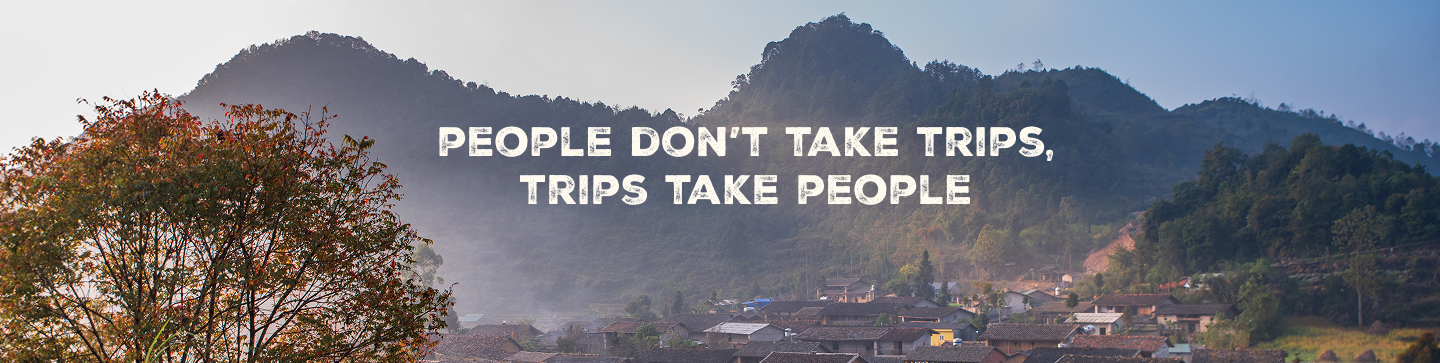
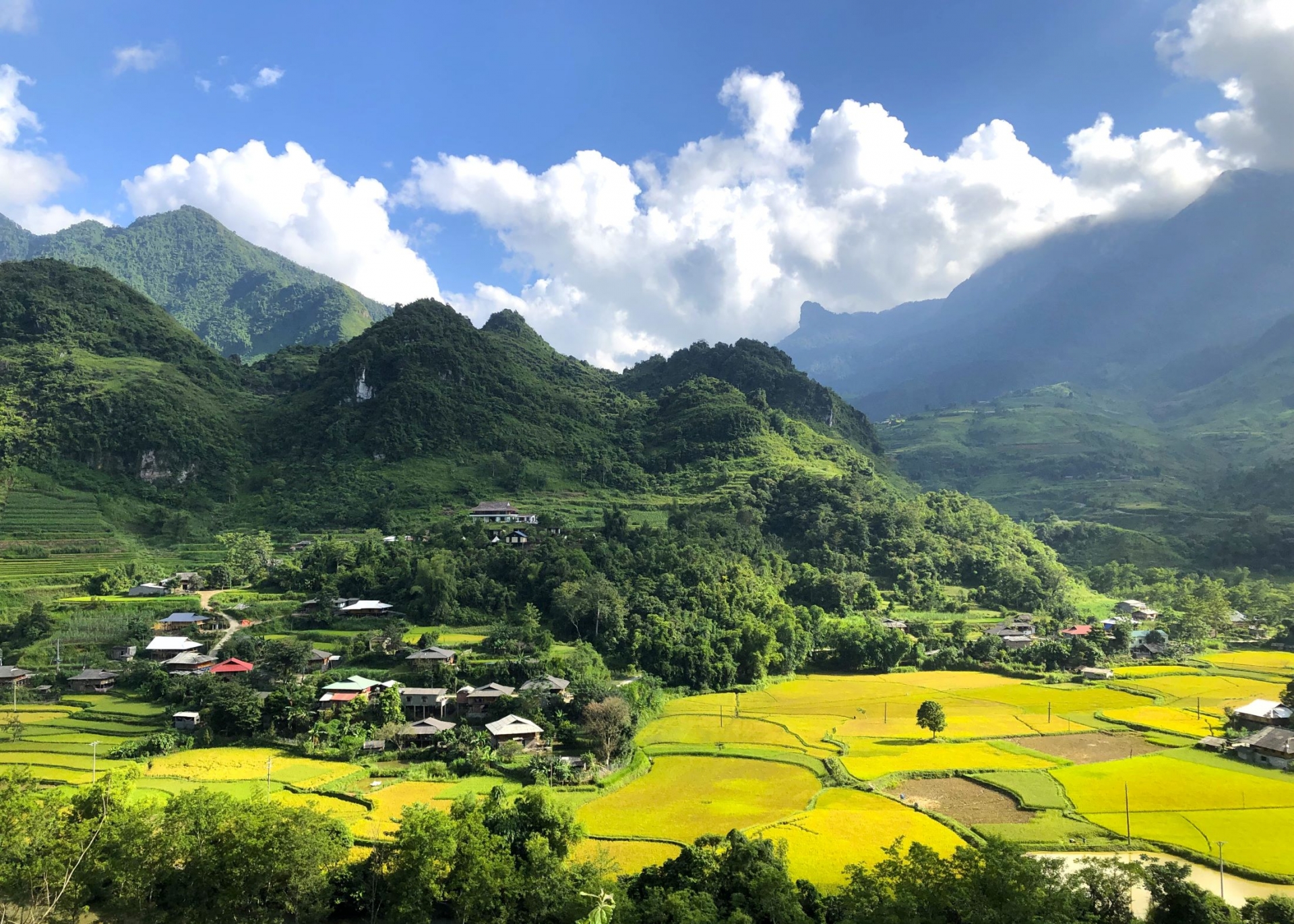
Du Gia is a peaceful village tucked deep in the mountains of Ha Giang. It captivates travelers with rice terraces, cascading waterfalls, traditional Tay stilt houses,…. Surrounded by limestone peaks and quiet valleys, Du Gia offers a genuine cultural escape for those seeking nature, connection.
In this article, Phieu Travel shares how to reach Du Gia, the best time to visit, top experiences you shouldn’t miss to make your trip both smooth and unforgettable.
1. Overview about Du Gia
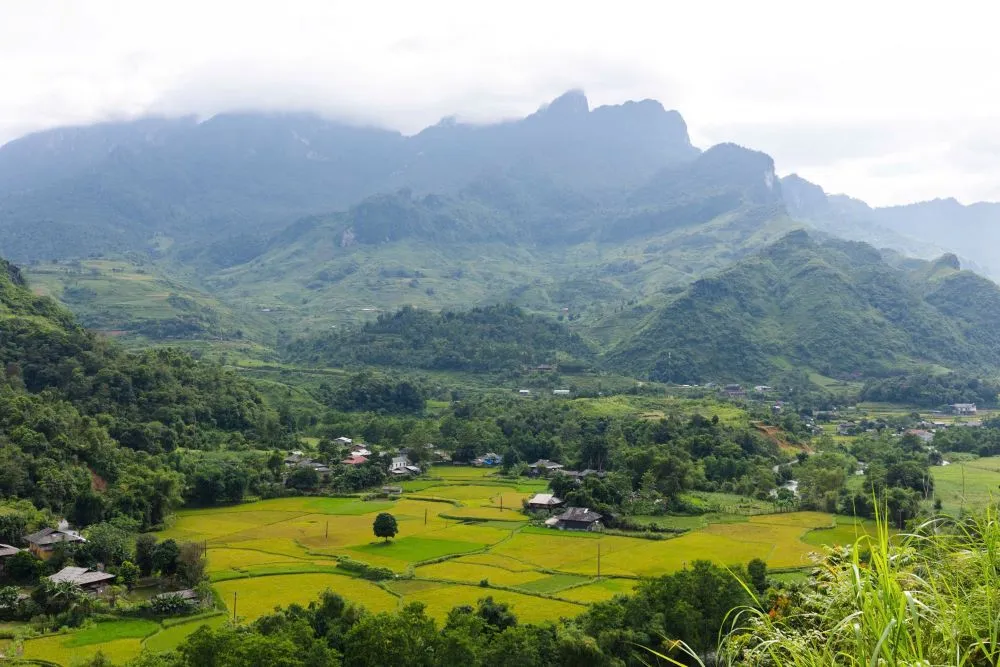
Located approximately 70 kilometers from Ha Giang City, Du Gia is a tranquil valley nestled deep within the karst mountains. Known for its lush landscapes, refreshing waterfalls, and the vibrant culture of the Tay and H’Mong ethnic groups, it has become the “soul” of the extended Ha Giang Loop. For travelers looking to escape the more crowded tourist hubs, Du Gia provides a serene retreat where time seems to slow down.
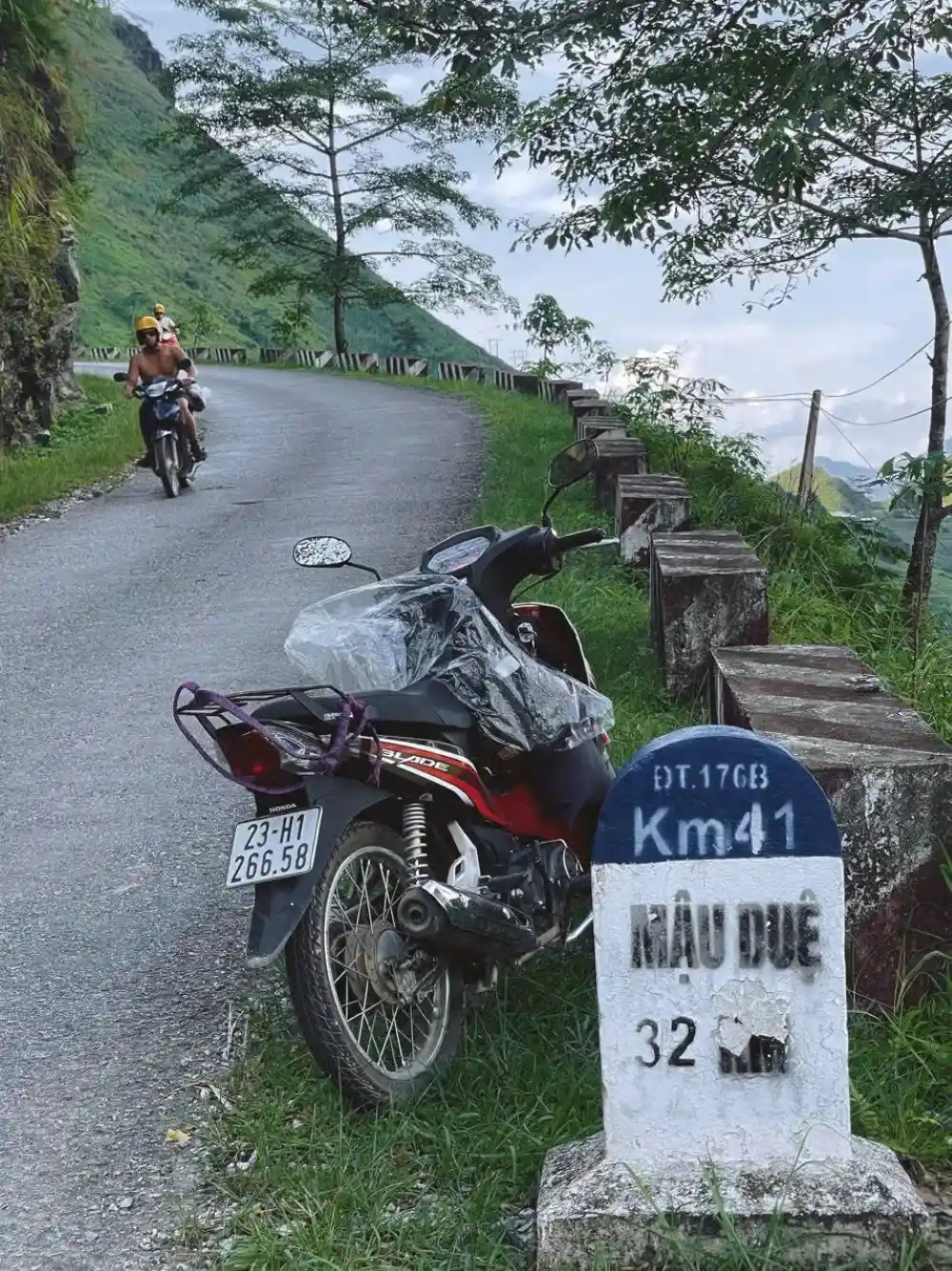
- The scenic journey: The road to Du Gia is one of the most adventurous yet rewarding stretches of the loop. It winds through high mountain passes and deep valleys, offering panoramic views of tiered rice terraces and traditional wooden stilt houses that cling to the hillsides.
- Du Gia Waterfall (Tham Luong): A short trek from the village center leads to this pristine natural pool and waterfall. The crystal-clear, emerald water is a favorite spot for travelers to cool off after a long day of riding. For the adventurous, the multi-tiered falls offer safe spots for cliff jumping into the deep basins below.
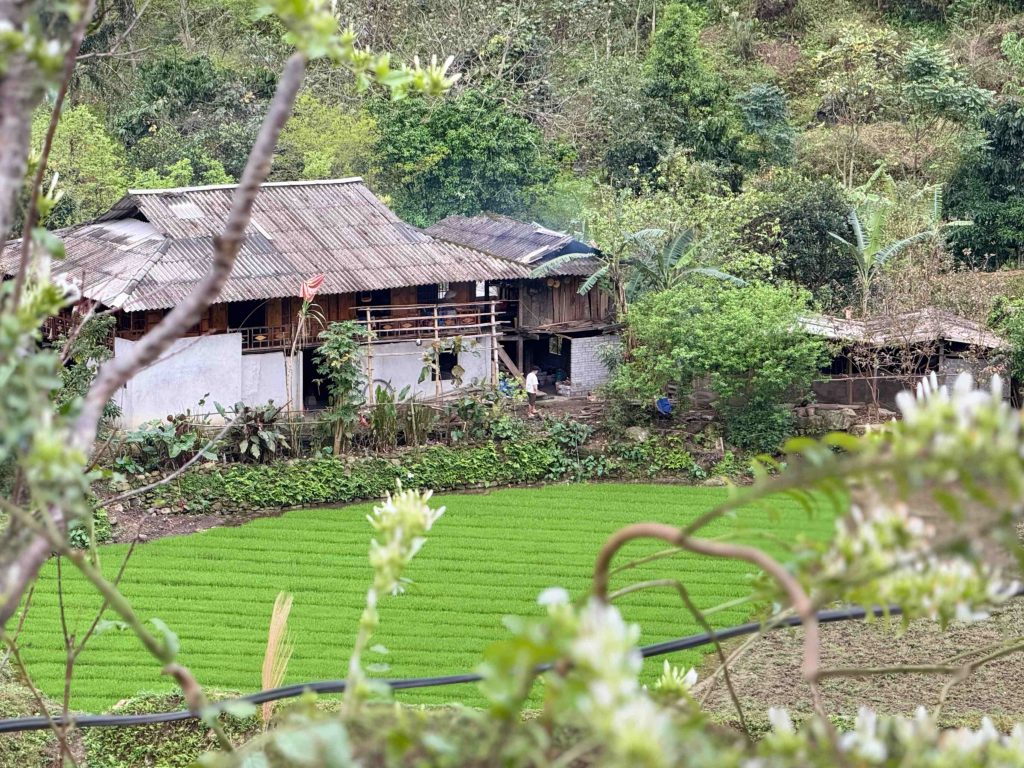
- Authentic stilt house homestays: Unlike the earthen “Trình Tường” houses found in the north, Du Gia is famous for its Tay ethnic stilt houses. Built on elevated wooden pillars with large open-air porches, these homes offer a unique staying experience where guests can fall asleep to the sound of the stream and wake up to the mountain mist.
- The Saturday love market: If you visit during the weekend, you may witness the Du Gia market. This is a vital social hub where local ethnic groups gather to trade goods, share news, and preserve their colorful traditions through song and dance. It is far less commercialized than other markets, offering a raw and honest glimpse into highland life.
- A culinary haven: Du Gia is renowned for its fresh, organic ingredients. A typical dinner here includes mountain stream fish, “man” pig (local free-range pork), and wild forest vegetables, all served around a communal table with the famous local corn wine.

The Ultimate Ha Giang Loop Guide (2025): Itinerary, Map & Tips
2. How to get to Du Gia
To help your guests plan their journey to this hidden gem, I have refined the transportation and routing details into a professional traveler’s guide. This version emphasizes safety, comfort, and the logistical expertise required for the highlands.
Navigating the Path to Du Gia: A Comprehensive Guide
Reaching the secluded valley of Du Gia requires careful planning, as it remains one of the most untouched regions of the Ha Giang highlands. Whether you are arriving from the capital or navigating the mountain passes, here is the professional roadmap for your journey.
Reaching the Gateway (Hanoi to Ha Giang City)
The adventure begins with a 300 km (186 miles) transit from Hanoi to Ha Giang City, typically taking 6 to 7 hours.
- Sleeper Bus: An efficient overnight option departing from My Dinh or Giap Bat stations, allowing you to arrive refreshed for a morning start.
- Limousine Van: A premium daytime service offering more comfort and direct pick-up/drop-off options.
- Domestic Arrivals: For travelers from Central or Southern Vietnam, flying into Noi Bai International Airport (Hanoi) is the most practical first step before continuing by road.
The Final Ascent to Du Gia
Du Gia is a true “off-the-beaten-path” destination and is not served by public bus networks. To reach the village from Ha Giang City, you must head toward Yen Minh and Mau Due using one of the following methods:
- Professional Pillion (Easy Rider): Ride with a local guide to safely navigate the terrain while soaking in the views.
- Private Vehicle: Rent a private car with an experienced driver for maximum comfort and safety.
- Self-Drive: Only recommended for confident riders with a valid motorbike license and experience on steep, winding mountain roads.
Choosing Your Route
Depending on your skill level and desire for adventure, there are two primary ways to approach the valley:
- Route 1: The High-Adrenaline Path (Meo Vac to Yen Minh – 80 km) This 50-mile stretch is legendary for its dramatic cliffs and sharp, hairpin bends. While it offers some of the most thrilling vistas in Northern Vietnam, it is a challenging ride best suited for experienced drivers or those on a guided motorbike tour.
- Route 2: The Scenic Valley Path (Highway 4C – Mau Due – DT181 – 120 km) Though roughly 75 miles long, this route is significantly easier to navigate. The drive is visually stunning, taking you through vibrant cornfields, blooming cotton trees, and the iconic karst formations that define the Ha Giang UNESCO Global Geopark.
3. The best time to visit Du Gia
To truly experience the “hidden oasis” of the highlands, timing is essential. While the valley’s emerald waters and lush terraces are beautiful year-round, choosing the right season allows you to align your adventure with vibrant flower blooms, local festivals, or the most favorable riding conditions.
| Time of year | Seasonal highlights | For experience best |
| January – March | Spring Blossoms & Festivals: Vibrant plum, peach, and mustard flowers bloom across the rocky highlands. | Best for cultural immersion and experiencing traditional ethnic festivals rich in local spirit. |
| March – May | Crystal Skies: Pleasant weather with high visibility and peaceful, panoramic landscapes. | Ideal for long nature walks and capturing sharp, clear photographs of the mountain vistas. |
| June – August | Lush Greenery: Summer sun brings out the most intense greens in the valley. | Best for swimming in the waterfalls, though travelers must check weather reports for sudden rain. |
| September – November | The Signature Season: Cool mountain air and the famous buckwheat flower bloom in mid-October. | The most iconic time to visit, offering breathtaking views of pink and white blankets across the hills. |
| December – February | Misty Serenity: A tranquil atmosphere dominated by mountain mist and crisp, cold air. | Perfect for travelers seeking solitude, peace, and the cozy feeling of the highland winter. |
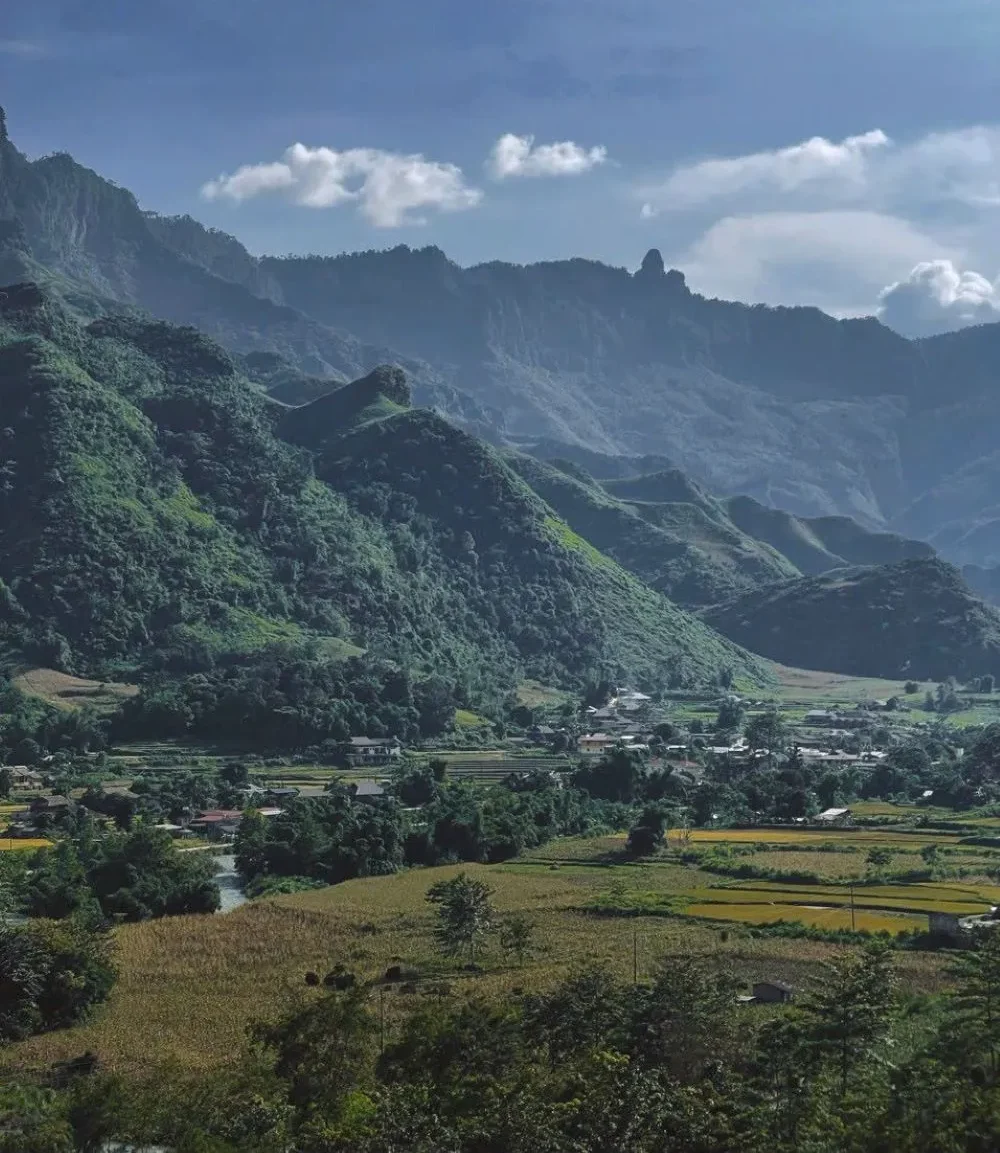
4. 5 Things to do when visiting Du Gia
Du Gia is far more than a scenic stopover; it is a destination that invites you to slow down, breathe deeply, and engage with the authentic pulse of Ha Giang. Here are five essential activities to truly experience the magic of this valley.
4.1 Stay at a Traditional Tay Stilt House
For an intimate connection with the local culture, spend a night in an authentic Tay stilt house to experience the region through the eyes of its people. Elevated on wooden pillars to overlook the valley, these homes offer a unique living history where you will wake up to the ethereal mountain mist rolling over the rooftops.
Enjoy communal home-cooked meals prepared over an open hearth and witness firsthand how Tay families preserve their heritage—from the intricate art of brocade weaving to the patient brewing of local corn wine.
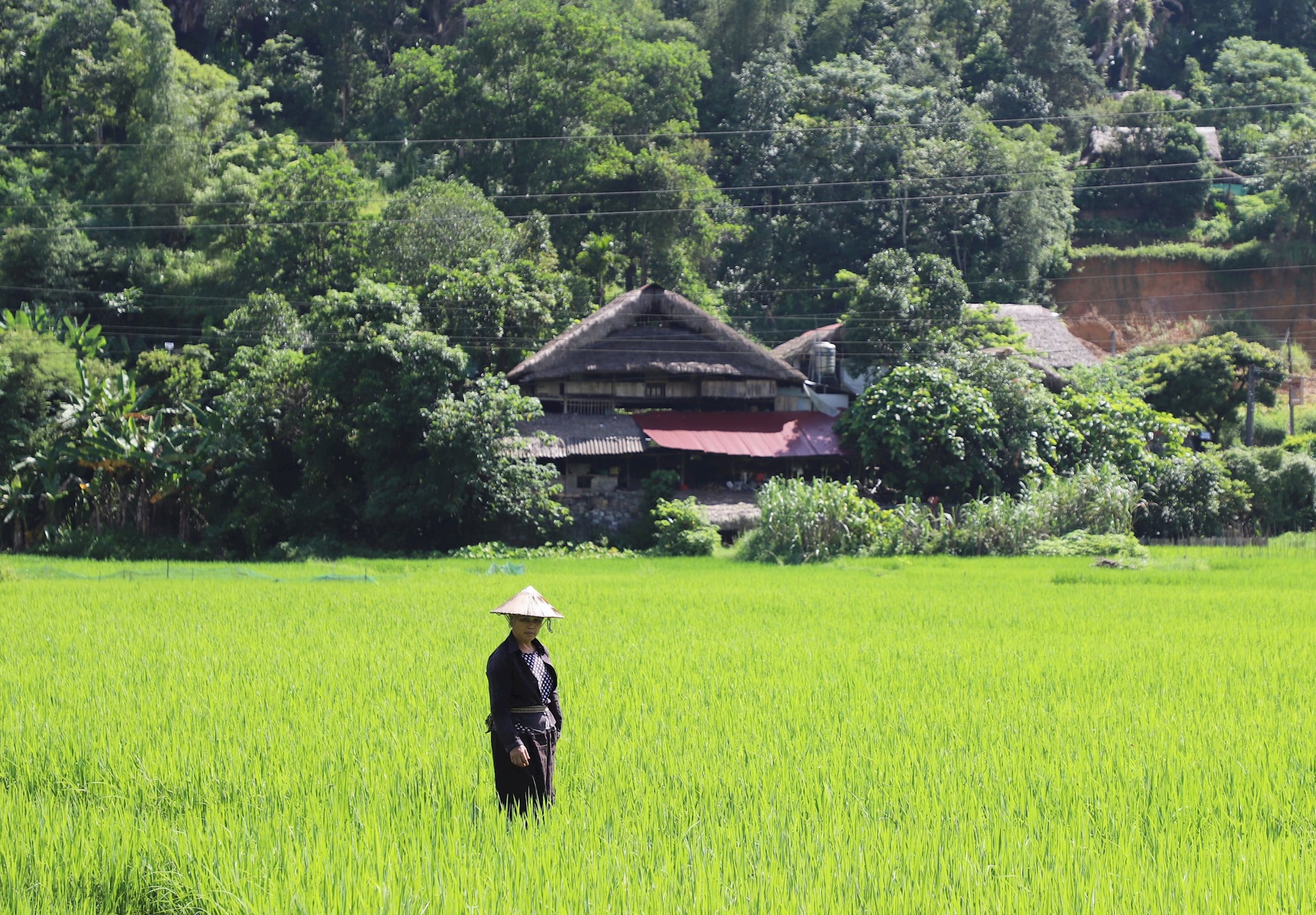
4.2 Take a dip at Du Gia Waterfall
Tucked away approximately 5 km (3.1 miles) from the village center, Du Gia Waterfall is a natural masterpiece that cascades from limestone cliffs into a deep, jade-colored basin. The falls drop nearly six meters into a pristine pool surrounded by lush ferns and ancient rock formations, offering a premier spot for swimming and cooling off after a long ride. To truly appreciate the serenity, arrive in the early morning to witness the mist dancing in the filtered light as the first sunbeams hit the water.

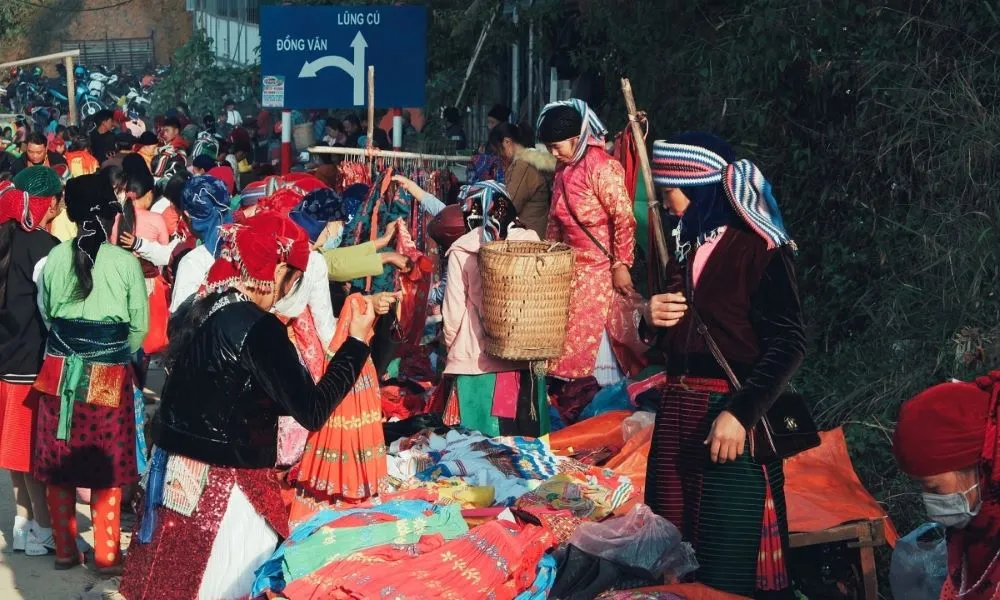
4.3 Visit the ethnic minority market
Every Saturday morning, the village transforms into a vibrant tapestry of color and sound during the Du Gia Market, bringing together the H’Mong, Tay, Dao, and other groups. This gathering is a vital social hub where locals in traditional attire trade everything from livestock and handmade textiles to herbal medicines and fresh mountain produce. It is a sensory feast where the air is filled with the scent of local spices and the lively hum of highland dialects, offering a rare look at regional identity.
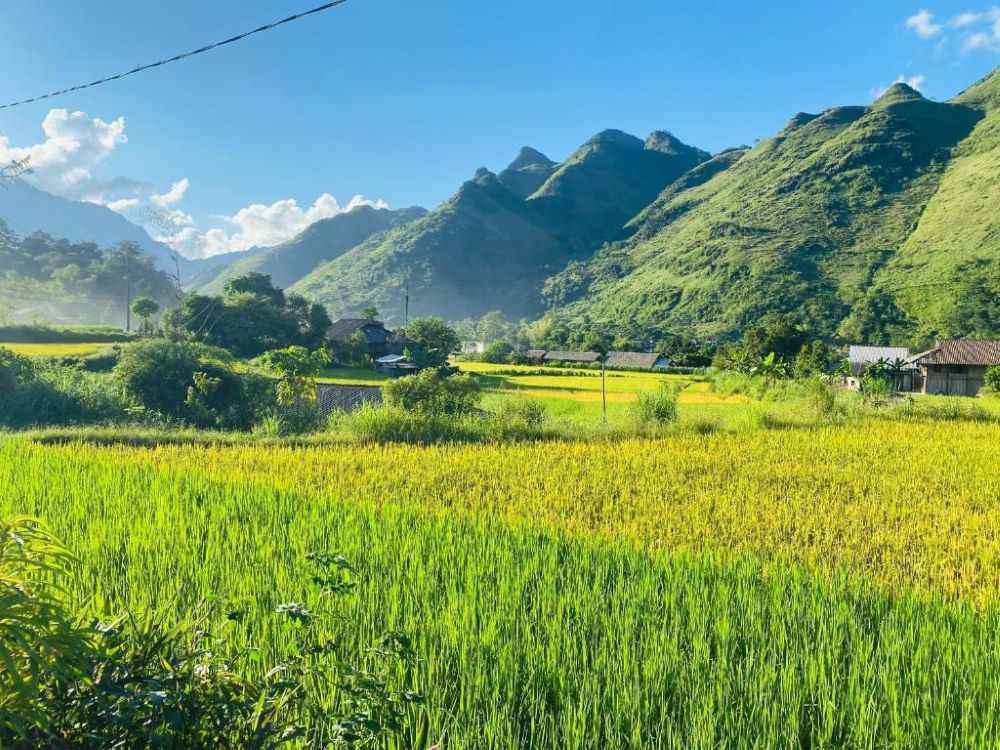
4.4 Explore the rice fields and traditional stilt houses
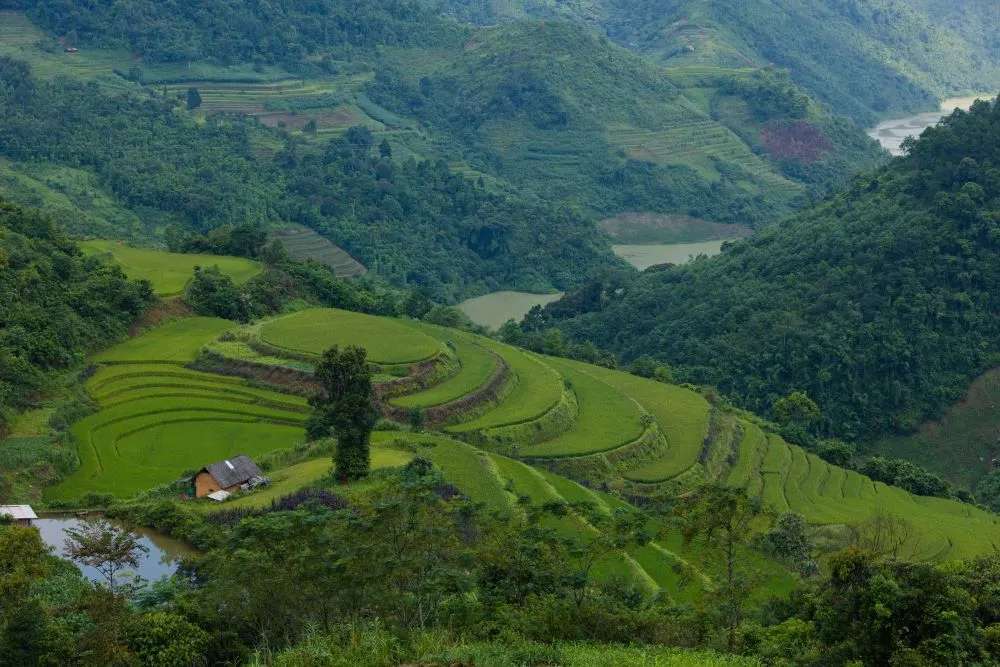
The landscape of Du Gia is a “living postcard” of Northern Vietnam, where terraced rice fields stretch along quiet village roads and offer a soothing escape from the daily hustle. Whether you explore by foot or on a motorbike, wandering through these peaceful valleys reveals the timeless rhythms of rural life, such as water buffalo plowing the fields and canals dotted with ducks. These golden fields provide a profound sense of calm, helping you reconnect with nature while passing by traditional Tay stilt houses nestled in the greenery.
4.5 Admire the surrounding mountain landscapes
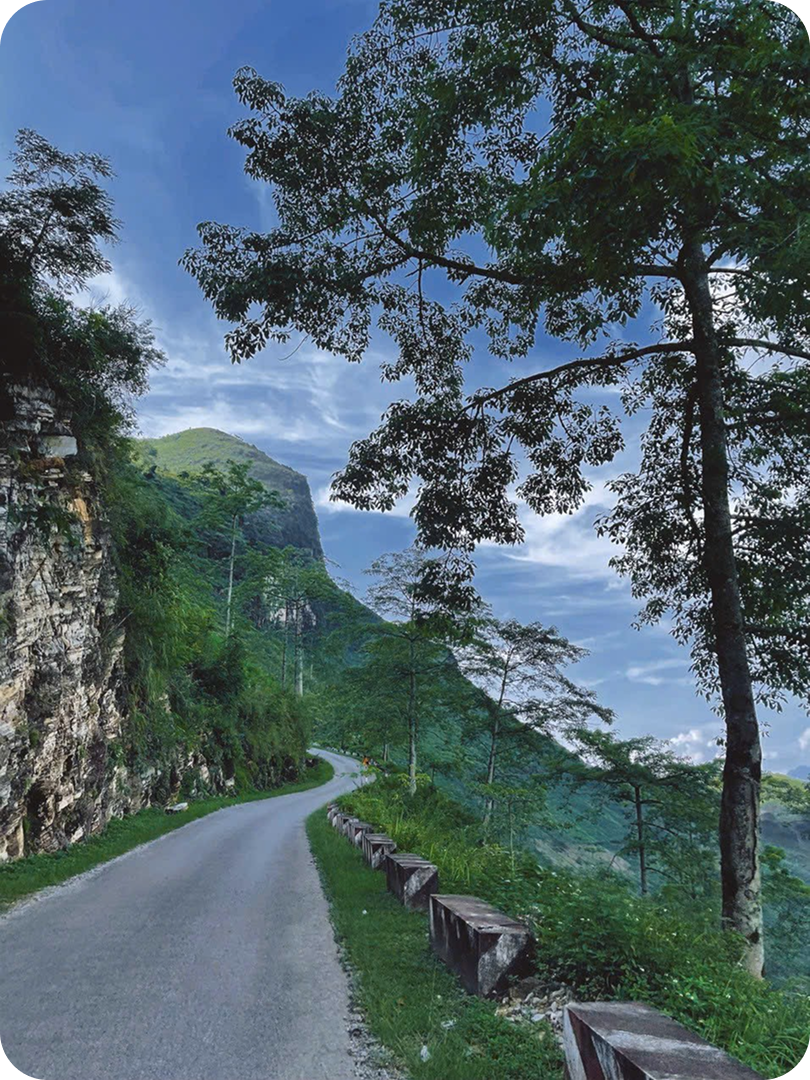
The journey to or from Du Gia—particularly the scenic road connecting to Meo Vac—is home to some of Ha Giang’s most awe-inspiring and dramatic mountain scenery. As you navigate the sharp bends and steep ascents along the cliffs, the road reveals panoramic views of deep canyons, limestone massifs, and emerald ravines plunging into the earth. Even a short ride through this section rewards every traveler with a professional sense of adventure and a stunning taste of the raw beauty that defines the UNESCO Global Geopark.
5. Travel tips for Du Gia
Preparing for Du Gia requires a different mindset than traveling in Vietnam’s urban centers. Because this valley remains beautifully disconnected from the modern world, a few practical preparations will ensure your safety and enhance your cultural interactions.
- Practice Culturally Conscious Photography and Dress: The ethnic communities in Du Gia are known for their hospitality, but maintaining a respectful presence is vital for genuine connection. Always seek explicit permission before photographing local people, particularly elders or children, as some may be camera-shy or hold traditional beliefs about photography. When entering villages or visiting the Saturday market, dress modestly by wearing t-shirts and longer shorts or trousers. This small gesture of respect often leads to warmer welcomes and more authentic cultural exchanges.
- Secure Sufficient Cash Reserves: There are currently no ATM facilities within the Du Gia valley, and digital payment methods are virtually nonexistent in the region. Most local homestays, market stalls, and small eateries operate on a cash-only basis. To avoid any logistical hurdles, calculate your expected costs for accommodation, regional specialties, and market souvenirs, then withdraw enough Vietnamese Dong in Ha Giang City or Dong Van before heading into the valley.
- Fuel Management and Remote Navigation: Gas stations become increasingly scarce once you deviate from the main loop toward Du Gia. It is a professional necessity to top up your tank at major hubs like Yen Minh or Meo Vac before beginning your descent. For those on motorbikes, carrying a small, sealed backup fuel bottle is a wise precaution against the steep gradients that consume fuel faster than expected. Running out of gasoline on a remote mountain pass can result in long delays with very few local recovery options.
- Pack for Self-Sufficiency and Altitude Shifts: Due to its remote nature, Du Gia’s local shops offer very limited inventory. You should pack a comprehensive kit including high-SPF sunscreen, effective mosquito repellent, and a basic first-aid kit with personal medications. The weather in the highlands can shift rapidly; while days may be warm, mountain nights are often quite chilly. Ensure you bring layers, including a light windbreaker or fleece, and a reliable flashlight for navigating the village paths after sunset.
- Reliable Offline Navigation: Mobile signal is notoriously weak or completely absent in the deep valleys and high passes surrounding Du Gia. To avoid the stress of becoming lost on winding roads with limited signage, download a detailed offline map of the Ha Giang province. Before you lose connectivity, mark the exact GPS coordinates of your homestay, the Tham Luong waterfall, and the nearest fuel points. This simple digital preparation is your best insurance policy in the rugged terrain of the Northern highlands.
6. Explore Du Gia with Phieu Travel
Tucked deep along the southern edge of the Ha Giang Loop, Du Gia remains one of the most rewarding yet logistically challenging destinations in Northern Vietnam. Characterized by steep mountain gradients, a complete lack of public transportation, and minimal road signage, navigating this remote valley independently can be daunting. Phieu Travel empowers you to explore this hidden paradise with absolute confidence, providing high-quality vehicles, professional local expertise, and flexible itineraries that eliminate the risks of the highland frontier.
- Premium vehicle standards for mountain safety: Every motorbike and vehicle in our fleet undergoes a rigorous multi-point inspection and professional servicing before every departure. This uncompromising commitment to maintenance ensures that your equipment is fully prepared to handle the intense mechanical demands of Du Gia’s winding mountain passes and steep descents.
- Elite local riders and cultural ambassadors: By choosing our guided “Easy Rider” tours, you are paired with an experienced local driver who possesses an intimate, lifelong understanding of the highland terrain. Their mastery of the sharp bends and changing road conditions ensures your journey is both secure and smooth, allowing you to focus entirely on the breathtaking scenery.
- Versatile tour formats tailored to your style: We recognize that every adventurer has unique needs, which is why we offer a comprehensive range of travel modes. Whether you seek the thrill of self-driving, the safety of a guided pillion tour, the social atmosphere of a group car tour, or the luxury of a fully private customized expedition, we have a solution that matches your specific pace.
- Thoughtfully balanced and immersive itineraries: Our travel programs are professionally designed to prioritize “slow travel,” ensuring you never feel rushed through the landscape. We curate each route to allow ample time for authentic experiences, from swimming in pristine waterfalls to walking through golden rice terraces and engaging in meaningful cultural exchanges with ethnic communities.
- Comprehensive logistical support: Beyond transportation, Phieu Travel handles the nuances of highland travel, from securing authentic stilt-house homestays to navigating the best times for local markets. Our local roots mean we know exactly where the most vivid buckwheat blooms are hidden and which paths lead to the most tranquil valley views.
Phieutravel.com is your trusted companion for discovering the untouched beauty of Du Gia and the scenic landscapes of Ha Giang. Reach out to our team today to craft a personalized itinerary that matches your schedule and travel style. Authentic culture, breathtaking nature and unforgettable roads are waiting for you!
You Might Also Like:
- Exploring Mu Cang Chai – Ha Giang: Where to Go, What to Eat, and Where to Stay
- Ultimate 2 Days 1 Night Ha Giang Loop with Phieu Travel
- Lo Lo Chai Village, A Promised Land in the Heart of the Majestic Ha Giang Highlands
 Du Gia
Peaceful village with waterfalls and rice fields.
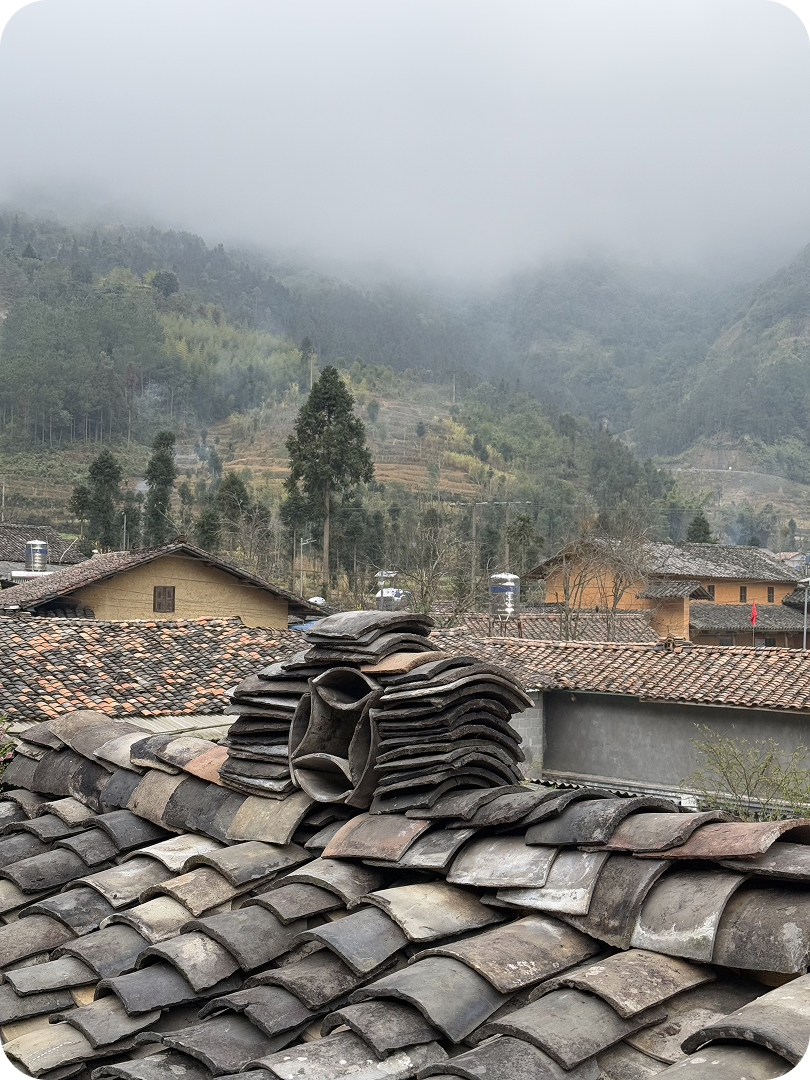
Pao’s House
Traditional Hmong house from a famous movie.
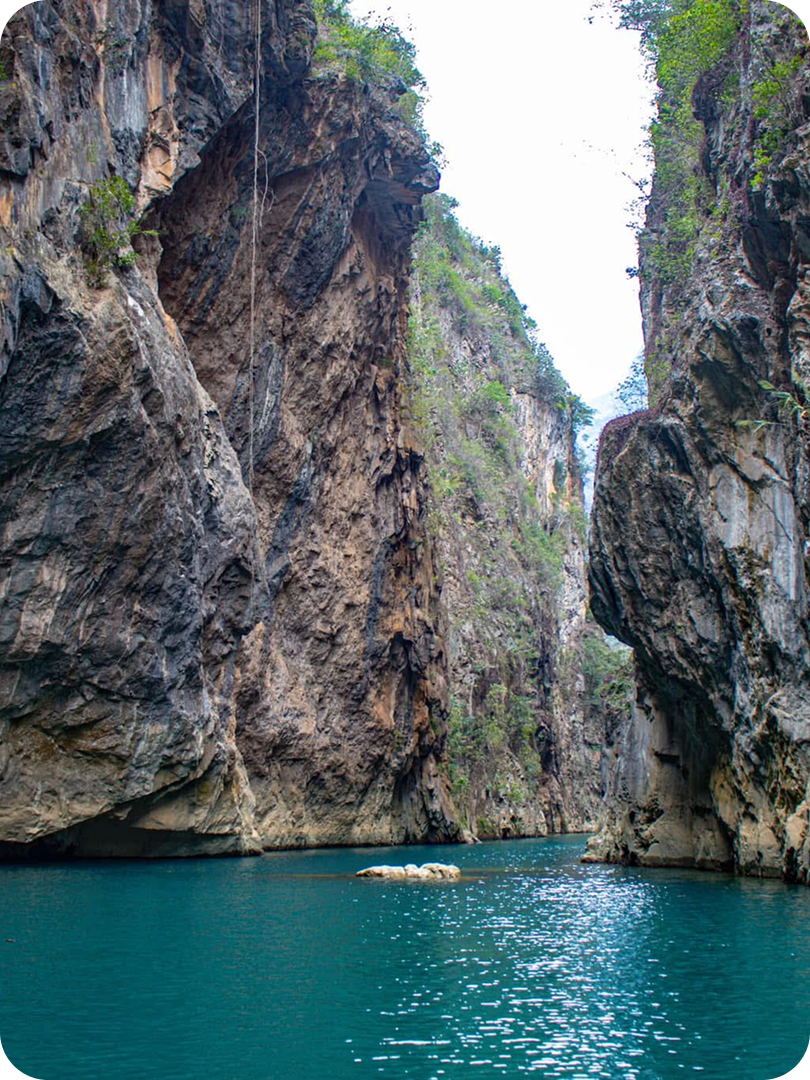
Nho Que River
Emerald river winding through spectacular canyons.
Chin Khoanh Ramp
Zig-zagging road with stunning plateau views.
Lo Lo Chai
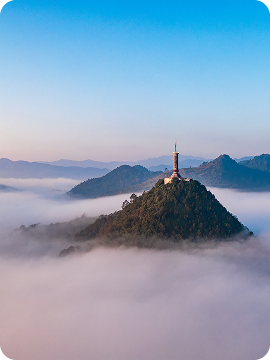
Traditional Lo Lo village at flagpole’s foot.
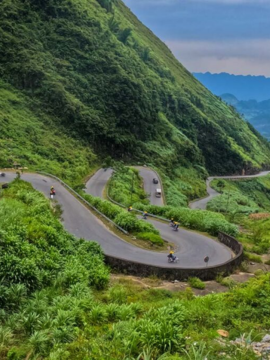
Tham Ma Pass
Famous eight-tiered road with stunning views.
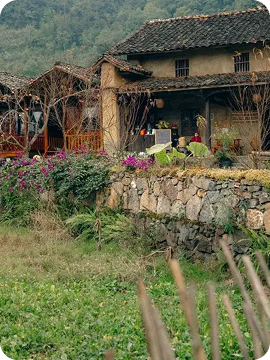
Meo Vac
Vibrant Sunday market for ethnic minorities.
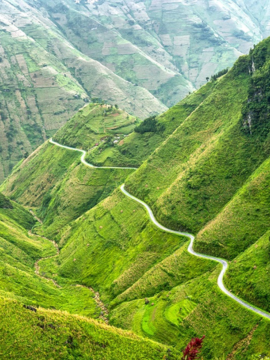
Ma Pi Leng Pass
"King of passes" with breathtaking views.
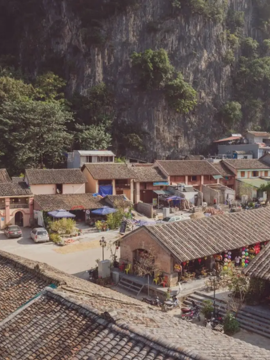
Dong Van Old Quarter
Historic area with unique traditional houses.
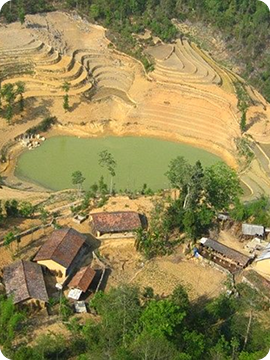
Dragon Mountain-Dragon Eye
Two lakes at flagpole's foot, resembling dragon's eyes.
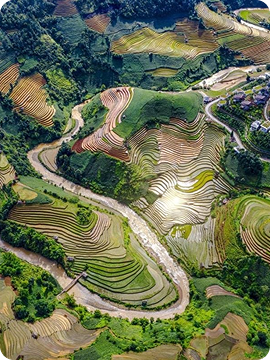
Mu Cang Chai – Ha Giang
A breathtaking route of terraced fields and mountains.
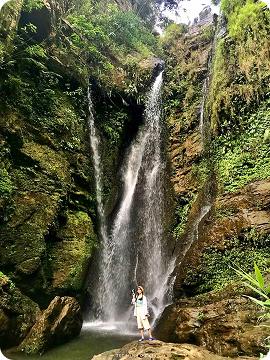
Nai Waterfall
A serene waterfall in Quan Ba, ideal for picnics.